12/11/2015

Is Australia the Last Country Standing in Defence of Coal?

The Guardian - Bill McKibben

The OECD wants to phase out export credit agencies providing money for coal projects. Australia, almost alone, might stand in its way

‘Australia is trying to block the OECD initiative for obvious reasons: it wants to sell its coal abroad.’
Photograph: Meredith O'Shea for the Guardian

Australia finds itself in a funny position headed for the Paris climate talks. It’s one of the few nations on the planet desperately trying to stop the hands on the clock and keep the world as we know it chugging smokily along for a few more years.
Here’s the backdrop: 303 years after Thomas Newcomen invented the first useful steam engine (which burned coal to pump water out of ... coal mines), the black rock on which we built our prosperity is clearly on the decline.
China’s coal imports are down 30% this year, and it’s not because they’re mining more of their own: the country’s total coal consumption has dropped almost 6%. In the US, Peabody – one of the world’s largest coal miners – predicts a decrease of 100m tonnes in the coming year. Canada’s biggest coal miner, Teck, just wrote off $1.6bn (A$2.4bn) in value for its vast coal mines, acknowledging their product just isn’t worth as much any more.
Here’s the way to think about those trends: it’s good news. Because a planet that keeps burning coal is a planet that will keep burning up. Scientists have made it clear that if we’re to keep the earth below a 2 degree warming path we’ll need to keep almost all large coal deposits in the ground. This is entirely possible, since in the nick of time we’ve learned to make large quantities of cheap power from sun and wind. And so that’s where the attention of the planet is turning.
And here’s the rub: Australia, almost alone, is trying to keep us on a coal-fired track. Late last month – after two years of efforts led by President Obama and supported by activists and NGOs around the world – the US and Japan announced agreement on a plan to phase out coal-plant financing for credit export agencies.
Export credit agencies provide billions of dollars per year in subsidies for coal plants around the world, and until now Japan has been the worst – providing $20bn (A$28bn) in subsidies for its companies to build coal projects overseas over the past seven years. Yet after diplomatic pressure and a strong campaign in Japan and internationally, Japan has agreed to limit its support for coal plants overseas.
This comes on the heels of a joint agreement between the US and China in which China also agreed to limit public support for “projects with high pollution and carbon emissions both domestically and internationally.” The OECD is set to make this standard policy for all of its export credit agencies.
In other words, if you want cash for your nation’s new coal plant, forget about it – many of the world’s governments will put their money elsewhere. Or that’s the plan if Australia doesn’t interfere. Australia, however, is eager to buck the trend. It’s trying to block the OECD initiative for obvious reasons: it wants to sell its coal abroad. And because the process is agreed upon by consensus, Australia could in fact block a deal that has been years in the making and would limit construction of new coal plants around the world.
This recalcitrance is dismaying, coming even after the ouster of Tony Abbott, which the rest of the planet hoped signalled some kind of return to an Australian belief in physics and chemistry. But the economic might of the coal barons seems as powerful in the new government as in the old, and Malcolm Turnbull is pushing the same sludgy arguments as his predecessor.
It’s a losing hand: the world’s investors are now pouring their money into green energy, where Australia could play a major role. And it will make Australia a pariah at the climate talks, where most nations now actually seem poised to do something. More to the point, if Australia succeeds in slowing down the transition even a few years, it (and everyone else) will pay for that greed with more bushfires and wilting summers, more eroding reefs and rising seas.
303 years later, the coal age is drawing to a close. But how fast that finish comes is a question of epic importance, and Australia holds some of the keys. 16 November marks the crucial OECD meeting where a decision on the coal ban could be made. So it’s time for Australia to face the future squarely.

Obama Should Let Fossil Fuels Lie

New York Times - Lydia Millet


PRESIDENT OBAMA’S rejection of the proposed Keystone XL pipeline last week had the ring of a great victory for the environment. But even as he declared the United States a “global leader” in the transition to cleaner energy, he revealed a challenge that neither he nor his administration has confronted: “If we’re going to prevent large parts of this earth from becoming not only inhospitable but uninhabitable in our lifetimes,” the president said, “we’re going to have to keep some fossil fuels in the ground, rather than burn them and release more dangerous pollution into the sky.”
The logic is clear. If we don’t extract them, we can’t burn them. Even better, this is a change the president can actually make, without the approval of Congress. With the climate summit meeting in Paris near, and the Keystone decision fresh, the United States can truly take the lead on these fuels by stemming their production, not just their consumption.
Most climate debates have focused on cutting the use of fossil fuels. But besides a few high-profile scuffles over fuel extraction in vulnerable wild places like the offshore Arctic, political leaders have ignored fossil fuel production as a necessary piece of climate strategy.
In fact, under President Obama, oil and gas production in the United States has increased substantially. And that increase has been a major bragging point for the administration. “America is No. 1 in oil and gas,” the president boasted in his 2015 State of the Union address.
Globally, we will have to use far less of our already proven reserves of oil, gas and coal in the next 35 years if we are to even have a shot at avoiding the most disastrous warming effects. Some say we need to keep a third of the earth’s oil reserves, half its gas and 80 percent of its coal unused. We need to lock up those fuels that would push us past the tipping point. And the most logical place for the United States to start is on our public lands.
About half of all potential future global warming emissions from United States fossil fuels lie in oil, gas and coal buried beneath our public lands, controlled by the federal government and owned by the American people — and not yet leased to private industry for fuel extraction.
This amount — about 450 billion tons of carbon dioxide equivalent — represents one-quarter of the total amount of carbon emissions that can be released in the coming decades if the world is to even have a chance of keeping global warming down to 2 degrees Celsius — a temperature increase that will itself result in extreme, dire consequences for people and natural systems worldwide.
Most of our fuel-bearing federal lands are either beneath the ocean along our coasts or in the interior West, and are largely controlled by the Bureau of Land Management and other federal agencies. This means the White House has the power to end public-lands extraction of fossil fuels. It wouldn’t take an act of Congress — though a bill to do just that, albeit one that won’t get through a Republican-controlled Senate, was recently introduced by Senators Jeff Merkley, Democrat of Oregon, Bernie Sanders, independent of Vermont, and Patrick J. Leahy, Democrat of Vermont. Mr. Obama has the authority, under federal laws like the Mineral Leasing Act and Federal Land Policy and Management Act, to delay and ultimately stop new leasing of fossil fuels on public lands.
But his interior secretary, Sally Jewell, cynically dismissed a recent call by more than 400 groups and scientists asking Mr. Obama to use his authority to keep federal fossil fuels in the ground. Because we continue to use fossil fuels, she argued, we need to keep digging them up.
Secretary Jewell’s circular argument won’t get us anywhere we need to go. No one in the “Keep It in the Ground” movement was suggesting the immediate cessation of fossil fuel extraction — merely an end to new leases on federal public lands. Existing leases, stretching decades into the future in some cases, already cover some 67 million acres of public land and ocean — 55 times bigger than Grand Canyon National Park — whose fuels contain the potential for up to the equivalent of 43 billion tons of carbon dioxide pollution.
Meanwhile, our grandest public lands are being torn apart by fossil fuel extraction. Oil drilling and coal mining are killing endangered wildlife, polluting rivers, creating smog over wilderness areas and blocking wildlife corridors in America’s most treasured landscapes. Wyoming, home to Yellowstone National Park and the Grand Tetons, is also the country’s largest coal producer and one of its largest gas drillers. Two-thirds of the state’s gas-drilling rigs are on public lands in the increasingly industrialized Greater Green River Basin. Its once-magnificent Powder River Basin has been called a “national sacrifice area” by hunting and outdoor advocates because of the scarring impacts of coal, oil and natural gas extraction.
The story is the same on Front Range of the Rocky Mountains in Colorado, in the canyon lands of Utah, the deserts of New Mexico and the coastal plains in Alaska: Public lands belonging to us all are being trashed for industry profits, while out of the other side of its mouth the government calls for reducing fossil fuel burning.
Mr. Obama now has more of a chance than he’s ever had to live up to his long-ago campaign pledge to tackle the crisis of climate change head-on. His administration’s signature achievement in that arena, the Clean Power Plan, will cut up to 870 million tons of pollution annually, when it takes full effect in 2030; a halt to new public fuel leases would take up to 450 billion tons of that pollution off the table immediately. The president can, and should, take this crucial step to both preserve our heritage lands and get us on the path to a safer climate future.

Lagging On Climate Change Action Affects Health: PHAA

Australian Journal of Pharmacy -  Megan Haggan


The Public Health Association of Australia has welcomed a report from the World Federation of Public Health Associations revealing the many countries lagging behind in policies that protect their populations from the adverse health impacts of climate change. 

 Respondents from 35 countries completed the global survey, which revealed more than half of respondent countries (51%) had no national plan to adequately protect the health of their citizens from climate change.
“In Australia the signs are already clear with increasing storms, changing weather conditions and an increasing number and ferocity of bush fires,” says Public Health Association Australia (PHAA) CEO Michael Moore.
“It is time to ensure that health related climate issues are part of our national planning and budgeting if we are to pre-empt many avoidable illnesses and injuries.
“Already dubbed by former Prime Minister Kevin Rudd as the ‘greatest moral, economic and social challenge of our times,’ government policy addressing the health impacts of climate change is in urgent need of implementation,” says Moore.
“The health impacts of climate change are one of the most significant public health risks facing the global community and PHAA supports the WFPHA in encouraging governments to respond to the evidence and develop national climate and health plans to protect the health of Australians and our fellow citizens across the globe.”
At the global level, PHAA is calling for health protection and promotion to be enshrined as a central principle in global climate policies being negotiated under the United National Framework Convention on Climate Change.
The WFPHA survey found both developed and developing nations lacked comprehensive national climate change action plans policies, however developing nations appear to be less prepared, with 70% of respondent countries reporting that either their national climate policies did not address health or there was no national climate action plan in existence.
However, of those respondent countries with National Climate Change Action Plans, less than 30% included analysis of projected climate change for their country, the majority (71%) did not include comprehensive assessment of health impacts, and around 60% had done little towards identifying vulnerable populations and infrastructure, developing public health adaptation responses, assessing coping capacity or gaps in knowledge.
A recent report in The Lancet reveals the threat to human health from climate change was so great it could undermine the last 50 years in development and global health.
However the Lancet report insists tackling climate change could be the greatest opportunity of the 21st century to improve health across the globe, highlighting that many strategies to respond to climate change also bring significant co-benefits for health, and in many cases offer ‘no-regret’ options – reducing the burden of ill-health, boosting community resilience, and reducing poverty and inequity.

Comment: People Power The Force Behind Action On Climate Change

SBS -  Victoria McKenzie-McHarg*

French President Francois Hollande (C), flanked by the administrator of the College de France Alain Prochiantz (L) and professor Edouard Bard (R), takes part in a meeting entitled 'Climate, Energy and Society: the College de France and COP21'. (AAP) 


As world leaders and civil society groups prepare to head off to Paris for the next round of UN climate negotiations, it’s worth remembering that these talks are not the end point on the road to a safer global climate.
They are a place to help focus the world’s attention on the need for urgent climate action and hopefully to set up a framework for global climate commitments to be increased over a rapid and predictable timeframe.
There’s no question that we must hold our political leaders to account in Paris and push in every way possible for a strong global agreement, which includes Australia carrying its fair weight in emissions reduction and climate finance. 
But, instead of expecting these talks to deliver final solutions to the climate crisis, we should also pay close attention to the many forms of action occurring all over the world, particularly on the streets where the largest ever People’s Climate March will take place in cities from Melbourne to Montreal, from Brisbane to Barcelona.
What occurs inside the negotiating rooms of the Paris climate conference is obviously crucial, but the real barometer of global momentum is taking place elsewhere.
All over the world we are hearing from people who have found themselves impacted by climate change and are increasingly frustrated by governments pressing on in a ‘business as usual’ mode, ignoring accumulated and compelling climate science and blithely approving new coal mines and thwarting the transition to clean energy.
In Australia the lead up to climate rallies taking place across the nation from November 27 have already brought together unprecedented alliances of groups across society including Indigenous and faith communities, unions, teachers, the health and medical sector, firefighters and farmers. In fact, we began with the aim of forming around 60 partnerships, but this has already ballooned to around 200 different groups coming on board.
These alliances are showing Australians want to see a planned transition to a clean energy future, with renewable energy replacing dirty fossil fuels and much greater energy efficiency resulting in carbon pollution being taken out of our economy. Australians look forward to embracing the thousands of new jobs and investment in renewable energy and a well-planned shift to a new cleaner economy.
However, our government appears to still be bewitched by the big polluters, and putting their short-term profits ahead of the good of the Australian people. This shift from dirty, old energy to clean renewable energy has gained incredible momentum at the community level – but thus far the government is still missing in action.


In spite of this, Australia has recorded one of the fastest uptakes globally of solar power in the world – with 1.5 million homes housing around 5 million Australians now powered by solar panels.
More and more Australians are now joining the dots and recognising that the actions we take here are having tangible and devastating impacts on our neighbours in the Asia Pacific region. The President of the low lying Pacific Island nation of Kiribati has recently called for a global moratorium on new coal mines as his nation’s 100 thousand residents across 32 atolls contend with encroaching sea levels.
"Let us join together as a global community and take action now," President Anote Tong wrote in a letter to world leaders, "I urge you to support this call for a moratorium on new coal mines and coal mine expansions.” Meanwhile, elsewhere in Australia farmers and Traditional Owners are demanding the right to say ‘no’ to mining on their land.
Yet Australia’s Environment Minister Greg Hunt has just re-approved Australia’s biggest ever coal development – the Carmichael mine in the Galilee basin. ACF has just launched a major legal challenge against this mine – no to delay it, but to stop it in its tracks.
Given what we already know about how climate change is impacting on our neighbours and oceans, the approval of Australia’s biggest ever coal mine is the kind of cognitive dissonance that will drive people all over Australia and the world onto the streets in the days prior to the Paris conference to demand better of governments.
We have just seen the power of organising result in US President Obama’s rejection of the Keystone XL pipeline amidst acknowledgement that much of the world’s fossil fuels need to remain in the ground. This makes President Obama the first world leader to reject a project because of its effect on the climate – so it can be done!
And so it should – because the stakes are just too high.
We now know that we need to set targets that keep our climate well below a 2 degree threshold or the consequences will be dire. The hundreds of thousands of people that will take to the streets in the lead up to the Paris climate summit have made a personal decision not to sit idly waiting for a fully formed global agreement before taking action.
They will do so knowing that the nature of global summits is that they will be slow, cumbersome and will likely deliver imperfect outcomes. Yet they also know it is time for all governments to get on with the job - as we have recently seen in political machinations in Australia and Canada – climate inaction has become poison at the ballot box.
We are in an exciting, pivotal period when the cost of renewable energy technologies are plummeting just as new technologies that promise to store clean energy more effectively are advancing rapidly. So, no matter what the outcome is in Paris - let this not be an excuse for delay or inaction on moving swiftly toward a cleaner, safer world.

* Victoria McKenzie-McHarg is climate change manager for the Australian Conservation Foundation.

11/11/2015

'Life On Our Planet At Stake': Warnings Over Climate Change Catastrophe

AFP


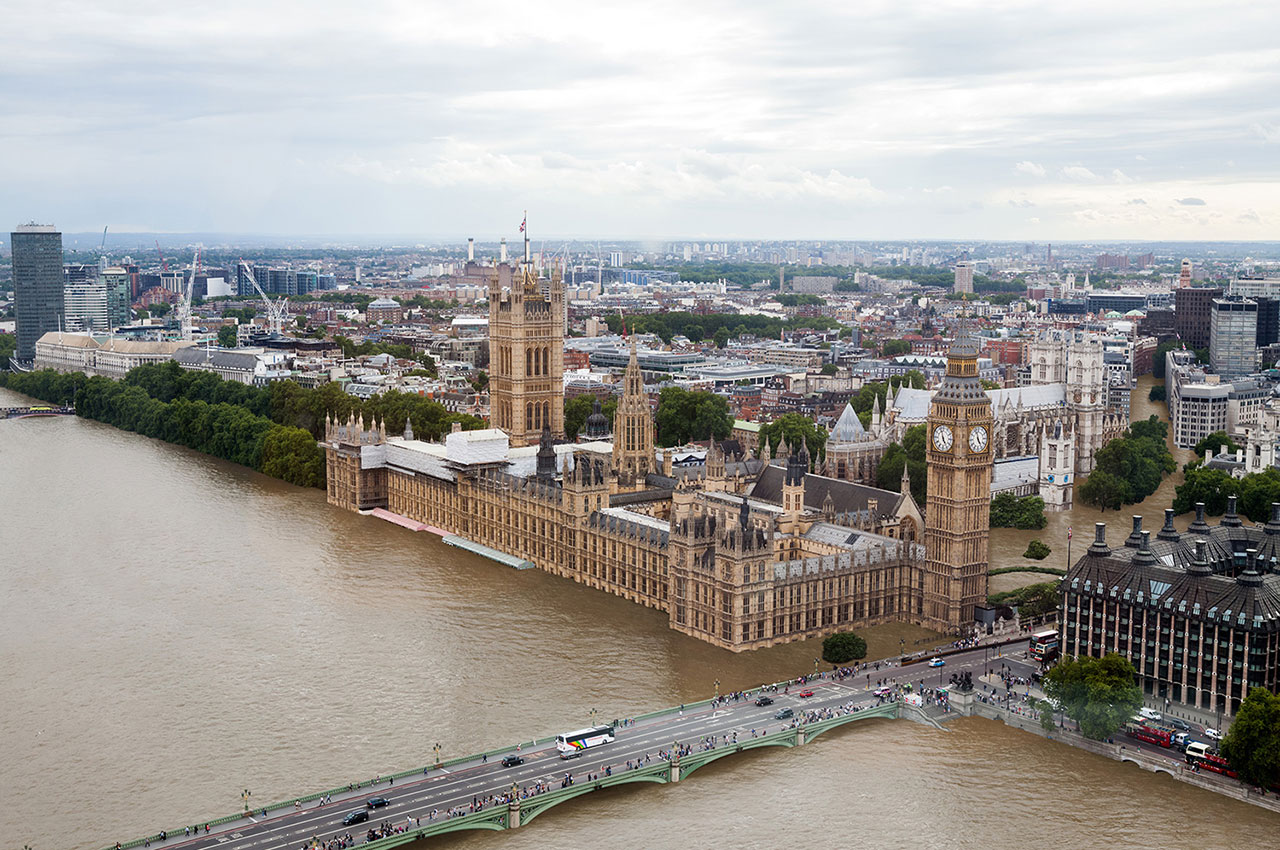
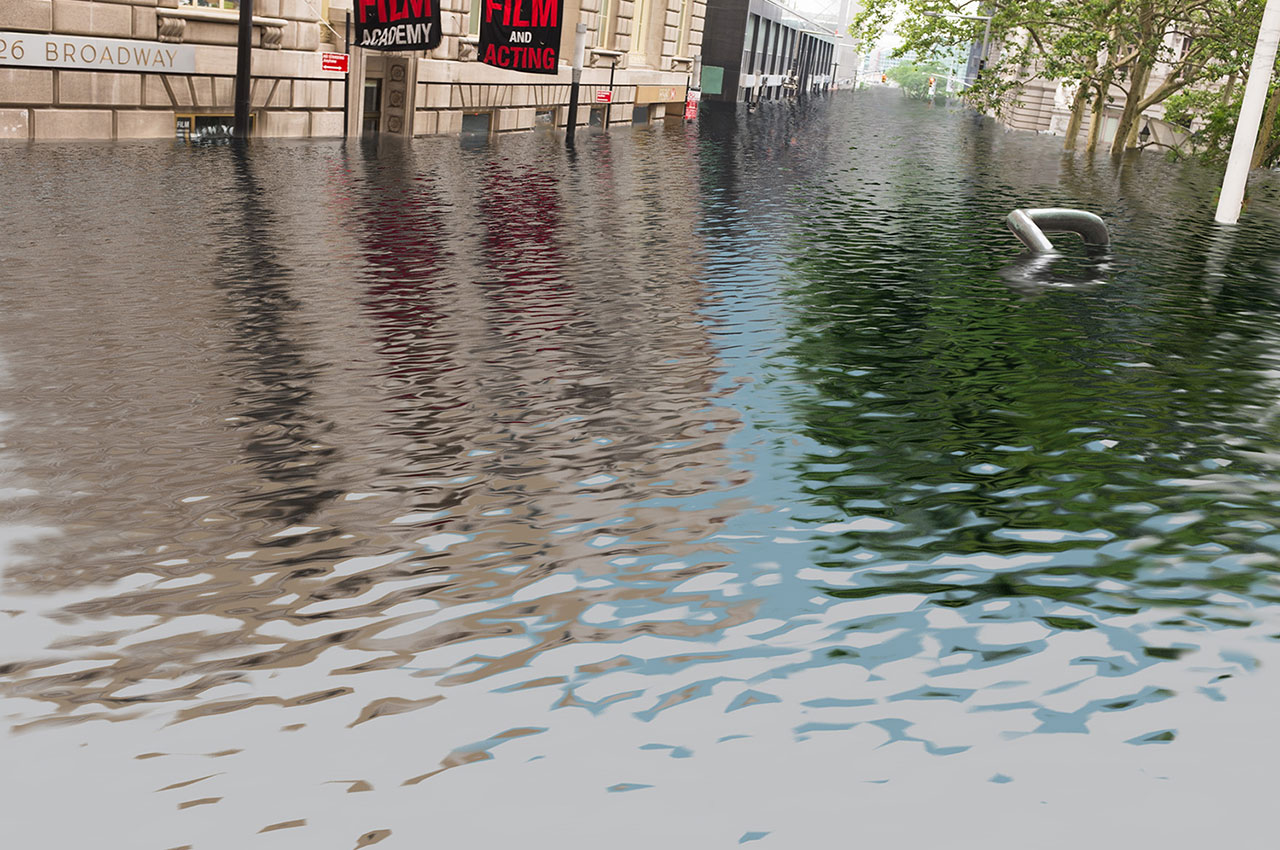
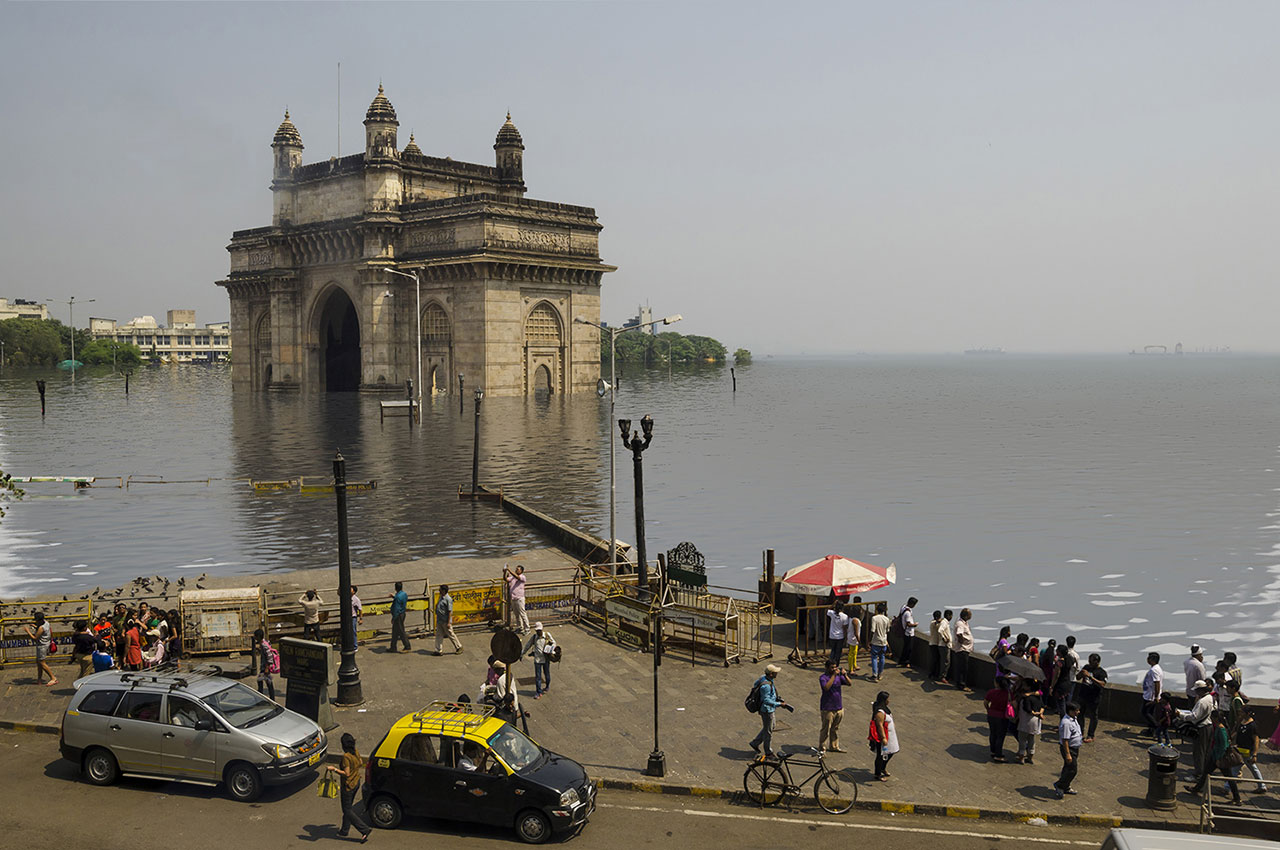
Large swathes of Sydney, New York, Shanghai, London and other major capital cities could disappear under massive waves of water and millions driven into poverty, fresh climate reports warned.
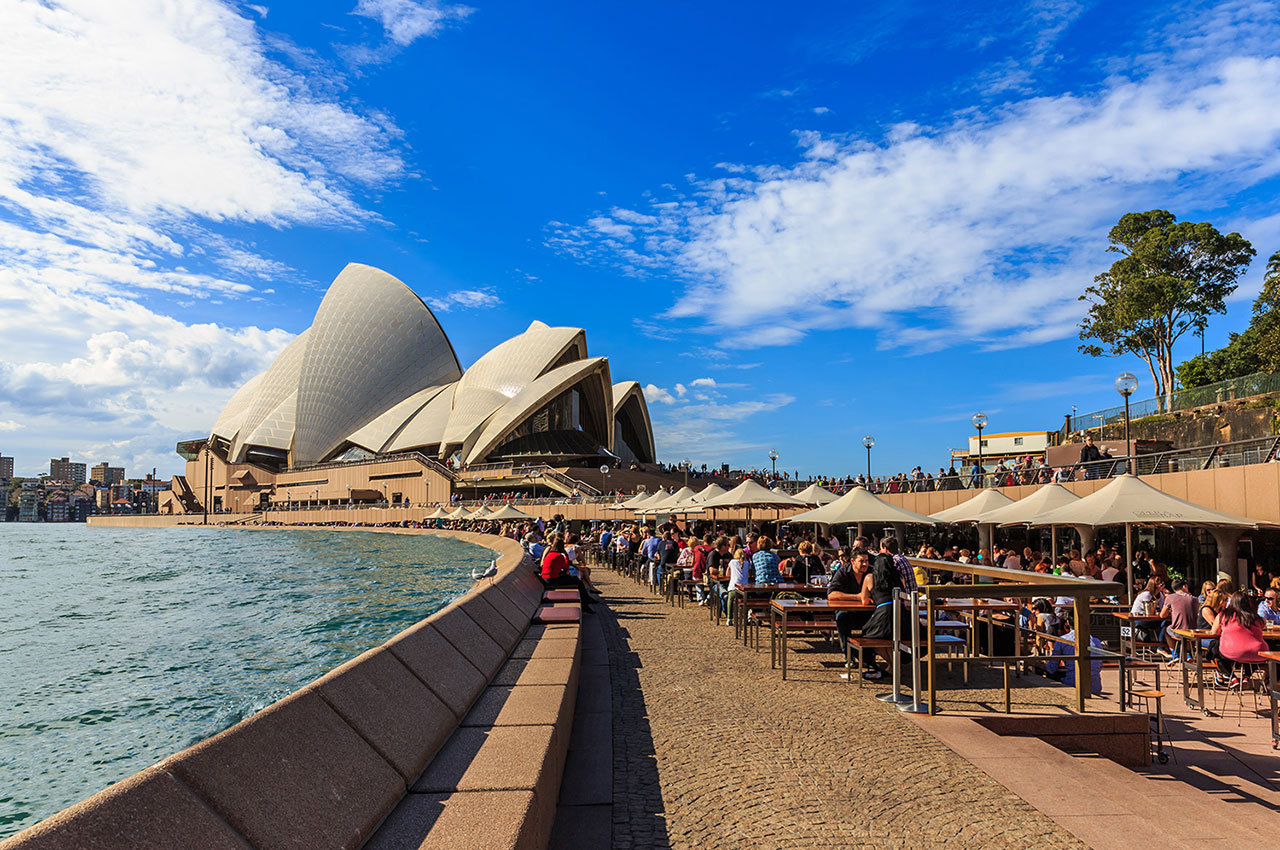
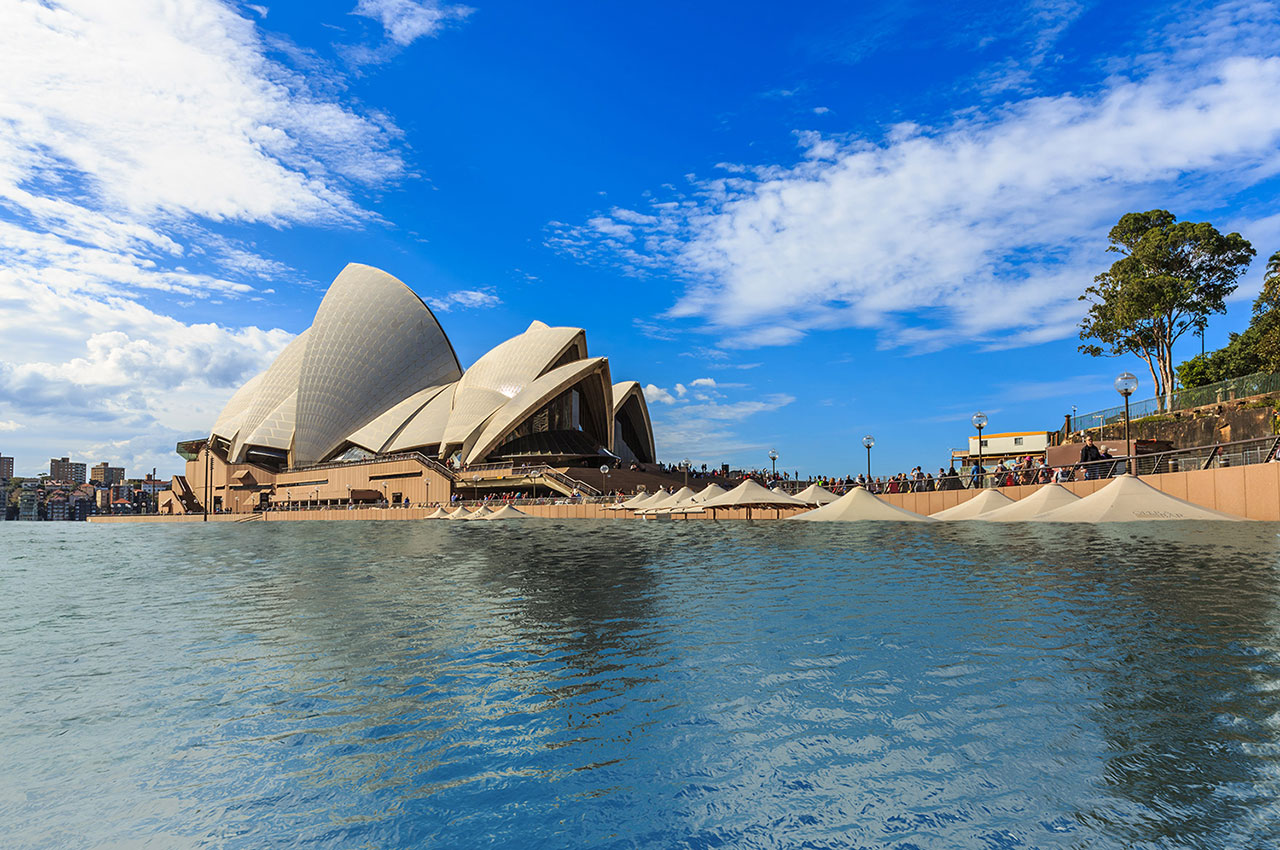
If global warming continues on its present trajectory of 4 degrees Celsius, rising sea levels will claim land inhabited by more than 600 million people, according to a survey by Climate Central, a US-based research group.

3
Sydney's famous Circular Quay after 2 degrees Celsius of warming. Photo: Climate Central


4
Sydney's famous Circular Quay after a more concerning 4 degrees Celsius of warming. Photo: Climate Central


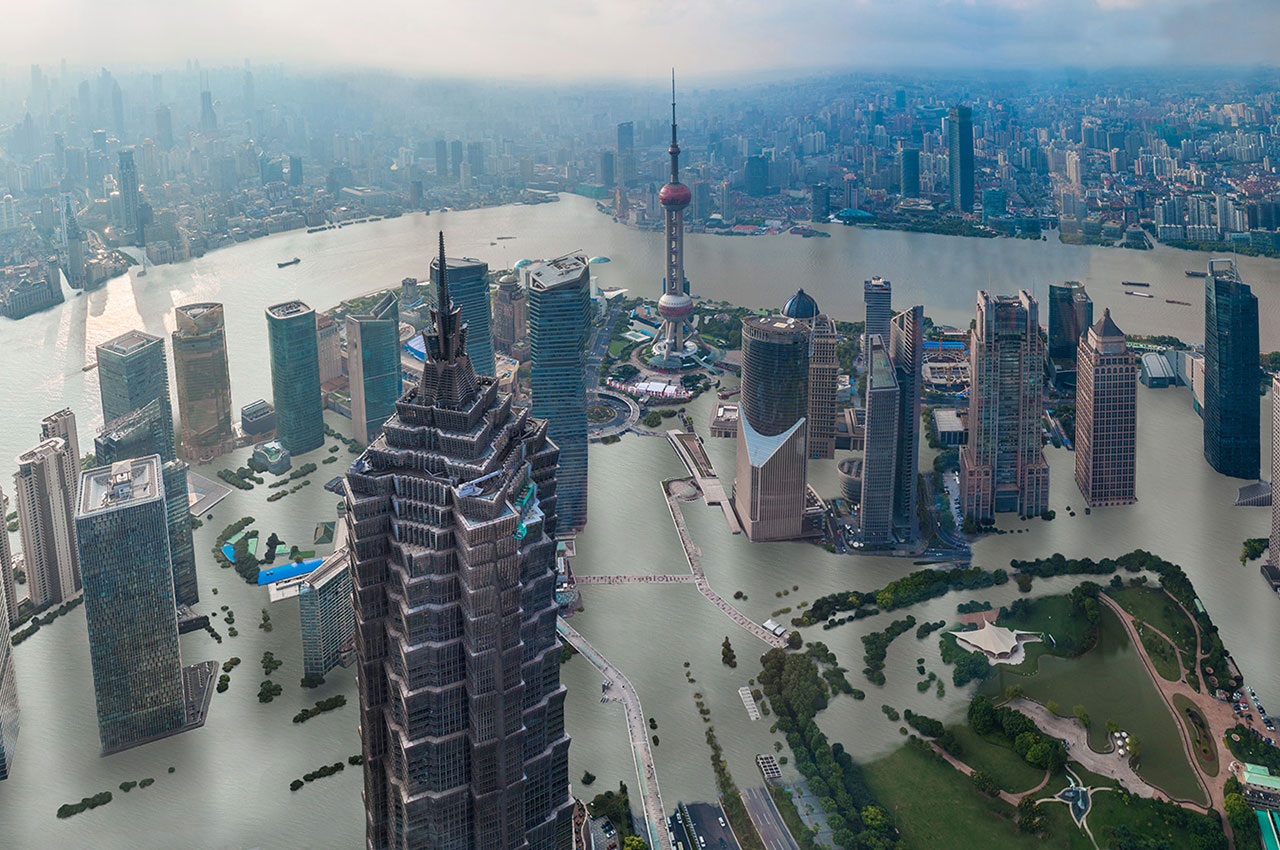
Such a rise would hit China the hardest, with around 145 million people living in coastal areas that would be submerged, the report warned.
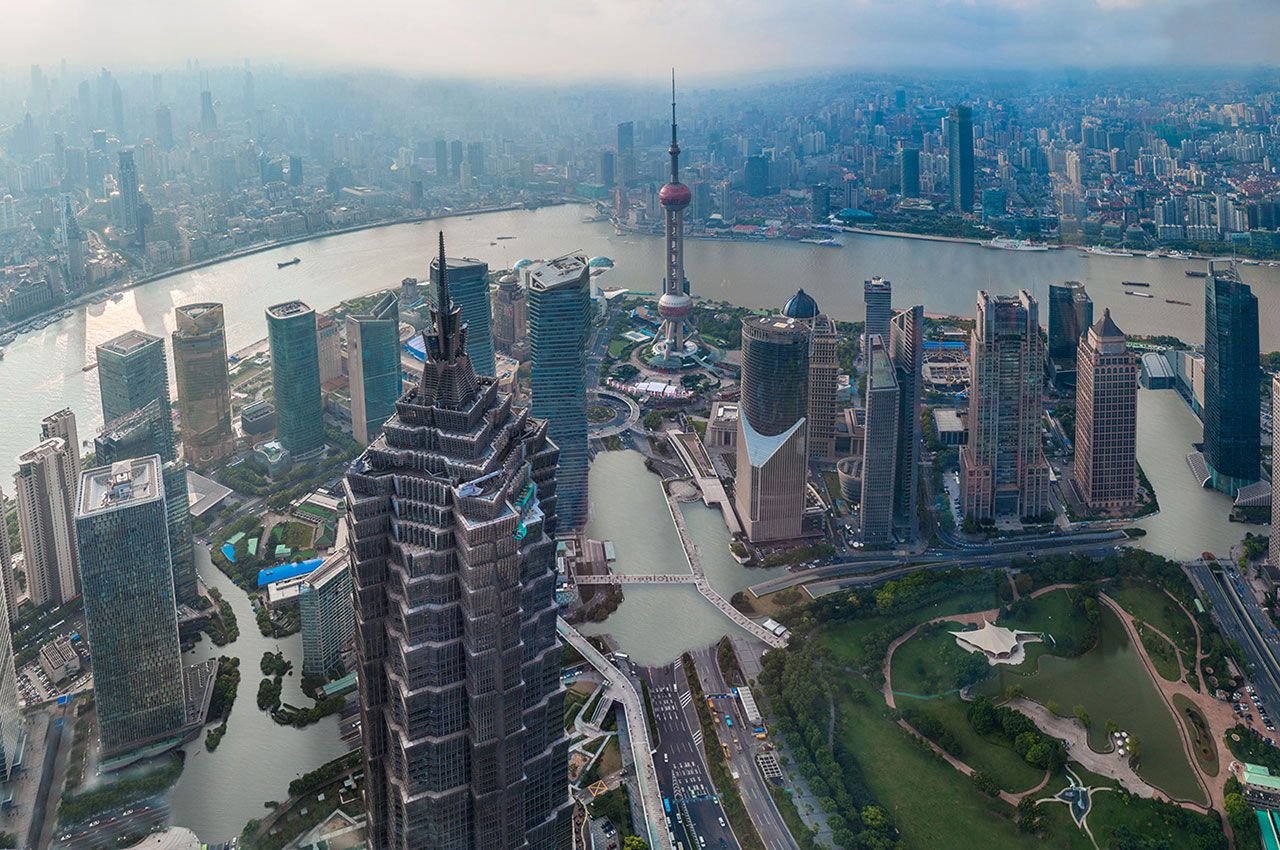
Even if the Paris summit, which starts on November 30, succeeds in its goal of limiting temperature rises to 2 degrees Celsius, around 280 million people would find their homes underwater, forecast Climate Central.

1
Shanghai after a 2 degree Celsius rise in temperature.


2
Shanghai after a 4 degree Celsius rise in temperature. Such a rise would hit China the hardest, with around 145 million people living in coastal areas that would be submerged, the Climate Central warned.

A separate World Bank study released late Sunday said there could be "more than 100 million additional people in poverty by 2030" if action was not taken to stem climate change.
"The poor are more vulnerable to climate-related shocks than wealthier people," said the report, urging "strong action" from leaders and diplomats at the Paris summit.


French Foreign Minister Laurent Fabius, who is hosting the meeting, issued his own dire warnings as ministers gathered in the French capital for eleventh-hour negotiations.
"It is life on our planet itself which is at stake," Fabius told journalists as ministers and climate envoys from 70 countries met for pre-summit talks to iron out tough political questions.
With the key UN conference just three weeks away, Fabius also announced Russia's President Vladimir Putin would attend the November 30 opening.

London after a 2 degree Celsius rise in temperature. Photo: Climate Central


London after a 4 degree Celsius rise in temperature. Photo: Climate Central
Russia, a major oil producer, is seen as a deal-maker or breaker in the years-long attempt to negotiate the world's first truly universal pact to curb climate-altering greenhouse gas emissions.
"There is absolute urgency," said Fabius, to achieve the UN goal of limiting global warming to two degrees Celsius (3.6 degrees Fahrenheit) over pre-Industrial Revolution levels.
The UN's climate science panel has warned of an average temperature rise of "four, five, six degrees, if we do not act extremely quickly," he said.
"This would have catastrophic consequences because there would be drought... and colossal migration problems, including problems of war and peace."
Durban after a 2 degree Celsius temperature rise. Photo: Climate Central


Durban after a 4 degree Celsius temperature rise. Photo: Climate Central
'Life on Earth threatened'
Britain's Met Office announced Monday that local mean surface temperatures were set to reach 1 C above pre-industrial levels for the first time -- half-way to the 2 C threshold which scientists say humanity must not cross.
Environment and energy ministers in Paris are groping for convergence on issues dividing the 195 nations negotiating a climate rescue pact which must be inked at the upcoming summit.
A World Bank study Sunday said there could be "more than 100 million additional people in poverty by 2030" unless action is taken to stem climate change.


French Foreign Minister Laurent Fabius, hosting ministers and climate envoys from 70 countries to prepare for the summit over which he will preside, issued his own dire warning.
"It is life on our planet itself which is at stake," he said at the start of talks Sunday.
"There is absolute urgency" to achieve the 2 C goal, said Fabius. Anything higher would have "catastrophic consequences" -- including wars over dwindling water and other resources.
New York City after a 2 degree Celsius rise in temperature. Photo: Climate Central


New York City after a 4 degree Celsius rise in temperature. Photo: Climate Central


The summit will be opened by some 100 heads of state and government, among them US President Barack Obama, China's Xi Jinping, and Narendra Modi of India.
It is meant to produce the first truly universal pact to rein in climate change by curbing emissions from burning fossil fuel. It is also tasked with helping poor countries adapt to climate impacts already in the pipeline.
Ministers are the ones who will ink the deal at the end.
But first, they must find political compromise to feed into a blueprint for the deal compiled by rank-and-file diplomats over years of tough negotiations in the UN climate forum.
Mumbai after a 2 degree Celsius rise in temperature. Photo: Climate Central


Mumbai after a 4 degree Celsius rise in temperature. Photo: Climate Central


Wrangling over finance, fairness
For now, the draft remains little more than a laundry list of often directly opposing national options for dealing with the challenge at hand.
Countries remain divided on issues of fairness and finance -- basically who must be doing what.
Developing countries insist rich ones should lead the way in slashing emissions as they have polluted for longer.
They also want assurances of finance to make the shift from cheap and abundant fossil fuel to greener energy sources, and to shore up defences against climate change-induced superstorms, drought, flood and sea-level rise.
But industrialised countries point the finger at emerging giants such as China and India spewing carbon dioxide as they burn coal to power expanding populations and economies.


As the bickering continues, the UN last week issued a fresh warning that national carbon-curbing pledges submitted to date set the stage for warming of about 3 C, or more.
Last month, scientists said the first nine months of 2015 had been the hottest on record worldwide.

Rio de Janeiro after a 2 degree Celsius rise in temperature. Photo: Climate Central
Rio de Janeiro after a 4 degree Celsius rise in temperature. Photo: Climate Central


Pre-COP
Ministers are aiming to ink a global deal to prevent worst-case-scenario warming at the end of the November 30-December 11 Conference of Parties (COP21) in Paris.
It will be opened by UN chief Ban Ki-moon and some 100 heads of state and government including US President Barack Obama, China's Xi Jinping, Narendra Modi of India -- and now also Putin.
The three-day ministerial "pre-COP" from Sunday to Tuesday must seek political convergence on key issues still dividing nations, to avoid a repeat of the 2009 Copenhagen summit which ended without a binding global pact.
The Paris agreement will be underpinned by national pledges to curb greenhouse gas emissions from burning coal, oil and gas -- the best way to slow climate change.
Climate beliefs political: Survey

But the UN this week issued a fresh warning that pledges submitted to date set the stage for warming of closer to 3 C, or more.
Last month, scientists said the first nine months of 2015 had been the hottest on record worldwide.
Climate negotiators were bracing for another report later Monday, this time from the United Nations weather agency, which will release its annual report on the concentration of greenhouse gases in the atmosphere.


Laundry list 
Ministers will base their discussions in the coming days on a rough draft of a deal compiled by rank-and-file diplomats over years of tough negotiations in the UN climate forum.
They cannot alter the text -- merely identify areas for potential political compromise to be fed back into it.
For now, the blueprint remains little more than a laundry list of often directly opposing national options for dealing with the challenge at hand.
Developing countries insist rich ones should lead the way in slashing emissions as they have polluted for longer.
They also want assurances of finance to make the shift from cheap and abundant fossil fuel to greener energy sources, and to shore up defences against climate change-induced superstorms, drought, flood and sea-level rise.
But industrialised countries point the finger at emerging giants such as China and India spewing carbon dioxide as they burn coal to power expanding populations and economies.

10/11/2015

Earth's Climate Entering New 'Permanent Reality' As CO2 Hits New High

The Guardian - Adam Vaughan

UN experts urge immediate action to cut emissions as CO2 concentrations in the atmosphere are on track to hit historic high, up 43% on pre-industrial times

Paris focus: Latest greenhouse gas warnings come just weeks before major global climate talks.
Photograph: Chesnot/Getty Images

The Earth’s climate will enter a new “permanent reality” from next year when concentrations of CO2 in the atmosphere are likely to pass a historic milestone, the head of the UN’s weather agency has warned.
The record concentrations of CO2 in the atmosphere were up 43% since pre-industrial times, said the World Meteorological Organization (WMO), prompting its secretary general Michel Jarraud to say immediate action was needed to cut CO2 emissions.
The WMO’s latest greenhouse gas bulletin comes just three weeks before world leaders including Barack Obama, Xi Jinping and David Cameron meet in Paris in a bid to reach a new deal on cutting emissions.

Atmospheric CO2
Guardian graphic Source: World Meteorological Organization

Concentrations of CO2 stood at a global annual average of 397.7ppm in 2014, up from about 278ppm in 1750, and the UN said the global annual average is likely to pass the symbolic 400ppm milestone in 2016. Scientists say that the ‘safe’ level of CO2 to avoid dangerous global warming is more like 350ppm.
“We will soon be living with globally averaged CO2 levels above 400 parts per million as a permanent reality,” said Jarraud.
“We can’t see CO2. It is an invisible threat, but a very real one. It means hotter global temperatures, more extreme weather events like heatwaves and floods, melting ice, rising sea levels and increased acidity of the oceans. This is happening now and we are moving into uncharted territory at a frightening speed,” he said.
The increase in CO2 concentrations from 2013 to 2014 was 1.9ppm CO2, slightly lower than the mean for the last decade of 2.06ppm, but higher than the 1990s mean of 1.5ppm.
The WMO also warned that the rising Earth surface temperature caused by these record CO2 concentrations created a vicious circle when it comes to water vapour. Higher temperatures lead to more atmospheric water vapour, which in turn traps even more heat.
Jarraud said that each year he announced new records for CO2 concentrations and that to keep temperatures within manageable levels, CO2 emissions from factories, cars and power plants needed to be cut now. “The laws of physics are non-negotiable,” he said.

COP21 In Paris Doesn't Define Climate Change Action

The Huffington Post Australia

Pete Turner via Getty Images

As we get closer to the 21st Conference of the Parties (COP) in Paris in November and December, the thought pieces, blogs, and public lectures have been piling up. What will success at COP21 look like? What will it mean for global climate efforts? What if it is a failure?
But is all this time, energy, and media scrutiny misplaced? As someone who has been working in the Australian climate change adaptation space for the past four years, I believe so.
While the outcomes of COP21 will undoubtedly impact the world's ability to significantly lower global emissions, many are unaware that a lot of the groundwork on climate action has already begun at a local level across the country.
For the past three decades, the international community has debated the veracity of climate science, employed market mechanisms for reducing carbon emissions (to varying success), and debated reduction targets, while Smaller Island Developing States (and later other developing countries) have pleaded for action to halt the climate impacts they have been experiencing over the past few years.
Australia is a laggard when it comes to emissions reduction, with a poor target to take to Paris and the political baggage of climate sceptics in key political positions.
What most Australians don't know is that local councils have been developing Climate Change Adaptation Plans (CCAPs) since 2007, with well over 100 plans across the country. The Federal government may be dragging its feet, but local councils have been all over this for years.
The most recent council to release its CCAP was the City of Sydney. The adaptation strategy was developed with the input of internal and external stakeholders as well as the input of our Sydney University Research team (Professor David Schlosberg, Dr Simon Niemeyer and myself) who designed a Citizens' Panel to contribute to the development of the CCAP.
The strategy now includes the concerns raised by citizens through that Panel, with citizen-endorsed actions and prioritised risks highlighted throughout. This policy development is independent of COP21, and has real implications for overcoming the challenges presented by climate impacts.
For the most part, CCAP development has evaded attention in Australia. The general public are largely unaware of the amount of work their local councils have done in this space, and a lot of that conscious 'under-the-radar' approach can be traced back to negative politics over climate change in the country.
Regardless of the outcome in Paris, local councils will continue to plan for the extreme weather events brought about by climate change, especially the ones they are already beginning to face such as prolonged heatwaves, severe bushfires and wild storm weather.
Furthermore, as pointed out at the recent Sydney Ideas event A Global Climate Deal in 2015, civil society has and will continue to play a huge role in building momentum for climate action.
Canadian author and activist Naomi Klein rightfully devotes chapters to the progress of social movements and grassroots activists across the world in achieving climate wins in her climate change bestseller This Changes Everything.
Increasingly, it is the efforts of local communities who Lock the Gate, participate in blockadia, divest, and campaign for climate action which creates the momentum needed to face the climate challenge.
And the momentum in Australia is not just underway in the adaptation space. The recent release of the movie Frackman and successful launch of 'Powershop' (which recently partnered with Oxfam) over the past year indicate that Australians are increasingly aware of the need to mitigate emissions, to reconnect with the Earth, and to work towards a non-polluting economy.
Recent research conducted for my thesis also indicates that Australians do not always distinguish between mitigation and adaptation specifically, but rather approach the issue with a focus on holistic, interconnected strategies to deal with the climate change problem.
Paris is not the be-all and end-all for global climate change action. Incremental changes over the past 10 years have delivered pockets of success all over the globe, and those will continue post-Paris regardless of what happens.
Why wait for the outcomes of Paris? There is plenty of engagement already taking place.

Lethal Heating is a citizens' initiative