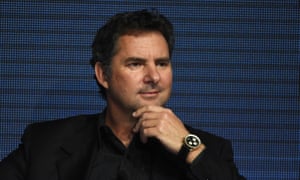
In a wide-ranging conversation, the journalist and climate activist discusses the recent Paris climate accords, the politics of global warming, climate change denial and environmental justice.
A
week and a half ago, just as a blizzard was barreling up the East
Coast, I traveled to my hometown, Canandaigua, NY, and before a
standing-room-only audience of more than 400 at Finger Lakes Community
College, had a conversation with author and climate activist Naomi
Klein.
Our talk was part of the George M. Ewing Forum, named in
honor of the late editor and publisher of our local newspaper. He was a
worldly and informed man, dedicated to good talk and a lively exchange
of ideas. The forum brings to town a variety of speakers each year, some
of them from the area, others not.
The Finger Lakes region is a
beautiful part of the country. As has often been said, it runs on water,
and as I grew up, there was an increasing realization that what we have
is an invaluable natural resource we could be in danger of losing. Over
the years, the threats have grown ever more complex with greater
hazards revealed as pollution and development have encroached on the
landscape. As a result, much of our audience was composed of
environmentalists and concerned citizens, including a contingent from We
Are Seneca Lake, the grassroots campaign fighting against the use of
crumbling salt mines under the hillsides to store fracked natural gas
and liquefied petroleum gases. (One of its leaders is biologist, mother
and
Moyers & Company guest Sandra Steingraber.)
The
conversation with Naomi Klein was billed as "Capitalism vs. The
Climate: Reflections on the 2015 UN Climate Conference," and while we
certainly spoke a great deal about that recent climate agreement in
Paris, our talk ranged more widely as we discussed her life and work,
politics, the continuing right-wing denial of global warming, and the
climate justice movement.
Naomi Klein is an award-winning journalist, syndicated columnist and author of the bestseller,
The Shock Doctrine: The Rise of Disaster Capitalism.
She's a member of the board of directors for 350.org, the global
grassroots movement to solve the climate crisis. Among many other
honors, in 2015 she received The Izzy Award – named after the great
writer and editor IF Stone — celebrating outstanding achievement in
independent journalism and media.
Klein's most recent book,
This Changes Everything: Capitalism vs the Climate,
was shortlisted for the 2015 PEN Literary Awards in the nonfiction
category. A documentary based on the book, directed by Avi Lewis, was
released last fall.
Our conversation has been edited for length and clarity. I began with the most basic question:
This changes everything — how?
Naomi Klein: So the 'this' in
This Changes Everything
is climate change. And the argument that I make in the book is that we
find ourselves in this moment where there are no non-radical options
left before us. Change or be changed, right? And what we mean by that is
that climate change, if we don't change course, if we don't change our
political and economic system, is going to change everything about our
physical world. And that is what climate scientists are telling us when
they say business as usual leads to three to four degrees Celsius of
warming. That's the road we are on. We can get off that road, but we're
now so far along it, we've put off the crucial policies for so long,
that now we can't do it gradually. We have to swerve, right? And
swerving requires such a radical departure from the kind of political
and economic system we have right now that we pretty much have to change
everything.
We have to change the kind of free trade deals we
sign. We would have to change the absolutely central role of frenetic
consumption in our culture. We would have to change the role of money in
politics and our political system. We would have to change our attitude
towards regulating corporations. We would have to change our guiding
ideology.
You know, since the 1980s we've been living in this era,
really, of corporate rule, based on this idea that the role of
government is to liberate the power of capital so that they can have as
much economic growth as quickly as possible and then all good things
will flow from that. And that is what justifies privatization,
deregulation, cuts to corporate taxes offset by cuts to public services —
all of this is incompatible with what we need to do in the face of the
climate crisis. We need to invest massively in the public sphere to have
a renewable energy system, to have good public transit and rail. That
money needs to come from somewhere, so it's going to have to come from
the people who have the money.
And I actually believe it's deeper
than that, that it's about changing the paradigm of a culture that is
based on separateness from nature, that is based on the idea that we can
dominate nature, that we are the boss, that we are in charge. Climate
change challenges all of that. It says, you know, all this time that
you've been living in this bubble apart from nature, that has been
fueled by a substance that all the while has been accumulating in the
atmosphere, and you told yourself you were the boss, you told yourself
you could have a one-way relationship with the natural world, but now
comes the response: "You thought you were in charge? Think again." And
we can either mourn our status as boss of the world and see it as some
cosmic demotion — which is why I think the extreme right is so freaked
out by climate change that they have to deny it. It isn't just that it
is a threat to their profits. It's a threat to a whole worldview that
says you have dominion over all things, and that's extremely
threatening.
Just after Superstorm Sandy in 2012, Bloomberg Business Week
published a cover story and the cover said, "It's global warming,
stupid." And now here we are, the two of us sitting here the day after a
massive snowfall on the Atlantic seaboard. What's that telling you, me
and the rest of us to think?
That we're really stupid?
[laughter] I mean I do think that Sandy was a turning point. If you look
at the polling around climate change in this country before Sandy, that
was kind of the low point in terms of Americans believing that climate
change was real and that humans were causing it. And I think that there
have been so many messages, you know, whether it's the California
drought and the wildfires or the flooding that we just saw in the
American South — it's just getting harder and harder to deny that
there's something really, really strange going on.
We have a
structural problem, because you can simultaneously understand the medium
to long-term risks of climate change and also come to the conclusion
that it is in your short-term economic interest to invest in oil and
gas. Which is why, you know, anybody who tells you that the market is
going to fix this on its own is lying to you.
And I've
always been struck, too, by the military's embrace of the reality of
climate change, that they've been warning us for years about this.
Because that's why they're going to have to fight a lot of the time.
Yeah.
And I think that's becoming clearer and clearer as well because — you
know, I have to give credit to John Kerry in terms of the fact that he's
been out front making the connection between the civil war in Syria and
climate change, that before the outbreak of civil war, Syria
experienced the worst drought in its history and that led to an internal
migration of between 1.5 and 2 million people, and when you have that
kind of massive internal migration, it exacerbates tension in an already
tense place.
In addition to that, beforehand you had the invasion
of Iraq, which also had a little something to do with climate change in
the sense that it was a war that had maybe a little something to do
with oil [laughter], which is one of the substances causing climate
change.
You also have the military burning these vast
amounts of fossil fuels and yet saying global warming is a danger. But
speaking of John Kerry, that brings up [the UN climate summit in] Paris.
That was a month and a half ago now. Kerry described it as a victory
for the planet. Michael T. Klare had said that Paris should be
considered not just a climate summit but a peace conference, perhaps the most significant peace convocation in history. What do you think?
Michael
said that before the summit, making the argument that if we don't do
what's necessary in the face of the climate crisis, if we don't
radically bring down emissions and get to 100 percent renewable energy —
which we can do very, very rapidly — if we don't do that, then we're
going to be facing a world of conflict.
That became particularly
relevant because two weeks ahead of the summit were those horrific
terrorist attacks in Paris and then the world conversation really
shifted, you know, almost as dramatically as after 9/11, where it was
just like, okay, we were talking about climate change. That conversation
is pretty much over and now we're going to be talking about security
all the time.
I was in Paris for three weeks in this period and it
was pretty striking that the summit, even though it was in Paris, even
though there were I believe 40,000 people who came to Paris for the
summit, it barely made the front page of
Le Monde and
Libération except for a couple of days, because the focus was so fervently on security issues.
So,
you know, we need to make the connections, and it's not — to me it's
not about saying this is more important than security, because that's
not a conversation you can win. I mean if people feel immediately
threatened, that is going to trump climate change. It's about showing
the connections and saying these are not separate issues. We live in an
interconnected world, in an interconnected time, and we need holistic
solutions. We have a crisis of inequality and we need climate solutions
that solve that crisis.
So in terms of what to make of Paris, the
truth is, I think that the deal that those politicians managed to
negotiate, there was all this euphoria. I've never seen leaders
congratulate themselves so fervently. [laughter] It was truly
unseemly. "We are awesome!" Yeah. [laughter]
And I have to say
that the reporting was far too deferential, far too credulous. There
were headlines like, you know, this agreement marks the end of the
fossil fuel era. And then a couple weeks ago there was a piece
interviewing executives from all the major oil companies about whether
they felt that the Paris agreement was going to impact their business
model and all of them [who] agreed to talk said not at all. And Exxon
said, "We don't expect it to impact any of our assets" and specifically
said, "We don't believe this will lead to a single stranded asset." And
now, since we know that the fossil fuel companies have five times more
carbon in their proven reserves than is compatible with a two-degree
temperature target — and what's in the agreement is that we should
actually try to keep it to 1.5 degrees warming Celsius — if they're
saying it's not going to impact their assets, what they're saying is,
"Look, this is a nonbinding, non-legally binding, non-enforceable
agreement and we're going to continue with business as usual as long as
we can."
That said, the fact is that there is a very ambitious
target in the agreement, [but] no policies to make it a reality, okay?
So the agreement says that we pledge to keep temperatures below two
degrees and we'll endeavor to keep them below 1.5 degrees Celsius. Now,
we have already increased temperatures to one degree Celsius, okay? So
we're already in the dangerous era of climate change. But we can't stop
now. It's just the nature of it. You know, we've already locked in
impacts. So 1.5 is an extremely ambitious target. We would need to be
cutting our emissions by at least 10 percent a year or more in wealthy
countries if we were going to take that target seriously. If you add up
all the targets that governments brought to Paris — because the way it
was structured is, we have a goal, but because we don't believe in
regulation or anything top down — and this is where the ideology comes
in — everybody can just go home and voluntarily say what they're going
to do and then we'll add it all up and hope it works out. And it turns
out, no, it doesn't work out. It adds up to three to four degrees of
warming.
Did you feel that the fact that after the terror
attacks there was a clamping down on people being able to demonstrate
and protest outside the conference, did that have an effect, do you
think, on the meetings?
I do think it had an effect,
yeah, I do. There was a blanket ban on demonstrations during the summit.
The way the government defined it under the state of emergency was "any
gathering of more than three people of a political nature was banned."
And this was quite extraordinary. I pointed out that even George Bush
and Dick Cheney didn't ban protests after 9/11. There was not a blanket
ban across the board. And that was what the Hollande government did. And
it was a very, very fraught situation for France because regional
elections happened during the summit and the Front National, which is
the sort of fascist party in France, was gaining in the polls and so the
summit became this tool for the Hollande government that was supposed
to be a fantastic public relations moment for them and they were bound
and determined to get that happy picture at the end where everyone's
cheering and going, "You're awesome." And they got it. And I do think
that if demonstrations had been permitted, there would have been a
different kind of debate, in particular around an issue like
agriculture.
Because one of the things that was really striking
about the summit is that it was the most corporate sponsored UN climate
summit that any of us had ever seen. There had been encroaching
corporate sponsorship at previous ones but in France you got the nuclear
industry, you got the private water industry, which is very, very
strong in France, and these huge agribusiness companies that sponsored
the summit. And so they were marketing their product as climate
solutions, whether it was so-called drought-resistant GMO seeds, or they
call it climate-smart agriculture, which is the new way they're
marketing GMOs, or companies like [GDF Suez], water companies seeing
water scarcity as a market opportunity for obvious reasons or the huge
nuclear power companies marketing nuclear power as a better alternative
to renewables.
So they all had a big megaphone inside the summit
because they had access, they were sponsoring, they had a whole forum to
themselves. We knew that was going to happen but the streets were
supposed to be ours. The streets were the social movements, this was
where we were going to be presenting our alternatives. And then we were
just told, "No. You have to stay — you're not allowed on the streets. So
you can still have your little alternative summit in the middle of
nowhere in the suburbs that nobody's going to go to." And that's the way
it played out. So I don't know that it would have changed the
agreement, but I think it would have changed people's understanding of
what happened. I think there would have been a million people in the
streets of Paris without that ban. That's what they were projecting.
And even within the conference center itself, a lot of countries never got to speak.
Oh, it was so tightly controlled.
Because I think that they realized that they didn't need a consensus, they just needed a majority to get it through.
And
it was ugly. There was a moment where it was almost like a test of
"will you stand with France? Are you really going to screw France in
their moment of need?" It was just ugly. And you're talking about
countries that are fighting for their own survival. They've got a lot of
skin in this game. So it was a very, very tightly controlled summit.
The good thing is that it played out over two weeks — I mean, these are
long events — and it was kind of amazing to watch the city get its
courage back, because at the beginning of the summit people were really
scared and really tentative about being in the streets and really not
sure about whether they were being disloyal. But by the end people were
ready to take their city back, they were ready to take their streets
back, they were ready to defend liberty. This thing in France about
liberté,
that this is what's under attack. And the way that we're going to
defend ourselves is that we're all going to stay home? Or go shopping?
As if any of this sounds familiar? [laughter]
But it was
particularly striking because it was Christmas shopping season so
everything's lit up and everybody's shopping. You're allowed to shop and
you're encouraged to shop and all the Christmas markets are on and all
the football matches are on, you just can't protest. And so at a certain
point the Parisians just said, "Screw it, we're doing it." And so in
the end people did take to the streets again and I felt really lucky to
be part of that process of people getting their courage back. And I
think it was very important.
We have less than a year now,
as of today, of Barack Obama's administration. What is your assessment
of him as an environmental president?
Well, you know, he
certainly, in the final year and change in office, he is showing us what
leadership looks like. And to me it's all the more frustrating, in a
way, that he didn't do much more of this starting immediately. What he
has done in the last few years shows that there was actually quite a lot
of executive power, which people were saying from the beginning. You
know, as soon as it was clear, in Copenhagen in 2009, that the Senate
was blocking Obama from introducing meaningful climate legislation, the
push was for him to use executive authority, use the EPA, use the tool
of federal leases, and there was just a refusal to do it. And now we're
seeing it in the final years, but it's very vulnerable. You know, it's
vulnerable to a next administration. And I'm not just talking about
Trump. I'm talking about Hillary Clinton, because [initially] Hillary
Clinton was, when it came to the Keystone fight, ready to rubber stamp
that pipeline from day one.
So I think he's doing what needs to be
done to be able to say that he's got a good legacy. But it's not
enough. I always remember the moment after the cap and trade bill fell,
after it collapsed, Bill McKibben wrote an article to the environmental
movement going, "Look, we tried it your way. We tried the polite
lobbying, closed door, not making a fuss, you know, give the guy a
chance, let's compromise route, and it delivered less than nothing. So
now we're going to try something else. We're going to try street
pressure, outside pressure, civil disobedience. We're going to try being
a royal pain in the neck and see if that gets results."
I think
we waited too long and lost some precious time. Because the thing about
climate change is, you know, you hear the clock ticking so loudly,
right?
There was a video you did for The Guardian
last spring in which you said that sometimes capitalism gives us a
gift, and that with the decline in global oil prices, the moment was
rife for kicking the fossil fuel industry while it's down. I was
wondering if you could elaborate on that a little bit.
Oil
has gone from $150 dollars a barrel to below $30 dollars a barrel in a
period of 18 months. I mean this is incredible. Nobody predicted this.
And, you know, it's potentially a game changer. But it's complicated,
right? I mean it isn't just, okay, well, this is going to be good for
climate action, because when oil is cheap it encourages people to use
oil. It encourages people to buy bigger cars, it encourages people to
treat this commodity as if it is cheap, because it is cheap, and not
think about the impacts. So we actually need oil to be more expensive.
And that's why this would be an excellent time to introduce a carbon
tax.
But this comes back to the sort of central argument I'm
trying to put out there, that we are not going to do the things that we
need to do unless we engage in a battle of ideas. I don't know, has
anybody read or started reading Jane Mayer's new book about the Koch
brothers,
Dark Money? I mean it's an extraordinary book because
it reminds us that we have been living, over the past 40 years, a very
planned and concerted campaign to change the ideas that govern our
societies. The Koch brothers set out to change the values, to change the
core ideas that people believed in.
And there is no progressive
equivalent of taking ideas seriously. So we've got lots of funding for
campaigns for people working on all kinds of different areas but a
metanarrative, like the Charles Koch metanarrative — and he's said it
explicitly — is that he is challenging collectivism, he is challenging
the idea that when people get together they can do good. And he is
putting forward the worldview that we're all very familiar with that if
you free the individual to pursue their self-interest that will actually
benefit the majority. So you need to attack everything that is
collective, whether it's labor rights or whether it's public health care
or whether it's regulatory action. All of this falls under the
metanarrative of an attack on collectivism.
So what is the
progressive metanarrative? Who funds it? Who is working on changing
ideas that can say, "Actually, when we pool our resources, when we work
together, we can do more and better than when we only act as
individuals." I don't think we value that. So here we are in this moment
when of course we should be introducing a carbon tax but it's like
almost unthinkable that we could. I mean, tax, we can't say tax,
everyone hates taxes, right?
So we can't avoid those battles of
ideas. We can't avoid those big discussions about what our values are.
Because if we don't engage in them then we aren't going to be able to
introduce these very simple policy solutions. So yes, okay, the argument
I made about the oil price shock is this creates the conditions where
we could really change the game but we're not going to be able to do it
if we're not willing to talk about an aggressive carbon tax. But to me, I
think the Koch brothers are so interesting in the sense that it really
does show us how much ideological ground we've lost. They never take
their eye off it.
Charles Koch was asked recently whether he feels
he has had enough influence. And his answer was revealing, he said,
"Well, they haven't nationalized us." That's his concern. So then you
think about it, we would never, it would be so unthinkable to just talk
about, well, why don't we nationalize Koch Industries? That's a crazy
thing to say, but he's thinking about it.
He's also
worrying about, "If I spend $900 million dollars on this election, by
God, I want to get something back for my money." And it's frightening
what he expects to get. But he's disappointed in all the candidates, he
said in that same interview.
Yes, he's disappointed but
he knows it could be worse. It's amazing how much money they need to
spend. Another way of thinking about it is it's extraordinary how much
money they have to spend and they don't always win. That's amazing.
And
I do think it's going to get harder for fossil fuel companies. It
really is going to get scary. And they're terrified of the Exxon
investigations because if Exxon has been systematically misleading the
public, if they knew, all of this is going to be coming out, then this
raises huge questions about the legitimacy of their profits. And Exxon
is the most profitable company in the history of the world, $42 billion
dollars in profits in a single year. And here we are unable to pay for
public transit, unable to pay for the kinds of infrastructure that we
need to deal with the crisis that they have created.
This is a
conversation that they're going to really try to have not happen. And I
know there are people here who are working on a carbon tax. And it's
great but often you'll hear people say, "Well, it has to be
revenue-neutral. It has to be fee and dividend. Don't call it a tax."
Because we accept the Koch framework as a premise that if we're going to
take money from people we have to give it all back, all of it. That's
what fee and dividend means, it means we will tax you and we'll give you
the exact same amount back that you gave us. That leaves the government
with nothing. So what are you going to use to pay for transit? What are
you going to use to pay for a renewable energy grid? How are you going
to get to 100 percent renewables? We have to talk about the fact that
we need more money. It has come from somewhere. So I think it is really
worth studying how the center was moved in that way.
The
famous Overton window, moving us rightward. And the degree, just going
back to what you were saying about the degree of denial, it's just so
flabbergasting and I was hoping you would tell the story that you tell
about covering the annual meeting of the Heartland Institute and what
happened with Oklahoma's US Senator Jim Inhofe, which is such a great
story.
So the Heartland Institute, which is a free market
think tank that hosts this annual climate change denial summit, their
influence is waning. They're very interesting, because I think that
somehow they managed to market themselves as somehow having some
scientific credibility, but they're not. They are a free market think
tank and when we interviewed Joseph Bast, the head of the Heartland
Institute, I asked him how he got interested in climate change and he
said, very frankly, "Well, we realized that if the science was true that
would allow liberals to justify pretty much any kind of regulation, so
we took another look at the science." [laughter] He's very frank about
this.
And in the book the name of the chapter is "The Right is
Right" because they're not right about the science but I believe that
they understand the implications of the science better than most
liberals in the sense that they absolutely understand that if climate
change is real, it is the end of their ideological project. The entire
scaffolding on which their attack on regulations, attacks on collective
action rests falls apart. Because of course you need collective action,
of course you need to regulate corporations, it's over, it's game over
for them. So they have to do everything possible to deny the science.
And what's amazing to me is how many liberal think tanks devote almost
no energy to talking about climate change.
So the issue is how
hard it is to change people's minds when they're as invested in these
ideas ideologically but also funding-wise. Jim Inhofe gets a lot of
money from the coal industry. So he was supposed to be the keynote
speaker of this particular Heartland conference. It was advertised,
people were extremely excited to hear from him. And Joe Bast announced
in the morning that James Inhofe was sick and he was not going to be
regaling them that morning. People were very disappointed. It came out
later — we didn't know this at the time — I looked into it after, what
was wrong with Jim Inhofe because I wasn't sure, was he really sick or
did he just for some reason think it wasn't a good idea to hang out with
these crazies?
And it turns out he really was sick and he was
sick because — and he explained this — he'd gone swimming in a lake in
Oklahoma and it was in the middle of a heatwave and there was an
outbreak of blue-green algae, which is linked to climate change. He
basically had a climate change illness. [laughter] And this is why he
could not speak at the climate denial conference.
But this did not
make him go, "Oh, maybe they have a point." He sent a letter just
saying, "I can't be there because I'm sick," basically from his hospital
bed going, "Keep up the good work." [laughter] So people sometimes ask
me, "Well, how can I change the mind of my extremely right wing uncle
who only listens to Fox News and so on?" And I tell them, "Honestly, I'm
not sure that you should devote that much energy to trying to change
his mind. You can if you want to but first, there's a much larger group
of people out there who are not that invested in protecting an extreme
ideological worldview or protecting their own financial interests who
actually probably believe that climate change is real but are scared,
don't know what they can do about it, are sort of in a state of soft
denial, like most of us are in, like, 'Oh, I can't look at it, it's just
too awful.' That's a much better place for us to invest our energy than
trying to convince James Inhofe, because if getting a climate
change-related illness didn't impact him in any way [laughter], I don't
think you just laying out the science is going to help."
I
want to change course a little bit — what brought you to this point?
How did you become this articulate advocate of this cause? What changed
you? When you say, this changes everything, what changed Naomi Klein?
I think my wake-up call was definitely [Hurricane] Katrina. And I was writing the book that I wrote before this, I was writing
The Shock Doctrine.
And I was in New Orleans during Katrina while it was still underwater
and doing reporting. I was there when all the lobbyists were descending
on Baton Rouge with their wish lists: Close down public housing.
Privatize the school system. And New Orleans, it was just such a
horrifying thing to witness firsthand. To me, it's one of those events
that actually becomes more shocking with time. With some things you kind
of get used to them, but I think actually what happened in New Orleans,
it was so shocking that we couldn't actually believe it or metabolize
it, in particular the fact that African-American residents were given
one-way tickets out of their city, forcibly relocated, at gunpoint,
people were loaded onto buses. And there was no plan to bring them back.
And while they were gone, their homes were bulldozed. I mean this is,
to me, the more I think about it, the more shocking it becomes and there
was so much happening in that moment that I actually think that we
could not fully understand that this was — local residents were calling
it genocide and I think they had every right to call it that.
I've been pretty apocalyptic up until now, but
This Changes Everything
is actually an argument for our best chance to build a better society.
The flipside of the fact that the right understands — that if the
science is true it means their ideological project collapses — is that
if the science is true, and it is, it's an opportunity to put forward
another vision for how we want our society to function. We have to do
it. There is going to be some kind of adaptation and transition in the
face of climate change. There will have to be new infrastructure, there
will have to be new jobs. What kind of jobs do we want them to be? Right
now in California, 4,000 of the state's 10,000 firefighters are prison
inmates being paid $1 an hour to put their lives at risk fighting fires.
That's what this economic system does in the face of climate change. We
could be fighting for them to be living-wage jobs. We could say the
people who got the worst deal under the extractive energy model should
be first in line to have energy democracy, to own and control their own
renewable energy to create jobs and keep skills in communities.
We
have examples of this working. Germany has created 400,000 jobs in
their energy transition. And so much of it is decentralized and
community-owned, 900 new energy cooperatives in Germany. So we can do
this in a way that heals wounds dating back to our country's founding.
This can be a process of healing and reconstruction. I think it can be
incredibly inspiring. I forget what the question was. [laughter]
I was actually asking how you arrived at this point in your life.
So I arrived at it because
The Shock Doctrine
is about how our current system deals with crises, deals with shocks.
And when I started that book, I was talking about wars. I went to Iraq
after the invasion and reported for
Harper's about how the Bush
administration was treating Iraq as their sort of playground to
introduce extreme pro-corporate policies, like a 15 percent flat tax and
to privatize all of Iraq's industries and to get rid of the labor code
and all of that. And I was looking at the history of how economic crises
were used to push through extreme privatization policies and we see it
happening in southern Europe right now, in Greece and Spain and
Portugal.
And then, as I was writing
The Shock Doctrine,
I started to see it happening after natural disasters.
So the first reporting I did was after the Asian tsunami. This was a
devastating natural disaster, not linked to climate change, but that
tsunami cleared beaches in Thailand and Sri Lanka, in India. And in
country after country what we saw was developers using that as an
opportunity to push new land laws that allowed resorts to take land from
farmers and small fishing boats. Sri Lanka introduced a water
privatization bill two days after the tsunami. So my mind started to
focus on natural disasters, then Katrina happened. So this is how we got
to it. So for me Katrina was like, "Am I seeing the future?"
What
I felt when I was in New Orleans was this was science fiction but now.
The future's already here, this science fiction future that we're so
afraid of is already here in most parts of the world. So even though I
see an opportunity for the shock of climate change to be a positive
transformational moment, and I see that also because when I was
researching
The Shock Doctrine, I also researched how shocks
like the market crash of 1929 became progressive moments and moments to
expand democracy and expand participation and the inverse of the shock
doctrine.
I believe that climate change could be that if we seized
it. But what motivates me is not airy-fairy, la-la, like this is going
to be so great, what motivates me is New Orleans. What motivates me is
Katrina. What motivates me is that if progressives do not enter this
space with a vision of how we respond to crisis that brings us together
rather than apart, we are looking at a future of Katrinas because there
will be more and more climate shocks intersecting with weak and
neglected public infrastructure.
When the successful campaign of
the Koch brothers and their ilk, which has systematically defunded the
public sphere, intersects with more and more shocks to the system, which
climate change generates and also which capitalism just generates on
its own through market shocks, like the 2008 financial crisis, what will
happen under our current system is that rather than course correct,
each shock becomes an opportunity for more and more privatization, which
is what happened in New Orleans, more attacks on the public sphere.
So
rather than learning the lesson of Katrina, which is if you neglect the
public sphere, when shock comes, you will [be] completely unprepared.
FEMA can't find New Orleans for five days. People are abandoned on their
rooftops and in the Superdome. The system, the state, is totally
nonfunctional, [and] what's the answer? Privatize the school system,
shut down public housing and create this kind of corporate utopia.
And
so the problem with climate change is it's going to keep delivering
more and more of these shocks, not just weather shocks, but budget
shocks. You think about the price tag attached to an event like Sandy,
many billions of dollars. And so it's going to create bankruptcies. And
so what happens? Look at Flint, Michigan, look at what's happening
across Michigan where cities are handing over power because they've gone
bankrupt to private managers and then you have water crises and
layering on top of that it's not just inequality, it's racism and fear,
security fears. People become more fearful of each other. That's the
other thing we saw in New Orleans. There was this sort of vigilante
violence.
So climate change is an accelerant. We often talk about
how when you interview a climate scientist like Michael Mann or James
Hansen and you say, "Well, did climate change cause this storm?" They
won't say that. "No, it didn't cause it, but it loaded the dice. So we
were going to have the storm anyway but because of climate change you've
got this super storm." So what I would say is climate change does that
but not just with the weather. If you've got a racist society, if you've
got a problem of racism in your society and then you add climate change
to it, then it goes crazy. If you've got a problem with inequality and
then you add climate change to it, then it becomes sci-fi. So what
brings me to this is that I'm not just worried about things getting
hotter, and this is what I think that I wish more environmentalists
would wrap their heads around: This is not just about things getting
hotter and wetter, it's about things getting meaner. And that's why we
have to talk about values and who we want to be in the face of this
crisis.
If you have a culture that treats people like they're
disposable, that doesn't value people, then, when you confront a crisis
like climate change, those values will govern how you confront that
crisis. And making a connection between the refugee crisis where the
statistic was that 15 children died just this past week off of Greece, I
think more than 45 people drowned. So if we live in a culture that
allows people to disappear beneath the waves because we don't value
their lives enough, then it's not that big a step to allow whole
countries to disappear beneath the waves, which is what we are doing
when we allow temperatures to increase by three degrees, four degrees.
I
want to take some of these questions submitted by our audience: ""Of
the candidates running for president, who do you believe will most
effectively and aggressively move the issue of climate change?"
I
think of the candidates Bernie Sanders has by far the best track
record, so leaving aside the Republicans, it's recognized by all the
candidates that they're sort of competing with one another over who's
more opposed to Keystone, who's more opposed to Arctic drilling, who's
going to prosecute Exxon more and so on. So if we're just looking at
what people are saying, they're actually pretty close together.
Hillary's climate policies are pretty good. Bernie's are better.
But
if we're looking at track record, Bernie was standing with us on
Keystone from the very beginning and Hillary was on the wrong side of
Keystone in the beginning. So obviously I would trust him more, also
because of where his money is coming from. And I think her ties to the
oil and gas industry and the banks that fund them are really, really
troubling. And frankly, I generally stay out of electoral politics and
candidate endorsements and so on. And I haven't endorsed a candidate.
But I must say that it's pretty darn exciting that Bernie and his
operation have advanced as much as they have and have proven the critics
wrong again and again. And this is a pretty interesting moment where a
candidate as radical, if that's what you want to call him, and
plainspoken and certainly as independent as Bernie, could have as much
momentum as he has. And I don't agree with him on several foreign policy
issues. And I don't think he's a perfect candidate. If I dreamed up who
I would like to see, it probably wouldn't be Bernie. But he's doing it,
so at a certain point you just have to say, "Wow, they're pulling it
off."
Who's not running that you would like to see run, Elizabeth Warren or someone like that?
Yes,
I would have liked to have seen Elizabeth Warren run. I would have
liked to see somebody who looked a little bit like the changing face of
America. But that said, this is the person who is saying what needs to
be said and who is building a movement that is gaining ground that
people said could not be gained. So I had to ask myself, "Okay, well,
why aren't I publicly supporting Bernie?" These next five years are so
critical when it comes to climate change. And even looking at what is
going to happen based on what we find out in these Exxon investigations,
who would we trust to make the most of that? To me it's absolutely no
question. I can't think of anybody better than Bernie on that front —
unless Bill McKibben himself decided to run.
"What is the most viable and efficient source of renewable energy?"
I
think the sort of wonderful thing about renewable energy is that it
isn't one-size-fits-all. It really requires you to think about where you
live and where you are in nature. And this is why I think when we think
about shifting our energy from fossil fuels to renewables, it isn't
just sort of flipping a switch. It really is a paradigm shift because
what fossil fuels sold was the illusion that it doesn't matter where you
live, the illusion of separateness from nature and dominance.
This
was some of the most interesting research for me when I was writing the
book was going back and reading the marketing material for the early
steam engines. The way that the Watt steam engine marketed itself to
British industrialists and the owners of fleets of ships was, "For the
first time, you are the boss. You can sail your ships even when there's
no wind. You can build your factory wherever you want. You don't have to
be next to rushing water." It's very specific, right? Because before
that you had to build your factories where there was hydropower. So
that's the wonderful thing about renewables, you actually have to think
about where you live again. Maybe solar makes sense where you are, wind
makes sense. It is not going to be the same everywhere or one will
offset the other. I find decentralized renewables, whether it's wind or
solar or small scale hydro, to be most exciting because it decentralizes
economic power at the same time that it decentralizes power. So because
we face multiple crises, we have a crisis of concentrated wealth and
concentrated power, why wouldn't we seize the opportunity as we
transition from fossil fuels to decentralized economic power as much as
we can.
"Is it biologically possible to reverse climate
change with seven billion people on the planet not just burning fossil
fuels but eating, drinking, pooping, etcetera?"
So we're
not talking about reversing climate change. We're talking about
preventing catastrophic climate change, which is the road we're on. At
the same time as we can do everything possible to get to 100 percent
renewable energy. It does mean reducing demand. But the issue around
energy demand is much more about the consumption habits of a small
minority of the world's population than it is about numbers of people on
Earth. It is a relatively small percentage of people on this planet who
are responsible for the vast majority of emissions. Thomas Piketty has
done a really interesting breakdown of the connection around wealth and
emissions, showing that we really are talking about 10 percent of the
world's population being responsible for the vast majority of emissions.
So
when we change the subject to population, which is what I think this is
pointing to, my concern is that it's not that population isn't an
issue. But I think that it changes the conversation away from the
consumption habits of the wealthy to the procreation habits of the poor,
which is convenient for us. But the truth is that where population is
growing fastest are in parts of the world that are the poorest and have
the lowest emissions, like sub-Saharan Africa. So there are certainly
issues around how we consume but I don't think that population is the
overriding issue. I think it's our consumption habits.
Along
similar lines, "Shifting to sustainable organic agriculture is now
being touted as a way to capture most of the excess CO2. Is this a real
contender for dealing with climate change and why wasn't it part of the
Paris conference?"
Carbon offsetting and not organic
agriculture, which is what this question is about, but other ways of
using plants to capture CO2, are part of the Paris climate accord in
ways that are worrying because one of the things that's most striking
about the Paris climate accord is that the word oil is not mentioned
once, neither is coal. They talk about getting to zero net emissions,
which is code for "you can emit as long as you plant lots of trees to
absorb those emissions." So there's a lot of worries around how that
will be done, not through organic agriculture but through tree farms and
land grabs and the record of those kinds of projects is particularly
bad for indigenous people, tends not to be done very equitably at all
and is usually just an excuse for us to continue to pollute on the idea
that if we plant trees somewhere else it will fix it for us.
But
absolutely changing the way our agriculture system works, embracing
agro-ecological methods that don't use fossil fuel inputs and that
sequester carbon in the soil is a huge part of the solution. And so is
tree planting, by the way. Not to offset our emissions but actually to
draw down carbon in the atmosphere that is already there because we are
already at 400 parts per million. I'm on the board of 350 because we
need to actually get down to 350. But this is a slow process and the
best way is to do that, not tree farming but reforestation, sustainable
reforestation and also agro-ecological farming.
"How do we
activists engage and mobilize people whose lives are too busy, too
consumer-oriented, too focused on improving opportunities and fortune
for their children to consider climate change the number one political
and economic issue that it is?"
It's a great question and
I think that the first way I'll respond is how we don't do it. We don't
do it by going, "My issue is more important than your issue. You may be
worried about whatever your issue is, you're worried about feeding your
kids, you're worried about education, but none of that's going to
matter if the world cooks, so you all should care about climate change."
That's the way to really piss people off. [laughter]
I think that
the way you do it is by coming together as a community — it's something
I think that can really only happen locally — and dream together. What
would a response to climate change be that addressed the issues that are
most important to people? I mean, of course, people are more focused on
their kids' futures and their immediate economic concerns and people
are under enormous economic stress right now. And it's not about saying,
"Well, don't worry about fighting for $15 dollars an hour, you should
care about climate change." It's about saying, "We can create millions
of living-wage jobs in public transit and in renewable energy, in
reimaging our cities, we can improve our services, if we take this
crisis seriously, if we engage in this battle of ideas."
So I
think politics is always about meeting people where they're at and I
think we have made some real errors in the environmental movement by
engaging in this "My issue is bigger than your issue, what does it
matter if everything burns?" That really alienates people because so
many people in this country are engaged in legitimately very, very
urgent issues, whether they're fighting police violence, criminalization
or for jobs that allow them to have a life and support their kids, or
health care.
So it's really about connecting the dots and laying
out this vision. And it is an expansive vision and I think we need not
to be afraid of that. I think there's really two camps out there.
There's this sort of scarcity worldview where there's a finite amount of
political energy and we have to get people to care about climate change
and not these other issues because our issue is so important. And
there's even a sense among some that maybe climate change is more
winnable than some of those other issues. Poverty has always been with
us but everybody's affected by climate change, so we need to focus on
climate change instead of that.
And then there's the climate
justice movement. And the climate justice movement is really about
marrying the fights for economic and racial and gender justice with the
imperative to get off fossil fuels. And I think that's a much more
winning strategy. It's more complicated in terms of how you build those
coalitions. It's really, really hard to get in rooms with people you
don't usually work with and try to find common ground. But I think that
it's our only chance of winning. And I say this because when you think
about the math of fossil fuel divestment, the fact that these fossil
fuel companies have five times more carbon in their reserves that is
compatible with what our politicians say we need to do, they're fighting
for their survival. That's why they fight so hard. That's why they pour
so much money into opposition groups and it's not a coincidence that
the Koch brothers made their money in fossil fuels, they have so much to
lose if we take this crisis seriously.
And I think that the
climate movement has always been hurt by this perception that this is a
luxury issue, that this is the issue for people who don't have more
urgent economic issues to worry about. And it's that kind of idea that
this is kind of a bourgeois concern. And so I think that when climate
action is married with those urgent needs for jobs and better services
and a better quality of life for people, that's when people will fight
to win. That's when people will fight because they're fighting for their
lives. And they're fighting not just for the future, they're fighting
for their present. And I think that's the kind of movement we haven't
had yet. We haven't seen what that looks like yet.
That's a great place for us to end. Naomi, thank you so much.


 In 2015, Sweden threw down the gauntlet with an ambitious goal:
 Thanks to its unique geography and commitment to environmental preservation, small but mighty Costa Rica meets a
 Great Scot! The answer to Scotland's energy needs is blowing in the wind. In 2015, wind power produced the equivalent of
 Germany set the trend when it comes to renewable energy. It leads the
world in solar PV capacity and has even been able to meet as much of
 Going renewable doesn't have to take a lot of time and generous
subsidies. Uruguay is now 95-percent powered by renewables after less
than 10 years of concerted effort. The country invested heavily in wind
and solar with no subsidies or increases in consumer costs. The secret? "
 Denmark got
 Wondering how the world's largest carbon emitter can also be a
leader in renewable energy? It may seem counter-intuitive, but in 2014
China had the most installed wind energy capacity – by a longshot – and
the second-highest installed solar PV capacity. China has also committed
to phasing out coal and cleaning up its polluted air.
 With ample sun, Morocco decided to go big.
 In the US, a new solar energy system was installed
 Kenya believe it? This country is looking to geothermal energy to power
its future and reduce reliance on costly electricity imports. As of
2015,