Sunday, May 22, 2016

Why We Must ‘Think Global, Act Local’ On Climate Change

Renew Economy - 

Many catchy slogans come and go: "Just do it", "Carpe Diem", "play hard." But out of all of them, "think global, act local" is the one that resonates the most with me, and seems to apply best in this age when we are all connected but still have individual responsibilities.
It's a slogan that's become more and more applicable in an era of distributed energy when every consumer that wants to, can make a difference at the local level. Disruptive technology typically depends on many individuals making small individual decisions that collectively have large impacts on corporate behaviour. In that spirit and as part of the "cognitive surplus" its seems worthwhile to pull together three articles that summarise some well known, and some slightly less well known, features of the global context that underlies the unfolding energy transformation in Australia.
Article 1 today is a very brief and familiar summary of the global warming data and the primary contributors to CO2 emissions.
Article 2 will summarise the global renewable energy picture; and Article 3 will look at some of the recent global data and analysis, including China and India coal-fired electricity generation and economics.

Global temperature
I prefer to look at the global temperature in percentage terms. That's because, in my experience, 1 degree doesn't sound like something very important to the man in street, who is used to daily fluctuations of 10 degrees or more. Using percentages has its own problems, as Centigrade percentages will differ from Fahrenheit and, for the truly obsessed, Kelvin scales. Our primary data source is the National Oceanic and Atmospheric Administration (NOAA) and we like to use a 20-year moving average as the most smoothed form of data.
The disadvantage of moving averages is that they are out of date and give equal weight to old observations. This can be seen in the chart below. For that reason the ABS uses a "Henderson" trend for monthly and quarterly data, which gives more weight to the current observations and less weight to the older observations. Any stats-inclined people out there who want to calculate a 20-year Henderson weight, please get in touch. Here's the chart then. The anomaly average for calendar 2016 year to date is 1.13°C, about 8 per cent above the 20th century average.

Carbon emissions
The assumptions that underlie our thinking are:
The climate sensitivity is 3. That is, a doubling of CO2 concentration would lead to a 3°C temperature change. This relationship is linear, and emissions stay in the atmosphere for thousands of years.
  • The current concentration is 397 ppm of CO2.
  •  To keep temperature change at 2°C relative to the 20th century average of just under 14°C, cumulative emissions need to peak at around 800 GT of carbon. 1GT of carbon = 3.66 GT of CO2.
  • Cumulative carbon emissions at the end of 2015 are estimated at 550-600GT, an increase of about 11 GT YoY.
  • At the current rate, 800 GT will bet reached in 2035.
The following chart shows the cumulative causes from 1870 to 2014 of the increase in CO2.

From an economic perspective, electricity production is the No 1 cause of carbon emissions following by agriculture and industry.
global 3
And this chart shows that in recent years the increase in coal consumption is the main factor impacting the rate of change in carbon emissions.
 Looking at emissions by geography, the impact of China – and to a lesser extent, India – is clear, but the chart also shows that the collective rest-of-world, including Russia and Eastern Europe, Africa and South America and the remainder of Asia, continues to show significant growth. Cumulative emissions show that China is rapidly catching Europe and even India can no longer reasonably state that they didn't cause the problem, therefore they don't have to worry.
global 5
It's no great secret that the increase in coal is largely due to the growth of Chinese manufacturing. One view is that China has done the world's "metal and chemical bashing" in the past decade and, as such, China is just a symptom of the global problem.
Even so, we can see that limiting future coal and oil use in China and India, and limiting global oil consumption, are the two main drivers of slowing down the rate of increase in global temperatures.
The global carbon budget, simply put, shows that limiting total human-induced warming (accounting for both CO2 and other human influences on climate) to less than 2°C relative to the period 1861–1880 with a probability of 66 per cent would require total CO2 emissions from all anthropogenic sources since 1870 to be limited to about 2900 GtCO2. That's about 790 GtC. Recent emission rates are about 9.8 GtC per year and at that rate 2°C will be locked in by the mid 2030s.

At this point, any number of scenarios can be constructed about the rate of change and we will return to them over the next couple of articles. We close with the fact that, even based on the oil price (not the petrol or diesel price), the global oil industry has revenue of about $US1.7 trillion per year and the global coal industry about $US0.4 trillion. Gas and cement and land use loss of GDP from the efforts to reduce CO2 emissions are certainly not trivial. Annual emissions have basically been growing and are closely tied to GDP. In short the challenges facing the world and renewable energy industry shouldn't be underestimated.


Links

Australian Scientists Warn Of Climate Change Flash Flood Risk In Cities

Independent Australia - Tim Radford

Scientists in Australia warn that global warming will lead to more intense and concentrated summer storms seriously testing city drainage systems already struggling to cope.
Australians have already seen the devastating impact of floods in our cities (Image screenshot from YouTube video below)
CLIMATE CHANGE could bring the equivalent of the flash flood to the modern city. That is because, as global temperatures rise, summer storms will deposit more moisture.
Australian scientists say peak rainfall will also be more intense, over a more confined area and over a shorter timespan. And when overwhelming levels of rain fall on asphalt, tiles and cement, drainage systems built for a different climate regime may fail to cope.
"As warming proceeds, storms are shrinking in space and time," said Conrad Wasko, a PhD candidate in the school of civil and environmental engineering at the University of New South Wales (UNSW).
He continued:
"They are becoming more concentrated over a smaller area, and the rainfall is coming down more plentifully and with more intensity over a shorter period of time. When the storm shrinks to that extent, you have a huge amount of rain coming down over a smaller area."


Total precipitation

Most climate predictions are based on computer simulations that extend existing data. But this study is based on storms that have already happened.
Wasko and his colleagues report in Geophysical Research Letters that they analysed data from 1,300 rain gauges and 1,700 temperature stations across Australia to look for a link in the local temperature to the total precipitation, duration and area of a cloudburst.
The meteorologist's rule of thumb is that the potential moisture content of the atmosphere increases by 7 per cent with every 1°C temperature rise, so it follows that summer storms should potentially deliver more rainfall. The same scientists last year established that storms were getting briefer in duration.
The latest study looked at the area of rainfall and found that the heaviest downpour had moved nearer to the centre of each storm. And although the testing ground was confined to Australia, the study could have a message for city planners and hydraulic engineers worldwide.
Professor Ashish Sharma, one of the co-authors of the UNSW study, said:
Australia is a continent that spans almost all the climate zones in the world – Mediterranean, tropical, temperate, subtropical – everything except the Arctic or Antarctic. So the results hold a lot of value. We are finding the pattern repeating itself over and over, happening around Australia and around the world.
Look at the incidence of flooding in Mumbai or in Bangkok last year — you see urban streets full of water. You see it now in Jakarta and Rome and many parts of Canada. That's because the stormwater infrastructure cannot handle the rain and part of the reason there's more rain is the increase in global temperatures.
Kuala Lumpur flash floods due to inefficient drainage system. New Straits Times
Measurable difference
In addition to record temperatures during heatwaves, Australia has been hit by devastating floods linked to climate change, and in 2010 so much rain fell on the continent that it made a measurable difference to sea levels.
The Australian authors had already predicted that floods in some places – especially the warmer urban areas – could increase by 40 per cent. But there are a number of uncertainties.
Professor Sharma said.
When we say that the storms are shrinking in space and shrinking in time, and we say floods will increase, we are making an assumption that the volume of water coming down is not changing.
That assumption is very conservative, because you would expect the air to hold more moisture. If you factor in that as well, there'll be even more rainfall and more floods.


Links

Saturday, May 21, 2016

Physicians Must Respond to Climate Change: An Interview With ACP President Damle

Medscape - Laurie Scudder


Editor's Note:
The American College of Physicians (ACP) recently released a position statement emphasizing that climate change poses a catastrophic risk to human health, including more respiratory and heat-related illness, vector-borne diseases, malnutrition, and behavioral health problems, and stating that physicians have a crucial role to play in fighting it. In support of that position, the College released a toolkit to help physicians both advocate for effective climate change adaptation and mitigation policies and educate their communities. Medscape spoke with Nitin Damle, MD, MS, current ACP president, about the toolkit.
Nitin Damle, MD, MS
Image courtesy of Kevin Berne

Dr Damle is a practicing internist and senior/managing partner at South County Internal Medicine in Wakefield, Rhode Island, and a clinical associate professor of medicine at Alpert Medical School, Brown University. He also spoke about changes that he has initiated in his own practice to address this serious public health issue.
Medscape: Why should the ACP take on climate change? Some physicians have suggested, given how busy they are with a huge array of clinical issues, that this is not an issue that they can or should tackle. Why do physicians need to take this on?
Dr Damle: It's not really global climate change that we are addressing. We are addressing the health effects of global climate change. At ACP, we consider climate change to be a human health issue. Beyond any political or economic ramifications, it is an important issue for the care of our patients. The effects of global climate change are being felt now. We are seeing a longer season and more severe allergy symptoms. There is also an increase in respiratory illnesses and tick-borne and water-borne infectious diseases. In addition, there are heat wave-related illnesses and food insecurity in some parts of the world. These changes are not in the distant future; they are happening as we speak. It's important for us to try to educate the public, our patients, and our colleagues about the human health effects of global climate change.

Medscape: From a clinical perspective, what can physicians do today in their practices to address these health effects?
Dr Damle: Climate change has resulted in longer allergy seasons, more pollen, and more allergens generally in the air. These changes cause a significant amount of distress for patients—rhinorrhea, conjunctivitis, general discomfort, and an increased risk for sinusitis and upper respiratory tract infection. Climate change can affect people with chronic diseases, including cardiac disease, asthma, and obstructive pulmonary disease. Increased incidences of exacerbations of these conditions can lead to more emergency department visits and hospitalizations. These are the health effects of air pollution, ozone pollution, and global warming.

Medscape: A recent study in the journal Temperature[1] looked at the ability of individuals with diabetes to self-regulate their body temperature and postulated that extremes of temperature could be enough to tip someone with well-controlled diabetes out of control. Do you manage your diabetic patients differently as a result of climate change?
Dr Damle: Like hypertension, once diabetes is diagnosed, it is a life-long chronic condition. Many factors contribute to blood sugar control in diabetes, including extremes of weather. Heat exhaustion, heat prostration, and heat stroke can place diabetic patients at risk for episodes of hyperglycemia or hypoglycemia.

Medscape: Do you manage patients with chronic diseases differently in the summer? Has climate change affected the way you manage these patients?
Dr Damle: We are more aware of the health consequences of climate change for patients with diabetes, chronic obstructive pulmonary disease, asthma, or allergies. Patients who don't have air conditioning in summer or have no place to go during a heat wave are more vulnerable to the health effects of climate change. We make these patients aware of their risk when severe climate changes (eg, heat waves, drought, floods) are anticipated and discuss the steps that they should take to prepare. Depending on where they live, patients must take precautionary action so that they do not find themselves in an unstable health situation.
We make sure that patients with chronic conditions are optimally controlled and that they have adequate supplies of their medications, inhalers, or oxygen. If patients become unstable, we see them acutely so that we can treat them earlier and they don't end up going to the emergency department or having to be admitted to the hospital.
Going forward, heat waves will be a major source of health instability. The Earth is warming, and heat waves are increasing in frequency, affecting people to a significant degree. Thousands of people died during a heat wave in Europe a few years ago, and several hundred people died in Chicago during a recent heat wave.

Medscape: ACP's climate change toolkit includes suggestions for "greening your practice." What practical strategies has your own practice implemented in response to climate change?
Dr Damle: I'm in private practice in an eight-physician group. We have about 20,000 square feet of space, and we have implemented some significant measures to reduce our carbon footprint. We installed energy-efficient lighting, heating, and air conditioning. We use recycled products and water fountains instead of water bottles.
A wind farm has recently been erected off the coast of Rhode Island. It supplies the power for our electrical grid. Two of our employees have electric cars, so we are putting in an electric charging station. Many real-world changes can be made, some small and some more significant. Collectively, they can make a huge difference.

Medscape: What is the potential economic impact of such measures to a physician practice?
Dr Damle: Most of these measures can be implemented at relatively low cost. There may not be an immediate return on investment, but setting the example for the community has value. Physicians are an important and respected part of the community, especially if they are in private practice in smaller communities. These steps provide an opportunity for physicians to talk about global climate change and health. They demonstrate that physicians have some "skin in the game" by putting into action the things they are talking about.

Medscape: Changes also are being made within your hospital system. How critical was advocacy on your part and that of other physicians in encouraging the hospital to make these changes? Or were the decisions mainly driven by economic considerations?
Dr Damle: Our local hospital system understood the consequences of climate change on human health and was willing to implement green energy design in building renovations and was energy efficient, using wind and solar energy. For some measures (food waste, recycled products), the hospital might even see an immediate return on investment. These mitigation strategies can have a substantial impact; and, by implementing them, the hospital becomes a role model demonstrating what the healthcare system can do to battle global climate change.

Medscape: Why did ACP create the toolkit? Will any of the items within the toolkit take clinicians by surprise?
Dr Damle: The toolkit has two functions. First, it consolidates all of the current information into one resource that is easily accessible, whether on a website or in printed form. Its purpose is to educate and encourage health professionals, in a simplified way, to take action. Second, the toolkit includes slide presentations that are available to any ACP diplomat who wishes to use them to educate students at schools, colleagues at local chapter meetings, and the general public. The toolkit can be downloaded, and the slide sets are available to ACP members.

Medscape: Downloading a slide set and educating others is a way of establishing physicians as leaders within the community. That has benefits for physicians in enhancing the presence of their practices, as well.
Dr Damle: Absolutely. There are benefits to this exposure as a community leader, as someone with authority and credibility to whom the community looks for guidance. Spreading the word will help to mitigate the influence of naysayers on the topic of global climate change. Climate change is real, it's here, and it's time to take action. If we don't, the health consequences and consequences to the Earth are going to be significant, not just in the next 100 years but in the next 10, 20, or 25 years.

Links

Great Barrier Reef Needs $10bn For Chance Of Survival, Scientists Say

The Guardian - 

This election is Australia's last chance to save the reef, which requires $1bn a year for 10 years to reduce water pollution to give it a chance to survive climate change, report warns
Great Barrier Reef
The Great Barrier Reef is experiencing its worst ever bleaching event. Photograph: William West/AFP/Getty Images
The 2016 Australian election is the last opportunity to save the Great Barrier Reef, the authors of a new scientific paper have warned.
The government needs to commit to $1bn a year for 10 years to reduce water pollution, which would give the reef a chance to survive the impacts of climate change, according to the paper published in the journal Estuarine, Coastal and Shelf Science.
"This is the last chance," said the lead author, Jon Brodie from James Cook University. "The current spending is totally inadequate ... You either do it properly or you give up on the reef. It's that bad."
Climate change is dramatically impacting the reef, with warm water causing 93% of coral reefs to bleach this year. It is the worst bleaching event ever seen in the Great Barrier Reef. Mass bleaching events were never seen before 1998.
The reef's ability to recover from bleaching is hampered by water pollution, caused largely by nearby land-clearing, as well as fertiliser and pesticide run-off from farming. Fishing also damages the reef's resilience by disrupting the ecosystems that support healthy coral.
Brodie and his colleague Richard Pearson analysed all the current management plans, evaluated their impacts and developed an estimate of what would be needed to give the reef a fighting chance against already locked-in climate change. The required measures would cost $10bn over 10 years. Brodie said that would get water quality to a point where the reef was in the best shape possible to fight the impact of climate change.
"It's a lot of money but the alternative is just to give up on the reef," Brodie said. "We know how to do it. In fact right now we're spending a little bit of money doing some of it and we have made a little bit of progress with that little bit of money but we just need a lot more."
Several water quality improvement plans have been created over the past couple of years. They involve input from agricultural scientists, reef ecologists, economists and social scientists. Using those, Brodie was able to develop a plan.
The analysis recommended management of the reef be extended from the world heritage area to include the "greater Great Barrier Reef". That would extend from the Torres Strait in the north to Hervey Bay in the south and include the catchment areas that are directly responsible for the water pollution.
It also found a focus should be diverted from the struggling reefs to the ecosystems that are still in relatively good condition, including those in the Torres Strait, northern Cape York and Hervey Bay.
Stronger regulation was also needed, with powers available under the federal Environment Protection and Biodiversity Conservation Act and the Great Barrier Reef Marine Park Act being used to stop activities on land that are polluting the water.
Some of the required measures could be controversial, including buybacks of some sugarcane farms that are too polluting. But Brodie said many of those farms were not particularly profitable and many farmers would be happy to sell the land.
The $10bn needed by 2025 amounted to $1bn a year. But since the reef was estimated to generate up to $20bn a year for the Australian economy, that amounted to just 5% of its economic value for a limited time.
Brodie said this federal election was the last chance for the reef. If this plan or one like it wasn't committed to, he said it could be time to give up on the reef. "It takes time for change to happen and we need to start fast," he said.
Imogen Zethoven from the Australian Marine Conservation Society said: "Things are worse than we thought for the reef's future; we are close to the brink of what this fragile ecosystem can tolerate without a credible plan for restoring it to good health.
"This federal election is an historic opportunity for political leaders to take heed and act decisively to stop its destruction," she said.

Links

Friday, May 20, 2016

Humans Damaging The Environment Faster Than It Can Recover, UN Finds

The Guardian - 

Radical action is needed to combat increasing rate of environmental damage to water sources, land, biodiversity and marine life, report shows
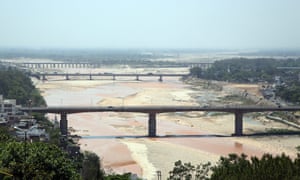
A general view of almost dry river Tawi, in Jammu, the winter capital of Kashmir, India
The dried-up river Tawi in Kashmir, India. Water scarcity is an increasing problem in poorer parts of the world. Photograph: Jaipal Singh/EPA
Degradation of the world's natural resources by humans is rapidly outpacing the planet's ability to absorb the damage, meaning the rate of deterioration is increasing globally, the most comprehensive environmental study ever undertaken by the UN has found.
The study, which involved 1,203 scientists, hundreds of scientific institutions and more than 160 governments brought together by the UN Environment Programme (UNEP), concludes that without radical action the level of prosperity that millions of people in the developed world count on will be impossible to maintain or extend to poorer countries.
Water scarcity is the scourge of some of the poorest regions on Earth, the study found, leaving developing countries increasingly unable to feed themselves, and causing hardship for millions of people. There appears little prospect of this dire situation being remedied, according to the UN, without radical action being taken.
Water sources are under increasing threat from population growth, climate change, rapid urbanisation, rising levels of consumption, and the degradation of lands that previously provided a natural replenishment of water resources.
The study is intended as an aid to the world's efforts to combat climate change and other environmental threats, as it highlights the difficulties of improving the lives of people in developing countries and tackling global warming, while food resources come under continuing pressure.
UNEP found the rate of damage to the natural environment was increasing globally, despite concerted efforts to persuade governments to take measures to improve the condition of vital natural resources, such as water, land and the seas.
"If current trends continue, and the world fails to enact solutions that improve patterns of production and consumption, if we fail to use natural resources sustainably, then the state of the world's environment will continue to decline," warned Achim Steiner, executive director of UNEP.
He said the tools for improving the environment for millions of people existed in developed countries but were in danger of not being used.
The study, using decades of scientific data, found that basic measures to tackle some of the key causes of environmental damage were still not being taken. These included measures to reduce air pollution, such as changes to vehicles; the damage to marine eco-systems, which can have a huge effect on fish stocks on which hundreds of millions of people depend; and the degradation of land when modern agricultural methods were pursued without regard to the longer-term consequences.
Despite the recent global agreement on cutting greenhouse gas emissions, signed in Paris last December, global carbon output continues to rise. The report argues this will put a long-term strain on the ability of developing economies to feed their own people as the result of changes such as increased droughts and floods.
Climate change is exacerbated by the emissions of greenhouse gases from agriculture, including the leaching of nitrous oxide – a powerful greenhouse gas – from run-off emissions and incorrectly stored animal manure.
These sources increased by more than a quarter between 2000 and 2010, the report found.
Other problem areas identified in the report included glaciers in the Andes, which provide vital water resources for tens of millions of people, but which are shrinking as the climate warms.
In rich countries, these problems have built up over decades and centuries while economic growth was pursued at the expense of the environment. Subsequent efforts to remedy the environment have met with partial success.
But in developing countries, the path of future development has more potential to change, which has encouraged international institutions to devise more sustainable growth pathways that are supposed both to alleviate poverty and preserve the environment.
If they follow the same pattern of growth, then the danger of irreparable environmental damage will intensify, the study's authors conclude.
They recommend an increased awareness of the environmental impact of development. For instance, exploiting water resources can be made more sustainable by recycling water where possible, and changing agriculture so that wasteful methods of irrigation are replaced by more efficient ones.
Developing countries should also change their methods of dealing with waste, the report found, so as to protect clean water sources and prevent the burning of solid waste in landfill dumps.

Links

Want To Know If The Paris Climate Deal Is Working? University Divestment Is The Litmus Test

The Conversation -   

Green progress? The ANU needs to dig deeper on divestment. Nick-D/Wikimedia Commons, CC BY-SA
The Paris climate agreement has been praised for sending a strong signal to the world that we are now serious about cutting greenhouse emissions.Yet despite the diplomatic acclaim, the Paris deal doesn't offer much in concrete terms. It is a simple global show-and-tell regime with no enforcement – if countries miss their targets they will receive little more than a talking-to.
For many, the deal's saving grace is the message it sends to investors, businesses and the wider world outside diplomatic and political circles. The Economist has summed up this "investment signal" idea well:
Perhaps the most significant effect of the Paris agreement in the next few years will be the signal it sends to investors… [After Paris] the idea of investing in a coal mine will seem more risky.
The problem is that there is little to no empirical evidence to support this idea. Will hard-nosed financiers change their ways purely on the basis of long-term pledges that are not supported by short-term actions? Will they redirect vast sums of money because of faith in a loose international treaty? In all honesty, we don't know.
There are clues, however, if we know where to look. If we want to see whether the investment signal from Paris is working, then universities will probably be – for want of a better phrase – the canary in the financial coalmine.
If Paris has truly signalled to the world that the age of fossil fuels is coming to a close, then it should put the movement to divest from fossil fuels on steroids.
And universities are better placed to divest than many other types of institution. It therefore follows that the success of Paris can be measured by whether it spurs universities to quit investing in fossil fuels.

Going fossil-free
Fossil fuel divestment is spreading across the world. According to the campaign group Fossil Free, at least 518 institutions, collectively worth US$3.4 trillion, are either fully or partially divesting.
The list includes groups such as the Rockefeller Brothers Fund, local governments such as the Australian Capital Territory and the cities of Oslo and Copenhagen, among many others.
Meanwhile universities, which currently make up 12% of this list, have become a particular target for the divestment movement. This is because they are forward-looking institutions with progressive, well-educated stakeholders. After all, it was university faculty members across the world who helped to set out the problem of climate change, and young students who will be among the generations most affected by its future impacts.
Just as universities were among the first movers against apartheid, they can set an example to others in the case of climate. Universities, many of which manage multi-billion-dollar endowments, have both the ability and responsibility to exercise financial power and act early on long-term moral problems.
If the Paris investment signal exists, then, we can expect universities to act well in advance of those with much greater inertia and vested interests in the status quo, such as profit-making corporations (which make up just 3% of Fossil Free's divestment list).

Mixed results
So far the response from universities has been patchy, particularly in Australia. The Australian National University (ANU) provides an informative case study. It shows both the potential of divestment and the limits of the Paris market signal.
In 2014, ANU blacklisted seven resource companies (including two fossil fuel firms, Santos and Oil Search) on the basis of its "socially responsible investment" policy. This triggered a backlash from the likes of the then treasurer, Joe Hockey, and prime minister, Tony Abbott, as well as sustained criticism from the Australian Financial Review.
The outcry showed the power that universities can wield in the climate debate when they put their money where their mouth is. In this case it was a positive impact as it triggered a wider debate on climate policy and investments.
Last month, the ANU updated its policy, announcing a 39% reduction in the carbon intensity of its stock portfolio and pledging to divest from companies that draw more than 20% of their revenue from coal.
However, the policy allows for continued investment in diversified mining companies such as Woodside Petroleum, Rio Tinto and BHP Billiton. This potentially includes firms with significant fossil fuel holdings (BHP Billiton Mitsubishi Alliance is the largest Australian coal producer, accounting for a quarter of Australian coal exports).
This is partial, not full, divestment – it's a positive step, but far from the seismic investment shift needed to meet the Paris climate goals.
Importantly, the trigger for change has come from within, rather than from Paris. There has been overwhelming pressure from staff and students to divest fully. Yet the university has resisted these calls. Indeed, ANU Vice-Chancellor Brian Schmidt last month tweeted that "fossil fuels are good business for universities", for the time being at least.There are several counterarguments to this , from the falling costs of renewable energy, to the improving performance of fossil-free investment funds, which often outstrip more conventional ones. But on a basic level it comes down to leadership.
ANU staff and students are campaigning hard for full divestment. Source: Author provided
The ANU has branded itself as a place of "thought leadership". Its current actions show neither long-term thought nor leadership. True leadership would mean showing real belief in the implications of the Paris Agreement.
Widespread, full university divestment from fossil fuels would further pressure national governments to strengthen their commitments – which will be crucial if the Paris Agreement is to meet its goals.
In contrast, continued investment in fossil fuels weakens such pressure and bolsters a belief in the continued relevance of the fossil fuel industry in a post-Paris world.
Universities such as the ANU have not responded swiftly enough to Paris and the signalling of the end of the fossil fuel era. If thought leaders won't do it, how can we ask the same of governments and banks?

Links

Climate Change Effects Shown In NASA Images Highlight Drastic Impact

NEWS.com.au
THINK the science of climate change is not settled?
These confronting before and after photos of shrinking glaciers and disappearing lakes may well change your mind.
The images released by NASA's climate change arm reveal just how much our world has changed — some in months, others over years.
From the whiting event in Lake Kivu in Central Africa, to a flooding Mississippi River in the US, the before and after photos reveal startling changes in some places across the world, some in the space of just a few short years.
Other dramatic pictures reveal the effects of fire and flooding.
Shrinking Mýrdalsjökull ice cap, Iceland shown from 1986 to 2014 (right). Source: NASA

Glaciers also come up for mention with Alaska's Columbia Glacier a particular cause for concern.
The glacier which descends through the Chugach Mountains into Prince William Sound used to extend to the northern edge of Heather Island, near the mouth of Columbia Bay in the 1700s.
But in 1980 it began a rapid retreat and according to NASA has now "thinned so much that the up and down motion of the tides affects its flow as much as 12km upstream, until the glacier bed rises above sea level and the ice loses contact with the ocean."
Growing Wax Lake Outlet, Louisiana pictured in November 1984 to October 25, 2014 Most of the Mississippi River delta plain is losing ground.
Growing Wax Lake Outlet, Louisiana pictured in November 1984 to October 25, 2014 Most of the Mississippi River delta plain is losing ground. Source: Supplied
NASA said the gallery, which is constantly updated, aimed to "present stunning images, mostly from space, of our ever-changing planet, chronicling changes taking place over time periods ranging from days to centuries."
The agency said the before and after images not only aimed to show the impacts of climate change but also highlighted the destruction caused by wildfires and floods.
The pictures also show the retreat of glaciers as well as the human impact on urban areas due to population growth.
The gallery, which features dozens of images across the globe, also allows people to zoom in on their own area to see what changes are taking place around them.
Some of the images are just days old, showing recent impacts.
While scientists have been warning about the danger of the Earth warming up for years, climate change sceptics claim it's a myth.
These images may put that into perspective.
It wouldn't be the first time NASA has revealed a frightening future for the planet.
Just last year NASA also warned sea levels will rise by a metre over the next century.
Experts predicted an ice sheet the size of Queensland is melting faster than expected which could cause massive storm surges capable of decimating Australia's coastal cities within the next century.
Mustang Complex Fire, Idaho pictured in July 2012 to September 2012 The Mustang Complex Fire, sparked by a lightning strike on July 30, 2012, has consumed more than 330,000 acres of the Salmon-Challis National Forest in northeastern Idaho.
Mustang Complex Fire, Idaho pictured in July 2012 to September 2012 The Mustang Complex Fire, sparked by a lightning strike on July 30, 2012, has consumed more than 330,000 acres of the Salmon-Challis National Forest in northeastern Idaho. Source: Supplied

Scientists said satellite images revealed large sections of Greenland and Antarctica are vanishing at a much faster rate than previously anticipated, and predict sea levels will rise even further than originally thought.
The stark warnings from NASA are echoed by the World Bank which on Wednesday issued a warning that the world is underprepared for major risks posed by extreme weather and other hazards.
It warned by 2050, 1.3 billion people and $217 trillion in assets will be affected by worsening river and coastal floods.
The World Bank also predicted this will only get worse with rising population growth and migration.
Licungo River flooding, Mozambique February 1, 2014 — January 17, 2015. Weeks of heavy rainfall capped by a particularly strong tropical disturbance caused the Licungo and other rivers in Mozambique's Zambezia province to flood. Source: NASA's Earth Observatory


Videos

Biodiversity Saves Fish From Climate Change: Study May 17


Five Ways To Save The World. The world is being transformed by global warming faster than anyone anticipated. But some of the world's most eminent scientists are on the case, in the face of imminent catastrophe.

Lethal Heating is a citizens' initiative