Thursday, October 26, 2017

How Climate Change Affects The Building Blocks For Health

The Conversation - 

More intense rainfalls have caused flooding throughout New Zealand, as seen here in Northland. www.shutterstock.com, CC BY-ND
In August last year, a third of the residents of the North Island township Havelock North fell acutely ill with gastroenteritis after their water was contaminated with campylobacter.
Following a long dry spell, the heaviest daily rainfall in more than ten years had washed the pathogenic organism from sheep faeces into the aquifer that supplies the town’s drinking water. The Havelock North supply, like many in rain-rich New Zealand, was not treated with chlorine or other disinfectants, and this was the country’s largest ever reported outbreak of waterborne disease.
This is just one example of how climate change may affect our health, according to a report released by the Royal Society of New Zealand today.

Prerequisites for good health
It turns out that the Goldilocks rule - “not too hot, not too cold” - applies to more than porridge. There have been many reports, such as those published by the Intergovernmental Panel on Climate Change and the Lancet Commission on Climate Change, that detail how aspects of human physical and mental are effected by a changing climate.
There is an optimum climate, related usually to what is most common or familiar. Deviations, especially if substantial and rapid, are risky.
The RSNZ report is organised around eight prerequisites for good health, including community, shelter, water and food - all of which are threatened by climate change.
Building Blocks of Health Disrupted by Climate Change. Royal Society of New Zealand
The building block metaphor is apt. It is unlikely that climate change will undermine health in new and unexpected ways. Instead we expect it to act as a threat multiplier. Where there are weaknesses in the foundations of public health, rapid changes in temperatures, rainfall and sea levels will magnify damaging effects.

Direct and indirect effects
The impacts will include direct effects. More intense rainfall, especially on the western side of the country, will test health protection systems, as in the case of Havelock North.
But the impacts may also be indirect. The RSNZ report points out that changes in the climate may disrupt ecosystems, with knock-on effects for human health. As water temperatures rise, algal blooms occur more frequently, and human pathogens such as the vibrio species are found in higher concentrations.
There may be more intense exposure to pollen and other allergens, a particular concern given the relatively high rates of asthma that apply in New Zealand.
A reliable supply of food is one of the most important ecosystem services. The global food system is simultaneously more productive than ever before, and also exquisitely vulnerable. We depend more and more on a small number of crops, grown in mono cultures on larger scale and in fewer locations, dependent on longer supply chains and frequently requiring irrigation and heavy use of artificial fertilisers.
Climate change threatens the production and distribution of food in many ways. For instance, the rice crop in southern China currently fails due to high temperature stress once every century or longer, but this will be a once-in-10-year event with 2–3°C global warming, and once every four years if average temperatures rise by 5–6°C.

Effects on mental health
Climate change also acts through social stressors. Rising sea levels, combined with heavy rainfall, threaten many settlements around the New Zealand coast and elsewhere. The community of South Dunedin is one of the most vulnerable.
On a broader scale, internationally, it is projected climate change will displace very large numbers of people. The recent flood of refugees to Europe (sparked, in part, by climate extremes) illustrates the detrimental effects to security, community cohesion and health that may result.
The RSNZ report acknowledges that it is not just physical health that is important. Depression, anxiety, grief and other manifestations of loss and conflict may occur when familiar environments are damaged and social connections threatened. This is most evident following disasters such as droughts and floods.
The report refers to the particular threat climate change poses to Māori. Not only are Māori over-represented amongst those with low incomes, and at greater risk therefore of poor health from hazardous environments. Māori culture also embodies a strongly developed sense of relationship with place that carries with it responsibility and obligations. Climate change challenges this guardianship role.

Transition risks and opportunities
There is another dimension to health impacts that is not discussed in the RSNZ report. I refer to the damage that may be caused by the way we respond to climate change. Mark Carney, governor of the Bank of England, calls them “transition risks”. These are not trivial concerns, Carney says, because managing climate change successfully will require radical change, and the implications may be far reaching.
Expanded use of biofuels might compete with food crops, for instance. Carbon- pricing regimes may also aggravate food insecurity in the poorest populations. In low-income countries, reducing numbers of livestock to control methane emissions might be detrimental unless there are alternative sources of protein, energy and nutrients.
However, there are opportunities, too. The co-benefits agenda gets only a brief mention in the RSNZ report, which is a pity, since win-win interventions may provide a politically palatable route to substantial cuts in greenhouse emissions. For example well designed, comprehensive taxes on food could avoid a billion tons of greenhouse gas emissions and also prevent half a million premature deaths each year.
This is particularly relevant to New Zealand and Australia as most of the gains would be made by cutting the consumption of red meat in rich countries.
The Royal Society report concludes that more research is needed to better quantify the health impacts of climate change. This is true, of course. But we know enough already about risks to pay close attention to potential solutions. The big question, in my view, is how we take carbon out of the New Zealand economy, rapidly, and in an equitable fashion, without disrupting the building blocks of health.
Maybe we can do better than avoiding harm. Transport, agriculture, urban form, food systems - in these areas, and others, there are substantial opportunities as well as serious risks.

Links

Big Companies' Climate Change Targets Are 'Unambitious', Say Analysts

The Guardian - Fiona Harvey

While almost all companies have plans in place to reduce carbon emissions, those plans don’t go far enough, according to the Carbon Disclosure Project
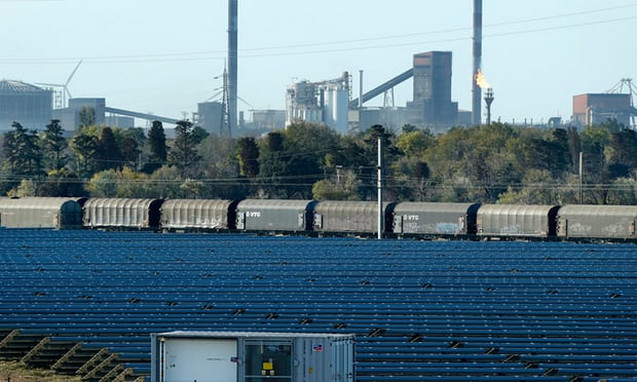
EDF opens photovoltaic park near ArcelorMittal steel plant Fos-sur-mer. Many big companies are switching to renewable energy. Photograph: Guillaume Horcajuelo/EPA
Nearly nine out of 10 of the world’s biggest companies have plans in place to reduce carbon emissions, new research has found, but only a fifth of them are doing so for 2030 and beyond.
The Carbon Disclosure Project (CDP) also found that only 14% of its sample of 1,073 large companies around the world had “science-based targets” – that is, goals to reduce carbon emissions which are in line with the global agreement to hold warming to no more than 2C, enshrined in the 2015 Paris agreement.
“Targets [from companies] have previously been short in scope and pretty unambitious,” Marcus Norton, chief partnerships officer at CDP, told the Guardian. “That is improving.”
Companies are not bound by the Paris agreement, which requires country governments to take action to hold warming to no more than 2C, with an aspirational goal of keeping warming to even lower levels, of 1.5C. However, many large companies have taken their own steps to reduce greenhouse gas emissions, including investing in renewable energy, cutting down on waste and streamlining their operations.
Paul Simpson, chief executive of CDP, added: “This is great news for those companies seizing the opportunity of the low-carbon economy, but the rest need to pick up the pace or risk losing out. The majority of the large corporations we analysed do not yet appear to have the right science-based targets in place to successfully transition their business in line with the Paris agreement, though many have ambitions to take this step in the next two years.”
These efforts will continue despite the withdrawal of the US, the world’s biggest emitter, from the Paris agreement under President Trump. Governments will meet in Bonn this November under the auspices of the UN, a meeting known as COP23, to discuss the next steps to achieving the aims of the Paris agreement, and the attitude of the US government’s representatives will be keenly watched. Ahead of COP23, many companies and governments below the national level were keen to stress their commitment to fulfilling the aims of the Paris pact.
For instance, mayors of the cities of London, Paris, Los Angeles, Barcelona, Mexico City and Cape Town, along with a few others, announced they would stop buying petrol or diesel-driven buses from 2025 onwards, and that they would ensure that a large area of their city was “zero-emission” by 2030.
These actions are calculated to reduce air pollution, a serious problem in many major cities, as well as cutting down on global greenhouse gases.
Ahead of the Bonn conference, developing countries have also been a key focus. A group called the New Climate Economy has surveyed Africa and found that nations across the continent could benefit from environmentally sustainable economic growth, potentially “leapfrogging” developed countries by bypassing much of the fossil fuel economy in favour of clean technology, including renewable energy.
The report found that the best way to encourage such sustainable economic activity in Africa would be for governments to devise and implement new policies that would make investments in green growth more attractive, for instance by reducing existing subsidies for fossil fuels and removing import tariffs on sustainable technology.
Governments should also encourage entrepreneurship, the report found, by adapting policies to the conditions in their countries and of their economies, taking into account the available natural resources and the need to keep emissions low while lifting people out of poverty.
“Africa has the natural resources and the determination to instigate a green industrial revolution,” said Carlos Lopes, a member of the Global Commission on the Economy and Climate, professor at the Graduate School of Development Policy and Practice, University of Cape Town. “Now we need the right policies to unleash economic transformation, green growth and entrepreneurship across the continent. A more prosperous and sustainable future is within Africa’s reach, we just need to seize it.”

Links

Climate Change Predicted To Take Big Toll On Kiwis' Mental And Physical Health

Stuff - Ged Cann

Our changing climate is expected to see some plants release eight-times more pollen by 2100, worsening hayfever symptoms. STUFF
Allergies will become more prevalent and their symptoms worse, drinking water will be less reliable, and poisonous pests may find a new home in New Zealand's warmer climate.
These are just a few of the effects climate change is expected to have on human health, according to a newly-released Royal Society report.
Kiwis may have to contend with more intense heat waves and extreme weather events, including flooding and fires, which would take a toll on mental health.
The invasive Australian redback spider has already appeared in Otago. But as our country gets warmer, it may spread to other places. Supplied
The Royal New Zealand College of General Practitioners said the stresses on children would compare to those growing up under the threat of nuclear war.

 STUFF

Royal Society president Richard Bedford said higher concentrations of CO2, increased temperatures and changes in rainfall were expected to extend growing seasons.
This would boost pollen counts and worsen hayfever symptoms. Some plants were expected to release eight-times more pollen by 2100, compared to in 2000.
Increases in other air particulates were also likely to increase asthma rates.
Increases in certain air particulates as a result of climate change are likely to increase asthma rates. 123RF
Kiwis could also find themselves in the presence of some unwanted new arrivals from Australia and the Pacific Islands.
Harmful species, such as sea snakes and toxic jellyfish, may find new homes in New Zealand's warmer oceans. Drier inland areas may also become suitable for poisonous species, such as the invasive Australian redback spider.
Bedford predicted social disruption and the breakdown of communities, as people would be forced to relocate, either due to flooding and sea level rise, or because changed weather patterns made livelihoods unsustainable.

 STUFF

"If we think of the basic building blocks of health, such as our shelter, the air we breathe, water we drink and the food we eat, all will be affected by climate change."
Auckland University epidemiologist Alistair Woodward, a key author of the report, said the gastroenteritis contamination of Havelock North's drinking water in August last year was a wake up call.
The outbreak left roughly 5500 of the town's 14,000 residents ill and has been linked to three deaths.
The stress on children of living with regular extreme weather events has been compared to growing up under the threat of nuclear war. ALDEN WILLIAMS/STUFF
"It was a long dry spell and then the heaviest daily rainfall in more than 10 years. It really tested the limits of the health protection system," Woodward said.
"Christchurch got a whole heap of one-in-100-year floods at the start of the year, so that's going to become the pattern."
But the greatest impact on human health is likely to be increased droughts, with the eastern side of the country receiving less rainfall and the west receiving more.
Royal Society President professor Richard Bedford says decision makers need more information on the health risks associated with climate change. Supplied
"The increase in drought frequency is going to put a lot of pressure on our rural economy," Woodward said.
"We know that there is a relationship between the rural economy, the welfare of the people working in the rural economy, and the frequency of mental health problems."
The report also predicts climate change will exacerbate existing socioeconomic and ethnic health inequalities.
Professor Alistair Woodward, epidemiologist at the University of Auckland, says Havelock North's gastro outbreak was a wake-up call. Supplied
"You can think of it a bit as a threat-multiplier. Climate change is going to make life harder for people who are already suffering."
Children, the elderly, people with disabilities and chronic disease, and low-income groups were particularly vulnerable.
Worldwide diseases such as chikungunya and Zika virus would also likely make the jump from surrounding Pacific Islands.
Brookvale Road bore No.1, near Havelock North was one of the bores at the centre of an investigation into how the town's water supply became contaminated. MARTY SHARPE/STUFF
A spokeswoman for the Ministry of Health said district health boards were funded to detect exotic mosquitoes and ensure they did not become established.
DHBs were expected to include extreme weather event risks in their emergency plans, and a review had been commissioned of drinking water safety plans.
Incoming Minister for Climate Change Issues James Shaw said the report showed why climate change required an all-of-government response.
"Preparing for climate change and cutting climate pollution will require action in the health, agriculture, transport, energy and environment portfolios," he said.
"We plan to pass a Zero Carbon Act that will require the Government to create a plan every five years for addressing climate-related risks to New Zealanders. This will take into account risks to health as well as other areas."

Links

Wednesday, October 25, 2017

Ocean Acidification Is Deadly Threat To Marine Life, Finds Eight-Year Study

The Guardian - Fiona Harvey

Plastic pollution, overfishing, global warming and increased acidification from burning fossil fuels means oceans are increasingly hostile to marine life
Scientists haul in samples of seawater in Svalbard, Norway. Greenpeace is working with the German marine research institute to investigate ocean acidification. Photograph: Nick Cobbing/Greenpeace
If the outlook for marine life was already looking bleak – torrents of plastic that can suffocate and starve fish, overfishing, diverse forms of human pollution that create dead zones, the effects of global warming which is bleaching coral reefs and threatening coldwater species – another threat is quietly adding to the toxic soup.
Ocean acidification is progressing rapidly around the world, new research has found, and its combination with the other threats to marine life is proving deadly. Many organisms that could withstand a certain amount of acidification are at risk of losing this adaptive ability owing to pollution from plastics, and the extra stress from global warming.
The conclusions come from an eight-year study into the effects of ocean acidification which found our increasingly acid seas – a byproduct of burning fossil fuels – are becoming more hostile to vital marine life.
“Since ocean acidification happens extremely fast compared to natural processes, only organisms with short generation times, such as micro-organisms, are able to keep up,” the authors of the study Exploring Ocean Change: Biological Impacts of Ocean Acidification found.
Marine life such as crustaceans and organisms that create calcified shelters for themselves in the oceans were thought to be most at risk, because acid seas would hinder them forming shells. However, the research shows that while these are in danger, perhaps surprisingly, some – such as barnacles – are often unaffected, while the damage from acidification is also felt much higher up the food chain, into big food fish species.
An unhealthy pteropod shows the effects of ocean acidification, including dissolving shell ridges on its upper surface, a cloudy shell, and severe abrasions. Photograph: Courtesy of NOAA
Ocean acidification can reduce the survival prospects of some species early in their lives, with knock-on effects. For instance, the scientists found that by the end of the century, the size of Atlantic cod in the Baltic and Barents Sea might be reduced to only a quarter of the size they are today, because of acidification.
Peter Thomson, UN ambassador for the oceans and a diplomat from Fiji, which is hosting this year’s UN climate change conference in Bonn, urged people to think of the oceans in the same terms as they do the climate. “We are all aware of climate change, but we need to talk more about ocean change, and the effects of acidification, warming, plastic pollution, dead zones and so on,” he said. “The world must know that we have a plan to save the ocean. What is required over the next three years is concerted action.”
The eight-year study was carried out by the Biological Impacts of Ocean Acidification group (known as Bioacid), a German network of researchers, with the support of the German government, and involved more than 250 scientists investigating how marine life is responding to acidification, and examining research from around the world. The study was initiated well before governmentssigned a global agreement on climate change at Paris in 2015, and highlights how the Paris agreement to hold warming to no more than 2C may not be enough to prevent further acidification of the world’s seas.
Governments will meet in Bonn in November to discuss the next steps on the road to fulfilling the requirements of the Paris agreement, and the researchers are hoping to persuade attendees to take action on ocean acidification as well.
A scientist feeds coral in a lab to study the impact of multiple climate stressors on coral reef. Photograph: Joe Raedle/Getty Images 
Ocean acidification is another effect of pouring carbon dioxide into the atmosphere, as the gas dissolves in seawater to produce weak carbonic acid. Since the industrial revolution, the average pH of the ocean has been found to have fallen from 8.2 to 8.1, which may seem small but corresponds to an increase in acidity of about 26%. Measures to reduce the amount of carbon dioxide reaching the atmosphere can help to slow down this process, but only measures that actively remove carbon already in the atmosphere will halt it, because of the huge stock of carbon already in the air from the burning of fossil fuels.
Worse still, the effects of acidification can intensify the effects of global warming, in a dangerous feedback loop. The researchers pointed to a form of planktonic alga known as Emiliania huxleyi, which in laboratory experiments was able to adapt to some extent to counter the negative effects acidification had upon it. But in a field experiment, the results were quite different as the extra stresses present at sea meant it was not able to form the extensive blooms it naturally develops. As these blooms help to transport carbon dioxide from the surface to the deep ocean, and produce the gas dimethyl sulfide that can help suppress global warming, a downturn in this species “will therefore severely feed back on the climate system”.

Links

Once Were Sceptics: What Convinced These Scientists That Climate Change Is Real?

ABC Science - Nick Kilvert

As climate change has become politicised, many find it difficult to change their position. (Getty: Paul Souders)
Up until a few years ago, Richard Muller was often quoted by sceptics as a credible, high-profile scientist who doubted the consensus on climate change.
Today, he starts his lectures by stating a few things he believes to be facts.
"Al Gore has grossly exaggerated global warming. And if you watch his movie you have more misinformation than information.
"However, global warming is real. It is caused by humans. It is caused by the human emission of greenhouse gases, and I personally feel we have to stop it somehow."
In 2010, Professor Muller from Berkeley University was funded to carry out a comprehensive study by a group of individuals who doubted the Intergovernmental Panel on Climate Change (IPCC) data.
They believed that urban heat islands, data-selection bias, and inaccurate climate models were being glossed over by scientists.

'Don't trust us' approach key to convincing sceptics
Professor Muller says people need to remain sceptical about how we tackle climate change. (Getty: Dan Tuffs)
Professor Muller and his team — all of whom doubted climate change was happening or that carbon dioxide was its cause — were shocked to find a correlation between carbon dioxide emissions and warming.
"That was the biggest surprise of all," he said.
"Volcanoes, sunspots, orbital changes, we could all rule out. What we could do is show [that warming] matched the carbon dioxide exceedingly well."
To address what he sees as a lack of transparency in some IPCC reporting, his team made all their data available online.
"The teams that did [the previous studies] said 'trust us'. We said 'don't trust us, here's what we did'. And for that reason I think we were able to win over the sceptics," he said.
However, he said there was still room for scepticism.
"Yes I am a converted sceptic. However, anybody today who is not a sceptic about the solutions being proposed is not thinking them through."

Dr Anthony Purcell, Research Fellow, ANU
Dr Purcell says his views of climate change have affected some personal relationships. (Supplied: ANU)
"I doubted that the climate could be so dramatically sensitive to small perturbations, especially on a short timescale," Anthony Purcell said of his initial position on climate change.
Dr Purcell, a mathematician and geophysicist, said his view was largely shared by the members of his social circle.
"Pretty much everybody in my personal life was either agnostic or deeply hostile to the concept of anthropogenic climate change," he said.
"[My father is] a deeply entrenched climate denialist."
In 2010, he read an article in The Australian newspaper in which the distinguished scientist Professor Frank Fenner predicted that "Homo sapiens will become extinct, perhaps within 100 years" due to climate change.
Dr Purcell said that statement shook him.
"This was a responsible scientist making a public declaration and it seemed to me to raise alarm bells," he said.
"I hadn't been aware that this was even something that might be considered as a possible outcome."
Personal relationships 'severely eroded' by change of view
Core samples taken from a diamond drill show sediment as it was laid down. (Getty: Mo Morad.)
A deep-sea core sample, containing layers of sediment laid down over millions of years, demonstrated first-hand that Professor Fenner's prediction had a historic precedent.
One of the layers in the core sample was around 55-million-years old, from what is known as the Palaeo-Eocene thermal maximum (PETM).
"All of a sudden that [carbon-rich material in the sediment] vanishes and it's just this dingy mud with no evidence of biological activity at all," he said.
"That was a response to a four-degree temperature increase that occurred over 20,000 years. We're looking at something that's a hundred-times faster than that."
Dr Purcell said his acceptance of the climate science had a significant personal toll.
"It's deeply impacted my relationship with my father," he said.
"It's severely eroded our relationship and our ability to communicate."

Professor David Karoly, University of Melbourne, Atmospheric Science
Professor Karoly initially set out to disprove climate change. (Supplied: David Karoly)
David Karoly is one of the world's pre-eminent climate scientists, and advises the Australian Government through the Climate Change Authority (CCA).
But back in 1986, he believed he had a way to prove climate change had nothing to do with carbon emissions.
"I was aware from theoretical considerations that we would expect a specific pattern of temperature changes associated with increasing greenhouse gases," he said.
"Which is warming in the lower atmosphere and cooling in the stratosphere at heights above 15 kilometres.
"And I thought I would use that signature to show that in fact what was actually occurring in the data was due to natural variability like El Nino or increasing sunlight, and not due to human-caused climate change."

Climate Change Authority's Professor David Karoly speaks with ABC News Breakfast

Professor Karoly submitted an abstract of his forthcoming research to a climate-change conference in Melbourne in 1986. He expected his findings to show that there was no carbon-driven-warming signature.
"The more I looked, the more I found this signature of warming in the lower atmosphere and cooling in the upper atmosphere," he said.
By the time he came to present his paper, he had to switch his position in support of anthropogenic climate change.
But that was the '80s and climate science had yet to be deeply politicised.
He says changing his view on climate change was not a big deal at the time.
"I was coming into it as what I believe all scientists are — sceptical and wanting to test a hypothesis — and that's what I did."

Links

New Zealand Government To Plant 100 Million Trees Yearly

EcoWatch - 

Paradise, New Zealand
New Zealand's next prime minister Jacinda Ardern has set ambitious environmental policies to confront a warming planet.
 "I do anticipate that we will be a government, as I said during the campaign, that will be absolutely focused on the challenge of climate change," said Ardern, whose Labour party has signed a coalition agreement with the New Zealand First party.
"That will include a zero carbon act. That will include an independent climate commission. That will include making sure that we have an all gases, all sectors emissions trading scheme," she added.

Jacinda Ardern discusses climate change

Other green initiatives include transitioning the country's power grid to 100 percent renewable energy, a significant investment in regional rail, and a goal to plant 100 million trees a year through the "Billion Trees Planting Programme."
According to the Associated Press, Arden said the goal of doubling the amount of trees the country plants each year is "absolutely achievable" by using land that was marginal for farming animals.
The Green Party will support the incoming government with a confidence and supply agreement, which includes a major goal of net zero carbon emissions by 2050.
"All three parties share an absolute commitment to addressing climate change," Ardern said.
As Climate Change News noted, New Zealand's 2050 net zero target puts it in the same hat as Sweden, which wants net zero by 2045, and Norway, which is aiming for 2030. Other developed nations such as the U.S, Canada, Mexico, the U.K., France and Germany have committed to cutting emissions but none to net zero.
More than 80 percent of New Zealand's electricity already comes from renewables, primarily through hydropower, geothermal and wind. The AP reported that Ardern wants to ramp it to 100 percent by 2035 in part by investing more in solar, which currently takes up only 0.1 percent of the country's total renewable energy slice.
The 37-year-old—New Zealand's youngest leader in more than 150 years—plans to take the country on a more liberal path after nine years of conservative rule. Other initiatives include increasing the minimum wage, free doctors' visits for all under 14-years-old, and a review and reform of the Reserve Bank Act.

Links

Tuesday, October 24, 2017

One In Seven Coal Power Plant Owners Are Heading For The Exit

Climate Home - 

North American and European utilities are phasing out old coal plants, Coal Swarm survey shows, as Asian companies dominate new development
Open pit mine and power plant (Photo: Deposit Photos)
One in seven coal plant owners worldwide fully or partially phased out their coal fleets between 2010 and 2017.
The first ever global survey of coal phase out plans, released on Wednesday by data trackers Coal Swarm, revealed two different trajectories as the industry collapses in the west but marches on in Asia.
Out of 994 companies with coal plants, 139 closed at least 20% of their capacity, predominantly in north America and western Europe, with 71 retiring their coal fleets completely.
A parallel report by Greenpeace identified 23 cities, regions and countries implicitly or explicitly phasing out coal burning for power.
Together, they show a rapid shift in the politics and economics of coal, researchers say. “Five years ago, nobody was forecasting this,” Greenpeace analyst Lauri Myllyvirta told Climate Home News, “so in that sense, things are moving incredibly fast”.
At the same time, the data shows 303 first-time coal plant developers are actively pursuing projects, with Asian companies dominating. Interest persists despite a recent clampdown on excess capacity in the two biggest markets: China and India.
In the US, where president Donald Trump is promising to put coal miners back to work, several prominent utilities are steering in the opposite direction.
AES, Berkshire Hathaway, Duke, NextEra Energy, NRG Energy and PSEG have retired 12-77% of their coal capacity in the last eight years, the report shows. Of these, only AES has plans to build a new plant – in the Philippines.
California went coal-free in 2014 and five states are expected to follow by 2025, regardless of Trump’s planned rollback of curbs on coal burning.
Some European majors have changed their names or structures to signify a break from the fossil-dominated past. E.on split its declining thermal power business Uniper off from its renewables business while Dong (an acronym referring to its origins in oil and gas) this month rebranded as Ørsted. Iberdrola retired 82% of its coal fleet.
Eight EU countries including the UK and France have declared plans to quit coal by 2030 or sooner. Last week, the Netherlands’ newly formed coalition government confirmed it would close three brand new coal plants early to meet climate targets. The UK and Canada last week announced they would form an alliance of nations who have committed to phasing out coal power.
“In Europe, US, Canada, you can really see companies running away from coal,” said Carlos Fernandez-Alvarez, senior energy analyst at the International Energy Agency, commenting on the trends.
The outlook for Asia, which is critical to meeting international climate goals, is more complex.
Coal Swarm highlights that of the 681 first-time coal developers it studied, 56% shelved or cancelled their projects. This is presented as evidence that appetite for the sector is dwindling.
Fernandez-Alvarez said a 56% project drop-out rate was not unusual for large scale energy infrastructure. After a decade of surging coal development in Asia, it was “a big change” to see the trajectory flattening out. But “this is very far from the end of coal,” he added.
The IEA has revised down its growth forecasts for coal in recent years, “but not that dramatically”, said Fernandez-Alvarez. Its central scenario still predicts a slight increase in coal demand over the coming decades.
China slashed the number of construction permits issued to coal power projects 85% between 2015 and 2016, Greenpeace notes.
India is seeing a finance squeeze for coal, as cheap solar power shakes up the market. Its Central Electricity Authority estimates plants currently under construction will be sufficient to meet demand until 2027.
“The markets that have been driving growth have been overbuilt and are really not seeing demand for coal-fired power growing anywhere near as fast as planners imagined,” said Myllyvirta.
“If you look at how competitive renewables are already now in India – both wind and solar are able to bid lower [prices] than new coal plants… a rebound [for coal] in ten years is not really a worry.”
Still, China’s five year plan aims to cap coal power capacity at 1,100GW in 2020, allowing for a 150GW increase from today’s level. For comparison the US, with the world’s second biggest coal fleet, has less than 300GW.
Of the ten biggest developers of plants in pre-construction planning globally, six are Chinese, two Indian, one Indonesian and one Thai.

Links

Lethal Heating is a citizens' initiative