12/02/2018

Australia's Solar Power Boom Could Almost Double Capacity In A Year, Analysts Say

The Guardian - 

Last month was the biggest January on record for rooftop installation of solar panals, according to RenewEconomy and SunWiz. Photograph: Lucy Hughes Jones/AAP 
A record-breaking month of rooftop installations and a flood of large-scale solar farms could almost double Australia’s solar power capacity in a single year, industry analysts say.
A massive solar energy boom is being predicted for 2018, after an unprecedented number of industrial solar farms were approved by the New South Wales and Queensland governments last year.
Last month also became the biggest January on record for rooftop installations, according to the renewables website RenewEconomy and industry analysts SunWiz.
With 111MW of new panels, it saw a 69% rise compared with the same month last year and became one of the top five months ever – largely driven by low installation costs and a boost in commercial uptake.
At the same time, nearly 30 new industrial solar farms are scheduled to come on line.
NSW approved 10 solar farm projects last year – twice as many as the year before – and has approved another in 2018. Queensland currently has 18 large-scale projects under construction, which is the most in the country.
The new farms could be operational within the year, according to John Grimes, the chief executive of the Clean Energy Council.
“These solar farms can be built within a matter of weeks,” he said. “They’re really quick and simple.”
Together, the new large-scale projects could add between 2.5GW and 3.5GW to the national grid and rooftop installations could add another 1.3GW, according to the Smart Energy Council’s estimates. This would nearly double the nation’s solar energy capacity, currently 7GW, in a single year.
“The train tracks are about to converge,” Grimes said. “Rooftop installations and utilities are both booming and could turbo-boost the solar numbers overall.”
In Queensland, residential solar panels are already the state’s largest source of energy, producing more combined than the 1.7GW Gladstone power station. Just under a third (30%) of residential homes in the state have solar installed – the most in the country.
With the completion of the new solar farms, solar will provide 17% of the state’s energy. “We’ve turned the sunshine state into the solar state,” Queensland’s former energy minister Mark Bailey said in October.
In New South Wales, the planning minister, Anthony Roberts, said the 10 new solar farms would generate 1.2GW of energy and reduce carbon emissions by more than 2.5m tonnes – the equivalent of taking about 800,000 cars off the road.
In January this year, NSW announced another plant – the 170MW Finley plant in the Riverina – as did Queensland, the 120MW solar farm at Munna Creek.
Grimes said the solar boom “was only going to grow” in future.
“Solar is the cheapest way to generate electricity in the world – full stop,” he said. “It’s not unusual for grid pricing to be north of 20c per kilowatt hour in a majority of jurisdicitions. A solar array, at an average size for an average home, if you amortise the cost over 20 years, the effective rate is 5c per kilowatt hour. That’s called an economic no-brainer.”
He said the rush to install rooftop panels could have been sparked by January’s warm weather and rising energy prices.
“I think people are acutely aware of energy prices. People are running air conditioning and thinking, ‘hooley dooley I’m going to get a bill’.”
2017 saw a record 1.25GW of solar power added to the grid nationally, counting both large-scale solar farms and rooftop panels. The predicted rate of rooftop panels alone in 2018 is expected to be 1.3GW.

Links

Could A Future Labor Government Really Stop The Adani Mine?

Environmental Justice Australia - Brendan Sydes


Bill Shorten’s statement last week that Adani’s proposed Galilee Basin mega coal mine would ‘absolutely not’ receive Labor’s support if it didn’t stack up commercially or environmentally gave the clearest indication yet that the ALP may be shifting its position on the controversial mine.
Significantly, Shorten’s remark came in answer to a question following a speech where the opposition leader said, “Any political party with an ounce of character will go to the people at the next election with a proper economic and environmental recognition of the reality of climate change…a proper demonstration that we have the courage to do what has to be done, even if that might be politically difficult.”
Until now the ALP has sought to navigate a complex middle road on Adani – neither for or against the project, which would be the biggest coal mine ever dug in Australia and would add a massive amount of climate pollution to the global atmosphere once the coal is burnt.
Shorten’s shift immediately prompted people to ask if and how the ALP could deliver on a promise to stop Adani and what if any legal pathway exist to stop the mine.
There are ample historical examples of incoming federal governments finding legal pathways to implement election commitments to protect environmental values.
The Whitlam government used its power to regulate exports to require an environmental impact assessment of sand mining and Fraser Island and eventually the combination of the Customs Act and new environmental laws led to the end of sand mining on the island.
The Hawke government famously intervened to prevent the Franklin Dam proceeding in Tasmania, with the subsequent High Court case confirming the breadth of Commonwealth legislative powers to intervene in areas hitherto thought to be solely the province of the States.
The Gillard government (when the current shadow environment Minister, Tony Burke, held the environment portfolio) intervened to introduce a permanent ban on super trawlers in Australian waters.
In the case of the Adani mine, suspending or cancelling approvals already granted under legislation is not straightforward, but pathways do exist.
Last year we wrote to the current Federal Environment Minister, Josh Frydenberg, on behalf of renowned coral scientist Dr Charlie Veron, asking the minister to use his power under section 145 of the Act to revoke an approval for Adani’s mine on the basis of new information about the impact of climate change on the Great Barrier Reef.
These provisions are complex and rarely used, so interpreting them and working out how they might be employed by a future Environment Minister to stop a project like the Adani mine is not straightforward.
From a legal perspective, it may be unwise for the ALP to be too specific in its commitment to use these powers. A very specific election commitment may be viewed as having brought a ‘closed mind’ to a matter of legislative discretion and may leave the decision vulnerable to future legal challenge.
It’s worth noting that Adani itself has asked the federal government to intervene with legislative approval of its mine, so it would be hypocritical of the company to suggest that Parliament could not intervene to stop the mine going ahead if that was the will of the Australian people.
So it does appear that with sufficient political resolve and public pressure, a legal pathway could be found to stop the Adani mine.
But expectations of a future government should not be limited to revisiting approvals under environment protection laws – the focus here should be on the depth of the political commitment and the broader expression of resolve, not just on Adani, but in relation to the whole question of coal exports.
The issue here is not just Adani but coal exports. Let’s start with prohibiting coal exports from the Galilee Basin. As the Fraser Island example demonstrates, the Commonwealth government clearly has the power to stop mining exports to achieve environmental protection goals.
We already regulate uranium exports and the Turnbull government last year moved to control gas exports using the same powers to protect the national interest.
So there is a clear legal pathway, not just to stop Adani, but to take action to stop the exploitation of more coal reserves in the Galilee Basin and elsewhere.  This is the commitment we should seek from a future government.
As Mr Shorten himself said, “You can’t be serious about climate change and energy and have a bet every which way.”

Links

Paris, Inspired By New York City, Considers Climate Suit Against Oil Companies

Climate Liability News - Ucilia Wang

Paris experienced extreme flooding in 2016 and early in 2018.Paris, which experienced extreme flooding in 2016 and early 2018, may pursue a climate liability case against the oil industry. Photo credit: Thierry Chesnot/Getty Images
Paris could become the first city in Europe to try to defray the cost of climate change by taking fossil fuel companies to court.
The City Council passed a resolution this week to examine suing oil and gas companies to pay for the costs of climate impacts. It also wants to explore lobbying other major cities to pull their investments from fossil fuel producers, which have historically generated good returns for investors.
In its resolution, Paris cited New York City as one of its inspirations for considering more aggressive actions to build momentum toward reaching the goals of the 2015 Paris Climate Agreement. That agreement was signed in 2015, with nearly 200 countries agreeing to hold global warming within 2 degrees Celsius over pre-industrial times.
Last month, New York City announced it was suing five major oil companies in federal court and developing a plan to divest the $5 billion its pension funds have invested in fossil fuel businesses. The lawsuit seeks billions of dollars from oil companies including ExxonMobil and ConocoPhillips to help pay for construction projects designed to protect the city from rising seas and extreme weather.
The city is already gradually rolling out projects that are part of a grand, $20 billion plan announced in 2013 to prepare New York City for climate change impacts, such as building flood-control walls and requiring utilities to improve their ability to restore power quickly after a big storm.
Paris, which experienced major floods — including one just a week ago that had curators moving art out of the lower levels of the Louvre — and heat waves in recent years, is in the early stages of exploring a potential lawsuit against oil and gas companies. The City Council will now wait for the city’s attorneys to make their recommendations, said a city government official.
There doesn’t appear to be a deadline for making a decision.
“It’s great to see Paris joining this movement and helping the city to strengthen its climate resilience,” said Maxime Beaugrand, a French lawyer and a law fellow with the Institute for Governance & Sustainable Development, a nonprofit advocacy group that works on environmental legal issues around the world. “Paris is taking a leadership role in Europe.”
Other advocacy groups had been working to bring liability cases to Europe.
“It’s fantastic news that cities like New York and Paris are stepping up to protect their citizens and hold fossil fuel corporations accountable for the harm they cause,” ClĂ©mence Dubois, a campaigner in France for the advocacy group 350.org, said in a statement. Paris’s resolution cited the group for its mission to nudge public and private organizations toward divestment from fossil fuel companies.
Paris could be the first city in Europe to go after fossil fuel companies if it decides to sue, said Sophie Marjanac, an attorney of the climate litigation team at ClientEarth, a London-based legal advocacy group.
A climate lawsuit from Paris would land in a French court, not a European Union court, since the EU lacks the tort law to provide a good legal avenue for this type of case, Marjanac noted. Tort law allows individuals or organizations to sue for harm they suffered.
If Paris does file a suit, it would face similar hurdles as New York City and other communities that are taking oil and gas companies to court, including proving that any individual fossil fuel company directly caused the impacts of climate change, such as sea level rise and super storms, that devastated local communities, Marjanac said.
In some of the previous cases in the United States and elsewhere, oil and gas companies successfully argued that they couldn’t be held responsible for climate impacts when global warming is a complex problem caused by so many other businesses and people.
That argument may start to lose steam, however. In Germany, a regional court in November reversed a lower court decision and agreed to hear a  case filed by Saul Luciano Lluiya, who sued utility giant RWE in 2015 for the power company’s role in a glacier melt that increased the likelihood of floods in his city of Huaraz, Peru.
The case is groundbreaking for seeking to hold a major contributor of carbon emissions responsible for the impact of climate change, regardless of where the impact is taking place. RWE doesn’t operate in Peru.
“That was a significant finding by the court that a German company can cause harm outside of Germany,” Marjanac said.
Legal experts often cite a lawsuit in the Netherlands as the best case law for recognizing the connection between emissions and climate change. In Urgenda Foundation v. The State of Netherlands, the court said in 2015 the government must cut the country’s emissions more aggressively because the Netherlands shared the blame for the rising global temperatures, even if its carbon footprint wasn’t as great as other countries’.
New York City isn’t the first American city to file climate lawsuits against oil and gas companies. Eight other cities and counties, all in California, have filed similar lawsuits. Los Angeles and Boulder in Colorado have talked about doing the same.

Links

11/02/2018

Australia Rooftop Solar Boom Continues With Best January Ever

RenewEconomy - 


Rooftop solar installations have continued on their booming way in Australia, with more than 100MW of registrations in January 2018 delivering the best start to a year, nationally – ever.
According to the latest data from industry analysts SunWiz, a total of 111MW of PV was registered again in the first month of 2018, although part of this would include some carry-over from the end of 2017.
Capacity commissioned in 2017 currently stands at 1.207GW, according to the report, with this expected to rise to over 1.25GW after registration lag plays out.
The numbers for January, meanwhile, put the month an impressive 69 per cent ahead of the same time last year, and among the top five months ever, SunWiz says – despite installs being down on December 2017 numbers.


Growth has been particularly strong in the commercial solar sector, driven by a “fantastic performance” in the 75-100kW installation range, the report says.
The average system size of STC systems jumped to 7kW, according to the data, although this was largely because of an increase in volume in the 50-100kW range while the rest of the sizes contracted slightly.


On a state by state basis, Victoria started the year by registering “a significant amount more volume than in December,” while all states posted volumes above their Q3-2017 levels.
Victoria was the number one location for commercial PV in January, though 80 per cent of its registration was from 2017 installations, meaning its position is principally due to a greater lag between installation and registration than the other states.

Links

With Political Leaders On The Sidelines, Sport Could Take The Lead On Climate Change

Fairfax - Sue Cooke*

The impending heatwave for Queensland, hot (pardon the pun) on the heels of extreme weather across the whole continent, highlights the very real and present dangers to health from climate change.
Heat stress is a silent killer in vulnerable communities (the young, old, and ill), but can also affect the fit and healthy. There is a well-documented loss of life and increased hospitalisation during heatwaves and yet we continue to disregard this in terms of our behaviour over the Australian summer. Climate change is gradually increasing the scale of heat and humidity we face, and we need to start considering this in the way we behave, whether it is engaging in outdoor sports, leisure activities, work or hobbies during extreme heat events.
France's Gael Monfils showers himself with water during the recent Australian Open. Photo: AP
The risk for sports players, at least, is heat stress. No-one should be outdoors, much less playing professional sport, in extreme heat.
The Annual Climate Summary released by the Bureau of Meteorology recently revealed Australia has just experienced its third warmest year on record, with just two out of the last 17 years cooler than average. Queensland has just had its equal warmest year on record (with 2016), with records smashed across the state. The recent heat spikes across south-eastern Australia – including 47.3 degrees on January 7 in Penrith, the hottest place in the world that day – underscores the risk of worse extremes as global average temperatures continue to rise.
Company boards are responsible for ensuring climate change is accounted for in strategic and operational plans, or directors may be personally liable. While climate-related impacts may have been part of the discussion in relation to sporting codes, along with potential loss of revenue and contractual obligations for television, as yet not a lot has been done.
Perhaps this is an opportunity for sporting codes to show leadership around climate change and its potential impacts, given leadership is sorely lacking at a national political and policy level. By putting heat management plans into effect, and ensuring that the safety of players and spectators is a key consideration, perhaps others in the community, business and industry sectors will be shown the way.
In 2015, The Climate Institute released a report calling on sporting organisations to develop and apply heat policies to protect players and fans. It cited projections from CSIRO and the Bureau of Meteorology for significant increases in the number of days over 35 degrees across the nation by the end of the century.
With millions attending sporting events in Australia each year, exposure to heat during the summer months for players and fans of cricket, tennis, cycling, golf, rugby league and rugby union, and event such as triathlons, there is an important obligation for sporting codes to heed the advice of climate scientists and policymakers, and to respond.

*Sue Cooke is Climate and Health Alliance Project Manager Queensland

Links

10/02/2018

Mangroves Protect Coastlines, Store Carbon – And Are Expanding With Climate Change

The Conversation - 

Mangroves in the Florida Everglades. Alan Sandercock, CC BY
With the help of technology, humans can traverse virtually every part of our planet’s surface. But animals and plants are less mobile. Most species can only live in zones where temperature and rain fall within specific ranges.
As regions become warmer due to climate change, plants and animals in those areas will either move to more appropriate climates or be replaced by newcomers who are well-suited to the new conditions. These changes are already occurring. For example, many plants, animals and birds in the Northern Hemisphere have shifted their ranges northward.
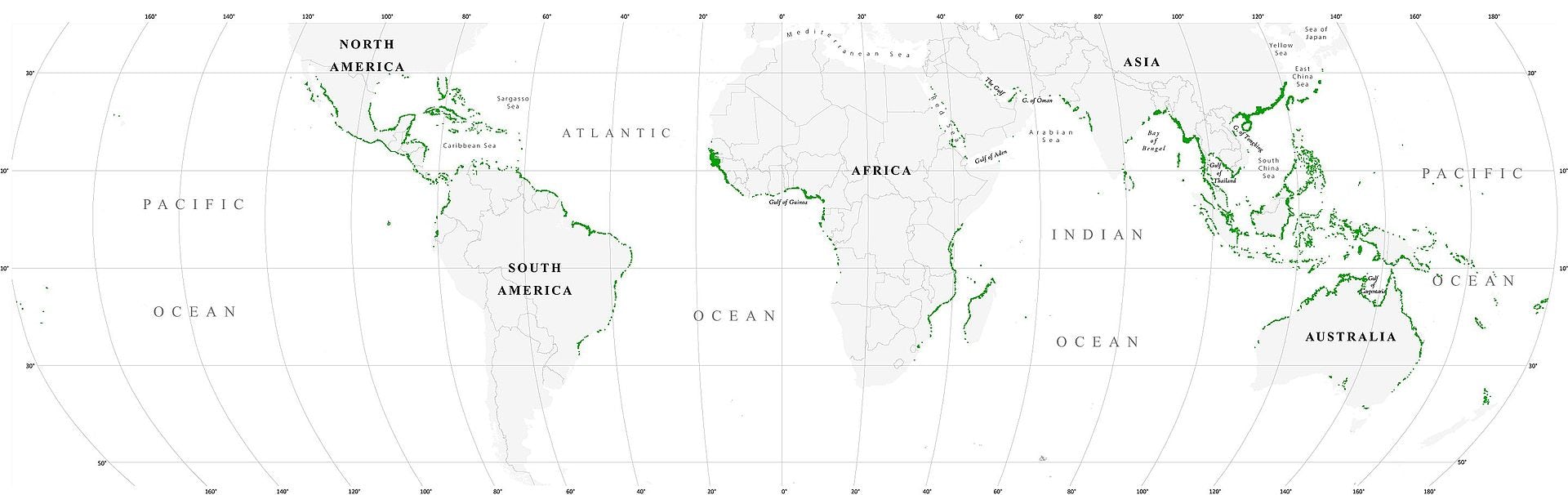
My research team studies mangroves – salt-tolerant trees with branches that intertwine like dense jungle gyms. Mangroves line the world’s coastlines and prefer warm temperatures, so they have traditionally been restricted to subtropical and tropical environments. But they have many features that have enabled them to survive major climate shifts in the past. Now, in a harbinger of climate change, mangroves are expanding from tropical zones into temperate areas. Scientists are finding them at higher and higher latitudes in North America, South America, Asia, Africa, Australia and Latin America.
Working with other ecologists in the shadow of the huge launch complex at Florida’s Kennedy Space Center, we have found that mangroves have increased in abundance by 70 percent in just seven years over an area of 220 square miles (567 square kilometers). This is a dramatic change in the plant community along this stretch of the Atlantic coast. Unlike many other impacts of climate change, we expect these shifting ranges to produce some benefits, including increased carbon storage and storm surge protection.
The world’s mangrove forests in 2000. Giri et al., Journal of Biogeography (2008)., CC BY-SA
LARGE IMAGE
Traveling by water
Plants have less ability to move than animals, but some – particularly mangroves – can disperse via water over thousands of miles. Mangroves release reproductive structures called propagules, similar to seeds, which can produce new plants. They float and are distributed by ocean currents and, sometimes, big storms. As mangrove propagules drift north along the Atlantic coast, they are reaching areas where winter freeze events that could kill them are becoming less common due to climate change. Similar movements are occurring in other locations around the world.
In the Gulf of Mexico and Florida, mangroves are increasingly found in areas recently dominated by salt marshes, which typically occur in cooler zones. Using satellite images and land-based field studies in our ongoing study of mangroves, we can see this spread of mangroves occurring faster than we could have expected based on climate data alone.
Though these shifts also likely happened in the past due to hurricanes and freeze events, the recent changes in mangrove range are still dramatic. One study from Florida shows that mangroves from northern populations may be reproducing earlier than normal and producing bigger propagules, which could help them take over salt marshes.
Mangrove propagules drifting near Australia’s Great Barrier Reef. Brian Gratwicke, CC BY
Stabilizing coastlines
In a recent modeling effort, we examined how mangroves protect NASA facilities at the Kennedy Space Center. We found that a 2-meter-wide strip of mangroves along the shore can reduce wave height by 90 percent. In contrast, it takes 20 meters of salt marsh habitat to reduce waves by the same amount. Other studies have found that mangrove forests helped reduce shoreline damage during the catastrophic 2004 Indian Ocean tsunami and Tropical Storm Wilma in Belize in 2005.
Mangroves around the world have been severely reduced by human activities, particularly clearance for aquaculture. Scientists estimate that at least 35 percent of global mangrove habitat was lost between 1980 and 2000. One recent estimate suggests that mangrove deforestation rates in recent decades have been three to five times faster than other forests around the globe.
All types of coastal wetlands help to prevent millions of dollars in damage from flooding and save hundreds of hours of labor to repair storm damage. Mangrove restoration efforts are ongoing in many parts of the world, including the Tampa Bay estuary and southern China, but some projects have been major failures. To succeed, these initiatives need to consider mangrove habitat needs, particularly hydrology.
Though mangroves may protect coastlines even more effectively than salt marshes, it is important to note that marsh plants provide important habitats for numerous species of birds and fish. We don’t yet know how these animals will fare as mangroves replace marshes, nor do we yet understand other downsides of plant range shifts due to climate change.

Mangroves provide essential habitat and coastline protection but are under threat.

Storing carbon in flooded soils
Continued mangrove expansion could increase carbon storage along coastlines. Mangroves have an enormous capacity for sucking up carbon dioxide and other greenhouse gases and trapping them in flooded soils for millennia. They are among the most carbon-rich tropical forests and can store twice as much carbon on a per-area basis as salt marshes. During normal growth, mangroves rapidly convert carbon dioxide into biomass. The saturated soils in which they grow contain low levels of oxygen, which bacteria and fungi need as fuel to break down dead plant matter. Instead, this dead material is stored in the soil.
We estimated in one study that mangrove carbon storage at the Kennedy Space Center increased by 25 percent in only seven years as mangrove forests spread. We concluded that if mangrove expansion continued unchecked by freezes into other southeastern U.S. wetlands, wetland carbon storage could result in the uptake of 26 million metric tons of carbon by 2080. This is equivalent to just over 95 million metric tons of carbon dioxide, which is about 28 percent of Florida’s total greenhouse gas emissions from human activities in 2010.
Preserving coastal mangroves improves climate resilience in several ways. First, if the carbon stored in these soils were released as carbon dioxide and methane, this would likely cause an increase in climatic warming. Second, the same processes that store carbon in wetland soils also allow these wetlands to accrete sediment and keep pace with rising sea levels.

Can mangroves keep delivering these services?
Plants and animals perform many ecosystem services for humans, from pollinating crops to filtering drinking water supplies. As species are shifted around the globe, it is critical to understand whether these services will lessen or increase, and how we can maximize them in a less stable future.
Mangroves are providing extremely valuable services and may become even more important as they expand toward the poles. But according to one recent study, many mangrove ecosystems are not building enough new elevation to keep pace with sea level rise. In a new project, my research group is analyzing how variable climate and mangrove invasion will alter the coastal protection capacity of Florida wetland ecosystems. With a better understanding of this process, we can develop strategies for protecting and restoring these valuable resources.

Links

'We Might Be Entering The Age Of The Unfailing Sunburn': Ozone Layer Getting Worse In Populated Areas

Fairfax - Liam Mannix

The ozone layer is not healing as scientists had hoped. In fact, depressing research released on Tuesday finds our UV-blocking ozone layer is still thinning in more populated parts of the world.
A global effort to cut certain airborne pollutants over the last three decades has been credited with allowing our damaged ozone layer to recover. But the shock new findings – which scientists cannot explain – suggest we may have been celebrating too early.


This image, from NASA and centred on Antarctica, shows the damage we have done to the ozone layer. The gradient indicates the amount of ozone at that region. As you can see, a large area of the atmosphere above Antarctica has been depleted of ozone, as shown by the dark-blue area. Photo: NASA's Earth Observatory
"This study is scary,” said Professor Bill Laurance, a climate change scientist at James Cook University.
“Until we understand what’s really happening you’d be silly to sun yourself, except in polar regions. The era of suntanning could be over; we might be entering the age of the unfailing sunburn."
The ozone layer is crucial to life on Earth. It blocks the sun’s most damaging rays, preventing them from damaging our DNA.
In the ‘70s, we discovered that chlorofluorocarbons – a type of gas used in fridges and aerosol sprays – were destroying the ozone layer, leading to a large hole forming over the Antarctic.
Humanity responded to the crisis, signing the Montreal Protocol in 1987 and phasing out chlorofluorocarbons.
It was the world’s first universal agreement to cooperate on human health, according to University of Melbourne sustainability expert Dr Paul Read, and heralded huge optimism about how we would respond to other worldwide challenges, such as global warming.
It also seemed to work – the hole over the Antarctic has been gradually closing. Scientists hailed it as the only environmental indicator we had managed to significantly improve since 1992.
A study published on Tuesday by a team of researchers from the UK and Switzerland, published in Atmospheric Chemistry and Physics, challenges that.
The researchers found the parts of the ozone layer that stretch over large swathes of the far north and south of the globe – including the southern ocean below Australia – are not recovering at all. There, the ozone layer is continuing to thin.
“The potential for harm in lower latitudes may actually be worse than at the poles. The decreases in ozone are less than we saw at the poles before the Montreal Protocol was enacted, but UV radiation is more intense in these regions and more people live there,” said study co-author Joanna Haigh, Co-Director of the Grantham Institute at Imperial College London.
What this new paper is saying,” said Dr Read, “is that the hole in the ozone layer, predicted to be completely repaired by around 2060, has a whole section that's not repairing itself.”
The finding comes from a huge project to combine data from multiple atmosphere-monitoring satellite missions since 1985. Adding the data together produced a clear finding the layer was continuing to thin.
It is not clear why these parts of the layer are thinning. The study’s authors suggest climate change may be changing patterns of atmospheric circulation, leading to ozone being distributed differently.
There are also a range of other substances that are used in paint strippers and similar chemicals that could be destroying the ozone. It was previously not believed these substances lasted long enough in the atmosphere to damage the layer.

Links

Lethal Heating is a citizens' initiative