Sunday, March 03, 2019

Climate Action Helps Companies Build Reputations And Attract Investors

The Conversation - 

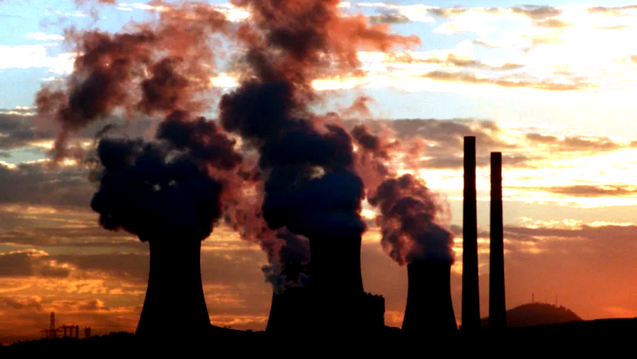
Investors are starting to demand businesses take action on climate change. (Shutterstock)
This year, climate change topped off the agenda at the annual meeting of the World Economic Forum in Davos, Switzerland — where every January, global leaders and the heads of the world’s largest companies gather to find ways to improve the state of the world. When surveyed, experts from government, business, academia and non-governmental organizations said the failure to respond to climate change is a key risk.
Companies committed to tackle climate change are addressing their greenhouse gas emissions (GHGs) via science-based targets. These voluntary goals are compatible with the global push towards a low-carbon economy that aims to keep the global temperature increase to less than 2℃.
One program that is gaining traction globally is the Science Based Target Initiative (SBTI), a collaboration between CDP, a not-for-profit charity, the UN Global Compact, the World Resources Institute and the World Wildlife Fund. This program creates a global community where companies can set targets that align with the Paris Agreement.
Joining a global community like SBTI not only provides a formal framework for measurement and tracking goals, it also signals a company’s commitment to climate change action. As of early 2019, 525 companies have signed on, including 169 with approved targets.

Big companies at the forefront
IKEA, Unilever, Tesco, General Mills, L’Oreal, Walmart and McDonald’s are among the large multinational corporations that have signed on to the SBTI.
IKEA Group, for example, has committed to an 80 per cent reduction in GHG emissions in stores and other operations and a 50 per cent reduction in emissions from travel and customer deliveries by 2030, compared to 2016 levels. It will also cut emissions in its value chain by at least 15 per cent, resulting in a 70 per cent reduction in the climate footprint of an average IKEA product.
Large companies can make change within their own operations and along the supply chain. McDonald’s plans to reduce its emissions intensity across its supply chain by 31 per cent by 2030 (baseline 2015) by targeting energy use and packaging waste in restaurants, and streamlining its beef production, which make up more 60 per cent of emissions.
Similarly, General Mills, the packaged food company (Cheerios, Yoplait and Green Giant) set a science-based target to cut its GHG emissions by 28 per cent by 2025 (from a 2010 baseline) across its entire value chain, from farm to table to landfill. It plans to do this by getting its farmers to adopt sustainable practices that reduce emissions and protect at risk water sources, for example.
Companies participate in global sustainability initiatives and set external goals because of their sustainability mindset, strategic gains, external competitive or reputational risk pressures and recognition of an inexorable shift to a low-carbon economy.
While participation in the SBTI is voluntary, the results are reported publicly. Even though there are few tangible sanctions for non-performance, the absence of achievement or reporting can harm a company’s reputation.
Former U.S. Vice-President Al Gore speaks during the ‘Safeguarding the planet’ session at the annual meeting of the World Economic Forum in Davos, Switzerland, in January 2019. (AP Photo/Markus Schreiber)
In Canada, only nine companies have joined the SBTI, and all but one remain at the commitment-setting stage. Canadian National Railway has promised to reduce its emissions intensity by 29 per cent by 2030, based on a 2015 baseline.
There are several reasons for the low participation in SBTI among Canadian companies. The Chartered Professional Accountants of Canada argues that more than 99 per cent of businesses in Canada are small businesses, with fewer resources, employees and pressures.

Key benefits
SBTI and the participating companies, however, see a number of benefits from setting targets. They also provide companies with long-term goals that will be resistant to changes in management and shifts in business priorities.
A major European electric company, EDP, found strategic benefits in laying plans to decarbonize — it builds reputation, improves visibility and helps it benefit from innovation, and had a favourable response from investors, employees and customers.
Walmart says it is part of their sustainability journey to encourage others to look at emissions as a form of waste with financial value or inefficiency in the value chain. In 2017, it launched Project Gigaton to encourage suppliers to eliminate one billion tonnes of GHG emissions from their operations and supply chains by 2030 by targeting one of six pillars: energy, waste, packaging, agriculture, forests or product use. Suppliers achieving goals and communicating performance publicly are recognized as “Giga-Gurus.”
Unilever looks at science-based targets to boost its competitive advantage in the shift towards a low-carbon economy and to hedge against regulator pressures and the costs related to carbon pricing. In 2017, Unilever reduced energy-related emissions by 47 per cent per tonne of production from 2008 levels, and shifted towards renewable energy in manufacturing. The company also identified a nine per cent increase in GHG emissions from its consumer products since 2010, largely due to the consumers’ hot showers when using their products.
The food and beverage sector — considered a significant driver of global climate change and the one with the most at risk from climate change — has been an early adopter of science-based targets. Fifty-nine businesses, including Ben & Jerry’s and PepsiCo, have either set targets or are at the commitment stage.
Other global initiatives to encourage businesses to develop responsible practices and meet climate goals are also on the rise. For example, Principles for Responsible Investment has attracted 2,232 investors who believe in an “economically efficient, sustainable global financial system” and who agree to incorporate environmental, sustainability and governance issues into their investment practice.
Eighty-seven per cent of Canadians believe businesses must make a stronger commitment to climate change action. Youth, in particular, are demanding more commitment, and future consumers such as Greta Thunberg are taking to the world stage and inspiring other students to raise their voices.
It is unlikely that one company or one nation will make a significant impact on reducing emission levels, however, climate change can have significant impact on business.

Links

The Coal, Hard Facts: Australia Could Follow Germany's Phase-Out Model

Fairfax - Frank Jotzo* | Andreas Loeschel*

Coal mining giant Glencore has announced it will cap its coal production and will prioritise investments that are essential to the low-carbon energy transition. It is a powerful illustration of how the corporate world realises that coal will be on the way out, globally.
Coal-fired power's days are numbered, but what number should we put on it? Credit: Michele Mossop


The commission is made up of representatives of utilities, electricity users, local communities, NGOs, academics and state and federal governments.
The coal commission has recommended that Germany phase out the use of coal for electricity by 2038 or perhaps 2035, starting with a rapid reduction in coal power plant capacity of about a third by 2022.  By 2030, almost two-thirds of coal generation should have left the market.
The commission is supported across the political spectrum. It as a high profile and strong legitimacy based on its broad membership. Parties and lobbies disagree over details, but the commission’s central recommendation is almost universally accepted in Germany.
Governments present and future will have leeway in how to translate these goals into policy, but it would be difficult to ditch the overall goals. Such predictability benefits everyone involved. It has been missing in Australia, where the direction of climate and energy policy has largely depended on which party is in government and which prime minister is in office.
Germany’s commission has suggested some approaches that could be popular politically, but that would have economic weaknesses.  One is about who should carry any additional costs. The commission recommends that local communities around power plants should be supported, that the owners of coal plants be compensated, and that electricity prices should not rise either for industry or consumers.
A coal-burning power plant steams behind wind generators in Gelsenkirchen, Germany. Credit:AP
So the taxpayer would be up for the costs. That may be conducive to keeping the stakeholders happy, but it is not ideal economically.
Another consideration is whether to use regulatory or market instruments to facilitate closure of coal plants. The default implementation of phase-out in Germany would be for government to determine which plants should close when, and then pay them out.
The more efficient way would be to let businesses decide which plants shut and when, using a market-based system. The coal commission hinted at this possibility. The costs could then be covered by the electricity industry.
Of course, the economically best way to achieve the efficient exit of coal plants is a price on carbon emissions. In Germany, this would mean implementing a minimum carbon price to bolster the incentive from the EU emissions trading scheme.
Perhaps it is time for an Australian coal commission. It gives a chance of molding lasting consensus, if representation of interest groups is broad.
The coming and inevitable phase-out of coal from the power system warrants a serious attempt to forge a widely shared consensus about how to go about it. That includes not only how to support regional economies and communities, a task that Labor’s proposed Just Transition Authority could tackle. It is about how to achieve an orderly exit, on what trajectory, and with what combination of renewables and energy storage will take coal’s place.
With that might come broad public acceptance and some durability of policies in our ever turbulent politics.
  • Frank Jotzo is a professor at the ANU Crawford School of Public Policy.
  • Andreas Loeschel is a professor at Muenster University and the chair of German government’s independent monitoring commission for the energy transition.
    • Both are directors at the Australian-German Energy Transition Hub.
Links

PBS NewsHour: Why Climate Change Is An ‘All-Encompassing Threat’

PBS NewsHour

Although a candidate just entered the 2020 presidential race with a platform centered on climate change, some experts say Americans aren’t fully aware of the scope and seriousness of global warming. Among them is David Wallace-Wells, who argues in a new book that the severity of the climate crisis has not yet been acknowledged, let alone addressed. He sits down with William Brangham to discuss.


David Wallace-Wells: The Uninhabitable Earth: Life After Warming

Penguin Random House
Transcript
Judy Woodruff:
Climate change continues to grow as a political issue in America.
As we reported, in the latest — the latest Democrat to announce a bid for the White House, Washington state's governor, Jay Inslee, says he will make climate change a central campaign theme.
This comes after Democrats in the House recently put forward their own aggressive plan.
But William Brangham talks with the author of an alarming new book which argues that we're barely acknowledging the severity of this crisis.

William Brangham:
It is worse, much worse, than you think. That's the first sentence of David Wallace-Wells' terrifying new book about climate change. It's called "The Uninhabitable Earth: Life After Warming."
In it, Wallace-Wells marshals the latest scientific research, which he argues points to one unimpeachable fact: that our use of fossil fuels, which admittedly has powered so much prosperity and growth across the world, is now the single greatest threat to our survival, one that he says — quote — "has brought us to the brink of a never-ending climate catastrophe."
David Wallace-Wells is a fellow at the New America Foundation and a columnist and editor at "New York Magazine."
Welcome.
David Wallace-Wells:
Thank you.

William Brangham:
I have to admit, I haven't been alarmed by a book as I was by yours. And I feel like I know a lot of what you're reporting on.
I should tell — we have also posted the first chapter of your book on our Web site. I would encourage people to read it to get a sense of the argument that you're making.
But help us understand what you think people don't quite appreciate about the severity of this problem.
David Wallace-Wells:
There's sort of three big things.
The first is speed. I think we had long thought that climate change was happening very slowly, that it was unfolding, at fastest, at about a decade timescale, more usually like centuries, and we didn't have to worry about it in our own lives, maybe even our children's lives, but it was something to worry about for our grandchildren.
More than half of all the emissions that we have put into the atmosphere in the entire history of humanity, we have done in the last 30 years. And that means that we're doing this damage in real time and in the space of a generation. So the speed is really overwhelming.
And if we lived off the coasts, we often thought that it was a matter of sea level rise, and we'd be safe. We could live inland, that would be OK. In fact, it's an all-encompassing threat that's not compartmentalizable to the coast. It's much bigger than sea level rise.
It impacts the economy, which could be 30 percent lower than it would be without climate change by the end of the century, and it impacts public health, conflict. We could have twice as much war because of climate change at the end of the century. That's the second thing, the scope.
And then the severity. Most scientists talked about two degrees as the sort of threshold of catastrophe.

William Brangham:
Two degrees Celsius.
David Wallace-Wells:
Yes. And that's about twice as much warming as we have had today. They describe that threshold as the threshold of catastrophe. We're on track to get to about 4 or 4.3 degrees Celsius by the end of the century.
And that whole range is really unconscionable in terms of how much climate suffering it would impose. And we have only just begun to see peaks of it, with wildfire and extreme weather. I think, in the coming decades, we're going to see much more of it.

William Brangham:
People hear two degrees, three degrees, four degrees, and those distinctions might seem trivial to people who are not immersed in this.
Three degrees warming, four degrees of warming is potentially calamitous.
David Wallace-Wells:
Yes.
Four degrees of warming, we would have, the U.N. suggests, as many as a billion climate refugees. That's as many people as live in North and South America combined. We would have $600 trillion of climate damages. That's double all the wealth that exists in the world today. Again, we would have twice as much war as we see today.
And the impacts would be everywhere, not just on — you know, not just on the sea level, not just on Arctic melt, not just on heat waves and droughts, but there would be no life on Earth that would be untouched by these forces. That's how all-encompassing the climate system is.

William Brangham:
The natural inclination of a lot of people when they hear you talk like this is to say, that's just hyperbole, that's not going to be so bad, we will find some fix for it.
I mean, it seems like you have to guard against apathy and nihilism and complacency. Your whole book seems to be arguing that none of this would be worth talking about if we didn't have some way to try to fix it.
David Wallace-Wells:
Yes, that's exactly how I feel.
And I think that, when we consider all of the climate horrors that are possible, it's important to remember that those are a mark of just how much power we retain over the climate. The average person can think of some of these really scary scenarios, a global refugee crisis, famine, drought, heat waves that kill people all around the world, and think, oh, my God, it's all over.
But, in fact, if we get to that situation, it will be because of what we do from here on out. Nothing that happened in the past, until a few years ago, is going to affect the climate going forward. The thing that will write that story is the actions that we take moving into the future.
And that means that the climate of the future is always within our control, as a human species. What that means for our politics and how we manage that, obviously very complicated. There are many obstacles ahead. But this is not something that is inevitable at all. In fact, nothing about it is inevitable.
We could avert all of these disasters if we collectively to decided to take action quickly. The question is how quickly we will take action and at what scale.

William Brangham:
You have actually argued that panic can be — that panic is appropriate in response to this, and that panic can be productive. How so?
David Wallace-Wells:
When we think about the campaigns against cigarette smoking, against drunk driving, these were public campaigns that drew very clearly on fear, and were successful as a result.
The U.N. says that, in order to avoid catastrophic levels of warming, we need a global mobilization at the level of World War II. We know, from history, we didn't fight that war out of hope or optimism. It was out of fear and alarm.
Now, I don't think that fear and alarm are the only way to talk about climate. I think that there are reasons for optimism. The policy is — with the Green New Deal, a lot of exciting opportunities there. Public opinion is moving very quickly. The price of solar is falling very rapidly. There are reasons for hope.
But in the big picture, the science itself is terrifying. Every finding that scientists come up with every day makes the world look bleaker. And if we look at those facts and become alarmed, we should allow ourselves to be alarmed and respond in kind.

William Brangham:
When faced with news about how awful climate change could be, there's such a natural reaction of people to say, what can I do individually?
You seem to argue in the book that individual actions, it's well-meaning, but it's really not enough.
David Wallace-Wells:
Yes. And I worry it can be a distraction.
I think people who are moved to live a little more responsibly when it comes to carbon, they should. If they want to eat less meat, if they want to fly less, that's wonderful. I applaud them. It's really noble.
But the contribution that you can make as an individual, adding up all of your lifestyle choices, is completely trivial to the impact that you can have through politics, through voting. I do think so.
The story of global climate change is so large, so all-encompassing, that really the actions of individuals can't make a dent in it. The only thing that can really change course is policy action at the national and international level.
Thankfully, many of us have that leverage in our own hands in voting and the possibility of mobilizing and doing activism around climate, pressuring our leaders to honor their climate commitments.
And I think that's much more important than what you buy or what you eat or what you wear, which I — again, I worry, it's a little bit of a distraction from real political action.

William Brangham:
All right. The book is "The Uninhabitable Earth."
David Wallace-Wells, thank you very much.
David Wallace-Wells:
Thank you.

Links

Saturday, March 02, 2019

Climate, The Crisis That Threatens Our Political Duopoly

Fairfax - John Hewson

When does an issue or policy challenge become more important than political party affiliation? When does a national or global issue outweigh the importance to a voter of their individual struggles?
These are becoming increasingly important questions as support for, and belief in, traditional political parties wanes, and voters are increasingly frustrated and disappointed by their political representatives and the so-called democratic processes of government.
Climate change ... any party that refuses to deal with it forfeits the right to govern. Credit: Bloomberg
In recent days in the United Kingdom we have seen several important resignations (12 at last count) from both the Conservative and Labour parties, over Brexit and other issues, which will test the UK’s ingrained political duopoly. Of course, this is not the first time the duopoly has been challenged – recall the breakaway of the Social Democratic Party in 1981.
However, given the more recent “success” of En Marche in France, and of Ciudadanos in Spain, and what is effectively the existential threat by Brexit to Britain’s political establishment, the exit of nine MPs from Labour and three from the Conservatives (with the real possibility of more to come),  it must be close to a watershed moment.
To be clear, members of this new Independent Group had a variety of motivations for leaving – four because of alleged anti-Semitism in the Labour Party, as well as objections to the party’s left-wing bias, and some also in fear of being de-selected. However, the Conservative defectors, and all but one from Labour, want another “people’s vote” on Brexit. It is instructive that Labour leader Jeremy Corbyn then moved to favour a second referendum, while Theresa May seeks to delay another parliamentary vote, hoping the Europeans will “blink”.
Given that the EU would still clearly prefer that the UK not leave, it is unlikely to offer any significant concessions, so it is hard to see how May can ever win a parliamentary vote on her withdrawal bill. Indeed, she continues to lose procedural votes that work to reduce her negotiating authority. No vote would mean that the UK would still leave on March 29, a “hard Brexit”, which most don’t want. The hope of the UK establishment is that a concensus emerges for a second referendum, or for withdrawing the leave application altogether. Much will depend on whether there are further defections.
It is clear that an issue such as Brexit is not only divisive across the UK community, but also within each of the major parties, important enough to threaten the traditional party duopoly. Many say, or hope, it can’t happen, but it may.
Party unity has been a significant issue in Australia's political history, but disunity has probably been more about individuals than issues, especially since World War II. The most notable exception was the ALP/DLP split of the mid-1950s over communism and communist influence. But Gorton v McMahon, Howard v Peacock, Hawke v Keating, Rudd v Gillard v Rudd, and Abbott v Turnbull were mostly just about personalities, occasionally dressed under a policy cloak.
However, over the post-war period there has been an increasingly significant voter drift against both major parties. In the late 1940s, together, they attracted about 95 per cent of the vote. Now it's in the mid-70s, at best. Most recently, the drift has manifested in support for high-profile independents, a trend that will gather momentum at the May election.
This is also occurring as both leaders have net negative poll ratings, and the electorate is genuinely faced with the choice between two lessers, both parties and individuals.
While there are multiple motivations, a principle reason for the voter drift has been dissatisfaction with the two major parties, which have become increasingly self-absorbed internally while focusing more on point-scoring against, and blame-shifting to, each other, rather than governing, and particularly meeting the bigger policy challenges. Conspicuous disloyalty, interminable scandals, opportunistic, short-term policy thought bubbles, cynicism, and so on, have led voters to disengage, stop listening, or protest where and when they can.
The economic narrative embraced by both sides doesn’t match the lived, and increasingly difficult, experience of voters, while the big issues they realistically expect their representatives to handle are simply denied, ignored, or fiddled with.
In all this, individual members are increasingly under considerable pressure to toe the line, to rabbit on with the party line, as summarised in the dot-points emailed to them each morning, even if they fundamentally disagree. It is a daily farce in the media. It becomes harder and harder to defend the indefensible, especially for those in marginal seats where their feedback is contrary, where their support is waning.
Some members have already broken out of the two-party structure – Cory Bernardi, Clive Palmer. Banks, most noticeably, joining significant independents, Cathy McGowan, Rebekha Sharkey, Andrew Wilkie, Kerryn Phelps and Bob Katter. Independents could certainly hold the “power of the balance” in the Lower House after the next election.
However, could climate policy be our Brexit? Could it threaten our LNP/ALP duopoly? It is a divisive issue within both the LNP and the ALP, against the background of some 70 to 80 per cent of voters consistently wanting decisive government-led action on the essential transition to a low-carbon society, and to renewables.
Advocates for a long-term climate action plan across the two parties are much closer than they are to the deniers, coal advocates and intransigents in their own parties.
We have already lost nearly three decades on this extremely important issue, squandering billions of dollars of investment and probably hundreds of thousands of jobs. We have already kicked the issue to our kids and grand kids. Our two parties and our political system have failed us.
Surely, those unable to rise to the climate challenge forfeit the right to govern?

*John Hewson is a professor at the Crawford School of Public Policy, ANU, and a former Liberal opposition leader.

Links

Early Sowing Can Help Save Australia’s Wheat From Climate Change

The Conversation - 

Timing is of the essence when it comes to growing wheat. Author provided
Climate change has already reduced yields for Australian wheat growers, thanks to increasingly unreliable rains and hostile temperatures. But our new research offers farmers a way to adapt.
By sowing much earlier than they currently do, wheat growers can potentially increase yields again. However, our study published today in Nature Climate Change shows that to do this they need new varieties that allow them more leeway to vary their sowing dates in the face of increasingly erratic rainfall.
Sowing wheat is a matter of delicate timing. Seeds of current varieties need to be planted at just such a time so that, months later, the plants flower during a window of just 1-2 weeks, known as the optimal flowering period.
In Australia’s wheat belt this window is generally in early spring. At this time the soil is moist after the cool, wet winter; days are getting longer and sunnier; maximum temperatures are still relatively low; and frosts are less frequent. If crops flower outside the optimal window, yields decline sharply.

Crops and colonies
When Europeans first started trying to grow wheat in Australia, they used varieties that were suited to the cool, wet climate of northern Europe, where the optimal flowering period is in summer. These varieties were much too slow to flower in Australian conditions, and yields were very low. Wheat breeder William Farrer used faster-developing wheats from India to create the Federation variety, which revolutionised wheat production in Australia, earning Farrer the ultimate honour of having a pub named after him.
Federation wheat is a “spring wheat”, moving rapidly through its life cycle regardless of when it is planted. If you sow it earlier, it flowers earlier. For more than a century Australian wheat breeders have bred spring wheats, allowing growers to adjust their sowing time to get their crops to flower during the optimal period. Anzac Day has traditionally been the start of sowing season, after autumn rains have wet the soil enough for seeds to germinate.
Here is where climate change is causing a problem. If farmers sow later than mid-May, the wheat is likely to miss its spring flowering window. But southern Australia has experienced declining April and May rainfall, making it harder for growers to sow and establish crops at the right time. This in turn means crops flower too late the following spring, meaning yields are reduced by drought and heat.
Growers could start sowing earlier, and use stored soil water from summer rain (which hasn’t declined and has even increased at some locations), but current spring wheat varieties would flower too early to yield well. For farmers to sow earlier, they need a different sort of wheat in which development is slowed down by an environmental cue. One such environmental cue is called vernalisation. Plants that are sensitive to vernalisation will not flower until they have experienced a period of cold temperatures. These strains are thus called “winter wheats”.
Ironically enough, the wheat varieties that Europeans first brought to Australia were winter wheats, but they were further slowed by sensitivity to day length which made them too slow to reach the earlier flowering times needed in the hotter, drier colony.
But this problem can be sidestepped by using a “fast winter wheat”, which is sensitive to vernalisation but not to day length. Our previous research showed that this type of wheat was very suited to Australian conditions – it can be sown early but still flower at the right time. In fact, the vernalisation requirement means that this wheat can be sown over a much broader range of dates and experience fluctuating temperatures, and still flower at the right time.

Yielding results
In our new research, we developed different lines of wheat that varied in their response to vernalisation and day length, and grew them across the wheat belt to compare which ones would yield best at earlier sowing times.
We found that a fast winter wheat performed best over most of the wheatbelt, and on average yielded 10% more than spring wheat when they flower at the same time.
We then used computer simulations to investigate how these crops would perform at the scale of an entire farm. Our results showed that if Australian growers had access to adapted winter varieties in addition to spring varieties, they could start sowing earlier in seasons where there was an opportunity. If the rains come early, farmers can use the winter wheat; if they come late they can switch to the spring wheat, which yields better than winter wheat at late sowing times.
This would mean that more area of crop would be planted on time, and yields would increase as a result. If realised, this could increase national wheat production by about 20%, or roughly 7.1 million tonnes.
The main hurdle is that growers do not currently have access to suitable winter wheats. Breeding companies have started work on them, but it will be several years before suitably high-quality varieties become available.
Australian growers urgently need to keep pace with climate change. Although Australia only produces 4% of the world’s wheat, it accounts for 10% of exports and is thus important in determining global supply and price. If global wheat supply is low, prices rise, and it becomes unaffordable for many of the world’s poorest people, potentially causing malnutrition and civil unrest. Steeply rising wheat prices were among the factors behind the food riots that broke out in more than 40 countries in 2007-08, which helped to trigger the Arab Spring uprisings of 2010-12.
The world’s poorest people deserve to be able to buy wheat. But Australian wheat farmers also need to earn a decent living and stay internationally competitive. The only way to meet all these needs is to keep production costs low – and increasing yields by sowing the right wheat cultivars for Australia’s changing climate is one way to go about it.

Links

Australia Breaks Weather Records With Hottest Ever Summer

The Guardian - 

2018-19 season tops temperature highs across the country, exceeding previous record set six years ago
Australians sweltered through back-to-back heatwaves and battled bushfires across the country over the 2018-19 summer. Photograph: David Crosling/EPA 
Australia has endured its hottest summer ever, according to the Bureau of Meteorology, breaking the previous record set six years ago.
The 2018-19 summer, which produced near 50C days and topped temperature highs across the country, has officially exceeded the previous record set in 2012-13, which was 1.28C above what is considered normal. Climate analysts say it falls into a pattern of human-induced global warming.
January alone had already been confirmed as the hottest month ever recorded in Australia, with a mean temperature across the nation of 30.8C, which was 2.9C above the average for January temperatures (calculated between 1961–1990) of 27.9C.
On Thursday, the BoM revealed the whole season was officially the hottest ever recorded.
While exact figures are not yet confirmed, the bureau said this summer’s mean temperature was at least 2C above the 27.5C benchmark of what is considered normal, based on 1961-1990.
“Summer has been our warmest summer on record in terms of maximum temperatures, in terms of minimum temperatures and in terms of mean temperatures,” said Andrew Watkins, the BoM’s manager of long-range forecasting.
The statistics will come as no surprise to Australians who sweltered through back-to-back heatwaves and battled bushfires across the country.
In January alone, Adelaide broke its all-time heat record with a 46.6C day, Port Augusta broke its record with 48.9C, and then broke it again with 49.5C a week later.
The small New South Wales town of Noona also broke the record for the highest overnight minimum ever recorded, with a night that never dropped below 39.5C. And in Cloncurry in Queensland, residents endured 43 days in a row over 40C, Watkins said.
This summer’s extreme temperatures had been predicted since late last year, with the BoM’s climate outlook forecasting a drier, hotter summer due to the El Niño weather event, a positive Indian Ocean Dipole and the effect of global warming.
The “long-term increasing trend in global air and ocean temperatures” was a factor in the hotter-than-average summer, the report said in October.
On Thursday, the BoM also updated its outlook for the coming autumn, saying there were “very high odds” that hot, dry conditions would continue.
Watkins warned that while some high rainfall events could occur, it would largely be bad news for drought-stricken farmers. “I wish we had better news than that,” he said.
Also on Thursday, Victorian health authorities warned of a late summer heatwave that would bring 40C temperatures on Saturday.
The bureau has forecast a heatwave across most of Victoria over the weekend, and Victoria’s chief health officer issued a health alert for parts of the state from Thursday to Saturday.
Pregnant women, the elderly, children and people with medical conditions have been warned to take care.
Victoria’s emergency management commissioner, Andrew Crisp, also warned there was a high fire risk, peaking at a severe fire danger rating in parts on Saturday.

Links

Friday, March 01, 2019

Australian Headlines Are Designed To Scare People Into Not Acting On Climate Change

The Guardian - 

As we head into another cycle of climate change politics beware the economic doomsayers
 Whenever Australia starts to have a serious conversation about addressing climate change headlines appear in newspapers of an economic apocalypse. Photograph: folkeandersen.com/Alamy Stock Photo/Alamy Stock Photo
Whenever Australia starts to have a serious conversation about addressing climate change, headlines appear in newspapers of an economic apocalypse. This happened again in the Australian this week based on work by a long-standing economic modeller of climate policy, Brian Fisher.
So, what do economic modelling exercises tell us of the impact of reducing Australia’s contribution to global warming, and more importantly, what do they not? Should we cower in fear of action or embrace the inevitable change and manage the human and economic costs of transition?
Firstly, economic modelling results are not predictions. They are based on hypothetical future worlds. Economists try to capture the dynamics of economic systems in their models to understand the relative impact of different policy options. This means they are always wrong because economists can’t predict the future. Economic modellers are not the crystal ball gazers we read about in fantasy books.
Leading energy commentator and founder of Bloomberg New Energy Finance, Michael Liebreich, sums this up nicely. His graph shows what US government energy models have been projecting over the years compared with what is happening in the real world. Over and over again models have failed to capture how fast the cost of clean energy has been falling and the scale at which it would be deployed.
This does not mean the economic models are not useful, it just means they should be used to test the relative impact of different policy options and not be presented as predictions of the future. They have a long history of overestimating the costs of environmental regulations because people and markets can innovate faster than they often expect.
Secondly, the way economic modelling results are presented is very important. Industry groups in particular like to attach themselves to particular results and scream that thousands of jobs will be lost, or wages will be slashed. This is designed to scare people into not acting on climate change by making them feel insecure in their lives. The headlines in the Australian did just this.
It is also dishonest because they also don’t clearly put the results in the context of the broader change in the economy. (David Gruen, one of Australia’s top economic officials gave a great speech about this in 2008 to illustrate how long this silliness has been going on.)
To illustrate my point, the economic impacts Fischer has projected for different emissions targets are in the same ballpark of those projected for work commissioned by the Department of Foreign Affairs and Trade a few years ago. This work also presented results in a similar way to the Australian. However, what is also showed is that the economy, jobs, income, etc continued to grow regardless. We keep getting richer and have more jobs, we just do so at a slightly slower rate.
Thirdly, because Australia exports a lot of coal and other emissions-intensive products to other countries, what they do matters an awful lot to the Australian economy. As other nations reduce emissions, demand for these products falls regardless of what we do. It has been established for some time that a significant part of the economic impacts of climate change on Australia comes from things we can’t control and this is generally presented in the results (see here for an example). While he does not report this, Brian Fisher knows this because he spearheaded economic analysis in the 1990s that was targeted at convincing Japan, one of our major coal markets, it would be too costly for them to reduce emissions.
Lastly, whenever these headlines are blasted across the papers one point is always lost: these results don’t include the cost of climate change itself. This summer, we have again seen a glimmer of what climate change will mean for Australia. Recent economic analysis indicates the benefits of limiting global warming far outweigh the cost of doing so, in one case by 70-1 (a good summary is here). (Again, this is something Fisher has considered in the past as he once said it would be cheaper to move people from the Pacific and put them in condos on the Gold Coast than act on climate change.)
So, as we head into another cycle of climate change politics in Canberra, beware the economic doomsayers and the threats from industry groups that credible action will be a “wrecking ball” to the economy. To be glib, no one said saving the Earth would be free. Acting on climate change will have costs but the costs of not acting will be far, far larger. Better that we come together and manage a fair and effective transition than continuing to delay and pay a much, much greater bill later.
  • Erwin Jackson is director of policy at Investor Group on Climate Change.
Links

Lethal Heating is a citizens' initiative