21/06/2019

Analysis: Why Children Must Emit Eight Times Less CO2 Than Their Grandparents

Carbon BriefZeke Hausfather

Credit: Julie Johnson via Unsplash.
Global emissions of CO2 need to decline precipitously over the next few decades, if the world is to meet the Paris Agreement goals of limiting global warming to “well below 2C” and, ideally, below 1.5C.
If these goals are to be met, young people would have to live the greater part of their lives without contributing significantly to global emissions. Essentially, they would have fewer “allowable” CO2 emissions during their lifetime, compared with older generations.
To determine just how much smaller their personal CO2 limits would be, Carbon Brief has combined historical data on emissions and population with projections for the future. In a world where warming is limited to 1.5C, the average person born today can emit only an eighth of the lifetime emissions of someone born in 1950.
The interactive tool, below, shows the size of each person’s “carbon budget” during their  lifetime – based on when and where they were born.
It looks at two different scenarios: one where the world limits warming to well below 2C above pre-industrial levels by 2100; and one were warming is limited to 1.5C.
It also considers two different ways of sharing future allowable emissions: one where each country tracks “optimal” pathways taken from models; and another, focused on equality, where each person can use the same portion of future emissions, no matter where they live.
In all cases, younger generations will have to make do with substantially smaller lifetime carbon budgets than older generations, if the Paris limits are to be respected. This is because most of the allowable emissions have already been used up, meaning young people will not have the luxury of unmitigated emissions enjoyed by older generations.
The idea for this analysis was first proposed to Carbon Brief by Dr Ben Caldecott at the University of Oxford. The methodology used – and its limitations – are explained in detail at the end of this article. Carbon Brief is now working to further develop the analysis with Dr Caldecott and his colleagues.
The global picture
Global emissions must peak in the next decade and quickly decline for the world to stay below its Paris Agreement limits, according to the UN. In the scenarios examined in this article (see methodology at the end for details), global emissions peak around 2020, decline around 50% by 2045 and then fall below zero around 2075 in order to hold global warming to below 2C.
Emissions have to fall even faster for warming to be kept below 1.5C – falling around 50% by 2030 and to below zero by 2055. In the 1.5C scenarios examined here, large amounts of negative emissions are deployed by the end of the century, removing carbon from the atmosphere equivalent to roughly a third of today’s emissions.
These emissions pathways can be divided up into average “lifetime carbon budgets” that depend on an individual’s year of birth. This allocation is based on the changing global population and emissions during each individual’s lifetime.
The figure below shows the global average lifetime carbon budget for people born in each year between 1900 and 2017, in scenarios where warming is kept below 1.5C (dark blue) or 2C (light blue).

Global average lifetime carbon budgets per-capita by birth year for 1.5C and 2C scenarios, assuming a lifespan of 85 years. Based on historical emissions data from the Global Carbon Project, historical and future projected population from the United Nations and global emission projections from MESSAGE-GLOBIOM. Generation birth years shown at the bottom from the Pew Research Center. See the methodology section for details. Chart by Carbon Brief using Highcharts.
As the chart above shows, if warming is limited to well below 2C the global average lifetime carbon budget for someone born in 2017 is 122 tonnes of CO2, only about a third as large as the budget for someone born in 1950. If warming is to be limited to 1.5C, the remaining budget is only 43 tonnes of CO2 and the difference is eight times as large.
Current per-capita global emissions are around 4.9 tonnes per person per year. This means that the lifetime carbon budget of someone born today is equal to 25 years of current emissions if warming is limited to well below 2C – and only nine years of current emissions if warming is limited to 1.5C.

Divvying up emissions
The analysis above uses a global average carbon budget. However, in reality, there is no such thing as a “global average” person and each country’s emissions will follow a slightly different trajectory in “well below” 2C and 1.5C worlds.
In general, emission reductions will need to be proportionally larger in developed, wealthier countries, such as the US, where per-capita emissions are very high. Developing nations, such as India, already have much lower per-capita emissions.
To put the difference into perspective, the average Indian had emissions of 1.9 tonnes of CO2 in 2017, whereas the figure in the US was 16.9 tonnes of CO2.
Moreover, historical emissions vary greatly between countries, with the likes of the US and UK responsible for a far larger share of cumulative emissions since the industrial revolution. This poses an open question as to how the fixed global carbon budgets set by the Paris Agreement should be divided between different countries.
IAMs are computer models that analyse a broad range of data – e.g. physical, economic and social – to produce information that can be used to help decision-making. For climate research, specifically,… Read More
There are lots of different ways to allocating future emissions between countries. Integrated assessment models (IAMs) – energy system models that examine what mix of different technologies and choices are needed to meet climate targets – provide one set of budget allocations, reporting future emissions for each region of the world.
The figure below is based on the allocations in 1.5C scenarios from IAMs. It shows how lifetime carbon budgets vary based on birth year, for four major countries and regions that are responsible for the bulk of global CO2 emissions. These are the US (light blue line), Europe (dark blue), China (red), and India (yellow).

Lifetime carbon budgets by birth year based on historical emissions and future IAM 1.5C scenarios, assuming a lifespan of 85 years. Based on historical emissions data from the Global Carbon Project, historical and future projected population from the United Nations and regional emission projections from MESSAGE-GLOBIOM. Generation birth years shown at the bottom from the Pew Research Center. See the methodology section for details. Chart by Carbon Brief using Highcharts.
If the remaining carbon budget is divided up in this way, based on IAM pathways, then national  allowable lifetime emissions are much more similar for someone born in 2017 than in 1950 – but there are still large differences between countries.
For example, someone born today in the US would still be allocated a lifetime carbon budget some 15 times larger than someone born in India. Their budget would be four times larger than someone born in China and around twice as large as in Europe.
The table below shows the lifetime carbon budget in a 1.5C world (2C world) both globally and by major country/region, broken down by generation:
Pre-Boomer
(pre-1946)
Boomers
(1946-1964)
Gen X
(1965-1980)
Millennials
(1981-1996)
Gen Z
(1997-2012)
Post-Gen Z
(post-2012)
Global275325 (348)276 (322)202 (264)118 (191)56 (134)
US14941464 (1530)1191 (1342)846 (1052)472 (709)238 (489)
Europe686698 (733)582 (668)398 (521)218 (363)105 (259)
China119255 (291)256 (334)220 (326) 151 (279)71 (213
India3864 (71)61 (74)52 (69)23 (54)18 (39)

Lifetime carbon budgets in tonnes of CO2 by birth year based on historical emissions and future IAM 1.5C (and 2C) scenarios. Pre-Boomer generations have identical 1.5C and 2C carbon budgets. Using generation periods from the Pew Research Center and averaging the lifetime budget of all the birth years of each generation.
This approach raises obvious questions about equity, as it implies that countries with high historical emissions will also receive a larger share of the proverbial pie in the future. There are lots of different ways to define equity – and little agreement – regarding which approaches would be both possible and “fair” for allocating future emissions.
One alternative would be to allocate the remaining budget equally between all people, wherever they live. This might be hard to achieve in practice as, say, per-capita US emissions would need to fall rapidly towards the global average while those in India would immediately rise.
But it provides a useful thought experiment that can be contrasted to the lifetime carbon budget allocation set out above. Even this might not be truly equal, is it neglects responsibility for historical emissions.
The figure below shows the effect of this allocation on lifetime carbon budgets by birth year for the same four major countries and regions. It is based on historical per-capita emissions and equal per-capita shares of the remaining carbon budget from 2018 onwards, in a scenario where warming is limited to 1.5C.

Same as the prior figure, but using global emission projections from MESSAGE-GLOBIOM to calculate future global per person emissions. See the methodology section for details. Chart by Carbon Brief using Highcharts.
The chart above shows that lifetime carbon budgets converge much more quickly when future emissions are divided equally, even though historical differences between countries remain. As a result, someone born in 2017 would have a similar lifetime carbon budget no matter where they are born.

Some limitations
Calculating lifetime carbon budgets is necessarily imperfect and relies on a series of unrealistic assumptions. Every person is different and, in practice, individual emissions will be strongly affected by income, behaviour and other factors.
While the average 1.5C lifetime carbon budget of someone, say, born in the US around 1995 might be 696 tonnes of CO2, people in that generation will, in practice, have widely varying individual emissions.
The approach taken here – dividing national emissions by population – also glosses over the fact that a sizable portion of emissions for some countries are the result of industrial and commercial activity producing goods for trade that are not consumed at home. These “consumption footprints” can differ significantly from national emission estimates, as Carbon Brief has previously examined.
For simplicity, a constant lifespan of 85 years is assumed when calculating lifetime carbon footprints. This is higher than the current average lifespan in most countries, but may be more realistic for younger generations today given expected advances in medical science and access to healthcare. However, in practice, lifespan differences between countries will likely persist into the future and could impact these calculations.
Finally, this approach assumes that emissions in a given year can be assigned equally across the population regardless of age. In reality, people are probably responsible for considerably lower emissions when they are children than adults, as they are not, say, driving cars and are often consuming less.
That said, this analysis provides a first look at how lifetime carbon budgets vary by age. It suggests that the allowable lifetime emissions for young people today is a fraction of that of previous generations, as the global budget for avoiding warming of 1.5C or 2C has already been mostly used up.

Methodology
Lifetime carbon budgets were calculated by adding the historical and projected future per-capita emissions for each year that an individual is expected to live – assuming a constant lifespan of 85 years since a given birth year for simplicity. This is higher than the current global average lifespan (it is typical of Japan today), but may be more typical for the lifespan of younger people today given continuing medical advances.
For example, if someone were born in the year 2000 in India, their lifetime carbon footprint would be the sum of historical per-capita emissions in India from 2000 to 2017, plus forecast per-capita emissions in India between 2018 and 2085.
The end of 2017 serves as the demarcation between historical and future emissions because 2018 emission and population values are not yet available for all countries.
Carbon budgets were calculated for all possible birth years from 1900 to 2017 for major countries and each of the world regions where UN population projections were available: Africa, Europe, Latin America and the Caribbean, North America, Oceania and Asia.
Historical CO2 emission estimates for each country from 1751-2017 were obtained from the Global Carbon Project. Historical population data from 1950-2017 and future population projections from 2018-2100 were obtained for each country from the UN World Population Prospects 2017. The “medium” scenario was chosen for future population projections, as it matches reasonably well with the population assumptions in the Shared Socioeconomic Pathway (SSP2) world used for IAM emission scenarios.
Future emissions by country for both 1.5C and 2C targets were based on IAM runs from the International Institute for Applied Systems Analysis (IIASA) MESSAGE-GLOBIOM model using the SSP2 world. SSP2 is a world where current economic and population trends broadly continue and MESSAGE-GLOBIOM was the model chosen to represent SSP2. MESSAGE-GLOBIOM emissions by region – and globally – were taken from the IAMC 1.5C Scenario Explorer.
As IAM runs in recent years lack country-specific values, regional emission estimates were used to estimate country-specific trajectories by scaling current country emissions by the percent reduction in regional emissions from the IAM runs. For example, if the IAM runs showed OECD countries reducing emissions by 50% by 2040 in a 1.5C scenario, emissions in each OECD country were estimated to decrease by 50% by 2040.
Net future emissions were used for per-capita emission estimates. This means that in many countries future per-capita emissions go negative in the second half of the 21st century, particularly in 1.5C scenarios. The distribution of negative emissions in MESSAGE-GLOBIOM varies regionally, with a particularly high concentration of negative emissions in Latin America and the Caribbean.
Finally, as both emission and population projections are only available through to 2100, but people born after 2015 will still be alive post-2100, per-capita emissions are assumed to remain constant at 2100 values in subsequent years.
Two future emission allocation scenarios are provided: one based on the regional MESSAGE-GLOBIOM emission pathways and one where the global MESSAGE-GLOBIOM projected emissions are distributed evenly to every country on a per-capita basis after 2017. The latter shows how a more equitable distribution of remaining emissions would affect lifetime carbon budgets, compared to the allocation in IAMs.
The countries featured in the interactive tool are a subset of those with the largest populations. However, major regions are also included, so if there is a country not featured on the list its region should provide a reasonable estimate. The “North America” region is not shown as all member countries appear on the list.

Links

Australia’s Energy Exports Increase Global Greenhouse Emissions, Not Decrease Them

The Conversation | 

Australia’s LNG exports aren’t as good for the planet as the government seems to think. AAP Image/Origin Energy
When unveiling government data revealing Australia’s rising greenhouse emissions, federal energy minister Angus Taylor sought to temper the news by pointing out that much of the increase is due to liquefied natural gas (LNG) exports, and claiming that these exports help cut emissions elsewhere.
LNG exports, Taylor argued, help to reduce global emissions by replacing the burning of coal overseas, which has a higher emissions factor than gas. In reality, Australian gas displaces a mix of energy sources, including gas from other exporters. Whether and to what extent Australian gas exports reduce emissions therefore remains unclear. Meanwhile, Australia’s coal exports clearly do increase global emissions.
The way Australia can help clean up world energy systems in the future is through large-scale production and export of renewable energy.
In a statement accompanying the latest quarterly emissions figures, the Department of Environment and Energy stated:
Australia’s total LNG exports are estimated to have the potential to lower emissions in importing countries by around 148Mt CO₂-e [million tonnes of carbon dioxide equivalent] in 2018, if they displace coal consumption in those countries.
In truth, the assumption that every unit of Australia’s exported gas displaces coal is silly. The claim of a 148Mt saving is wrong and unfounded. The real number would be much smaller, and there could even be an increase in emissions as a result of LNG exports.
For the most part, exported gas probably displaces natural gas that would otherwise be produced elsewhere, leaving overall emissions roughly the same. Some smaller share may displace coal. But it could just as easily displace renewable or nuclear energy, in which case Australian gas exports would increase global emissions, not reduce them.

How much might gas exports really cut emissions?
Serious analysis would be needed to establish the true amount of emissions displaced by Australian gas. It depends on the specific requirements that importers have, their alternatives for domestic energy production and other imports, changes in relative prices, resulting changes in energy balances in third-country markets, trajectories for investments in energy demand and supply infrastructure, and so forth. No such analysis seems available.
But for illustration, let’s make an optimistic assumption that gas displaces twice as much coal as it does renewable or nuclear energy. Specifically, let’s assume - purely for illustration - that each energy unit of Australian exported LNG replaces 0.7 units of gas from elsewhere, 0.2 units of coal, and 0.1 units of renewables or nuclear.
Australia exported 70 million tonnes of LNG in 2018. A Department of Environment and Energy source told Guardian Australia that this amount of gas would emit 197 million tonnes of CO₂ when burned. We calculate a similar number, on the basis of official emissions factors and export statistics.
Under the optimistic and illustrative set of assumptions outlined above, we calculate that Australia’s LNG exports would have reduced emissions in importing countries by about 10 million tonnes of CO₂ per year. (See the end of the article for a summary of our calculations.)
They might equally have reduced emissions by less, or they might in fact have increased these countries’ emissions, if more renewables or nuclear was displaced than coal. But whatever the the actual number, it’s certainly a long way short of the 148 million tonnes of emissions reduction claimed by the government.
We also should consider the emissions within Australia of producing LNG. The national emissions accounting shows that the increase in national emissions of 3.5 million tonnes of CO₂-e compared with the year before is mostly because of a 22% increase in LNG exports. This means that LNG production in Australia overall may be responsible for 16 million tonnes of CO₂ emissions per year.
A full analysis of global effects would also need to factor in the emissions that would be incurred from the production of alternative energy sources displaced by Australia’s LNG.

Coal exports unambiguously raise emissions
The picture is more clear-cut for coal. If there was no Australian thermal coal (the type used in power stations) in world markets, much of this would be replaced by more coal mined elsewhere. The remainder would be replaced by gas, renewables or nuclear. As for the case of gas, the precise substitution effects are a matter of complex interactions.
The crucial point is that all alternative fuels are less emissions-intensive than coal. In the substitution of Australian-mined coal for coal from other sources, there could be some substitution towards coal with higher emissions factors, but this is highly unlikely to outweigh the emissions savings from the substitution to nuclear, renewables and gas.
So, removing Australian coal from the world market would reduce global emissions. Conversely, adding Australian coal to the world market would increase global emissions.
Australia exported 208 million tonnes of thermal coal in 2018, which according to the official emissions factors would release 506 million tonnes of CO₂ when burned. On top of this, Australia also exported 178 million tonnes of coking coal for steel production.
If a similar “replacement mix” assumed above for gas is also applied to coal – that is, every unit of coal is replaced by 0.7 units of coal from elsewhere, 0.2 units of gas, and 0.1 units of renewables or nuclear – then adding that thermal coal to the international market would increase emissions by about 19% of the embodied emissions in that coal. As in the case of LNG, this is purely an illustrative assumption.
So, in this illustrative case, Australia’s thermal coal exports would increase net greenhouse emissions in importing countries by about 96 million tonnes per year.
This figure does not consider the coking coal exports, nor the emissions from mining the coal in Australia and transporting it.

The real opportunity is in export of renewable energy
Thankfully, there actually is a way for Australia to help the world cut emissions, and in a big way. That is by producing large amounts of renewable energy for export, in the form of hydrogen, ammonia, and other fuels produced using wind and solar power and shipped to other countries that are less blessed with abundant renewable energy resources.
Even emissions-free production of energy-intensive goods like aluminium and steel could become cost-competitive in Australia, given the ever-falling costs of renewable energy and the almost unlimited potential to produce renewable energy in the outback. Australia really could be a renewable energy superpower.
Such exports will then unambiguously reduce global emissions, because they will in part displace the use of coal, gas and oil.
Once we have a large-scale renewable energy industry in operation, the relevant minister in office then will be right to point out Australia’s contribution to solving the global challenge through our energy exports. In the meantime, our energy exports are clearly a net addition to global emissions.

Summary of data and calculations

LNG emissions and displacement - illustrative scenario
Emissions inherent in Australia’s LNG exports of 69.5 million tonnes (in calendar year 2018) are 197 million tonnes (Mt) of carbon dioxide, based on emissions factors published by the Australian government.
If the same amount of energy was served using coal, emissions would be:
197Mt CO₂ + 148Mt CO₂
= 345Mt CO₂
Emissions under the mix assumed for illustration here would be:
0.7 x 197 (LNG) + 0.2 x 345 (coal) + 0.1 x 0 (renewables/nuclear)
= 207Mt CO₂
That is 10Mt higher than without Australian LNG.

Coal emissions and displacement - illustrative scenario
Australia’s thermal coal exports were 208Mt in calendar year 2018. Emissions when burning this coal were 506Mt CO₂, based on government emissions factors.
Assuming typical emissions factors for fuel use in electricity generation of 0.9 tonnes of CO₂ per megawatt-hour (MWh) from black coal and 0.5 tonnes of CO₂ per MWh from gas, the emissions intensity of electricity generation under the mix assumed for illustration here would be:
0.7 x 0.9 (coal) + 0.2 x 0.5 (gas) + 0.1 x 0 (renewables/nuclear)
= 0.73 tonnes CO₂ per MWh
This is 19% lower than the emissions intensity of purely coal-fired electricity, of 0.9 tonnes CO₂ per MWh.
19% of 506Mt CO₂ is 96Mt CO₂.
Links

Obligations To The World’s Children In The Climate Emergency

Independent AustraliaDavid Shearman

This government is not fit to govern on the climate change emergency because of its incapacity to grasp the imminent danger to Australia, our neighbours and indeed the world.
Image courtesy Imogen Bunting
David Shearman
Dr David Shearman AM FRACP is Emeritus Professor of Medicine at Adelaide University and the author or co-author of many articles and several books on reforming several aspects of democracy, including 'The Climate Change Challenge and the Failure of Democracy’.
FOR 30 or more years’ science has modelled the consequences of steadily rising greenhouse emissions and their expected trajectories of warming have been correct — as a result, current predictions have a high degree of confidence.
The latest review of these predictions from David Spratt and Ian Dunlop summarises the latest 4°C statements from esteemed scientific institutions, commencing with the Royal Society in 2011 and followed in 2013 by a comprehensive report from the Potsdam Institute and World Bank predicting 4ºC before the end of this century.
This was confirmed by a study from Chinese scientists in the Journal Advances in Atmospheric Sciences,  which estimated there is a 74 per cent chance of exceeding a rise of 4°C by the turn of the century.
Admiral Chris Barrie, in his foreword to the Spratt and Dunlop review, states:
'My colleague Professor Will Steffen has said of the climate challenge: “It’s not a technological or a scientific problem, it’s a question of humanities’ socio-political values...we need a social tipping point that flips our thinking before we reach a tipping point in the climate system” The question is “what thinking needs flipping”.'
The determination and statements of the thousands of young people marching for action on climate change have given us an answer, for in their early teens they are not yet fully inculcated in today’s mindset. Their understanding comes from two gifts: firstly, the different mind processes of their leader Greta Thunberg, which render her far less susceptible to current ideology.
Greta says:
"I see the world a bit different, from another perspective ... I have a special interest. It’s very common that people on the autism spectrum have a special interest."
Secondly, most young minds have not yet completed their absorption into this creed of neo-liberalism, which, as sociologist Löic Wacquant puts it, is an 'articulation of state, market and citizenship that harnesses the first to impose the stamp of the second onto the third.'
As an aside, it is relevant that those ministers pontificating most against the children’s marches and time off school were those in the “Right” captured most by the market imperative — a childhood has to be moulded in their image.
This branding by neoliberal thought begins in early childhood education, when the seeds of competition and self importance subsume those of collectivism. This is followed by educational subjects that ready them to join the striving economic world of commerce and industry, which has captured much of university endeavour — to say you are studying the liberal arts or philosophy is met with a questioning look of “drop-out”.
The marching children are likely to understand more than we credit.
As a child of five or six, I recall my fascination with two middle aged men marching the streets of our town carrying placards which proclaimed 'The End is Nigh'. "Mum, what are they doing?”, I asked. Mother, who had religious inclinations replied “Never mind, dear, they are doing their best”. To a child suffering the privations, bombs and poverty of war, I had followed the daily BBC bulletins; the placard said to me: Hitler was nigh!  When at age seven, I heard the BBC bulletin of the landing in France, but continued to see the men with placards, further searching questions had to be answered in detail.
The writings of political philosopher Bernard-Henri Levy are relevant to this discussion. His search for a new political and moral vision for our times is described in his 2009 book, Left in Dark Times: A Stand Against the New Barbarism. He describes a relationship between the fragmentation of international collectivism and cooperation, leading to the loss of a sense of purpose and time — a time that previously offered a sense of future that may be better, however bad the present. Since the beginning of history, there was always a time when no one could suspect that time could end except in metaphysical terms. Not any more, it is impending.
Children are capable of understanding the end game can be in their lifetime. It can certainly be recognised by those who understand the 4°C rise scenario, such as scientists and intelligentsia who are reluctant to have children and in community movements such as BirthStrike. There is also a sense of desperation in renewed discussion over the risks of geo-engineering.
The endgame of neoliberal minds is the catastrophe of financial collapse.
It is imbued by Margaret’s Thatcher’s statement:
Economics are the method; the object is to change the heart and soul.”
This all-consuming ideology has enabled a brain to compartmentalise many other more important issues in an exceedingly complex world.
The brain denies them when they clash with the primacy of neo-liberalism, for they are, Joel Millward-Hopkins says:
'... devoid of notions such as duty, compassion and solidarity with an artificial sense of separation from other people and from the ecology that supports all life, to seek fulfilment in increased wealth and consumption.'
If you were the leader of a country receiving a pay rise of 2 per cent when you earned over $500,000 per annum, could you accept it when seeing homeless on the streets? The psychological studies of Lasana Harris have illustrated this compartmentalisation or shutting off of empathy to homeless people.
Nor is there empathy for the soon to be homeless Pacific Islanders 
Current management of the world economy sees greenhouse emissions increase with economic activity and decrease in recessions. Despite government claims of good economic management, they are not decoupling our economy. Continuing economic growth is impossible in a finite world. These are inconvenient truths in their mantra of jobs and growth, and they are suppressed and denied by the neoliberal brain.
The children of today have grown up in a world of fragmentation of politics and failure of international cooperation. Levy relates the nihilism demonstrated by the Yellow Vests and the destructive Right movements in many countries to loss of hope for a meaningful future; children sense this insecurity without understanding its full implications.
Many in the legal and medical professions have moved to emphasise intergenerational justice. There are legal cases against inactive governments with children as plaintiffs and in the No Time for Games campaign Doctors for the Environment Australia works to provide a safe and healthy planet for children. Instead of a ministerial statement advising striking children to learn to drill for oil and gas, the Government should establish a national dialogue with children age 13 and over and enhance their knowledge of climate change issues and send a signal to the community that they wish to move forward.
In the words of Andrew Glickson:
“Only the children seem to know.”
Conclusions
Michael Bloomberg wrote:
'I believe that we are living in a similar moment (the moon landing). But this time, our most important and pressing mission is not to explore deep space. It’s to save our planet, the one we’re living on, from climate change. And unlike 1962, the primary challenge is not scientific or technological. It’s political.'
In Australia, we cannot wait another three years to fulfill a grossly inadequate target in a dubious "canter" if we are to meet our obligations as a rich, secure country able to do much more for itself and world humanity.
Churchill may have been wrong when he said:
“Democracy is the worst form of Government except for all those other forms.”
Some practical democratic reforms for the next three years will be described in future articles, which could be driven by the concerned united voices of business, scientific and technological expertise and the professions.

Greta Thunberg full speech at UN Climate Change COP24 Conference

Links

20/06/2019

Australia Quizzed By EU And China On Whether It Can Meet 2030 Paris Climate Target

The Guardian

Countries also raise concerns about rise in Australia’s transport emissions and the use of Kyoto carry-over credits
The Coalition has told China it ‘is supporting low and zero emissions transport options in a number of ways’. Photograph: zetter/Getty Images/iStockphoto
The Morrison government has been challenged by the European Union and by China about whether it can meet its Paris commitments given rising emissions, and about growing pollution from vehicles, ahead of a progress meeting about climate commitments in Bonn next week.
Nineteen countries, including Australia, will gather in Bonn on 24 and 25 June for a multilateral assessment of progress made under international climate commitments, and ahead of that session countries have submitted a range of questions about the performance of signatories in meeting their climate targets.
As well as questions about rising emissions, the EU and Canada have also queried the Morrison government’s decision to use carry-over credits from the Kyoto protocol in its latest carbon budget.
The Coalition is counting a 367 megatonne abatement from carry-over credits (an accounting system that allows countries to count carbon credits from exceeding their targets under the soon-to-be-obsolete Kyoto protocol periods against their Paris commitment for 2030) to help meet Australia’s 2030 target.
The EU in its questions to Australia points out that net emissions will grow during the period 2013 to 2020 and notes “Australia is also increasing coalmining, in particular for export”.
It has asked whether Australia considers its emissions profile, which has seen pollution rise since the repeal of the carbon price, to be “on a structural path of decrease in line with its commitments”. It has also flagged fossil fuel exports and asked whether they are sustainable “in the context of Paris agreement”.
Morrison government officials have addressed the implicit criticism by arguing in a submitted answer that “Australia’s national emissions peaked in 2007” and pointing to a fall in emissions per capita.
It says even without its climate policies, unveiled just before the recent federal election, including the reboot of the Abbott-era emissions reduction fund (ERF), “the decoupling of economic growth from greenhouse gas emissions has been progressing steadily since 1990”.
The government says the mix in electricity generation has changed between 2013 and 2020, and the Renewable Energy Target (RET) will see renewable energy grow to about 23.5% of Australia’s energy mix by 2020.
Australian officials do not, in the answer to the EU, mention the RET winds down from 2020, or that a sectoral target to drive emissions reduction in the electricity sector, proposed by Malcolm Turnbull in the national energy guarantee, was scrapped after he was replaced as prime minister by Scott Morrison.
The EU has also challenged Australia on its 2030 Paris target, pointing out “on the basis of reported projections with existing policies and measures it is not on track to meet this commitment”.
The EU asked Australia whether it would need further policies to meet the Paris commitment, given the current trends. Australian government officials point to the policies outlined before the recent election, including the funding boost for the ERF.
But in defending the status quo, the government has also restated a commitment to “review and refine” domestic policies aligned with the five-yearly review process under the Paris agreement. “This approach will provide for integrated consideration of domestic policy and international targets, and provide guidance for industry about future policy review processes,” officials said.
China, in a question to Australia, notes there will be a significant increase in transportation greenhouse gas emissions, and asks what measures Australia plans to take to reduce transport pollution in the future.
While the Morrison government pilloried Labor in the recent election campaign for proposing a vehicle emissions standard and targets for the uptake of electric vehicles, characterising Labor’s plans as a “war on the weekend”, government officials have told China the Coalition “is supporting low and zero emissions transport options in a number of ways”.
It says it is “developing” a national electric vehicle strategy – a strategy the government has not yet unveiled – which it says will build on support being rolled out through the Australian Renewable Energy Agency and the Clean Energy Finance Corporation.
It also points to the government’s Green Vehicle Guide website, and mandatory fuel consumption and carbon dioxide emission labels, that “help consumers identify and choose more fuel efficient vehicles” as well as “action to bring our fuel quality in line with international standards”.
The government says the safeguard mechanism “puts regulated limits on the emissions of large transport facilities that emit more than 100,000 tonnes C02-equivalent each year (mostly rail freight, domestic aviation and shipping)” and says the ERF “incentivises businesses, households and landowners to proactively reduce their emissions [and] provides incentives to reduce the emissions intensity of land and sea transport activity”.
It also points to the national hydrogen strategy, which is being led by Australia’s chief scientist, Alan Finkel, which is due to be delivered by the end of 2019.

Links

Climate Change, The Problem From Hell

Los Angeles Review of BooksFranz Baumann*


BILL MCKIBBEN, and this is meant as a compliment, is the Don Quixote of the environmental movement, or perhaps its Vivaldi. For over 30 years, he has been tilting at the windmills of ignorance, indifference, and interests — and composed the same concerto a few hundred times. Since his groundbreaking The End of Nature in 1989, he has written 16 more books and countless articles on humanity’s predatory and self-destructive relationship with nature. All are readable, measured, sensible, informative, factual, and incisive, yet short on polemics, hyperbole, and dubious assertions.
Puzzled by the recklessness with which the planetary branch we are sitting on is being sawed off, McKibben in Falter once more explains nature’s workings, asks profound questions, and tells wonderful stories. Unable to do otherwise, McKibben goes after the same windmills yet again — and crafts another lyrical masterpiece.
Falter reads like a book-length article in The New Yorker, which is not surprising since McKibben began his professional life there as a staff writer in the 1980s. This book is the latest installment of a trilogy of environmental disaster chronicles published within the space of a few weeks in the spring of this year. First came David Wallace-Wells’s The Uninhabitable Earth: Life After Warming, then Nathaniel Rich’s Losing Earth: A Recent History, and now Falter. Binge-readers and political activists will benefit from all three.
Falter, organized in four parts and an epilogue, is broadest in scope. It is a humane and wise book, even a beautiful one, if that’s not oxymoronic, given its subject. Amply sourced and referenced for deeper study or for skeptics, it tracks the state of the natural world in exhaustive detail, and identifies the forces imperiling it: the blistering heatwaves in North America and Europe; the droughts in Africa, Asia, and Australia; the typhoons in South-East Asia; the dying old-growth forests attacked by pests and diseases unleashed by climate change; the rising sea levels and unexpectedly speedy warming of the Earth’s oceans as well as their expectedly speedy acidification as well as their overfishing and choking with plastics, “the dead zones at the mouths of all major rivers where fertilizers pour into the sea”; the plummeting corn, rice, sorghum, and wheat crop yields resulting from higher temperatures as well as uncertain rainfall; the biological annihilation of species.
McKibben minces no words on the first page: “Put simply, between ecological destruction and technological hubris, the human experiment is now in question.” To avert catastrophe, no less is required than, in the clinical language of the Intergovernmental Panel on Climate Change (IPCC), “systems transitions” that are technically possible, yet “unprecedented in terms of scale.” The implication is that we are in existential peril and nothing short of a World War II–like mobilization in terms of commitment, focus, resources, and global reach will do. Too much time has been lost in the past decades — squandered actually.
Those who think we have never had it so good, for instance the obnoxiously cheerful author Steven Pinker, are off base because the implied assumption that past performance is indicative of future results. Climate change is so vexing precisely because it is the flip side of the phenomenal accomplishments of the past century or so. Things went right for too long, especially since World War II. Life expectancy, health, calorie intake, disposable income, car ownership, air travel, living space, and other treats rose to historically unprecedented levels. The bill for all this good living is now coming due, quite like the heart attack that strikes down the middle-aged, obese, sedentary, hard-drinking, chain-smoking guy, shattering his self-image of invulnerability. Except that, in the case of global heating, the cost for this generation’s profligacy is passed on to the next, and all generations thereafter. The combination of abundant cheap energy — fossil fuels all, first coal, then oil, and now gas — and scientific as well as technological progress has resulted in historically unparalleled economic growth, wealth, and opportunities.
Humans, on account of numbers and consumption, have become a geological force. “[N]o Roman emperor could change the pH of the oceans, but we’ve managed that trick in short order.” Humans have changed the energy balance of the planet, and thus fundamentally the way the world operates. To wit, the hottest five years on record were the last five years, and 20 of the hottest years happened in the last 22 years.
McKibben has a knack for scare facts, all backed up by documentary evidence. Who knew that humanity’s energy and resource usage during the past 35 years was more than during all of previous history? Or that more than “half of all the greenhouse gases emitted since the start of the Industrial Revolution have spewed from exhaust pipes and smokestacks since 1988”? Or that the carbon dioxide we’re emitting into the atmosphere is the equivalent of “400,000 Hiroshima-sized bombs every day, or four each second”? Or that, “if the billions of years of life on Earth were scaled to a twenty-four-hour day, our settled civilization began about a fifth of a second ago”? Or that a barrel of oil, “currently about sixty dollars, provides energy equivalent to about twenty-three thousand hours of human labor”? It is the scale and speed of humanity’s impact that has nature reeling.
The science is clear, and has been for a long time — for two centuries actually. As any encyclopedia or biology, chemistry, or physics textbook will confirm, the greenhouse effect was mentioned as early as 1824 by the French mathematician and physicist Joseph Fourier. The argument and the evidence were further strengthened by another French scientist, Claude Pouillet, and the Irish physicist John Tyndall. In 1896, the Swedish physicist and eventual Nobel Prize winner (in chemistry) Svante Arrhenius more fully quantified the greenhouse effect. McKibben notes that in November 2017, 15,000 scientists from 184 countries issued a forthright “Warning to Humanity,” which, within months, became the sixth-most-discussed academic paper in history. It has now been signed by well over 20,000 scientists. A similar initiative, Scientists for Future (S4F) of German, Austrian, and Swiss scientists, collected nearly 27,000 signatures in March 2019. Scientific uncertainty is certainly not the issue.
McKibben devotes a chapter to retracing how the fossil fuel companies — the main villains of the book — knew as early as 1959 about the warming effects of carbon dioxide. The initial concerns soon gave way to salivating at the prospect of a warming arctic and thus lower drilling costs there. Ignoring the findings of their in-house scientists, the marketing folks took over, emphasizing the — nonexistent — uncertainty in the scientific community about climate change. Before that happened, Walter Cronkite reported as fact the looming dangers of climate change on the evening news on Thursday, April 3, 1980. Nathaniel Rich reminds us that in 1988 32 climate bills were introduced in Congress, many enjoying not only Democratic but also Republican support. In 2007, the Republican Senator John McCain said:
The science tells us that urgent and significant action is needed. […] If the scientists are right and temperatures continue to rise, we could face environmental, economic, and national security consequences far beyond our ability to imagine. If they are wrong and the Earth finds a way to compensate for the unprecedented levels of greenhouse gases in the atmosphere, what will we have accomplished? Cleaner air, greater energy efficiency, a more diverse and secure energy mix, and U.S. leadership in the technologies of the future. There is no doubt; failure to act is the far greater risk.
What flipped the Republican Party? Was it better data, unforeseen facts, or new revelations? For politicians — given two-, four-, or six-year election cycles, immediate grievances are paramount, such as unemployment, depressed wages, rising inequality, immigration, and whatnot — it is a losing strategy to campaign on a platform of short-term sacrifices for long-term gains, regardless of the smallness of the former and the vastness of the latter. A majority of “voters must support the adoption of substantial restrictions on their excessively consumerist lifestyle, and there is no indication they would be willing to make such sacrifices,” McKibben quotes two analysts as declaring. There is indeed a co-dependency between businesses and consumers, quite like that between drug pushers and drug users. Addicts care only about the daily fix. They cannot envision obvious solutions, let alone adopt them, even if staying the course dooms all. But only tomorrow.
The Earth’s carrying capacity is a secondary concern, as are the costs of delayed mitigation measures. McKibben quotes environmental writer Alex Steffen, who coined the term predatory delay, “the blocking or slowing of needed change, in order to make money off unsustainable, unjust systems in the meantime.” Those with no power today and having contributed nothing to global heating — future generations, the poor in the Global South, and other species — will inherit a scorched Earth and an economic calamity.
Meanwhile, there are those who deny the climate problem altogether, or those who find prohibitive the costs of decisive remedial action, or those who, like McKibben, hope that technological progress will obviate the need for a change in the Western lifestyle. I don’t believe that he actually believes this. But he thinks, correctly, that solar energy is the closest there is to a solution. Not only can it provide unlimited clean power, but it also would reduce the power of a nefarious fossil fuel industry, reduce pollution, and, as a “technology of repair, social as well as environmental,” enhances the autonomy and dignity of people everywhere. He cites studies “that every major nation on earth could be supplying 80 percent of its power from renewables by 2030, at prices far cheaper than paying the damage for climate change.” A just-published German-Finnish analysis claims that
[a] global transition to 100% renewable energy across all sectors — power, heat, transport and desalination before 2050 is feasible. Existing renewable energy potential and technologies, including storage, is capable of generating a secure energy supply at every hour throughout the year.
The problem, though, goes far beyond power generation and requires a radical restructuring of production, consumption, and mobility in Western countries. The imperative is to pull off, in the next few years, a mobilization on the scale of World War II. McKibben evokes how, “[a]fter the attack on Pearl Harbor, the world’s largest industrial plant under a single roof went up in six months, near Ypsilanti, Michigan; […] within months, it was churning out a B-24 liberator bomber every hour.”
Hope being more motivating than despair, the book is a call to arms: “Let’s be, for a while, true optimists, and operate on the assumption that human beings are not grossly defective. Let’s assume we’re capable of acting together to do remarkable things.” It is a lovely sentiment, but also a reminder that it is not only the climate change deniers who are anti-science. So, too, are the technology enthusiasts and renewable-energy optimists who entertain the fantasy that it will be possible for 10 billion people — 40 percent more than today by the end of the century — to live in the style of the American or European middle class.
Population growth is one of the blind spots in Falter; nuclear energy, carbon pricing, carbon capture, and sequestration are others. Sensing, perhaps, that the political traffic cannot bear much, the book’s US-centrism avoids another uncomfortable insight, namely that climate change is a global public policy problem that cannot be solved in one country only, but requires international cooperation, compromise, and cohesion. But these are not notions in sync with “America First.” Possible, too, that McKibben prefers not to complicate matters, get side-tracked, or cause paralyzing gloom, even though he acknowledges that a “writer doesn’t owe a reader hope — the only obligation is honesty.”
Nevertheless, Falter provides ample evidence that we are on the cusp of an avoidable disaster. Weighing future cataclysm against short-term comfort should be a no-brainer because, if the climate breaks down, all bets are off. Don Quixote’s exertions may turn out to be worthwhile after all.

*Franz Baumann is a senior fellow and a member of the board of trustees at the  Hertie School of Governance in Berlin as well as a visiting professor at New York University. Prior to entering academia, he worked for the United Nations for over 30 years in many places and capacities. As an assistant secretary-general, his last assignment was special advisor on the Environment and Peace Operations.

Links

Adani Mine Approval Shows Climate Change Debate Reaches New Level Of Lunacy

Canberra Times - Ebony Bennett*

Australia's debate on the climate crisis reached a new level of lunacy this past week. Almost nowhere else in the world is the climate debate so divorced from reality.
Firstly, Adani's groundwater plan was approved by the Queensland government in a rushed process.
This came after the former commonwealth environment minister rushed Adani's water plan through federally.
The CSIRO's advice to both Commonwealth and Queensland governments was Adani's groundwater model was "not fit for purpose".
Despite this, both have accepted Adani's promise to fix the model later, after it has started mining coal.
Canberra school students earlier this year striked from school against Adani's coal mine and climate change. Picture: Terry Cunningham
As writer and anthropologist Professor Marcia Langton observed on ABC's The Drum: "If we want an economy run like Brazil or PNG, where political pressure and corruption can distort the decision-making process on issues as important as the largest coalmines in the world, then we should continue on the way we are."
This week Energy Minister Angus Taylor dissembled that it was good news that Australia's emissions have risen for the third year in a row (mainly due to LNG), because our LNG is replacing coal overseas, thereby reducing global emissions.
A few years back, then prime minister Malcolm Turnbull tried to tell us exporting coal helped to reduce global emissions because Australia's coal was "cleaner" than other countries' coal.
It was a nonsense argument then and it is now. Basically, Taylor, like Turnbull before him, is trying to persuade us our crap doesn't stink and that Australia happens to be uniquely blessed with the only pollution-reducing fossil fuels on Earth. Think about it. More coal and more gas pushes emissions down? Only in Australia would this pass for legitimate debate.
The very the same people who run this line also argue that stopping new mines and exporting less will make no difference. They can't have it both ways.
For decades Australian governments and fossil fuel companies have tried try to distract Australians from the enormous climate impacts of our fossil fuel exports.
Australia's fossil fuel exports contain more than twice as much CO2 potential as Australia's domestic emissions. Australia is the biggest per capita domestic emitter in the OECD, and our exports do twice as much damage.
Let's be clear, the science hasn't changed - together, coal, gas and oil are the number one cause of the climate crisis engulfing this little planet we all share. More coal and gas exports will fuel more droughts, bushfires, floods and heatwaves. That's a fact. And if we don't have a plan to move beyond coal, gas and oil soon, the climate impacts will only get worse.
This year's Queensland budget talks about needing to "build greater resilience ... in the face of the headwinds, like more frequent natural disasters caused by climate change". The damage bill from Queensland's summer of bushfires and floods will be $1.3 billion - that's from just one summer - entirely paid for by taxpayers. It is a special kind of madness to acknowledge in the budget the cost of climate impacts will grow, while rushing through approval for a new coal mine.
To avoid dangerous climate change and comply with the Paris Agreement, coal use needs to immediately decline and be almost entirely phased out by 2050.
There has never been a worse time in human history to approve or build a coal mine that aims to produce 60 million tonnes of coal per year for 90 years.
The fact Queensland voters swung away from Labor at the federal election doesn't magically solve the climate crisis or change the science; the environment doesn't negotiate. Burning fossil fuels for decades has increased the temperature of the oceans. Half of the Great Barrier Reef is dead and no amount of coal royalties can bring it back to life. We could pass a law prohibiting anyone from talking about it, but it's the dead coral that's driving tourists away from the reef, not the scientists and environmentalists who are sounding the alarm.
Adani's mine, and all the proposed coal mines in the Galilee Basin, are a threat to the tens of thousands of existing jobs that rely on a healthy Great Barrier Reef. Solving regional unemployment in central and north Queensland is important but building the Adani mine will barely shift the needle on greater employment.
Coal mining is one of the least labour-intensive industries in Australia, it just doesn't need many workers. Especially not when the demand for coal is declining.
That's why it was extraordinary when in an interview, the MP for Capricornia Michelle Landry admitted she has never actually asked Adani how many ongoing jobs there will be.
Considering Adani has constantly changed its jobs figures depending on who it is talking to, and publicly stated it plans to automate the mine from pit to port, this seems like an oversight.
Adani's proposed mine is now four times smaller than originally planned yet it is supposed to deliver five times more jobs. Magic or madness?
The Queensland government is still offering Adani free water, a free pass on the mine rehabilitation bill and a special royalty subsidy that's being kept secret.
But I'm an optimist. People thought the one-billion dollar Northern Australia Infrastructure Facility loan was a done deal before the Queensland government vetoed it when Queenslanders made it clear they oppose public subsidies for fossil fuel projects.
The state government pulled out of its previous plans to give Adani a free $100 million road upgrade. Backers of Adani said it would have no trouble finding finance, but more than 50 financial institutions, contractors and insurers have ruled out any involvement and Adani was forced to self-finance the project.
And there's plenty more standing in Adani's way. To name just a few, it requires two more Commonwealth approvals for groundwater plans, which CSIRO says are not up to scratch. Adani has no construction contractor and it's still unclear how they will fund the project. There is a court judgment still to come on the Indigenous Land Use Agreement, which is disputed by the Wangan & Jagalingou traditional owners.
But just as climate action being cheap isn't the reason to take climate action - though it's true - the fact that coal mines face obstacles isn't the reason why we need to stop new coal mines.
Like damming the Franklin River, building an enormous new coal mine is fundamentally a bad idea - economically and environmentally. That's why two thirds of Australians oppose the Adani mine.
A different way is possible. Sometime next year the ACT will become the first Australian jurisdiction to be 100 per cent powered by renewable electricity. Tasmania is set to achieve the same goal by 2022.
But we can't pretend Australia is in any kind of "transition" while we are still approving new coal mines. That way lies madness.

*Ebony Bennett is deputy director of The Australia Institute

Links

19/06/2019

Why Old-School Climate Denial Has Had Its Day

The Conversation

New South Wales, which was 100% drought-declared in August 2018, is already suffering climate impacts. Michael Cleary
The Coalition has been re-elected to government, and after six years in office it has not created any effective policies for reducing greenhouse emissions. Does that mean the Australian climate change debate is stuck in 2013? Not exactly.
While Australia still lacks effective climate change policies, the debate has definitely shifted. It’s particularly noticeable to scientists, like myself, who were very active participants in the Australian climate debate just a few years ago.
The debate has moved away from the basic science, and on to the economic and political ramifications. And if advocates for reducing greenhouse emissions don’t fully recognise this, they risk shooting themselves in the foot.
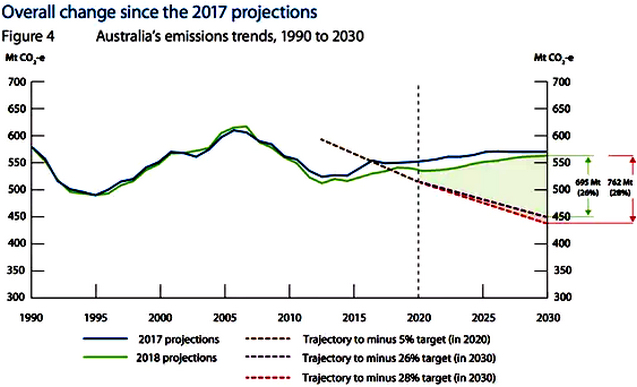
Australia’s carbon dioxide emissions are not falling. Department of Environment and Energy
The old denials
Old-school climate change denial, be it denial that warming is taking place or that humans are responsible for that warming, featured prominently in Australian politics a decade ago. In 2009 Tony Abbott, then a Liberal frontbencher jockeying for the party leadership, told ABC’s 7.30 Report:
I am, as you know, hugely unconvinced by the so-called settled science on climate change.
The theory and evidence base for human-induced climate change is vast and growing. In contrast, the counterarguments were so sloppy that there were many targets for scientists to shoot at.
Climate “sceptics” have always been very keen on cherrypicking data. They would make a big fuss about some unusually cold days, or alleged discrepancies at a handful of weather stations, while ignoring broader trends. They made claims of data manipulation that, if true, would entail a global conspiracy, despite the availability of code and data.
Incorrect predictions of imminent global cooling were made on the basis of rudimentary analyses rather than sophisticated models. Cycles were invoked, in a manner reminiscent of epicycles and stock market “chartism” – but doodling with spreadsheets cannot defeat carbon dioxide.
That was the state of climate “scepticism” a decade ago, and frankly that’s where it remains in 2019. It’s old, tired, and increasingly irrelevant as the impact of climate change becomes clearer.
Australians just cannot ignore the extended bushfire season, drought, and bleached coral reefs.zzz

Partisans
Climate “scepticism” was always underpinned by politics rather than science, and that’s clearer now than it was a decade ago.
Several Australian climate contrarians describe themselves as libertarians - falling to the right of mainstream Australian politics. David Archibald is a climate sceptic, but is now better known as candidate for the Australian Liberty Alliance, One Nation and (finally) Fraser Anning’s Conservative National Party. The climate change denying Galileo Movement’s claim to be to be non-partisan was always suspect - and now doubly so with its former project leader, Malcolm Roberts, representing One Nation in the Senate.
Given this, it isn’t surprising that relatively few Australians reject the science of climate change. Just 11% of Australians believe recent global warming is natural, and only 4% believe “there’s no such thing as climate change”.
Old-school climate change denial isn’t just unfounded, it’s also unpopular. Before last month’s federal election, Abbott bet a cafe patron in his electorate A$100 that “the climate will not change in ten years”. It reminded me of similar bets made and lost over the past decade. We don’t know whether Abbott will end up paying out on the bet – but we do know he lost his seat.

The shift
So what has changed in the years since Abbott was able to gain traction, rather than opprobrium, by disdaining climate science? The Australian still runs Ian Plimer and Maurice Newman on its opinion pages, and Sky News “after dark” often features climate cranks. But prominent politicians rarely repeat their nonsense any more. When the government spins Australia’s rising emissions, it does it by claiming that investing in natural gas helps cut emissions elsewhere, rather than by pretending CO₂ is merely “plant food”.
As a scientist, I rarely feel the need to debunk the claims of old-school climate cranks. OK, I did recently discuss the weather predictions of a “corporate astrologer” with Media Watch, but that was just bizarre rather than urgent.
Back in the real world, the debate has shifted to costs and jobs.
Modelling by the economist Brian Fisher, who concluded that climate policies would be very expensive, featured prominently in the election campaign. Federal energy minister Angus Taylor, now also responsible for reducing emissions, used the figures to attack the Labor Party, despite expert warnings that the modelling used “absurd cost assumptions”.

Many people still assume the costs of climate change are in the future, despite us increasingly seeing the impacts now. While scientists work to quantify the environmental damage, arguments about the costs and benefits of climate policy are the domain of economists.
Jobs associated with coal mining were a prominent theme of the election campaign, and may have been decisive in Queensland’s huge anti-Labor swing. It is obvious that burning more coal makes more CO₂, but that fact doesn’t stop people wanting jobs. The new green economy is uncharted territory for many workers with skills and experience in mining.
That said, there are economic arguments against new coalmines and new mines may not deliver the number of jobs promised. Australian power companies, unlike government backbenchers and Clive Palmer, have little enthusiasm for new coal-fired power stations. But the fact remains that these economic issues are largely outside the domain of scientists.
Debates about climate policy remain heated, despite the scientific basics being widely accepted. Concerns about economic costs and jobs must be addressed, even if those concerns are built on flawed assumptions and promises that may be not kept. We also cannot forget that climate change is already here, impacting agriculture in particular.
Science should inform and underpin arguments, but economics and politics are now the principal battlegrounds in the Australian climate debate.

Links

Lethal Heating is a citizens' initiative