09/07/2019

A ‘Climate Emergency’ Was Declared In New York City. Will That Change Anything?

New York TimesAnne Barnard

The city is now the largest on earth to pass such a measure.
Credit Stephanie Keith/Getty Images
New York City, the world capital of ambition, has never been shy about grandiose declarations. The City Council has passed or proposed resolutions demanding world peace, banning a racist slur and condemning all manner of federal policies where city government has no actual say.
But for a growing global network of activists seeking to change the way the world talks about climate, the city’s sweeping resolution in late June declaring a “climate emergency” is a major victory.
Saying that the heating climate is a crisis of imminent danger, they argue that getting people and governments to describe it in far more urgent language is the only way to produce the level of global mobilization required to stop it.
New York is now the largest city on earth to pass such a measure, calling last week for “an immediate emergency mobilization to restore a safe climate.” It joined London, Sydney and a total of 722 localities in 15 countries, according to the Climate Mobilization, a Brooklyn-based nonprofit group pushing the declarations.
And on Wednesday, Los Angeles’s City Council went further. It passed a measure that will formalize its own emergency declaration, calling climate change one of the most important issues facing the city. It also established a Climate Emergency Mobilization Department and laid out steps to make city agencies and the public take newly vigorous and coordinated action against planet-warming emissions.
Margaret Klein Salamon, a founder of the Climate Mobilization, an environmental advocacy group, said emergency declarations build political pressure to take stronger actions, like New York’s recent sweeping state and city laws to curb emissions.
“Because what are elected leaders supposed to do if not protect us from emergencies?” she said.

Do these words even mean anything?
By themselves, emergency declarations have no more force than other political proclamations. And just as no individual country can stop climate change within its borders, cities and states’ toolboxes are limited without the support of federal law and international agreements.
That hasn’t stopped states and smaller jurisdictions. New York City recently mandated that the owners of its largest buildings slash their emissions impact, and new legislation requires New York State to eliminate nearly all greenhouse gas output by 2050.
But questions remain about whether even these measures — with far more teeth than a council declaration — will achieve their goals.
Government agencies need to “start making things happen — and fast,” including acting against the interests of real estate, energy and other lobbies that traditionally wield political clout, said Pete Sikora, climate justice director for New York Communities for Change. His group supported the state and city laws but contends they do not go far enough.
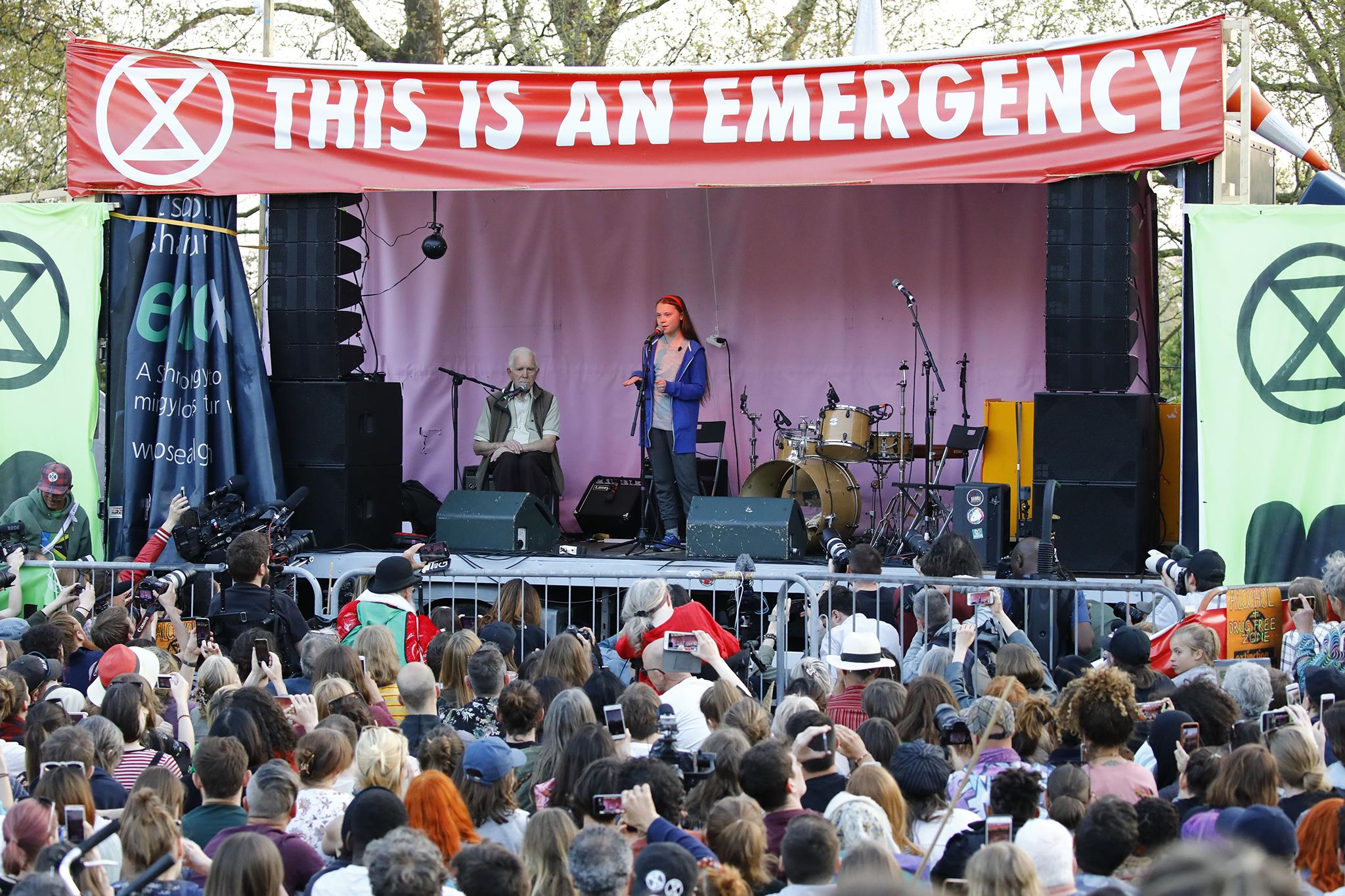
Groups like Extinction Rebellion are calling for nonviolent civil disobedience to spur climate action. Credit Stephanie Keith/Getty Images
Declarations have increased as public alarm has grown
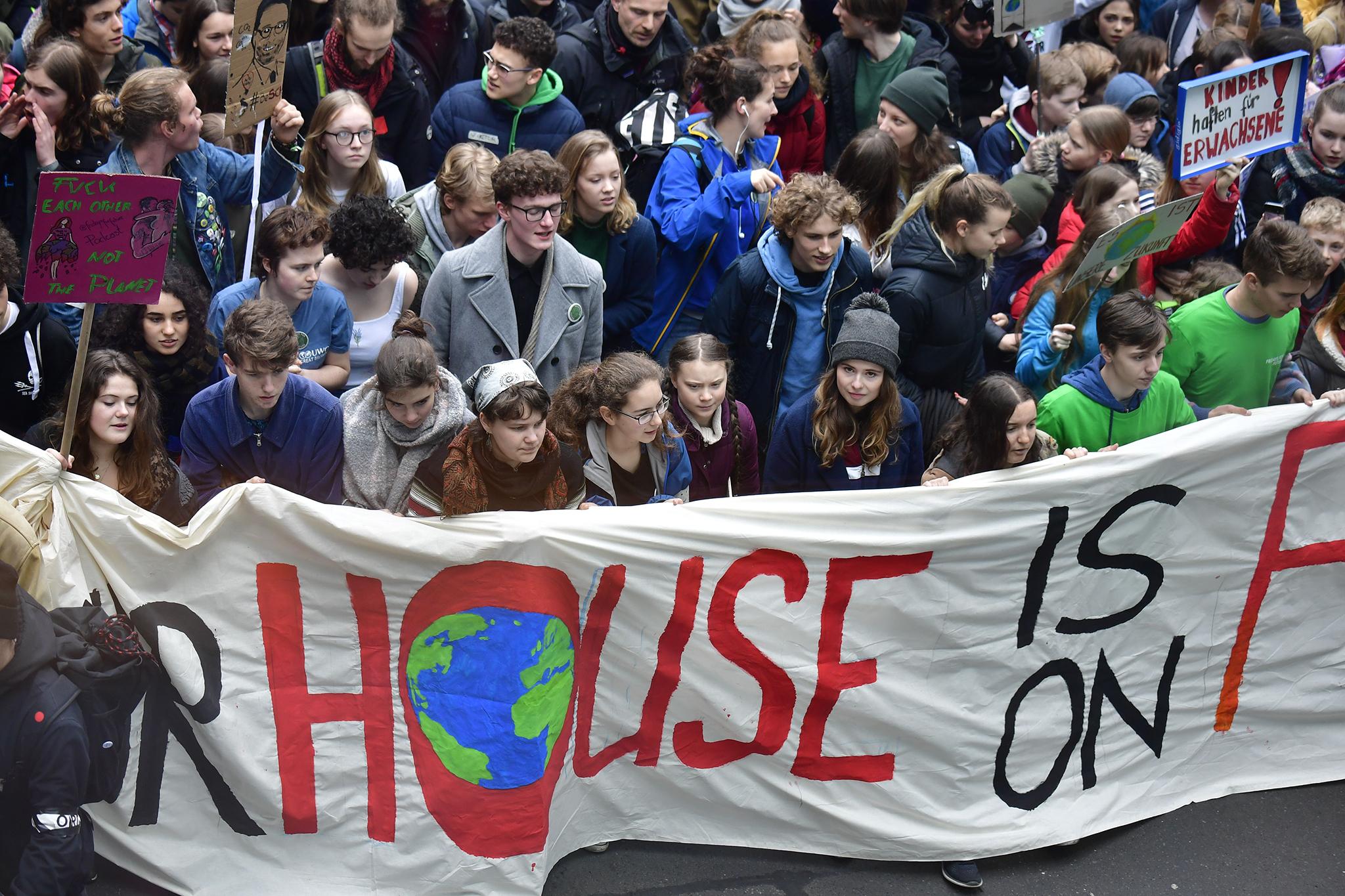
The first local climate emergency was declared in Darebin, Australia, in 2016. The following year, Hoboken, N.J., became the first American city to follow suit. Groups like the Sunrise Movement and Extinction Rebellion, which calls for nonviolent civil disobedience to spur climate action, have made the declarations a centerpiece of their campaigns.
The movement has grown with extreme climate events that have been impossible to ignore: wildfires, storms and droughts, plus heat waves that set record temperatures in Europe last week and made June the world’s hottest month on record.
Last fall, the United Nations’ Intergovernmental Panel on Climate Change projected that keeping global warming at the minimum level to avert catastrophe would, as New York’s resolution put it, “require an unprecedented transformation of every sector of the global economy over the next 12 years.”
Six in ten Americans are either “alarmed” or “concerned” about global warming, according to a recent study by the Yale Program on Climate Change Communication, and the share of those choosing “alarmed” more than doubled from 2013 to 2018.

Young advocates drive the push to use words like ‘crisis’
“Climate change sounds gradual,” said Olivia Sommers, 19, one of dozens of climate activists in an overflow crowd at a City Council hearing on the measure, part of the public pressure that swayed the body to approve the resolution sooner than planned. “But to me it doesn’t feel like ‘change’. It feels like a crisis.”
Jilly Edgar, 20, a New York University student and member of the Sunrise Movement, which advocates for Green New Deal policies, said she struggled to think of the future. That should be a time, she said, when “the world is becoming my own, and moving forward in it” toward “marriage, graduate degrees, children.”
“But actually,” she said, “the world is dying. There’s just, like, a cutoff point. That does a lot to destroy the idealism of young people that usually pushes them to act.”

The ‘fear of fear' is an obstacle to action, activists say
“The idea that ‘you can’t scare people, fear paralyzes people,’ has been a guiding principle of the gradualist climate movement for decades, and it’s horribly wrong and misguided,” said Ms. Klein Salamon, 33, who trained as a clinical psychologist.
“The basic tenet of therapy is that facing hard truths is how you create transformative change,” she said. “You cannot skip the step of facing reality. It’s only when we have a national consensus that we are all personally in danger, when we feel enough fear, that we are willing to make drastic changes. Fear is literally how we translate perception of danger into action.”
The mobilization to fight World War II, she said, is the closest parallel in recent history to the scale and urgency of effort needed, she said: “Pull every lever, have all hands on deck, spend without limit to save as much life as possible.”
The young activists at City Hall said they had all been through a phase of “climate despair,” but that what gave them hope was, as Ms. Edgar put it, “deciding to push for change, and urge people with power to make that same decision.”

News media, too, are being pushed to use urgent language
Ms. Sommers, a Middlebury College student, was one of 70 people arrested outside The New York Times last month in a protest calling for the newspaper to use the phrases “climate emergency” or “climate crisis” rather than “climate change.”
The Guardian recently announced that it would adopt those terms. A Times spokeswoman said the paper devotes more resources to covering climate than any national publication.
“We should call it an emergency because that’s what it is,” Ms. Sommers said. “Tell the truth.”

Links

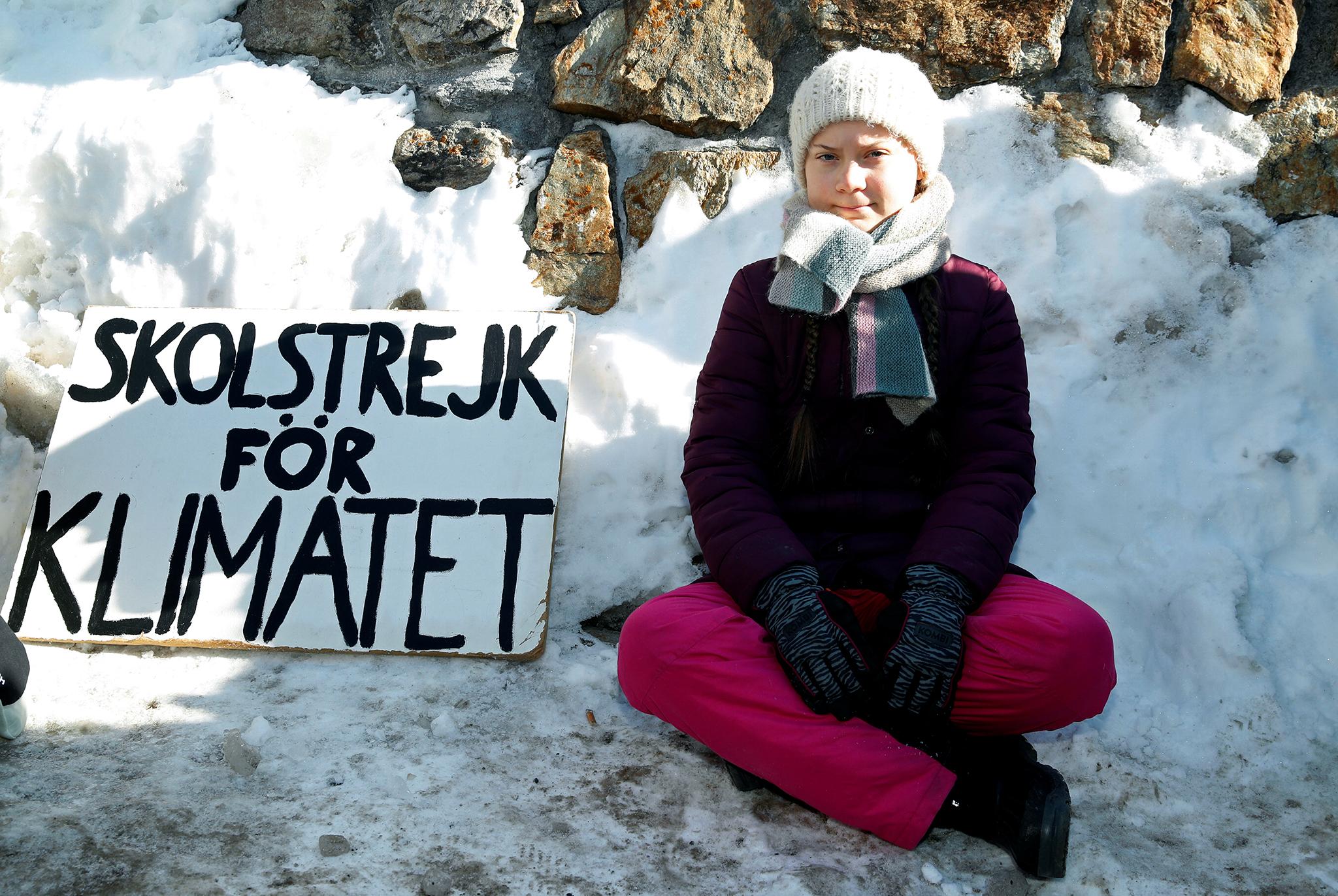
Greta Thunberg Thanks OPEC Chief For Complaining About ‘Threat’ Of Climate Activists

The IndependentEmma Snaith

Fossil fuel industry leader worries about ‘mass mobilisation of world opinion against oil’


Greta Thunberg thanks OPEC chief for complaining about ‘threat’ of climate activists

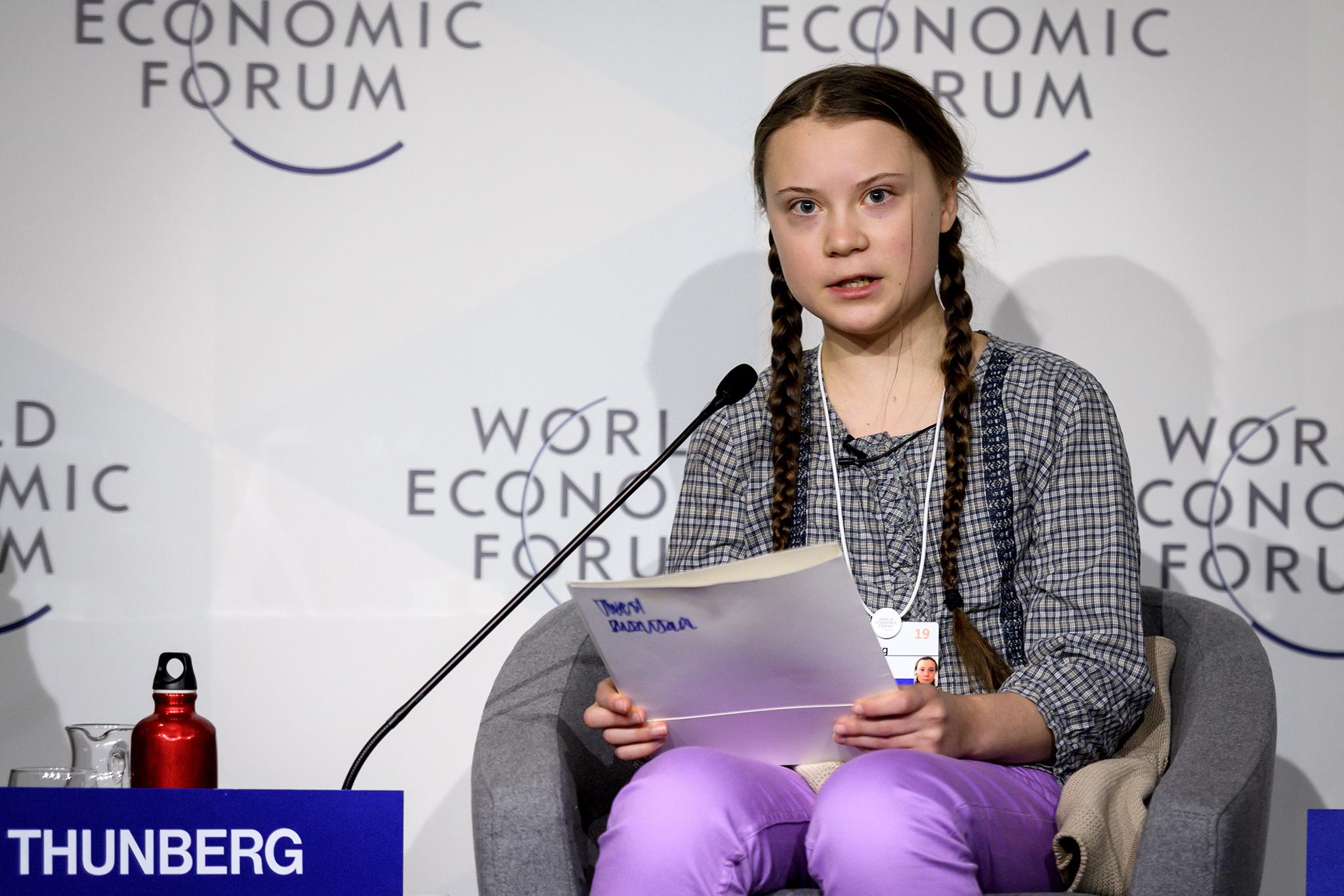
Climate change activist Greta Thunberg has welcomed criticism from a fossil fuel industry chief that environment campaigners pose “perhaps the greatest threat” to the oil sector.
The 16-year-old founder of the “School Strike 4 Climate’ movement described the comments made by the leader the Organisation of the Petroleum Exporting Countries (OPEC) as their “biggest compliment yet”.
It comes after energy ministers from 13 of the world’s most powerful oil-producing nations met in Austria to thrash out a deal restricting the amount of oil flowing into the global market to boost demand.
Speaking after the meeting earlier this week, general secretary Mohammed Barkindo said that “there is a growing mass mobilisation of world opinion… against oil”.
He said: “Civil society is being misled to believe oil is the cause of climate change.”
Mr Barkindo complained of “unscientific” attacks on the oil industry by climate change campaigners, describing them as “perhaps the greatest threat to our industry going forward”.
He said the children of some colleagues at OPEC’s headquarters ”are asking us about their future because … they see their peers on the streets campaigning against this industry”.
His comments appeared to be in reference to Ms Thunberg’s school strike movement, which began after the teenage activist started skipping classes to protest outside the Swedish parliament.
Her protest inspired millions of other children around the world to walk out school on Fridays to demand greater action on climate change.
Mr Barkindo added that the changing attitudes towards fossil fuels were ”beginning to ... dictate policies and corporate decisions, including investment in the industry”.
In response to Mr Barkindo’s comments, Ms Thunberg tweeted: “OPEC calls the school strike movement and climate campaigners their ‘greatest threat’.
“Thank you! Our biggest compliment yet!”
Bill McKibben, the founder of the climate group 350.org which calls for 100 per cent renewable energy, also welcomed Mr Barkindo’s comments.
He tweeted: “Wow! Wow! Wow! ...Thanks everyone for your good work!”
The OPEC chief’s comments come nearly a year after the UN released its landmark IPCC report that found we have 11 years to keep global warming to a maximum of 1.5C to limit the worst effects of climate change.
Since then, the Extinction Rebellion movement brought parts of London to a standstill in April to demand action on climate change. And MPs voted to declare a climate emergency in May.
In the US, Alexandria-Ocasio Cortez submitted her Green New Deal proposal to the US House of Representatives in February. The deal, which calls for the achievement of “net-zero” greenhouse gases within a decade and “a full transition off fossil fuels, has received the backing of Democratic presidential candidates including Elizabeth Warren and Kamala Harris.
OPEC is an intergovernmental organisation made up of 13 nations which seeks to coordinate oil prices to stabilise the market. Among its member nations are Saudi Arabia, Venezuela and Nigeria.

Links

08/07/2019

Climate Change Is Scaring Kids. Here’s How To Talk To Them.

New York TimesLaura M. Holson


Credit Elaine Thompson/Associated Press
Hollywood has produced quite a few fictionalized depictions of dramatic climate change. Scores of people die after Manhattan freezes in 2004’s “The Day After Tomorrow.” In “Geostorm,” released in 2017, the weather goes haywire after satellites malfunction.
Realistic scenarios, though, have been less frequent. Yet Sunday’s episode of “Big Little Lies,” the HBO show about five women living in Monterey, Calif., included a second grader who had an anxiety attack after discussing climate change with a teacher. The girl worried the world was going to end.
Psychologists say the way parents and teachers talk about climate change with children has an effect on their young psyches.
“A lot of people, when they talk to kids, are processing their own anxiety and fears,” said John Fraser, a psychologist and chief executive of NewKnowledge, a social science think tank that studies health and the environment. “Do you think kids won’t be scared, too? As a culture, we haven’t developed good tools to talk about these things.”
Janet K. Swim, a professor of psychology at Penn State University, said she emphasized several steps for parents (and teachers, for that matter) to take when talking about climate change with youngsters.
“You should start off with something positive, like, ‘We like the planet,’” she said. This should be followed with taking children outside to appreciate nature. For city dwellers, this is as simple as going to a park. Families in more rural areas can hike.
“The goal is for them to appreciate the beauty of nature,” Dr. Swim said. “They should be thinking about what is good in the environment.”
This serves a purpose: connecting children to a world larger than their own.
“There is this thinking that young kids will understand what we are talking about,” Dr. Fraser said. “But summer and fall are new. They are only beginning to understand the seasons. Nature, to them, is a tree.”


Credit Jennifer Clasen/HBO
Dr. Swim and Dr. Fraser agree that the next step is discussing the process of climate change and its effect on the planet. This is essential to demystifying the concept of global warming. But it requires parents to do some homework, too. Many parents, educators say, have as much to learn as their children.
“They have to understand the cycle,” Dr. Swim said. “If you want to talk without scaring your kids, you have to understand what is going on.”
At the New England Aquarium in Boston, William Spitzer, the vice president in learning and community, said educators there often engage families by using animals as a starting point. Myrtle, an 80-year-old green sea turtle that weighs 500 pounds, is quite popular among visitors.
One way to explain climate change, he said, is to use the analogy of the Earth being covered by a blanket of heat caused by, among other things, burning fossil fuels. That action creates more carbon dioxide, he said, which “causes the temperature of the ocean to rise.”
For sea turtles like Myrtle, temperature affects gender. “Changes to the environment affect the male-to-female ratio,” he said.
If children can understand how climate change affects an animal like Myrtle, they are more apt to expand their attitudes about the environment, Mr. Spitzer said. “We always try to connect the story back to something people already care about.”
In some situations, though, parents deny that climate change exists. In those cases, Dr. Fraser said, conversations are tricky. “The kids will have two conflicting views of what is going on in the world,” he said.
Educators at the aquarium do not try to change the minds of visitors who resist the concept, Mr. Spitzer said. “But there are not as many deniers as you might think given the noise they make,” he said. “People who go to zoos and museums and aquariums are more open.”
So what can a parent or teacher do to assuage fears? Dr. Fraser suggested that engaging children in social activities, like community gardens or a school recycling program, can give them agency over their future.
“It’s not just what an individual can do,” he said. “We have to look at what we can do as a community.”
Added Dr. Swim: “You don’t just sit down once and talk about it. It is an ongoing conversation.”
Advocates and other environmental professionals are already seeing a shift in attitudes. Community is key to addressing fear, said Meghan Kallman, a sociologist and co-founder of Conceivable Future, an organization that highlights how climate change is limiting reproductive choices.
“We are now only beginning to talk about climate anxiety,” she said. “It used to be fringe-y.”
Ms. Kallman said she has observed children asking parents what they plan to do about climate change.
“And parents should have an answer for that,” she said.

Links

Planting A Trillion Trees May Be The Best Way To Fight Climate Change, Study Says

TIMESeth Borenstein / AP


The Debates Showed America Still Doesn't Know How to Talk About Climate Change

(WASHINGTON) — The most effective way to fight global warming is to plant lots of trees, a study says. A trillion of them, maybe more.
And there’s enough room, Swiss scientists say. Even with existing cities and farmland, there’s enough space for new trees to cover 3.5 million square miles (9 million square kilometers), they reported in Thursday’s journal Science. That area is roughly the size of the United States.
The study calculated that over the decades, those new trees could suck up nearly 830 billion tons (750 billion metric tons) of heat-trapping carbon dioxide from the atmosphere. That’s about as much carbon pollution as humans have spewed in the past 25 years. Much of that benefit will come quickly because trees remove more carbon from the air when they are younger, the study authors said. The potential for removing the most carbon is in the tropics.
“This is by far — by thousands of times — the cheapest climate change solution” and the most effective, said study co-author Thomas Crowther, a climate change ecologist at the Swiss Federal Institute of Technology in Zurich.
Six nations with the most room for new trees are Russia, the United States, Canada, Australia, Brazil and China.
Before his research, Crowther figured that there were other more effective ways to fight climate change besides cutting emissions, such as people switching from meat-eating to vegetarianism. But, he said, tree planting is far more effective because trees take so much carbon dioxide out of the air.
Thomas Lovejoy, a George Mason University conservation biologist who wasn’t part of the study, called it “a good news story” because planting trees would also help stem the loss of biodiversity. Planting trees is not a substitute for weaning the world off burning oil, coal and gas, the chief cause of global warming, Crowther emphasized. “None of this works without emissions cuts,” he said.
Nor is it easy or realistic to think the world will suddenly go on a tree-planting binge, although many groups have started, Crowther said. “It’s certainly a monumental challenge, which is exactly the scale of the problem of climate change,” he said. And as the Earth warms, and especially as the tropics dry, tree cover is being lost, he noted.
The researchers used Google Earth to see what areas could support more trees, while leaving room for people and crops. Lead author Jean-Francois Bastin estimated there’s space for at least 1 trillion more trees, but it could be 1.5 trillion.
That’s on top of the 3 trillion trees that now are on Earth, according to earlier Crowther research.
The study’s calculations make sense, said Stanford University environmental scientist Chris Field, who wasn’t part of the study. “But the question of whether it is actually feasible to restore this much forest is much more difficult,” Field said in an email.

Links

Stop Building A Spaceship To Mars And Just Plant Some Damn Trees

Mother Jones

Researchers found that there’s room for an extra 900 million hectares of canopy cover.
borchee/Getty
When it comes to climate change research, most studies bear bad news regarding the looming, very real threat of a warming planet and the resulting devastation that it will bring upon the Earth. But a new study, out Thursday in the journal Science, offers a sliver of hope for the world: A group of researchers based in Switzerland, Italy, and France found that expanding forests, which sequester carbon dioxide from the atmosphere, could seriously make up for humans’ toxic carbon emissions.
In 2018, the United Nations’ Intergovernmental Panel on Climate Change, the world’s foremost authority on climate, estimated that we’d need to plant 1 billion hectares of forest by 2050 to keep the globe from warming a full 1.5 degrees Celsius over pre-industrial levels. (One hectare is about twice the size of a football field.) Not only is that “undoubtedly achievable,” according to the study’s authors, but global tree restoration is “our most effective climate change solution to date.”
In fact, there’s space on the planet for an extra 900 million hectares of canopy cover, the researchers found, which translates to storage for a whopping 205 gigatonnes of carbon. To put that in perspective, humans emit about 10 gigatonnes of carbon from burning fossil fuels every year, according to Richard Houghton, a senior scientist at the Woods Hole Research Center, who was not involved with the study. And overall, there are now about 850 gigatonnes of carbon in the atmosphere; a tree-planting effort on that scale could, in theory, cut carbon by about 25 percent, according to the authors.
In addition to that, Houghton says, trees are relatively cheap carbon consumers. As he put it, “There are technologies people are working on to take carbon dioxide out of the air. And trees do it—for nothing.”
To make this bold prediction, the researchers identified what tree cover looks like in nearly 80,000 half-hectare plots in existing forests. They then used that data to map how much canopy cover would be possible in other regions—excluding urban or agricultural land—depending on the area’s topography, climate, precipitation levels, and other environmental variables. The result revealed where trees might grow outside of existing forests.
“We know a single tree can capture a lot of carbon. What we don’t know is how many trees the planet can support,” says Jean-François Bastin, an ecologist and postdoc at ETH-Zürich, a university in Zürich, Switzerland, and the study’s lead author, adding, “This gives us an idea.”
The global potential tree cover available for restoration. Science
They found that all that tree-planting potential isn’t spaced evenly across the globe. Six countries, in fact, hold more than half of the world’s area for potential tree restoration (in this order): Russia, the United States, Canada, Australia, Brazil, and China. The United States alone has room for more than 100 million hectares of additional tree cover—greater than the size of Texas.
The study, however, has its limitations. For one, a global tree-planting effort is somewhat impractical. As the authors write, “it remains unclear what proportion of this land is public or privately owned, and so we cannot identify how much land is truly available for restoration.” Rob Jackson, who chairs the Earth System Science Department and Global Carbon Project at Stanford University and was not involved with the study, agrees that forest management plays an important role in the fight against climate change, but says the paper’s finding that humans could reduce atmospheric carbon by 25 percent by planting trees seemed “unrealistic,” and wondered what kinds of trees would be most effective or how forest restoration may disrupt agriculture.
“Forests and soils are the cheapest and fastest way to remove carbon from the atmosphere—lots of really good opportunities there,” he said. “I get uneasy when we start talking about managing billions of extra acres of land, with one goal in mind: to store carbon.” Bastin, though, says the study is “about respecting the natural ecosystem,” and not simply planting “100 percent tree cover.” He also clarified that planting trees alone cannot fix climate change. The problem is “related to the way we are living on the planet,” he says.
Caveats aside, Houghton sees the study as a useful exercise in what’s possible. “[The study] is setting the limits,” says Houghton. “It’s not telling us at all how to implement it. That’s what our leaders have to think about.”

Links

A New Team Is Working To Predict The Danger Zones Of Australia's Deadliest Heatwaves

ABC NewsHelen Frost

Recognition of the impact of extreme heat is prompting stronger responses. (ABC News: Mary Lloyd)
Key points:
  • A new team will take a national approach and aims to predict heatwaves across Australia
  • It comes as nine of the past 14 years have been among the hottest on record
  • The Bureau of Meteorology is warning the record temperature trend is set to continue
It has been 10 years since Victoria's Black Saturday fires killed 173 people — the worst bushfires in Australia's history.
While the fires made headlines, the associated heatwave claimed another 374 lives in Victoria and another 50 in South Australia.
Now, a working group under the guidance of the Bureau of Meteorology (BOM) is developing a strategy to better predict that natural phenomenon.
Nine of the past 14 years have been among the hottest on record and 2018 was the third warmest in Australia's history.
In response to the danger posed by extreme heat, the Federal Government has formed the Emergency Management Australia-led National Heatwave Framework Working Group, with input from a range of departments.
John Nairn, the state manager of the BOM in South Australia, said the heat trend was set to continue.
"We are seeing heatwaves becoming much more intense," he said.
"One of the signals that we have to be mindful of though is that the minimum temperature is probably even more important than the maximum temperature.
"If we can't get recovery temperatures to actually discharge the heat, those very high temperatures, day-on-day, continue to build heat in the environment and the heatwaves become much more intense as a consequence.
"That is where we see the impacts unfold."
Right now, Europe is experiencing a heatwave which, according to the World Meteorological Organisation, is exceptionally intense.
A girl cools off in a Paris fountain during the recent heatwave. (AP: Alessandra Tarantino)
France set a new national record of 45.9 degrees Celsius and records have also been broken in Germany, Poland, the Czech Republic and Austria.
Closer to home, Adelaide hit a sweltering 46.6C on January 24 this year, surpassing the previous record set in Melbourne a decade ago to officially become the hottest capital in the country.

It's not just the elderly who are at risk
The national working group will use data from the Australian Bureau of Statistics, Geoscience Australia, the Department of Health and the Australian Institute of Health and Welfare.
"We'll have a lot of the ingredients for how people can become exposed and the evidence of their exposure vulnerabilities," Mr Nairn said.
"We can hopefully identify the locations and the types of people who may well be exposed to those heatwaves."
The bureau currently issues heatwave charts, but is working on a predictability map. (Supplied: BOM)
According to Mr Nairn, the evidence that extreme heatwaves were increasing — and appearing very early and late in the season — was reflected in BOM's data.
"The BOM is leading a project that will build a heatwave predictability map for Australia," he said.
"That will enable us to combine that with our heatwave intensity measure that we do with our forecasting to determine where we think the community will be exposed and possible impacts."
The map should be able to predict how long and severe the heatwaves will be, allowing emergency, health and community services to put measures in place and deploy staff to cope with the heat.

What you need to know about cyclones
Cyclones are part and parcel of an Australian summer. Here's how they form and what they do.

The information would also go out to government departments, so they can plan for the excess power consumption during prolonged periods of heat, to help avoid blackouts.
But the planning side of things is only part of the battle — another problem with heatwaves is that people can underestimate the risks.
Research undertaken by University of Adelaide public health expert Peng Bi showed that most people believed a heatwave was something that would not impact them.
"A lot of people think 'OK a heatwave, hot days in summer are not unusual, that is a normal phenomenon' — but in fact it is not. I think that is a very dangerous perception," Professor Bi said.
"From our study we found that the elderly, outdoor workers and migrant communities are the most vulnerable populations in our community, so we need to do something for them."
The elderly make up a large number of the deaths during extreme heat, but the figures also took into consideration ambulance call-outs, hospital presentations, drownings and the consequences for people with chronic health issues such as cardiovascular disease.
In addition to that, they also include festival and alcohol-related deaths.
A large crowd at Groovin' the Moo festival. (ABC Central Victoria: Corey Hague)
"[On] hot days, a lot of people drink alcohol, they are wandering around the streets and alcohol-driven street violence sometimes happens," Professor Bi said.
"At a large event, that's why we see an increased police presence on really hot days."

State borders determine heatwave responses
Each state and territory has its own heatwave response approach, with different triggers and thresholds for their local communities.
They also have different government agencies responsible for warning systems and plans.
In South Australia for example, the State Emergency Service (SES) takes the lead.
"South Australia has a whole-of-government heatwave planning framework," SES chief officer Chris Beattie said.
"Once we are aware some extreme heat conditions are forecast, we will activate cross-government heatwave warning protocols and arrangements.
"Within each department there are a range of specific triggers which will be activated."
The SES take the lead in South Australia. (ABC News: Gordon Taylor)
 There are different state and federal projects looking at how to better respond to heatwaves, and fix holes in the current system.
For instance, South Australian heatwaves are currently mapped using Adelaide temperatures for the whole state.
The SES is also working with other agencies and academics to develop a new modelling technique that will allow it to adapt its response.
The team hopes to have it set up in time for the hot and dry weather already predicted this summer.
"We are now working with the University of Adelaide and the BOM to provide a gridded data set that can provide a data-rich source of information at the township level," Mr Beattie said.
"So, in terms of providing information and warnings to the broader community, we can move beyond a whole-of-state heatwave warning threshold to individual tailored thresholds for communities."

Working out the death toll is not easy
One of the main issues in addressing heat problems in Australia is the inconsistent way death tolls have been calculated and reported.
Different agencies cite different figures, and it is often unclear which is the most accurate.
For example, following South Australia's two-week heatwave in 2009, there were three different figures.
SA Health stated there were 33 deaths, the coroner's office said there had been 58 and PricewaterhouseCoopers (PWC) put the figure at 96.
An ice delivery man cools off in SA's far north, the day Adelaide's temperature hit 46.6C. (ABC News)
Mr Beattie explained that those different approaches were one of the biggest challenges facing authorities as they tried to prepare and plan for heatwaves across the country.
"Actually capturing that data and cleaning it and understanding it is a complex process," he said.
"Depending on which methodology you use, you'll get a different result as to how many fatalities there have been for any given event.
"It's not just the direct heat deaths that we need to be worried about, it's the coincidental deaths that occur — from illnesses that are exacerbated, from increased accident rates in the workplace and our roads and through other events such as drownings."
The BOM has already issued its outlook for spring which has forecast more hot and dry weather.
The weather pattern is indicating below-average rainfall through central and eastern Australia, which covers around two thirds of the continent.

Be prepared for the heat
Heatwaves kill far more people than other natural disasters. ABC Emergency has a checklist of things you can do to be ready. 

John Nairn said the BOM was getting better at providing heatwave advice to communities.
"Last year we were preparing the community for a hotter summer and an earlier start and I suppose those chickens came home to roost when Queensland's epic fires started in October, and the heatwave hit the wet tropical coast in early November," he said.
"Those messages were accurate, so we're building confidence that the bureau can provide good advice.
"Certainly the dialogue that we have with the emergency services agencies and the departments of health and the like are becoming more meaningful over time, so we are helping the community prepare."
The new working group has one year to develop the predictability map and understand the data types required.
"It would be nice to think we will have something in place by the end of the year," Mr Nairn said.
"But there are many agencies coming together for this, for the first time, to look at each other's data.
"It's not a trivial exercise."

Links

07/07/2019

Coal And Gas On Notice, As US Big Solar And Battery Deal Stuns Market

RenewEconomy - 

 Downtown Los Angeles at night. Source: Flickr
A Californian solar and battery storage power purchase agreement is plumbing new lows for the cost of electricity from solar – a US-dollar price of 1.99c/kWh for 400MW of PV and 1.3c/kWh for stored solar power from a co-located 400MW/800MWh battery storage system.
The record setting deal, struck by a team at the Los Angeles Department of Water and Power (LADWP) with renewables developer 8minute, seeks to lock-in a two-stage, 25-year contract to serve 7 per cent of L.A.’s electricity demand from the massive solar and battery project.
The project, called the Eland Solar and Storage Center, would be built in two 200MW stages in Kern County north of Los Angeles, with an option to add a further 50MW/200 MWh of energy storage for 0.665 cents per kWh more.
The project aims not only to help power L.A. during the day with dirt-cheap solar power but to use the stored battery power in the evening peak period to ease the effect of fossil fuel “ramping” as the solar leaves the system.
And while the project’s size is impressive – particularly the size of the battery system, which would be twice the size of the world’s current biggest big battery, Australia’s own Hornsdale Power Reserve – it has been the prices quoted for the PPA that have really caught the market’s attention.


As PV Magazine’s John Weaver noted, the current world record solar power price was set in Mexico at 1.97¢/kWh as part of a batch of projects averaging just over 2¢/kWh. A lower bid submitted in Saudi Arabia at 1.79¢/kWh was not ultimately signed.
“This is the lowest solar-photovoltaic price in the United States, and it is the largest and lowest-cost solar and high-capacity battery-storage project in the U.S., and we believe in the world today,” said the LADWP’s manager for strategic initiatives, said James Barner. “So this is, I believe, truly revolutionary in the industry.”
Barner has also noted that the project has been able to make “full use” of a “substantial” federal solar investment tax credit, which amounted to around 30 per cent “basically knocked off the capital cost of the project.”
According to reports, Barner told a June briefing on the project that net peak load in the evening would be offset by the Eland facility, to keep gas powered generation “not running at the full amount.”
“The battery can be dispatched differently, depending on the system need,” he said. “So you could run that four-hour battery over 16 hours at one-fourth of the output so that you can vary it over time. It’s not just fixed over four hours.
“The battery is able to take a portion of (the) solar from that facility …and then store it into the battery so that the facility can provide a constant output to the grid. It can turn this solar facility, which is not typically dispatchable, into a dispatchable type of facility.”
According to data from the U.S. Energy Information Agency, and quoted in Forbes, a natural-gas plant opening at the same time as the Eland facility would produce power at more than twice the price, or 4-4.3¢/kWh.
Presuming the power off-take contract is approved, the Eland project is expected start construction in 2022, with the first production expected in the first half of 2023, and a guaranteed commercial operation date of the last day of that year, PV Magazine reported.

Links

Lethal Heating is a citizens' initiative