19/12/2019

(AU) Climate Change Has Cut Australian Farm Profits By 22% A Year Over Past 20 Years, Report Says

The Guardian

Agriculture department report says changes in climate since 2000 have reduced revenue of cropping farms by $1.1bn a year
Prime minister Scott Morrison visits drought affected farm in Queensland. Photograph: Dan Peled/EPA
Climate change has reduced Australian farms’ average annual profitability by 22%, or around $18,600 per farm, in the past two decades, according to the agriculture department.
In a report released on Wednesday, the Australian Bureau of Agricultural and Resource Economics and Sciences has found that since 2000 changes in climate have reduced the revenue of Australian cropping farms by a total of $1.1bn a year.
The report notes that average temperatures increased by about 1C since 1950 and compares Australia’s climate over the period 2000 to 2019 with the period from 1950 to 1999 by holding other variables, including farm output and commodity prices, constant.
Abares, the Department of Agriculture’s science and economics research division, has developed a statistical model called Farmpredict using data from 40,000 farm observations to simulate differences in more than 50 physical and financial farm variables.
Since 2000, climate change has had a negative effect on the profitability of broadacre farms in Australia. Only Northern Territory farms improved profitability, up 8.7%, with massive cuts to profit in Victoria (–37.1%), Western Australia (-25.8%) and New South Wales (-25.5%) attributed to climate change.
Cropping farms were the worst hit, with revenue down 8% or around $82,000 a farm, and a 35% reduction in profits, or $70,900 for a typical cropping farm.
Report co-author David Galeano said adaptation to climate variability “is certainly helping” – and without it farms would have experienced a 26% reduction in profit, and cropping farms’ profits would be down 49%.
Sheep farms experienced an 18.2% reduction in average annual profit, or $6,100 per farm. Beef farms were “less affected overall” with a reduction in average profits of 5%, although some areas – including south-western Queensland – were more affected than others.
Climate conditions have “also contributed to increased risk in terms of more variable cash income and profitability, particularly for cropping farms”, the report says.
Climate change increased downside risk, with the chance of “very low” profits – below 2% – more than doubling since 2000.
The Abares report says that the current drought across much of eastern Australia “has demonstrated the dramatic effects that climate variability can have on farm businesses and households”.
It says that drought-affected NSW recorded “large falls in profit in 2018–19” but less drought-affected regions, including Western Australia, increased profits due to high commodity prices for grain and livestock.
Abares warns that drought policy faces “an almost unavoidable dilemma: that providing relief to farm businesses and households in times of drought risks slowing industry structural adjustment and innovation”.
“In some cases, well-intentioned policies can also disadvantage farmers who have been better prepared – or luckier – than farmers who are provided assistance and relief, diluting management incentives and raising difficult equity issues.”
It recommends that in addition to supporting farm households experiencing hardship, drought policy should “promote resilience and improved productivity”.
Climate change is making drought worse in Australia, although senior government figures including the Nationals leader, Michael McCormack, tend to emphasise that Australia’s climate has always been characterised by intermittent drought and flood.
The centrepiece of the Coalition’s drought policy is a $5bn drought future fund that will make annual payments of $100m to improve resilience.
In November the government announced an extra $1.5bn for drought relief, consisting of a $1bn concessional loan package for farmers and small businesses affected by the drought and $500m for “direct investment into communities”.
Modelling the effect of drought, the Abares report says a cropping farm will see profit decrease from around $230,000 in a typical year to a loss of $125,000 in a dry year.
For an Australian beef farm, profit falls from $60,000 in a typical year to a loss of $5,000 in a dry year.

Links

(AU) Climate Change Slashes More Than $1 Billion From Farm Production Value Over Past 20 Years: ABARES

ABC RuralKath Sullivan

Wind is blowing topsoil away and farmers fear it will take years for some landscapes to recover.
(ABC News: Lucy Barbour)
More than $1 billion has been wiped from the value of Australia's annual crop production due to the change in climate over the past two decades, according to a new report.
For the first time, government commodity analyst ABARES has quantified the financial loss Australian farmers have experienced due to the increasingly warmer and drier climate.
It found changes in climate since 2000, had reduced the average broadacre farmer's profits by 22 per cent, or about $18,600 per year.
For cropping farmers — considered the most heavily exposed to climate variability — the annual farm profits fell by 35 per cent, or $70,900.
"We knew it was big, but we didn't have a precise number before and this model and method allows us to get at that," report co-author Steve Hatfield-Dodds said.
Dr Hatfield-Dodds said the modelling relied on 30 years of data, which distinguished the impact of price, climate variability and other factors on Australian farms.
That was modelled with reporting by the Bureau of Meteorology.
"Essentially, there's been a shift in climate in the last past 20 years, where the climate has become noticeably hotter and drier," he said.
"Dry years are more frequent since the year 2000 … temperatures have gone up by about 1 degree since 1950."
Drought support reduces adaptation
The ABARES report has thrown up questions about government support for farmers affected by drought, and how best to drive innovation in the sector, as the climate continues to change.
"Adjustment, change and innovation are fundamental to improving agricultural productivity, maintaining Australia's competitiveness in world markets, and providing attractive and financially sustainable opportunities for farm households," it reported.
"In some cases, well-intentioned policies can also disadvantage farmers who have been better prepared or luckier than farmers who are provided assistance and relief, diluting management incentives and raising difficult equity issues."
The State of the Climate Report 2018 shows winter rainfall over southern Australia has been declining over the past 20 years. (Supplied: CSIRO and Bureau of Meteorology)
Dr Hatfield-Dodds said the sector must increase its resilience to a warmer and drier climate.
"There's a lot of talk about economists versus normal people," Dr Hatfield-Dodds said.
"The economists worry about drought assistance because there is this unavoidable dilemma between helping farmers who are in need now, and slowing down innovations and adjustment in the sector.
"And we know from this study — and lots of other ones — that innovation is crucial to improving farm income for households over the long run.
"But there aren't many options for governments to help farmers that don't risk slowing down innovation."
He suggested incentives, such as improved weather-insurance policies for farmers, could help build resilience in the sector.
Dr Hatfield-Dodds also highlighted the Federal Government's Future Drought Fund, providing $100 million a year from next year, as a policy which would support resilience in the sector as the climate evolved.
It was not yet clear how that funding would be allocated, but the legislation passed earlier this year outlined spending on future drought preparedness.

Losses could have been greater
The report found the losses would have been even greater had Australian farmers not adapted to drought as well as they had.
"Without these gains, the effects of the post-2000 climate would have been larger — a 26 per cent average decline in profit for all broadacre farms, and 49 per cent for cropping farms under the 1990 technology," the report said.
In short, if the average cropping farm had made no adaptions to the hotter and drier climate, its income would have been down by a further $26,700 a year.

Links

(AU) Governments Must Act On Public Health Emergency From Bushfire Smoke, Medical Groups Say

The Guardian

The 22 groups link the bushfire smoke to climate change, saying lives are being put at risk
Transport NSW workers are seen wearing masks as smoke haze from bushfires in New South Wales blanketed the CBD in Sydney. Photograph: Steven Saphore/AAP
Some 22 groups representing health and medical professionals in Australia have issued a joint call to act on a “public health emergency” caused by smoke from the catastrophic bushfire season in New South Wales.
In Sydney and others areas of NSW communities have been exposed to air pollution up to 11 times worse than “hazardous” levels.
The group has produced a joint statement calling for political leadership while repeating a call for a national strategy to combat the health impacts of climate change.
Dr Kate Charlesworth, a fellow of the Royal Australasian College of Physicians, which signed the statement, said: “Climate-related health effects are having the most impact on our most vulnerable: babies, children, the elderly and people with pre-existing disease. There is no safe level of air
pollution.”
“To protect health, we need to shift rapidly away from fossil fuels and towards cleaner, healthier and safer forms of energy.”
Among the 22 groups that signed the statement are the Australasian College of Emergency Medicine, Public Health Association of Australia, Australian College of Nursing, Australian Association of Social Workers and Lung Foundation Australia.
The statement says the federal and NSW governments must “prioritise action to help reduce the risks to people’s health arising from hazardous air pollution”.
Fiona Armstrong, executive of the Climate and Health Alliance, said: “This is a public health emergency.” She added: “Climate change is going to get much worse and we will see more and more of these events.”
Dr Lai Heng Foong, of Doctors for the Environment Australia, which has also signed the statement, said: “Pollution from bushfire smoke remains hazardous to people, in the short term and also the long-term.”


Smoke haze hangs over Sydney as fire danger risk heightens – video

Many of the groups that have signed the statement are also pushing for Australia to respond to the health impacts of climate change.
Mark Brooke, CEO of Lung Foundation Australia CEO, said a national strategy was needed.
“Climate change and air quality significantly contribute to poor lung health, increased health and economic burden, disability and death,” he said.
“If we want to prevent the worst air pollution from bushfire smoke, one of the best things our governments can do, aside from fuel reduction burns, is to set stronger and better standards for everyday air quality.”
In August, the Australian Medical Association declared that climate change was a “health emergency”, citing “clear scientific evidence indicating severe impacts for our patients and communities now and into the future.”
The AMA called on the Morrison government to help Australia move away from fossil fuels, and to promote the health benefits of cutting greenhouse gas emissions.

Links

18/12/2019

(AU) 'Hugely Disappointed' Emergency Chiefs To Hold Bushfire Summit With Or Without PM

The Guardian

'Hugely disappointed' emergency chiefs to hold bushfire summit with or without PM
Former fire chiefs have expressed ‘huge disappointment’ with a lack of leadership during the bushfire crisis. Photograph: Saeed Khan/AFP via Getty Images
Former emergency leaders who have been pushing the Morrison government to take action on the climate say they will “go it alone” and convene their own summit on the bushfire crisis.
The Emergency Leaders for Climate Action say they will hold the summit after the current bushfire season because of their “huge disappointment in the lack of national leadership during a bushfire crisis”.
It comes as fires raged across New South Wales and Western Australia on Monday and as Australia was named as one of a handful of countries responsible for thwarting a global deal on the rulebook of the Paris climate agreement.
A week ago, former fire chiefs Greg Mullins, from NSW, and Lee Johnson, from Queensland, called for a national summit on how the country should prepare for and resource bushfire emergencies in a changed climate.
Both men are part of Emergency Leaders for Climate Action, a group of former fire and emergency chiefs who had warned the government that Australia faced a disastrous fire season.
The group’s ranks have expanded from 23 to 29 members since it first warned the government earlier this year that Australia was unprepared for the escalating climate threat.
But Mullins said those “many factors are all related to climate change”.
“What we feel is that there’s just still this denial of the problem and where we have denial of the problem, there’s not going to be any action,” he said.
“So we’ll go it alone. We’ll arrange a national summit that will look at building standards, fuel management practices, response capability and national coordination arrangements.
“We’ll invite the prime minister and we hope that he comes too.”
The Emergency Leaders for Climate Action said Australia had “embarrassed” itself through its performance at the United Nations climate conference in Madrid at a time when people around the world were watching reports about the country burning.
Mike Brown, a former chief officer for the Tasmanian Fire Service, said the outlook for the next three months was for drier and hotter than average conditions for much of the country.
“That doesn’t stand well for how things develop into the summer,” he said.
Brown said the eastern half of Tasmania, including all of the east coast and the Derwent Valley, was particularly dry. It follows the summer of 2018-19, when huge fires hit world heritage forest.
“I’m a big fan of fuel reduction but the weather window in which to do fuel reduction is becoming narrower due to hotter and windier weather due to climate change,” Brown said.
“You also can’t do fuel reduction in wet forest types. We think that due to the changing climate there needs to be a fresh approach to manage fires and just how people in communities are going to be managed into the future when we’re facing increased fire weather.”
The proposed summit would include fire service workers, Indigenous landowners, the military, the insurance industry and local governments. Mullins said it would occur in late March, but the timing was subject to change if the bushfire season ran for longer than usual.

Links

(AU) Climate Talks At COP25 A 'Disappointment' As Australia Gets Special Mention

ABC NewsMichael Slezak

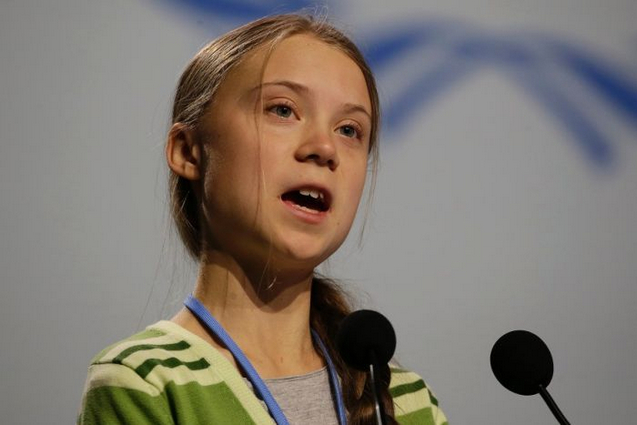
Swedish climate activist Greta Thunberg spoke at the COP25 summit in Madrid last week. (AP: Paul White)
Disappointment.
That is the word many are using at the close of the latest United Nations climate talks in Madrid.
And many of those people are pointing to Australia — among a handful of countries — as part of the problem.
While the world agreed in Paris four years ago to stop global warming at well below 2 degrees Celsius, and to try to stop it at 1.5C, the details of how countries will be held to account are still being worked out.
Enter COP25, the second meeting of the parties to the Paris Agreement (and the 25th UN Climate Change Conference).
Up for discussion this time were a host of technical matters related to carbon markets, as well as details on how poorer countries would be compensated for climate-related damage, and wording for how countries would ratchet up their ambition next year.
Despite the conference being extended for two days past its planned ending, the conclusion was beset by watered-down compromise on some issues, while others were kicked down the road with no decision being made.
Climate activist Greta Thunberg, who spoke earlier at the conference about "loopholes" in climate negotiations, tweeted that the event appeared to be "falling apart".
"The science is clear, but the science is being ignored," she said.
The COP25 talks were labelled as a "lost opportunity". (Reuters)
Australia received special attention at the event for its position demanding it be allowed to use so-called "carryover credits" to meet its emissions reduction targets; getting it off the hook for having to reduce actual emissions.

Carry-over credits kicked on
Australia has promised to reduce its emissions to 26 per cent below 2005 levels by 2030, and it plans to get 90 per cent of the way there by using "carry-over credits" from a different climate treaty: the Kyoto Protocol.
Emissions Reductions Minister Angus Taylor represented Australia at the conference. (ABC News: Toby Hunt)
Australia claims it gained those credits by beating targets set in the Kyoto Protocol — targets in which Australia was, for some time, allowed to actually increase emissions.
It says only about 10 per cent of its Paris target needs to be achieved using actual emissions reductions between 2020 and 2030.
At the conference, Australia appeared to be isolated in its demand, with no other countries pushing for a measure widely described as a "loophole".
Costa Rica's Environment Minister, Carlos Manuel Rodríguez, fingered Australia, along with Brazil and the US, for blocking progress.
"Some of the positions are totally unacceptable because they are inconsistent with the commitment and the spirit that we were able to agree upon [in Paris in 2015]," he said.

What happened?
According to UN Secretary General Antonio Guterres, the talks were a lost opportunity.
The decision on carry-over credits was part of what's been called the "rulebook for Paris".
As a result of disagreement on key clauses, its finalisation has been kicked down the road for next year's COP26 in the UK.
The push by developing countries for stronger wording on increasing finance for compensation over damage caused by climate change was rebuffed, as were calls for updated targets at next year's conference to be "ambitious".
While Australia contributed to the stalemate by pushing for carry-over credits to be allowed, Brazil and the US also played a significant role in things coming to a halt.
Brazil was pushing for a way of accounting for emissions reductions that many countries saw as double-counting, and the US took a hardline approach to compensation for developing countries.


COP25 President Caroline Schmidt laments failure to reach final agreement on carbon markets. (ABC News)

What's next?
The last UN climate change conference before the Paris Agreement takes effect is set to be in Glasgow in November 2020.
At that conference, countries are required to either update or "communicate" their climate reduction targets.
Central to the Paris Agreement is a "ratchet" mechanism, where countries are expected to lift their ambition over time.
Current targets are not enough to stop global warming at 1.5C or even 2C, instead taking the world to 3C of warming or more.
Inside and outside the conference room, many commentators have pointed to a polarisation in the debate around climate action.


 Pacific pivot undermined
Australia's return to its Pacific neighbours after years of neglect could risk being undermined by the Government's intransigence on the region's main threat: climate change.

While some world leaders advocate a conservative approach, there is also an increasing push for urgent action from some members of the public.
Alden Meyer, director of strategy and policy at Union of Concerned Scientists, said she had been attending since 1991 but had "never" seen anything like the almost "total disconnect" at COP25.
"[That is] between what the science requires and what the climate negotiations are delivering in terms of meaningful action."
"Led by the youth, growing numbers of people around the world are demanding that their leaders take bold, ambitious actions to tackle the climate crisis... But most of the world's biggest emitting countries are missing in action and resisting calls to raise their ambition.
Richie Merzian was a climate negotiator for Australia for almost a decade, and is now at the progressive think tank The Australia Institute.
Before heading back from Madrid, he said: "Despite clear and dire warnings from scientists, record levels of protests and unprecedented climate impacts, the conference fell victim to the base positions of a handful of major polluting countries, Australia included."
Emissions Reduction Minister Angus Taylor was contacted for comment.

Links

Major States Snub Calls For Climate Action As U.N. Summit Wraps Up

Reuters - Matthew Green | Valerie Volcovici | Jake Spring

The COP25 talks were labelled as a "lost opportunity". (Reuters)
Key points
  • COP25 talks seen as test of global will to cut emissions
  • Final draft eschews pledges for faster action
  • Brazil, China, Australia, Saudi Arabia and the United States among those dragging heels - delegates
MADRID - A handful of major states resisted pressure on Sunday to ramp up efforts to combat global warming as a U.N. climate summit ground to a close, angering smaller countries and a growing protest movement that is pushing for emergency action.The COP25 talks in Madrid were viewed as a test of governments’ collective will to heed the advice of science to cut greenhouse gas emissions more rapidly, in order to prevent rising global temperatures from hitting irreversible tipping points.
But the conference, in its concluding draft, endorsed only a declaration on the “urgent need” to close the gap between existing emissions pledges and the temperature goals of the landmark 2015 Paris climate agreement - an outcome U.N. Secretary-General Antonio Guterres called disappointing.
Many developing countries and campaigners had wanted to see much more explicit language spelling out the importance of countries submitting bolder pledges on emissions as the Paris process enters a crucial implementation phase next year.
Brazil, China, Australia, Saudi Arabia and the United States had led resistance to bolder action, delegates said.
“These talks reflect how disconnected country leaders are from the urgency of the science and the demands of their citizens in the streets,” said Helen Mountford, Vice President for Climate and Economics, at the World Resources Institute think-tank. “They need to wake up in 2020.”
The lack of a strong outcome to reinforce the Paris accord raises the stakes for the next big climate summit, in Glasgow in November next year. As hosts, British Prime Minister Boris Johnson’s government faces the task of persuading countries to submit more ambitious plans to cut carbon emissions.
The Madrid summit had been due to end at the two-week mark on Friday but ran on for two extra days - a long delay even by the standards of often torturous climate summits.
After final decisions were made, Chile’s environment minister Carolina Schmidt - who served as president of the talks - said she was “of mixed emotions”.
The country had earlier triggered outrage after drafting a version of the text that campaigners complained was so weak it betrayed the spirit of the Paris Agreement.

‘A crime against humanity’?
The process set out in the Paris deal hinges on countries ratcheting up emissions cuts next year.
The final draft did acknowledge the “significant gap” between existing pledges and the temperature goals adopted in 2015.
Nevertheless, it was still seen as a weak response to the sense of urgency felt by communities around the world afflicted by floods, droughts, wildfires and cyclones that scientists say have become more intense as the Earth rapidly warms.
Guterres, who opened the talks on Dec 2., said he was “disappointed”.
“The international community lost an important opportunity to show increased ambition on mitigation, adaptation and finance to tackle the climate crisis,” he said in a statement. “We must not give up and I will not give up.”
Delegates drew some consolation from an agreement reached in Brussels last week by the European Union’s 28 member states, bar Poland, to reach net zero carbon emissions by 2050, under a “Green Deal” to wean the continent off fossil fuels.
“It seems that EU now needs to be the leader and we want to be and we are going to be and that is what we are doing,” said Krista Mikkonen, Finland’s environment minister and the EU’s representative at the talks.
The negotiations became mired in disputes over the rules that should govern international carbon trading, favoured by wealthier countries to reduce the cost of cutting emissions. Brazil and Australia were among the main holdouts, delegates said, and the summit deferred big decisions on carbon markets.
“As many others have expressed, we are disappointed that we once again failed to find agreement,” said Felipe De Leon, a climate official speaking on behalf of Costa Rica.
Smaller nations had also hoped to win guarantees of financial aid to cope with climate change. The Pacific island of Tuvalu accused the United States, which began withdrawing from the Paris process last month, of blocking progress.
“There are millions of people all around the world who are already suffering from the impacts of climate change,” Ian Fry, Tuvalu’s representative, told delegates. “Denying this fact could be interpreted by some to be a crime against humanity.”

Links

17/12/2019

Why Did The Madrid Climate Talks Fall Short?

Sydney Morning Herald - Aritz Parra | Frank Jordans (AP | AAP)

Madrid: This year's UN climate negotiations in Madrid, the longest in 25 nearly annual such gatherings, has ended with major polluters resisting calls to ramp up efforts to keep global warming at bay.
Faced with the tough task of reconciling the demands of scientists, protesters on the streets and governments back home, the COP25 negotiators ended up disappointing many and leaving for next year's talks in Glasgow, Scotland, key issues such as the regulation of global carbon markets.
COP25 President Carolina Schmidt, during the closing plenary in Madrid, on Sunday. Marathon international climate talks ended with negotiators postponing until next year a key decision on how to regulate global carbon markets. Credit: AP
Here is a look at the main issues resolved, and the sticking points for future negotiations.

Are bolder targets needed?
The final declaration cited an "urgent need" to cut planet-heating greenhouse gases in line with the goals of the landmark 2015 Paris climate change accord. But it fell far short of explicitly demanding that countries submit bolder emissions proposals next year, which developing countries and environmentalists had demanded.
COP25 President Carolina Schmidt listen a speech from a party member during the closing plenary in Madrid. Credit: AP
The Paris accord established a common goal of keeping temperature increases below 2 degrees Celsius, ideally 1.5 degrees by the end of the century. So far, the world is on course for a 3 to 4-degree rise, with potentially dramatic consequences for many countries, including rising sea levels and fiercer storms.
Scientists say global emissions of carbon dioxide and other pollutants have to start falling rapidly as soon as possible to meet the Paris goal.


US President Donald Trump ridiculed 16-year-old Greta Thunberg after the Swedish climate activist was named Time's Person of the Year for 2019.

After two nights of fractious negotiations, delegates in Madrid decided to defer some of the thorniest issues to the next U.N. climate summit in Glasgow in November.
"The global emissions' curve needs to bend in 2020, emissions need to be cut in half by 2030, and net zero emissions need to be a reality by 2050," said Johan Rockstrom, head of the Postdam Institute for Climate Impact Research.
"Achieving this is possible - with existing technologies and within our current economy," said the revered climate scientist. "The window of opportunity is open, but barely."
Swedish climate activist Greta Thunberg in Madrid last week. Credit: AP
How to regulate global carbon markets?
Economists say market mechanisms can speed up the shift from fossil fuels to renewable energy sources. One way to do this is by putting a price on carbon dioxide, the most abundant man-made greenhouse gas, and gradually reducing the amount countries and companies are allowed to emit.
The European Union and some other jurisdictions around the world already have limited emissions trading systems for buying and selling carbon credits.
The Paris accord was meant to establish the rules for carbon trading on a global scale.
But setting the rules for a robust and environmentally sound market and linking up existing systems is difficult. So, too, is the question of allocating a percentage of the revenue to help countries adapt to the effects of warming temperatures.
The main point of resistance lies in the existence of old carbon credits left over from a now-discredited system established under the 1997 Kyoto Protocol. Developing countries such as Brazil insisted during the past two weeks in Madrid on keeping those emissions credits, while also resisting strict accounting of future trades.
The argument that carbon markets that are not transparent enough and leave loopholes for double counting can undermine efforts to reduce emissions won at the end, postponing the decision on the issue for Glasgow.

Aid for the poor
In summit lingo the issue is known as "loss and damage." In essence, it was recognised several years ago that developing nations are much more vulnerable to the negative effects of climate change, even though they contribute least to the problem.
A tentative agreement was reached in 2013 that rich countries would help them foot the bill.
But attributing specific weather disasters such as hurricanes and floods, or slow but irreversible changes like sea level rise and desertification, to climate change remains a delicate issue given the potential costs involved.
The United States, in particular, had opposed any references to possible liability in the summit's conclusions, and scored a victory when a decision on it was also postponed for another year.
Developing countries also demand that compensation be kept a separate issue from funds to help the countries adapt and mitigate the effects of a warming planet. The Green Climate Fund, which was established to that end, is currently far from reaching the target of $US100 billion a year in contributions.

Heat on the street
Chile, which chaired the conference, chose to give it the slogan "Time for Action."
That echoed the blunt demands from protesters, who have been staging mass rallies around the world for the past year demanding leaders take what they call the "climate emergency" seriously.
European Union countries responded to public pressure this week by agreeing to a long-term goal of cutting the bloc's greenhouse gas emissions to net zero, meaning any that remain will be offset with carbon reduction measures.
Some observers and EU ministers had hoped this signal from Brussels would boost the talks in Madrid. If anything, it revealed the vast gap between what countries can agree at the regional level and what the UN process is capable of.

Links

Lethal Heating is a citizens' initiative