28/12/2019

The Biggest Lesson About Climate Change From 2019

OneZero - Bryan Walsh

We need to change how our economy is powered — and that will require politics


On December 11, two things happened that caught the attention of those invested in the fight against climate change, which at this point should include all of us. TIME magazine named 16-year-old Greta Thunberg its 2019 person of the year, lauding her for “creating a global attitudinal shift, transforming millions of vague, middle-of-the-night anxieties into a worldwide movement calling for urgent change.” And, Saudi Aramco — Saudi Arabia’s state-owned oil company and the largest producer of crude oil in the world — had the biggest initial public offering on record, raising more than $25 billion and ending its first day of trading with a valuation of $1.88 trillion, $600 billion more than its nearest competitor, Apple.
More than anything else, these two events — the recognition of a truly fresh voice and the market’s embrace of the company with the single largest carbon footprint in the world — tell us where the world stands on climate change. Thunberg, who this time last year was holding a lonely vigil outside the Swedish Parliament as part of the nascent “School Strike for Climate,” represents the rise of a strong climate activist movement, one that has embraced increasingly radical tactics and is backed up by growing public support. Aramco represents how entrenched fossil fuels remain in the global economy, despite all that effort. Thunberg shows us how far we came in 2019, while Aramco’s multi-trillion dollar valuation shows us how far we still have to go.
Spend long enough reporting on climate change, and you can develop a nasty case of deja vu. Every year ends with a UN climate summit — 2019’s edition stumbled to a close in Madrid in mid-December — where the same fights are had between developed and developing countries, between Europe and the United States. Carbon dioxide emissions will likely they hit a record high in 2019, and with them, the same warnings that we have only a few years left to drastically cut CO2 emissions or face global catastrophe. Scientists and environmentalists employ the same messages, doomsaying marbled with glimmers of hope. There are a few extreme weather events linked to climate change, like December’s record-breaking heat in Australia, presaging worse to come. And the next year, the cycle renews, as atmospheric carbon concentrations keep ticking up, now higher than they’ve been in millions of years.
There’s a reason that the Oxford Dictionaries named “climate emergency” as the word of the year for 2019.
The scientific news about climate change in 2019 was mostly bad, as it tends to be. The 2010s will almost certainly go down as the hottest decade on record, and July 2019 was the single hottest month on record. Sea ice levels in the Arctic — a key symptom for the rate of warming — keep dropping, with 2019 tied for the second-lowest levels on record. Ice in Greenland is melting seven times as fast as it was in the 1990s, directly contributing to rising oceans and putting the world on track for the highest projected figures for sea level rise by the end of this century. As the seas become hotter and more acidic, coral reefs — the nurseries of the oceans — suffer, and could be essentially gone by 2050. Extreme rainfall — one of the clearest effects of global warming — pounded much of the world, with the lower 48 U.S. states experiencing what’s likely to be the wettest year on record. Animal extinctions, droughts, wildfires — there’s a reason that the Oxford Dictionaries named “climate emergency” as the word of the year for 2019.
But more notable than the raw meteorological records broken in 2019 was the way that the knock-on effects of climate change on human society began to become clear. In October, amidst unusually hot and dry weather, California’s largest utility PG&E made the unprecedented decision to proactively cut off power to hundreds of thousands of customers, with little warning, to reduce the risk that live power lines could spark wildfires, as happened catastrophically in 2018. Teasing out the influence of warming temperatures on wildfires is tricky, and other factors — like growing human population in fire-prone areas — may play a larger role than climate change. But a hotter world is one that will likely experience more extreme weather, and the preemptive blackouts in California show what happens when the rickety infrastructure designed for a calmer climate meets a wilder future.
So that’s the bad news on the scientific front — and things weren’t much better politically. In November, President Trump began the process of formally withdrawing from the Paris Agreement, the 2015 international deal in which nearly 200 nations pledged to reduce greenhouse gas emissions and support poorer nations as they dealt with the effects of climate change. Trump’s move was a long time coming, and it was merely one part of his administration’s efforts to backtrack on climate action whenever possible, whether that meant working to revoke California’s authority to regulate emissions from automobiles or rolling back Environmental Protection Agency rules on greenhouse gases.
But while Trump may be willfully pulling the United States in the opposite direction of meaningful climate action, those countries that have remained faithful to the Paris Agreement haven’t done much better. Only seven countries — based on their carbon emission reduction pledges and current policies — are on track to keep warming below 2 degrees Celsius, which is the overall goal of the agreement. And when the nations of the world met at the annual year-end UN climate talks in Madrid, little was achieved. The United States and other large polluters like Australia, India, and China blocked even a nonbinding measure that would have encouraged — not mandated — countries to take on tougher emission reduction pledges next year. The bar had been set low for the negotiations, officially called the 25th Conference of the Parties to the United Nations Convention on Climate Change. It still wasn’t cleared.
******
Ten years ago, the near-collapse of the UN climate talks would have fed a narrative of failure on global warming action. I know, because I was at the 2009 Copenhagen summit, where expectations for a true global deal on climate change were high, only to be dashed when those expectations met the reality of global politics. The U.S. president was different then, but the essential issue was largely the same — domestic politics, not international ones, ultimately drive what countries are willing to do on climate change.
And this is where the good news begins to trickle in, ever so slowly. Despite Trump’s pledges that he would bring back coal, global demand for the single biggest source of human-made greenhouse gas emissions fell for the first time in two years, thanks in large part to the continued closure of coal plants in the United States. (Less good is the fact that new coal plants continued to be opened in Asian countries like India and China, where the demand for new electricity generation is ravenous.) Solar power is getting cheaper — the average cost has declined 65% over the past five years — and is growing rapidly, as are other renewable sources of energy. Cheaper clean energy makes climate action more painless, and in turn more popular, enabling policies like Canada’s move to establish a federal price on carbon.
So too does the steady movement of public opinion in favor of climate action. A 2019 Pew poll found that people in most countries listed climate change as one of the two top global threats, while another recent Pew survey concluded that the percentage of Americans who believed climate change was a major threat to the well-being of the United States grew from 40% in 2013 to 57% this year. In Greta Thunberg, the climate movement has found a symbol to rally around, one whose genius lies in her ability to articulate the key injustice of climate change: the mortgaging of the future by the present. “The eyes of all future generations are upon you,” Thunberg told delegates at a UN climate summit in New York in September. “And if you choose to fail us, I say — we will never forgive you.”
The real obstacle to meaningful climate change action in 2020 and beyond is power — and I mean power in two ways. The first is power in the technical sense: How do we create new kinds of cleaner power production that will rapidly reduce carbon emissions while ensuring everyone on the planet has the resources needed to live a developed lifestyle? It’s an exceedingly tough problem, because it requires us to replace an entire global industrial energy system, and do it while the clock is running. It will require innovation on a scale we haven’t yet begun to approach. For all the growth in renewable energy in recent years, we’re not making progress nearly fast enough, in part because while clean power is on the rise, the world still remains highly dependent on energy from dirty sources like oil and coal. The fact that a company like Aramco, which exists to pull a highly polluting substance out of the ground, can be worth more than Apple and Facebook combined proves that fact.
If that’s going to change, it will require power of a different source — political power. In 2019, it became impossible to ignore that climate change had become an utterly partisan issue. Those Americans in the Pew survey who now believe that climate change is a major threat? Nearly all of them are self-identified Democrats. Republican attitudes were largely unchanged — 43% of moderate to liberal Republicans said they were worried about climate change, a figure that dropped to just 19% of conservative Republicans. By comparison, 94% of liberal Democrats and 75% of moderate to conservative Democrats saw climate change as a major threat.
But general public opinion matters less than the opinion of those actually making policy. Here, the partisan divide is much greater. According to data collected by the nonpartisan League of Conservation Voters (LCV), since Trump’s election Republicans in Congress have voted for pro-environment legislation just 5% of the time, compared to 92% of the time for Democrats. That’s not a political divide — that’s the Grand Canyon.
2019’s climate legacy will ultimately be decided by what happens in the elections of 2020, and beyond.
It wasn’t always this way. As the LCV’s data shows, back in the 1970s the two parties generally voted along the same lines for clean air and water protection. The EPA was created under and the Endangered Species Protection Act was signed by Republican President Richard Nixon. And many green groups, I think, still picture a country where the environment and climate is nonpartisan issue. But those days are long gone, and they’re no more likely to come back than we’ll see global carbon concentrations dip back below 400 ppm.
What’s true in the United States is true of the rest of the world. The Conservatives who just solidified their grip on power in the U.K. may not be as uniformly opposed to climate action as their Republican counterparts, but they won’t be as motivated to do something as the opposition Labour party. In Australia, one of the world’s biggest carbon emitters on a population basis, the country’s conservative government refuses to admit the reality of climate change — even as the nation is literally on fire. In Brazil, home to more of the Amazon than any other nation, President Jair Bolsanaro has slashed protections against deforestation.
The reality is that the most important action that can be taken isn’t putting solar panels on your roof or switching to paper straws or sharing a hashtag on social media. It’s not even marching through the streets with Greta Thunberg. It’s supporting efforts to put politicians who are willing to act on climate change into office. 2019’s climate legacy will ultimately be decided by what happens in the elections of 2020, and beyond.

Links

(AU) Cattle Have Stopped Breeding, Koalas Die Of Thirst: A Vet's Hellish Diary Of Climate Change

Sydney Morning Herald - Gundi Rhoades

Gundi Rhoades
Gundi Rhoades is a veterinarian, scientist, mother, beef cattle farmer and member of Veterinarians for Climate Action. 
Bulls cannot breed at Inverell. They are becoming infertile from their testicles overheating. Mares are not falling pregnant, and through the heat, piglets and calves are aborting.
My work as a veterinarian has changed so much. While I would normally test bulls for fertility, or herds of cattle for pregnancy, I no longer do, because the livestock has been sold. A client’s stud stock in Inverell has reduced from 2000 breeders to zero.
Gundi Rhoades is a member of Veterinarians for Climate Action based in Inverell.
I once assisted farmers who have spent their lives developing breeding programs, with historic bloodlines that go back 80 years. These stud farmers are now left with a handful of breeders that they can’t bear to part with, spending thousands keeping them fed, and going broke doing it.
Cattle that sold for thousands are now in the sale yards at $70 a head. Those classed as too skinny for sale are costing the farmer $130 to be destroyed.
They are all gone and it was all for nothing. The paddocks are bare, the dams dry, the grass crispy and brown. The whole region has been completely destocked and is devoid of life.For 22 years, I have been the vet in this once-thriving town in northern NSW, which, as climate change continues to fuel extreme heat, drought and bushfires, has become hell on Earth.
Here, we are seeing extreme weather events like never before. The other day we had about eight centimetres of rain in 20 minutes. These downpours are like rain bombs. They are so ferocious that a farmer lost all of his fences, and all it did was silt up the dam so he had to use a machine to excavate the mud.
Most farmers in my district have not a blade of grass remaining on their properties. Topsoil has been blown away by the terrible, strong winds this spring and summer. We have experienced the hottest days that I can remember, and right now I can’t even open any windows because my eyes sting and lungs hurt from bushfire smoke.
For days, I have watched as the bushland around us went up like a tinderbox. I just waited for the next day when my clinic would be flooded with evacuated dogs, cats, goats and horses in desperate need of water and food.
The impact of the drought on wildlife is devastating to watch, too. Members of the public are bringing us koalas, sugar gliders, possums, galahs, cockatoos and kangaroos on a daily basis.
The koalas affect me the most. To see these gorgeous, iconic animals dying from thirst is too hard to bear. We save some, but we lose just as many.
The whole town is devastated. My business has halved. But with no horses to breed, no cattle to test and care for, what am I going to do? I have worked day and night to build a future for my family, but who would want to buy our property out here? Who would want to buy a vet clinic in a town where there are no animals to treat because it’s too hot and dry? Where the cattle become infertile from the 40-degree heat. All this on black, baked ground.
I am 53 years old. Can I start again?
Climate change for us is every day, and I am not suffering on the same level as my friends, my clients and the helpless animals I treat. As a veterinarian I am becoming more and more distressed, not just about the state of my town, but the whole world.
Bushfire smoke moves over Inverell. 
Personally, I have had weeks when I just cry. It just bloody hurts me. I also have times when I get really angry and I start to swear, which I have never done in my life.
I also have times when I think about the potential this country has to create a renewable future with clean, green energy, and end our reliance on fossil fuels.
You only have to look at how resilient our farmers are in the face of devastating, extreme weather conditions to understand that we can make a powerful, meaningful difference to our future.
The government has no idea what it’s like for us. It has no empathy. Its members don't know how much it hurts when they just say yes to another coal mine.
I would invite Scott Morrison to come and see what life in Inverell is like. In case he chooses not to, I'll paint this picture for the country and hope people can start to realise and understand the devastating impact climate change is having. I hope they will take a stand for the people, the places and the animals whose voices are too small for him to hear.

Links

A Year Of Resistance: How Youth Protests Shaped The Discussion On Climate Change

The Conversation -  | 

Millions of youth have participated in climate strikes, negotiations, press conferences and events, demanding urgent climate action this year. (Shutterstock)

Greta Thunberg made history again this month when she was named Time Magazine’s Person of the Year. The 16-year-old has become the face of youth climate action, going from a lone child sitting outside the Swedish parliament building in mid-2018 to a symbol for climate strikers — young and old — around the world.
Thunberg was far from the first young person to speak up in an effort to hold the powerful accountable for their inaction on climate change, yet the recognition of her efforts come at a time when world leaders will have to decide whether — or with how much effort — they will tackle climate change. Their actions or inactions will determine how much more vocal youth will become in 2020.
Thunberg coined the hashtag #FridaysforFuture in August 2018, inspiring students globally to hold their own climate strikes. Many of them argued that adults were not doing enough to address the climate catastrophe. Today’s youth saw themselves on the generational front lines of climate change, so they walked out of their schools to demand transformative action.
Students take part in a climate protest in London in March 2019. AP Photo/Matt Dunham
The strikes spread throughout the fall and winter, and spilled over to 2019. Students in the United Kingdom joined the movement on Feb. 15, 2019 with a mass mobilization, on the heels of Australia, Switzerland, Germany, Japan and many other countries around the world. They skipped school because they felt there was no point to school without a future, and their resistance took their grievances around generational injustice directly to elected officials.
Fridays for Future now estimates that more than 9.6 million strikers in 261 countries have participated in climate strikes. And Thunberg herself has met with hundreds of communities and numerous heads of state. While Thunberg’s celebrity has paved the way for the climate strikes to scale up — her work rests on decades of climate activism that have made this year’s mobilizations possible.

Environmental justice momentum
Youth climate activist Isra Hirsi will be 27 in 2030, the year that scientists say the planet will be stuck on a path towards dangerous warming.
AP Photo/Jacquelyn Martin
Indigenous activists like Vanessa Gray, Nick Estes, Autumn Peltier, Kanahus Manuel and many others whose work bridges sovereignty and environmental damage have also played an important role. They have helped shift the climate movement toward the framework of climate justice, which acknowledges the intersections of colonialism, racialization, capitalism and climate change.
This moment also builds on environmental justice movements. Young activists like Isra Hirsi, Cricket Cheng, Maya Menezes and others have been building movements where a racial justice lens brings the climate movement into focus.
While these leaders may not have been recognized with Time Magazine’s Person of the Year, their work has significantly reshaped the climate movement. They are helping politicize a new generation of climate activists who understand climate change not as an isolated phenomenon, but one with roots in a capitalist system that is inherently racist, colonial, sexist and ableist.

Indigenous-led resistance
This year has also seen Indigenous-led resistance to climate change and the related oil, gas, fracking, hydro and other natural resource extraction too.
Secwepemc leaders and their allies have built tiny houses to prevent the Trans Mountain pipeline expansion from being forced through unceded Secwepemc territory. In Mi'kmaqi and Wolastoqey territory, there’s been resistance to fracking. Across northern Manitoba, Cree and Nishnaabe communities are resisting hydro projects they say will devastate their communities.
In British Columbia, nations have fought the Site C dam, which threatens to flood communities, change watersheds and escalate violence against women through work camps filled with men. Inuit and Cree communities in Labrador have resisted the Muskrat Falls hydro project.
The construction site of the Muskrat Falls hydroelectric facility in Newfoundland and Labrador in 2015. THE CANADIAN PRESS/Andrew Vaughan
This mirrors Indigenous-led environmental action against colonial energy projects around the world, including work in Karen communities in Thailand, Indigenous peoples in Colombia, Waorani peoples in Ecuador, among Saami peoples and countless other Indigenous nations.

Rejecting adult inaction
The climate strikes are an example of youth becoming politicized, rejecting adult inaction and demanding more from governments. In the coming years, we can expect the climate movement to keep growing, become even more politicized and escalate the intensity of tactics.
When governments resist reasonable requests, decades of social movements teach us that activists escalate. We can look at the histories of the HIV/AIDS movement, the Civil Rights movement, African liberation struggles and “poor people’s movements,” which show us that when people get pushed out, they turn up the pressure.
That escalation is necessary to win substantive change. Escalation is not usually seen by the public as nice as polite entreaties, but research clearly shows that direct action leads to change.
Greta’s recognition by Time Magazine will continue to inspire more young people to join their peers in demanding bold climate action like the Green New Deal and to use the legal system as a tool by suing governments over climate inaction.
If elected officials fail to act, we can expect these young people to adopt more disruptive tactics and do the work on the ground to elect new leaders. Even if they can’t yet vote themselves, there are many ways they can- and will continue to- shape our politics and our future.

Links

27/12/2019

5 Key Questions About Climate Change In The 2020s

CBS News - Jeff Berardelli*

Climate change and its impact on lives and livelihoods worldwide will no doubt be one of the biggest issues confronting us in the decade ahead. Here are five key questions and answers about the problem and what can be done about it.


Climate Change Brings Opportunities And Risk

Can we stop climate change and how will innovation help?
In short, yes, there are things we can do to help stop climate change, but it won't happen overnight. The U.N.'s Intergovernmental Panel on Climate Change says that we need to reduce our emissions 45% by 2030 if we want to keep global warming to no more than 1.5 degrees Celsius. There is very little chance of that happening. However, there is no cliff at 1.5 degrees Celsius — meaning the closer we keep warming to 1.5 degrees, even if we overshoot, the better off we'll be. The bottom line is we can still avoid the worst impacts of climate change.
Here is the good news: Unlike many other big problems in life, we know how to fix this — by reducing our use of fossil fuels. And by aggressively combating this problem we can make an even better life for ourselves and future generations. Instead of focusing on denial or avoidance, we can embrace this as an opportunity. Combating climate change will inevitably create vast new industries — it already has — and millions of jobs, a rebirth of American ingenuity and a jolt to the U.S. and world economies.
According to the Bureau of Labor Statistics, the fastest growing occupations in this upcoming decade are solar and wind technician. With median salaries of $42,000 to $55,000 per year, these are good paying jobs, already being created right now all over the nation. Per unit of energy, for every one job in fossil fuels you need several jobs in solar — so this is a net creator of opportunity. Even with larger employment, because solar and wind are technologies and not commodities like oil, the prices keep falling. In many cases sustainable energy is already cheaper, and certainly cleaner, than fossil fuels.

Where could we see rapid change over the next decade?
One big concern is tipping points. There are three primary areas climate experts are watching:
  1. The Amazon rain forest is close to a tipping point because of the way land is being abused, combined with climate change. The forest is drying out. That is because rain forests create their own rainfall. The more they are fragmented and burned, the more they dry out and lose the ability to create their own source of rainfall. This means the Amazon is in danger of turning into a savanna — an ecosystem with far less tree-cover. If that happens, the capacity of the forest to absorb heat-trapping carbon dioxide is lost. We really need the Amazon to help lessen the impact of climate change worldwide.
  2. Permafrost, the frozen ground in the Arctic, is thawing fast and releasing carbon that has been locked up for thousands of years. Just this year it seems to have crossed a threshold from being a sink, storing carbon, to being a net emitter of carbon, acting as a feedback to warm the Earth even faster. This feedback will be critical to monitor this decade to see how fast permafrost melts.
  3. Loss of ice — both sea ice in the Arctic and land ice in Greenland and South Pole — is accelerating. Ice helps cool the Earth. The more we lose the faster the climate heats up which is another feedback loop. In addition, monitoring ice shelves on glaciers for instability will be a big telltale sign of how fast sea level will rise in the coming decade.

Arctic Report Card Reveals Alarming Effects Of Climate Change

What does this mean for the economy and homeowners?
This is where climate change hits us in the wallet. As CBS News correspondent Carter Evans reported in November, homeowners are already seeing situations in California where insurance companies will not insure homes in the fire zone, or they are charging exponentially higher, unaffordable rates. As the impacts of extreme weather and sea level rise get worse, it is going to become more difficult for people who are exposed to risk to obtain 30-year mortgages to buy homes.
This pertains not only to fire-prone areas, but also to homes near sea level and along river basins at risk of flooding. When sellers or buyers can no longer obtain a reasonable mortgage or insurance, home values will plummet.


Wildfire Evacuations

Can the younger generation turn their ambition into policy?
This is what gives me hope. The younger generation is energized and engaged by this issue. They realize they will have to deal with what we adults helped cause. And they are not likely to give up until they get what they want. In one year, youth activists organized tens of millions of people all over the world in protest. They accomplished in one year what adults were not able to do in 30 years. Imagine what they can do in a decade!


Time Person Of The Year

What impacts are people most concerned about?
I asked people on Twitter about their climate-related concerns. The No. 1 answer was migration and refugees. I agree. Climate change is going to continue to cause more extreme heat waves and droughts. Farms in vulnerable areas will turn from crop producing into deserts. Later this century, parts of the Earth near the equator will become so hot as to be uninhabitable, or at the very least not supportive for people to make a living. Millions will be forced to move to survive. Some scientists say we are already witnessing this happen. The concern is that even more widespread migration will create a massive international humanitarian and security issue.

*Meteorologist Jeff Berardelli is a CBS News Climate & Weather Contributor.

Links

The 2010s Were Another Lost Decade On Climate Change

MIT Technology Review

The only measurement that matters is greenhouse-gas emissions—and they continued to rise.
Pixabay
We’ve lost another decade on climate change.
Even as greenhouse gases in the atmosphere race toward levels that could lock in catastrophic warming, the world continued to pump out more. Our collective failure to begin cutting emissions over the last 10 years almost certainly shatters the dream of halting rising temperatures at 1.5 ˚C. Indeed, it’s hard to imagine achieving the pace and scale of change now required even to prevent 2 ˚C.
Among other sharply escalating dangers, that half-degree difference could doom the world’s coral reefs and regularly expose nearly 40% of world’s population to staggering heat waves.
There were faint signs of progress. Renewables and electric vehicles finally took off, and nearly 200 countries committed to cutting their emissions under the landmark Paris climate agreement in 2016.
But nations are already falling behind on their pledges, and the US is in the process of pulling out of the deal entirely, at a point when much deeper cuts are required. And for all the momentum behind clean energy technologies, they’ve done very little so far to displace the power plants, cars, factories, and buildings polluting the atmosphere with more emissions each year.
The charts that follow reveal how much ground we lost on climate change during the last 10 years.

Rising CO2 concentrations
The measurement that ultimately matters on climate change is global emissions. And they continued to rise.
There was a brief hope that greenhouse-gas pollution had finally plateaued. Carbon dioxide from fossil fuels, which makes up about 90% of total emissions from human activities, was relatively flat from 2013 through 2016.
Improving energy efficiency, rising use of renewables, and the shift from coal to natural gas likely drove much of this, particularly in wealthy economies like the US and European Union. But emissions have surged in the years since, driven largely by economic growth and increasing energy demands in emerging nations, led by China and India.
Fossil-fuel emissions rose an estimated 0.6% to a record 37 billion metric tons in 2019, capping three straight years of growth, the Global Carbon Project reported in early December.
These trends, plus additional emissions from land-use changes and other human activities, added up to steadily rising carbon dioxide concentrations in the atmosphere throughout the 2010s.


Reaching the peak
When we reach peak emissions matters. The longer we take, the deeper we'll need to cut carbon pollution in the coming years if we hope to avoid dangerous warming thresholds, as the charts below show.
To get a sense of how much harder we've made the job of halting warming at 1.5 ˚C by frittering away the last decade, click on the chart and compare the steepness of the slope shown if we had plateaued in 2010 with what is projected should we reach the peak in 2020.


These charts were produced by Zeke Hausfather for Carbon Brief, using data and the original figure from Robbie Andrew at the Center for International Climate Research.

We’ll have to radically accelerate emissions reductions to have any hope of limiting warming to 2 ˚C as well.


In addition to aggressive emissions cuts, most models now find we'll also need to use trees, plants and other methods to remove and store vast amounts of carbon dioxide from the atmosphere to stay below these temperature targets. But achieving these so called "negative emissions" on a large-enough scale will be incredibly costly, and compete directly with other crucial land-uses, most notably the farming needed to feed a growing global population.

Environmental impacts
Decades of rising emissions continued to do what scientists have long warned they would: make the world hotter.
In early December, the World Meteorological Organization announced that 2019 is likely to be the second or third warmest on record, capping a “decade of exceptional global heat.” Average temperatures for the preceding five- and 10-year periods will almost certainly be the highest on record.


This chart, using data from the National Oceanic and Atmospheric Administration, clearly highlights the rise in global land temperatures above the 20th-century average. Note the particularly pronounced increase in the last 10 years.


Ocean temperatures rose as well, and warmer water expands. That plus the accelerating loss of ice sheets and glaciers pushed up ocean levels further, as this chart from NASA satellite data highlights.
Indeed, the 2010s mark the decade when the impacts from climate change became unmistakable, at least for any objective-minded observer. As temperatures rose, Arctic sea ice melted far faster than models had predicted. The world’s coral reefs suffered widespread and devastating bleaching events. And regions around the world grappled with some of the costliest, deadliest, and most extreme droughts, hurricanes, heat waves, and wildfires in recorded history.
Since carbon dioxide takes years to reach its full warming effect, and we have yet to even begin cutting emissions, we’ll face even starker dangers in the coming decade.

Links

Nine Things You Love That Are Being Wrecked By Climate Change

The Conversation - 

If coffee and wine are things you love, then you need to pay attention to climate change. Shutterstock/Ekaterina Pokrovsky
There are so many stories flying around about the horrors already being wrought by climate change, you’re probably struggling to keep up.
The warnings have been there for decades but still there are those who deny it. So perhaps it’s timely to look at how climate change is affecting you, by wrecking some of the things you love.

1. Not the holiday you hoped for
We often choose holiday destinations with weather in mind. Sadly, climate change may see your usual destinations become less inviting, and maybe even disappear entirely.
Lizard Island, in Queensland, is a popular tourist destination but it’s coral has been affected by bleaching. AAP Image/XL Catlin Seaview Survey
But there’s more to think about than your favourite beach retreat being drowned, or the Great Barrier Reef decaying before you see it.
Now we have to worry that “extreme weather events pose significant risks to travellers”. The warnings here range from travel disruption, such as delayed flights due to storms, through to severe danger from getting caught in cyclones, floods or snowstorms.
Simply getting where you need to go could become an adventure holiday itself, but not a fun one.

2. Last chance to see some wildlife
There are more and more examples of animals falling victim to climate-change induced extreme weather events, such as the horror of mass “cremations” of koalas in the path of recent Australian bush fires or bats dropping dead during heatwaves.
Hundreds of bats dropped dead during a heatwave in Campbelltown, NSW, after temperatures reached 45C in 2018. AAP Image/Supplied/Help Save the Wildlife and Bushlands
On top of that, news of the latest climate-related animal extinctions are becoming as common as reports of politicians doing nothing about it.

3. History and heritage at risk
The Italian city of Venice recently experienced its worst flooding since the mid 1960s, and the local mayor clearly connected this with climate change.
Aside from the human calamity unfolding there, we are seeing one of Europe’s most amazing and unique cities and a World Heritage site devastated before our eyes.
Tourists and residents wade through a flooded Venice, Italy, in November 2019. EPA/Andrea Merola


Climate change threatens more than 13,000 archaeological sites in North America alone if sea levels rise by 1m. That goes up to more than 30,000 sites if sea levels rise by 5m.
UNESCO is worried that climate change also threatens underwater heritage sites, such as ruins and shipwrecks. For example, rising salinity and warming waters increases ship-worm populations that consume wooden shipwrecks in the Baltic sea.

4. Taking the piste
Warming temperatures have already had negative impacts on the US snow sports industry since at least 2001.
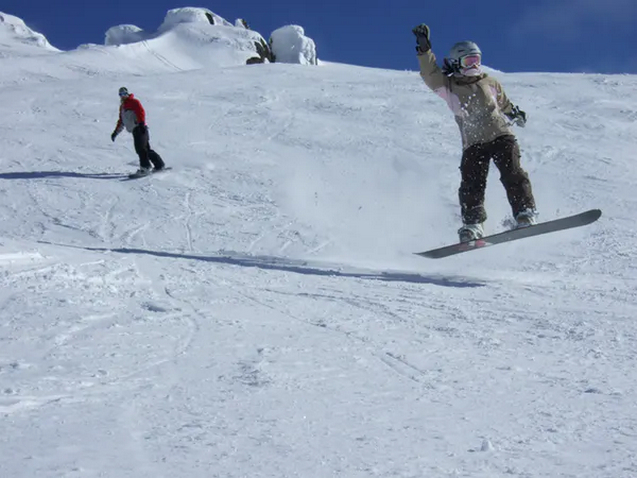
Enjoy the skiing while the snow lasts. Yun Huang Yong, CC BY
In Australia, ski resorts are expected to see significant drops in snow fall by 2040 and, as temperatures warm, they will be unable to compensate for this by snow-making, because it doesn’t work if ambient temperatures are too high.
Perhaps recent efforts to make artificial snow will give us a few more years on the slopes, but I’m not holding my breath.

5. Too hot for sport and exercise
It’s not just snow sports that will be affected. As temperatures warm, simply being outside in some parts of the world will not only be less pleasant, but more harmful, causing greater risk of heat stress doing any sport or exercise.
The summer heat already causes problems for fans and players during the Australian Open in Melbourne each January. AAP Image/Julian Smith
That also means lower incentives for – and greater difficult in undertaking - incidental exercise, such as walking to the bus stop.

6. Pay more for your coffee
As the climate changes, your coffee hits will probably become rarer and more expensive, too.
Start saving up for your next coffee. Flickr/Marco Verch, CC BY
A report by the Climate Institute in 2016 suggested coffee production could drop by 50% by 2050. Given how rapidly negative climate predictions have been updated in the three years since, this might now be considered optimistic. Yikes.

7. You and your family’s health
As the climate changes, the health of your children, your parents and your grandparents will be at greater risk through increases in air pollution, heatwaves and other factors.


It can be heartening to see the strong, intelligent and positive action being taken by the world’s youth in response to the lack of climate action by many governments.
But the fact this is a result of literal, existential crises becoming a normal part of every day life for young people is utterly horrifying.

8. Home, sweet home
The recent bush fires in Australia and the United States reveal how dramatic and destructive the effects climate change can be to where you live. Hundreds of houses have already burned down in Australia this fire season.
The ruins of a house destroyed by bushfire near Taree, NSW, November 9, 2019. AAP Image/Darren Pateman
Fires are getting more frequent and more ferocious. The seasonal windows where we safely used controlled burning to clear bushfire fuel are shrinking. It’s not only harder to fight fires when they happen, it’s becoming harder to prevent them as well.
Fires aren’t the only threat to homes. All around the planet, more and more houses are being destroyed by rising seas and increasingly wild storms, all thanks to climate change.

9. Not the wine, please!
Still not convinced climate change is wrecking things you love? What if I told you it’s even coming for your wine.
Less water, soil degradation and higher temperatures earlier in the season all lead to dramatic negative effects on grapes and wine-making.
The grape harvest is getting earlier each year, which experts attribute partly to climate change. AAP Image/Lukas Coch
One small upside is that disruption to traditional wine growing regions is creating opportunities to develop new wine growing areas. But there is no reason to believe these areas will maintain stable grape growing conditions as climate change progresses.

So, what now?
It’s easy to be sad. But to change our trajectory, it’s better to be mad. In the words of that great English singer songwriter John Lydon (aka Johnny Rotten), “anger is an energy”.
So maybe use this list as motivation to think, talk and act. Use it as fuel to make small, large or a combination of changes.
Share your concerns, share your solutions, and do this relentlessly.
What’s happening right now is huge, overwhelming, and also inevitable without concerted action. There’s no sugar-coating it: climate change is wrecking the things we love. Time to step it up a notch.

Links

26/12/2019

(AU) Home Affairs Warned Australian Government Of Growing Climate Disaster Risk After May Election

The Guardian - 

Exclusive: Department’s brief said that ‘coordinated national action’ was needed to ward off increasing disruptions
Home affairs warned Australian government of “more frequent and severe heatwaves, bushfires, floods, and cyclones”. Photograph: Dan Himbrechts/AP
 The government was warned by the Department of Home Affairs after the May election that Australia faced more frequent and severe heatwaves and bushfires, and that livelihoods would be affected without effective action on climate change.
The department’s incoming government brief to the home affairs minister, Peter Dutton, warned of “disasters” exacerbated by climate change.
“The physical effects of climate change, population growth, and urbanisation mean that without effective action more Australians’ livelihoods will be impacted by disasters into the future and the cost of those disasters will continue to grow,” the brief stated.
“Coordinated national action to drive efforts to reduce these risks and improve national resilience is required.”
The brief, obtained under freedom of information, said disasters were only going to get worse.
“Life in Australia is increasingly disrupted by disasters. Australians will experience – as we did this summer – more frequent and severe heatwaves, bushfires, floods, and cyclones. These will increasingly occur concurrently.”
The brief quoted Deloitte Access Economics figures putting the cost of disasters to the Australian economy at $18.2bn a year, rising to $39bn by 2050.
Scott Morrison has ruled out a change in climate policy in response to the bushfire crisis. Since returning to Australia from a holiday in Hawaii on Saturday night, Morrison has been touring fire-affected regions of New South Wales.
While those defending the prime minister’s decision to take leave have frequently referred to the bushfire and disaster response as primarily a state issue, a chart put together by the department in the brief puts the prime minister on equal footing with state premiers and chief ministers when it comes to crisis coordination arrangements.
Incoming government brief for home affairs showing crisis coordination arrangements. Photograph: Home Affairs
The brief noted that while state and territory governments are considered the first responders, the federal government’s role is to support the governments through national coordination of efforts in the event crises cross state borders, as well as developing and implementing national mitigation policies.
“The Australian government provides support to the states and territories when coordinated assistance is requested [or] jointly manages a crisis with state and territories if the crisis has the potential to affect, or has affected multiple jurisdictions.”
The document said the federal government had responsibility for a national crisis coordination centre for hazard monitoring across the country, as well as responsibility for the national aerial firefighting centre.
In April the government set up the national disaster risk reduction framework with $130.6m set out over five years to help state and territory governments implement the strategies in the framework.
The framework identifies climate risk as part of the overall national disaster risk, but strategies are focused on identifying potential disaster risks and collecting data on disasters, rather than specific action on climate change.

Links

Lethal Heating is a citizens' initiative