Saturday, January 18, 2020

Sir David Attenborough warns of climate 'crisis moment'

BBC - David Shukman


China needs to tackle climate change - Attenborough

"The moment of crisis has come" in efforts to tackle climate change, Sir David Attenborough has warned.
According to the renowned naturalist and broadcaster, "we have been putting things off for year after year".
"As I speak, south east Australia is on fire. Why? Because the temperatures of the Earth are increasing," he said.
Sir David's comments came in a BBC News interview to launch a year of special coverage on the subject of climate change.
Scientists say climate change is one of several factors behind the Australian fires; others include how forests are managed and natural patterns in the weather.
Sir David told me it was "palpable nonsense" for some politicians and commentators to suggest that the Australian fires were nothing to do with the world becoming warmer.
"We know perfectly well," he said, that human activity is behind the heating of the planet.

What does Sir David mean by 'the moment of crisis'?
He's highlighting the fact that while climate scientists are becoming clearer about the need for a rapid response, the pace of international negotiations is grindingly slow.
The most recent talks - in Madrid last month - were branded a disappointment by the UN Secretary-General, the British government and others.
Decisions on key issues were put off and several countries including Australia and Brazil were accused of trying to dodge their commitments.

"We have to realise that this is not playing games," Sir David said.
"This is not just having a nice little debate, arguments and then coming away with a compromise.
"This is an urgent problem that has to be solved and, what's more, we know how to do it - that's the paradoxical thing, that we're refusing to take steps that we know have to be taken."

What are those steps?
Back in 2018, the UN climate science panel spelled out how the world could have a reasonable chance of avoiding the most dangerous temperature rises in future.
It said that emissions of the gases heating the planet - from power stations and factories, vehicles and agriculture - should be almost halved by 2030.
Australia has been badly hit by bushfires. Getty Images
Instead the opposite is happening.
The release of those gases is still increasing rather than falling and the key gas, carbon dioxide, is now in the atmosphere at a level far above anything experienced in human history.
As Sir David put it: "Every year that passes makes those steps more and more difficult to achieve."

Why does this matter right now?
This year is seen as a vital opportunity to turn the tide on climate change.
The UK is hosting what's billed as a crucial UN summit, known as COP26, in Glasgow in November.
Ahead of that gathering, governments worldwide are coming under pressure to toughen their targets for cutting emissions.
That's because their current pledges do not go nearly far enough.

Assuming they are delivered as promised (and there's no guarantee of that), there could still be a rise in the global average temperature of more than 3C by the end of the century, compared to pre-industrial levels.
The latest assessment by the UN's Intergovernmental Panel on Climate Change (IPCC) lays bare the dangers of that.
It suggests that a rise of anything above 1.5C would mean that coastal flooding, heatwaves and damage to coral reefs would become more severe.
And the latest figures show that the world has already warmed by just over 1C.

What happens next?
As things stand, further heating looks inevitable.
"We're already living in a changed world," according to Professor Ed Hawkins of the University of Reading, a scientist whose depictions of global warming have often gone viral on social media.
He uses bold coloured stripes to show how much each year's temperature is above or below average - different shades of red for warmer and blue for colder.

Our Planet Matters: Climate change explained

The designs now adorn T-shirts, scarves and even a tram in Germany.
At the moment, Prof Hawkins uses dark red to denote the highest level of warming, but regions such as the Arctic Ocean have seen that maximum level year after year.
Such is the scale of change that he's having to search for new colours.
"I'm thinking about adding dark purple or even black", he told me, to convey future increases in temperature.
"People might think climate change is a distant prospect but we're seeing so many examples around the world, like in Australia, of new records and new extremes."
Our Planet Matters: Climate change explained

What else is on the environmental agenda this year?
The natural world, and whether we can stop harming it.
While most political attention will be on climate change, 2020 is also seen as potentially important for halting the damage human activity is having on ecosystems.
Sir David has a blunt explanation for why this matters: "We actually depend upon the natural world for every breath of air we take and every mouthful of food that we eat."
World leaders are being invited to the Chinese city of Kunming for a major conference on how to safeguard Nature.
The northern white rhino (seen here) is down to just two animals, making it "functionally" extinct. Getty Images
A landmark report last year warned that as many as one million species of animals, insects and plants are threatened with extinction in the coming decades.
A more recent study found that the growth of cities, the clearing of forests for farming and the soaring demand for fish had significantly altered nearly three-quarters of the land and more than two-thirds of the oceans.
One of the scientists involved, Prof Andy Purvis of the Natural History Museum in London, says that by undermining important habitats, "we're hacking away at our safety net, we're trashing environments we depend on".
He points to the impact of everything from the use of palm oil in processed food and shampoo to the pressures created by fast fashion.
And while the need for conservation is understood in many developed countries, Prof Purvis says "we've exported the damage to countries too poor to handle the environmental cost of what they're selling to us".
The gathering in Kunming takes place in October, a month before the UN climate summit in Glasgow, confirming this year as crucial for our relations with the planet.

Links

David Attenborough Says Australia's Bushfires A 'Major International Catastrophe' And Calls For Climate Action

ABC News - Reuters/ABC


David Attenborough says the moment of crisis has come. (ABC News)

Key points
  • Attenborough says rising temperatures are behind Australia's bushfires
  • He has also called on China in particular to reduce its carbon emissions
  • Malcolm Turnbull called for the "self-destructive idiocy of climate denialism" to stop
British naturalist Sir David Attenborough says the "moment of crisis" has come in the fight against climate change, warning that governments' targets for decades in the future were not enough to save the planet.
Noting the destruction being caused by Australia's current wave of bushfires, he criticised the Federal Government's approach to climate change during an interview with the BBC, saying the support for coal mines showed the world it did not care about the environment.
"As I speak, south-east Australia is on fire. Why? Because the temperatures of the Earth are increasing," he said.

How climate change has impacted
the world since your childhood
Global warming is already changing the world before our eyes — let's see what has happened in your lifetime, and what's in store for your future.

"That is a major international catastrophe. And to say, 'Oh it's nothing to do with the climate', is palpably nonsense."
Prime Minister Scott Morrison said earlier this week that Australia was improving its resilience and responding "to the reality of the environment in which we live".
"I think that's what Australians would want to know coming out of this bushfire season, ultimately, that the resilience efforts that are being made at all levels are meeting the need," Mr Morrison said.
"Our policy is to reduce emissions, to build resilience and to focus on adaptation.
"All of these are the necessary responses to what's happening with our climate."
Sir David Attenborough has called for urgent action on climate change. (Climate Change: The Facts)
Former prime minister Malcolm Turnbull said climate change denial had "infected our politics" in Australia, in an essay he wrote for US-based news magazine Time.
"These fires show that the wicked, self-destructive idiocy of climate denialism must stop," Mr Turnbull said.
On his time in power, he said the National Energy Guarantee policy was "sabotaged" and "brought down my government".
"Both times, my efforts to take concerted action on climate change were followed by my losing my job."
Last year, Prince William launched a prize to find answers to Earth's biggest environmental problems. (AP: Gian Ehrenzeller/Keystone)

How spending $200 a year
could help prevent climate change

Sir David also called on China in particular to reduce
its carbon emissions, saying he thought other countries would follow if China set a lead.
"The moment of crisis has come — we can no longer prevaricate," he said.
"We have been putting things off year after year, raising targets and saying: 'Oh well if we do it within the next 20 years…'
"This is an urgent problem that has to be solved. And what is more is that we know how to do it — that's the paradoxical thing — that we are refusing to take steps that we know have to be taken."
Sir David's interview was part of the BBC's drive to increase coverage of climate change ahead of a UN conference, COP 26, in Glasgow in November 2020.
The 93-year-old raised public awareness around the world of the danger of plastic pollution in oceans with his television series Blue Planet II.
Last year, Britain's Prince William launched a multi-million-pound prize to find answers to Earth's biggest environmental problems, saying the planet was now at a tipping point.

Links

Denmark Floats A Possible Model For Climate Policy

U.S. News & World Report - Colleen de Bellefonds

The country's new climate law shows that governments don’t have to choose between the environment and the economy.
"Climate Safari," a giant globe that can accommodate up to 300 children to teach them about green energy and help raise awareness of the consequences of climate change on the natural environment is seen in front of the Danish parliament on Sept. 13, 2018 in Copenhagen. (Ole Jensen/Getty Images)
PARIS — After millions of people worldwide took to the streets last September to demand politicians take action against climate change, climate scientists were disappointed by the outcome of December's U.N. climate summit.
Developed countries made no commitments to cut emissions in the near-term or to finance developing countries' emissions goals. Although the European Commission (aside from Poland) separately pledged a "Green Deal" to reach net zero carbon emissions by 2050, experts say it isn't enough.
"Everyone needs to get to net zero by 2050, but we won't stay on track if we don't see significant reductions by 2030," says Rachel Cleetus, policy director and lead economist in the Climate and Energy Program at the Union for Concerned Scientists, an independent advocacy nonprofit that represents a network of 25,000 scientists, economists and other experts around the world.
The European Union needs to come up with a timetable before the U.N. Climate Change Conference this year in Glasgow, Cleetus says. "It's the key to unlocking other places, like China and India."
One country, however, has committed to making climate neutrality happen — and soon: Denmark's parliament overwhelmingly passed an aggressive new climate law on Dec. 6. The legislation aims to reduce the country's carbon emissions to 70% below its 1990 levels by 2030, with carbon neutrality targeted for 2050.
The 25 Best Countries in the World
Overall Best Countries Ranking

More importantly, the law has teeth. Every five years, the government must set a legally binding emissions target across sectors of the economy including energy, housing, industry, transportation, agriculture and forestry. Parliament holds the minister for climate and energy accountable and can force that person out of office if insufficient progress is made.
"It's a very significant goal that we haven't seen from any other developed country," Cleetus says. "This isn't just a commitment, it's a promise that's enshrined in law. It's the kind of robustness that we need to see."
Politicians in many developed countries remain hesitant to act due to the complexity of climate change and the potential political and economic fallout of making carbon neutrality commitments. Political analysts and climate change experts say Denmark's unique political system played a role in the country pursuing the policy.
Still, the country promises to prove that climate laws and the economy can work hand in hand, setting the path for other countries to pursue tangible policies.

Political Parties Make Climate Change a Priority
The Danish people have been concerned about climate change for years, but the issue didn't become a political priority until parliamentary elections this past June. Polls suggested that 46% of voters ranked climate change as their top concern, compared to 27% in 2017.
"Usually elections are about social, economic, health care, immigration or education issues," says Paul Parker, a professor and associate dean for strategic initiatives at the University of Waterloo in Ontario, Canada.
Flemming Juul Christiansen, a political science professor at Roskilde University in Denmark, credits a left-wing coalition — which chose to focus on climate issues because it was the only issue it could unite behind — for the change in the public's priorities.
The coalition's promotion of a climate agenda during the electoral campaigns put climate change in voters' minds at the polls, he says.
In the end, more than 90% of lawmakers in the Folketing, Denmark's parliament, voted for the new law. Even if the measures turn out to be unpopular with the public, politicians "can't just point fingers, because the agreement was so broad," Christiansen says.
The Danish government's unique setup also makes the law virtually impossible for future governments to overturn before 2050.
Denmark has a minority government, which means that the ruling Social Democratic party had to rely on support from its three leftist competing political parties in 2019 to take office. Together, these four parties drafted a binding agreement that required the climate law to be passed as a condition for agreeing to the government to take office.
A broad group of parties agreed on the climate law — in essence holding all of the country's major political parties accountable for the climate law in perpetuity.
"It's as if it's been embedded in our policies," Christiansen says.

A History of Investment in Clean Energy
Denmark has been on the forefront of the move to carbon neutrality for the past three decades. The country began reorienting its energy policies to replace coal with wind and biofuels following the 1970s oil crisis.
In the 1990s, the then-minister for environment and energy, Svend Auken, was a committed environmentalist who supported Denmark's growing wind turbine industry, says Helene Dyrhauge, a political science professor at Roskilde University, whose research focuses on transportation and sustainability.
Denmark, home to Vestas, the world's largest developer of wind turbines, supplied almost half of its electricity needs from wind power last year, according to the country's grid operator.
 That is the highest level in Europe, as Denmark has taken advantage of expertise in the field and the new demand for clean energy in other EU countries by exporting its wind technology and excess power. In 2017, wind accounted for 63% of Europe's investments in renewable energy in 2018, up from 52% in 2017.
"Their economy has grown while emissions have declined," Parker says of Denmark.
In 1970, Denmark's carbon dioxide emissions were 12.6 metric tons per capita, according to the World Bank. By 2014, emissions dropped to 5.9 metric tons.
By comparison, the U.S. emitted 21.1 metric tons per person in 1970 and has declined to 16.5 metric tons today. Meanwhile, Denmark's projected gross domestic product growth rate is 1.4%, according to the Organization for Economic Cooperation and Development (OECD).

Making the Law a Reality
In order to reach the new law's targets, Denmark needs to focus on reforming the transportation sector, a main source of emissions in Denmark, says Dyrhauge. The government will need to create financial incentives for people to switch to cheaper electrical vehicles and phase out fossil fuel vehicles.
It will also need to further invest in renewable energies, energy infrastructure, and research into energy storage to stockpile its surplus wind energy. "The goal is ambitious, but it is possible," Parker says.
The Danish energy ministry announced in December plans to build an artificial island tying in power from offshore wind farms of up to 10 gigawatts (GW) of capacity, which Christiansen says should be more than enough to supply Denmark's population of 6 million.
 The excess energy would be sold to neighboring countries. The plan could cost in the neighborhood of 200 billion to 300 billion Danish crowns ($29.5 billion-44.2 billion), much of which will be financed by private investors, including Danish pension funds.
This project will be expensive to build, but it should cover Denmark's need for energy, Christiansen says. That means new taxes – although the law stipulates that climate goals can't compromise the economy or jobs.
"It will be a little painful in the short run and take means away from other public investments," Christiansen says. "But in the long run, it could bring Denmark into the lead and it could be the future."
Parker adds, "By being an early adopter, Denmark knows that it gives them a financial advantage."

An Example for Other Developed Countries
The United States, meanwhile, is producing record amounts of oil and gas, says Cleetus. It's formally begun pulling out of the Paris Climate agreement and is dragging its heels on attending the 2020 Glasgow Climate Summit.
But the U.S. has the resources and capacity to make change, given the political will, she adds. "We are a clean energy leader," says the Union of Concerned Scientists' Cleetus of the U.S. "We could be part of this expanding global market, but we need policies to accelerate the momentum." Most climate policies have been on the state level, and federal funding for clean energy was just cut. "We need policies and investments or it won't happen fast enough," Cleetus says.
Denmark could set an example for how to build a successful carbon-neutral economy. "It's a false narrative that you have to choose between a good economy and climate," Cleetus says.
"Denmark is fairly small, but they show it can be done without compromising on quality of life. It's a thriving economy with a good standard of living and low carbon emissions."
The stakes are high, experts warn. "There's already a significant impact all over the world, from wildfires to tropical storms to rising seas to record ice loss in the arctic. People are losing their lives," Cleetus says.
"That's what in store for us as the temperature continues to go up. We need to act with urgency."

Links

Friday, January 17, 2020

2019 Capped Off The World’s Hottest Decade In Recorded History

Washington Post - Brady Dennis | Andrew Freedman | John Muyskens

It also marked the second-warmest year ever. “What happens in the future is really up to us," said one scientist.
Source: NASA’s Goddard's Global Surface Temperature Analysis (GISTEMP)
The past decade was the hottest ever recorded on the planet, driven by an acceleration of temperature increases in the past five years, according to new data released Wednesday by the U.S. government.
The findings, released jointly by NASA and the National Oceanic and Atmospheric Administration (NOAA), detail a troubling trajectory: 2019 was the second-hottest year on record, trailing only 2016. The past five years each rank among the five hottest since record-keeping began. And 19 of the hottest 20 years have occurred during the past two decades.
The warming trend also bears the unmistakable fingerprint of humans, who continue to emit tens of billions of tons of carbon dioxide into the atmosphere each year, scientists say.
“No individual hot year — or hot day or hot season, for that matter — is by itself evidence for climate change. But this hot year is just one of many hot years in this decade,” said Kate Marvel, a research scientist at NASA and Columbia University. “The planet is statistically, detectably warmer than before the Industrial Revolution. We know why. We know what it means. And we can do something about it.”
According to NOAA, the globe is warming at a faster rate than it had been just a few decades ago. The annual global average surface temperature has increased at an average rate of 0.07 degrees Celsius (0.13 Fahrenheit) per decade since 1880, NOAA found. However, since 1981, that rate has more than doubled.
That trend has shown few signs of changing. “Every decade since the 1960s has been warmer than the decade previously — and not by a small amount,” Gavin Schmidt, director of NASA’s Goddard Institute for Space Studies, which keeps the temperature data, told reporters Wednesday.
Leaders from nations around the world have vowed to try to limit the Earth’s warming to no more than 1.5 degrees Celsius (2.7 degrees Fahrenheit) above preindustrial levels, in an effort to head off catastrophic sea level rise, ever-deadlier extreme weather events and other climate-related catastrophes. But hitting that ambitious target would require a rapid, transformational shift away from fossil fuels that has yet to materialize.
Instead, global greenhouse gas emissions hit a record high in 2019, even as they fell slightly in the United States, and the amount of carbon dioxide in the atmosphere now sits at the highest level in human history — a level probably not seen on the planet for 3 million years.
The 2019 figures from NASA and NOAA match similar data released by Berkeley Earth, an independent group that analyzes temperature data. The U.K. Met Office also rated 2019 among the top 3 warmest years. The findings also are in line with data released last week by the Copernicus Climate Change Service, a science initiative of the European Union. The World Meteorological Organization confirmed the analyses.
In fact, Berkeley Earth researchers said, no place on Earth experienced a record cold annual average during 2019. But 36 countries — from Belize to Botswana, from Slovakia to South Africa — experienced their hottest year since instrumental records began. Those same researchers estimated that more warming lies ahead, and that a 95 percent chance exists that 2020 will become one of the five hottest years.
For 10% of the planet, 2019 was the hottest year on record
Source: Berkeley Earth
Wednesday’s figures offer the latest evidence of the globe’s inexorable temperature rise, particularly in recent decades. But the warming over the past century — and the impacts of climate change — have affected different parts of the world in vastly different ways.
A recent Washington Post analysis found numerous locations around the globe that already have warmed by at least 2 degrees Celsius over the past century. That’s a number that scientists and policymakers have identified as a red line if the planet is to avoid catastrophic and irreversible consequences.
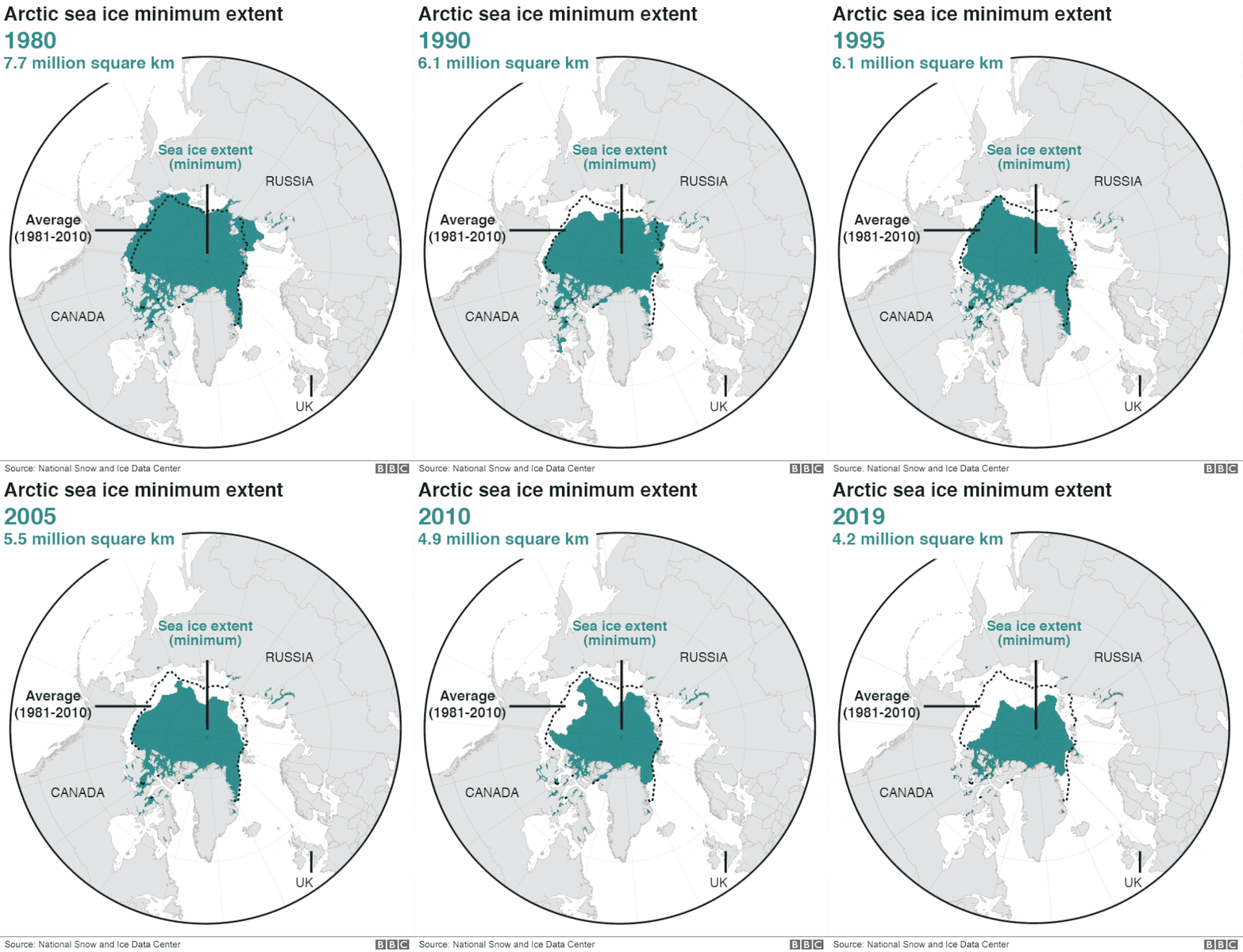
Some entire countries, including Switzerland and Kazakhstan, have already warmed by 2 degrees Celsius, and other hot spots exist around the world, particularly in the fast-warming Arctic. Scientists say extreme warming is helping to fuel wildfires from Australia to California, melt permafrost from Alaska to Siberia and fuel more intense storms and floods. It is also altering marine ecosystems from Canada to South America to the African coast, threatening wildlife and the livelihoods of those who depend on the sea.
Temperature change, 2019 compared with 1880-1899
Source: Berkeley Earth

“The evidence isn’t just in surface temperature,” Benjamin Santer, a researcher at Lawrence Livermore National Laboratory, said of the human-fueled warming trend. “It’s Arctic sea ice. It’s atmospheric water vapor increases. It’s changes in glaciers in Alaska. It’s changes in the Greenland Ice Sheet. It’s all of the above."
The past year alone featured a litany of disasters that scientists say were worsened by climate change — disasters they argue are only more likely in the future unless global emissions begin to fall sharply.
During a tragic and terrifying December in Australia, with bush fires proliferating amid heat and drought, the country shattered its record for the hottest-ever day. On Dec. 18, the national average high temperature was a blistering 107.4 degrees (41.9 Celsius). Europe recorded its hottest year ever, and a sizzling heat wave in July saw temperature records crumble. Paris, for example, registered a sweltering 108.7 degrees July 25, shattering a record set in 1947.
Alaska also had its hottest year on record in 2019. It included an alarming lack of ice cover during the winter in the Bering and Chukchi Seas, and in the summer the temperature at Ted Stevens Anchorage International Airport hit 90 degrees for the first time.
Hurricanes such as Dorian devastated the Bahamas and other areas after rapidly intensifying, which some studies show is linked to warming seas and air  temperatures. A pair of powerful cyclones hit Mozambique in rapid succession, killing hundreds of people, destroying homes and causing devastating floods.
The year also brought signs that the natural systems that serve to store huge quantities of carbon dioxide and methane, another powerful greenhouse gas, may be faltering as temperatures increase.
In December, a federal report indicated that melting permafrost throughout Arctic may already be a net source of atmospheric carbon, a shift that could accelerate global warming. Raging fires in the Amazon now threaten to turn the world’s most productive rainforest into a drier, less carbon-rich savanna.
Reports from the U.N. Intergovernmental Panel on Climate Change (IPCC) last year detailed how climate change is already threatening food and water supplies, increasing the threat of droughts and floods, killing coral reefs, supercharging monster storms, fueling deadly marine heat waves and contributing to record losses of sea ice.
A new study this week also found that 2019 was the warmest on record for the world’s oceans, with all of the top five hottest years coming since 2015. The oceans have long absorbed the vast majority — about 93 percent — of the extra heat humans are adding to the climate through greenhouse gas emissions.
Still, even as millions of protesters have taken to the streets to demand action, world leaders have so far shown little ability to move as fast as scientists say is necessary to cut greenhouse gas emissions.
In a bleak report last fall, the United Nations warned that the world had squandered so much time mustering the willpower to combat climate change that drastic, unprecedented cuts in emissions are now the only way to avoid an ever-intensifying cascade of consequences. The U.N. report said global temperatures are on pace to rise as much as 3.2 degrees Celsius (5.8 degrees Fahrenheit) by the end of the century, and that emissions must begin falling by 7.6 percent each year beginning 2020 to meet the most ambitious goals of the Paris climate accord.
So far, many countries have failed to live up to the promises they made as part of the 2015 global agreement, including some of the world’s largest emitters. More than 100 countries have vowed to submit more ambitious plans to fight climate change the end of 2020, but they collectively represent only about 15 percent of global emissions. The Trump administration plans to exit the international accord later this year.
Zeke Hausfather, a climate researcher for Berkeley Earth, said that despite the clear warming trend, humans still have an opportunity to shape what lies ahead.
“We don’t have any sign yet of global warming slowing down, but we also don’t have any sign of global emissions slowing down,” he said. “What happens in the future depends a lot on our emissions of greenhouse gases as a society. If we continue emitting at current levels, we will continue warming at about the same rate.
“What happens in the future is really up to us."

Links

2019 Was A Record Year For Ocean Temperatures, Data Show

New York Times - 

Credit...Alexis Rosenfeld/Getty Images
Last year was the warmest year on record for the world’s oceans, part of a long-term warming trend, according to a study released Monday.
“If you look at the ocean heat content, 2019 is by far the hottest, 2018 is second, 2017 is third, 2015 is fourth, and then 2016 is fifth,” said Kevin E. Trenberth, a senior scientist at the National Center for Atmospheric Research and an author on the study
The study, published in the journal Advances in Atmospheric Sciences, follows an announcement last week by European scientists that Earth’s surface temperatures in 2019 were the second-hottest on record.
Since the middle of last century, the oceans have absorbed roughly 93 percent of the excess heat caused by greenhouse gases from human activities such as burning coal for electricity. That has shielded the land from some of the worst effects of rising emissions.
“Ocean heat content is, in many ways, our best measure of the effect of climate change on the earth,” said Zeke Hausfather, the director of climate and energy at the Breakthrough Institute in California, who was not involved in this study. Surface temperature measurements are more variable from year to year because they are affected by things like volcanic eruptions and El Niño events, cyclical weather patterns that pump energy and moisture into the atmosphere.
While 2016 was the fifth-hottest year on record for the oceans, it was the hottest year on record in terms of surface temperatures. There was a significant El Niño that year, Dr. Trenberth said, which moved the heat from the ocean into the atmosphere.
“And so, the global mean surface temperature is actually higher in 2016, but the ocean temperature is a little bit lower,” Dr. Trenberth said.
Measuring the ocean’s temperature has long been a challenge for scientists. Thermometers on land around the world have tracked temperatures for more than a century, but the ocean temperature record is spottier.
Argo, a global network of 3,000 drifting floats equipped with sensors that measure temperature and depth, was implemented in 2007 and created a comprehensive temperature data record. Before that, researchers had to rely on an ad hoc system of ocean temperature measurements. Many of these were taken from the sides of ships and excluded Antarctic waters until the late 1950s.
For the new study, Dr. Trenberth and his colleagues overcame some of the gaps in the historical ocean temperature record by exploiting an understanding of how a temperature reading in one area relates to ocean temperatures across the ocean overall gleaned from data from the Argo system. The new method allowed them to take the limited temperature observations from the pre-Argo era and extrapolate them into a broader understanding of past ocean temperature.
“What we find is that we can do a global reconstruction back to 1958,” Dr. Trenberth said. That year was when systematic temperature observations began in Antarctica, creating enough temperature points for the extrapolation to be feasible.
The past 10 years have been the warmest 10 on record for global ocean temperatures. The increase between 2018 and 2019 was the largest single-year increase since the early 2000s, according to Dr. Hausfather.
Increasing ocean temperatures have harmed marine life and contributed to mass coral reef bleaching, the loss of critical ecosystems, and threatened livelihoods like fishing as species have moved in search of cooler waters.
But the impacts of warming oceans don’t remain at sea.
“The heavy rains in Jakarta just recently resulted, in part, from very warm sea temperatures in that region,” said Dr. Trenberth, who also drew connections between warming ocean temperatures to weather over Australia. The recent drought there has helped to propel what many are calling the worst wildfire season in the nation’s history.
“These sea temperatures influence regional weather patterns and sometimes even global weather patterns,” Dr. Trenberth said.

Links

Climate Change Protest At Bank 'Necessary And Proportional': Swiss Judge

Reuters - Emma Farge

Supporters of twelve activists celebrate after the non guilty verdict of the District Court of Lausanne for their tennis sit-in protest inside a branch of Credit Suisse bank in 2018 in Renens, Switzerland January 13, 2020. REUTERS/Emma Farge
LAUSANNE, Switzerland (Reuters) - The imminent danger posed by climate change means activists were not guilty of trespassing when they occupied a Swiss bank and played tennis to demand an end to funding of fossil fuel projects, a judge ruled on Monday.
Wearing whites and wigs, a group of young people staged the tennis sit-in at the Lausanne branch of Credit Suisse in November 2018 to highlight their campaign and urge Swiss maestro Roger Federer to end his sponsorship deal with the bank.
The activists were charged with trespassing and fined 21,600 Swiss francs ($22,200), but in their appeal hearing on Monday Judge Philippe Colelough said they had acted proportionately and waived the fine.
The activists had argued they were in the bank in the face of an “imminent danger” - and the judge agreed.
“Because of the insufficient measures taken to date in Switzerland, whether they be economic or political, the average warming will not diminish nor even stabilize, it will increase,” he said, pointing to the country’s melting glaciers.
“In view of this, the tribunal considers that the imminence of danger is established,” the judge said. “The act for which they were incriminated was a necessary and proportional means to achieve the goal they sought.”
The packed court room in Renens, Lausanne, reacted with whoops of excitement and a standing ovation.
“I didn’t think it was possible,” said one of the accused, Beate Thalmann, in tears of joy. “If Switzerland did this, then maybe we have a chance.”
Pressure is rising on Switzerland’s financial sector to divest from fossil fuels and thousands of students have marched through Swiss cities in recent months demanding action on climate change.
The country, which is warming at twice the global average due to the heat-trapping effect of its mountains, has an target to cut net carbon emissions to zero by 2050 but activists say that the country’s biggest impact is via the financial center.
Credit Suisse, which had filed charges against the activists, said last week, when they launched the appeal after refusing to pay the fine, it respected their cause but deemed their actions unacceptable. The state will pay the fine instead.
The bank said in December said it would stop financing the development of new coal-fired power plants.
Federer, who was also criticized by teen climate activist Greta Thunberg over the sponsorship, said at the weekend: “I appreciate reminders of my responsibility as a private individual, as an athlete and as an entrepreneur, and I’m committed to using this privileged position to dialogue on important issues with my sponsors.”
“I take the impacts and threat of climate change very seriously, particularly as my family and I arrive in Australia amidst devastation from the bushfires,” the 38-year-old, preparing for the Australian Open, said in a statement.
A spokeswoman added on Monday that his dialogue with Credit Suisse on its climate change impact had already begun, without giving details.

Links

Thursday, January 16, 2020

James Murdoch Criticises Father's News Outlets For Climate Crisis Denial

The Guardian - 

Rupert Murdoch’s News Corp and Fox cited for ‘frustrating’ coverage of Australian bushfires
James and Kathryn Murdoch have issued a statement criticising Rupert Murdoch’s firms for ‘ongoing denial’ on the climate crisis. Photograph: Joel Ryan/Invision/AP
Rupert Murdoch’s son has strongly criticised his family’s news outlets for downplaying the impact of the climate crisis, as bushfires continue to burn in Australia.
James Murdoch and his wife, Kathryn, issued a rare joint statement directly criticising his father’s businesses for their “ongoing denial” on the issue, which has been reflected in the family’s newspapers repeatedly casting doubt on the link between the climate emergency and the bushfires.
“Kathryn and James’s views on climate are well-established and their frustration with some of the News Corp and Fox coverage of the topic is also well-known,” a spokesperson for the couple said, confirming a report in the Daily Beast. “They are particularly disappointed with the ongoing denial among the news outlets in Australia given obvious evidence to the contrary.”
James Murdoch was most recently the chief executive of the family’s 21st Century Fox entertainment business, leaving when it merged with Disney. He is making media investments through his own Lupa Systems company but continues to sit on the board of the family’s newspaper business, News Corp, which also owns the Times and the Sun.
The bushfires have focused attention on the likes of Andrew Bolt, a political commentator for News Corp’s Australian newspapers who is known for promoting the views of climate science deniers, and for his own attacks on “alarmists” and his derision of climate change science.
He also has a programme on the Murdoch-owned Sky News Australia, where he has criticised the “constant stream of propaganda” on the public broadcaster ABC about the role of the climate crisis in the bushfires.
“Politicians who should do better are out there feeding the fear and misinformation,” he said in a recent broadcast criticising politicians who said carbon emissions needed to be cut to avoid future fires. “As if that would stop a fire. You’d have to be a child like Greta Thunberg to believe that fairytale.”
US viewers have also heard commentary from Fox News presenters such as Laura Ingraham, who has said that “celebrities in the media have been pressing the narrative that the wildfires in Australia are caused by climate change”, before introducing guests who cast doubt on this interpretation.
James Murdoch’s criticism sheds light on the family’s internal rifts, amid speculation over his 88-year-old father’s succession plans. James’s older brother Lachlan is still actively involved in the family businesses as the US-based chairman and chief executive of the slimmed-down Fox Corporation, which owns Fox News.
Last year, Rupert Murdoch told shareholders “there are no climate change deniers” around his company and said his business was early to commit to “science-based targets to limit climate change” and was working to reduce its climate emissions.
However, he has been publicly critical about the “alarmist” approach to the issue. In 2015, he used his Twitter account to describe himself as a “climate change sceptic not a denier”.
Lachlan Murdoch, Rupert Murdoch and News Corp have all separately donated millions of dollars to bushfire recovery efforts in recent days, although the Daily Beast claimed the donations were made after it requested comment about James Murdoch’s statement.
James Murdoch has a long history of advocacy on environmental issues, inviting the former US vice-president Al Gore to present a version of his An Inconvenient Truth slideshow to Fox executives in 2006. At the time he was the heir apparent to the media empire and had been trusted with running BSkyB in London, where he would push environmental issues to the fore, working on ways to reduce the power used by Sky’s set-top boxes and insisting on using hybrid taxis long before such things were standard corporate behaviour.
Since stepping back from day-to-day roles with the family business at the end of 2018, the multibillionaire has made clear he feels uncomfortable about much of Fox News’ output and was unsuccessful in an attempt to cash-in his stock completely and make a clean break with the company – an effort that failed after Lachlan declined to buy him out.
Kathryn Murdoch has already set out the couple’s vision, telling the New York Times last year that she was increasingly focused on the issue of global heating: “There hasn’t been a Republican answer on climate change. There’s just been denial and walking away from the problem. There needs to be one.”
She said she was particularly moved to act after seeing Al Gore’s speech at the Fox event in 2006: “I decided to switch everything I was doing. I wanted to be able to look my children in the eye and say ‘I did everything I could.’”

Links

Lethal Heating is a citizens' initiative