Coal mining could continue beyond 2050 even if
Australia adopts a net zero emissions target, Opposition Leader Anthony
Albanese says.
Key points
Anthony Albanese says all energy sources will need to be part of the process to reach the net zero-emissions target
Mr Albanese said Labor did not believe a carbon price would be necessary to achieve this
Mr Albanese is opposed to the Government's investment in new brown coal but agreed there was still likely to be coal mining in Australia post-2050
Labor's shadow cabinet has agreed to move with 73 other
nations, and every state and territory, to embrace a carbon-neutral
target by the middle of the century.
It is the same overarching target Labor took to the last election.
Mr
Albanese is opposed to government investment in new thermal coal mining
— the type of coal that is used in coal-fired power stations.
But under questioning by Insiders host David Speers, he agreed there was still likely to be coal mining in Australia post-2050.
"I suspect we will," Mr Albanese said.
"[The target is] net, that's the point."
He argued there was no replacement for metallurgical coal, which is used to make steel and is a major export out of Queensland.
The Labor leader also agreed thermal coal mining for export could continue under the commitment.
"Yes, we could," he said.
"It will be determined by global action."
The Australian coal sector employs more than 50,000 people.
Mr Albanese said exported coal was not counted in Australia's greenhouse gas budget.
"You don't measure the emissions where the original product comes from. I mean Japan isn't responsible for the emissions of every vehicle that's built in Japan," he said.
Albanese: Net zero will be 'economy wide'
The Opposition Leader confirmed Labor's 2050 net-zero emissions policy would apply to all industries.
He told Insiders transport and agriculture would not have any special considerations.
That's different to the position taken by his predecessor, Bill Shorten, before the last election.
"Emissions are about energy, they're about transport," Mr Albanese said.He said the net-zero target was not just about driving down emissions, but also compensating for them.
"It's also about practices that can make a difference in going negative emissions, if you like," he said.
"You can do that through agriculture, through forestry, through a range of measures."
Mr
Albanese was pressed repeatedly to confirm whether Labor would be open
to a price on carbon as a way to incentivise industries to reduce
emissions.
"We don't believe that is necessary," Mr Albanese replied.
"We didn't go to the last election with that commitment."
Labor
is yet to confirm whether it will ditch the shorter-term, 2030
climate-change target the party took to last year's election.
Privately, many opposition MPs expect it to be changed and pushed back.
Mr
Albanese said Labor was committed to "interim" measures ahead of 2050,
but he said the timeframe and details of those measures were yet to be
settled.
An
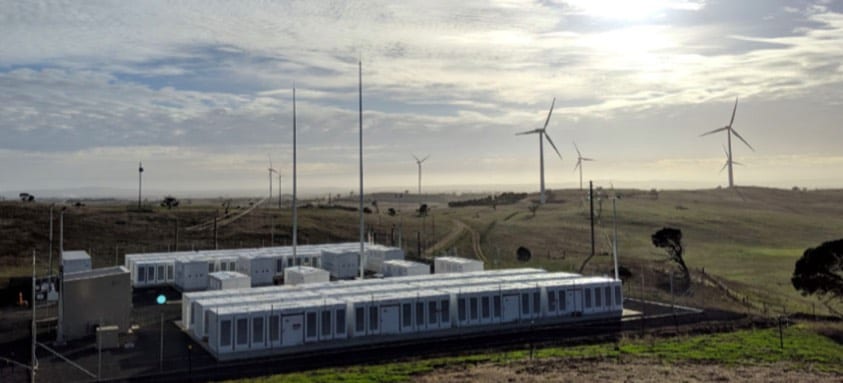
updated study on current and future generation costs by the CSIRO and
the Australian Energy Market Operator confirms that wind, solar and
storage technologies are by far the cheapest form of low carbon options
for Australia, and are likely to dominate the global energy mix in
coming decades.
The first report, GenCost 2018, identified that wind and solar were by far the cheapest forms of new generation technologies, clearly
cheaper than coal, and even when combined with storage, remained
easily the cheapest form low carbon electricity options.
A draft
of the updated study, GenCost 2019-20, has been quietly posted on the
AEMO website and confirms that wind and solar and storage remain the
cheapest technologies, now and into the future, and much cheaper than
the technologies promoted by the Australian government – gas, carbon
capture, and nuclear.
The study is jointly funded by the CSIRO and
AEMO, although CSIRO took carriage of the report, along with advisors
Aurecon, who succeeded GHD which did the first version.
Its
capital cost estimates – which assume continue cost reductions for
solar, wind and dramatic falls for batteries, remain little changed from
the 2018 version, although wind cost reductions are lower than expected
last year.
And
despite ferocious criticism by the nuclear lobby, its estimates for
nuclear remain unchanged, largely because it says there have been no
technology advances since the last report. It does recognise the
potential for small nuclear reactors in certain scenarios, but these are
heavily qualified: they are at least a decade away, and would still
deliver a levellised cost of energy at least twice that of wind and
solar and storage.
“The global generation mix is expected to be
dominated by wind and solar photovoltaic (PV) by 2050 in all three
scenarios explored in this report: Central, High CRE and Diverse
technology,” the report says.
“The implementation of scenarios
that include a broader set of global technology drivers has resulted in a
wider range of potential capital cost reduction paths for wind and
solar PV. The new scenarios also indicate that in some scenarios carbon
capture and storage and nuclear small modular reactors could play a
larger role than previously projected.”
The other changes in
capital costs have been upward revisions for gas generators, mainly
because investors are looking at smaller plants and so the costs per
unit are higher, and for solar thermal technology – which is no surprise
given the hiccups in that technology’s development and the cancellation
of a proposed large project in South Australia.
For
generation costs, expressed as the levellised cost of energy (LCOE),
it notes that wind and solar are clearly the cheapest form of bulk
energy, at half the cost of fossil fuel alternatives, and one fifth the
cost of nuclear. Even with storage – shorter duration batteries or
longer duration pumped hydro – wind and solar match fossil fuels, and
are one third the cost of nuclear.
In coming years, the costs of
wind and particularly solar are expected to continue to fall. And
storage too, so their cost advantage of renewables and storage is
expected to increase.
So,
by 2030, nuclear is still well out of the money, and wind and solar
have increased their cost advantage over fossil fuels, particularly
those with a carbon price attached.
In virtually every scenario,
the CSIRO study envisages a world dominated by wind and solar by 2050.
Nuclear may play a slightly increased role in the “diverse technology”
scenario, but this is only with artificial limits placed on the
deployment of wind and solar.
The
nuclear question is interesting, given the increasing calls from
sections of the government to pursue the technology. CSIRO says there
have been no new developments in the last year to change its estimated
capital costs for coal or nuclear. And it is clear that many of these
plants would be too big, and not flexible enough, in a modern grid with
high renewables and distributed generation.
On small modular
reactors, it says there is no hard evidence on costs because none have
been built, and the main source of estimates has been from technology
vendors, and “past experience has indicated that vendor-based estimates
are often initially too low,” it writes.
“Constructing
first-of-a-kind plant includes additional unforeseen costs associated
with lack of experience in completing such projects on budget. SMR will
not only be subject to first-of-a-kind costs in Australia but also the
general engineering principle that building plant smaller leads to
higher costs.”
But it only sees SMRs entering the equation in more
than a decade’s time if governments get serious about the 2°C target,
if they impose a limit on the renewable energy share, and if there is a
significant carbon price.
Given that even the Coalition government
expects the share of renewables to reach 50 per cent by 2030, and AEMO
expects that to be higher by 2030 and heading to at least 74 per cent to
90 per cent by 2040, then that does not appear to leave much room for
either carbon capture and storage or nuclear in this country.
And,
of course, there is no enthusiasm for a carbon price from the main
nuclear lobbyists, primarily the Minerals Council of Australia and the
LNP politicians who are also pushing coal.
The
CSIRO study says that in some scenarios the cost of carbon capture and
storage and nuclear could be lower than previous estimations,
particularly if small modular reactors achieve a reduction in nuclear
capital costs after 2030.
Even then, as this graph shows, the cost
of nuclear in 2040 will still be considerably more expensive than the
combination of wind and solar and storage, and likely to be more than
three times more expensive across different scenarios. A similar cost
disparity remains for 2050. And investors, it notes, will go for value
for money.
▶ Nation to prepare long-term plans ahead of key Glasgow meeting ▶ Coal exports likely to continue, opposition Labor Party says
Emissions billow from cooling towers in Australia. Photographer: Carla Gottgens/Bloomberg
Australia’s government will work to set new long-term plans on
reducing greenhouse gas emissions ahead of a key global summit this
year, though signaled it won’t pursue policies that pose risks to jobs
or growth.
Prime Minister Scott Morrison, who has faced pressure over his climate and energy strategy in the wake of Australia’s deadly wildfires,
has criticized opponents for pledging to target net zero emissions by
2050 without detailing how they’ll safeguard economic expansion.
“If we make the wrong decisions, not only would we be harming the
Australian economy, harming Australian workers, we would also be harming
the global environment,” Finance Minister Mathias Cormann said in an
interview on Sky News. Australia’s plans will need to account for the production of
materials including liquefied natural gas, which is exported to markets
like China or Japan and typically displaces more polluting energy
sources, Cormann said. “We know that that helps reduce global emissions
by more,” he said.Following the fires, Morrison, who won a national election in May and
won’t face a new poll until late 2022, has appeared to signal he’ll
resist any quick shift to more extensive cuts to carbon emissions. His
Liberal-National coalition government also remains cautious over the
impact on a coal sector that employs about 50,000 workers, according to the Minerals Council of Australia, an industry group.
Morrison’s government will finalize long-term emissions
reduction proposals ahead of the United Nations climate summit in
Glasgow in November, Cormann said.
Australia may continue to be an
exporter of thermal coal in 2050, according to Anthony Albanese, leader
of the main opposition Labour Party, that’s targeting net zero
emissions by that date.
“That will be determined by the market and by international agreements,”
Albanese told ABC Television in an interview. “You don’t measure the
emissions where the original product comes from -- Japan isn’t
responsible for the emissions of every vehicle that’s built in Japan.”
Emissions from human activity like the burning of fossil fuels may have been sharply underestimated. Credit...Gabriella Demczuk for The New York Times
Oil
and gas production may be responsible for a far larger share of the
soaring levels of methane, a powerful greenhouse gas, in the earth’s
atmosphere than previously thought, new research has found.
The findings, published in the journal Nature,
add urgency to efforts to rein in methane emissions from the fossil
fuel industry, which routinely leaks or intentionally releases the gas
into air.
“We’ve identified a gigantic
discrepancy that shows the industry needs to, at the very least,
improve their monitoring,” said Benjamin Hmiel, a researcher at the
University of Rochester and the study’s lead author. “If these emissions
are truly coming from oil, gas extraction, production use, the industry
isn’t even reporting or seeing that right now.”
Atmospheric concentrations of methane have more than doubled from preindustrial times. A New York Times investigation into “super emitter”
sites last year revealed vast quantities of methane being released from
oil wells and other energy facilities instead of being captured.
The
extent to which fossil fuel emissions, as opposed to natural sources,
are responsible for the rising methane levels has long been a matter of
scientific debate. Methane seeps from the ocean bed, for instance, and
also spews from land formations called mud volcanoes.
To
shed light on the mystery, researchers at Rochester’s Department of
Earth and Environmental Studies examined ice cores from Greenland, as
well as data from Antarctica stretching back to about 1750, before the
industrial revolution.
They
found that methane emissions from natural phenomena were far smaller
than estimates used to calculate global emissions. That means
fossil-fuel emissions from human activity — namely the production and
burning of fossil fuels — were underestimated by 25 to 40 percent, the
researchers said.
The scientists were helped in their analysis by
different isotopes found in methane emissions from natural sources,
compared to emissions from the production of fossil fuels. Isotopes are
versions of an element that have very slight differences, allowing the
researchers to differentiate between them.
They
used a melting chamber with a set of high-power burners to melt more
than 2,000 pounds of ice cores to extract and examine air samples from
the past. “It looked like a little rocket ship,” said Vasilii Petrenko, a
co-author of the Nature study and an associate professor at Rochester.
“Think of a rocket engine, but except the flames pointing at the
device.”
Robert Howarth, an earth
system scientist at Cornell University who was not involved with the
research, called it “a very important study.” He said it was consistent
with recent research, like a study he published last year
that estimated that North American gas production was responsible for
about a third of the global increase in methane emissions over the past
decade.
“Emissions from fossil sources are correspondingly larger
than many have been estimating,” Dr. Howarth said. “I find it very
convincing.”
A device used to extract ice cores, which were melted and studied by the researchers. Credit...Benjamin Hmiel
Daniel
J. Jacob, professor of atmospheric chemistry and environmental
engineering at Harvard University, also described the findings as
significant. Current estimates of methane from geological sources “were
widely considered too high by atmospheric modelers such as myself,” he
wrote in an email.
But he took issue
with the suggestion that emissions from fossil fuel production were
larger than previously estimated. Fossil fuel emissions are “based on
fuel production rates, number of facilities, and direct measurements if
available. The natural geological source is irrelevant for these
estimates,” he said.
The disagreement reflects an overall
discrepancy between what are called “bottom-up” measurements of
emissions, those from individual oil and gas sites, as opposed to
“top-down” calculations like the ones carried out by the Rochester
researchers. “Bottom-up” measurements can be unreliable because of a
lack of data from individual oil and gas sites. With “top-down”
measurements, on the other hand, the exact source of emissions can be
hard to pin down.
The findings come as oil
and gas companies face increased pressure to rein in greenhouse gas
emissions from their operations to address rising concerns about climate
change.
Methane, the main component
of natural gas, is of particular concern, because it can warm the planet
more than 80 times as much as the same amount of carbon dioxide over a
20-year period. On top of fossil fuel production, livestock, landfills
and other sources linked to human activity also emit methane.
Last
week, the British oil giant BP set an ambitious climate change goal,
saying it aimed to eliminate or offset by 2050 all planet-warming
emissions from its oil and gas production, as well as emissions caused
by the burning of the oil and gas it pumps from the ground. The company provided few details on how it would achieve that feat, however.
Adding to climate concerns, the Trump administration is moving forward with a plan
that effectively eliminates requirements that oil companies install
technology to detect and fix methane leaks from oil and gas facilities.
By the Environmental Protection Agency’s own calculations, the rollback
would increase methane emissions by 370,000 tons through 2025, enough to
power more than a million homes for a year.
Dr. Petrenko, one of the
Rochester study’s authors, said that the huge undertaking of studying
giant ice cores meant the study relied on a small sampling of data.
“These measurements are incredibly difficult. So getting more data to
help confirm our results would be very valuable,” he said. “That means
there’s quite a bit more research to be done.”
CNN - Allen Kim What we'll have to endure as the climate crisis gets worse ... 01:18
Take a moment to cherish your plants and appreciate the animals you see around you.
In 50 years, a third of them may no longer exist.
Using data from surveys
that studied 538 animals, insects and plants from 581 sites across the
globe, researchers John J. Wiens and Cristian Román-Palacios from the
University of Arizona found that approximately one in three plant,
insect and animal species could face extinction by 2070. However, things
could be even worse if emissions continue to rise as rapidly as they
have in recent decades.
In a worst-case scenario, that number could rise to over 55%.
Of
the 538 species studied, 44% of them have already experienced an
extinction in a particular local area. The researchers found that local
extinction sites had larger and faster changes in the hottest yearly
temperatures than those that did not.
While many species were able to tolerate a moderate increase
in maximum temperatures, 50% of the species had local extinctions if
maximum temperatures increased by more than 0.5 degrees Celsius. That
number rose to 95% if temperatures increased by more than 2.9 degrees
Celsius.
The researchers found
that the key to predicting whether a population will go extinct is the
maximum annual temperature, as opposed to the average yearly
temperature. This is notable because average temperatures are typically
used as markers in measuring climate change.
With January going in the record books as the warmest January in 141 years
and statistical analysis done by NOAA scientists predicting 2020 to be
one of the five warmest years on record, the researchers believe there
will be more local extinctions across the globe. And with summer heat waves potentially becoming more dangerous in the coming decades, the potential for loss of life will likely only grow from here.
However, that number could drop if we make a collective effort to address climate change, they say.
If we stick with the Paris climate agreement
The Paris Agreement was signed in 2015 by ministers from 195 countries from around the globe.
It
committed these countries to keep global warming below 2 degrees
Celsius above pre-industrial levels and below 1.5 degrees, if possible.
The researchers found that achieving the Paris goals could be the difference between extinction and survival for many species.
"Based
on our sample of 538 species, we projected a loss of 30% of the species
under a more extreme warming scenario, but only about 16% if we stick
to the Paris Agreement," Wiens told CNN. "So, think in 1 in 6 species,
not 1 in 3."
The researchers
believe that some species loss is inevitable at this point, no matter
what we do to curb greenhouse gas emissions. However, it is still
possible to protect biodiversity and prevent massive species loss.
"I
think that we should focus on preserving forests and other habitats in
tropical areas, and this is part of the Paris Agreement," Wiens said.
"Preserving forests protects biodiversity and can help reduce or even
reverse global warming. It's a win-win."
If we don't stick with the Paris climate agreement
The Paris Agreement is an international pact aimed at curbing global emissions of heat-trapping gases.
Unfortunately, studies have shown that so far, many countries are failing to meet the emissions cuts they set to limit climate change.
Making matters worse, President Trump formally notified the United Nations that the U.S. would be pulling out
of the Paris climate agreement in November. While it will take a full
year for the U.S. to withdraw, losing the world's second-largest
contributor of greenhouse gas emissions makes it more difficult to reach
the agreement's goals.
"Some
researchers have estimated that two-thirds of all species of plants and
animals could be lost due to tropical deforestation alone," Wiens said.
"If you combine that with climate change (which can impact species in
protected forests and other reserves), then it really is terrible. Even
from our data alone, there are extreme warming scenarios where 55% of
the species would be lost from intact habitats. And note that
deforestation also increases global warming. It is a double whammy
against biodiversity."
Species that are in tropical regions are two to four times likelier to face extinction than those in temperate regions.
"This is a big problem, because the majority of plant and animal species occur in the tropics," Román-Palacios said.
Many
species have migrated to cooler habitats to escape the warming
temperatures, but the researchers found that most will not be able to
disperse quickly enough to avoid extinction.
"In a way, it's a 'choose your own adventure,'" Wiens said. "If we stick to the Paris Agreement to combat climate change, we may lose fewer than two out of every 10 plant and animal species on Earth by 2070. But if humans cause larger temperature increases, we could lose more than a third or even half of all animal and plant species, based on our results."
Leaked report for world’s major fossil fuel financier says Earth is on unsustainable trajectory
The JP Morgan paper said ‘catastrophic outcomes’ could not be ruled out. Photograph: Dimitar Dilkoff/AFP via Getty Images
The world’s largest financier of fossil fuels has warned clients that
the climate crisis threatens the survival of humanity and that the
planet is on an unsustainable trajectory, according to a leaked
document.
The JP Morgan
report on the economic risks of human-caused global heating said
climate policy had to change or else the world faced irreversible
consequences.
The study implicitly condemns the US bank’s own investment strategy
and highlights growing concerns among major Wall Street institutions
about the financial and reputational risks of continued funding of
carbon-intensive industries, such as oil and gas.
JP Morgan has provided $75bn (£61bn)
in financial services to the companies most aggressively expanding in
sectors such as fracking and Arctic oil and gas exploration since the
Paris agreement, according to analysis compiled for the Guardian last
year.
Its
report was obtained by Rupert Read, an Extinction Rebellion
spokesperson and philosophy academic at the University of East Anglia,
and has been seen by the Guardian.
The research by JP Morgan economists David Mackie and Jessica Murray
says the climate crisis will impact the world economy, human health,
water stress, migration and the survival of other species on Earth.
“We cannot rule out catastrophic outcomes where human life as we know
it is threatened,” notes the paper, which is dated 14 January.
Drawing on extensive academic literature and forecasts by the
International Monetary Fund and the UN Intergovernmental Panel on
Climate Change (IPCC), the paper notes that global heating is on course
to hit 3.5C above pre-industrial levels by the end of the century. It
says most estimates of the likely economic and health costs are far too
small because they fail to account for the loss of wealth, the discount
rate and the possibility of increased natural disasters.
The authors say policymakers need to change direction because
a business-as-usual climate policy “would likely push the earth to a
place that we haven’t seen for many millions of years”, with outcomes
that might be impossible to reverse.
“Although precise predictions are not possible, it is clear that the
Earth is on an unsustainable trajectory. Something will have to change
at some point if the human race is going to survive.”
The investment bank says climate change “reflects a global market
failure in the sense that producers and consumers of CO2 emissions do
not pay for the climate damage that results.” To reverse this, it
highlights the need for a global carbon tax but cautions that it is “not
going to happen anytime soon” because of concerns about jobs and
competitiveness.
The authors say it is “likely the [climate] situation will continue
to deteriorate, possibly more so than in any of the IPCC’s scenarios”.
Without naming any organisation, the authors say changes are
occurring at the micro level, involving shifts in behaviour by
individuals, companies and investors, but this is unlikely to be enough
without the involvement of the fiscal and financial authorities.
Last year, analysis compiled for the Guardian by Rainforest Action
Network, a US-based environmental organisation, found JP Morgan was one
of 33 powerful financial institutions to have provided an estimated
total of $1.9tn (£1.47tn) to the fossil fuel sector between 2016 and
2018.
A JP Morgan spokesperson told the BBC the research team was “wholly
independent from the company as a whole, and not a commentary on it”,
but declined to comment further. The metadata on the pdf of the report
obtained by Read said the document was created on 13 January and that
the author of the file was Gabriel de Kock, executive director of JP Morgan. The Guardian has approached the investment bank for comment.
Pressure from student strikers, activist shareholders
and divestment campaigners has prompted several major institutions to
claim they will make the climate more of a priority. The business model
of fossil fuel companies is also weakening as wind and solar become more
competitive. Earlier this month, the influential merchant bank Goldman
Sachs downgraded ExxonMobil from a “neutral” to a “sell” position. In
January, BlackRock – the world’s biggest asset manager – said it would lower its exposure to fossil fuels ahead of a “significant reallocation of capital”.
Environmental groups remain wary because huge sums are invested in
petrochemical firms, but some veteran financial analysts say the tide is
changing. The CNBC money pundit Jim Cramer shocked many in his field
when he declared: “I’m done with fossil fuels. They’re done. They’re
just done.” Describing how a new generation of pension fund managers was
withdrawing support, he claimed oil and gas firms were in the death
knell phase. “The world has turned on them. It’s actually happening kind
of quickly. You’re seeing divestiture by a lot of different funds. It’s
going to be a parade that says, ‘Look, these are tobacco. And we’re not
going to own them,’” he said. “We’re in a new world.”
The potential to install a regime of benign surveillance over the natural world is immense, ranging from earth-observation satellites to smartphones listening out for chain saws in the forest.
The interrelated issues of biodiversity loss and climate change are
rising fast up the popular and political agenda. One reason is that the
world increasingly appears to be -- on fire.
In August 2019, wildfires -- many started deliberately -- consumed large areas of Amazonian rainforest,
reducing the Earth's 'lung capacity', rendering indigenous people and
wildlife homeless, and releasing copious amounts of greenhouse gases. In
September, on the other side of the world, forests in Indonesian Borneo and Sumatra
burned. Again, human agency is widely suspected, as palm oil planters
clear the jungle to make way for their crop. Massive bushfires are
currently raging in eastern Australia, which experienced its hottest recorded summer in 2018/19.
Wildfires
are also occurring in the far North with increasing frequency and
intensity: in June 2019 (the hottest on record in the region), fires in the Arctic emitted 50 megatons of carbon dioxide -- equivalent to the total annual CO2 output from Sweden. Evidence that Arctic permafrost is melting faster than previously expected only exacerbates the carbon release problem.
Why is the world apparently fiddling while Rome burns?
The
tendency for national governments to have a short-term focus,
addressing immediate problems and deferring longer-term issues for
successive administrations or generations, is not helpful when
confronting planet-scale problems like climate change and biodiversity
loss. That's because incremental 'business-as-usual' activities can run
into irreversible tipping points that flip systems unexpectedly into new and undesirable states (the Amazon being an increasingly urgent example).
Although supranational bodies such as the UN and the EU try to take a wider view of such issues, recent years have seen a rise in nationalism around the world, leading to suspicion and even rejection of such bodies, often accompanied by the denigration of scientific evidence and expertise.
The Internet of Things,
or IoT, is an area of science and technology that can help in the fight
against biodiversity loss and climate change. In this article we'll
outline the current state of the IoT and examine some examples of its
use in vulnerable ecosystems.
The Internet of Things
The
Internet of Things comprises sensor-equipped devices ('things') that
can capture data, perform varying amounts of local processing, and
connect to the internet to pass data on for further processing and/or
storage. The latest estimate from analyst firm IoT Analytics puts the number of connected IoT devices at around 9.5 billion worldwide at the end of 2019.
There is a wide variety of internet connectivity for IoT devices: wireless personal area networks (e.g. Bluetooth), wireless local area networks (e.g. wi-fi), low-power wide-area wireless networks (LPWAN, e.g. Sigfox), wired networks, or cellular (including, increasingly, 5G).
Use cases cover 'smart' homes and offices, factories, cities,
transportation systems, and many points in between -- including
monitoring what remains of the natural world, where satellite connectivity will become increasingly important.
By
2025, IoT Analytics forecasts that there will be 28 billion connected
IoT devices worldwide -- that's about 3.4 devices for every person on
the planet (UN world population estimate
for 2025: 8.18 billion). Other forecasts are available, of course, but
the consensus is clear enough: IoT devices will proliferate, generating
vast amounts of data, which will become actionable if backed up by a
robust architecture comprising appropriate connectivity, gateways,
analytics (including machine learning and AI), and storage/archiving.
A 2019 report from IoT Analytics includes an 'on the radar' guide
to emerging IoT technologies, using a five-level classification:
'Fairly mature'; 'Nearing maturity'; 'Coming up'; 'Years out'; and 'Far
on the horizon'. Technologies nearing maturity include IoT platforms,
edge analytics, IoT-based streaming analytics, supervised and
unsupervised machine learning, containers, low-power wide-area networks,
and pub/sub messaging. Many of these technologies are already in use in
biodiversity and climate change-related projects.
Among its top ten IoT developments in 2019, IoT Analytics highlighted nanosatellites, such as Eutelsat's ELO constellation,
that are dedicated to IoT connectivity, and also the increasing role of
IoT technology in helping organisations achieve environmental goals, as
summarised in a September 2019 report from IoT specialist Libelium.
Technology versus biodiversity loss and climate change Non-Government Organisations (NGOs) and charities Instant Detect 2.0
The Zoological Society of London (ZSL), founded in 1826 by Sir Stamford Raffles, famously runs London Zoo, but is also an important international conservation charity. One of ZSL's current technology projects is Instant Detect,
a monitoring system that combines sensors, cameras, low-power radio
networks, and satellite technology to capture and transmit real-time
information on wildlife and human activity anywhere in the world. The
aim is to remotely monitor wildlife behaviour and habitat changes, and
give timely warning of illegal poaching activity.
The
first incarnation of Instant Detect, which was deployed in 2014, used
cameras and metal-detecting sensors to identify poachers in protected
areas, sending images or alerts over an FSK radio link on ISM frequency bands to a base station. From here, data was transmitted via the Iridium satellite network to a command centre, alerting the authorities in near-real-time to detected threats.
With the concept proven, ZSL and Cambridge Design Partnership set out to create the more ambitious Instant Detect 2.0 (ID
2.0). Key elements of the ID 2.0 specification were: affordability;
maximising the number of sensor devices that can connect to a base
station; reliable transmission between devices and the base station;
good system diagnostics; usability; low power consumption; a modified
camera; and cloud-based data and alert management.
Instant Detect 2.0 components (l-r): base station, sensor endpoint, camera. Image: Sam Seccombe / ZSL
The
Instant Detect 2.0 system comprises a base station that talks to the
Iridium satellite constellation, plus cameras and sensor endpoints that
relay images and alerts to the base station. To improve on the original
FSK-based system's transmission range and power consumption, ID 2.0 uses
LoRa, a low-power wide-area network, for wireless communication between cameras and endpoints and the base station.
According to Sam Seccombe, ZSL's Technical Project Manager,
"When we field tested LoRa radios in 2018 we managed radio transmissions
of 10km when sending small packets of data through bushy scrub and up
to 1km range when sending through dense rainforest." A custom LoRa
protocol was developed to handle images, which are not normal fare for
this traditional low-data-rate IoT-focused standard.
The
base station can receive data from up to eight devices concurrently,
and can queue transmissions if this number is exceeded. Testing in June
2019 achieved successful image transmissions over more than a kilometre
and improvements to the custom LoRa protocol are continuing, Seccombe
says.
Left: An Instant Detect 2.0 base station ready for burial. Right: A camouflaged ID 2.0 camera. The camera can be triggered by a metal-detecting sensor rather than infrared, so that only images of humans carrying metal (poachers) are transmitted. Images: Zuzanna Reymer, Sam Seccombe / ZSL
As well as improved range, LoRa also offers reliable transmission thanks to its ALOHA-type
protocol, in which communication is initiated by the end-device and
uplinks can be sent at any time. These are followed by two short
downlink windows that provide the opportunity for bi-directional
communication with the base station — a resend request for an
interrupted transmission, for example. The ID 2.0 devices are ruggedised
and send daily reports on battery and memory status, signal strength,
and image/sensor event frequency. Although cost considerations rule out
GPS tracking, if a device is moved — due to human or animal activity,
for example — a tamper alarm will trigger an alert.
System
management is handled via a browser-based OAM (Observation,
Administration, and Maintenance) tool, accessed over a wi-fi link. ID
2.0 devices, which are designed to sleep whenever possible, are powered
by internal Li-ion batteries and optionally by external (possibly
solar-powered) batteries. ZSL is currently working to reduce the power
draw in sleep mode to prolong battery life, Seccombe says. The ID 2.0
camera has a 5MP sensor and optics that deliver wide-angle or zoomed
fields of view, and runs a Linux OS hosting image-recognition software
that determines whether captured images should be transmitted or not. A
cloud-based interface is also planned for Instant Detect 2.0, which will
support image and alert handling, and remote management of devices in
the field.
Field trials with Instant Detect 2.0 are currently underway and production is planned for early 2020.
"One of the big issues we are currently facing is passing the tests needed to CE mark the system so that it can be provided legally to users in the European Economic Area
[EEA] and many other countries that use the EEA's CE marking
standards," Seccombe told ZDNet. "I know this is not as fun to report on
as elephants ripping sensors out of the ground by their antennas or
poachers discovering cameras and chopping them off trees with machetes,
but I don't think this issue is well known to potential developers of
wildlife conservation technology solutions -- and if it's not budgeted
for or thought about early enough it might act as a critical stumbling
block for a lot of people out there," he added.
ZSL is currently redesigning some parts of Instant Detect 2.0 to eliminate unwanted electronic noise and comply with stringent EMC and RED requirements for CE certification.
TrailGuard AI
Another camera-based anti-poaching system with satellite connectivity and image processing at the edge is TrailGuard AI, developed by Washington DC-based non-profit RESOLVE in partnership with Intel and Inmarsat.
The TrailGuard AI camera has on-board computer vision intelligence courtesy of Intel's Movidius Myriad 2 VPU chip (inset). Images: Intel
As
with ZSL's Instant Detect, the TrailGuard AI project needed to find a
way of reducing false-positive threat alerts from its first-generation
cameras, which were funded by the Leonardo Di Caprio Foundation. It did this by incorporating Intel's Movidius Myriad 2 VPU
(Vision Processing Unit) into the camera. This low-power (1W) SoC
(System on Chip) adds an additional layer of image signal and vision
processing intelligence, allowing it to determine when a person or a
vehicle is present, rather than something harmless such as a moving
cloud or an animal.
The Myriad 2-powered TrailGuard
AI camera is designed to perform in the field for up to 18 months on
battery power — a big improvement over the much larger original version,
which had a separate compute unit requiring time-consuming and
potentially dangerous field maintenance every 4-6 weeks.
The compact TrailGuard AI camera (ringed, left) is easily concealed, and therefore much less likely to be vandalised or stolen than a traditional wildlife camera trap (right). Images: RESOLVE
Near
real-time alerting is achieved by transmitting images over cellular,
LoRa, or satellite connections, depending on what's available in the
particular protected area. Satellite connectivity for the TrailGuard AI
cameras is provided by Inmarsat, using its L-band network and BGAN (Broadband Global Area Network) satellite modems.
The military-grade Explorer 540 BGAN satellite modem (left) is also easily concealed -- under a fake rock, for example (right). Also shown (arrowed, left) is a small WildTech gateway that receives images from multiple TrailGuard AI cameras via LoRa and transmits them to the modem. Images: RESOLVE
"Wildlife
poaching in Africa is at epidemic levels, but despite the best efforts
of dedicated rangers, the large park boundaries and rough terrain mean
that they often only find out about poaching when it's too late," said Dr. Eric Dinerstein, Director of WildTech and the Biodiversity and Wildlife Solutions Program at RESOLVE, in a statement.
With
TrailGuard AI in place, ranger teams should be able to respond rapidly,
intercepting poachers before they strike. Dr Dinerstein told ZDNet:
"The biggest advantage of TrailGuard is with its early warning system:
it can stop poachers before they lay down snares or shoot wildlife."
The original non-AI version of TrailGuard detected 50
intruders that led to the arrests of 30 poachers representing 20
different poaching gangs, Dinerstein said. "We seized over 1000
kilograms of bushmeat, motorcycles, snares, weapons, and so on in the
space of a few months."
Now it's full steam ahead for
the Intel-powered AI version. The first 300 hand-built units have been
shipped to parks in Africa, Dinerstein told ZDNet, while the next 700
TrailGuards -- all of which are spoken for -- will be built in China by
an Intel ODM.
Rainforest Connection
Rainforest Connection repurposes Android smartphones, adding a solar array and a microphone, and installs them in the forest. Audio from these 'Guardians' is streamed to the cloud, where it's analysed for suspicious activity, raising real-time alerts. Image: Getty Images/iStockphoto
Rainforest Connection (RFCx)
is the brainchild of Topher White, a San Francisco-based engineer and
developer, who in 2011 was inspired to join the fight against rainforest
destruction and climate change after visiting a gibbon reserve
in Borneo and witnessing the illegal felling of an old-growth teak
tree. The downed forest giant was no more than five minutes' walk from a
ranger station, and yet the chain saw went unheard.
As an
experienced 'maker', White set about creating an early-warning system
based on repurposed Android smartphones that could be installed in the
rainforest canopy, run on solar power, listen for suspicious activity
(chain saws, vehicle engines) and alert the authorities to a positive
match in near real time. Perhaps surprisingly, many rainforest areas --
particularly at the vulnerable edge -- have sufficient mobile phone
coverage to make this feasible.
Still, White faced
plenty of obstacles: the phones had to be stripped down to a bare
minimum of components, an extra microphone attached, and the
manufacturer-installed Android OS replaced by (now discontinued) CyanogenMod
to ensure that the listening software -- which was created from scratch
-- could run. Crucially, a system of solar panels had to be designed to
cope with transient spots of direct sunlight in the forest canopy
called 'sunflecks'. The result was a petal-shaped configuration of seven
panels, spaced to the average diameter of a sunfleck, that could
reliably deliver the voltage (5V) required to charge a mobile phone.
Subsequent developments have moved the analysis of the
audio captured by these canopy-mounted 'Guardian' devices to the cloud,
where Google's TensorFlow
machine-learning framework is used to identify sounds of illegal
activity and adjust audio inputs to minimise the number of false
positives.
The AI system uses 'binary classifiers' to
determine whether a section of audio contains signs of logging, and
also a 'cognition layer' that extracts intelligence from the entire data
set.
Rainforest Connection currently has 'Guardian' projects in northern Brazil (Guama, Tembé Territory), Ecuador (Cerro Blanco), Peru (Alto Mayo, Tambopata), Romania (Carpathian Mountains), Costa Rica (Osa Peninsula), and South Africa (Cradle of Humankind). You can listen to audio streams from these projects via the Rainforest Connection mobile app on iOS or Android.
As
well as detecting illegal deforestation, RFCx seeks to recognise
patterns of activity related to poaching, and to pioneer 'bio-acoustic
monitoring' of wildlife populations.
BTO Cuckoo Tracking Project
The UK breeding population of the Cuckoo has crashed in recent decades; the British Trust for Ornithology (BTO) has been tagging and satellite-tracking birds as they migrate to and from Africa to find out why. Image: Getty Images/iStockphoto
The Common Cuckoo (Cuculus canorus) is the traditional harbinger of summer in the UK and Europe, arriving in late March/April, mating, and laying its eggs in the nests of a range of host species,
and leaving before summer's end to overwinter in Africa. During the
past 20 years, the UK's breeding population of Cuckoos has more than
halved, for reasons unknown. To discover more, the British Trust for Ornithology (BTO) began a tagging and satellite tracking project in 2011.
The
BTO doesn't use GPS trackers to keep tabs on migrating Cuckoos because,
although accurate, they are currently too large and power-hungry.
Instead solar-powered PTTs
(Platform Transmitter Terminals) weighing about 5g are used (male
Cuckoos weigh around 130g). Solar PTTs transmit short-duration messages
to the Argos
satellite constellation, which estimates their location using the
perceived Doppler shift between successive transmissions. This gives a
typical location accuracy of within 500 metres (GPS,
by contrast, has an accuracy of a few metres). As satellite tracking
technology develops, the BTO hopes to use smaller tags with GPS
accuracy, allowing the tracking of females (which weigh around 110g) and
finer-grained investigation of habitat use.
To date, the
BTO has discovered that after breeding in the UK, male Cuckoos fly
south to Africa via one of two routes: to the west through Spain and
Morocco or to the east through Italy and the Balkans, before crossing
the Sahara and converging on their wintering grounds in the Congo
rainforest. On the return journey the following spring, the Cuckoos fly
to a previously unrecorded 'stopover' area in West Africa, where they
fuel up for the northward Sahara crossing.
Mortality
rates have been found to be higher on the western southward migration
route, a finding that correlates with trends in the breeding population
in the UK. Droughts, wildfires, and habitat change in Spain may be the
cause, although food shortages during the breeding season are also
implicated. Going forward, the BTO will look further into this
differential southward mortality, and also examine the Cuckoo's
dependence on resources associated with the Inter Tropical Convergence Zone (ITCZ) during the West African stopover.
The
BTO's satellite-tracking work elucidates the natural history of this
charismatic bird, and highlights the importance of habitat conservation
across its entire migratory life cycle. Furthermore, the Cuckoo's
presence in an area has been found to be an effective surrogate for several aspects of biodiversity, making it a good candidate for citizen science projects. (Read more on the BTO Cuckoo Tracking Project: Population decline is linked to migration route in the Common Cuckoo, a long-distance nocturnally-migrating bird.) Citizen science and deep learning Zooniverse
The ability to capture and disseminate large amounts of image and other data across the internet has enabled the rise of citizen science,
where the collective pattern-recognition abilities of non-scientists
helps with the classification and analysis of large data sets. Zooniverse
is a prominent citizen science portal, with 105 projects underway at
the time of writing, covering a wide range of fields -- arts, biology,
climate, history, language, literature, medicine, nature, physics,
social science, and space. Snapshot Serengeti
One of Zooniverse's longest-running projects is Snapshot Serengeti, which has been classifying images of animals captured by a grid of camera traps in Tanzania's Serengeti National Park
since 2010. Multiple users view each image and record the species,
number of individuals, associated behaviours, and presence of young with
the help of an identification guide. An algorithm then aggregates these
classifications to achieve a consensus, a process that has been
validated against a 'gold-standard' subset of images classified by
experts. After 10 seasons, the Snapshot Serengeti data set contains some
6.7 million images (around 75% of which are empty), with labels provided for 55 animal categories -- the most common being wildebeest, zebra, and Thomson's gazelle.This 'wisdom of crowds' project provides the opportunity to study multi-species dynamics
in an ecosystem of world importance, particularly the interactions
between large predators and their herbivorous prey. Key to these
dynamics is the seasonal rainfall that drives the annual migration of
around 1.3 million wildebeest and 250,000 zebra in search of the best
grazing.
Large human-tagged sets of image data such
as Snapshot Serengeti are also perfect for training deep learning
algorithms, which can then be used to automate species detection and
classification. Another Zooniverse project demonstrates the value of
this approach.
Serengeti Wildebeest Count
The Serengeti ecosystem is dominated by the annual migration of some 1.3 million wildebeest. Counts are based on aerial photographs, which are analysed by experts, citizen scientists and now deep learning algorithms. Image: Getty Images/iStockphoto
As
noted above, wildebeest, along with zebra, are a keystone species in
the Serengeti ecosystem, so it's important to know about their
population dynamics. Wildebeest are counted every two or three years by
flying transects over the herds in March-May, when the population is
mostly on short-grass plains (where they are most easily seen from
above), and taking aerial photographs under controlled conditions.
Manual counts of these images can take several experts several weeks, so
the process has been outsourced to Zooniverse's Serengeti Wildebeest Count project,
where images are counted multiple times by citizen scientists, tallies
combined into a statistical model, and a final population estimate
calculated.
In pursuit of even greater efficiency, a paper by Colin J Torney and others used
this data to train automated machine learning algorithms, comparing the
resulting counts with those generated by citizen scientists and by
experts.
The study was based on 1,584 georeferenced
images with a resolution of 7,360 by 4,912 pixels. These large images
were divided into 12 tiles and uploaded to the Serengeti Wildebeest
Count project, where 2,212 citizen scientists counted the number of
wildebeest in each tile 15 times. For automation, the authors employed
the YOLOv3 object detector and the Keras and TensorFlow
open-source deep learning packages, using 500 randomly selected images
for training. This resulted in a list of locations for potential objects
in each image, which were then filtered by discarding detected objects
that did not match up to an identification in the Zooniverse data.
Training took 34 hours on a powerful Nvidia Quadro GP100
GPU, whereupon 1,000 randomly selected survey images were processed by
the (slightly modified) algorithm — a process that took two hours on the
same Nvidia GPU platform. The deep learning and citizen science counts
were then compared to a 'gold standard' estimate made by a single human
expert, which was taken to be the true number of wildebeest in each
image.
The citizen science and deep learning methods
can both deliver 'highly accurate image counts', the researchers found.
The best citizen science fit to the expert count was achieved when the 5
lowest of the 15 counts for each image were discarded and the mean
taken of the remaining 10, suggesting a systematic tendency to
undercount (in this project, at least). The deep learning algorithm
delivered its results much faster, and within 1% of the expert's -- 1.7
miscounts per image on average, recording a total 20,631 wildebeest
compared to the expert estimate of 20,489.
"The 1,000
images can be processed in under 2 hours, meaning every future census
could be counted within 24 hours. Hence, a process that currently takes
3-6 weeks, involving 3-4 wildlife professionals and countless cups of
tea, can potentially be replaced with an automated system that runs
overnight," the researchers said
. Earth observation projects Landsat and forest loss/fragmentation
Perhaps
the broadest definition of a sensor-laden IoT 'thing' is a satellite
that observes changes on Earth from orbit, beaming data back to ground
stations for distribution to scientists and policy-makers around the
world. Landsat, a NASA/USGS project,
has been collecting high-resolution multispectral images of the Earth's
surface to aid decision-making on land use practices since 1972 with Landsat 1. The current satellite is Landsat 8, with Landsat 9 due to launch in late 2020.
A Landsat 8 Operational Land Imager (OLI) image of pastures in South America's Gran Chaco plain, east of the Pilcomayo River near Tezén in Paraguay, captured on 14 August 2016. The rectangular clearings in the dry forest are created by large-scale cattle-ranching operations. Image: NASA/USGA
Landsat data is freely available, and several projects have used it to investigate changes in forest cover around the world.
Time-series (2000-2012) analysis of Landsat images showing forest extent (green) and change (red=forest loss; blue=forest gain; purple=loss and gain). Image: University of Maryland
A landmark 2013 study led by the University of Maryland's Matt Hansen used Google's Earth Engine
cloud platform to map the extent of global tree cover, plus losses and
gains, between 2000 and 2012 at a resolution of 30 metres. This was a
big job for Earth Engine, to say the least: 20 terapixels of data from
654,178 Landsat 7 images were processed using one million CPU-core hours
on 10,000 computers. "When they ran it, the lights dimmed," Hansen told
the New York Times.
When the lights came back on, Hansen et al found
that the world had lost 2.3 million square kilometres of forest between
2000 and 2012 and gained just 0.8m km2, with 0.2 million km2
experiencing both loss and gain.
At the time of the
2013 study, losses in the Brazilian rainforest had been declining for a
decade, while the opposite was true in Indonesia. Since then, as
documented by Global Forest Watch (a WRI-funded
initiative to which Hansen's research group contributes), the trend has
reversed with Brazil showing a marked increase and Indonesia a dramatic
decline in primary forest loss.
Images: Global Forest Watch
In
an April 2019 blog post, GFW noted that the decline in forest loss in
protected Indonesian forests was especially dramatic, reflecting the
success of recent government policies. However, it warned that 2019, an El Niño year, would likely see dry conditions and a prolonged fire season. In October 2019, GFW reported that 2019's fires were the worst since 2015 -- the last time Indonesia experienced an El Niño weather pattern.
GFW estimates that annual gross carbon dioxide emissions from tree cover loss in tropical countries averaged
4.8 gigatons per year between 2015 and 2017. This means that, if
tropical deforestation were a country, it would rank third behind China
and the US in CO2 emissions.
Image: Global Forest Watch
To
keep tabs on these issues, Global Forest Watch collates several data
sources into an interactive environmental early warning system. These
include deforestation alerts from the University of Maryland's Global Land Analysis and Discovery (GLAD) lab, and VIIRS fire alerts from infrared sensors on weather satellites.
Early warning system: Deforestation alerts from the past year (purple) and a week's worth of fire alerts (yellow/red/black) in South America. Image (from 11 October 2019): Global Forest Watch
Deforestation
tends to go hand-in-hand with the fragmentation of remaining areas into
ever smaller patches. The level of fragmentation affects wildlife in
several ways: key species will have minimum habitat area requirements;
reduced connectivity among remaining fragments means a smaller chance of
recolonisation should a local population go extinct; and edge effects
tend to be more severe in smaller fragments.
Landsat images of Amazon rainforest in Rondônia, Brazil, from 1975 (left) and 2012 (right). A major north-south road spawned secondary roads at right angles as settlers cut and burned the forest and established farms, creating a distinctive pattern of fragmentation. Image: Landsat/NASA
CubeSats
Large-scale Earth-observation projects like NASA's Landsat and the ESA's Sentinel programme
deploy very large and very expensive satellites with relatively long
repeat cycles (16 days in the case of Landsat 8, for example). At the
opposite end of the scale are CubeSats --
constellations of small, inexpensive satellites, often built with
off-the-shelf components and open-source software, launched as secondary payloads or via the International Space Station (ISS) -- which can deliver high-resolution imagery on a much shorter cycle.
Planet's CubeSat satellites, called 'Doves', measure just 10x10x30cm and weigh 4kg. The company currently has a constellation of 120+ Doves in sun-synchronous orbit at an altitude of 475km.Images: Planet
Planet is a leading exponent of what co-founder and CEO Will Marshall, an ex-NASA scientist, calls 'agile aerospace'. Founded in 2010, Planet numbers Google among its equity stakeholders following the acquisition of Terra Bella and its SkySat constellation in 2017. The company currently has over 150 satellites in orbit, comprising 120-plus PlanetScope 'Doves' (10x10x30cm, 4kg, 3m resolution), 15 SkySats (60x60x95cm, 110kg, 72cm resolution), and 5 RapidEye (<1m3, 150kg, 5m resolution) devices. Orbiting the poles every 90 minutes, Planet's constellation can image the entire land surface of the Earth every day, providing data suitable for use cases including mapping, deep learning, disaster response, precision agriculture, and temporal image analytics.
Here's an example of Planet's imagery documenting illegal gold mining in the Peruvian rainforest.
In 2016 the 'La Pampa' gold mine illegally expanded into the protected Tambopata National Reserve in Peru. The Amazon Conservation Association used Planet imaging data to publish a series of alerts which resulted in government intervention. Images: Planet
What next?
The current focus on biodiversity loss and climate change is the latest manifestation of fears, traceable back to Malthus in the 18th century, that the combination of human population growth, resource consumption per capita (particularly in developed countries), and consequent degradation of the natural environment will so reduce the planet's carrying capacity that we risk apocalyptic consequences -- war, famine, disease, extinction.
Technology is often held up as a potential 'fix'
for the negative effects of such developments, and the Internet of
Things -- in its broadest sense -- can play an important role by
providing timely and actionable information on the state of the natural
environment.
From earth-imaging satellites mapping
land use changes, to citizen scientists and deep learning algorithms
monitoring species' population changes, to smart cameras detecting
poachers in the bush, to sensor-tagged animals revealing details of
their life histories, to smartphones listening out for chain saws in the
forest -- the potential to install a regime of benign surveillance over
the natural world is immense.
As biodiversity loss
and climate change rise up the global agenda, businesses are beginning
to take notice -- and sometimes action. A 2018 study led by Oxford University's Department of Zoology found that nearly half (49) of the top 100 companies from the 2016 Fortune 500
mentioned biodiversity in their reports; 31 made clear commitments,
although only 5 were 'specific, measurable, and time bound'.
Meanwhile, on climate change, Science Based Targets -- a collaboration between CDP, the United Nations Global Compact (UNGC), World Resources Institute (WRI), and the World Wide Fund for Nature (WWF) -- reports that 732 companies are taking science-based climate action and 312 have approved science-based targets (as of mid-January 2020). CDP's 2019 A-List
of 179 companies with "transparent and comprehensive disclosure of
climate data, thorough awareness of climate risks, demonstration of
strong governance and management of those risks, and demonstration of
market-leading best practices" includes many global brands. (CDP runs
similar lists for forests and water security, which will be released on 3 February.)
Governments must play their part too, of course. As of January 2020, 169 Parties (out of 196) have submitted NBSAPs (National Biodiversity Strategies and Action Plans) under the UN's 1992 Convention on Biological Diversity
(CBD). Of the 169 NBSAP-submitting Parties, all but 13 take into
account the CBD's 2011-2020 Strategic Plan for Biodiversity, which
includes 20 Aichi Biodiversity Targets. Target 11 is among those aimed at improving the status of biodiversity:
"By
2020, at least 17 per cent of terrestrial and inland water, and 10 per
cent of coastal and marine areas, especially areas of particular
importance for biodiversity and ecosystem services, are conserved
through effectively and equitably managed, ecologically representative
and well connected systems of protected areas and other effective
area-based conservation measures, and integrated into the wider
landscapes and seascapes."
A notable absentee from the list of countries with an NBSAP is the United States.
The Paris Agreement of December 2015 builds on the UN Framework Convention on Climate Change (UNFCC)
to 'accelerate and intensify the actions and investments needed for a
sustainable low carbon future'. Its central aim is to keep global
temperature rise well below 2 degrees Celsius over pre-industrial
levels, with a target of 1.5 degrees. All Parties to the agreement are
required to make Nationally Determined Contributions (NDCs), with global stocktakes occuring every five years. To date, 187 out of 197 Parties have ratified the Paris Agreement.
The
ten absentees are: Angola, Eritrea, Iran, Iraq, Kyrgyzstan, Lebanon,
Libya, South Sudan, Turkey, and Yemen. On 4 November 2019, the United States notified the UN of its decision to withdraw from the Paris Agreement, which will take effect on 4 November 2020.
There's
plenty of technology and expertise available to help combat
biodiversity loss and climate change. However, implementing that
technology and expertise effectively around the world is another --
increasingly urgent -- matter.