Friday, March 06, 2020

(AU) After A Summer Of Extremes, Here’s What To Expect This Autumn

The Conversation -  |  |  | 

Dan Peled/AAP/Dave Hunt
The past Australian summer was a season of two contrasting halves. So did the midsummer weather change make a dent in the drought, and is it likely to continue through autumn?
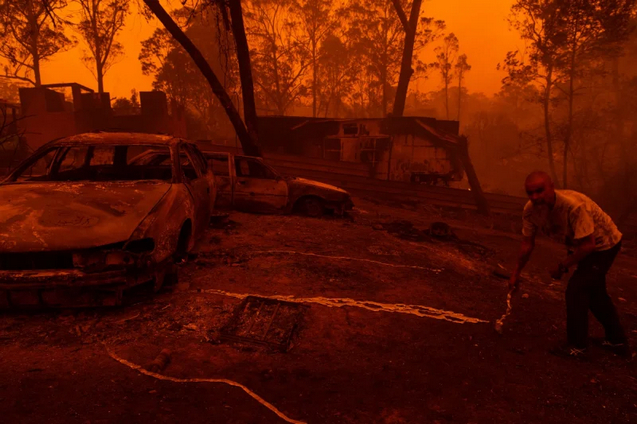
The first half of summer was exceptionally hot, dry and dusty. Parts of eastern and southern Australia were engulfed by significant bushfires, and smoke haze covered large areas.
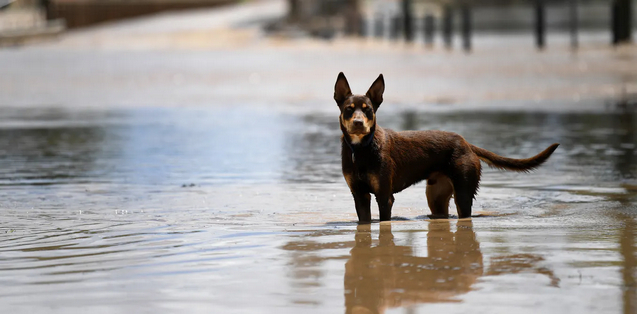
In the second half of the season, tropical moisture at times extended into southern Australia, producing well above-average rainfall for some areas. This was great news for many, but some parts of the country missed out. Other areas need follow-up falls over the coming months to ease the long-term dry, and inland water storages increased only slightly.
The autumn outlook suggests warmer-than-average temperatures for most of the country. There is also a slightly increased chance of wetter-than-average conditions in parts of southern Australia, indicating some areas could see a gradual easing of the drought conditions.
The first half of summer brought widespread bushfires to much of Australia’s southeast. DAN HIMBRECHTS/AAP
What happened this summer?
Summer 2019-20 was the nation’s second hottest in 110 years of records, driven in part by Australia’s hottest December on record in 2019. Warmth across much of the tropical north and east persisted into January and February. Summer nights were second-warmest on record.
Total summer rainfall was closer to normal – 8% below the long-term average. But the rainfall figures hide the significant shift in the climate mid-way through the season.
Australia experienced very warm and dry conditions in the lead-up to summer. With a delayed onset of the monsoon moving into the southern hemisphere, heat built across northern and central Australia from the start of December and was drawn south by weather systems.
Australia had its hottest day on record on December 18, with a nationwide average temperature of 41.88℃. This was far above the previous record of 40.32℃ set on January 7, 2013.
Six other days in December 2019 also exceeded this previous record. To put this in context, the Australia-wide average maximum temperature has exceeded 40℃ for more days in the past two summers than in the preceding 110 years combined.
The hottest temperature recorded this summer was at Nullabor, South Australia, on December 19, when it reached 49.9℃.
Averaged across the continent, December maximum temperatures were 4.15℃ above average - the previous December record was 2.41℃ above average, set in 2018.

Bureau of Meteorology/The Conversation, CC BY-ND
Then the rains came
Early January brought a noticeable change to the weather, with the first tropical cyclones of the season and the belated arrival of the monsoon.
Tropical cyclones Blake and Claudia brought heavy rain to much of the Top End and northern and central parts of Western Australia, while the east coast saw heavy falls in northern New South Wales and southeast Queensland.
February brought more tropical moisture to the continent and another two cyclones—Damien and Esther.
Despite this, temperatures across the north remained very warm. The monsoon did not arrive until January 18, some three weeks later than normal, though almost a week earlier than the previous year. Even after the monsoon arrived it was sporadic, so did little to temper the heat.
The Darwin River Dam (Darwin’s main water storage) dropped to 54% capacity - the result of two relatively dry wet seasons in a row.
In contrast, in southern parts of Australia, February felt milder than normal. After Melbourne had three days over 40℃ in December – the most in December since 1897 - it had no days at all over 35℃ in February. This last happened in 1994.

Bureau of Meteorology/The Conversation, CC BY-ND
What’s driving all this?
The abrupt change in weather patterns mid-season can be attributed to changes in two key Australian climate drivers: a strong positive phase of the Indian Ocean Dipole (IOD), and a negative phase of the Southern Annular Mode (SAM).
A positive IOD typically brings drier weather to much of southern, central and northern Australia. The 2019 positive IOD was the strongest since 1997 and affected large parts of the country (and eastern Africa) during the second half of the year. Normally such an event ends with the movement of the Asian monsoon into the southern hemisphere in late spring/early summer, but in 2019–20 this movement occurred about a month later than usual.
The delayed arrival of the Australian monsoon was likely related to the strength of the IOD itself, which prevented the monsoon’s southward shift.
The negative SAM typically brings drier and hotter than average weather to much of southeast and eastern Australia in spring and summer. It was triggered by a sudden warming of the stratosphere above Antarctica, identified in early September. This rare event affected Australian climate from October to December.
Both negative SAM and positive IOD are known to enhance the likelihood of increased springtime heatwaves and fire weather in southeast Australia.
In addition to these events, Australia’s changing climate underpinned the drier and warmer weather across southern Australia in winter and spring.
Climate drivers originating in the Indian Ocean and Antarctica can increase the chance of spring heatwaves in Australia. BIANCA DE MARCHI/AAP
What to expect in autumn
Rain has eased the dry in some places, but more is needed. Most heavy rain was recorded east of the Great Dividing Range, while larger totals west of the range generally fell in regions that didn’t feed into water storages, or where soils were so dry there was little runoff into storages.
While Sydney’s water storages rose from 42% to 81% during the second half of summer, storages in the northern Murray—Darling Basin only rose from 6% to 12% - similar to levels at the height of the Millennium drought.
And while some areas had good summer rainfall, others missed out. Western NSW and southwest Queensland endured another dry summer.
The autumn outlook suggests parts of southern Australia have a slightly increased chance of being wetter-than-average, while scattered parts of the north may see a drier end to the northern wet season. Autumn days are likely to be warmer than average for most of the country, except for parts of southern Australia, suggesting evaporation will remain above average.
This outlook would indicate some areas could see a gradual easing of the drought conditions.

Bureau of Meteorology/The Conversation, CC BY-ND


Links

(AU) Matt Canavan’s Bushfire Climate Skepticism Disproved As Studies Point To Human Impact

New Daily - Cait Kelly

There's been debate over whether the summer bushfires can be linked to manmade climate change. Now international scientists say they can prove it.


Two research papers released Thursday morning are further highlighting how humans contribute to the climate crisis, with scientists in one of the new studies saying they can prove Australia’s latest bushfire disaster is linked to man-made climate change.
The study by an international team of scientists at World Weather Attribution found man-made climate change had increased the bushfire risk by 30 per cent due to a lack of rainfall and higher temperatures in 2019, compared with 30 years ago.
“We’re very sure that is a definite number we can scientifically defend,” lead researcher Jan van Oldenborgh wrote.
It comes just a day after Nationals Senator Matt Canavan criticised Australian scientists after questioning the CSIRO over whether it could prove climate change had played a role in this summer’s fire weather.
While the newly-released report is yet to be peer reviewed, its release is significant because it addresses specific attribution – that is, it demonstrates links between climate change and a particular disaster.
Researchers wrote that the devastating early bushfire season was much greater than that predicted by traditional climate modelling. Australian heatwaves were also found to be 1-2 Celsius hotter and 10 times more likely to occur than in 1990.
“We can therefore only conclude that anthropogenic climate change has made a hot week like the one in December 2019 more likely by at least a factor of two,” the study wrote.
Further analysis released on Thursday shows a decade of insufficient political action on climate change means nations must now do four times the work to stop the planet warming 2  degrees above pre-industrial levels.
To meet the goals set in the Paris Agreement, we either need to do four times the work or the same in one-third of the time, research led by Dr Niklas Höhne of the NewClimate Institute and first published in the science journal Nature has found.
“The past decade of political failure on climate change has cost us all dear. It has shrunk the time left for action by two-thirds,” Dr Höhne said.
“In 2010, the world thought it had 30 years to halve global emissions of greenhouse gases. Today, we know that this must happen in 10 years to minimise the effects of climate change.”
The picture is bleak. And made worse by the fact the world is a long way off meeting the Paris requirements – we’re currently heading for 3 degrees of warming.


“The gap is so huge that governments, the private sector and communities need to switch into crisis mode, make their climate pledges more ambitious, and focus on early and aggressive action,” he wrote.
“We do not have another 10 years.”
By analysing all 10 editions of the annual Emissions Gap Report – which examines what countries have pledged to do, and what they’re actually doing – the group found global annual greenhouse gas emissions have increased by 14 per cent, quickly becoming a ticking time bomb.
Had serious climate action begun in 2010, the cuts required to meet the emissions levels for 2  degrees would have been around two per cent, per year, on average up to 2030.
Instead, emissions increased.
Consequently, the required cuts from 2020 are now more than seven per cent, per year, on average for 1.5  degrees (close to three per cent for 2  degrees).
“Although many reports, scientists and policymakers continue to discuss rises of 2 degrees, it must be emphasised that, in 2018, the Intergovernmental Panel on Climate Change reported that warming of more than 1.5  degrees would be disastrous,” he wrote.
Two degrees might not sound like a lot, but the consequences will be significant.
We can expect more intense storms, searing heatwaves, severe bushfire seasons and longer droughts.
More than 50 per cent of the world’s beaches will be lost by 2100.
If we don’t quickly reduce emissions, more than half the world’s beaches will be gone by 2100, and there will be mass extinction of animals and coral reefs.
Climate Council senior researcher Tim Baxter said Australia was on the front line of climate change.
“We know that at two degrees, the Great Barrier Reef will more or less not be a thing any more,” he said.
“With two degrees, you’re talking about mass bleaching happening at the frequencies it’s unlikely to recover from. Even at 1.5 degrees, it’s getting difficult.
“We know that sea levels will rise. There’s some uncertainty about how much, but we know when they rise there’s a bigger storm surge, so it goes further and further up the beach, so more homes are impacted.
“What we can say with absolute certainty, is that with the recent drought, the fires, then floods, we’ve seen what climate change looks like, and we’re talking about one-degree warming now.”
The consequences are alarming and Australia urgently needs to limit its contribution, Dr Höhne wrote.
“Countries are not even on track to achieve their now plainly inadequate 2015 pledges.
“Of the G20 countries, seven (Australia, Brazil, Canada, Japan, South Korea, South Africa and the United States) need to implement existing policy or roll out new measures.”
We can expect more storms, severe bushfire seasons and longer droughts. Photo: Getty
Although challenging, there are signs of hope, the analysis showed.
“There are lessons to be learnt from places such as Costa Rica, Shenzhen in China and Copenhagen that have made strides through the use of renewable energy and electrified transport,” Dr Höhne said.
“The United Kingdom (together with 75 other parties) and California have at least set ambitious goals to become carbon neutral, which might send signals to industry even before supporting policies are implemented.
“Meanwhile, 26 banks have stopped directly financing new coal-fired power plants.”
Although it was clear from the science that Australia, the world’s 14th biggest emitter, was not doing enough federally – there is action coming out of the states and territories, Mr Baxter said.
“Australia is one of the sunniest and one of the windiest countries on the planet. We are blessed with every resource needed for carbonisation,” he said.
“We have the solutions for at least 80 per cent, it’s just a matter of finding leadership that can bring that about.
“It doesn’t have to come from the federal government, you’ve got states who are stepping up. They’re not quite doing it enough but … they’re taking steps.”
In November, countries will meet in Glasgow for critical talks on limiting emissions and how they’re going to achieve the Paris Agreement.

Links

(AU) Climate Change Made 'Really Scary' Fire Extremes A Third More Likely

Sydney Morning Herald - Peter Hannam

Australia's extreme bushfire season was at least 30 per cent more likely than a century ago because of climate change, and the risks of a repeat will rise four-fold if global temperatures exceed a two-degree increase.
The World Weather Attribution group, an international collaboration including Australian scientists, used peer-reviewed methods to assess whether human-induced global warming altered the likelihood of bushfires of the intensity experienced during the 2019-20 summer.
Fire and Rescue NSW firefighters escape flames from the Gospers Mountain fire north-west of Sydney in mid-December 2019. Credit: Nick Moir

The scientists examined the probability of extreme heat and drought and a fire weather index as severe as those just experienced compared with Australia's climate of about 1900.
The bushfires drew international attention in part because of the "unprecedented nature of this event", with millions of hectares burned, 5900 residential and public structures destroyed and at least 34 people killed directly.
"It was really scary to see such extreme conditions in such a country as well prepared as Australia," said Maarten van Aalst, a researcher with the Red Cross Red Crescent Climate Centre in The Hague, Netherlands, and one of the researchers.
Previous studies of Australian heat had identified a clear influence of climate change, including the 2012-13 summer.
The recent heat again offered a clear climate change signal, with temperatures driven higher in heatwaves that are 1-2 degrees hotter than 1900, the researchers found. The record-breaking temperatures during one week in December - which smashed previous Australia-wide daily maximums - were 10 times more likely a century earlier, they said.
Identifying climate change's role for the drought was more difficult. The scientists did not find an attributable climate change trend in either extreme annual drought or the driest month of the September-February fire season.
A bushfire burning south of Canberra in early February brought another round of heavy smoke and fire threat to the nation's capital. Credit: Alex Ellinghausen

However, the climate influence was clear for the broader fire weather index, arguably before summer had begun.
The Bureau of Meteorology identified record high values during spring for almost 60 per cent of the country using its accumulated forest fire danger index.
Using a modified Canadian fire weather index that better accommodated wind speeds, the researchers found a trend towards higher risks since at least 1979.
They estimate the probability of an index as high as recorded during the recent summer had increased by at least 30 per cent - and as much as 80 per cent - since 1900 as a result of anthropogenic climate change.
"We think it could be much higher" than 30 per cent, said Geert Jan van Oldenborgh from the Royal Netherlands Meteorological Institute, and another of the researchers.
Climate models "are bad at capturing small-scale extremes, or extremes that depend on small-scale processes," Professor van Oldenborgh said.
"This is partly resolution, but in the case of heat extremes these depend strongly on factors like land use, irrigation, urbanisation, air pollution and other non-climate factors that are often not represented in climate models, and if they are have large uncertainties."
Australia has warmed about 1.4 degrees over the past century, or faster than the global rise of about 1 degree. With a global temperature rise of 2 degrees, the weather conditions behind the recent fires would be at least four times more common than in 1900, research found.
Taking the higher end of the model range estimate that the recent fires had been made 80 per cent more likely than 1900, the projection for conditions in a 2-degree world was for an eight-fold increase in similar fire weather than without the background climate change, Friederike Otto, from Oxford University's Environmental Change Institute, said.
Dr Otto cautioned, though, the higher estimates were "very uncertain due to the model deficiencies".
However, the world's weak emissions reduction efforts leave temperatures on course to rise 4.1-4.8 degrees by 2100 compared with pre-industrial levels, Climate Action Tracker estimates.
While the attribution study did not examine fire weather risks associated with a 4-degree warmer world, there is "no reason to assume" fire threats won't continue to climb, Dr Otto said.
Mogo on the NSW South Coast was among the towns hard hit by fires around New Year's Day. Credit: James Brickwood
 
Links

Thursday, March 05, 2020

(AU) Australia Emits 1.2 Per Cent Of The World's Greenhouse Gases. So Who Must Act To Cut Emissions?

Sydney Morning Herald - Peter Hannam

What is our part in solving a problem that is, by its nature, global?
Energy and Emissions Reductions Minister Angus Taylor has defended Australia's policies.
Australia's policies to address climate change have been among the most contentious political issues of the past quarter-century.
The standard refrain from the Morrison government is that Australia is performing well on a global stage when it comes to reducing the emissions of greenhouse gases that are cooking the planet.
And, the refrain continues, Australia's emissions are just a fraction of the world's total and if we didn't export all that coal and gas, someone else would. In a global context, so this story goes, the main culprits are nations such as China, the United States and the fastest-growing emitter, India.
It's true Australia is responsible for about 1.2 per cent of global emissions. It's also true that we contribute a quarter of exports that make up the world's coal trade and just became the biggest gas exporter.
So what effect does the action we take on climate change within Australia have on cutting emissions? What is our part in solving a problem that is, by its nature, global?

Source: Department of the Environment and Energy
First, is Australia on track with its emission cuts?
According to the Australian government's latest data,annual emissions were little changed – down just 0.1 per cent – in the year to June 30, 2019.
As it happens, the choice of the base year comparison can alone alter the impression about how well Australia is doing. Compared with 2000, for instance, annual emissions in the latest year were down 0.8 per cent, suggesting the country has not done very much over the past two decades. But compared with a base year of 2005 – a neat shift the Abbott government made when it approved the Paris climate goal – the reduction suddenly swells to a more impressive 12.9 per cent.
Aside from recent reductions in emissions from the electricity sector as renewable energy's share has increased, the only sector that has contributed a drop has been land use. Australia has consistently booked emissions reductions from reduced land clearing even during the years that governments in Queensland – the biggest deforesting state – and NSW have loosened restrictions on farmers.
Excluding the grandly named Land Use, Land Use Change and Forestry (LULUCF) change, Australia's emissions have been rising since 2014, according to Climate Action Tracker. That's also the year the Abbott government scrapped a price on carbon.
From the government's own projections out to 2030, total emissions don't look like falling much at all, with even LULUCF reductions not helping much.
Incidentally, emissions from bushfires don't add to Australia's ledger because – perhaps optimistically – the vegetation is expected to all grow back. For now, though, the UK Met Office is predicting the fires will make a sizeable contribution to what is expected to be a jump in atmospheric levels of CO2 in 2020.


So where do Australian emissions cuts rank in the world?
While there are different ways to count emissions, Australia's share amounts to about 1.2 per cent of global pollution.
According to The Australia Institute – using data from Germany's Potsdam Institute for Climate Impact Research (PIK) – that tally ranks Australia as 14th-largest emitter.
That doesn't sound like a lot but, as the Australia Institute's Tom Swann notes, if all the countries polluting less than Australia were taken together, they would account for 30 per cent of global emissions, or more than China's 27 per cent share. China, the US, the EU and India emit about 60 per cent of the world's total – and they all need to take action to cut back – but the emissions of the rest also matter.
"There is no solution to climate change without all countries taking strong action," Swann adds.
When it comes to what's a fair level of action for nations to be taking, things get murky quickly.
For instance, the Kyoto Protocol and Paris Accord largely avoid tallying historical emissions, even though rich countries got wealthy, in part, because their economies were powered by relatively cheap fossil fuels.
Instead, the wealthier nations were supposed to lead the way in reducing the pollution, with poorer nations expected to do less. Net-zero emissions is also the goal in the second half of this century if the world is to keep warming to less than 2 degrees. As it happens, all of Australia's states and the ACT have at least nominal carbon neutrality targets by 2050.


But, of course, it is not just total emissions that count. Australia makes up just 0.3 per cent of the world's population, so - on a per person basis - we pump out more greenhouse gases than most nations, according to the PIK.
By another measure, Australia has also not been doing its fair share. The Abbott government choice of 2005 as the base for Australia's Paris climate pledge gave it a relatively high-emissions year. The proposal to cut pollution 26-28 per cent by 2030 would have been more like 17-19 per cent if 2000 emissions were the starting point.
However, even since 2005, Australia has been a relative laggard among OECD nations.


What part do our coal exports play?
Global accounting rules focus on what is emitted within a particular country. China, the biggest emitter and the world's manufacturing hub, has often pointed out a lot of its emissions are "embedded" in the steel, ships and other goods it exports.
Australia has an export role of its own that the government would rather not highlight.
The country is the world's largest exporter of coking coal used to make steel, the second-largest exporter of thermal coal burnt in power stations and, since last year, the biggest gas exporter. These fuels are burned in other countries and the greenhouse gases from them counted against others' ledgers – not that the atmosphere cares.
Australia's fossil fuel exports accounted for 3.6 per cent of global emissions in 2017, with the country's coal exports alone accounting for more than a quarter of total coal trade, according to a report last year for the Australian Conservation Foundation by Climate Analytics. By exports, only Russia and Saudia Arabia contributed more.
A common line from both the Coalition and Laboris that Australia must support its $70-billion-a-year coal export industry as importers elsewhere would merely buy the coal or gas from other suppliers if we stopped. In fact, emissions would rise because Australian coal is "cleaner" than coal from other sources, so the argument goes.
"If you stopped exporting coal [from Australia] immediately then that would not reduce global emissions," Anthony Albanese, Labor's leader, told reporters in January. "There is enough displacement from other coal-exporting countries to take up that position, and that coal will produce higher emissions rather than less."
That latter point is debatable. Major customers for Australia, such as Japan and South Korea, are cutting back on new coal plants. As such, future coal demand may be on the skids, so substitution won't be the issue.
And opponents of Adani's proposal to open up the giant Galilee coal province in Queensland argue that region's coal will likely have a higher "dirty" ash and lower energy content than major alternative sources. Burning that coal won't push down emissions, they say.
How business behaves, rather than governments, will be key. If recent indications are any guide, such as $10-trillion asset manager BlackRock's move to ditch thermal coal, fossil-fuel exporting nations had better start diversifying their economies.
US-based BlackRock made news because of its monster clout in markets but Tim Buckley, a director of the Institute for Energy Economics and Financial Analysis, says the firm was actually a laggard. All but one of the main Japanese trading houses, for instance, has signalled they are getting out of coal, and major US banks will likely come under greater pressure to follow BlackRock.
"If Chase, Citi and Wells Fargo [match BlackRock], that's virtually game over" for thermal coal, he says.
True, India's fast-rising demand for energy will give coal exporters some hope but even there it will depend on state subsidies to keep the coal-fired power plants expanding. Wind and solar are already cheaper than new coal plants in India, Buckley says.
The Reserve Bank of Australia takes a cautious approach.
"In the long run, there is considerable uncertainty around the outlook for coal consumption. Demand will depend on many factors that are difficult to forecast, including the pace of economic growth in developing economies, changes in the cost and capabilities of different technologies (particularly for renewable energy and steel production) and changes to government policies," the RBA said in a September 2019 outlook report on Australian coal.

How do our efforts count on the world stage?
Australia's climate policies are not just assessed by the home audience of voters but the country's international trading partners too.
Australia was one of only three nations – along with Norway and Iceland – to win concessions allowing it to increase emissions under the Kyoto Protocol period that ran from 2008 to 2020. It is this relatively weak goal that the Morrison government (and its predecessors) hails as "meeting and beating".
By the agreed formulas of carbon budgets, Australia claims to have "over-achieved" its Kyoto goal, allowing it to claim a 411-million tonne "credit" it hopes to "carry over" into the Paris period, from 2021 to 2030.
As Stephen Howes, an Australian National University professor who worked on the Garnaut report into Australia's emissions, notes in a recent report, taking 2020's expected emissions total, the record is not one of "overachievement" at all.
Angus Taylor, the Energy and Emissions Reduction Minister, defends Australia's stance, saying all targets under the Kyoto Protocol are assessed using so-called emissions budgets. It's from these budgets that Australia is planning to count Kyoto "carryover" credits against its Paris goals.
Such credits effectively cut Australia's emissions effort for the 2021-30 Paris period by about half – an accounting shortcut that has not gone unnoticed among Australia's counterparts.
In the Madrid climate summit in late 2019, Australia's Kyoto credit scheme drew special attention, including an effort to ban the use of such credits.
The fact that much of eastern Australia was starting to burn even as the meeting took place only served to reinforce interest in how one of the most exposed nations to climate change would be tackling the issue.
Germany, Britain, Sweden and New Zealand have all ruled out using such credits as against the spirit of the Paris accord, and the issue is not going to go away.
With pressure likely to mount on all nations to lift their Paris goals by the next climate summit – scheduled for late this year in Glasgow – the Morrison government has begun to signal that its international stance might also be starting to "evolve".
"Australia will use its over-achievement from previous targets only to the extent necessary to reach the 2030 emissions reduction target," Mr Taylor said in mid-January.

Links

(AU) Ancient Australian Trees Face Uncertain Future Under Climate Change, Study Finds

Phys.org - 

Dead Billy King pines in Tasmania's ancient temperate rainforest. Credit: Photo by Cameron Naficy

Tasmania's ancient rainforest faces a grim future as a warming climate and the way people used the land have brought significant changes to the island state off mainland Australia's southeastern coast, according to a new Portland State University study.

The study holds lessons not only for Australia—whose wildfires have been dominating headlines in recent months—but for other areas of the world that are seeing drying conditions and increased risk of wildfires.

Andrés Holz, the study's lead author and associate professor of geography at PSU's College of Liberal Arts and Sciences, studied the population decline of King Billy pine trees (Athrotaxis selaginoides), a coniferous species native to Tasmania that dates back to when Australia was part of a supercontinent called Gondwana.

This paleoendemic tree species occupies large tracks of the UNESCO World Heritage Area in Tasmania and is considered a vulnerable species by the World Conservation Union.

The study found that increasingly frequent fires caused by regional dry and warming trends and increased ignitions—by humans during the early arrival of Europeans to Tasmania and more recently due to increases in lightning—are breaching fire refugia. Refugia are protected areas that don't burn or, if they do, are areas where trees survive most wildfires.

"The areas that have survived are in these very protected refugia," Holz said. "The refugia can be a bit of a buffer, but how long is that going to last? We might be witnesses of a whole lineage of a very ancient plant species that is going to go extinct."

Holz said that the changes in how wildfires function, due to both management and climate change, are driving analogous ecosystem transformations not only in Australia, but also western North America and South America's Patagonia region.

Untangling the between landscape, fire disturbance, human fire usage, climate variability and anthropogenic is key to understanding the rapid population declines of King Billy pines.

The study found that the trees regenerated continuously before 1800 AD under indigenous land management, but population declines followed European colonization as they cleared land for logging and mining. This coincided with a period of more fire-prone climate and weather conditions.

"Fires co-occur with dry, warm periods and those periods are more and more frequent now," Holz said, adding that the Billy King pines need wet and cool conditions to thrive. "We're moving away, climatically speaking, from the drivers that help the species."

Holz and the research team also found few seedlings or saplings in the study area, meaning that recovery of the original forest is unlikely. Instead, the replacement forest has become a tall-shrubland ecosystem with lower species diversity that in turn are more flammable and recover more quickly following fire.

"The next time there are the same climate conditions and there's a spark, a lightning strike or an accidental fire, the plants themselves are now more dense in space and more flammable than before and have a higher change of burning again," Holz said. "It becomes a vicious cycle that is hard to break."

The study said that as these critical climate-fire associations increase in strength, the survival of King Billy pines may require increasingly targeted management, including rapid attack of uncontrolled fires.

Links

Birth Control And Books Can Slow Down Climate Change

The Verge - 

They’re near the top of the list in a ranking of climate solutions
A board explaining contraceptive methods at a clinic in Caracas, Venezuela. Photo by YURI CORTEZ/AFP via Getty Images
 
Improving girls’ access to education and reproductive health care is one of the most promising ways to stop human-caused global warming, according to a report published today that ranks solutions to addressing the threat.

Addressing health and education ranks second among 76 solutions, sandwiched between reducing food waste and eating more plant-rich diets, that, together, can limit global warming to 2 degrees Celsius.

The report, “The Drawdown Review,” is a follow-up to the 2017 New York Times bestselling book Drawdown. Promoting girls’ education contributed about as much to a sustainable future as the gains from rooftop solar and solar farms combined, that book found. So did family planning.
"it’s like taking nearly 22,000 coal-fired power plants offline"
Securing a quality education and reproductive health care access, particularly for women and girls, can prevent more than 85 gigatons of heat-trapping carbon dioxide from heating up the planet between 2020 and 2050, the new report says. That’s like taking nearly 22,000 coal-fired power plants offline.

The report was produced by scientists and advocates at the nonprofit Project Drawdown, which was created by Drawdown editor and environmentalist Paul Hawken.

There’s a chain reaction when education levels rise: women gain political and economic power. They also have more resources available to help them choose when and how to start a family. When that happens, fertility rates usually drop, the report points out. People tend to marry and have children a little later and have fewer children when they do.

Researchers who put the report together estimated the fall in per capita emissions when fewer people in the world are using up energy for housing, food, waste, and transportation (taking into account differences between wealthier and less affluent nations).

To be clear, “in no way are we talking about population control,” Crystal Chissell, a vice president at Project Drawdown, says. Trying to control who gets to have children and who doesn’t is part of a violent racist and xenophobic history, including the forced sterilization of Latinas in the US. Chissell makes clear that her new report is talking about access to reproductive health care for women who want it.
“In no way are we talking about population control.”
There are 214 million women globally who want to avoid pregnancy but don’t have modern contraception, Chissell points out. (She cites data from the reproductive health advocacy and research group Guttmacher Institute.) Women who’ve been historically marginalized often also face bigger barriers to getting an education and birth control when they want it — whether that’s because of cost, stigma, or policies.

That last barrier has posed more hurdles for advocates over the past several years. President Donald Trump is responsible for dozens upon dozens of environmental policy rollbacks — including moves that limit women’s access to reproductive health care.

He has pulled US funding from the United Nations’ sexual and reproductive health agency, the biggest provider of contraception worldwide, for three years in a row. Domestically, the Trump administration has also attempted to give employers greater ability to deny insurance coverage for birth control.

“We’re not saying that the burden is solely on women to advance the solution [to climate change],” Chissell cautions. But the report makes clear that the status of women and girls globally will be crucial to how we shape the world that’s to come.>
"the status of women and girls globally will be crucial to how we shape the world that’s to come"
Gender also plays a role when it comes to who faces the first and worst ravages of climate change. Women make up a majority of the world’s poor, which can make them disproportionately vulnerable. In the wake of disasters made worse by climate change, like hurricanes, women also face an increased risk of sexual violence.

 Anything that might help women gain some ground — like, say, having the power and resources to make healthy and informed decisions about their bodies, lives, and families — will be crucial to surviving on a planet that’s in crisis.

Links

Wednesday, March 04, 2020

(AU) Thousands Of Kilometres Of Australia's Beaches At Risk From Rising Seas

Sydney Morning Herald -  Peter Hannam

More than 12,000 kilometres of Australia's sandy beaches are threatened by coastal erosion by the end of the century, with greater losses predicted if greenhouse gas emissions remain high.
The projections, made by European researchers and published in Nature Climate Change on Tuesday, used satellite data that tracked shoreline change from 1984 to 2015. They found a "substantial proportion" of the world's sandy coastline is already eroded, a trend that could worsen as climate change pushes up sea levels.

Australia's coastline has already seen significant areas of retreat in recent years, such as at Inverloch, in Victoria. Credit: Google News Lab
Under a "moderate" effort to curb emissions - with carbon pollution peaking at 2040 and then declining - at least 12,324 kilometres of Australia's sandy coast will be threatened with erosion by 2100. That tally is the most of any nation, and would amount to about 40 per cent of the country's sandy beaches.
Should greenhouse gas emissions continue to rise through the century - the so-called 8.5 Representative Concentration Pathway - Australia's sandy coastline at risk increases to 15,439 kilometres, the paper said.
"You have a long coastline and part of the coast is very mildly sloping" and is therefore susceptible to erosion, said Michalis Vousdoukas, a coastal oceanographer at the European Commission and the paper's lead author.
"Melbourne is worse than Sydney," Dr Vousdoukas told the Herald and The Age, adding Brisbane and Adelaide's beaches fell between the two in terms of vulnerability to erosion.
The researchers said global sea levels had been increasing "at an accelerated rate during the past 25 years and will continue to do so with climate change".
So far, most of the increase had come from the thermal expansion of warmer water but, by mid-century or so, the increase in sea levels would likely come more from melting ice sheets, Dr Vousdoukas said.
Following the lower emissions pathway would prevent about 22 per cent of the projected coastal retreat by 2050 and 40 per cent of it by 2100. "This corresponds to a global average of around 42 metres of preserved sandy beach width by the end of the century," the paper said.


After the Sydney area experienced its wettest weekend in more than 20 years, beach erosion and massive amounts of sea foam can be seen at Collaroy on the Northern Beaches.

Some nations would be harder hit on a relative basis than Australia, with Suriname, Pakistan, El Salvador and Guinea-Bissau among those countries facing the loss of more than 80 per cent of their sandy coasts.

Stockton, near Newcastle on the NSW coast, is another area where the beach is in retreat. Credit: Google News Lab


Carribean states, for instance, could see beach retreats of more than 300 metres, with "substantial implications" for economies dependent on tourism, the paper found.
Kathleen McInnes, head of CSIRO's coastal extremes group, said the paper was "useful at a macro level", and noted its own limitations such as an exclusion of "backshore" infrastructure such as sea walls that would limit beach retreat in built-up areas.
The paper's assessment, though, that the impacts of big storms would tend to be a "second-order effect" compared with the background effect of remorselessly rising sea levels "was a very plausible finding" and in line with CSIRO's own research, Dr McInnes said.
Still, major storms - which climate scientists predict will become more intense as the atmosphere warms - can be important.
Narrabeen on Sydney's northern beaches is among the most vulnerable near the Harbour City.
LEFT September 2003                                           RIGHT April 2019
Credit: Google News Lab
"Storm erosion is typically followed by beach recovery but some events may leave a footprint that takes decades to recover [from], if at all, while the additional shoreline retreat renders the backshore more vulnerable to episodic coastal flooding and its consequences," the paper said.

Links

Lethal Heating is a citizens' initiative