21/07/2020

Pandemic Shows Climate Has Never Been Treated As Crisis, Say Scientists

The Guardian

Letter also signed by Greta Thunberg urges EU leaders to act immediately on global heating

A climate protest in Duesseldorf, Germany, last week. Photograph: Sascha Steinbach/EPA

Greta Thunberg and some of the world’s leading climate scientists have written to EU leaders demanding they act immediately to avoid the worst impacts of the unfolding climate and ecological emergency.

The letter, which is being sent before a European council meeting starting on Friday, says the Covid-19 pandemic has shown that most leaders are able to act swiftly and decisively, but the same urgency had been missing in politicians’ response to the climate crisis.

“It is now clearer than ever that the climate crisis has never once been treated as a crisis, neither from the politicians, media, business nor finance. And the longer we keep pretending that we are on a reliable path to lower emissions and that the actions required to avoid a climate disaster are available within today’s system … the more precious time we will lose,” it says.

Greta Thunberg calls for immediate action on 'existential crisis' of climate emergency – video

The EU unveiled its green new deal proposal this year, aiming to transform the bloc from a high to a low-carbon economy without reducing prosperity and while improving people’s quality of life, through cleaner air and water, better health and a thriving natural world.

But the authors of the letter dismiss its target of net zero emissions by 2050 as dangerously unambitious. “Net zero emissions by 2050 for the EU – as well as for other financially fortunate parts of the world – equals surrender,” they say.

They add that the target is based on a carbon budget that gives only a 50% chance of limiting global heating to 1.5C above pre-industrial levels, the figure set out in the 2015 Paris agreement.

“That is just a statistical flip of a coin, which doesn’t even include some of the key factors such as the global aspect of equity, most tipping points and feedback loops, as well as already built in additional warming hidden by toxic air pollution. So in reality it is much less than a 50% chance.”

The letter also argues that the climate and ecological emergency can only be addressed by tackling the underlying “social and racial injustices and oppression that have laid the foundations of our modern world”.

It says the EU, with its political and economic clout, has a moral obligation to lead the fight to create a fair and more sustainable world.

“We understand and know very well that the world is complicated and that what we are asking for may not be easy. The changes necessary to safeguard humanity may seem very unrealistic. But it is much more unrealistic to believe that our society would be able to survive the global heating we’re heading for, as well as other disastrous ecological consequences of today’s business as usual.”

Thunberg and the other signatories – including the scientists Michael Mann and Johan Rockström – call on EU leaders to immediately halt all investments in fossil fuel exploration and extraction and end subsidies. They say the EU must advocate to make ecocide an international crime and establish annual, binding carbon budgets.

Links

(AU) Federal Environment Law Review Calls For Independent Cop, But Morrison Government Rules It Out

ABC NewsMichael Slezak

The review flagged legally enforceable "national standards" to stop the decline of Australia's natural environment.(Supplied: Paul Fahy)

Key Points
  • The 124-page interim report comes 20 years after the laws were first implemented by the Howard government
  • The report's author has called for a "strong, independent cop" on the environment beat
  • The Federal Government has accepted some recommendations, but rejected the report's call for an independent regulator
A landmark review into Australia's national environment laws has called for a major overhaul, including establishing an "independent cop" to oversee them.

The independent review into the 20-year-old Environment Protection and Biodiversity Conservation Act (EPBC), released this morning, also flagged legally enforceable "national standards" to stop the decline of Australia's natural environment.

"The foundation of the report was that there is too much focus on process and not enough focus on outcomes and that should be changed entirely," Graeme Samuel, the review's independent author, said.

He concluded that Australia's environment was getting worse under the laws designed to protect it.

"Australia's natural environment and iconic places are in an overall state of decline and are under increasing threat," he said.
"The current environmental trajectory is unsustainable."
Environment Minister Sussan Ley immediately moved to rule out an "independent cop", which was policy taken to the last federal election by the Opposition.

But the Federal Government accepted the recommendation for national standards, which she said would form the basis of agreements with states, allowing federal approvals to be devolved to the states.

If brought into law it would establish a "one-stop shop" or "single-touch approvals".

Sussan Ley said the Government would not "support additional lawyers of bureaucracy". (ABC News: Ian Cutmore)

The devolving of federal approval powers to states has long been the aim of the Federal Government.

The report calls for the Government to maintain the power to step in on any decisions it deems important, or when a failure of state processes has been identified.

The 124-page interim report comes 20 years after the laws were first implemented by the Howard government.

"Not surprisingly, the statutory review is finding that 20-year-old legislation is struggling to meet the changing needs of the environment, agriculture, community planners and business," Ms Ley said.

"It is time to find a way past an adversarial approach and work together to create genuine reform that will protect our environment, while keeping our economy strong," she said.

The laws were first introduced by the Howard government in 1999 in an attempt to modernise environmental protection. (Greg Wood: AFP)

The report was boiled down to 10 "key reform directions", which Professor Samuel said would improve the laws he described as "ineffective", "complex" and "costly".

Those reforms included:
  • No expansion to regulate additional environmental matters, including no new "climate trigger" argued for by many conservationists
  • New national environmental standards, which ensure development is conducted in an ecologically sustainable manner
  • Devolution of assessment, approvals, compliance and monitoring to states, reducing duplication
  • A focus on environmental restoration, resulting in habitat growing, rather than declining
Independent cop call

In his review, Professor Samuel, the former chair of the Australian Competition and Consumer Commission, said a "strong, independent cop on the beat is required".

Professor Samuel rejected calls for a federal environment agency, but instead called for an 'independent cop'. (AAP: Julian Smith)

"An independent compliance and enforcement regulator, that is not subject to actual or implied political direction from the Government Minister, should be established," he said.

"The regulator should be responsible for monitoring compliance, enforcement and assurance. It should be properly resourced and have available to it a full toolkit of powers."

The call echoes Labor Party policy from the last election, which called for a federal environmental protection agency — a move backed by the Australian Conservation Foundation (ACF).

ACF chief executive, Kelly O'Shanassy, said at the moment protecting nature was "optional".

Regardless, Ms Ley moved quickly to rule out any new regulator.

"The Government will take steps to strengthen compliance functions and ensure that all bilateral agreements with states and territories are subject to rigorous assurance monitoring," she said.

"It will not, however, support additional layers of bureaucracy such as the establishment of an independent regulator."
Australia's bushfire crisis, itself an environmental disaster, delayed the report's findings. (ABC News: Brendan Esposito)

Speaking after the release of the report, Shadow Environment Minister Terri Butler said the Opposition would look at it carefully before "commenting in depth".

"We're in an environment crisis," Ms Butler said.

"We [need] robust decision making, high quality decision making and strong and robust environmental protection to actually stand up for our iconic native species, for our native places and for our native environment."

Funding cuts and approval delays

The review began in November 2019 but its findings were delayed by the bushfires and then the coronavirus crisis.

While the report was being prepared, the Auditor General released a report finding 80 per cent of approvals under the laws were non-compliant or contained errors.

Federal Labor analysed those findings and concluded that since the Coalition came to power, there had been a 510 per cent blowout in the number of environmental approvals delayed beyond time frames indicated in the laws.

The delays came as the government cut funding to the environment department, which Labor said was now 40 per cent lower than it was before the Coalition came to power.

The Government has argued its attempts to speed-up the process — including by giving states the rights to approve projects under federal law — were blocked by Labor.

Links

Book Review: Are We Overreacting On Climate Change?

New York Times - Joseph E. Stiglitz

Joseph E. Stiglitz was chief economist of the World Bank from 1992 to 2000 and was awarded the Nobel Prize in Economic Science in 2001.
The thesis of Bjorn Lomborg’s FALSE ALARM How Climate Change Panic Costs Us Trillions, Hurts the Poor, and Fails to Fix the Planet is simple and simplistic: Activists have been sounding a false alarm about the dangers of climate change.

If we listen to them, Lomborg says, we will waste trillions of dollars, achieve little and the poor will suffer the most. Science has provided a way to carefully balance costs and benefits, if we would only listen to its clarion call.

And, of course, the villain in this “false alarm,” the boogeyman for all of society’s ills, is the hyperventilating media.

Lomborg doesn’t use the term “fake news,” but it’s there if you read between the lines.

Credit...Jonathan Nackstrand/Agence France-Presse — Getty Images

As with others in Lomborg’s camp, there’s the pretense in this book of balance and reference to careful studies. Yes, climate change is real. Yes, we should do something about it. But, goes his message, let’s be real, there are other problems, too. Resources are scarce. The more money we spend on climate change, the less we have to grow the economy; and as we all know (or do we?) everybody benefits from growth, especially the poor. And besides, there’s not much we can do about climate change.

He’s not completely fatalistic. He urges imposing a carbon tax and investing much more on innovation, both good ideas, although neither is a panacea, especially since the carbon price he suggests is far too low.

 Among the many contradictions within the book is that while he seems to say that innovation may be our savior, he also suggests that the model he relies on shows that we’ve invested all we wisely can in innovation. We’ve done all we should. Evidently, we’re supposed to pray that nature be more forgiving as it bestows good fortune on our research efforts.

Credit...Charlotte Carlberg Bärg

Somehow, missing in his list of good policy measures are easy things like good regulations — preventing coal-burning electric generators, for example. Lomborg, a Danish statistician, exhibits a naĂŻve belief that markets work well — ignoring a half-century of research into market failures that says otherwise — so well, in fact, that there is no reason for government to intervene other than by setting the right price of carbon.

Assessing how best to address climate change requires integrating analyses of the economy and the environment. Lomborg draws heavily on the work of William Nordhaus of Yale University, who came up with an estimate of the economic cost to limiting climate change to 1.5 to 2 degrees Celsius above preindustrial levels.

While Nordhaus seems to think it’s enormous, an international panel chaired by Lord Nicholas Stern and me (called the High-Level Commission on Carbon Prices), supported by the World Bank, concluded that those goals could be achieved at a moderate price, well within the range of what the global economic system absorbs with the variability of energy prices.

A second mistake — which biases the results in the same way — is Nordhaus’s and Lomborg’s underestimation of the damage associated with climate change. In early discussions of climate change the focus was often on global warming. It was natural for people to ask: “Surely a few degrees of temperature change couldn’t make that much difference? And besides, wouldn’t it be nice if we could swim in the ocean off Nova Scotia?”

But climate change is much more than that. It includes increasing acidification and rising sea levels (another aspect of climate change that Lomborg doesn’t mention is that Wall Street could be underwater by 2100 — a seeming benefit until one realizes that almost surely the bankers would find a way to force all of us to pay for their move to higher ground).

Climate change also includes more extreme weather events — more intense hurricanes, more droughts, more floods, with all the devastation to life, livelihood and property that accompanies them. In 2017 alone, the United States lost some 1.5 percent of G.D.P. to such weather-related events.

A third critical mistake, compounding the second, is not taking due account of risk. As the atmospheric concentration of carbon increases, we are entering uncharted territory. Not since the dawn of humanity has there been anything like this.

The models use the “best estimate” of impacts, but as we learn more about climate change these best estimates keep getting revised, and, typically, in only one direction — more damage and sooner than had been expected.

Economists emphasize the importance of avoiding bad outcomes. The whole multibillion-dollar insurance industry is predicated on risk aversion. If there were another planet we could all move to, that would be one thing. But there isn’t. So that means we have to be cautious.

And caution is especially warranted once we realize how bad things could get. Damages can increase disproportionally with increased carbon concentrations, and when those bad outcomes occur, our ability to weather the storm (metaphorically and literally) will be greatly diminished.

A fourth related concern is that those like Lomborg and Nordhaus who don’t believe we should take forceful action today discount the value of the environmental impacts of climate change on future generations. How do we trade off costs today with benefits in the future?

The Trump administration, for instance, has been using a 7 percent discount rate — which means that we shouldn’t spend more than 3 cents today to avoid a dollar of damage to our children in 50 years. This is ethically indefensible and economically nonsensical. But they’re the kinds of numbers spewed out by the models Lomborg loves, the same kinds of models that say we should blithely accept a 3.5 or 4 degree Celsius increase in global warming.

Bjorn Lomborg has long insisted that there is a consensus — what he calls the Copenhagen Consensus — around his do-nothing agenda, which he claims to be the reasonable scientific approach. Consider the mission of his Copenhagen Consensus Center, which says its focus is on “cost-effective solutions to the world’s biggest challenges. … Our analyses take into account not just the economic, but also health, social and environmental benefits.”

Who could object? He assembles expert panels to review the issue, to reach a consensus on what should be done, carefully weighing costs and benefits. Again, who could object? But when one looks at the list of “experts,” one sees the conservative bias — all distinguished economists, but most with a particular bent, and not including any of the true experts in climate science who might have raised an objection.

Anyone not familiar with the literature might think from his frequent quoting of the Intergovernmental Panel on Climate Change that the panel, representing the scientific consensus, is on board with his ideas. Nothing could be further from the truth. In 2019 the I.P.C.C. put out a report explaining how much worse a 2 degree Celsius rise in temperature would be than a 1.5 degree Celsius rise.

It takes only a little care in reading beneath the surface of the plodding scientific prose to realize how worried these scientists are. Understandably so: We have not seen these levels of carbon dioxide concentrations in the atmosphere since the Pliocene Epoch about three million years ago, when the polar ice caps were much smaller and global sea levels were 10 to 20 meters higher than today. (Full disclosure: I was a lead author of the I.P.C.C.’s Second Assessment.)

Lomborg is correct that climate change is not the only problem the world faces. But he poses a false choice, because it is possible to walk and chew gum at the same time. As the advocates of the Green New Deal point out, investments that reduce climate change can usher in a new era of prosperity; as our commission emphasized, the green transition can promote economic growth — correctly measured.

As a matter of policy, I typically decline to review books that deserve to be panned. You only make enemies. Even a slight barb opens a wound the writer will seldom forget. In the case of this book, though, I felt compelled to forgo this policy. Written with an aim to convert anyone worried about the dangers of climate change, Lomborg’s work would be downright dangerous were it to succeed in persuading anyone that there was merit in its arguments.

This book proves the aphorism that a little knowledge is dangerous. It’s nominally about air pollution. It’s really about mind pollution.

Links

20/07/2020

Climate Change: Siberian Heatwave 'Clear Evidence' Of Warming

BBC - Justin Rowlatt

Wildfires were made more severe by high temperatures and strong winds. Getty Images

A record-breaking heatwave in Siberia would have been almost impossible without human-caused climate change, a study has found.

The Russian region's temperatures were more than 5C above average between January and June of this year.

Temperatures exceeded 38C in the Russian town of Verkhoyansk on 20 June, the highest temperature ever recorded north of the Arctic circle.

The Arctic is believed to be warming twice as fast as the global average.

An international team of climate scientists, led by the UK Met Office, found the record average temperatures were likely to happen less than once every 80,000 years without human-induced climate change.

That makes such an event "almost impossible" had the world not been warmed by greenhouse gas emissions, they conclude in the study.

In a news release, the scientists describe the finding as "unequivocal evidence of the impact of climate change on the planet".

It is, says Prof Peter Stott of the Met Office, the strongest result of any attribution study to date.


In the latest episode of Climate Check, Sarah Keith-Lucas look at the record temperatures in the Arctic Circle

Attribution studies attempt to work out the role that human-induced climate change plays in major weather events.

Climate scientists use computer simulations to compare the climate as it is today with the climate as it would have been without human influence to see how likely different weather events would have been.

The researchers say that the current Siberian heat "has contributed to raising the world's average temperature to the second hottest on record for the period January to May".

What happens in the Arctic doesn't stay in the Arctic

The changing Arctic climate is of huge importance here in the UK.

Four of the six main systems that determine this country's weather are driven by conditions in the Arctic, said Dr Katharine Hendry of Bristol University.

She was one of the lead authors on a paper published last month that suggested a series of extreme weather events could be linked to changes in the Arctic.

The so-called "Beast from the East", in the winter of 2018, is one.

It involved Arctic air blasting the country, driving temperatures below 0C for several days. Over half a metre of snow fell in some areas.

Arctic land surface temperature anomalies from 19 March to 20 June 2020. NASA

The storm is reckoned to have caused over £1bn of damage and claimed 10 lives.

The paper published last month also cites the storms and floods in February this year and ones back in 2015 as other possible examples of Arctic-linked changes.

"The link between the Arctic and UK weather is through the jet stream," said Prof Stott, referring to the ribbon of fast-moving air high up in the atmosphere.

The jet stream helps move weather systems around the globe.

But sometimes it creates "blocking" patterns that can cause weather systems to stall.

The unusually sunny spring experienced in the UK this year was caused by a blocking pattern that allowed high pressure systems to dominate the UK for months on end.

State of emergency

The heatwave in Siberia was caused by the same pattern but with even more dramatic results.

The extreme temperatures led to a cascade of natural and human disasters which prompted Russian President Vladimir Putin to declare a state of emergency in early June.

A vast fuel spill was caused by the collapse of a reservoir containing 20,000 tonnes of diesel near the Russian city of Norilsk in late May.


The BBC's Steve Rosenberg travels to the forest to see how Russians tackled 2019's wildfires

Arctic wildfires are estimated to have led to the release of 56 megatonnes of CO2 in June.

At the same time, there has been widespread melting of the permafrost and reports of unusually large swarms of Siberian silk moths that have damaged trees, making them more susceptible to fire.

Uncertain future

It is well-known that the Arctic is warming at twice the rate of the rest of the planet.

Arctic temperatures are estimated to have risen 2C since 1850 compared with 1C globally.

What impact that will have on the world's weather is less certain.

"Looking at the geological record, we don't think we've had CO2 levels as high for about five million years," said Dr Hendry. "So we really don't know what to expect into the future."

"We are," she said, "in uncharted territory".

This year's Siberian heatwaves shows just how extreme conditions can become.

What worries many scientists is that this new climate era we are entering means many places now experience weather conditions beyond anything local ecosystems - or indeed human communities - have evolved to endure.

Links

Climate Change: Summers Could Become 'Too Hot For Humans'

BBC - David Shukman

Some Singapore health care staff have been working in stifling heat. Image copyright Ng Teng Fong General Hospital

Millions of people around the world could be exposed to dangerous levels of heat stress - a dangerous condition which can cause organs to shut down.

Many live in developing countries, and do jobs that expose them to potentially life threatening conditions.

These include being out in the open on farms and building sites or indoors in factories and hospitals.

Global warming will increase the chances of summer conditions that may be "too hot for humans" to work in.

When we caught up with Dr Jimmy Lee, his goggles were steamed up and there was sweat trickling off his neck.

An emergency medic, he's labouring in the stifling heat of tropical Singapore to care for patients with Covid-19.

There's no air conditioning - a deliberate choice, to prevent the virus being blown around - and he notices that he and his colleagues become "more irritable, more short with each other".

And his personal protective equipment, essential for avoiding infection, makes things worse by creating a sweltering 'micro-climate' under the multiple layers of plastic.

"It really hits you when you first go in there," Dr Lee says, "and it's really uncomfortable over a whole shift of eight hours - it affects morale."

Working in PPE in a tropical climate can be extremely uncomfortable. Image copyright Ng Teng Fong General Hospital


One danger, he realises, is that overheating can slow down their ability to do something that's vital for medical staff - make quick decisions.

Another is that they may ignore the warning signs of what's called heat stress - such as faintness and nausea - and keep on working till they collapse.

What is heat stress?

It's when the body is unable to cool down properly so its core temperature keeps rising to dangerous levels and key organs can shut down.

It happens when the main technique for getting rid of excess heat - the evaporation of sweat on the skin - can't take place because the air is too humid.


Dr Angie Bone of Public Health England offers some tips and dispels some myths on staying cool

And as Dr Lee and other medics have found, the impermeable layers of personal protection equipment (PPE) - designed to keep the virus out - have the effect of preventing the sweat from evaporating.

According to Dr Rebecca Lucas, who researches physiology at the University of Birmingham, the symptoms can escalate from fainting and disorientation to cramps and failure of the guts and kidneys.

"It can become very serious as you overheat, and in all areas of the body."

How can we spot it?

A system known as the Wet Bulb Globe Temperature (WBGT) measures not only heat but also humidity and other factors to give a more realistic description of the conditions.

Back in the 1950s, the US military used it to work out guidelines for keeping soldiers safe.

When the WBGT reaches 29C, for example, the recommendation is to suspend exercise for anyone not acclimatised.

Yet that's the level Dr Lee and his colleagues are regularly experiencing at Singapore's Ng Teng Fong General Hospital.

And at the top of the scale - when the WBGT registers 32C - the US says strenuous training should stop because the risk becomes "extreme".


But levels that high have recently been recorded inside hospitals in Chennai in India by Prof Vidhya Venugopal of the Sri Ramachandra University.

She's also found workers in a salt pan enduring a WBGT that climbs during the day to 33C - at which point they have to seek shelter.

And in a steel plant, a ferocious level of 41.7C was recorded, the workers being among the most vulnerable to what she calls "the huge heat".

"If this happens day-in, day-out, people become dehydrated, there are cardiovascular issues, kidney stones, heat exhaustion," Prof Venugopal says.

What impact will climate change have?

As global temperatures rise, more intense humidity is likely as well which means more people will be exposed to more days with that hazardous combination of heat and moisture.

Prof Richard Betts of the UK Met Office has run computer models which suggest that the number of days with a WBGT above 32C are set to increase, depending on whether greenhouse gas emissions are cut.

The US military developed heat stress guidelines to keep its soldiers safe. Image copyright Getty Images

And he spells out the risks for millions of people already having to work in the challenging combination of extreme heat and high humidity.

"We humans evolved to live in a particular range of temperatures, so it's clear that if we continue to cause temperatures to rise worldwide, sooner or later the hottest parts of the world could start to see conditions that are simply too hot for us."

Another study, published earlier this year, warned that heat stress could affect as many as 1.2bn people around the world by 2100, four times more than now.

What solutions are there?

According to Dr Jimmy Lee, "it's not rocket science".

People need to drink plenty of fluid before they start work, take regular breaks and then drink again when they rest.

His hospital has started laying on "slushie" semi-frozen drinks to help the staff cool down.

But he admits that avoiding heat stress is easier said than done.

For him and his colleagues, going for rests involves the laborious process of changing out of PPE and then back into a new set of equipment.

Avoiding heat stress is easier said than done. Image copyright Getty Images


There's a practical problem as well - "some people do not want to drink so they can avoid having to go to the toilet," he says.

And there's a professional desire to keep working whatever the difficulties so as not to let colleagues and patients down at a time of crisis.

People who are highly motivated can actually be at the greatest risk of heat injury, says Dr Jason Lee, an associate professor in physiology at the National University of Singapore.

He's a leading member of a group specialising in the dangers of excessive heat, the Global Heat Health Information Network, which has drawn up guidelines to help medics cope with Covid-19.

It's spearheaded by the World Health Organization (WHO), the World Meteorological Organization (WMO) and the US weather and climate agency Noaa.


Dr Lee says that as well as measures like rest and fluids - and shade for outdoor workers - a key strategy for resisting heat stress is to be fit.

"By keeping yourself aerobically fit, you're also increasing your heat tolerance, and there are so many other benefits too."

And he sees the challenge for medics, sweating inside their PPE as they deal with Covid-19, as "almost like a full dress rehearsal" for future rises in temperature.

"This climate change will be a bigger monster and we really need a coordinated effort across nations to prepare for what is to come.

"If not," he says, "there'll be a price to be paid."

Links

(US) Cities Are Becoming Climate Death Traps

New Republic - 

A new era of heat waves is here. We aren’t ready.

A man cools off in the spray of a fire hydrant during a heat wave in Philadelphia. Jessica Kourkounis/Getty Images

As the coronavirus pandemic continues throughout the United States, another deadly pandemic comes out to strike in the summer: extreme heat. Year after year, more people are dying because it’s simply too hot. As of right now, both this country and others lack even an accurate way of counting those deaths—let alone a comprehensive plan to reduce them. Thanks to climate change, it’s about to get much worse.

For the past week, the American South and Southwest have been experiencing record-breaking temperatures. The National Oceanic and Atmospheric Administration has predicted above-average heat for nearly the entire U.S. this summer. Unprecedented, early-summer heat waves roasted the Middle East in May and Siberia in June, setting the latter on fire. Arizona had its earliest-ever hundred-degree heat wave in April—and another 110 degree heat wave in May. Spain endured 105 degree heat this month.

When the heat index, a “feels-like” combination of temperature and humidity, reaches 104 degrees Fahrenheit indoors or out, human body temperature risks rising above the typical roughly 99 degrees Fahrenheit. When body temperature rises above 104 degrees, the consequences can be fatal within 30 to 60 minutes.

“Heat-related deaths are notoriously difficult to track because the role of heat isn’t always obvious. One 2017 study found that extreme heat can kill people in 27 different ways,” Juanita Constible, senior advocate, climate and health at the National Resources Defense Council, told me. “If someone dies of a heart attack during a heat wave, there’s a good chance that’s how their death will be recorded by officials, even if high temperatures were the trigger.”

Many scientists argue that official heat-death counts underestimate substantially. According to the World Health Organization, 166,000 people died due to heat waves between 1998 and 2017, but the true figure may be far higher. In the U.S., the Centers for Disease Control and Prevention only count deaths where heat illness is explicitly noted, so the official CDC count of heat-triggered deaths sits at just around 600 per year. Epidemiologists estimate that the real figure may be closer to 12,000—20 times higher than the official count.

Climate change is making heat waves longer, hotter, and more deadly. Scientists estimate that 80 percent of record-breaking heat waves would not have occurred without human-caused warming due to greenhouse gas emissions. And urban areas, in particular, face special risk of heat deaths because of the heat island effect, in which dark pavement, roofs, and concrete absorb additional heat, making temperatures much hotter than the reported weather in any given city.

In the U.S., heat deaths have more than doubled in Arizona in the last 10 years. Last year, a dangerous heat wave hit while storms left residents in the D.C. and New York City metro areas without power. Power outages can be deadly in a heat wave because without air conditioning, many people can’t cool off. In two heat deaths in a 2018 Arizona heat wave, the deceased were found indoors with a broken air conditioning unit that they couldn’t afford to fix.

“Some people won’t use their air conditioning because they’re afraid of the bills,” Patricia SolĂ­s, executive director of the Knowledge Exchange for Resilience at Arizona State University, told National Geographic. “They think they’re OK without it, but that’s how people die.”

“There are huge policy gaps in the U.S. with respect to extreme heat protections,” Rachel Licker, a senior climate scientist at the Union of Concerned Scientists, told me. “We found that without real action on climate change, by midcentury more than 250 cities across the U.S. are projected to experience 30 or more days with a heat index above 100 degrees Fahrenheit. This includes many cities that historically haven’t experienced this level of extreme heat.”

Low-income communities are especially vulnerable. A 2020 study in Environmental Research Letters found that residents in low-income census tracts were less likely to use air conditioners when temperatures got hot. Heat wave exposure also disproportionately affects communities of color that have faced housing discrimination. Researchers at Portland State University and the Science Museum of Virginia found that urban neighborhoods denied municipal services during the mid-twentieth century are now the hottest areas in 94 percent of the 108 cities analyzed.

Extreme heat is a labor issue, as well. “One of the most urgent needs is an enforceable heat health standard for all workers from the [Occupational Safety and Health Administration],” said Constible. The current rule “has too much wiggle room for employers.”

 Licker pointed to the proposed Asuncion Valdivia Heat Illness and Fatality Prevention Act of 2019, which has yet to get out of the House Committee on Education and Labor, as a potential solution. The bill, sponsored by Democratic Representative Judy Chu of California, is named after Asuncion Valdivia, a California farmworker who died of a heat stroke in 2004 after picking grapes for 10 hours in 100 degree weather. The U.S. Postal Service has also received criticism for its role in workers’ heat deaths, for example in a troubling report from HuffPost this past week.

But killer heat is a worldwide phenomenon. In Europe, heat waves killed as many as 70,000 in 2003 and more than 1,500 last year. Good heat wave adaptation measures—such as handing out water at train stations, asking people to check on the elderly, and opening air-conditioned shelters for residents—likely contributed to the substantial reduction in deaths from 2003 to 2019. Accurate weather forecasting also allowed for greater preparedness. Still, just 5 percent of European households are air conditioned and scientists estimate that three degrees Celsius of warming could kill an additional 86,000 people each year in the EU.

While China and Japan are used to some sweltering-hot summers, record-breaking heat waves have nevertheless proved deadly. Consecutive heat waves in 2018 and 2019 in Japan hospitalized tens of thousands and killed hundreds. Japan doesn’t use excess mortality to calculate heat-related deaths like Europe does, which means that, as in the U.S., these numbers may be huge undercounts. In China, extreme heat combines with poor air quality to produce harmful ozone. Scientists estimate that three degrees of global warming could kill an additional 30,000 people each year in China.

Meanwhile, the impact of extreme heat on the global south remains underreported in Western media. Since developing countries tend to lack the cooling infrastructure present in North America and East Asia, regions in India, Bangladesh, and Pakistan could soon face regular summer heat waves that are impossible to survive.

A recent Tokyo Institute of Technology study shows that heat-related deaths in Jakarta are expected to increase by 15 times by 2060. And while some regions of Africa are used to heat waves as a regular occurrence, the heat island slums of large cities such as Nairobi can create fatal conditions. A 2017 John Hopkins study found that temperatures in Kibera, one of the largest “slum” settlements in Nairobi, were typically 5 to 10 degrees higher than the official weather report.

The dual threat of extreme heat and the coronavirus makes for an especially challenging summer for policymakers and city-dwellers. Many cities this year and for each additional year that the pandemic persists will have to choose between opening public cooling centers and risking transmission of Covid-19 or keeping them closed and risking preventable heat-related deaths.

And the coronavirus also complicates the labor aspect of extreme heat. The current U.S. heat standard, for example, which is only a recommendation that employers take precautions when temperatures reach a certain threshold, was created in pre-Covid times. “A heat standard is especially important this summer because of the Covid-19 pandemic,” said Constible. “The masks and other protective gear needed to slow transmission of the virus have the potential to trap heat and increase heat-health risks to some workers.”

Faced with record temperatures, many cities in the U.S. have taken aggressive adaptation measures. “Dozens of cities and some counties and states have mandatory, incentivized or city-led initiatives using features such as cool roofs, cool pavements, and trees,” Laura Brush, resilience fellow at the Center for Climate and Energy Solutions, told me. “However, funding is a significant barrier for many communities, especially during the pandemic.”

“More diverse funding sources and innovative finance mechanisms are needed to invest in resilience projects. These could include a national infrastructure bank, loan programs, and tax incentives for companies and individuals,” Brush said. Brush points to Louisville, Kentucky’s regional climate and health assessments and cool roof rebate and installation programming as one effective example of a city taking action.

The tragedy of heat-related deaths is that they are almost always preventable. Distributing free air conditioners, paying residents’ summer cooling bills, and simply encouraging people to check in on vulnerable relatives or neighbors can save lives. All of these are extremely feasible policy measures.

At the same time, nothing will slow the urban heat-death pandemic like climate mitigation and reducing greenhouse gas emissions. Limiting global temperature rise to 1.5 degrees Celsius (2.7 degrees Fahrenheit), for example, could save 2,700 lives per year in New York City alone, according to recent estimates. What’s known for sure is that ignoring either approach—the immediate or the long-term—will come with a body count.

Links

19/07/2020

(AU) Climate Change-Driven Disasters Making Insurance Premiums Too Dear For Farmers

ABC RuralJane McNaughton

Peter Holding is a mixed farmer from Harden, NSW, and member of Farmers for Climate Action. (ABC News: Anna Vidot) 

Key Points
Australian farmers are facing increasingly frequent droughts, floods, hailstorms and bushfires, resulting in insurance premiums rising to the point where cancelling or underinsuring are the only options.

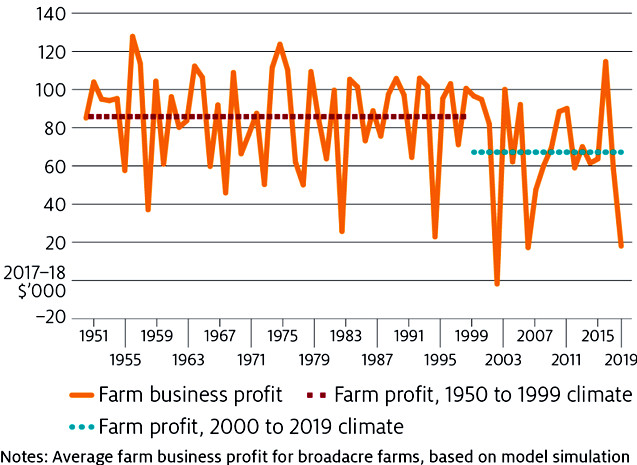
Climate change has already cost farmers more than $1 billion since 2000, according to ABARES.

Third-generation lamb and cropping farmer Peter Holding said government inaction on global warming could have disastrous flow-on effects to the agriculture industry.

"Climate change poses a cataclysmic set of challenges for farmers," the Farmers for Climate Action member said.
"It's pretty severe and it's getting worse.
"As the frequency [of natural disasters] increases, the insurance premiums are just going to go up — there's no doubt about that."

The southern New South Wales farmer and volunteer firefighter said prolonged fire seasons are just one example of how climate change is affecting agricultural practices.

"The Canberra fires in 2003 was when we first saw the phenomenal firestorm effect," he said.

"And that's getting more common."

Fire surrounds a homestead during the Canberra fires in January 17, 2003. (Copyright: Jeff Cutting)


Rising risks, rising costs


Insurance Council of Australia spokesman Campbell Fuller said the industry was worried about the effects of man-made climate change.

"The insurance industry is very aware of concerns in the rural sector about climate change, natural disasters and about access to insurance," he said.

"Insurers gather the latest available data from governments, especially around bushfire exposure and flood exposure, as well as seasonal forecasts from the Bureau of Meteorology."

Mr Fuller says insurers build a robust picture of the seasonal exposure that properties have per annum, which is then is priced into premiums.

"As the climate changes, and as risks are reassessed, that logically leads to changes in premiums to reflect the risks," he said.

Effect of climate variability on average farm profits 1949-50 to 2018-19 at current farms and commodity prices.(Supplied: ABARES)


'No silver bullet'

Mr Fuller said appropriate land use and resilient infrastructure in areas of higher risk to natural disasters needed to be prioritised.

"Changes in risk that can be predicted by climate change modelling need to be taken into account," he said.

"In many parts of Australia there's plenty of evidence that primary producers are taking measures to reduce the risks to their properties into their own hands."

Eighty per cent of Australian households are underinsured, and Mr Fuller says that percentage is probably much higher in rural areas.

This banana plantation at Taylors Arm, west of Macksville, was destroyed by fire in 2019. (ABC Rural: Claire Wheaton)


"Underinsurance and non-insurance is an issue in rural areas, and it is a constant concern to the industry as well as regulators and government agencies," he said.

"When properties are not insured, communities can struggle to rebuild after natural disasters and the burden falls more heavily on charities and government in the recovery phase."

Mr Fuller said farmers were likely to insure infrastructure such as their homes, sheds and equipment, but fences, livestock and crops were less likely to be included.

"There is no real silver bullet here," he said.
"It's a combination of actions that need to take place at a community level, and involving all levels of government."
Mr Holding said the cost of premiums meant insurance was not an option for some producers.

"I've had to pull back the farm's scale an awful lot to cut debt and make sure that we're still viable," he said.

Valuable farm machinery was destroyed by fire on the Duff beef and soybean property in the Upper Macleay Valley in 2019. (Supplied: Carolyn Duff)


Fossil fuels 'undermining' agriculture

Financial strain is not the only issue climate change has delivered to farmers.

"Unfortunately we're getting less good years and a lot more variability," Mr Holding said.

"There's a lot of impacts and I can't see it stopping any time soon.

"The droughts are just continuing, since the turn of the century we've had [so many years] of drought, interlaced with floods."

This map shows the decline of winter rainfall across southern Australia over the past 20 years. (Supplied: CSIRO/BOM)

Mr Holding said although farmers had "been adapting since the day they invented the plough", it would become impossible if the rate of environmental change continued to increase.

"Cutting emissions is the only option there, and that means moving away from fossil fuels — but the government seems wedded to that," he said.
"The fossil fuel industry is creating emissions and that is slowly but surely making agriculture unviable.
"We've cut the emissions from livestock probably in half, farmers in cropping areas have done all sorts of things to reduce the use of diesel and better use fertilisers.

"So farmers are working on all of these problems to cut their own emissions, but we definitely need some quick action to reduce the emissions of fossil fuel."

Links

Lethal Heating is a citizens' initiative