13/01/2021

(AU) Preparing For A 3°C Warmer Future: The Ideological Shift And Institutional Response Australia Will Need.

Pearls and Irritations - Mike Scrafton

Three things are obvious. The collective emission reduction efforts of nations will not avoid 3.0C global warming by the century’s end. Therefore, national adaptation actions will need prepare for the worse than expected scale and impact from the effects of climate change. As a result, earlier ideological assumptions about governments will have to give way to policies that are interventionist and systemic.

Credit – Unsplash


Author
 was a Deputy Secretary in the Victorian Department of Sustainability and Environment, senior Defence executive, CEO of a state statutory body, and chief of staff and ministerial adviser to the minister for defence.
The latest UN Emissions Gap Report, published in December 2020, estimates that, “Overall, we are heading for a world that is 3.2oC warmer by the end of this century, even with full implementation of unconditional nationally determined contributions (NDCs) under the Paris Agreement”.

This judgement is a game-changer!

The World Meteorological Organisation’s State of the Global Climate 2020 – Provisional Report observes that the temporary reduction in emissions in 2020 because of COVID-19 “is likely to lead to only a slight decrease in the annual growth rate of CO2 concentration in the atmosphere”. 

As Greenhouse gas (GHG) emissions continue to increase, there is a large gap between “planned fossil fuel production levels” and with keeping global warming below 2oC.

The International Panel on Climate Change’s 2018 report Global Warming of 1.5oC emphasised that that keeping global warming below 2oC was necessary to avoid many of the worst of its consequences. An indication that some important point has now been reached is that the IPCC didn’t even canvass a 3oC warmer future. 

 It is necessary now to recognise the world is entering dangerous and unchartered waters. The UN Environment Program’s Emission Gap Report 2019 assessed that the least cost pathway to staying below 2oC required global emissions to be 55 per cent below those of 2018 by 2030. The impossibility of that happening is evident.

Despite these reports, states are not actually reducing emissions, and only planning to reduce the rate of emissions growth. Even if the world was on the necessary path to the radical transformations that would see an actual reduction, and then cessation, of emissions, the point where no additional GHGs are going into the atmosphere would be decades away.

In 2019, Australia’s GHG emissions were 16 tonnes of CO2 per person. This was the twelfth highest in the world, equal to that of the US, and greater than that of China, India, Japan and all of the European economies. On the most optimistic government scenario, this is planned only to reduce to approximately 14 tonnes per head by 2030. Not zero.

Australian governments are typical of most advanced economies that plan on simply slowing the rate of growth in, or marginally reducing, their country’s emissions. That means the amount of GHG emissions put in the atmosphere by Australia will continue to grow. If nothing else, the government’s reliance on natural gas “to reduce emissions without imposing new costs on households” will ensure this.

That Australia only aims at reducing the growth is evident from Australia’s National Hydrogen Strategy and the First Low Emissions Technology Statement – 2020. The Strategy makes clear that the States and the Federal government are targeting zero-emissions some time beyond 2050. 

Australia, according to the Statement, aims to build on its “existing role as a trusted exporter of energy, resources and agricultural products, and secure continued prosperity in a low emissions global economy”. That Australia will be “recognised as a global low emissions technology leader”, with an emphasis on enabling “the transition of key industries to net zero emissions, without weakening our economy”. A low emissions economy is still an emitting economy.

Adaptation to global warming takes on a whole new urgency and priority now. There are two time frames that need to be kept in mind. In the time available, the economic, social and behavioural transitions required to avoid 3oC warming are simply unachievable. 

Of course governments should do all in their power to continue reducing emissions, but it won’t be enough. However, the reforms that will deliver resilience, security and harm minimisation don’t have an end date, a deadline. They will be ongoing and not just for decades but probably centuries. Which leads to the third issue of how governments should respond.

The Emissions Gap Report 2020 notes “Reducing emissions through lifestyle changes requires changing both broader systemic conditions and individual actions”. Johanna Nalau of the National Climate Change Adaptation Facility has stressed that “adaptation is going to have to occur no matter what, given the massive changes already locked in to the climate system” and that “adaptation should be at the core of [government] policies”. She points out that Australia is required to produce a national adaptation strategy under the Paris Agreement.

It is difficult to understand why, in the face of the evidence of a growing and very serious threat to the health, well-being, welfare and security of their citizens, Australian governments don’t recognise the urgent need to address adaptation at integrated national, regional and local levels, and systematically.

Climate policy and action in Australia is shared between two agencies, the Department of Agriculture, Water and Environment and the Department Industry, Science, Energy, and Resources. Their websites and publications reveal little realisation of or commitment to the need for systemic adaptation. 

The government should, as a first step, centralise climate policy and programme design in the one agency. This is because it is essential to bring together in one agency the expertise and knowledge required for the massive task of adapting to a 3oC future.

Perhaps more fundamental is the need for governments to accept that they will have to intervene deeply in the economy, including in agriculture, urban settlement, water, energy, and conservation to lead, direct, facilitate, legislate, regulate, fund and support the many changes required. 

The nature of free-market capitalism, and the ever present demands of the profit and shareholder dividend cycle, means that without clear planning and firm direction the private sector will not respond quickly or effectively enough to adaptation.

It seems governments have been relying on hope for decades; the hope that someone else will fix the problem. The history of climate policy is a catalogue of missed opportunities. Now action cannot be avoided.

Links

(AU) Hang On For A Wild Climate And Energy Ride In 2021

 AFR - Tony Wood

Good results delivering reliable, low-emissions electricity at lowest cost are possible this year. But everything depends on the climate wars finally being transformed into a real policy debate.

Carbon neutrality by 2050 is an entirely plausible strategic objective. Getty

Author
Tony Wood is head of the energy program at the Grattan Institute.
As 2020 closes, credible and stable energy and climate policy seems further away than ever.

Yet, prices and electricity sector emissions are falling, and the outlook for reliability is better than it has been for some summers. 

Just maybe, policymakers will take 2021 as an opportunity to reconcile political fears with economic substance and answer one of the most tortuous and important policy issues of our time: how to deliver reliable, low-emissions energy at lowest cost.

There are two big, underlying policy questions. The first is whether we are at the point where the climate war changes from an intractable political battle to a real policy debate.

The next federal election and the Glasgow international conference on climate change will determine whether the Morrison government maintains its steady-as-she-goes position on emissions reduction or moves to fundamentally address climate change.

Naked, practical politics will determine how far the Prime Minister is prepared to go.

The government’s 2030 target is achievable – the annual rate of reductions over the next decade is projected to be only half what we have already achieved on average since 2005.

But it sets up a big challenge beyond 2030: emissions outside electricity are projected to be flat or rising, but the average rate of reduction would have to increase from about 3.5 million tonnes per annum to 24 mtpa to deliver net zero by 2050.

Carbon neutrality by 2050 is an entirely plausible strategic objective. Labor is committed and the government is starting to talk the talk. The challenge for both sides is that politics makes implementing policy very hard.
A good result would be a credible mechanism for efficient, economy-wide emissions reduction against firm milestones.
The Prime Minister is correct to argue that setting a target without deciding how it will be achieved is insufficient. Yet, the mantra that his government will do it with technology and not taxes is a false choice. 

Supporting development of immature technologies is necessary, but some mix of carrots and sticks is required to deploy all low-emission technologies at scale. Herein lies the PM’s challenge within his own government.

The good, the bad and the muddled

Having set its long-term target, Labor is stuck on designing a policy framework to hit the target. Doing so without getting caught on the detail and the costs is one problem. 

Labor’s previous target of 45 per cent emissions reduction by 2030 was just left hanging in the breeze at the 2019 election, to be linked by the government to job losses in key seats in regional Australia. Labor’s challenge is to stitch the narrative together – it shouldn’t be that hard.

The second question is whether governments’ need for certainty and control of electricity supply leads to a version of nationalisation, or whether a market-based model can emerge that satisfies that need. Government intervention is routinely listed as investors’ major fear.

The Energy Security Board will make one last attempt to reconcile the opposing forces in the first half of 2021. The future of the National Electricity Market and the ESB itself depend on the outcome.

Good results on energy and climate change policy in 2021 are possible but are not assured. Setting expectations is a fraught task, but why not speculate?

A good result would be a credible mechanism for efficient, economy-wide emissions reduction against firm milestones towards a credible objective; a set of reforms to the National Electricity Market that preserves the primacy of markets and satisfies the key concerns of the jurisdictions; and ministerial commitments to work with a renewed energy market governance structure. 

The likely result: a well-regulated market delivers efficient investment that meets both emissions reduction and reliability objectives at lowest cost.

A bad result would be a government climate change policy stuck on vague long-term objectives and another battleground in the climate war; disintegration of the National Electricity Market in the face of ongoing government interventions and disagreement from industry; and a form of nationalisation of electricity and gas infrastructure driving higher costs, lower reliability, or both. 

The likely result: planning and regulation delivers high certainty but at high cost.

A muddled result would be a target of net-zero emissions by 2050 supported by a flimsy platform of technology commitments and questionable assumptions; ongoing market intervention by governments to meet their need for certainty without ever quite achieving that goal; and a semi-planned, pseudo-market that provides little confidence on reliability, emissions, or prices.

We can hope for the first, fear the second, and prepare for the third. Whichever way things go, there will be consequences, economically, financially, environmentally, and politically. Twenty-twenty-one is shaping as a wild ride on energy and climate policy – hang on!

Links

Shell Case Puts Spotlight On Energy Groups’ Role In Climate Change

Financial Times - 

If successful, the legal action in the Netherlands could force companies to accelerate the shift to cleaner fuels 
Shell is one of many energy companies facing litigation over their impact on climate change. © FT montage; AP

It is five years since the Netherlands lost a court action forcing it to cut its greenhouse gas emissions. It was the first time a government had been compelled by law to take action on climate change and was upheld by an appeals court in 2019, meaning that Dutch authorities have to reduce emissions by 25 per cent compared with 1990 levels. 

The case, brought by climate group Urgenda, argued that the state’s lack of action was putting Dutch citizens in danger. And the court agreed.

Now the lawyer behind that 2015 case — Roger Cox — has a new target, Royal Dutch Shell, in a legal fight in The Hague that some believe could force oil and gas companies to accelerate a shift away from fossil fuels and push other corporate polluters to reassess their carbon footprint. 

In an opening statement in December, Mr Cox, acting on behalf of a group of activists including Milieudefensie, the Dutch wing of Friends of the Earth, said the Anglo-Dutch group’s business model and corporate strategy “is on a collision course with global climate targets” and presented “a great danger for humanity”. 

The activists want Shell — valued at close to £113bn — to cut its total carbon dioxide emissions by 45 per cent by 2030, compared with 2019 levels, ultimately stopping short of an initial push to get the company to eliminate them entirely by 2050. It would force the energy group to completely overhaul its operations and corporate strategy.

Mr Cox says the environmental campaigners “asked me if an Urgenda-style case could be brought against a fossil fuel company [and it] made me think that we had a realistic chance of winning a case against an oil major.” 

Shell and 24 other major corporations are responsible for over half of all global industrial emissions since 1988, according to non-profit group. CDP © Bloomberg

Litigation against fossil fuel companies is not new. But until now the focus has largely been on liability suits, asking corporations to pay damages for past behaviour. Attention is now shifting to so-called human rights-based cases which have the potential to redraw the future business models and plans of corporate polluters.

These cases are designed to advance climate policies, say their backers, raise public awareness and drive behavioural shifts by entire industries. 

“The need to explore avenues to reduce emissions is much more important than discussions about compensation,” says Jaap Spier, author of Climate Obligations of Enterprises, which sets out the obligations of the corporate sector and the liability risks posed by climate change. The Shell case, he says, is helping to shift the debate from, “‘OK there is a problem and we need to do something,’ to ‘what needs to be done by whom and by when’”. 

Lawyers, environmentalists and energy analysts say if Shell loses, it and some of its rivals, might preemptively adopt policies — from divestments to ramping up investment in clean energy — to avoid further legal action. They would be forced to prepare for climate litigation failure as a financial risk. It is also likely, they say, that future legal cases will target not just fossil fuel companies, but also investors and related entities, such as banks extending finance to them.

Shell has already said it will reduce the carbon intensity of the energy products it sells by around a third by 2035. It also seeks to be a “net zero” emissions company by 2050 by investing more in cleaner fuels. But climate activists say these targets — which do not include absolute emissions — amount to a tinkering around the edges. The oil company can still continue to expand its fossil fuel businesses while meeting its “net zero” emissions goal.


In a series of public hearings in December, the plaintiffs argued Shell has known about the dangers of climate change for years and as a major producer of fossil fuels has played a large role in causing the detrimental effects. Therefore, they say, it needs to play a major role in the transition away from fossil fuels. A verdict in the case is expected on May 26.

“If successful it would set a precedent. It would be the first time a court could force an oil major to change course,” says Mr Cox. “That’s what we’re looking for here. Not damages, not compensation. A new approach.”

Future proofing

Such legal actions are opening up a new front in the fight over responsibility for climate change. Over the past three years a growing number of cases in the US — filed by cities, states and counties — have sought damages from energy companies for a litany of climate-related problems.

They are based on a simple scenario. If the burning of fossil fuels creates emissions that cause climate change, then polluters should compensate public authorities for having to upgrade sea walls or retrofit storm drains to mitigate against the effects. 

Marjan Minnesma, director of environment NGO Urgenda (second from right) which won a landmark legal action forcing the Dutch government to cut its greenhouse gas emissions. © ANP/AFP via Getty Images


The template for these actions is the successful litigation brought over decades against tobacco companies. This ended with a 1998 settlement guaranteeing $206bn in payments to 46 US states, over a period of 25 years, to cover costs of healthcare payouts and other related claims.

The action against Shell is viewed by legal experts as particularly significant because of a series of factors: the Urgenda case provides a precedent, the Netherlands has its own duty of care obligations for corporations as part of the Dutch Civil Code and Shell is based in the country.

A separate case in France, against Total, is also seeking to force the energy major to overhaul its corporate strategy to ensure operations align with the targets set out in the Paris Climate Accord. But in this instance there is no legal precedent.

A case in Ireland — similar to that brought by Urgenda — argued that the government’s mitigation plan was not ambitious enough. The supreme court in Dublin agreed.

European oil majors have come under increasing pressure from environmentalists and investors in recent years to be more accountable for their contribution to climate change. This has forced them to take preliminary action — from investing in low carbon technologies and greener energies to announcing net-zero emissions goals. But the rising scrutiny over their operations has coincided with a pandemic that has shredded their finances, threatening their ability to make good on lofty ambitions.

Last year, Britain's advertising watchdog opened an investigation into Shell’s ‘drive carbon neutral’ campaign following complaints from the public. © REUTERS


Shell has repeatedly said that action to fight climate change is necessary. But argues that, given the global nature of the problem, a battle in the courts will do little to overhaul the energy system. It also points out that even as it supports international efforts, the Paris Agreement obligates governments, not individual corporations, to act.

In court the company argued consumers such as motorists are just as responsible for the choices they make and producers should not be penalised disproportionately.

The company has invested in biofuels, hydrogen, wind power, electric vehicle charging and smart energy storage solutions and plans to increase investment in low carbon technologies as part of its broader net zero emissions goal. Prior to the pandemic, Shell planned to spend up to 10 per cent of its $30bn in annual capital expenditure on cleaner energy businesses until 2025. That fell to $20bn last year because of the coronavirus pandemic.

The company is expected to issue a strategy update in February, but it is likely that spending on low carbon initiatives will remain a fraction of what is spent on its traditional fossil fuel businesses.

“We agree with Milieudefensie that action is needed now on climate change,” says Shell. “What will accelerate the energy transition is effective policy, investment in technology and changing customer behaviour, none of which will be achieved with this court action.” 
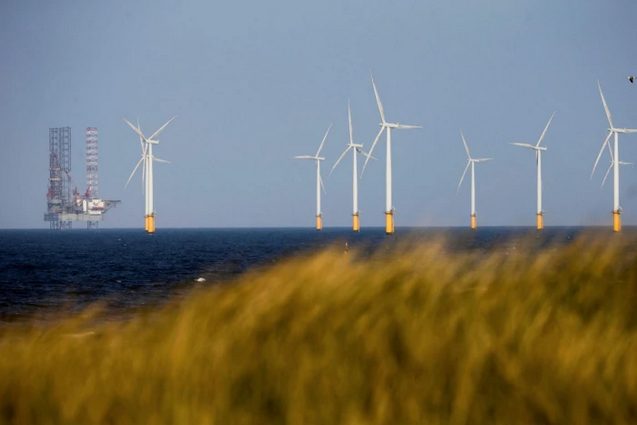
A Shell jack-up oil rig stands next to an offshore wind farm in Teesside, north England. The company says it can continue to expand its fossil fuel businesses while meeting its ‘net zero’ emissions goal. © Bloomberg

Growing public discontent

Oil companies also point to the world’s overwhelming dependence on fossil fuels. While governments and individuals — particularly in Europe — want to shift towards renewable forms of energy, such as solar and wind power, this does not change the reality of our consumption patterns.

Even at the height of coronavirus induced lockdowns and travel bans, oil consumption only fell by around a quarter, which indicates how embedded these fuels are into our everyday existence.

Shell says it seeks to move “in step with society”. But critics argue the world and even peers, like BP, are moving faster than Shell is willing to go, which has even seen a string of top clean energy executives leave the company.

Despite those consumption numbers the legal actions are tapping into growing public discontent, with governments over climate change putting pressure on them to pursue cleaner energy goals and net-zero policies as part of the Paris Agreement commitments.

Frustration with politicians is partly driven by the feeling that they are not going far enough to mitigate the realities of climate change but also that they are failing to regulate company behaviour effectively, or impose binding targets on some of the world’s biggest polluters. 

One of Australia’s largest pension funds last year agreed to settle a climate risk case brought by Mark McVeigh in 2018. © Bloomberg 

“There is really just one fundamental question,” says Donald Pols, chief executive of Milieudefensie. “Is it possible to meet the Paris goals without regulating the emissions of corporations?”

Shell and 24 other major corporations are responsible for over half of all global industrial emissions since 1988, he says citing data from not-for-profit group CDP. Until now these companies have set broad goals to reduce emissions rather than legally enforceable targets.

Mr Pols says he hopes the Shell case will have a “ripple effect” — not only would it shift Shell’s investment plans, but it could prompt other companies to bolster their defences against similar litigation.

Activism against energy companies has already gone far beyond green campaigners scaling oil rigs and blockading corporate headquarters. 

Environmentalists are now targeting the oil industry’s lobbying tactics and challenging their corporate advertising. Client Earth, an environmental charity, filed a 2019 legal complaint against oil company BP claiming it was misleading consumers about its focus on low carbon energy through its multimillion pound advertising campaign.

Chief executive Bernard Looney scrapped the advertising shortly after taking over in February 2020. Meanwhile investors are filing a growing number of shareholder resolutions to force change.

“If you look at these things as a whole, there is pressure growing from all sides,” says Joana Setzer at the Grantham Research Institute on Climate Change and the Environment at the London School of Economics, who focuses on climate litigation and environmental governance. “There are lots of different strategies being tried. People are saying — how can we push the boundaries even further?”

In France, a case against Total, seeks to ensure the company brings its operations in line with the Paris climate targets. © Thomas samson/AFP via Getty Images

Increasing litigation

The Grantham Institute recorded 1,587 cases of climate litigation between 1986 and the end of May 2020: 1,213 cases in the US and 374 cases in 36 other countries and eight regional or international jurisdictions.

An analysis of 534 US cases between 1990 and 2016 found that 42 per cent had outcomes favourable to climate change action.

Outside the US, 58 per cent of the 187 cases between 1994 and May 2020 were successful.

“We are still seeing many, many more failures of high-profile strategic litigation — like the liability cases against carbon majors or cases against governments challenging their lack of ambitious targets — than successes,” says Ms Setzer. “But lawyers who bring these kinds of cases know it will take many years and may end in failure. With climate litigation however, this is the problem — we don’t have the time.”

Experts counter that even in defeat there are successes. Cases may raise awareness and influence future litigation. Corporations can see the momentum and are beginning to build their legal defences.

“It’s no longer a secret. Businesses that are complicit in enabling climate change, while ignoring the ramifications, are going to face higher legal risks going forward,” says Carroll Muffett, chief executive at the Center for International Environmental Law, a non-profit organisation. “It is exceptionally rare that a single case changes corporate behaviour. But we’re already in a place where Shell, ExxonMobil, Total and BP are all facing litigation.” 

Donald Pols, director of Milieudefensie, centre, says he hopes the Shell case will have a ‘ripple effect’ forcing other companies to examine their environmental practices. © Peter Dejong/AP


She adds: “It took three decades to turn tobacco litigation into a transformative moment, when plaintiffs began winning cases. With climate litigation we have covered the same ground in a decade. Now plaintiffs are not going to limit themselves to the carbon majors.”

Oil companies are already being forced by investors, regulators and the public to make greater disclosures about their environmental footprints. And at the same time they are being confronted by better climate science and more granular data on emissions, helped by new technologies.

Nigel Brook, a London-based lawyer at Clyde & Co who leads the firm’s climate change risk business, says it is inevitable that there will be more legal cases and more victories for those who bring them. “What is known and knowable is changing so fast,” he says. “The duty of care obligation for top managers will only grow. This is real, this is happening and will only grow significantly over the next decade.” 

Pension funds and asset managers are particularly in focus for campaigners. One of Australia’s largest pension funds late last year agreed to settle a climate risk case brought by 23-year-old Mark McVeigh in 2018.

He alleged that the Retail Employees Superannuation Trust was failing to protect his retirement savings against climate change. As part of the settlement the pension fund agreed to incorporate climate change financial risks in its investments.

David Barnden, at Equity Generation Lawyers which represented Mr McVeigh, says the impact of the case will be far reaching. “This is the first time that a pension fund has been taken to task in this way,” says Mr Barnden. “In the future, we may see trustees and asset owners go after individual pension fund managers.”

Mark Clarke, a partner in legal firm White & Case’s dispute resolution department who works on oil and gas lawsuits, says the Shell case could provide a turning point that stretches well beyond the energy sector if it establishes that a corporation has a duty of care.

“Clearly that will have ramifications and will likely encourage similar claims against other corporations,” he says. “Climate change litigation is absolutely on the rise there is no doubt about that.”

Links

12/01/2021

The State Of The Climate In 2021

BBC Future - Isabelle Gerretsen | Data Research Miriam Quick

After the turbulent year of 2020, BBC Future takes stock on the state of the climate at the beginning of 2021. 

As the world turns to renewable energy, climate change is already being felt across the world (Credit: Getty Images)

From unprecedented wildfires across the US to the extraordinary heat of Siberia, the impacts of climate change were felt in every corner of the world in 2020.

We have come to a "moment of truth", United Nations Secretary General Antonio Guterres said in his State of the Planet speech in December. "Covid and climate have brought us to a threshold."

BBC Future brings you our round-up of where we are on climate change at the start of 2021, according to five crucial measures of climate health.

1. CO2 levels

The amount of CO2 in the atmosphere reached record levels in 2020, hitting 417 parts per million in May.

The last time CO2 levels exceeded 400 parts per million was around four million years ago, during the Pliocene era, when global temperatures were 2-4C warmer and sea levels were 10-25 metres (33-82 feet) higher than they are now.

"We are seeing record levels every year," says Ralph Keeling, head of the CO2 programme at the Scripps Institution of Oceanography, which has been tracking CO2 concentrations from the Mauna Loa observatory in Hawaii since 1958. "We saw record levels again this year despite Covid."

The effect of lockdowns on concentrations of CO2 in the atmosphere was so small that it registers as a "blip", hardly distinguishable from the year-to-year fluctuations of the carbon cycle, according to the World Meteorological Organization, and has had a negligible impact on the overall curve of rising CO2 levels.

"We have put 100ppm of CO2 in the atmosphere in the last 60 years," says Martin Siegert, co-director of the Grantham Institute for climate change and the environment at Imperial College London.

That is 100 times faster than previous natural increases, such as those that occurred towards the end of the last ice age more than 10,000 years ago.

"If we keep tracking the worst-case scenario, by the end of this century levels of CO2 will be 800ppm. We haven't had that for 55 million years. There was no ice on the planet then and it was 12C warmer," says Siegert.

CO2 emissions have risen rapidly since the 1970s (Credit: European Commission JRC EDGAR/Crippa et al. 2020/BBC) LARGE IMAGE

2. Record heat

The past decade was the hottest on record. The year 2020 was more than 1.2C hotter than the average year in the 19th Century. In Europe it was the hottest year ever, while globally 2020 tied with 2016 as the warmest.

Record temperatures, including 2016, usually coincide with an El Niño event (a large band of warm water that forms in the Pacific Ocean every few years), which results in large-scale warming of ocean surface temperatures.

But 2020 was unusual because the world experienced a La Niña event (the reverse of El Niño, with a cooler band of water forming). In other words, without La Niña bringing global temperatures down, 2020 would have been even hotter.

The exceptionally warm temperatures triggered the largest wildfires ever recorded in the US states of California and Colorado, and the "black summer" of fires in eastern Australia.

"The intensity of those fires and number of people being killed is truly significant," says Siegert.

High temperature anomalies have become greater and more frequent in recent years on land, air and sea (Credit: NOAA/BBC) LARGE IMAGE

3. Arctic ice

Nowhere is that increase in heat more keenly felt than in the Arctic. In June 2020, the temperature reached 38C in eastern Siberia, the hottest ever recorded within the Arctic Circle.

The heatwave accelerated the melting of sea ice in the East Siberian and Laptev seas and delayed the usual Arctic freeze by almost two months.

"You definitely saw the impact of those warm temperatures," says Julienne Stroeve, a polar scientist from University College London.

On the Eurasian side of the Arctic Circle, the ice did not freeze until the end of October, which is unusually late.

The summer of 2020 saw sea ice area at its second lowest on record, and sea ice extent (a larger measure, which includes ocean areas where at least 15% ice appears) also at its second lowest.

As well as being a symptom of climate change, the loss of ice is also a driver of it. Bright white sea ice plays an important role in reflecting heat from the Sun back out into space, a bit like a reflective jacket.

But the Arctic is heating twice as quickly as the rest of the world – and as less ice makes it through the warm summer months, we lose its reflective protection. In its place, large areas of open dark water absorb more heat, fueling global warming further.
Everything is interconnected. If one part of the climate system changes, the rest of the system will respond – Julienne Stroeve
Multi-year ice is also thicker and more reflective than the thin, dark seasonal ice that is increasingly taking its place. Between 1979-2018, the proportion of Arctic sea ice that is at least five years old declined from 30% to 2%, according to the IPCC.

"White ice reflects a lot of energy from the Sun and helps slow the rate of global warming," says Michael Meredith, a polar researcher at the British Antarctic Survey. "We are accelerating global warming by reducing the amount of Arctic sea ice."

The loss of ice is believed to be disrupting weather patterns around the world already. According to the Grantham Institute, it is possible – though not conclusively shown – that 2018 Arctic conditions provoked the "Beast from the East" winter storm in Europe in 2018 by altering the jet stream, a current of air high in the atmosphere.

"Temperature difference between the equator and poles drives a lot of our large-scale weather systems, including the jet stream," says Stroeve. And because the Arctic is warming faster than lower latitudes, there is a weakening of the jet stream.

"Everything is interconnected. If one part of the climate system changes, the rest of the system will respond," says Stroeve.

The Arctic sea ice has been diminishing rapidly since detailed records began in the 1970s, in a feedback cycle of warming and melting (Credit: NSIDC/BBC) LARGE IMAGE

4. Permafrost

Across the northern hemisphere, permafrost – the ground that remains frozen year-round for two or more years – is warming rapidly.

When air temperatures reached 38C (100F) in Siberia in the summer of 2020, land temperatures in several parts of the Arctic Circle hit a record 45C (113F), accelerating the thawing of permafrost in the region.

Both continuous permafrost (long, uninterrupted stretches of permafrost) and discontinuous (a more fragmented kind) are in decline.

Permafrost contains a huge amount of greenhouse gases, including CO2 and methane, which are released into the atmosphere as it thaws.

Soils in the permafrost region, which spans around 23 million square kilometres (8.9 million square miles) across Siberia, Greenland, Canada and the Arctic, hold twice as much carbon as the atmosphere does – almost 1,600 billion tonnes.

Much of that carbon is stored in the form of methane, a potent greenhouse gas with a global warming impact 84 times higher than CO2.

"Permafrost is doing us a big favour by keeping that carbon locked away from the atmosphere," says Meredith.

Thawing permafrost also damages existing infrastructure and destroys the livelihoods of the indigenous communities who rely on the frozen ground to move around and hunt.

It is thought to have contributed to the collapse of a huge fuel tank in the Russian Arctic in May, which leaked 20,000 tonnes of diesel into a river.

As ground temperatures rise even fractionally, permafrost around the world begins to thaw and release greenhouse gases (Credit: Biskaborn et al. 2019/Nature Communications/BBC) LARGE IMAGE

5. Forests

Since 1990 the world has lost 178 million hectares of forest (690,000 square miles) – an area the size of Libya. Over the past three decades, the rate of deforestation has slowed but experts say it isn't fast enough, given the vital role forests play in curbing global warming.

In 2015-20 the annual deforestation rate was 10 million hectares (39,000 square miles, or about the size of Iceland), compared to 12 million hectares (46,000 square miles) in the previous five years.

"Globally forest areas continue to decline," says Bonnie Waring, senior lecturer at the Grantham Institute, noting that there are big regional differences. "We are losing a lot of tropical forests in South America and Africa [and] regaining temperate forests through tree planting or natural regeneration in Europe and Asia."

Brazil, the Democratic Republic of the Congo and Indonesia are the countries losing forest cover most rapidly. In 2020, deforestation of the Amazon rainforest surged to a 12-year high.

An estimated 45% of all carbon on land is stored in trees and forest soil. "Soils globally contain more carbon than all plants and atmosphere put together," says Waring. When forests are cut down or burned, the soil is disturbed and carbon dioxide is released.

The World Economic Forum launched a campaign this year to plant one trillion trees to absorb carbon. While planting trees might help cancel out the last 10 years of CO2 emissions, it cannot solve the climate crisis on its own, according to Waring.

"Protecting existing forests is even more important than planting new ones. Every time an ecosystem is disturbed, you see carbon lost," she says.

Allowing forests to regrow naturally and rewilding huge areas of land, a process known as natural regeneration, is the most cost-effective and productive way to capture CO2 and boost overall biodiversity, according to Waring.

World deforestation rates are slowing slowly overall, but in some of the world's most pristine forests it is still rapid (Credit: FAO/BBC) LARGE IMAGE 

As well as showing how much the climate has changed already, these five climate indicators also point the way to the solutions that can curb global warming to safer levels by the end of the century.

As Guterres noted in his December State of the Planet speech, "Let's be clear: Human activities are at the root of our descent towards chaos. But that means human action can help solve it."

Links

Climate Crisis: 2020 Was Joint Hottest Year Ever Recorded

The Guardian - 

Global heating continued unabated despite Covid lockdowns, with record Arctic wildfires and Atlantic tropical storms

The Arctic and northern Siberia saw particularly extreme average temperatures in 2020, with a large region 3C higher than the long-term average. Photograph: NASA/EPA

The climate crisis continued unabated in 2020, with the joint highest global temperatures on record, alarming heat and record wildfires in the Arctic, and a record 29 tropical storms in the Atlantic.

Despite a 7% fall in fossil fuel burning due to coronavirus lockdowns, heat-trapping carbon dioxide continued to build up in the atmosphere, also setting a new record.

The average surface temperature across the planet in 2020 was 1.25C higher than in the pre-industrial period of 1850-1900, dangerously close to the 1.5C target set by the world’s nations to avoid the worst impacts.

Only 2016 matched the heat in 2020, but that year saw a natural El Niño climate event which boosts temperatures. Without that it is likely 2020 would have been the outright hottest year. Scientists have warned that without urgent action the future for many millions of people “looks black”.

The temperature data released by the European Union’s Copernicus Climate Change Service (C3S) showed that the past six years have been the hottest six on record. They also showed that Europe saw its hottest year on record, 1.6C above the long-term average, with a searing heatwave hitting western Europe in late July and early August.

2020 tied with 2016 as the hottest year on record
Average annual global temperature (deg C) relative to 1850-1900
Guardian graphic. Source: ERA5 / Copernicus Climate Change Service

The Arctic and northern Siberia saw particularly extreme average temperatures in 2020, with a large region 3C higher than the long-term average and some locations more than 6C higher. This resulted in extensive wildfires, with a record 244m tonnes of CO2 released within the Arctic Circle. Arctic sea ice was also significantly lower, with July and October seeing the smallest extent on record for those months.

“[The year] 2020 stands out for its exceptional warmth in the Arctic,” said Carlo Buontempo, director of C3S. “It is no surprise that the last decade was the warmest on record, and is yet another reminder of the urgency of ambitious emissions reductions to prevent adverse climate impacts.”

“The extraordinary climate events of 2020 show us we have no time to lose,” said Matthias Petschke, at the European commission. “It will be difficult, but the cost of inaction is too great.”

A record 29 tropical storms formed in the Atlantic Ocean in 2020. Photograph: AP

“Despite the absence of the cyclical boost of El Niño to global temperatures [we are] getting dangerously close to the 1.5C limit,” said Prof Dave Reay, at the University of Edinburgh.

“Covid lockdowns around the world may have caused a slight dip in emissions, but the CO2 accumulating in the atmosphere is still going up fast. Unless the global economic recovery from the nightmares of 2020 is a green one, the future of many millions of people around the world looks black indeed.”

The level of CO2 in the atmosphere reached a new record in 2020, with the cut in emissions due to Covid lockdowns described as a “tiny blip” by the UN’s World Meteorological Organisation. Vincent-Henri Peuch, director of the Copernicus Atmosphere Monitoring Service, said: “Until the net global emissions reduce to zero, CO2 will continue to accumulate in the atmosphere and drive further climate change.”

The UK Met Office issued a forecast on Friday that CO2 levels will pass a new milestone in 2021 – being 50% higher than before the Industrial Revolution. Its scientists said CO2 will exceed 417 parts per million (ppm) for several weeks from April to June, which is 50% higher than the 278 ppm in the late 18th century when industrial activity began.

This is despite the expectation that weather conditions brought by the counterpart of El Niño, La Niña, will see higher natural growth in tropical forests that will soak up some of humanity’s emissions.

“The human-caused buildup of CO2 in the atmosphere is accelerating,” said Prof Richard Betts at the Met Office. “It took over 200 years for levels to increase by 25%, but now just over 30 years later we are approaching a 50% increase. Global emissions will need to be brought down to net zero within about the next 30 years if global warming is to be limited to 1.5C.”

Links

Lethal Heating is a citizens' initiative