Saturday, February 27, 2021

(AU) ‘Existential Threat To Our Survival’: See The 19 Australian Ecosystems Already Collapsing

The Conversation -  |  | Lesley Hughes | Michael Depledge

Shutterstock

xxx
Authors
  •  is Principal Research Scientist, University of Wollongong
  •  is Professor in Wildlife Ecology and Conservation, Centre for Integrative Ecology, School of Life & Environmental Sciences, Deakin University
  •  is Professor, Department of Biological Sciences, Macquarie University
  • is Professor and Chair, Environment and Human Health, University of Exeter
In 1992, 1,700 scientists warned that human beings and the natural world were “on a collision course”. Seventeen years later, scientists described planetary boundaries within which humans and other life could have a “safe space to operate”.

These are environmental thresholds, such as the amount of carbon dioxide in the atmosphere and changes in land use. Crossing such boundaries was considered a risk that would cause environmental changes so profound, they genuinely posed an existential threat to humanity.

This grave reality is what our major research paper, published today, confronts.

In what may be the most comprehensive evaluation of the environmental state of play in Australia, we show major and iconic ecosystems are collapsing across the continent and into Antarctica. These systems sustain life, and evidence of their demise shows we’re exceeding planetary boundaries.

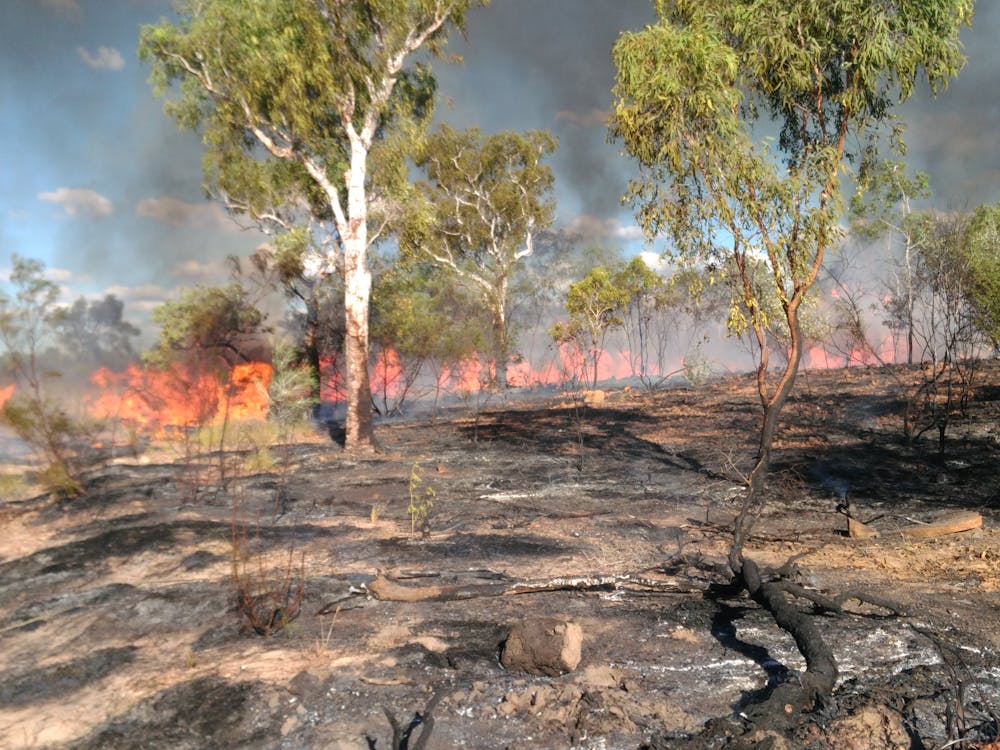
We found 19 Australian ecosystems met our criteria to be classified as “collapsing”. This includes the arid interior, savannas and mangroves of northern Australia, the Great Barrier Reef, Shark Bay, southern Australia’s kelp and alpine ash forests, tundra on Macquarie Island, and moss beds in Antarctica.

We define collapse as the state where ecosystems have changed in a substantial, negative way from their original state – such as species or habitat loss, or reduced vegetation or coral cover – and are unlikely to recover.

The Great Barrier Reef has suffered consecutive mass bleaching events, causing swathes of coral to die. Shutterstock

The good and bad news

Ecosystems consist of living and non-living components, and their interactions. They work like a super-complex engine: when some components are removed or stop working, knock-on consequences can lead to system failure.

Our study is based on measured data and observations, not modelling or predictions for the future. Encouragingly, not all ecosystems we examined have collapsed across their entire range. We still have, for instance, some intact reefs on the Great Barrier Reef, especially in deeper waters. And northern Australia has some of the most intact and least-modified stretches of savanna woodlands on Earth.

Still, collapses are happening, including in regions critical for growing food. This includes the Murray-Darling Basin, which covers around 14% of Australia’s landmass. Its rivers and other freshwater systems support more than 30% of Australia’s food production.

The effects of floods, fires, heatwaves and storms are felt equally in agricultural areas as in natural ecosystems. AAP Image/Dan Peled

The effects of floods, fires, heatwaves and storms do not stop at farm gates; they’re felt equally in agricultural areas and natural ecosystems.

We shouldn’t forget how towns ran out of drinking water during the recent drought.

Drinking water is also at risk when ecosystems collapse in our water catchments. In Victoria, for example, the degradation of giant Mountain Ash forests greatly reduces the amount of water flowing through the Thompson catchment, threatening nearly five million people’s drinking water in Melbourne. 

This is a dire wake-up call — not just a warning. Put bluntly, current changes across the continent, and their potential outcomes, pose an existential threat to our survival, and other life we share environments with.

A burnt pencil pine, one of the world’s oldest species. These ‘living fossils’ in Tasmania’s World Heritage Area are unlikely to recover after fire. Aimee Bliss, Author provided

In investigating patterns of collapse, we found most ecosystems experience multiple, concurrent pressures from both global climate change and regional human impacts (such as land clearing). Pressures are often additive and extreme.

Take the last 11 years in Western Australia as an example.

In the summer of 2010 and 2011, a heatwave spanning more than 300,000 square kilometres ravaged both marine and land ecosystems. The extreme heat devastated forests and woodlands, kelp forests, seagrass meadows and coral reefs. This catastrophe was followed by two cyclones.

A record-breaking, marine heatwave in late 2019 dealt a further blow. And another marine heatwave is predicted for this April.

These 19 ecosystems are collapsing: read about each

What to do about it?

Our brains trust comprises 38 experts from 21 universities, CSIRO and the federal Department of Agriculture Water and Environment. Beyond quantifying and reporting more doom and gloom, we asked the question: what can be done?

We devised a simple but tractable scheme called the 3As:
  • Awareness of what is important
  • Anticipation of what is coming down the line
  • Action to stop the pressures or deal with impacts.
In our paper, we identify positive actions to help protect or restore ecosystems. Many are already happening. In some cases, ecosystems might be better left to recover by themselves, such as coral after a cyclone.

In other cases, active human intervention will be required – for example, placing artificial nesting boxes for Carnaby’s black cockatoos in areas where old trees have been removed.

Artificial nesting boxes for birds such as the Carnaby’s black cockatoo are important interventions. Shutterstock

“Future-ready” actions are also vital. This includes reinstating cultural burning practices, which have multiple values and benefits for Aboriginal communities and can help minimise the risk and strength of bushfires.

It might also include replanting banks along the Murray River with species better suited to warmer conditions.

Some actions may be small and localised, but have substantial positive benefits.

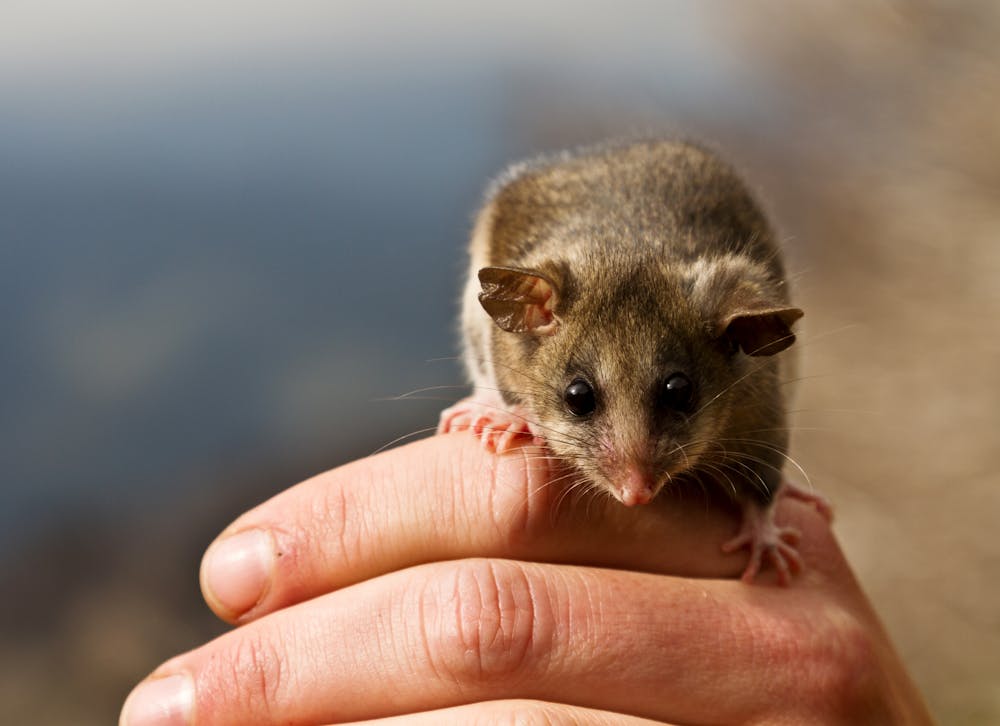
For example, billions of migrating Bogong moths, the main summer food for critically endangered mountain pygmy possums, have not arrived in their typical numbers in Australian alpine regions in recent years. This was further exacerbated by the 2019-20 fires. Brilliantly, Zoos Victoria anticipated this pressure and developed supplementary food — Bogong bikkies.

Other more challenging, global or large-scale actions must address the root cause of environmental threats, such as human population growth and per-capita consumption of environmental resources.

We must rapidly reduce greenhouse gas emissions to net-zero, remove or suppress invasive species such as feral cats and buffel grass, and stop widespread land clearing and other forms of habitat destruction.

Mountain pygmy possums were saved from potential catastrophe after Zoos Victoria developed alternative food for them. AAP Image/Department of Sustainability and Environment /Tim Arch

Our lives depend on it

The multiple ecosystem collapses we have documented in Australia are a harbinger for environments globally.

The simplicity of the 3As is to show people can do something positive, either at the local level of a landcare group, or at the level of government departments and conservation agencies.

Our lives and those of our children, as well as our economies, societies and cultures, depend on it.

We simply cannot afford any further delay. 

Links

(USA) ‘Mutual Suicide’: US Issues Stark Warning On Climate Change

Al Jazeera

‘Our heads in the sand at our own peril,’ US envoy for climate warns, as leaders discuss security implications of global warming.

Russia, India and China said climate change should be tackled in other global forums, not at the UN Security Council. [File: Charles Platiau/Reuters]

The United States has warned inaction by world powers on climate change is tantamount to a “mutual suicide pact” after countries such as China, India, and Russia expressed scepticism on the global security threat it posed.

John Kerry, the US special presidential envoy for climate, told the UN Security Council on Tuesday that the Pentagon has described the climate crisis as “a threat multiplier”.

“But even though climate change has been repeatedly called ‘an existential threat’, we honestly have yet as a world to respond with the urgency required,” said Kerry.

He called the climate situation “indisputably a Security Council issue” after some nations said it had no place for discussion at the UN body.

“In fact, it is among the most complex and compelling security issues that I think we’ve ever faced.”

Failing to address climate change is “marching forward to what is almost tantamount to a mutual suicide pact”, said Kerry. “We bury our heads in the sand at our own peril. It’s urgent to treat the climate crisis as the urgent security threat that it is.”

The stance by the administration of President Joe Biden comes in stark contrast to that of former US leader Donald Trump, who pulled out of the landmark 2015 Paris climate agreement and ignored climate policy during his four years in power.

Experts believe the world must reach net zero carbon emissions by 2050 or sooner to ensure long-term warming is held to no more than 1.5 degrees Celsius (34.7 degrees Fahrenheit) and avoid triggering catastrophic climate tipping points.

The world has already warmed 1.2C (2.2F) since the mid-19th century and the goal now is to prevent an additional 0.3C (0.5F) of warming.

Paris Climate Agreement

‘Serious doubts’


Russia, India and China said climate change should be tackled in other global forums, not at the UN’s main grouping on imminent world threats.

Russia was particularly vocal in its opposition to the discussions.

“We agree that climate change issues can exacerbate conflict. But are they really the root cause of these conflicts? There are serious doubts about this,” said Moscow’s ambassador to the UN, Vassily Nebenzia.

“The connection between the climate and conflicts can be looked at with regard to only certain countries and regions, talking about this in general terms and in a global context has no justification,” he added.

While Russia was committed to action against climate change, “this should be done within the framework of the mechanisms where it is dealt with by professionals”.

China’s special climate envoy Xie Zhenhua acknowledged climate change was linked to insecurity but overall issued a similar line to Russia.

“International climate cooperation should be advanced with the UN Framework Convention on Climate Change,” he said, in a long speech that touted China’s recent commitments, including its aim to achieve its carbon emissions peak before 2030 and achieve neutrality by 2060.

India’s environment minister, Prakash Javdekar, dismissed the idea of climate change as a driver of conflict.

Forest fires have ravaged many areas on the planet in recent years. [Patrick Record/AP]

‘Tree-hugging tofu munchers’

However, the planet’s warming temperatures were deemed inextricably linked to global security by most countries, including the United Kingdom, France and Germany.

British Prime Minister Boris Johnson urged fellow leaders to take immediate action on the climate crisis or face worsening global instability.

“Whether you like it or not it is a matter of when, not if, your country and your people will have to deal with the security impacts of climate change,” said Johnson.

“I know that there are people around the world who will say that this is … green stuff from a bunch of tree-hugging tofu munchers and not suited to international diplomacy and international politics. I couldn’t disagree more profoundly.”

Johnson pointed to the 16 million people displaced by weather-related disasters each year, some becoming easy prey to armed groups, farmers losing another wheat harvest because of drought and switching to growing opium poppies, and girls forced to drop out of school to search for water becoming prey to human traffickers. He also cited the impacts of changing sea levels and wildfires.

Kenya’s President Uhuru Kenyatta stressed the effect of climate and security on Africa, which he lamented “unfortunately will suffer the worst consequences of climate change despite being the least responsible for global greenhouse gases”.

He said the drought-stricken Horn of Africa, drying of the Lake Chad basin, shrinking of the Sahel and savannah grasslands “and worsening economic vulnerabilities have set in motion political, demographic, migratory dynamics that increase the threat of insurgency and violent extremism”.


Climate Disasters 2020

‘Last best hope’

The UK has committed into law a target of net-zero carbon emissions by 2050 and will host the COP26 climate summit in November in the Scottish city of Glasgow.

Kerry called the Glasgow conference “literally our last best hope to get on track and get this right”.

The United States is hosting its own summit on April 22 where it is expected to announce its renewed carbon-reduction commitments after years of disengagement under Trump.

French President Emmanuel Macron, meanwhile, pleaded for “effective multilateralism” in the effort to limit warming, and voiced support for a German idea of appointing a special UN envoy for climate security.

Germany’s Foreign Minister Heiko Maas also called for regular reporting by the UN secretary-general on the security implications of climate change.

Renowned British broadcaster and naturalist David Attenborough, in a video message played before the UNSC meeting, warned “if we continue on our current path, we will face the collapse of everything that bring us our security including food, water, habitable temperatures”.

“We have left the stable and secure climatic period that gave birth to our civilization,” he said. “There is no going back.”

But Attenborough added: “If we act fast enough we can reach a new stable state,” and the UN conference in November “may be our last opportunity to make this step change”.

Bangladesh Water Crisis

Links

(AU) Indigenous Expertise Is Reducing Bushfires In Northern Australia. It’s Time To Consider Similar Approaches For Other Disasters

The Conversation -  |  |  

Waanyi Garawa Rangers (Jimmy Morrison), Author provided

Authors
  •  is Senior Ecological Economist, Charles Darwin University
  •  is Research Fellow Bushfires, Charles Darwin University
  •  is Fire Coordinator for the Tiwi Islands, Indigenous Knowledge     
Northern Australia is by far the most fire-prone region of Australia, with enormous bushfires occurring annually across thousands of square kilometres.

Many of these vast, flammable landscapes have precious few barriers to slow down a fire. Infrastructure and resources are limited, and people are widely dispersed across the region. 

Fire risk reduction in the recent past included very local prescribed burning operations. The overall effect was small, with huge greenhouse gas emissions from out-of-control savanna wildfires.

So, what might a better approach look like?

Our team at the Charles Darwin University’s Darwin Centre for Bushfire Research has been working with Indigenous land managers, conservation, research and government organisations in northern Australia for the last 25 years to find more effective ways to manage wildfires.

These collaborations have led to a new approach, blending modern scientific knowledge with traditional Indigenous land management practices to reduce bushfire risk.

How? By reducing fuel load through a patchy mosaic of small, low intensity, burns early in the fire season that cut the risk of late dry season fires when greenhouse gas emissions are much greater.
        
Reducing fuel load through a patchy mosaic of small, low intensity, burns early in the fire season cuts the risk of late dry season fires when greenhouse gas emissions are much greater. Waanyi Garawa Rangers (Jimmy Morrison), Author provided

By collaborating with Indigenous ranger groups, this experience shows Australia can develop economically sustainable long-term solutions to manage bushfire risks — and shows what might be possible for other natural hazards such as cyclones and floods.

Such collaborations deliver benefits such as:
When done well, a collaborative approach to emergency management can create opportunities on country, enhance cultural and learning opportunities for Indigenous peoples and deliver environmental benefits for everyone. 

Northern Australia is by far the most fire-prone region of Australia, with enormous bushfires occurring annually in some places. AAP Image/Dave Hunt 

Making fire management economically sustainable: a case study

Indigenous fire management skills and traditions have long been practised in Australia but part of the challenge, as one study put it, is “finding the economic means to reinstate this type of prescribed strategic management.” In other words, how do we pay for it?

After Australia ratified the Kyoto Protocol in 2007, there was renewed focus on reducing wildfires in Australia’s tropical savannas due to their significant role in creating greenhouse gas emissions.

In collaboration with Indigenous land managers and others, our collective efforts helped to develop what’s known as the savanna burning methodology. This system incentivises management of fire in the north.

Under this method, Indigenous land managers in tropical savannas can earn income for managing fire on their land to reduce greenhouse gas emissions. This is done through a tightly controlled system in which their emissions savings are measured in terms of carbon credit units.

Self-acquired funds from the system go far to support Indigenous rangers to develop and improve skills so they can continue improving fire management across the north. Waanyi Garawa Rangers (Jimmy Morrison), Author provided

Global and local benefits

This approach has allowed a new carbon economy to bloom in remote northern Australia. As one study put it:
Since the development of the first savanna-burning methodology determination in 2012, 25% of the entire 1.2 million km2 eligible northern savannas region is now under formally registered savanna-burning projects, currently generating [more than] A$30m per year.
These self-acquired funds go far to support Indigenous rangers to develop and improve skills so they can continue improving fire management across the north.

As Dean Yibarbuk, fire ecologist and senior traditional owner in West Arnhem Land has said:
This fire management program has been successful on so many levels: culturally, economically and environmentally. Through reinstating traditional burning practices, new generations of landowners have been trained in traditional and western fire management, hundreds of thousands of tonnes of greenhouse gas have been abated, and the landscape is being managed in the right way.
A consistent and reliable flow of funds from carbon contracts, as well as other government and philanthropic sources, further offers many other socio-economic benefits. It has been instrumental in allowing art centres, weed and feral animal control businesses, rock art conservation projects, and bi-cultural schools to flourish.

Investing money to save money

This system shows what’s possible with the right engagement and policy levers. Perhaps one day a similar approach could help reduce risk from other kinds of natural disasters, all while building community resilience. 

Indigenous land managers in certain areas can earn income for managing fire on their land to reduce greenhouse gas emissions. AAP Image/Dave Hunt

In the future, could we have similar systems where flood mitigation projects or cyclone risk reduction projects are made economically viable for local communities?

This would reduce reliance on emergency services. It also makes it less likely cultural protocols are breached when non-local emergency personnel are sent in. For example, tree removal is a common cyclone risk reduction practice but it’s important to know which trees are culturally significant in a community, and why you need to leave them alone.

For these approaches to work, genuine and ongoing engagement with Indigenous peoples and dispersed remote communities is essential.

As a start to this engagement, we brought together Indigenous leaders, government representatives, and emergency management agency personnel from across the north for a meeting at Charles Darwin University late last year, supported by the Bushfire and Natural Hazards Cooperative Research Centre.

Many of the key personnel in these groups were meeting for the very first time, despite having worked for years on trying to address the same problems.

With appropriate funding, we could make such gatherings regular events so it’s easier for these stakeholders to work together. Long term collaborations can reduce disaster risk for northern Australian communities who live there permanently, build their resilience, and cut significant costs for Australian governments.

Resources to cover training, transport, and logistics are crucial to implement such an integrated approach.

Long term solutions cost money. But by drawing on local Indigenous knowledge and expertise on disaster risk reduction, we can make huge savings in the long term.'

Links

Friday, February 26, 2021

To Stop Climate Disaster, Make Ecocide An International Crime. It's The Only Way

The Guardian -   | Julia Jackson

Outlawing ecocide would hold governments and corporations accountable for environmental negligence. We can’t wait

Smoke rises from an illegally lit fire in an Amazon rainforest reserve in Pará State, Brazil. Photograph: Carl de Souza/AFP/Getty Images

The Paris agreement is failing.

Yet there is new hope for preserving a livable planet: the growing global campaign to criminalize ecocide can address the root causes of the climate crisis and safeguard our planet – the common home of all humanity and, indeed, all life on Earth.

Nearly five years after the negotiation of the landmark Paris agreement to limit greenhouse gas emissions and associated global warming to “well below 2.0C above pre-industrial levels and to pursue efforts to limit the temperature increase even further to 1.5C”, we are experiencing drastically accelerating warming. 2020 was the second warmest year on record, following the record-setting 2019.

Carbon in the atmosphere reached 417 parts per million (ppm) – the highest in the last 3m years.Even if we magically flipped a switch to a fully green economy tomorrow, there is still enough carbon in the atmosphere to continue warming the planet for decades.

The science is clear: without drastic action to limit temperature rise below 1.5C, the Earth, and all life on it, including all human beings, will suffer devastating consequences.

Yet only two countries – Morocco and the Gambia – are on track to meet the 1.5C target. The largest emitters, including the United States, China, Russia and Saudi Arabia, are putting the world on course for 4C.

At that rate, the polar ice caps will melt, causing dramatic sea level rise that will – in combination with other devastating effects like strengthening storms and droughts – cause mass famine, displacement and extinction.

Currently, much of humanity feels hopeless, but the establishment of ecocide as a crime offers something for people to get behind. Enacting laws against ecocide, as is under consideration in a growing number of jurisdictions, offers a way to correct the shortcomings of the Paris agreement.

Whereas Paris lacks sufficient ambition, transparency and accountability, the criminalization of ecocide would be an enforceable deterrent.

Outlawing ecocide would also address a key root cause of global climate change: the widespread destruction of nature, which, in addition to increasing greenhouse gas emissions, has devastating impacts on global health, food and water security, and sustainable development – to name a few.

Ecocide shares its roots with other landmark concepts in international law, including genocide. Indeed, ecocide and genocide often go hand in hand. Around the globe, ecological destruction is also decimating indigenous communities.

To give just a few cases: Brazil’s Yanomami are facing mercury poisoning generated by the 20,000 illegal miners in their territories. 87% of Native Alaskan villages are experiencing climate-related erosion, even as they face growing calls to drill on their lands.

Conviction for ecocide would require demonstrating willful disregard for the consequences of actions such as deforestation, reckless drilling and mining.

This threshold implicates a number of global and corporate leaders through their complicity in deforesting the Amazon and Congo basins, drilling recklessly in the Arctic and the Niger delta, or permitting unsustainable palm oil plantations in south-east Asia, among other destructive practices.

As a term, “ecocide” dates to 1970, when Arthur Galston, an American botanist, used it to describe the appalling effects of Agent Orange on the vast forests of Vietnam and Cambodia. On the 50th anniversary of the concept, we can take heart in the growing civic will to officially make ecocide an international crime.

Already, citizens, scientists and youth activists including Greta Thunberg are calling on global leaders to introduce ecocide at the international criminal court (ICC).

Following the lead of climate-vulnerable ocean states Vanuatu and the Maldives in December 2019, President Emmanuel Macron of France vowed to champion it on the international stage last June and has proposed a version of it in French law.

Finland and Belgium both expressed interest during the ICC’s annual assembly, and Spain’s parliamentary foreign affairs committee has issued recommendations to consider it.

The EU has also voted to encourage its recognition by member states. And Pope Francis was ahead of the game in November 2019 when he called for ecocide to become an international crime against peace.

The Stop Ecocide Foundation has recently convened a panel of heavyweight international lawyers to draft a robust legal definition of ecocide which this growing list of states can seriously consider proposing as an amendment to the ICC’s Rome Statute.

Criminalizing ecocide gives us the unprecedented chance to create a protective measure with legal teeth that could deter reckless leaders from damaging, short-sighted policies creating accountability in a way that Paris does not.

Just as important, we could motivate corporations to make dramatic shifts away from an unacceptable status quo that too often favors the destruction of nature for short-term profits.

As ecocide becomes an impending legal reality, corporate leaders would be forced to adapt, and quickly, re-examining the way they do business and make decisions with our planet in mind.

But ecocide would not just be a punitive measure for corporate leaders. It would also offer considerable opportunities for new sustainable ventures.

The pristine areas that ecocide targets – virgin forests, wetlands and our oceans – are precisely the places that have value far beyond mere extractive industries, including in sustainably developing new pharmaceuticals that may help in the current Covid-19 pandemic and in future pandemics.

True leaders in the public and private sector would much prefer ethical, sustainable and long-term value creation that does not exploit nature or humanity. By outlawing bad actors, we will empower many more good ones.

As a global community, we cannot wait for more warning signs or the “right moment”. Last year alone has seen devastating examples of ecocide: fires ravaging the Amazon, the Congo basin, Australia, Alaska and Siberia all at unprecedented rates; a large oil spill in Ecuador; and unending, accelerating plastic pollution, which could weigh up to 1.3bn tons by 2040.

Unfortunately, under cover of Covid-19, ecocide has accelerated. Deforestation in the Amazon basin increased by 50% in the first quarter of 2020, with rampant fires reaching a 13-year high in June.

In the midst of a global pandemic that demonstrates humanity’s shared vulnerability – and our need to work together collectively in the face of crisis – we must begin to understand that what we do to our ecosystems, we do to ourselves.

Indeed, the meaning of ecocide is fully encapsulated by its etymology. It comes from the Greek oikos (home) and the Latin cadere (to kill). Ecocide is literally “killing our home”.

Links

(AU) Game, Set, Match: Calling Time On Climate Inaction

Climate Council -  |  |  |  |  |  |  | 

 
Sport is a major part of Australian culture.

Every weekend, millions of Australians participate in, watch or discuss sport.

Sporting legends are idolised and our national teams and clubs are revered.

But Australia’s summer of sport is under threat from climate change. 

Driven largely by the burning of fossil fuels (coal, oil and gas), climate change is worsening extreme weather events and disrupting Australian sport.

Game, Set, Match: Calling Time on Climate Inaction describes how climate change is affecting sport in Australia, and how sport can also be a powerful force for change. 

LARGE IMAGE

Key Findings

1. Australia’s summer of sport is under threat from climate change.
  • Climate change, driven largely by the burning of fossil fuels (coal, oil and gas), is worsening extreme weather events and disrupting Australian sport.
  • Australia’s summer sports calendar, which includes Big Bash League (BBL) cricket, AFLW games, the Tour Down Under cycling race, the Australian Open tennis, A and W-League football and community sports is threatened by climate change.
2. By 2040, heatwaves in Sydney and Melbourne could reach highs of 50°C, threatening the viability of summer sport as it is currently played.
  • Heatwaves are becoming hotter, lasting longer and occurring more often.
  • While 2010-2019 was the warmest decade over the past century, it is also likely to be the coolest decade of the century ahead.
  • 2019 was Australia’s warmest year on record, with 33 days that exceeded 39°C – more than the total number between 1960 and 2018.
  • If global emissions continue to increase, Australian sports will have to make significant changes, such as playing summer games in the evening or switching schedules to spring and autumn.
LARGE IMAGE
3. No athlete, whether an elite professional or a community player, is immune to our increasingly hot summers, which are a health hazard for those playing and watching sport.
  • Climate change is driving longer and more intense bushfire seasons, exposing athletes and spectators to dangerous air pollution, for which professional players are a particularly sensitive group.
  • Many athletes and spectators have fallen seriously ill following exposure to extreme heat in recent years. For example:
    • Tennis: Temperatures at the Australian Open Tennis in Melbourne have repeatedly hit +40°C with games suspended and players taken to hospital. In 2014, almost 1,000 spectators were treated for heat exhaustion.
    • Triathlon: On 2 March 2016, temperatures reached 34°C in Penrith during the NSW All Schools Triathlon Championships at the nearby Sydney International Regatta Centre. Paramedics were called following reports of nine people suffering from heat exposure during the event.
    • Cricket: In January 2018, at the Sydney Ashes Test, England’s captain Joe Root was hospitalised as air temperature hit 41.9°C. In December 2019, New Zealand cancelled part of a warmup match in Melbourne because the temperature was forecast to reach 45°C.
  • Prolonged drought in Australia has resulted in an increase in shoulder injuries due to sport being played on harder, rain-parched grounds. For example, shoulder injuries increased by 23 percent in 2001 (during the Millennium Drought), compared to 1994 levels.
Download Report
4. Australian sport is worth $50 billion to the economy and employs over 220,000 people, but governments are not adequately prepared for escalating climate risks.
  • None of Australia’s major sports plans, including the Federal Government’s first national sports plan, discuss or tackle the implications of climate change on sport.
  • Climate disruption is a growing cost for sport in Australia, including infrastructure maintenance and rising insurance premiums.
  • Elite venues may be able to afford expensive upgrades, but local venues will not.
  • Australia can help protect sport by becoming part of the global solution to climate change by rapidly and deeply reducing its greenhouse gas emissions and transitioning to renewable energy and storage.

5. Sport is a contributor to climate change, but it can also be an integral part of the solution.

  • Sporting clubs and codes contribute to climate change but can rapidly cut their own greenhouse gas emissions by changing the way they build venues, power events, travel and by cutting waste.
  • Athletes and other sporting leaders can become powerful advocates for change, both within sport and outside of it, by using their star appeal to educate and influence others.
  • Professional and community sports can switch sponsorship from fossil fuel-backed companies to ones that invest in climate solutions.
  • All sporting codes and leagues should have science-based, regularly updated policies that cover heat, bushfire smoke and other extreme weather events to protect athletes and spectators.

Let's go for gold on climate action

Links

Lethal Heating is a citizens' initiative