19/01/2022

(AU SMH) South Australia Breaks Record By Running For A Week On Renewable Energy

Sydney Morning Herald - Nick O'Malley

South Australia sourced an average of just over 100 per cent of the electricity it needed from renewable power for 6½ days leading up to December 29 last year – a record for the state and perhaps for comparable energy grids around the world.

The state’s previous record was just over three days, says Geoff Eldridge, an energy analyst who runs the website NEMlog.com.au, which tracks the operations of the National Energy Market covering Australia’s east-coast states and South Australia.

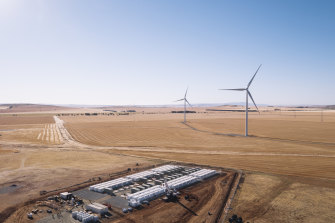
The Hornsdale Power Reservation in South Australia, where tech firm Tesla has installed a huge battery.

His analysis shows that for the six days identified, the state produced on average 101 per cent of the energy it needed from wind, rooftop solar and solar farms, with just a fraction of the energy the state used being drawn from gas, in order to keep the grid stable.

At times during the period, slightly less renewable energy was available and at other times renewable capacity was higher than needed, he says.

Bruce Mountain, director of the Victoria Energy Policy Centre, said he believed that aside from some small island grids such as those in Hawaii and Tasmania, it was likely that South Australia’s six-day run on renewables was a record for a grid supporting an advanced economy.

During the unprecedented 156-hour renewable run, the share of wind in total energy supplied averaged 64.4 per cent, while rooftop solar averaged 29.5 per cent and utility-scale solar averaged 6.2 per cent, clean energy website RenewEconomy.com.au reported, using Mr Eldridge’s data.

While Australia often receives poor international press regarding its climate policies, the nation’s rapid uptake of renewables is also receiving international attention.

A recent episode of the podcast The Energy Gang, produced in the US by global energy consultants Wood Mackenzie, focused on Australia’s success in incorporating renewables into its grid to total 24 per cent, highlighting the uptake of grid-scale batteries that both store renewable energy when it is not needed and help stabilise a system originally built to transmit power from huge providers such as coal power stations.

Fereidoon Sioshansi, a US-based energy analyst, says Australia has driven down the costs of renewables and in particular solar power, not only with so-called feed-in tariffs, which leave owners of solar systems paid well for the power they feed back to the grid, but also efficient regulation.

In parts of the US, state governments have introduced fees that slow solar uptake after lobbying from utility companies, he says.

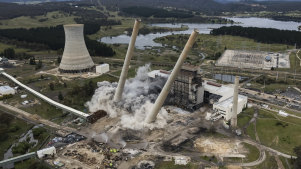
Energy prices The decomissioned Wallerawang coal fired power station near Lithgow, NSW was demolished on Wednesday.
Renewable energy to drive down household power bills over next three years

Figures from the International Renewable Energy Agency show the cost of installing residential solar in Australia is similar to that of nations with far cheaper labour costs such as Thailand and Malaysia, and is much cheaper than in the US and Europe.

Professor Mountain said Dr Sioshansi was one of many international energy experts who had contacted him to ask about Australian and South Australian energy policy.


 Professor Mountain said despite missteps over the years, South Australia’s success in renewables was due to a consistent bipartisan determination to speed up energy transition.

He said the state had advantages in its transition because it was a comparatively small market, with good connections to Victoria.

Mr Eldridge said his data showed significant “curtailment” during the six-day period, meaning renewables providers did not generate as much power as they could have.

This suggests progress is being made towards the SA government’s plan to become a net exporter of renewable power via interconnectors and a future green hydrogen industry, he said.

Links

(AU ABC) Will Climate Change Spell The End Of Coastal Living As We Know It?

ABC News - Maani Truu
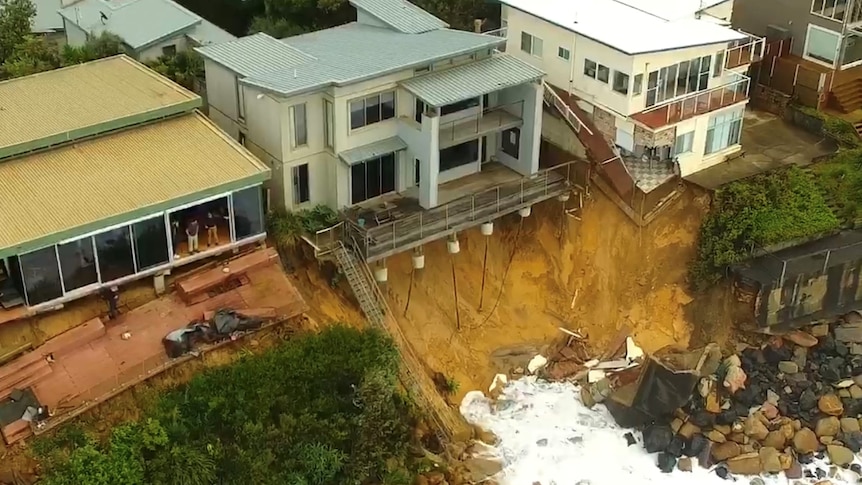
Houses teetering on the edge of collapse after east coast low lashed the Wamberal beach front in July 2020.
Sea level rise of close to a metre has been predicted by the end of the century. (ABC News)

When Chris Rogers returned to the NSW Central Coast after a stint living overseas, he was eager to embrace the quintessential Australian lifestyle — a home where his kids could swim in the ocean whenever they liked and he could walk along the beach he loves every day. 

But more than a year after powerful swells battered Wamberal Beach, causing massive erosion beneath the waterfront properties, he's been left fearing his home could be washed away in the next storm surge.

"We've worked our whole life, this is our family home, and to look at your kids and not be able to comfort them is scary," Rogers says.

"It's no different to someone sitting in a bushfire zone with a beautiful home. They love the bush and they love living there, and … the fire burns their home down. All we want to do is be able to protect our homes and our families."

A year ago a massive storm caused severe coastal erosion at Wamberal Beach. (ABC Central Coast: Sofie Wainwright)

Rogers, 47, feels lucky compared with his neighbours: some were forced to evacuate when their homes partially collapsed in the storm. The home where Rogers has lived with his wife and two children since 2016 remains intact, but his backyard has "sunk" where sand from the beach was washed away.

"Every time there's heavy rain, everyone is having more and more of their bank starting to collapse," he says. "If there are ... multiple east coast lows that hit this beach at the right tide, you could have as many as 10 homes going."

Rogers was attracted to the area by the relaxed pace of coastal living. Thanks to a rise in remote working as a result of the pandemic, more people than ever are making a similar decision to leave large cities and work from regional locations. 

But this pilgrimage is taking place against a backdrop of climate change, and many of its impacts are already being felt — not just in Wamberal, but all along Australia's coast.

Sea-level rise a reality

The latest report from the Intergovernmental Panel on Climate Change (IPCC) — the most comprehensive report on climate change ever released — estimates a sea level rise of up to 55 centimetres by the end of the century, while not ruling out a 2-metre increase in the same period. 

IPCC report and Australia Hot Aus
The latest IPCC report does not make for particularly uplifting reading. But if you are keen to delve further into the details, it does say quite a bit about Australia. Read more

This would have catastrophic consequences for hundreds of thousands of Australians living along coastlines and waterways.

In 2009, more than a decade before the IPCC report, the federal government's now-dissolved Department of Climate Change published a report measuring the risk to Australia's coastline — the first and only time it did so for the entire nation.

The report identified between 157,000 and 247,600 individual residential buildings at risk of inundation if sea levels were to rise by 1.1 metres. The replacement value for these houses, they estimated, was up to $63 billion.

Rogers, who has been leading a residents group agitating for a wall to be built to protect the coastline from further erosion, sees his home, and those of his neighbours, as the "first line of defence" against rising sea levels.

"We're working really hard to try and work with the council or the government to come up with potential solutions that protect not only us but all the infrastructure behind us," he says. "Obviously I want to protect the home, but I also want to protect the beach."

He hopes any protective action taken in Wamberal — "if we can do things right" — could act as a blueprint for other coastal towns feeling the impacts of climate change. "It's not just us," he says. "The exposure is massive, really massive, and concerns are simply growing."

How big is the problem?

Australia is a nation built on the ocean, literally and figuratively. More than 80 per cent of the population already lives within 50 kilometres of a coastline and the idealised beach lifestyle occupies a prime position in Australia's national psyche.

And with the rapid rise of remote working, forced by health measures introduced during the pandemic, executive director of the Australian Coastal Council's Association Alan Stokes predicts the number of people seeking a slower pace and water views is only set to grow.
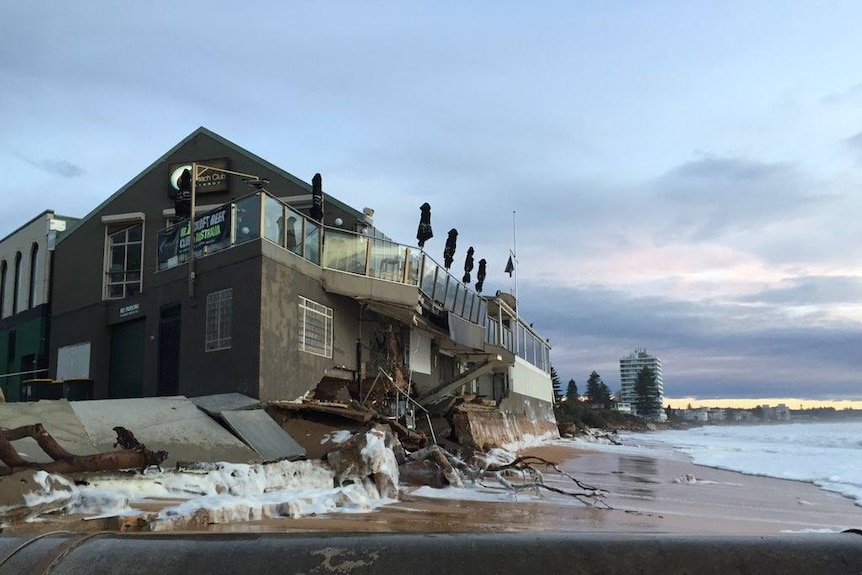
Debris and foam piled up against the beach club.
Collaroy Beach Club on Sydney's northern beaches was damaged by a high tide and low-pressure system in 2016.(ABC News: Amanda Hoh)

"We're going to notice a big difference in the findings of the 2021 census," he says. "I think we'll find that population levels in coastal areas — particularly those within, or a little beyond, commuter distance from the capital cities — are going to see enormous growth."

This is despite "at least a metre [of sea-level rise], probably more" already locked in, according to David Wainwright, a coastal engineer of almost 25 years. "The thing is the timing: if it's going to affect your property in 100 years, is that something you worry about now?"

The impacts of sea-level rise will not be limited to beachfront homes, but also properties in low-lying areas around estuaries or lakes. They are at risk of what's called coastal inundation. "As the mean sea level rise goes up in the ocean, you're also going to have the water level going up inside the estuary by a similar amount," Dr Wainwright says.

It's this latter group that will experience more damage in the coming decades. "This is a creeping issue that over time is going to inundate more and more frequently — and for certain properties, it might get to the stage where your property might be inundated by tides several times a year, even more. How are we going to manage that?"

How rising insurance costs
could trigger a property crunch

Insurance costs are set to soar for thousands of Australians. Exclusive new data shows the areas facing the biggest jumps. Read more

Stokes believes the gradual creep of climate change has lured home buyers into a false sense of security.

"There's this perception that the worst of it will be felt in 2100, so someone buying a house now in an area that's likely to be impacted by 2100 is saying to themselves 'well, you know, that's so far in the future it probably won't affect me now'," he says.

"But there will be increasing impacts during the period leading up to that."

If home-buyers aren't worried, the nation's financial institutions certainly are.

In September, the Reserve Bank of Australia released a report warning property values in climate change hot spots could soon take a hit, leaving banks vulnerable in the case of default. 

It warned that about 3.5 per cent of dwellings in Australia already fell under the international definition of "high-risk", but that long-term climate change risk wasn't being reflected in property values. South-east Queensland and northern New South Wales had the largest number of homes at risk of coastal inundation, the report found.

"If current values do not fully reflect the longer-term risks of climate change, housing prices could decline, leaving banks with less protection than expected against borrower default," it said.

What it means for property buyers

When it comes to the impact of climate change on the property market, Claire Ibrahim, a director at Deloitte Access Economics, says the Reserve Bank is right to expect material declines in housing prices over time in high-risk regions. 

But, she adds, this is largely separate from how buyers will value property in the short term.

"Because people don't have the information at the moment that clearly tells them with a level of certainty how it will change potentially for the negative because of climate, I think they do assume that it will hold to an extent," she says.

Could collaborative living provide an answer
to the housing crisis and climate change?

Three women smile in front of a board showing a development plan.
Once the purview of poor students, more adults are making a return to collaborative living in a bid to keep costs down and build community. Read more
"You have homes that reflect exactly the value of what people are willing to pay for them, but is it the right risk equation within that? No, it's probably not.

"But would you call it overvalued? No, not necessarily. Because you could, in theory, sell it tomorrow and still make money from it."

But eventually, as banks increasingly start to factor climate risk in, high insurance premiums will force buyers to reconsider the value of a property.

"It really does alter the equation of how we value living by the water," Ibrahim says. "And it starts to change the assumption that probably holds true for now that these properties will always maintain or increase their value."

When will that tipping point come? Climate analyst Karl Mallon has set about trying to answer that question. His company, Climate Valuation, seeks to provide data on the actual risk of climate change to property buyers and the banks that lend to them.

Up until now, he says, damage from sea level increase has been relatively rare. That's because most buildings have been constructed above the current sea level and set back from the coastline, forming what he describes as a "buffer".

He believes the impact of sea level rise will be mild for the next two or three decades, after which coastal inundation will steadily worsen. "Coastal inundation will be one of the worst impacts [from climate change] we're facing in Australia," he says.

Should we reconsider coastal living?

According to the experts, this comes down to timing and whether the long-term risk is worth the short-term benefits of living by the water.

"Time really matters," Ibrahim says. "When [people] make decisions, it can be really difficult to factor in time and risk in a way that's meaningful for how you value things."

While the impacts are already being felt in some areas, such as Wamberal, it is harder to quantify in regions where the danger is less obvious. 

By Climate Valuation's measure, about one in 20 properties are at high risk of flooding and coastal inundation. Dr Mallon predicts this could increase to one in 10 properties over the course of the century.

Without major works to protect them, these properties face the possibility of becoming uninsurable. "You're going to have people sitting on a house which they can't defend, they can't insure, and they can't sell," he says.

Governments across the world have embarked on large-scale engineering works to stop water encroaching on properties, but Dr Mallon believes Australian governments are less likely to go down that route because many at-risk areas have small populations relative to the high cost of intervening.
"In the end, there will be suburbs that will be untenable in this century," he says. "It's likely state governments and councils will just give up."
Meanwhile, Dr Mallon recommends prospective home buyers research whether a property is in an at-risk area, and if it is, make sure their insurance policy covers flooding and inundation — often described as "actions of the sea".

But after a quarter of a century surveying Australia's coastlines, Dr Wainwright argues we must shift our thinking. "A lot of it has to do with this assumption that property is permanent," Dr Wainwright says. "When you're talking about the coastline, that's not the case."

Links

(AU The Conversation) Green Hydrogen Is Coming - And These Australian Regions Are Well Placed To Build Our New Export Industry

The Conversation -

Shutterstock

Author
 is Senior Research Fellow, Victorian Hydrogen Hub, Swinburne University of Technology     
You might remember hearing a lot about green hydrogen last year, as global pressure mounted on Australia to take stronger action on climate change ahead of the COP26 Glasgow summit last November.

The government predicts green hydrogen exports and domestic use could be worth up to A$50 billion within 30 years, helping the world achieve deep decarbonisation.

But how close are we really to a green hydrogen industry? And which states are best placed to host it? My research shows that as of next year, and based on where the cheapest renewables are, the best places to produce green hydrogen are far north Queensland and Tasmania.

As ever more renewable energy pours into our grid, this picture will change. By the end of the decade, the north Queensland coast could become the hydrogen powerhouse. By 2040, dirt-cheap solar should make inland areas across New South Wales, Queensland, Victoria and South Australia the lowest cost producers.

Renewable energy you can store and transport

Why is there so much buzz around green hydrogen? In short, because it offers us a zero emissions way to transport energy. Take cheap renewable energy and use it to split water into hydrogen and oxygen using an electrolyser. Store the hydrogen on trucks, ship it overseas, or send it by pipeline. Then use the hydrogen for transport, manufacturing or electricity production.

Pathways for the production and use of green hydrogen. Author provided

All the technology exists – it’s the cost holding the industry back at present. That’s where Australia and its wealth of cheap renewable energy comes in.

Making hydrogen is nothing new – it has a long history of use in fertiliser production and oil refining. But until now, the main source for hydrogen was gas, a fossil fuel.

In the last few years, however, there has been a sudden surge of interest and investment in green hydrogen, and new technology pathways have emerged to produce cheap green hydrogen. As global decarbonisation gathers steam, Japan, South Korea and parts of Europe are looking for clean alternatives to replace the role fossil fuels have played in their economies.

Australia is exceptionally well placed to deliver these alternatives, with world-beating renewable resources and ports set up for our existing fossil fuel exports, such as coal and LNG.

In 2019, we sold almost $64 billion of black coal, with most going to Japan, South Korea, India and China. As these countries decarbonise, the coal industry will shrink. Green hydrogen could be an excellent replacement.

How competitive is Australian hydrogen?

At present, Australia is a long way from producing green hydrogen cheap enough to compete with fossil fuels, given we seem to have no appetite for taxing carbon pollution.

Does that mean it’s a non-starter? Hardly. It was only a decade ago sceptics ridiculed solar and wind as too expensive. They’ve gone awfully quiet as renewable prices fell, and fell, and fell – as tracked by the International Renewable Energy Agency. Now renewables are cheaper than coal. Battery storage, too, has fallen drastically in price. The same forces are at work on the key technology we need – cheaper electrolysers.

By 2040, the CSIRO predicts an 83% fall in electrolyser costs, according to its Gencost 2021-22 report. By contrast, gas-derived hydrogen with carbon capture is predicted to reduce in cost only slightly. That means green hydrogen is likely to capture much of the market for hydrogen from 2030 onwards.

Which states could benefit?

My research with the Victorian Hydrogen Hub) shows as of next year, the lowest cost location for green hydrogen would be Far North Queensland ($4.1/kg) and Tasmania ($4.4/kg) due to high renewable resources.

But this picture will change. By 2030, northern Queensland’s coastal regions could be the Australian hydrogen powerhouse due to a combination of cheap solar and access to ports. Western Australia and the Northern Territory could also have similar advantages, though the modelling for these areas has not yet been done.

As solar energy and electrolyser costs continue to fall, new states could enter the green hydrogen economy. In CSIRO’s cost predictions, electricity from solar is predicted to become much cheaper than wind by 2040. This means sunny areas like central and northern Queensland ($1.7/kg) and inland NSW, Victoria and South Australia ($1.8/kg) could be the best locations for green hydrogen production.

In making these estimates, I do not consider supply chain and storage infrastructure required to deliver the hydrogen. Transport could account for between $0.05/kg to $0.75/kg depending on distance.

The levelised cost of hydrogen at renewable energy zones in Australia for 2023, 2030 and 2040. (source: Steven Percy, Victorian Hydrogen Hub)

Comparing my modelling to price thresholds set out in the National Hydrogen Strategy indicates we can produce green hydrogen for trucking at a similar cost to diesel within four years. Fertiliser would take longer, becoming competitive by 2040.

Does our dry country have the water resources for green hydrogen?

If we achieved the $50 billion green hydrogen industry the government is aiming for, how much water would it consume? Surprisingly little. It would take only around 4% of the water we used for our crops and pastures in 2019-20 to generate an export industry that size – 225,000 megalitres.

Much more water than this will be freed up as coal-fired power stations exit the grid. In Queensland and NSW alone, these power stations consume around 158,000 megalitres a year according to a 2020 report prepared for the Australian Conservation Foundation. Coal mining in these two states takes an additional 224,000 megalitres.

As the cost of renewable energy falls and falls, we will also be able to desalinate seawater along our coasts to produce hydrogen. We estimate this would account for only about 1% of the cost of producing hydrogen, based on Australian Water Association desalination cost estimates.

How can we get there faster?

This decade, we must plan for our new hydrogen economy. Government and industry will need to develop and support new hydrogen infrastructure projects to produce, distribute, use and export hydrogen at scale.

We’re already seeing promising signs of progress, as major mining companies move strongly into green hydrogen.

Now we need governments across Australia to rapidly get optimal policy and regulations in place to allow the industry to develop and thrive.

Links

18/01/2022

(UK Independent) Climate Crisis Increasing Risk Of Premature Birth And Childhood Illness

(UK) Independent - Alana Calvert

Climate hazards – including rising temperature, pollution and wildfires – are increasing the risk of pre-term birth.

Undated file photo of a mother holding the feet of a new baby (Dominic Lipinski/PA) (PA Wire)

Rising temperatures around the world as a result of climate change are having a devastating effect on foetuses, babies and infants, studies have found.

Scientists from six different studies determined that climate change is causing – among other adverse outcomes – the increased risk of premature birth, increased hospitalisation of young children and weight gain in babies.

The separate studies have just been published in a special issue of the journal Paediatric and Perinatal Epidemiology.

The journal’s guest editors Professor Gregory Wellenius and Professor Amelia Wesselink from the Boston University School of Public Health said that a growing body of evidence indicates the ways in which extreme heat, hurricanes and wildfire smoke can increase the risk of pre-term birth.

One of the studies found that pre-term births were 16% more likely in areas experiencing heat-waves (Cathal McNaughton/PA) (PA Archive)

One of the studies found that pre-term births were 16% more likely in areas experiencing heatwaves.

Researchers did this by looking at one million pregnant women between 2004 and 2015 in the high temperature region of New South Wales Australia.

Similar findings were observed in a study that assessed the link between ambient heat and spontaneous pre-term birth between 2007-2011 in the hot climate of Harris Country, Texas.

The day after mothers were exposed to heatwave temperatures, their risk of premature birth was 15%.

Another study in the journal which analysed 200,000 births in Israel found links between high temperature and weight gain during the first year of life. Of the 20% exposed to night-time temperature, 5% had a higher risk of rapid weight gain.

An accompanying study found that as the frequency and intensity of wildfires have increased dramatically over the past two decades in the western US, there had been a 32% rise in a rare condition typically associated with air pollution among pregnant women.

Foetal gastroschisis is an abdominal wall defect that is rare, but “increasing in prevalence,” according to Prof Wellenius and Prof Wesselink.

Writing in the special edition of the journal which looked at rising temperatures as well as wildfires and pollution on babies and foetuses, the professors and co-editors said: “The evidence is clear: climate hazards, particularly heat and air pollution, do adversely impact a wide range of reproductive, perinatal and paediatric health outcomes.
"Failure to urgently address the reproductive, perinatal and paediatric health impacts of climate change will perpetuate and worsen reproductive injustices.
“The expected pace of continued climate change and resulting impacts on our physical and mental health and wellbeing calls for decisive and immediate action on adaptation.”

The professors added that the evidence also found that mothers from more marginalised populations are at much higher risk of being exposed to climate hazards, and were also less resilient to the effects of these hazards due to systematic and structural oppression.

They continued: “Our climate has already changed profoundly due to human activity and these changes are broadly harmful to our health, with some communities and individuals affected much more than others. Reproductive justice is ‘…the human right to maintain personal bodily autonomy, have children, not have children, and parent the children we have in safe and sustainable communities’.

“Failure to urgently address the reproductive, perinatal and paediatric health impacts of climate change will perpetuate and worsen reproductive injustices, wherein the most marginalised populations will be deprived of their ability to procreate and safely parent their children.”

Links

(AU SBS) Past Seven Years Hottest On Record, Prompting Calls For Stronger Climate Action - Audio

SBS News In Depth

Temperature records continued to be broken in 2021, with US scientists confirming the Earth experienced its sixth hottest year on record.

A firefighter helps to contain the Wooroloo-Chidlow bushfire
in Western Australia on 27 December 2021.
(AAP/WA Department of Fire and Emergency Services)
AUDIO
SBS News
8 min 12 sec
For 25 countries, 2021 was their warmest year on record with record-high temperatures in parts of northern Africa, south Asia and areas of South America. Australian climate scientists say the findings reinforce the longer-term trend of rising temperatures around the world.

Links

(AU ABC) Is Climate Change Behind Record-Breaking Temperatures In The Pilbara?

ABC Pilbara - Laura Birch

The Bureau of Meteorology says there has been an increase in the frequency of extreme heat events in Australia due in part to climate change.

An archway with the sun rising.
The temperature soared to 50.7C at Onslow, in the Pilbara, on Thursday. (ABC Pilbara: Laura Birch)

Key Points
  • Three towns in the Pilbara surpassed 50C this week
  • The Bureau of Meteorology says a build-up of hot air led to the extreme weather event, but climate change could also be a factor
  • Climate expert Jatin Kala says it is alarming how many record weather events are occurring
This week Onslow, 1,377 kilometres north of Perth, reached 50.7 degrees Celsius.

It equalled the hottest temperature ever recorded in Australia and the Southern Hemisphere.

Also in the Pilbara region, the mercury soared to 50.5C in Roebourne and Mardie.

Previously, temperatures had only exceeded 50C three times in Australia's history.

BOM duty forecaster Jessica Lingard said while it was hard to pin climate change as the sole reason for temperatures spiking in the Pilbara this week, it could be a factor.

"If we look back at the 2019 climate report which was published by the bureau and the CSIRO, that showed there has been an increase in the frequency of extreme heat events and record high temperatures," Ms Lingard said.

She said the Pilbara could experience these high temperatures more often.

baby with hat on and swimming suit, sitting in shallow water
Freja Harmer cools off as Onslow experiences record-breaking temperatures. (Supplied: Shane Harmer )

What caused the hot weather in Onslow? Ms Lingard said it was unexpected a town on the coast of Australia would reach 50.7C.

"We normally expect to see our hotter temperatures further inland because they don't have the coastal, cooling effects of having an ocean nearby," she said.
Australia's hottest day
Two girls, sitting in paddle pool
Onslow, around 1,400 kilometres north of Perth, joins Oodnadatta in outback South Australia, which hit 50.7C in January 1960. Read more

"What happened was we had a very hot air mass over WA and then we had really strong offshore winds.
"Winds blowing from the centre of Australia out over the ocean, and they blocked the usual arrival of [the] cooler sea breeze."
This allowed the temperatures to continue to increase.

"Looking forward in the next year or two, or even in the next decade we may start to see these hotter temperatures becoming more frequent as I say due to the implications of climate change," Ms Lingard said.

Is climate change a factor? Murdoch University senior lecturer in atmospheric science Jatin Kala said he was concerned about the frequency of these record-breaking temperatures.

"If you look at the past decade, I think about seven of the hottest years on record have happened in the last decade," he said.

"Out in the Pilbara it does get very hot, that's not unusual.
"What is really concerning is the rate at which these records are being broken."
Dr Kala said it showed the global climate was warming rapidly. Curtin University climate change expert Ashraf Dewan said it was difficult to say whether the record-breaking temperatures in the Pilbara were the result of climate change.

"That might be an indirect effect of climate change because that region is experiencing low rainfall," he said.

But Dr Dewan said extreme and random weather patterns would become more common in the future.
'If we can't control the emissions that may actually lead to new temperature records every year, we don't know," he said.
Dr Kala said there needed to be concerted action globally.

"As we increase the concentration of greenhouse gases in the Earth's atmosphere we generate more warming and as we warm the mean global temperature we're going to get more regional extremes," he said.

"We need politicians to listen to the science and we really need to curb down our emissions of greenhouse gases to net zero as soon as we can."

The WA Minister for Climate Change has been contacted for comment.

Links

17/01/2022

(AU The Conversation) This WA Town Just Topped 50℃ – A Dangerous Temperature Many Australians Will Have To Get Used To

The Conversation - 

Shutterstock

Author
 is Senior Lecturer in Climate Science, The University of Melbourne     
While Australians are used to summer heat, most of us only have to endure the occasional day over 40℃.

Yesterday though, the temperature peaked at 50.7℃ in Onslow, a small Western Australian town around 100km from Exmouth.

Remarkably, the town sits right next to the ocean, which usually provides cooling. By contrast, the infamously hot WA town of Marble Bar has only reached 49.6℃ this summer, despite its inland location.

If confirmed, the Onslow temperature would equal Australia’s hottest on record set in Oodnadatta, South Australia, in January 1960. It would also mark only the fourth day over 50℃ for an Australian location since reliable observations began.

Unfortunately, this extreme heat is becoming more common as the world heats up. The number of days over 50℃ has doubled since the 1980s.

These dangerous temperatures are now being recorded more often – not just in Australia but in cities in Pakistan, India and the Persian Gulf. This poses real threats to the health of people enduring them.

Where did the heat come from?

Hitting such extreme temperatures requires heat to build up over several days.

Onslow’s temperatures had been close to average since a couple of heatwaves struck the Pilbara in the second half of December. So where did this unusual heat come from?

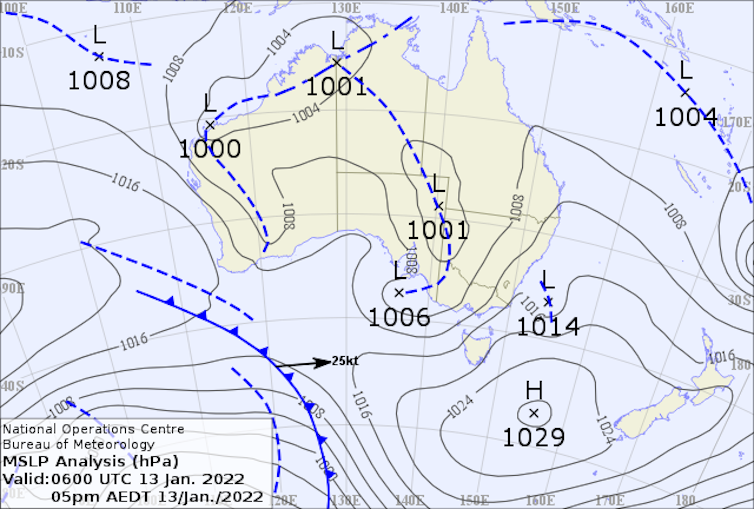
This weather chart from 13th January 2022 illustrates the conditions just half an hour before the record-equalling 50.7℃ was recorded. The blue dashed line marks the trough which meets the coast close to Onslow and helped bring in the hot air. Bureau of Meteorology

In short, from the bakingly hot desert. South to south-easterly winds blew very hot air from the interior of the state up to Onslow. The wind came from an area that has had little to no rainfall since November, so the very hot air was also extremely dry.

Dry air kept the sun beating at full intensity by preventing any cloud cover or storm formation. The result? The temperature rose and rose through the morning and early afternoon, and the temperature spiked at over 50℃ just before 2.30pm local time.

Aren’t we in a cooler La Niña period?

Australia’s weather is strongly linked to conditions in the Pacific Ocean. At the moment we’re in a La Niña event where we have cooler than normal ocean temperatures near the equator in the central and east Pacific.

La Niña is typically associated with cooler, wetter conditions. But its effects on Australian weather are strongest in spring, when we had unusually wet and cool conditions over the east of the continent.

During summer the relationship between La Niña and Australian weather usually weakens, with its strongest impacts normally confined to the northeast of the continent.

During La Niña we typically see fewer and less intense heatwaves across much of eastern Australia, but the intensity of heat extremes in Western Australia is not very different between La Niña and El Niño.

The pattern of extreme heat in Western Australia and flooding in parts of Queensland is fairly typical of a La Niña summer, although temperatures over 50℃ are extremely rare.

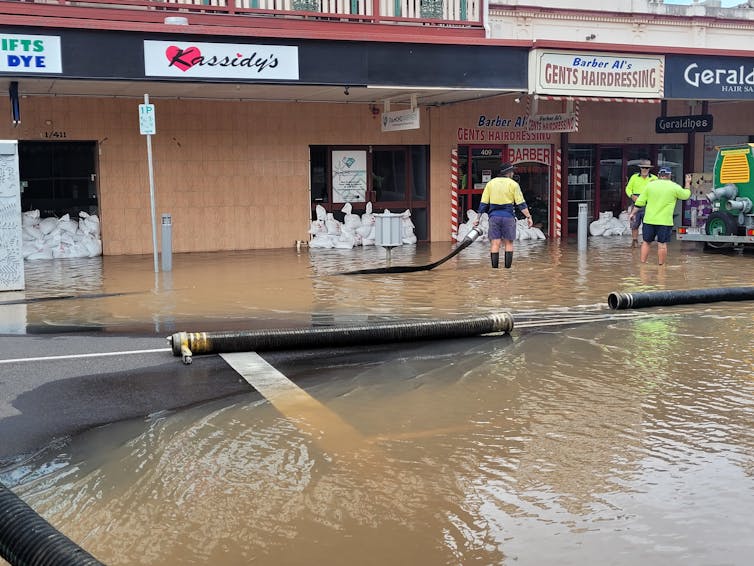
men pump water from flooded street
Recent flooding in Queensland is also typical of La Nina summers. RAPID RELIEF TEAM

Climate change is cranking up the heat

Should these temperatures be a surprise? Sadly, no. Australia has warmed by around 1.4℃ since 1910, well ahead of the global average of 1.1℃.

In northern Australia, summer-average temperatures have not risen as much as other parts of the country, because summers in the Top End have also got wetter. That’s in line with climate change models.

When the conditions are right in the Pilbara, however, heat is significantly more extreme than it used to be. Heat events in the region have become more frequent, more intense, and longer-lasting, just as in most other regions.

Most of us have chosen not to live in Australia’s hottest areas. So you might think you don’t need to worry about 50℃ heatwaves. But as the climate continues to warm, heatwave conditions are expected to become much more common and extreme across the continent.

In urban areas, roads and concrete soak up the sun’s heat, raising maximum temperatures by several degrees and making for dangerous conditions.

Even if we keep global warming below 2℃ in line with the Paris Agreement, we can still expect to see our first 50℃ days in Sydney and Melbourne in coming years. In January 2020 the Western Sydney suburb of Penrith came very close, reaching 48.9℃.

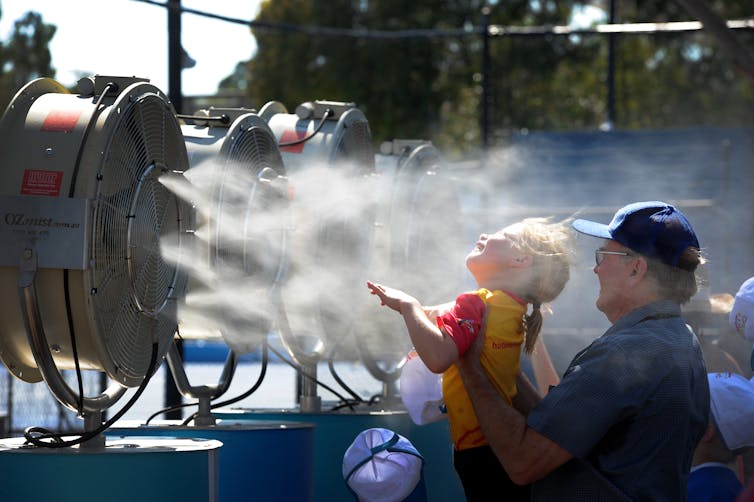
man holds child in front of cooling mist machine
Sydney and Melbourne will experience 50℃ days in coming years. Joe Castro/AAP

As you know, it’s going to be very hard to achieve even keeping global warming below 2℃, given the need to urgently slash greenhouse gas emissions in the next decade.

As it stands, the world’s actions on emission reduction suggest we are actually on track for around 2.7℃ of warming, which would see devastating consequences for life on Earth.

We already know what we need to do to prevent this frightening future.

The stronger the action to reduce greenhouse gas emissions globally – including by major carbon emitting countries such as Australia – the less the world will warm and the less Australian heat extremes will intensify.

That’s because the relationships between greenhouse gas emissions, global temperatures and Australian heat extremes are roughly linear.

You may think Australians are good at surviving the heat. But the climate you were born in doesn’t exist any more.

Sadly, our farms, wildlife, and suburbs will struggle to cope with the extreme heat projected for coming decades.

Let’s work to make this 50℃ record an outlier – and not the new normal.

Links

Lethal Heating is a citizens' initiative