Friday, March 11, 2022

(AU NEWS.com.au) Flooding Disaster Firmly Embedded In Climate Change, New Report Warns

NEWS.com.au - Courtney Gould

The flooding catastrophe across NSW and Queensland has been labelled one of the most extreme disasters in Australia’s history.

Prime Minister Scott Morrison says there can “never be enough support” during a natural disaster of the scale seen across Queensland and New South Wales

A supercharged climate with rain bombs, flash floods and destruction will be Australia’s new normal, a new report warns.

Fresh analysis from the Climate Council of the unfolding flood crisis across NSW and Queensland paints a grim picture of life for some Australian communities.

It ranks the deluge that saw thousands of people across the two states lose their homes as one of the “most extreme disasters in Australia’s history”.

At least 20 people have died since the crisis began.

Climate change, the council said, is “firmly embedded” in the catastrophe.

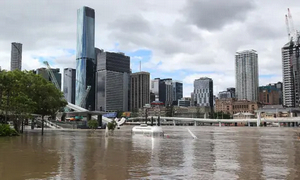
The clean up continues in Lismore after record rains and flooding hit the northern NSW town. Picture: Toby Zerna

FIt’s a sentiment the Prime Minister on Wednesday shared on a visit to flood devastated Lismore.

“I think it is just an obvious fact (that) Australia is getting harder to live in because of these disasters,” Scott Morrison said.

Climate Council chief executive Amanda McKenzie said despite the contrition, Mr Morrison failed to address the issue at the heart of the disaster.

“Australians are paying a high price for the lack of meaningful national action to tackle climate change and our elected leaders must be held accountable,” she said. “Australians want and deserve better than this.”

It comes as Mr Morrison declared the floods across NSW a national emergency, the first time the power has been used since its inception following the 2019-20 summer bushfires.

The Wilsons River recorded a height of 14.3m, with the Lismore CBD and surrounding area the hardest hit. Picture: Toby Zerna

The report also warned communities – and emergency services – recovery time between extreme weather events is rapidly shrinking.

For Queenslanders, the bill for extreme weather events between 2010 and 2019 were more than double any other state, costing $18 billion.

Climate councillor and economist Nicki Hutley said the scars of the disaster will have “economy wide impacts” for years to come.

“With governments now talking of extending the cyclone insurance pool to cover flood and fire for these households, the costs to all Australians is rapidly growing,” she said.

Links - Climate Council 

(AU ABC) NSW, Queensland Floods On Track To Be Among Country's Worst-Ever Natural Disasters, Climate Council Says

ABC Science | James Purtill

Floods account for the greatest property damage of any natural disaster in Australia. (ABC North Coast: Samantha Turnbull)

The ongoing floods in Queensland and New South Wales are on track to be one of Australia's worst-ever natural disasters.

And if this news isn't bleak enough, we can expect more extensive and more frequent flooding as climate change intensifies.

These are the conclusions of a Climate Council report summarising the latest data on the scale of the disaster and underlining the link to global warming caused by human activity.

The Brisbane "rain bomb", for instance, dropped more water on the city than typically falls in London over an entire year, and the volume flowing through the Brisbane River far exceeded the 2010-11 floods.

Insurance claims along the eastern seaboard may be as great as the 2019-20 Black Summer bushfires.

So how bad is the property damage?

Insurance claims will exceed 2010-11 Queensland floods

The scale of the 2022 floods is emerging as reports filter out of the disaster zones, insurance claims are made, and statistics compiled.

The Climate Council report, published today, provides a snapshot of what we know so far — and it appears this natural disaster is going to rank highly.

The cost of weather-related disasters in Australia has risen since the 1970s. (Supplied: Climate Council)

How unusual is all this rain we're having?
The answer? Very

The total value of the insurance claims will exceed those of previous major floods, including the last time Brisbane flooded in 2010-11, said Nicki Hutley, economics spokesperson for the Climate Council.

"Obviously we're still counting the costs and don't know the full extent," said Ms Hutley, a former Deloitte economist.

"The Queensland floods of 2010-11 had property damage of $1.5 billion, and we're certainly probably already at that level, if not exceeding it."

Insurance claims could even exceed the 2019-20 Black Summer bushfires, which totalled about $2.5 billion.

"Certainly the property damage may be higher — the fires burnt through millions of hectares, but a lot was uninhabited," she said.

"In terms of the total number of people affected and total costs, I imagine this will be, if not the worst natural disaster, then certainly right up there."

Flood level records broken

Local records for rainfall, flood levels and flood rescues have been broken.

The "rain bomb" that broke over Brisbane on Friday, February 25, deposited 80 per cent of the region's annual rainfall within three days.

The downpour was greater than the 2010-11 floods: about 50 per cent more water poured into the Brisbane River's Wivenhoe Dam in half the time.
Brisbane's "rain bomb" dumped more than one metre of water on most of the city. (Supplied: Climate Council)

Wilsons River in the Northern Rivers district of NSW broke the 1954 flood level record by more than two metres.

The Richmond River at Woodburn topped 7.18 metres, nearly 50 per cent high than its previous record.

NSW SES carried out more flood rescues in 24 hours thanit had ever done before.

The mass of water in this flood is "quite remarkable", says Will Steffen from Australian National University's Climate Change Institute.

"It will certainly rank up with one of the biggest natural disasters around the country," he said.

Extreme events are becoming 'ordinary'

When Brisbane flooded in 2010-11, the disaster was reported in the media as a one-in-100-year event.

The same happened when Townsville flooded in 2019, Professor Steffen said.

"And now we've heard that term applies to the latest bout of flooding," he said.
"The point is we're having extreme events more often. 'Ordinary' extreme events are occurring now in rapid succession."
Extreme rainfall can occur for a variety of reasons and directly linking a single event, like a flood, to climate change requires a formal attribution study, which can take years to produce.

However, it is possible to say whether climate change contributed to the floods. 
Parts of Brisbane were still recovering from the 2010-11 floods when the latest flood hit. (ABC Radio Brisbane: Antonia O'Flaherty)


This is a complicated question and some experts say there's a risk of overstating the effect of climate change on the multi-day heavy rainfall that has led to the 2022 floods.

But Professor Steffen says there's no doubt that a "climate system on steroids" contributed to the floods.

A warmer atmosphere is both more energetic and can hold more water, which "stacks the odds" in favour of extreme rainfall, he said.
"For every one degree of temperature rise, the atmosphere can hold 7 per cent more water.
"The intensity of rainfall will continue to increase on that ratio of 7 per cent for every degree of temperature rise."

Floods cause the greatest damage of any natural disaster in Australia. (Supplied: Climate Council)

This change is already being observed, he said.

The 2020 CSIRO and Bureau of Meteorology State of the Climate report found the intensity of short-duration extreme rainfall (i.e. flash flooding) had increased by around 10 per cent in some regions.

The recent Intergovernmental Panel on Climate Change (IPCC) report predicted the world was on track to warm by 1.5C in the early 2030s, and by 2C this century.

As the temperature of the atmosphere continues to rise, destructive floods are likely to happen more regularly, Professor Steffen says.
"They would happen at a regularity that would make it difficult to recover in between events — that's almost happening now.
"The economics of this is going to make a lot of places unviable."

Should every house be rebuilt?

On Wednesday, Prime Minister Scott Morrison declared a national floods emergency, which gives the federal government power to deploy money and resources faster.

Communities impacted by the floods will receive public funds to rebuild.

Analysis: Now is the time
to discuss climate change

But some areas should not be rebuilt, Professor Steffen says.

"We need to have a very good look at zoning laws and where people are allowed to build."

Insurers are already refusing to cover flood damage in some areas, because climate change has made the risk so high, Ms Hutley said.

One solution to this is for the government to step in as the insurer, but this is risky and could eat up public funds.

"It's a never-ending bottomless liability and it becomes extremely dangerous from a financial security point of view," Ms Hutley said.
"We've been absolutely negligent on where people can build for a decade or more."
Politicians will have to make difficult and unpopular decisions about where people can rebuild — and where new housing developments can be located.

And these decisions will need to be made quickly, she said.

"People who want to rebuild now need an answer sooner rather than later."

Links

(AU The Guardian) What Are Conservative Commentators Saying About The Floods And Climate?

The Guardian - 

Australia has been through worse, Chris Kenny contends, while Andrew Bolt suggests global heating is ‘brilliant for farmers’

 ‘Bolt wrote that climate change had been linked to drought, fires and now floods – as if climate change can’t have multiple affects.’ Photograph: AFP/Getty Images

The Guardian
Temperature Check
Temperature Check is a weekly column examining claims about climate change made by governments, politicians, business and in the media.
See the latest column and follow the series here.
Floods and their causes are complicated and there has been a clamour for answers from Australians over the role global heating could have played in the devastation left along the east coast this week.

But one thing several of Australia’s conservative commentators are sure about is that the climate crisis had nothing to do with it.

On Sky News, Chris Kenny said Australia “always has, and always will have” floods, droughts and fires and, “allowing for some records”, the country had been through worse cases of those extremes before.

In the pages of the Herald Sun last Thursday, Andrew Bolt described how a set of “green journalists” were acting like “vultures” for “exploiting” the floods.

“This pathetic game of climate porn happens every time we get some natural disaster, wet or dry, fires or floods,” Bolt thundered.

Almost two weeks ago, the UN’s Intergovernmental Panel on Climate Change released its latest assessment of the impacts of climate change.

In interviews, IPCC authors in Australia said it was likely that rising levels of greenhouse gases in the atmosphere had played a role in the extreme rainfall that led to flooding.

“But hang on! Just a year ago this same IPCC suggested the opposite,” Bolt said.

Bolt claimed that last year’s IPCC report that looked at the core science of climate change had found heavy downpours tended to “decrease over the eastern and southern regions” of the country.

But this statement was referring to observations of the past, not the likely impacts in the future.

The same report included a fact sheet – not mentioned by Bolt – on findings for the Australian region, which said eastern Australia should expect “more extreme rainfall events” as the world warms.

Bolt wrote that climate change had been linked to drought, fires and now floods – as if climate change can’t have multiple affects.

“We can’t afford this con any more,” he said.

Prof Mark Howden, director of the Australian National University’s Institute for Climate, Energy and Disaster Solutions, is ​​vice-chair of the IPCC working group that wrote the latest report.

He told Temperature Check: “The basic relationships between air temperature and moisture holding capacity and the linkage of this to extreme storms and floods are well known and have been for centuries. The projection of increased flood risk as atmospheric and ocean temperatures rise is robust.”

He said it would be wrong to ignore the role of climate cycles such as La Niña and El Niño on the risk of flooding and droughts, but “as is ignoring the basic physics which ties in the common factors between droughts and floods. This is climate science 101.”

Don’t actually ask farmers

Bolt rarely likes people to attribute anything to climate change but seemed unusually confident about one thing in his column.

Pointing to a record winter crop this year across Australia (but not pointing to how record November rainfall had caused widespread downgrades of wheat quality in New South Wales), Bolt wrote: “Global warming has actually been brilliant for our farmers.”

So in the same column Bolt argues both for and against attributing changes in weather conditions to climate change. Global warming is apparently only a thing when it’s doing something good.

But to the question of whether global warming is “good for farmers”. Really?

Back to the IPCC, which said last week it had “high confidence” that hotter and drier conditions would disrupt future agricultural production.

And what about flooding?

The NSW Farmers chief executive, Pete Arkle, told Temperature Check: “While there may be beneficial changes to some commodities in some areas in the short term, when we look more broadly at the trends and the impact of extreme weather events it is hard to be optimistic about the impact of climate change.

“Farmers are among those most exposed to the full impact of extreme weather, be that bushfires, floods or droughts. It is critical we take steps to minimise the impact of climate on agriculture, because we will all be impacted if there is reduced food security.”

Green tyranny?

There has been much conservative commentary in the past week over Russia’s bloody invasion of Ukraine, with some weaving a narrative that Europe’s pursuit of renewable energy and emissions reductions gave Putin the confidence to wage war (opportunistic, much?).

On Radio National’s Between the Lines, Tom Switzer invited Rupert Darwall on to talk about how the war might change commitments to net zero.

Anyone who suggested the world could do without fossil fuels was “out with the fairies”, said Darwall, presumably including the International Energy Agency and its detailed analysis of pathways to net zero among that throng of fantasists.

Switzer introduced Darwall as a researcher at the RealClearFoundation and twice mentioned he was “the author of The Age of Global Warming, a History”.

That book was published in 2013 and, while the benign title might not give it away, the book has been celebrated by climate science denialist groups.

Odd that Switzer didn’t mention Darwall’s 2017 book with a rather less benign title: Green Tyranny: Exposing the Totalitarian Roots of the Climate Industrial Complex.

Links - Temperature Check

Thursday, March 10, 2022

(Bulletin of the Atomic Scientists) Global Collapse Is In View

Bulletin of the Atomic Scientists - Robert Socolow

Robert Socolow

Author
Robert Socolow is professor emeritus in the Department of Mechanical and Aerospace Engineering at Princeton University.
From 2000 to 2019, he and Steve Pacala were the co-principal investigators of Princeton’s Carbon Mitigation Initiative, a twenty-five-year (2001-2025) project supported by BP.
His best-known paper, with Pacala, was in Science (2004): “Stabilization Wedges: Solving the Climate Problem for the Next 50 Years with Current Technologies.”
Socolow is a member of the American Academy of Arts and Sciences, an associate of the National Research Council of the National Academies, a fellow of the American Physical Society, and a fellow of the American Association for the Advancement of Science.
I am one of many researchers who considers it their job to help the public understand the threats ahead from climate change.

Embedded in nearly all of our future-oriented analyses is an assumption that global economic activity (global gross domestic product) will increase steadily throughout this century. No techno-economic model that I am aware of investigates global economic collapse.

Leaders in government and the private sector, who constitute the desired audience for such scenarios, would not wish to be seen taking global dysfunction seriously. But today, global economic collapse seems not inconceivable. It would result from an escalation of the current conflict in Ukraine that “goes nuclear.”

When I teach about climate change, I mention the assumption of continuous global economic growth in passing.

Dutifully, I say to my students something like: “This model assumes that no war or pestilence prevents global economic growth.” It’s a cautionary rhetorical moment that the students duly note, and then the students and I push on. But the same sentence does not feel rhetorical today.

Civilization is at risk. Humanity is confronting the possibility of careening backwards into a world of stagnation and misery.

Climate change is a manifestation of prosperity.

Other things being equal, climate change will arrive more slowly if greenhouse gas emissions from human activity plunge to a small fraction of their current value and stay down. Nuclear war could even bring “nuclear winter,” if the lofting of fire-generated aerosols into the stratosphere causes extensive cooling.

Members of my generation, who were young adults during the Cold War, have never been able to vacuum the possibility of nuclear war out of our brains.

The vast majority of the world’s younger people, however—as best I can tell—consider nuclear war a nightmare from the past whose risks were dealt with successfully long ago by their parents or grandparents.

No need even to learn about it. It is so over!

But evidently it isn’t! No friend I have sought out or pundit I have listened to this past week has provided me with a satisfactory explanation for Putin’s decision to make Russia’s nuclear weapons look usable. It seems reckless and in no way to his advantage.

I have long presumed that no leader or national security advisor anywhere would ever lose track of the objective of preventing escalation and would cease to appreciate that the one clear firebreak against escalation to Armageddon is the gap between non-nuclear and nuclear weapons. Why would anyone want to erode that boundary?

During the Cold War and in the decade after, those seeking to prevent nuclear weapons use included many Russian and Western scientists.

We saw our task as promoting mutual understanding, developing back channels for communication, inventing trust-building exercises, sharing the insights of arms control analysis, and safeguarding plutonium and highly enriched uranium. We made a difference.

I have the impression that the global scientific community’s current aggregate level of effort toward such objectives is substantially less than it was. I suspect one reason is that scientists, like so many others, found tensions between countries to be low enough to relax their efforts.

And another reason, probably, is that scientists came to see that they were less able to influence government decisions and priorities. They became less needed and less wanted.

It has become all too clear this past week that the global scientific community must reinvent the informal, cooperative, scientist-to-scientist relationships that once were so valuable. We must never again consider these relationships unnecessary, even if they are no longer as salient as they once were. Not just Russia’s scientists, but China’s too must participate. The Bulletin can help us.

A more profound mutual understanding may be achievable if the potentially contentious search for safeguards against the use of nuclear weapons is leavened with explorations of climate change.

No one can long ignore the interdependence of nations when studying the Earth’s atmosphere—a giant blender homogenizing the greenhouse gas emissions every one of us contributes.

Links

(AU ABC) Climate Change Already Pushing Up Food Prices, Causing Shortages And Will Get Worse, Report Says

ABC Gippsland - Jarrod Whittaker


A new report warns Australians can expect higher food prices and more shortages as temperatures increase. (ABC News: Pamela Medlen)

Key Points
  • A report says Australians are already paying more for food because of climate change
  • The report from Farmers for Climate Action says higher food prices and shortages will become more common as temperatures increase
  • One farmer says global warming and extreme weather is already making it harder to plan
Climate change is already increasing the price Australians pay for food and the problem will only get worse, a new report has warned.

The environment group Farmers for Climate Action, which commissioned the report, has warned global warming will lead to higher food prices and shortages for consumers. 

"Australia's food supply chain is more fragile than people think," report author Stephen Bartos said.

"We have seen examples in recent months of supermarkets running out of food, empty shelves.

"And that's something that, as climate change continues, is going to become an altogether more frequent occurrence."

The report warns drought is becoming more frequent and production is affected by lower crop yields, livestock stress, and higher operational costs.

It also found retailers would be hit by shorter shelf life, less reliability in the availability in some types of food, and lower nutritional value for products such as wheat and rice.

Australia's climate has risen by slightly more than 1 degree Celsius since 1910 and the report said it must be kept to below 2 degrees to prevent catastrophic consequences.

Climate change, war pushing prices higher

Russia's invasion of Ukraine is also expected to lead to higher food prices, with both countries major agricultural producers. (AP: Vitaly Timkiv)

Mr Bartos said, when he prepared the report, he was surprised to learn people were already paying more for food as a result of climate change. 

"One of the drivers is the fact that finance products, like bank loans and insurance, are becoming much more expensive for all of the players because of the uncertainty created by climate change," he said.

"There are higher costs at various different stages of the food supply chain in terms of dealing with the impacts of climate change, and that all gets passed on to consumers." 

The report also warned that, as well as climate change, risks to food supply could arise from other causes unconnected to global warming.

The Food Organisation of the United Nations' Food Price Index reported global food prices were up as much as 20 per cent on the year before.

There are also fears Russia's invasion of Ukraine will send wheat and barley prices soaring.

Climate making job harder, farmer says

Beef farmer Fergus O'Connor, from Victoria's South Gippsland region, said climate change was already making life more difficult for farmers.

South Gippsland beef farmer Fergus O'Connor is concerned about the effects of climate change and wants action to reduce emissions. (Supplied: Fergus O'Connor)
"Planning is so difficult with the climate that we've got at the moment, and farming is not easy in itself," Mr O'Connor said.

"We're always planning ahead. We're not planning ahead three weeks; we might be planning ahead three or four years."

He said climatic conditions had made that tougher and there was only one way to stop the problem from getting worse.
"It's quite simple. We have to cut emissions from fossil fuels," Mr O'Connor said.
He said Australia was "20 years behind Europe" and shifting to renewables would lead to lower power prices.

"We can all go down that path for a better, cleaner atmosphere, which will then in turn help farmers, because then they will be able to plan and things won't be in such extremes of hot and cold and wet and dry," Mr O'Connor said. 

Links

(AU ANU) Changes To Bird Behaviour Linked To Climate Change

ANU College of Science

Image Shutterstock

A new study from researchers at The Australian National University (ANU) rolls back the curtain on half a century of evidence detailing the impact of climate change on more than 60 different bird species. 

It found that half of all changes to key physical and behavioural bird characteristics since the 1960s can be linked to climate change. 

The other 50 per cent is due to other unknown environmental factors that have changed at the same time as our climate.  

The research, published in the Proceedings of the National Academy of Sciences and carried out in conjunction with James Cook University (JCU), focused on birds in the United Kingdom and the Netherlands. 

"We have shown that climate change is a major driver of these changes in the birds, but there is more at play here than we originally thought," lead author Dr Nina McLean, from the ANU Research School of Biology, said. 

"Not only were other unknown changes in the environment equally important in driving changes in the birds, surprisingly they generally did so in the same direction as climate change, such that their effects compounded.  

"This study shows that the impact of climate change does not act in isolation and its effects are occurring in a world where the resilience of wildlife is already pushed to the limits due to the many other challenges they are experiencing in a human-dominated landscape.  

"These non-climate change driven factors could include urbanisation, changing land use, habitat loss or introducing invasive species into ecosystems, but we can't know their identity for sure yet." 

The researchers analysed three key traits as part of their study: the timing of egg laying, body condition of birds, and the number of offspring produced. All the data was collected by volunteers, otherwise known as citizen scientists.  

The study found that across the board almost all birds laid their eggs earlier because of climate change. 

"For example, climate change caused chiffchaffs to lay their eggs six days earlier over the last 50 years, but other unknown environmental factors led to an additional six days, meaning in total they now lay their eggs 12 days earlier than they did half a century ago," Dr Martijn van de Pol, from the JCU College of Science and Engineering, said. 

Dr McLean said there are "winners and losers" of these environmental changes driven by rising temperatures.  

"For offspring number and body condition we see that it's a mixed bag," she said. 

"Some species are clearly increasing their body condition and offspring number, whereas others are suffering from it. 

"For example, garden warblers in the UK have experienced a 26 per cent decrease in their average number of offspring over the past half century, which is really concerning for the long-term fate of this species, but only half of this reduction, 13 per cent, can be attributed to climate change.  

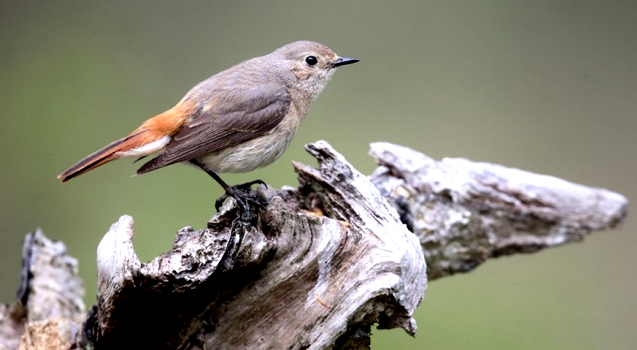
"By comparison, the redstart experienced a 27 per cent increase in offspring numbers over the past half century, but again only part of that increase is due to global warming." 

The researchers say continued global warming could present a "double whammy" for species that are already struggling to adapt to other non-climatic environmental changes. 

"Rising temperatures, compounded with these unknown environmental factors, could pose a significant threat to the livelihoods of certain species that are already suffering," study co-author Dr Loeske Kruuk, also from ANU, said 

This study also involved researchers from the University of Edinburgh, the British Trust for Ornithology, Sovon Dutch Centre for Field Ornithology and the Dutch Centre for Avian Migration and Demography.

Links

Wednesday, March 09, 2022

(Washington Post) Satellite Images Show The Amazon Rainforest Is Hurtling Toward A ‘Tipping Point’

Washington Post - Sarah Kaplan 

More than half of the rainforest could turn into savanna — threatening wildlife, shifting weather patterns and fueling climate change

The Amazon rainforest, in the Amazonas state in Brazil, is losing resilience, according to a study in the journal Nature Climate Change. (Dado Galdieri/Bloomberg News)

AUDIO
Viewed from space, the Amazon rainforest doesn’t look like an ecosystem on the brink. Clouds still coalesce from the breath of some 390 billion trees. Rivers snake their way through what appears to be a sea of endless green.

Yet satellite images taken over the past several decades reveal that more than 75 percent of the rainforest is losing resilience, according to a study published Monday in the journal Nature Climate Change. The vegetation is drier and takes longer to regenerate after a disturbance. Even the most densely forested tracts struggle to bounce back.

This widespread weakness offers an early warning sign that the Amazon is nearing its “tipping point,” the study’s authors say. Amid rising temperatures and other human pressures, the ecosystem could suffer sudden and irreversible dieback. More than half of the rainforest could be converted into savanna in a matter of decades — a transition that would imperil biodiversity, shift regional weather patterns and dramatically accelerate climate change.

Historically, the Amazon has been one of Earth’s most important “carbon sinks,” pulling billions of tons of carbon dioxide from the air and storing it in vegetation. Researchers fear that this carbon’s sudden release would put humanity’s most ambitious climate goal — limiting temperature rise to 1.5 degrees Celsius (2.7 degrees Fahrenheit) — out of reach.

“As a scientist, I am not supposed to have anxiety. But after reading this paper, I am very, very anxious,” said Carlos Nobre, a climate scientist at the University of São Paulo’s Institute of Advanced Studies, who was not involved in the new research. “This paper shows we are moving in the completely wrong direction … If we exceed the tipping point, that’s very bad news.”

The Amazon is one of several “tipping elements” in the global climate, scientists say. Rather than steadily worsening as the planet warms, these systems have the potential to abruptly switch from one phase to another — possibly with very little warning.

For the past 50 million years, the Amazon has been in a wet rainforest phase. The trees themselves ensured their continued existence: Water evaporating from leaves created an endless loop of rainfall, while the dense canopy prevented sunlight from drying out the soil. The contours of the forest may have shifted somewhat in response to ice ages, wildfires and rising seas, but it was always able to return to its lush, verdant state.

An aerial view of deforestation in the western Amazon region of Brazil in 2017. (Carl de Souza/AFP/Getty Images)

Yet human-caused warming and deforestation have hijacked this self-reinforcing system. Hotter conditions in the Atlantic Ocean have extended the Amazon’s dry season by several weeks.

By felling roughly 17 percent of its trees, people have undercut the forest’s water recycling mechanism. Trees stressed by drought are more vulnerable to wildfires. And the more trees die, the less rain falls, which in turn makes tree die-offs worse.

At a certain point, the ecosystem will lose more trees than it can recover in these hot, dry conditions. The dark, dense, damp tropical rainforest will give way to a more open savanna. Mathematician Niklas Boers, who contributed to the new paper, compared it to someone leaning back in a chair. If they don’t tilt too far, they can easily return to having all four legs on the floor. But once they pass the tipping point, the whole system comes crashing down. And it is much harder to get up again than it was to fall.

The satellite imagery Boers and his colleagues analyzed suggests that the Amazon is still wobbling on the edge of tipping, the scientists say. Looking at tracts of forest with at least 80 percent broadleaf tree cover — areas that have not been heavily affected by deforestation — researchers found that the vast majority of forest patches recover more slowly after seasonal fluctuations than they did 20 years ago. Tracts in the rainforest’s drier southern reaches, as well as ones that were closer to roads, suffered the most.

A burned area of the Amazonia rainforest in the surroundings of the city of Porto Velho in Rondonia state, Brazil. (Mauro Pimentel/AFP/Getty Images)

Exceeding the Amazon’s tipping point would also unleash several years’ worth of global greenhouse gas pollution into the atmosphere. Already, studies show some areas of the Amazon are producing about 300 million tons more carbon than they pull out of the air — an amount roughly equal to annual emissions from Japan.


Yet unlike ice sheets and monsoon systems, which respond solely to the amount of heat humans are trapping in Earth’s atmosphere, the Amazon is being pushed toward its tipping point by two forces: deforestation and climate change. This also gives Boers hope, because it means humanity has two strategies for protecting the ecosystem.

“If we take one of those factors out of the equation, my intuition would be that the system would be able to cope with it,” he said. “That’s exactly what one should tell the Brazilian, Colombian and Peruvian governments: Stop deforestation today.”

Links

Lethal Heating is a citizens' initiative