17/05/2025

DARWIN: Climate Change Now and Next - Lethal Heating Editor BDA

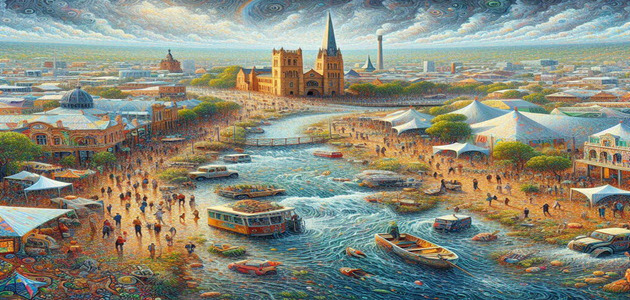
Darwin is no stranger to nature’s extremes.
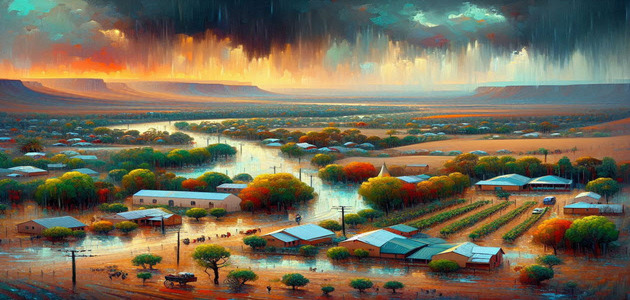
But as the climate crisis intensifies, this city is becoming a test case for how climate change reshapes coastlines and communities.
From rising seas to surging cyclones, the effects are rippling through every layer of life in the Northern Territory's capital.
The City is facing escalating social, economic, ecological, political, and cultural challenges.
While heatwaves and extreme weather strike hardest in the short term, deeper transformations loom, impacting heritage, migration, and identity.
Climate change isn’t coming—it’s already here.
And in Darwin, the story is being written in heatwaves, rising tides, and the resilience of those who call the Top End home.

๐ŸŒก️ Social Strains: From Heatwaves to Migration


In the short term, heatwaves are intensifying across northern Australia, with Darwin residents experiencing more than 50 days over 35°C annually.
Vulnerable groups—especially Indigenous populations—are disproportionately impacted by heat-related illnesses and infrastructure strain.
Longer-term, the city may see an influx of “climate refugees” from low-lying islands and remote inland communities.
Chronic exposure to extreme weather and uncertainty is already linked to rising mental health concerns, including climate anxiety.

๐Ÿ’ฐ Economic Faultlines: Insurance, Industry, and Instability

Short-term storms and floods have already caused costly damage to infrastructure, from the East Arm Wharf to essential roads and power systems.

Meanwhile, outdoor industries like construction, fishing, and tourism face delays and safety risks.
Over time, insurers are warning of retreat from high-risk areass, raising premium costs and threatening home ownership stability.
As heat stress slashes labour productivity, Darwin may also face a shift away from traditional economic models reliant on climate-sensitive sectors.

๐ŸŒฟ Ecological Pressure: Erosion, Extinction, and Ecosystem Collapse

Darwin is surrounded by precious wetlands and coastal mangroves, but climate change is hitting these ecosystems hard.
Marine heatwaves have damaged coral reefs, and mangrove die-offs around the Gulf of Carpentaria—linked to sea-level rise—are threatening nursery habitats for fish, and storm buffers for communities.
Long-term projections suggest potential collapse of these ecosystems.
With rising temperatures, invasive species like cane toads are advancing, out competing native species and altering the region’s delicate ecological balance.

๐Ÿ›️ Political Currents: Rising Tensions and Governance Shifts

Climate events are placing mounting pressure on both local and federal governments.
Calls are growing for stronger emergency response systems, equitable funding, and adaptation planning—especially for remote Indigenous communities.
In the long view, legal and political debates may intensify.
The prospect of climate litigation looms, as residents demand accountability and action.
Darwin may soon be a case study in how governance must evolve under pressure.

๐ŸŽญ Cultural Identity at Risk: Land, Loss, and Renewal

Cultural practices tied to land and sea—hunting, fishing, storytelling—are being disrupted.
Many First Nations communities in the Top End depend on traditional ecological knowledge, but climate disruptions are threatening this vital connection.
Heritage sites face erosion and sea-level rise, challenging the continuity of culture.
While displacement could lead to cultural fragmentation, some communities are adapting through renewed emphasis on language, storytelling, youth education, and resilience and resistance.
As the land changes, so too does the cultural narrative.
Indigenous-led climate adaptation offers one of the most hopeful models for coexistence with a hotter, harsher future.

๐Ÿ” Big Picture: Darwin's Climate Crossroads


Darwin stands at a climate crossroads, where the collision of ecological vulnerability and cultural richness demands urgent attention.
The city’s future will depend not just on mitigation, but on how it empowers communities to adapt:
Socially    Economically    Ecologically    Politically    Culturally


๐Ÿ“š Further Reading & Sources

16/05/2025

PERTH: Climate Change Now and Next - Lethal Heating Editor BDA

Perth, the sun-drenched capital of Western Australia, is no stranger to drought or heat.
But in recent years, the city has become a climate change frontline where water scarcity, ecological collapse, and economic stress are converging faster than predicted.
As one of the world’s most isolated major cities, Perth offers a stark preview of what lies ahead for urban centres facing climate extremes.
“Perth is a harbinger,” says Dr. Jatin Kala, a climate scientist at Curtin University. “It’s a city that’s already living in a climate-changed world.”


๐Ÿง‘‍๐Ÿค‍๐Ÿง‘ Social Pressures: Heat, Health, and Inequality


The most immediate threat? Extreme heat.
During the summer of 2024–25, Perth experienced over 40 days above 35°C (95°F), straining hospitals and the power grid.
WA Health
reported a surge in heat-related illnesses, especially among seniors and low-income residents with limited access to cooling.
Water, once abundant, has become scarce.
With shrinking winter rainfall and near-empty dams, Perth now relies on desalination plants for nearly half of its drinking water—an energy-intensive, costly solution that disproportionately affects vulnerable households.

๐Ÿ’ฐ Economic Fallout: The Cost of Climate Inaction

Climate change is eroding the foundations of Perth’s economy.
Farmers in the Wheatbelt are reporting lower yields due to erratic rainfall, affecting exports and pushing up food prices.
Meanwhile, homeowners near bushfire-prone areas are facing skyrocketing insurance premiums.
Tourism—a vital industry—is also at risk.
Bleaching coral reefs near Rottnest Island and smoke from seasonal fires are deterring visitors.
Energy costs are rising too, driven by increased demand for air conditioning and an aging grid.

๐ŸŒฟ Ecological Crisis: Dying Forests and Drying Wetlands

Perth’s natural landscape is being redrawn.
The iconic Banksia woodlands, rich in biodiversity, are retreating.
Urban wetlands like Herdsman Lake are drying out, threatening migratory birds and aquatic ecosystems.
The region’s symbolic Jarrah forests are also struggling under hotter, drier conditions.
Ecologists warn of an approaching tipping point, beyond which ecosystems may collapse—triggering unpredictable ripple effects.

๐Ÿ›️ Political and Cultural Reckonings

Climate politics are intensifying.
Perth’s local councils are investing in green infrastructure while resisting state-level fossil fuel projects.
Activist groups like Extinction Rebellion WA are calling for urgent decarbonization, citing the city’s growing vulnerability.
For the Noongar people—the region’s First Nations custodians—climate change threatens both country and culture.
Rising seas and shifting landscapes imperil sacred sites and Dreaming stories passed down through millennia.
Meanwhile, Perth’s creative communities are responding.
Climate-themed exhibitions at PICA and poetry slams on water scarcity are turning art into a form of activism.

๐Ÿ”ฎ Long-Term Outlook: A New Urban Frontier

Looking forward, the challenges deepen.
Without decisive action, climate migration could reshape Perth’s demographics, and sea-level rise may require major engineering to protect coastal suburbs like Fremantle.
Discussions are already underway about the need for urban redesign: cool roofs, shaded streets, and water-wise landscaping.
Yet Perth may also become a model of resilience.
Its strategies—from water recycling to urban forest initiatives—could provide a blueprint for climate-adapted cities worldwide.
As the climate tightens its grip, Perth faces a pivotal choice: adapt—or unravel. 

๐ŸŒก️ Perth Summary

  • ๐Ÿ”ฅ 40+ days over 35°C in summer 2024–25
  • ๐Ÿ’ง About 50% of drinking water from desalination
  • ๐ŸŒพ Wheatbelt farms hit by erratic rainfall
  • ๐Ÿก Rising insurance costs in bushfire zones

๐ŸŒฟ Ecosystem in Crisis

  • ๐ŸŒณ Banksia woodlands in retreat
  • ๐Ÿฆ† Wetlands drying, birds disappearing
  • ๐ŸŒฒ Jarrah forests near collapse

๐Ÿ›️ Social & Cultural Impacts

  • ๐Ÿง“ Low-income residents vulnerable to heat
  • ๐ŸŽจ Artists & activists respond creatively
  • ๐ŸŒŠ Noongar heritage sites at risk

๐Ÿ”ฎ Future Outlook

  • ๐Ÿ™️ Urban redesign: cool roofs, shaded streets
  • ๐ŸŒฑ Hope in resilience strategies & local action
  • ๐Ÿงญ Perth as a template city for climate adaptation

๐Ÿ“š Further Reading & Sources

๐Ÿ”— CSIRO: State of the Climate A national report outlining how rising temperatures and reduced rainfall are affecting Western Australia.
๐Ÿ”— Water Corporation: Climate Change & Perth’s Water Future Insight into how Perth is adapting to water scarcity through desalination and groundwater management.
๐Ÿ”— Government of Western Australia: Climate Policy & Strategy Official policy documents detailing the state’s adaptation and emission reduction strategies.
๐Ÿ”— The Conversation: Perth's Climate Is Changing Too Fast for Nature A science-backed article about the rapid decline of native species due to climate pressure.
๐Ÿ”— The Guardian: Perth’s Water Crisis in a Changing Climate Investigative reporting on how water scarcity is reshaping life and policy in Perth.
๐Ÿ”— The Nature Conservancy: Climate Challenges in Western Australia A look at ecosystem resilience and nature-based solutions around Perth and beyond.
๐Ÿ”— Bureau of Meteorology: Perth Climate Trends & Forecasts Real-time and historical data from Australia’s official weather agency for Perth.

15/05/2025

ADELAIDE: Climate Change Now and Next - Lethal Heating Editor BDA

Adelaide, long known for its Mediterranean climate and sprawling parklands, is fast becoming a case study in how climate change is transforming mid-sized cities around the world.
Rising heatwaves, water stress, and ecological strain are not just future risks, they’re already here.

☀️ A City Under Heat

Adelaide now records the most extreme heat events of any Australian capital, with summer temperatures soaring beyond 45°C.
The health toll is mounting—particularly among the elderly, low-income residents, and those in poorly insulated homes.
The city's emergency response systems and public cooling centres are already under strain.

๐ŸŒพ Economy in the Balance

In regions like the Barossa Valley and Riverland, wine and almond production are threatened by shifting rainfall and high evaporation.
Adelaide's reliance on the Murray–Darling Basin makes it vulnerable.

๐ŸŒฑ Ecology in Crisis

Local biodiversity is under siege. In areas like the Adelaide Hills and Cleland Conservation Park, higher temperatures and longer fire seasons are leading to tree dieback.
Along the coast, wetlands such as the Barker Inlet face rising salinity and flooding as sea levels creep upward.

๐Ÿ› Political Pressure Mounts

While South Australia leads the country in renewable energy adoption, climate-related stress is intensifying debates over urban planning and water policy.
Indigenous-led climate justice groups like Seed Mob are amplifying calls for structural change.

๐ŸŽญ Culture and Identity in Flux

Adelaide’s cultural identity is evolving. Festivals like the Adelaide Fringe and WOMADelaide now contend with extreme weather disruptions.
But there's also a rise in eco-art and sustainable architecture, with local creatives helping redefine Adelaide as a “climate city.”

๐Ÿ”ฎ Looking Ahead: 2030 and Beyond

By 2050, Adelaide could see twice as many extreme heat days.
Climate migration may reshape suburbs, agriculture may shift northward, and iconic coastlines like Glenelg could be redrawn by sea-level rise.
Yet initiatives like Carbon Neutral Adelaide show promise, with local partnerships between government, communities, and First Nations leaders driving adaptation.

๐Ÿ“Š Visual Summary: Climate Impacts on Adelaide

Domain Short-Term Impact Long-Term Impact
Social Heat risk, health inequality Climate migration, mental health strain
Economic Farm losses, higher bills Agricultural decline, green tech growth
Ecological Fire risk, saltwater intrusion Species loss, urban heat islands
Political Water conflict, grassroots activism Energy reform, migration policy shifts
Cultural Event disruption, rise of climate art Cultural shift toward sustainability

Adelaide isn’t bracing for climate change—it’s already living through it.
From parched vineyards to politicised water debates and urban reinvention, the city is shaping a blueprint for how middle-sized cities worldwide might navigate the climate century.
With urgency, creativity, and resilience.

๐Ÿ“š Further Reading & Sources

14/05/2025

MELBOURNE: Climate Change Now and Next - Lethal Heating Editor BDA

Few cities embody the paradox of climate change like Melbourne. It's a global hub of creativity and innovation, yet increasingly vulnerable to its most devastating effects. Climate change is here. From parched parks to flooded laneways, Melbourne is living the future of global warming now. While the temperature climbs and the clouds retreat, the city faces a crossroads. Will it adapt, or will it unravel?


Social Consequences: A City Under Pressure

Melbourne’s famously unpredictable weather now includes a disturbing new constant: extremes. 

In recent summers, heatwaves have pushed temperatures above 40°C, straining emergency rooms and endangering older adults and low-income households.

The Victorian Health Department warns that mental health is also at risk, with rising climate anxiety and displacement due to flooding or bushfires placing new burdens on communities.

Economic Fallout: The Price of Inaction


Extreme weather is already hitting Melbourne’s bottom line.

The city's infrastructure—public transport, roads, and power grids—suffers costly damage from flash floods and heat surges. 

Meanwhile, rising energy bills are squeezing households.

Melbourne’s climate adaptation budget has grown dramatically. 

Yet the cost of inaction—lost tourism, disrupted agriculture, declining real estate in flood-prone suburbs—could be far higher.

Nature Interrupted: Ecosystems in Decline
 
Melbourne's parks and waterways are under siege. 

Bushfires now threaten outer suburbs like the Dandenongs, and droughts have left once-lush gardens and green spaces parched.

The Victoria State of the Environment Report outlines alarming biodiversity loss. 

Native birds, frogs, and even eucalypts are struggling to survive shifting patterns of rainfall and temperature.

Political Reckoning: From Protests to Policy
Melbourne’s streets have become stages for climate protest. 

School strikes, Extinction Rebellion sit-ins, and citizen-led legal action have reshaped the political narrative.

The pressure is working: local councils are declaring climate emergencies, and new emissions targets are being set. 

But critics argue change is too slow—and too cosmetic. 

Cultural Reimagining: Climate in the Frame

Melburnians are changing how they live, work, and create. 

Outdoor festivals are adapting to fire season schedules. 

Artists and writers are weaving climate into their work, making it a central theme of the city’s evolving identity.

But perhaps most significantly, there’s a growing public hunger for connection—to nature, to each other, and to a shared sense of responsibility for what comes next.

The Road Ahead

Melbourne is no stranger to reinvention. 

But as climate pressure mounts, the need for bold, coordinated action becomes existential. 

Whether it becomes a model of climate resilience—or a cautionary tale—depends on decisions being made now. 

๐Ÿ”— Further Reading & Sources

13/05/2025

SYDNEY: Climate Change Now and Next - Lethal Heating Editor BDA

From the searing heat of Western Sydney to rising tides along the coastline, climate change is leaving its mark. Australia’s largest city is confronting a transformation that affects its people, economy, ecology, and identity. Some effects are immediate, others are looming on the horizon.

Social Fault Lines Are Deepening

Increasing heatwaves and poor air quality are straining Sydney’s healthcare system and disproportionately impacting low-income suburbs. 

According to the NSW Government’s State Heatwave Strategy, heat-related hospital admissions are rising each summer.

Over time, climate migration from rural areas and flood-prone regions could stress city infrastructure. 

Community cohesion and mental health are also under pressure, with agencies like Beyond Blue reporting higher rates of climate-related anxiety.

Economic Risks and Shifting Industries

Storm damage, insurance claims, and infrastructure strain already carry a cost. 

The Climate Council has flagged parts of Sydney as becoming “uninsurable” due to frequent flooding.

Long term, major investments will be needed to upgrade roads, bridges, and sea defences. 

While fossil fuel sectors shrink, new industries—like green tech and renewable energy—are expected to boom, rebalancing Sydney’s economic future. 


A Fragile Ecology in Flux

Sydney’s biodiversity is suffering. Native species are threatened by fire, urban sprawl, and changing rainfall. 

Wetlands, which provide vital flood protection, are shrinking, and habitats for the powerful owl and native fish are disappearing.

With Warragamba Dam facing pressure from declining rainfall and runoff quality, the city’s future water security is uncertain.

Rising Political Pressures

As climate impacts become more visible, the political heat is rising. 

From student-led climate strikes to demands for clean public transport, Sydneysiders are increasingly vocal.

Over the next decades, governments will face tough decisions about land use, carbon pricing, and disaster recovery. Sydney may well become a test case for how modern cities respond—or fail to respond—to climate crisis. 

Culture on the Climate Frontline

Whether it’s cancelled beach events, smoke-filled summers, or art inspired by disaster, climate change is now deeply embedded in Sydney’s cultural landscape. 

The Sydney Festival has begun embracing environmental themes, reflecting a shift in public consciousness.

Indigenous knowledge systems—particularly in fire and land management—are gaining long-overdue recognition. 

Meanwhile, Sydneysiders are embracing sustainable living trends, from solar panels to car-free city blocks.

The Takeaway

Climate change is not a future problem—it's reshaping Sydney right now. 

From the CBD to the Blue Mountains, decisions made today will shape the city’s resilience, identity, and legacy. 

Whether Sydney adapts or falters will depend on the speed, equity, and scale of our collective response.

Further Reading & Sources

12/05/2025

Australia's Climate Reckoning: Vulnerable Communities, Mental Strain, and the Migration Ahead - Lethal Heating Editor BDA


Australia is on the frontlines of a global crisis. As climate change accelerates, the country faces more than scorching heat and rising seas — it’s confronting a transformation that cuts across land, livelihood, and lives.

๐ŸŒ Who’s Most Vulnerable?

Climate change isn’t just a weather story—it’s a justice issue. Communities across Australia are feeling the brunt unequally, based on geography, income, and historical disadvantage.

  • Remote Indigenous communities are experiencing extreme heat, inadequate housing, and food insecurity. As reported by The Washington Post, water scarcity and ecological damage are threatening traditional ways of life.
  • The Torres Strait Islands face an existential threat from rising sea levels, putting culture, homes, and heritage at risk. Read more via TIME Magazine.
  • Agricultural regions across inland New South Wales and Western Australia are battling drought and declining yields. A detailed study in ScienceDirect outlines how rural economies are under siege.
  • Flood- and fire-prone suburbs are becoming “uninsurable,” according to the Climate Council, placing huge pressure on property owners and renters alike.
๐Ÿง  Climate Change and Mental Health

Extreme weather isn’t just physical—it takes a toll on mental well-being, particularly in rural and Indigenous communities.

  • Farmers and rural residents are experiencing rising levels of anxiety, depression, and grief due to environmental loss. The University of Sydney Environment Institute reports growing calls for better rural mental health services.
  • For Indigenous Australians, connection to land is central to identity and healing. Climate damage erodes not only the physical environment but also spiritual and cultural ties. A 2023 Indigenous Mental Health report emphasizes the psychological and emotional costs of ecological loss.
๐Ÿงญ The Future of Climate Migration

Climate-related migration is no longer hypothetical. It’s already reshaping population flows across the country—and potentially, the region.

  • A 2024 University of Queensland study warns that disaster-prone areas will see population declines, with urban centers absorbing displaced families.
  • Australia is also preparing for a growing number of climate refugees from the Pacific. In 2024, a report by ABC News explored whether Australia’s migration system is prepared to offer refuge to those fleeing rising seas.
๐Ÿ“Œ Final Thoughts

What’s at stake is more than beachfront property or economic performance. 

It’s the integrity of an entire ecosystem—Australia’s ancient biodiversity, its rural communities, and its future prosperity. 

For a nation long built on resilience, the time for bold, inclusive climate policy is now.

๐Ÿ”— Links

11/05/2025

Kids born today are going to grow up in a hellscape, grim climate study finds

Live Science -

New research has revealed "an alarming intergenerational gap" in exposure to climate extremes.
(Image credit: Bloomberg / Contributor via Getty Images)

AUTHOR
Ben Turner is a U.K. based staff writer at Live Science.
He covers physics and astronomy, among other topics like tech and climate change. Ben graduated from University College, London, with a degree in particle physics before training as a journalist.
Children born today will face climate extremes on a scale never seen before with the poorest bearing the brunt of the crisis, scientists warn.

In an analysis of human exposure to climate change extremes — such as heatwaves, floods, droughts, wildfires, cyclones and crop failures — researchers found that children born in 2020 are two to seven times more likely to face one-in-10,000 year events than those who were born in 1960. 

And that's if warming continues under current policies to reach 4.9 degrees Fahrenheit (2.7 degrees Celsius) by 2100.

If the world warms even faster, reaching 6.5 F (3.5 C) by 2100, 92% of today's 5-year-olds will experience deadly heatwaves, 29% crop failures and 14% floods at some point in their lives.

In comparison, the researchers found 16% of those born in 1960 experienced extreme heatwaves in their lifetimes. The researchers published their findings today (May 7) in the journal Nature.

"By stabilizing our climate around 1.5 C [2.7 F] above pre-industrial temperatures, about half of today's young people will be exposed to an unprecedented number of heatwaves in their lifetime. 

Under a 3.5 C [6.5 F] scenario, over 90% will endure such exposure throughout their lives," study lead author Luke Grant, a physical scientist at the Canadian Centre for Climate Modeling and Analysis, said in a statement.

"The same picture emerges for other climate extremes examined, though with slightly lower affected fractions of the population. Yet the same unfair generational differences in unprecedented exposure is observed," he added.

Eco-anxiety is rife among children, with nearly 4 in 5 children aged under 12 worried about climate change, according to a YouGov poll commissioned by Greenpeace.

The effects of climate breakdown, and the human suffering it causes, are already evident — unprecedented heatwaves, storms, droughts, floods, extinctions and wildfires are taking place around the world.

But quantifying the hardships that changes to Earth's complex climactic systems will foist on future generations remains difficult. 

To arrive at a rough picture, the researchers behind the new study combed through demographic data for each location on the planet, combining population projections and life expectancies with climate model projections for three emissions scenarios.

In February 2023, wildfires fueled by severe drought consumed forests, grasslands and wetlands in northeastern Argentina, burning an estimated 40% of the Ibera National Park. (Image credit: Joaquin Meabe/Getty Images)
This enabled the researchers to arrive at rough estimates for the number of people in each generation who will experience unprecedented climate events. 

And the results they arrived at were stark — 52% of children born in 2020 face unprecedented heat exposure compared to 16% of those born in 1960 under the most limited global warming scenario of 2.7 F (1.5°C) by 2100, rising to 92% if warming reaches 6.5 F (3.5 °C).

Exposures to crop failures, wildfires, droughts, floods and cyclones also rose significantly. For example, in a 6.5 F (3.5 °C) pathway 29% of those born in 2020 will face unprecedented lifetime exposure to crop failures, with the risk expanding for those around the United States, South America, Sub-Saharan Africa and East Asia.

And those most socioeconomically vulnerable, especially children born around the tropics, are set to be the most strongly impacted. 

Under current policies, 92% of today’s five year olds born into low-income groups are exposed to lifetime risk compared to 79% of those from wealthier backgrounds.

"Living an unprecedented life means that without climate change, one would have less than a 1-in-10,000 chance of experiencing that many climate extremes across one's lifetime," Grant said. 

"This is a stringent threshold that identifies populations facing climate extremes far beyond what could be expected without man-made climate change."

The researchers note that their study is far from complete — they didn’t model climate change’s impacts on fertility, mortality or migration. 

This means that the effects of climate change in sparking mass migrations and resource wars were not accounted for in their analysis, and neither were the various tipping points our warming world is edging closer toward.

In an accompanying News & Views article, Rosanna Gualdi and Raya Muttarak, from the Department of Statistical Sciences at the University of Bologna, Italy, wrote that the findings "reveal an alarming intergenerational gap" in exposure to climate extremes.

"If greenhouse gases continue to be emitted into the atmosphere at current rates, global warming will intensify and today's children will be exposed to increasingly frequent and severe climate-related hazards," they wrote.

"The actions taken today to reduce emissions are therefore crucial in shaping the climate future of current and coming generations. 

Given that the impacts of climate change and the transformations required to decarbonize society are not distributed equally, it is important to consider equity in the transition to net-zero emissions. 

This includes addressing the intergenerational inequality highlighted by Grant et al. Neglecting it jeopardizes the future of our children."

Links

Lethal Heating is a citizens' initiative