02/08/2019

Murray-Darling Basin Inspector-General To Oversee Water Efficiency, Compliance And Allegations Of Theft

ABC Rural - Kath Sullivan


Key Points
  • A new, basin-wide inspector-general is to be appointed to enforce the Water Act 2007

  • The role must investigate suspected water theft and monitor water recovery and efficiency projects

  • The inspector-general is to hold the MDBA, states and the Commonwealth to account on delivering the basin plan
A "tough cop" will be appointed to oversee the integrity of the entire Murray-Darling Basin under a proposal by Water Minister David Littleproud.
The statutory role of inspector-general would monitor compliance, investigate suspected water theft, and check that water recovery and efficiency projects are delivered.
Mr Littleproud said the inspector-general would "hold the Murray-Darling Basin Authority, Commonwealth and all states to account … and ensure laws governing water use are followed".
"This is a new, tough cop on the beat across the Murray-Darling with the powers needed to ensure integrity in the delivery of the basin plan," Mr Littleproud said.

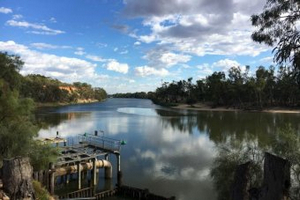
The new role is expected to be established by 2020 and have powers under the Water Act 2007. (ABC Rural: Brett Worthington, file photo)

"We want to maintain confidence in the basin plan and this role will be pivotal to achieve that, and deliver the plan by 2024," he said.
The new role is expected to be established by 2020 and have powers under the Water Act 2007.
Mr Littleproud said the inspector-general would have the ability to refer issues to the Commonwealth Integrity Commission and would be supported with offices and staff in the northern and southern basins.
"The public needs to know the basin plan is delivering the water it was intended to, and farmers need to know the plan is working as it should," he said.
The appointment of the inspector-general for the Murray-Darling Basin would be a matter for the Federal Cabinet, but Mr Littleproud hoped former
AFP commissioner Mick Keelty would fill the

Mr Littleproud hoped former AFP commissioner Mick Keelty would fill the position in the interim. (AAP: Daniel Munoz, file photo)

position in the interim.
Mr Keelty began a three-year term as Northern Basin Commissioner, with similar responsibilities to the inspector-general role, last September.
"It is in respect of what he has achieved. It has meant we have been able try to roll that position out across the basin and ensure it has more teeth," Mr Littleproud said.
The proposal will be put to a meeting of basin state water ministers in Canberra on Sunday.
It is expected to be the first meeting of the ministers following mass fish kills in the lower Darling, and the completion of a Productivity Commission report and South Australian Royal Commission into the Murray-Darling Basin Plan.

Links

“Nuclear Energy Is Never Profitable”, New Study Slams Nuclear Power Business Case

RenewEconomy - 


A new study of the economics of nuclear power has found that nuclear power has never been financially viable, finding that most plants have been built while heavily subsidised by governments, and often motivated by military purposes, and is not a good approach to tackling climate change.
The study has come from DIW Berlin, a leading German economic think-tank, and found that the average 1,000MW nuclear power plant built since 1951 resulted in an average economic loss of 4.8 billion euros ($7.7 billion AUD).
The report comes amid a hot debate over the future of nuclear power in both Germany and Australia.
The report published by the German Institute for Economic Research (known as DIW Berlin) reviewed the development of 674 nuclear power plants built since 1951, finding that none of the plants was built using ‘private capital under competitive conditions’.
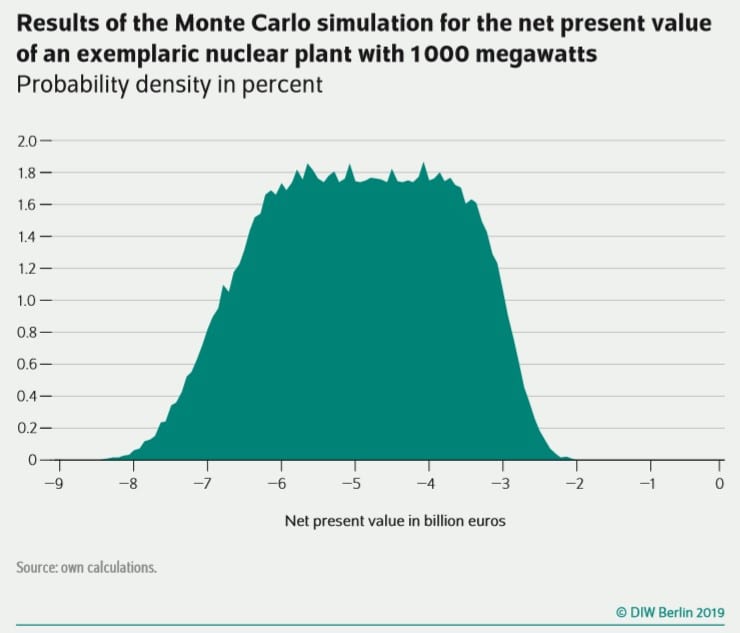
“The results showed that in all cases, an investment would generate significant financial losses. The (weighted) average net present value was around minus 4.8 billion euros,” the study says.
“Even in the best case, the net present value was approximately minus 1.5 billion euros. The authors included conservative assumptions with high electricity prices, low capital costs, and specific investment. Considering all assumptions regarding the uncertain parameters, nuclear energy is never profitable.”
The report authors are also pessimistic about the future of nuclear power, concluding that nuclear power will remain unprofitable into the foreseeable future.
Unlike Australia, Germany has a history of nuclear power use, which as recently as 2010, supplied around a quarter of Germany’s electricity.
The government led by Angela Merkel has committed to the complete phase-out of nuclear power by 2022.
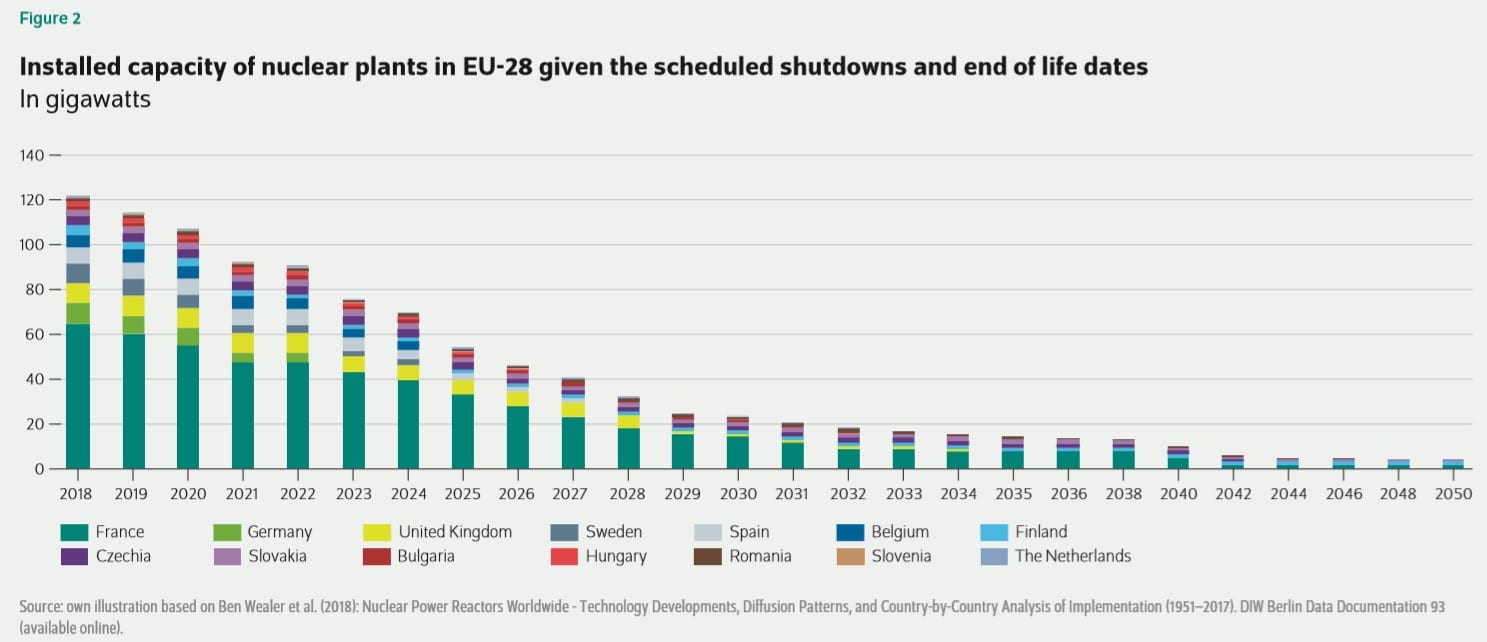
LARGE IMAGE
The report found that when nuclear power plants were built using private investment, that “large state subsidies” were used to make the projects viable, and that in most cases, nuclear power stations were built at a loss.

LARGE IMAGE
DIW Berlin calculated that for every 1,000 Megawatts of nuclear power capacity that has been built since 1951, there were average economic losses of between 1.5 to 8.9 billion Euros ($A2.4 to $A14.3 Billion).
“Nuclear power was never designed for commercial electricity generation; it was aimed at nuclear weapons. That is why nuclear electricity has been and will continue to be uneconomical. Further, nuclear energy is by no means ‘clean.’ Its radioactivity will endanger humans and the natural world for over one million years,” Christian von Hirschhausen, co-author of the study said.
The DIW Berlin report stressed that governments should not be seduced by claims that nuclear power was a solution to the climate crisis.
““Nuclear energy for climate protection” is an old narrative that is as inaccurate today as it was in the 1970s. Describing nuclear energy as “clean” ignores the significant environmental risks and radioactive emissions it engenders along the process chain and beyond,” the report concluded.
While examining the history of nuclear power development globally, DIW Berlin found that it was military considerations that were the primary driver of nuclear reactor developments, with power generation a secondary product.
“The further development of nuclear weapons and other military applications was the focus. Nuclear power plants were primarily designed to be “plutonium factories with appended electricity production,” the DIW Berlin report said.
The report echoes an estimate of the costs of new electricity generation in Australia produced by the CSIRO, which found that renewables remain the cheapest cost form of new electricity generation, with nuclear power amongst the most expensive, as a result of substantial upfront costs to build a nuclear plant.
Federal energy minister Angus Taylor fuelled speculation that the Government would actively consider the calls from within its own ranks to revisit the question on nuclear power, including those of Barnaby Joyce who said he would welcome nuclear power in his own electorate if it meant constituents would receive free electricity.
“We currently have a moratorium nuclear power generation in Australia, and the government has no plans to change that. Now we always approach these things with an open mind, but we do not have a plan to change the moratorium,” Taylor said in response during Question Time.
Nuclear power in Australia is currently forbidden under the Environment Protection and Biodiversity Conservation Act.

Links

01/08/2019

Australian Climate Change Policies Face Growing Criticism From Pacific Leaders

ABC News - Melissa Clarke

Australia is under growing pressure to take action against climate change. (AAP: Dan Himbrechts)
Key points
  • Pacific leaders rebuff Australia's approach to tackling climate change
  • They want Australia to ditch its use of carry-over credits to meet climate targets
  • Foreign Minister Marise Payne last week said the Pacific "should be pleased" with Australia
Pacific nations have formally called on Australia to stop using carry-over credits to meet climate change commitments under the Paris Agreement.
In a clear rebuff to recent Australian comments, Pacific leaders meeting in Fiji yesterday signed the Nadi Bay Declaration, which calls on countries to "refrain from using carry-over credits as an abatement for the additional Paris Agreement emissions reduction targets".
It came after Australia's Foreign Minister Marise Payne said Pacific states "should be pleased" with Australia's actions to reduce greenhouse gas emissions.
Australia controversially counts some emissions reductions achieved during the past decade under the Kyoto Protocol towards reduction targets set out in the Paris Agreement.
The carry-over does not breach the Paris Agreement because there has been no international consensus on the rules, but Australia's decision to count past emissions towards new targets has been widely condemned.
Pacific states have long demanded Australia does more domestically to tackle climate change, given the threat it poses to the future viability of small islands and atolls.

Australia not on track
But Senator Payne brushed off the criticisms last week, telling the ABC "I think that they [Pacific states] should be pleased that Australia is meeting our Paris commitments, that is something we are absolutely locked in to doing".
As well as a halt to using carryover credits, the Nadi Bay Declaration, signed at the Pacific Islands Development Forum (PIDF), calls for a halt to new coal mining projects and the phasing out of coal-fired power generation over the next decade.
An earlier draft of the Nadi Bay Declaration seen by the ABC was even stronger in its condemnation, describing the use of carry-over credits as "underhanded" — a reference that was ultimately left out of the final document.
The leaders of Fiji, Kiribati, Nauru, Micronesia, the Marshall Islands, the Solomon Islands, Vanuatu, Timor Leste and Tonga signed the declaration along with non-government organisations and private sector representatives.
As chair of the PIDF, Fiji's Prime Minister Voreqe Bainimarama put his voice to the demands, asking developed economies to make their Paris emissions reduction commitments more ambitious "including and most especially our larger neighbours in the Pacific".
It sets the stage for a tense meeting in two weeks' time, when Australia's Prime Minister Scott Morrison sits down with regional leaders at the Pacific Islands.
"As we look ahead to the Pacific Islands Forum … we should not accept anything less than concrete commitments to curb greenhouse gas emissions in line with the most ambitious aspirations of the Paris Agreement," Mr Bainimarama said.
"We cannot allow climate commitments to be watered down in the meeting hosted by the nation whose very existence is threatened by the rising waters lapping at its shores."


Speaking last week, Senator Payne pointed to the support Australia was providing for climate change abatement and mitigation.
"We are investing $300 million across the region in climate resilience-focused support with Pacific island countries … we also have a $1 billion commitment to developing nations across five years," she said.
The Australia Institute's climate and energy program director Richie Merzian described the Nadi Bay Declaration as "a powerful message to Australia … to lift their game on climate action."
"Prime Minister Morrison will be in Tuvalu in a fortnight to meet regional leaders, and they have made it crystal clear they will advocate for their largest neighbour to step on climate change, including moving away from coal," he said.
"The Prime Minister will struggle to sell a sensible and balanced approach to climate change when the Pacific have just declared a regional climate emergency."

Links

Students Want International Court Of Justice To Rule On Climate Change

ABC Pacific Beat -  Evan Wasuka

Image: ABC TV
A group of Pacific law students are campaigning to take the issue of climate change and human rights to the International Court of Justice to determine if states have a duty of care to protect its citizens.
The Pacific Islands Students Fighting Climate Change are lobbying Pacific leaders and the public to raise the matter at the UN General Assembly, so it can be heard by the International Court of Justice.
The group's president, Solomon Yeo, said they want the court to issue an "advisory opinion".
Dr Matthew Scott of the Raoul Wallenberg Institute of Human Rights and Humanitarian Law in Sweden said the timing for the campaign was good, given the international focus on climate change.
"It offers a unique opportunity to obtain definitive guidance from an internationally recognised authority on the international legal obligations of states," Dr Scott said.
Law student Belinda Rikimani said Pacific governments must act with urgency, and support the campaign.
An online petition has gathered several thousand signatures and the group is lobbying Pacific Island countries.
They'll be participating at a regional meeting this week and Mr Yeo plans to be at the Pacific Islands Forum Leaders meeting in Tuvalu in August.
Dr Scott said the while the International Court of Justice can deliver an authoritative legal judgement it can't compel states to act.
"So its power doesn't lie in its enforce ability but in its legal weight as the opinion of the highest court in the international community," said Dr Scott.


PACIFIC BEAT AUDIO: Pacific Islands Students Fighting Climate Change 4m 24secs
Links

Ethiopia Says It Planted Over 350 Million Trees In A Day, A Record

New York Times - 

Credit Office of the Ethiopian Prime Minister
LONDON — Ethiopia’s prime minister, Abiy Ahmed, has been getting his hands dirty this summer, and this week he got much of the nation to join him.
Students, farmers, urban professionals, foreign dignitaries, environmentalists and government officials planted millions of seedlings on Monday, in what the government said was the largest one-day tree-planting effort in history.
It was part of Mr. Ahmed’s campaign to plant four billion trees in Ethiopia before the fall to combat deforestation and global warming.
Many schools and government offices were closed for the day, as students and civil servants were urged to take part in the program, which was supported by several international aid groups.
The aim was to put at least 200 million seedlings in the ground a day, and by day’s end, government officials said that more than 350 million had been planted.
The figures could not be verified, but they far exceed the previous record. That is held by the Indian state of Uttar Pradesh, which in 2016 planted more than 50 million trees in one day, according to Guinness World Records.
On balance, the planet’s forests continue to shrink at an alarming rate, but reforestation campaigns have picked up momentum around the world, recognized as a powerful tool to fight climate change, habitat loss and erosion.
After losing much of its forest cover, China has set out to be the world leader in expanding it, and most countries have signed onto an array of ambitious tree-planting campaigns.
The Earth Day Network has called for planting 7.8 billion trees on Earth Day next year — one for every living person.
Worldwide, about 900 million hectares of land — almost 3.5 million square miles, nearly the area of the United States — is not being used by people and could support forests, according to a recent study by researchers at the Swiss Federal Institute for Technology, ETH Zurich, that drew intense interest from environmentalists worldwide.
If trees were planted on all of that land, the study said, when they matured they could store about two-thirds of all the carbon that human activity has pumped into the atmosphere since the Industrial Revolution.
In the early 20th century, about one-third of Ethiopia was covered in forests, according to historical estimates, but that had dropped to just 4 percent by 2000, according to the United Nations.
The country’s population has soared to more than 100 million people, about five times as many as it had in 1960 — growth that has increased demand for farmland and timber, contributing to deforestation.
From 1990 to 2015, Ethiopia lost 2.6 million hectares of forest, or more than 10,000 square miles, according to the United Nations’ Food and Agriculture Agency.
Ethiopia is among the nations taking part in the United Nations’ decade-old campaign against deforestation.
Organizations like Farm Africa have been working on management of forests with people in Ethiopia and other countries who depend on them for their livelihoods.
Farm Africa has supported farmers in Bale Province in developing forest-compatible trades like beekeeping, producing essential oils and making bamboo furniture, and using fuel-efficient stoves to reduce their dependence on firewood.

Links

A Brief Introduction To Climate Change And National Security

Yale Climate Connections - 

Extreme weather, rising seas, and a melting Arctic could worsen global tensions.


A series of punishing droughts set the stage for the Syrian civil war in 2011. A drying East Africa fuels ongoing conflicts over natural resources in Somalia and Kenya. Rising seas threaten future refugee crises in Southeast Asia. Melting sea ice in the Arctic is opening new shipping lanes, creating new potential for tensions among competing powers at the top of the world.
These are among the many worries – some already realized and some forecast in the near future – that concern experts studying the convergence of climate change and national security.
The idea that a warming planet threatens stability around the globe is not a new one. The U.S. Naval War College began studying the topic as early as the late 1980s, and over the past three decades a steady stream of analyses from the U.S. Defense Department, private think tanks, and other organizations have pointed to threats that climate change poses to peace and stability. Climate change is rarely viewed as a direct cause of instability and conflict, but experts generally regard it as a “threat multiplier” – a phenomenon that can worsen or exacerbate other sources of instability and conflict, such as competition for natural resources and ethnic tensions.
Discussions generally fall into two areas: the impacts of warming on conflicts between nations and among ethnic groups within nations, and the impacts of warming on U.S. military infrastructure and operations.

Threats to global security
The Worldwide Threat Assessment of the U.S. Intelligence Community, an annual report on security threats to U.S. interests, concludes that “global environmental and ecological degradation, as well as climate change, are likely to fuel competition for resources, economic distress, and social discontent through 2019 and beyond.”
“Climate hazards such as extreme weather, higher temperatures, droughts, floods, wildfires, storms, sea-level rise, soil degradation, and acidifying oceans are intensifying, threatening infrastructure, health, and water and food security,” the authors of the January 2019 report wrote.
Extreme weather events, worsened by accelerated sea-level rise, will hit some areas particularly hard – including South Asia, Southeast Asia, and the Western Hemisphere. Water and food insecurity made worse by heat waves, droughts, and floods are already increasing the risk of conflict in Egypt, Ethiopia, Iraq, and Jordan, according to the report.
The Worldwide Threat Assessment also highlighted the risk of tensions between Russia and China as sea routes open up in the Arctic and the rush for natural resources at the top of the world increases.

Threats to military infrastructure & operations
Responding to a Congressional order in late 2017, the Defense Department issued a report in January of 2019 that outlined impacts of climate change on Defense Department missions, operational plans, and installations. It offers an authoritative overview of past, present, and future concerns.
Among them: In the United States Africa Command, rainy season flooding and drought and desertification can complicate the execution of missions. At Naval Base Guam, flooding driven by sea-level rise can negatively affect submarine squadron operations, telecommunications, and other support activities for naval operations.
Meanwhile, a warming climate is significantly impeding military testing and training, with an increased number of suspended, delayed, or canceled outdoor events – particularly at installations in the United States’ Southeast and Southwest.
Increased maintenance and repair of installations has been required: The report cites wildfires in the Western U.S. impacting Vandenberg Air Force Base and the Point Mugu Sea Range, hurricanes causing damage and delays at Tyndall Air Force Base in Florida, permafrost thawing impacting operations at Fort Greely in Alaska, and rising seas contaminating freshwater supplies at atoll installations in the Pacific.
While these two key government reports summarize some of the latest thinking on climate change and national security, they are backed up by a deep well of information on the topic. Climate scientist and author Peter Gleick has compiled a list of important assessments (updated regularly) at his blog.

Links
Coverage of the 2019 release of the Worldwide Threat Assessment: Coverage of the 2019 release of the Defense Department report on climate change and military operations: Other key reports: Yale Climate Connections news stories, podcasts, and videos: Additional News stories: Select sites and journal articles:

31/07/2019

The Terrible Truth Of Climate Change

The Monthly - Joëlle Gergis

The latest science is alarming, even for climate scientists 

Joëlle Gergis
Dr Joëlle Gergis is an award-winning climate scientist and writer from the Australian National University.
She is an internationally recognised expert in Australian and Southern Hemisphere climate variability and change based in the Australian Research Council (ARC) Centre of Excellence for Climate Extremes.
Her research focuses on providing a long-term historical context for assessing recently observed climate variability and extremes.
In August 2018 she was appointed to the Climate Council, Australia's leading independent body providing expert advice to the Australian public on climate change and policy.
Her book, Sunburnt Country: The future and history of climate change in Australia, is now available through Melbourne University Publishing.
In June, I delivered a keynote presentation on Australia’s vulnerability to climate change and our policy challenges at the annual meeting of the Australian Meteorological and Oceanographic Society, the main conference for those working in the climate science community. I saw it as an opportunity to summarise the post-election political and scientific reality we now face.
As one of the dozen or so Australian lead authors on the United Nations Intergovernmental Panel on Climate Change’s (IPCC) sixth assessment report, currently underway, I have a deep appreciation of the speed and severity of climate change unfolding across the planet. Last year I was also appointed as one of the scientific advisers to the Climate Council, Australia’s leading independent body providing expert advice to the public on climate science and policy. In short, I am in the confronting position of being one of the few Australians who sees the terrifying reality of the climate crisis.
Preparing for this talk I experienced something gut-wrenching. It was the realisation that there is now nowhere to hide from the terrible truth.
The last time this happened to me, I was visiting my father in hospital following emergency surgery for a massive brain haemorrhage. As he lay unconscious in intensive care, I examined his CT scan with one of the attending surgeons who gently explained that the dark patch covering nearly a quarter of the image of his brain was a pool of blood. Although they had done their best to drain the area and stem the bleeding, the catastrophic nature of the damage was undeniable. The brutality of the evidence was clear – the full weight of it sent my stomach into freefall.
The results coming out of the climate science community at the moment are, even for experts, similarly alarming.
One common metric used to investigate the effects of global warming is known as “equilibrium climate sensitivity”, defined as the full amount of global surface warming that will eventually occur in response to a doubling of atmospheric CO2 concentrations compared to pre-industrial times. It’s sometimes referred to as the holy grail of climate science because it helps quantify the specific risks posed to human society as the planet continues to warm.
We know that CO2 concentrations have risen from pre-industrial levels of 280 parts per million (ppm) to approximately 410 ppm today, the highest recorded in at least three million years. Without major mitigation efforts, we are likely to reach 560 ppm by around 2060.
When the IPCC’s fifth assessment report was published in 2013, it estimated that such a doubling of CO2 was likely to produce warming within the range of 1.5 to 4.5°C as the Earth reaches a new equilibrium. However, preliminary estimates calculated from the latest global climate models (being used in the current IPCC assessment, due out in 2021) are far higher than with the previous generation of models. Early reports are predicting that a doubling of CO2 may in fact produce between 2.8 and 5.8°C of warming. Incredibly, at least eight of the latest models produced by leading research centres in the United States, the United Kingdom, Canada and France are showing climate sensitivity of 5°C or warmer.
When these results were first released at a climate modelling workshop in March this year, a flurry of panicked emails from my IPCC colleagues flooded my inbox. What if the models are right? Has the Earth already crossed some kind of tipping point? Are we experiencing abrupt climate change right now?
The model runs aren’t all available yet, but when many of the most advanced models in the world are independently reproducing the same disturbing results, it’s hard not to worry.
When the UN’s Paris Agreement was adopted in December 2015, it defined a specific goal: to keep global warming to well below 2°C and as close as possible to 1.5°C above pre-industrial levels (defined as the climate conditions experienced during the 1850–1900 period). While admirable in intent, the agreement did not impose legally binding limits on signatory nations and contained no enforcement mechanisms. Instead, each country committed to publicly disclosed Nationally Determined Contributions (NDCs) to reduce emissions. In essence, it is up to each nation to act in the public interest.
Even achieving the most ambitious goal of 1.5°C will see the further destruction of between 70 and 90 per cent of reef-building corals compared to today, according to the IPCC’s “Special Report on Global Warming of 1.5°C”, released last October. With 2°C of warming, a staggering 99 per cent of tropical coral reefs disappear. An entire component of the Earth’s biosphere – our planetary life support system – would be eliminated. The knock-on effects on the 25 per cent of all marine life that depends on coral reefs would be profound and immeasurable.
So how is the Paris Agreement actually panning out?
In 2017, we reached 1°C of warming above global pre-industrial conditions. According to the UN Environment Programme’s “Emissions Gap Report”, released in November 2018, current unconditional NDCs will see global average temperature rise by 2.9 to 3.4°C above pre-industrial levels by the end of this century.
To restrict warming to 2°C above pre-industrial levels, the world needs to triple its current emission reduction pledges. If that’s not bad enough, to restrict global warming to 1.5°C, global ambition needs to increase fivefold.
Meanwhile, the Australian federal government has a target of reducing emissions by 26 to 28 per cent below 2005 levels by 2030, which experts believe is more aligned with global warming of 3 to 4°C. Despite Prime Minister Scott Morrison’s claim that we will meet our Paris Agreement commitments “in a canter”, the UNEP report clearly identifies Australia as one of the G20 nations that will fall short of achieving its already inadequate NDCs by 2030.
Even with the 1°C of warming we’ve already experienced, 50 per cent of the Great Barrier Reef is dead. We are witnessing catastrophic ecosystem collapse of the largest living organism on the planet. As I share this horrifying information with audiences around the country, I often pause to allow people to try and really take that information in.
Increasingly after my speaking events, I catch myself unexpectedly weeping in my hotel room or on flights home. Every now and then, the reality of what the science is saying manages to thaw the emotionally frozen part of myself I need to maintain to do my job. In those moments, what surfaces is pure grief. It’s the only feeling that comes close to the pain I felt processing the severity of my dad’s brain injury. Being willing to acknowledge the arrival of the point of no return is an act of bravery.
But these days my grief is rapidly being superseded by rage. Volcanically explosive rage. Because in the very same IPCC report that outlines the details of the impending apocalypse, the climate science community clearly stated that limiting warming to 1.5°C is geophysically possible.
Past emissions alone are unlikely to raise global average temperatures to 1.5°C above pre-industrial levels. The IPCC report states that any further warming beyond the 1°C already recorded would likely be less than 0.5°C over the next 20 to 30 years, if all anthropogenic greenhouse gas emissions were reduced to zero immediately. That is, if we act urgently, it is technically feasible to turn things around. The only thing missing is strong global policy.
Although the very foundation of human civilisation is at stake, the world is on track to seriously overshoot our UN targets. Worse still, global carbon emissions are still rising. In response, scientists are prioritising research on how the planet has responded during other warm periods in the Earth’s history.
The most comprehensive summary of conditions experienced during past warm periods in the Earth’s recent history was published in June 2018 in one of our leading journals, Nature Geoscience, by 59 leading experts from 17 countries. The report concluded that warming of between 1.5 and 2°C in the past was enough to see significant shifts in climate zones, and land and aquatic ecosystems “spatially reorganize”.
These changes triggered substantial long-term melting of ice in Greenland and Antarctica, unleashing 6 to 13 metres of global sea-level rise lasting thousands of years.
Examining the Earth’s climatic past tells us that even between 1.5 and 2°C of warming sees the world reconfigure in ways that people don’t yet appreciate. All bets are off between 3 and 4°C, where we are currently headed. Parts of Australia will become uninhabitable, as other areas of our country become increasingly ravaged by extreme weather events.
This year the Australian Meteorological and Oceanographic Society’s annual conference was held in Darwin, where the infamous Cyclone Tracy struck on Christmas Day in 1974, virtually demolishing the entire city. More than 70 per cent of the city’s buildings, including 80 per cent of its houses, were destroyed. Seventy-one people were killed and most of the 48,000 residents made homeless. Conditions were so dire that around 36,000 people were evacuated, many by military aircraft. It was a disaster of monumental proportions.
As I collated this information for my presentation, it became clear to me that Cyclone Tracy is a warning. Without major action, we will see tropical cyclones drifting into areas on the southern edge of current cyclone zones, into places such as south-east Queensland and northern New South Wales, where infrastructure is not ready to cope with cyclonic conditions.
These areas currently house more than 3.6 million people; we simply aren’t prepared for what is upon us.
There is a very rational reason why Australian schoolkids are now taking to the streets – the immensity of what is at stake is truly staggering. Staying silent about this planetary emergency no longer feels like an option for me either. Given how disconnected policy is from scientific reality in this country, an urgent and pragmatic national conversation is now essential. Other-wise, living on a destabilised planet is the terrible truth that we will all face.
As a climate scientist at this fraught point in our history, the most helpful thing I can offer is the same professionalism that the doctor displayed late that night in Dad’s intensive-care ward. A clear-eyed and compassionate look at the facts.
We still have time to try and avert the scale of the disaster, but we must respond as we would in an emergency. The question is, can we muster the best of our humanity in time?

Links

Lethal Heating is a citizens' initiative