07/07/2021

(AU AFR) Big Investors Warn Australia On Climate Change

AFRJohn Kehoe

Large foreign investment funds have warned they could blacklist Australia and cut billions of dollars of investments in the country if the federal government fails to join the rest of the world in committing to a net-zero 2050 greenhouse gas emissions target.

The warning backs up concerns of the Reserve Bank of Australia that the economy is at risk from foreign investors withdrawing capital because of perceptions among global fund managers that the Morrison government is resisting strong action on climate change.

Prime Minister Scott Morrison is under pressure from some Nationals MPs not to sign on to the net-zero 2050 emissions target on 2005 levels at the United Nations Climate Change Conference in Glasgow in November. Getty

The $US1.4 trillion ($1.9 trillion) investment management firm, Invesco, said Australia’s climate change policies were an important consideration for its investments under its environmental, social and corporate governance (ESG) rules.

Invesco’s UK-based Asian equities director, John Pellegry, told The Australian Financial Review that “among developed markets, Australia’s approach appears to be behind others”.

“This may impact our investments in the future if other parts of the investment universe are tackling the issues more effectively.

“An inadequate climate change policy could lead to the selling of Australian investments – for example if required by our clients or if necessary to adhere to stricter policies outside Australia – for example, EU [European Union] policies.

“A greater valuation discount would also be warranted for the additional risk of investing in companies with less growth prospects and subject to greater externality costs – such as carbon pricing – if behind the curve versus global competitors.

“This could lead us to reduce exposure to certain sectors if the risk outweighs the reward.”

Invesco had $US189billion invested in the Asia Pacific as of March 31, 2021, including in Australian assets.

RBA governor Philip Lowe has said that foreign investors and regulators were very frequently asking “what is Australian business doing to decarbonise?“.

“Many international investors are very focused on this issue,” Dr Lowe said last month. “Increasingly, overseas investors are asking about the carbon content of production and that’s a trend that is only going to continue.”

“It’s a really important issue and it’s going to become more important.“

Following the elevation of Barnaby Joyce to Deputy Prime Minister, Prime Minister Scott Morrison is under pressure from some Nationals MPs not to sign on to the net-zero 2050 emissions target on 2005 levels at the United Nations Climate Change Conference in Glasgow in November.

World leaders including US President Joe Biden and UK Prime Minister Boris Johnson, as well as local companies such as BHP and institutional investors including the $3 trillion superannuation sector, are urging Australia to make the commitment.

Mr Morrison has said his aim is to reach net zero emissions as soon as possible and preferably by 2050, though it is not official government policy and has not been endorsed by the Liberal-National cabinet.

Canadian pension funds, which are big investors in Australian infrastructure assets, said climate change was a strong consideration for their investments.

Canada’s Public Sector Pension Investment Board said climate change was one of several long-term structural trends that will “likely have a material impact on investment risks and returns, across different sectors, geographies and asset classes”.

“With respect to the Australian climate policy landscape, as is the case in all countries in which we invest, PSP Investments closely monitors climate policy regulatory developments,” a spokeswoman said.

”We will continue to evaluate any in-country developments to ensure our portfolio is well-positioned in the long run.

“This entails actively considering climate resilience at the portfolio construction level, factoring climate risks into investment decisions, seeking investment opportunities that contribute to the transition to a low-carbon economy, and encouraging enhanced disclosure on climate change risks by companies in which we invest.”

The Ontario Teachers’ Pension Plan said it was “committed to achieving a net zero greenhouse gas emissions investment portfolio by 2050”.

“Climate change is urgent, complex, and one of the greatest challenges we face as a society and as a business, and it requires partnership between investors and government to overcome this challenge,” a spokesman said.

“For us, making an impact begins with the companies we invest in and we are active, engaged investors committed to supporting the transition to clean energy in the long-term.”

Ontario Teachers’ portfolio includes the Sydney Desalination Plant, which is 100 per cent powered by renewable energy, and it holds a stake in Equis Development Pte which focuses on investing in renewable energy infrastructure in Australia and other Asia Pacific markets.

America’s second-largest public pension fund, the $US307 billion ($408 billion) California State Teachers’ Retirement System, invests in the shares of more than 230 Australian companies.

CalSTRS information officer, Thomas Lawrence, said climate change was the greatest threat to the future.

“We believe change is necessary for companies that do not have a long-term strategy for a responsible transition to a low-carbon economy,” he said.

“We are responsible for the retirement benefits of nearly 1 million members, and have a duty to our members to actively manage long-term risks within the portfolio, which includes climate risk.”

The $NZ58 billion ($54 billion) New Zealand Superannuation Fund said it was working to “significantly reduce the fund’s exposure to both fossil fuel reserves and carbon emissions”.

“Our aim by 2025 is to reduce the emissions intensity of our portfolio by 40 per cent and fossil fuel reserves by 80 per cent,” a spokesman said.

“This is achieved by removing the worst-performing companies from the portfolio and operates at a global level.

“To the extent that national climate change policy supports companies to adapt to climate change whereby they meet the requirements of our Climate Change Investment Strategy, our investment flow will adjust accordingly.”

The New Zealand Superannuation Fund holds about $70 million of Australian federal and state government bonds.

“We are starting to think about how to incorporate climate risk assessments into fixed income assets, but currently do not exclude country or corporate bonds because of their climate change exposure.”

Norway’s $US1 trillion Government Pension Fund Global last year dumped its stake in AGL Energy and put mining giant BHP “under observation”, as part of a strategy to cut its exposure to high greenhouse gas-emitting companies.

AGL and BHP both support a net-zero 2050 emissions target.

Modelling by Australian National University climate economist and former RBA board member Warwick McKibbin found that chronic climate change, extreme climate shocks and global economic policies implemented to reduce carbon could reduce Australia’s economic output by between 0.6 per cent and 1.75 per cent by 2050.

“Countries that rely on fossil fuels in energy generation in domestic production or receive substantial income flows from selling fossil fuel or fossil fuel-intensive products overseas have the most significant negative impacts on GDP,” the March report noted.

Dutch fund manager Robeco Institutional Asset Management BV last month reportedly warned it would soon start pressuring Australia to phase out its reliance on coal and other natural resources, according to an interview with Bloomberg.

Australia had a “particularly high-risk profile” on climate change, said Peter van der Werf, the Dutch firm’s senior manager of engagement and active ownership.

Cutting back on natural resources “are very hard decisions because these are obviously very important sources of revenue for the Australian economy”, Mr Van der Werf told Bloomberg.

“That’s where in those conversations, institutional investors can also provide a perspective how they would foresee such a transition to take place.”

The RBA’s Dr Lowe said last month that changes in the global energy system were opening up new sources of comparative advantage for Australia.

“We will need more investment to capitalise on this advantage, with much of this investment being in regional Australia.”

Links

(NZ The Guardian) New Zealand Lawyers Sue Climate Change Body Over Alleged Failure To Meet Targets

The Guardian - Eva Corlett

Lawyers say commission’s emissions budgets are inconsistent with aim of limiting global warming to 1.5C

New Zealand lawyers are suing the Climate Change Commission, saying its advice mean the country will fail to meet international obligations. Photograph: Peter Parks/AFP/Getty Images

Hundreds of top New Zealand lawyers are suing the Climate Change Commission for what they say are substantial errors in its advice to the government over reducing carbon emissions.

Lawyers for Climate Action is a group of more than 300 solicitors, barristers and academics seeking to ensure Aotearoa New Zealand meets its international climate obligations.

New Zealand emissions rise as government vows urgent action Read more

On Friday the group filed for a judicial review against the Climate Change Commission in the high court, alleging that the crown institute’s emission budgets are inconsistent with limiting global warming to 1.5C, that it has understated the country’s reduction targets under the Paris agreement, and that it is relying on other countries to reduce New Zealand’s emissions, instead of meeting its own domestic reductions.

The group’s president, Jenny Cooper QC, said the commission was failing in its obligations to fulfil New Zealand’s climate change law, the Paris Agreement, and the UN’s 2018 Intergovernmental Panel on Climate Change report.

The IPCC report looked at what the world needs to do to limit global warming to 1.5C. To achieve the goal, net Co2 emissions would have to be reduced by an average of 45% from 2010 levels by 2030, reaching net zero by 2050.

The commission has advised the minister for climate change, James Shaw, who is named as a second respondent in the proceedings, on New Zealand’s targets up until 2030, using the IPCC’s report.

To calculate those targets, Cooper said 45% should be subtracted from New Zealand’s net Co2 levels in 2010, which would equal 484 megatonnes of Co2 by 2030. That is a reduction from the country’s previous target of 596 megatonnes by 2030. Statistics NZ has also adopted this calculation.

The commission took a different approach and applied the 45% reduction to gross Co2 levels in 2010, reaching a 2030 goal of 568 megatonnes and resulting in a much higher amount of Co2 being released than if the lawyers’ calculations are applied.

It falls “well short” of what is required to meet that 1.5C, Cooper said.

The group argues that if Shaw was to adopt the commission’s advice, it would have grave implications for New Zealand and its global reputation. “We need to be emitting less in 2030 than in 2010 and it needs to be a lot less,” Cooper said.

New Zealand declares a climate change emergency Read more
“I don’t think there is any justification at all for New Zealand to be doing less than the international average, and on the contrary we should be doing more.”

The lawyers said they have no interest in slowing down action on climate change through litigation but said it was important to get the calculations right from the start.

The Climate Change Commission said it would review the proceedings but offered no further comment.

In a statement, Shaw said officials were independently analysing the commission’s advice. He said he would consider the Lawyers for Climate Action proceedings but declined to comment further as the matter is before the court.

Links

(Washington Post) Climate Change Has Gotten Deadly. It Will Get Worse.

Washington PostSarah Kaplan

Researchers say they are ‘virtually certain’ that warming from human greenhouse gas emissions played a pivotal role in recent fatalities

Residents rest at a cooling center during a heat wave in Portland, Oregon on June 28, 2021. (Maranie Staab/Bloomberg)

PORTLAND, Ore. — The emergency department at Oregon Health Sciences University had rarely been this busy, even during the worst stages of the covid-19 pandemic.

Physicians raced to provide fluids to patients who arrived breathless, dizzy and drenched in sweat. Others were brought in on stretchers, their body temperatures so high their central nervous systems had shut down. Those who could still speak told of stifling apartments and sun that made their skin sizzle. Some had tried to walk to county cooling shelters, only to collapse in the blistering heat.

“The system was overwhelmed,” said Mary Tanski, chair of OHSU’s department of emergency medicine, of the towering heat dome that toppled temperature records across the Northwest this week.

Some patients didn’t survive. In Oregon, Washington and western Canada, authorities are investigating more than 800 deaths potentially linked to the punishing heat.

It will be months before experts know precisely how many of those deaths can be specifically attributed to climate change. But researchers who specialize in the science of attribution say they are “virtually certain” that warming from human greenhouse gas emissions played a pivotal role.

It is a sign of how dangerous the climate crisis has gotten — and how much worse it can still become.

The heat dome was just one of a barrage of climate catastrophes that struck the world in recent weeks. Western wildfires are off to a scorching start, with firefighters actively battling 44 large blazes that have burned nearly 700,000 acres.

Parts of Florida and the Caribbean are bracing for landfall of Hurricane Elsa, the Atlantic’s fifth named storm in what is one of the most active starts to hurricane season on record.

Nearly half a million people in Madagascar are at risk of starvation as the country grapples with dust storms, locusts and its worst drought in decades.

In Verkhoyansk, Siberia — usually one of the coldest inhabited places on the planet — the land surface temperature was 118 degrees.

“Climate change has loaded the weather dice against us,” said Katharine Hayhoe, a climate scientist at Texas Tech University and chief scientist for the Nature Conservancy.

“These extremes are something we knew were coming,” she added. “The suffering that is here and now is because we have not heeded the warnings sufficiently.”

Humans burning fossil fuels have caused the globe to warm roughly 1 degree Celsius, or 2 degrees Fahrenheit, since the preindustrial era. It’s a seemingly incremental change, but it has led to disproportionately frequent and severe natural disasters.

Think of the climate as a bell curve, Hayhoe said, with temperatures distributed according to how common they ought to be. The center of the bell curve may have shifted just a couple of degrees, but the area of the curve now in the “extreme” zone has increased significantly.

Within the next week, researchers expect to publish a “rapid attribution” study that determines how climate change made the Northwest heat wave more likely. Yet precisely quantifying the role of climate change in the event has been difficult because the heat was just so extreme, said Michael Wehner, a climate scientist at Lawrence Berkeley National Laboratory in California who is contributing to the attribution effort.

“It’s well beyond what straightforward statistical analysis would suggest. It’s well beyond what climate models suggest,” he continued. “But it happened.”

Studies show the chance of a given tropical storm becoming a hurricane that is Category 3 or greater has grown 8 percent every decade. The acreage of the West burned by wildfire is twice what it would otherwise be. The heat wave that struck the Northwest this week brought temperatures that were as much as 11 degrees above the previous all-time high.

That increase in intensity is partly due to the fact that meteorological phenomena are occurring in a hotter world. Summers in the Northwest are about 3 degrees Fahrenheit hotter than they were a century ago.

“But there are other, nonlinear, things going on,” Wehner, adds.

For example, heat causes water to evaporate from vegetation and soil, which uses up energy and helps bring temperatures down — a phenomenon called evaporative cooling. But climate change has made the West both hotter and dryer. As the mercury ticks upward, the landscape becomes even more parched, which allows it to heat up even faster. Now, more than 93 percent of the American West is in moderate to severe drought, according to the U.S. drought monitor.

Low water levels are visible at Shasta Lake in Redding, Calif., on Friday, as the extreme drought emergency continues in parts of the West. (Justin Sullivan/Getty Images)

Another physical phenomenon, called the Clausius-Clapeyron equation, shows that for every 1 degree Celsius (1.8 degrees Fahrenheit) of warming, the atmosphere can hold 7 percent more moisture.

This means that warm conditions make storms much wetter, leading to record-breaking rainfall events like Hurricane Harvey in 2017.

Scientists have been aware of these phenomena for decades, and have long warned about the potential for even moderate amounts of global warming to trigger catastrophic weather extremes.

The heat being so devastating should be a warning sign for all of us. The 2015 Paris Climate Agreement calls for humanity to limit global warming to “well below” 2 degrees Celsius.

A subsequent report from United Nations scientists found that warming beyond 1.5 degrees Celsius would trigger catastrophic sea level rise, near-total loss of coral reefs and a calamitous increase in the frequency and intensity of natural disasters.

But the world is unlikely to meet either of those goals. Most countries have not reduced greenhouse gas emissions nearly enough to meet targets set in the Paris agreement. Even if they meet their existing pledges, researchers say the world has just a 5 percent chance of keeping warming “well below” 2 degrees.

If we continue to burn fossil fuels at the current rate, studies suggest, the Earth could be 3 to 4 degrees Celsius hotter by the end of the century. The Arctic will be free of ice in summertime. Hundreds of millions of people will suffer from food shortages and extreme drought. Huge numbers of species will be driven to extinction. Some regions will become so hot and disaster-prone they are uninhabitable.

“It’s a very different planet at those levels,” Wehner said. “This is really serious. As a society, as a species, we’re going to have to learn to adapt to this. And some things are not going to be adaptable.”

Extreme heat is likely to be one of those things. Studies of heat waves suggest that a half a degree Celsius increase in summertime temperatures can lead to a 150 percent increase in the number of heat waves that kill 100 people or more. Research published last year in the journal Science found that the human body can’t tolerate temperatures higher than 95 degrees when combined with 100 percent humidity.

The scene in emergency departments across the Northwest this week underscores that science. Wait times at the OHSU emergency department were 5 to 7 hours, Tanski said. At Swedish Health Services — Cherry Hill in Seattle, doctors were seeing patients in hallways because all the rooms were full.

“I’ve never seen anything like this,” said David Markel, an emergency physician at the Seattle hospital. During an overnight shift on Monday, he treated 12 patients for heat illness. Some were so sick their kidneys and livers were failing, their muscles starting to break down.

“I don’t claim to be an expert in climate change or environmental science,” Markel said. “But I definitely care for people who are impacted by the extremes of climate. … And it’s like, the more crises we face the more clear it is.”

Jeff Duchin, Seattle and King County’s chief public health officer, put it more bluntly: “Climate change is a health emergency,” he said in a statement this weekend. “And reducing greenhouse gas emissions is literally a matter of life and death.”

The intensity of recent weather extremes — and the certainty of still worse events to come — weighs on scientists.

Speaking over the phone, Wehner’s tone was somber as he discussed the wildfire smoke that choked California last summer, people whose homes burned down, a friend whose 90-year-old mother was killed when the town of Paradise was consumed by flames.

Haltingly, he recalled watching a newscaster interview a Pakistani man whose two children had died in a 2015 heat wave. When Wehner later investigated the event, he found that climate change had made the event 1,000 times more likely.

“It did not have to be this way,” he said. “We have known enough to take action for 20 years. And if we had taken action 20 years ago, it would be a lot easier.”

“But there’s no ‘I told you so,’” he continued. “I just feel bad. Just bad. I really wish we had been wrong. But we weren’t.”

The only comfort, said Hayhoe, is in knowing that action can still be taken. Though the world could exceed 1.5 degrees of warming within this decade, scientists say we can avoid crossing that threshold if we cut global greenhouse gas emissions by about 7.6 percent per year.

Such cuts would require an unprecedented transformation of human society. But look at the alternative, Hayhoe said.

“We have choices to make, she said. “And the quicker we make those choices, the better off we will all be. The future is in our hands.”

Links

06/07/2021

(AU SBS) In A Critical Year For Climate Justice, These Torres Strait Islanders Are Leading The Fight

SBS - Abbie O'Brien

Almost three decades since the historic Mabo decision was handed down, a new generation of Torres Strait Islanders are charting unprecedented legal territory in a bid to preserve their right to culture and the land. The group are waging a first-of-its-kind legal battle to force the Australian government to act on climate change.

Yessie Mosby fears his home and culture is at risk of vanishing. Source: Abbie O'Brien/SBS News

Yessie Mosby says the pace at which his home is disappearing is terrifying.

“It's moving very fast," the Kulkalgal man tells SBS News.

"Within four years we’ve seen eight metres get taken away. It is very scary, very scary to see.”

The father of six is standing on a vast sand flat on Masig Island. The marshy, barren area, he says, was once the heartbeat of village life.

Mr Mosby says food sources on Masig are depleting. Abbie O'Brien

“It was full of palm trees. People's houses were here before they moved inland. It used to have roads. People used to come, where we are standing, and all day long and sit [under] the big almond tree, making maps, telling stories.”

“There was no beach here. The beach was like 50 metres that way.”

Here on Masig, and across the Torres Strait Islands, the issue of climate change is one of survival.


The region, off the northern tip of Queensland, is home to a chain of low-lying islands, 18 of which are inhabited by First Nations Australians whose culture is tethered to the land.

Masig is approximately 2.7 kilometres long and only 0.8 kilometres wide. It is home to an estimated 250 people.

Data shows that sea levels in the strait are rising at a rate double the global average. According to the Climate Council, the shallowness of this stretch of ocean exacerbates storm surges, and when they coincide with high tides, extreme sea levels result.


Communities in the Torres Strait Islands are already in peril. Coastal inundation (when seawater rises high enough that it floods infrastructure and buildings or endangers people's safety) is contaminating the water supply and destroying crops. It’s washing away roads, sacred cultural sites and the remains of loved ones.

“We don't know how strong or how big the next inundation or erosion is going to be," Mr Mosby says.

"Every day is a fearful day for us. Every day, something has been taken away from this place.”

Masig is home to an estimated 250 people. Abbie O'Brien

There is mounting concern that if the more extreme projections of sea-level rise come to fruition, islands like Masig will become uninhabitable. "I feel that our people will get moved off this land, then our entire race will die. We will be a lost race of people," Mr Mosby says.

It's also fear held by Herbert Warusam, the Dhoeybaw clan leader on Saibai Island, northwest of Masig.

"The winds, the songs, the traditional language, the traditional gardening, fishing. Land and sea is my connection," he says.

"It's the heart and soul ... all of that is at stake."

"The decision of relocation will be on my children."
I feel that our people will get moved off this land, then our entire race will die. - Yessie Mosby, Masig
Sabai is the second-most northern of the Torres Strait Islands and lies just four kilometres off the coast of Papua New Guinea. The island is, on average, just one metre above sea level and home to roughly 500 people.

Already, Mr Warusam says, the island is experiencing profound change.

“We're witnessing the now impact of climate change. We're going through it in real-time.”

Herbert Warasum is the Dhoeybaw clan leader on Masig Island. Abbie O'Brien

Like Masig, Sabai is “especially at risk" the Climate Council warns. It cautions that even modest sea level rises will threaten the Torres Strait Island communities, with inundation affecting "houses, roads, power stations, sewage and stormwater systems, cultural sites, cemeteries, gardens, community facilities and ecosystems".

Mr Warsasum says saltwater has begun seeping into the freshwater supply.

“Each year, the saltwater, during king tide, it pushes in. I think in 30 to 40 years time, we might see saltwater right up, and the indicators will be in the water wells .”


On Masig, Mr Mosby says food sources are also depleting.

"There will be a particular time that we will eat a certain fish, or we will plant certain plants ... like a yam. You don't see those yams anymore."

"Our major diet is from the sea. Certain fish are not found on a particular reef when they used to be in the abundance. They are not there."


For millennia, Masig and its inhabitants have held out against the sea. It's only the past few decades that the community has faced such unprecedented challenges.

“This thing only happened here … within the last 20 to 30 years or so. As each year passes, it gets worse than the year before,” Mr Mosby says.

Climate change experts warn relocation could be in the offing for Torres Strait Island communities but it's a fate Mr Mosby refuses to accept. To lose the land, he says, is to lose everything.

"There's a lot of elders who say that if we ought to move from this island by force ... that they will remain here and they will go with this island. I feel the same."

Taking their fight to the UN

Mr Mosby is currently among eight Torres Strait Islanders charting unprecedented legal territory in a bid to preserve their right to their culture and the land.

In 2019, the group filed a complaint with the United Nations' Human Rights Committee accusing Australia's federal government of breaching its fundamental right to maintain culture by failing to adequately address the climate emergency unfolding in their island homes.

“My fear for my six kids: I don't want them to be refugees in their own country," Mr Mosby says.

"I want them to live a life of freedom. I want them to practice what I've practiced, what my father and mother [have] practiced and my grandparents, what we've been doing for hundreds of thousands of years.”
My fear for my six kids: I don't want them to be refugees in their own country.
The eight claimants - all Traditional Owners from four different Torres Strait Islands - want the government to take stronger action in reducing emissions and support communities through sustained investment in long-term adaptation measures.

The ruling, set to be handed down within months, comes in a year characterised as “make or break” in the fight against climate change. A UN report describes 2021 as “truly a pivotal year” in steering the planet away from a looming catastrophe.

Saibai is home to an estimated 500 people. Abbie O'Brien

The Mabo legacy looms large in the Torres Strait Islands, almost 30 years since history was made.

Torres Strait Islander Eddie Koiki Mabo's 1992 fight in the High Court saw the overturning of terra nullius - the declaration that Australia was once land belonging to no one. It allowed for Aboriginal and Torres Strait Islander people to have rights to their land.

Iama Island Traditional Owner Ned David is the chair of the Gur A Baradharaw Kod (GBK) Torres Strait Sea and Land Council, the peak native title body for the region.

“I think you have to resort to going to court, you know, as Eddie Mabo did. This is, I guess the same sort of course of action that we have to take,” he says.

Mr David played a key role in getting the UN human rights claim off the ground, describing it as “the next chapter in our story, ensuring our traditional culture survives climate change”.

“We're extremely optimistic,” he says. “[The case] certainly puts a spotlight on what's happening in [this] part of the world.”

Sophie Marjanac, an Australian climate lawyer with environmental legal charity ClientEarth, is representing the eight claimants.

“We are hoping that this decision will confirm that climate change is a serious human rights issue, not only for the Torres Strait, but for people around the world,” she says.

“They're living with the effects of climate change every day," she says of those on the islands.

"And they are seeing the impacts on their cultural rights, their family life, and their homes.”

The UN case is part of a global wave of climate litigation, with vulnerable populations increasingly seeking legal avenues to pressure governments and organisations to take more urgent action to limit global warming.

But this case is like no other, Ms Marjanac says, and could set a global precedent.

“It's the first time a case like this has gone before a United Nations treaty body. It’s the first time that people from low-lying islands have taken a human rights claim against their own government, and it's the first time a human rights complaint was filed against the Australian government on the basis of a violation of the right to culture of minority peoples.”

“The Human Rights Committee is the ultimate arbiter of international human rights law and its decisions apply to other states around the world. So other states will certainly be watching this decision."

In terms of enforcement, Ms Marjanac says the UN could lay out a series of recommendations in which the Australian government could be compelled to fulfil.

“The committee has follow-up procedures it can use to ensure that Australia has complied with its recommendations.”

Completed in 2017, this $25 million seawall is designed to protect Saibai from inundation. Abbie O'Brien

In a statement provided to SBS News, the federal government said it is "confident its climate change policies are consistent with international human rights obligations". Acknowledging the challenges in the region, it said it is "aware of the risks and is helping Aboriginal and Torres Strait Islander communities build their resilience and prepare for the impacts of climate change, including severe weather events".

Construction of a long-awaited $25 million seawall in Sabai was complete in 2017. The infrastructure, which is more than two kilometres long, was funded by both the federal and Queensland governments and is designed to protect the island from inundation.

“It's really helping the island. It’s a good thing. It’s proved to be a very valuable thing to be done by [the governments]” Mr Warasum says.

The federal government has since invested an additional $25 million for sea walls.

On Masig, they're still waiting for construction to begin.

"That's something we [asked] for years ago. We were told it's going to get built probably next year some time," Mr Mosby says.

But time is running out.

Desperate to stop more of the island from being swallowed by the sea, the community has taken matters into their own hands, building their own sea wall out of pallets, sticks and shrub.

"If you go over and you walk on the road, you'll see how the water still comes in, but it's definitely slowed down the process," Mr Mosby says.

Still, the community and environmental experts agree, sea walls are only delaying the inevitable.

“Building seawalls and raising houses can buy time," the Climate Council has stated, but in the long-term, “some communities may face relocation".

A makeshift sea wall built by the community on Masig Island. Abbie O'Brien

The so-called 'Torres Strait 8' are urging the Australian government to set more ambitious targets in reducing emissions.

“Very clearly from the scientific evidence, [the] impacts will worsen dramatically in the coming decades and we say legally that means the Australian government has a duty in law, now, to help these Islanders adapt," Ms Marjanac says.

"And also, Australia needs to mitigate its emissions to get to net-zero as soon as possible in order to reduce the root cause of climate change.”

In 2019, the same year the UN case was filed, the group urged Prime Minister Scott Morrison to visit their islands and see the impacts with his own eyes.

"I want him to see my pain ... listen to our cry," Mr Mosby says.

Mr Morrison is yet to take them up on the offer.

"It's sad. It's very sad. You can go to other countries, but you can't come in [here] and check his backyard. I feel that we are being neglected, that our cries are not being attended to."

Mr Mosby is hopeful the UN case will shine a global spotlight on this little known part of the world.

"We need people to know what we're facing, why we're doing this," he says.

"If we win this fight, the whole of the Pacific, all saltwater people, everybody who is suffering from climate change, whether inland or [on the] coast or out on the islands, their voice will be heard and changes will be happening for them as well."

“We are not only fighting for our children here; we are fighting for all children of this Earth.”

NOTE: NAIDOC Week (4-11 July) celebrates the history, culture and achievements of Aboriginal and Torres Strait Islander peoples. This year's theme - Heal Country! – calls for all of us to continue to seek greater protections for our lands, our waters, our sacred sites and our cultural heritage from exploitation, desecration, and destruction.

Links

(AU The Conversation) ‘Although We Didn’t Produce These Problems, We Suffer Them’: 3 Ways You Can Help In NAIDOC’s Call To Heal Country

The Conversation

Shutterstock

Author
 is Research Associate & PhD Candidate, Australian National University     
NAIDOC week has just begun and, after several tumultuous years of disasters in Australia, the theme this year is Heal Country.

In the last two years, Australia has suffered crippling drought that saw the Darling-Baaka run dry, catastrophic bushfires, and major flooding throughout coastal and inland areas of Australia’s east.

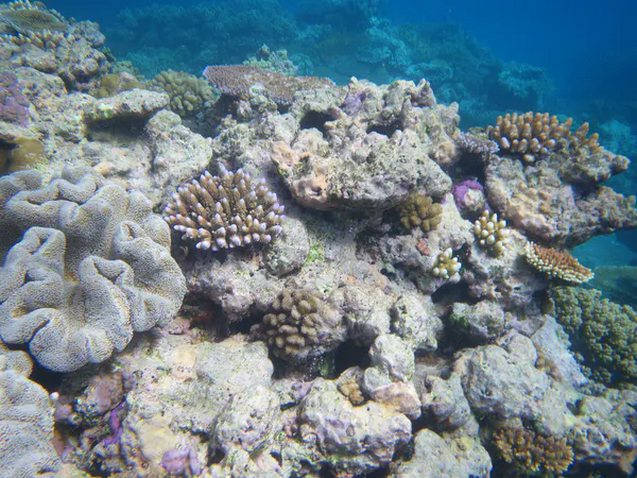
Just two weeks ago, UNESCO’s World Heritage Centre recommended one of our national treasures, the Great Barrier Reef, be listed as in danger.

If these events, and the thought of other inevitable climate change-driven disasters sadden or madden you, consider how it impacts Indigenous peoples.

So with this in mind, and the rest of NAIDOC week ahead of us, let’s take a moment (most likely from lockdown) to explore the theme of Heal Country in more detail.

More than a landscape

For Indigenous people, Country is more than a landscape. We tell, and retell, stories of how our Country was made, and we continue to rely upon its resources — food, water, plants and animals — to sustain our ways of life. Country also holds much of our heritage, including scarred trees, stone arrangements, petroglyphs, rock art, tools and much more.

Indigenous people talk of, and to, Country, as they would another person. As the late eminent ethnographer Deborah Bird Rose famously wrote:
Country is not a generalised or undifferentiated type of place, such as one might indicate with terms like ‘spending a day in the country’ or ‘going up the country’.

Rather, Country is a living entity with a yesterday, today and tomorrow, with a consciousness, and a will toward life.
As cultural and spiritual beings, and with deep and ongoing attachments to lands and waters, the impacts of climate change interrupt and make uncertain our unique ways of life. This increasing reality is shared with Indigenous peoples all over the world.

The Torres Strait Islands are under dire threat from climate change. Shutterstock

These sentiments were captured by Tishiko King, a Kulkalaig woman from the island of Masi in the Torres Strait. In her reflections on returning home in December 2020, she explained:
I had to pick up the bones of my Elders because erosion is damaging our burial sites. As First Nations people we know that these are our spirits of our old people, and it’s a sign of disrespect.

It’s desecrating who they are. It’s that heart-wrenching pain in your chest.
This is why the National NAIDOC Committee has sought to draw attention to our struggle.

Why Heal Country?

Through this year’s theme, the National NAIDOC Committee invites the whole nation to embrace “First Nations’ cultural knowledge and understanding of Country as part of Australia’s national heritage”. This requires understanding the depths of Indigenous peoples’ connections to Country and treasuring our heritage values.

But “understanding” and “treasuring” will only go so far in the face of increased drought, more severe storms or changing seasons and animal behaviours as a result of climate change.

As Bianca McNeair, a Malgana woman from Western Australia and co-chair of the First People’s Gathering on Climate Change, shared with The Guardian:
[Traditional Owners] are talking about how the birds’ movements across country have changed, so that’s changing songlines that they’ve been singing for thousands and thousands of years, and how that’s impacting them as a community and culture.
All Australians have much at stake if radical steps to cut emissions aren’t taken. For Indigenous peoples, the consequences of climate change are much more profound.

Country also holds heritage, including stone arrangements, rock art, tools and more. Shutterstock

Not all disasters are natural

But talking only of climate change doesn’t capture the full reality threatening Indigenous peoples ways of life.

The destruction of Juukan Gorge by Rio Tinto in 2020 caused international outrage for the clear disregard for not only Indigenous culture, but human history.

Likewise, the notorious McArthur River mine in the Northern Territory has been damaging the environment and nearby township of Borroloola, from the leaking of potentially harmful contaminants to waste rock that smouldered for months.

These events, as well as others, continue to be examined through the Juukan Gorge Senate inquiry.

Protesters outside the Rio Tinto office in Perth in June 2020, after two ancient rock shelters were destroyed. AAP Image/Richard Wainwright

Heal Country forces us to see these events not in isolation, but in a chain of disasters that continue to impact and threaten Indigenous peoples. It invites people to see the land and water through our eyes and understand that although we didn’t produce these problems, we suffer from them.

Heal Country seeks reflection, for all Australians to ask themselves what they treasure about being from, and living on, this land.

If, like us, you find peace, pride and enjoyment from our natural values — our beaches, mountains, rivers, wetlands, forests, deserts and more — then perhaps it’s time to get off the bench and become an advocate for change.

Three ways you can help

Indigenous people continue to stand up for and protect their Country. But in a nation where their connections, culture and heritage are seen by governments as being of lesser value than minerals, it is often a lonely struggle.

I asked people to consider the impacts on Country, culture and heritage in my article for The Conversation during the 2019-2020 bushfires. Now, I ask that you consider it against the backdrop of an uncertain future.

Far from being powerless to protect Country, there is much an everyday Australian can do. Here are three examples:

1) Make a submission to the Juukan Gorge inquiry.

The Juukan Gorge inquiry is one of the most important in our recent history. The protection and management of Indigenous peoples’ culture and heritage is being thoroughly examined, with recommendations to better balance the protection of these things against future economic growth.

You can lend your voice — or that of your organisation — to express support and solidarity with Indigenous peoples through a submission.

If events like coral bleaching sadden or madden you, consider how it impacts Indigenous peoples. Shutterstock

2) Donate to charities that support Indigenous land and sea management programs.

These organisations are key to advocating on behalf of Indigenous people and offer guidance, advice and support to Indigenous communities seeking to establish their own programs. Two of note include Firesticks Alliance and Country Needs People.

3) Write an email to your local member.

Ask your local member how they’re supporting local Indigenous land and sea management programs, including ranger groups or cultural burning initiatives. If you live in the city, ask how their party supports Indigenous groups in their caring for Country aspirations.

Heal Country invites all Australians to walk with us, to stand beside us, to support us.

But perhaps most importantly, it invites Australians to love, treasure and fight for this land, as we have done, and will do, forever.

Links

(CNN) Unprecedented Heat, Hundreds Dead And A Town Destroyed. Climate Change Is Frying The Northern Hemisphere

CNN - Angela Dewan


The tiny town of Lytton has come to hold a grim record. On Tuesday, it experienced Canada's highest-ever temperature, in an unprecedented heat wave that has over a week killed hundreds of people and triggered more than 240 wildfires across British Columbia, most of which are still burning.

Lytton hit 49.6 degrees Celsius (121.3 degrees Fahrenheit), astounding for the town of just 250 people nestled in the mountains, where June maximum temperatures are usually around 25 degrees. This past week, however, its nights have been hotter than its days usually are, in a region where air conditioning is rare and homes are designed to retain heat.

Smoke rises from a fire at Long Loch and Derrickson Lake in Central Okanagan in Canada on June 30.

Now fires have turned much of Lytton to ash and forced its people, as well as hundreds around them, to flee.

Scientists have warned for decades that climate change will make heat waves more frequent and more intense. That is a reality now playing out in Canada, but also in many other parts of the northern hemisphere that are increasingly becoming uninhabitable.

Roads melted this week in America's northwest, and residents in New York City were told not to use high-energy appliances, like washers and dryers — and painfully, even their air conditioners — for the sake of the power grid.

In Russia, Moscow reported its highest-ever June temperature of 34.8 degrees on June 23, and Siberian farmers are scrambling to save their crops from dying in an ongoing heat wave.

Even in the Arctic Circle, temperatures soared into the 30s. The World Meteorological Organization is seeking to verify the highest-ever temperature north of the Arctic Circle since records there began, after a weather station in Siberia's Verkhoyansk recorded a 38-degree day on June 20.

Visitors at Humayun's Tomb in New Delhi, India, on a hot day on June 30 amid a heatwave.

In India, tens of millions of people in the northwest were affected by heat waves.

The Indian Meteorological Department on Wednesday classified the capital, New Delhi, and cities in its surrounds as experiencing "severe extreme heat," with temperatures staying consistently in the 40s, more than 7 degrees higher than usual, it said. The heat, along with a late monsoon, is also making life difficult for farmers in areas like the state of Rajasthan.

And in Iraq, authorities announced a public holiday across several provinces for Thursday, including the capital Baghdad, because it was simply too hot to work or study, after temperatures surpassed 50 degrees and its electricity system collapsed.

Experts who spoke with CNN said it was difficult to pinpoint exactly how linked these weather events are, but it's unlikely a coincidence that heat waves are hitting several parts of the northern hemisphere at the same time.

A man stands by fans spraying mist along a street in Iraq's capital, Baghdad, on June 30.

"The high pressure systems we're seeing in Canada and the United States, all of these systems are driven by something called the jet stream — a band of very strong winds that sits way above our heads, at about 30,000 feet where the planes fly around," Liz Bentley, Chief Executive at the UK's Royal Meteorological Society, told CNN.

Bentley explained the configuration of the jet stream is preventing weather systems from moving efficiently along their normal west-to-east path.

"That jet stream has become wavy, and it's got stuck in what we call an Omega block, because it's got the shape of the Greek letter Omega, and when it gets in that, it doesn't move anywhere, it blocks it," Bentley said.

"So the high pressure that's been building just gets stuck for days or weeks on end, and these Omegas appear in different parts of the northern hemisphere."

In the US, the same thing happened in mid-June in the Southwest, breaking records in Mexico and places like Phoenix in Arizona. A couple weeks later, a dome of high pressure built over the Northwest, toppling records in Washington, Oregon and southwest Canada.

"So we've seen these unprecedented temperatures — records being broken not just by a few degrees, being absolutely smashed," Bentley said.

Scientist says this could happen every year by 2100

There is a growing acceptance among some political leaders that climate change is a driving force behind fueling many extreme weather events, particularly for heat waves and storms.

"Climate change is driving the dangerous confluence of extreme heat and prolonged drought," US President Joe Biden said Wednesday.

"We're seeing wildfires of greater intensity that move with more speed and last well beyond traditional months, traditional months of the fire season."

Hundreds of deaths reported across Canada and the Pacific Northwest amid unrelenting heat wave
Scientists are working on sophisticated tools that can rapidly assess just how much climate change may have contributed to a particular weather event.

"We carried out a quick attribution study to get some fast answers to 'What is the role of climate change?'" said UK Met Office meteorologist, Nikos Christidis, who has been developing simulations to carry out such analysis.

"We found that without human influence, it would be almost impossible to hit a new record and such a hot June in the region," he said, referring to an area including those affected in Canada and the US.

Christidis said in the past, without human-caused climate change, extreme heat in the Northwest US or Southwest Canada would have occurred "once every tens of thousands of years." Presently, it can occur every 15 years or so, Christidis said.

And if greenhouse gas emissions continue? Christidis said as often as every year or two by the turn of the century.

A couple and their dog lie in the shade Monday in Portland, Oregon. Portland had another record-high temperature on Monday: 116 degrees.

Several countries, including the US, United Kingdom and those in the European Union, recently increased their commitments — some by a long way — but many scientists and activists say they still don't go far enough to keep global average temperatures within 1.5C above pre-industrial levels.

World leaders pledged in the 2015 Paris Agreement to aim for this limit in order to stave off the more most catastrophic impacts of climate change.

Climate groups have also urged Canada to increase its commitments and wean itself off oil and gas.

"This is literally the deadliest weather on record for the US Pacific Northwest and far southwest Canada region. The losses and the despair as a result of the extreme heat and devastating fires in Canada are a reminder of what's yet come as this climate crisis intensifies," said Eddy Pérez, Climate Action Network Canada's manager for international climate diplomacy.

"Canada is experiencing historic climate-induced losses and damages while at the same time not doing its fair share to combat dangerous climate change. As an oil and gas producer, Canada is still considering the expansion of fossil fuels which is directly attributed to the global temperature rise."

Links

Lethal Heating is a citizens' initiative