14/11/2021

(AU The Guardian) Australia Shown To Have Highest Greenhouse Gas Emissions From Coal In World On Per Capita Basis

The Guardian - 

Analysis released at Cop26 climate summit shows Australia’s per capita emissions from coal power nearly double those of China

An analysis released by British climate and energy thinktank Ember at the Cop26 summit in Glasgow shows Australia has the highest greenhouse gas emissions from coal power in the world on a per capita basis. Photograph: Saeed Khan/AFP/Getty Images

Australia has the highest greenhouse gas emissions from coal power in the world on a per capita basis, nearly doubling those in China, according to a new analysis released at the Cop26 climate summit in Glasgow.

As the talks headed towards a fraught final day, there was disagreement over whether a closing declaration would commit countries to return with stronger short-term emissions reduction targets next year, and explicitly support an accelerated phaseout of coal.

The British climate and energy thinktank Ember released an analysis that suggested the world’s wealthiest countries remained among the worst emitters from coal power once population was factored in.         

Australia topped the list, with annual per person emissions five times greater than the global average and 40% higher than any other major coal power user.

Examining the period since the landmark Paris agreement was signed in 2015, the analysis found Australia emitted 5.34 tonnes of carbon dioxide per person each year, placing it ahead of South Korea (3.81), South Africa (3.19), the US (3.08) and the world’s biggest outright emitter, China (2.71).

Ember cited the International Energy Agency to argue OECD countries including Australia should end coal power by 2030 if they were to play their part in attempting to keep global heating to 1.5C above pre-industrial levels – a goal of the Paris agreement – within reach.

Coal power emissions per capita, G20 nations above world average
Annual average 2015-2020 in tonnes of C02
Guardian graphic | Source: Ember

The Morrison government has rejected this and did not join a group of countries that pledged to phase out burning coal for electricity.

Dave Jones, Ember’s global program lead, said Cop26 had seen a divergence between developing Asian countries and major OECD coal users over the need to close coal generation.

Vietnam had pledged to stop building coal plants and to stop using it in the 2040s, and Indonesia, the Philippines and India had shown signs they were changing previously held positions.

He said by comparison arguments put forward by Australia, Japan and South Korea were “embarrassing” and “simply untenable”.

“They will undoubtedly be forced to change their position in the coming months,” Jones said.

Ban Ki-moon, a former UN secretary general and deputy chair of The Elders, an international non-governmental organisation of senior statespeople, said the potential of renewable energy was growing exponentially and OECD countries needed to align with the target of phasing out coal entirely by the end of the decade. “This will be a true demonstration of global leadership,” he said.

About 60% of Australia’s electricity over the past year came from burning coal. That proportion is gradually diminishing and the country’s coal fleet is ageing, but under current closure schedules it would continue to use coal power until the late 2040s.
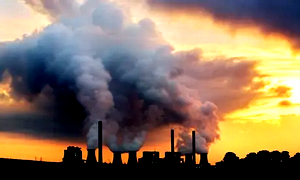
The Morrison government has been heavily criticised in Glasgow for its ongoing support of fossil fuels.

Greenpeace International head Jennifer Morgan grouped it with Saudi Arabia as a “wrecker” opposed to the action needed to cut emissions and provide the finance needed to help developing countries respond.

Australia was one of only four countries, along with Indonesia, Mexico and Singapore, that chose to just resubmit the same 2030 emissions target at Cop26.

Australia’s has committed to only a 26-28% cut compared with 2005 levels, though government projections suggest it could make a cut of up to 35%, in part due to state government policies. Scientists have advised global emissions need to be cut by 45% by the end of the decade.

Mary Robinson, a former president of Ireland and chair of The Elders, said leaders of developing countries were “in crisis mode” at the talks but some leaders who could do the most to address the problem were not. She bracketed Australia with Saudi Arabia, Brazil, China and Russia.

“Australia, a wealthy country, is still in fossil fuel mode, not in crisis mode,” she told the UK’s Sky News.

The talks were boosted late on Wednesday by a surprise joint declaration by the two biggest emitters, China and the US, that they would work together to cut emissions in the crucial next decade.

But there was significant disagreement between countries over a draft text released Wednesday morning.

It included a proposal that countries return to the negotiating table next year with new plans to ramp up emission cuts this decade.

Under the Paris agreement, countries are expected to return with better pledges in 2025 but - with a chasm between existing commitments and the deep cuts needed - many are now demanding the deadline should be brought forward.

The draft text also proposed countries agree to accelerate the phasing out of coal and subsidies for fossil fuels.

Australia has not been represented at a political level at the talks since Angus Taylor, the emissions reduction minister, left a week ago, and it has not made public its position on key parts of draft text released on Wednesday morning.

But Scott Morrison has previously strongly opposed suggestions coal power should be actively phased out, and said he has no plans to increase Australia’s 2030 commitment.

In a statement on Thursday, Taylor said Australia was “an active and constructive participant in the negotiations to ensure a positive outcome”.

There is dispute between countries over whether the text will keep a reference to the scientific case for limiting global temperature rises to 1.5C above pre-industrial levels, with some large developing countries reportedly opposed.

Poor countries said much more needed to be done to increase finance packages to help them cut emissions and cope with the impacts of climate breakdown.

Scientists at the talks expressed frustration that rhetoric from global leaders was not being matched by action, and warned that every extra fraction of a degree of global heating would have dire consequences.

Links

(AU ABC) Government's Emissions Reduction Modelling Draws Researchers' Criticism, Industry Approval

ABC News - Claudia Long

The modelling compares two "scenarios" for Australia — one where we didn't commit to net zero, and one where we did. (ABC News)


Key Points
  • Some researchers say the model is overly optimistic about the contributions of the private sector, particularly when it comes to hydrogen
  • Industry representatives have welcomed the modelling
  • The head of the Australian Industry Group says there's a lot of work to be done and "a lot of things are going to have to go right"
Researchers are concerned by the modelling underpinning the government's plan to reduce emissions, but industry representatives say its release is a step in the right direction.

The exact plan for reducing the remaining 15 per cent is still yet to be determined, with the government pinning those emissions reductions on technology developments that haven't happened yet.

So what have researchers and industry made of the document?

'May as well have been written in crayon' Tim Baxter, a senior researcher with the Climate Council, is unimpressed by the modelling.

"This piece of analysis may as well have been written in crayon," he said.

"One of the most egregious aspects of the plan is that what is supposed to be a credible plan to reach net zero in 2050 doesn't actually reach anywhere near that."

Some researchers say the model is overly optimistic. (AP: Charlie Riedel)


Mr Baxter is concerned by the prioritising of technologies the government previously announced it would be supporting as part of its road map.

"Right throughout is just assuming really heroic performance from all of those pet technologies the federal government has already announced."

"It doesn't really in any way test any of those assumptions."

Rod Campbell, Research Director at progressive think tank The Australia Institute, shares Mr Baxter's concerns.

"The modelling of the plan doesn't actually reduce our emissions to net zero despite what's written on the box," he said.

The plan for net zero
Mr Campbell said the model is overly optimistic about the contributions of the private sector, particularly when it comes to hydrogen.

"They've invented a $50 billion hydrogen industry that currently doesn't exist, may never exist, but in the modelling, it's just been inserted in there as a new industry."

And he thinks it overlooks a key factor in Australia's tackling of climate change.

"None of the economic benefits in this model are what we gain from avoiding catastrophic climate change."

"I think most farmers, tourism businesses or other humans in Australia would argue that we should be acting on climate change to avoid it and reduce the costs or just damage of what's going on around us."

"This huge primary motivation to act on climate change is ignored in this modelling."

In a media release from Friday afternoon Energy Minister Angus Taylor said the government has a credible pathway to net zero.

"The modelling shows that a clear focus on driving down technology costs will enable Australia to achieve net zero emissions by 2050 without putting industries, regions or jobs at risk."

Industry representatives welcome modelling

Industry reps say the modelling presents just one potential pathway forward. (AP: Charlie Riedel, file)

While the document has had a frosty reception in some quarters, industry representatives have welcomed its release.

Sarah McNamara, chief executive of the Australian Energy Council which represents 20 major power and gas companies, said the modelling was a move in the right direction.

"We see this modelling at a higher level as being a positive piece of work in that it supports the federal government's commitment to net zero by 2050," she said.

"What is encouraging is that it anticipates some big changes in our economy as we move through to 2050 and a lower emissions future, many of which are going to be positive changes in jobs as well as for the climate."

Ms McNamara said there's still a lot of factors in play when it comes to how Australia will meet our net zero target.

"We're taking it as an early indicator of the government's commitment to meeting this goal."

PM's climate awakening

The Prime Minister is no longer comparing electric vehicles with a war on the weekend. This isn't a climate conversion but an awakening to a changing political landscape, writes political correspondent Brett Worthington. Read more


"We don't yet know how strongly technologies are going to perform over time if they are not yet proven technologies."

"Hydrogen is a really exciting emerging technology."

Innes Willox, head of the Australian Industry Group, says the modelling presents just one potential pathway forward.

"We've always all said that the journey to net zero by 2050 is not going to be straightforward, easy or linear, and there will be a lot of challenges as well as opportunities on the way."

"The modelling is just one potential story of what could happen."

"There are some big assumptions here, and that's why underpinning all of this is going to have to be a lot of work done and a lot of things are going to have to go right."

"The thing to keep in mind here is that there's no expectation this is going to happen overnight."

"This is almost a 30-year journey that we're going to be on, so a lot is going to happen between now and then, particularly in the realm of technology."

Can Australia get to net zero?

 Links

(AU SBS) 'Morrison, Get Out Of The Way': Bushfire Victims' Fury Over Australia's Climate Change Moves

SBS - David Aidone

Bushfire victims are calling on the government to act urgently on climate change and have shared their harrowing stories.

Fiona Lee lost her home during the 2019-2020 Black Summer bushfire season. Source: Supplied

Jann Gilbert lost everything when her house was destroyed in the Black Summer bushfires, and fears she and other bush dwellers will again experience infernos of equal intensity if Australia does not take urgent action to reduce carbon emissions.

She has one frank message for Prime Minister Scott Morrison — who has made a pledge of net zero by 2050 backed by a controversial plan, and has resisted calls to make deeper cuts to emissions by 2030 — if his government does not act swiftly.

"If he's not prepared to do something... I want him to get out of the way and let someone else do the job," Ms Gilbert said.

Source: Supplied

After a struggle between the Liberal Party and its coalition partner The Nationals over the net zero target, Mr Morrison formally confirmed at the COP26 climate change summit in Glasgow this month that Australia would commit to this goal. But he has attracted criticism for not committing to lifting the nation's short-term target.

Australian bushfire victims also want more to be done.

Bushfire survivors remember Black Summer

'I'm furious at the way the climate crisis has been dealt with'

Bushfires aren't unusual in Australia, but climate change is thought to be making them worse.

The Black Summer bushfire season which ravaged parts of the eastern coast in 2019-2020 is often cited as an example of how a natural part of the Australian environment is worsening as the earth warms, and have been labelled as a "wake up call" to rapidly reduce emissions by some researchers.

It was a terrifying event that Ms Gilbert experienced first-hand.

Source: Supplied

The marine biologist moved to Mallacoota, a coastal town in Victoria's East Gippsland region, after buying a property there toward the end of 2018. Twelve months and $50,000 later, it was fully renovated.

The work was completed on 20 December, 2019. Fast forward 11 days and her home "was rubble'.

Ms Gilbert remembers thinking her home would be safe as she evacuated to the Mallacoota Wharf, where many others fled, as the out-of-control fire approached.

"It probably wouldn't have gone if the neighbour's gas bottles had not exploded," she said. "It was actually fate that I wasn't there because that where the hose I would have been using (to fight the fire) is, and that's exactly where the gas bottles came through."

Source: Supplied

"It burnt so hot that it melted all of the windows on the northern and southern side of the house because it had blown in from the eastern side," she said.

"And you could see that because all of the glass along the eastern side was smashed, but on the northern and southern windows, the glass was melted from the inside out."

The disaster means a "whole part of her life is now gone."

"[I have] no family photos, nothing from my parents... not one thing was left," she said.

But that wasn't the hardest thing for her — it was the environmental destruction that broke her heart.

"For the first two weeks after the fires all you heard was shotguns being fired, and vets were euthanising injured animals," she said.

She added: "And that's what I can't forgive the government for. What they don't seem to understand is that humans, like all the rest of the other animals on this planet, rely upon this planet for its resources.

"We were the last to arrive in evolutionary terms, we've done the most damage, and we are on the slippery slope to extinction."

Source: Royal Australian Navy

After the fire, Ms Gilbert was first living in her caravan which survived the blaze and then secured a short-term rental.

She finally obtained a modular unit through a Victorian Government initiative which was installed on a block of land she leased from a friend.

She "loves" Mallacoota and had no hesitation in deciding to rebuild and her new home will have a full fire-supression system. But she fears bushfires will continue to cause large-scale damage if climate change is not curbed.

"The thing that bothers me is that... I have no doubt that another catastrophic fire given where we're at with climate change," she said. "I have no doubt there'll be another catastrophic fire within the next four years. And it may not be Mallacoota, but it will be somewhere."

Source: AAP

With Australia's climate having already warmed by an average of 1.4C since 1910, she said: "Can you imagine what 2 degrees is going to look like?"

"I'm just furious at the way that this whole environment climate crisis has been dealt with by both sides of government," she said.

'I want the government to take climate change seriously'

Source: Supplied

Fiona Lee has a similarly harrowing story. Ms Lee, her partner and their young daughter had been living at their home — which had been built over a long period of time and where they had stayed on-and-off — just outside the town of Bobin in the New South Wales Mid North Coast for full-time for two years.

They were preparing to go camping for the weekend on 8 November, 2019, but instead enacted their bushfire survival plan as they saw "smoke cover the sun and burnt leaves dropping [their] yard".

A few hours later, their house had burnt down.

Fiona Lee lost her home near Bobin on the the Mid North Coast in NSW during the 2019-2020 Black Summer bushfire season. Source: Supplied

"The experience of walking back to the house for the first time the next day was so eerie," Ms Lee said. "The bush was dead and quiet, it was like being in a cemetery.

"Everything was totally destroyed. Parts of the car were dripping down the hill and all the glass in the house had melted and everything had folded in on itself. There was nothing left."

Ms Lee said there was "nothing left" when she returned to her property following the fire. Source: Supplied

The next day, the family moved into Ms Lee's mother's single-bedroom home where they stayed for "a long time" before they eventually secured a rental in Newcastle.

"This is where we currently are. We don't have plans to rebuild," she said.

Ms Lee said she has no plans to rebuild her home, which was just outside Bobin on the New South Wales Mid North Coast.

The thought of returning to the bush to live is "difficult", especially if carbon emissions are not reduced "urgently and immediately", she said.

She said she would like the federal government to take "take climate change seriously."

"At COP26, we've seen world leaders stepping up to the climate change challenge and the prime minister barely made it there with a distant net zero target, and not any intentions to cut emissions significantly by 2030," she said.

She believes Australia is "one of the few countries that's still seen as part of the problem and not part of the solution to address climate change."

"I think that the government is full of promises but doesn't actually have any intention of reducing emissions," she said. "I want to see no new investment in coal, oil, and gas projects because we need to address climate change now."

Perfect storm increasing bushfire risk

In 2016, Australia was among many countries to sign the Paris Agreement.

The Agreement's goal is to keep average global temperatures to well below 2C and preferably 1.5C through countries reducing their emissions as soon as possible and ultimately reaching net zero by 2050.

To achieve net zero, the amount of greenhouse gases being produced must not exceed the amount being taken out of the atmosphere.

Mr Morrison has said the mid-century target will be achieved through 'technology not taxes', which some have labelled as an ineffective approach.

The plan, released in late October, prioritises investment in clean hydrogen, energy storage, low emissions steel and aluminium, and carbon capture and storage which the federal government has been warned not to rely on.

Source: Pool Getty Images Europe

Many scientists believe deeper emissions cuts need to be made by the end of this century to effectively limit global warming.

Indeed, Australian climate scientists recently warned that half of the emissions cuts needed to reach net zero by 2050 would need to be made by 2030 to keep global warming below 2C.

Mr Morrison has resisted committing to life Australia's 2030 emissions reduction target of 26-28 per cent on 2005 levels by 2030, though the government says projections show they could be lowered by 35 per cent by the end of this decade.

Chair of the University of Melbourne's School of Ecosystem and Forest Sciences, Professor Rodney Keenan, said there is a link between climate change and extreme weather events such as bushfires.

"We've seen an increase in average global temperatures and that's leading to temperature extremes in southern Australia which is the most bushfire-prone area," Professor Keenan said.

"We're also seeing a drying trend with a strong decrease in rainfall, particularly in southwestern Australia, but also in southeastern Australia in Victoria and southern New South Wales.

"So the combination of those things is increasing bushfire risk."

What could be done to reduce emissions faster

Professor Keenan said it would have been "quite straightforward" for Mr Morrison to commit to an emissions reduction target of 35 per cent on 2005 levels by 2030 at COP26 because the states all have more ambitious targets.

The New South Wales, South Australian and ACT governments recently announced a "historic" agreement to work together to reach net zero emissions. The Western Australian government also signed on to the forum and said it was "necessary" in "the absence of real leadership from the federal government".

Professor Keenan said the federal government "needs to be making clear policy commitments to meet its [emissions reduction] objectives."

"The expectation that the technology will develop as a matter of course and that it will then be adopted is a very hopeful one; that the market will essentially solve this with a bit of input from the government on the technology development side," he said.

"I think it's clear that in order to drive the adoption and deployment of this technology, there needs to be clear price signals and other policy measures."

A "national consensus" on how to address the climate challenge was also necessary.

"We've argued in a recent article that it might be time for a national climate accord where the prime minister convenes the different sectors, the states and the different community groups, Indigenous communities and others to come together and talk through difficult tradeoffs and challenge."

Australia was not among a large cohort of countries to sign a pledge to transition away from coal — one of the most polluting fossil fuels — at COP 26. The nation also did not sign a pledge to reduce methane emissions.

Founder of Emergency Leaders for Climate Action and former commissioner of Fire & Rescue NSW, Greg Mullins, said that was a disappointing decision that put the nation's future prosperity at risk because coal would become more difficult to sell as other countries turned their backs on it.

Mr Mullins is also concerned by the federal government's technology-driven approach to emissions reduction. He believes a price on carbon would be more effective.

He said the money being invested in carbon capture and storage should instead go toward "subsidies for people to put solar panels on their roofs and get batteries", and to build wind turbines.

More trees, which absorb carbon dioxide, should also be planted, he said.

"I think this technology push is interesting but basically futile. And it's putting it off for someone to do the heavy lifting when it inevitably fails," he said.

In response to questions from SBS News, a spokesperson for Energy and Emissions Reduction Minister Angus Taylor said "Australia’s emissions reduction story has been one of consistent achievement – our emissions are now more than 20 per cent below 2005 levels".

"We have reduced emissions faster than any other major commodity exporting nation in the world, and faster than the OECD average, Canada, Japan, NZ and the US," the spokesperson said.

Australia’s 'long-term emissions reduction plan' "sets out a credible pathway to net zero by 2050, while preserving our existing industries, including our important export-oriented agriculture, resources and energy industries", the spokesperson said.

"Australia has already reduced methane emissions faster than any other major methane emitter, including the US, except for the EU and Canada."

SBS News contacted Labor's Climate and Energy spokesman Chris Bowen for comment.

Links

13/11/2021

(AU Bloomberg) Australia’s Net-Zero Plan Will Only Cut Emissions By A Third

Bloomberg Green - 

Photographer: Carla Gottgens/Bloomberg

Australia’s bid to reach net-zero emissions by 2050 will only cut the amount of greenhouse gases being produced in the fossil-fuel dependent nation by a third compared with having no plan at all, according to modeling released by the government.

The nation will still be emitting 215 million tons of emissions by 2050 under its new plan, compared with 316 million tons without it, a table in the document released Friday shows. 

Still, the modeling shows offsets will only be responsible for reducing net-zero emissions by 94 million tons by 2050. The government expects to close the gap to net-zero with technological advancements emerging over the next three decades, though the report noted that the analysis isn’t a precise prediction of economic or technology trends.

About 70% of the planned emission reductions under the plan, announced by Prime Minister Scott Morrison’s conservative government last month, is expected to come from the “technology investment roadmap,” “global technology trends” or “further technology breakthroughs.”

Emissions Target
Australia's plan to zero out greenhouse gas emissions by 2050 relies heavily on technology
Source: Australian government


The release is unlikely to ease criticism of Morrison’s policies, with Australia under pressure during the COP26 summit to enact stronger short-term action to combat climate change. The country, one of the world’s top suppliers of fossil fuels, will also continue to rely heavily on projects designed to offset planet-warming pollution.

Morrison, whose government relies on support from voters in communities with strong resources industries including coal-mining, is refusing to impose taxes on polluters, saying strict government intervention on climate change would add pressure on living costs and threaten businesses.

“Climate change will ultimately be solved by ‘can do’ capitalism, not ‘don’t do’ governments seeking to control people’s lives and tell them what to do, with interventionist regulation and taxes that just force up your cost of living and force businesses to close,” Morrison said Wednesday in Melbourne. 

Links

(AU SMH) The PM’s ‘Can-Do’ Climate Capitalism Won’t Work Without A Price On Carbon

Sydney Morning Herald - Rosalind Dixon | Richard Holden

Authors
  • Rosalind Dixon is a professor of law at UNSW Sydney and Director of the Gilbert + Tobin Centre of Public Law.
  • Richard Holden is a professor of economics at UNSW Business School and president-elect of the Academy of the Social Sciences in Australia.
Scott Morrison has suggested “can-do” capitalism is the answer to climate change.

And the Prime Minister is right – but only if he is willing to reward initiative-taking firms with the right set of incentives.

Some firms are going to make money from developing green energy alternatives – especially now that the government is subsidising those firms and their access to capital.

It has been suggested that the $1 billion Low Emissions Technology Commercialisation Fund might result in new investment in emerging techniques such as direct air capture and storage, or methane-reducing livestock feed.

That’s good news for early stage green-tech firms looking for cheap capital.

Prime Minister Scott Morrison needs to create the right environment for firms to embrace carbon reduction. Credit: Dominic Lorrimer


But many firms are going to look at these new green alternatives and say: “I can, but I won’t.”

These alternatives do not enhance my bottom line. Why? Because even with great technological advances they are likely to be more expensive than coal for quite some time – unless one accounts for the true social cost of coal, which includes its environmental damage.

There’s a reason fossil-fuel technologies have been so dominant for so long. It’s because they are cheap when one only considers the financial cost, and not the environmental cost.

The success of a green technology push requires factoring in the social cost of energy. This puts all technologies on a level-playing-field, and thus provides the right incentives for adoption as well as innovation.

Take carbon capture and sequestration – a technology that can substantially reduce carbon emissions from coal-fired power plants.

This is an existing technology that could no doubt be refined. It exists and it works – we don’t need a billion-dollar slush fund to develop it. But it is expensive to implement, and reduces the energy produced by those plants by approximately 20 per cent.

So if plants are owned by private companies, who don’t think about social costs and benefits, there will be little incentive to adopt carbon capture. The can-do attitude for these businesses is “yes we can pollute and stay profitable”.

The first steps have been taken towards a new policy on energy and carbon emissions.

The only way can-do capitalism makes sense, as an environmental policy, is if the government adopts a price on carbon, or an equivalent market-based policy such as the cap-and-trade model proposed by the Business Council of Australia through tightening the existing safeguard mechanism.

If there is a price on carbon, polluting costs businesses money. So the can-do attitude becomes about how to reduce those costs, and with them, the pollution itself.

Other businesses will then also have an incentive to invest in green technologies, even without a government subsidy, because they know that can-do capitalists will be interested in purchasing that technology – to reduce their tax burden, and costs.

Electric cars
Morrison’s electric car policy misses the price point
Capital markets will also see this and be more willing to lend to green-tech start-ups.
A carbon price has a chequered political history in Australia. But that history should not obscure the fact that it is the only real way for can-do capitalism to be a form of can-do environmentalism.

It is also a policy that has increasing support in the business community, and globally.

Without a price on carbon, we will be paying the price in lost tax revenue – because our export-businesses will have to pay it anyway (but not in Australia) through carbon-border-adjustment taxes.

That additional revenue could also do a lot of good. It could be used to pay for the government’s can-do lending program to green businesses. Or it could be used to pay a dividend to households, to compensate them for the rise in costs associated with true action on climate.

Can-do policies are a good idea, but only if they understand how and when markets can work to our benefit: when businesses have an incentive to reduce emissions because doing so reduces their tax burden, and increases their profit.

It is hard for the government to admit this politically. But we know they can.

Links

(USA Washington Post) 2C Or 1.5C? How Global Climate Targets Are Set And What They Mean

Washington Post - Adam Taylor | Harry Stevens

How much warming can the world bear?

That question is one of the fundamental issues in dispute at the ongoing U.N. climate change summit, known as COP26, in Glasgow, Scotland.

Here’s what different levels of warming would look like, and how global temperature targets have been set.
Six years ago, when countries came together in Paris for the COP21 summit, at which the Paris climate accord was shaped, they committed to limit the global average temperature rise to well below 2 degrees Celsius (3.6 degrees Fahrenheit) above preindustrial levels.

However, while the 2015 agreement set 2C as the minimum, it included language that suggested countries should push for a more ambitious goal: 1.5C.

A preliminary draft of the COP26 agreement released Wednesday “reaffirms” the Paris agreement’s goal: limiting warming to well below 2C and pursuing a target of 1.5C. But it does not commit to meeting the 1.5C threshold.

The difference between the two targets may seem small, but they represent vastly different levels of effort for countries seeking to limit their carbon footprints, and strikingly divergent outcomes for the planet.

Some experts doubt that 1.5C remains achievable. Limiting warming to 1.5C “will be very difficult,” Microsoft founder and philanthropist Bill Gates told U.K. lawmaker Jeremy Hunt in a conversation hosted by the think tank Policy Exchange last week.

Evidence shows that the two targets also represent different scenarios for the climate’s impact on human life.

A study released Tuesday by the U.K. Met Office, Britain’s national weather service, found that 1 billion people could face heat stress, a potentially fatal combination of heat and humidity, if temperatures rise by 2C.

“The higher the level of warming, the more severe and widespread the risks to people’s lives, but it is still possible to avoid these higher risks if we act now,” said Richard Betts, one of the leaders of the project.

Tuvalu's foreign minister gave a speech to COP26 on Nov. 8, standing in the ocean to show how his Pacific island nation is on the front line of climate change. (Reuters)

How did the world agree upon a 2C target?

When world leaders came together in Paris in 2015, they were looking to reverse a long period of international inaction after the widely perceived failures of the 1992 Kyoto Protocol and the 2009 Copenhagen Accord.

The latter had included nonbinding language that referenced “the scientific view that the increase in global temperature should be below 2 degrees Celsius.”

During his visit to the COP26 climate summit in Glasgow, Scotland, Rep. Garret Graves (R-La.) explained how he talks to his party about the climate crisis. (Casey Silvestri/The Washington Post)
Nearly 200 countries signed onto the agreement in Paris, which was adopted in 2015 and took effect in 2016.

Under the accord, countries would set their own emission reduction targets and plans to reach those targets, but agreed to the long-term temperature goal to limit “the increase in the global average temperature to well below 2C above preindustrial levels.”

Countries would also pursue “efforts to limit the temperature increase to 1.5C above preindustrial levels, recognizing that this would significantly reduce the risks and impacts of climate change,” according to the text.

The two targets, one firm and one aspirational, represented a fierce policy debate.

Developing countries had been pushing to set a rise of 1.5C as a target for years. Small island nations were often the most vocal in their support, pointing to the existential threat they faced.

Around the world, many adopted the slogan “1.5 to stay alive.”

Has there been a movement toward a 1.5C target?

The Paris agreement represented a significant shift. More than 100 countries expressed support for a target of 1.5C, including for the first time some major emitters.

Notably, the United States got on board, joining a group called the “High Ambition Coalition” founded by the Marshall Islands in 2014.

Scientific pressure played a role in the change. In a paper published during COP21, Nature Geoscience stated that “no scientific assessment has clearly justified or defended the 2° C target as a safe level of warming, and indeed, this is not a problem that science alone can address.”

But there remained some skepticism, with oil and gas producing Saudi Arabia among the countries pushing back on the more ambitious targets. Some officials argued that countries should keep to the less ambitious target so that countries were not set up for failure.

Former president Donald Trump pulled the United States out of the Paris agreement and promoted the use of fossil fuels.

But, under President Biden the United States has not only rejoined that agreement but also the group of nations that say that 1.5C should be the standard.

However, the U.S. leader has also privately questioned whether even the 2C goal is attainable if top emitters do not stick to their pledges. And while the draft released from COP26 on Wednesday did include new terms, it did not set 1.5C as a target.

What does the science say about the difference between 1.5C and 2C warming?

The Intergovernmental Panel on Climate Change (IPCC), a U.N. body responsible for assessing the scientific research on climate change, has warned that even an increase of 1.5C of global warming would result in significant differences, with increased heat waves and short cold seasons.

At 2C, however, the changes will be more profound. “With every additional increment of global warming, changes in extremes continue to become larger,” the IPCC wrote in a report released earlier this year that evaluated more than 14,000 papers.

The IPCC has found that an extreme heat event that would have occurred once per decade in a climate without human influence, would happen 4.1 times a decade at 1.5C of warming. It would occur 5.6 times at 2C. Other events such as heavy precipitation or drought would also increase.

The IPCC also noted that it was very likely that the relative sea level will continue to rise throughout the 21st century and beyond, and the level it rises will be affected significantly by the level of climate change.

If temperatures are confined to an increase of 1.5C, over the next 2000 years sea levels could rise by as much as 10 feet, but it could be double that if temperatures grow by 2C, the IPCC research found, and potentially worse if ice sheets in Antarctica become destabilized.

Individual papers have spelled out similar scenarios, though they also show that increases of over 2C could be far worse. The Met Office study released on Tuesday found that while a 2C increase would result in the number of people living in areas affected by extreme heat stress rising from 68 million today to 1 billion, a 4C rise could see nearly half of the world’s population living in those areas.

What are we at now?

A Washington Post analysis of multiple data sets has found that Earth has already warmed more than 1 degree Celsius on average over the past century. Some places may already have seen rises of 2C.

In their latest report, the IPCC estimated that under the current scenario, the world would likely hit the 1.5C threshold by 2040. Under the most optimistic scenario presented in the report, global temperatures would reach 1.5C by the middle of the century and then drop back down as emissions were cut further, potentially avoiding some of the worst outcomes.

Under the worst scenario envisaged by the IPCC, the best estimate was that the world will likely see a rise of 4.4C by the end of the century — with an extreme impact on life on Earth.

Links

Lethal Heating is a citizens' initiative