17/11/2021

(The Conversation) Five Books That Will Change How You Think About The Environment And Climate Change

The Conversation -  | 

Pexels

Authors
  •  is Lecturer in Asia-Pacific Studies, University of Central Lancashire
  •  is Doctor of Philosophy, IAE Lyon School of Management – Université Jean Moulin Lyon 3
We are constantly being bombarded with dire warnings about the environmental and climate emergency.

Act now, we are told, or face an unprecedented global catastrophe.

But while the solutions proposed – solar panels, heat pumps, eating less meat – are no doubt necessary, they are for the most part unimaginative and uninspiring – and isolated from a wider system of beliefs whereby they might acquire genuine meaning.

The following five books offer an alternative perspective. In contrast to the simplistic idea that all we need to do is implement a set of technological and lifestyle changes, they offer a new way of understanding and relating to nature.

Gaia by James Lovelock (1979)

Author provided
In his 1979 book, James Lovelock offers an entirely new understanding of the earth as not just a planet on which life has evolved, but a self-regulating system capable of correcting any significant fluctuations that tend towards making it uninhabitable, such as increases or decreases in global temperatures or ocean salinity.

Lovelock shows, for example, how the environment has contributed to driving down atmospheric carbon dioxide levels to compensate for a steadily warming sun.

This has kept global temperatures in a habitable range.

Ultimately though, the importance of Gaia lies not just in its bold scientific claims, but in the way it opens up the possibility of bringing together science and spirituality, the true and the meaningful.

What does being a part of Gaia mean for us?


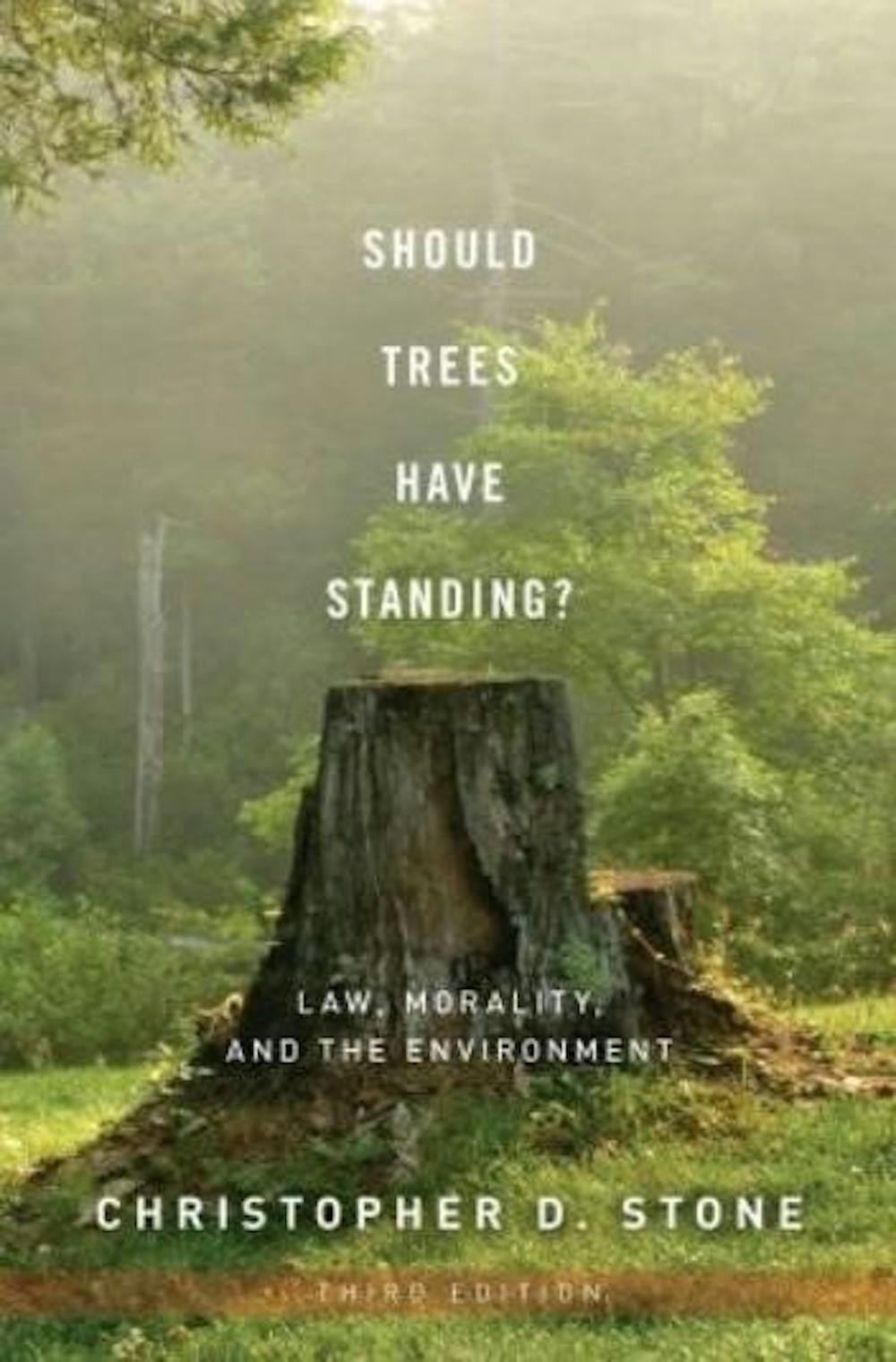
Should Trees Have Standing? by Christopher D. Stone (1972)

Author provided
No law, Christopher Stone claims, can be created until we begin to challenge its non-existence.

And just as it was once “unthinkable” for corporations to be given the same rights as people, the same is true today of living beings and ecosystems. Nature itself has no rights, only the people that own it or use it.

Against this, Stone argues that certain natural entities – trees, forests, rivers – should be treated as people and granted “rights”.

This radical idea is increasingly being implemented. In 2008 and 2009, Ecuador and Bolivia became the first countries in the world to recognise nature as a legal person in their constitutions. And in 2017, New Zealand recognised the legal personhood of the Whanganui River.

Developing these insights in the 2010 edition of the book, Stone asks if the climate should also be granted legal standing. He sees this as problematic but not impossible, though it would require a legal system that goes beyond the current nation-state structure.


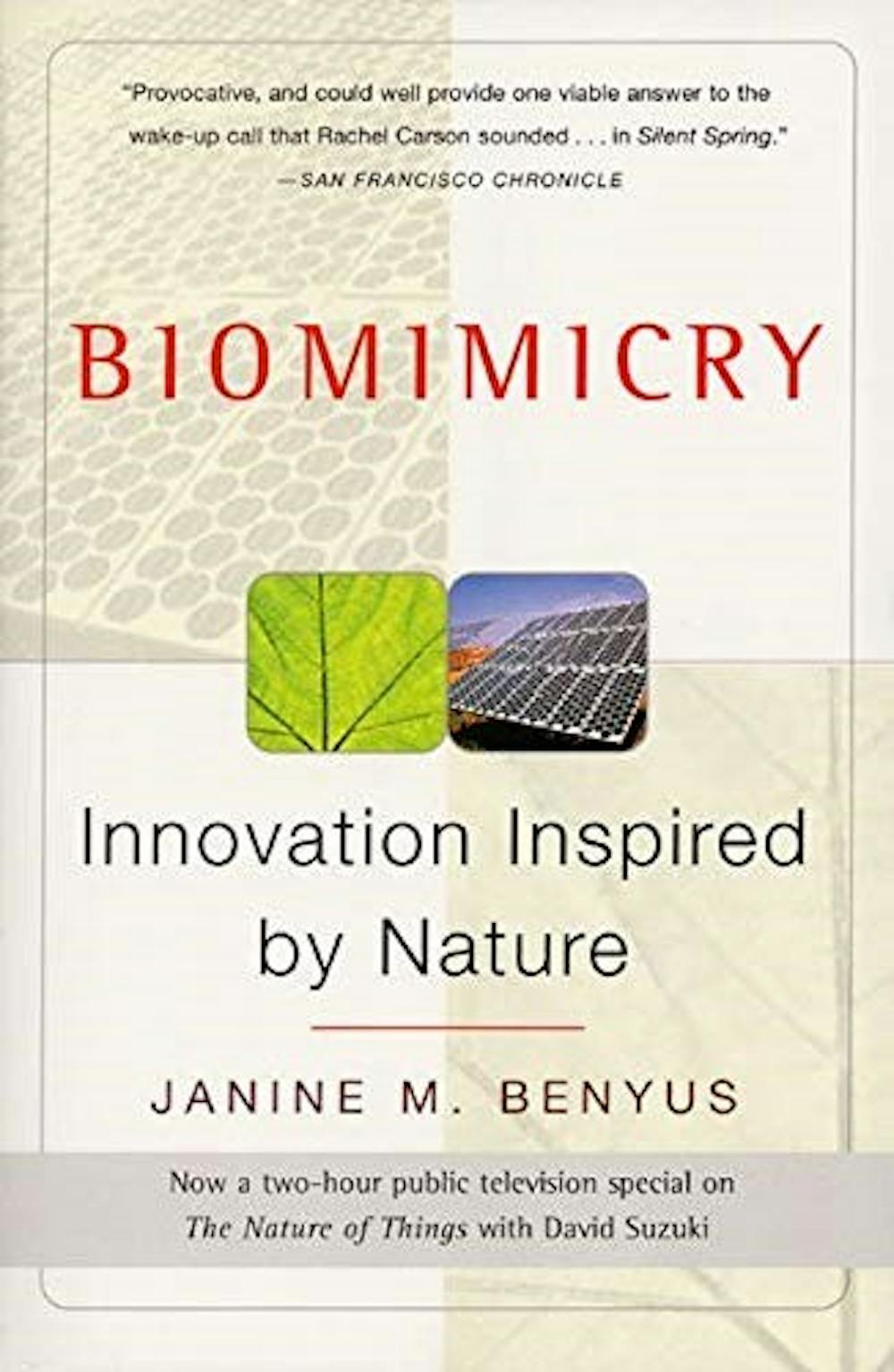
Biomimicry by Janine Benyus (1997)

Author provided
Few would deny that technology will play a major role in achieving sustainability. But for the most part, we concentrate on individual technologies – such as electric vehicles or biodegradable packaging – without pausing to rethink technology as a whole.

A significant exception to this is Janine Benyus, who argues that sustainability calls for an entirely different approach: innovation inspired by nature, or “biomimicry”.

The book explores the practice of imitating nature to solve human design challenges and offers many case studies showing how biomimicry can apply to almost every field of innovation – from solar energy generation based on natural photosynthesis to cereal farming modelled on the native Kansas prairie.

But perhaps the deepest significance of the book is the way it calls on us to view nature not just as something we learn about, but also as something we learn from. And in that case, we must cease to think of ourselves as the sole possessors of intelligence and knowledge and instead also come to recognise the genius of nature.


Braiding Sweetgrass by Robin Wall Kimmerer (2013)

Author provided
Like Benyus, Robin Wall Kimmerer thinks nature has a lot to teach us. But whereas Benyus focuses on technological innovation, Kimmerer is interested in broader lessons. The overarching theme of the book is how to “braid” together indigenous wisdom and scientific knowledge, a project that the author, as a citizen of the Potawatomi nation and a professional biologist, has devoted much of her life to.

Kimmerer’s most brilliant example is sweetgrass itself – an aromatic plant used in indigenous medicine and basketry.

Whereas Kimmerer’s biologist colleagues presumed that harvesting sweetgrass always harms it, a biology student of hers designed a careful experiment proving something the Potawatomi had long since known: harvesting sweetgrass actually stimulates vigorous growth.

What these plants teach us, then, is that humans are not outside nature, but a part of nature – and with the right approaches we can enable other species to flourish alongside our own.


The Climate of History in a Planetary Age by Dipesh Chakrabarty (2021)

Author provided
Addressing the meaning of climate change through the lens of history, Dipesh Chakrabarty proposes a fundamental shift from thinking about “global” to “planetary” climate change.

Chakrabarty argues that while the world is busy solving a “global” problem, we forget to ask what the “global” means for us today.

The “global”, he explains, is essentially a human-centric idea, intrinsically linked to postwar globalisation and modernisation.

The “planet”, by contrast, decentres this human-centric idea, allowing nonhuman perspectives and interests to be taken into account. Most importantly, it raises the possibility of discovering new universal values.

Chakrabarty also emphasises that the acceleration of global warming is tightly linked to the anti-colonialist modernising movements of the mid-20th century, such as Chairman Mao’s Great Leap Forward.

This was an economic and social programme aimed to bring China up to speed with the Western world through intensive industrialisation and technological advancement. Chakrabarty argues that it is only by overcoming our obsession with constant growth and development that we can rise to the challenge of ensuring planetary sustainability.

Links

(Grist) The Progress (And Failures) Of COP26, In 3 Charts

Grist -  |  | 

Gaps remain on emissions, finance, and fossil fuel production.

Christopher Furlong/Getty Images

After two weeks of tense negotiations at COP26 in Scotland, the world has a new international climate change agreement: the Glasgow Climate Pact. 

The new document does not replace the landmark Paris Agreement, but rather bolsters it with increased clarity on key issues. One of the major stakes going into this year’s COP was a matter of degrees. The world is teetering on the edge of keeping alive the possibility of limiting warming to 1.5 degrees Celsius.

Surpassing that threshold would be a death sentence for small island states and other vulnerable countries, and it all comes down to just how drastically nations are willing to cut their emissions. The pact gives added weight to the 1.5 degrees goal, and demands that countries do more to achieve it. 

It also calls on rich countries to increase their financial support to help poorer nations adapt to rising seas and extreme weather, another priority for the meeting. And for the first time ever at a COP, the final text references “coal” and “fossil fuels” — the leading causes of climate change that were formerly taboo on the international stage.  

But reactions to the agreement from many climate advocates and experts were tepid at best. “It’s meek, it’s weak, and the 1.5 degrees C goal is only just alive,” Greenpeace International executive director Jennifer Morgan said in a statement. “But a signal has been sent that the era of coal is ending. And that matters.” 

Below, we take a look at the three major gaps in international progress on climate change going into COP26, and where they stand now.

1. The Emissions Gap

Clayton Aldern / Grist

Before COP26, a United Nations analysis found that the world was not on track to achieve the Paris Agreement goal of limiting global warming to “well below” 2 degrees C, let alone the much safer goal of 1.5 degrees C. If countries met their 2030 emissions targets set prior to the start of the conference, the planet would still warm 2.7 degrees C by the end of the century. 

After COP26, more countries have pledged steeper emissions cuts, but there is still a major gap in ambition between those pledges and what it would take to limit warming to 1.5 degrees C.

Climate Action Tracker, a climate analysis firm, analyzed all of the official plans that countries submitted to the U.N. and found that if targets for 2030 were achieved, the world would still likely heat up by about 2.4 degrees C.

The group also mapped out what it called an “optimistic” scenario, taking into account the less-official statements made by some countries that they will achieve net-zero emissions by 2050. In that case, the researchers found that the planet would warm by 1.8 degrees C.

Several other announcements made at the conference could improve the picture a bit more: More than 100 countries signed pledges to end deforestation and to cut methane emissions 30 percent by 2030.

A few dozen countries pledged to phase out coal-fired power plants, though their timelines vary. Twenty-four countries and several major automakers agreed to sell only zero-emission vehicles by 2040. 

In the end, the Glasgow Pact officially recognized that global carbon emissions have to be reduced by at least 45 percent by 2030 to limit warming to 1.5 degrees, and encouraged countries whose plans fell short of that target to submit new proposals by the end of next year.

That’s a step forward, since otherwise countries would not be required to revisit their climate plans until 2025.

Perhaps the biggest question, post-COP26, is whether countries will follow through on the implementation of these pledges and plans. The U.S., for example, has a 1.5 degrees-aligned plan to cut emissions in half by 2030, but does not yet have policies in place that would allow it to achieve this.

2. The Fossil Fuel Production Gap

Clayton Aldern / Grist

Before COP26, it was taboo to talk about fossil fuels at U.N. climate summits. The phrase “fossil fuel” never made it into the final text of a conference agreement. Negotiators talked about cutting emissions, sure, but largely avoided the sources of energy that are the leading cause of those emissions. 

This avoidance allowed a world of demand-side policies to expand renewable energy, electric cars, and other clean technologies. But that hasn’t translated into a drop in supply. Oil and gas companies have plans to keep digging for the foreseeable future.

Prior to COP26, a United Nations report that analyzed fossil fuel production plans of major economies warned that the world was on track to produce roughly 110 percent more coal, oil, and gas in 2030 than would be consistent with limiting global warming to 1.5 degrees C. 

After COP26, the walls around the “F” words have started to crumble. During the conference, three dozen countries, including the United States, promised to stop funding fossil fuel projects abroad by the end of 2022. More than 40 countries pledged to phase out coal-fired power, the most carbon-intensive energy source, in the coming decades.

The Beyond Oil and Gas Alliance was launched, spearheaded by seven countries who pledged to end new exploration and production of fossil fuels within their borders, and phase out existing production on a timeline that’s consistent with Paris Agreement goals.

A draft text of the conference agreement released early last week even included the line, “Calls on parties to accelerate the phasing-out of coal and subsidies for fossil fuels.”

In the final Glasgow Climate Pact, however, the language was watered down to call for phasing down the use of unabated coal — allowing for coal plants with carbon capture systems — and inefficient subsidies for fossil fuels — a qualification with seemingly no agreed-upon definition.

3. The Climate Finance Gap

Clayton Aldern / Grist

Before COP26, the landscape of climate finance looked pretty bleak. Finance is one of the crucial pillars of the Paris Agreement: In Paris, poor countries agreed to limit their carbon emissions (despite having contributed the least to the climate crisis) as long as developed countries provided them with financial support, both to adapt to climate disasters and to switch over to clean energy. 

So far, however, rich countries have been falling short. Despite promises to deliver $100 billion per year in grants, loans, and other forms of finance by 2020, developed countries were $20 billion short as of 2019. (Numbers from 2020 aren’t available yet.) According to a report released just before the conference, the $100 billion goal likely won’t be met until 2023.

After COP26, the situation doesn’t look much better. In Glasgow, countries were expected to chart a faster path to the $100 billion goal and plan how much finance should be allocated after 2025. Some new pledges were made: Japan promised an additional $10 billion, and Scotland made the first-ever contribution to a fund to compensate countries who have suffered from climate disasters.

The final text of the conference agreement “notes with deep regret” that the $100 billion goal hasn’t been met, and “urges” developed countries to follow through on the promise as quickly as possible. Still, negotiators for developing countries emphasized that $100 billion is not nearly enough.

Prime Minister Narendra Modi of India said in a speech that rich nations should be supplying $1 trillion in finance by 2030, and a group of African nations urged at least $1.3 trillion every year after 2025. But no new finance goal was finalized.

Developing countries also want funds to be more evenly split between adaptation (helping them deal with sea-level rise and extreme weather events) and mitigation (switching to clean energy and cutting emissions). In 2019, only about 25 percent of climate finance went to adaptation projects.

While the conference did see record contributions to a U.N. fund focused on adaptation — $356 million — that cash pales in comparison to what is needed. According to one U.N. study, the costs of adapting to climate change in developing countries has already reached approximately $70 billion per year.

The final text of the agreement urged developed countries to “at least double” their contributions to adaptation — a good start. But developed countries will have to actually follow through.

Links

(AU New Daily) Alan Kohler: We Must Not Let Scott Morrison Get Away With Do-Nothing Climate Plan

 New Daily - Alan Kohler

The media must call out the Prime Minister's misleading claims, writes Alan Kohler. Photo: TND/AAP


Author
Alan Kohler writes twice a week for The New Daily. He is also editor in chief of Eureka Report and finance presenter on ABC News.
After 25 failed UN-led attempts to do something about global warming, number 26 has been presented with a revolutionary new scheme by the Australian government.

The idea is blindingly simple, and could take the world by storm as it were: Just predict that the private sector will take care of climate change.

A voluntary price on carbon (not a tax, mind) plus private sector innovation will achieve net-zero emissions by 2050, job done.

Governments have to do almost nothing.

We’ll never know for sure whether Australia’s stunning breakthrough contributed to the struggles in Glasgow, but it probably did.

As suggested here two weeks ago, Australia punches above its weight on these matters because there are other countries looking for an easy way out. The Australian way looks appealing.

Prime Minister Scott Morrison laid his idea out most clearly in a speech to the Victorian Chamber of Commerce and Industry last week: “[Climate change] will be fixed painstakingly, step by step, by the entrepreneurs, by scientists, by technologists, by innovators, by industrialists, by financiers, by risk-takers. That’s the Australian way.”

The modelling subsequently released on Friday did not even pretend that this approach will achieve net-zero emissions: It gets us to 85 per cent, after which the great spirit of technology will carry us the rest of the way to 100 per cent net zero on a golden staircase of innovation.

In fact, it’s clear from the modelling that the only reason the Morrison plan exists at all is to prevent an increase in Australia’s cost of capital caused by the world’s banks and investment houses shunning this country.

Net-zero spin

The sheer audacity of what Morrison is doing is breathtaking: To say it’s a plan when it’s a forecast; to say it will achieve net-zero emissions by 2050 when the document itself says it won’t; to say it’s “technology not taxes” when it relies on voluntary carbon pricing of between $24 and $400 per tonne that will be passed on to consumers; to say Australia is leading the world when we’re actually coming last.

It seems to spring from a combination of the Prime Minister’s character, so brilliantly described in Sean Kelly’s book, The Game – a portrait of Scott Morrison, and an extreme version of the actual game that’s played by both main parties.

In his book, Kelly writes: “When Scott Morrison declared on election night that he believed in miracles, he meant the phrase literally.”

And: “The more useful way to think about the effect of Morrison’s faith on his political career is to see in it a sensibility. Rather than offering him a doctrine, its elements have structured the way in which he perceives the world.

“The first element is an abiding optimism …”

“This is closely related to a second element: The sense of certainty that can come from believing that God has you in his hands – that he has a plan …”

When it comes to something that affects the whole planet and human race, the whole of creation no less, how can someone who believes in the pre-eminence of God’s plan for each one of us think that humans should, or even can, interfere in it.

So leaving it to the private sector and technology, supervised by God, makes perfect sense.

Labor in a bind

The politics of the Morrison plan, meanwhile, look shattering – for Labor.

The Prime Minister will now campaign on doing next to nothing about climate change because it’s going to turn out OK thanks to the private sector – it will basically take care of itself.

Therefore whatever the Labor Party proposes on climate change will have to be something, not nothing, which means it can be attacked as a cost, a tax or a dictate.

ALP leader Anthony Albanese is in a tight spot now.

He must either go for broke, boldly announcing the phasing out of coal, a new emissions trading scheme and a ban on internal combustion vehicles by, say 2040, and try to win the cities with that, or match Morrison’s nothing plan and campaign about something else.

A half-measure will please no one.

Both strategies are enormously risky – unless Morrison falters, which looks unlikely at the moment.

Which is why the media must now become players in this drama.

The role of the media

The reason Scott Morrison knows he’s pretty safe with an obvious non-policy is that most of the mainstream media tries to be politically even-handed, and is inclined to show respect to a Prime Minister.

But most media company directors and journalists also understand that we actually do face an emergency from global warming, and that it may not be true that private technology will take care of it, or that preventing disaster will be cost-free – it will just be cheaper than the disaster.

So we need to call him out, constantly, every day, and apply truth in advertising standards to election ads as well.

Climate change is not just politics, and shouldn’t be reported as just politics.

Links

16/11/2021

(AU The Age) Good COP, Bad COP: Climate Wins And Losses From Glasgow

The Age - Lesley Hughes | Wesley Morgan

Authors
  • Lesley Hughes, a Climate Council spokeswoman, is a professor of biology and pro vice-chancellor at Macquarie University.
  • Dr Wesley Morgan is a Climate Council researcher.
COP26 has finished and the question on everyone’s minds is: “was it a success or a failure?” Climate change is the world’s most wicked and complex problem, so there is no simple answer.

But let’s start with the pretty good. Intense pre-COP negotiations resulted in a number of substantial commitments in the first week of the meeting.

On day two, there was the Glasgow Leaders’ Declaration on Forests & Land Use, a global pledge to end and reverse deforestation by 2030.

More than 100 countries signed up, covering land containing about 85 per cent of the world’s forests.

The declaration included pledges of about $26 billion of private and public finance.

COP26 President Alok Sharma speaks at the close of COP26. Credit: Getty

Day two also saw the announcement of the Global Methane Pledge, designed to reduce methane 30 per cent by 2030.

More than 100 countries signed up, representing about 70 per cent of the global economy.


Coal was the focus of day three, culminating in more than 190 countries and organisations signing up to the Global Coal to Clean Energy Transition Statement.

This is aimed at phasing out coal power and ending support for new coal power stations. Signatories included Vietnam, a potential major destination for Australian coal.

A deal has been reached at the COP26 Glasgow climate summit between 197 countries, with coal power being "phased down".

In the second week, after most world leaders had gone home and the negotiators got down to the business of drafting the final statement, a joint announcement from the US and China caught many by surprise.

The US-China Joint Glasgow Declaration on Enhancing Climate Action in the 2020s outlined an agreement to boost co-operation on climate action.

Importantly, “2020s” is mentioned eight times in the body of the declaration, signalling that the world’s two biggest emitters understand the importance of near-term action to avert climate catastrophe.

Emphasis on action “by 2030” is among the most significant themes of the final Glasgow Climate Pact. All countries are urged to “revisit and strengthen” 2030 targets in advance of COP27 in Egypt next year.


Countries have also agreed on “accelerating efforts towards the phase-down of unabated coal power and inefficient fossil fuel subsidies”.

This sentence alone captures the complexity of the negotiations. On the one hand, this is the first explicit mention of coal and fossil fuels in 26 years of COP declarations and decisions.

On the other, the words “unabated”, “inefficient” and “phase-down” may be viewed as get-out-of-jail-free cards for some fossil-fuel consuming and exporting countries.


While many countries brought an increased level of ambition for emissions reduction to the Glasgow table, the ultimate goal of “keeping 1.5 alive” – that is, keeping warming to no more than 1.5 degrees above pre-industrial levels – has not been met.

Analysis by Climate Action Tracker shows that even with the new 2030 pledges, a global temperature rise of 2.4 degrees by the end of the century is a real possibility.

This means catastrophically more severe climate extremes, and sinking prospects, literally, for low-lying nations, including many of our Pacific neighbours.

Another major disappointment is that the developed world fell short of fulfilling a decade-old promise to deliver $US100 billion each year to help poorer nations deal with climate impacts.

So who were the bad COPs in Glasgow? There is one that consistently stood out. Australia.

Perhaps nothing was more symbolic of Australia’s lack of commitment to the goals of the Glasgow COP than the pride of place at the Australian pavilion given to Santos, one of our largest gas and oil companies.

Multiple assessments of Australia’s commitment and actions to reduce dangerous climate change have ranked us at the bottom of the international pack.

The “Australian Way” plan to get to net zero by 2050 is a hotchpotch of creative accounting, claiming credit for emission reduction actions of the states and territories and the previous Labor government, spruiking technology that doesn’t work, and magical thinking about technology that hasn’t been invented yet.

Glasgow summitThe Glasgow summit’s final agreement:
what you need to know
On top of this, the government has refused to strengthen Australia’s 2030 emissions targets – the weakest in the developed world – and refused to sign on to commitments to reduce methane and transition out of coal.

Everyday Australians and businesses pay a high price for the Morrison government being out of step with the rest of the world.

Not only does Australia continue to obfuscate and delay, we are only contributing about a 10th of our fair share to help poorer nations cope with the climate impacts we have helped cause.

At the end of each COP, the Climate Action Network, an international umbrella organisation of over 1000 groups devoted to increased climate action, presents the Colossal Fossil Award to the country or organisation deemed to have been least helpful at meeting the objectives of the meeting.

No prizes for guessing who got it this year.

Glasgow Climate Summit
Explore

Links

(The Conversation) The Ultimate Guide To Why The COP26 Summit Ended In Failure And Disappointment (Despite A Few Bright Spots)

The Conversation -  | 

AP

Authors
  •  is Director of the Centre for Sustainable Enterprise, Griffith University
  •  is Director of the Griffith Climate Change Response Program, Griffith University     
After two hard-fought weeks of negotiations, the Glasgow climate change summit is, at last, over.

All 197 participating countries adopted the so-called Glasgow Climate Pact, despite an 11th hour intervention by India in which the final agreement was watered down from “phasing out” coal to “phasing down”.

In an emotional final speech, COP26 president Alok Sharma apologised for this last-minute change.

His apology goes to the heart of the goals of COP26 in Glasgow: the hope it would deliver outcomes matching the urgent “code red” action needed to achieve the Paris Agreement target.

At the summit’s outset, UN Secretary-General António Guterres urged countries to “keep the goal of 1.5℃ alive”, to accelerate the decarbonisation of the global economy, and to phase out coal.

So, was COP26 a failure? If we evaluate this using the summits original stated goals, the answer is yes, it fell short. Two big ticket items weren’t realised: renewing targets for 2030 that align with limiting warming to 1.5℃, and an agreement on accelerating the phase-out of coal.

But among the failures, there were important decisions and notable bright spots. So let’s take a look at the summit’s defining issues. Weak 2030 targets

The goal of the Paris Agreement is to limit global temperature rise to well below 2℃ this century, and to pursue efforts to limit warming to 1.5℃. Catastrophic impacts will be unleashed beyond this point, such as sea level rise and more intense and frequent natural disasters.

But new projections from Climate Action Tracker show even if all COP26 pledges are met, the planet is on track to warm by 2.1℃ – or 2.4℃ if only 2030 targets are met.

Despite the Australian government’s recent climate announcements, this nation’s 2030 target remains the same as in 2015. If all countries adopted such meagre near-term targets, global temperature rise would be on track for up to 3℃.

Technically, the 1.5℃ limit is still within reach because, under the Glasgow pact, countries are asked to update their 2030 targets in a year’s time. However, as Sharma said, “the pulse of 1.5 is weak”.

And as Australia’s experience shows, domestic politics rather than international pressure is often the force driving climate policy. So there are no guarantees Australia or other nations will deliver greater ambition in 2022.

Thousands of activists and protesters march in Glasgow to demand action from world leaders to combat the climate crisis. EPA/ROBERT PERRY

Phase down, not out

India’s intervention to change the final wording to “phase down” coal rather than “phase out” dampens the urgency to shift away from coal.

India is the world’s third-largest emitter of greenhouse gases, after China and the United States.

The country relies heavily on coal, and coal-powered generation is expected to grow by 4.6% each year to 2024. India was the most prominent objector to the “phase out” wording, but also had support from China.

And US climate envoy John Kerry argued that carbon capture and storage technology could be developed further, to trap emissions at the source and store them underground.

Carbon capture and storage is a controversial proposition for climate action. It is not proven at scale, and we don’t yet know if captured emissions stored underground will eventually return to the atmosphere. And around the world, relatively few large-scale underground storage locations exist.

And it’s hard to see this expensive technology ever being cost-competitive with cheap renewable energy.

In a crucial outcome, COP26 also finalised rules for global carbon trading, known as Article 6 under the Paris Agreement. However under the rules, the fossil fuel industry will be allowed to “offset” its carbon emissions and carry on polluting.

Combined with the “phasing down” change, this will see fossil fuel emissions continue.

COP26 president Alok Sharma apologised for the last-minute change in the wording of the pact, from ‘phasing out coal’ to ‘phasing down’.  AP Photo/Alastair Grant

It wasn’t all bad

Despite the shortcomings, COP26 led to a number of important positive outcomes.

The world has taken an unambiguous turn away from fossil fuel as a source of energy. And the 1.5℃ global warming target has taken centre stage, with the recognition that reaching this target will require rapid, deep and sustained emissions reductions of 45% by 2030, relative to 2010 levels.

What’s more, the pact emphasises the importance to mitigation of nature and ecosystems, including protecting forests and biodiversity. This comes on top of a side deal struck by Australia and 123 other countries promising to end deforestation by 2030.

The pact also urges countries to fully deliver on an outstanding promise to deliver US$100 billion per year for five years to developing countries vulnerable to climate damage. It also emphasises the importance of transparency in implementing the pledges.

Nations are also invited to revisit and strengthen the 2030 targets as necessary to align with the Paris Agreement temperature goal by the end of 2022. In support of this, it was agreed to hold a high-level ministerial roundtable meeting each year focused on raising ambition out to 2030.

The US and China climate agreement is also cause for cautious optimism.

Despite the world not being on track for the 1.5℃ goal, momentum is headed in the right direction. And the mere fact that a reduction in coal use was directly addressed in the final text signals change may be possible.

But whether it comes in the small window we have left to stop catastrophic climate change remains to be seen. 

Links

(The Conversation) COP26: The Glasgow Climate Summit Demonstrates An Appetite For Change Australia Simply Can’t Ignore

The Conversation - 

Alberto Pezzali/AP

Author
 is Professor, Crawford School of Public Policy and Head of Energy, Institute for Climate Energy and Disaster Solutions, Australian National University
COP26 president Alok Sharma has described the pivotal United Nations talks, which concluded over the weekend, as only a “fragile win” for ambition on climate change.

But, against the odds, the summit produced the goods on several important aspects of international climate policy.

It resolved tricky outstanding issues for implementing the Paris Agreement. And most importantly, it reinforced the multilateral consensus that much stronger climate action is needed in both the short and long term.

Stabilising the climate depends on a lot more than the outcome of multilateral negotiations like Glasgow. But those agreements set a frame for real-world decisions.

Here’s a preliminary interpretation of some of the decisions at COP26 on climate change mitigation, and the implications for Australia.

Some were unhappy with the COP26 outcome, but it created momentum for change. Alastair Grant/AP

Coal power “phase down”

Global climate negotiations are usually a relentless grind, with occasional fireworks. One such firework moment came in the final session when India, supported by China, demanded the Glasgow Climate Pact’s language on coal should be weakened from “phase-out” to “phasedown” of unabated coal power.

To prevent the disagreement scuttling the entire deal, the revision was agreed to, despite bitter protests by many countries intent on stronger action.

The wording of United Nations agreements is cumbersome, but deliberate. Here’s the full reference to coal in the final COP26 text. It calls on the parties to the Paris Agreement to:
accelerate the development, deployment and dissemination of technologies, and the adoption of policies, to transition towards low-emission energy systems, including by rapidly scaling up the deployment of clean power generation and energy efficiency measures, including accelerating efforts towards the phase-down of unabated coal power and phase-out of inefficient fossil fuel subsidies, while providing targeted support to the poorest and most vulnerable in line with national circumstances and recognising the need for support towards a just transition.
(By way of definition, “unabated” coal power refers to the absence of carbon capture and storage in power stations. This technology is very expensive for power generation and unlikely to be used at large scale.)

So what does the above text mean, exactly? At the core of it, the international community is spelling out an expectation that countries strive to greatly reduce the use of coal in electricity generation, and to stop subsidising fossil fuels. The original “phase-out” language would obviously have meant nations should stop using unabated coal power altogether.

On the face of it, the change in wording makes a big difference. But the signal to investors in coal mining and coal power plants is the same: the international community has decided coal-fired power must fall, and its end is coming.

No previous United Nations climate change decision has so directly called for action to cut fossil fuels. So even the weakened language is unprecedented.

What’s more, nations can act independently of – and more ambitiously than – the wording in the COP agreement.

For example, China recently pledged to rely much less on coal power and stop building coal-fired power stations abroad. And the surprise US-China joint declaration on climate change announced at Glasgow enshrines the “elimination of support for unabated international thermal coal power generation”.

The international market for thermal coal – the type burned for electricity – will shrink and could do so quickly. Australia is the world’s number two thermal coal exporter behind Indonesia. We’d better get used to the fact the business is in decline.

The market for thermal coal is likely to shrink quickly. Li Bin/AP

Ratcheting up 2030 targets

Another key aspect of the Glasgow pact is the call for stronger 2030 emissions targets and short-term action.

By the end of next year, nations are asked to strengthen their 2030 targets to align with the 1.5℃ temperature goal. This puts big pressure on Australia.

The federal government still retains the very weak target of a 26-28% emissions reduction by 2030, based on 2005 levels, and recently said the target will be exceeded by up to 9%. Prime Minister Scott Morrison’s insistence on Sunday that the target is “fixed” will not cut it over the next year.

Almost all other developed countries have strengthened their targets already, some greatly so. An important reference point is the United States, which has adopted a 50-52% reduction target in the same time frame.

In yet stronger language, the Glasgow pact “urges” countries that haven’t yet submitted a long-term emissions-reduction strategy to do so by next year’s conference.

This puts the onus on the federal government. Its recent “plan” to reach net-zero by 2050 falls far short of the mark of what constitutes a real national strategy.

Countries without a long-term emissions-reduction strategy should address this by next year. Alex Plaveski/EPA

International carbon trading

COP26 managed to resolve an issue that had proven extremely difficult since the Paris talks – rules for future international carbon markets.

The compromise reached appears to largely close loopholes for double-counting of emissions reduction. What kind and extent of international emissions markets will emerge under the Paris Agreement framework remains to be seen. However, the rules to underpin them are now available.

From an Australian perspective, an outcome on international emissions markets is very positive. Australian governments and negotiators have worked to help make it happen.

It opens the door to Australian companies or governments purchasing emissions reductions achieved in other countries, if this turned out cheaper than acting more strongly to cut emissions at home. It will also help Australia work with countries in the Pacific and Southeast Asia to reduce emissions there, and to share the resulting emissions reductions between countries.

Australia’s large land mass and unlimited potential for cheap renewable energy means it’s better positioned than most countries to become a net-negative emissions economy in the long term. In other words, Australia could one day remove more greenhouse gases from the atmosphere than it emits.

So an international carbon trading framework means Australia could eventually sell emissions reduction credits to other countries, and the revenue could fund large-scale CO₂ removal from the atmosphere.

A momentum that cannot be ignored

Earth’s climate will not be determined by what is agreed at global climate talks, but by the actions that businesses and people take, and the policies governments put in place.

The Glasgow outcome, however, shows there is global resolve to get on top of the problem. Governments that might prefer the old ways of a carbon-intensive economy cannot ignore that momentum.

Links

Lethal Heating is a citizens' initiative