18/11/2021

(AU NEWS.com.au) An Explainer Of Everything ScoMo Has Said About Australia’s Climate Policy So Far

NEWS.com.au - Kassia Byrnes

A lot is being said about Australia’s climate policy, so here’s an explainer of everything Scott Morrison has said so far.

Prime Minister Scott Morrison has revealed a plan for Australia to reach net zero emissions after public criticism.

If you’ve been scratching your head over the last few weeks since the United Nations Climate Change Conference (COP26), you’re not the only one.

Australia’s commitments to climate policy have been vague, to put it mildly, Scott Morrison has been criticised over the issue and it’s caused some damage to Australia’s reputation internationally.

So let’s try and clear things up and take a look at everything that’s been going on.


October 26: ScoMo announces net zero carbon emissions by 2050.
In a press conference, Morrison announced the Federal Government’s plan to hit net zero carbon emissions by 2050, but the plan was heavily criticised as vague, and it referred to “Australia’s unique way of life” far too many times.

“Australia has already met and beaten our … 2020 targets and indeed Australia will beat and meet our 2030 targets as well,” the PM said.

“Australians want action on climate change. They’re taking action on climate change but they also want to protect their jobs and their livelihoods. They also want to keep the costs of living down,” he said. “And I also want to protect the Australian way of life, especially in rural and regional areas. The Australian way of life is unique.”

The government pledged that by 2030 Australia’s emissions levels would be 26 to 28 per cent lower than 2005 levels, but that could actually be higher.

“We believe we will be able to achieve a 35 per cent reduction in emissions by 2030: that is something we actually think we are going to achieve,” Morrison stated.

Scott Morrison has been criticised over the issue.

It was widely noted that all parts of the plan never actually included any specifics on how these goals would be achieved. Instead, it noted vague future technological advancements that no one has explained further, and promised not to affect the mining and agriculture industries.
At this point ScoMo has promised that Australia will hit net zero by 2050 but it “will not cost jobs, not in farming, mining or gas”, although everyone is confused because he didn’t explain how.

November 1: ScoMo Addresses COP26 summit

Despite news around the United Nations Climate Change Conference (COP26) in Glasgow being somewhat derailed by ScoMo’s alleged lies to France about submarines, our PM did address the summit on November 1.

Despite Australia already having been criticised by Sir David Attenborough himself for their weak 2050 commitments, Morrison refused to formally ramp up Australias 2030 emissions reduction goal, even though he once again claimed that we’d likely hit a 35 per cent emissions cut by then.

The focus of Morrison’s speech was on lowering the costs of low- and no-emissions technologies, also claiming that Australia was hoping to help developing nations do the same.

“It will be our scientists, our technologists, our engineers, our entrepreneurs, our industrialists and our financiers that will actually chart the path to net-zero,” he said.

Again, he was heavily criticised for not providing an actual plan to achieve these 2030 and 2050 goals.

“First the PM tried to pull the wool over Australia’s eyes when he made a net zero by 2050 announcement without modelling, new funding or any new policy – and now he’s trying to do the same with the rest of the world,” said Chief Climate Councillor, Professor Tim Flannery, in a statement following the PM’s speech.
ScoMo more or less repeated the same goals and vague ‘plans’.

November 2: Australia’s Minister for emissions reduction gave a COP26 speech spruiking fossil fuels

A day later, our Minister for Industry, Energy and Emissions Reduction — Angus Taylor — also gave speech at COP26, that essentially promoted how Australia would be investing even more into fossil fuels. At a climate change conference.

“Let me tell you why this is so important, why a seemingly arcane topic like carbon credits really matters and why our Plan is for net-zero, not zero,” he said. “Australia is the world’s fourth-largest energy exporter — we’ve specialised in the production of energy and emissions-intensive commodities across sectors like mining and agriculture.

“Today, those exports are worth around a quarter of Gross National Income, and they are growing fast … and those exports are a big deal in our Indo-Pacific region, too, with Australia being one of the largest and most reliable suppliers of energy, resources and agricultural products.”

It’s also worth noting that, on top of this, Australia’s pavilion at the conference was sponsored one of the leading oil and gas producers in the APAC region, Santos.
Australia’s Minister for emissions reduction also flew to COP26 to tell people why our country would be investing more into fossil fuels, instead of less.

November 10: Australia ranked last for our climate action policies.

Despite ScoMo’s 2050 net zero carbon emissions commitment, Australia ranked last in the latest Climate Change Performance Index (CCPI), with a mark of zero.

Published by German-based group Germanwatch, the CCPI scores 63 countries on their climate action, based on greenhouse gas emissions, renewable energy infrastructure, and climate policy.

While we score “very low” in all categories and ranked 55th overall, we were absolutely dead last (and the only country to score zero) in the climate policy category.

The report stated that the “government does not have any policies on phasing out coal or gas, but CCUS [carbon capture, utilisation and storage] and hydrogen are being promoted as low-emissions technologies.

“Even though the renewables electricity is growing, the experts believe that Australia has failed to take advantage of its potential, and other countries have outpaced it.”

While ScoMo may have talked a lot about renewable technologies in his speeches, the report only placed Australia at 49th for the renewable energy category.

“The country’s lack of domestic ambition and action has made its way to the international stage,” the report continued.

“The experts describe that the country’s international standing has been damaged by climate denialism by politicians, refusal to increase ambition, and refusal to recommit to international green finance mechanisms.

“Australia has fallen behind its allies and its inaction even attracted public criticism in the run-up to COP26.”
The latest Climate Change Performance Index (CCPI) ranked Australia 55 out of 63 countries for our overall climate actions, and dead last with a score of zero for our climate policy.

November 12: Federal government releases net-zero modelling plan.

After pressure to explain how the government planned to reach its climate goals, the modelling on which Australia’s long-term emissions reduction plan is based was released on a Friday afternoon.

Once again using the catchphrase “the Australian way”, the modelling plan shows that Morrison is taking a “technology not taxes” approach that means Australia will be relying on offsets and unknown technology breakthroughs. At the same time, the gas sector will grow.

However, this technology plan still falls 215 megatonnes short of the 2050 net-zero plan, only reaching an 85 per cent reduction. The remaining cuts will be achieved by buying offsets. and from unexplained “further technology breakthroughs”.

Understandably, the response from climate experts is still less than impressed. Senior researcher at the Climate Council, Tim Bater, says the report “may as well have been written in crayon”.

“The most striking thing about this modelling is that it predicts the government won’t reach its own net zero by 2050 goal,” he continued.

“This is pure spin. A document that has the singular purpose of attempting to legitimise the federal government’s do-nothing approach.”
Morrison releases the modelling for Australia’s net-zero by 2050 plan, but it outlines a plan relying on technology that falls 215Mt short of the goal. The rest of the emission cuts rely on unexplained technology breakthroughs.

November 15: Barnaby Joyce openly mocked COP26 president for getting emotional about climate change.

After COP26 president Alok Sharma had a tearful breakdown during his speech on the final day of the summit, Deputy Prime Minister Barnaby Joyce openly mocked him, and accused him of faking his concern.

Sharma was announcing that the global climate agreement would be softened due to India’s protest of the original wording when his voice broke.

“May I just say to all delegates, I apologise for the way this process has unfolded and I am deeply sorry,” Mr Sharma told the summit.

“I also understand the deep disappointment but, I think as you have noted, it’s also vital that we protect this package.”

Joyce was asked about the incident on the ABC, and he responded with zero empathy.

“It annoys me that, what is that guy’s name? Chairman Sharma with his gavel – ‘I am crying, I can’t do it’ – he wants to talk about shutting down the coal industry but he never talks about shutting down the oilfields the North Sea,” Mr Joyce said.

“All the corporate billionaires and all the movie stars and chairman Sharma and all the tears as they shut down our industries. But they don’t want to touch their own.”

In the same interview, Joyce said he and the federal government are “happy with our targets, with the negotiations the Nationals had with the Liberals. We said we wouldn’t be changing our 2030 targets.”
Australia’s Deputy Prime Minister mocked the COP26 president for getting emotional during an interview with the ABC, claiming he was faking it.

Also November 15: ScoMo confirms he won’t change Australia’s climate policy.


The COP26 specifically named Australia for our poor climate policies in a final communiqué, and urged us (among other countries) to “revisit and strengthen the 2030 targets in their nationally determined contributions, as necessary to align with the Paris Agreement temperature goal by the end of 2022”.

While the communiqué is worded as a request, the intent is a commitment to doing better for our planet, and Australia signed it.

Yet, over the weekend of November 13-14, Health Minister Greg Hunt, Foreign Minister Marise Payne, and emissions reduction Minister Angus Taylor all stuck to Australia’s previously stated 2030 goals. The latter two issued a statement claiming Australia’s target was “fixed”.

Speaking the following Monday (November 15), Morrison answered questions about Australia’s confusing position on climate policy by saying the final communiqué was just a “request” and that Australia would be sticking with its original targets of cutting 26-28 per cent of emissions by 2030.

In the same press conference, Morrison once again claimed that despite these official targets, “we are going to achieve a 35 per cent reduction in emissions by 2030 … That’s what we’re going to achieve and that’s what actually matters”.

When asked why he wouldn’t just make that the official target, he responded “Because our policy is to meet and beat – that’s what we do.”
As it stands, despite urging from COP26 to do better and unclear modelling for the plan, Australia will be sticking with the original climate policy.
Links

(AU The Conversation) We Need To Design Housing For Indigenous Communities That Can Withstand The Impacts Of Climate Change

The Conversation -  |  |  | 

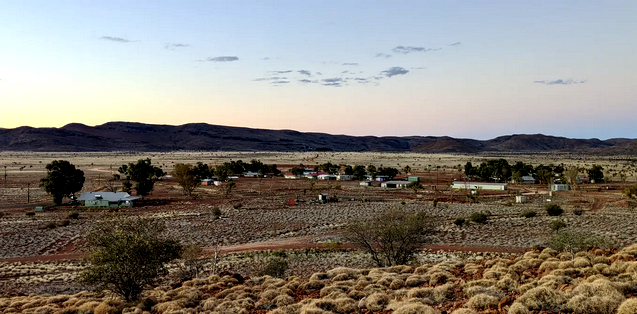
View of Kalka. Liam Grealy, Author provided (no reuse)

Authors
  •  is Professor, Anthropology and Cultural Studies, University of Sydney
  •  is Lecturer in Architecture, University of Sydney
  •  is CEO of Nganampa Health Council, Indigenous Knowledge
  •  is Research fellow, University of Sydney
Remote Indigenous communities in Australia will experience the impacts of climate change disproportionately to the rest of the country.

Take the Aṉangu Pitjantjatjara Yankunytjatjara (APY) Lands in northwest South Australia, where maximum temperatures are increasing. The summer periods of sustained high temperatures are starting earlier and lasting longer.

A rapidly warming planet provides a significant challenge to design, deliver, and maintain habitable housing across Australia. Yet, few analyses consider Indigenous housing and climate change together.

A new report, Sustainable Indigenous Housing in Regional and Remote Australia, fills this gap.

Exploring sustainable housing for First Nations communities

This new report examines the role of housing in remote and regional communities, given the increasing pressures of climate change. It shows existing and new housing can and should be better maintained for these communities. We found that Indigenous-run tenancy management is part of the solution.

In Gunnedah, we partnered with Gunida Gunyah Aboriginal Corporation, an Aboriginal community housing provider in New South Wales. The houses that Gunida Gunyah manage vary in age and quality, which all housing organisations must negotiate as they assume responsibility for ongoing maintenance.

Unfortunately the legacies of inadequate construction in housing do not belong to the past. What is built or refurbished today could haunt residents for decades. So, will attempts to revive old housing using existing national construction guidelines be enough to ensure future habitability? We used simulation software to understand the impact of climate change, especially of increasing heat, on Indigenous housing. This software considered the effectiveness of strategies for refurbishing existing housing to improve thermal performance and energy efficiency. This simulation was modelled for Australia’s tropical, dry, and hot/mild climate zones.

After 366 simulations, our results showed modifying or refurbishing existing housing and even building new homes to meet recommended standards are not adequate measures for current or future climate changes. Even if existing housing was improved or new housing was built to current national construction code standards, at best, benefits will be short term.

Further, whether houses are old or new, crowding is a critical limitation for “thermal comfort” - the technical term for not too hot, not too cold. So, even if housing was greatly improved on the design front, crowding would cancel out the benefits.

The solution is a combination of better design and construction standards, increased housing and restorative work on existing housing, with well-funded repair and maintenance programs to ensure ongoing function.

Newly built house in APY Lands. Liam Grealy, Author provided (no reuse)

Basic housing needs are not being met

As Healthabitat has long demonstrated, basic needs for householders, such as the ability to wash themselves, wash clothes and bedding, and store and prepare food, requires things to work inside and outside the house.

Decades of data shows the impact of restoring function to health hardware (washing facilities, safe food storage systems, and so on) and reveals the key reasons for housing dysfunction are poor original construction and inadequate repairs and maintenance.

Some governments respond to evidence of poor maintenance by claiming that the rent they can collect is not enough to cover the expenses involved, or that the record-keeping systems for showing what needs to be repaired are at fault, especially in remote areas.

However, our case material from the APY Lands shows the holy grail of proactive and planned maintenance of housing is perfectly doable and can generate savings.

A preventive maintenance program is economical. It minimises major hardware failures, bundles work orders (so more is fixed in less time) and reduces travel costs.

By spending three-quarters of its maintenance budget for APY Lands housing on planned works, and working closely with the Indigenous community-controlled Nganampa Health Council, Housing SA keeps repair and maintenance travel expenses for APY Lands housing to under 11%.

This contrasts with national research revealing travel costs consume up to 96% of per-unit costs for emergency repairs in Indigenous housing, leaving only 11% to 37% of budgets for planned repairs and maintenance.

Greater national funding is needed for better housing designs, related construction and ongoing maintenance work to provide year-round seasonal comfort and protection, and to alleviate crowding in residences.

Australia could lead the way in meeting these needs, but first the policy challenge to meet housing, health, heat, and climate change together must be openly acknowledged.

This is the path to achieve climate mitigation rather than forced migrations. Housing, health, maintenance, and climate must be thought about together, to enable people to stay on or near their Country and sites of connection now and into the future.

Links

(AU The Age) ‘A Real Hail Mary’: Experts Say Net Zero 2050 Plan Fails To Account For Billions In Climate Costs

The Age - Mike Foley

There is no mechanism to guarantee cuts to carbon emissions in the federal government’s plan to reach net zero by 2050, which relies instead on voluntary action by industry, prompting warnings that global warming will cost nearly $600 billion by 2030 without greater climate action.

University of Melbourne professor of environmental economics Tom Kompas estimates climate change will cost the economy at least $584 billion by 2030 and $762 billion in 2050 under the current trajectory for a 2-degree rise in average global temperatures on pre-industrial levels.

The Black Summer fires are estimated to have cost the economy $110 billion. Credit: Nick Moir

The government’s plan to reach net zero by 2050 is guided by a mantra of “technology, not taxes”, which rules out limits on greenhouse gases or a carbon price and assumes industry will reduce its global warming contribution of its own accord.

Each Australian would be $2000 better off by 2050, according to the government’s modelling released on Friday, but this figure does not include the financial costs of global warming.

Climate policy
The modelling included only the benefits from committing to net zero – such as growth in critical minerals to build renewable energy or a reduction in borrowing costs for foreign capital.

But 86 per cent of a panel of 58 top local economists selected by the Economic Society of Australia last month backed an emissions reduction target coupled with a carbon price as the most efficient method to reduce greenhouse emissions.

Economist and Climate Council spokesperson Nicki Hutley said on Tuesday it was a “real Hail Mary” policy from the government that assumed voluntary action from industry to curb its emissions and did not factor in the economic impacts of warming.

“Any good modelling includes a cost-benefit analysis, but they have excluded the costs of failing to act on climate change, such as health, damage to property from weather events or economic distortions,” Ms Hutley said.

Despite the federal government’s claim carbon taxes would damage the economy, the modelling “absolutely” factored in a carbon price with an assumption that industry would pay $24 a tonne to offset emissions – a cost that ultimately would be paid by Australians, she said.

Professor Kompas said his 2030 and 2050 estimates were conservative and only included impacts that could be reliably modelled, such as reduced agricultural and labour productivity, loss of arable land due to sea-level rise, some health impacts and losses from infrastructure.

There are concerns Australia's net zero plan relies on technology, which hasn't even been created yet. 5min 14sec

His modelling excluded impacts that were harder to model but were expected to ramp up due to global warming, such as floods, bush fires, pollution and biodiversity losses from environmental losses.

Professor Kompas estimates the Black Summer fires alone cost $110 billion.

Climate scientists have found the Black Summer fires were intensified by global warming and bushfires generally would become more frequent and intense as the global average temperature rises.

Climate policy
Professor Kompas in May estimated the national cost of emissions reduction, achieved with either a carbon price or binding renewable energy target, at $36 billion to 2030, or what he called a “negligible impact” of 0.14 per cent of GDP.

He told this masthead on Tuesday a “major reduction in fossil fuels and a massive increase in renewables” was required for Australia to move in line with the global efforts required to keep warming below 2 degrees.

“But the cost of this action is not very large compared to the economic damage from climate change,” he said.

Links

17/11/2021

(The Conversation) Five Books That Will Change How You Think About The Environment And Climate Change

The Conversation -  | 

Pexels

Authors
  •  is Lecturer in Asia-Pacific Studies, University of Central Lancashire
  •  is Doctor of Philosophy, IAE Lyon School of Management – Université Jean Moulin Lyon 3
We are constantly being bombarded with dire warnings about the environmental and climate emergency.

Act now, we are told, or face an unprecedented global catastrophe.

But while the solutions proposed – solar panels, heat pumps, eating less meat – are no doubt necessary, they are for the most part unimaginative and uninspiring – and isolated from a wider system of beliefs whereby they might acquire genuine meaning.

The following five books offer an alternative perspective. In contrast to the simplistic idea that all we need to do is implement a set of technological and lifestyle changes, they offer a new way of understanding and relating to nature.

Gaia by James Lovelock (1979)

Author provided
In his 1979 book, James Lovelock offers an entirely new understanding of the earth as not just a planet on which life has evolved, but a self-regulating system capable of correcting any significant fluctuations that tend towards making it uninhabitable, such as increases or decreases in global temperatures or ocean salinity.

Lovelock shows, for example, how the environment has contributed to driving down atmospheric carbon dioxide levels to compensate for a steadily warming sun.

This has kept global temperatures in a habitable range.

Ultimately though, the importance of Gaia lies not just in its bold scientific claims, but in the way it opens up the possibility of bringing together science and spirituality, the true and the meaningful.

What does being a part of Gaia mean for us?


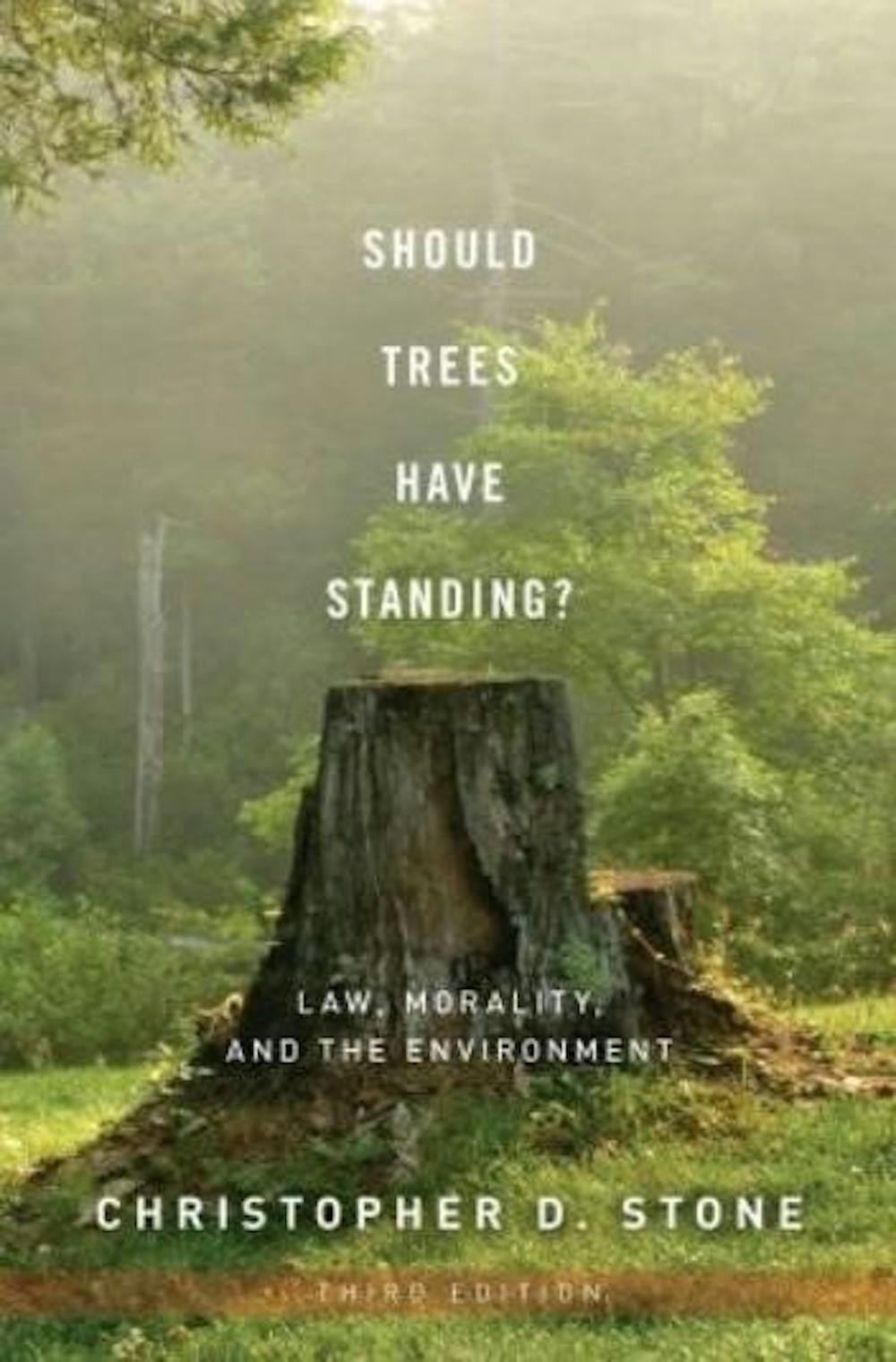
Should Trees Have Standing? by Christopher D. Stone (1972)

Author provided
No law, Christopher Stone claims, can be created until we begin to challenge its non-existence.

And just as it was once “unthinkable” for corporations to be given the same rights as people, the same is true today of living beings and ecosystems. Nature itself has no rights, only the people that own it or use it.

Against this, Stone argues that certain natural entities – trees, forests, rivers – should be treated as people and granted “rights”.

This radical idea is increasingly being implemented. In 2008 and 2009, Ecuador and Bolivia became the first countries in the world to recognise nature as a legal person in their constitutions. And in 2017, New Zealand recognised the legal personhood of the Whanganui River.

Developing these insights in the 2010 edition of the book, Stone asks if the climate should also be granted legal standing. He sees this as problematic but not impossible, though it would require a legal system that goes beyond the current nation-state structure.


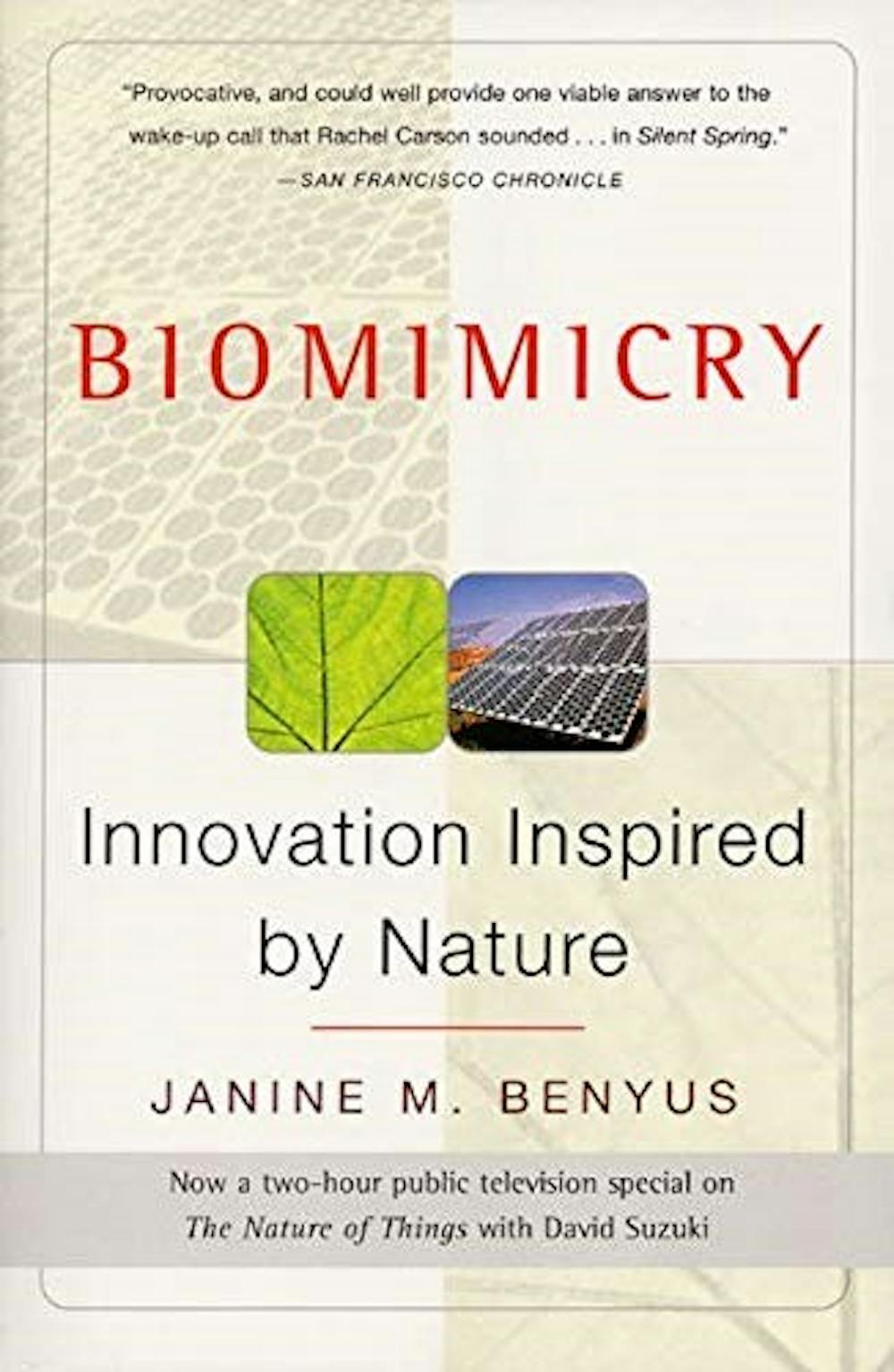
Biomimicry by Janine Benyus (1997)

Author provided
Few would deny that technology will play a major role in achieving sustainability. But for the most part, we concentrate on individual technologies – such as electric vehicles or biodegradable packaging – without pausing to rethink technology as a whole.

A significant exception to this is Janine Benyus, who argues that sustainability calls for an entirely different approach: innovation inspired by nature, or “biomimicry”.

The book explores the practice of imitating nature to solve human design challenges and offers many case studies showing how biomimicry can apply to almost every field of innovation – from solar energy generation based on natural photosynthesis to cereal farming modelled on the native Kansas prairie.

But perhaps the deepest significance of the book is the way it calls on us to view nature not just as something we learn about, but also as something we learn from. And in that case, we must cease to think of ourselves as the sole possessors of intelligence and knowledge and instead also come to recognise the genius of nature.


Braiding Sweetgrass by Robin Wall Kimmerer (2013)

Author provided
Like Benyus, Robin Wall Kimmerer thinks nature has a lot to teach us. But whereas Benyus focuses on technological innovation, Kimmerer is interested in broader lessons. The overarching theme of the book is how to “braid” together indigenous wisdom and scientific knowledge, a project that the author, as a citizen of the Potawatomi nation and a professional biologist, has devoted much of her life to.

Kimmerer’s most brilliant example is sweetgrass itself – an aromatic plant used in indigenous medicine and basketry.

Whereas Kimmerer’s biologist colleagues presumed that harvesting sweetgrass always harms it, a biology student of hers designed a careful experiment proving something the Potawatomi had long since known: harvesting sweetgrass actually stimulates vigorous growth.

What these plants teach us, then, is that humans are not outside nature, but a part of nature – and with the right approaches we can enable other species to flourish alongside our own.


The Climate of History in a Planetary Age by Dipesh Chakrabarty (2021)

Author provided
Addressing the meaning of climate change through the lens of history, Dipesh Chakrabarty proposes a fundamental shift from thinking about “global” to “planetary” climate change.

Chakrabarty argues that while the world is busy solving a “global” problem, we forget to ask what the “global” means for us today.

The “global”, he explains, is essentially a human-centric idea, intrinsically linked to postwar globalisation and modernisation.

The “planet”, by contrast, decentres this human-centric idea, allowing nonhuman perspectives and interests to be taken into account. Most importantly, it raises the possibility of discovering new universal values.

Chakrabarty also emphasises that the acceleration of global warming is tightly linked to the anti-colonialist modernising movements of the mid-20th century, such as Chairman Mao’s Great Leap Forward.

This was an economic and social programme aimed to bring China up to speed with the Western world through intensive industrialisation and technological advancement. Chakrabarty argues that it is only by overcoming our obsession with constant growth and development that we can rise to the challenge of ensuring planetary sustainability.

Links

(Grist) The Progress (And Failures) Of COP26, In 3 Charts

Grist -  |  | 

Gaps remain on emissions, finance, and fossil fuel production.

Christopher Furlong/Getty Images

After two weeks of tense negotiations at COP26 in Scotland, the world has a new international climate change agreement: the Glasgow Climate Pact. 

The new document does not replace the landmark Paris Agreement, but rather bolsters it with increased clarity on key issues. One of the major stakes going into this year’s COP was a matter of degrees. The world is teetering on the edge of keeping alive the possibility of limiting warming to 1.5 degrees Celsius.

Surpassing that threshold would be a death sentence for small island states and other vulnerable countries, and it all comes down to just how drastically nations are willing to cut their emissions. The pact gives added weight to the 1.5 degrees goal, and demands that countries do more to achieve it. 

It also calls on rich countries to increase their financial support to help poorer nations adapt to rising seas and extreme weather, another priority for the meeting. And for the first time ever at a COP, the final text references “coal” and “fossil fuels” — the leading causes of climate change that were formerly taboo on the international stage.  

But reactions to the agreement from many climate advocates and experts were tepid at best. “It’s meek, it’s weak, and the 1.5 degrees C goal is only just alive,” Greenpeace International executive director Jennifer Morgan said in a statement. “But a signal has been sent that the era of coal is ending. And that matters.” 

Below, we take a look at the three major gaps in international progress on climate change going into COP26, and where they stand now.

1. The Emissions Gap

Clayton Aldern / Grist

Before COP26, a United Nations analysis found that the world was not on track to achieve the Paris Agreement goal of limiting global warming to “well below” 2 degrees C, let alone the much safer goal of 1.5 degrees C. If countries met their 2030 emissions targets set prior to the start of the conference, the planet would still warm 2.7 degrees C by the end of the century. 

After COP26, more countries have pledged steeper emissions cuts, but there is still a major gap in ambition between those pledges and what it would take to limit warming to 1.5 degrees C.

Climate Action Tracker, a climate analysis firm, analyzed all of the official plans that countries submitted to the U.N. and found that if targets for 2030 were achieved, the world would still likely heat up by about 2.4 degrees C.

The group also mapped out what it called an “optimistic” scenario, taking into account the less-official statements made by some countries that they will achieve net-zero emissions by 2050. In that case, the researchers found that the planet would warm by 1.8 degrees C.

Several other announcements made at the conference could improve the picture a bit more: More than 100 countries signed pledges to end deforestation and to cut methane emissions 30 percent by 2030.

A few dozen countries pledged to phase out coal-fired power plants, though their timelines vary. Twenty-four countries and several major automakers agreed to sell only zero-emission vehicles by 2040. 

In the end, the Glasgow Pact officially recognized that global carbon emissions have to be reduced by at least 45 percent by 2030 to limit warming to 1.5 degrees, and encouraged countries whose plans fell short of that target to submit new proposals by the end of next year.

That’s a step forward, since otherwise countries would not be required to revisit their climate plans until 2025.

Perhaps the biggest question, post-COP26, is whether countries will follow through on the implementation of these pledges and plans. The U.S., for example, has a 1.5 degrees-aligned plan to cut emissions in half by 2030, but does not yet have policies in place that would allow it to achieve this.

2. The Fossil Fuel Production Gap

Clayton Aldern / Grist

Before COP26, it was taboo to talk about fossil fuels at U.N. climate summits. The phrase “fossil fuel” never made it into the final text of a conference agreement. Negotiators talked about cutting emissions, sure, but largely avoided the sources of energy that are the leading cause of those emissions. 

This avoidance allowed a world of demand-side policies to expand renewable energy, electric cars, and other clean technologies. But that hasn’t translated into a drop in supply. Oil and gas companies have plans to keep digging for the foreseeable future.

Prior to COP26, a United Nations report that analyzed fossil fuel production plans of major economies warned that the world was on track to produce roughly 110 percent more coal, oil, and gas in 2030 than would be consistent with limiting global warming to 1.5 degrees C. 

After COP26, the walls around the “F” words have started to crumble. During the conference, three dozen countries, including the United States, promised to stop funding fossil fuel projects abroad by the end of 2022. More than 40 countries pledged to phase out coal-fired power, the most carbon-intensive energy source, in the coming decades.

The Beyond Oil and Gas Alliance was launched, spearheaded by seven countries who pledged to end new exploration and production of fossil fuels within their borders, and phase out existing production on a timeline that’s consistent with Paris Agreement goals.

A draft text of the conference agreement released early last week even included the line, “Calls on parties to accelerate the phasing-out of coal and subsidies for fossil fuels.”

In the final Glasgow Climate Pact, however, the language was watered down to call for phasing down the use of unabated coal — allowing for coal plants with carbon capture systems — and inefficient subsidies for fossil fuels — a qualification with seemingly no agreed-upon definition.

3. The Climate Finance Gap

Clayton Aldern / Grist

Before COP26, the landscape of climate finance looked pretty bleak. Finance is one of the crucial pillars of the Paris Agreement: In Paris, poor countries agreed to limit their carbon emissions (despite having contributed the least to the climate crisis) as long as developed countries provided them with financial support, both to adapt to climate disasters and to switch over to clean energy. 

So far, however, rich countries have been falling short. Despite promises to deliver $100 billion per year in grants, loans, and other forms of finance by 2020, developed countries were $20 billion short as of 2019. (Numbers from 2020 aren’t available yet.) According to a report released just before the conference, the $100 billion goal likely won’t be met until 2023.

After COP26, the situation doesn’t look much better. In Glasgow, countries were expected to chart a faster path to the $100 billion goal and plan how much finance should be allocated after 2025. Some new pledges were made: Japan promised an additional $10 billion, and Scotland made the first-ever contribution to a fund to compensate countries who have suffered from climate disasters.

The final text of the conference agreement “notes with deep regret” that the $100 billion goal hasn’t been met, and “urges” developed countries to follow through on the promise as quickly as possible. Still, negotiators for developing countries emphasized that $100 billion is not nearly enough.

Prime Minister Narendra Modi of India said in a speech that rich nations should be supplying $1 trillion in finance by 2030, and a group of African nations urged at least $1.3 trillion every year after 2025. But no new finance goal was finalized.

Developing countries also want funds to be more evenly split between adaptation (helping them deal with sea-level rise and extreme weather events) and mitigation (switching to clean energy and cutting emissions). In 2019, only about 25 percent of climate finance went to adaptation projects.

While the conference did see record contributions to a U.N. fund focused on adaptation — $356 million — that cash pales in comparison to what is needed. According to one U.N. study, the costs of adapting to climate change in developing countries has already reached approximately $70 billion per year.

The final text of the agreement urged developed countries to “at least double” their contributions to adaptation — a good start. But developed countries will have to actually follow through.

Links

(AU New Daily) Alan Kohler: We Must Not Let Scott Morrison Get Away With Do-Nothing Climate Plan

 New Daily - Alan Kohler

The media must call out the Prime Minister's misleading claims, writes Alan Kohler. Photo: TND/AAP


Author
Alan Kohler writes twice a week for The New Daily. He is also editor in chief of Eureka Report and finance presenter on ABC News.
After 25 failed UN-led attempts to do something about global warming, number 26 has been presented with a revolutionary new scheme by the Australian government.

The idea is blindingly simple, and could take the world by storm as it were: Just predict that the private sector will take care of climate change.

A voluntary price on carbon (not a tax, mind) plus private sector innovation will achieve net-zero emissions by 2050, job done.

Governments have to do almost nothing.

We’ll never know for sure whether Australia’s stunning breakthrough contributed to the struggles in Glasgow, but it probably did.

As suggested here two weeks ago, Australia punches above its weight on these matters because there are other countries looking for an easy way out. The Australian way looks appealing.

Prime Minister Scott Morrison laid his idea out most clearly in a speech to the Victorian Chamber of Commerce and Industry last week: “[Climate change] will be fixed painstakingly, step by step, by the entrepreneurs, by scientists, by technologists, by innovators, by industrialists, by financiers, by risk-takers. That’s the Australian way.”

The modelling subsequently released on Friday did not even pretend that this approach will achieve net-zero emissions: It gets us to 85 per cent, after which the great spirit of technology will carry us the rest of the way to 100 per cent net zero on a golden staircase of innovation.

In fact, it’s clear from the modelling that the only reason the Morrison plan exists at all is to prevent an increase in Australia’s cost of capital caused by the world’s banks and investment houses shunning this country.

Net-zero spin

The sheer audacity of what Morrison is doing is breathtaking: To say it’s a plan when it’s a forecast; to say it will achieve net-zero emissions by 2050 when the document itself says it won’t; to say it’s “technology not taxes” when it relies on voluntary carbon pricing of between $24 and $400 per tonne that will be passed on to consumers; to say Australia is leading the world when we’re actually coming last.

It seems to spring from a combination of the Prime Minister’s character, so brilliantly described in Sean Kelly’s book, The Game – a portrait of Scott Morrison, and an extreme version of the actual game that’s played by both main parties.

In his book, Kelly writes: “When Scott Morrison declared on election night that he believed in miracles, he meant the phrase literally.”

And: “The more useful way to think about the effect of Morrison’s faith on his political career is to see in it a sensibility. Rather than offering him a doctrine, its elements have structured the way in which he perceives the world.

“The first element is an abiding optimism …”

“This is closely related to a second element: The sense of certainty that can come from believing that God has you in his hands – that he has a plan …”

When it comes to something that affects the whole planet and human race, the whole of creation no less, how can someone who believes in the pre-eminence of God’s plan for each one of us think that humans should, or even can, interfere in it.

So leaving it to the private sector and technology, supervised by God, makes perfect sense.

Labor in a bind

The politics of the Morrison plan, meanwhile, look shattering – for Labor.

The Prime Minister will now campaign on doing next to nothing about climate change because it’s going to turn out OK thanks to the private sector – it will basically take care of itself.

Therefore whatever the Labor Party proposes on climate change will have to be something, not nothing, which means it can be attacked as a cost, a tax or a dictate.

ALP leader Anthony Albanese is in a tight spot now.

He must either go for broke, boldly announcing the phasing out of coal, a new emissions trading scheme and a ban on internal combustion vehicles by, say 2040, and try to win the cities with that, or match Morrison’s nothing plan and campaign about something else.

A half-measure will please no one.

Both strategies are enormously risky – unless Morrison falters, which looks unlikely at the moment.

Which is why the media must now become players in this drama.

The role of the media

The reason Scott Morrison knows he’s pretty safe with an obvious non-policy is that most of the mainstream media tries to be politically even-handed, and is inclined to show respect to a Prime Minister.

But most media company directors and journalists also understand that we actually do face an emergency from global warming, and that it may not be true that private technology will take care of it, or that preventing disaster will be cost-free – it will just be cheaper than the disaster.

So we need to call him out, constantly, every day, and apply truth in advertising standards to election ads as well.

Climate change is not just politics, and shouldn’t be reported as just politics.

Links

Lethal Heating is a citizens' initiative