07/12/2021

(AU The Guardian) California Will Name And Categorise Heatwaves – Should Australia Follow Suit?

The Guardian

Heatwaves kill more people in Australia than all other natural disasters combined, and some experts believe naming them might help reduce deaths
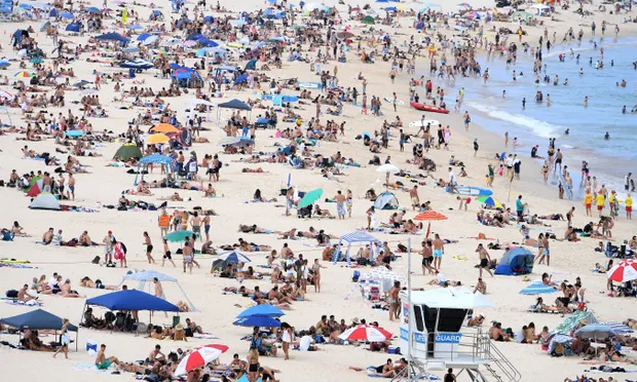
Bondi Beach during a heatwave in January. Naming heatwaves may lead people to be more conscious of them, say researchers. Photograph: Dan Himbrechts/AAP

California has become the latest jurisdictions to set up a system that would categorise and name heatwaves like cyclones or hurricanes, raising questions about whether Australia should adopt a similar system to reduce heat-related deaths.

Following the recent example of Greece and the city of Seville in Spain, authorities in California will introduce a bill in January to develop the ranking system.

The proposed system works by naming heatwaves and categorising them similar to cyclones, but instead of being coded by temperature they will be ranked according to their risk to human health – and specifically, the risk of death.

For example, a category 1 heatwave might occur when the daily mortality rate was expected to climb by 10% on a normal day, with category 2 and 3 heatwaves rising further.

When a category 3 heatwave would be declared, it may lead to the opening of swimming pools and air-conditioned shelters to the public, the activation of check-in services for the elderly, or a ban on utility companies cutting off the power for the period of the heatwave to ensure access to air conditioning.

Dr Sarah Perkins-Kirkpatrick, a climate scientist at UNSW Canberra’s ARC Centre of Excellence for Climate Extremes, said it was a “great idea” that should be adopted in Australia.

“I think naming [weather events] helps people to connect with them on a personal level. It’s personifies it,” Perkins-Kirkpatrick said. “But for example, Cyclone Tracy – just the name itself evokes how severe it was and the impact it had.

“It’s also an exercise in science communication. It helps people say, ‘oh, there’s a heatwave, I need to take cover and do this, or do that’.”

Dr Alistair Hobday, a research scientist at the CSIRO who was part of the team that proposed an informal system used to categorise and name marine heatwaves, said while he was cautious about naming systems, the value of the Californian approach was the way it suggested action.

“I think we’re going to see many people in Australia experience events they have never experienced and they won’t know how to respond. This will help with that risk,” Hobday said.

“At the moment it’s left up to individuals, but we know wealthier individuals survive events better than poorer individuals because they have more resources. Legislating this will require resources to be made available to everyone.”

Australians might be keenly familiar with heatwaves but Perkins-Kirkpatrick said many people were unaware of just how dangerous they were or their role as the country’s “most deadly natural disaster”.

“Heatwaves kill more people in Australia than all other natural disasters combined by a long shot,” she said.

“And one fun fact: more people die on 27 January from extreme heat than they do on any other day of the year, because it’s the day after Australia Day.

“Everyone’s dehydrated, they’re out in the sun, they’ve been drinking beers, their body starts to suffer heatstroke and they get rushed to hospital.”

The Bureau of Meteorology currently has no plans to adopt a naming convention for heatwaves but it does publish a heatwave intensity map, run a forecast service and already categorises heatwaves by intensity.

Formalising this has sometimes proven tricky, as defining the length, breadth and areas affected by a heatwave is not easy – a category 3 heatwave might be declared in Melbourne but a category 2 heatwave may occur in Geelong during the same event.

There is no global standard for what makes a heatwave, though in Australia it is defined as three or more days in a row when both daytime and night-time temperatures are unusually high relative to local conditions and recent history.

The good news, Perkins-Kirkpatrick said, is that with the work done by the Bureau of Meteorology, Australia was already “halfway there” to setting up such a system.

“We’ve only had a heatwave forecast for about a decade here. The bureau’s done a damn good job to get that together,” she said. “I think it’s a great idea, and it’s something we need to push for. It isn’t easy, but that doesn’t mean it’s not worthwhile.”

Links

(AU The Conversation) Invasive Species Are Threatening Antarctica’s Fragile Ecosystems As Human Activity Grows And The World Warms

The Conversation - |

Dana Bergstrom

Authors
We tend to think Antarctica is isolated and far away – biologically speaking, this is true. But the continent is busier than you probably imagine, with many national programs and tourist operators crisscrossing the globe to get there.

And each vessel, each cargo item, and each person could be harbouring non-native species, hitchhiking their way south. This threat to Antarctica’s fragile ecosystem is what our new evaluation, released today, grapples with.

We mapped the last five years of planes and ships visiting the continent, illuminating for the first time the extent of travel across the hemispheres and the potential source locations for non-native species, as the map below shows. We found that, luckily, while some have breached Antarctica, they generally have yet to get a stranglehold, leaving the continent still relatively pristine.

But Antarctica is getting busier, with new research stations, rebuilding and more tourism activities planned. Our challenge is to keep it pristine under this growing human activity and climate change threat.


Life evolved in isolation

Biodiversity-wise, much of the planet is mixed up. The scientific term is homogenisation, where species, such as weeds, pests and diseases, from one place are transported elsewhere and establish. This means they begin to reproduce and influence the ecosystem, often to the detriment of the locals.

Most life in Antarctica is jammed onto tiny coastal ice-free fringes, and this is where most research stations, ships and people are.

This includes unique animals (think Adélie penguins, Weddell seals and snow petrels), mosses and lichens that harbour tiny invertebrates (such as mites, waterbears and springtails), and an array of microbes such as cyanobacteria. The adjacent coast and ocean team with life, too.

The more we learn about them, the more outstanding life at the end of the planetary spectrum becomes. Just this week, new scientific discoveries identified that some Antarctic bacteria live on air, and make their own water using hydrogen as fuel.

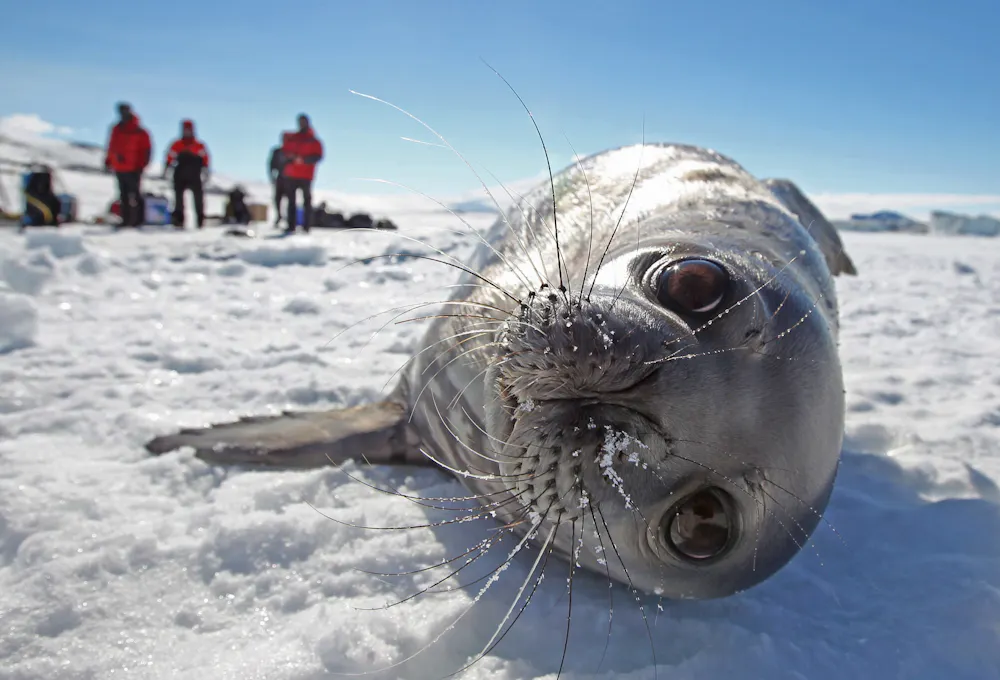
The endemic Antarctic Weddell seal resting on sea ice. EPA/YONHAP

When the Southern Ocean was formed some 30 million years ago, natural barriers were created with the rest of the world. This includes the Antarctic Circumpolar Current, the strongest ocean current on the planet, and its associated strong westerly surface winds, icy air and ocean temperatures.

This means life in Antarctica evolved in isolation, with flora and fauna that commonly exist nowhere else and can cope with frigid conditions. But the simplicity of Antarctica’s food webs can often mean there are gaps in the ecosystem that other species from around the world can fill.

In May 2014, for example, routine biosecurity surveillance detected non-native springtails (tiny insect-like invertebrates) in a hydroponic facility at an Australian Antarctic station.

This station, an ice-free oasis, previously lacked these interlopers, and they had the potential to alter the local fragile ecosystem permanently. Thankfully, a rapid and effective response successfully eradicated them.

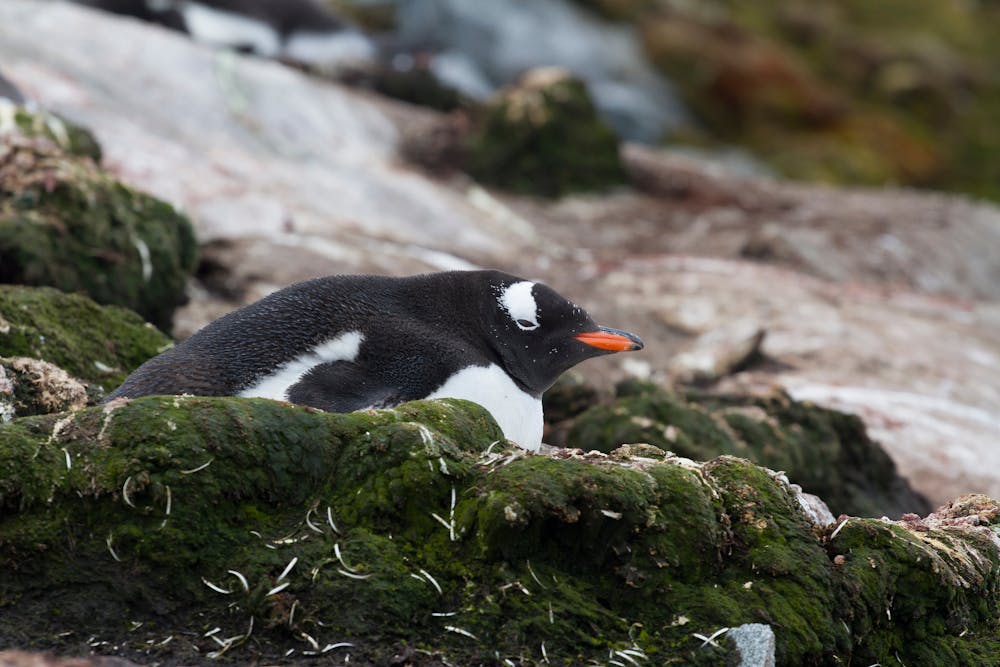
Gentoo penguin on a bed of algae, Antarctica. Shutterstock

Pressures from climate change are exacerbating the challenges of human activity on Antarctica, as climate change is bringing milder conditions to these wildlife-rich areas, both on land and sea.

As glaciers melt, new areas are exposed, which allows non-Antarctic species greater opportunity to establish and possibly outcompete locals for resources, such as nutrients and precious, ice-free space.

So far, we’ve been lucky

Our past research focused on non-native propagules – things that propagate like microbes, viruses, seeds, spores, insects and pregnant rats – and how they entrain themselves into Antarctica.

They can be easily caught on people’s clothing and equipment, in fresh food, cargo and machinery. In fact, research from the last decade found that visitors who hadn’t cleaned their clothing and equipment carried on average nine seeds each.

Pathways for non native species. Dana M Bergstrom

But few non-native species have established in Antarctica, despite their best efforts.

To date, only 11 non-native invertebrate species – including springtails, mites, a midge and an earthworm – have established across a range of locations in the warmer parts of Antarctica, including Signy Island and the Antarctic Peninsula. In the marine realm, some non-native species have been seen but it’s thought none have survived and established.

Microbes are another matter. Each visitor to Antarctica carries millions of microbial passengers, and many of these microbes are left behind. Around most research stations, human gut microbes from sewage have mingled with native microbes, including exchanging antibiotic resistance genes.

Last year, for example, a rare harmful bacteria, pathogenic to both humans and birds, was detected in guano (poo) from both Adélie and gentoo penguin colonies at sites with high rates of human visitors. COVID-19 also made its way to Antarctica last December.

Both these cases risk so-called “reverse zoonosis”, where humans spread disease to local wildlife.

Antarctica’s coral reefs? Extensive shallow water, polychete colonies form fragile reefs that act as marine animal forests, hosting a diverse and abundant community of associated plants and animals. Jonny Stark/ AAD

What do we do about it?

Three factors have helped maintain Antarctica’s near-pristine status: the physical isolation, cold conditions and co-operation between nations through the Antarctic Treaty. The Treaty is underpinned by the Environmental Protocol, which aims to prevent and respond to threats and pressures to the continent.

There is unanimous commitment from Antarctic Treaty nations towards preventing the establishment of non-native species. This includes adopting a science-based, non-native species manual, which provides guidance on how to prevent, monitor, and respond to introductions of non-native species.

But time is of the essence. We must better prepare for the inevitable arrival of more non-native species to prevent them from establishing, as we continue to break the barriers protecting Antarctica. One approach is to tailor the newly developed 3As approach to environmental management: Awareness of values, Anticipation of the pressures, Action to stem the pressures.

This means ramping up monitoring, taking note of predictions of what non-native species could sneak through biosecurity and establish under new conditions, and putting in place pre-determined response plans to act quickly when they do.

Links

(AU SMH) Where To Start?: Boards Struggle With Climate Change Risks, Fail To Act

Sydney Morning HeraldPatrick Hatch

Many Australian boards are struggling to prepare their companies or organisations for climate change, with almost half the country’s directors saying they don’t know how to tackle the issue.

A first-of-its-kind study by the Australian Institute of Company Directors into how boards are approaching climate change reveals that 77 per cent of directors are concerned about how it will affect their organisation, but often failed to act.

Almost half of the directors surveyed said their boards should pay more attention to climate but did not know how to do so. Credit:Getty

“It’s not that people ignore the issue, it’s that they don’t know where to start,” said AICD managing director Angus Armour.

The AICD report is based on surveys of 2000 directors at ASX listed companies, smaller businesses, government organisations and not for profits.

Almost half of the directors surveyed said their boards should pay more attention to climate but did not know how to do so, while 28 per cent did not think their board had the knowledge or experience to adequately address climate governance issues.

Mr Armour said directors should be working to understand their organisation’s impact on climate, and how climate change will impact them.

Executive pay Banks are facing growing investor pressure over their exposure to climate risks.
“Then it’s contemplating both how you can improve your own position relative to climate change and look for opportunities to in fact make your firm stronger,” he said.

“As our regulatory tools around climate change and our reporting tools around climate change continue to develop, there will be a bedrock requirement for firms to address that.”

Even smaller businesses would soon need to address demands from consumers, larger supply chain customers and their staff for transparency around their environmental footprint.

“There’ll be some protections for a while but transparency around reporting is just going to continue to increase,” Mr Armour said.

Across all directors, only 11 per cent disagreed that their board needed to do more to respond to climate change, but that rose to 22 per cent in the mining sector.
“It’s not that people ignore the issue, it’s that they don’t know where to start."
AICD managing director Angus Armour
One in four directors in the mining sector were “not at all concerned” about climate risk to their company, which compared to one in five across all industries and only 8 per cent in the agriculture, forestry and fishing sector.

Mr Armour said many mining companies already dedicated significant resources to the issue which could explain why their boards were less likely to think more work was required, but the data collected was inconclusive.

Directors of ASX-listed companies were less likely to be “extremely” or “somewhat” concerned about how climate change risks (48 per cent) compared to directors on government or public sector boards (70 per cent). Around half also saw opportunities for their organisation by proactively responding to climate change.

Environmental protection
Mr Armour said that regulatory or political uncertainty and the “operational effects” of climate change were the two largest concerns directors had about how climate change would affect their business, followed by the impact on profit of mitigating climate change.

Directors said the biggest obstacle to acting was the absence of a settled national climate change policy (46 per cent, the most common response) while 38 per cent said their board did not have the time or resources to deal with it.

Less than half of directors (46 per cent) said their board had embedded climate change in their risk management framework, which the report says, “suggests that risk may not be adequately monitored at board level.“

Links

06/12/2021

(AU ABC) How Satellites Are Challenging Australia's Official Greenhouse Gas Emission Figures

ABC NewsSteve Cannane

Queensland's Bowen Basin has a similar carbon footprint to countries like Austria, new research has shown.(Reuters: James Regan)

Key Points
  • Methane is more potent than carbon dioxide
  • It is responsible for more than 30 per cent of global warming to date
  • Australia did not sign up to a COP26 commitment to reduce methane levels by 30 per cent by 2030 
Inside a shared workspace for technology start-ups in south-west London, Christian Lelong has a bird's-eye view of some of the dirtiest secrets of Australia's mining industry.

Using satellite imagery from the European Space Agency combined with meteorological data and atmospheric models, Mr Lelong, the director of natural resources at geospatial analytics firm Kayrros, has been able to measure methane leaks from the fossil fuel industry around the world.

What he has found above Queensland's coal-rich Bowen Basin raises serious questions about whether Australia has been accurately reporting its greenhouse gas emissions to international bodies.

"We found that emissions for all the 50-odd mines in that basin in total add up to about 1.5 million tonnes of methane per year," Mr Lelong told the ABC.

According to federal government figures for the same period, only a third of that amount of methane was reported in the area.

If accurate, Kayrros's data portrays an extraordinary picture of the potential impact Australia's coal industry is having on the Earth's atmosphere.

A map provided by Kayrros shows the distribution of methane hotspots detected in Australia since 2019 and associated with coal mining. (Supplied: Kayrros/Sentinel-5P data)

"These numbers [in the Bowen Basin] are the equivalent of the total carbon footprint of a medium-sized European country like Austria or the Czech Republic," Mr Lelong said.
In the fight to keep global warming under 1.5 degrees Celsius, methane matters. It is far more potent than carbon dioxide (CO2) and is responsible for around 30 per cent of global warming to date.

Typically, methane leaks occur from coal mines, oil and gas wells and natural gas pipelines.

Reducing these leaks helps buy the planet time to get other greenhouse gas emissions under control and is one of the easiest ways to reduce emissions.

At the global climate change summit COP26, over 100 nations signed a pledge to reduce methane levels by 30 per cent by 2030. 

Australia's government did not sign the agreement, and the opposition Labor party has no plans to sign up to the pledge if it wins at the next election.


New data suggests Australia could be underreporting methane gas emissions from coal mines. 3min 33sec

The Australian government doesn't want Christian Lelong's help

Mr Lelong knows the Australian mining industry well

He worked for BHP for seven years before joining Goldman Sachs as a commodities analyst. Now he wants to help the Australian energy sector reduce its methane emissions.

Christian Lelong is the director of natural resources at geospatial analytics firm Kayrros. (ABC News: Dan Loh)

He has approached the federal government through the Department of Energy and offered to share his company's knowledge and expertise. That offer has not been taken up.

Greens environment spokeswoman Sarah Hanson-Young met with Mr Lelong at COP26 in Glasgow and cannot understand why Australian officials are not jumping at the chance to use the technology.

"The Prime Minister says that they want a technology solution to climate change," Senator Hanson-Young said.

"Well, here we have incredible data satellite technology.
"We could pinpoint exactly where these leaks of pollution are happening and hold the companies accountable if he was just willing to listen.”
When the ABC approached Energy Minister Angus Taylor for comment, his office referred the matter to the Department of Industry, Science, Energy and Resources.

A spokesperson for the department said: "The Department of Industry, Science, Energy and Resources is developing a National Greenhouse Account Methane Monitoring System using Sentinel data to assess the implications of methane releases for the preparation of Australia's next National Greenhouse Accounts and is not looking for data analytic services from London."

The spokesperson also said that "the department believes, like the IPCC [Intergovernmental Panel on Climate Change], that it is premature to use the satellite data to quantify emissions directly".

Mr Lelong disputed that and said that view was expressed in the IPCC's 2019 report before it had evaluated modern satellites.

Australia snubs pledge
to cut methane emissions


"Now we have a new generation of satellites, it changes everything," he said.

"They are much more accurate and precise."

However, the Department of Energy insists the Kayrros data "has not yet been well-verified by ground stations or more targeted studies" and that its approach "lacks transparency ... and would not be acceptable under the Paris Agreement".

That has not stopped the UN's new International Methane Emissions Observatory from working with Kayrros.

It told the ABC it was collaborating with the company and planned to use its tools and analytics in the coming months.

Dutch scientists raise further doubts about Australian emissions reporting 

A peer-reviewed paper published this week by a group of Dutch scientists raises similar concerns about Australia's publicly released greenhouse gas figures.

It analysed data from satellite imagery of six coal mines in the Bowen Basin and found they were emitting much more methane than would be expected from what Australia is reporting.

Ilse Aben, who was the lead researcher on the paper, told the ABC that by studying emissions from the Hail Creek mine, run by Glencore, you could see that the figures did not add up.

Hail Creek coal mine lies in the heart of coal country in Queensland's Bowen Basin, 125 kilometres south-west of Mackay. (ABC News: Louisa Rebgetz)

"For Hail Creek, which is a surface mine, we found that it's actually responsible for roughly 20 per cent of the methane emissions, as reported by Australia for the total of all coal mines," she said.

"It is one surface mine and there are 73 surface mines in Australia.
“If this one mine already gives a 20 per cent contribution, then it is unlikely that the total is right."
A spokesperson for Glencore said in a statement: "It is not credible that a single open cut coal operation is responsible for 20 per cent of the industry's total annual methane emissions."

"Glencore reports emissions in accordance with the Australian National Greenhouse and Energy Reporting (NGERS) regulatory measurement criteria. 

"The emissions from our Bowen Basin operations are accounted for in Glencore’s robust climate change targets. These targets include a 15 per cent reduction in total (including Scope 3) emissions by 2026; a 50 per cent reduction in total emissions by 2035 and an ambition to be a net zero total emissions company by 2050."

A satellite measure of methane concentrations in the Bowen Basin, with three identifiable plumes and a zoom in (right) on coal mines located upwind of these plumes. (Supplied: Kayrros/Sentinel-5P data)

Bryce Kelly from the University of NSW, who has led research teams mapping emissions from coal mines, said the Dutch study had undergone extensive peer review.

"There is merit in the results," Dr Kelly said.

"Kayrros's independent studies further support that there are methane anomalies above what would be expected for the region based on reported emissions.

"We now need ground and airborne studies to verify the satellite observations." 

Professor Aben said that while she had not seen Kayrros's results, they had found the emissions from six mines in the area were two times higher than was reported by the mining companies.

"So I'm not totally surprised … it's certainly not contradicting each other," she said.

Industry-supplied figures questioned

Currently, the data relied on by the federal government for its Greenhouse Gas Inventory is provided by mining companies which can then be subject to auditing and review.

The ABC asked BHP and Anglo American, two of the largest coal miners in the area, how they measured methane levels in the Bowen Basin. Neither company provided details.

In a statement, a spokesperson for Anglo American said: "We have invested significantly in methane capture infrastructure, generating enough electricity to power 90,000 Queensland homes every year, and reducing our emissions by about 5 million tonnes of CO2 equivalent per annum."
"We are actively working on technology solutions to further reduce methane emissions in our underground metallurgical coal mines as part of our commitment to operate carbon-neutral mines by 2040."
A spokesperson for BHP said: "BHP Mitsubishi Alliance estimates and publicly reports emissions from its Australian operations in accordance with the rigorous requirements of the National Greenhouse and Energy Act."

Greens senator Sarah Hanson-Young said the government should be doing more to measure methane emissions in Australia. (ABC News: Dan Loh)

Senator Hanson-Young questioned whether industry figures supplied to the government were accurate.

"This is just more of how the Morrison government behaves with the fossil fuel industry, hand-in-glove dismiss the independent advice, dismiss the independent data and take the data and the word of the fossil fuel industry," she said.

"I know who I believe."

Links

(Business Insider) Green Energy Is Rapidly Nearing A Turning Point. To Combat Climate Change, Our Leaders Need To Point To A Cleaner, Cheaper Tomorrow.

Business Insider Australia - Paul Constant

Environmental activists protest climate change on Indigenous Peoples Day, outside the White House in October. REUTERS/Kevin Lamarque

For decades, our conversation about climate change has been stunted by mixed signals.

Our elected leaders’ speeches aim high, with lofty talk about coming together to avert calamity, but their policies fail to address the scale of the crisis.

Now, with most parts of the country regularly experiencing extreme weather events, nearly two-thirds of Americans believe the government should do more to combat climate change — but world leaders still failed to take dramatic action to limit the global rise of temperatures at the COP26 climate conference convened by the United Nations this fall.

On the latest episode of Pitchfork Economics, two professors at the Institute of New Economics at Oxford University, Erick Beinhocker and Doyne Farmer, join Nick Hanauer to address the flaws in the way we discuss the problems of, and solutions to, climate change.

“We’ve had the wrong economic ideas about how climate change is framed,” Beinhocker explains.

As an example of this flawed thinking, he cites the the Nobel Prize-winning work of Yale economist William Nordhaus, which has warned since the 1990s “that it’s going to be very expensive and costly to transition from our fossil fuel economy to a clean energy economy, but those costs have to be weighed against the benefits of avoiding an ecological collapse and potential mass extinction event.”

Nordhaus’s models have helped frame the conversation about climate change as a negative one. We’ve been told since the dawn of the modern environmental movement in the 1990s that saving the planet will cost us all a great deal in profits, convenience, and quality of life.

Environmental advocacy groups often explain their policies in terms of what ordinary people will have to give up, both financially and in terms of convenience, in order to save the planet.

New research indicates that this punitive, eat-your-spinach style of thinking may be completely wrong.

“We think that converting to renewables, and doing so reasonably quickly within a span of about 20 years, is going to save the world money,” Farmer says. “It’s going to make energy cheaper for us, as well as evading climate change.”

Farmer participates in one of the two major academic groups researching rates of technological advancement, and the indicators point to a fast-growing future for affordable green energy.

While green energy keeps getting cheaper, fossil fuels and their attendant costs have remained basically flat for nearly a century and a half.

If solar, wind, and hydrogen power continue to stay on their current development path for another decade or two, and if battery storage capacity continues to improve as well, green energy will overtake fossil fuels to become the world’s dominant power source.

“We’re going to see energy cheaper than it’s ever been” in the history of the world, Farmer predicts.

“We still have a long way to go,” Beinhocker warns. “Only about 20 percent of global energy is from non-fossil fuels today, and 80 percent from fossil fuels. But the growth [of green energy] has been extraordinary.”

Beinhocker says that renewable energy capacity increased by 45 percent in 2020, making it “the only energy source to actually grow during the pandemic, and 90 percent of new power additions in the world now in the electrical sector are from renewables.”

The global switch to green energy is nearing “a tipping point,” he says, “but it’s a race against the clock.”

This research, though, should mark a significant change in the conversation about climate change.

Rather than focusing on punitive policies which make fuel more expensive for the average American, our leaders should instead be investing deeply into research to advance cheap clean technologies, as well as speeding up the construction of green infrastructure, making the adoption of clean fuels more desirable.

As we’ve seen in increased electric vehicle adoption rates around the world, consumers are happy to make the switch to a clean alternative, when they’re presented with an affordable, convenient option.

The evidence is clear: it’s time for the environmental conversation in America to become an additive, positive one, rather than a negative story of sacrifice and punishment.

When it comes to the green economy, it’s no longer about saying no to Exxon; it’s about saying yes to building a faster track to a cleaner, cheaper future for the whole human race.

Links

(AU ABC) Promising Signs Of New Life On Australia's Largest Oceanic Reef, Despite Frequent Heat Stress

ABC News - Tyne Logan

Researchers have observed promising signs of new life on Scott Reef, five years after the global mass bleaching event of 2016. (Supplied: AIMS Shannon Duffy)

Key Points
  • Scientists say Scott Reef is slowly recovering after the 2016 mass bleaching event
  • They have concerns about frequent heatwaves impeding the overall recovery of the reef
  • The findings reflect a pattern around the country
A research trip to Australia's largest oceanic reef system has shown promising signs of new life, following the 2016 mass bleaching event, which impacted coral reefs all over the globe.

But unlike mass bleaching events of the past, scientists are concerned Scott Reef is facing a barrier to its recovery.

Coral ecology research scientist James Gilmour, from the Australian Institute of Marine Science, said repeated, smaller marine heatwaves since the 2016 event were compounding bleaching impacts.
"Unfortunately since 2016 we've seen additional heat stress in 2017, 2019 and 2020," he said.
"We're getting this recurrent heating and stress to the reefs which obviously are going to impede its recovery.

"We see this overlying resilience, but the effects of ongoing heat stress impeding that."

Scott Reef is located in the Timor Sea and consists of three separate reef structures. (Supplied: AIMS Luke Thomas)

Located 200 kilometres to the north-west of Broome, the three reefs are incredibly isolated, a trait Dr Gilmour said made them a good case study in pinpointing the impacts of climate change on Australian reefs.

"Because of its isolation, it doesn't have these additional pressures, such as fishing pressure or the pollution pressure that you see on other reefs that can confound our inferences about what is happening from climate change and coral bleaching," he said.

Case study for climate change impacts

The observations at Scott Reef reflect a dire pattern emerging not only in Australia but around the world.

A major global analysis of coral reefs, released in October, found about 14 per cent of the world's coral, the equivalent of more than all living coral in Australia, had been lost in less than a decade.

It found the main cause of the decline was "recurring large scale coral bleaching events" that were "preventing coral from recovering".

But the analysis also found there was hope, with some corals showing strong, and at times surprising resistance to ongoing heat stress.

Dr James Gilmour said some corals were showing impressive signs of recovery, despite recurring heat stress. (Supplied: AIMS)

University of Western Australia and AIMS research associate Luke Thomas said this was observed on Scott Reef too.
"Considering this reef has gone through three serious bleaching events in the last 20 years, it's just been hammered and hammered over and over... the fact that there's any coral left is a remarkable story and a testament of the system," he said.
Making the most of heat-tolerant corals

Dr Thomas said researchers were trying to utilise this surprising resilience.

"One way is if we know this pocket of reef houses heat resistance corals, let's protect them, let's avoid anchor damage or overfishing," he said.

He said a second way was to breed tolerant coral populations for restoration.

"So if we want to restore a degraded section of reef, we don't want to just replace those corals with ones that will bleach and die the next heatwave," he said.

"We want to replace them with much more fit, tougher individuals.

"So we can target this pocket of heat resistance corals as a broodstock, or a supply for those reefs."

Scientists conducted heat tolerance research while at the Scott Reefs. (Supplied: AIMS Luke Thomas)

The science and restoration work on Scott Reef is similar to that happening on the Great Barrier Reef, with the government kicking in half a billion dollars in 2018 to help deal with the problems facing the Great Barrier Reef.

Glasgow climate talks 'discouraging'

The management and restoration work of corals is crucial to saving reef systems in the future, researchers say, but it comes second to the need to cut down carbon emissions.

James Cook University marine biologist Jodie Rummer said Australia left "a lot to be answered for" after the COP26 conference in Glasgow.

"There was a clear message over the past five years of what increased emissions and climate change have been doing to Australia, let alone the entire world, and we weren't able to stand up to do anything about it."

Marine Biologist Dr Jodie Rummer said the recent climate conference in Glasgow left a lot to be answered for in terms of cutting Australia's carbon emissions. (ABC: Travis Mead)

Dr Rummer said the federal government priorities were wrong.

"Clean economic recovery is win win for Australia," she said.

"This is what needs to be the priority for Australia but for some reason Australia is still prioritising coal, gas and oil exploration.

"This goes in complete conflict with Australia's national priority of protecting people, our ecosystems and natural spaces."

Links

05/12/2021

(AU AFR) Australia Tops Climate Litigation List

AFR - Michael Pelly


Australia has more climate change litigation per capita than any other nation and 2021 has been a breakout year for cases based on human rights concerns, according to an NSW Law Society study.

The society, the professional body for more than 30,000 solicitors, notes in a new briefing paper that Australia is second only to the United States for the number of climate change cases since 1993. At 121 cases, its total is five times that of Canada.

“Significant shift”: NSW Law Society president Juliana Warner
When the statistics – taken from the Climate Change Laws of the World database run by the UK-based Grantham Institute on October 30 – are adjusted for population, Australia is ahead of New Zealand and the US.

The society noted Australia has 121 climate cases (4.7 per million), Britain 77 (1.15 per million), European Union 56 (0.12), Canada 25 (0.65 per million) and New Zealand 25 (4.1). The latest figure for the US is 1343 cases (4.1 per million).

Climate change cases are defined as those that “raise material issues of law or fact relating to climate change mitigation, adaptation, or the science of climate change ... before a range of administrative, judicial, and other adjudicatory bodies”.

The paper cites comments by King & Wood Mallesons partner Daisy Mallett that Australia is a “particularly fertile testing ground for public interest litigation on climate change, given its sophisticated and independent legal institutions, a government policy supporting heavy industry, and the severe climate change impacts in the region”.

The first climate case was Greenpeace v Redbank Power in 1994, when the NSW Land and Environment Court ruled a new power station in the Hunter Valley could proceed, subject to several mitigation conditions.

Broader focus

The paper says cases “now often have a broader focus on holding companies and governments to account for their actions, or inactions, related to climate change”.

It predicts greenwashing claims – against those that trumpet eco-friendly credentials – “are likely to continue in coming years and focus on individual directors as well as corporate entities”.

New ground was broken in 2021, when 25 landholders and conservationists
known as The Bimblebox Alliance cited human rights law as they challenged an application by Clive Palmer’s Waratah Coal to develop a thermal coal mine in the Galilee Basin.

Waratah objected but the Land Court of Queensland said it did have jurisdiction because of the state’s Human Rights Act. There will be a hearing in February.

‘Rights turn’

The paper said the case was part of a “rights turn” in which litigants in Australia, Europe, the Philippines, South Africa, Pakistan and the Netherlands are arguing that climate change is a threat to human rights such as the right to life, health and a healthy environment.

The paper noted a crucial hurdle for litigants - “there is no freestanding right to a clean and healthy environment under core international human rights instruments, although over 100 national constitutions do now include such a right”.

Federal Court judge Mordy Bromberg also ruled in July that Minister for the Environment Sussan Ley had a duty to take reasonable care to protect children from the effects of climate change. An appeal has been heard.

NSW Law Society president Juliana Warner said climate change was “already having a significant impact on the economy, businesses, investor groups and the community”.

“Over the course of this year, there has been a really significant shift in the community about climate change and the urgent action which must be taken.”

Links

Lethal Heating is a citizens' initiative