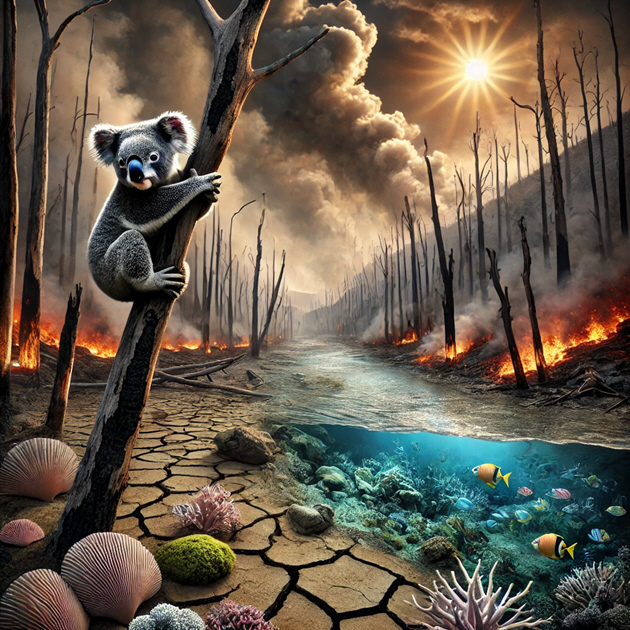
23/02/2025

Newspaper and Book News and Reviews - Lethal Heating Editor BDA


Recent developments in climate change and global warming highlight the escalating challenges and the urgent need for action:

Record-Breaking Global Temperatures in 2024 - The Times UK

In 2024, Earth experienced its hottest year on record, with global temperatures surpassing pre-industrial levels by 1.5°C—a critical threshold outlined in the Paris Agreement. This unprecedented warming has intensified extreme weather events, including heatwaves, floods, and droughts, posing severe threats to ecosystems and human populations. 

All major temperature datasets, such as those from NASA and the UK's Met Office, confirm this alarming trend. While greenhouse gas emissions remain the primary driver, natural phenomena like El NiƱo have also contributed to the temperature surge.

Antarctic Heat Wave - Wikipedia

In July 2024, Antarctica experienced a significant mid-winter heat wave, with temperatures soaring up to 28°C above average. This event, occurring during a period typically marked by the continent's coldest temperatures, led to a substantial reduction in sea ice levels. 

Researchers attribute this anomaly to a weakened polar vortex, influenced by atmospheric disturbances and exacerbated by climate change. The resulting loss of sea ice contributes to a feedback loop, further accelerating global warming.

Water Crisis in Kashmir - AP News

Kashmir, renowned for its Himalayan peaks and pristine lakes, is confronting a severe water crisis. Prolonged dry spells and rising temperatures have led to the drying up of multiple springs and streams, including vital tributaries of the Jhelum River. 

This situation has disrupted local communities and ecosystems, underscoring the tangible impacts of climate change on water resources. Experts point to significant deficits in rainfall and snowfall, coupled with unusually high temperatures, as key factors driving this crisis.

Global Climate Assessment Concerns - Reuters

The European Union, the United Kingdom, and several climate-vulnerable developing nations have expressed apprehension over potential delays in the upcoming global climate assessment by the U.N.'s Intergovernmental Panel on Climate Change (IPCC). 

These concerns arise following the U.S. administration's withdrawal from the process, which could impede the timely completion of the assessment crucial for informing the 2028 Paris Agreement "stocktake." The absence of U.S. involvement, including the participation of its scientists, poses challenges to the collaborative efforts essential for comprehensive climate evaluations. 

Literature on Climate Solutions

Recent publications offer diverse perspectives on addressing climate change:

  • Marco Visscher's "The Power of Nuclear" reevaluates nuclear energy as a viable low-carbon power source. 
  • Ma Tianjie's "In Search of Green China" delves into China's complex journey toward emission reduction amid economic growth. 
  • Mike Berners-Lee's "A Climate of Truth" advocates for heightened honesty in confronting interconnected global challenges.
  • Jens Beckert's "How We Sold Our Future" emphasizes the necessity for systemic changes in corporate and consumer behaviors to achieve meaningful climate action.
  • These developments underscore the escalating impacts of climate change and the critical need for immediate, coordinated global efforts to mitigate its effects.

    Links

    Extreme Weather is Australia's New Normal

    Professor Todd Lane - PURSUIT University of Melbourne

    Banner: Getty Images

    Over the last few weeks, parts of Australia have been inundated by rain, scorched by heatwaves and slammed by storms. 

    Is this our country's new normal? how hot was it yesterday? Did those storms keep you awake? What’s happening with the fires? Have you seen how much rain is falling up North?

    We all love to talk about the weather, and right now it is the hot topic (excuse the pun) of conversation across much of Australia. 

    A sweltering heatwave has breathed new life into existing bushfires in Victoria's west. Picture: AAP
    Many parts of Australia are in the middle of a heatwave, Far North Queensland is suffering from extreme flooding, there’s a tropical cyclone off the coast of Western Australia, we have out-of-control bushfires fuelled by the hot and windy conditions and severe storms are popping up in many places across the country.

    Is this the new normal?

    We have always had extreme weather in Australia. But human-caused climate change is warming Australia and surrounding oceans at an unnatural pace, changing our weather patterns and modifying the structure and moisture content of the atmosphere. 

    These all ultimately lead to changes in the occurrence and intensity of many extreme weather events.

    We can expect heatwaves to get hotter and longer, extreme rainfall from thunderstorms should get heavier and fire weather days are likely to increase in number.

    These changes depend on location and scientists have more confidence in trends for some extremes compared to others. Nonetheless, there is high confidence that the ‘new normal’ is more extreme than the old one.

    It is possible to determine whether a specific extreme event or group of events, like those many of us are experiencing now, are made more likely or more intense by climate change.

    The process is called ‘event attribution’ and it typically requires detailed data analysis after the fact, a well-developed scientific understanding of the impact of climate change on extreme weather events and realistic simulation capability.

    Large parts of the nation's north faced severe flooding, with some areas recording more than a metre of rain. Picture: AAP Image


    In 2023, a group of a group of Australia’s climate science experts (including myself) published a report on which extreme events could be robustly linked to climate change. We found that we can be most confident in statements connecting individual heatwaves and climate change.

    Some of the more complicated or difficult-to-measure extreme events, like heavy rain and bushfires, can only be directly linked to global warming with low to medium confidence.

    This means there’s still more research to be done to work out what the ‘new normal’ looks like, including how this might be different in a net zero world compared to one where net greenhouse gas emissions continue to increase.

    The way most of the world will experience climate change is through changes in our weather. What we can say with confidence is that the new normal will feature high-impact weather events that test our resilience to climate change.

    As these extremes play out, they highlight some of our future societal challenges.

    In the coming years, we will break more heatwave records, especially in cities. Heatwaves kill more people in Australia than any other environmental hazard, and it’s our most vulnerable – the elderly and lower socioeconomic groups – that are most at risk.

    Flash floods as a result of rainbursts will be more intense because the warmer atmosphere can hold more water. This damages our property and infrastructure, impacts agriculture and poses a risk to life.

    Parts of Australia continue to experience heatwave conditions. Picture: Getty Images


    It is no accident that all these extremes are happening at once.

    One of the wonders of the atmosphere is how simultaneous extreme events are connected by larger-scale weather systems.

    The current high-pressure system in the Tasman Sea sets up the conditions that cause both the wet extremes in the north and the heat extremes in the south.

    Fires and heatwaves also go hand-in-hand.

    This tendency for extremes in Australia to occur at the same time – known as compound events – poses obvious additional challenges for emergency services and response networks who might already be stretched to their limits.

    Unfortunately, our world continues to warm and extreme weather events will keep changing. This makes the concept of the ‘new normal’ poorly defined.

    What is clear, however, is that society needs ongoing efforts to adapt to and mitigate the impacts of extremes like those we are now experiencing across the country.

    These adaptations can range from policy changes, investments in more climate-resilient infrastructure, local community-based support and more. For example, the City of Melbourne supports community organisations to provide ‘Cool Places’ during extreme heat events to those most vulnerable.

    At the same time, our ability to predict dangerous weather events is improving. Weather agencies use the latest supercomputing technology to forecast extremes more accurately and with more lead time than ever before.

    This summer has seen Australia's Bureau of Meteorology issue several severe heatwave warnings. Picture: Getty Images

    This capability, which should continue to improve with ongoing investment in research and development, adds to our ability to prepare for extremes.

    What is clear is that extremes will be part of our ‘new normal’, but that doesn’t mean we should feel resigned to this future.

    As a planet, we still have the power to limit the occurrence and impact of future extremes through reductions in emissions and achieving net zero as quickly as possible.

    Links

    20/02/2025

    Developing world urges rich nations to defy Trump’s ‘climate nihilism’

    Fiona Harvey Environment editor The Guardian

    Poorer countries want rapid emission cuts and more financial help in face of US leader’s stance on global heating

    All countries are supposed to come up with stringent national plans on cutting emissions at Cop30 in Brazil this year. Photograph: Michel Euler/AP
    Developing countries are calling on the rich world to defy the US president, Donald Trump, and bridge the global chasm over climate action, before the goal of limiting global temperatures to safe levels is irretrievably lost.

    Diplomats from the developing world are rallying to support Brazil, which will host a crucial climate summit in November, after last year’s talks in Azerbaijan ended in disappointment and acrimony.

    Ali Mohamed, the chair of the African group of negotiators and Kenya’s special envoy for climate change, pointed to record temperatures last year and continuing extreme weather. “Africa, responsible for less than 4% of global greenhouse gas emissions, remains disproportionately affected by the intensifying impacts of climate change,” he said. “It is unacceptable that this devastation is caused by the pollution of just a few countries in the world, specifically the G20, and they must take responsibility for their actions.”

    As well as needing rich countries to cut their emissions, vulnerable nations need financial help, as they struggle to cope with the devastation they are already seeing. “Adaptation is the priority for us, not a priority,” said Evans Njewa, chair of the least developed countries group. “We are prioritising adaptation, for our key sources of livelihood, and our economies. [Adaptation is essential to our] agriculture, water, the management of natural resources, food security and nutrition.”

    On his first day in his second term as president, Donald Trump signed a letter giving notice to UN that the US was withdrawing from the Paris agreement. Photograph: Andrew Caballero-Reynolds/AFP/Getty Images


    Trump’s withdrawal from the Paris agreement came after a fraught and unsatisfactory ending to the Cop29 summit in Baku in November, at which poor countries were promised $1.3tn a year in climate finance by 2035, but of that sum only $300bn is to come chiefly from developed countries. The rest would be made up in hoped-for private sector finance and from potential levies, such as taxes on shipping and frequent flyers, which have yet to be agreed.

    For many in the developing world, this is not good enough. If they are to play a role in curbing carbon – and most of the future growth in emissions is projected to come from the developing world – they are demanding a better financial settlement.

    “The failure of Cop29 to secure sufficient financing for developing countries – those most affected by climate impacts – represents a grave setback,” said Harjeet Singh, a climate activist and the founding director of the Satat Sampada Climate Foundation. “Without this support, their recovery efforts and transitions to renewable energy are severely hindered, jeopardising global emission reduction goals and exacerbating the climate crisis.

    Activists attend a protest at Cop29 in Baku, Azerbaijan. Photograph: COP29 Azerbaijan/EPA
    At Cop30 in BelƩm, Brazil, all countries are supposed to come up with stringent national plans on cutting emissions, called nationally determined contributions (NDCs), that are in line with the goal of limiting global temperature rises to 1.5C above preindustrial levels.

    Current NDCs, agreed at the Cop26 summit in Glasgow in 2021, are insufficient to hold temperatures within 1.5C of preindustrial levels. Last year was the first to be consistently above 1.5C, and if that trend continues in the longer term the crucial limit will be judged to have been irretrievably breached. The new NDCs will govern emissions for the next decade, so Cop30 represents one of the last chances to put the world on track to avoid irreparable climate breakdown.

    Camilla More, a climate diplomacy researcher at the International Institute for Environment and Development thinktank, said: “The world can’t afford to delay any further. That’s why this round of climate targets is critical in changing the course of global efforts to combat climate change.”

    Brazil’s president, Luiz InĆ”cio Lula da Silva, has boosted the prospects for Cop30 with two widely welcomed appointments. AndrĆ© Aranha CorrĆŖa do Lago, a veteran climate diplomat, will take on the role of Cop president, and Ana Toni, the government’s climate change secretary, will be executive director of the summit.

    The Brazilian president, Luiz InƔcio Lula da Silva, (centre) poses with workers during a visit the venue that will host Cop30 in BelƩm, Brazil. Photograph: Tarso Sarraf/AFP/Getty Images


    The two will face a daunting task: Cop29 ended in fierce criticism of the developed world from poor countries, led by India, which denounced the outcome as “abysmally poor”.

    Yalchin Rafiyev, the chief negotiator for the Azerbaijani hosts, told the Guardian that his experience of Cop29 made him optimistic for Cop30, as countries should have more common ground in discussions of how to reduce emissions than they had in settling who should pay for it. “Finance [the subject of Cop29] was the most divisive issue,” he said. “If we could manage to get agreement on finance, I am hopeful that we should be able to agree on NDCs.”

    Mohamed Adow, the director of the Power Shift Africa thinktank, said the fierce controversies that overshadowed Cop29 need not dog BelĆ©m. “There’s a good chance that the rancour and acrimony of Cop29 will be less problematic in Brazil. A large part of the blame was due to the weak Azeri hosts, who mishandled the talks, offended a number of countries and lacked either the diplomatic nous or geopolitical heft to steer talks to a positive outcome,” he said. “The good news is Brazil is much better suited to the job. A progressive leadership, experienced diplomats and one of the great rising forces in geopolitics should result in a much more positive environment.”

    Brazil will need powerful allies, however, and with Trump and his many admirers around the world ascendant, there is a dearth of strong leadership on the climate among the biggest economies. Influential countries that have championed climate action in the past are facing fraught elections this year, or internal political crises: in Germany, the coalition led by the chancellor, Olaf Scholz, broke down in the face of a far-right challenge, with elections to be held this weekend; in France, the president, Emmanuel Macron – who convened several climate finance conferences – remains mired in political turmoil; across the EU, rightwing parties are fomenting a backlash against green policy; and in Canada, the previous fragile cross-party consensus on climate action could crumble in the election looming after premier Justin Trudeau’s resignation.

    The stance taken by China, which with more than 30% of global emissions is the world’s biggest source of greenhouse gases by some distance, will be crucial. China has a target of peaking emissions by 2030, and reaching net zero by 2060. This is “highly insufficient” and would lead to a world more than 3C hotter than preindustrial levels, according to Climate Action Tracker. With rapidly increasing power generation from renewable sources, and a burgeoning electric vehicle market, the country could do much better.

    Piles of coal at a storage facility in Chongqing, south-west China, which produces more than 30% of global emissions. Photograph: AFP/Getty Images

    When it does come, China’s NDC needs to be tough if hopes of a 1.5C limit are to be kept alive. “We believe a 30% reduction [in emissions] by 2035, based on an imminent emissions peak of 2025, would be a strong Chinese NDC,” said Li Shuo, the director of the China climate hub at the Asia Society Policy Institute. “This goal will be very challenging, though, in light of the geopolitical environment, as well as China’s domestic economic struggles.”

    India, the world’s sixth biggest economy, will also be a key player, with its heavy reliance on coal alongside a rapidly growing renewable energy sector. Arunabha Ghosh, the chief executive of the Council on Energy, Environment and Water, a New Delhi-based thinktank, said: “India must remain steadfast in its commitment to climate action – to capitalise on the strategic opportunities in technology, investment, industrial development, green livelihoods, and greater resilience for the economy. Climate risks are now macroeconomic risks, and climate policy is now industrial policy.”

    While many of Europe’s major economies are taking a rightward turn, the exception is the UK, where the prime minister, Keir Starmer, has made shifting to a low-carbon economy one of his key “missions” for government. Starmer is seeking closer relations with China, the US and Europe. He had a 45-minute phone call with Trump days after the inauguration, though climate policy was not discussed. Rachel Reeves, the chancellor of the exchequer, visited China in January, and Ed Miliband, the secretary of state for energy security and net zero, is expected to make a trip to Beijing this year.

    Paul Bledsoe, a former Clinton White House climate adviser, now with the American University Center for Environmental Policy, called on the UK to fill the global leadership vacuum left by the “climate nihilism” of the US president. “Given the dearth of EU centre-left leadership, UK leaders like Keir Starmer and Ed Miliband must step forcefully into the void, leveraging relationships with key nations in the global south including Brazil, India, and Kenya,” he said. “This ought to be Britain’s most important Cop since Glasgow.”

    Links

    18/02/2025

    Heatwave mortality studies reveal climate change impacts and risk for cities - Queensland University

    Mortality rates during heatwaves have been put in the spotlight with research from The University of Queensland showing a 20 per cent increase in heatwave-related deaths due to human-induced climate change.

    Another UQ study has also revealed people living in cities are at a higher risk of dying from heatwaves than regional areas.

    The two studies examined the mortality burden of heatwaves in Australia and Associate Professor Nicholas Osborne from the School of Public Health hopes this research will assist communities and health authorities to prepare for extreme temperature events.

    “Our results suggest heatwaves with associated periods of higher mortality will occur more often than they did in the past,” Dr Osborne said.

    “These higher mortality rates associated with extreme temperature heatwaves are projected to continue and we hope our research will help communities be better prepared for heatwaves.”

    Heatwave risk for those living in cities

    In one study, UQ researchers analysed two decades worth of temperature and mortality data to determine which areas in Australia are more vulnerable to heatwaves, through a Heatwave Vulnerability Index.

    PhD candidate Patrick Amoatey, from the School of Public Health, said the study – the largest of its kind conducted in Australia – found people living in cities were at higher risk of death during extreme temperature events.

     “We used an index mapping tool to assess how human populations will fare under a range of heat scenarios,” Mr Amoatey said.

    “We found the Heatwave Vulnerability Index, frequently used in other countries, could reliably predict heatwave related deaths in Australia.

    “In analysing data for more than 2000 suburbs, we found city dwellers with low income, low education, diabetes and limited access to health services, were at the highest risk of heatwave related deaths.

    “This was the case for all of Australia’s capital cities, which are home to 70 per cent of Australia’s population.

    Afternoon sun setting over
    city skyline. Image, Adobe.

    ‘Heat island effect’

    The researchers found that even during low-intensity heatwaves there was a strong association with deaths and the Heatwave Vulnerability Index in Australia’s capital cities.

    “We believe the risk is higher in cities because of the ‘heat island effect’, as there are more heat-absorbing surfaces like roads, buildings, and railway lines,” Mr Amoatey said.

    “In Greater London, for example, research has shown the Heatwave Vulnerability Index could be used to predict an increase in ambulance callouts and mortality rates during heatwaves, which is helpful for health authorities and something we could use in Australia.

    “We already have useful tools and State-based action plans to reduce the impact of heatwaves, but we believe a vulnerability index could help supplement this to help communities plan and build resilience.”

    Mr Amoatey said a heatwave was considered a period of 3 consecutive days where the maximum temperature was in the top 5 per cent for that area.

    Climate change impacts on heatwave deaths

    In a separate study, researchers from UQ and The Australian National University analysed mortality rates during an extreme heatwave in Victoria in January 2009, along with decades of climate data, to examine the impacts of climate change on heat related deaths.

    An estimated 374 excess deaths occurred in Victoria during the five-day event, with maximum temperatures reaching 12 – 15 degrees above normal.

    “Human-induced climate change had increased the excess heatwave-related mortality in the 2009 event by 20 per cent,” Dr Osborne said.

    “These findings were in line with other research that shows heat-related deaths are increasing due to human-induced climate change.

    “From a public health perspective, our studies and further research can provide guidance on the need for adequate health infrastructure and workforce that might be needed to cope with higher demand for health services during heatwaves.”

    Links

    17/02/2025

    AUSTRALIA: Climate Change Ecological Overview


    This Ecological Overview of Climate Change in Australia is part of a series examining the impact of Lethal Heating in key areas, including:

    Climate change is profoundly affecting Australia’s ecosystems, leading to biodiversity loss, habitat destruction, and increased frequency of extreme weather events. 

    As one of the most climate-vulnerable continents, Australia is experiencing rising temperatures, shifting rainfall patterns, and environmental degradation at an alarming rate.

    1. Rising Temperatures and Heatwaves

    • Australia’s average temperature has increased by 1.5°C since 1910, leading to more frequent and intense heatwaves.
    • Prolonged heat events contribute to mass die-offs of flying foxes, birds, and fish, disrupting ecosystems.
    • Coral reefs, forests, and wetlands are under extreme thermal stress, altering species distributions.

    2. Coral Bleaching and Marine Ecosystem Decline

    • The Great Barrier Reef has suffered repeated mass bleaching events due to ocean warming and acidification.
    • Loss of coral reefs affects marine biodiversity, fisheries, and coastal protection.
    • Warming waters are shifting fish populations southward, disrupting food chains and commercial fishing.

    3. Bushfires and Forest Ecosystem Collapse

    • The 2019–2020 Black Summer bushfires burned over 18 million hectares, killing or displacing an estimated 3 billion animals.
    • Fire-sensitive ecosystems, such as Gondwana rainforests and alpine forests, struggle to recover from increased fire frequency.
    • Smoke pollution from wildfires has severe health impacts on both humans and wildlife.

    4. Drought and Water Scarcity

    • Prolonged droughts are affecting water availability in the Murray-Darling Basin, Australia’s largest river system.
    • Reduced rainfall threatens wetlands, rivers, and groundwater supplies, leading to declines in aquatic biodiversity.
    • Farmers and rural communities are facing increasing hardship as water scarcity affects agriculture and livestock.

    5. Biodiversity Loss and Species Extinction

    • Australia has the highest mammal extinction rate in the world, with climate change accelerating habitat loss.
    • Species like the koala, greater glider, and corroboree frog are at risk due to rising temperatures and habitat destruction.
    • Coastal erosion and rising sea levels are threatening shore-nesting birds like the little penguin and eastern curlew.

    6. Ocean Acidification and Fisheries Decline

    • Increased CO₂ absorption is making Australian waters more acidic, threatening shell-forming marine life like oysters, mussels, and plankton.
    • Commercial fisheries, such as those for lobster, abalone, and tuna, are facing shifting fish stocks and declining populations.
    • Marine heatwaves are causing seagrass and kelp forest die-offs, further reducing habitat for marine species.

    7. Coastal Erosion and Rising Sea Levels

    • Rising sea levels are inundating low-lying islands and coastal communities, particularly in northern Australia and the Torres Strait.
    • Saltwater intrusion is damaging freshwater ecosystems, affecting mangroves, estuaries, and agriculture.
    • Increased storm surges and extreme weather events accelerate coastal erosion, threatening infrastructure and biodiversity.

    Conclusion

    Climate change is driving widespread ecological changes across Australia, from collapsing ecosystems to species extinctions. 

    As temperatures continue to rise, urgent conservation efforts, habitat restoration, and emissions reductions are needed to mitigate these impacts.

    Links

    AUSTRALIA: Climate Change Cultural Overview - Lethal Heating Editor BDA


    This Cultural Overview of Climate Change in Australia is part of a series examining the impact of Lethal Heating in key areas, including:

    Climate change is reshaping Australia’s cultural identity, traditions, and way of life. 

    As extreme weather events become more frequent and ecosystems degrade, the nation is experiencing shifts in art, literature, Indigenous cultural practices, and national attitudes toward sustainability.

    1. Impact on Indigenous Culture and Traditions

    Australia’s First Nations peoples have a deep spiritual and cultural connection to the land. Climate change threatens sacred sites, disrupts traditional knowledge systems, and affects cultural practices such as fire management. Rising sea levels endanger Torres Strait Islander communities, forcing discussions on climate migration and cultural preservation.

    2. Art, Literature, and Media

    Australian artists and writers are increasingly addressing climate change in their work. Contemporary literature and films explore themes of environmental loss, resilience, and activism. Bushfires, coral bleaching, and droughts are central motifs in recent creative expressions.

    3. Climate Anxiety and Changing National Identity

    The increasing prevalence of climate disasters—such as the 2019–2020 Black Summer bushfires—has altered Australia’s national psyche. Climate anxiety, especially among younger generations, is influencing lifestyle choices, activism, and even migration patterns.

    4. Impact on Rural and Coastal Communities

    Traditional industries like farming, fishing, and tourism (particularly around the Great Barrier Reef) are facing existential threats. As these industries decline or adapt, regional cultures and ways of life are being redefined.

    5. Sport and Outdoor Lifestyle

    Australia’s sporting culture, deeply tied to outdoor activities, is being affected by rising temperatures and extreme weather. The Australian Open has faced heat stress concerns, while surfing competitions are increasingly impacted by unpredictable ocean conditions.

    6. Activism and Climate Movements

    Climate activism is becoming a key part of Australia’s cultural identity. Movements like the School Strike 4 Climate and Extinction Rebellion have gained traction, influencing public discourse and political engagement.

    Conclusion

    Climate change is reshaping Australia’s culture in profound ways, influencing everything from Indigenous heritage to art, activism, and lifestyle choices. 

    As the impacts intensify, Australians are finding new ways to adapt, express, and advocate for a sustainable future.

    Links

    AUSTRALIA: Climate Change Economic Overview - Lethal Heating Editor BDA

    This Economic Overview of Climate Change in Australia is part of a series examining the impact of Lethal Heating in key areas, including:

    Climate change poses significant challenges to Australia’s economy, affecting multiple sectors—from agriculture and mining to tourism and insurance. 

    Extreme weather events, shifting resource availability, and the global transition to low-carbon energy sources all have far-reaching consequences for economic stability, employment, and growth. 

    Below is an overview of key economic impacts:

    1. Agriculture and Food Production

    • Droughts and Water Scarcity: Prolonged drought conditions reduce crop yields, affect livestock, and increase water costs, leading to higher food prices and lower export volumes.
    • Extreme Weather Damage: Floods, cyclones, and bushfires can devastate farmland and infrastructure, causing immediate losses and long-term soil degradation.
    • Supply Chain Disruptions: Transport and logistics can be hindered by damaged roads or rail lines, increasing costs for producers and consumers.
    • Adaptation Costs: Farmers invest in water-saving technology, more resilient crop varieties, and insurance to mitigate risks, raising production costs.

    2. Mining, Energy, and Resources

    • Fossil Fuel Transition: Australia’s significant coal and gas exports face growing international pressure as trading partners shift to cleaner energy sources, potentially reducing demand and revenue.
    • Renewable Energy Growth: Investments in solar, wind, and other renewables create new economic opportunities and jobs, particularly in regional areas. However, the transition can be disruptive for communities reliant on fossil fuel industries.
    • Infrastructure Vulnerabilities: Extreme weather events can damage extraction sites, pipelines, and ports, leading to costly downtime and repairs.

    3. Tourism and Hospitality

    • Great Barrier Reef Bleaching: Coral bleaching events deter international visitors, reducing tourism income and impacting local businesses such as dive operators, hotels, and tour companies.
    • Extreme Weather Deterrents: Severe heatwaves, bushfires, and floods can discourage travel, leading to short-term and seasonal dips in tourism revenue.
    • Shifts in Seasonal Patterns: Changing weather patterns may alter peak tourist seasons, forcing businesses to adapt operational and marketing strategies.

    4. Infrastructure and Property

    • Damage to Infrastructure: Roads, bridges, and public facilities suffer from storms, floods, and bushfires, leading to significant repair and maintenance costs for governments and private entities.
    • Property Values: Homes in bushfire-prone or low-lying coastal areas risk devaluation as insurance premiums rise and the likelihood of climate-related damage increases.
    • Urban Heat Impacts: Cities face increased costs to maintain livable conditions (e.g., cooling systems, green infrastructure), particularly during heatwaves.

    5. Insurance and Financial Services

    • Rising Premiums: More frequent and severe natural disasters push up insurance costs, making coverage unaffordable for some households and businesses.
    • Banking Sector Risks: Mortgage lending can be exposed to climate risks if properties become uninsurable or devalued. Regulatory bodies increasingly require financial institutions to account for climate-related risks.
    • Public Liability: Governments may need to step in with disaster relief or insurance guarantees, straining public finances.

    6. Government Expenditures and Policy

    • Disaster Relief and Recovery: Frequent extreme events lead to higher government spending on emergency responses, reconstruction, and social support programs.
    • Climate Adaptation and Mitigation: Investments in infrastructure resilience (e.g., flood defences, fire management) and emissions reduction (e.g., renewable energy incentives) require substantial public funding.
    • Regulatory Frameworks: Carbon pricing, emissions trading schemes, and other policies can drive innovation but also create short-term costs for certain industries.

    7. Employment and Workforce Shifts

    • Fossil Fuel Employment: Communities reliant on coal or gas extraction face job losses if global demand declines. Economic diversification and reskilling programs become crucial for transitioning workers.
    • Green Jobs: Growth in renewable energy, sustainable agriculture, and climate adaptation projects can generate new employment opportunities, especially in regional areas.
    • Climate-Related Migration: Some regions may experience population decline due to resource scarcity or disaster risks, while others may see inflows of workers seeking new opportunities in climate-resilient sectors.

    8. Opportunities for Growth and Innovation

    • Clean Technology Development: Australia’s strong research sector and abundant natural resources (sun, wind, minerals for batteries) can position the country as a leader in clean tech and sustainable innovation.
    • Sustainable Agriculture: Advancements in drought-resistant crops, precision farming, and regenerative agriculture can help maintain global competitiveness.
    • Circular Economy Models: Emphasizing recycling, waste reduction, and resource efficiency can reduce environmental impacts and create new business models.

    Conclusion

    Climate change has wide-ranging economic implications for Australia, affecting everything from primary industries to urban infrastructure. 

    While the challenges—rising costs, potential job losses, and damage to vital resources—are substantial, there are also opportunities for innovation, diversification, and leadership in emerging green industries. 

    Strategic policy decisions, public-private collaborations, and proactive adaptation measures will be essential to safeguarding Australia’s economic future in a changing climate.

    Links

    Lethal Heating is a citizens' initiative