The Washington Post - Chris Mooney
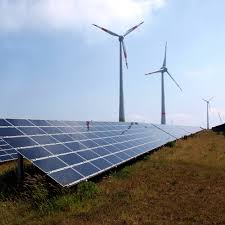
First the good news: In a new report on the near term future of the global renewable energy industry, the International Energy Agency is projecting impressive growth. Renewable sources like wind, solar, and hydropower should constitute nearly two-thirds of new net power capacity brought online across the globe between now and 2020. That’s equivalent to 700 gigawatts of new capacity or “more than twice Japan’s current installed power capacity,” according to the IEA.
That would mean that overall, renewables would grow from providing 22 percent of the world’s total electricity generation in 2013, to providing an impressive 26 percent of it by 2020.
But then, well, there’s the bad news. According to the IEA’s new Renewable Energy Medium-Term Market Report, the rate of renewables growth, which has been explosive of late, is actually set to “level off.” It’s hardly opportune time for that to be happening, with the world about to assemble in Paris to try to tackle climate change.
[Why storing solar energy and using it at night is closer than you think]
“This flattening of the annual new installations means that renewable electricity is off track from the pattern that we would need to meet ambitious climate change mitigation goals,” says Paolo Frankl, who heads the IEA’s renewable energy division and oversaw the report.
The core problem, says IEA, is a bevy of policy uncertainties and other renewables integration problems in various countries — what you might collectively call the sector’s growing pains. In the U.S. alone, such growth-thwarting uncertainties include the unclear fate of several tax incentives, the expectation of extensive battles over the implementation of the Clean Power Plan, and state-level fights over how individual homeowners will be credited on their bills for solar energy they generate and feed back to the grid.
Still, renewable electricity growth will be considerable. Strikingly, two-thirds of the new renewable deployments are expected to occur in developing countries like Brazil, India, and China. The latter will be responsible for a staggering 40 percent of all of the world’s growth in renewable electricity capacity by 2020, says the IEA, “an amount triple the current total power capacity of the United Kingdom.”
Of the top sources of new renewable energy deployments, onshore wind is expected to lead the way — accounting for more than a third of the total — followed closely by solar photovoltaics. New hydropower installations are expected to account for a fifth of the total, and to be particularly prevalent in developing countries.
For Sub-Saharan Africa, the report verifies that the phenomenon dubbed “leapfrogging” — in which some countries will pass over fossil fuel based electricity and go straight to renewables — appears to be a reality. “With huge resources, improving economics and policy momentum, renewables should meet almost two-thirds of power demand growth in [Sub-Saharan Africa] through 2020,” it finds.
Yet the IEA report is very critical of lingering policy gaps and other hurdles that are interfering with growth, such as those in the U.S. Financing hurdles are also an issue. Consider, Frankl suggests, the same solar photovoltaic installation but in one case located in Dubai and in another case located in central Africa. “The interest rates will be so much higher that the same PV electricity, the costs would double,” Frankl says.
Overall, if both developing and developed countries solved some of the problems that bar the investment in, and the integration of, renewable sources, then IEA suggests that the growth of renewable electricity could be 25 percent greater from here out to 2020.
Indeed, the IEA’s Frankl notes that with its recent announcements in conjunction with the U.S., China has actually taken a step in this direction. The country has just announced a “green dispatch” plan that will mean “giving priority, in distribution and dispatching, to renewable power generation and fossil fuel power generation of higher efficiency and lower emission levels.” This should help put China — and thereby, the world — on a much more ambitious path.
“Whatever they do better, the world will do better,” says Frankl. “They are really 1 order of magnitude higher than anyone else.”
All in all, then, the IEA’s new findings reaffirm that we are moving more and more into a world powered by wind, water, and sun. But at the same time, they also provide still more evidence that the world is not moving fast enough — either in its planned emissions cuts, or in its renewable energy deployments — to keep global warming within a reasonable range.
03/10/2015
01/10/2015
Questions Over Direct Action As Greg Hunt Reveals Paris Target Needs Industrial Emissions Cut
The Guardian - Lenore Taylor
Experts doubt environment minister’s assumption that ‘safeguards’ mechanism can deliver cuts required to meet Australia’s emissions reduction target
Australia is calculating that its big industrial emitters will be forced to reduce greenhouse pollution by 200m tonnes between 2020 and 2030, an assumption experts say will require major changes to the Direct Action policy which is not designed to force cuts from existing plants.
The environment minister, Greg Hunt, has revealed the 2030 emissions reduction target Australia will take to Paris in December – a cut of between 26% and 28% of 2005 levels – is based on an assumption that the so-called “safeguards” mechanism will deliver 200m tonnes of emission reductions between 2020 and 2030, or almost a quarter of the total cuts required.
The confirmation that Australia’s long-term target will require cuts to industrial emissions stands in contrast to the current stated objective of the “safeguards” mechanism, which is to impose caps that stop “rogue” companies from dramatically increasing emissions, but not to force them down.
Analysts like Reputex say the very lenient baselines proposed will allow big emitters such as brown coal-fired power stations to significantly increase emissions. Major business groups have complained they cannot see how the government can meet the new target, and have been privately assuming that the government must be intending to use a 2017 review to toughen the rules. Given that the policy also allows businesses who exceed their baselines to buy permits from businesses who come in under their limits, this would also potentially set up a version of an emissions trading scheme.
But Hunt refused to say whether achieving 200m tonnes of greenhouse gas cuts from the companies covered by the safeguards scheme would require tougher rules than those he has on the table for existing plants.
He said the government would “allow for adjustment of the best practice rules [which say new plants must use best available technology] and technological change” but “any other changes would be a matter for future governments”.
“I would not want to bind the hand of future governments,” he said.
Asked whether tougher baselines could usher in a type of emissions trading scheme, he said: “We are not mandating an ETS. I do not see any circumstances in which this government would create an ETS.”
Under the safeguard rules, companies which exceed their baseline can pay a penalty or buy carbon offsets from other companies. Hunt said that “what private companies do is entirely a matter for them within the law. By definition they own their own units and they can acquire them and dispose of them as they see fit.”
Experts are clear that a 200m tonne cut could be achieved only with much tougher safeguard rules.
“The draft rules we have seen would not deliver that,” said Bret Harper, head of research at Reputex. “Most new plants, we should assume, would be built using best practice in any event, so they aren’t likely to deliver much abatement. To get that result would require much tighter baselines.”
Elisa de Wit, who heads the climate law practice at law firm Norton Rose Fulbright, said, “The only way to get substantial cuts like that would be to change the baselines so they reduce over time.
“We assume this will happen after the review in 2017-18. But the safeguards, as they are currently designed, won’t drive any significant emission reductions.”
The chief executive of the Australian Industry Group, Innes Willox, said, “To date the safeguard has been designed to catch ‘rogue emitters’, not as a constraint on ordinary business activities. The draft rules certainly reflect that.
“If the government wishes to evolve the safeguard over time into a major driver of abatement, that will be complex and need deep consultation, particularly on dealing with trade competitiveness issues and avoiding excessive administration and compliance costs.”
The independent senator Nick Xenophon has criticised the safeguard rules and promised to use the threat of Senate disallowance to give them more teeth.
But Hunt said Xenophon was proposing “only minor changes”.
“I am engaged in discussions with Nick and his office and there may be minor technical changes,” Hunt said. “No major changes have been proposed although I am not presuming to know Nick’s final position.”
In a wide-ranging interview Hunt also said:
Experts doubt environment minister’s assumption that ‘safeguards’ mechanism can deliver cuts required to meet Australia’s emissions reduction target
![]() |
| Steam billows from the cooling towers of the Yallourn power station in the Latrobe Valley in Victoria. Photograph: Bloomberg via Getty Images |
Australia is calculating that its big industrial emitters will be forced to reduce greenhouse pollution by 200m tonnes between 2020 and 2030, an assumption experts say will require major changes to the Direct Action policy which is not designed to force cuts from existing plants.
The environment minister, Greg Hunt, has revealed the 2030 emissions reduction target Australia will take to Paris in December – a cut of between 26% and 28% of 2005 levels – is based on an assumption that the so-called “safeguards” mechanism will deliver 200m tonnes of emission reductions between 2020 and 2030, or almost a quarter of the total cuts required.
![]() |
| Australia overstating greenhouse gas forecasts, making climate targets easier. Read more |
Analysts like Reputex say the very lenient baselines proposed will allow big emitters such as brown coal-fired power stations to significantly increase emissions. Major business groups have complained they cannot see how the government can meet the new target, and have been privately assuming that the government must be intending to use a 2017 review to toughen the rules. Given that the policy also allows businesses who exceed their baselines to buy permits from businesses who come in under their limits, this would also potentially set up a version of an emissions trading scheme.
But Hunt refused to say whether achieving 200m tonnes of greenhouse gas cuts from the companies covered by the safeguards scheme would require tougher rules than those he has on the table for existing plants.
He said the government would “allow for adjustment of the best practice rules [which say new plants must use best available technology] and technological change” but “any other changes would be a matter for future governments”.
“I would not want to bind the hand of future governments,” he said.
Asked whether tougher baselines could usher in a type of emissions trading scheme, he said: “We are not mandating an ETS. I do not see any circumstances in which this government would create an ETS.”
Under the safeguard rules, companies which exceed their baseline can pay a penalty or buy carbon offsets from other companies. Hunt said that “what private companies do is entirely a matter for them within the law. By definition they own their own units and they can acquire them and dispose of them as they see fit.”
Experts are clear that a 200m tonne cut could be achieved only with much tougher safeguard rules.
“The draft rules we have seen would not deliver that,” said Bret Harper, head of research at Reputex. “Most new plants, we should assume, would be built using best practice in any event, so they aren’t likely to deliver much abatement. To get that result would require much tighter baselines.”
Elisa de Wit, who heads the climate law practice at law firm Norton Rose Fulbright, said, “The only way to get substantial cuts like that would be to change the baselines so they reduce over time.
![]() |
| Coalition’s climate policy 'best and most efficient' in the world, says Greg Hunt. Read more |
The chief executive of the Australian Industry Group, Innes Willox, said, “To date the safeguard has been designed to catch ‘rogue emitters’, not as a constraint on ordinary business activities. The draft rules certainly reflect that.
“If the government wishes to evolve the safeguard over time into a major driver of abatement, that will be complex and need deep consultation, particularly on dealing with trade competitiveness issues and avoiding excessive administration and compliance costs.”
The independent senator Nick Xenophon has criticised the safeguard rules and promised to use the threat of Senate disallowance to give them more teeth.
But Hunt said Xenophon was proposing “only minor changes”.
“I am engaged in discussions with Nick and his office and there may be minor technical changes,” Hunt said. “No major changes have been proposed although I am not presuming to know Nick’s final position.”
In a wide-ranging interview Hunt also said:
- He wanted the Clean Energy Finance Corporation (CEFC) and the Australian Renewable Energy Agency (Arena) – both of which have been transferred into a new unit in his department – to “bring forward’ the widespread deployment of battery storage to help households store energy from solar panels. He sees this both as an emissions reduction policy and a productivity policy, since storage would help reduce the huge “peaks” in electricity demand which force spending on additional capacity in electricity “poles and wires”, with the costs passed on to consumers.
- The environment department deputy secretary, Rhondda Dickson, former head of the Murray Darling Basin Authority, will head the new office of climate change and renewable innovation, which will include Arena and the CEFC.
- The new investment mandate for the CEFC would meet a promise made to crossbench senators, that the investment bank would concentrate on emerging technologies, but this would not preclude some investments in wind power or solar as had been suggested by the previous responsible ministers, Joe Hockey and Mathias Cormann. “The final mandate for the CEFC will reflect the language of the letter to the senators. There was a draft mandate which is not operative. The final draft will reflect faithfully and fully the letter to the Senate,” Hunt said.
- Australia was likely to be one of the very first countries to adopt new Montreal protocol rules on the phase-out of greenhouse-potent refrigerant gases, which are estimated to deliver another 75m tonnes of emission reductions between 2020 and 2030.
- The new wind commissioner – a position promised to crossbench senators – will be announced soon. “The National Health and Medical Research Council has said there is no evidence of detrimental health effects, but also that there should be further research, so we are doing that,” Hunt said.
- The so-called “lawfare” changes to the Environment Protection and Biodiversity Conservation Act to prevent environmentalists taking legal challenges have no chance of passing the Senate. “We have made no changes to policy but, as I have said, we know the chances of that getting through the Senate are limited.”
30/09/2015
Bank of England Governor Warns Of Risks From Climate Change
The Guardian - Larry Elliott
Bank of England governor tells Lloyd’s insurers that ‘challenges currently posed by climate change pale in significance compared with what might come’
Mark Carney, the governor of the Bank of England, has warned that climate change will lead to financial crises and falling living standards unless the world’s leading countries do more to ensure that their companies come clean about their current and future carbon emissions.
In a speech to the insurance market Lloyd’s of London on Tuesday, Carney said insurers were heavily exposed to climate change risks and that time was running out to deal with global warming.
The governor said that proposals would probably be put to the G20 meeting in Turkey in November urging the world’s leading developed and developing countries to bring in tougher corporate disclosure standards so that investors could better judge climate change risks.
“The challenges currently posed by climate change pale in significance compared with what might come,” Carney said. “The far-sighted amongst you are anticipating broader global impacts on property, migration and political stability, as well as food and water security. So why isn’t more being done to address it?”
Carney added that there was a growing evidence of humans’ role in climate change, noting that since the 1980s the number of registered weather-related loss events had tripled. Inflation-adjusted losses for the insurance industry had increased five fold to $50bn (£33bn) a year.
France will host the latest global attempt to combat climate change at a summit in December, and Carney added to the pressure for action by pointing to the threats to “financial resilience and longer-term prosperity. While there is still time to act, the window of opportunity is finite and shrinking”.
The governor, who is chairman of the Financial Stability Board, the international body set up by the G20 in 2009 to monitor risks to the financial system, said losses would be higher than expected if recent weather events proved to be the new normal.
![]() |
| A man by the Qiantang river after Typhoon Dujuan hit China. Claims for flood damage could affect financial stability. Photograph: Imaginechina/Rex Shutterstock |
“The horizon for monetary policy extends out to two to three years. For financial stability it is a bit longer, but typically only to the outer boundaries of the credit cycle – about a decade. In other words, once climate change becomes a defining issue for financial stability, it may already be too late.”
Carney said there were three ways in which climate change could affect financial stability: physical risks, such as claims from floods and storms; liability risks that could arise if those suffering climate change losses sought compensation from those they held responsible; and transition risks caused by the revaluation of assets caused by the adjustment to a lower-carbon economy.
The governor said that global action to tackle climate change could have a profound impact on companies if their business models were challenged by the move away from fossil fuels.
“Take, for example, the International Panel on Climate Change’s estimate of a carbon budget that would likely limit global temperature rises to 2 degrees [centigrade] above pre-industrial levels.
“That budget amounts to between a fifth and a third of the world’s proven reserves of oil, gas and coal. If that estimate is even approximately correct it would render the vast majority of reserves “stranded” – oil, gas and coal that will be literally unusable without expensive carbon-capture technology, which itself alters fossil fuel economics.
“The exposure of UK investors, including insurance companies, to these shifts is potentially huge.”
Carney said that, following a meeting in London last week, the FSB was “considering recommending to the G20 summit that more be done to develop consistent, comparable, reliable and clear disclosure around the carbon intensity of different assets”.
One proposal, he added, was the creation of an industry-led group, a climate disclosure taskforce, to design and deliver a voluntary standard for disclosure by those companies that produce or emit carbon.
“Companies would disclose not only what they are emitting today, but how they plan their transition to the net-zero world of the future. The G20 – whose member states account for around 85% of global emissions – has a unique ability to make this possible.”
Fairfax Video
RAW VIDEO: Bank of England governor Mark Carney warns "climate change threatens financial resilience and longer term prosperity."
Shark Culling And Overfishing May Be Contributing To Climate Change
ABC - Sarah Sedghi
New research has found that sharks play an important
role in preventing climate change, warning that overfishing and culling
sharks is resulting in more carbon being released from the seafloor.
A
paper published in the journal Nature Climate Change has found that the
culling and fishing of sharks and other large fish is leading to an
overabundance of their prey, such as turtles, stingrays and crabs.
Larger numbers of these marine creatures means that vegetation which stores carbon is being eaten in greater quantities.
"Sharks, believe it or not, are helping to prevent climate change," said Dr Peter Macreadie, an Australian Research Council Fellow from Deakin University and one of the paper's authors.
Several years ago researchers found that carbon is stored in blue carbon ecosystems in the marine environment.
"They are the seagrasses, the salt marshes, the mangroves and they're among the most powerful carbon sinks in the world," Dr Macreadie said.
"So they will capture and store carbon at a rate 40 times faster than tropical rainforests like the Amazon and they'll store that carbon in the ground for millennial time scales."
The researchers used Cape Cod in Massachusetts as an example of where this process had been observed.
"There had been overfishing in the region, so a lot of the big fish had been removed and then what we saw was an increase — a remarkable increase, a huge increase — in the number of crabs that bury and borrow down in the system, in the salt marsh which sequestered all this carbon," Dr Macreadie said.
"And we'd found that in an area there, the crabs had become so abundant that they had pretty much destroyed the salt marsh, and it was a small area, it was only 1.5 square kilometres, but it liberated 250,000 tonnes of carbon that had been stored in the ground."
Release of ancient carbon would have 'catastrophic' effect
He said with the culling of huge numbers of sharks and other top ocean predators, researchers had discovered many other examples of this occurring.
"There's been some 90 per cent loss of the oceans' top predators and so we've learnt this link between sharks and other top predators and the cascading effects they will have down to other animals in those ecosystems that are eating themselves out of house and home.
"They're eating the blue carbon ecosystems that have sequestered so much carbon and this is causing release of ancient carbon as a consequence."
Dr Macreadie said it would have a catastrophic effect on the environment.
"We've only just scratched the surface here," he said.
"These blue carbon ecosystems are so critical for sequestering carbon and they support these important food webs, and when these food webs are disrupted it's a bit like playing a game of Jenga — you pull out a few pins and the whole thing falls apart.
"If we just lost 1 per cent of the oceans' blue carbon ecosystems, it would be equivalent to releasing 460 million tonnes of carbon annually, which is about the equivalent of about 97 million cars.
"It's about equivalent to Australia's annual greenhouse gas emissions.
"So I think it's time to take a good look at the way in which nature helps mitigate climate change for us and trying to do everything we can to let that natural process operate in full force, and if sharks are a part of that, if predators and a part of that we need to take that into consideration."
| Research finds shark culling is contributing to climate change (AAP: ScreenWest) |
Larger numbers of these marine creatures means that vegetation which stores carbon is being eaten in greater quantities.
"Sharks, believe it or not, are helping to prevent climate change," said Dr Peter Macreadie, an Australian Research Council Fellow from Deakin University and one of the paper's authors.
Several years ago researchers found that carbon is stored in blue carbon ecosystems in the marine environment.
"They are the seagrasses, the salt marshes, the mangroves and they're among the most powerful carbon sinks in the world," Dr Macreadie said.
"So they will capture and store carbon at a rate 40 times faster than tropical rainforests like the Amazon and they'll store that carbon in the ground for millennial time scales."
He said as predators were culled and overfished, other marine life consumed more and more vegetation.
"Turtles,
crabs, certain types of worms, stingrays — these animals that are
overabundant to do with loss of predators used to keep their numbers in
check," Dr Macreadie said.The researchers used Cape Cod in Massachusetts as an example of where this process had been observed.
"There had been overfishing in the region, so a lot of the big fish had been removed and then what we saw was an increase — a remarkable increase, a huge increase — in the number of crabs that bury and borrow down in the system, in the salt marsh which sequestered all this carbon," Dr Macreadie said.
"And we'd found that in an area there, the crabs had become so abundant that they had pretty much destroyed the salt marsh, and it was a small area, it was only 1.5 square kilometres, but it liberated 250,000 tonnes of carbon that had been stored in the ground."
Release of ancient carbon would have 'catastrophic' effect
He said with the culling of huge numbers of sharks and other top ocean predators, researchers had discovered many other examples of this occurring.
"There's been some 90 per cent loss of the oceans' top predators and so we've learnt this link between sharks and other top predators and the cascading effects they will have down to other animals in those ecosystems that are eating themselves out of house and home.
"They're eating the blue carbon ecosystems that have sequestered so much carbon and this is causing release of ancient carbon as a consequence."
Dr Macreadie said it would have a catastrophic effect on the environment.
"We've only just scratched the surface here," he said.
"These blue carbon ecosystems are so critical for sequestering carbon and they support these important food webs, and when these food webs are disrupted it's a bit like playing a game of Jenga — you pull out a few pins and the whole thing falls apart.
"If we just lost 1 per cent of the oceans' blue carbon ecosystems, it would be equivalent to releasing 460 million tonnes of carbon annually, which is about the equivalent of about 97 million cars.
"It's about equivalent to Australia's annual greenhouse gas emissions.
"So I think it's time to take a good look at the way in which nature helps mitigate climate change for us and trying to do everything we can to let that natural process operate in full force, and if sharks are a part of that, if predators and a part of that we need to take that into consideration."
Australia Leads World On Household Solar … And On Coal
Renew Economy - Sophie Vorrath
With 1.4 million households with solar PV installed, rooftop solar has been one of Australia’s renewable energy success stories – a fact that is celebrated in a new report by the Energy Supply Association of Australia.
The report, titled Renewable Energy in Australia – How do we really compare?, notes that while Australia is ranked sixth in the world for total solar per capita, it is number one when it comes to solar on rooftops.

And the ESSA fact sheet has plenty of nice graphics to illustrate this achievement.

“More than one in seven households now have solar PV systems mounted on their roofs, which is a 15 per cent penetration rate,” the report says.
And it shows that South Australia and Queensland are leading the charge, with an average of 25 per cent and 24 per cent of households with solar on their roofs, and some suburbs in Adelaide and Brisbane – like Virginia and Chandler – boasting more than 50 per cent household PV penetration.

“We have double the penetration rates of the next best country, Belgium, and more than three times the level in Germany, which is considered a leader in solar generation,” says ESAA chief Matthew Warren.
The report also shows that South Australia and Tasmania have some of the highest per capita wind generation in the world, alongside leading US states like Iowa and Texas.

The message from this analysis, argues Warren, is that Australia “has not been a laggard” on renewable generation.
“This analysis clearly (shows) that we are have made progress in terms of sourcing energy from wind and solar and this can be expected to continue,” he says.
It’s an interesting message, coming from ESAA, which has in the past lobbied to have Australia’s Renewable Energy Target reduced and, more specifically, for the removal of upfront payments under the small-scale technology component of the RET – a measure aimed squarely at slowing rooftop solar uptake.
It seems to suggest that Australia is tracking just fine in its shift to renewable energy, as it tackles the dual task of emissions reduction and the modernisation of its grid. But surely the ESAA is not arguing that Australia has done enough.
The chart below, which is included on ESAA’s fact sheet, tells another story: That Australia is also among the world’s leading consumers of coal power generation. Anyone else confused?

The report, titled Renewable Energy in Australia – How do we really compare?, notes that while Australia is ranked sixth in the world for total solar per capita, it is number one when it comes to solar on rooftops.
And the ESSA fact sheet has plenty of nice graphics to illustrate this achievement.
“More than one in seven households now have solar PV systems mounted on their roofs, which is a 15 per cent penetration rate,” the report says.
And it shows that South Australia and Queensland are leading the charge, with an average of 25 per cent and 24 per cent of households with solar on their roofs, and some suburbs in Adelaide and Brisbane – like Virginia and Chandler – boasting more than 50 per cent household PV penetration.
“We have double the penetration rates of the next best country, Belgium, and more than three times the level in Germany, which is considered a leader in solar generation,” says ESAA chief Matthew Warren.
The report also shows that South Australia and Tasmania have some of the highest per capita wind generation in the world, alongside leading US states like Iowa and Texas.
The message from this analysis, argues Warren, is that Australia “has not been a laggard” on renewable generation.
“This analysis clearly (shows) that we are have made progress in terms of sourcing energy from wind and solar and this can be expected to continue,” he says.
It’s an interesting message, coming from ESAA, which has in the past lobbied to have Australia’s Renewable Energy Target reduced and, more specifically, for the removal of upfront payments under the small-scale technology component of the RET – a measure aimed squarely at slowing rooftop solar uptake.
It seems to suggest that Australia is tracking just fine in its shift to renewable energy, as it tackles the dual task of emissions reduction and the modernisation of its grid. But surely the ESAA is not arguing that Australia has done enough.
The chart below, which is included on ESAA’s fact sheet, tells another story: That Australia is also among the world’s leading consumers of coal power generation. Anyone else confused?
28/09/2015
Australia’s $234 Billion Climate Gamble
The Climate Change Guy
As of last year, China and the US were first and third on the list of Australia’s trading partners. Australian trade with China was worth $152.53 billion - a total that has grown by 12.2% on average over the last 5 years. Australia’s trade with the US was worth $60.43 billion as of 2014, having grown 4% on average over the last 5 years.
See more on Australia’s trade figures here
In March this year, China raised a number of concerns regarding Australia’s Intended Nationally Determined Commitment (INDC) for greenhouse gas emissions in the lead up to the Paris Climate Summit in December. In particular, they queried whether replacing the planned Emissions Trading Scheme (ETS) and the Carbon Farming Initiative (CFI) with the Emissions Reduction Fund (ERF) will yield the reductions that were likely under those two. The US also queried whether the ERF will primarily replace the ETS or whether other Policies and Measures will be considered.
I discussed a number of issues regarding the ERF (the Flagship of the Australian Government Direct Action plan) and the first Auction in April this year in an earlier blog. The second Auction will be held on 4 and 5 November, which is approximately three and a half weeks prior to the Paris Summit. It is possible that news of the second Auction results will spread as widely and quickly as for the first, including to representatives of other nations attending the Summit. The representatives may be keen to quiz the Australian party on the results, particularly if the results are questioned as extensively in social media as the results of the first Auction were. This will be very interesting to watch indeed.
See more on the second ERF Auction here
In
the time since the first Auction, it is fair to say that a lot has transpired politically in an international and domestic context that highlights and brings into focus Australia’s stance on emissions reductions. In an international context, China and the US have progressed a deal on emissions reductions reached last November with discussions earlier this month, as a result of which many cities including Atlanta, Houston, New York, Beijing, Guangzhou and Zhenjiang have pledged new actions. A number of other nations have announced their INDCs in the lead up to Paris.
Last Friday (US time) Chinese President Xi Jinping announced a nationwide cap and trade emissions program as part of efforts to tackle climate change. Cap and trade programs cap the total emissions and sources including power stations and factories purchase and sell credits. In terms of the US, although plans for a nationwide cap and trade program were defeated in 2009, California and other north-eastern states have implemented emissions trading schemes.
See more on President Xi Jinping’s announcement here
Domestically, the Government has changed leadership resulting in the installation of Malcolm Turnbull as Prime Minister. Last week, in response to the announcement of China’s cap and trade program, Environment Minister Greg Hunt announced that the Government will stay the course regarding the ERF which is reported to be “the best, most effective scheme in the world”.
See more on the Australian Government response to China’s announcement here
According to the Government, further reductions could be considered in 2017/18 as part of discussions on Australia’s 2030 target policy framework.
See more on Australia’s actions here
Given that China and the US (amongst others) have raised concerns with Australia’s commitment for Paris and have signed agreements to peak and reduce emissions respectively, I would be very surprised if they (and other nations attending the Paris Summit) would be prepared to give Australia until 2017/18 to consider further emissions reductions. I think it more likely that the US and China lead the charge in maintaining pressure on Australia to do more in the global challenge that is climate change.
Given the recent announcements by the Australian Government with respect to the state of the domestic economy and the discussions as to the exact nature of the problem, I struggle to fathom why they believe they can maintain one particular strategy and direction with respect to emissions reduction when an increasing number of countries are going in another.
If trade with China and the US continues on their current respective trajectories, by 2017, the combined figure is at approximately $233.7 billion (at a minimum) - $170.84 billion from China and $62.85 billion from the US. I don’t know if many Australians would be prepared to allow their Government to gamble such a figure on any matter - least of all emissions reduction specifically but climate change more generally, especially given the global nature of today’s economy. This is effectively what they are doing by continuing to ignore the rising tide of emissions trading.
As of last year, China and the US were first and third on the list of Australia’s trading partners. Australian trade with China was worth $152.53 billion - a total that has grown by 12.2% on average over the last 5 years. Australia’s trade with the US was worth $60.43 billion as of 2014, having grown 4% on average over the last 5 years.
See more on Australia’s trade figures here
I discussed a number of issues regarding the ERF (the Flagship of the Australian Government Direct Action plan) and the first Auction in April this year in an earlier blog. The second Auction will be held on 4 and 5 November, which is approximately three and a half weeks prior to the Paris Summit. It is possible that news of the second Auction results will spread as widely and quickly as for the first, including to representatives of other nations attending the Summit. The representatives may be keen to quiz the Australian party on the results, particularly if the results are questioned as extensively in social media as the results of the first Auction were. This will be very interesting to watch indeed.
See more on the second ERF Auction here
In
Last Friday (US time) Chinese President Xi Jinping announced a nationwide cap and trade emissions program as part of efforts to tackle climate change. Cap and trade programs cap the total emissions and sources including power stations and factories purchase and sell credits. In terms of the US, although plans for a nationwide cap and trade program were defeated in 2009, California and other north-eastern states have implemented emissions trading schemes.
See more on President Xi Jinping’s announcement here
See more on the Australian Government response to China’s announcement here
According to the Government, further reductions could be considered in 2017/18 as part of discussions on Australia’s 2030 target policy framework.
See more on Australia’s actions here
Given the recent announcements by the Australian Government with respect to the state of the domestic economy and the discussions as to the exact nature of the problem, I struggle to fathom why they believe they can maintain one particular strategy and direction with respect to emissions reduction when an increasing number of countries are going in another.
If trade with China and the US continues on their current respective trajectories, by 2017, the combined figure is at approximately $233.7 billion (at a minimum) - $170.84 billion from China and $62.85 billion from the US. I don’t know if many Australians would be prepared to allow their Government to gamble such a figure on any matter - least of all emissions reduction specifically but climate change more generally, especially given the global nature of today’s economy. This is effectively what they are doing by continuing to ignore the rising tide of emissions trading.
China Announces National Emissions Trading Scheme – Experts React
The Conversation
![]() |
| Chinese President Xi Jinping has announced pledged to adopt a national emissions trading scheme from 2017. EPA/MICHAEL REYNOLDS/AAP |
China has confirmed that it will launch its national emissions trading scheme.
In a joint US-China climate statement, issued as part of President Xi Jinping’s state visit to the United States, China confirmed that its new trading sytem will cover “key industry sectors such as iron and steel, power generation, chemicals, building materials, paper-making, and nonferrous metals”.
Below, our experts react to the development.
John Mathews, Professor of Strategic Management, Macquarie Graduate School of Management, Macquarie University
Xi Jinping is scoring a propaganda coup by announcing China’s intention to introduce a national cap-and-trade scheme in 2017, while he is a guest of Obama at the White House. It will not be lost on observers that China will be introducing the very kind of scheme that failed to get through the US Congress, passing the House but being defeated in the Senate.
How interesting that China the communist country is introducing the kind of market-based emissions trading scheme that the United States was unable to launch.
There are two further points to make. The first is that China is introducing its national scheme after trying out various options as local and city-level experimental schemes over the past couple of years. In 2012, pilot programs were initiated in seven provinces, and have been closely monitored since. Here China is teaching the world a lesson in how to introduce reform: first try it out at a small scale in a variety of forms, and then scale up the most successful.
Second, China is not relying on these market-led cap-and-trade initiatives alone. It is also reducing coal consumption in its power sector through direct state intervention, and has been actively promoting solar photovoltaic and wind power through state-guided targeted investment, national planning, and local promotion programs. So the new scheme will take its place as an initiative that helps to solidify China’s trajectory towards greening its energy systems – after direct state action has done the heavy lifting.
Anita Talberg, PhD candidate, Australian-German Climate and Energy College, University of Melbourne
China’s greenhouse gas emissions represent a quarter of the global total. For this reason alone, any tangible progress on Chinese climate action is encouraging. However, what is more promising is what a Chinese emissions trading scheme could mean for the world.
To date we have only seen pockets of emissions trading across the globe; most notably the EU has had a scheme since 2004 and a Californian system has been operating since 2013. Despite concerted efforts, there has been very little headway in linking regional emissions trading schemes. This is because carbon credits would become fungible.
So if one market crashes, so do the connected markets. The entire system is only as strong as the safeguards in the weakest market. The environmental effectiveness of the entire system is only as credible as the monitoring and verification in the least stringent scheme.
The EU and the rest of the world will be looking closely at the integrity and robustness of the Chinese market’s design. If China gets it right, and can elicit enough buy-in, it could represent a turning point for climate change.
Peter Christoff, Associate Professor, School of Geography at University of Melbourne
The announced introduction of China’s national emissions trading scheme in 2017 places irresistible pressure on Malcolm Turnbull to revisit the issue of an Australian ETS.
When China joins the European Union (the world’s third biggest aggregate emitter) and a number of other major emitting countries and states using cap-and-trade schemes to help cut emissions, some 40% of total global emissions will be covered by carbon markets.
Tellingly, Chinese President Xi Jinping made his announcement at a joint White House Press Conference with President Obama. Together they emphasised how the world’s two largest emitters are now collaborating closely to tackle global warming. Pressure is building within the US to create a national integrated scheme on the foundations of its regional efforts, and other major emitters, like Brazil and Russia, are contemplating similar measures.
Australia’s Direct Action Plan cannot easily be linked to this growing global carbon market. Its underfunded “reverse auction” process cannot acquire sufficient emissions to meet even Australia’s 2020 target. Its “safeguard mechanism” is unlikely to require major Australian emitters to reduce their emissions significantly. Australia is now transparently out of step with global trends and, relying only on current measures, incapable of meeting the tougher mitigation targets which will be required of it in the near future.
David Hodgkinson, Associate Professor, Faculty of Law, University of Western Australia
The Chinese government’s announcement of a 2017 national ETS is not surprising. Since 2011 China has been piloting seven trading schemes in cities including Beijing and Shanghai, albeit with varying success, and has been planning for and had foreshadowed a national scheme.
The announcement also builds on last year’s US-China bilateral agreement, which included a pledge from China (for the first time) that its emissions would peak no later than 2030 – although no mention was made of the level at which they would peak.
What is surprising is the speed with which the divide between developed and developing states enshrined in both the UNFCCC and its Kyoto Protocol has now crumbled. Both developed and developing countries in Paris in December will now state their climate pledges, or “intended nationally determined contributions”, including China. These contributions won’t be negotiated by all the parties – that approach has long gone. And the legal character of these contributions is uncertain. But China’s announcement on Friday certainly works in favour of a more robust agreement.
The climate change problem can’t be addressed without China, the world’s largest emitter (or indeed India, the third largest). China now joins the other 75 countries (and the European Union) with frameworks for limiting emissions, and the 47 countries (plus the EU) that have carbon pricing.
In a joint US-China climate statement, issued as part of President Xi Jinping’s state visit to the United States, China confirmed that its new trading sytem will cover “key industry sectors such as iron and steel, power generation, chemicals, building materials, paper-making, and nonferrous metals”.
Below, our experts react to the development.
John Mathews, Professor of Strategic Management, Macquarie Graduate School of Management, Macquarie University
Xi Jinping is scoring a propaganda coup by announcing China’s intention to introduce a national cap-and-trade scheme in 2017, while he is a guest of Obama at the White House. It will not be lost on observers that China will be introducing the very kind of scheme that failed to get through the US Congress, passing the House but being defeated in the Senate.
How interesting that China the communist country is introducing the kind of market-based emissions trading scheme that the United States was unable to launch.
There are two further points to make. The first is that China is introducing its national scheme after trying out various options as local and city-level experimental schemes over the past couple of years. In 2012, pilot programs were initiated in seven provinces, and have been closely monitored since. Here China is teaching the world a lesson in how to introduce reform: first try it out at a small scale in a variety of forms, and then scale up the most successful.
Second, China is not relying on these market-led cap-and-trade initiatives alone. It is also reducing coal consumption in its power sector through direct state intervention, and has been actively promoting solar photovoltaic and wind power through state-guided targeted investment, national planning, and local promotion programs. So the new scheme will take its place as an initiative that helps to solidify China’s trajectory towards greening its energy systems – after direct state action has done the heavy lifting.
Anita Talberg, PhD candidate, Australian-German Climate and Energy College, University of Melbourne
China’s greenhouse gas emissions represent a quarter of the global total. For this reason alone, any tangible progress on Chinese climate action is encouraging. However, what is more promising is what a Chinese emissions trading scheme could mean for the world.
To date we have only seen pockets of emissions trading across the globe; most notably the EU has had a scheme since 2004 and a Californian system has been operating since 2013. Despite concerted efforts, there has been very little headway in linking regional emissions trading schemes. This is because carbon credits would become fungible.
So if one market crashes, so do the connected markets. The entire system is only as strong as the safeguards in the weakest market. The environmental effectiveness of the entire system is only as credible as the monitoring and verification in the least stringent scheme.
The EU and the rest of the world will be looking closely at the integrity and robustness of the Chinese market’s design. If China gets it right, and can elicit enough buy-in, it could represent a turning point for climate change.
Peter Christoff, Associate Professor, School of Geography at University of Melbourne
The announced introduction of China’s national emissions trading scheme in 2017 places irresistible pressure on Malcolm Turnbull to revisit the issue of an Australian ETS.
When China joins the European Union (the world’s third biggest aggregate emitter) and a number of other major emitting countries and states using cap-and-trade schemes to help cut emissions, some 40% of total global emissions will be covered by carbon markets.
Tellingly, Chinese President Xi Jinping made his announcement at a joint White House Press Conference with President Obama. Together they emphasised how the world’s two largest emitters are now collaborating closely to tackle global warming. Pressure is building within the US to create a national integrated scheme on the foundations of its regional efforts, and other major emitters, like Brazil and Russia, are contemplating similar measures.
Australia’s Direct Action Plan cannot easily be linked to this growing global carbon market. Its underfunded “reverse auction” process cannot acquire sufficient emissions to meet even Australia’s 2020 target. Its “safeguard mechanism” is unlikely to require major Australian emitters to reduce their emissions significantly. Australia is now transparently out of step with global trends and, relying only on current measures, incapable of meeting the tougher mitigation targets which will be required of it in the near future.
David Hodgkinson, Associate Professor, Faculty of Law, University of Western Australia
The Chinese government’s announcement of a 2017 national ETS is not surprising. Since 2011 China has been piloting seven trading schemes in cities including Beijing and Shanghai, albeit with varying success, and has been planning for and had foreshadowed a national scheme.
The announcement also builds on last year’s US-China bilateral agreement, which included a pledge from China (for the first time) that its emissions would peak no later than 2030 – although no mention was made of the level at which they would peak.
What is surprising is the speed with which the divide between developed and developing states enshrined in both the UNFCCC and its Kyoto Protocol has now crumbled. Both developed and developing countries in Paris in December will now state their climate pledges, or “intended nationally determined contributions”, including China. These contributions won’t be negotiated by all the parties – that approach has long gone. And the legal character of these contributions is uncertain. But China’s announcement on Friday certainly works in favour of a more robust agreement.
The climate change problem can’t be addressed without China, the world’s largest emitter (or indeed India, the third largest). China now joins the other 75 countries (and the European Union) with frameworks for limiting emissions, and the 47 countries (plus the EU) that have carbon pricing.
Subscribe to:
Posts
(
Atom
)