04/01/2016

India's Solar Surge May Slash Coal Imports

Fairfax - Angela Macdonald-Smith

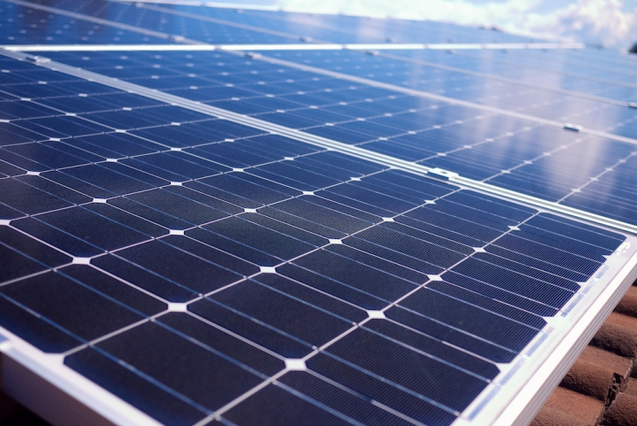
Solar power appears to be rapidly overtaking thermal coal imports in competitiveness for power generation in India. Photo: Adam Ferguson


Dramatic cost declines in solar power tenders in India have shaken up expectations on pricing for the renewable fuel and have triggered warnings that the country's need for thermal coal imports will be much lower than some are banking on.
Huge solar power contracts awarded by Indian states to global players in November and December have been priced at levels more than 20 per cent below 12 months ago and point to solar power rapidly overtaking thermal coal imports in competitiveness for power generation.
The figures signal that forecasts for growth in thethermal coal trading market by the International Energy Agency are too bullish even though they were cut back in December, according to Tim Buckley, director of energy finance studies at the Institute for Energy Economics and Financial Analysis, which supports renewable energy.
Mr Buckley said coal miners such as Adani and BHP Billiton were guilty of "ingrained thinking" in pressing ahead with coal expansion plans.
"A company that denies a technology change is real makes mistakes," Mr Buckley said. "The implication is for coal mining, coal railways and coal ports."
India's Minister for Energy, Piyush Goyal​, has said India should be able to end thermal coal imports by 2017.
Others doubt this target can be met, however. Melbourne-based Project Monitor describes the assumptions underlying claims from environmental groups that renewable energy growth would damp India's coal demand as "tenuous". It points out the problem of intermittent power generation from solar and wind, and casts doubt on India's ambitions to meet its 2020 coal production target.
"The confidence expressed by some that, over the next decade, coal demand will slow significantly and imports will drop to near-zero is almost certain not to be realised," the consultancy said.
A win by US-based solar major SunEdison of a $US500 million, 500-megawatt solar auction in the southern Indian state of Andhra Pradesh in November shocked the market with its pricing of 4.63 rupees per kilowatt-hour (US7.1¢/kWh), 10 per cent below the previous record low set three months earlier.
That pricing was regarded by many as irrational and as an aggressive chase for market share in the fast-growing market, until the award of a 350 MW contract in December to a consortium led by Japanese telecommunications company SoftBank at the same price.
The contracts should act as a warning to Australian coal exporters not to rely on IEA forecasts, Mr Buckley said.
India's ambitious National Solar Mission is targeting 100 gigawatts of solar capacity by 2022, and several solar majors are committing huge investments there, helping drive down costs.
IEEFA is forecasting reductions in solar tariffs will run at 5 per cent a year in India over the next decade, making solar cheaper than power generated even from domestic coal.
In its latest coal outlook report in December, the IEA pointed to India as one of the few remaining major growth markets for thermal coal exports, along with south-east Asia.
The IEA is forecasting the world's seaborne thermal coal market will reach 1.06 billion tonnes by 2020, a reduction from its previous forecast, but still above many other analysts. It assumes India will increase its thermal coal imports to 204 million tonnes by the end of the decade, representing an increase of 73 million tonnes from 2014.
Macquarie Research puts the market size in 2020 at 25 per cent less, but still assumes a modest increase in traded thermal coal volumes. Macquarie described the IEA's forecast for Indian coal imports as "staggering", saying it expected the increased demand for thermal coal to be met mostly from domestic sources.

Winning World War III, Climate Change Edition

CleanTechnica - Tina Casey

The impacts of climate change have long crossed the line of plausible deniability and we are now deep into a period that has all the hallmarks of a world war in terms of human suffering and the destruction of infrastructure and resources. So, if you were to ask us something like “what are the policies that governments should take to encourage public-private partnership and enable the private sector to develop the goods and services necessary for a global transition to a low-carbon economy by 2030,” we would say that government should require itself to speak with a unified voice on climate change, just as it would answer any other human threat to its existence.
Is that so hard?


Public-Private Partnerships For Climate Change Action
The aforementioned question comes to us from the Masdar 2016 Engage Blogging Contest. The topic of public-private partnerships is of critical interest to Masdar, which is a subsidiary of the company Mubadala, which is this:
In 2002, Mubadala – the Arabic word for ‘exchange’ – was established by the Government of Abu Dhabi as a principal agent in the diversification of Abu Dhabi’s economy.
[snip]
Mubadala was established to strengthen Abu Dhabi’s growth potential, and to help the government meet its socioeconomic targets…
While Mubadala’s first major venture involved natural gas production and transportation, in 2006 it created Masdar as a subsidiary, which quickly went to work and formed a partnership with the Massachusetts Institute of Technology in 2007 to create the Masdar Institute of Science and Technology.
The Masdar Institute should ring plenty of bells with CleanTechnica readers. We’ve been following Masdar’s work on solar energy, including last summer’s opening of the new “Masdar Solar Hub” R&D facility.
Masdar has also been active in the field of aviation biofuel, focusing on salt-loving plants that can thrive in arid conditions, including a “closed loop” system that integrates biofuel crops with food production.

One For All, All For Climate Change Action…Or Not
In an early piece on Masdar back in 2011, CleanTechnica referenced the institute’s work on the energy-nexus in an article titled “U.S. Fiddles While Others Work For New Energy Future,” and that brings us to the point.
The U.S. stacks up pretty well when it comes to developing strategies for transitioning to a low carbon economy by forming public-private partnerships, but there is one key difference.  The economic value of the sustainability policies being pursued by the Obama Administration has been drowned out by an aggressive public relations effort in support of the fossil fuel industry, spearheaded by powerful federal legislators such as Senator James Inhofe and Senator Ted Cruz, who is currently running for the Republican nomination for president under a platform that includes abolishing the Department of Energy, and abetted by state legislators and executives such as New Jersey Governor Chris Christie (yes, this guy), who is also running for the Republican nomination.
The problem is that the experience of climate change has already crossed the barrier from theory to reality, so while government policy has enabled the development of the necessary technology, the pace of progress has been slowed artificially, by the fossil lobby.
In a “free” market nation like the U.S., the missing piece needed to accelerate the pace of change is the engagement and enthusiasm of consumers at every level, as individuals, businesses, institutions and government agencies.
The last time that happened was during World War II under a unified government campaign in support of the war effort, which was coincidentally the last time that the U.S. was attacked on its own shores by another sovereign nation.

Links

03/01/2016

2016: What to Look for in Energy and Climate

Climate Central

2016 will kick off with a sense of optimism about climate change after the success of the Paris climate talks in December. In the U.S., that may mean more enthusiasm for commitments to renewables and other lower-carbon energy sources as low oil prices make the future of fossil fuels production in the U.S. and Canada less certain. 2016 stands to be critical for greenhouse gas emissions cuts in the U.S. as the country finds ways to reduce greenhouse gas emissions and meet its long-term climate pledge made in 2015.
These are four key energy and climate issues to watch in 2016:

New Commitments to Renewables
A photovoltaic solar panel. Credit: Michael Mazengarb/flickr 


Some cities and states, especially on the West Coast and in the Northeast, could join the small but growing list of those making a commitment to obtain 100 percent of their electricity from renewable sources in the coming decades.
In 2015, Hawaii became the first state to pass a law making such a commitment. That law requires the state to get all of its electricity from renewables by 2045. In December, San Diego became the largest city in the country to make that commitment, requiring all of the city’s power to come from renewables by 2035.
The coming year is likely to bring other commitments, the biggest of which is in New York. State law now requires the Empire State to obtain 30 percent of its electricity from renewables by 2015. In December, Gov. Andrew Cuomo directed a state agency to go even further by developing a new standard that would require New York to obtain half of its electricity from renewables by 2030, reducing carbon dioxide emissions by 40 percent. The new standard is required to be finalized in June.Others have made less ambitious commitments, but no less significant. A law passed in California requires the state to obtain 50 percent of its electricity from renewables, excluding hydropower. New York City and San Francisco have also pledged to increase their use of renewables, and smaller cities, such as Burlington, Vt., have already gone 100 percent renewable, mainly through the use of large amounts of hydropower.

Rippling Effect of Oil Prices
Gasoline prices fell to below $2 per gallon in early 2015 in Connecticut. Credit: Mike Mozart/flickr 


2016 is being rung in amid a long-term crash in oil prices that is having global economic and climate implications, and the stories of its ripple effects will generate headlines well into the new year.
Global crude oil prices fell off a cliff in the summer of 2014, and by the end of 2015, the price of U.S.-produced oil had fallen from more than $90 per barrel to between $35 and $40 per barrel. Those prices knocked the wind out of the fracking boom that had overtaken much of the U.S. in North Dakota, Texas, Colorado, Pennsylvania, and other oil and gas producing states. That boom turned the U.S. into the world’s leading crude oil producer.
The fallout of the oil bust is wide-ranging with serious climate consequences, good and bad. Low oil prices brought low gasoline prices, which encouraged Americans to drive more. That led to a  2.4 percent increase in gasoline consumption in 2015 over the previous year, likely leading to an increase in greenhouse gas emissions as well. As wells drilled during the fracking boom continue to produce abundant natural gas, natural gas prices have also fallen, hastening utilities’ transition from polluting coal-fired power plants to possibly more climate-friendly natural gas-fired power plants.
The oil price crash also took a toll on Canadian tar sands, which represent the world’s third-largest oil reserve. Tar sands are more carbon-laden and energy intensive to produce than most other forms of crude oil, exacerbating climate change in the process. The oil price crash has cost more than 35,000 tar sands jobs in Alberta, and tar sands producers are operating at extremely thin margins.
With oil prices expected to remain low for a while, 2016 could be the year the Canadian oil sands producers prove they can operate at an adequate profit and weather both low oil prices and international pressure to reduce greenhouse gas emissions, or continue shrinking.

Emissions Growth
A power plant in Russia. Credit: otodo/flick


Stagnant growth in carbon dioxide emissions from burning fossil fuels could become a trend in 2016. Or not.
Growth in emissions from burning fossil fuels halted in 2015 partly because of the global boom in renewable energy  —  a big deal for the climate because until recently, economic growth and carbon emissions from burning fossil fuels rose and fell together. If the stagnation becomes a trend in 2016, it could prove that the global economy can boom without relying on fossil fuels and that countries can begin to prosper while slashing emissions to slow climate change.
Scientists have warned, however, that the emissions growth stagnation could just be a short-term anomaly and that emissions could start rising again as fossil fuel use in developing countries — especially India — continues to rise unabated.
The marriage of emissions growth and economic growth ended in 2014, as global emissions growth grew only slightly, flatlining for the first time in 40 years. In December, a Stanford University study suggested emissions growth halted or even declined in 2015, foreshadowing an eventual peak in global carbon emissions in a decade or two.
One of the biggest challenges is finding a way for India to curb its emissions. India is seeing a rapid growth in emissions, unlike China, the U.S. and the European Union, which are seeing emissions declines, Rob Jackson, the lead author of the Stanford study and a professor of Earth system science there, said. “India’s emissions are now exactly what China’s were in 1990. India has the challenge of producing more energy and yet not just being able to rely on coal to do it.”

The Post-Keystone Climate Fight
Oil and gas development on federal public lands in eastern Utah.Credit: WildEarth Guardians/flickr


The proposed Keystone XL Pipeline was killed by the Obama administration primarily because of the possible climate effects of both the pipeline and the tar sands it would carry. With the Keystone XL fight over, activists and scientists who had fought against the pipeline are turning to other fronts in their battle against greenhouse gas emissions.
One of those in 2016 may be oil and gas leasing and development on energy-rich federally controlled public lands, mainly in the West, which represent 28 percent of the total land area of the U.S. If all the fossil fuels on public lands in America are burned, their carbon emissions would represent up to half of all the potential greenhouse gas emissions that would come from burning all the remaining fossil fuels on U.S. soil, according to a report by Friends of the Earth and the Center for Biological Diversity.
In September, a group of scientists and activists, part of the Keep It in the Ground Coalition, sent a letter to the Obama administration, urging it to halt all new federal fossil fuels leasing and development on public lands.
Though the administration is unlikely to do that anytime soon, the message may be having an effect. The U.S. Bureau of Land Management postponed until 2016 a November oil and gas lease sale for 37,580 acres of public lands near national parks in Utah because of a “high level of public interest,” BLM spokeswoman Megan Crandall said.
In December, the BLM postponed until March another oil and gas lease sale for Arkansas and Michigan because of pressure from climate activists.
It’s far from clear how much traction this movement might get in 2016, but Obama himself may have lent some credence to the movement to keep federal minerals in the ground in his speech announcing the denial of the Keystone XL permit: “Ultimately, if we’re going to prevent large parts of this Earth from becoming not only inhospitable but uninhabitable in our lifetimes, we’re going to have to keep some fossil fuels in the ground rather than burn them and release more dangerous pollution into the sky.”

Links

2015: A Year Of Progress And Buffoonery On Climate Change

Washington Post - Editorial Board

Skiers ski on a thin layer of snow in Villard-de-Lans, central-eastern France, on Dec. 27. (Jean Pierre Clatot/Agence France-Presse via Getty Images)


LAST WINTER, bitter cold on the East Coast prompted Sen. James M. Inhofe (R-Okla.) to take a snowball onto the Senate floor in mockery of climate scientists. This winter, the weather is so warm that there are not two snowflakes in the Washington area for Mr. Inhofe to scrape together.
Just as last winter's cold did not disprove global warming, this winter's warmth does not, in itself, establish that humans are raising Earth's average temperature. Rather, it is the long-term trend that matters — and that is concerning. The past decade was warmer than the previous one, which was warmer than the one before that, and so on. So far, this decade looks sure to fit into that trend.
We may, too, be getting a taste of what a warming world feels like. According to a 2014 paper, one potential effect is a doubling of the number of strong El Niño years. That's the phenomenon that has perturbed the jet stream and pushed this winter's temperatures up. Though the El Niño variation predated human influence, it, among many other natural cycles, probably will not be immune to it. And even if this year's El Niño cannot be blamed squarely on climate change, it nevertheless feels like a fitting end to a remarkable year in the policy and politics of global warming.
For those following the climate debate, 2015 brought some inspiring highs — and disheartening lows. President Obama's Environmental Protection Agency finalized landmark carbon dioxide regulations that promise to slash greenhouse gas emissions from U.S. power plants. This policy played a crucial role in galvanizing the international climate effort, which culminated last month in a huge international climate deal. The Paris agreement will not cut emissions enough to avoid serious risks. But it will get the world a good chunk of the way there, and it represents the beginning of a process in which all major emitters will be expected to step up.
The very same EPA rules also inspired a race among Republicans to embarrass themselves. A standard critique, such as that of Sen. Marco Rubio (Fla.), was to argue that climate regulations will uselessly harm the economy; that exaggerates the potential costs without acknowledging the unprecedented global agreement the measure helped to produce. Sen. Ted Cruz (Tex.) went further, holding a hearing on climate science with a witness list that was a funhouse-mirror image of the scientific community: short on those who accept mainstream climate science, packed with climate critics.
Mr. Cruz insisted that there has been a "pause" in global warming since 1998, a date critics choose as their starting point because it was another El Niño year marked by very high temperatures. Like Mr. Inhofe and his snowball, Mr. Cruz's point ignored the long-term nature of the warming trend. It also might be flatly wrong: A June paper in the top-flight journal Science found that the warming "pause" reflected biases in temperature data rather than a significant plateau in real temperature rise. Alas, this finding also led to a nasty GOP reaction. House Science, Space and Technology Committee Chairman Lamar Smith (Tex.) subpoenaed emails relating to the study, which came from the National Oceanic and Atmospheric Administration. Congressional oversight of federal spending is important. That's no excuse to conduct fishing expeditions designed to personally discredit scientists and undermine peer-reviewed research with lines from informal emails.
With the events of the past year in mind, the presidential candidates — and American voters — must ask themselves: Do they want to build on 2015's climate progress, or do they want more of last year's climate buffoonery?

Links 

02/01/2016

Climate Chaos, Across the Map

New York Times - Justin Gillis

Clockwise from top left: Flooding in Straiton, Scotland, on Wednesday; haze in Kalimantan Province, Indonesia, in October; flooding in Horry County, S.C., in October; drought in South Australia in November. Credit Danny Lawson/Press Association, via AP; Haris Sadikin/Agence France-Presse — Getty Images; Janet Blackmon Morgan/The Sun News, via AP; David Gray/Reuter

What is going on with the weather?
With tornado outbreaks in the South, Christmas temperatures that sent trees into bloom in Central Park, drought in parts of Africa and historic floods drowning the old industrial cities of England, 2015 is closing with a string of weather anomalies all over the world.
The year, expected to be the hottest on record, may be over at midnight Thursday, but the trouble will not be. Rain in the central United States has been so heavy that major floods are beginning along the Mississippi River and are likely to intensify in coming weeks. California may lurch from drought to flood by late winter. Most serious, millions of people could be threatened by a developing food shortage in southern Africa.
Scientists say the most obvious suspect in the turmoil is the climate pattern called El Niño, in which the Pacific Ocean for the last few months has been dumping immense amounts of heat into the atmosphere. Because atmospheric waves can travel thousands of miles, the added heat and accompanying moisture have been playing havoc with the weather in many parts of the world.


The weather phenomenon known as El Niño can cause dramatic effects around the world. Henry Fountain explains where it comes from. By Henry Fountain, Aaron Byrd and Ben Laffin on Publish Date September 9, 2014.              

But that natural pattern of variability is not the whole story. This El Niño, one of the strongest on record, comes atop a long-term heating of the planet caused by mankind's emissions of greenhouse gases. A large body of scientific evidence says those emissions are making certain kinds of extremes, such as heavy rainstorms and intense heat waves, more frequent.
Coincidence or not, every kind of trouble that the experts have been warning about for years seems to be occurring at once.

Waiting out the flood Wednesday in Dumfries, Scotland, after heavy rain. Credit Andy Buchanan/Agence France-Presse — Getty Images
"As scientists, it's a little humbling that we've kind of been saying this for 20 years now, and it's not until people notice daffodils coming out in December that they start to say, 'Maybe they're right,' " said Myles R. Allen, a climate scientist at Oxford University in Britain.
Dr. Allen's group, in collaboration with American and Dutch researchers, recently completed a report calculating that extreme rainstorms in the British Isles in December had become about 40 percent more likely as a consequence of human emissions. That document — inspired by a storm in early December that dumped stupendous rains, including 13 inches on one town in 24 hours — was barely finished when the skies opened up again.
Emergency crews have since been scrambling to rescue people from flooded homes in Leeds, York and other cities. A dispute has erupted in Parliament about whether Britain is doing enough to prepare for a changing climate.
Dr. Allen does not believe that El Niño had much to do with the British flooding, based on historical evidence that the influence of the Pacific Ocean anomaly is fairly weak in that part of the world. In the Western Hemisphere, the strong El Niño is likely a bigger part of the explanation for the strange winter weather.

Cutting grass in South Africa, which is experiencing its worst drought since 1994. Credit Joao Silva/The New York Times


The northern tier of the United States is often warm during El Niño years, and indeed, weather forecasters months ago predicted such a pattern for this winter. But they did not go so far as to forecast that the temperature in Central Park on the day before Christmas would hit 72 degrees.
Likewise, past evidence suggests that an El Niño can cause the fall tornado season in the Gulf Coast states to extend into December, as happened this year, with deadly consequences in states like Texas and Mississippi.


Many parts of England and Scotland are experiencing damage from severe flooding brought on by Storm Frank. REUTERS on Publish Date December 31, 2015.

Matthew Rosencrans, head of forecast operations for the federal government's Climate Prediction Center in College Park, Md., said that the El Niño was not the only natural factor at work. This winter, a climate pattern called the Arctic Oscillation is also keeping cold air bottled up in the high north, allowing heat and moisture to accumulate in the middle latitudes. That may be a factor in the recent heavy rains in states like Georgia and South Carolina, as well as in some of the other weather extremes, he said.
Scientists do not quite understand the connections, if any, between El Niño and variations in the Arctic Oscillation. They also do not fully understand how the combined effects of El Niño and human-induced warming are likely to play out over the coming decades.
Although El Niños occur every three to seven years, most of them are of moderate intensity. They form when the westward trade winds in the Pacific weaken, or even reverse direction. That shift leads to a dramatic warming of the surface waters in the eastern Pacific.
"Clouds and storms follow the warm water, pumping heat and moisture high into the overlying atmosphere," as NASA recently explained. "These changes alter jet stream paths and affect storm tracks all over the world."
The current El Niño is only the third powerful El Niño to have occurred in the era of satellites and other sophisticated weather observations. It is a small data set from which to try to draw broad conclusions, and experts said they would likely be working for months or years to understand what role El Niño and other factors played in the weather extremes of 2015.
It is already clear, though, that the year will be the hottest ever recorded at the surface of the planet, surpassing 2014 by a considerable margin. That is a function both of the short-term heat from the El Niño and the long-term warming from human emissions. In both the Atlantic and Pacific, the unusually warm ocean surface is throwing extra moisture into the air, said Kevin Trenberth, a climate scientist at the National Center for Atmospheric Research in Boulder, Colo.
Storms over land can draw moisture from as far as 2,000 miles away, he said, so the warm ocean is likely influencing such events as the heavy rain in the Southeast, as well as the record number of strong hurricanes and typhoons that occurred this year in the Pacific basin, with devastating consequences for island nations like Vanuatu.
"The warmth means there is more fuel for these weather systems to feed upon," Dr. Trenberth said. "This is the sort of thing we will see more as we go decades into the future."

Links

Extreme Times: World's Weather Is On A Weird Track That Will Continue Into 2016

Fairfax - Peter Hannam

What's El Nino got in store for 2016? The giant 2015 El Nino in the Pacific is at or nearing its peak, but it will be months before the world's weather engine takes the heat off Australia.

If Santa really did reside at the North Pole, he could probably have doffed his thick coat for a few hours this week to dig his sled out of the slush.
Despite being shrouded in darkness since early October, the top of this world recorded temperatures that appear to have been above freezing point for about six hours on Wednesday, thanks to a huge storm that steered tropical warmth into the high latitudes.
The Arctic has long been observed as warming at about twice the rate as elsewhere on Earth, but the 30-plus degrees Celsius jump above the average for this time of year was a stunning reading polar temperatures briefly above cities like Chicago in the US and Vienna in Austria far to the south.
Arctic heat caps off a record hot year for planet Earth.
Arctic heat caps off a record hot year for planet Earth. Photo: Leigh Henningham

Such events made descriptors such as "unprecedented" or "record" almost the bywords for 2015 when it came to weather.
The combination of an epic El Niño in the Pacific overlaying the background warming unleased mostly by humans' combustion of fossil fuels jolted the concept of what "normal" conditions mean. It also sets up 2016 for more wild weather.
Even before December brought record heatwaves to regions as diverse as Victoria, the High Arctic and almost all of the eastern US, major meteorological agencies had heralded 2015 as the hottest year for the planet since reliable data gathering began 136 years ago.
The call was an easy one to make. By November, year-to-date temperatures were more than 0.1 degree higher than the previous hottest year – set just one year earlier in 2014 – with the gap widening, according to the US National Oceanic and Atmospheric Administration [NOAA]:


Of 1630 months tallied by NOAA since 1880, seven of the 10 most usually hot months occurred in 2015 alone.
When the latest data is assessed, it may reveal December to be the first month with a temperature reading a full one degree above the 20th-century average. Last October fell just shy with a 0.99-degree anomaly, NOAA says.
Climatologists have scant doubt which way the climate is changing. In Australia since 2000, for instance, record hot days have been 12 times more common than record cold ones, research published in September showed. 2015 will probably be among the five warmest years for Australia since records began in 1910.
Those trends – and evidence of increasing extreme weather, such as worsening fire risks in southern Australia – were the reason why almost 200 nations agreed last month at the Paris climate summit to try to keep temperature increases "well below two degrees" compared with pre-industrial levels. We are roughly half way there.
Governments, including Australia's, also backed carbon neutrality – balancing emissions of greenhouse gases to the amounts being sequestered – by the latter half of this century, a pact that will need much more ambitious climate action to limit coal and other fossil fuel use than now being offered.
The global temperature gauge certainly got a kick-along this past year from the monster El Niño in the Pacific, which rivals the 1997-98 event as the most intense on record, and has a big influence on worldwide weather.
Even so, temperatures have been creeping higher for decades, whether it is an El Niño year (red) or its reverse, La Niña (blue), as shown in this NOAA chart:


During El Niños, the typical westward-blowing equatorial winds stall or reverse. Along with a build-up of heat in the central and eastern Pacific, rainfall patterns also shift eastwards away from Asia.
The current El Niño is marked by unusually warm waters covering about 16 million square kilometres, an area bigger than twice the size of Australia and larger than the 1997-98 record event.

Nearing peak?
The 2015-16 version is also showing "no signs of waning", NASA said this week. Australia's Bureau of Meteorology, though, estimates the event is near its peak but says models indicate the unusual heat won't break up until May or later.
Wenju Cai, a CSIRO research scientist who studies how climate change will affect El Niños in the future, says a lengthy breakdown of the event means 2016 could set annual global heat records for a third year in a row.
"It's the release of heat from the ocean that is going to make us hotter," Cai tells Fairfax Media.
Parts of the Northern Hemisphere might welcome a little extra warmth – although less so if it's accompanied by more storms and floods as lately seen in the UK. But in Australia, the extra heat "is coinciding with our peak" in summer, Cai says.
Forests and grasslands have already turned crisp across much of Victoria and elsewhere in southern Australia, prompting fears of a "Black January" if significant rainfall doesn't arrive to add moisture and disperse the heat.
In 2015, south-west Western Australia and parts of inland Queensland, South Australia and much of Victoria and Tasmania had very much below-average rainfall, the bureau said.


La Niña next?
The El Niño's demise, though, is unlikely to usher in a new period of climate calm.
As Agus Santoso, a senior researcher at the University of NSW-based Climate Change Research Centre, notes, "extreme La Niñas tend to follow extreme El Niños".
As the climate warms further, "this kind of sequence will happen more", Santoso says. "It's very bad news."
During La Niña years, the world's weather engine flips back to the western Pacific, with rainfall patterns shifting with it. Indonesia, South Pacific and parts of Australia that were relatively dry in 2015 may get excessive amounts of rain in the next year or so.
A comparatively quiet tropical cyclone season for this summer for Australia may revert to a relatively active one in 2016-17.
Research published by Santoso and Cai in 2015 indicates that while the number of El Niños and La Niñas may not alter with climate change, the frequency of the extreme version of such events affecting Australia is likely to quadruple this century if greenhouse gas emissions remain on a rising trajectory.
While "the power of nature is huge" and human activity may not trigger El Niños or La Niñas themselves, the rising atmospheric concentration of carbon dioxide, methane and other heat-trapping gases will make a difference, Cai says.
"In a warming world, the atmosphere can store more water," Cai says. "When conditions for rain are there, it will come down much more vigorously because you have more water."
The climate will become less recognisable to today's population as shifts in the world's weather engine in the Pacific "move further or faster, and stay longer", he says.

Links

El Niño: Why Predictable Climate Event Still Has The Scientists Guessing

The Guardian -

Blister of sea surface heat in Pacific Ocean can set off devastating drought, storms and rainfall around the globe – or just fade away
False-colour images provided by Nasa compare Pacific Ocean water temperatures from the El Niño in 1997 (right) and the current El Niño. Photograph: AP

 El Niño is one of the most predictable climate events on the planet, according to the US National Oceanic and Atmospheric Administration, but it also has a way of keeping climate scientists guessing.
In March the oceanographers predicted the current event could be the weakest on record, but in August the same agency warned it could be the strongest.
Right now it still looks strong, says Nasa's Jet Propulsion Laboratory (JPL) in Pasadena, California. Using satellite data, meteorologists keep a steady watch on El Niño because it can play out demurely, or it can bring catastrophe. It has been linked to drought and harvest failures on the African continent, devastating fires in the normally moist rainforests of the Indonesian archipelago, both drought and flood in Australia, damaging floods in the Americas, and unusually mild winters in Europe.
This month, tens of thousands of people have been forced to flee their homes in the border areas of Paraguay, Uruguay, Brazil and Argentina due to severe flooding in the wake of heavy summer rains brought on by El Niño. Paraguay's national emergencies office has said the flooding is "directly influenced by the El Niño phenomenon, which has intensified the frequency and intensity of rains".
El Niño is a blister of sea surface heat that every few years floats eastwards across the tropical Pacific Ocean. It was given its name by the fishermen of Peru, who called it "the Child" because they became aware of it around the Christmas season, as the fish catches failed. The shift of warm seas leaves the western Pacific cooler, and both temperature shifts seem to play out in disruption of global weather patterns.
The last great El Niño, in 1997-98, helped make 1998 the then warmest year on record – that too was accompanied by a series of devastating events around the world, among them ice storms in North America, floods on the west coasts of the Americas and forest fires in Borneo. It also delayed the monsoon rains in India, warmed tropical waters so severely that coral reefs started to "bleach" and die, and signalled a record-breaking season of typhoons and tropical cyclones in the eastern Pacific.
Although researchers are fairly sure that climate change as a consequence of the combustion of fossil fuels, and the release of greenhouse gases, could make El Niño more frequent, or more devastating, or both, it remains a natural, cyclic event. Climate historians have linked it, with sometimes faltering levels of confidence, to historic events, among them the epidemic of Spanish influenza that claimed millions of lives in 1918 and even the Biblical plagues of Egypt linked to the story of Moses.
Sometimes oceanographers watch an El Niño develop, and then fade gently. And sometimes it develops powerfully, with consequences for the rest of the globe. Oxfam has already warned that this time millions could face famine as a consequence.
However, as the rains fail in Africa, Californians – still in the grip of a prolonged and damaging drought – may see a silver lining. In 1997 and1998 storms slammed into the US west coast, crossed the mountains, drenched Texas and even hit Florida. This time, El Niño may be seen as bringing relief.
"The water story for much of the American west over most of the past decade has been dominated by punishing drought," said JPL climatologist Bill Patzert. "Reservoir levels have fallen to record or near-record lows, while groundwater tables have dropped dangerously in many areas. Now we're preparing to see the flip side of nature's water cycle – the arrival of steady, heavy rains and snowfall."
What a heat bubble on the eastern Pacific – where the much warmer water means that a great stretch of ocean is actually up to 25cm higher than the cooler waters north and south of it – means for the UK is much less certain. "There are a number of factors that affect winter conditions in Britain," the Met Office said earlier this year. "The increase in risk of a colder winter this year from the developing El Niño is currently considered small."

Links

Lethal Heating is a citizens' initiative