Wednesday, January 06, 2016

Bureau of Meteorology Annual Climate Statement 2015

Bureau of Meteorology

2015 was Australia's fifth-warmest year on record (national observations commence in 1910). Above average temperatures were persistent throughout the year, with several periods of record warmth.
The Australian area-averaged mean temperature for 2015 was 0.83 °C above the 1961–1990 average. Maximum temperatures were 0.96 °C above average, and minimum temperatures were 0.69 °C above average; both the sixth-warmest on record respectively.
Looking at recent years more broadly, eight of Australia's ten warmest years on record have occurred since 2002. The 10-year mean temperature for 2006–2015 was the second highest on record at 0.53 °C above average (and just behind 2005–2014). Only one year in the past ten was cooler than average: 2011.
Annual mean temperatures for 2015 were above to very much above average for the majority of Australia, although much of the central Northern Territory and northwest of the Kimberley in Western Australia observed a near-average annual mean temperature.
After a near miss in 2014, El Niño became established during May and strengthened to become one of the strongest on record (alongside 1972–73, 1982–83 and 1997–98). The combination of El Niño and background warming led to very warm temperatures globally throughout 2015, and contributed to Australia's warm year.
 El Niño also led to below average rainfall over much of eastern Australia, although record-warm sea surface temperatures (SSTs) in the Indian Ocean initially moderated the effect of the El Niño. Between late August and mid-November a positive Indian Ocean Dipole (IOD) had the opposite effect, reinforcing drying over much of Australia as the flow of moisture from the Indian Ocean was reduced.
The Australian mean rainfall for 2015 was 5% below the 1961–1990 climatological average of 465.2 mm. 2015 was Australia's 57th-driest year on record, with an area-average total of 443.7 mm—close to the median.
Annual rainfall was below average across most of Queensland and parts of the Northern Territory's Top End; Victoria and southeast South Australia; Tasmania; the western half of South Australia and the far southwest of the Northern Territory; and the southwest of Western Australia. Rainfall was above average for the Gascoyne and Pilbara in Western Australia; areas of the Northern Territory stretching from the western Top End, across the central region, through the southeast of the Northern Territory and across northeastern South Australia, into northwestern New South Wales; and also for small parts of the east coast between southeastern Queensland and East Gippsland in Victoria.

2015 annual mean temperatures compared to historical temperature observations. See also maxima and minima.

2015 annual rainfall compared to historical rainfall observations. See definition of deciles.
Links

Tuesday, January 05, 2016

What Scientists Just Discovered In Greenland Could Be Making Sea-Level Rise Even Worse

Washington Post - Chelsea Harvey

Water is seen on part of the glacial ice sheet that covers about 80 percent of Greenland. (Photo by Joe Raedle/Getty Images)


Rising global temperatures may be affecting the Greenland ice sheet — and its contribution to sea-level rise — in more serious ways that scientists imagined, a new study finds. Recent changes to the island's snow and ice cover appear to have affected its ability to store excess water, meaning more melting ice may be running off into the ocean than previously thought.
That's worrying news for the precarious Greenland ice sheet, which scientists say has already lost more than 9 trillions tons of ice in the past century — and whose melting rate only continues to increase as temperatures keep warming up. NASA estimates that the Greenland ice sheet is losing about 287 billion tons of ice every year, partly due to surface melting and partly due to the calving of large chunks of ice. Because of the ice sheet's potential to significantly raise sea levels as it runs into the ocean, scientists have been keeping a close eye on it — and anything that might affect how fast it's melting.
The new study, published Monday in the journal Nature Climate Change, focuses on a part of the ice sheet known as "firn" — a porous layer of built-up snow that slowly freezes into ice over time. It's considered an important part of the ice sheet because of its ability to trap and store excess water before it's able to run off the surface of the glacier, an essential service that helps mitigate the sea-level rise that would otherwise be caused by the runoff water.
"As this layer is porous and the pores are connected, theoretically all the pore space in this firn layer can be used to store meltwater percolating into the firn whenever melt occurs at the surface," said the new paper's lead author, Horst Machguth of the Geological Survey of Denmark and Greenland, in an email to The Washington Post. Over time, the percolating meltwater trickles down through the firn and refreezes.

Humans' staggering effect on Earth
Sprawling Mexico City — population 20 million, with a density of 24,600 people per square mile — rolls across the landscape, displacing every scrap of natural habitat. Images of consumption are the theme of the book, "Overdevelopment, Overpopulation, Overshoot." It addresses environmental deterioration through subjects including materialism, consumption, pollution, fossil fuels and carbon footprints.


Until recently, many scientists have assumed that most of Greenland's firn space is still available for trapping meltwater. But the new research shows that this is likely no longer the case. Through on-the-ground observations, the scientists have shown that the recent formation of dense ice layers near the ice sheet's surface are making it more difficult for liquid water to percolate into the firn — meaning it's forced to run off instead.
"If you look at some of the other studies which have been arguing that you have unlimited capacity for retention of water in the firn, this study shows that that is not the case," said Kurt Kjær, a curator and researcher at the Natural History Museum of Denmark, who has studied glacier dynamics on the Greenland ice sheet but was not involved in the study.
The researchers conducted their study by examining ice cores drilled into West Greenland's firn between 2009 and 2015. They wanted to find out how a series of particularly warm summers, which caused especially significant melting events in 2010 and 2012, might have affected the ice sheet.
"I think the most notable result of our study is showing that the firn reacts faster to an atmospheric warming than expected," Machguth said in his email. By examining the cores, the researchers found that the deluge of meltwater in recent years had trickled into the firn and frozen into chunks called "ice lenses." These lenses then began to hinder any additional liquid water from trickling down through the firn, meaning the meltwater began to accumulate and freeze near the surface, increasing the number and thickness of the existing lenses in a kind of vicious cycle.
The cores suggested that the lenses thickened quickly between 2009 and 2012, Machguth said. Then, starting in 2012, another change took place.
"At our main field site the very intense melt of summer 2012 did not result in a strong increase of the ice layer as the layer was already in place," he wrote to The Post. "Instead, at the main field site we could observe how the ice layer forced the meltwater to run off along the surface."
This effect was most pronounced at lower elevations in West Greenland, where the water first ran down the ice sheet and accumulated. But Machguth and his colleagues predict that the same ice lens formation process will continue to occur at higher and higher elevations — and the amount of meltwater forced to run off the glacier, having no available firn to trickle into, will only increase.
This is not only a concern on the basis of its possible contribution to sea-level rise — the researchers also suggest that an increase in runoff could lead to certain feedback processes that will cause even more melt to occur in the future. Runoff water can carve channels into the ice sheet's surface and create slushy areas, they note in the paper, which can cause a reduction in albedo — the ability of the ice sheet to reflect sunlight away from its surface. With more sunlight being absorbed, rather than reflected, surface temperatures could become even warmer and cause melt rates to accelerate.
And these changes to the firn are largely irreversible. While new firn can form as more snow falls and accumulates on Greenland's surface, the process can take decades — and might not be able to occur at all in a warming climate. This particular study was only conducted in West Greenland, so the scientists can't say for sure whether their findings apply to the entire island. It would be enlightening to conduct similar studies elsewhere on the ice sheet, Machguth noted.
But in the meantime, the observations represent an important step forward in understanding the processes affecting Greenland, and could help scientists improve the simulations they use to make predictions about what will happen to the ice sheet in the future. "When you get this kind of dataset, a new kind of knowledge, of course it should be put into the models," said Kjær, the Natural History Museum scientist.

Links

95% Consensus Of Expert Economists: Cut Carbon Pollution

The Guardian - 

A survey of economists with climate expertise finds a consensus that climate change is expensive and carbon pollution cuts are needed
Republican U.S. presidential candidate Senator Marco Rubio listens to a question during a town hall meeting in Waterloo, Iowa, December 29, 2015. 95% of economics experts disagree with Rubio's claims that cutting carbon pollution will hurt the economy. Photograph: Scott Morgan/Reuters

The Institute for Policy Integrity at the New York University (NYU) School of Law recently published a report summarizing a survey of economists with climate expertise. The report was a follow-up and expansion of a similar survey conducted in 2009 by the same institute. The key finding: there's a strong consensus among climate economics experts that we should put a price on carbon pollution to curb the expensive costs of climate change.
The survey participants included economists who have published papers related to climate change "in a highly ranked, peer-reviewed economics or environmental economics journal since 1994." Overall, 365 participants completed the survey, which established the consensus of expert climate economists on a number of important questions.

Carbon pollution cuts are needed regardless of what other countries do
In the 2009 version of the survey, the respondents were asked under what conditions the United States should commit to reducing greenhouse gas emissions. 57% answered that the US should cut its emissions no matter what actions other countries take, while another 38% said that American emissions cuts would be warranted if many or all other countries commit to reducing theirs (as just happened in the Paris international negotiations).
In the 2015 survey, the number of expert economists saying that the US should cut its emissions no matter what rose to 77%. A further 18% said that if other countries agree to cut their emissions, the US should follow suit. In other words, there is a 95% consensus among expert climate economists that the US should follow through with its pledges to cut carbon pollution in the wake of the Paris international climate negotiations, and more than three out of four agreed that the US should take action to curb global warming no matter what.
Figure 9 from 'Expert Consensus on the Economics of Climate Change' 2015 report by the NYU Institute for Policy Integrity.

This expert consensus is in stark contrast to conservative political opposition to the Paris accord. For example, Republican presidential candidate Marco Rubio said of the agreement,
This kind of unilateral disarmament in our economy is reckless, and it is hurting the American Dream
Quite obviously an international agreement made by 195 nations around the world is the antithesis of unilateral action. However, 77% of expert economists agree that unilateral action would be appropriate in any case, directly contradicting Rubio's comments. Additionally, 82% of the experts agreed that by implementing climate policies, the US could strategically induce other countries to cut their carbon pollution.

Climate change is already hurting the global economy
When asked at what date climate change will have a net negative impact on the global economy, the median survey response was 2025. In the recent past, climate change likely had a net positive impact on the global economy, due primarily to the effect of carbon fertilization on crops and other plant life. However, even contrarian economists agree, when accounting for the vulnerability of poorer countries to climate impacts, global warming has been hurting the global economy since about 1980.
The NYU survey asked when the economic benefits we experienced up to 1980 would be completely wiped out; 41% of respondents said that's already happened. Another 25% answered that it would happen within a decade, and 26% said we'd see net negative economic impacts by 2050. If we continue with business-as-usual pollution and warming, on average the experts predicted a GDP loss of about 10% by the end of the century, and that there would be a 20% chance of a "catastrophic" loss of one-quarter of global GDP.
Figure 5 from 'Expert Consensus on the Economics of Climate Change' 2015 report by the NYU Institute for Policy Integrity.


Of course, ideally we would have stopped warming the planet in 1980 to preserve the economic benefits of global warming to that date. At this point it's a question of just how much damage climate change will do to the global economy, and the economic experts are worried that the results could be catastrophic.

Climate change will hurt economic growth
78% of the survey participants said that it's likely (36%) or extremely likely (42%) that climate change will have a long-term negative impact on the growth rate of the global economy. That's an important point, because most current integrated economic-climate assessment models assume that economic growth will continue regardless of climate change impacts. There's been a growing body of research indicating that as you might expect, that won't be the case.
The results of this survey question show that most expert economists agree, climate change will hurt global economic growth. That also suggests that past model-based studies likely significantly underestimated the costs of climate change. Along the same lines, 51% of the experts answered that the US government's estimate for the "social cost of carbon" ($37 per metric ton), which is largely based on estimates from these models, is too low. 18% of the experts said that value is about right, and just 8% said it's too high.

Carbon pricing is an efficient way to cut pollution
The survey also asked the experts about the most economically efficient method of reducing carbon pollution. 81% said a market-based system (carbon tax or cap and trade system) would be most efficient, while 13% answered that coordinated performance standards and programs that prioritize cleaner fuels and energy efficiency would be most efficient.
In the US, President Obama's Clean Power Plan is closer to the latter system of performance standards, although the president has said he would prefer the type of market-based system favored by 81% of economic experts. Implementing a carbon tax or cap and trade system would require bipartisan congressional action, but over the past several years, Republican Party leaders have shown scant interest in crafting the efficient climate policies favored by economic experts and by their own voters.

Consensus of economic experts: cut carbon pollution
The NYU survey reveals a clear economic consensus on global warming. The experts agree: climate change is hurting the global economy, we should mitigate those costs by cutting carbon pollution, and the most efficient way to do that is with a market-based system like a carbon tax or cap and trade system.
This expert consensus clearly contradicts the arguments made by Republican Party leaders and other opponents of climate policies – that taking these actions will cripple the economy. In reality, economists are worried that if we fail to cut carbon pollution and instead continue with business-as-usual, it will badly stunt economic growth and may potentially lead to catastrophic economic consequences.
However, we can still solve the problem while creating jobs and growing the economy, if our political leaders will listen to the economic experts and their voters. So far, convincing Republican Party leaders to listen to an expert climate consensus has been a fruitless task, but there are signs that the party is starting to move in the right direction.

Links

Monday, January 04, 2016

India's Solar Surge May Slash Coal Imports

Fairfax - Angela Macdonald-Smith

Solar power appears to be rapidly overtaking thermal coal imports in competitiveness for power generation in India. Photo: Adam Ferguson


Dramatic cost declines in solar power tenders in India have shaken up expectations on pricing for the renewable fuel and have triggered warnings that the country's need for thermal coal imports will be much lower than some are banking on.
Huge solar power contracts awarded by Indian states to global players in November and December have been priced at levels more than 20 per cent below 12 months ago and point to solar power rapidly overtaking thermal coal imports in competitiveness for power generation.
The figures signal that forecasts for growth in thethermal coal trading market by the International Energy Agency are too bullish even though they were cut back in December, according to Tim Buckley, director of energy finance studies at the Institute for Energy Economics and Financial Analysis, which supports renewable energy.
Mr Buckley said coal miners such as Adani and BHP Billiton were guilty of "ingrained thinking" in pressing ahead with coal expansion plans.
"A company that denies a technology change is real makes mistakes," Mr Buckley said. "The implication is for coal mining, coal railways and coal ports."
India's Minister for Energy, Piyush Goyal​, has said India should be able to end thermal coal imports by 2017.
Others doubt this target can be met, however. Melbourne-based Project Monitor describes the assumptions underlying claims from environmental groups that renewable energy growth would damp India's coal demand as "tenuous". It points out the problem of intermittent power generation from solar and wind, and casts doubt on India's ambitions to meet its 2020 coal production target.
"The confidence expressed by some that, over the next decade, coal demand will slow significantly and imports will drop to near-zero is almost certain not to be realised," the consultancy said.
A win by US-based solar major SunEdison of a $US500 million, 500-megawatt solar auction in the southern Indian state of Andhra Pradesh in November shocked the market with its pricing of 4.63 rupees per kilowatt-hour (US7.1¢/kWh), 10 per cent below the previous record low set three months earlier.
That pricing was regarded by many as irrational and as an aggressive chase for market share in the fast-growing market, until the award of a 350 MW contract in December to a consortium led by Japanese telecommunications company SoftBank at the same price.
The contracts should act as a warning to Australian coal exporters not to rely on IEA forecasts, Mr Buckley said.
India's ambitious National Solar Mission is targeting 100 gigawatts of solar capacity by 2022, and several solar majors are committing huge investments there, helping drive down costs.
IEEFA is forecasting reductions in solar tariffs will run at 5 per cent a year in India over the next decade, making solar cheaper than power generated even from domestic coal.
In its latest coal outlook report in December, the IEA pointed to India as one of the few remaining major growth markets for thermal coal exports, along with south-east Asia.
The IEA is forecasting the world's seaborne thermal coal market will reach 1.06 billion tonnes by 2020, a reduction from its previous forecast, but still above many other analysts. It assumes India will increase its thermal coal imports to 204 million tonnes by the end of the decade, representing an increase of 73 million tonnes from 2014.
Macquarie Research puts the market size in 2020 at 25 per cent less, but still assumes a modest increase in traded thermal coal volumes. Macquarie described the IEA's forecast for Indian coal imports as "staggering", saying it expected the increased demand for thermal coal to be met mostly from domestic sources.

Winning World War III, Climate Change Edition

CleanTechnica - Tina Casey

The impacts of climate change have long crossed the line of plausible deniability and we are now deep into a period that has all the hallmarks of a world war in terms of human suffering and the destruction of infrastructure and resources. So, if you were to ask us something like “what are the policies that governments should take to encourage public-private partnership and enable the private sector to develop the goods and services necessary for a global transition to a low-carbon economy by 2030,” we would say that government should require itself to speak with a unified voice on climate change, just as it would answer any other human threat to its existence.
Is that so hard?


Public-Private Partnerships For Climate Change Action
The aforementioned question comes to us from the Masdar 2016 Engage Blogging Contest. The topic of public-private partnerships is of critical interest to Masdar, which is a subsidiary of the company Mubadala, which is this:
In 2002, Mubadala – the Arabic word for ‘exchange’ – was established by the Government of Abu Dhabi as a principal agent in the diversification of Abu Dhabi’s economy.
[snip]
Mubadala was established to strengthen Abu Dhabi’s growth potential, and to help the government meet its socioeconomic targets…
While Mubadala’s first major venture involved natural gas production and transportation, in 2006 it created Masdar as a subsidiary, which quickly went to work and formed a partnership with the Massachusetts Institute of Technology in 2007 to create the Masdar Institute of Science and Technology.
The Masdar Institute should ring plenty of bells with CleanTechnica readers. We’ve been following Masdar’s work on solar energy, including last summer’s opening of the new “Masdar Solar Hub” R&D facility.
Masdar has also been active in the field of aviation biofuel, focusing on salt-loving plants that can thrive in arid conditions, including a “closed loop” system that integrates biofuel crops with food production.

One For All, All For Climate Change Action…Or Not
In an early piece on Masdar back in 2011, CleanTechnica referenced the institute’s work on the energy-nexus in an article titled “U.S. Fiddles While Others Work For New Energy Future,” and that brings us to the point.
The U.S. stacks up pretty well when it comes to developing strategies for transitioning to a low carbon economy by forming public-private partnerships, but there is one key difference.  The economic value of the sustainability policies being pursued by the Obama Administration has been drowned out by an aggressive public relations effort in support of the fossil fuel industry, spearheaded by powerful federal legislators such as Senator James Inhofe and Senator Ted Cruz, who is currently running for the Republican nomination for president under a platform that includes abolishing the Department of Energy, and abetted by state legislators and executives such as New Jersey Governor Chris Christie (yes, this guy), who is also running for the Republican nomination.
The problem is that the experience of climate change has already crossed the barrier from theory to reality, so while government policy has enabled the development of the necessary technology, the pace of progress has been slowed artificially, by the fossil lobby.
In a “free” market nation like the U.S., the missing piece needed to accelerate the pace of change is the engagement and enthusiasm of consumers at every level, as individuals, businesses, institutions and government agencies.
The last time that happened was during World War II under a unified government campaign in support of the war effort, which was coincidentally the last time that the U.S. was attacked on its own shores by another sovereign nation.

Links

Sunday, January 03, 2016

2016: What to Look for in Energy and Climate

Climate Central - 

2016 will kick off with a sense of optimism about climate change after the success of the Paris climate talks in December. In the U.S., that may mean more enthusiasm for commitments to renewables and other lower-carbon energy sources as low oil prices make the future of fossil fuels production in the U.S. and Canada less certain. 2016 stands to be critical for greenhouse gas emissions cuts in the U.S. as the country finds ways to reduce greenhouse gas emissions and meet its long-term climate pledge made in 2015.
These are four key energy and climate issues to watch in 2016:

New Commitments to Renewables
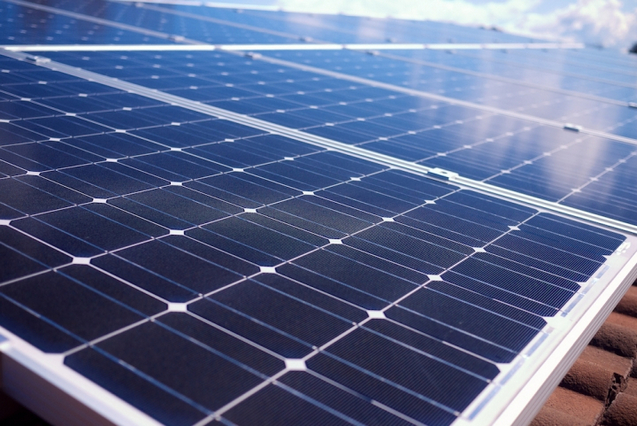
A photovoltaic solar panel. Credit: Michael Mazengarb/flickr 


Some cities and states, especially on the West Coast and in the Northeast, could join the small but growing list of those making a commitment to obtain 100 percent of their electricity from renewable sources in the coming decades.
In 2015, Hawaii became the first state to pass a law making such a commitment. That law requires the state to get all of its electricity from renewables by 2045. In December, San Diego became the largest city in the country to make that commitment, requiring all of the city’s power to come from renewables by 2035.
The coming year is likely to bring other commitments, the biggest of which is in New York. State law now requires the Empire State to obtain 30 percent of its electricity from renewables by 2015. In December, Gov. Andrew Cuomo directed a state agency to go even further by developing a new standard that would require New York to obtain half of its electricity from renewables by 2030, reducing carbon dioxide emissions by 40 percent. The new standard is required to be finalized in June.Others have made less ambitious commitments, but no less significant. A law passed in California requires the state to obtain 50 percent of its electricity from renewables, excluding hydropower. New York City and San Francisco have also pledged to increase their use of renewables, and smaller cities, such as Burlington, Vt., have already gone 100 percent renewable, mainly through the use of large amounts of hydropower.

Rippling Effect of Oil Prices
Gasoline prices fell to below $2 per gallon in early 2015 in Connecticut. Credit: Mike Mozart/flickr 


2016 is being rung in amid a long-term crash in oil prices that is having global economic and climate implications, and the stories of its ripple effects will generate headlines well into the new year.
Global crude oil prices fell off a cliff in the summer of 2014, and by the end of 2015, the price of U.S.-produced oil had fallen from more than $90 per barrel to between $35 and $40 per barrel. Those prices knocked the wind out of the fracking boom that had overtaken much of the U.S. in North Dakota, Texas, Colorado, Pennsylvania, and other oil and gas producing states. That boom turned the U.S. into the world’s leading crude oil producer.
The fallout of the oil bust is wide-ranging with serious climate consequences, good and bad. Low oil prices brought low gasoline prices, which encouraged Americans to drive more. That led to a  2.4 percent increase in gasoline consumption in 2015 over the previous year, likely leading to an increase in greenhouse gas emissions as well. As wells drilled during the fracking boom continue to produce abundant natural gas, natural gas prices have also fallen, hastening utilities’ transition from polluting coal-fired power plants to possibly more climate-friendly natural gas-fired power plants.
The oil price crash also took a toll on Canadian tar sands, which represent the world’s third-largest oil reserve. Tar sands are more carbon-laden and energy intensive to produce than most other forms of crude oil, exacerbating climate change in the process. The oil price crash has cost more than 35,000 tar sands jobs in Alberta, and tar sands producers are operating at extremely thin margins.
With oil prices expected to remain low for a while, 2016 could be the year the Canadian oil sands producers prove they can operate at an adequate profit and weather both low oil prices and international pressure to reduce greenhouse gas emissions, or continue shrinking.

Emissions Growth
A power plant in Russia. Credit: otodo/flick


Stagnant growth in carbon dioxide emissions from burning fossil fuels could become a trend in 2016. Or not.
Growth in emissions from burning fossil fuels halted in 2015 partly because of the global boom in renewable energy  —  a big deal for the climate because until recently, economic growth and carbon emissions from burning fossil fuels rose and fell together. If the stagnation becomes a trend in 2016, it could prove that the global economy can boom without relying on fossil fuels and that countries can begin to prosper while slashing emissions to slow climate change.
Scientists have warned, however, that the emissions growth stagnation could just be a short-term anomaly and that emissions could start rising again as fossil fuel use in developing countries — especially India — continues to rise unabated.
The marriage of emissions growth and economic growth ended in 2014, as global emissions growth grew only slightly, flatlining for the first time in 40 years. In December, a Stanford University study suggested emissions growth halted or even declined in 2015, foreshadowing an eventual peak in global carbon emissions in a decade or two.
One of the biggest challenges is finding a way for India to curb its emissions. India is seeing a rapid growth in emissions, unlike China, the U.S. and the European Union, which are seeing emissions declines, Rob Jackson, the lead author of the Stanford study and a professor of Earth system science there, said. “India’s emissions are now exactly what China’s were in 1990. India has the challenge of producing more energy and yet not just being able to rely on coal to do it.”

The Post-Keystone Climate Fight
Oil and gas development on federal public lands in eastern Utah.Credit: WildEarth Guardians/flickr


The proposed Keystone XL Pipeline was killed by the Obama administration primarily because of the possible climate effects of both the pipeline and the tar sands it would carry. With the Keystone XL fight over, activists and scientists who had fought against the pipeline are turning to other fronts in their battle against greenhouse gas emissions.
One of those in 2016 may be oil and gas leasing and development on energy-rich federally controlled public lands, mainly in the West, which represent 28 percent of the total land area of the U.S. If all the fossil fuels on public lands in America are burned, their carbon emissions would represent up to half of all the potential greenhouse gas emissions that would come from burning all the remaining fossil fuels on U.S. soil, according to a report by Friends of the Earth and the Center for Biological Diversity.
In September, a group of scientists and activists, part of the Keep It in the Ground Coalition, sent a letter to the Obama administration, urging it to halt all new federal fossil fuels leasing and development on public lands.
Though the administration is unlikely to do that anytime soon, the message may be having an effect. The U.S. Bureau of Land Management postponed until 2016 a November oil and gas lease sale for 37,580 acres of public lands near national parks in Utah because of a “high level of public interest,” BLM spokeswoman Megan Crandall said.
In December, the BLM postponed until March another oil and gas lease sale for Arkansas and Michigan because of pressure from climate activists.
It’s far from clear how much traction this movement might get in 2016, but Obama himself may have lent some credence to the movement to keep federal minerals in the ground in his speech announcing the denial of the Keystone XL permit: “Ultimately, if we’re going to prevent large parts of this Earth from becoming not only inhospitable but uninhabitable in our lifetimes, we’re going to have to keep some fossil fuels in the ground rather than burn them and release more dangerous pollution into the sky.”

Links

2015: A Year Of Progress And Buffoonery On Climate Change

Washington Post - Editorial Board

Skiers ski on a thin layer of snow in Villard-de-Lans, central-eastern France, on Dec. 27. (Jean Pierre Clatot/Agence France-Presse via Getty Images)


LAST WINTER, bitter cold on the East Coast prompted Sen. James M. Inhofe (R-Okla.) to take a snowball onto the Senate floor in mockery of climate scientists. This winter, the weather is so warm that there are not two snowflakes in the Washington area for Mr. Inhofe to scrape together.
Just as last winter's cold did not disprove global warming, this winter's warmth does not, in itself, establish that humans are raising Earth's average temperature. Rather, it is the long-term trend that matters — and that is concerning. The past decade was warmer than the previous one, which was warmer than the one before that, and so on. So far, this decade looks sure to fit into that trend.
We may, too, be getting a taste of what a warming world feels like. According to a 2014 paper, one potential effect is a doubling of the number of strong El Niño years. That's the phenomenon that has perturbed the jet stream and pushed this winter's temperatures up. Though the El Niño variation predated human influence, it, among many other natural cycles, probably will not be immune to it. And even if this year's El Niño cannot be blamed squarely on climate change, it nevertheless feels like a fitting end to a remarkable year in the policy and politics of global warming.
For those following the climate debate, 2015 brought some inspiring highs — and disheartening lows. President Obama's Environmental Protection Agency finalized landmark carbon dioxide regulations that promise to slash greenhouse gas emissions from U.S. power plants. This policy played a crucial role in galvanizing the international climate effort, which culminated last month in a huge international climate deal. The Paris agreement will not cut emissions enough to avoid serious risks. But it will get the world a good chunk of the way there, and it represents the beginning of a process in which all major emitters will be expected to step up.
The very same EPA rules also inspired a race among Republicans to embarrass themselves. A standard critique, such as that of Sen. Marco Rubio (Fla.), was to argue that climate regulations will uselessly harm the economy; that exaggerates the potential costs without acknowledging the unprecedented global agreement the measure helped to produce. Sen. Ted Cruz (Tex.) went further, holding a hearing on climate science with a witness list that was a funhouse-mirror image of the scientific community: short on those who accept mainstream climate science, packed with climate critics.
Mr. Cruz insisted that there has been a "pause" in global warming since 1998, a date critics choose as their starting point because it was another El Niño year marked by very high temperatures. Like Mr. Inhofe and his snowball, Mr. Cruz's point ignored the long-term nature of the warming trend. It also might be flatly wrong: A June paper in the top-flight journal Science found that the warming "pause" reflected biases in temperature data rather than a significant plateau in real temperature rise. Alas, this finding also led to a nasty GOP reaction. House Science, Space and Technology Committee Chairman Lamar Smith (Tex.) subpoenaed emails relating to the study, which came from the National Oceanic and Atmospheric Administration. Congressional oversight of federal spending is important. That's no excuse to conduct fishing expeditions designed to personally discredit scientists and undermine peer-reviewed research with lines from informal emails.
With the events of the past year in mind, the presidential candidates — and American voters — must ask themselves: Do they want to build on 2015's climate progress, or do they want more of last year's climate buffoonery?

Links 

Lethal Heating is a citizens' initiative