13/05/2016

Election 2016: Real Climate Change Demands Real Solutions

Sydney Morning Herald - Editorial

The common link between Labor's plans and Direct Action shows Australia now has the seeds of a bipartisan approach. All that remains is for Malcolm Turnbull to silence the deniers and stop the scare campaigns. Mr Shorten should seek out like-minded Coalition partners, too.
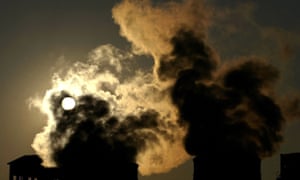
The share of coal in our power generation is increasing. Photo: Michele Mossop
It suits Labor to keep climate change under the election radar, given the party's well-based fear of a 2013-style scare campaign. The Coalition has already wheeled out the "carbon tax mark II" and "massive energy tax" lines amid questionable claims that Labor's policy will hike electricity prices.
Prime Minister Malcolm Turnbull, however, doesn't want to focus on global warming either. He knows the issue reminds voters of the rift between his "climate science is settled" colleagues and the climate sceptics who coalesce around former leader Tony Abbott.
What's more, Mr Turnbull knows that the government's expensive Direct Action plan that uses taxpayer funds to pay polluters to reduce emissions will have to become a price-based scheme – akin to Labor's policy – to be a credible long-term solution.
But try as they might, neither party can avoid global warming.
Symbolically, the Cape Grim climate monitoring site in north-western Tasmania could record its first baseline reading of 400 parts per million of carbon dioxide in the atmosphere within 10 days. Once that marker is passed, scientists say it is unlikely to go back. That would be a reliable indicator of the effect of burning of fossil fuels and clearing land.
Practically, disturbing photographs are emerging of coral bleaching on the Great Barrier Reef – in part due to the runoff from coal mines and warmer waters. The Solomon Islands is losing islands to rising sea levels and even the unseasonably warm autumnal days are a niggling reminder of the issue.
Yes, the Turnbull government has reversed some of Mr Abbott's attacks on climate agencies, and committed to the global fight. Mr Turnbull has also made Direct Action adaptable to higher targets.
Yet emissions from the eastern states electricity grid are still rising. The share of coal in our power generation is increasing. And even prominent officials at the National Aeronautics and Space Administration are warning against any cuts to Australian research into climate change.
No-one outside the government believes Direct Action in its current form can meet our global commitments.
Labor's response is a 45 per cent reduction in emissions by 2030 based on 2005 levels. This is more than the government's 26-28 per cent promise in Paris in December and pledge to raise targets only in tandem with the global community.
Labor hopes to curb vehicle emissions and have cleaner power stations pay dirty brown-coal ones to shut down. For a few years big polluters across the economy would have to buy cheap international permits if they exceeded a cap on emissions. For the longer term, Labor would talk to unions and business about creating an economy-wide emissions trading scheme from 2020.
Yes, Labor would protect some local manufacturers and cut funds from the Australian Renewable Energy Agency.
But Labor also offers an ambitious, and some say risky, target of having 50 per cent of Australia's electricity generated from renewable sources by 2030, with the added bonus of more green jobs. The Coalition has reduced the renewable energy target to 23 per cent by 2020.
Given the hefty cost of shifting to more renewables, Labor needs to reduce the price risk for consumers. The solution is to force generators to operate more cleanly or pay a penalty – in effect ensuring the cleanest plants have an economic advantage.
Such a system is just like the safeguards mechanism in Mr Turnbull's Direct Action policy. To stop some polluters boosting emissions even as others are paid to reduce theirs, Direct Action sets a base level for pollution. The trick comes in 2017 when a review of the safeguards can gradually require the emitters to pollute less. If they cannot, they will need to buy permits off cleaner producers, thereby creating a price on Australian pollution without jacking up power bills. Liberal Party modelling assumes this shift to a market-based scheme like Labor's. The alternative is for Direct Action to pay polluters many billions more dollars to clean up their acts.
The common link between Labor's plans and Mr Turnbull's is crucial. Australia now has the seeds of a bipartisan approach to climate change. All that remains is for Mr Turnbull to silence the deniers and stop the scare campaigns. Mr Shorten should seek out like-minded Coalition partners, too. As we argued in December, this election must focus on finding the polices that work most efficiently to meet increasingly difficult and costly targets.

12/05/2016

Antarctic Ice Shows Australia’s Drought And Flood Risk Is Worse Than Thought

The Conversation -  |  | 

The past century hasn't seen the worst drought that Australia's climate can throw at us. CSIRO/Wikimedia Commons, CC BY
Australia is systematically underestimating its drought and flood risk because weather records do not capture the full extent of rainfall variability, according to our new research.
Our study, published today in the journal Hydrology and Earth System Sciences, uses Antarctic ice core data to reconstruct rainfall for the past 1,000 years for catchments in eastern Australia.
The results show that instrumental rainfall records – available for the past 100 years at best, depending on location – do not represent the full range of abnormally wet and dry periods that have occurred over the centuries.
In other words, significantly longer and more frequent wet and dry periods were experienced in the pre-instrumental period (that is, before the 20th century) compared with the period over which records have been kept.

Reconstructing prehistoric rainfall
There is no direct indicator of rainfall patterns for Australia before weather observations began. But, strange as it may sound, there is a link between eastern Australian rainfall and the summer deposition of sea salt in Antarctic ice. This allowed us to deduce rainfall levels by studying ice cores drilled from Law Dome, a small coastal ice cap in East Antarctica.
How can sea salt deposits in an Antarctic ice core possibly be related to rainfall thousands of kilometres away in Australia? It is because the processes associated with rainfall variability in eastern Australia – such as the El NiƱo/Southern Oscillation (ENSO), as well as other ocean cycles like the Interdecadal Pacific Oscillation (IPO) and the Southern Annular Mode (SAM) – are also responsible for variations in the wind and circulation patterns that cause sea salt to be deposited in East Antarctica (as outlined in our previous research).
By studying an ice record spanning 1,013 years, our results reveal a clear story of wetter wet periods and drier dry periods than is evident in Australia's much shorter instrumental weather record.
For example, in the Williams River catchment, which provides water for the Newcastle region of New South Wales, our results showed that the longest dry periods lasted up to 12 years. In contrast, the longest dry spell since 1900 lasted just eight years.
Among wet periods, the difference was even more pronounced. The longest unusually wet spell in our ice record lasted 39 years – almost five times longer than the post-1900 maximum of eight years.

Busting myths about drought and flood risk
Although this does not tell us when the next major wet or dry period will happen, it does help us predict how often we can expect such events to occur, and how long they might last. This is critical information for water resource managers and planners, especially when our millennium-long record tells a very different story to the post-1900 instrumental record on which all water infrastructure, planning and policy is based.
Our results challenge the underlying assumptions that govern water resource management and infrastructure planning. These assumptions include:
  • that droughts longer than five years are rare;
  • that droughts or flood-dominated periods cannot last longer than about 15 years;
  • that drought and flood risk does not change over time, so a century of instrumental records is enough to gain a full understanding of the situation.
The fact that these assumptions are probably wrong is a concern. These principles are used to make crucial decisions, not just about predicting the likelihood and severity of droughts and floods themselves, but also about the design of infrastructure such as roads, reservoirs and buildings. Our study suggests that these decisions are being taken on the basis of incomplete information.
What's more, Australia's increasing population and development will mean that water demands and exposure to droughts and floods are likely to have been different in the past to what they are now (and will be in the future).
Therefore, given that the factors used to quantify risk are most likely wrong, it implies that current hydroclimatic risk assessments are not representative of the true level of risk.
This raises serious questions about water security and the robustness of existing water resource management, infrastructure design and catchment planning across eastern Australia and in other places where hydroclimatic risk is assessed on records that do not capture the full range of possible variation.
Water is a precious resource, meaning that we need the best knowledge about what our rainfall patterns are capable of delivering. Our findings can be used to better characterise and manage existing and future flood and drought risk. Forewarned is forearmed.

Links

Coalition Climate Plan 'Assumes Emissions Trading', Says Government Modeller

The Guardian - 

The government is campaigning against Labor's emissions trading scheme but its own Direct Action will only work with large funding increases or as an ETS
Carbon emissions
The environment minister released the modelling by Energetics days before the election was called, saying it was proof critics of the government's climate policy were wrong. Photograph: Victor Fraile/Reuters

Modelling hailed by the Liberal party as proof its Direct Action plan could meet Australia's long-term climate promises in fact assumes the Coalition would turn its policy into a type of emissions trading scheme, according to the authors.
The environment minister, Greg Hunt, released the modelling, by the Energetics consulting firm, just days before the election was called and told the Australian newspaper it was proof that critics of the government's policy – who say it has no hope of reaching Australia's target without changes – were totally wrong.
Malcolm Turnbull and Hunt are now campaigning against Labor's plan for an emissions trading scheme, saying it is a "massive carbon tax" that will force huge rises in household electricity prices, while claiming their own policy can meet its 2030 target with no such impost.
The Energetics modelling found that the government's emissions reduction fund and so-called "safeguards mechanism" could achieve around half the emissions reductions required between 2020 and 2030 to reach the government's target of cutting emissions by 26% to 28%, around 500m tonnes.
But Peter Holt, associate at Energetics, told Guardian Australia that the policies would only achieve those reductions with changes – either large funding top-ups to the ERF (estimated by others at at least $6bn) or a strengthening of the safeguards mechanism so it turned into a baseline and credit emissions trading scheme.
The economist Danny Price – who has advised the government on Direct Action – agrees with Holt's assessment that despite the government's scare campaign against Labor's ETS, it is going to have to introduce a similar version of emissions trading itself to meet its international pledges.
Holt said the modelling was "bottom up" – looking at what sectors had the potential to deliver emissions reductions and then allocating those reductions to the policies that could conceivably achieve them. But the estimated reductions from the ERF and the safeguards mechanism "relied on the assumption that the policies would be adjusted to achieve that outcome".
"To achieve the government's target we would need to see the safeguards mechanism coming into play, either with declining 'baselines' that put more stringent conditions on large emitters, so it formed a baseline and credit emissions trading scheme, or else we would need to see a lot more money put into the emissions reduction fund, or a combination of the two," Holt said.
That means the modelling confirms exactly what Malcolm Turnbull said of Direct Action when he told Lateline in 2011: "If you want to ... cut carbon emissions ... in a very substantial way to the levels that the scientists are telling us we need to do by mid-century to avoid dangerous climate change, then a direct action policy where ... industry was able to freely pollute, if you like, and the government was just spending more and more taxpayers' money to offset it, that would become a very expensive charge on the budget in the years ahead."
The Climate Institute thinktank also said the "turbo-charging" assumed in the Energetics modelling would require "at least another $6bn" tipped into the emissions reduction fund, through which the government buys emissions reductions, or stronger safeguards to introduce a form of emissions trading for industry and electricity generators by tightening emissions "baselines" and forcing companies who exceeded them to buy permits.
"This modelling is chock full of heroic assumptions that the government is hoping it won't be asked about in detail during the election campaign," said the Climate Institute's chief executive, John Connor.
"They include the need for either billions of extra dollars or some form of emissions trading scheme, which sends a penalty or price signal to companies."
Price – whom the government recently appointed to the Climate Change Authority and who acted as an adviser on Direct Action – has also said the Coalition was likely to be forced to move to a form of emissions trading scheme similar to the one now proposed by Labor for the electricity industry.
"The government's Direct Action plan – its safeguard mechanism – could be modified to create exactly this same type of scheme," he said. "I've always thought that was the most likely way for them to go after the review they have scheduled for 2017, because they are obviously going to have to make changes to meet even their existing targets and this is a low-cost way to do it.
Under Direct Action the "safeguards mechanism" is supposed to ensure that increased emissions from heavy industry and electricity generators do not undo the reductions bought through the government's $2.5bn scheme, by setting baselines for their emissions.
At the moment the baselines are lenient, ensuring industries don't "go rogue" but not seeking to force them to reduce their greenhouse emissions from existing levels. But many observers, including business groups, expect they will have to be tightened after 2017 to gradually reduce industrial emissions. And that would turn Direct Action into much the same scheme as Labor is proposing.
The government has already spent 67% of its $2.5bn ERF to achieve only 7% of the emission reductions it needs to meet its Paris target. It did not allocate any more money to the scheme in the budget.
In its report, Energetics found that land use and energy efficiency could contribute significant emissions reductions by 2030.
"Energetics' analysis found that improved land management and low emissions farming practices and low carbon transport are capable of contributing the most to Australia's total low-cost abatement by 2030. In total the two groups account for just over 50% of Australia's total identified abatement potential," the report said.
"The remaining abatement opportunities were allocated to the ERF and safeguard mechanism ... ERF projects could help to reduce emissions at safeguard facilities; and safeguard facilities can purchase [carbon credits] to offset their emissions and help them to meet their safeguard obligations."

Links

'Dismay': NASA Appeals To CSIRO Not To Cut Global Climate Efforts

Fairfax - 

The US space agency NASA has appealed to CSIRO to abandon plans to cut a key monitoring program that it says will undermine Australia and the world's ability to monitor and predict climate change.
The cost to our international reputation is immense
Kim Carr, ALP's shadow science minister
Brent Holben, the project scientist in charge of NASA's Aerosol Robotic Network, urged CSIRO to reconsider any plans it had to cut or withdraw its contribution to the program, according to a letter obtained by Fairfax Media.
In the dark: cutting key climate monitoring program could throw global models out of sync.
In the dark: cutting key climate monitoring program could throw global models out of sync. Photo: NASA

"I understand that CSIRO is undertaking a major restructuring that may lead to the closure of AeroSpan [CSIRO's partner program]," Dr Holben wrote in the letter addressed to Alex Wonhas, a senior CSIRO executive, and dated May 1, 2016.
"The purpose of this letter is to express my dismay about this, on behalf of NASA and the global aerosol community," he said.
Fairfax Media understands the AeroSpan program – which includes eight automated monitoring sites across Australia – is earmarked to be shut along with other micro-meteorology research done by CSIRO's Yarralumla staff in Canberra. (See CSIRO map below of the eight sites.)
The humble automated monitoring stations that CSIRO is looking to shut down.
The humble automated monitoring stations that CSIRO is looking to shut down. Photo: CSIRO

Understanding aerosols - the distribution and character of airborne particles and clouds  - "represent the single greatest source of uncertainty in climate simulations", Dr Holben said.
CSIRO's contribution has largely been to help calibrate and validate satellite readings that cannot easily distinguish between different types of aerosols. These range from dust and industrial pollutants to sea salt.
Inland Australia as seen from the International Space Station.
Inland Australia as seen from the International Space Station. Photo: NASA
In return, Australia has been promised "unfettered access" to international data, such as from European Space Agency's Sentinel satellites.
NASA's letter notes Geoscience Australia has estimated Earth Observation services are worth $5.5 billion to the Australian economy annually, a windfall that will rise to $8.8 billion by 2030.
The cuts are part of 275 jobs to go from CSIRO, many of them in key climate or water roles. The AeroSpan cost to CSIRO is understood to be less than half a million dollars a year and involve just two researchers.
Chief executive Larry Marshall – whose three-year contract extension has been endorsed by the Turnbull government – has said that Australia's primary research agency must divert resources away from climate monitoring and modelling towards adaptation and mitigation.
The NASA letter said measurements of aerosols were "a fundamental component of climate predictions on both regional and global scales".
Climate monitoring has gained additional prominence this week, with the Cape Grim site in north-west Tasmania expected to report within days that baseline carbon-dioxide levels have exceeded 400 parts per million for the first time, as reported by Fairfax Media. CSIRO is also cutting staff at this site.

International angst
Fairfax Media understands that NASA's complaint has been echoed by the European Space Agency, and individual national research organisations from Japan, Italy and Germany.
Some agencies have been warning their own staff for months to take into account the possible impacts of CSIRO's cuts.
"CSIRO has pledged to continue some of these critical measurements but the question arises as to how will quality be assured and will they be adaptable as scientific priorities evolve when the science teams that nurture them are dispersed," a senior US climate scientist from another US agency told Fairfax Media. "Field programs where there have been joint contributions of resources are particularly threatened."
Cutting the AeroSpan program would also harm the work to be done by the new Climate Science Centre CSIRO has recently set up, NASA said.
Steven Sherwood, one of the world's leading researchers into clouds and climate change at the University of NSW, said the CSIRO program cut was "idiotic".
"We don't even know if aerosols are increasing, decreasing or staying the same during the past 20 years," Professor Sherwood said. "If you stop observing now, you'll never know."
He said the biggest single variable in climate model projections was how they treated aerosols and their impact on the brightness of clouds – and therefore how much of the sun's radiatin are being reflected back to space. More and brighter clouds could mean global warming will be less rapid.

'Blowing a hole'
Abandoning the AeroSpan project would end aerosol assessment over an entire continent – Australia – and remove "effective coverage of a much larger region of the Southern Hemisphere", NASA's Dr Holben said.
Fairfax Media sought comment from CSIRO. A spokesman for Science Minister Christopher Pyne said the government "has not been contacted by any of the organisations mentioned with concerns".
"This process has been as a result of decisions taken by the CSIRO made by the experts who run it in line with the organisations priorities and the Australian Government strongly supports the independence of the CSIRO to make its own decisions."
However, Kim Carr, Labor's shadow science minister, said it was "scandalous that the government is trying to wash their hands of their responsibilities". A Shorten government would immediately intervene to halt the cuts to key climate programs by CSIRO, he said.
"A future government will have to attend to the destruction that [these cuts] have caused," he said. "The cost to our international reputation is immense."
Adam Bandt, Greens Science spokesman, said: "Malcolm Turnbull is blowing a hole in humanity's knowledge of the world around us."
"Any cuts must be postponed until after the election, when a new power-sharing Parliament can restore funding to the CSIRO," Mr Bandt said.
Geoscience Australia, one of CSIRO's partners, said it was "aware that the CSIRO is considering changes to its Aerospan service".
"While the cessation of Aerospan would not immediately impact on the ability of Geoscience Australia to deliver our programs, it is an important part of Australia's Earth observation infrastructure and one the international community values," the spokesman said. "At this time there is no proposal in place for Geoscience Australia to take over the role."
Another partner, the Bureau of Meteorology, said "the full details of changes at the CSIRO and potential impacts on Bureau operations are not yet confirmed".

Links

11/05/2016

In Novel Tactic on Climate Change, Citizens Sue Their Governments

New York Times - John Schwartz

Victoria Barrett, 17, is a New York high school student and a plaintiff in a climate change lawsuit brought by Our Children's Trust. Credit Michelle V. Agins/The New York Times


Global warming is already disrupting the planet's weather. Now it is having an impact on the courts, as well, as adults and children around the world try to enlist the judiciary in their efforts to blunt climate change.
In the United States, an environmental law nonprofit is suing the federal government on behalf of 21 young plaintiffs. Individuals in Pakistan and New Zealand have sued to force their governments to take stronger action to fight climate change. A farmer in Peru has sued a giant German energy utility over its part in causing global warming.
And while the arguments can be unconventional and surprising, some of the suits are making progress.
Last month, a federal magistrate judge in Oregon startled many legal experts by allowing the lawsuit filed on behalf of 21 teenagers and children to go forward, despite motions from the Obama administration and fossil fuel companies to dismiss it; the suit would force the government to take more aggressive action against climate change. The ruling by the magistrate judge, Thomas M. Coffin, now goes to Federal District Court to be accepted or rejected.
Michael B. Gerrard, the director of the Sabin Center for Climate Change Law at Columbia Law School, called the ruling a potential landmark.
"It is the first time a federal court has suggested that government may have a constitutional duty to combat climate change, and that individuals can sue to enforce that right," he said.
Saul Luciano Lliuya, a farmer in Peru, sued a German utility for its proportional contribution to global climate change. Credit Germanwatch


But other legal scholars were skeptical that the case would progress much further.
"The constitutional claims are novel, to say the least," said David M. Uhlmann, a former federal prosecutor of environmental crimes who teaches law at the University of Michigan. "I have a hard time seeing the case succeeding in the Supreme Court, if it gets that far, and it may not even survive review in the Ninth Circuit."
The young plaintiffs, led by the environmental law nonprofit Our Children's Trust, argued that the Obama administration and the administrations before it had ample evidence of the risks of climate change and "willfully ignored this impending harm."
Victoria Barrett, one of the plaintiffs, from Westchester County, N.Y., said that older generations had ignored the threat to the planet even as the scientific evidence of warming became undeniable.
The current plans and efforts to battle climate change are not enough, Ms. Barrett, 17, said, adding that her generation, with its passion and social media tools, would make a difference.
"We want our children to look back in the textbooks and say, 'Oh, our parents' generation — they really fought for us,' " she said.
The lawsuit calls for the courts to order the government to stop the "permitting, authorizing and subsidizing of fossil fuels" — by, for example, canceling plans for projects like a liquefied natural gas export terminal in Oregon — and "to develop a national plan to restore Earth's energy balance, and implement that national plan so as to stabilize the climate system."
Sarah Lorraine Thomson, a law student at the University of Waikato, has filed a lawsuit against New Zealand's climate change minister. Credit Mike Scott/Waikato Times, via Fairfax Media NZ
Julia Olson, the executive director and chief legal counsel for Our Children's Trust, helped form the organization in 2010 in collaboration with the iMatter Youth Movement, then known as Kids vs. Global Warming.
In an interview, Ms. Olson said the goal was to pursue action against climate change in the courts as a human rights issue, and in the name of young people. "Most of them can't vote," she said, "and they don't have the money to lobby."
Youth-oriented climate groups put out calls for volunteers, and Ms. Olson found herself with more than enough enthusiastic young activists willing to be plaintiffs. The organization is financed in part by individual contributions and institutional funding from groups like the Rockefeller Brothers Fund, which contributes heavily to environmental causes.
An earlier federal suit from Our Children's Trust failed in 2012; the organization is also pursuing several lawsuits at the state level and collaborating on a number of international suits.
It scored a victory in Washington State recently, when Judge Hollis R. Hill of King County Superior Court ordered the State Department of Ecology to develop an emissions reduction rule in response to a legal challenge from Our Children's Trust.
As for the federal case, Ms. Olson said, "We are optimistic that the decision will affirm the findings and the recommendations and put us on a track to a trial."
The Our Children's Trust suit is part of a wave of citizen actions to take on climate change.
In Pakistan, Ashgar Leghari, a law student, sued the government last year over delays in carrying out a national climate change policy that could help reduce the heavy floods and droughts that threaten the country's food and energy security, as well as the Leghari family's farm.
A court ordered the Pakistani government in September to form a climate change commission to address what Justice Syed Mansoor Ali Shah said "appears to be the most serious threat facing Pakistan."
In November, the farmer in Peru, Saul Luciano Lliuya, sued the German utility RWE for its proportional contribution to global climate change. The effects of increasingly extreme weather such as drought can make farming a more precarious proposition, but Mr. Luciano's fears are focused on Palcacocha Lake, which sits above his town and farm and is being filled to overflowing, he said, by meltwater from nearby glaciers.
"We could see the glaciers melting," he said. "They were disappearing year by year. Somebody has to be made responsible."
An engineer he knew put him in touch with the environmental group Germanwatch, which found him a German lawyer. While it might seem bizarre for a farmer in Peru to sue a utility in Germany, Noah Walker-Crawford, an adviser to the group, said Germany's laws seemed auspicious for such a suit.
"It would be quite difficult to sue in the U.S. or Saudi Arabia," he said.
The German courts have accepted the case, but a representative of the company, Klaus-Peter Kress, said, "RWE does not see a legal basis for this type of claim."
Xiuhtezcatl Martinez, 15, at home in Boulder, Colo., last month. He is a plaintiff in an Oregon case against the federal government over climate change. Credit Nick Cote for The New York Times


In New Zealand, a law student, Sarah Lorraine Thomson, said she had been inspired to take legal action by the Our Children's Trust suit and a 2015 decision by a court in the Netherlands that ordered the Dutch government to take more forceful action to reduce greenhouse gas emissions.
"Hearing about those cases was a kick in the butt — they were just ordinary people, too — I felt that I really had no excuse," Ms. Thomson wrote in an email.
Her lawsuit against the New Zealand government has been filed, and she has received affidavits from lawyers from the crown, but no hearing date has been set.
Ms. Olson of Our Children's Trust said that the cases in the United States and abroad "build on one another."
Xiuhtezcatl Martinez, a 16-year-old high school student and hip-hop artist from Boulder, Colo., who became a plaintiff in the Oregon case after getting involved in one of the state lawsuits sponsored by Our Children's Trust, said that because "climate change is really the defining issue of our time, there is no lawsuit of greater importance happening anywhere in the country."
If this suit fails, he said, he expects new ones will be filed. "The evidence will only get stronger," he added.
Some of the arguments in the Oregon lawsuit surprised legal experts, and cases that extend rights in innovative ways tend to be long shots. A lawsuit brought against fossil fuel companies and utilities by the citizens of Kivalina, Alaska, a coastal town battered by climate forces, was dismissed by the United States Court of Appeals for the Ninth Circuit in 2009.
But courts do blaze new paths, establishing rights to, for example, same-sex marriage.
"Most novel arguments crash and burn, but some soar," Professor Gerrard said. "It's often hard to predict in advance which is which."

Links

Raging Seas: Going Local To Understand Ocean Extremes Of The Future

The Conversation - 

The world's sea level is expected to rise by up to 82cm by the end of the century. Some areas of the world, such as the north-east coast of North America and the Western Pacific, will be more affected than others. But in many places this will mean floods are more likely, the cost of coastal protection will rise, and coastal ecosystems will be put in danger.
Yet it isn't just the average sea level that will rise. The biggest risks will come from the fact that the highest sea levels (caused by high tides and weather) will also increase by at least as much as the mean. This is what are seeing so far in many parts of the world. A potential increase in the frequency and severity of storms could make higher sea-level extremes and their impact even worse. More violent storms could also produce more energetic and higher waves, testing the resilience of ships and offshore structures like oil rigs and disrupting trade. But how serious will these problems be?
Computer models of climate change caused by greenhouse warming indicate that the most devastating tropical cyclones will be between 2% and 11% more intense by 2100. The same models also indicate there will be fewer tropical cyclones overall but more high-intensity cyclones. This leaves us with a rather unclear picture that is further complicated because scientists disagree on whether and how tropical cyclones have been changing over the past 30 or 40 years.
The role of regional climate patterns like the El NiƱo cycle of wind and sea temperature changes in the Pacific and the monsoons in the Indian Ocean also add to this complexity. Although we expect climate change to influence these phenomena, they also vary significantly from year to year naturally, making it very challenging to say if any particular extreme event is driven by climate change.


Research we conduct with several collaborators involves examining changes in extreme waves and sea-level records to identify factors that contribute to changes in extremes. This information can then be used to improve computer models of sea level in the hope of making this picture clearer.
As mentioned, sea level extremes have generally been found to change in line with the observed mean sea level trends. But changes in extremes are also caused by changes in the tides, in the seasonal cycle, in currents in the ocean, and the number of the typhoons impacting on land.

More than just climate change
We found that each of these factors affected the areas studied (the Mediterranean Sea, the Caribbean Sea, and the North Sea) by a different degree. We also found that these factors were not all related to climate change or natural variability. For example, significant changes in the extremes at the Chinese coasts are linked to changes in regional tides thought to be related to the extensive land reclamation going on to create more space for building. This kind of human influence is distinct from climate change but just as important to the local environment.
Other partners worked on improving the parameters of models of tropical cyclones. This confirmed that previous models underestimated sea level extremes. But what this also means is that climate models that are much less detailed aren't good enough to produce firm conclusions on whether climate change will increase extreme ocean activity.
Cyclones could become less frequent but more intense. Shutterstock
For example, we know that wave heights in the North Atlantic have increased, partly due to changes in regional atmospheric patterns. But for the Norwegian Sea, the increase has been much smaller since 2000 than previously recorded.
If we want to understand how marine extremes will change in the future, we need to look at each location individually and take into account the specific factors that will affect its extreme ocean activity. We also need more detailed global and regional climate models and a clearer understanding of cyclonic systems to be able to predict changes in the severity and the pathways of cyclones and how they affect extreme activity.
Other environmental factors that could become more extreme, such as temperature, salt levels, oxygen content, acidity and current speeds will also be important in determining the impacts of climate change on the marine environment. But the data we have now doesn't allow us to do such comprehensive analyses. Until we have a clearer picture, we won't know just how extreme our oceans will become as the climate changes.

Links

Global Warming Milestone About To Be Passed And There's No Going Back

Fairfax - 

Within the next couple of weeks, a remote part of north-western Tasmania is likely to grab headlines around the world as a major climate change marker is passed.
The aptly named Cape Grim monitoring site jointly run by CSIRO and the Bureau of Meteorology will witness the first baseline reading of 400 parts per million (ppm) of carbon dioxide in the atmosphere, researchers predict.
Watching the world at it changes at Cape Grim.
Watching the world at it changes at Cape Grim. Photo: John Woudstra
"Once it's over [400 ppm], it won't go back," said Paul Fraser, dubbed by CSIRO as the Air Man of Cape Grim, and now a retired CSIRO fellow. "It could be within 10 days."
The most recent reading on May 6 was 399.9 ppm, according to readings compiled by the CSIRO team led by Paul Krummel that strip out influences from land, including cities such as Melbourne to the north. (See chart below, with the red line showing the baseline CO2.)

David Etheridge, from CSIRO's Oceans & Atmosphere division, at work in a research hut near the Antarctic base of Casey.
David Etheridge, from CSIRO's Oceans & Atmosphere division, at work in a research hut near the Antarctic base of Casey. Photo: Colin Cosier
Political heat
The approaching global CO2 threshold comes as climate change looks like becoming one of the key issues in Australia's election campaign.
The Turnbull government has made clear it will oppose Labor's proposals for an emissions trading scheme that will again put a price on carbon pollution.
The Cape Grim greenhouse gas station in Tasmania, run in partnership by CSIRO and the Bureau of Meteorology, tracks some ...
The Cape Grim greenhouse gas station in Tasmania, run in partnership by CSIRO and the Bureau of Meteorology, tracks some of the cleanest air in the world.
New data out on Tuesday show that emissions from the country's main electricity grid covering the eastern states have risen 5.7 per cent - or 8.7 million tonnes - in the year to April compared with the final 12 months of the carbon tax that the Abbott government scrapped in July 2014, according to energy consultants Pitt & Sherry.
The share of coal in the National Electricity Market has risen to 76.2 per cent - its highest level since September 2012 - from 72.3 per cent during the period since June 2014, the consultants' latest Cedex report said.
Mark Butler, Labor's shadow environment minister, said the Cape Grim landmark reading was "deeply concerning".
"While the Coalition fights about whether or not the science of climate change is real, pollution is rising. And it's rising on their watch," Mr Butler said.
Greens deputy leader Larissa Waters said the Cape Grim result "should act as a global wake-up call and must shock both Australian big political parties out of their blind coal-obsession which is literally cooking our planet and our Great Barrier Reef".
"Our atmosphere cannot take any new coal mines – both the old parties must stop approving them and revoke their approval of the Adani coal mine [in Queensland] at both the state and federal level," Senator Waters said.
A spokesman for Environment Minister Greg Hunt defended the government's climate policies."There is now absolutely no doubt that we will beat our 2020 target" of cutting 2000-level emissions by 5 per cent by then, the spokesman said. "We are playing our part to tackle climate change and our 2030 target [of cutting 2000-level emissions about 19 per cent] is ambitious and significant," he said. "Labor has nothing more than a plan to bring back the carbon tax and hike electricity prices."

Rising 'pretty much all of the time'
Cape Grim's readings are significant because they capture the most accurate reading of the atmospheric conditions in the southern hemisphere and have records going back 40 years.
With less land in the south, there is also a much smaller fluctuation according to the seasonal cycle than in northern hemisphere sites. That's because the north has more trees and other vegetation, which take up carbon from the atmosphere in the spring and give it back in the autumn.
So while 400 ppm has been temporarily exceeded at the other two main global stations since 2013 - in Hawaii and Alaska - they have dropped back below that level once spring has arrived because of that greater seasonal variation.
David Etheridge, a CSIRO principal research scientist, said atmospheric CO2 levels had fluctuated around 280 ppm until humans' burning of fossil fuels and clearing of forests set in process rising levels of greenhouse gases almost without pause since about 1800.
"It's been upwards pretty much all of the time," Dr Etheridge told Fairfax Media. "This is a significant change, and it's the primary greenhouse gas which is leading to the warming of the atmosphere."
The following chart, compiled by CSIRO researchers using atmosphere and ice core readings, show how CO2 levels have risen over the past 2000 years.
While the 400 figure is in itself of no particular note, compared with 399 or 401, it was a marker likely to carry important symbolism. "People react to these things when they see thresholds crossed," Dr Etheridge said.
While the fraction may seem small, it is 0.04 per cent of the atmosphere. By comparison, a similar level of alcohol would be close to the legal driving limit in Australia.
"These things act at low concentrations," he said, noting that ozone-destroying chemicals at levels of parts per trillion were enough to damage that important component of the atmosphere.

CSIRO cuts
The impending 400 ppm reading at Cape Grim comes at an awkward timing for CSIRO, which is the midst of cutting 275 jobs, many of them in climate science.

While CSIRO has not confirmed the number of researchers it will cut from the 30 or so involved in analysing CO2 levels in ice and the atmosphere, Fairfax Media understands about one-third will go.
"CSIRO is again producing world-leading climate science, and it's reprehensible that the Turnbull Government is allowing the slashing of CSIRO's capacity to ring the alarm bells the world needs to hear," Greens Senator Waters said.Fairfax Media sought comment from CSIRO on the size of the job cuts.
In justifying the cuts to climate modelling and monitoring programs, CSIRO chief executive Larry Marshall said that as climate change had been proved, resources could be diverted to climate mitigations and adaptation.
But Dr Etheridge said monitoring would continue to be vital.
"It's like going on a diet and not measuring yourself," he said, noting the world's nations had committed to cut back emissions of greenhouse gases that are helping to drive up global temperatures.
Ed Hawkins, a climate scientist at the UK's University of Reading, has constructed the following animation showing how the world has warmed in the past 166 years.
Going negative
Dr Etheridge said that while a reduction in emissions could slow the increase of temperatures, it would likely take many years of net-negative emissions - effectively removing the gas from the atmosphere - to push CO2 levels back below 400 ppm.
"It would take a lot of emissions reductions - and probably negative emissions for some period, decades - before we see CO2 reduce in concentration," he said.
Research to be published soon by CSIRO has shown the ocean would act against any drop in atmospheric CO2.
The seas would likely give back some of the extra CO2 it has absorbed - as it did during the "Little Ice Age" during the middle ages - delaying any drop in levels of CO2 in the atmosphere, he said.
Dr Fraser, who helped set up the Tasmanian site in the 1970s, said CO2 levels were rising fast, at about 3 ppm a year. The precise timing of the 400-ppm mark at Cape Grim would probably take some time to confirm.
"On the day it happens, we won't recognise it," he said. "It will take a few weeks to verify."
The Cape Grim data show a steadier rise than at the Alaskan Alert Observatory site and Hawaii's Mauna Loa, as seen in the following chart:

'Cleanest in the world'
Sam Cleland, manager of Cape Grim, said the site was in "the teeth of the Roaring Forties", the band of powerful winds in latitudes of about 40 degrees south of the equator.
"Our job is to find the cleanest air in the world and measure the pollution in it," Mr Cleland said.
The baseline data draws on winds reaching Cape Grim from the south-west. "Three days ago, they were coming from an area not far off the Antarctic coast," he said.
A year ago, Cape Grim's CO2 readings were about 396.7 ppm, implying a jump of more than 3ppm since.
Part of that increase would have been influenced by the El Nino weather event in the Pacific. During such years, ocean take-up of both heat and CO2 from the atmosphere is reduced.
Since Cape Grim was set up in 1976, CO2 readings have increased from 330 ppm to the brink of 400 ppm.
That implies an average increase of less than 2 ppm per year during that period - but quickening in the more recent past towards 3 ppm or more.

Links

Lethal Heating is a citizens' initiative