23/06/2016

Business And Academic Leaders Urge New Conversation About Coal-Free Future

The Guardian - 

Leadership forum hears of 'huge gap' between experts' advice on phasing carbon out of the economy and public willingness to go along with that advice
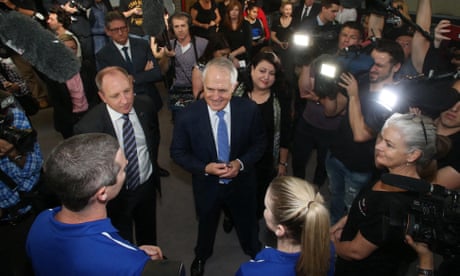
Policy experts at a leaders forum in Canberra say Australia will inevitably decarbonise its economy, and the sooner the better.
Policy experts at a leaders forum in Canberra say Australia will inevitably decarbonise its economy, and the sooner the better. Photograph: Dave Hunt/AAP
A group of business and academic leaders have bemoaned the "huge gap" between what experts say ought to be done to decarbonise Australia's economy and the public's willingness to accept such a policy. They want Australia's leaders to restart a conversation after the federal election about the need to transition the economy towards renewable and cleaner energy.
They also say the public may not realise it but a carbon price has already been built into Australia's economy with the Turnbull government's decision, at the Paris climate conference last year, to reduce emissions to 26% to 28% on 2005 levels by 2030.
The Coalition and Labor must stick to that target, they say, so businesses can make the long-term investment decisions that will eventually see coal phased out of Australia's energy mix.
The Australian National University's leadership forum, held over Monday and Tuesday, convened talks on a range of topics, including the rise of mega-corporations, employment prospects in modern capitalism, and the likelihood of political reform in China.
But a session on energy and climate change heard policy experts venting frustration about the state of Australia's climate change debate.
The conversation was led by: Jennifer Westacott, the chief executive of the Business Council of Australia; Grant King, the managing director of Origin Energy; Frank Jotzo, the director of Climate Economics; Tania Constable, the chief executive of the Cooperative Research Centre for Greenhouse Gas Technologies.
The session also heard from economists David Gruen and Warwick McKibbin, the chair of the Clean Energy Finance Corporation, Jillian Broadbent, and the managing director of Australian Ethical Investment, Phil Vernon.
They agreed Australia would inevitably decarbonise its economy and it was in everyone's interest to do so sooner rather than later.
There was frustration about the gap between what they knew had to be done, and the public's willingness to accept certain instruments of climate change policy.
They said the public had been too easily spooked by politicians or the media rebranding the discussion of a carbon price – which the public says it wants – as a discussion about a carbon tax.
"Last time we had this discussion with the community, people were bewildered by this," Westacott said.
"So 60% of people said were saying they wanted a price on carbon until someone calls it something else, and then they don't like it.
"So how do we ... cross this divide?"
Jotzo said Australia's experts had failed to convince voters about the need to adapt to climate change because they were using technocratic language.
The discussion should start focusing on the reality of what adaptation would mean, he said, starting with an admission that Australia was taking the Paris agreement seriously which means "no more coal in the electricity sector".
"That's a major transition, and that is the debate that needs to be had with the Australian public," Jotzo said.
"It's not about the precise instruments – leave that to the technocrats. It's about the transition."
King said if the 26% to 28% target from Paris was bedded down, Australia would have a carbon price built into its economy whether the public knew it or not.
He hoped this would happen because it would start to phase out coal-fired power stations from the energy mix, a situation he was preparing for.
"No one's set a carbon price but they have set a carbon target," he said. "We just back-solve [from that] and say what's the cost of achieving that target? That's the implied carbon price.
"We are permitting and contracting and building utility-scale solar, because we think it's a very safe decision given all the costs ... [But] our risk is a political risk that the target doesn't stick.
"If we solve the 26 to 28% target and that sticks, if they have bipartisan political commitment at a minimum ... if we solve and we run forward our market-based models against that decision, coal will come out.
"And it has to come out because you cannot hit that 26-28% [target] without substitution of low-emission, effectively renewable [energy]. And when that happens coal economics deteriorate."
Ken Baldwin, director of ANU's Energy Change Institute, said there were "clear points of difference" between the climate change policies of the Coalition, Labor and the Greens.
"However, we're not hearing anything about it on the airwaves," he said. "It's ceased to be a point of discussion."

Links

Political Leaders Urged To Take Action On Climate Change And Prevent Devastation To Regional Economies

ABC Rural - Bridget Fitzgerald

A dry sheep farm in Tasmania in 2011. (ABC News: Cate Grant)
A signatory to an open letter calling for climate change action says regional Australia is going to bear the brunt of its damaging effects.
More than 20 prominent Australian scientists, community and business leaders signed an open letter in The Age newspaper on Thursday to declare a climate emergency.
The letter was addressed to those appointed to the new Federal Parliament after the July 2 election and called for "an immediate ban on new coal and gas developments" and an "emergency-speed transition" to zero emissions.
Environment Victoria chief executive Mark Wakeham was one of the letter's signatories, who said climate change would devastate rural and regional communities unless political leaders take action.
He believes regional economies are already feeling the effects of a warming climate.
"Places like the Great Barrier Reef or the Murray-Darling Basin are damaged by climate change," he said.
"So we think the next Australian government should be declaring a climate emergency and facing up to the fact that we need a credible plan to deal with global warming."
We need to look at [climate change] as a threat to our existing industries and our existing way of life.
Mark Wakeham, Environment Victoria
Mr Wakeham said severe weather events as a result of global warming would have a major effect on primary production, unless there was political will to take action on climate change.
"We're going to see more frequent and more severe drought but also more frequent and more severe flooding."
He added Australians "needed to stop looking at this as an environmental issue".
"We need to look at it as a threat to our existing industries and our existing way of life."
Mr Wakeham said the Coalition "did not have a credible plan" to reduce emissions, and Labor had "a more credible plan" but, added both parties lacked urgency on the issue.

Links

Scientists, Business Leaders And Prominent Australians Call For Emergency Climate Action

Climate Code Red

Climate emergency statement published in "The Age" 23 June 2016.
More than 20 prominent Australians have called for emergency-scale action on climate change in an open letter to the new parliament, published in "The Age" on 23 June.
Signatories run across the political spectrum, and include business leaders, scientists, a former Australian of the Year and a Nobel Laureate.
Ian Dunlop, a former Chair of the Australian Coal Association and former CEO of the Australian Institute of Company Directors says:
We are out of time for gradualist policy. We need courage rather than procrastination from our aspiring leaders. Emergency action is a call increasingly being taken up by leading scientists and responsible leaders around the world as extreme events escalate.
The statement reads:
At the Paris climate talks, scientists and people from low-lying island states set 1.5ºC of warming as a red line that must not be crossed.
However, earlier this year, the global average temperature spiked past 1.6ºC of warming.
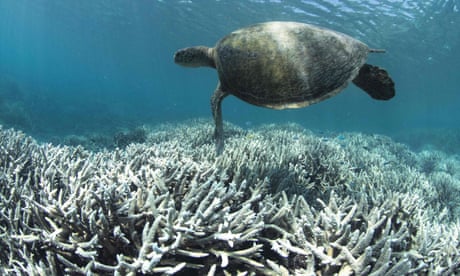
The bleaching of coral reefs around the world, increasing extreme weather events, the melting of large ice sheets and recent venting of methane from thawing permafrost make it abundantly clear that the earth is already too hot.
The future of human civilisation, and the survival of the precious ecosystems on which we depend, now hang in the balance.
There must be an immediate ban on new coal and gas developments and an emergency-speed transition to zero emissions.
We must begin the enormous task of safely drawing down the excess greenhouse gases already in the atmosphere.
We call on the new parliament to declare a climate emergency.
Epidemiologist Professor Fiona Stanley says she is already measuring the health impacts of global warming: "Our children top the list of those most likely to suffer from climate change.
"Their future, their health must be our number one priority. We are doing too little, too late. As a society we need to step up."
Paul Barratt, a former Secretary of the Departments of Defence and Primary Industries & Energy, and a former CEO of the Business Council of Australia, says: "Climate policy is not providing a secure future for Australians.
"The implications of rising sea levels and drowning and failed states are underestimated.
"Just as we have faced fire, flood, drought and military threat in the past we now need to throw everything we can at the climate crisis.
"We must make action on global warming the nation's highest-level priority."
The open letter was initiated by community climate groups, motivated by leading scientists who described a "climate emergency" as warming exceeded 1.5C in early 2016.

The full list of signatories is:
  • Philip Adams, broadcaster
  • Kirstie Albion, CEO Austn Youth Climate Coalition
  • Paul Barratt, former head Defence Dept
  • Prof. Judy Brett, historian
  • Dr Stephen Byrave, CEO Beyond Zero Emissions
  • Geoff Cousins AM, President Austn Conservation Foundation
  • Mary Crooks, CEO Vic. Women's Trust
  • Prof. Peter Doherty, Nobel Laureate for Medicine
  • Ian Dunlop, former Chair Austn Coal Assoc.
  • Prof. Tim Flannery, palaeontologist
  • John Hewson, businessman and former Opposition leader
  • Prof. Ove Hoegh-Guldberg, marine scientist
  • Prof. David Karoly, atmospheric scientist
  • Prof. Carmen Lawrence, former WA premier
  • Dr Colin Long, Vic. Sec. Nat. Tertiary Education Union
  • Prof. Robert Manne, political scientist
  • Bill McKibben, author and co-founder 350.org
  • Christine Milne, Global Greens Ambassador
  • Paul Oosting, CEO GetUp
  • David Ritter, CEO Greenpeace Aust.
  • Prof. Peter Singer, moral philosopher
  • Prof. Fiona Stanley, epidemiologist
  • Dr John (Charlie) Veron, pioneer coral researcher
  • Mark Wakeham, CEO Environment Vic.

Links

22/06/2016

China's Plan To Cut Meat Consumption By 50% Cheered By Climate Campaigners

The Guardian - 

New dietary guidelines could reduce greenhouse gas emissions by 1bn tonnes by 2030, and could lessen country's problems with obesity and diabetes
China now consumes 28% of the world's meat, including half of its pork. Photograph: Wong Campion/Reuters
The Chinese government has outlined a plan to reduce its citizens' meat consumption by 50%, in a move that climate campaigners hope will provide major heft in the effort to avoid runaway global warming.
New dietary guidelines drawn up by China's health ministry recommend that the nation's 1.3 billion population should consume between 40g to 75g of meat per person each day. The measures, released once every 10 years, are designed to improve public health but could also provide a significant cut to greenhouse gas emissions.
The Chinese Communist party has found unusual allies among Hollywood celebrities, with actor Arnold Schwarzenegger and director James Cameron involved in a series of new public information adverts encouraging Chinese people to consume less animal flesh to help the environment.
Should the new guidelines be followed, carbon dioxide equivalent emissions from China's livestock industry would be reduced by 1bn tonnes by 2030, from a projected 1.8bn tonnes in that year.
Globally, 14.5% of planet-warming emissions emanate from the keeping and eating of cows, chickens, pigs and other animals – more than the emissions from the entire transport sector. Livestock emit methane, a highly potent greenhouse gas, while land clearing and fertilizers release large quantities of carbon.
"Through this kind of lifestyle change, it is expected that the livestock industry will transform and carbon emissions will be reduced," said Li Junfeng, director general of China's National Center on Climate Change Strategy and International Cooperation.
"Tackling climate change involves scientific judgement, political decisions, entrepreneurial support, but at last, it still relies on involvement of the general public to change the consumption behavior in China. Every single one of us has to believe in the low-carbon concept and slowly adapt to it."
Meat has gone from rare treat to a regular staple for many Chinese people. In 1982, the average Chinese person ate just 13kg of meat a year and beef was nicknamed "millionaire's meat" due to its scarcity.
The emergence of China as a global economic power has radically altered the diets of a newly wealthy population. The average Chinese person now eats 63kg of meat a year, with a further 30kg of meat per person expected to be added by 2030 if nothing is done to disrupt this trend. The new guidelines would reduce this to 14kg to 27kg a year.
China now consumes 28% of the world's meat, including half of its pork. However, China still lags behind more than a dozen other countries in per capita meat consumption, with the average American or Australian consuming twice as much meat per person compared to China.
According to a new report by WildAid, the predicted increase in China's meat consumption would add an extra 233m tonnes of greenhouse gases to the atmosphere each year, as well as put increased strain on the country's water supply, which is already blighted by polluted and denuded rivers and groundwater.
The report warns that unchecked Chinese meat consumption will also degrade its arable land and worsen the country's problems with obesity and diabetes. An estimated 100 million Chinese people have diabetes, more than any other country.
Research released by the thinktank Chatham House in 2014 forecast that China alone is expected to eat 20m tonnes more of meat and dairy a year by 2020 and warned that "dietary change is essential" if global warming is to not exceed the 2C limit eventually imposed at the climate accord in Paris last year.
A separate report by scientists at the Oxford Martin School this year found that the widespread adoption of vegetarianism around the world could bring down greenhouse gas emissions by nearly two-thirds.
"China's move to cut meat consumption in half would not only have a huge impact on public health, it is a massive leadership step towards drastically reducing carbon emissions and reaching the goals set out in the Paris agreement," said James Cameron.
"Animal agriculture emits more than all transportation combined. Reducing demand for animal-based foods is essential if we are to limit global warming to 2C as agreed at COP21."

Links

New Crop Varieties 'Can't Keep Up With Global Warming'

BBC - Matt McGrath

Drought conditions in countries including Zimbabwe have impacted maize yields in recent years. Getty Images
Crops yields around the world could fall within a decade unless action is taken to speed up the introduction of new varieties.
A study says temperatures are rising faster than the development of crop varieties that can cope with a warmer world.
In Africa, researchers found that it can take 10-30 years before farmers can grow a new breed of maize.
By the time these new crops are planted, they face a warmer environment than they were developed in.
The scientists behind the study, published in the journal Nature Climate Change, looked closely at the impact of temperature rises on crop duration - that's the length of time between planting and harvesting.
They found that in a warmer world durations will be shorter meaning these varieties will have less time to accumulate biomass and yields could be affected.

Out of date
In their paper, the researchers write that crop duration will become significantly shorter as early as 2018 in some regions but by 2031, the majority of maize-growing areas of Africa will be affected.
"The actual changes in yield may be different but this effect is there, the impact of this change in duration will occur unless breeding changes," said lead author Prof Andy Challinor from the University of Leeds.
"The durations will be shorter than what they were bred for - by the time they are in the field they are, in terms of temperature, out of date."
New varieties of maize need between 10-30 years of development before they are ready to be grown by farmers.
The scientists say the lag is down to a combination of factors including the limited number of crops you can grow in a season, the need for government approved testing and there are also a number of problems of access to markets that can increase the time it takes before the farmers have the new seeds to plant.
Increasing the speed of development is important but according to Prof Challinor, so is making smarter assumptions about future conditions.
The researchers say that the shortening of the gap between planting and harvesting could impact yields. Getty Images
"We can use the climate models to tell us what the temperatures are going to be," he told BBC News,
"We can then put those temperature elevations into the greenhouses and then we can breed the crops at those temperatures. People are beginning to do this, but this paper provides the hard evidence of the necessity of it."
Researchers are also working on the impact of heat stress on crops at sites in Zimbabwe, Kenya and Ethiopia. Data from these trials is being used to identify species that could cope with warmer conditions.
But would the use of genetic modification (GM) help speed up this type of work?
"GM does some things faster, so you would get a new variety of crop faster," said Prof Challinor.
"But it doesn't get you out of the testing requirement in fact the testing may in fact be greater and it doesn't help it all with farmers accessing seeds and markets - the problem will remain even for a magic GM crop."
Better techniques and more money for research are the keys according to others in this field, familiar with the study.
"Investment in agricultural research to develop and disseminate new seed technologies is one of the best investments we can make for climate adaptation," said Dr Andy Jarvis, from the International Centre for Tropical Agriculture,
"Climate funds could be used to help the world's farmers stay several steps ahead of climate change, with major benefits for global food security."
The researchers believe that the study also has implications beyond Africa, especially in the maize growing regions of the tropics.

Links

Climate Change To Affect How And Where Fruit Is Grown

Fairfax - 

Red apples could be a bit less red as temperatures rise due to climate change, Royal Galas are likely to suffer more sun damage, and some fruit growers are likely to rip out trees and opt for different varieties.
The looming impact of climate change on the fruit growing industry is detailed in a new report out of the University of Melbourne, which says climate change could affect what is grown and where in some Australian apple growing regions.
The report concentrates on science, but as climate change affects farmers and the fruit that they grow, a changing climate is likely to have some impact on the apples displayed on the shelves of Australian supermarkets in future years.
Northern Victoria's Goulburn Valley, one of the biggest apple-growing districts in Australia, faces a real threat from a rise in the number of hot days in January that could lead to "sun damage" on Royal Gala apples, the report warns.

Royal Gala apples
Royal Gala heat experiment. Supplied.
Royal Gala heat experiment. Photo: Supplied

Royal Gala is a popular variety picked from about January onwards in the Goulburn Valley. Its maturity and the early weeks of harvest coincide with the hottest weather of the Victorian summer, which comes in February and January.
The report author Rebecca Darbyshire said Goulburn Valley growers got a blast of hot weather in early 2009 that illustrated the severe potential consequences of sun damage.
"(For) early season varieties it is a significant risk and they've already experienced it, this is happening. Some of the growers lost huge amounts of their crop, somewhere between 30 and 70 per cent," she said.
"What we found is that that risk of damage is likely to definitely increase into the future. By 2030 on average about nine days in January will be crossing the threshold for damage for Royal Gala, that's nearly a third of the whole month," she said.
But Dr Darbyshire said strategies could be implemented to address the threat posed by higher temperatures, such as netting and "overhead sprinklers" to cool the apples.
Royal Gala apple orchard under netting. Supplied.
Royal Gala apple orchard under netting. Photo: Supplied

Golden Delicious apples
A Golden Delicious apple.
A Golden Delicious apple. Photo: Rob Banks

The report said that growing regions in WA and one in south-east Queensland could face warmer winters beyond 2030 that would not deliver the chill needed for growing Golden Delicious apples.
But the researchers said other regions where Golden Delicious is grown such as the Yarra Valley east of Melbourne, Batlow in New South Wales and Huonville in Tasmania "face little risk and cropping of Golden Delicious is not expected to be limited in relation to winter chill".

Pink Lady apples
Dr Darbyshire and fellow researcher Sigfredo Fuentes also investigated the possible impact of climate change on flowering times for Pink Lady apples (also known as Cripps Pink apple).
Pink Lady apple trees in bloom. Supplied
Pink Lady apple trees in bloom. Photo: Supplied

The investigators found that "flowering will likely be delayed as climate change progresses".
"This means that flowering will occur in warmer temperatures which may have positive (increased final yields) and negative (lower firmness values and greater yellow background colour) impacts on production."
Pink Lady apples.
Pink Lady apples. Photo: Penny Stephens


Link

Climate Change: Poll Finds Support For Strong Action At Highest Level Since 2008

The Guardian - 

Galaxy polling finds only 17% of voters think the Coalition has a credible climate plan and only 20% think Labor does
Protesters in favour of action on climate change in Melbourne
Protesters in favour of action on climate change in Melbourne. The Climate Institute found the Greens' and Glenn Lazarus Team's policies on climate change were the strongest and most credible. Photograph: Ratnayake/Rex Shutterstock
Support for strong action on climate change is at its highest level since 2008, with much sought after uncommitted voters showing the strongest support, according to Galaxy polling commissioned by the Climate Institute.
Despite that, voters were dissatisfied with both Labor and Coalition policies, with only 17% saying the Coalition had a credible climate plan and only 20% saying Labor did.
Those findings fitted with an assessment of the main parties' policies conducted by the Climate Institute, which concluded the Coalition plan was "currently inadequate" and Labor's merely had "pathways to credibility".
They found the Greens' and Glenn Lazarus Team's policies on climate change were the strongest and most credible.
Concern about climate change rose significantly since the last federal election, from 53% in 2013 to 72% in 2016.
Concern among Coalition voters jumped the most, from 41% in 2013 to 62% now.
But uncommitted voters were the most likely to be concerned about climate change, with 76% of them either "fairly" or "very" concerned, according to the national polling of 1,100 people.
Almost two-thirds of respondents agreed Australia should be a world leader in finding solutions to climate change, up from 52% in 2012.
Only 23% thought Australia should wait for other countries before strengthening its post-2020 emissions targets.
And 60% of voters thought delaying action would cause shocks to jobs and energy supplies.
The Climate Institute also assessed what they described as the "credibility" of the parties contesting government or they thought were likely to be re-elected to the Senate.
Each of the six parties was assessed on the basis of their 2030 emissions reduction targets and their timeframe for achieving net zero emissions.
The Climate Institute also looked at the implications for global warming if all countries matched that party's targets and how Australia would rank on per capita emissions among the G20 if that party's policies were adopted.
The Greens and the Glenn Lazarus Team came out as being ranked equally among G20 nations, with their policies putting Australia eighth among G20 nations and causing a temperature rise of between 1.5C and 2C.
The Coalition was at the bottom of parties that had a climate policy, putting Australia at 18th spot among G20 nations and resulting in temperature rises of between 3C and 4C.
Labor performed better but wasn't consistent with keeping warming under 2C and left Australia at 15th among G20 nations.
The Nick Xenophon Team came out in the middle, doing better than Labor but not as well as the Greens.
The Jacqui Lambie Network was the worst, unable to be properly assessed since they don't have any targets.
John Connor, the chief executive of the Climate Institute, said the polling and assessments showed there was a clear opportunity for government develop constructive climate change and energy policies.
"Our research shows that all our political parties need to do more to develop policies that not only build credibility but also build community and investor confidence," he said.
"This is a critical finding, given that both major parties are promising key reviews next year amid greater domestic and international scrutiny."
The Climate Institute called for three policy steps:
•
Pre 2050 net zero emission objectives, with credible emission reduction pathways and regular independent processes of review.
• Economic and community strategies to manage the transition to decarbonisation.
• Integration of climate risks and opportunity assessments into core decision making.
"After 10 turbulent years, Australian business and the voting public have tapped into international trends about the economic and environmental benefits of climate action," Connor said.
"Our main political parties urgently need to catch up."

Links

Lethal Heating is a citizens' initiative