08/06/2017

Why The Fossil Fuel Companies Won't Defend the Government In Court On Climate

Pacific Standard

Twenty-one young Americans are suing the U.S. government for ignoring climate change—and industry groups now seem terrified.
President Donald Trump waves goodbye after announcing his decision to pull the United States out of the Paris climate agreement on June 1st, 2017. (Photo: Chip Somodevilla/Getty Images)
Last week, the three major trade groups representing the fossil fuel industry dodged, just in time, being forced to defend their position on climate change in court. The Trump administration, despite its withdrawal from the Paris climate accord, will not be so lucky.
Last Thursday the American Petroleum Institute and the American Fuel & Petrochemical Manufacturers filed motions to withdraw from their defense of the government in the groundbreaking case Juliana v. United States. Three days earlier the National Association of Manufacturers had done the same. Taken together, these three giants of American industry are retreating as fast as they can from a case that leaves the administration in a legal squeeze.
The administration and the trade groups have been backed into an extraordinary legal corner in the case brought by 21 youngsters, who allege that, for over five decades, the government promoted the use of fossil fuels while knowing that the resulting greenhouse gases would undermine quality of life for future generations. According to the lawsuit, such willfully destructive actions constitute a violation of the plaintiffs' rights to a healthy and safe world, and their ability to pass down a livable planet to their offspring. The young plaintiffs demand that the government impose limits on CO2 and other greenhouse gas emissions to slow atmospheric corrosion. "What we're looking at is for the court to set a constitutional standard for protecting these kids rights that's based on scientific evidence," says Julia Olson, the plaintiffs' chief counsel.

The fossil fuel intervenors may have just barely dodged a bullet from their own gun
The young plaintiffs, supported by a Eugene, Oregon group of environmental lawyers, Our Children's Trust, filed the initial suit in August of 2015 against the Obama administration. Later that year, the three trade associations requested that the court include them as intervenors in the case—a position akin to being co-defendants. The trade organizations feared that an adverse decision would negatively affect their industries, and that President Barack Obama's Department of Justice would not launch a sufficiently vigorous defense. That changed after the election of Donald Trump, who has reversed Obama's clean power initiative, defunded renewable energy initiatives, and shown his clear tilt toward fossil fuel-reliant industries. In a public statement last week, NAM Senior Counsel Linda Kelly explained the companies' reason for withdrawing from the government's defense: "As the dynamics have changed over the last several months," Kelly said, "we no longer feel that our participation in this case is needed to safeguard industry and our workers."*
But there are other forces at play, kicked into gear by a lawsuit that—despite repeated efforts by the companies and the government to have it dismissed and delayed—has been permitted to move forward by both federal judges who have had a chance to weigh in on the matter over the last two and a half years. These start with the "statement of facts" of the case that the plaintiffs alleged, and the Department of Justice conceded. Such statements are customary on large class-action suits, aimed at offering non-disputed terrain on which a case can be fought.
On January 18th, two days before Trump's inauguration, the Department of Justice formally agreed to 98 facts pertaining to climate change, humans' role in creating it, and its destructive future impacts. (The Obama administration opposed the plaintiffs' demand that the government be compelled to act on those facts with firm CO2 limits).

President Donald Trump's remarks appear on a television monitor as members of his administration and invited guests listen to him announce the decision to pull out of the Paris climate agreement at the White House on June 1st, 2017. (Photo: Chip Somodevilla/Getty Images)
Imagine the implications for the companies' admitting to, say, fact number 31 in that list: "Climate change is damaging human and natural systems, increasing the risk of loss of life, and requiring adaptation on larger and faster scales than current species have successfully achieved in the past, potentially increasing the risk of extinction or severe disruption for many species."
Elsewhere, the facts start to look like a litany of the reasons Obama signed the Paris Agreement and largely reflect the global scientific consensus. They include:
  • That for over 50 years, scientists and policymakers in the U.S. government have been aware of the growing body of research suggesting the disruptive impacts of greenhouse gas accumulation in the atmosphere that will likely get worse over time.
  • That the human use of fossil fuels is a major source of CO2 emissions that are a major contributor to climate change, and "place our nation on an increasingly costly, insecure and environmentally dangerous path."
  • That emissions of CO2, methane, and nitrous oxide are at "unprecedentedly high levels compared to the past 800,00 years of historical data and pose risks to human health and welfare."
In a number of instances, the Obama-era defense team even clarified the plaintiffs' allegations upward, suggesting they had underestimated the likely consequences of climate change. For example, the youths alleged that atmospheric concentrations of CO2 exceeded 400 parts-per-million in 2013 for the first time in recorded history; the federal defendants, with two more days left in Obama's term, upped the stakes, clarifying that it was "the first time in millions of years." And, in another instance, the plaintiffs asserted that sea level has been rising 3.2 millimeters yearly since 1993; the government disagreed—it's 3.4 millimeters a year.

The government's objections foreshadowed by a day the decision by Trump to withdraw from the Paris climate accord
The deadline for the intervenors' response to these and other statements of fact was May 25th. That's last Thursday, the very same day that API and their counterparts the AFPM bailed from the case. The NAM bailed three days earlier. Coincidence? Agreeing to any of these or numerous other facts agreed upon by the Obama administration could have opened the door to liability for damages caused by industry products.
These factual statements, then, create a quandary. Since they were already agreed upon by the government defendant, disputing them would have been the burden of the intervenor defendants, in a federal district court in Eugene, Oregon, where there's a far higher standard of evidence than, say, in the U.S. Congress. By withdrawing, not only did these industry groups avoid having to go on the record before a judge challenging widely accepted science about climate change; they also avoided a potentially divisive situation within their ranks: Many members of the NAM—for example, Apple, General Electric, Nissan, and many others—actually agree officially with the overall scientific findings on climate change. On the other hand, if the trade associations agreed to the admissions of fact, their member-companies, including all of America's oil companies, could open themselves to liability for their own contribution to climate change.
Then there's the document question. Facing major discovery demands, the companies tried to shield themselves behind the trade associations: Their lawyer, Frank Volpe, argued that API had no authority over the decisions of its member companies to provide requested documents. On a May 18th teleconference between the parties, Judge Thomas Coffin was skeptical. He questioned whether the companies could, on the one hand, join the case in order to fight it, and, on the other hand, argue that their internal records were not fair game for the plaintiffs. "I don't think they should it have it both ways, quite candidly," Coffin stated, according to a transcription of the call.**
Had the case proceeded with the trade associations onboard, their ability to shield the companies may not have held up, and documents shedding light on their knowledge of climate change and contributions to it were at risk of being prodded from the shadows—as has been occurring with API's most prominent member, ExxonMobil. That company is currently being investigated by the New York attorney general for privately collecting scientific information about the risks of climate change from the company's own scientists but publicly denying the existence of climate change, while helping to finance institutions that promoted climate-change denial.
Now there is no easy way out for the government. The companies' retreat leaves Trump and his team alone to face the quandary of what to do about those difficult facts. On May 31st, one day before Trump announced his decision to abandon the Paris climate accord, the plaintiffs got their answer: The government objected to requests for admissions on 10 important issues. These includes such statements as:
  • "[G]lobal warming of 2 degrees C above the pre-industrial global average temperature threatens the public health and welfare of current and future generations;" and: 
  • "[C]urrent, valid, peer-reviewed and published climate science supports an atmospheric CO2 concentration target of 350 ppm or below by the year 2100 as having a high likelihood of avoiding unusually serious risk of harm and threats to public health and welfare of present and future generations." The Department of Justice has objected to each assertion of climate-change impacts on the grounds of executive privilege, and that by admitting to them they'd be "render[ing] a legal conclusion by virtue of the admission."
In other words, the government's objections foreshadowed by a day the decision by Trump to withdraw from the Paris climate accord.
Still, there's another slip awaiting the administration: Because the government has objected to those and other facts central to the plaintiff's climate claims, it is now vulnerable to discovery requests from the plaintiffs' legal team, which is seeking to document the government's evasion of responsibility for the impacts of climate change. The numerous facts to which the Obama administration agreed sent a strong signal that the government is in possession of documents backing up basic scientific assertions. As Olson commented shortly after the objections were filed on Tuesday night: "We will begin taking depositions of government witnesses … and move to compel substantive discovery responses from the government." The case is shaping up to be a battle over climate change in a courtroom in Eugene. "Trump can withdraw from Paris but not from our lawsuit," Olson said.
Meanwhile, Coffin is expected to rule on the companies' requests to withdraw within two weeks. It looks likely that the fossil fuel intervenors may have just barely dodged a bullet from their own gun.

Links

07/06/2017

More Than 700 Species Facing Extinction Are Being Hit By Climate Change

The IndependentIan Johnston

Humans’ closest relatives, the primates, are among those worst affected because their tropical habitats have had a stable climate for thousands of years
Eastern lowland gorillas are among the primates threatened with extinction. Rex
More than 700 mammals and birds currently threatened with extinction already appear to have been adversely affected by climate change, according to a major review of scientific studies.
Primates and marsupials are believed to have the most individual species suffering as a result of global warming, according to a paper in the journal Nature Climate Change.
Only two groups of mammals, rodents and insect-eaters, are thought to have benefited. This is partly because they have fast breeding rates, tend not to be specialists suited to a particular habitat, and often live in burrows which provide insulation against changes in the weather.
The figures are much higher than previously thought, making up 47 per cent of land mammals and 23 per cent of the birds on the International Union for Conservation of Nature’s Red List of species threatened with extinction.
According to the list itself, just seven per cent of the mammals and four per cent of the birds are described as being threatened by “climate change and severe weather”.
The researchers developed a model to compare the animals’ weight and other characteristics with changes in the climate, such as the temperature.
“Using this model, we estimated that 47 per cent of terrestrial [non-flying] threatened mammals (out of 873 species) and 23.4 per cent of threatened birds (out of 1,272 species) may have already been negatively impacted by climate change in at least part of their distribution,” the article in Nature Climate Change said.
“Our results suggest that populations of large numbers of threatened species are likely to be already affected by climate change, and that conservation managers, planners and policy makers must take this into account in efforts to safeguard the future of biodiversity.”
Primates and marsupials are more at risk than other animals partly because they have lived mostly in tropical parts of the world which have had a stable climate for thousands of years.
“Many of these [animals] have evolved to live within restricted environmental tolerances and are likely to be most affected by rapid changes and extreme events,” the paper added.
“In addition, primates and elephants are characterised by very slow reproductive rates that reduce their ability to adapt to rapid changes in environmental conditions.”
One reason why climate change is causing a problem for animals is changes in the distribution of plants.
“In areas with reduced precipitation and/or temperature seasonality, it is likely that plant species may have narrower climatic tolerances, and therefore that these areas may have already experienced vegetation changes with consequential loss of habitat for animals living there,” the paper said.
“A more specialised diet was also associated with greater probability of negative responses in mammals.
“Our findings are in agreement with previous studies on the predictors of general extinction risk, in which species with narrower diet breadths were associated with lower ability to exploit resources and adapt to new environmental conditions and selective pressures.”
Birds living in the world’s cold mountain regions appear to be particularly at risk.
“Populations of species living at high altitudes and in colder places have fewer opportunities to move towards cooler areas or upslope to avoid increasing temperatures, and hence may have increased extinction risk,” the paper said.
Another problem is that higher temperatures are inducing birds to lay eggs earlier.
“For animals living in these environments the effects of temperature changes may have been exacerbated, potentially leading to disruption in synchronisation between the timing of chick-feeding and peak food availability,” the paper said.
“A more specialised diet was also associated with greater probability of negative responses in mammals.
“Our findings are in agreement with previous studies on the predictors of general extinction risk, in which species with narrower diet breadths were associated with lower ability to exploit resources and adapt to new environmental conditions and selective pressures.”
Birds living in the world’s cold mountain regions appear to be particularly at risk.
“Populations of species living at high altitudes and in colder places have fewer opportunities to move towards cooler areas or upslope to avoid increasing temperatures, and hence may have increased extinction risk,” the paper said.
Another problem is that higher temperatures are inducing birds to lay eggs earlier.
“For animals living in these environments the effects of temperature changes may have been exacerbated, potentially leading to disruption in synchronisation between the timing of chick-feeding and peak food availability,” the paper said.

Links

Adani Announces 'Green Light' For Carmichael Mega Coal Mine

Fairfax

Australia's biggest ever coal mine will go ahead, according to Indian billionaire Gautam Adani, whose company has made the final investment decision to "green light" the controversial Carmichael project.
In a statement released by the company on Tuesday morning, Adani said it had signed letters of award for design, construction, operations, supply of materials and professional services, with Downer Mining chosen to build and operate the Carmichael mine located in Queensland's Galilee Basin.

Mine games
You would think Adani would have given up on Australia's biggest coal mine by now. Artist: Matt Davidson

But the Stop Adani Alliance, made up of 20 environment groups, immediately called the Adani announcement a "con" because the company has been unable to secure the finance it needs to actually start mining.
There was no detail in Adani's statement on Tuesday about finance.
The Adani mine would be one of the world's largest.  Photo: Darren Pateman
Stop Adani Alliance spokesman Geoff Cousins, who is also president of the Australian Conservation Foundation, said it was "groundhog day" because the company had announced other "investment decisions" over the past six years.
"Adani is yet to lure any financial institutions willing to bankroll the project, which is proving hugely unpopular with the Australian public. Without this support and public subsidies, the heavily leveraged balance sheet of Adani Enterprises leaves no internal capacity to fund this $5 billion project proposal," Mr Cousins said.
"If the federal government hands Adani $1 billion of public money for this destructive mine that will destroy our reef, we will consider all avenues, including legal action, to stop it."
Construction of the mine, which could eventually entail six open cut pits and five underground mines over an area 30 kilometres long, has been bitterly opposed by the coalition of environment groups who say it makes a mockery of global efforts to reduce carbon dioxide emissions.
The company has said it plans to mine 2.3 billion tonnes of coal over the mine's 60 year lifespan.
Mr Adani said: "This is an historic day for Adani, an historic day for regional Queensland, and an historic day for Indian investment in Australia.
"This is the largest single investment by an Indian corporation in Australia, and I believe others will follow with investments and trade deals.
"We have been challenged by activists in the courts, in inner city streets, and even outside banks that have not even been approached to finance the project. We are still facing activists. But we are committed to this project."

Links

Josh Frydenberg Hits The Phones To Keep Government MPs In Line Over Climate, Paris Deal

Fairfax - James Massola

Environment and Energy Minister Josh Frydenberg has hit the phones to the Coalition backbench to calm growing concerns about the federal government's climate change review, and to stress the need for Australia to remain in the Paris agreement.
The calls were made after Fairfax Media last week revealed at least five government MPs wanted a possible re-think of Australia's commitment to the deal to reduce carbon emissions, after US President Donald Trump announced his country would quit the deal.
Trump's climate call
US President Donald Trump has withdrawn America from the Paris climate change agreement, but Australia will not follow according to the energy minister.

The move by Mr Frydenberg, who is allied with the conservative wing of the Coalition and who has been charged with overseeing reviews of the electricity sector and climate policy, underscores growing concern at the highest levels of the Turnbull government about new fissures opening up over the contentious policy area.
Malcolm Turnbull lost his job as opposition leader back in 2009 after a rebellion over climate policy led by Tony Abbott and the Prime Minister is keenly aware of just how sensitive climate policy remains inside the Coalition.
Minister for Environment and Energy Josh Frydenberg is calling backbenchers to shore up support for climate policy. Photo: Alex Ellinghausen
Fairfax Media understands that at least six MPs in the Liberal party's conservative wing - Eric Abetz, Andrew Hastie, Tony Pasin, Craig Kelly, Ian MacDonald and junior minister Angus Taylor - have been called by Mr Frydenberg over climate policy and the Finkel review.
In those calls, Mr Frydenberg has stressed the need for the government to remain unified over climate policy. This reminder has been understood in the context of the 2009 implosion.
He has also argued the importance of sending a market-based signal, through climate policy settings, to the electricity market to spur new investment.
Crucially, the minister also promised that keeping downward pressure on electricity prices for households and business remains a top priority for him, and for the government, as new policies are developed.
One MP borrowed a line from P.G. Wodehouse and said that on climate policy, conservative MPs "if not actually disgruntled, [are] far from being gruntled".
"Josh has an acute antenna, particularly for people in the conservative wing. He knows he has to carry the moderates and the conservatives with him on this policy."
​Another MP said that Mr Turnbull was "playing with fire" on climate policy.
"Two of the policy principles on which he compromised to buy the leadership were swallowing his pride on Direct Action, and on the plebiscite for same-sex marriage plebiscite. If he goes back on either, this would cause major concerns in the party room."
The MPs contacted by Mr Frydenberg praised his efforts to keep them in the tent but added that they were watching to see whether so-called clean coal, for example, would be allowed under the low emissions target (LET).
Chief scientist Alan Finkel's review of the electricity sector is due to be released at the Council of Australian Governments meeting in Hobart on Friday and will inform a climate policy review due by end of the year.
The review is expected to recommend a new LET, in line with a recommendation in a Climate Change Authority report, as a second-best policy option because the federal government has ruled out an Emissions Intensity Scheme (EIS), which is a form of carbon pricing.
A LET operates in a similar way to the Renewable Energy Target and would require more electricity be supplied from –depending on its design – renewables, carbon capture and storage coal fire power and highly efficient gas plants.
Deputy prime minister Barnaby Joyce, a climate change sceptic, has indicated he believed the LET could be the way forward to allow the development of next generation coal-fired power stations as well as renewable energy.
Business Council chief executive Jennifer Westacott said it was abundantly clear that "doing nothing" doesn't work.
"A properly constructed LET, designed in consultation with industry and customers, could be an effective solution to deliver secure, reliable and affordable electricity while also assisting us to meet our emission reduction targets," she said.
The progressive Australia Institute's executive director, Ben Oquist, said: "A well-designed low emissions target could be the basis for the needed integration  of climate and energy policy in Australia".

Links

06/06/2017

Climate Change Poses A Unique Threat To National Security, Military And Intelligence Experts Say

Business InsiderSonam Sheth

Skye Gould/Business Insider
President Donald Trump’s bombshell announcement that he was pulling the US out of the Paris Agreement was widely panned by environmental activists and scientists, as well as major business leaders such as Tesla CEO Elon Musk and billionaire entrepreneur Mark Cuban.
But Trump’s decision has also invited scrutiny from military and intelligence experts who believe a US withdrawal from the pact poses a unique threat to national security and the global order.
The primary link between climate change and national security is instability, according to James Clapper, the former Director of National Intelligence.
Climate change, which Clapper said significantly contributes to instability, can have a devastating impact on the availability of critical resources such as water, food, and energy. He added that as population centres compete for waning resources, governments will find it more difficult to maintain order.
“And so because of all of these factors, after ISIL’s gone, we can expect some other terrorist entity to arise and a cycle of extremism which will continue to control us for the foreseeable future,” Clapper said in 2016. “And by the way, our more traditional adversaries like Russia and China and Iran and North Korea will continue to challenge us.”
Secretary of Defence James Mattis also emphasised the link between climate change and national security. “Climate change is a challenge that requires a broader, whole-of-government response,” Mattis said during his Senate confirmation hearing in March. “If confirmed, I will ensure that the Department of Defence plays its appropriate role within such a response by addressing national security aspects.”
He added that he believed the effects of climate change, “such as increased maritime access to the Arctic, rising sea levels, [and] desertification” continue to impact US national security.
Trump’s decision to pull out of the landmark climate agreement negotiated by former President Barack Obama means the US will join Nicaragua and Syria, the only other countries who are not signatories to the deal.
Former defence secretary Ashton Carter, who served under Obama from 2015 to 2016, also weighed in on the climate change debate in January 2017. Carter said a lukewarm response to climate change could “increase the frequency, scale, and complexity of future missions, including defence support to civil authorities, while at the same time undermining the capacity of our domestic installations to support training activities.”
Carter added that US efforts to combat climate change by investing in clean energy and new technology could serve to mitigate the damage already done.
Trump’s decision also prompted sharp criticism from Susan Rice, who served as Obama’s national security adviser. “We all know that where there is drought, where there is insecurity, when there is poverty, hunger, poor governance, repressive policies, it may make the tinder in the box more readily ignitable,” Rice said in 2014.
Rice argued, in a New York Times op-ed published Saturday, that the US’ departure from the climate agreement may further threaten a tenuous relationship with key allies around the world.
During the campaign and since taking office, Trump has repeatedly blasted critical US alliances like NATO, which he said was “obsolete.” Though he backtracked on his comments after assuming the presidency, Trump went on to criticise NATO member nations for not paying their defence dues at the NATO summit in Brussels last month.
His choice to abandon the global climate pact further strained a fraying relationship between the US and its western allies.
Trump’s intent to leave the Paris Agreement on Thursday invited fresh criticism from world leaders. Canadian Prime Minister Justin Trudeau said he was “deeply disappointed” by the decision. British Prime Minister Theresa May echoed Trudeau’s statement.
German Chancellor Angela Merkel, French President Emmanuel Macron, and Italian Prime Minister Paolo Gentiloni said they noted the decision “with regret.” Macron called it “a mistake for our planet” and urged US scientists to work in France to help “make the planet great again.”
Rice called Trump’s decision the “coup de grâce” for America’s status as a global leader, and added that it jeopardized US alliances by isolating the country from the rest of the developed world.
His withdrawal from the Paris Agreement and other actions Trump has taken over the course of his presidency, Rice said, ensure that the US will “see the cost when next we need the world to rally to our side.”

Links

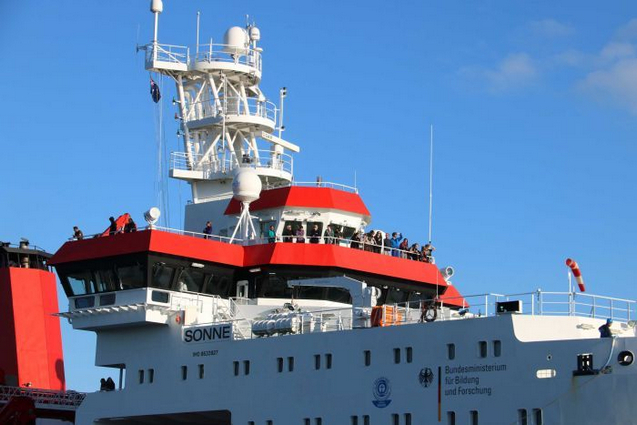
German Deep-Sea Research Ship On Climate Change Expedition Docks In Fremantle

ABC NewsDavid Weber

The RV Sonne can deploy instruments into the deepest parts of the ocean. (ABC News: David Weber)
A German research vessel has been taking samples from the ocean floor in Australian waters to investigate the history of climate change.
The ship, described as one of the most high-tech research vessels in the world, is looking into the past to help predict the future.
RV Sonne is described as the most important platform for marine scientific research in the Indo-Pacific.
Captain Oliver Meyer said the RV Sonne's main role was to study the influence of humans on climate change. (ABC News: David Weber)
RV Sonne's Captain Oliver Meyer explained its key role.
"The big headline of all research is, more or less, the mankind influence of climate changes," he said.
"Are there interperiods of warm or hot climate or not, and what is the normal way that happens nature by nature or what is the mankind influence?"
RV Sonne has arrived in Fremantle after carrying out research around New Zealand, the outer side of the Great Barrier Reef and stopping in Darwin.
Its major benefit is to be able to operate in the deepest parts of the ocean, such as trenches in the "hadal zone".
RV Sonne's instruments retrieve sediments from the ocean floor, which acts as a kind of climate library.
Dozens of scientists can live and work on board the vessel during an expedition. (ABC News: David Weber)
Professor Wolfgang Kuhnt of the University of Kiel detailed his team's interest.
"Along the West Australian margin there was about 10,000 years ago a time when the climate was even a bit warmer than today and we want to see how this development, the influence of this relatively warm Southern Hemisphere period was on the Australian monsoon — and the climate," he said.
RV Sonne can deploy two pieces of gear at a time, instruments and devices such as its 'Golden Eye' — which measures electrical and magnetic properties of the sub-seabed — as well as remotely controlled underwater vehicles, drill rigs, and a mobile 3D seismometer.
The ship is equipped with cranes and other machinery to help carry out research. (ABC News: David Weber)
It can also deploy instruments to measure temperatures and salinity.
On its Darwin-Fremantle leg, RV Sonne carried teams interested in the deep and the shallow.
The University of Melbourne's Stephen Gallagher explained that his team was interested in what shallow waters could tell us about the past.
"We can get stories about shoreline, when the sea level fell, where was the shoreline. Are there fossil cliffs? What can we see under the sea when the sea level changes?" Professor Gallagher said.
"The deep climate archive, the hundreds of thousands of years-long climate archive comes from the deep water and evidence of the shoreline, when the sea level fell 18,000 years ago comes from the shallow water."
The ship is renowned for its ability to deploy instruments to the deepest parts of the ocean. (ABC News: David Weber)
After its stop in Fremantle, RV Sonne will head back out to the Indian Ocean on its way to Sri Lanka.
The vessel is equipped with eight laboratories and they can be cooled to freezing when required.
Some 40 scientists can live and work on board during an expedition.
Construction of RV Sonne started in 2012 and it was put into service in 2014.
It replaced the original Sonne, a 1969 stern trawler which was converted to a research vessel in the late 1970s.
The RV Sonne will be open to the public at Fremantle Port's Victoria Quay on Monday. (ABC News: David Weber)

Links

Trump Will Make The US Face Loss And Damage Claims

Daily StarSaleemul Huq*

Image: Sarah Wasko-Media Matters
Since the announce-ment by President Trump that the US will withdraw from the Paris Agreement to tackle climate change, he has been facing a whirlwind of push backs and rejection by all the 195 countries who are parties to the Paris Agreement (only Syria and Nicaragua did not sign it), and it looks like the US will be on its own on this issue from now on, and is already being termed a rogue state by many.
I want to focus on a little known Article of the Paris Agreement, which may well come to haunt the US and will be an unintended consequence of the US withdrawing from it.
This is about Article 8 of the Paris Agreement, which is on an issue called Loss and Damage from climate change, a fiercely fought topic in the negotiations going into Paris which was not resolved until the last hour of the final agreement in Paris at midnight on December 12, 2015.
Before going into the 21st Conference of Parties (COP21) to be held in Paris in December 2015, under the United Nations Framework Convention on Climate Change (UNFCCC), there were a series of negotiations to prepare the final negotiating text which would then be finalised over the two weeks of COP21.
Going into Paris, every Article had some proposed text from the developed countries (called option 1) and another few paragraphs of text from the developing countries (called option 2), and in many cases, the two options presented opposing ideas. The idea was that all countries would spend two weeks in Paris at COP21, finding a compromise text between the two opposing options to emerge with a consensus text as part of the Paris Agreement.
However, the exception to this pattern was Article 8 on loss and damage where the developing countries proposed a few paragraphs of text, but the option from the developed countries wasn't just to offer no text but to instead propose that this Article be deleted completely!
Why was this the case?
The reason is because the issue of loss and damage from climate change refers to the residual impacts of human induced climate change when efforts to prevent impacts by mitigation have been insufficient, and also when efforts to adapt to those impacts are not enough either. The resulting impacts and the resulting loss and damage, thus, can be attributed to human induced changes to the climate.
In such cases, the loss and damage is no longer due to natural causes but due to human interference in the climate system. Hence, there is a potential liability and claims for compensation to be made by the victims against the polluters.
That is why the developed countries had fought tooth and nail to refuse to accept any discussion of liability and compensation in the UNFCCC talks for over twenty years. However, the breakthrough came at COP19 in Warsaw, Poland in 2013, where they were forced to accept the setting up of the Warsaw International Mechanism on Loss and Damage (which was understood to be a euphemism for liability and compensation).
So coming in to the COP21 talks in Paris in December 2015, the developed countries did not want to accept a new separate Article on Loss and Damage in the Paris Agreement at all. Hence, this Article became one of the most politically charged and sensitive issues in the COP21, talks. The developing countries, led by the small island developing states and the Least Developed Countries (LDC) group, in which Bangladeshi negotiators played an important role, pushed to include loss and damage in Article 8.
After very hard negotiations for two weeks, initially at the level of the technical negotiators and then ministers, it was still not resolved until the last few hours of COP21 when Prime Minister Enele Sopoaga of Tuvalu, on behalf of the developing countries, and US Secretary of State John Kerry, on behalf of the developed countries, requested their negotiators to leave the room and agreed on the final text that was eventually accepted as the Loss and Damage Article 8 of the Paris Agreement.
The reason that John Kerry of the US finally accepted Article 8 on Loss and Damage was because the Prime Minister of Tuvalu allowed him to insert a paragraph into the COP21 decision associated with the Article which specifically stated that Article 8 of the Paris Agreement could NOT be used to claim compensation on the basis of liability from the polluting countries. This was specifically inserted to protect the US from potential future claims for compensation once loss and damage from climate change is established.
So as per President Trump's announcement when the US officially withdraws from the Paris Agreement, the US will lose the protection of this clause and hence will be open to claims for compensation from people, communities and countries that suffer loss and damage that can be attributed to human induced climate change. I am not sure if any of President Trump's advisers told him about this unintended consequence of his decision to leave the Paris Agreement!

*The writer is Director of the International Center for Climate Change and Development at the Independent University , Bangladesh. 

Links

Lethal Heating is a citizens' initiative