27/02/2018

Top Climate Scientist: Humans Will Go Extinct If We Don’t Fix Climate Change By 2023

Grit Post


A top climate scientist is warning that climate change will wipe out all of humanity unless we stop using fossil fuels over the next five years.
In a recent speech at the University of Chicago, James Anderson — a professor of atmospheric chemistry at Harvard University — warned that climate change is drastically pushing Earth back to the Eocene Epoch from 33 million BCE, when there was no ice on either pole. Anderson says current pollution levels have already catastrophically depleted atmospheric ozone levels, which absorb 98 percent of ultraviolet rays, to levels not seen in 12 million years.
Anderson’s assessment of humanity’s timeline for action is likely accurate, given that his diagnosis and discovery of Antarctica’s ozone holes led to the Montreal Protocol of 1987. Anderson’s research was recognized by the United Nations in September of 1997. He subsequently received the United Nations Vienna Convention Award for Protection of the Ozone Layer in 2005, and has been recognized by numerous universities and academic bodies for his research.
While some governments have made commitments to reduce carbon emissions (Germany has pledged to cut 95 percent of carbon emissions by 2050), Anderson warned that those measures were insufficient to stop the extinction of humanity by way of a rapidly changing climate. Instead, Anderson is calling for a Marshall Plan-style endeavor in which all of the world takes extreme measures to transition off of fossil fuels completely within the next five years.
Recovery is all but impossible, he argued, without a World War II-style transformation of industry—an acceleration of the effort to halt carbon pollution and remove it from the atmosphere, and a new effort to reflect sunlight away from the earth’s poles.
This has do[sic] be done, Anderson added, within the next five years.
“The chance that there will be any permanent ice left in the Arctic after 2022 is essentially zero,” Anderson said, with 75 to 80 percent of permanent ice having melted already in the last 35 years.
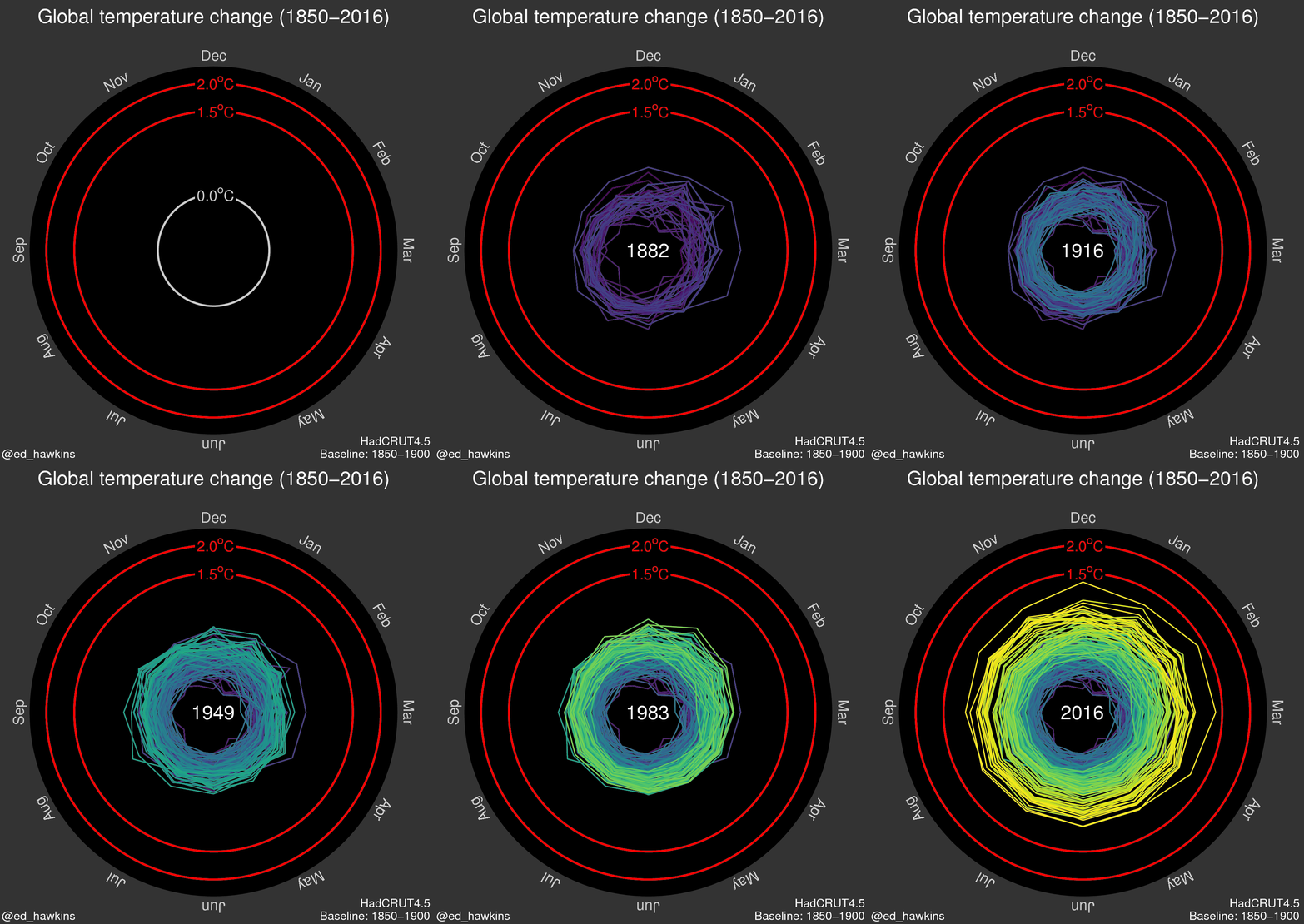
Anderson’s prediction of Arctic sea ice disappearing by 2022 may be closer to reality than a lot of us would hope. In 2016, University of Reading professor Ed Hawkins compiled global temperature data dating back to 1850, prior to the Industrial Revolution of the early 20th century and the oil boom, and turning the data into a time-lapse GIF. The most alarming part of the data showed that temperatures began rising exponentially faster at the start of the 21st century and show no signs of slowing down:

spiral_2016_large
Spiralling global temperatures from 1850-2016 (full animation) Ed Hawkins


The good news is there are a relatively small amount of culprits responsible for the vast majority of carbon emissions, meaning governments know who to focus on. As Grit Post reported in July of 2017, more than half of all carbon emissions between 1988 and 2016 can be traced back to just 25 fossil fuel giants around the world. 10 of those 25 top emitters are American companies, meaning the onus is largely on the United States to rein in major polluters like ConocoPhillips, ExxonMobil, Chevron, and Marathon Oil. Other offenders include Chinese companies extracting and burning coal, and Russian oil conglomerates like Rosneft, Gazprom, and Lukoil.
However, the bad news for humanity is that as long as Donald Trump is President of the United States, swift action to combat climate change seems unlikely prior to 2020, given that Trump pulled out of the Paris Climate Accords and refuses to even acknowledge the threat of climate change despite warnings from U.S. government agencies like the Department of Homeland Security and the Department of Defense.

Links

The Art Of Climate Change Gallery 3: Who Is At Risk?

Environmental Graphiti

Environmental Graphiti® is a venture that uses art to dramatize the critical science of climate change in an effort to expand public awareness of this urgent issue.
ART makes the science more accessible. Science makes the art more meaningful. Together they tell the story of climate change in a unique and powerful way.
The art in this series is based on the compelling data that describes the various factors that have contributed to climate change over the last two hundred years. Click on image title to see graphic data source.

Gallery 3: Who Is At Risk?

1 Out Of 4
According to the Nature Conservancy, one fourth of the Earth's species could be headed for extinction by 2050 due to climate change. The "x's" in the "tic tac toe" game represent these species at risk of being crossed off the planet. Climate change is no game. LARGE IMAGE

Floods
The risk of flooding of coastal areas across the world continues to  increase along with the ever-rising levels of our oceans. The Intergovernmental Panel on Climate Change Fifth Assessment Report identifies the regions of South, Southeast, and East Asia, Africa and small islands as most vulnerable, but coastal communities across the world are also impacted. A report published by Climate Central (10-25-17), ranking the 25 US cities with populations most vulnerable to climate change driven flooding, lists New York City with the largest vulnerable population, followed by 9 Florida cities including: Hialeah, Miami, and Ft Lauderdale. LARGE IMAGE

Countries That Contribute Least Are Most Vulnerable
No country is immune from climate change impact, but researchers have concluded that in almost all cases, the countries contributing least in greenhouse gas emissions will be most immediately and urgently affected. These are often poor, undeveloped nations with limited resources to respond to the critical challenges of climate change. (The red dot in the digital painting represents the countries (notably Saudi Arabia) where high emissions correlate with high impact. For the rest of the world, the mismatch is extreme, and fundamentally unfair). LARGE IMAGE

Billion-Dollar Natural Disaster Event Frequency In US
The US has sustained 212 weather and climate disasters since 1980, but the years with the most frequent events have all occurred since 2011.  During the 18-year period 1980-1998, 70 billion-dollar events occurred, costing a total of $395.2 billion dollars and the loss of 4,287 lives.  During the somewhat shorter 17.5-year period 1999-July 2017, 142 billion-dollar events occurred, costing a total of $842.3 billion dollars and the loss of 5,393 lives. NOAA National Centers for Environmental Information (NCEI) U.S. Billion-Dollar Weather and Climate Disasters (2017).  https://www.ncdc.noaa.gov/billions/ It is important to note that the above 2017 figures do not cover the 2017 hurricane season which includes the catastrophic hurricanes Harvey, Irma, and Maria. According to the New York Times (October 12, 2017), with a month and a half to go until season end, nearly 5 times the full season average of  major hurricane days were experienced in 2017. NOAA has since reported (1-08-18) that extreme weather events caused $306 billion of damage to the US in 2017, the most expensive year on record. 16 $1 billion plus natural disasters occurred in 2017, compared to 3 (inflation adjusted) in 1980.  LARGE IMAGE

Vector-Borne Diseases
Vector borne diseases (i.e., those spread by insects such as fleas, ticks and mosquitoes) are influenced by climate.  Certain diseases are particularly sensitive to climactic conditions, such as Dengue Fever, which has shown a 30-fold increase over the last 50 years, and virus behind the latest epidemic, Zika. LARGE IMAGE

Climate Change Impact On Poverty
“Climate change threatens the object of sustainably eradicating poverty. Poor people and poor countries are exposed and vulnerable to all types of climate-related shocks- natural disasters that destroy assets and livelihoods; waterborne diseases and pests that become more prevalent during heat waves, floods, or droughts; crop failure from reduced rainfall; and spikes in food prices that follow extreme weather events…. “  Absent rapid, well-informed policies and programs, “…climate change could result in an additional 100 million people living in extreme poverty by 2030.”  LARGE IMAGE

Trends In Strength Of Hurricanes Impacting US
Climate change increases the impact, strength and intensity of hurricanes:  warmer oceans increase hurricane strength and create more evaporation, which turns to vapor and results in heavier rains; rising sea levels enhance the effect of storm surges causing greater flooding; changes in Gulf Stream patterns are also believed to cause stalling of storms over land with unprecedented levels of rain. LARGE IMAGE

Shells Dissolve In Acidified Ocean Water
Ocean acidity has increased by 30% over the last 250 years due to absorption of emitted CO2.  Marine species such as coral, mollusks, shellfish and plankton are put at risk by the increasing acidification and warming of their habitat. LARGE IMAGE

Coral Reefs At Risk
A combination of local stressors (e.g., overfishing) and global factors, such as ocean acidification, heat and weather cycles, threaten about 75% of coral reefs world-wide. It is projected that by mid-century, 95% of  coral reefs will be threatened by heat and bleaching. Coral reefs are a crucial part of the ocean's ecosystem, providing food and shelter to a quarter of all marine life. An estimated 500 million to one billion people rely on the fish supported by coral reefs.  LARGE IMAGE

Conflict
Governments across the world are beginning to focus on the connection between climate change and conflict. Studies suggest that competition over depleting natural resources and socio-economic impacts from intensified natural disasters, such as floods or droughts, can make fragile states more vulnerable to conflict. The US Department of Defense stated in a July 29, 2015 report to Congress, “Global climate change will aggravate problems such as poverty, social tensions, environmental degradation, ineffectual leadership and weak political institutions that threaten stability in a number of countries.” LARGE IMAGE

Links

'Really Extreme' Global Weather Event Leaves Scientists Aghast

Fairfax - Peter Hannam

Climate scientists are used to seeing the range of weather extremes stretched by global warming but few episodes appear as remarkable as this week's unusual heat over the Arctic.
Zack Labe, a researcher at the University of California at Irvine, said average daily temperatures above the northern latitude of 80 degrees have broken away from any previous recordings in the past 60 years.
"It's just wrong": This week's unusual burst of heat over the Arctic. Photo: Climate Reanalyzer
"To have zero degrees at the North Pole in February - it's just wrong," said Amelie Meyer, a researcher of ice-ocean interactions with the Norwegian Polar Institute. "It's quite worrying."
The Arctic Ocean has endured another warmer-than-average winter in a region that is warming much faster than the rest of the planet. Photo: NASA
The so-called Polar Vortex - a zone of persistient low-pressure that typically keeps high-latitude cold air separate from regions further south - has been weakening for decades.
In this instance, "a massive jet of warm air" is penetrating north, sending a cold burst southwards, said Dr Meyer, who has relocated to Hobart to research on the southern hemisphere, and is hosted by Australia's Integrated Marine Observing System.
"The anomalies are really extreme," Andrew King, a lecturer in climate science at the University of Melbourne, said. "It's a very interesting event."
Warm, moist air is penetrating much further north than it would normally at a time when the North Pole is in complete darkness.
Cape Morris Jessup, the world's most northerly land-based weather station, in Greenland, touched 6 degrees late on Saturday, about 35 degrees above normal for this time of year.
Robert Rohede, a Zurich-based scientist with Berkeley Earth, posted on Twitter that Cape Morris Jessup had already recorded 61 hours above freezing so far in 2018.
The previous record of such relative was just 16 hours recorded to the end of April in 2011.
"Parts of Greenland are quite a bit warmer than most of Europe," Dr King said.
The cold snap will sink temperatures moderately below freezing in London each day until Friday. However, cities such as Berlin will dive to as low as minus 12 degrees and Moscow to minus 24.
With a weak jetstream, surface winds are taking an unusual course - bringing snow from the east and prompting some commentators to dub the event the "Beast from the East".
"For Britain and Ireland, most weather systems would typically blow in from the west, but [on Tuesday] we will see a cold front cross Britain from the east," Dr King said.

IMAGE


Along with the unusual warmth over the Arctic, scientists are monitoring the retreat of sea ice in the Bering Sea.
The ice coverage in the region is now at levels previously seen only in May or June, Mr Labe posted on Twitter, citing data from the US National Snow and Ice Data Centre.
While climate change itself is only likely to have exacerbated regional weather variability, the long-term shrinkage of sea ice has a reinforcing effect on global warming in a region already warming faster than anywhere else on the planet, Dr King said.
Ice reflects sunlight back to space. When it melts, the sea ice exposes more of the dark ocean beneath, which then absorbs that solar radiation, adding to the warming.
Sea ice coverage is currently at or close to record low levels at both the Arctic and Antarctic regions.
The impact of the relatively warm air in the Arctic could play out for months to come. Multi-year ice is likely to be thinner and more cracked, leading to a faster melt when spring arrives, Dr Meyer said.
While researchers had pegged 2050 as a possible year when the Arctic will become ice-free, this winter and the previous one - also unusually warm - had thrown those estimates out.
"It's going much faster than we thought," said Dr Meyer, who will begin work later this year at the ARC Centre of Excellence for Climate Extremes.

Links

26/02/2018

The Terrifying Phenomenon That Is Pushing Species Towards Extinction

The Guardian

Scientists are alarmed by a rise in mass mortality events – when species die in their thousands. Is it all down to climate change?
Dead saiga antelopes in a field in Kazakhstan. About 20,000 of the species were found dead in one week. Photograph: Reuters
There was almost something biblical about the scene of devastation that lay before Richard Kock as he stood in the wilderness of the Kazakhstan steppe. Dotted across the grassy plain, as far as the eye could see, were the corpses of thousands upon thousands of saiga antelopes. All appeared to have fallen where they were feeding.
Some were mothers that had travelled to this remote wilderness for the annual calving season, while others were their offspring, just a few days old. Each had died in just a few hours from blood poisoning. In the 30C heat of a May day, the air around each of the rotting hulks was thick with flies.
The same grisly story has been replayed throughout Kazakhstan. In this springtime massacre, an estimated 200,000 critically endangered saiga – around 60% of the world’s population – died. “All the carcasses in this one of many killing zones were spread evenly over 20 sq km,” says Kock, professor of wildlife health and emerging diseases at the Royal Veterinary College in London. “The pattern was strange. They were either grazing normally with their newborn calves or dying where they stood, as if a switch had been turned on. I’ve never seen anything like that.”
The saiga – whose migrations form one of the great wildlife spectacles – were victims of a mass mortality event (MME), a single, catastrophic incident that wipes out vast numbers of a species in a short period of time. MMEs are among the most extreme events of nature. They affect starfish, bats, coral reefs and sardines. They can push species to the brink of extinction, or throw a spanner into the complex web of life in an ecosystem. And according to some scientists, MMEs are on the rise and likely to become more common because of climate change.
Ochre sea stars. The species was among the worst hit by the mass mortality event that hit starfish on the Pacific coast of North America in 2013. Photograph: Paul Williams/BBC
The MME that has pushed the saiga closer to extinction struck in 2015. Kock was part of an international team studying the animals as they gathered for the calving season. For most of the year, saiga are on the move, able to avoid predatory wolves and human poachers by sprinting at more than 40mph, making them one of the fastest ungulates, or hoofed animals. But once a year they put their migration on pause to calve in vast groups when the grass is at its lushest, before it is scorched by the sun.
In 2015, the main gathering in the Betpak-Dala region of central Kazakhstan, an area roughly the size of the British Isles, numbered 250,000. Nearby, other groups were thousands strong. Saiga are remarkable animals. Their bulbous noses, which hang over their mouths, give these antelopes an almost comical appearance. The nose is flexible and can be inflated, helping them to breathe warm air in the freezing winters and filter air in the arid summers as they sprint with their heads down in a cloud of dust. The species has been hit by mass die-offs before. In 1981, around 70,000 died suddenly in a few days, while in 1988 another 200,000 died. The creatures are also victims of poachers.
These reports of mass mortality events are probably underestimates in terms of occurrence and sheer magnitude
Adam Siepielski
“In 2014, we believed there were about 250,000 adults and they produced a good number of calves – perhaps a couple of hundred thousand. It looked a viable population and we’d expected a population of a million soon. There was even talk of them coming off the critically endangered list,” Kock says.
But as the scientists watched a year later, the mothers fell sick and began to drop dead. “It wasn’t as if the disease started at one end and spread – there was no time for transmission of the pathogen from animal to animal. It was too quick,” he says. “Within two or three days, everything was dying. By the end of the week, every single one was dead.”
The scientists on the ground pinpointed blood poisoning as the cause, but were puzzled as to why whole herds were dying so quickly. After 32 postmortems, they concluded the culprit was the bacterium Pasteurella multocida, which they believe normally lives harmlessly in the tonsils of some, if not all, of the antelopes. In a research paper published in January in Science Advances, Kock and colleagues contrasted the 2015 MME with the two from the 1980s. They concluded that a rise in temperature to 37C and an increase in humidity above 80% in the previous few days had stimulated the bacteria to pass into the bloodstream where it caused haemorrhagic septicaemia, or blood poisoning.
The weather link raises the spectre of climate change. Just as it is rarely wise to link a single extreme weather event – whether it’s the Australian heatwave, last summer’s Hurricane Harvey or this winter’s North American cold snap – to climate change, it is equally difficult to blame an MME on global warming. But what can be said with confidence is that the sorts of extreme weather events linked to MMEs – such as the temperature and humidity rise that nearly wiped out the saiga – will become more frequent.
Australians know all about extreme weather. While much of Europe and North America has endured a bitter start to the year, the Australian summer has been a scorcher. In January, temperatures in Sydney topped 47C, the city’s highest since 1939. The toll on wildlife has been devastating. As the mercury rose, corpses of critically endangered flying foxes – or fruit bats – began to pile up under the trees in New South Wales. Horrified wildlife campaigners at one colony in Campbelltown, south of Sydney, discovered 400 dead bats. Some were still hanging from trees. Many were babies, abandoned by their parents in their own desperate search for shade.
Flying foxes are well adapted to normal Australian summers. But above 40C, they are unable to regulate their body temperature and can die from overheating. This year’s deaths were grim enough, but they were dwarfed by the MME of 2014, when at least 45,000 flying foxes were killed on one hot day in south-east Queensland. Some colonies had more dead bodies than living bats. Their corpses were piled thick on the ground as the three species there – the black, little red and grey-headed – were hit.
Events like the disaster that struck the flying foxes and saiga appear to be growing in number. The most thorough study of its kind published in the Proceedings of the National Academy of Sciences in 2015 uncovered 727 accounts of MMEs involving 2,407 animal populations since 1940. It found that not only are reports of MMEs on the increase – by about one event a year – but the number of animals killed in each event is on the rise for birds, fish and marine invertebrates.
Adam Siepielski, an evolutionary ecologist at the University of Arkansas and a co-author of the paper, became fascinated by the phenomena after hearing a radio report of millions of sardines and anchovies dying. “These reports of MMEs are probably underestimates in terms of occurrence and sheer magnitude,” he says. “There is additionally a challenge in trying to understand whether this increased occurrence is a real event, or whether there are more people observing these things and [they are] more likely to report them. We call this the epidemic of awareness.”
The study found that disease was the biggest factor in MMEs, playing a role in a quarter of them. Around 19% were directly linked to human behaviour such as pollution. Factors linked directly to climate – including extremes of hot and cold, oxygen stress and starvation – collectively contributed to about a quarter.
Untangling the causes – and working out the role of climate change in MMEs is difficult. “In many cases, there are multiple stressors – such as, in the case of the saiga, a low-lying bacterial infection, slightly higher humidity and higher temperatures,” says Siepielski.
Flying foxes – also known as fruit bats. In 2014, at least 45,000 of them died in one day from overheating in Queensland, Australia. Photograph: Reuters
“There are some mass mortality events linked directly to extreme heatwaves or cold snaps. In other cases there could be indirect changes, where shifts in temperature cause diseases to be more common and which lead to an MME.”
That kind of temperature-related outbreak is now thought to lie behind one of the biggest die-offs ever observed in the natural world, in which hundreds of millions of starfish off the west coast of America began to “melt” into white gloop. More than 20 species of starfish along the coast from Mexico to Alaska were hit by the sea star wasting disease, a condition caused by a parvovirus – the group of viruses that cause gastrointestinal problems in animals. The virus left the starfish vulnerable to bacterial infection. Within one or two weeks of infection, white cuts appeared on their bodies and the creatures became listless. Some ripped off their infected arms and tried to walk away. But for most the disease was deadly. Like the bacteria that triggered the MME in saiga, the virus appears to have been present in starfish for decades – if not longer. Samples stored in museums since the 1940s tested positive.
An MME can push a species closer to extinction. But it can also have knock-on effects elsewhere in the fragile food web. In tidal pools on the west coast, where once there was a healthy mix of species, mussels – food for starfish – are starting to dominate. Off California, another source of starfish food, sea urchins, are also on the rise – causing a fall in the availability of kelp, the sea urchins’ main food source. That decline could hit species that depend on it for shelter, food and protection.
A paper published last year in the Philosophical Transactions of the Royal Society concluded that the die-off was probably linked to warmer seas. The team, led by Morgan Eisenlord at Cornell University, looked at the links between ocean temperatures and disease in the most common species on the west coast, the ochre sea star, as well as testing the effects of warmer water in the lab. Warmer than usual water didn’t just put the starfish under stress, it also made infectious agents more prevalent, they concluded.
Kock is confident that climate change will lead to more MMEs – pushing vulnerable species closer to extinction and altering the food web. He believes that conservationists should be on the lookout for other mortality events in species such as reindeer and elk. “The tragedy is, we will probably see more events like the event that affected the saiga,” he says. “Evolution takes millions of years and if we have a shift in environmental conditions, everything that’s evolved in that particular environment is under different pressures. Microbes adapt and can respond to changes quickly, but mammals take hundreds of thousands of years or millions of years to adapt. That’s the real worry.”

Links

Surfing For Science: Smartfin Collects Data For Climate Change Research

ABC NewsSamantha Turnbull

University researcher Renaud Joannes-Boyau says Smartfins are free to use and install. (Supplied: Southern Cross University)
Surfers are becoming citizen scientists by attaching fins to their boards that collect data from the ocean. The Smartfin is fitted with a GPS, a circuit board, a Bluetooth chip, a rechargeable battery, and sensors that measure multiple ocean parameters including temperature, location, motion, and wave characteristics.
The fin collects data from the sea while surfers are out riding their boards.
The data is then uploaded into a smartphone app and becomes accessible in near real-time to the international scientific community.
Surfer and Southern Cross University researcher Renaud Joannes-Boyau said constant ocean monitoring would help a wide range of scientists, but particularly climate change researchers.
"Using the data collected with Smartfin, we'll be able to better understand trends in ocean warming and acidification and mobilise communities to take action to combat these problems caused by climate change," Dr Joannes-Boyau said.
"The coastal range is very hard to monitor because there's a lot of currents, movement, and it's really hard to follow the entire coast.
"The good thing is surfers go out continuously in one area.
"We thought it was a great idea to use people who love the ocean, and use the ocean every day, to be part of helping scientists monitor the ocean."

Smartfin video

The Smartfin was designed by engineer Phil Bresnahan and coastal biogeochemist Tyler Cyronak from the Scripps Institution of Oceanography at the University of San Diego.
The fins have been in use in the US since May 2017, with a Californian chapter of the Surfrider Foundation distributing 50 Smartfins to local surfers.
Now Smartfin is collaborating with researchers at Southern Cross University to create a network of surf zone temperature sensors along the southern Queensland and northern New South Wales coasts.
The fin was introduced to Australian surfers at the Byron Bay Surf Festival at the weekend.
"The plan is to tap into the enthusiasm Australians have for both surfing and environmental awareness and create stoke around ocean health and climate change issues," Dr Joannes-Boyau said.
"We want surfers to surf for science."
Smartfin is a not-for-profit project. It costs nothing for surfers to participate or for scientists to gain access to the data.

Links

The Art Of Climate Change Gallery 2: How Is Climate Change Affecting Our World?

Environmental Graphiti

Environmental Graphiti® is a venture that uses art to dramatize the critical science of climate change in an effort to expand public awareness of this urgent issue.
ART makes the science more accessible. Science makes the art more meaningful. Together they tell the story of climate change in a unique and powerful way.
The art in this series is based on the compelling data that describes the various factors that have contributed to climate change over the last two hundred years. Click on image title to see graphic data source.

      Gallery 2: How Is Climate Change Affecting Our World?

Trends In Strength Of Hurricanes Impacting Us
Climate change increases the impact, strength and intensity of hurricanes:  warmer oceans increase hurricane strength and create more evaporation, which turns to vapor and results in heavier rains; rising sea levels enhance the effect of storm surges causing greater flooding; changes in Gulf Stream patterns are also believed to cause stalling of storms over land with unprecedented levels of rain. LARGE IMAGE

Drought
Climate change will affect the world’s future supply of water - severe seasonal drought is predicted in various parts of the South and Western United States. LARGE IMAGE

Warning - The Many Plagues Of Climate Change
The effects of climate change are far-reaching.  Though global warming is an essential element of climate change, other significant impacts include intense heat waves, melting ice caps and glaciers, rising and acidified oceans, and increased risk of  drought, famine, forest fires, powerful storms, flooding, vector-borne diseases, species extinction and detrimental impacts to human health. LARGE IMAGE

Great Lakes Ice Cover Decline
The average annual ice coverage for the Great Lakes during  2003-2013 was less than 43% of the coverage over the prior half-century, lower than any other decade during the period of measurement. Less ice, together with more frequent and intense storms, leaves shoreline vulnerable to increased risk of erosion and flooding. LARGE IMAGE

Fire
Every 2 degees (Farenheit) rise in temperature means a 200% to 400% increased risk of forest and other wildfires. In 2015 more than 10 million acres were burned - an area larger than the State of Maryland. According to the New York Times (September 22, 2015), climate change has lengthened fire seasons in the U.S. by an average of 78 days since 1970, and the six worst fire seasons in the last 50 years have occurred since 2000. The catastrophic Santa Rosa wildfires of 2017 were preceded by the hottest summer in more than a century, drying out vegetation, followed by heavy rains which added more brush and grassland to burn. LARGE IMAGE

Heat
Greenhouse gases trap heat in our atmosphere leading to rising global temperatures, melting of land and sea ice, rising oceans, devastating heat waves, floods and more. LARGE IMAGE

Sea Level Rise
Warming seas and melting ice have caused Global Mean Sea Levels (GMSL) to rise 7-8 inches since 1900. An additional rise of 1 to 4 feet is likely, and up to 8 feet possible, by 2100. Sea levels will be higher than the global average for US Eastern and Gulf Coasts. "Human-caused climate change has made a substantial contribution to GMSL rise since 1900 ..., contributing to a rate of rise that is greater than during any preceding century in at least 2,800 years." LARGE IMAGE

Seasonal Global Temperature Cycles 1880-2017
According to a monthly analysis prepared by NASA scientists, April 2016 was the hottest in 137 years of record-keeping, and April 2017 was the second warmest. This graph shows the month-to-month, year-to-year global temperature patterns over seasonal cycles from 1880-2017. LARGE IMAGE

Melting Of Arctic Land-Based Ice
Increasing temperatures over the last two decades have cause the melting of mountain glaciers, small ice caps and the Greenland ice sheet. The future rate of melting of land-based ice is a significant factor in determining the amount of future sea level rise. LARGE IMAGE

Hotter Summers
The above graphs show the deviation from mean summer temperatures from the period 1951-2013. The green dotted line represents the average temperature range in summer from 1951-1980, the base measurement period. The significant warming shifts occurred, remarkably, during the lifetime of the typical baby boomer. This trend has continued since 2013. LARGE IMAGE

Vulnerability To Sea Level Rise
Rising sea levels put various areas across the globe, as well as along the U.S. coastline, at risk for serious flooding, permanent loss of land and other impacts. LARGE IMAGE

Ocean Heat
Our oceans have absorbed much of the heat produced by increasing CO2 levels.  Thermal expansion from  increased temperatures accounts for about 40% of the global sea-level rise observed over the last 60 years. 2016 average sea-surface temperatures were the warmest on record.  Warmer temperatures contributed to significant coral bleaching, causing the loss of corals supporting thousands of species of marine life.  Fish species migrating to cooler waters have disrupted fishing villages and commercial fisheries. LARGE IMAGE

Extreme Precipitation
Since the 1980's intense, single-day events have represented a larger percentage of precipitation, with 8 of the top 10 such years occurring since 1990.  The total amount of land area experiencing higher levels of annual precipitation has also significantly increased during this period. LARGE IMAGE

Projected Arctic Sea Ice Decline
Model simulations project an essentially ice-free Arctic summer before mid-century. LARGE IMAGE

Longer Frost-Free Season In Southwest Stresses Crops
The number of frost-free days in the Southwest growing season has increased significantly since the 1980's which, together with more frequent heatwaves, drought, and fewer outbreaks of cold,  accelerates crop ripening, reduces yields, increases water consumption and stresses livestock. California produces about 95% of the U.S. supply of various fruits and nuts. The changing climate conditions are likely to reduce yields of many crops and negatively affect the region's economy. LARGE IMAGE

2 Feet
Global sea levels have been rising since the late 1800's. An additional rise of 1-4 feet is considered likely by 2100, and some models project higher levels. According to the Environmental Protection Agency, sea level rise will have a greater impact in certain areas, depending on pre-existing conditions.  For example, a conservative estimated rise of 2 feet would result in a relative rise of 2.9 feet at Hampton Roads, Virginia, and 3.5 feet at Galveston, Texas. Other U.S. cities like Miami and New Orleans, face similar disproportionate risks. LARGE IMAGE

Current And Projected Arctic Conditions
Both the Arctic and Antarctic are projected to lose sea ice, but various models project the summer Arctic polar ice cap will disappear almost entirely in the latter part of the 21st century. LARGE IMAGE

Links

World's Coral Reefs Face New Peril From Beneath Within Decades

Fairfax

The world's coral reefs, already enduring multiple threats from bleaching to nutrient run-off from farming, also face another challenge - this time from below.
New research, published in the journal Science on Friday, has found the sediments on which many reefs are built are 10 times more sensitive to the acidifying oceans than the living corals themselves. Some reef bases are already dissolving.
Not loving it enough: coral reefs face multiple threats from climate change, including as it turns out, from below. 
The study used underwater chambers at four sites in the Pacific and Atlantic oceans, including Heron Island in the Great Barrier Reef, and applied modelling to extrapolate results for 22 reefs in three ocean basins.
As oceans turn more acidic, the corals themselves produce less of the calcium carbonate that forms their base. Instead of growing, the reef bases start to dissolve.
"The public is less aware of the threat of ocean acidification [than warming waters]," said Bradley Eyre, a professor of biogeochemistry at the Southern Cross University and the paper's lead author.
“Coral reef sediments around the world will trend towards dissolving when seawater reaches a tipping point in acidity - which is likely to occur well before the end of the century,” he said.
At risk will be coral reef ecosystems that support tourism, fisheries and the many other human activities, he said.
The ocean's acidity has increased about 30 per cent since the start of the industrial revolution, as seas absorb about one-third of the build-up of greenhouse gases in the atmosphere.
Coral reefs provide important habitats for many species, such this reef at Tufi in Papua New Guinea.
“It is vital that we put pressure on governments globally to act in concert to lower carbon dioxide emissions as this is the only way we can stop the oceans acidifying and dissolving our reefs,” Professor Eyre said.
Rates of dissolving reef sediment will depend on their starting points, including their exposure to organic sediment. The Hawaiian reef studied is already showing signs of its sediment dissolving, with higher organic nutrient levels likely to be contributing, he said.
"Carbonate sediments in Hawaii are already net dissolving and will be strongly net dissolving by the end of the century," the paper said.
Living corals themselves appear to be able to resist the acidification process, with mechanisms and strategies to resist some of the impacts.
Still, the study said the transition of the dissolution of reef sediment "will result in the loss of material for building shallow reef habitats such as reef flats and lagoons, and associated coral cays". It is unknown if the reefs will face "catastrophic destruction" once the erosion begins, the paper said.
Over time, as coral bases begin to dissolve, they are more likely to become more vulnerable to cyclones and other threats, Professor Eyre said.
He said further study was needed to understand how reefs would be affected by temperatures, rising organic and nutrient levels and more acidic waters in combination, he said.
The impact of bleaching - such as the two mass events in the 2015-16 and 2016-17 summers on the Great Barrier Reef - would most likely accelerate the breakdown of reefs by "making more sediment and organic matter available for dissolution", the paper said.

Links

Lethal Heating is a citizens' initiative