24/05/2019

What Happened To The Climate Change Election?

Fairfax - Waleed Aly

Perhaps we'll be surprised. Perhaps calls from Liberals like Arthur Sinodinos and Simon Birmingham to embrace renewables in its energy policy and dissolve the false binary between the environment and the economy will be heard within the party.
Perhaps Scott Morrison, a rare unifying figure in a party still enduring a civil war, will choose to make this shift. Perhaps the presence of independents like Zali Stegall in Warringah and Helen Haines in Indi will inspire Liberal moderates into action.
But let's be honest: as we sit here right now, the next parliament looks profoundly unlikely to generate any meaningful action on climate change.
The greatest predictor of a voter's attitude to climate action is their economic exposure to it. Credit: Jonathan Carroll


So much for the climate election, you say. And on one level, that's right. The swing away from Labor in the outer suburbs – especially pronounced in those seats experiencing heavy mortgage stress – seems emphatically economic. That's not the same as climate scepticism. It's to say it ranks as a third or fourth order issue behind things like the taxes and property prices. Climate change simply doesn't drive suburban votes.
But it's simply not true that climate change wasn't a major factor. It was. And it played out in wildly contradictory ways that reveal exactly where it sits in the Australian imagination.
Let's start with a significantly overlooked fact from Saturday. The Greens had a good night. This is obscured by the large swings against them in the seats in which they had hopes, like Wills and Cooper.
But look at the Senate. It's an important place to look because it is a house of proportional representation, unlike the lower house, where votes can be wasted in safe seats or on lost causes. Here, the Greens gained the largest swing of any party in the country: up around 2.6 per cent, taking its vote to near 13 per cent.
Greens leader Richard Di Natale had a good day in the end. Credit: AAP
That swing was almost double in Queensland, where it quietly outpolled One Nation. In South Australia the swing was 11.8 per cent. As a result, all Greens senators will likely be returned: a big result given most of their senators were up for election this year. It's fair to assume this was largely a climate change vote. No party was as exclusively focused on the issue as the Greens, and no other party's policy was remotely as ambitious
Far better publicised were the significant swings against the Coalition in wealthy, inner-city seats. Indeed, the overwhelming majority of the wealthiest seats in the country – most of them Liberal seats – swung progressive. The ones that didn't, barely swung at all. The one exception is Solomon in the Northern Territory, which is a volatile seat.
The most spectacular victim of this was Tony Abbott in Warringah, whose independent vanquisher Zali Stegall unabashedly emphasised climate change. But Wentworth came remarkably close to staying out of Liberal hands on similar grounds.
Elsewhere, it is hard to see what else could have inspired these swings, given Labor's platform was specifically designed to attack the economic interests of wealthy voters.
But then came mining. Almost every community that relies on resources smashed Labor. That is where Queensland came into its own, dishing out double digit anti-Labor swings with relish in places like Capricornia (centred on Rockhampton) and Dawson (which includes Mackay and parts of Townsville). But all the talk of the Coalition's domination of Queensland has missed that it only got 0.25 per cent of the swing. Overwhelmingly these votes flowed to One Nation and Clive Palmer, who then sent them the Coalition's way by preferences.
Perhaps the most pronounced example of this was in the NSW coal mining seat of Hunter, where Labor lost over 14 per cent of its primary vote. The Nationals lost 2.5 per cent of theirs. One Nation, meanwhile, clocked up its highest vote in the whole country: nearly 22 per cent. A couple of thousand more votes and it probably wins the seat.
This was very likely a pro-coal, pro-Adani vote. These are communities where opposition to coal on climate grounds sounds very much like a heartless desire to see them unemployed and impoverished. That's why there was so much rage when Bob Brown took his anti-Adani convoy into town, and so much delight on the faces of Nationals MPs. This, it seems, was not a time for nuance. No one much cared that Labor had no plans to phase out coal, or that it had still left the door open to Adani. Its climate change rhetoric made it sound coal-sceptical, driving these voters to the most anti-climate party they could find. That's my preliminary suspicion, anyway.
"When climate change is a moral issue we do quite badly. When it's an economic issue, we do very well." So said Tony Abbott in his concession speech on Saturday in perhaps the most succinct, piercingly insightful political analysis of the issue offered all night. What this patchwork of climate votes reveals is just how deeply, primarily economic this issue has become. The greatest predictor of your attitude to climate action is your economic exposure to it. Voting for climate change policies is now a luxury item.
The only people who frame it as a "moral issue" and vote accordingly are those who can afford to. If you think your job is on the line, you'll oppose it viscerally. If your job isn't directly affected but you're financially stretched, you'll either have no interest in it or fear the costs of action more than the consequences of inaction. And as long as that's the case, climate action is doomed to the margins because only a small minority will ever be able to afford it.


The Prime Minister says the Coalition's win is a miracle and a victory for the quiet Australians.

Perhaps that might have been different if, instead of hedging on Adani and coal, Labor had spent years talking directly to coal miners about what an economic transition would look like. By this, I don't mean broad strokes about how a switch to renewables will create new jobs, or slogans like "no jobs on a dead planet".
That sort of thing probably seems very abstract and distant if you think you're staring unemployment in the face here and now. No, I mean really specific detail about what jobs will exist for the very same people whose livelihoods are currently bound up in the coal industry, in the very same places they currently live.
This might be the most ignored aspect of our major parties' climate change discourse.
Or maybe I'm wrong. But if it's not that, it has to be something else that makes emissions reduction seem affordable to those who fear it isn't, because it's clear that climate change as a moral issue is dead, and will be for years to come.
The alternative is to expect communities to vote for what they fear will be their own death.

Links

We All Smell The Smoke, We All Feel The Heat. This Environmental Catastrophe Is Global

The Guardian - 

Governments of the world need to act. It’s time to speak to our planet with kindness before it’s too late
The writer Alexis Wright in Australia. Photograph: Meredith O'Shea/The Guardian
All the raspy-voice myna birds have come here, to this old swamp, where the ghost swans now dance the yellow dust song cycles of drought. Around and around the dry swamp they go with their webbed feet stomping up the earth in a cloud of dust, and all the bits and pieces of the past unravelled from parched soil. The Swan Book, by Alexis Wright.

A dense haze of smoke crawled over Melbourne and embraced us for a day in its lonely pilgrimage, inviting us to contemplate its mourning rite, its long prayer.
This smoke came from a cremation of the natural world - the bushfires from the Bunyip State Forest that had begun during days of a major heatwave running across the country. The forest lies 65kms east of Melbourne where Mountain Ash grow, Prickly Tea-trees, Stringy Barks and heathland swamps. In the Woiworung mythology of the Kulin Nation, the Bunyip is a spirit that punishes bad people who disturb its home in the swamps of the Bunyip River, and according to the Parks Victoria information sheet on the park, local Aboriginal people avoided the area.
Lightning strikes created the fires by igniting a tinder-dry forest that flared up into “insane” flames from out of control bushfires. The sky around the Bunyip bushfires quickly filled with ash-loaded clouds reaching up to 6km in height where it produced its own erratic weather system. This was another massive pyroconvection producing bushfire – a super cell thunderstorm that was perhaps similar to the cumulonimbus flammagenitus clouds associated with the 2003 Canberra bushfire, and the 2009 Victoria’s Black Saturday bushfires which created pyrocumulonimbus storms reaching heights of 15 kms and generated hundreds of lightning strokes. This is the new language of climate change. Words most of us have never heard before but we are now learning to understand from experiencing the extreme weather events affecting us more frequently.
Bushfires rage out of control in Victoria in 2009. Photograph: A Coppel/Newspix / Rex Features
There were two thousand firefighters risking their lives in fighting this “catastrophe” that had so far burnt 100,000 hectares of land. Homes were destroyed. The intensity of these forest fires was so great that many native animals perished, the beautiful birdlife including the lyrebird, and all the small animals – nothing caught in the way of the fires would have escaped. Most of these creatures were possibly still growing their populations after the 2009 bushfires where 40% of the Bunyip park was burnt. Nobody seemed to know when the fires would stop burning, and it was said it might continue burning for months.
The Climate Council, Australia’s leading climate change communications organisation, called the 2018-19 continental-wide heatwaves and record-breaking hot days, as well as other destructive extreme weather events such as bushfires throughout Australia and heavy rainfall and flooding in northern Queensland, the Angry Summer, and the forecast is that we can expect this worsening extreme weather to continue.
We have come to expect extreme weather events of the type that were previously considered as being a one in a hundred year event. We no longer think, Oh! that won’t happen again in a hurry, so there is nothing to worry about. There is not one among us in this country who is not feeling the heat of hotter and more extended summers. We smell the smoke of major environmental catastrophes and ask how safe we really feel in hotter summers, and we will become more anxious, as each extreme weather event comes by.
***
When a slow moving tropical low converged with a monsoon over the coast of North Queensland in February 2019, it dumped more than one metre of rain on Townsville within a week. So intense was the rain, it created horrendous flooding in this regional city, and it brought back memories of the 2011 flash flooding and lives lost in Toowoomba, Grantham and towns in the Queensland’s Lockyer Valley. In Townsville, it was said that some rainfall readings “were at levels probably recorded once every 2,000 years” and the rain created flood levels in the Ross River “that were greater than a one in 500 years event”. Who knows if what happened will be a one-in-a-100-year flood, or 50 years, or less? How do we plan for the future? Many residents of Townsville thought that they lived in a flood-free area and were not insured for flooding.
After this slow-moving extreme weather cell caused massive flooding in Townsville, it then moved further inland, almost travelling to the Northern Territory border before it petered out, as did Cyclone Yasi in 2011, which reached into the NT.
There was so much rain dumped in this twelve day weather event in February 2019 that it created a vast inland sea stretching hundreds of kilometres over flat drought-stricken country stretching east of Cloncurry in North West Queensland, and as far up North as Normanton in the Gulf of Carpentaria.
Cattle killed by floodwaters in Queensland, February 2019. Photograph: Jacqueline Curley
The flooding was massive. Of approximately five million head of cattle grazed in the region, nearly half a million head of cattle perished. The local people say it was the biggest flood ever seen in the Cloncurry River, that nobody remembers it flooding like this, where creeks became a two kilometre-wide torrent. Many of the pastoralists who run cattle on this land have spent their whole lives taking the risks of gambling with climate. They love the land, and show great bravery for taking these things on, and the back-breaking hard work they do. They risk everything by gambling on the climate in virtually a life or death situation, and suffer enormous consequences of loss and hardship when the weather turns, as it did this time.
They see the consequences of climate change first hand, and are the victims of it, and there is a shift of understanding going on – that man-made climate change and global warming is real, and that their lives on the land will only get harder if nothing is done about it.
This was truly an unbelievable phenomenon that had horrific consequences. It looked like hell on earth. Among the media reports of the devastation, I saw a video clip of Brahman cattle standing in a sea of flooding waters almost up to their necks. Their eyes stared out to the world in horror, and I doubted that they would be saved.
One life-long cattleman who lost over 80% of his cattle vividly described what happened in his heart-breaking words that, “there wasn’t much life stuff, you’d just see dead stuff lying everywhere. All the kangaroos, and bloody little marsupial mice and birds they couldn’t handle it.” There was nowhere to hide, so they were wiped out. This great north country was silenced by the flooding.
I grew up in this country, and I learnt to swim with all the other kids in this river when it flooded, at a time when Cloncurry held the record as the hottest place in Australia. We learnt to wait for this fast-flowing brown water to flood the river a second time before swimming in it – after all the dead cattle and tree trunks and branches, etc had been carried away with the first flush. If you were a child who was afraid of drowning, or being carried downstream, you were considered by the other kids as not strong enough to run with them. You learnt by swimming out into the deeper, fast-moving waters until you caught hold of the slippery second or third pylon of the bridge, and I do remember fearing that I would never reach it, of being unable to see where it was, and of being sucked under the water.
Before my father died in the 1950s, he owned a cattle property that was around Mackinley, east of Cloncurry, and I know he struggled on this drought stricken property he loved until he died when I was a small child. I will never know, but it is quite possible that his cattle station was under water in this flood, part of the inland sea. Perhaps this land is now starting to bound with new life – all the grasses and pretty flowers bringing butterflies and birds on the breeze, something that he would never have seen in the droughts of the 1950s. I never saw his property. It is only a place of my imagining and did not give a lot of meaning to our childhood, but now, strangely, an imagining of its life under water, is similar to many of my dreams of marvellous watery wonderlands.
I imagine the land green as far as the eye can see, and the flood water pouring into the Lake Eyre basin in another inland sea for the pelicans and other birds that will flock to the area. There are thousands of ghost butterflies with pastel coloured iridescent wings that each span the size of a human hand now swarming in my dreams. They are being flown through a dry wind circling around decimated drought stricken fruit trees languishing in red earth dust. Was this an extinction flight? The last doomed emergence of an ancient butterfly from wetter times in this country thousands of years ago, before the climate changed?
***
How do you find the words to tell the story of the environmental emergency of our times? No one in this country escapes the realities of this manmade global warming catastrophe that is creating before our eyes unprecedented heatwaves, out-of-control fires, immense slow-moving rain systems, freakish cyclones, floods creating inland seas, warming seas, coral bleaching, and the fast pace of losing necessary ecosystems through the demise of native flora and fauna that cannot keep up with the changing environmental conditions. All in one year?
But it is not only Australia. This environmental catastrophe is global. The UN’s Intergovernmental Science-Policy Platform on Biodiversity and Ecosystem Services has just released a frightening 1,500-page official report on the state of biodiversity on Earth. The report, the UN’s first global assessment of the natural world in 15 years, was written by 145 authors from 50 countries and it sums up 15,000 scientific papers on the threats against life in the age of humans.
It is a chilling report warning us that as many as one million of Earth’s eight million species of all kind – mammals, birds, amphibians, insects, plants, marine life and terrestrial life – are at risk of extinction within decades, and will be disappearing at a rate tens or hundreds of times faster than in the past. The report lists five major threats to biodiversity, including conversion of forests and grasslands into farms and plantations where half a million species on land now have “insufficient habitat for long-term survival”. A third of the world’s fish stocks overfished, and the dumping of extreme amounts of waste into the world’s oceans and rivers and killing many parts of these water systems. Add this to the damage caused by climate change, pollution and the spread of invasive species. The risk of an “annihilation” of one eighth of the world’s biodiversity is due to human activity that risks putting the planet on the “tipping point” of no return.
All the governments of the world need to act now and act urgently to turn this planetary nightmare around before it is too late, because this warning of the magnitude and acceleration of biodiversity loss is a global crisis with dangerous implications not only for one million species but for human health and long-term survival.
***
In this country there are sacred places holding enormous powers throughout this continent and reaching far out in the seas. But most non-Aboriginal people do not understand the powerful nature of this country and the forces of nature, or how the ancient law stories associated with each of these sacred places contain vital knowledge about the deep history of this land and caring for it.
The Aboriginal caretakers of their traditional country have always understood its power, and why it is so important to care for the land through developing an important system of laws that created great responsibility for caring for the stories and powers of the ancestors. These narratives of great and old wisdom are the true constitution for this country, and urgently need to be upfront in the national narrative in understanding how to care for it.
After the manmade catastrophe of a million dead fish in the Darling River – which was all about horse-trading at the expense of the environment – the elders came from different parts of the river system to the Walgalu high country, the birth place of Australia’s major rivers high in the Kosciuszko National Park in New South Wales. There, they performed a water ceremony, a Narjong, “to invoke the sacred duty of caring for the river systems, a tribal responsibility for thousands of years”. Perhaps this ceremony has existed for more than 120,000 years since there is new scientific evidence in southern Victoria suggesting that we have existed in our country for as long as we have always known, since time immemorial. The elders called the rivers – their relative, their relation – by their traditional names. Dear broken rivers that may respond to their caretakers calling them, and speaking to them gently.
Hundreds of thousands of dead fish in the Darling River. Photograph: Graeme Mccrabb Handout/EPA
Just as we see our people work hard to take great care of country on our traditional lands, and much good work being done by people in this country, there are people across the world who are taking great ethical steps to care for their relatives - the rivers and mountains, the animals, birds and the natural world. In China, crops will be grown in the south-western province of Yunnan in a habitat area of Menghai county to feed the elephants, so that these animals might stop raiding the crops of local farmers. In Thailand and Cambodia, the monks find the oldest and largest trees in the forest to ordain and wrap in the traditional orange robes of a monk to save the trees from loggers who will not commit the taboo of harming a monk, even if that monk is a tree.
India’s courts in 2017 ruled “that the Ganges and Yamuna rivers have rights to exist, thrive, and evolve”. In New Zealand, the government granted the same legal rights as a living person in 2017 to the sacred Mount Taranaki, as it also did in 2018 for the sacred Whanganui River, and as well, in the 2014 granting of legal personhood to the Te Urewera forest, and giving the local Māori tribes shared guardianship with the government. In America, the people of Toledo recently granted the same rights as a person to Lake Erie, to recognize the rights of the lake and its watershed to have the right to a healthy environment. All of these ideas begun with Ecuador’s 2008 constitutional acknowledgment of the Rights of Nature to exist, persist, maintain and regenerate its vital cycles. And we – the people – have the legal authority to enforce these rights on behalf of ecosystems.
These are all special acts to protect holy places and creatures.
This is the only planet we know that supports life.
We would do well to see the world as a sacred site that is holy, speak to our planet with kindness, and protect it as such.

Links

Coal Catastrophe: Why Scott Morrison Can't Give In To Queensland Triumphalism

The Guardian - 

The government would be wrong to imagine all of Australia possesses the sensibilities of coal communities in Queensland
‘Scott Morrison would be smart to elevate a senior moderate to the environment portfolio who can carry the message – perhaps Simon Birmingham.’ Photograph: Mick Tsikas/AAP
It’s safe to observe the 2019 election was not a good election for the climate.
The basic facts speak for themselves. A government with a suboptimal policy was returned for another term, and Labor will now go through another, likely painful, round of recalibration of its climate offering. It’s unlikely Labor will stage a dramatic retreat from climate action, but there will certainly be an internal push to temper the current policy with an eye to regional sensibilities, and by regional sensibilities I mean the sensibilities of coal communities.
While Saturday night’s result isn’t what the country or the climate needs – a government, apparently without the will to tackle the problem, back in power for three years, and an opposition licking its wounds, wondering how long it can keep going to elections championing climate action, and losing – it would be a mistake to conclude the issue is now completely off the agenda.
Climate change in Canberra remains a movable feast.
Let’s examine the dynamics inside the government. It’s absolutely true that the pro-coal faction in Queensland will be emboldened, courtesy of Saturday’s positive election result, and will have zero interest in internal arguments in favour of strengthening the government’s existing climate policy framework.
By some accounts, the north Queensland triumphalism currently extends to the resources minister, Matt Canavan, making a play to combine the energy and resources portfolios in Scott Morrison’s upcoming ministerial reshuffle, expected on Sunday.
But Liberals in safe seats who suffered negative swings on Saturday night for two reasons – because of the government’s climate change policy, and because of concerns the party has pitched too far to the right – will want Morrison to use his authority to move the dial positively on climate change.
We’ve heard a lot about the Queensland swing since Saturday night, but the fact is two things happened in the recent election campaign for the Coalition. The first is the government’s support for the Adani coalmine helped shore up the Liberal National party in central Queensland (even though if you look closely at the results, voters didn’t swing en masse to the incumbents, they parked a protest vote with One Nation and Clive Palmer that flowed back to the Coalition); and the second is voter concern about climate change forced the Liberal party to spend significant resources defending safe seats that could have been better directed to contests elsewhere.
Morrison has to balance two political realities, not one, and some Liberals believe it would be a catastrophic mistake for the government post-election to imagine the whole of Australia possesses the resting sensibilities of coal communities in Queensland, when the campaign field evidence suggests otherwise.
MPs who favour rebalancing believe Morrison has been handed a significant opportunity during this term in government to try to neutralise climate change as an electoral negative for the Coalition. The view is if Morrison can use his authority to execute the necessary pivot, that potentially sets the Coalition up for a long stint in government.
Some colleagues say Morrison has the capacity to recalibrate not only because of his enhanced internal authority post-election but because he was not a frontline protagonist in the internal climate wars of the past decade. The spiritual leader of the internal opposition to climate action, Tony Abbott, is also out of the parliament, which improves the prospects of managing a shift; not immediately, but over the course of the coming term.
Notwithstanding his explicit commitment on the hop during the campaign to keep Melissa Price in the environment portfolio post-election, Morrison would be smart to elevate a senior moderate to the portfolio who can carry the message – perhaps Simon Birmingham. It would also be smart to project more positivity about the transition to low emissions energy sources, the positivity the Coalition has been reluctant to project for fear of offending Alan Jones or the reactionary right rump.
Some Liberals argue the government needs to reframe the transition to low emissions as an opportunity for Australia, not a cost – which was the negative territory Morrison prosecuted through much of the election in an effort to curb any momentum from the Labor campaign.
Of course all of this is just talk at the present time.
We are a distance short of any concrete action that would give anybody heart, and even if Morrison is inclined to see climate change as a frontline issue where the Liberal party can be seen to be pitching its tent in the political centre, or can be persuaded to that end – any movement on emissions reduction mechanisms would be heavily contested internally.
When we move from the point of generalities to specifics, supporters of better policy in the government are completely candid. They don’t know what the new policy mechanism should be.
It would be very hard to revive Malcolm Turnbull’s national energy guarantee, even though that would be sensible, given the implosion of 2017. It is also hard to propose more ambitious targets without all hell breaking loose internally.
But it is possible, some think, to build in review structures over the coming term which point to a ratcheting up of ambition.

Links

23/05/2019

The Royal Baby Is Cute And All, But Hello, The Planet Is On Fire

Grist - * | *

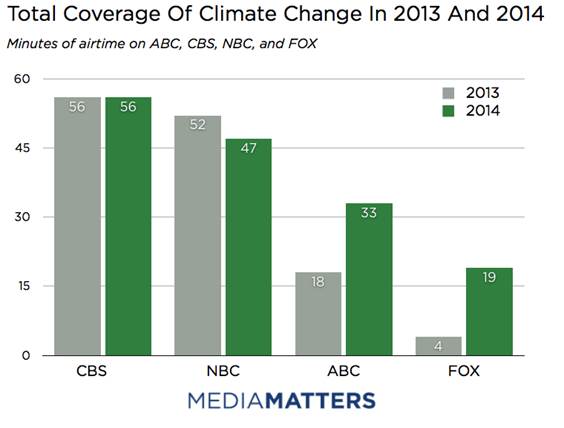
Here’s a sign of how badly the big networks are blowing it: (U.S.) ABC’s World News Tonight spent more than seven minutes reporting on the birth of royal baby Archie in the week after he was born — more time than the program spent covering climate change during the entire year of 2018.
Other major TV news outlets in the U.S. have also severely underreported the climate crisis yet found plenty of time to note the arrival of Archie, son of Britain’s Prince Harry and Meghan, the Duchess of Sussex. He’s now seventh in line to the British throne, which means he probably won’t be a king but definitely will be a tabloid mainstay.
On May 6, the same day Archie was born, the United Nations released a summary of a major new report warning that human destruction of the natural world, including through climate change, now threatens up to a million species with extinction. That’s dire news for our species too, as it also threatens our water supplies, food security, and health. The destruction of ecosystems and species “means grave impacts on people around the world are now likely,” the report warned. Robert Watson, head of the group of scientists that produced the report, laid it on the line: “What’s at stake here is a liveable world.”
Yes, this extinction crisis is grim news, and many people need a little light fare mixed in with their misery — a report on a royal baby, if you’re into that kind of thing, or a sports recap, or a segment on disgruntled Game of Thrones fans. But when the light fare takes over and the real news is shut out, that’s beyond lopsided. We’ve got a problem.

U.S. broadcast news coverage of climate change and extinction vs royal baby
Minutes of coverage on nightly news shows from Nay 6 to May 12
Media Matters tracked broadcast news coverage on May 6 and found that ABC and NBC’s nightly news programs failed to even mention the U.N. biodiversity report. They did, however, air two segments each on Archie. CBS was the only national broadcast network that ran a segment on the biodiversity report that night, and of course it ran one on the baby, too.
The perverse priorities of TV newscasters became even more obvious in the following days. Archie stayed in the news. Biodiversity and climate change stayed out of it.
By May 12, the three networks’ nightly news shows had spent a total of 17 minutes and 56 seconds on baby Archie. The extinction report and climate change garnered a total of one minute and 21 seconds — all of it in that single CBS segment on May 6.
ABC’s World News Tonight devoted the most time to the royal baby: seven minutes and 14 seconds over the week. Compare that to the six minutes and three seconds the program spent on climate change over the entire course of 2018. ABC typically lags behind its competitors in time spent covering climate change, as Media Matters has previously documented. The network has devoted less airtime to the climate crisis than CBS and NBC every year since 2013 — even though CBS and NBC don’t have great track records themselves. Lest you think the old broadcast dinosaurs don’t matter anymore, their flagship nightly news programs still attract an average of 25 million viewers a night, including more than 5 million between the ages of 25 and 52.
Within hours of Archie’s birth, Vice’s Derek Mead published a post headlined “Who’s Going to Tell the Royal Baby That Our Planet Is Unequivocally Dying?” He concluded, “royal baby aside, the most important news of the day, the decade, our lives, is this: We have pushed the planet far past its limits, and we ignore that at our existential peril.”
Mead joins a small but growing group of journalists and citizens demanding that our media step it up and cover climate change like the looming existential crisis it is. As Mark Hertsgaard and Kyle Pope wrote last month for the Columbia Journalism Review, “If American journalism doesn’t get the climate story right — and soon — no other story will matter.” The Columbia Journalism Review, The Nation, and The Guardian are launching a #CoveringClimateNow project to spur the media into action. The disproportionate hullabaloo over the royal baby, juxtaposed with the near silence over the extinction crisis, shows exactly why we need it.
Imagine if mainstream media covered climate change with anything near the fervor of a royal wedding or a royal birth. Weeks of high-pitched pieces anticipating the release of new climate action plans. Minute-by-minute coverage dissecting every aspect of new scientific reports. Splashy, in-depth profiles of the people leading new climate movements. Homepages and front pages dominated by the climate crisis and climate solutions, day after day. If we can imagine it, can we make it happen?

*Lisa Hymas is director of the climate and energy program at Media Matters for America and was previously a senior editor at Grist.
*Ted MacDonald is a climate and energy researcher at Media Matters.

Links

‘Now I Am Speaking To The Whole World.’ How Teen Climate Activist Greta Thunberg Got Everyone To Listen

TIME - 

Photograph by Hellen van Meene for TIME

“Can you hear me?” Greta Thunberg asks the 150 members and advisers in the U.K. Houses of Parliament. She taps the microphone as if to check if it’s on, but the gesture is meant as a rebuke; she’s asking if they’re listening. She asks again later in her speech. “Did you hear what I just said? Is my English O.K.? Is my microphone on? Because I’m beginning to wonder.” There is laughter, but it’s unclear if it’s amused or awkward. Thunberg is not smiling. She’s here to talk climate; a catastrophe is looming, her generation will bear it, and she knows whom to blame. “You did not act in time,” she declares.
Castigating the powerful has become routine for the 16-year-old. In December, she addressed the U.N. Climate Change Conference in Poland; in January she berated billionaires at the World Economic Forum in Davos, Switzerland. Her London speech was the last stop of a tour that included meeting the Pope. (“Continue to work, continue,” he told her, ending with, “Go along, go ahead.” It was an exhortation, not a dismissal.)
Just nine months ago, Thunberg had no such audiences. She was a lone figure sitting outside the Swedish Parliament in Stockholm, carrying a sign emblazoned with Skolstrejk for Klimatet (School Strike for Climate). She was there for a reason that felt primal and personal. While Thunberg was studying climate change in school at the age of 11, she reacted in a surprisingly intense way: she suffered an episode of severe depression. After a time it lifted, only to resurface last spring.
“I felt everything was meaningless and there was no point going to school if there was no future,” Thunberg says. But this time, rather than suffer the pain, she decided to push back at its cause, channeling her sadness into action. “I promised myself I was going to do everything I could do to make a difference,” she says.
Inspired by the survivors of February 2018’s school shooting in Parkland, Fla., she began a weekly schoolwork strike every Friday, turning to social media to implore politicians to support and take steps toward halting carbon emissions. Since the U.N. Climate Change Conference in December, Thunberg’s Twitter following has grown by nearly 4,000% to reach 612,000; many have also followed her lead offline, striking to demand change. “Before, I never really spoke when I was in my lessons or with my classmates,” she told me shortly after her London speech. “But now I am speaking to the whole world.”


The world is listening. Organizers estimate that on March 15, a remarkable 1.6 million people in 133 countries participated in a climate strike inspired by Thunberg’s solo action—mostly students who walked out of school for a few minutes, an hour or a full day of protest. Since then, the walkouts have continued, with students around the world united by the #FridaysForFuture and #YouthStrike4Climate hashtags. As well as spreading across Europe, the U.S. and Australia, students in Global South countries experiencing severe effects of climate change such as Brazil, Uganda and India have taken action too, following Thunberg’s lead. In the words of Parkland student Emma González, Thunberg’s way of “inspiring steadfast students and shaming apathetic adults” has turned her single idea into a worldwide movement. “There’s a massive intergenerational injustice here,” said 18-year-old U.K. strike organizer Anna Taylor, at the London leg of the global school strike on March 15. “Striking is the only way to make our voices heard.”
As the movement has attracted attention, Thunberg’s life has been transformed. She never expected the whirlwind of interest, saying it was initially tricky to convince other students to join her action. “I just went ahead and decided to plan it, even if I were alone,” she says, with a persistence that has yet to waver.
Thunberg attributes her determination to her diagnosis of Asperger’s, a mild form of autism spectrum disorder. “It makes me see the world differently. I see through lies more easily,” she says. “I don’t like compromising. For me, it’s either you are sustainable or not — you can’t be a little bit sustainable.” Her openness about her diagnosis, and willingness to share about her experiences of depression, anxiety and eating disorders, are another reason why many see Thunberg as a role model. “To be different is not a weakness. It’s a strength in many ways, because you stand out from the crowd.”
Not that all of the attention has made her terribly impressed. She indulges a brief smile at a mention of President Barack Obama’s tweet in praise of her, but she returns quickly to her larger message. “I believe that once we start behaving as if we were in an existential crisis, then we can avoid a climate and ecological breakdown,” she says. “But the opportunity to do so will not last for long. We have to start today.”

Thunberg joining a school strike in Paris on Feb. 22
Lionel Preau—Riva Press/Redux


After the round of European appearances in April, I join Thunberg and her father Svante on the two-day, 1,200-mile journey back to Stockholm from London. As one of our trains prepares to depart from Brussels at 6:25 a.m., she takes a photo to share with her 1.6 million Instagram followers before putting on an eye mask for a nap. Five minutes into the journey, a man stops to ask if he can take a photo with the sleeping teenager, saying she has inspired his own daughters. Svante politely replies, “When she wakes up, in Cologne.”
There’s a certain retro glamour in the phrase—redolent of an era when train travel was an elegant indulgence, rather than a time-consuming headache compared with going by air. But for Thunberg, the cost in convenience is marginal compared to the greater savings in carbon emissions. She’s not alone. In what her father jokingly calls the “Greta effect,” German and Swedish rail operators have reported a year-on-year rise in passenger numbers. Moreover, Swedish airports have seen fewer flyers since September, in part attributed to a phenomenon Swedes call flygskam, or “flying shame.”
It’s impossible to know if travelers with places to be and schedules to keep are really following the lead of a 16-year-old, but Thunberg is widely credited with setting an example. “People are taking their cues from Greta,” says Naomi Klein, activist and author of This Changes Everything: Capitalism vs. the Climate. “There’s something very hard to categorize about her, and I think because she’s not looking for approval and is not easily impressed, people don’t know what to do with that.”
Thunberg has been greatly influenced by Klein’s work and has welcomed her support. But Klein thinks the teenager doesn’t really need anyone’s advice. “I don’t think I would deign to tell Greta what she should do in the future. She is following her own path with such clarity, and she has tremendously good instincts.”

Thunberg greeting Pope Francis on April 17
Vatican Media/Reuters
Thunberg’s main goal is for governments to reduce emissions in line with the Paris Agreement, limiting global temperature rise to 1.5°C over pre-industrial levels. In October 2018, the U.N.’s Intergovernmental Panel on Climate Change (IPCC) released a landmark report warning that carbon emissions would need to be cut by 45% by 2030 to reach this target. “The report made it very clear that we have to act now,” says Myles Allen, a co-author of the report. Since the price of failing to heed these warnings will be paid by young people, Thunberg believes the school strike follows an inevitable logic. “We are children, saying why should we care about our future when no one else is doing that?” she says. “When children say something like that, I think adults feel very bad.”

We arrive at Thunberg’s school 10 minutes late for class, barely two hours after stepping off the train at Stockholm Central and stopping briefly at home for breakfast. Paradoxically, while ditching school is the animating action of Thunberg’s campaign, working hard in class has become an oasis. Conjugating verbs in French class and trying out different instruments in a music lesson have a certain familiarity that addressing Popes and Presidents doesn’t. Glimmers of the surreal outside world appear occasionally—Thunberg has had the peculiar experience of quoting herself when answering questions on current affairs in class—but life at home is mostly unremarkable. In her spare time, she likes cooking vegan food and playing with her two dogs. “Sometimes I feel like it’s not happening, because it’s like two completely different worlds. Here I am just a quiet girl, and there I am very famous,” she says during a break on a school playground, surrounded by woodland.
She manages to live in both worlds, studying for a test and then writing a speech, finishing her homework and organizing a strike. Unlike most global figures, Thunberg doesn’t have a staff; her parents do what they can to maintain a sense of normalcy for her and her 13-year-old sister, Beata, though Svante no longer answers the phone unless it’s a trusted contact.
Meantime, there is a Greta effect within the home too. Svante and Thunberg’s mother Malena Ernman have given up meat, installed solar panels on their home and stopped traveling by air—decisions they made because they tired of arguments with their stubborn daughter, Svante likes to joke. It’s been a major shift for Malena, an opera singer who no longer flies abroad to performances. “Once she realized the consequences of that lifestyle, she was easy to convince,” Thunberg says, sounding more like a parent than a child.

Thunberg speaking at the European Parliament in Strasbourg, France on April 16
Michel Christen—EU-EP/REA/Redux
She and her fellow youth strikers in Stockholm are planning for the city’s next major strike on Friday, May 24, two days before the 2019 European Parliament elections. After that, she will pack her bags again to continue spreading the word. A trip to the U.S. seems unlikely for now, given the difficulties of crossing the Atlantic without an airplane. But nothing is impossible for Thunberg, as we ponder the logistics of how she might eventually travel to China one day via the Trans-Siberian railway.
I end my week with Thunberg as she participates in a strike outside the Swedish Parliament on a sunny Friday, where a crowd of around 100 people come and go, joining the strike throughout the day. The group includes people of all ages, from a 10-year-old girl who spent a week making her own replica of Thunberg’s sign, to a group of grandparents who met through joining the strike. Thunberg is still exhausted from her European trip, but she feels comfortable here—among people passionate about environmental issues, speaking democratically about their ideas. She knows action on climate change won’t happen instantly, but she’s prepared to dedicate years to this cause, even if life in the public eye has its drawbacks. “When I grow up, I want to be able to look back and say that I did everything I could,” she says. “I think that more people should feel like that.”
Since she came to prominence, Thunberg has been the target of negativity, trolling and even threats. Right-wing commentators and climate-change deniers have called her a “PR puppet” who is paid by a global network of billionaires to spread a “left-liberal” message. Others have criticized her stern appearance and “monotone voice,” a characteristic shared by many on the autism spectrum.
“It’s quite hilarious when the only thing people can do is mock you, or talk about your appearance or personality, as it means they have no argument, or nothing else to say,” she says, reading some negative replies she’s received to a recent tweet. “I’m not going to let that stop me,” she says, “because I know this is so much more important.”

Links

Climate Change: Sea Level Rise Could Displace Millions Of People Within Two Generations

The Conversation -  | 


A small boat in the Illulissat Icefjord is dwarfed by the icebergs that have calved from the floating tongue of Greenland’s largest glacier, Jacobshavn Isbrae. Michael Bamber, Author provided
Antarctica is further from civilisation than any other place on Earth. The Greenland ice sheet is closer to home but around one tenth the size of its southern sibling. Together, these two ice masses hold enough frozen water to raise global mean sea level by 65 metres if they were to suddenly melt. But how likely is this to happen?
The Antarctic ice sheet is around one and half times larger than Australia. What’s happening in one part of Antarctica may not be the same as what’s happening in another – just like the east and west coasts of the US can experience very different responses to, for example, a change in the El Niño weather pattern. These are periodic climate events that result in wetter conditions across the southern US, warmer conditions in the north and drier weather on the north-eastern seaboard.
The ice in Antarctica is nearly 5km thick in places and we have very little idea what the conditions are like at the base, even though those conditions play a key role in determining the speed with which the ice can respond to climate change, including how fast it can flow toward and into the ocean. A warm, wet base lubricates the bedrock of land beneath the ice and allows it to slide over it.

Though invisible from the surface, melting within the ice can speed up the process by which ice sheets slide towards the sea. Gans33/Shutterstock
These issues have made it particularly difficult to produce model simulations of how ice sheets will respond to climate change in future. Models have to capture all the processes and uncertainties that we know about and those that we don’t – the “known unknowns” and the “unknown unknowns” as Donald Rumsfeld once put it. As a result, several recent studies suggest that previous Intergovernmental Panel on Climate Change reports may have underestimated how much melting ice sheets will contribute to sea level in future.

What the experts say
Fortunately, models are not the only tools for predicting the future. Structured Expert Judgement is a method from a study one of us published in 2013. Experts give their judgement on a hard-to-model problem and their judgements are combined in a way that takes into account how good they are at assessing their own uncertainty. This provides a rational consensus.
The approach has been used when the consequences of an event are potentially catastrophic, but our ability to model the system is poor. These include volcanic eruptions, earthquakes, the spread of vector-borne diseases such as malaria and even aeroplane crashes.
Since the study in 2013, scientists modelling ice sheets have improved their models by trying to incorporate processes that cause positive and negative feedback. Impurities on the surface of the Greenland ice sheet cause positive feedback as they enhance melting by absorbing more of the sun’s heat. The stabilising effect of bedrock rising as the overlying ice thins, lessening the weight on the bed, is an example of negative feedback, as it slows the rate that the ice melts.
The record of observations of ice sheet change, primarily from satellite data, has also grown in length and quality, helping to improve knowledge of the recent behaviour of the ice sheets.
With colleagues from the UK and US, we undertook a new Structured Expert Judgement exercise. With all the new research, data and knowledge, you might expect the uncertainties around how much ice sheet melting will contribute to sea level rise to have got smaller. Unfortunately, that’s not what we found. What we did find was a range of future outcomes that go from bad to worse.

Reconstructed sea level for the last 2500 years. Note the marked increase in rate since about 1900 that is unprecedented over the whole time period. Robert Kopp/Kopp et al. (2016), Author provided
Rising uncertainty
We gathered together 22 experts in the US and UK in 2018 and combined their judgements. The results are sobering. Rather than a shrinking in the uncertainty of future ice sheet behaviour over the last six years, it has grown.
If the global temperature increase stays below 2°C, the experts’ best estimate of the average contribution of the ice sheets to sea level was 26cm. They concluded, however, that there is a 5% chance that the contribution could be as much as 80cm.
If this is combined with the two other main factors that influence sea level – glaciers melting around the world and the expansion of ocean water as it warms – then global mean sea level rise could exceed one metre by 2100. If this were to occur, many small island states would experience their current once-in-a-hundred–year flood every other day and become effectively uninhabitable.
A climate refugee crisis could dwarf all previous forced migrations. Punghi/Shutterstock
For a climate change scenario closer to business as usual – where our current trajectory for economic growth continues and global temperatures increase by 5℃ – the outlook is even more bleak. The experts’ best estimate average in this case is 51cm of sea level rise caused by melting ice sheets by 2100, but with a 5% chance that global sea level rise could exceed two metres by 2100. That has the potential to displace some 200m people.
Let’s try and put this into context. The Syrian refugee crisis is estimated to have caused about a million people to migrate to Europe. This occurred over years rather than a century, giving much less time for countries to adjust. Still, sea level rise driven by migration of this size might threaten the existence of nation states and result in unimaginable stress on resources and space. There is time to change course, but not much, and the longer we delay the harder it gets, the bigger the mountain we have to climb.

Links

22/05/2019

Insurers Urge Morrison To Take On Climate Action

AFR - James Fernyhough


General insurers have lost no time in calling on the re-elected Morrison government to put a "greater focus" on natural disaster mitigation following the Coalition's shock win in Saturday's federal election.
In a statement congratulating Prime Minister Scott Morrison for his win, Insurance Council of Australia chief executive Rob Whelan listed among the industry's priorities to "protect at-risk communities from natural disasters" and "tackle climate change".
"The ICA hopes a greater focus will be placed on investing in nation-building infrastructure that encourages economic sustainability and growth in regions exposed to natural disasters, in the form of permanent mitigation and other resilience programs," Mr Whelan said.
He also called for the "removal of inefficient and unfair state taxes and levies on insurance products".
Insurers around the world have seen a sharp rise in natural catastrophe claims in recent years, which the industry has universally linked to the climate crisis.
This has prompted a global push by the industry for governments and regulators to take the issue seriously.
Australia's biggest insurers IAG, Suncorp and QBE have repeatedly flagged the risks natural catastrophes pose to their businesses, while the Australian Prudential Regulation Authority, under the leadership of the head of insurance Geoff Summerhayes, has taken an increasingly stronger position on the financial risks of climate change.
The Australian Securities and Investments Commission and the Reserve Bank of Australia have also named climate change as a major risk.
Labor was widely expected to win Saturday's election on a platform that included much more ambitious plans to cut greenhouse gas emissions. Labor was targeting 45 per cent emissions reductions on 2005 levels by 2030, while the Coalition's target is 26 to 28 per cent.
The Coalition's means of achieving that reduction is a $3.5 billion fund to spend on carbon abatement projects, such as planting trees.
Following the collapse of former prime minister Malcolm Turnbull's ill-fated national energy guarantee (NEG), the government's climate policy does not include any attempt to cap businesses' emissions, or incentivise low-emissions activities.
Already a return of the NEG is being mooted, with business leaders reportedly favouring it, and former foreign minister Julia Bishop calling on her ex-colleagues to embrace the policy, which had broadly bipartisan support before the right wing of the Liberal Party, led by Tony Abbott, derailed it.
ICA spokesman Campbell Fuller said that while climate change was likely increasing natural disasters, the insurance industry's main focus was on resilience measures such as flood levies, rather than policies that tackle the root cause of climate change, greenhouse gas emissions.
"The ICA does not believe it is advisable to take a political position on climate change. It seeks to encourage all governments to help communities adapt to the challenges posed by climate change,” Mr Fuller said.
“Permanent mitigation shouldn’t be treated as an afterthought. It should be treated as nation-building infrastructure, because properly designed and maintained mitigation helps ensure that communities can remain economically sustainable.
"In some parts of the country, it can help the economy thrive. So rather than having to be rebuilt every few years through taxpayer funds and insurance, our argument is to reduce the impacts or likelihood of the impact of floods."
He said only 3 to 5 per cent of disaster funding went towards mitigation, with the vast majority going towards recovery.
He called on the government to adopt the Productivity Commission's recommendation that the federal government spend $200 million a year on resilience projects, with state and local governments contributing a further $200 million.
Sixteen of the 20 most flood-prone areas of Australia are in Queensland - the state with the most pronounced swings towards the Coalition in Saturday's election. The rest are in NSW.
Earlier this month, the ICA announced it was developing a climate change strategy.
"The ICA’s goal is to play a thought-leadership role in the transition of our nation to a low-carbon economy by sending a price signal about unacceptable risks and working with governments to help reduce risks through improving the built environment," ICA president Richard Enthoven said.
"This strategy will also assist our member companies to manage the increasing risks to their businesses associated with climate change."

Links

Lethal Heating is a citizens' initiative