21/09/2019

‘I Hope The Politicians Hear Us’: Millions Of Youths Around The World Strike For Action

Washington Post - Sarah Kaplan | Lauren Lumpkin Brady Dennis

The strikes come three days before world leaders are set to gather at the United Nations on Monday for a much-anticipated climate summit.


Thousands of young people took to the streets of the nation’s capital demanding more action from world leaders to combat climate change. (Luis Velarde, Alice Li/The Washington Post)

NEW YORK — In one of the largest youth-led demonstrations in history, millions of people from Manhattan to Mumbai took to the streets around the globe on Friday, their chants, speeches and homemade signs delivering the same stern message to world leaders: Do more to combat climate change. And do it faster.
From small island nations such as Kiribati to war-torn countries such as Afghanistan, from small towns in Africa to major European capitals, and across the United States, young people worried about the future that awaits them left behind their classrooms to collectively demand that governments act with more urgency to wean the world off fossil fuels and rapidly cut carbon dioxide emissions.
“Oceans are rising and so are we,” read the sign that 13-year-old Martha Lickman carried through London.
“Whose future? Our future!” shouted students from Montgomery Blair High School in Silver Spring, as they made their way to protest outside the U.S. Capitol.
“I hope the politicians hear us. They don’t really seem to be doing anything,” said Albe Gils, 18, who skipped high school to join the crowds of protesters in front of Copenhagen’s copper-towered city hall.
Despite a monumental turnout that stretched across every continent, it remains unclear whether the high-profile demonstrations can fundamentally alter the global forces contributing to climate change and compel elected leaders to make the difficult choices necessary to halt the world’s warming. But transformative change is precisely what those behind Friday’s marches have demanded — including a swift shift away from fossil fuels toward clean energy, halting deforestation, protecting the world’s oceans and embracing more sustainable agriculture.
Friday’s far-reaching strikes, which spanned more than 150 countries, come three days before world leaders are set to gather at the United Nations on Monday for a much-anticipated climate summit. U.N. Secretary General António Guterres has insisted that countries bring with them promises of meaningful action such as vowing to reach net zero emissions by 2050, cutting fossil fuel subsidies and ceasing construction of coal-fired power plants.
The summit will offer a key test of whether the world’s nations, which came together to sign the Paris climate accord in 2015, can actually muster the resolve to scale back carbon emissions as rapidly as scientists say is necessary to avoid the worst effects of climate change.
On Friday, the resolve of millions of young people around the world was hardly in doubt.
A growing amount of research suggests that young voters in democracies are increasingly frustrated with political processes, which they feel have failed to address their concerns, most notably climate change.
“I have the feeling that politicians are often just [focusing on] the next vote,” said 25-year-old student Jakob Lochner, who was attending the protest in Berlin on Friday. “If you look around, there are so many people on the street; there is kind of a social tipping point.”
In Australia, where hundreds of thousands rallied in Melbourne, Sydney and other cities, the impact of inaction on climate change and environmental degradation has made young people lose “faith in our leaders and decision-makers,” according to a UNICEF report this year. Researchers examining the same phenomenon in Europe reached similar conclusions. Almost half of all young European respondents said in a recent survey that they had no trust at all in politics.


The climate strikes on Sept. 20 swept across many capitals three days before world leaders gather at the United Nations for a much-anticipated climate summit. (Luis Velarde/The Washington Post)

That frustration was palpable Friday among the young protesters, who are part of a generation that has become increasingly vocal in their demands that leaders take climate change more seriously — and act more swiftly. The demonstrations came more than six months after hundreds of thousands of students staged a similar coordinated effort to demand urgent action on climate change, and the latest iteration was larger and just as fervent.
In London, tens of thousands marched past 10 Downing Street and the Houses of Parliament, some holding aloft signs that read “Winter is NOT coming” and “I’m taking time out of my lessons to teach you.”
“We’re doing our bit, eating less meat, using less plastic,” said Lickman, the 13-year-old demonstrator. “But it’s still on the government to do something.”


After taking a solar-powered boat from England to New York to attend the United Nations Climate Action Summit, Thunberg discussed what activists need to do. (Jhaan Elker/The Washington Post)

Protesters in climate-conscious Germany held more than 500 events to mark the global climate strike on Friday, including a large demonstration at Berlin’s Brandenburg Gate. The demonstrations in Germany come as Chancellor Angela Merkel’s government faces increasing public pressure to take bold climate action following heat waves and protests dubbed Fridays for Future throughout the country.
As the demonstration swelled, drawing citizens of all ages, Merkel announced a wide-ranging package aimed at getting Germany back on track to meet its climate targets. Berlin has pledged to cut its emissions by 55 percent from 1990 levels by 2030. The package includes more than $60 billion in investment in areas such as trains, electric vehicles and subsidies for green buildings, according to German media.
In Moscow, Arshak Makichyan, a 24-year-old violinist, staged a one-man protest after the government rejected his application to hold a group demonstration, the BBC reported. Russia, which has been hit hard by climate change, ranks as the world’s fourth-largest emitter of greenhouse gases after China, the United States and India.
In Brussels, the young and not-so-young protested with signs in English, French and Dutch.
“I am here because we want adults to act,” said Caroline Muller, 13, who has protested in the past. “It is time to do something.”
Back in Washington, 35-year-old Allyson Brown pulled her 5-year-old daughter out of school and headed toward the Mall, where she planned to join a mass of other protesters and impart a lesson on how to push for change.
“This,” she said, “is education for today.”
Among the largest, most high-profile protests Friday was the one in New York, led by 16-year-old Swedish climate activist Greta Thunberg, who has inspired the burgeoning protest movement with the solitary school strikes she undertook outside her country’s parliament beginning last summer.
Even before the strike in Manhattan officially began Friday, Foley Square teemed with colorful signs and shouting teenagers, and the swelling crowd spilled into the surrounding streets.
“Climate change is not a lie, we won’t let our planet die,” the masses chanted.
“Our planet is not for profit!”
Organizer Alexandria Villasenor, the 14-year-old who helped spark New York’s climate strikes when she began protesting in front of the United Nations 10 months ago, smiled as she took in the teeming crowd.
“The strike today is going to change the conversation [at next week’s U.N. climate summit],” she said. “They have to listen to us now.”
Ultimately, organizers estimated that more than a quarter-million protesters crammed into Lower Manhattan. In Battery Park, a sweaty throng waited beneath the fierce midday sun in front of a stage where Thunberg would later speak.
The speeches from teenagers were fiercely critical of those in power, both in government and in the corporate world.
“Their complacency is killing me,” said Isabella Fallahi, a young organizer from Indianapolis, who said Democrats and Republicans are equally culpable for the lack of climate action. “Both parties are guilty of silence. Politicians don’t simply get a medal for believing in facts.”
Kevin Patel, a fellow youth organizer from Los Angeles, leaned toward the microphone: “You are either with us in this fight or you are against us.”
Thomas Jimenez, 16, Lola Allen, 15, and Crystal Lantigua, 16, juniors at Fort Hamilton High School, had raced to secure a place in front of the stage.
“Adults have a lot of opinions about our generation,” Jimenez said. “But I think we’re strong and powerful. It blows my mind to see kids our age make such a big difference.”
Behind him, a sea of handcrafted signs hinted at the sense of anger and frustration among his peers.
“You know it’s time for change when the children act like leaders and the leaders act like children,” read one.
“I’ll take my exams if you take action,” read another.
“Policymakers don’t get it,” said Yujin Kim, a 17-year-old South Korean student who had traveled to New York for a U.N. youth summit. “They’re not going to be here in 30 years. And we are. We’re going to keep speaking out until they listen.”
Organizers said more than 1,100 strikes took place across all 50 states on Friday. The strikes were planned largely by teenagers, in between soccer practices and studying for math exams, but a growing number of adults also have begun to offer their support.
New York and Boston public schools granted students permission to skip school for the strikes. For students in other districts, more than 600 physicians signed a “doctor’s note” that reads, “Their absence is necessary because of the climate crisis.”
Numerous companies, including Ben & Jerry’s, Patagonia and the cosmetic company Lush, closed their doors in solidarity with the youth and encouraged employees to attend the Friday’s strike.
After hours of marching and chants and speeches, the sea of protesters roared late Friday afternoon, as Thunberg herself finally took the stage.
“The eyes of the world will be upon them,” she said of the national leaders gathering next week at the U.N. summit. “They have a chance to take leadership. To prove they actually hear us.”
She paused.
“Do you think they hear us?”
The crowd screamed back: “No.”
She smiled.
“We will make them hear us," Thunberg said, adding, "Change is coming. Whether they like it or not.”

Links

Climate Change Protests Spread Around The World On Global Day Of Action

ABC News

Swedish environmental activist Greta Thunberg, left, takes part during the Climate Strike in New York. (AP: Eduardo Munoz Alvarez)

Key points
  • Protests began in the Pacific on Friday, with an estimated 300,000 Australians taking to the streets
  • Climate change rallies spread to Asia, Africa and Europe throughout the rest of the day
  • The day of action is being held ahead of the United Nations climate summit in New York next week
Students worldwide are taking to the streets to demand more action against climate change after an estimated 300,000 Australians gathered at rallies around the country.
As Friday began around the world, rallies spread across Asia into Africa and Europe, with school students joined by supporters of all ages.
The global day of action was called ahead of a United Nations climate summit in New York next week.
In Nigeria, 37-year-old Seye Adegbpye, 37, told the BBC she joined the climate change protest in Lagos as she had noticed water levels getting higher and flooding getting worse every year.
"The city is also getting hotter and hotter," she said.
Research shows Little Ice Age, Medieval Warm Period weren't globally coherent periods of warming or cold.
"Even though there aren't many of us here today, I'm hoping our Government will hear our requests and implement policies such as increasing the number of trees that are planted around the city."
Banashree Thapa, 23, joined climate protests in Delhi, outside the Lodhi garden.
"I am the daughter of a forest ranger but what will he protect if there is nothing left to protect?" she asked the BBC.
"This is beyond climate change," she says.
"This is nature's wrath. And it's coming for us. That's what brought me here."
Around a thousand protesters march to demand action on climate change, in the streets of downtown Nairobi, Kenya. (AP: Ben Curtis)
Children hold placards and signs while in front of a historic building in London

An activist displays a placard during a rally to coincide with the global protests on climate change at the University of Philippines campus in suburban Quezon city in the Philippines. (AP: Bullit Marquez)

Hundreds of people marched in the streets of Bangkok, Thailand, to demand the Government take measures to deal with the climate change crisis. (AP: Thanis Sudto)
A young protester shouts slogans with others in front of the Ministry of Housing and Urban Affairs in New Delhi, India. (AP: Manish Swarup)
Climate protesters demonstrate in Athens, Greece. (AP: Thanassis Stavrakis)
Several hundreds of protesters gathered in Prague's Old Town Square. (AP: Petr David Josek)
Activists of the group 'Extinction Rebellion' shedding red liquid, symbolising blood, on the stairs of a recently opened promenade in Hamberg, Germany. (Jonas Walzberg/dpa via AP)
People hold signs as they demonstrate at the march to the US Capitol during the Climate Strike. (AP: Kevin Wolf)
Links

'No Planet B': Hundreds Of Thousands Join Global Climate Strike

Al Jazeera - Kate Walton | Bilal Kuchay |Ylenia Gostoli | News Agencies

Protesters across Asia Pacific demand governments take urgent steps to prevent climate change catastrophe.

An estimated 10,000 people turned out in the Australian capital, Canberra, as a global day of climate protests got under way in the Asia Pacific region [Kate Walton/Al Jazeera]

Hundreds of thousands of protesters, many of them students who skipped school, have gathered in cities across Asia, kicking off a day of worldwide protests calling for action against climate change ahead of a UN summit.
From the Pacific Islands to Australia and India, protesters took to the streets on Friday, demanding their governments take urgent steps to tackle the climate crisis and prevent an environmental catastrophe.
Organisers estimated 300,000 people turned up for the "global climate strike" in Australia, the world's largest exporter of coal and liquid natural gas.
Protests were staged in 110 towns and cities across the country, with crowds calling on the government to commit to a target of net-zero carbon emissions by 2030.
Greta Thunberg, the 16-year-old Swede who inspired the climate strike, tweeted her support.
"Incredible pictures," she wrote from New York. "This is the huge crowd building up in Sydney. Australia is setting the standard!"
Protests are planned in some 150 countries on Friday and will culminate in New York when Thunberg, who has been nominated for a Nobel prize for her activism on climate change, leads the march in the city where the United Nations has its headquarters.
The UN Climate Action Summit brings together world leaders to discuss climate change mitigation strategies, including the move from fossil fuels to renewable energy sources.
An estimated 100,000 people turned up on the streets of London as part of what is expected to be the largest mobilisation in a worldwide series of climate-focused events, organisers said.
According to the UK Student Climate Network, which is coordinating the strikes in this country, more than 200 demonstrations took place across the UK on Friday as workers were actively encouraged to join the youngsters.
"I felt like climate change is so important, but I hadn't really seen anything to reflect that," Lola Fayokun, an 18-year-old from Avery in south London, told Al Jazeera at the protest.
"It's already killing people and having so many horrific impacts, especially in the global south. Yet nothing is being said. There is complete radio silence on the issue," she added.

'I want to live'
In Canberra, the Australian capital, a 12-year-old primary school student told an estimated 10,000 people said she and her classmates had decided saving the planet was more important than classes.
"Politicians worry about us not going to school," said Alison. "But we're learning about the world, the danger we're in and what we can do about it. We know it's important to go to school and learn, but we know it is more important to save the planet for future generations to learn on."
Sixteen-year-old Elizabeth Whitbread attended the Canberra protest with a banner saying she was "hoping for a cooler death".
"I'm here because I want to live," she said. "We all have the right to the life we set out to have. I don't want to die young."
Acting Prime Minister Michael McCormack said students should be in school.
"These sorts of rallies should be held on a weekend where it doesn't actually disrupt business, it doesn't disrupt schools, it doesn't disrupt universities," McCormack told reporters in Melbourne.
"I think it is just a disruption," he added.
Australia's conservative government - while stopping short of outright climate change denial - has sought to frame the debate as a choice between jobs or abstract CO2 targets.
School students ignored politicians who told them to stay in their classrooms to join the global climate strike on Friday. These young women attended the protest in Canberra, Australia [Kate Walton/Al Jazeera]
Pacific Islanders attend a protest march as part of the world’s largest climate strike in Sydney, Australia [Peter Parks/ AFP]
'No Planet B'
As Friday's day of action got underway across the scattered Pacific communities, students holding placards in Kiribati chanted: "We are not sinking, we are fighting". Children in the Solomon Islands rallied on the shoreline wearing traditional grass skirts and carrying wooden shields.
Hours later in Thailand, more than 200 young people stormed the Environment Ministry in Bangkok and dropped to the ground feigning death.
"This is what will happen if we don't stop climate change now," said 21-year-old strike organiser Nanticha Ocharoenchai.
In Jakarta, the capital of Indonesia, students called for action against wildfires on the islands of Borneo and Sumatra, which have caused health problems for people across the region.
"The youth here are saying they want the government to deal with this issue more urgently and take more action," said Al Jazeera's Raheela Mahomed, reporting from the protest site.
An Indonesian climate activist takes part in a global climate change campaign in Jakarta [Goh Chai Hin/AFP]


In India's New Delhi, one of the world's most polluted cities, dozens of students and environmental activists chanted "We want climate action" and "I want to breathe clean" at a rally outside the Ministry of Housing and Urban Affairs.
They carried banners with some displaying messages like "There is no Planet B".
"I have come to this protest today because I live in the world's most polluted city and our government is doing nothing to change that," said Asheer Kandhari, a student. "Not taking action, a government doesn't realise that they are taking away our futures. It's my future that is being affected by the government's inaction regarding the climate change policy."
School children shout slogans as they participate in a climate strike in New Delhi [Laurene Becquart / AFP]
No protests were authorised in China, the world's biggest source of greenhouse gas emissions, but Zheng Xiaowen of the China Youth Climate Action Network said Chinese youth would take action one way or another.
"Chinese youth have their own methods," she said.
"We also pay attention the climate and we are also thinking deeply, interacting, taking action, and so many people are very conscientious on this issue."
Rallies were also held in Kenya's capital Nairobi, Johannesburg and the South African capital, Pretoria.
Banners in Nairobi ranged from angry to playful, with one reading: "This planet is getting hotter than my imaginary boyfriend."
Al Jazeera's Nicolas Haque, reporting from Nairobi, said: "Out of the 10 countries most affected by climate change, seven of those are on the African continent. It has already started with hurricanes sweeping through Mozambique, flash floods in South Africa and Sierra Leone and droughts in the Sahel.
"Here in Kenya, 200 species are at risk of going extinct every day because of these droughts. So many young people here are going impatient with their leaders for not doing enough."
Environmental activists march carrying placards as they take part in a protest calling for action on climate change, in Nairobi [Simon Maina/ AFP]


Global warming caused by heat-trapping greenhouse gases from burning fossil fuels has already led to droughts and heatwaves, melting glaciers, rising sea levels and floods, scientists say.
Carbon emissions climbed to a record high last year, despite a warning from the UN-backed Intergovernmental Panel on Climate Change in October that output of the gases must be slashed over the next 12 years to stabilise the climate.
US President Donald Trump said in 2017 that he would pull the US out of the Paris Agreement under which countries have committed to cutting greenhouse gas emissions to tackle rising global temperatures.

Links

20/09/2019

The Good, The Bad And The Ugly: The Nations Leading And Failing On Climate Action

The Conversation - 

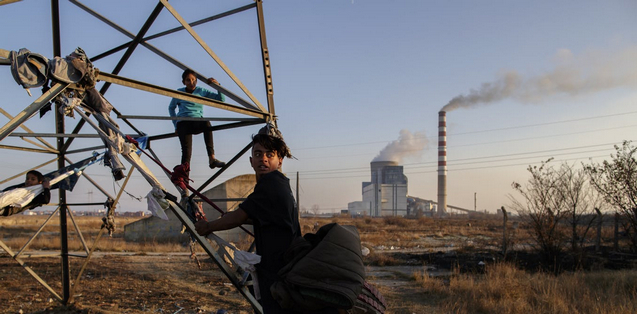
Children play near a coal-fired power plant in the town of Obilic, Kosovo, in November 2018. EPA/Valdrin Xhemaj 
It is almost five years since the landmark Paris deal was struck. Nearly 200 countries agreed to work towards limiting global warming to 1.5℃, beyond which the planet is expected to slide irreversibly towards devastating climate change impacts.
But few nations are on track to reaching this goal. Right now, we’re heading to warming above 3℃ by 2100 - and this will have catastrophic consequences for the planet.
United Nations Secretary-General António Guterres has called a major climate summit in New York on September 23, where countries are expected to announce more ambitious climate targets than they set in Paris, and solid plans to achieve them.
Ahead of the summit, let’s take stock of the world’s best and worst performers when it comes to tackling the climate emergency.
A man standing near a wind farm near Urumuqi, China. Qilai Shen/EPA
Australia is keeping poor company
The Climate Action Tracker is an independent scientific analysis produced by two research organisations tracking climate action since 2009. It monitors 32 countries, accounting for more than 80% of global emissions.
We looked in detail at who has made the most progress since 2015, and who has done the least. Australia sits firmly in the group of governments we labelled as actually delaying global climate action, alongside the United States (which under President Donald Trump has walked away from the Paris agreement altogether).
Other countries delaying global climate action with highly insufficient targets and no progress since 2015 are the Russian Federation, Saudi Arabia, the United Arab Emirates, and Indonesia.
Australia’s greenhouse gas emissions, past and projected. Data drawn from Department of the Environment and Energy report titled ‘Australia’s emissions projections 2018’ Department of the Environment and Energy
Today, Australia’s emissions are at a seven-year high, and continue to rise. The government’s commitment to fossil fuels remains unwavering - from coal projects such as Adani’s proposed Carmichael mine in Queensland to huge new gas projects.
Australia is the world’s largest exporter of coal, providing 29% of coal’s global trade, and last year also became the world’s largest exporter of liquefied natural gas. Its exported fossil fuel emissions currently represent around 3.6% of global emissions.

The surprising success stories
Ethiopia, Morocco and India top the list of countries doing the most to tackle climate change. In total, eight international jurisdictions have made good progress since 2015, including the European Union, Canada, Chile, Costa Rica, and Argentina (although they still have a lot of work ahead to meet the 1.5℃ goal).
While India still relies on coal, its renewables industry is making huge leaps forward, with investments in renewable energy topping fossil fuel investments. The country is expected to over-achieve its Paris Agreement target.
Lightning in the night sky over the Odervorland wind farm near Sieversdorf, Germany. Patrick Pleul/DPA
So what are they doing right? Costa Rica’s national decarbonisation plan covers the entire economy, including electrifying the public transport system, and huge energy efficiency measures in the industry, transport and buildings sectors. Costa Rica has also put a moratorium on new oil production.
The EU is set to overachieve its 2030 target of reducing emissions by 40% below 1990 levels by 2030 and is in the process of considering an increase in this to at least 50%. It has recently increased its renewable energy and energy efficiency goals, and is sorting out its emissions trading scheme, with prices of emission units increasing.
This, together with past investments in renewable energy, have helped to achieve a 15% reduction in German electricity sector emissions in the first half of 2019. Whilst Germany has missed its 2020 targets, it has begun a process to phase out coal no later than 2038 – still a number of years too late for a Paris-compatible pathway.

Quitting coal is key
An increasing number of countries are adopting net zero emissions targets, many of them in the European Union, and some outside. Some, like the UK, have dumped coal, and are well on the way to achieving those targets.
A global phase-out of coal for electricity is the single most important step toward achieving the 1.5℃ warming limit. At the latest, this should be achieved by 2050 globally, by 2030 in the OECD and 2040 in China and other Asian countries.
There are some signs of optimism here. On one estimate, the number of coal projects in the pipeline shrunk by nearly 70% between 2015 and 2018, and investors are increasingly wary of the technology. Yet coal is still set to boom in Indonesia, the Philippines, Japan and Turkey.
Under current polities, the world is set for more than 3°C of warming by 2100. Climate Action Tracker


In 2018, energy-related carbon dioxide emissions reached a historic high. While coal reversed its recent decline, emissions from natural gas surged by 4.6%.
Renewable energy is the key to unlocking rapid decarbonisation. It already supplies more than 26% of global electricity generation and its costs are dropping rapidly. To accelerate this fundamental transition, more governments need to adopt and improve policies that enable renewable technologies to be rolled out faster. This would contribute to low-carbon economic development and job creation.

Don’t forget about trees
Nowhere is the alarming rate of global deforestation more obvious than in Brazil, now in the middle of a record fire season. It adds to damage wrought by President Jair Bolsonaro who has weakened his country’s institutional framework preventing forest loss.
In 2018, Brazil recorded the world’s highest loss of tropical primary rainforest of any country - 1.3 million hectares - largely in the Amazon. The deforestation reached 7,900 square km in 2018, a 72% increase from the historic low in 2012.
Fire fighting efforts this month in an indigenous reserve in Humaita, in Brazil’s Amazon forest. FERNANDO BIZERRA/EPA
The past few weeks have shown us what 1℃ of global warming means. Hurricane Dorian, fuelled by high sea-surface temperatures, wiped out the northern Bahamas. Temperatures in the 40s set records across Europe. And in Queensland, the earliest fire season on record destroyed homes and razed rainforests.
The predicted 3℃ of warming by 2100 will bring a lot worse: widespread crop failures, dead coral reefs, more extreme heat waves and major threats to water supply and human health.
The world can avoid this, but time is running out.

Links

What Is The UN Climate Action Summit?

Climate Home News - 

It’s been billed as the defining political event for climate in 2019. But what is it?
UN secretary-general Antonio Guterres (Photo: UN)
UN secretary general António Guterres is hosting a climate summit in New York on 23 September to ramp up global efforts to tackle the climate crisis.
The high-level meeting at the UN headquarters is a critical moment for political leaders to show their willingness to increase their climate plans and deepen the decarbonisation of their economies.
Here is how it’s going to work.

When and where?
The summit will take place over three days 21-23 September at UN Headquarters in New York. With a culminating summit of national leaders on Monday 23.

What’s going to happen?
A youth climate summit on Saturday 21 September will open the meeting, bringing together young activists, entrepreneurs and change-makers on the day following the world’s first global climate strike.
On Sunday, the nine coalitions are due to meet to take stock of their recent work and finalise details before Monday’s big reveal.
Monday’s plenary meeting, the main event, will be a combination of presentations from the best national plans and coalition initiatives being showcased on stage.

Why another UN climate meeting? Isn’t the Paris Agreement already acting as a compass for action?
Despite commitments by governments to tackle the climate crisis, global greenhouse gas emissions continue to rise year on year.
Under the Paris Agreement, countries pledged to limit global temperature rise “well below” 2C of warming. But current national commitments will struggle to hold warming below 3C by the end of the century.
Countries have also agreed to review and update their climate plans every five years, with a view to progressively increase their emissions reductions targets. The first stage of this process is due next year.
To galvanise political leadership for ambition at a time when much of the world is gripped by a surge of nationalism and turning inwards, Guterres personally convened the summit, backing it with the full force of the UN machine.
It is expected to be a critical moment for climate diplomacy, intended to kick-start the process of increasing countries’ climate plans.

What is Guterres demanding?
“Bring plans, not speeches,” Guterres told countries.
In a letter sent to every head of state, the UN chief set-out his expectations for the summit, urging governments to come with concrete and meaningful plans for action.
Excerpts of the letter, showed Guterres asked all leaders to come “ready to announce the plans that they will set next year to reduce greenhouse gas emissions for 2030 and to achieve net zero emissions by 2050”.
His demands, in line with the tougher 1.5C goal of the Paris deal, set a high benchmark for ambition. Reaching carbon neutrality by 2050 is something only a handful of largely developed countries have so far committed to do.
Guterres also called on countries to reduce emissions by 45% by 2030, end fossil fuel subsidies and ban new coal plants after 2020 – a set of asks unusually prescriptive for the head of the UN.

What noises are coming from governments?
Countries are expected to compete for the spotlight with only the most ambitious and meaningful plans being showcased on stage on Monday 23, with the aim to spur a race to the top.
Between 80 and 100 countries have suggested they were ready to increase their climate plans ahead of schedule, with some countries signalling they could make an announcement at the summit, according to the UN.
Special envoy for climate change Luis Alfonso de Alba said a number of countries had told the UN they were “committed to be reaching new [climate] plans but they might not be ready to do that by the summit”. The UN is also expecting countries to set-out how they are going to meet their targets and plan to increase them.
Indications of what large emitters might bring to the summit remain mixed. Days before the summit, de Alba said he was “very confident” that China will come to the summit with clear commitments and “a much higher level of ambition”.
The UN has repeatedly pointed to a statement signed by China, France, and Guterres on the margins of the G20 as an indication of Beijing’s plans. It included a commitment to increase their climate plans and publish their “long-term mid-century low greenhouse gas emissions development strategies by 2020”, something Beijing could flesh out at the event.
In a communique released last week, EU Commission outgoing vice-president for the energy union Maroš Šefčovič said the EU will bring “the fruit of our work”, which he described as “a realistic perspective of a climate-neutral Europe by 2050, backed by ambitious policies set in binding legislation.” The Commission is hoping members states can agree on the target by early next year, but must overcome resistance from some holdouts.
The US is not part of the conversation at the moment. For China and the EU, the ultimate deadline to come up with more ambitious plans will be next year’s climate talks. And yet, without a strong indication that the world’s largest emitters are ready to take more robust climate action, the summit’s success could be compromised.

So is this all about competition?
No, it’s also about cooperation.
Besides, a push for countries to increase their climate plans, preparation for the summit have seen the creation of nine tracks – or coalitions – under which governments together with businesses, NGOs and other international organisations are expected to present meaningful, realistic and scalable initiatives.
The tracks have been led by national governments and include mitigation (Chile), energy transition (Denmark and Ethiopia); industry transition (India and Sweden); climate finance and carbon pricing (France, Jamaica and Qatar), infrastructure, cities and local action (Turkey and Kenya); nature-based solutions (China and New Zealand), resilience and adaptation (UK and Egypt), youth engagement and public mobilisation (Marshall Islands and Ireland) and social and political drivers (Peru and Spain).
Each track is led by an alliance of countries working with a range of partners, including businesses and civil society. The proposals emerging from these tracks should be “transformational”, the UN said, in a way that doesn’t leave communities who depend on fossil fuels for their livelihood behind.

Who is coming?
60 heads of states are expected to take the podium to announce more ambitious plans – or at least plans to plan in time for next year’s climate talks.
Some of those expected to make an appearance include India’s prime minister Narendra Modi, France’s president Emmanuel Macron, the UK’s prime minister Boris Johnson and German chancellor Angela Merkel. China is due to send a lower-ranking minister than initially anticipated – and the foreign minister is expected to be in attendance.
Neither US president Donald Trump, nor Australian prime minister Scott Morrison will attend the summit despite both attending the UN’s assembly general later in the week. Foreign minister Marise Payne and ambassador for the environment Patrick Suckling are expected to represent Australia, while US state department officials are also due to attend.
Besides business and civil society representatives, more than 500 young people have been selected to attend the summit, with youth due to play a key role throughout the event. The UN has funded travel “as carbon-neutral as possible” to New York for 100 young climate leaders from across the world.
Greta Thunberg, who crossed the Atlantic on a race boat as an alternative to flying, is also due to have a speaking role during the three-day event.

What happens next?
The summit is a political moment for world leaders to take concrete steps to ramp up ambition. It doesn’t replace the annual climate negotiations talks, which this year are taking place in December in Santiago, Chile.
Instead, the summit marks an additional step for countries to build momentum ahead of the 2020 climate talks – the most important negotiating moment since the Paris Agreement when countries are due to announce how they are going to update their climate plans.
Following the summit, Guterres is expected to write an analytical report about the meeting’s achievement in securing additional emissions reduction pledges and the support needed to implement the proposed initiatives.
The report is due to be presented at Cop25 in Chile.

Links

China And India Demand Cash For Climate Action On Eve Of UN Summit

Climate Home News - 

World’s largest and fourth largest emitters said the onus remained on the countries historically responsible for climate change to move money 
India Prime Minister Narendra Modi and Chinese President Xi Jinping (Photo: Russian President's office)
China and India demanded rich countries provide financial support for them to increase their climate plans, as leaders prepared to meet at a UN summit in New York.
The summit has been personally convened by UN secretary general António Guterres as a moment for political leaders to show their willingness to increase their climate plans and deepen the decarbonisation of their economies.
Guterres asked governments to come ready to announce the plans they will set next year.
But in separate statements published on Tuesday, the world’s first and fourth largest emitters put the onus on rich countries to fulfil their commitments to mobilise $100 billion per year by 2020 for developing countries to cope with the impacts of climate change.
As the largest developing country, China “also enjoys the right to receive funds”, it in a statement published by the ministry of ecology and environment.
It said developed countries should “implement and strengthen” and “honour the commitment” to “support the developing world in addressing climate change”.
In its statement, India’s ministry of finance said its plan was set on a “best effort” basis and that “finance holds a key for all its actions”.
With uncertain finance and technology provision, “India can only aspire to implement the already promised climate actions”, the statement said. It added that India “may only be in a position to elaborate or clarify its post 2020 climate” plan at the summit.
Instead, India said will be “better placed” to “suitably recalibrate [its climate plan] through re-examination and improvement,” in 2023, when the next global stocktake to ramp up ambition is due to take place.
The UN summit will include a discussion of climate finance, but it has not been given the primacy of Guterres’ call for ambition.
Beijing set out its action on the summit’s nine work tracks, but remained ambiguous on what it might bring to podium on Monday.
China reaffirmed its commitment to implement the Paris Agreement, but fell short of making any commitments on its climate targets for Monday’s summit.
Its contribution to climate change, it said, includes the country’s 2020 and 2030 climate targets and the establishment of “an economic system that is green and low-carbon cycle development”. It added it would “actively implement emission reduction commitments, and strengthen climate adaptation”.
“In light of tough economic and geopolitical prospects, China is pondering its options on climate,” Li Shuo, senior energy and climate policy officer at Greenpeace China told Climate Home News, adding that Beijing’s position paper left “plenty of wiggle room for a decision to double down on climate targets in 2020”.
Last week, UN special envoy for climate change Luis Alfonso de Alba said he was “very confident” that China will come to the summit “with a much higher level of ambition”, referring to a statement it issued with France and Guterres on the sidelines of the G20.
However, the stronger language in the G20 statement in which China committed to “update” its climate target “in a manner representing a progression beyond the current one” and publish a long term decarbonisation strategy by 2020, is absent from its position paper.
Even the language of China as a “torchbearer” for climate action previously used by president Xi Jinping was absent, with instead references to China as “an active participant and defender of the multilateral climate process”.
“True leaders rise to the challenges of their time,” warned Li. “If geopolitical challenges have left Chinese leaders unsure, the country’s over-achievements of its climate targets and the improving air quality should offer confidence,” he said.
Both China and India’s positions echoed a statement issued alongside Brazil and South Africa last month, highlighting the need for developed countries with greater historic emissions to shoulder greater responsibility.
For Xi’s government, this principle is “the basis for mutual trust” and the “conditions for the full and effective implementation of the Paris Agreement”, according to its latest statement.
Luca Bergamaschi, a senior associate at think-tank E3G, said China and India were developing clean technologies some time at a faster pace than developed countries.
“In a truly globalised world, this old north-south divide does not make sense,” he said.
“Although there is still a high responsibility for developed countries to provide more climate finance and lead with climate action, there is a need for much more cooperation to create open, ‘zero-carbon’ markets and to accelerate technology uptake and green finance reforms.”

Links

19/09/2019

Greta Thunberg To Congress: ‘You’re Not Trying Hard Enough. Sorry’

The Guardian - 

Greta Thunberg attends a Senate climate change taskforce meeting in Washington DC. Photograph: Mark Wilson/Getty Images
At a meeting of the Senate climate crisis task force on Tuesday, lawmakers praised a group of young activists for their leadership, their gumption and their display of wisdom far beyond their years. They then asked the teens for advice on how Congress might combat one of the most urgent and politically contentious threats confronting world leaders: climate change.
Greta Thunberg, the 16-year-old Swedish activist who has galvanized young people across the world to strike for more action to combat the impact of global warming, politely reminded them that she was a student, not a scientist – or a senator.
“Please save your praise. We don’t want it,” she said. “Don’t invite us here to just tell us how inspiring we are without actually doing anything about it because it doesn’t lead to anything.
“If you want advice for what you should do, invite scientists, ask scientists for their expertise. We don’t want to be heard. We want the science to be heard.”
In remarks meant for Congress as a whole, she said: “I know you are trying but just not hard enough. Sorry.”
The audience laughed. Supporters broke into applause. Senator Ed Markey, the Massachusetts Democrat who co-sponsored the Green New Deal and leads the Senate task force, was perhaps surprised by her bluntness. But he smiled.
Seated at the table with the teens were some of the most sympathetic and vocal supporters of bold action on climate change in Congress. But facing a Republican-controlled Senate and a hostile White House, the prospect of enacting reforms at the scale and scope called for by activists – and many scientists – is bleak.
“We need your leadership,” Markey told Thunberg. “Young people are the army politically, which has arrived in the United States. You put a spotlight on this issue in a way that it has never been before. And that is creating a new X factor.”
Still, he vowed to try: “We hear you. We hear what you’re saying and we will redouble our efforts.”
Thunberg was one of several youth activists invited to address the task force during two days of action and speeches aimed at urging lawmakers to support “transformative climate action”. She was joined by activists from across the US and South America, part of a “multiracial, intergenerational” effort to combat climate change.

Nadia Nazar, co founder of Zero Hour, speaks to the media on 17 September in Washington DC. Photograph: Eric Baradat/AFP/Getty Images
“The generation of the Green New Deal will not only survive but we will thrive,” said Nadia Nazar, co-founder of the advocacy group Zero Hour, at a news conference earlier on Tuesday.
“We will no longer be known as the kids fighting the apocalypse. We will be known as the solution to the climate crisis.”
In the US, support for sweeping action on climate change is polarized. Many Republicans – among them Donald Trump – are still openly skeptical of the science behind global warming. Republican leaders have mocked Democrats for introducing a Green New Deal and have used the proposal as a cudgel against lawmakers and presidential candidates.
The Green New Deal is an ambitious 14-page resolution that calls for a “10-year national mobilization” that would eliminate the nation’s emissions in one decade. Scientists say limiting warming to 1.5C would require cutting manmade carbon levels by 45% by 2030 and reaching net zero around 2050.
Markey said their movement is shifting the political landscape. The senator pointed to the 2020 presidential debates as evidence of what has changed. Candidates are being asked about climate change and pushed to introduce plans to combat global warming. This is in stark contrast to 2016.
“What has happened? You have happened,” he told the activists. “You are giving this extra level of energy to the political process that is absolutely changing the dynamics of politics in the United States.”
The 2020 election, Markey said, will in many ways be a “referendum on climate change”.
Thunberg arrived in the US after crossing the Atlantic on a solar-powered yacht. She rose to international prominence after launching “Fridays for Future”: student-led strikes that have spread to 135 countries. She has been nominated for a Nobel Peace Prize.
On Monday, she met Barack Obama. The former president shared a photo from their meeting, in which he praised Thunberg as “one of our planet’s greatest advocates” and someone who is “unafraid to push for real action”.

'We're a team': Greta Thunberg visits Barack Obama

Later on Tuesday, the group was scheduled to meet Senate minority leader Chuck Schumer and Alexandria Ocasio-Cortez, who is a co-sponsor of the Green New Deal in the House.
On Wednesday, Thunberg will deliver what has been billed as a “major address” to members of Congress.

PROFILE: Who is Greta Thunberg?
'Never too small to make a difference'
In August 2018 Thunberg began a solo climate protest by striking from school in Sweden when aged 15. She has since been joined by tens of thousands of school and university students in Australia, Belgium, Germany, the United States, Japan and more than a dozen other countries.

'Irresponsible children'
Speaking at the United Nations climate conference in December 2018, she berated world leaders for behaving like irresponsible children. And in January 2019 she rounded on the global business elite in Davos: “Some people, some companies, some decision-makers in particular, have known exactly what priceless values they have been sacrificing to continue making unimaginable amounts of money. And I think many of you here today belong to that group of people.”

Inspiration
Veteran climate campaigners are astonished by what has been achieved in such a short time. Thunberg has described the rapid spread of school strikes for climate around the world as amazing. “It proves you are never too small to make a difference,” she said. Her protests were inspired by US students who staged walk-outs to demand better gun controls in the wake of multiple school shootings.

Family
Her mother, Malena Ernman, has given up her international career as an opera singer because of the climate effects of aviation. Her father is actor Svante Thunber. Greta has Asperger’s syndrome, which in the past has affected her health, he says. She sees her condition not as a disability but as a gift which has helped open her eyes to the climate crisis.

Links

Lethal Heating is a citizens' initiative