27/01/2020

If You Love Australia, Climate Change Should Scare The Hell Out Of You

The Guardian

Conservatives love to talk up Australia ‘punching above its weight’, but they turn to self-hating cowards when it comes to climate change
‘Australia is a nation on the extremities, where climate change will affect and strip away what we love much sooner than will occur in Europe and North America.’ Photograph: Dan Himbrechts/AP
I love Australia.
It’s not a thing you hear too often from progressives. Mostly this is because we don’t go in for the pathetic jingo-nationalist, quasi-militaristic “love it or leave it”-style patriotism that John Howard attempted to link with a love of country.
But I do love Australia. I get an absurd amount of irrational pride when I hear of Australians doing well.
When I read stories that Indigenous rock art might be among the oldest in the world I get excited and think, yeah suck it, caves of Cantabria!
I can still remember where I was when John Aloisi scored the winning penalty against Uruguay (jumping up in my home in Cairns and cutting my hand on the overhead fan), and like all sensible Australians I let out a deep groan whenever I hear someone start yet again an “Aussie, Aussie, Aussie” chant at the tennis.
But my love has nothing to do with Australian Day and no, this is not an article about Australia Day.
I mean, of course we should change the date. As one who grew up in country South Australia from German ancestors, the English landing in Sydney has never resonated for me as anything more than New South Wales Proclamation Day. Thanks for the holiday and the cricket at Adelaide Oval, but otherwise ...
Keep the public holiday – make it the last Monday in January – it is nicely timed to signal an end to the summer holidays. Call it “Summer Day” or some such and then find another day to actually celebrate the nation. Better still, become a republic and make it that day. But I digress.
This is not about Australia Day, but climate change.
Because I love Australia, and the real question is why don’t conservatives who refuse to do more on climate change love Australia? Because climate change will destroy much of what we love about this country of ours.
Much of what makes Australia unique and beloved by those of us lucky enough to live here is linked to the extremes of our land and climate.
This summer has shown how precarious our Australian lifestyle is
In my lifetime I have mostly lived in country areas – in South Australia on the Murray River, in Redlynch just north of Cairns, and now in the northern suburbs of the bush capital that is Canberra.
So I love our biggest river and the farming areas of wheat, sheep and dairy around my home town to the grapes and fruit in the Riverland where during uni I picked fruit in the summer holidays.
Then there are the tropics with Mossman Gorge, the glorious drive from Cairns to Port Douglas, the Great Barrier Reef and the late afternoon rains.
And yes, I love the surrounds of Canberra – where I can live near a national park with kangaroos and echidnas and be able to see the snow caps on the Brindabellas in winter and fiery red of the trees in autumn and the blossoms in spring.
As anyone who has spent any time overseas knows, there is something about the sky in Australia that is different – that shade of blue so perfectly captured by Tom Roberts in his painting A Break Away!. That gorgeous clear, crisp blue.
I must admit I don’t love Dorothea Mackellar’s My Country. I find the poem rather maudlin, but perhaps I am biased because I am sick of hearing climate change-denying politicians recite it as though it is evidence that climate change has not occurred.
Because here’s the thing: when she published that poem in 1908, the average annual temperature in Australia was about 2C lower than it is now.
And those conservatives who recite the line about “a sunburnt country” ignore that climate change is going to wreak havoc with everything we love – that tenuous balance of droughts and flooding rains, the ability of agriculture to exist on “thirsty paddocks”, our rivers, our wildlife where “orchids deck the treetops”, even the crisp air and “pitiless blue sky”.
This summer has shown how precarious our Australian lifestyle is – the bushfires that have not stopped since September; the mix of fires, smoke, dust, hail (and that is just in Canberra in the past fortnight). We are a nation on the extremities, where climate change will affect and strip away what we love much sooner than will occur in Europe and North America.
No patriotic Australian can be anything but angry to read stories of a billion or more animals killed in the fires – especially when you realise the koalas on Kangaroo Island are chlamydia-free and are essentially the best protection against their extinction.
Our wildlife is so exceptional and precious that the upset in balance that comes from climate change will render some habitats unliveable.
To read that the platypus is facing extinction due to human activity exacerbated by climate change should have every patriotic Australian filled with rage.
Conservative patriots love to talk up Australia “punching above its weight” on things such as sport or business or war, but they turn to self-hating cowards when it comes to climate change.
Yes, Australia “only” accounts for around 1.3% of emissions (of course well above what you would expect given our population), but given the fragility of our ecosystem, any political leaders who profess to love Australia should be energising our diplomatic networks and using every economic and political lever we have to cajole, convince and encourage other nations to act on climate change.
We should do this even if it is out of purely selfish reasons of loving our country and wanting it to remain in the same state that has caused that love.
If you love Australia, climate change should scare the hell out of you because the reef, our rivers, our wildlife, our fresh air, even, as we have seen since December, our relaxed summer holidays are going to be stripped away from us.
Our government has more reason than most others outside of the Pacific Islands to be demanding global action on climate change.
Given our wealth we should be leading the way – leading by example rather than leading to ruin as our current government has been at the most recent climate change conferences.
What we love about Australia will be taken by climate change well before other nations who emit much more greenhouse gas will feel great changes. And that should enrage us and our representatives, and it should drive their actions.
I love Australia and so I want action on climate change. And if you love Australia, so should you.

Links

Blue Acceleration: Our Dash For Ocean Resources Mirrors What We’ve Already Done To The Land

The Conversation

Oil tankers load up in a port at twilight. Avigator Fortuner/Shutterstock


Humans are leaving a heavy footprint on the Earth, but when did we become the main driver of change in the planet’s ecosystems? Many scientists point to the 1950s, when all kinds of socioeconomic trends began accelerating. Since then, the world population has tripled. Fertiliser and water use expanded as more food was grown than ever before. The construction of motorways sped up to accommodate rising car ownership while international flights took off to satisfy a growing taste for tourism.
The scale of human demands on Earth grew beyond historic proportions. This post-war period became known as the “Great Acceleration”, and many believe it gave birth to the Anthropocene – the geological epoch during which human activity surpassed natural forces as the biggest influence on the functioning of Earth’s living systems.
But researchers studying the ocean are currently feeling a sense of déjà vu. Over the past three decades, patterns seen on land 70 years ago have been occurring in the ocean. We’re living through a “Blue Acceleration”, and it will have significant consequences for life on the blue planet.
Human claims on ocean resources and space have increased rapidly in the last three decades. Jouffray et al. (2020), Author provided
Why is the Blue Acceleration happening now?
As land-based resources have declined, hopes and expectations have increasingly turned to the ocean as a new engine of human development. Take deep sea mining. The international seabed and its mineral riches have excited commercial interest in recent years due to soaring commodity prices. According to the International Monetary Fund, the price of gold is up 454% since 2000, silver is up 317% and lead 493%. Around 1.4 million square kilometres of the seabed has been leased since 2001 by the International Seabed Authority for exploratory mining activities.
In some industries, technological advances have driven these trends. Virtually all offshore windfarms were installed in the last 20 years. The marine biotechnology sector scarcely existed at the end of the 20th century, and over 99% of genetic sequences from marine organisms found in patents were registered since 2000.
During the 1990s, as the Blue Acceleration got underway, the world population reached 6 billion. Today there are around 7.8 billion people. Population growth in water-scarce areas like the Middle East, Australia and South Africa has caused a three-fold growth in volumes of desalinated seawater generated since 2000. It has also meant a nearly four-fold increase in the volume of goods transported around the world by shipping since 2000.
Cargo ships enter Singapore – one of the busiest ports in the world. Donvictorio/Shutterstock
Why does the Blue Acceleration matter?
The ocean was once thought – even among prominent scientists – to be too vast to be changed by human activity. That view has been replaced by the uncomfortable recognition that not only can humans change the ocean, but also that the current trajectory of human demands on the ocean simply isn’t sustainable.
Consider the coast of Norway. The region is home to a multi-million dollar ocean-based oil and gas industry, aquaculture, popular cruises, busy shipping routes and fisheries. All of these interests are vying for the same ocean space, and their demands are growing. A five-fold increase in the number of salmon grown by aquaculture is expected by 2050, while the region’s tourism industry is predicted to welcome a five-fold increase in visitors by 2030. Meanwhile, vast offshore wind farms have been proposed off the southern tip of Norway.
The ocean is vast, but it’s not limitless. This saturation of ocean space is not unique to Norway, and a densely populated ocean space runs the risk of conflict across industries. Escapee salmon from aquaculture have spread sea lice in wild populations, creating tensions with Norwegian fisheries. An industrial accident in the oil and gas industry could cause significant damage to local seafood and tourism as well as the seafood export market.
A salmon farm off the coast of Vestland, Norway. Marius Dobilas/Shutterstock
More fundamentally, the burden on ocean ecosystems is growing, and we simply don’t know as much about these ecosystems as we would like. An ecologist once quipped that fisheries management is the same as forestry management. Instead of trees you’re counting fish, except you can’t see the fish, and they move.
Exploitation of the ocean has tended to precede exploration. One iconic example is the scaly-foot snail. This deep sea mollusc was discovered in 1999 and was on the IUCN Red List of endangered species by 2019. Why? As far as scientists can tell, the species is only found in three hydrothermal vent systems more than 2,400 metres below the Indian Ocean, covering less than 0.02 square kilometres. Today, two of the three vent systems fall within exploratory mining leases.

What next?
Billionaires dreaming of space colonies can dream a little closer to home. Even as the Blue Acceleration consumes more of the ocean’s resources, this vast area is every bit as mysterious as outer space. The surfaces of Mars and the Moon have been mapped in higher resolution than the seafloor. Life in the ocean has existed for two billion years longer than on land and an estimated 91% of marine species have not been described by science. Their genetic adaptations could help scientists develop the antibiotics and medicines of tomorrow, but they may disappear long before that’s possible.
Scientists have barely sampled the diversity of life in the deep sea. NOAA/UnsplashCC BY-SA
The timing is right for guiding the Blue Acceleration towards more sustainable and equitable trajectories. The UN Decade of Ocean Science for Sustainable Development is about to begin, a new international treaty on ocean biodiversity is in its final stages of negotiation, and in June 2020, governments, businesses, academics and civil society will assemble for the UN Ocean Conference in Lisbon.Yet many simple questions remain. Who is driving the Blue Acceleration? Who is benefiting from it? And who is being left out or forgotten? These are all urgent questions, but perhaps the most important and hardest to answer of all is how to create connections and engagement across all these groups. Otherwise, the drivers of the Blue Acceleration will be like the fish in the ecologist’s analogy: constantly moving, invisible and impossible to manage – before it is too late.

Links

26/01/2020

(AU) Dear Australia, Elegy For A Summer Of Loss

Croakey - Amy Coopes

The climate emergency seemed so abstract. It was something that was happening elsewhere, to other people. Until it wasn’t
‘The ochre and rust of another hazy sunrise spilling through the blinds heralded more of the same. Asphyxia. Inertia.’ The view in North Albury on 5 January 2020. Photograph: Amy Coopes
Amy Coopes
Over the summer, Amy Coopes spent long hours on Twitter sharing bushfire news, especially for her local community of Albury and surrounds, on Wiradjuri Country in southern NSW.
Her tweets also conveyed an angry frustration with the inadequacy of federal and state government responses to the bushfire health crisis, as well as to the climate health crisis more broadly.
In Dear Australia, Elegy For A Summer Of Loss, published as part of our ongoing contribution to the global collaboration, Covering Climate Now, Coopes urges readers to rise to the challenges facing us, not only this summer, but in the years ahead as the impact of the climate crisis becomes even more evident.
For months leading into this bleakest of summers, all anyone out this way could talk about was the dry. It crunched underfoot, was carried on the furnace-blast of a breeze, dust and dry leaves rattling down the wide avenues and riverbanks of the once mighty Murray River like a premonition of loss.
It was written in the furrowed brows of farmers poring over district forecasts like they were scripture – ethereal in their promise of deliverance or damnation. Dry as the bones, pronounced, beneath the hides of animals starving and stunned; landscape bleached as a fossil.
Flying into Sydney in early December as the fires ringing the city had just started to burn in earnest, I had a sense of something momentous and profound unfolding, although it still seemed like a distant crisis, one that was happening elsewhere, to other people.
The smoke was so thick every aircraft coming in was instructed to land with full instrumentation, so we spent 40 minutes in a holding pattern over enormous fire fronts, swinging lazy circles over great billowing plumes of ember and soot.
Walking across the tarmac from the turboprop, I glanced back over my shoulder at the blood orange sun, ash sprinkling from the amber sky.
Flying into Sydney on 6 December 2019. Photograph: Amy Coopes
When speaking at an event that evening, I joked that back home we had no water but the air was clean. Go west, where the skies are blue. I left the stash of P2 masks I’d picked up, only half-seriously, on my way to the airport with a friend who said she was taking an Uber to meetings a block away because her asthma was so bad she couldn’t walk more than a few hundred metres.
Even as I was going through the motions, paying lip service to the Anthropocene, it still seemed surreal, somehow. I got on to the plane and flew back over the Great Dividing Range, vast eucalypt tracts fizzing smoke, descending once again into the arid, but breathable, air of home.
There was a certain sense of foreboding in the hills in the lead-up to Christmas, as though the kindling landscape was holding its breath. The smoke swirled in from hundreds of kilometres north and settled for the festive season. We ate under grey skies, the house shuttered and our heads aching from the fumes, nights punctuated by the kind of toddler asthma attacks that leave you wired until dawn. What if he stops breathing?
Hard-earned pennies were pinched and scraped to install an air purifier in his room, and in the nursery too. We didn’t need to leave our beds to know what kind of day it would be. The ochre and rust of another hazy sunrise spilling through the blinds heralded more of the same. Asphyxia. Inertia. Well before it visited itself upon us, the taste was everywhere. Death.

New year
New year brought conflagration. The text messages began rolling in. Are you OK? Sure, why wouldn’t we be? Turn on the news.
It’s a gut-churning thing to see the names of places you love, those territories of the self and heart, suddenly headlines in a story of unspeakable horror. A tornado of flame, generated by infernos of such ferocity they create their own weather, rolling a fire truck. An unborn child who will never know their father, only his sacrifice.
As small communities, we are constellations of people and place, oriented and anchored by and to one another. Talmalmo, Jingellic, Walwa, Corryong are more than just names in a news broadcast or an emergency warning. They are home to our families, our patients, our colleagues, our friends.
For the diverse nations who live and gather along the tributaries of the Murray, the Milawa Billa, there could not be a grief more piercing than watching centuries of colonial mismanagement culminate in this ultimate desecration of country, with totem and traditional routes, sacred and spiritual places pared to ash.
We all know someone who has lost something; everything. Photos from friends of a wall of fire racing across paddocks, engulfing life as it was once known. Everything is gone. The scars on our landscape will heal, but will we?

A new decade
Instead of celebrating, we rang in the new decade listening to emergency broadcasts, refreshing the Country Fire Authority and Rural Fire Service feeds, and watching Australian Defence Force water tankers flying low over our house. People gathered, muted and pale, in their yards to watch the midnight fireworks a few blocks away as the southerly swept in, acrid with ash.
Hours before the Victorian premier, Daniel Andrews, called his late-night press conference to announce an unprecedented state of disaster and wholesale evacuations of East Gippsland and the north-east, we’d glanced at each other uneasily as our phones had chirped, simultaneously, with an emergency text. You need to leave were the first four words.
Surely we’ll be safe here, we said, images of what had played out in Mallacoota that week vivid in our minds. The closest bush was 2km away, the fire station on the corner. Still. The rule book appeared to have been torched. We’d been asking for years that the landlord clear the gutters; all it would take was an ember on the right sort of wind.
Where would we go if it came to it? Should we pack a bag? If we had to leave everything behind, what would be essential to take? We laughed at ourselves as we had these conversations – the river would be safe, if we could drive. The showground, if we had to walk. We found the passports.
There were other matters to consider as thousands of people from surrounding villages and communities streamed into town, towing caravans, horse floats, trailers crammed with all things practical and precious. The supermarkets began selling out of water, servos between here and more distant towns ran out of petrol. It seemed prepper paranoid, but we agreed I should go out and fill up the car and do a massive shop. Just in case.
Venturing out into the eerie still of the morning at sunrise, it could have been winter, a mephitic fug enveloping the town like mist. By the time I came out of the supermarket, where the water shelves were stripped bare and the aisles were hazy, the smoke had rolled in so thick they had disabled the automatic doors and taped a sign over the glass. Auto doors closed due to smoke. Please use side doors. Above the blood bank the sun rose, sanguineous; soporific.
Myer Centrepoint, central Albury, on 3 January. Photograph: Amy Coopes

Central Albury on 3 January. Photograph: Amy Coopes
The sports stadium down the street opened to evacuees, along with the showground. I’d never seen so many people in town, their apprehension as palpable as the baking heat.
The outpouring of support for displaced and dispossessed families and for firefighters was astonishing. Within hours of the RFS issuing their daily list of required items for affected communities and crews, it would be filled.
Traffic was banked up for kilometres along the bush blocks adjoining the RFS HQ, an operation of military precision marshalling locals and their stocked boots to the driveway to unload. Dozens of volunteers sorted goods on to pallets and into shipping containers for distribution to outlying communities where people were without power, water or food. Some had lost the roof over their heads, their world reduced to ash.
A ute sat in the RFS driveway, its tray overflowing with fruit and vegetables, a pallet stacked with eskies dropped off the by the environment minister, Sussan Ley, alongside.
We handed over half a dozen shopping bags, and a drawing by our three-year-old son for the fireys. A burly volunteer crouched down to shake his hand and pinned it up, pride of place, on the noticeboard. As we prepared to leave, a pensioner pulled up in a clapped-out Commodore, a plastic bag full of odds and ends proffered from the passenger seat. It isn’t much, I’m sorry. I blinked away tears.
Albury, January 2020. Photograph: Amy Coopes
Breaking
The day of the firestorm, 4 January, we hit a record-breaking 46C in town. Clumsy with foreboding, I stepped awkwardly off our back deck and broke my ankle, lying dazed and thirsty in the heat. While the worst of the winds swept across the firegrounds I was in hospital, nauseous with morphine and still gripping the “green whistle”, though it had long since been sucked empty.
By sunrise, I was sober, but the air outside was so toxic that, propped up in bed with towels stuffed around the doors and windows, I still had to wear a mask. Our 10-month-old was so hoarse and distressed I gave her Ventolin; she isn’t asthmatic.
The PM2.5 reading (something I had only a passing acquaintance with before this summer) climbed steadily throughout the day to almost 3,000 – 15 times the level considered hazardous – before the local monitoring station went offline for the best part of a day. It seemed symbolic of the cataclysm that had unfolded in the surrounding towns and valleys, where the skies were a filthy orange and visibility reduced to metres at best.
Days stretched into another week of wheezing confinement, while the prime minister bleated on about Australia being the best country in the world to raise kids. I cried when, during one of those impromptu toddler confidences, my son told me that one day he’d be older than me. I cried because I wonder if he will.
To live to be my age, he will have to make it to 2055, when climate change will have rendered much of the planet inhospitable to human life, driven mass extinctions of almost every kind of species, and unleashed civil unrest over resources like food and water on a scale at which there is no precedent in human history.
Moreso than the anxiety or political fury of this summer, I have been gripped by an insurmountable grief for my children and the life I took for granted which they will never be able to share.
In a matter of days, 9 January, there was another evacuation order, more fires. Several straddling state borders joined up to become a “megablaze”, terminology I’d never had need for before this grim new decade. Millions of hectares of pristine national park went up, places as familiar to me as laboured breath. The roof of Australia aflame, the Alps snowy at the height of summer, with ash.
As ever-increasing tracts of Mount Buffalo burned we could, on a rare clear evening, see the great fungating shadow of a pyrocumulonimbus cloud looming over the horizon, a sign that what raged below was so intense it was generating its own weather.
Fire maps for 10 January 2020 in NSW. Photograph: Amy Coopes 
Defining images
There are many images that will come to define this summer: smog settling so thick over Sydney Harbour its iconic landmarks were obscured, the starved and scorched koalas of Kangaroo Island, a masked schoolkid steering a tinny offshore as Mallacoota was devoured by an avaricious inferno, Scott Morrison hanging a shaka on the Waikiki waterfront.
But if you’ve lived in a fire zone, the pyroCb or cumulonimbus flammagenitus will stay with you forever, as a harbinger of the Anthropocene. Ignis aurum probat.
Ten days into the decade, the alerts sounded uncomfortably close to home. A grass fire on the Beechworth-Wodonga road – a route we would have travelled more times than you could count – was suddenly racing out of control towards the semi-rural outskirts of Wodonga, our sister city, home to some 40,000 people, just across the Murray River.
As quickly as it had started, fuelled by a wild southerly change with lightning and 100km/h winds, the blaze was declared emergency level. You are in danger. Act now to protect yourself. It is too late to leave. The safest option is to take shelter indoors immediately.
Those in the area who could evacuate made their way into town to shelter at The Cube performance space; others hosed down their roofs and gutters, watching anxiously as water bombing aircraft flew sorties overhead, trying to contain the advancing flames.
Defence crews were mobilised as the blaze spotted towards a string of barracks and bases where hundreds of unfortunate people displaced earlier in the week had taken refuge. In the next valley, residents of a relatively new development known as White Box Rise were urged to get out.
In among the frantic messages from loved ones as we again hit the headlines was a text from friends who had just bought in White Box and had been scheduled to return from Melbourne that week from their Christmas holiday with their newborn baby. We’d convinced them to delay due to the smoke. This is the other side of our hill, they captioned a screenshot of the emergency alert. Sweet Jesus. Our house.
As night fell, the winds eased, and a smattering of rain brought some much-needed reprieve. Evacuees were, in waves, permitted to return home. There was a nagging, contradictory sense that the gun was never really loaded, but we’d dodged a bullet nonetheless.

Golden words
Reams have already been written about this grim summer; an unwelcome but imperative clarion call to the millions of us sleepwalking toward the abyss.
Just two months ago I sat in a climate-themed medical conference where they discussed the need for field hospitals, colocation of emergency triage and primary care, new ways of doing business when the climate rendered business-as-usual obsolete. The fires were burning, even then, and Prof David Bowman warned us that this was a season like no other.
Yet it all seemed so abstract; so rhetorical. The climate emergency was something that was happening elsewhere, to other people. Until it wasn’t.
Andrews has described this as a summer of firsts; there’s been so many now they seem to have lost impact as time goes on.
But there are snapshots of this season I won’t forget. Toddlers receiving commendations for bravery on behalf of fathers who will miss a lifetime of milestones. Stepping on to the tarmac under that ominous, orange sky, the scarcest smattering of ash on the breeze. Evacuation sirens; smoke so dense it cancels out the sun. The fear in my son’s eyes as he struggled to catch a breath. Thousands upon thousands of livestock charred and scattered by the road; millions upon millions of native animals – likely entire species – incinerated.
We need new words for collective grief of this scale.
There are political observations to be made, and urgent agendas to be advanced if – and indeed, it feels so precariously like an if – we wish to survive. Already, the goalposts have shifted to “the new normal”; summers spent indoors lest the air chokes us all, Christmas under slate and noxious skies, evacuation orders covering ever-larger concentric circles until, at last, there is nothing left to burn and nowhere left to run.
If we are to take anything from this season of solastalgia, it must be the immense grace and goodwill, courage and conviction that abides in our communities and comes to the fore when it’s needed most.
As our climate becomes more hostile, perhaps the single greatest risk is that, in tandem, so do we. The learned helplessness of neoliberalism not only invites us to believe that we, as individuals, are powerless, it depends on it.
But we’ve seen something else entirely forged in these long months: leadership from the grassroots, the ability of communities to rally around one another not thanks to political action but in spite of it.
Ignis aurum probat, miseria fortes viros. As gold is tempered by fire, so strong men are tempered by suffering.
Collectively, our strength is infinite. Now, more than ever, we must live as testament to that.
Amy Coopes, photographed on 6 January 2020. Photograph: Amy Coopes


Links

(Videos) Tough Business Questions About The Climate Crisis

Harvard Business Review - Andy Robinson

ARTWORK: Thomas Jackson, Cups no. 5, Point Reyes National Seashore, California, 2019. Courtesy of Ellen Miller Gallery.
Andrew Winston is the founder of Winston Eco-Strategies and a global expert on business and sustainability.
He is the author of the books The Big Pivot and Green to Gold, and articles including Resilience in a Hotter World and Leading a New Era of Climate Action.
Andy Robinson is a multimedia producer at Harvard Business Review.
Big shifts need to happen in business so the world can avoid the most catastrophic effects of climate change.
But it can be difficult to know what your role is in this process — and you may even wonder whether you can make a difference at all.
Does what you do as an entry-level employee or a small business owner really matter? Can we get where the science tells us we need to be within capitalism? And is it worth being optimistic when the planet seems doomed?
The Harvard Business Review approached Andrew Winston with questions and concerns people may have about climate action.

What if helping the environment isn’t profitable for my business? 


I’m a small business owner. Isn’t combating climate change a job for big companies?


Can we fight climate change within capitalism?


What can convince business leaders to act on climate change?


People say they want green products, but don’t they just buy what’s cheap?


Is fighting climate change a job for businesses in developing economies
or just developed regions?


I’m an entry-level employee. How can I get my company to act on climate change?


Climate change is a crisis. How do you stay optimistic?


Links

What Did We Learn From Davos 2020?

The Guardian

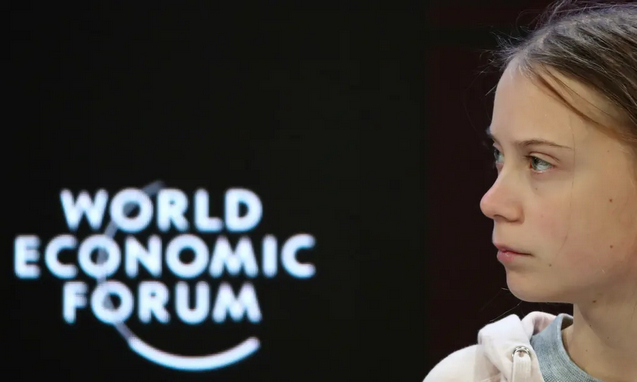
Greta Thunberg at the 50th World Economic Forum annual meeting in Davos. Photograph: Denis Balibouse/Reuters 
Climate crisis, Greta Thunberg and Trump were at core of 50th World Economic Forum
Since 1971, politicians, business leaders, academics, journalists and representatives of civil society have been travelling to the Swiss ski resort of Davos, the town immortalised by Thomas Mann in his novel The Magic Mountain.
The meeting – described as the place where billionaires tell millionaires how the middle classes should live their lives – ended on Friday. So what did we learn from the 50th gathering?

For some, the penny has dropped about the climate emergency
This was the “global heating Davos”, with session after session devoted to the topic. For Mark Carney, in his last weeks as governor of the Bank of England before stepping down, the story was not the near unanimity among policymakers, but that the financial sector – including the big banks of Wall Street – now understands the investment risk of global heating and is starting to adjust its behaviour accordingly.

The past year has turned Greta Thunberg from a Davos curiosity into a household name and global force
At the start of the 2019 Davos, Thunberg was a 16-year-old Swedish student going on strike from school to protest against the lack of action on global heating. She electrified last year’s WEF and was even bigger news this time, going toe-to-toe with Donald Trump and members of his cabinet, and getting the better of the exchanges. Most seasoned Davos hands thought Steve Mnuchin, the US treasury secretary, had blundered when he said he would only start listening to Thunberg when she had a degree in economics.

Davos has a love-hate relationship with Trump
For the second time in three years, Trump turned up at the annual festival of globalisation – more visits than Bill Clinton and Barack Obama managed between them in the combined 16 years of their presidencies. The chief executives of the multinationals that flock to Davos find Trump strangely compelling in spite of his anti-globalist views. He was comfortably the biggest draw of the week. There were a few titters as Trump boasted of the economic miracle he has created in the US, but privately American big business likes tax cuts, likes deregulation and would rather have him in the White House than any Democrat.

The mood among the UK business community is more upbeat following the election

There wasn’t much of a UK presence
Along with Emmanuel Macron and Justin Trudeau, Boris Johnson decided that hobnobbing with people Theresa May once called the citizens of nowhere was not the best political look. At one time it looked as if there would be no UK cabinet minister in Davos, but in the end Sajid Javid was left to fly the flag. There were plenty of ex-ministers around though: the former Labour foreign secretary David Miliband, the former prime minister Gordon Brown and the former chancellor George Osborne among them. May also did a turn to the citizens of nowhere at a PwC drinks reception.

The cybersecurity threat got personal, but Davos didn’t want to talk about it
On the first day of Davos, the Guardian broke the story that the Amazon boss, Jeff Bezos, had apparently been hacked by the crown prince of Saudi Arabia, Mohammed bin Salman. Cybersecurity is always on the agenda and there was a personal twist this year, because many of those attending Davos came into contact with Prince Mohammed on the trip when he met Bezos and maybe also exchanged mobile phone numbers with him. The Guardian tracked down three of them: Mnuchin; the Apple CEO, Tim Cook; and the Microsoft boss, Satya Nadella. However, despite their public commitments to openness and transparency, none was prepared to talk about it.

A sombre Davos had its amusing moments
There wasn’t an awful lot to laugh about in Davos, what with the backdrop of global heating, cyber-threats, and the coronavirus. But there were the odd moments of levity. Trump provided one of them, albeit unwittingly, with his claim that the US was enjoying a “boom the likes of which the world has never seen”. That would only be true if American history began on the day he was elected president. Javid provided one of the others. Pressing the flesh at a CBI lunch, he was asked by one business leader: “Who are you?” Not realising he was being teased, a visibly taken aback Javid replied: “I’m the chancellor.”

Planes, trains and automobiles
Davos says it gets the existential threat of the climate crisis, but does it really? Prince Charles flew to Switzerland by private jet, before switching to an electric car to give the WEF the benefit of his wisdom on how to save the planet. One delegate, kept waiting in the cold while Trump was being whisked from the conference centre to his hotel, tried to count the number of cars in the president’s motorcade and wasn’t quite sure whether there were 37 or 39. The WEF says most attendees arrived by train and that the Zurich group will plant 13,000 trees: one for every one of the bright blue bobble hats it has handed out for free.

Links

25/01/2020

(AU) Australia Singled Out For Climate 'Denial' At Doomsday Clock Event

Sydney Morning HeraldMatthew Knott

Washington: Former California governor Jerry Brown has blasted the Australian government's "utter and absolute" denial of the threat of climate change at an event warning the world is closer than ever before to a man-made apocalypse.
The Bulletin of the Atomic Scientists on Thursday (Friday AEDT) announced it was moving its famous Doomsday Clock closer to midnight than at any point in its 73-year history because of the growing risk of climate change, nuclear war and disinformation.
The Bulletin of the Atomic Scientists moved the hands of the Doomsday Clock to 100 Seconds to Midnight. Credit:The Bulletin of the Atomic Scientists
Several speakers at the announcement in Washington DC held up the Australian bushfire crisis as an example of the extreme and deadly weather events that will become more common unless the world dramatically reduces its carbon emissions.
Brown, who oversaw the response to California's most destructive wildfire crisis in 2018, told The Sydney Morning Herald and The Age he had no hope the Morrison government would become a global leader on tackling climate change.
"The Australian government is in utter and complete denial," he said.
"Under its current leadership, Australia is fostering denial in an incredibly mendacious way.
"Until Australians throw out their current leaders they will continue this way ... It's time to wake up."
Brown is the longest serving governor in the history of California, which has almost 40 million residents - more than any other US state. He served two terms beginning in 1975 before returning to office again in 2010.
Jerry Brown, right, visiting wildfire-damaged regions in California with US President Donald Trump in 2018. Credit:AP
Brown made climate change his signature issue, suing the Trump administration over its environmental policies and mandating 100 per cent carbon-free electricity in the state by 2045.
He is now executive chair of the Bulletin of the Atomic Scientists, which moved its Doomsday Clock forward to 100 seconds to midnight. This is the first time it has passed the two-minute mark since it was launched in 1947.
Rachel Bronson, chief executive of the Bulletin of the Atomic Scientists, said: "We are now expressing how close the world is to catastrophe in seconds, not hours or even minutes.
"We now face a true emergency - an absolutely unacceptable state of world affairs that has eliminated any margin for error or further delay."


The RBA is warning climate change could lead to the next global financial break down.

Sivan Kartha, a senior scientist at the Stockholm Environment Institute, said: "To test the limits of earth's habitable temperature is madness. It's a madness akin to the nuclear madness that is again threatening the world."
He said extreme weather events over the past year were a portent of what was to come unless the world takes drastic action on climate change.
"Wildfires raged from the Arctic to Australia," Kartha said.
"They now persist with an unprecedented intensity, extent and duration that makes them harder to contain ... The very idea of a limited fire season is becoming a thing of the past."
Former United Nations secretary-general Ban Ki-moon said: 'From the US withdrawal from the Paris Agreement and the Iran nuclear deal, to deadlock at nuclear disarmament talks and paralysis at the UN security council, our mechanisms for collaboration are being undermined when we need them most."
Speaking from the World Economic Forum's annual meting in Davos, Switzerland, Finance Minister Mathias Cormann defended Australia's record on climate change.
"We have a very ambitious climate change policy, we are absolutely committed to effective action on climate change," Cormann told CNBC.
"We are a large continent with a small population, so considering the emissions reduction targets we’ve committed to on a per capita basis we will be more than halving emissions and indeed we will be reducing the emissions intensity in our economy by two-thirds.
"That is more ambitious than the UK, than Canada, than New Zealand, than many other countries around the world."

Links

(AU) Reserve Bank Urged To Battle 'Green Swan' Risks Of Climate Change

ABC NewsStephen Letts

The value of stranded fossil fuel assets worldwide could be as high as $26 trillion. (ABC News: Michael Barnett)
Key points
  • Climate change has the potential to spark the next major global financial crisis according to the BIS
  • Central banks' mandates for maintaining financial stability meant they are likely to become "climate rescuers' of last resort"
  • The BIS argues central banks like the RBA may have to bail out the fossil fuel industry 
The Reserve Bank may have to take over stranded coal mines and coal-fired power stations to fulfil its mandate for financial stability, according to one of the world's most powerful financial institutions, the Bank for International Settlements.
The BIS, which is owned by the world's 60 largest central banks (including the RBA) and is commonly referred to as the "central banks' central bank", said climate change may well spark the next great global financial crisis and regulators needed to address the potential risks urgently.
In a major study released from its Geneva headquarters, BIS general manager Agustín Carstens argued the financial stability mandates at the heart of central bank operations around the world meant they needed to be involved in mitigating the financial risks posed by climate change.
"In the worst case scenario, central banks may have to confront a situation where they are called upon by their local constituencies to intervene as climate rescuers of last resort," the BIS report warned.
"For example, a new financial crisis caused by green swan events severely affecting the financial health of the banking and insurance sectors could force central banks to intervene and buy a large set of carbon-intensive assets and/or assets stricken by physical impacts."
The BIS uses the "green swan" concept as climate-change alternative to the term "black swan", used to to describe unexpected and extreme occurrences that have major effects, which could be anything from terrorist attacks to disruptive technologies or a natural disaster.

The next global financial crisis?
The BIS Green Swan report argued current risk assessment and climate change models cannot anticipate accurately enough the form that climate-related risks will take and the "potentially extremely financially disruptive events that could be behind the next systemic financial crisis."
The value of the world's stranded fossil fuel reserves is massive but difficult to pin down according to the report, ranging from Carbon Tracker's $US1.6 trillion ($2.3 trillion) estimate to the International Renewable Energy Agency's 2017 calculation of $US18 trillion ($26 trillion).
"Under an abrupt transition scenario (e.g. with significant stranded assets), financial assets could be subject to a change in investors' perception of profitability," the BIS warned.
"This loss in market value can potentially lead to fire sales, which could trigger a financial crisis."
The Morrison Government risks being stranded at the intersection of climate change related disasters and their economic fallout, writes Ian Verrender.

Due to investments in and loans to fossil fuel producers, financial risks would spread throughout global markets leading to a mass of defaults and tightening banks' liquidity and ability to lend, in much the same way as the contagion caused by the collapse of the US subprime mortgage sector spread rapidly worldwide during the 2008 financial crisis.
While the BIS found there is much central banks can do, it noted they cannot act in isolation.
It said central banks should more involved coordinating climate change actions among major players — governments, the private sector and the international community.
The report found key areas for central bank involvement included:
  • Climate mitigation policies such as carbon pricing;
  • Integrating sustainability into financial practices and accounting frameworks;
  • Developing new financial mechanisms at the international level.
"Green swan events may force central banks to intervene as 'climate rescuers of last resort' and buy large sets of devalued assets, to save the financial system once more," it warned.
"However, the biophysical foundations of such a crisis and its potentially irreversible impacts would quickly show the limits of this 'wait and see' strategy.
"On the other hand, central banks cannot — and should not — simply replace governments and private actors to make up for their insufficient action, despite growing social pressures to do so."

Links

Lethal Heating is a citizens' initiative