Euronews - Marthe de Ferrer

One
million animal and plant species are at risk of extinction right now -
and that number is only growing. Ecological decline on this scale has
never been seen before, with scientists and policymakers rightly
concerned as to what this means for our collective future. But the
solution to protecting biodiversity on this planet could lie with
Indigenous communities.
This new finding was highlighted by the UN
in a landmark report
last year from the Intergovernmental Science-Policy Platform on
Biodiversity and Ecosystem Services (IPBES). IPBES chair, Sir Robert
Watson, says the report “presents an ominous picture,” as humans “are
eroding the very foundations of our economies, livelihoods, food
security, health and quality of life worldwide.”
Let’s face it,
the figures are bleak - two-thirds of the marine environment and
three-quarters of land-based environment have been significantly
altered, meaning numerous species are affected. However, among it all,
there are some statistics which should both give us a sense of optimism
and force a major rethink in how we tackle the biodiversity crisis.
The
report found that in areas held or managed by Indigenous Peoples and
local communities (non-indigenous people considered to have strong ties
to the land) the ecological decline was far less severe - and in some
cases, had been avoided altogether.
 |
Indigenous-governed lands are declining ecologically far less than other areas. Gabrielle de Ferrer
|
Indigenous-managed land is critical to species’ survival
Around
a quarter of global land area is owned, managed, used, or occupied by
Indigenous Peoples. These territories are located across the world, with
a particular concentration in the Americas. A
study from the University of British Columbia
(UBC) expanded on the findings of the UN report, examining how
Indigenous-managed lands “play a critical role in helping species
survive.”
Collaborating with Indigenous land stewards will likely be essential in ensuring that species survive and thrive. Richard Schuster Lead author on the UBC study
The research team
at UBC focused on three of the world’s biggest countries, Australia,
Brazil and Canada, analysing land and species data across the nations.
They observed that the highest concentration of birds, mammals,
amphibians, and reptiles were consistently found on lands managed or
co-managed by Indigenous communities.
 |
Women from the Kichwa indigenous community in Ecuador protesting environmental policies. Dolores Ochoa/AP
|
"This
suggests that it's the land-management practices of many Indigenous
communities that are keeping species numbers high," says lead author
Richard Schuster. "Going forward, collaborating with Indigenous land
stewards will likely be essential in ensuring that species survive and
thrive."
This sentiment is echoed by co-author Nick Reo, himself a
citizen of the Sault Ste. Marie, Ontario tribe of Chippewa Indians. Reo
explains, “Indigenous-managed lands represent an important repository
of biodiversity in three of the largest countries on Earth. In light of
this, collaborating with Indigenous governments, communities and
organisations can help to conserve biodiversity as well as support
Indigenous rights to land, sustainable resource use and well-being."
What are these communities doing to protect biodiversity?
There
is no single action being undertaken by Indigenous Peoples to protect
the environment; their success derives from a series of factors,
practices, and efforts. Worldwide, these communities have been able to
safeguard lands and species through a combined approach, including
monitoring species-rich landscapes and fighting against land
degradation.
Observing and tracking ecosystems is vital to
conservation efforts, and Indigenous Peoples have a significant role in
long-term monitoring. In part this is because some of the most remote
areas in the world are home to these communities - such as
in the Amazon or the Arctic.
 |
The Iñupiat community in Alaska are increasingly at-risk because of global warming. LAURENT DICK/AP
|
“That
monitoring role can be really important, particularly where we don’t
have a long-term scientific presence,” Pamela McElwee, one of the lead
authors of the IPBES report,
told Scientific American.
“It’s really these communities that are collecting the data, often
through everyday experiences, so they can report back trends for
species, population numbers over time, interactions between species, and
noticeable declines.”
The IPBES report also noted that Indigenous
communities create landscapes which are far more diverse than land
typically used for agriculture, often combining wild and domestic
species in gardens to create vital habitats. Plus, these groups are
often using their unparalleled understanding of that environment to
restore degraded lands.
For example, some Angola Indigenous communities, including the Herero, the Khoisan and the Muimba,
collaborated with
Global Environment Facilities
(GEF) to help rehabilitate degraded pastoral and agricultural lands
which had been devastated by drought. This improved pasture management
has since been vital in protecting food security in the country.
Aboriginal social-ecological systems in the area have been found to be far more resilient and sustainable than European methods post-colonisation.
Native American tribes
have also been part of restoration and conservation efforts
in the USA’s Pacific Northwest, where large swathes of public lands are
also Indigenous communities’ ancestral homelands. Aboriginal
social-ecological systems in the area have been found to be far more
resilient and sustainable than European methods post-colonisation,
meaning critical food resources, like salmon, were better managed and
more secure.
 |
Cocoa trees being planted near Tamshiyacu, Peru. Gabrielle de Ferrer
|
Communities under threat
The UN and researchers around the world
have made it clear that in order to halt the planetary extinction crisis, engaging with, learning from, and supporting Indigenous Peoples is key.
Historically, these people have been excluded from their land, threatened by loggers and other financially-motivated parties, and given no voice in the broader environmental conversation.
Though Indigenous communities are doing the most to protect the planet, statistically it is those same people who are most at-risk in the climate crisis.
The IPBES report also noted that “the areas of the world projected to experience significant negative effects from global changes in climate, biodiversity, ecosystem functions and nature’s contributions to people, are also areas in which large concentrations of Indigenous Peoples and many of the world’s poorest communities reside.”
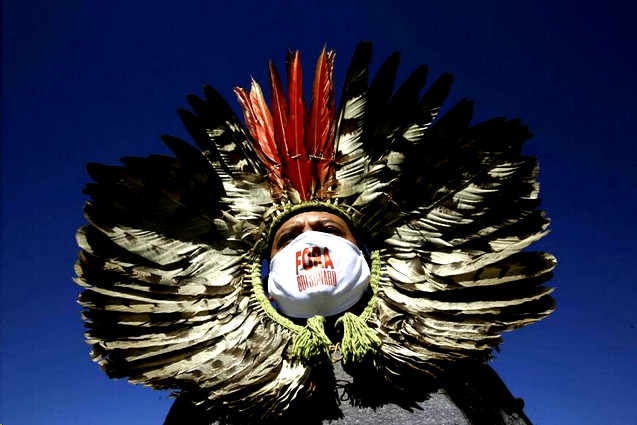 |
Indigenous leader Kretan Kaingang protesting Brazil's president Jair Bolsonaro for his handling of the coronavirus crisis. Eraldo Peres/AP
|
Effectively,
though Indigenous communities are doing the most to protect the planet,
statistically it is those same people who are most at-risk in the
climate crisis.
The COVID-19 pandemic has brought fresh problems
for Indigenous Peoples as well, with supply chains affected and food
prices rising. UK-based climate charity
Cool Earth
works towards ending tropical deforestation and degradation across
seven countries in four continents, by empowering and supporting local
people engaging in positive climate action.
The organisation recently launched its
Rainforest Resilience Fund, making an urgent appeal to provide food and sanitation for Indigenous communities who are facing the impacts of coronavirus.
“Cool
Earth’s long-term focus will always be protecting rainforest alongside
local people, but in the last month, we have been inundated with calls
for urgent aid from almost every one of our partner communities,”
explains the charity’s director Matthew Owen. “Essential supplies of
food and hygiene equipment are needed immediately to keep people safe
and healthy, along with resources like seeds and tools to prepare for
the coming months.”
The fund has seen significant support, meaning hundreds of families have already received aid during these challenging times.
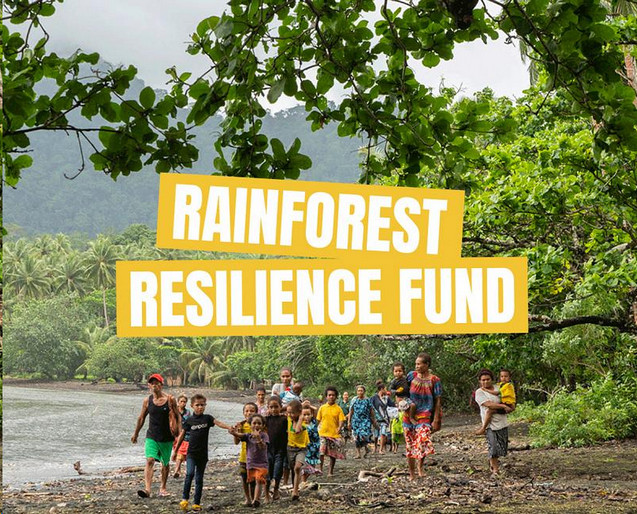 |
Cool Earth launched the Rainforest Resilience Fund to support Indigenous communities impacted by the pandemic. Cool Earth
|
“By
supporting Indigenous communities that live in rainforest, we can help
them continue to be the guardians and custodians of the rainforest that
we all need,” adds Cool Earth’s ambassador and television presenter
Gillian Burke.
Cool Earth’s broader mission is exactly the
approach to environmental action that researchers, and now the UN, are
calling for. By placing Indigenous Peoples at the heart of
environmentalism, taking their lead and following their examples, we
have a chance to limit the extent of the extinction crisis and protect
our vital ecosystems around the world.
As UNESCO Director-General
Audrey Azoulay concludes, “our local, Indigenous and scientific
knowledge is proving that we have solutions and so no more excuses: we
must live on earth differently.”
Links


