20/07/2020

Climate Change: Siberian Heatwave 'Clear Evidence' Of Warming

BBC - Justin Rowlatt

Wildfires were made more severe by high temperatures and strong winds. Getty Images

A record-breaking heatwave in Siberia would have been almost impossible without human-caused climate change, a study has found.

The Russian region's temperatures were more than 5C above average between January and June of this year.

Temperatures exceeded 38C in the Russian town of Verkhoyansk on 20 June, the highest temperature ever recorded north of the Arctic circle.

The Arctic is believed to be warming twice as fast as the global average.

An international team of climate scientists, led by the UK Met Office, found the record average temperatures were likely to happen less than once every 80,000 years without human-induced climate change.

That makes such an event "almost impossible" had the world not been warmed by greenhouse gas emissions, they conclude in the study.

In a news release, the scientists describe the finding as "unequivocal evidence of the impact of climate change on the planet".

It is, says Prof Peter Stott of the Met Office, the strongest result of any attribution study to date.


In the latest episode of Climate Check, Sarah Keith-Lucas look at the record temperatures in the Arctic Circle

Attribution studies attempt to work out the role that human-induced climate change plays in major weather events.

Climate scientists use computer simulations to compare the climate as it is today with the climate as it would have been without human influence to see how likely different weather events would have been.

The researchers say that the current Siberian heat "has contributed to raising the world's average temperature to the second hottest on record for the period January to May".

What happens in the Arctic doesn't stay in the Arctic

The changing Arctic climate is of huge importance here in the UK.

Four of the six main systems that determine this country's weather are driven by conditions in the Arctic, said Dr Katharine Hendry of Bristol University.

She was one of the lead authors on a paper published last month that suggested a series of extreme weather events could be linked to changes in the Arctic.

The so-called "Beast from the East", in the winter of 2018, is one.

It involved Arctic air blasting the country, driving temperatures below 0C for several days. Over half a metre of snow fell in some areas.

Arctic land surface temperature anomalies from 19 March to 20 June 2020. NASA

The storm is reckoned to have caused over £1bn of damage and claimed 10 lives.

The paper published last month also cites the storms and floods in February this year and ones back in 2015 as other possible examples of Arctic-linked changes.

"The link between the Arctic and UK weather is through the jet stream," said Prof Stott, referring to the ribbon of fast-moving air high up in the atmosphere.

The jet stream helps move weather systems around the globe.

But sometimes it creates "blocking" patterns that can cause weather systems to stall.

The unusually sunny spring experienced in the UK this year was caused by a blocking pattern that allowed high pressure systems to dominate the UK for months on end.

State of emergency

The heatwave in Siberia was caused by the same pattern but with even more dramatic results.

The extreme temperatures led to a cascade of natural and human disasters which prompted Russian President Vladimir Putin to declare a state of emergency in early June.

A vast fuel spill was caused by the collapse of a reservoir containing 20,000 tonnes of diesel near the Russian city of Norilsk in late May.


The BBC's Steve Rosenberg travels to the forest to see how Russians tackled 2019's wildfires

Arctic wildfires are estimated to have led to the release of 56 megatonnes of CO2 in June.

At the same time, there has been widespread melting of the permafrost and reports of unusually large swarms of Siberian silk moths that have damaged trees, making them more susceptible to fire.

Uncertain future

It is well-known that the Arctic is warming at twice the rate of the rest of the planet.

Arctic temperatures are estimated to have risen 2C since 1850 compared with 1C globally.

What impact that will have on the world's weather is less certain.

"Looking at the geological record, we don't think we've had CO2 levels as high for about five million years," said Dr Hendry. "So we really don't know what to expect into the future."

"We are," she said, "in uncharted territory".

This year's Siberian heatwaves shows just how extreme conditions can become.

What worries many scientists is that this new climate era we are entering means many places now experience weather conditions beyond anything local ecosystems - or indeed human communities - have evolved to endure.

Links

Climate Change: Summers Could Become 'Too Hot For Humans'

BBC - David Shukman

Some Singapore health care staff have been working in stifling heat. Image copyright Ng Teng Fong General Hospital

Millions of people around the world could be exposed to dangerous levels of heat stress - a dangerous condition which can cause organs to shut down.

Many live in developing countries, and do jobs that expose them to potentially life threatening conditions.

These include being out in the open on farms and building sites or indoors in factories and hospitals.

Global warming will increase the chances of summer conditions that may be "too hot for humans" to work in.

When we caught up with Dr Jimmy Lee, his goggles were steamed up and there was sweat trickling off his neck.

An emergency medic, he's labouring in the stifling heat of tropical Singapore to care for patients with Covid-19.

There's no air conditioning - a deliberate choice, to prevent the virus being blown around - and he notices that he and his colleagues become "more irritable, more short with each other".

And his personal protective equipment, essential for avoiding infection, makes things worse by creating a sweltering 'micro-climate' under the multiple layers of plastic.

"It really hits you when you first go in there," Dr Lee says, "and it's really uncomfortable over a whole shift of eight hours - it affects morale."

Working in PPE in a tropical climate can be extremely uncomfortable. Image copyright Ng Teng Fong General Hospital


One danger, he realises, is that overheating can slow down their ability to do something that's vital for medical staff - make quick decisions.

Another is that they may ignore the warning signs of what's called heat stress - such as faintness and nausea - and keep on working till they collapse.

What is heat stress?

It's when the body is unable to cool down properly so its core temperature keeps rising to dangerous levels and key organs can shut down.

It happens when the main technique for getting rid of excess heat - the evaporation of sweat on the skin - can't take place because the air is too humid.


Dr Angie Bone of Public Health England offers some tips and dispels some myths on staying cool

And as Dr Lee and other medics have found, the impermeable layers of personal protection equipment (PPE) - designed to keep the virus out - have the effect of preventing the sweat from evaporating.

According to Dr Rebecca Lucas, who researches physiology at the University of Birmingham, the symptoms can escalate from fainting and disorientation to cramps and failure of the guts and kidneys.

"It can become very serious as you overheat, and in all areas of the body."

How can we spot it?

A system known as the Wet Bulb Globe Temperature (WBGT) measures not only heat but also humidity and other factors to give a more realistic description of the conditions.

Back in the 1950s, the US military used it to work out guidelines for keeping soldiers safe.

When the WBGT reaches 29C, for example, the recommendation is to suspend exercise for anyone not acclimatised.

Yet that's the level Dr Lee and his colleagues are regularly experiencing at Singapore's Ng Teng Fong General Hospital.

And at the top of the scale - when the WBGT registers 32C - the US says strenuous training should stop because the risk becomes "extreme".


But levels that high have recently been recorded inside hospitals in Chennai in India by Prof Vidhya Venugopal of the Sri Ramachandra University.

She's also found workers in a salt pan enduring a WBGT that climbs during the day to 33C - at which point they have to seek shelter.

And in a steel plant, a ferocious level of 41.7C was recorded, the workers being among the most vulnerable to what she calls "the huge heat".

"If this happens day-in, day-out, people become dehydrated, there are cardiovascular issues, kidney stones, heat exhaustion," Prof Venugopal says.

What impact will climate change have?

As global temperatures rise, more intense humidity is likely as well which means more people will be exposed to more days with that hazardous combination of heat and moisture.

Prof Richard Betts of the UK Met Office has run computer models which suggest that the number of days with a WBGT above 32C are set to increase, depending on whether greenhouse gas emissions are cut.

The US military developed heat stress guidelines to keep its soldiers safe. Image copyright Getty Images

And he spells out the risks for millions of people already having to work in the challenging combination of extreme heat and high humidity.

"We humans evolved to live in a particular range of temperatures, so it's clear that if we continue to cause temperatures to rise worldwide, sooner or later the hottest parts of the world could start to see conditions that are simply too hot for us."

Another study, published earlier this year, warned that heat stress could affect as many as 1.2bn people around the world by 2100, four times more than now.

What solutions are there?

According to Dr Jimmy Lee, "it's not rocket science".

People need to drink plenty of fluid before they start work, take regular breaks and then drink again when they rest.

His hospital has started laying on "slushie" semi-frozen drinks to help the staff cool down.

But he admits that avoiding heat stress is easier said than done.

For him and his colleagues, going for rests involves the laborious process of changing out of PPE and then back into a new set of equipment.

Avoiding heat stress is easier said than done. Image copyright Getty Images


There's a practical problem as well - "some people do not want to drink so they can avoid having to go to the toilet," he says.

And there's a professional desire to keep working whatever the difficulties so as not to let colleagues and patients down at a time of crisis.

People who are highly motivated can actually be at the greatest risk of heat injury, says Dr Jason Lee, an associate professor in physiology at the National University of Singapore.

He's a leading member of a group specialising in the dangers of excessive heat, the Global Heat Health Information Network, which has drawn up guidelines to help medics cope with Covid-19.

It's spearheaded by the World Health Organization (WHO), the World Meteorological Organization (WMO) and the US weather and climate agency Noaa.


Dr Lee says that as well as measures like rest and fluids - and shade for outdoor workers - a key strategy for resisting heat stress is to be fit.

"By keeping yourself aerobically fit, you're also increasing your heat tolerance, and there are so many other benefits too."

And he sees the challenge for medics, sweating inside their PPE as they deal with Covid-19, as "almost like a full dress rehearsal" for future rises in temperature.

"This climate change will be a bigger monster and we really need a coordinated effort across nations to prepare for what is to come.

"If not," he says, "there'll be a price to be paid."

Links

(US) Cities Are Becoming Climate Death Traps

New Republic - 

A new era of heat waves is here. We aren’t ready.

A man cools off in the spray of a fire hydrant during a heat wave in Philadelphia. Jessica Kourkounis/Getty Images

As the coronavirus pandemic continues throughout the United States, another deadly pandemic comes out to strike in the summer: extreme heat. Year after year, more people are dying because it’s simply too hot. As of right now, both this country and others lack even an accurate way of counting those deaths—let alone a comprehensive plan to reduce them. Thanks to climate change, it’s about to get much worse.

For the past week, the American South and Southwest have been experiencing record-breaking temperatures. The National Oceanic and Atmospheric Administration has predicted above-average heat for nearly the entire U.S. this summer. Unprecedented, early-summer heat waves roasted the Middle East in May and Siberia in June, setting the latter on fire. Arizona had its earliest-ever hundred-degree heat wave in April—and another 110 degree heat wave in May. Spain endured 105 degree heat this month.

When the heat index, a “feels-like” combination of temperature and humidity, reaches 104 degrees Fahrenheit indoors or out, human body temperature risks rising above the typical roughly 99 degrees Fahrenheit. When body temperature rises above 104 degrees, the consequences can be fatal within 30 to 60 minutes.

“Heat-related deaths are notoriously difficult to track because the role of heat isn’t always obvious. One 2017 study found that extreme heat can kill people in 27 different ways,” Juanita Constible, senior advocate, climate and health at the National Resources Defense Council, told me. “If someone dies of a heart attack during a heat wave, there’s a good chance that’s how their death will be recorded by officials, even if high temperatures were the trigger.”

Many scientists argue that official heat-death counts underestimate substantially. According to the World Health Organization, 166,000 people died due to heat waves between 1998 and 2017, but the true figure may be far higher. In the U.S., the Centers for Disease Control and Prevention only count deaths where heat illness is explicitly noted, so the official CDC count of heat-triggered deaths sits at just around 600 per year. Epidemiologists estimate that the real figure may be closer to 12,000—20 times higher than the official count.

Climate change is making heat waves longer, hotter, and more deadly. Scientists estimate that 80 percent of record-breaking heat waves would not have occurred without human-caused warming due to greenhouse gas emissions. And urban areas, in particular, face special risk of heat deaths because of the heat island effect, in which dark pavement, roofs, and concrete absorb additional heat, making temperatures much hotter than the reported weather in any given city.

In the U.S., heat deaths have more than doubled in Arizona in the last 10 years. Last year, a dangerous heat wave hit while storms left residents in the D.C. and New York City metro areas without power. Power outages can be deadly in a heat wave because without air conditioning, many people can’t cool off. In two heat deaths in a 2018 Arizona heat wave, the deceased were found indoors with a broken air conditioning unit that they couldn’t afford to fix.

“Some people won’t use their air conditioning because they’re afraid of the bills,” Patricia Solís, executive director of the Knowledge Exchange for Resilience at Arizona State University, told National Geographic. “They think they’re OK without it, but that’s how people die.”

“There are huge policy gaps in the U.S. with respect to extreme heat protections,” Rachel Licker, a senior climate scientist at the Union of Concerned Scientists, told me. “We found that without real action on climate change, by midcentury more than 250 cities across the U.S. are projected to experience 30 or more days with a heat index above 100 degrees Fahrenheit. This includes many cities that historically haven’t experienced this level of extreme heat.”

Low-income communities are especially vulnerable. A 2020 study in Environmental Research Letters found that residents in low-income census tracts were less likely to use air conditioners when temperatures got hot. Heat wave exposure also disproportionately affects communities of color that have faced housing discrimination. Researchers at Portland State University and the Science Museum of Virginia found that urban neighborhoods denied municipal services during the mid-twentieth century are now the hottest areas in 94 percent of the 108 cities analyzed.

Extreme heat is a labor issue, as well. “One of the most urgent needs is an enforceable heat health standard for all workers from the [Occupational Safety and Health Administration],” said Constible. The current rule “has too much wiggle room for employers.”

 Licker pointed to the proposed Asuncion Valdivia Heat Illness and Fatality Prevention Act of 2019, which has yet to get out of the House Committee on Education and Labor, as a potential solution. The bill, sponsored by Democratic Representative Judy Chu of California, is named after Asuncion Valdivia, a California farmworker who died of a heat stroke in 2004 after picking grapes for 10 hours in 100 degree weather. The U.S. Postal Service has also received criticism for its role in workers’ heat deaths, for example in a troubling report from HuffPost this past week.

But killer heat is a worldwide phenomenon. In Europe, heat waves killed as many as 70,000 in 2003 and more than 1,500 last year. Good heat wave adaptation measures—such as handing out water at train stations, asking people to check on the elderly, and opening air-conditioned shelters for residents—likely contributed to the substantial reduction in deaths from 2003 to 2019. Accurate weather forecasting also allowed for greater preparedness. Still, just 5 percent of European households are air conditioned and scientists estimate that three degrees Celsius of warming could kill an additional 86,000 people each year in the EU.

While China and Japan are used to some sweltering-hot summers, record-breaking heat waves have nevertheless proved deadly. Consecutive heat waves in 2018 and 2019 in Japan hospitalized tens of thousands and killed hundreds. Japan doesn’t use excess mortality to calculate heat-related deaths like Europe does, which means that, as in the U.S., these numbers may be huge undercounts. In China, extreme heat combines with poor air quality to produce harmful ozone. Scientists estimate that three degrees of global warming could kill an additional 30,000 people each year in China.

Meanwhile, the impact of extreme heat on the global south remains underreported in Western media. Since developing countries tend to lack the cooling infrastructure present in North America and East Asia, regions in India, Bangladesh, and Pakistan could soon face regular summer heat waves that are impossible to survive.

A recent Tokyo Institute of Technology study shows that heat-related deaths in Jakarta are expected to increase by 15 times by 2060. And while some regions of Africa are used to heat waves as a regular occurrence, the heat island slums of large cities such as Nairobi can create fatal conditions. A 2017 John Hopkins study found that temperatures in Kibera, one of the largest “slum” settlements in Nairobi, were typically 5 to 10 degrees higher than the official weather report.

The dual threat of extreme heat and the coronavirus makes for an especially challenging summer for policymakers and city-dwellers. Many cities this year and for each additional year that the pandemic persists will have to choose between opening public cooling centers and risking transmission of Covid-19 or keeping them closed and risking preventable heat-related deaths.

And the coronavirus also complicates the labor aspect of extreme heat. The current U.S. heat standard, for example, which is only a recommendation that employers take precautions when temperatures reach a certain threshold, was created in pre-Covid times. “A heat standard is especially important this summer because of the Covid-19 pandemic,” said Constible. “The masks and other protective gear needed to slow transmission of the virus have the potential to trap heat and increase heat-health risks to some workers.”

Faced with record temperatures, many cities in the U.S. have taken aggressive adaptation measures. “Dozens of cities and some counties and states have mandatory, incentivized or city-led initiatives using features such as cool roofs, cool pavements, and trees,” Laura Brush, resilience fellow at the Center for Climate and Energy Solutions, told me. “However, funding is a significant barrier for many communities, especially during the pandemic.”

“More diverse funding sources and innovative finance mechanisms are needed to invest in resilience projects. These could include a national infrastructure bank, loan programs, and tax incentives for companies and individuals,” Brush said. Brush points to Louisville, Kentucky’s regional climate and health assessments and cool roof rebate and installation programming as one effective example of a city taking action.

The tragedy of heat-related deaths is that they are almost always preventable. Distributing free air conditioners, paying residents’ summer cooling bills, and simply encouraging people to check in on vulnerable relatives or neighbors can save lives. All of these are extremely feasible policy measures.

At the same time, nothing will slow the urban heat-death pandemic like climate mitigation and reducing greenhouse gas emissions. Limiting global temperature rise to 1.5 degrees Celsius (2.7 degrees Fahrenheit), for example, could save 2,700 lives per year in New York City alone, according to recent estimates. What’s known for sure is that ignoring either approach—the immediate or the long-term—will come with a body count.

Links

19/07/2020

(AU) Climate Change-Driven Disasters Making Insurance Premiums Too Dear For Farmers

ABC RuralJane McNaughton

Peter Holding is a mixed farmer from Harden, NSW, and member of Farmers for Climate Action. (ABC News: Anna Vidot) 

Key Points
Australian farmers are facing increasingly frequent droughts, floods, hailstorms and bushfires, resulting in insurance premiums rising to the point where cancelling or underinsuring are the only options.

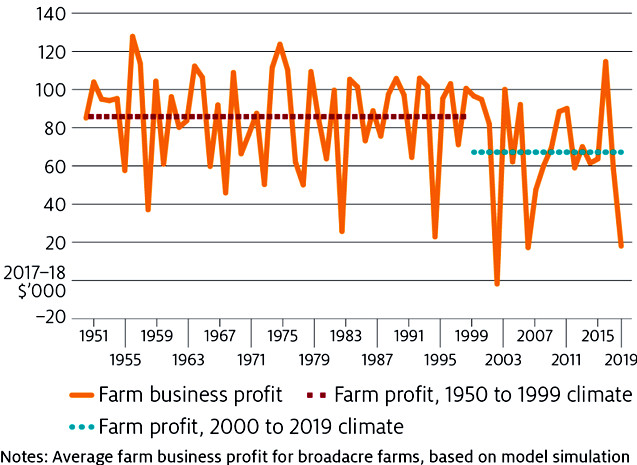
Climate change has already cost farmers more than $1 billion since 2000, according to ABARES.

Third-generation lamb and cropping farmer Peter Holding said government inaction on global warming could have disastrous flow-on effects to the agriculture industry.

"Climate change poses a cataclysmic set of challenges for farmers," the Farmers for Climate Action member said.
"It's pretty severe and it's getting worse.
"As the frequency [of natural disasters] increases, the insurance premiums are just going to go up — there's no doubt about that."

The southern New South Wales farmer and volunteer firefighter said prolonged fire seasons are just one example of how climate change is affecting agricultural practices.

"The Canberra fires in 2003 was when we first saw the phenomenal firestorm effect," he said.

"And that's getting more common."

Fire surrounds a homestead during the Canberra fires in January 17, 2003. (Copyright: Jeff Cutting)


Rising risks, rising costs


Insurance Council of Australia spokesman Campbell Fuller said the industry was worried about the effects of man-made climate change.

"The insurance industry is very aware of concerns in the rural sector about climate change, natural disasters and about access to insurance," he said.

"Insurers gather the latest available data from governments, especially around bushfire exposure and flood exposure, as well as seasonal forecasts from the Bureau of Meteorology."

Mr Fuller says insurers build a robust picture of the seasonal exposure that properties have per annum, which is then is priced into premiums.

"As the climate changes, and as risks are reassessed, that logically leads to changes in premiums to reflect the risks," he said.

Effect of climate variability on average farm profits 1949-50 to 2018-19 at current farms and commodity prices.(Supplied: ABARES)


'No silver bullet'

Mr Fuller said appropriate land use and resilient infrastructure in areas of higher risk to natural disasters needed to be prioritised.

"Changes in risk that can be predicted by climate change modelling need to be taken into account," he said.

"In many parts of Australia there's plenty of evidence that primary producers are taking measures to reduce the risks to their properties into their own hands."

Eighty per cent of Australian households are underinsured, and Mr Fuller says that percentage is probably much higher in rural areas.

This banana plantation at Taylors Arm, west of Macksville, was destroyed by fire in 2019. (ABC Rural: Claire Wheaton)


"Underinsurance and non-insurance is an issue in rural areas, and it is a constant concern to the industry as well as regulators and government agencies," he said.

"When properties are not insured, communities can struggle to rebuild after natural disasters and the burden falls more heavily on charities and government in the recovery phase."

Mr Fuller said farmers were likely to insure infrastructure such as their homes, sheds and equipment, but fences, livestock and crops were less likely to be included.

"There is no real silver bullet here," he said.
"It's a combination of actions that need to take place at a community level, and involving all levels of government."
Mr Holding said the cost of premiums meant insurance was not an option for some producers.

"I've had to pull back the farm's scale an awful lot to cut debt and make sure that we're still viable," he said.

Valuable farm machinery was destroyed by fire on the Duff beef and soybean property in the Upper Macleay Valley in 2019. (Supplied: Carolyn Duff)


Fossil fuels 'undermining' agriculture

Financial strain is not the only issue climate change has delivered to farmers.

"Unfortunately we're getting less good years and a lot more variability," Mr Holding said.

"There's a lot of impacts and I can't see it stopping any time soon.

"The droughts are just continuing, since the turn of the century we've had [so many years] of drought, interlaced with floods."

This map shows the decline of winter rainfall across southern Australia over the past 20 years. (Supplied: CSIRO/BOM)

Mr Holding said although farmers had "been adapting since the day they invented the plough", it would become impossible if the rate of environmental change continued to increase.

"Cutting emissions is the only option there, and that means moving away from fossil fuels — but the government seems wedded to that," he said.
"The fossil fuel industry is creating emissions and that is slowly but surely making agriculture unviable.
"We've cut the emissions from livestock probably in half, farmers in cropping areas have done all sorts of things to reduce the use of diesel and better use fertilisers.

"So farmers are working on all of these problems to cut their own emissions, but we definitely need some quick action to reduce the emissions of fossil fuel."

Links

(AU) Australia Is About To Blow A Once-In-A-Generation Opportunity

Sydney Morning HeraldKevin Rudd | Patrick Suckling

Authors
  • Kevin Rudd is president of the Asia Society Policy Institute and was the 26th prime minister of Australia.
  • Patrick Suckling was Australia’s Ambassador for the Environment and recently joined Pollination, a specialist climate investment and advisory firm.
As the International Monetary Fund recently underlined in sharply revising down global growth prospects, recovering from the biggest peacetime shock to the global economy since the Great Depression will be a long haul.

There is a global imperative to put in place the strongest, most durable economic recovery.

This is not a time for governments to retreat.

Recovery will require massive and sustained support.

Beijing is approving plans for new coal-fired power plants at the fastest rate since 2015. Credit: Getty

At the same time, spending decisions by governments now will shape our economic future for decades to come. In other words, we have a once-in-a-generation opportunity and can’t blow it.

But it’s looking like we might. This is because too few stimulus packages globally are reaping the double-dividend of both investing in growth and jobs, and in the transition to low emissions, more climate-resilient economies. And in Australia, this means we risk lagging even further behind the rest of the world as a result.

As Australia’s summer of hell demonstrated, climate change is only getting worse. It remains the greatest threat to our future welfare and economic prosperity.

And while the world has legitimately been preoccupied with COVID-19, few have noticed that this year is on track to be the warmest in recorded history. Perhaps even fewer still have also made the connection between climate and biodiversity habitat loss and the outbreak of infectious diseases.

Stimulus decisions that do not address this climate threat therefore don’t just sell us short; they sell us out. And they cut against the grain of the global economy. This is the irreducible logic that flows from the 2015 Paris Agreement to which the world – including Australia – signed up.

Unfortunately, as things stand today, many of the biggest stimulus efforts around the world are in danger of failing this logic.

For example, the US economic recovery is heavily focused on high-emitting industries. The same is true in China, India, Japan and the large South-East Asian economies.

In fact, Beijing is approving plans for new coal-fired power plants at the fastest rate since 2015. And whether these plants are now actually built by China’s regional and provincial governments is increasingly becoming the global bellwether for whether we will emerge from this crisis better or worse off in the global fight against climate change.

And for our own part, Australia’s COVID Recovery Commission has placed limited emphasis on renewables despite advances in energy storage technology and plummeting costs.

But as we know from our experience in the global financial crisis more than a decade ago, it is entirely possible to design an economic recovery that is also good for the planet. This means investing in clean energy, energy efficiency systems, new transport systems, more sustainable homes and buildings, and improved agricultural production, water and waste management.

In fact, as the management consultancy McKinsey recently found, government spending on renewable energy technology creates five more jobs per million dollars than spending on fossil fuels.

Despite these cautionary tales, there are thankfully also bright spots. Take the European Union and its €750 billion ($A122 billion) stimulus package. It will invest heavily in areas such as energy efficiency, turbocharging renewable energy, accelerating hydrogen technology, rolling out clean transport and promoting the circular economy.

To be fair, China is also emphasising new infrastructure such as electric transport in its $US500 billion ($A716 billion) stimulus package. India is doubling down on its world-leading renewable energy investments.

Indonesia has announced a major investment in solar energy. And Japan and South Korea are now announcing climate transition spending. But whether these are just bright spots among a dark haze of pollution or genuinely light the way is the key question that confronts these economies.

In Australia, the government has confirmed significant investment in pumped-hydro power for Snowy 2.0. The government has also indicated acceleration of important projects such as the Marinus Link to ensure more renewable energy from Tasmania for the mainland. But much more is now needed.

An obvious starting point could be a nation-building stimulus investment around our decrepit energy system. By now the federal and state governments have a much stronger grasp of what we need for success, encouragingly evident in the recent $2 billion Commonwealth-NSW government package for better energy access, security and affordability.

Turbocharging this with a stimulus package for more renewable energy and storage of all sorts (including hydrogen), alongside extension and stabilisation technology for the electricity grid, and investment in dramatically improving energy efficiency would – literally and figuratively – power our economy forward.

In the aftermath of the drought and bushfires, another obvious area for nation-building investment is our land sector. Farm productivity can be dramatically improved by precision agriculture and regenerative farming while building resilience to drought.

New sources of revenue for farmers can be created through soil carbon and forest carbon farming. Carbon trading from these activities internationally is set to be worth hundreds of billions of dollars over the coming decade.

Importantly, the Australian business community is not merely calling for policy certainty but is ushering in change itself.

The Australian Industry Group has called for a stronger climate-focused recovery. And in recent days, our largest private energy generator, AGL, has announced a significant strengthening of its commitment to climate transition, linking performance pay to progress in the company’s goal of achieving net-zero emissions by 2050 – a goal that BHP, Qantas and every Australian state and territory has signed up to. HESTA has announced it will be the first major Australian superannuation fund to align its investment portfolio to this end.

These sorts of decisions are being replicated at a growing rate by companies around the world and show that business is leading.

It is time for governments – including our own – to do the same. Whether we can use this crisis as an opportunity to emerge better equipped to tackle critical global challenges remains to be seen, but it rests on many of the decisions to be taken in the months to come.

Links

(AU) Climate Change Is The Greatest Threat

Canberra Times - Editorial

Australia's next bushfire season is just around the corner. Picture: Karleen Minney

While the world was preoccupied with an ever increasing number of coronavirus cases this week, a hugely significant scientific report was allowed to pass under-reported and unremarked.

This was the study of the 2020 Siberian heatwave by World Weather Attribution, a group of scientists who have been monitoring extreme weather events for years.

The heatwave had contributed to raising the world's average temperature to the second highest on record for the period from January to May this year.

WWA said Siberia had experienced "unusually high temperatures", including a record-breaking 38 degrees celsius in the town of Verkhoyansk on June 20, causing wide-scale impacts including "wildfires, loss of permafrost, and invasion of pests".

The Russian government was forced to declare a state of emergency in response to these disasters. It is believed that at least 56 Megatons of carbon dioxide was released into the atmosphere in June alone. There has also been an explosion in the population of Siberian silk moths with massive swarms causing further damage to forests, making them even more prone to fire.

While all of this, and reports food supplies are being affected with fish swimming deeper in search of cooler water, is alarming, the real cause for concern is the finding the prolonged heatwave had been made "600 times more likely as a result of human-induced climate change".

"Even with climate change, the prolonged heat was a very rare event expected to occur less than once every 130 years," the report said. "The results for the town of Verkhoyansk shows that the record breaking June temperatures were also made much more likely - upwards of many thousands of times [by climate change]."

The scientists said if the heat wave, the result of a strong jet stream moving warm air over the region, had occurred in 1900 instead of 2020, temperatures would have been at least two degrees celsius lower.

Siberia is one of the most fragile environments on earth due to the adaptation of plants and animals to year-round low temperatures.

It has vast reserves of methane gas, a potent greenhouse gas, locked beneath the permafrost.

Melting permafrost has also been blamed for damage to infrastructure, including fuel pipelines. This has led to other environmental disasters across the region.

And, while it is a given that the climate deniers will dismiss the report as "bunkum" and "fake news", those who actually know what they are talking about have no such doubts.

Michael Wehner, a senior scientist at Lawrence Berkeley National Laboratory - who was not involved in the study - said the methodology was "state of the art" and that the findings were, if anything, "conservative".

If, as many believe, temperatures in Arctic and Antarctic regions are "canaries in the coal mine", this latest report is a warning that should not be ignored. Given it comes on top of linkages between Australia's spring and summer bushfires and man-made global heating, it is yet another argument for this country to do much more to reduce to carbon dioxide emissions as a matter of urgency.

And let's not forget, if 2019 was anything to go by, our next bushfire season is just around the corner.

While the federal government has done a commendable job in seeking the best possible expert advice on the coronavirus and then following it, it has yet to do the same with climate and energy policy. That has to change. Coronavirus is a crisis, climate change is an existential threat.

Links

18/07/2020

(AU) Wild Weather Leaves NSW Homes At Risk Of 'Structural Collapse Due To Beach Erosion'

Sydney Morning HeraldSally Rawsthorne | Matt Bungard

Beachfront homes on the state's Central Coast are at significant risk of structural collapse after large and powerful surf smashed the beaches on Thursday.

Police, the State Emergency Service and NSW Fire and Rescue were called to homes on Ocean View Drive in Wamberal on Thursday night following reports of serious beach erosion at the properties.

Erosion due to wild weather at Wamberal Beach on the Central Coast. Credit: Dominic Lorrimer

The NSW coast was hit by a low pressure system, with large swells and a high tide damaging the region's beaches and leaving some homes perched dangerously close to collapsing into the ocean.

Bureau of Meteorology forecaster Bimal Kc said waves at the beach were up to 7.8 metres high.

"We have seen a large and powerful swell developing in NSW in the past three days, due to the deep low pressure system over the Tasman Sea," he said.

There is a hazardous surf warning in place for the entire coastline.


Residents living along the NSW coast are on edge after days of extreme surf have caused significant erosion leaving homes exposed to the elements.

A crane was seen on Thursday night putting large concrete blocks in to slow the damage to property along the stretch of coastline.

Four homes were evacuated overnight.

"It’s both terrifying and extremely frustrating as well," said Chris Rogers, who lives on Ocean View Drive with his wife and two young daughters.

"Realistically, this is a massive community problem and the council’s just completely ignored it. They’ve known for years and years that this is a problem."

Erosion at Wamerbal Beach on Friday morning. Credit: Nine News

In a Facebook post, Terrigal Fire and Rescue said the homes were at "significant risk of structural collapse due to beach erosion".

On Friday, council engineers were going door to door and assessing the damage to properties, after sandbags that were put in place to protect the homes were ripped away by the damaging weather.

Mr Rogers dismissed the actions of the Central Coast Council on Friday, saying it had dragged its heels in the past when it came to a solution.

"They were all over us today saying, 'We’re gonna do something' but we’ve heard that before. It makes you angry, it makes you frustrated. It scares your kids, scares you as a family," he said.

The waves continue to push further inland. Credit: Dominic Lorrimer

"This is the third or fourth episode this year alone – the whole beach is destroyed, there’s massive amounts of asbestos going into the water."

Mr Rogers said he was frustrated that the council had not reached out to state Liberal MP Adam Crouch, the member for Terrigal, about a subsidy program to guard against erosion - as the Northern Beaches Council did for Collaroy last year.

"In 2018 the NSW government provided $207,500 for the council to develop plans for a long-term solution to the erosion issues at Wamberal, and we stand ready to assist council further," Mr Crouch said.

"This is not just about protecting homes on the coastline - the hundreds of millions of dollars of public infrastructure along Ocean View Drive also needs to be protected."

It was imperative that the council immediately placed temporary structures such as sandbags on Wamberal Beach and engaged personnel such as geotechnical and coastal engineering experts, who are needed to assist community members, he said.

"NSW government coastal engineers are currently working with council staff, and the Minister for Local Government has instructed that any funding application be rapidly assessed," he said.

Mr Rogers and his wife are at home for the time being, but have sent their daughters to their grandmother's house while they assess the situation.

"We’ll gladly put our hand in our pocket to secure our homes, but the council has to give us a guaranteed, sure solution," he said.

"It’s heartbreaking to think that you’ve got a council that really doesn’t give a shit."

Central Coast Council has been contacted for comment.

Links

Lethal Heating is a citizens' initiative