15/11/2020

(USA) America, We've Missed You. Now Please Get Your Act Together On Climate Change

CNN - Ban Ki-moon | Patrick Verkooijen


Authors
  • Ban Ki-moon served as the eighth secretary-general of the United Nations.
  • Patrick Verkooijen is CEO of the Global Center on Adaptation, an international organization hosted by the Netherlands which works as a solutions broker to accelerate action and support for climate adaptation.
Joe Biden's victory in the US presidential election makes us hopeful for our collective future on Earth. 

We are confident that under his leadership public trust in facts, in science, and in international collaboration to solve global problems will be restored. 

In doing so, the President-elect will bring a short but aberrant period of US history to a close.

Nevertheless, Biden has his work cut out. He is inheriting multiple crises, and with so many competing priorities he must ensure that climate change remains at the top of the pile. 

Restoring environmental standards and safeguards and rejoining the Paris Climate Accord -- that sees almost every other country in the world working together to help humanity avert disaster -- are essential, but they won't be enough. 

Our global climate emergency has intensified over the past four years. We now have less than a decade to stop irreversible climate change. To do so, we must cut our greenhouse gas emissions by half by 2030 and net zero by 2050.

Ban Ki-moon

Time is running out. So are our options.

The Trump administration's dismissal of climate change has cost America dearly at home and abroad. Outside the US, President Donald Trump's decision to withdraw from the Paris agreement has encouraged other nations to ignore their own climate pledges. 

Patrick Verkooijen

The Amazon is burning. Illegal logging has accelerated in Indonesia, according to conservation-news site Mongabay. Russia is mulling oil exploration in the Arctic. Over the past three years, climate-related disasters have cost the world $650 billion, according to Morgan Stanley.

Domestically, Trump's decision to silence climate scientists and gut environmental protection agencies has left the country ill-equipped to deal with the destruction wrought by climate change. That is why it is imperative that President-elect Biden makes reversing this a priority from day one.

This is not just because the costs of ignoring climate change are becoming an intolerable burden on all the Americans who lose their homes and livelihoods to hurricanes, floods and wildfires. As Biden's clean energy and environmental justice plan makes clear, acting on climate change could be the biggest economic and employment opportunity in history. Many of the strategies used to accomplish this will also simultaneously help tackle other pressing crises.

If the ongoing pandemic has taught us anything, it is that the health of humans, the economy and our planet are deeply intertwined. If we continue to slash and burn our forests, for example, deadly pathogens will continue to jump species and humans will remain vulnerable to future pandemics. Our overlapping health, economic and environmental crises are connected. They demand connected solutions.

Biden's plan is ambitious, but we urge him to go further. On the campaign trail, the Democratic candidate was equivocal about the future of fossil fuels. We urge him to end subsidies to the fossil fuel industry once and for all. 

According to an International Monetary Fund (IMF) study, the US spent $649 billion in fossil fuel subsidies in 2015 alone -- more than the country's defense budget and more than seven times the federal spending on education in that year. 

The US remains, along with China and Russia, one of the world's top three subsidizers of dirty fuels, the IMF report noted. To remain so would make a nonsense of the President-elect's own climate plan.

Some of those billions would be better spent on education and scientific research -- so savagely neglected and sabotaged by President Trump. Innovation is an essential part of dealing with climate change. We will need a barrage of innovations to strengthen our food security, to improve how steel and cement are made, and to feed the hungry without destroying more of our natural habitats. 

Data is a resource, like seeds, water or money, and it can be used to help farmers make better decisions, such as when to sow crops. Timely health data can detect outbreaks of infectious diseases and stop their spread. But at present, the world dedicates as little as 4% of global research and development spending on green innovation, according to The Economist — more than $80 billion a year, or just twice the amount tech firm Amazon spends on R&D.

Lastly, we would urge President-elect Biden to invest in adapting to climate change as well as curbing it because millions of Americans are already living with the effects of global warming. Miami may be fighting for survival in the face of rising sea levels while Manhattan needs to be better prepared for the next Superstorm Sandy.

Under President Trump, America lost precious time in the race to limit climate change. The President-elect represents a fresh start. Investing in science, innovation and adaptation, and re-engaging with the international community on climate action, will rebuild a better nation. And hopefully a better world, too. 

Links

14/11/2020

(AU) BOM And CSIRO State Of The Climate 2020 Shows Australia Is Experiencing Climate Change Now

ABC Weather - Kate Doyle | Clint Jasper

There will be more wild weather in our future, according to the latest
State of the Climate update. (Supplied: Bureau of Meteorology and CSIRO)


Key Points
  • Australia's climate has now warmed 1.44 ± 0.24 degrees Celsius since records began in 1910
  • Fire weather and extreme heat days are up, while stream flows are down. Cool season rainfall continues to decline while heavy rainfall events become more intense
  • The 2020 global slowdown slowed the increase of CO2 concentrations but overall atmospheric carbon has continued to increase
The Bureau of Meteorology and the CSIRO have teamed up for the latest biannual report on the climate, and the findings are clear: Australia is experiencing climate change now, and the warming trend is continuing.

We are now up to 1.44 degrees Celsius of warming since 1910, plus or minus 0.24C, resulting in increased extreme heat days, heatwaves and raised fire danger.

Karl Braganza, manager of the climate environmental prediction service at the Bureau, said the science had been broadly consistent and largely accurate in the way that it had portrayed and projected the climate system for the last several decades.

"What we are seeing now is a more tangible shift in the extremes, so we are starting to feel how that shift in the average is impacting on the extreme events," he said.

2019 saw the most extreme heat days on record. (Supplied: Bureau of Meteorology)

"We don't necessarily feel the 1.44 degree increase in Australia's average temperature but we feel those heatwaves and we feel that fire weather."

In the two years since the last State of the Climate report we have lived through 2019, the hottest year on record, which produced one of the worst fire seasons we have ever seen.

Dr Jaci Brown, research director at the CSIRO's climate science centre, says that in 10 to 20 years' time, 2019 will not be seen as unusual.

"In fact, we think of this decade being hot, but this decade will be one of the coolest in the next hundred years," according to Dr Brown.

Fire threat

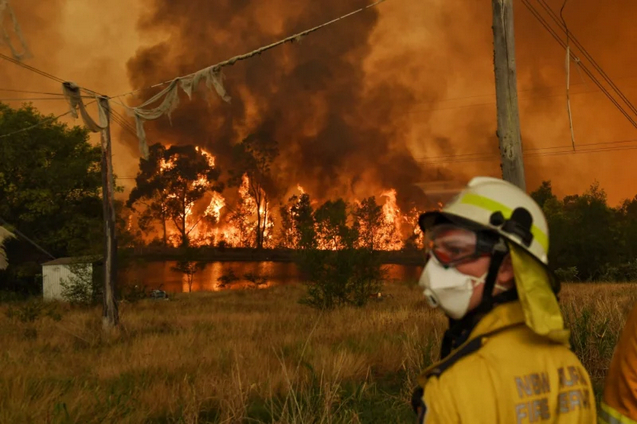
This time last year swathes of the east coast were already on fire and Sydney had just faced down catastrophic fire danger.

It fits the trend of the fire season starting earlier and hitting with increasing intensity.

"Absolutely we are saying that Australia should prepare for an increased fire risk," Dr Braganza said.

Fire conditions are worsening. (Supplied: Bureau of Meteorology)

He said the sort of fire events seen since the 2003 fires in Canberra were not one-offs.

"They are the sort of events we should treat as becoming more and more likely as warming continues."

Dr Brown was emphatic: "The message is very clear here. The State of the Climate report shows warming, it shows conditions drying through parts of Australia, and the projections are for hotter and dryer conditions going forward."

Changes in rainfall

Many parts of the country have seen a welcome change, with wetter conditions in recent months, but that does not mean we are out of the woods long-term.

Southern cool season rainfall is expected to continue to decline.

This year might have been a breather from the latest drought, but dry winters over southern Australia
have been common over the last 20 years. (Supplied: Bureau of Meteorology)

Three quarters of hydrologic reference stations across the country show a declining trend in streamflow.

According to Dr Brown, a lot of climate change is locked in, and so adaptation is a big part of what we do from now.

"Australian farmers, for example, are very used to dealing with climate variability and coming up with clever ways to manage and adapt," she said.

"New types of crops, new things to plant, new ways to work together to keep ourselves strong through these next few decades."

In contrast, northern warm season monsoonal rainfall has been above average over the last two decades.

But this rainfall remains inconsistent. Both the last two wet seasons recorded below-average rainfall.

The last few decades have been wet up north, but it has been inconsistent.
(Supplied: Bureau of Meteorology)

As the atmosphere and oceans continue to warm, heavy rainfall is expected to become more intense.

Ocean sinks

As we have pumped CO2 into the atmosphere the oceans have acted as a sink for both CO2 and heat.

But that has not come without an impact upon our oceans.

Surface waters around Australia are estimated to have had a 30 per cent increase in acidity since the 1880s, and sea levels have risen by 25cm globally since 1880 as a result of thermal expansion and ice melt.

Globally, oceans have already risen by an average of 25cm since 1880.
(Supplied: CSIRO)

The rate of sea level rise is increasing. It is now up to an average of 3cm per decade globally, but this is dependent on location.

Australia's northern and south-eastern coasts have been well above the global average, with the north-eastern and southern coastlines closer to average.

Although the total number of tropical cyclones is expected to decrease in the future, warmer oceans, higher sea levels and more intense rainfall all increase the risk posed by tropical cyclones in the future.

2020 slowdown not enough to stem the tide

Even 2020's global slowdown hasn't been enough to stop atmospheric concentrations of CO2 from increasing.

Dr Brown said there was a drop in the rate of increase of CO2, but that the slowdown was indistinguishable from the background variability.

"Another way to think about this is, if you have been eating junk food for 10 years and then you go on a diet for one day and you jump on the scales the next morning expecting to see some change, drop a dress size.

"It is not that simple. This is about a very long-term change"

The last time atmospheric C02 was at the same or higher concentrations than today was way back in the Pliocene,
2.6 million years ago. Global temperatures were 2-3 degrees warmer than today. (Supplied: CSIRO)

CO2 concentrations in our atmosphere are now well above any level reached in the last 800,000 years.

"I think the big challenge for our children and our grandchildren will be how to flatten this curve," Dr Brown said.

This year

Australia is currently under the influence of the La Niña phase of the El Niño Southern Oscillation.

La Niña events are typically associated with wetter-than-average conditions for all but the south-west.

Currently this year's La Niña is not tracking to be as severe as the last major La Niña in 2010/2011, but the Bureau will continue to monitor how the oceans warm over spring.


BOM Severe weather outlookYoutube

There is an increased risk of flooding for the east and north, with an above average risk of cyclones this summer.

Links

(AU) Climate Change Is Already Here: Major Scientific Report

Sydney Morning HeraldMiki Perkins

Australia is already experiencing climate change and the future holds more extreme fire seasons and“big weather” events such as major flooding, severe cyclones and long-lasting droughts.

That is made clear by the sobering State of the Climate report from the Bureau of Meteorology and CSIRO, released every two years.

Change in the number of dangerous fire weather days
*Change from (July 1950 - June 1985) compared with (July 1985 - June 2020) Source: CSIRO/BOM

It draws on the latest climate data and projections to provide scientifically rigorous analysis of climate change in Australia.

While COVID-19 lockdowns and economic downturns helped reduce global emissions in 2020, this has not been enough to make a discernible impact on carbon dioxide levels in the atmosphere, it finds.

“[It's like] you have been eating junk food for 10 years and you jump on the scales for one day ... this is about a very long change,” said Dr Jaci Brown, director of the climate science centre at CSIRO Oceans and Atmosphere. “The big challenge for our children and grandchildren is how to flatten this curve.”

Measurements taken at the Cape Grim air pollution station in Tasmania show carbon dioxide levels in the atmosphere have been increasing since pre-industrial times, driven by fossil fuel emissions. Around 85 per cent of global CO2 emissions in the decade from 2009 to 2018 were from fossil fuel sources.

The report predicts Australia's future holds further increasing temperatures, greater sea level rise, and less rainfall in eastern and southern Australia. “It’s quite a sobering look ahead,” said Dr Brown.

Climate change is predicted to cause more bushfires. Credit: Nick Moir

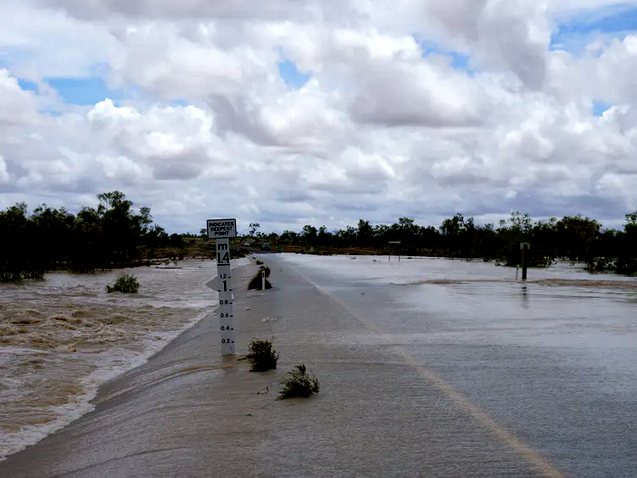
Despite years of protracted drought in Australia, a La Nina weather event under way in the Pacific will mean above average rain across most of Australia this summer. Dr Karl Braganza, the BOM’s manager of climate environment prediction, said all of the country should be alert for flooding, except the south-west of Western Australia.

Despite predicted heavier rainfall, Dr Braganza said the bureau was also preparing for an extended fire season. “Australia is fire prone, and southern Australia is fire prone in any given summer, [but] sometimes rainfall shifts the way those fires occur. We tend to have more grass fires than forest fires.”

Australia's climate has warmed, on average, by 1.44 degrees since 1910. Last year was the hottest year on record, with the greatest number of record-breaking hot days: 33 days that exceeded 39 degrees, compared with a total of 24 days between 1960 and 2018. Although 2019 has been the hottest year on record, in the next 100 years, this will be the coolest decade.

Global sea levels have risen 25 centimetres since 1880, and the world's oceans are increasingly acidic, the report finds. The rate of sea level rise is increasing, and is at 3.5 centimetres per decade.

In south-east Australia, there has been a significant drop in rainfall during autumn and winter since the 1990s, meaning a 60 per cent reduction in stream flow. But in northern Australia, monsoonal rainfall is more extreme during the wet season.

Professor Andy Pitman, director of the ARC Centre of Excellence for Climate Extremes at UNSW, said the findings were consistent with 30 years of scientific predictions, and concerns of the scientific community about global warming had only increased with time.

Professor Pitman said it was no longer possible to limit global warming to 1.5 degrees, but it may be possible to contain it to two degrees, the absolute upper limit permitted under the Paris climate agreement.

US President-elect Joe Biden says the US will adopt a 2050 emissions target, like the United Kingdom, New Zealand, Japan and South Korea. Prime Minister Scott Morrison says Mr Biden’s election won’t sway Australia’s position on climate change policy, and Australia would reach zero emissions "as quickly as possible".

Professor Pitman said reaching net zero by 2050 would not be enough to stop global warming reaching two degrees, and even getting to net zero would be "hugely challenging".

Links


(AU) Prepare For Hotter Days, Says The State Of The Climate 2020 Report For Australia

The Conversation | 

Shutterstock/wilsmedia

Authors
  •  is a Climate Projections Scientist at the CSIRO
  •  is Senior Climatologist at the Australian Bureau of Meteorology
The Australian State of the Climate 2020 report reveals a picture of long-term climate trends and climate variability.

The biennial climate snapshot draws on the latest observations and climate research from the marine, atmospheric and terrestrial monitoring programs at CSIRO and Bureau of Meteorology.

We are all still dealing with the lasting impacts of Australia’s hottest and driest year on record in 2019. It was a year of intensifying drought over eastern Australia, high temperature records and the devastating bushfires of summer 2019-2020.

State of the Climate 2020 puts all these events into the longer-term context of climate change trends and key climate drivers.

Australia can expect more dangerous fire weather days. Sean Davey/AAP

Australia’s hottest year on record

Using the best available data, the Bureau of Meteorology estimates Australia has warmed on average by 1.44℃ (±0.24℃) between 1910 and 2019.

Global rates of warming are lower due to the inclusion of the oceans in the global average, with the oceans experiencing a relatively slower rate of warming than continental areas.

The long-term warming trend increases the likelihood of extreme events beyond our historical experience. In 2019, natural climate phenomena that drive our weather, including a strong Indian Ocean Dipole and a negative Southern Annular Mode, added to the local warming trend, setting a record for the Australian average annual temperature.

This annual temperature for Australia is similar to what we might expect in an average year if the world reaches the +1.5℃ warming since pre-industrial times.

The long-term warming trend is also increasing the frequency of extreme warm days. We have seen a rise in the number of days when the Australian average temperature is within the top 1% ever recorded.

Extreme daily mean temperatures are the warmest 1% of days for each month,
calculated for the period from 1910 to 2019.
 CSIRO/BoMAuthor provided

The long-term temperature trend is also lowering the frequency of cooler years. The annual mean temperatures of Australia in the seven years from 2013 to 2019 all rank in the nine warmest years since national records began in 1910.

Barring unpredictable events such as major volcanic eruptions, projections show Australia’s average temperature of 2020-2040 is very likely to be warmer than the average in 2000-2020, as the climate system continues to warm in response to greenhouse gases that are already in the atmosphere.

What’s driving our changing climate?

Australia’s Cape Grim atmosphere monitoring station, in north-west Tasmania, is one of several critical global observing sites for detecting changes in the gas concentrations that make up our atmosphere.

The Bureau and CSIRO’s atmospheric monitoring station at
Cape Grim, Tasmania.
 CSIROAuthor provided

The increase in greenhouse gas concentrations has been the predominant cause of global climate warming over the last 70 years.

In 2019 the global average CO₂ concentration reached 410ppm, while all greenhouse gases combined reached 508ppm CO₂-equivalent, levels not seen for at least 2 million years.

Emissions of CO₂ from burning fossil fuels are the major source of the increase, followed by emissions from changes to land use. While the ocean and land have absorbed more than half the extra CO₂ emitted, the rest remains in the atmosphere.

The impact of the COVID-19 pandemic has reduced fossil fuel CO₂ emissions in many countries, including Australia.

Over the first three months of 2020, global CO₂ emissions declined by 8% compared to the same three months in 2019. But CO₂ is still increasing in the atmosphere.

Recent reductions in emissions due to COVID-19 have only marginally slowed the current rate of CO₂ accumulation in the atmosphere, and are barely distinguishable from natural variability in the records at sites such as Cape Grim.

Oceans warming and sea levels rising
CSIRO/BoMAuthor provided
State of the Climate 2020 can be read on either the Bureau of Meteorology or CSIRO websites. The online report includes an extensive list of references and useful links.

Similar to surface temperatures over the continents, the State of the Climate report says sea surface temperatures are showing a warming trend that is contributing to an increase in marine heatwaves and the risk of coral bleaching.

Important changes are also happening below the ocean’s surface. The global oceans have a much higher heat capacity than either the land surface or atmosphere. This means they can absorb much more of the additional energy from the enhanced greenhouse effect, while warming at a relatively slower rate.

Currently, the oceans are absorbing around 90% of the excess energy in the Earth system associated with increasing greenhouse gases. The related increase in total heat content provides another important way to monitor long-term global warming.

Warmer temperatures cause the water in our global oceans to expand. This expansion, combined with the additional water from melting ice sheets and glaciers, is causing sea levels to rise.

Total global average sea level has now risen around 25cm since 1880, with half of this rise occurring since 1970. The rate of sea level rise varies around Australia, with larger increases observed in the north and the southeast.

The rate of sea level rise around Australia measured using
satellite data, from 1993 to 2019. CSIRO/BoM, Author provided

The oceans are also acidifying due to changes in the chemistry of seawater, related to excess CO₂. The effect of this pH change is detectable in areas such as the Great Barrier Reef and the Southern Ocean.

The wetter and drier parts of Australia

The State of the Climate report shows the trend in recent decades has been for less rainfall over much of southern and eastern Australia, particularly in the cooler months of the year.

The longer-term drying trend is likely to continue, particularly in the southwest and southeast of the continent. Most areas of northern Australia have had an increase in average rainfall since the 1970s.

Natural variability has always been, and will continue to be, part of Australia’s rainfall patterns.

Floods are a regular hazard in Australia. Greg Stonham/Shutterstock

Fire seasons: longer and more intense

The fires of 2019-20 are still very much on everyone’s minds, and the State of the Climate report puts the weather component of fire risk into a longer-term perspective.

Since the middle of last century there has been a significant increase in extreme fire weather days, and longer fire seasons across many parts of Australia, especially in southern Australia.

There has been an increase in the number of days with
dangerous weather conditions for bushfires.
 CSIRO/BoMAuthor provided

The 2020 report highlights many recent changes in Australia’s climate. Most are expected to continue and include:

  • warmer air and sea temperatures
  • increased numbers of very hot days
  • ongoing sea level rise
  • more periods of dangerous fire weather
  • longer and warmer marine heatwaves.

When these extremes occur consecutively within a short timeframe of each other, or when multiple types of extreme events coincide, the impacts can compound in severity.

Understanding these climate risks and how they might affect us will help to ensure the future well-being of our Australian communities, ecosystems and economy.

Hotter, wetter, drier and more bushfires.

Links

13/11/2020

(AU) Editorial: Labor's Battle Over Climate Change Action

The AgeThe Age's View

 For more than a decade, climate change has been the focus of fierce political debate in Canberra. Much of the wrangling has been par for the course between the two major parties.

Particularly for the Coalition, it has also exposed deep internal party divisions. Malcolm Turnbull's downfall first time around as opposition leader came swiftly after he supported then prime minister Kevin Rudd's cap-and-trade emissions trading scheme in 2009. It sent a sharp warning to the moderate wing of the Liberal Party that any future support of a more progressive approach to global warming would be met head-on.

Joel Fitzgibbon stood down this week from his shadow ministerial role. Credit: Alex Ellinghausen

While Labor has in most part gravitated towards advocating for a more activist climate policy, Labor frontbencher Joel Fitzgibbon's resignation from the opposition shadow cabinet this week has put on full display the ALP's own bitter debates over the issue.

For some months now, Mr Fitzgibbon has been forcefully putting the case that, while he supported meaningful action on climate change, any new move from within Labor for deeper and quicker emissions cuts would be "just a recipe for another election loss". He believes aggressive climate policies are turning off Labor's traditional blue-collar voters and were a big factor in its defeat at the last election.

Mr Fitzgibbon has a point. For Labor to regain power it does need to do a much better job attracting voters in regional areas, particularly in mining regions – many of which are in Queensland. The question is, as Mr Fitzgibbon would argue, whether pulling back on its climate change credentials is the right way to go.

The Age would argue that having a strong climate policy and capturing a larger share of blue-collar voters should not be mutually exclusive.

Labor's own election review admitted that while its climate policies won votes with young and affluent older voters in urban areas, they "did not effectively discuss the cost of not acting on climate change or the job opportunities a transition to a renewable energy future could bring".

NSW Premier Gladys Berejiklian has recently shown one way to do it, rolling out an ambitious energy plan that will support the transition to renewable energy by attracting $32 billion of private investment in infrastructure to replace coal-fired power generation. She got the backing of her National coalition partner by promising to create more than 6000 construction jobs and 2800 ongoing jobs, mostly in regional areas, and, to top it off, cut the price of electricity.

It's a compelling case for change. Labor should take note. It does need to look after its blue-collar base, but it won't do that by offering false hope that mining jobs are going to be around for decades to come. They are not. Australia needs to urgently move on climate change. That won't happen until federal politicians on both sides of the aisle lift their game in making the case.

US president-elect Joe Biden has made it clear combating a warming planet is at the top of his policy agenda. When British Prime Minister Boris Johnson, who recently told Prime Minister Scott Morrison to take "bold action" on climate change, called to congratulate Mr Biden on his win, he expressed his hope the two nations would work closely on tackling global warming. Australia is being left behind on the global stage among Western liberal democracies.

The Australian Labor Party needs to stay the course in taking climate change seriously. But if it wants to get into government, it also needs to vastly improve its ability to make the case for change.

Links

The One Climate Fix You Can Definitely Stomach

Grist

Grist / ATU Images / Getty Images


Most efforts to take on climate change have focused on power plants, cars, and factories. Food has always been an afterthought. 

Sure, food is important, wonks will say, because agriculture accounts for more than a quarter of all our greenhouse gas emissions. But then they look at the other 60 percent of emissions billowing off flaming fossil fuels and their focus settles on ridding the planet of oil, gas, and coal, the biggest culprits.

The danger of ignoring agriculture is real. A new paper published Thursday calculates that, if humans keep up their eating habits, they’ll be chewing up any chance of keeping temperatures below 1.5, or even 2 degrees Celsius of warming over pre-industrial levels. 

“We realized, my goodness, even if we subtract all the fossil fuels, we’ll overshoot our goals for 2050 and 2100 with emissions from the food system,” said Jason Hill, one of the authors of the paper, who studies the climate effects of agriculture at the University of Minnesota.

Recently, scientists have argued that the world has veered away from the most apocalyptic climate change scenarios thanks to the decline of coal power. But that is only true if people stop cutting down the world’s forests: 

Most climate models assume that by 2050 the world will have reversed its long history of deforestation. Up to this point, people have continued to burn more forests than grow back, making room for more farms and pastures.

“Look, food matters,” Hill said. “It has by far the largest footprint of anything we do on this planet.”

The good news is that there is a way to clean up the world’s chow machine. It requires reducing food waste, moderating our lust for meat, and adopting something more like the Mediterranean diet. 

At the same time, we could increase the supply of food coming off each farm by improving the genetics of crops, giving poor farmers better access to water and fertilizer, and by spreading environmentally friendly techniques like covering the soil with a protective blanket of grass during the winter to keep the earth from washing away.

Do it all, and the world could feed itself without emitting any greenhouse gases — and perhaps farms would even absorb a little more carbon dioxide than they produced. 

The research paper suggests that even getting half way with these efforts — say half of America manages to slim its meat intake down from jumbo porterhouse to salami size — the planet could remain on track for just 1.5 degrees Celsius of warming.

These conclusions fall into line with the findings Richard Waite, a researcher at the World Resources Institute, came to when working on a major report on the world’s food systems

 “It reinforces the main messages of our report,” he said. “If we don’t make big changes to our food system starting today there’s no way we can stay under 2 degrees. And we’ve got to make all the changes, not just the ones we like best.”

When it comes to changing the food system, he said, people tend to divide into teams. There’s the demand-side team focused on getting people to eat mainly veggies and reducing food waste. There’s the big-ag team focused on maximizing farm yields with better technology. And there’s the natural farming team, focused on ways of working with nature to produce more food. 

Rather than finding ways of working together, they often fight.

“We need to get past that conflict because we are not going to get to where we need to be if we each insist on our own silver bullet,” Waite said.

Hill puts a positive spin on it.

“Yes we need to do it all, but if we do it all, we can achieve our goals.”

Links

(USA) Trump Administration Removes Scientist In Charge Of Assessing Climate Change

New York TimesChristopher Flavelle | Lisa Friedman | 

Michael Kuperberg was told he would no longer oversee the National Climate Assessment. The job is expected to go to a climate-change skeptic, according to people familiar with the changes.

The dismissal is a setback for the National Climate Assessment, a report that the government is required by law to produce every four years. Credit...Stefani Reynolds for The New York Times


WASHINGTON — The White House has removed the scientist responsible for the National Climate Assessment, the federal government’s premier contribution to climate knowledge and the foundation for regulations to combat global warming, in what critics interpreted as the latest sign that the Trump administration intends to use its remaining months in office to continue impeding climate science and policy.

Michael Kuperberg, executive director of the U.S. Global Change Research Program, which produces the climate assessment, was told Friday that he would no longer lead that organization, people with knowledge of the situation said.

According to two people close to the administration, he is expected to be replaced by David Legates, a deputy assistant secretary at the National Oceanic and Atmospheric Administration who previously worked closely with climate change denial groups.

Dr. Kuperberg’s departure comes amid a broader effort, in the aftermath of Mr. Trump’s defeat last week by President-elect Joseph R. Biden Jr., to remove officials who have fallen afoul of the White House. Also on Friday, Neil Chatterjee, head of the agency that regulates the nation’s utility markets, was demoted by the White House, after he publicly supported the use of renewable power.

In a message to colleagues, Dr. Kuperberg said he was returning to his previous job at the Department of Energy. He was removed from the list of staff on the research program’s website on Monday.

Dr. Kuperberg did not respond to requests for comment. The Global Change Research Program reports to the White House Office of Science and Technology Policy. Asked why Dr. Kuperberg had been removed from the role, Kristina Baum, a spokeswoman for that office, said on Monday that “we do not comment on personnel matters.”

Dr. Kuperberg’s dismissal appears to be the latest setback in the Trump administration for the National Climate Assessment, a report from 13 federal agencies and outside scientists that the government is required by law to produce every four years. The most recent report, in 2018, found that climate change poses an imminent and dire threat to the United States and its economy.

Dr. Michael Kuperberg
A biased or diminished climate assessment would have wide-ranging implications.

It could be used in court to bolster the positions of fossil fuel companies being sued for climate damages. It could counter congressional efforts to reduce emissions of carbon dioxide into the atmosphere, where it contributes to global warming.

And, ultimately, it could weaken what is known as the “endangerment finding,” a 2009 scientific finding by the Environmental Protection Agency that said carbon dioxide and other greenhouse gas emissions pose a threat to human health and therefore are subject to government regulation. Undercutting that finding could make it more difficult to fight climate change under the terms of the Clean Air Act.

The agency most involved in that report is the National Oceanic and Atmospheric Administration, the country’s premier climate science agency. In September, the White House installed at NOAA new political staff who have questioned the science of climate change. People familiar with the administration’s strategy said the aim was to use NOAA’s influence to undercut the National Climate Assessment.

“They’re trying to just do a takeover of all this stuff so they can control the National Climate Assessment thinking,” said Judith Curry, a former chairwoman of the School of Earth and Atmospheric Sciences at the Georgia Institute of Technology, in an interview Monday.

One of the new political hires was Dr. Legates, a professor at the University of Delaware’s geography department and now a deputy administrator at NOAA who has worked closely for years with climate denial groups and has argued that carbon dioxide “is plant food and not a pollutant.” Dr. Legates is now being considered to take Dr. Kuperberg’s position as head of the Global Change Research Program, according to two people including Myron Ebell, a director at the Competitive Enterprise Institute and a former member of Mr. Trump’s transition team.

Credit...Kevin Dietsch/UPI Photo, via Alamy
Mr. Ebell, whose organization has championed the appointment of Dr. Legates and others who question the established science of climate change, said the intention is for him to lead the program while continuing to hold his position at NOAA. “It might be a short-term appointment,” Mr. Ebell said, given the election of President-elect Biden, who has said he will embrace aggressive efforts to tackle climate change.

“If he only directs it for two months and a week, then he may not get very far, but let’s see what can get done in two months. Maybe the next administration will throw it all away, but maybe some changes will be adopted, who knows,” Mr. Ebell said.

Marc Morano, a prominent denier of established climate change science, cheered the departure of Mr. Kuperberg and said he expects Mr. Legates to be named. “The Trump administration is ‘listening to the science’ by clearing out the anti-science promoters of extreme climate scenarios. These moves are long, long overdue,” he said.

Climate Fwd: What on earth is going on? Get the latest news about climate change, plus tips on how you can help.

Dr. Legates did not respond to a request for comment.

Federal employees, who asked not be identified because they were concerned about retaliation from the White House, said they worried that the administration’s goal in removing Dr. Kuperberg was to make it easier to pick authors for the report who also question the severity of climate change. Those who have publicly attacked climate science, like Mr. Ebell and Mr. Morano, said that is the goal.

While the incoming Biden administration could reverse those decisions, doing so would slow down the production of the climate assessment. The next edition, which was supposed to be released by 2022, has already been pushed back to 2023.

Dr. Kuperberg’s removal isn’t the only example of the Trump administration taking steps that could impede climate policy in its final months.

Mr. Chatterjee, a Republican who was demoted Friday as chairman of the Federal Energy Regulatory Commission, had recently drawn White House ire. He had supported a series of proposals that would expand use of large-scale battery storage in the power grid, thus encouraging the use of wind and solar power, while allowing electric utilities to charge a user fee for power generated from coal and natural gas, which would discourage the use of those fossil fuels.

Like the findings of the National Climate Assessment, the moves by Mr. Chatterjee were at odds with Mr. Trump’s policies, which have been aimed at aggressively increasing the use of coal and other fossil fuels, chiefly by reducing regulations. The White House replaced Mr. Chatterjee as chairman of the panel with another member of the commission, James Danly, who has opposed efforts to promote renewable power.

“It is 100 percent retribution,” said Mr. Chatterjee in a telephone interview, of the White House move to demote him from his chairmanship. “This validates my independence and integrity. I’m going to hold my head up high.”

A White House spokesman, Judd Deere, said that the White House would not comment on personnel matters. Mr. Chatterjee will remain on the five-member commission, and said he intends to serve out his current term, which ends in June.

Rachel Licker, a senior climate scientist at the Union of Concerned Scientists, criticized the actions of Trump administration officials. “Even in their final days, they are continuing to attempt to bury the overwhelming scientific consensus on climate change.”

Links

Lethal Heating is a citizens' initiative