06/12/2020

Climate Change Is Already A Disaster To Health, Doctors Say

The Verge - 

This picture, taken on June 25th, 2019, in Clermont-Ferrand, shows a personal care assistant holding the hand of an elderly person as she visits her house to help her to avoid heatstroke and dehydration during a heatwave. Photo by Thierry Zoccolan / AFP via Getty Images

Dangerously high temperatures put hundreds of thousands of people’s health and livelihoods at risk every year, and a major new report shows how much the threat has already grown in a warming world. Among other alarming statistics, heat-related deaths among older adults grew by nearly 54 percent between 2000 and 2018, the report finds.

The sweeping health and climate change report was published today in the prominent medical journal The Lancet. The report was produced by more than 100 experts from academia, the World Health Organization, and other UN agencies. The report offers proof that climate change will not only reshape life in the future, but it is actively endangering lives now. Health care providers already see themselves treating a climate crisis.
"We don’t want our health system to be overwhelmed."
Doctors held back tears during a briefing with reporters when asked to reflect on the results of the report and how it connected to their experiences in emergency rooms as the COVID-19 pandemic spread around the world. “It’s been a really, really hard year,” said Jeremy Hess, an emergency medicine physician and co-author of the study, before taking a long pause to collect himself. “We see really catastrophic impacts that are very distressing to us.” Heatwaves and other natural disasters were particularly dangerous this year, as emergency responders and health care systems struggled to handle the pandemic. Experts fear that climate-related disasters could similarly overwhelm hospitals in the future.

“We really implore people to learn with us from our experience this year, and try and avoid the worst,” Hess said. “We don’t want our health system to be overwhelmed by climate change impacts, and we know what we need to do to stop this.”

The report, while covering a sweeping range of health threats from hunger to pollution, included brand-new findings on how many more lives have been taken by extreme heat. The number of heat-related deaths globally in 2018 reached an alarming 296,000 — and that’s just among people over the age of 65, who are among the most vulnerable to heat illness. China, India, Japan, and central Europe had the most deaths among older adults. In the US, heat-related mortality has nearly doubled for this demographic over the past 20 years, reaching a record 19,000 deaths in 2018.
"Heat-related mortality has nearly doubled for this demographic"
People who work outside are also more vulnerable to heatwaves. Staying inside during a heatwave is often a healthier choice. But not working when it’s too hot outside comes with costs, too. US workers in the service, manufacturing, agriculture, and construction sectors likely lost $45 billion in earnings in 2015, the report estimates. Globally, people worked 302 billion hours less in 2019 because of scorching temperatures — 103 billion more hours than were lost in 2000.

Rising temperatures have also triggered more wildfires, which poses another set of health threats. Globally, the risk of people being exposed to a wildfire grew in a majority of the world’s countries in recent years when compared to the period between 2001 and 2004. The US saw one of the biggest increases in risk, with a 19 percent rise in daily exposures to wildfires. That means more people are breathing in more soot and pollution from the blazes.

Fortunately, other studies have shown how taking ambitious action on climate change can save thousands of lives. “We don’t want to have regret that we didn’t do everything we could in order to prevent what we know is coming,” says Renee Salas, an emergency medicine doctor and lead author of a policy brief accompanying today’s new report. “That’s why we’re pleading [with people] to listen to the science. Let the science guide us, and prevent the most catastrophic outcomes that could lie ahead if we don’t do something.”

Links

(AU) Climate Change Is Wreaking Havoc On Australians' Health. What's Our Plan To Fix Things?

 ABC NewsCatherine Taylor | Bridget Judd

Sydney blanketed by smoke on December 2, 2019 due to bushfires. (ABC News)

For many Australians who have grown up in our "sunburnt country", last week's nation-wide heatwave may have felt like business as usual. It's almost summer, after all.

But if you dig into the statistics, the picture that emerges is deeply alarming, especially when considered in light of last year's devastating bushfires: We've just experienced Australia's warmest November on record.

The hottest year on record was 2019, and 2020 continues to track in the same direction. Back-to-back days of 40 degrees-plus in Sydney last week occurred for only the second time in 162 years.

Where do heatwaves come from
Heatwaves can be deadly and can occur anywhere in Australia. But where do they really come from? Read more

But it's not just the environment that's suffering. Growing numbers of Australians are experiencing health problems, and even an increased risk of death, as a result of a rapidly changing climate.

The Medical Journal of Australia/Lancet Countdown on health and climate change this week argued urgent action is needed to prevent human health being further affected.

The health impact of climate change has already led to a 53.7 per cent global increase in heat-related mortality between 2010 and 2018, mainly affecting Japan, China, central Europe and northern India.

In Australia, in the same timeframe we've seen a 22 per cent increase in the annual average number of days of population exposure to bushfires, which killed 41 people last summer and exposed "much of Australia's population to hazardous air quality for a prolonged period of time".

Exposure to mosquito-born diseases including malaria and dengue fever has also increased along with the threat from zoonotic disease, graphically demonstrated by the COVID-19 pandemic. Food security took a hit, too, implying associated malnutrition.

So what is being done to improve the health outcomes of Australians in the face of accelerating climate change? And which foreign nations should Australia be looking to as leaders?

Australia has experienced record-breaking hot weather in recent years. (ABC News: Shelley Lloyd)

Who is responsible?

Australia's federal system makes healthcare a state responsibility — we have seen this play out during the coronavirus pandemic.

Because of this state-based approach, not all states and territories are on the same page when it comes to strategies linking health and climate.

Western Australia is preparing to release the results of its Climate Health WA Inquiry, which will emphasise connections between climate change and physical and mental health, vulnerability and resilience. Victoria and Queensland have similar documents.

But there are growing calls for Australia to develop a national plan of action that considers the widening impact of global warming on health as a problem in its own right, not tied to progress on climate change policy.

"I think a national approach is absolutely essential, particularly when we get to the emergency management of these things," says Andrew Gissing, a risk and resilience expert from Risk Frontiers.

Gissing argues the importance of a national approach is obvious in areas like warning systems for extreme heat, which can't be coordinated effectively with a state-by-state approach. Heatwave warning systems is an area the Bureau of Meteorology is working on.

Richard Yin, a Perth GP and member of Doctors for the Environment, has been arguing for a national health and climate change plan for years.

Australia does not have such a strategy, he says, and according to the MJA/Lancet report, only about 50 of 100 countries in the survey do, with less than 4 per cent of those that are in place considered effective.

"Australia needs to prepare for climate change impacts on health and that means actually mapping what's going on and being able to predict what's going on," Yin says. "There's a complexity to the task and a number of indicators that we're going to need to try to track."

Yin says that because he's in Perth, his patients seem to be avoiding the worst health affects of climate change. But he is seeing more patients coming to him with what he describes as "eco-anxiety".

Yin's colleagues working in regional WA are regularly treating patients for heat-related health conditions, he adds, and in some cases people have had to move because of the impact of smoke from bushfires.

"The health impacts from smoke can be can be horrific," Yin says, noting some people with asthma or lung disease have been in and out of hospital emergency departments until deciding to leave the place they're living, "because it's life threatening".

Georgia Behrens, Chair of the Australian Medical Students' Association's global health committee, agrees COVID-19 has proven how effectively Australia can manage national health emergencies by using a coordinated approach.

"With a shared set of goals and principles we can work consistently across the country," she says. "[The pandemic] has given us some early indications of a way that model could potentially work to tackle this shared health emergency."

Which countries are doing it best?

From cooling rooms in France to England's heatwave plan, addressing the health impacts of climate change is a rapidly developing sector.

But Yin struggles to single out one country he feels has achieved the right approach to this problem. He notes the UK has made progress, but he believes its strategy "doesn't really capture all of the issues and the planning was very general".

And even if another country did show leadership, he says, it wouldn't necessarily act as a blueprint for Australia because climate is so regionally specific. One area may be prone to extreme heat, but another faces flooding. Mosquito-borne diseases may be escalating in one place, while bushfire smoke affects another.

Sydney was blanketed by bushfire smoke this time last year. (ABC News)

Gissing believes practical solutions can be a good first step — for instance, by providing localised information about neighbourhood temperatures and where to find "the coolest places" to spend time.

For Behrens, Germany is showing leadership with its strategy for establishing a dedicated department within the national health ministry that investigates health in the age of climate change — particularly in the way it has coordinated a national and regional plan — which could be relevant to Australia.

"I think this provides a really useful example of the way we could potentially proceed," she says, "acknowledging the shared challenge, and taking shared responsibility."

Changes we can make right now

Although it will take time to change the climate's warming trajectory and implement environmental policies at government level, there are discreet, piecemeal changes that can be put in place more quickly, Behrens says.

Urban planning can help cities plan to avoid becoming "heat traps", and develop spaces aimed at improving physical and mental health.

Gissing recommends increasing green spaces on both a large (parkland) and small scale (street planting) to offer shade or cooler zones throughout suburbs.

Green spaces that create cooler zones within urban landscapes are important for helping reduce the impact of climate change on human health. (ABC News: Keane Bourke)

Even something as simple as retrofitting homes with heat-reflective roofing and reducing concrete and paving in backyards by increasing grassed areas can reduce what he calls "heat sinks around the home" and lower air temperatures.

When it comes to fighting fires, Gissing advocates investment in technology that can lead us to "the next generation of firefighting".

"How are we going to be fighting fires in 2040 or 2050 when the frequency of blazes is only going to increase because of climate change?" he says, pointing out that new technology which aims to rapidly detect and suppress fires could prevent catastrophic fire events in the future.

Concrete, tile and paving can increase the way heat is absorbed and raise the temperature of a city. (Supplied: Linking Melbourne Authority)

But we also need to improve people's access to zones Gissing calls "cooling refuges" — public swimming pools, air-conditioned shopping centres or even building links between neighbours who are able to help each other out.

"We will need community information about heatwaves, volunteers to manage transport, and shelters," Gissing adds, noting that vulnerable and elderly people may have trouble reaching these "cooling refuges" even if they exist.

"An integrated approach is the key."

Links

(AU) BOM Says Australia Just Had Its Hottest November On Record

 ABC WeatherKate Doyle

It has been a hot few months across the country. (ABC News: Mary Lloyd)

Key points
  • Australia has just broken the record for its warmest November on record
  • It was also our warmest spring for minimum and mean temperatures
  • Spring's rainfall was well below the records but significantly greater than last year
The Bureau of Meteorology (BOM) has just finished crunching last month's numbers and confirmed it was Australia's hottest November on record for maximum, minimum and mean temperatures.

 It was also the country's hottest spring on record for mean and minimum temperatures.

November's maximums came in at 2.9C above the 1961-90 average, surpassing the 2.4C mark set in November 2014. 

The national minimums were at 2.04C above the average and means at 2.47C.

It wasn't just the past few days that were hot — spring overall saw Australia's mean and minimum temperatures reach the warmest on record at 2.03C and 1.91C above the average, respectively.

Spring's maximum temperatures were only the fifth warmest on record at 2.15C above the 1961-90 average.

Rainfall near average for spring

 Nationally, spring rainfall was 8 per cent below average and close to average for most of the country, according to BOM senior climatologist Blair Trewin.

But parts of eastern Queensland, north-east New South Wales and western Tasmania were drier than average.

Spring rainfall was just below average for the nation as a whole in spring. (Supplied: Bureau of Meteorology)

Outback South Australia and far south-west New South Wales, however, had above-average rainfall.

November was particularly dry for the eastern states but wet in the west.

Many regions are still in drought, while for others this year has been a real turnaround.

Good winter rain in the south means farmers are on track to produce the second biggest grain crop ever, according the latest update from the Australian Bureau of Agricultural Resource Economics and Sciences (ABARES).

The dry window over the past few weeks has been exactly what many farmers needed to get their crop out.


BOM summer 2020-21 climate and water outlook. Youtube 

How could it be hotter than last year?

Last spring was extremely dry, the driest on record.

Australia went through it's highest mean temperature average in over 100 years of records. (Supplied: Bureau of Meteorology)

Dr Trewin said when it was extremely dry, there were very hot days but also very cool nights.

So we may remember the hot spring days last year — which were definitely hotter than this year — but last year's cool nights drew the average down.

"This year the real standout has been the warm nights," Dr Trewin said.

Australia's spring mean temperature anomaly 
1910 to 2020 relative to the 1961 to 1990 average of 22.5C
Source: Bureau of Meteorology Get the data

Beyond the extremely dry conditions, one contributor to last year's fires was the strongly negative Southern Annular Mode (SAM)

SAM's westerlies brought hot air from central Australia down over the east coast and contributed to the horror fire weather.

A year later, the SAM has been in neutral, making these extreme conditions less likely.


How to prepare for a heatwave | Emergency Tips. Youtube 

Wasn't La Niña going to make things wet and cool?

Dr Trewin said the climate driver was still there but the rainfall was taking its time to arrive.

He said while some La Niña years like 2010 brought heavy rain early, other years took longer to have their effect on Australia.

This year was looking a bit like 1988, Dr Trewin said — 1988 had a strong La Niña but also had a very hot spring before the rain kicked in, making for an extremely wet first half of 1989.
"We still have a pretty high level of confidence we're going to have a period of sustained above-average rainfall for the coming months."
How to plan for flooding
If you could be cut off by floodwaters, make preparations. ABC Emergency has put together a list of things you should do if you are affected. Read more
Spring was also expected to be wetter than average, but short-term climate drivers have gotten in the way in recent weeks and prevented the La Niña from bringing about the expected wetter conditions.

Then there is the climate influence.

April-to-October rainfall has been on a downward trend over southern Australia for the past few decades.

Australia's climate has also warmed on average 1.44C (plus or minus 0.24C) since 1910, as outlined in the most recent BOM and CSIRO State of the Climate report.


How to prepare for a flood | Emergency Tips. Youtube 

What's on the cards this summer?

The outlook for the coming months indicates temperatures could be below average in the centre and above-average rainfall is likely for most of the country, but of course it doesn't count until it hits the ground.

Daytime temperatures are expected to be average to below average, but overnight temperatures are expected to remain high. (Supplied: BOM)


Links

05/12/2020

(AUDIO) BBC The Climate Question


Introducing The Climate Question 6:09

Not just a show about climate, it’s also about how we can change. 

What’s stopping us from stopping climate change? 

Finding new ways of understanding what is happening to our world and the solutions that are out there.

******

America v China 22:59

Will a Joe Biden presidency be better for the environment than President Trump’s policies? 

Is China really set to take the lead on tackling climate change? And can the world's two biggest emitters of greenhouse gases work together for the good of the planet?

We're joined by former governor of California Jerry Brown, now with the California-China Climate Institute at Berkeley, and Daily Telegraph journalist Sophia Yan.

Presenters: Neal Razzell, Graihagh Jackson, Vincent Ni
Researcher: Eleanor Biggs
Producer: Anna Meisel
Editor: Ravin Sampat
******

The war on trees and what it means for disease 23:56

Many people have worried that the Covid-19 pandemic meant the harm of climate change was being ignored. But could the opposite be true? 

Neal Razzell and Graihagh Jackson look at the links between both emerging pandemics and deforestation. 

We’ll be on the ground in Nigeria, with BBC reporter Nkechi Ogbonna showing us the reality of farming and land use change in the tropics. 

While in the bush, she meets an illegal logger to find out their take on climate change and pandemics.

Professor Thomas Gillespie studies emerging infectious diseases, the types we don’t even have a name for yet. 

His work has shown the problems of land use change for mining and agriculture and the emergence of diseases that jump from animals to humans, like Covid-19. 

The more we cut down, the closer we get to diseases we’d never encountered before. 

We also hear about global solutions from World Service environment correspondent Navin Singh Kadhka, and how we can help in the fight to save the rainforests.

******

A degree away from carnage 27:26

Climate scientists have shifted the definition of what they believe is the "safe" limit of climate change.

Researchers argued the global temperature rise must be kept below two degrees Celsius by the end of this century to avoid the worst impacts of climate change. But what are those worst impacts in reality?

What does it mean to people, communities and the world we live in? In this episode, we go to the people who see the effect of the rising temperature in their daily life.

Produced by Eleanor Biggs & Jordan Dunbar
Editor: Ravin Sampat
******

Links

Climate change is resulting in profound, immediate and worsening health impacts, over 120 researchers say

The Conversation

Shutterstock

Authors
  • Senior Lecturer in Geography, University of Melbourne
  • , Professor of Disasters and Health, University College London
  • , Lecturer in Environmental Economics, Ca’ Foscari University, Venice
  • , Senior Researcher, Institute for Environment and Human Security (UNU-EHS), United Nations University, Tokyo
Climate change is resulting in profound, immediate and worsening health impacts, and no country is immune, a major new report from more than 120 researchers has declared.

This year’s annual report of The Lancet Countdown on Health and Climate Change, released today, presents the latest data on health impacts from a changing climate.

Among its results, the report found there were 296,000 heat-related premature deaths in people over 65 years in 2018 (a 54% increase in the last two decades), and that global yield potential for major crops declined by 1.8–5.6% between 1981 and 2019.

We are part of the Lancet Countdown sub-working group focusing on human migration in a warming world. We estimate that, based on current population data, 145 million people face potential inundation with global mean sea-level rise of one metre. This jumps to 565 million people with a five metre sea-level rise.

Unless urgent action is taken, the health consequences of climate change will worsen. A globally coordinated effort tackling COVID-19 and climate change in unison is vital, and will mean a triple win: better public health, a more sustainable economy and environmental protection.

Drought, fires and excessive heat

The 2020 report brings together research from a range of fields, including climate science, geography, economics and public health. It focuses on 43 global indicators, such as altered geographic spread of infectious disease, health benefits of low-carbon diets, net carbon pricing, climate migration and heat-related deaths.

The Lancet Countdown on Health and Climate Change: 2020 report. 

The five hottest years on record have occurred since 2015, and 2020 is on track to be the first or second hottest year on record.

The 2020 Lancet Countdown report found extreme heat continues to rise in every region in the world and particularly affects the elderly, especially those in Japan, northern India, eastern China and central Europe. It is also a big problem for those with pre-existing health conditions and outdoor workers in the agricultural and construction sectors.

While attributing heat-related deaths to climate change isn’t straightforward, rising temperatures and humidity will mean we can expect heat-related deaths to increase further.

Climate change is also an important contributing factor to drought. The report found that in 2019 excess drought affected over twice the global land surface area, compared with the 1950-2005 baseline.

Drought and health are intertwined. Drought can cause dwindling drinking water supplies, reduced livestock and crop productivity, and an increased risk of bushfire.

Mental health is also at risk, as Australian research from earlier this year confirmed. This looked at the declining mental health of drought-affected farmers in the Murray-Darling Basin over 14 years.

More than 445 deaths were attributed to the smoke from the Black Summer bushfires. Shutterstock

Further, the Lancet Countdown report found that between 2015 and 2019, the number of people exposed to bushfires increased in 128 countries, compared with a 2001-2004 baseline.

Climate change worsens risk factors for more frequent and intense bushfires. We need only look to last summer’s unprecedented bushfires in Australia as a stark illustration. The number of people exposed to the bushfires was amplified by expanding settlements and inadequate risk reduction measures.

Sea level rise, human migration and health

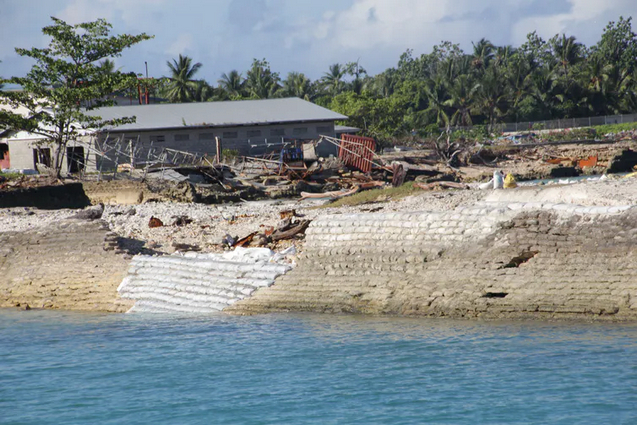
As the world warms and the sea rises, millions of people will be exposed to coastal changes, including inundation and erosion.

Sea-level rise has direct and indirect consequences for human health. In some places, water and soil quality and supply will be compromised due to the intrusion of saltwater. Flooding and wave power will damage infrastructure, including drinking water and sanitation services. And disease vector ecology will also change, such as higher mosquito densities in coastal habitats, potentially causing greater transmission of infectious diseases like dengue or malaria.

However, people and communities may adapt by moving away. In Fiji, for example, at least four communities have relocated in response to coastal changes. The Fijian government notes planned relocation will be a last resort only when other adaptation options are exhausted.

Relocation might also lead to health threats . This includes physical health consequences from altered diets, as fishing and subsistence agriculture may be disrupted. There are also mental health impacts from people losing their attachments and connections to their places of belonging.

But sometimes, migration responses to climate change can have health benefits. Moving from vulnerable coastlines might reduce exposure to environmental hazards such as flooding, be an impetus to seek healthier livelihoods and lifestyles, and improve access to health services.

In places like Kiribati, sea walls are used to try to help stave off sea level rise. AAP Image/Elise Scott 

Our estimation of the number of people facing potential inundation is based on projections of global mean sea-level rise and on current population data.

In a high emissions scenario with warming of 4.5℃, seas could rise by one metre by 2100 relative to 1986–2005. This would see 145 million people face potential inundation.

A collapse of the Western Antarctic Ice Sheet could cause five to six metres of sea level rise. Under this extreme scenario, 565 million people may be inundated.

It is important to note, however, that uncertainties constrain our ability to forecast migration numbers due to sea-level rise. These uncertainties include future environmental and demographic factors and potential adaptation (and maladaptation) responses, such as living with water or coastal fortification.

So is there any good news?

The 2020 Lancet Countdown report notes improvements in some instances, as some sectors and countries take bold steps to respond to climate change.

We are seeing, for example, health benefits emerging from the transition to clean energy. Deaths from air pollution attributed to coal-fired power have declined from 440,000 in 2015 to 400,000 in 2018, despite overall population increases.

Last week Tasmania declared it’s officially running entirely on renewable energy. AAP Image/Supplied by Granville Harbour Wind Farm

But more must be done: we need sustained greenhouse gas emission cuts, increased greenhouse gas absorption and proactive adaptation actions. Yet global efforts to address climate change still fall short of the commitments made in the Paris Agreement five years ago.

We cannot afford to focus attention on the COVID-19 pandemic at the expense of climate action.

If responses to the economic impacts of COVID-19 align with an effective response to climate change, we’ll see immense benefits for human health, with cleaner air, healthier diets and more liveable cities.

Links

(VIDEOS) Sir David Attenborough And United Nations Secretary General Antonio Guterres On Climate Change

BBC Video

Sir David Attenborough: 'Our lives depend' on climate change fight

Sir David Attenborough speaks to the UN Secretary-General António Guterres, as he issues a stark warning on the climate crisis and puts the issue at the heart of the UN's global mission.

BBC Video

United Nations chief Guterres: 'Our planet is broken'
United Nations Secretary General Antonio Guterres has said that climate change has "left our planet broken" and urged nations to make radical changes before it is too late. Mr Guterres has also warned that humanity is waging a war on the natural world, describing it as "suicidal".

Links

04/12/2020

'Mock Cop26' Activists Vote On Treaty Ahead Of 2021 Climate Summit

The Guardian

Young people from 140 countries presented policies to UK climate action champion

Mitzi Jonelle Tan, 22, from Manila, Philippines, one of the student organisers of Mock Cop26. Composite: Jessica Murray/Guardian Design Team

Young people from 140 countries who attended an online “mock Cop26” climate summit have presented a treaty of 18 policies to Nigel Topping, the UK’s high level climate action champion.

After two weeks of negotiations, delegates from the international youth-led conference presented their formal treaty to Topping during the event’s closing ceremony on Tuesday, and called on world leaders to prioritise the policies during Cop26, which was postponed for a year because of the pandemic and is now due to be held in Glasgow in November 2021.

Their demands include climate education at every level of formal education, tougher ecocide laws, stronger regulation on air quality, banning the offshoring of emissions and a commitment to limiting global heating to below 1.5C above pre-industrial levels.

Suphane Dash-Alleyne, a delegate from Guyana, South America, said: “Mock Cop26 sends a strong message to world leaders that young people can coordinate global negotiations and we have the solutions. Now is the time for us to have a seat at the table.”

A legal team, including lawyers from the legal charity ClientEarth, worked with delegates to formalise the statement into a treaty, which countries could adopt into law.

James Thornton, chief executive and founder of ClientEarth, said: “The youth behind Mock Cop26 have created a powerful statement calling on governments to take action to protect future generations from the worst impacts of climate change. Decisions taken by governments now will affect the youngest generation for many years to come.”

Mock COP26 was organised at short notice to fill the void left by the postponed Cop26 conference.

The Mock Cop26 policies were voted on by 330 young people across the globe who attended the event, with priority given to countries most affected by the climate crisis – people from the global south made up 72% of delegates.

Sainey Gibba, a 23-year-old delegate from the Gambia, said: “My country is very vulnerable to the impact of climate change, particularly rising sea levels and coastal erosion, so I feel like Mock Cop26 has really helped us raise our concerns and speak for the voiceless.

“Cop26 should never have been postponed, they should have done it virtually like how we have done it. They should really learn from us because there is so much urgency.”

The student staff team who organised Mock Cop26 is made up of 18 students from Australia, Brazil, Burkina Faso, Canada, Ecuador, India, Japan, Kenya, Nigeria, Philippines, Solomon Islands and the UK. Photograph: Mock Cop26

The Mock Cop26 organisers grouped delegates by time zones to ensure they could attend the two-week schedule of talks and discussions around their studies, and they hope the online conference could become a model to help future major conferences produce less carbon emissions.

“If we have been able to organise a conference online where we got more than 300 delegates from more than 140 countries to come together and make policies, I think our leaders could too,” said Sonali, a 21-year-old event organiser from Patna, India. “It reduces the carbon footprint massively when people don’t have to travel.”

The delegates and volunteers involved in Mock Cop26 now plan to spend the next 12 months urging politicians to implement their policies nationally to raise ambition on the run up to Cop26.

Links

Lethal Heating is a citizens' initiative