11/01/2021

(AU) Black Summer Bushfires Made Worse By Climate Change, Risk To 'Rapidly Intensify'

Sydney Morning HeraldPeter Hannam

Last year's Black Summer bushfires were made worse by climate change, and future risks will likely rapidly intensify for south-eastern Australia without significant efforts to curb greenhouse gas emissions, researchers say.

The review paper, published Thursday in the Communications Earth & Environment journal, found the warming climate contributed to elevating the threat, from drying out fuel loads to worsening bushfire weather.

The risk of bushfires will intensify faster than expected, researchers say. Credit: Nick Moir

"There are multiple ways where the effects of climate change are acting to increase fire risks," said Nerilie Abrams, a climate scientist at Australian National University and lead author of the paper. "What you expect to see is not just a gradual increase...but a very rapid intensification of fire risks."

In particular, the projected continued reduction in winter and spring rainfall was likely to pre-condition south-eastern Australia, particularly in Victoria, to forest fire.

Bushfires
Is there a link between climate change and bushfires?
Increased forest dieback in response to heat stress and the reduction in cool-season rainfall would add to the risks, the paper said.

Fire weather could also worsen, with "some evidence that these extreme front events [that draw heat from inland Australia to the coast] will become more frequent in southern Australia", the report said.

Similarly, the number of days favouring extreme pyrocumulonimbus clouds – fire-induced storm cells –forming over firegrounds are also projected to have "significant increases" under a high greenhouse gas emissions future.

During the satellite era up to 2019, 60 such fire-induced weather events were recorded or suspected in Australia, the researchers found. During the 2019-20 fire season, at least 29 such events occurred including at least 18 in a single week.

While communities can make some changes to adapt to the rising fire risks, they should also address what is driving the increase, specifically the rising greenhouse gas emissions, scientists said. Credit: Alex Ellinghausen


The week-long flurry had "previously undocumented impacts on winds and chemical composition into the stratosphere, and a planetary-scale radiative forcing effect equivalent to a moderate volcanic eruption", the paper found.

Driving the increased fire risk was how the warming climate was forecast to alter natural climate variability, such as increasing the likelihood of extreme El Nino events and positive phases of the so-called Indian Ocean Dipole that typically reduce rainfall in south-eastern Australia.

"[T]he potential exists for more frequent years with extreme hot and dry conditions in southeast Australia, beyond that expected from mean temperature and rainfall trends alone," the research found. "If this potential is realised, fuels in south-east Australia will be dry from winter to summer more often, and dangerous fire weather during fire seasons will occur more frequently.

Professor Abrams said that, while communities can seek to add adapt to the rising bushfire risks, it was important that governments examined why they were increasing and how they might be limited.

“We don’t expect every summer to be like 2019-2020 – and this La Niña year is a good example of that," she said.

‘‘However, ... if we can bring ourselves onto a low greenhouse gas emission pathway, these projected climate changes won’t be as extreme and will be easier to adapt to than if we were on a high-emissions pathway.’’

Links

Kenya Faces $62bn Bill To Mitigate Climate-Linked Hunger, Drought And Conflict

The Guardian

Country accounts for less than 0.1% of global emissions but suffers disproportionately from related disasters, say new report

Power-generating wind turbines in Loiyangalani in northern Kenya. Photograph: Thomas Mukoya/Reuters

Kenya needs $62bn (£46bn) to mitigate and adapt to the climate crisis in the next 10 years, according to a government document sent to the UN framework convention on climate change. It equates to almost 67% of Kenya’s GDP.

The report illustrates the scale of the challenge as the country aims to cut greenhouse gases by 32% within the next decade. It will rely on international sources to fund close to 90% of the expenditure. Securing such a colossal amount of often contentious climate financing from rich countries yet to honour their commitments to the $100bn target pledged during the 2015 Paris agreement will be a tall order.

Kenya accounts for less than 0.1% of global greenhouse gas emissions and has a per capita emission of less than half the global average. But low-emitting countries such as Kenya are suffering the most from the effects of climate change, and are poorly equipped to effectively respond or build resilience to key hazards such as drought and flooding.

For example, a 2011 drought in Kenya caused damage estimated at $11bn, while another in 2014-18 left 3.4 million people in food insecurity and half a million lacking access to water. In 2018, floods displaced 230,000 people in Kenya, including 150,000 children, drowned 20,000 livestock and led to the closure of 700 schools.

Villagers transport supplementary food provided by the UN World Food Programme during the drought in 2011. Photograph: David Bathgate/Corbis/Getty Images

The country also lost 8,500 hectares (21,000 acres) of crops in a country where 84% of the land is “arid and semi-arid, with poor infrastructure and other developmental challenges, leaving less than 16% of the land to support over 80% of the population”.

Such losses, the document says, continue to knock about 3-5% off the country’s GDP. Food security, warns the report, will worsen because Kenyan farmers are almost entirely weather-dependent. In addition, major rivers are seeing reduced flow as glaciers on the country’s biggest water tower, Mount Kenya, shrink. They are already down to 17% of their original size and will disappear in 30 years, the report says.

Erratic rainfall has hampered hydroelectric generation and forced Kenya to look at exploiting 400m tonnes of coal reserves with proposals to build two power plants: one using local coal and the other imported coal. Providing cheap fuel will come with negative environmental and social impacts.

The report says: “The use of coal is accompanied by strong environmental impacts, such as high emissions of sulphur dioxide, heavy metals and harmful greenhouse gases. The country is therefore faced with choosing between the exploitation of her fossil fuel resources to realise her development objectives and forgoing their exploitation for environmental reasons. To forgo all the benefits of exploiting the fossil fuel resources, Kenya will need significant international support.”

Greenpeace and environmental activists demonstrate in Nairobi against the construction of a coal power plant in Lamu on Kenya’s coast in 2019. Photograph: Simon Maina/AFP/Getty Images

The climate crisis is also having an impact on national security with the scramble for meagre natural resources leading to violent conflicts. The report says: “Increased intensities and magnitudes of climate-related risks in Kenya aggravate conflicts, mostly over natural resources. This has frequently forced the country to reallocate development resources to address climate-related emergencies.”

Research by Imperial College Business School and Soas University of London for the UN in 2018 showed how developing countries lack the resources required to stem the tide of climate crisis, with the lack of resilience and mitigation measures driving them into unsustainable debt.

“For every 10 dollars paid in interest by developing countries, an additional dollar will be spent due to climate vulnerability. This financial burden exacerbates the present-day economic challenges of poorer countries. The magnitude of this burden will at least double over the next decade,” the research findings state.

Kenya, a member of the Climate Vulnerable Forum, has in recent years seen debt at critical levels with a November economic update from the World Bank showing debt to GDP rising from 62.4% of GDP in June 2019 to 65.6% in June 2020.

Without affordable climate financing, the convention on climate change says any investments in these counties will have to factor risks from climate vulnerability with corresponding increased debt repayments.

Links

(AU) Zero Attribution: Australia’s Bureau Of Meteorology Keeps Silent On Climate Science

Michael West Media | 

Meteorological services around the world have embraced climate attribution science, which ascertains the effect of climate change on extreme weather events. Not so Australia’s Bureau of Meteorology, which is remarkably coy about its work in this field.

Illustration by Alex Anstey

One of the top 10 breakthrough technologies of 2020, according to the prestigious Massachusetts’s Institute of Technology Tech Review, was climate change attribution science.

Meteorological bureaus around the world have embraced the advancements in meteorological science. New Zealand’s MetService is developing a machine that will be able to determine, within a day or two of an extreme weather event having occurred, the role of climate change in the severity and frequency of the event. The UK’s Met Office has developed a state-of-the-art modelling system for event attribution.

Climate attribution involves understanding and quantifying “how much of the credit or risk for an event (or type of events) should go to global warming and how much should go to natural weather patterns or random climate variability”.

Burying the lead

In contrast to the trend globally towards climate attribution,  Australia’s Bureau of Meteorology seems to have gone to ground at any mention of climate change in connection with the words “unprecedented bushfires”.

The bureau declined, twice, to be interviewed about its research on an Attribution Method for Extreme Events when asked by The Guardian.

And while BoM’s State of the Climate 2020 report notes the fact that “reducing emissions will lead to less warming and fewer impacts”, this only appears of the report’s final page. This fact is also not mentioned in the Key Points at the start of the report.

And, as Michael West Media has reported previously, the BoM’s explainer video “Bushfires and Exceptional heat: what’s driving our weather right now?” fails to mention climate change as a cause of the Black Summer bushfires. Our investigation revealed that this omission is in line with “CEO’s [Andrew Johnson] view the Bureau should not be proactively discussing climate context”.

Modelling greenhouse gas effects

As noted by the Massachusetts’s Institute of Technology’s Technology Review (March/April 2020 edition):
“Thanks to improved climate simulations, accumulating weather data, and more powerful computers, it’s now possible to model worlds with and without the greenhouse gases we’ve added to the atmosphere over the past 150 years.
And that lets researchers conclude that specific weather events, such as the devastating bushfires in Australia, were — within certain upper and lower bounds — more likely and more damaging thanks to global temperature increases.”
The Review’s senior energy editor James Temple acknowledged that previously, “the party line among meteorologists and climate scientists” was that “you can’t attribute any specific weather event to climate change”.

Is Australia’s Bureau of Meteorology leadership team still wedded to the old party line?

BoM is a publicly funded organisation, receiving $263.3 million in 2019-20 from taxpayers. It operates under the Meteorological Act 1955, which states that one of BoM’s key functions is:
  • (g)  the promotion of the advancement of meteorological science, by means of meteorological research and investigation or otherwise.
Given the increasing importance of Climate Attribution in meteorological science, it would appear the Bureau is legally bound to promote this science.

Yet CEO Andrew Johnson has stated that “the Bureau should not be proactively discussing climate context [of the Black Summer fires]”.

Health and safety issue BoM’s Customer Service Charter states that it is “committed to the health and safety of our customers and our people, with a focus on contributing to zero lives lost from natural hazards”.

The 2019-2020 bushfires were directly responsible for the deaths of 33 individuals, according to the Royal Commission into National Natural Disaster Arrangements. Its Report also found that “extensive smoke coverage across much of eastern Australia may have caused many more deaths”.

A report from the World Weather Attribution into ‘Attribution of the Australian bushfire risk to anthropogenic climate change’ found that human-induced climate change altered the likelihood and intensity of fire weather risk in the 2019/2020 bushfires.

The World Health Organisation also states that climate change “is expected to cause approximately 250,000 additional deaths per year, from malnutrition, malaria, diarrhoea and heat stress”.

Again, it appears the BoM’s inability to publicly acknowledge climate change and the scientific advances in climate attribution undermines this stated goal.

Global comparison

As noted earlier, meteorological services in other countries have recognised the importance of Climate Attribution.

New Zealand’s MetService (The Meteorological Service of New Zealand Limited) supports the consensus view of the World Meteorological Organisation that “long-term climate change is increasing the intensity and frequency of extreme weather and climate events and causing sea level rise and ocean acidification”.

MetService is partnering with Bodeker Scientific to develop an Extreme Weather Event Real-time Attribution Machine (EWERAM) whereby “scientifically defensible data will be available to inform quantitative statements about the role of climate change in both the severity and frequency of the event”.

Similarly, the UK Met Office’s EUCLEIA project  aims to provide “critical information to policymakers, public authorities and citizens to guide climate change mitigation and adaptation strategies and to prepare for extreme weather”.

Canada’s Department of Natural Resources, in its 2019 Canada’s Changing Climate Report, acknowledges “attribution studies” as providing “quantitative assessments of the contribution of various climate drivers to observed warming over specified time periods.
“On the basis of such studies, it is extremely likely that human influences, especially emissions of greenhouse gases, have been the dominant cause of the observed global warming since the mid-20th century,” notes the report.
That which shall not be named In response to a Freedom of Information request lodged by Michael West Media, the Bureau of Meteorology said it made its explainer video because:
“We’ve had some strong interest from the community on social media and media groups about what is currently influencing weather across the country.”
This video – “Bushfires and Exceptional heat: what’s driving our weather right now?”  – does not mention climate change. And at the Senate Estimates hearing on March 2 last year, Dr Andrew Johnson, the BoM’s chief executive, seriously downplayed the impact of climate change on the summer’s bushfires when questioned.

In line with its own Charter, which mandates the promotion of the most advanced meteorological science, one would expect the Bureau of Meteorology to be including whatever climate attribution data is available in its answer to this query from the Australian community.

Questions asked of BoM Michael West Media asked the Bureau of Meteorology the following questions:
  • Would the BoM like to comment on whether there was any link between climate change and the Black Summer fires?
  • Does the BoM consider climate change a political issue and is therefore unable to comment?
  • Why did the BoM decline, twice. to be interviewed about its research on an Attribution Method for Extreme Events when asked about it by The Guardian?
  • Could the BoM elaborate on what specific climate attribution research is being done and when it will be released to the Australian public?
The Bureau of Meteorology replied with the following statement:

The Bureau operates under the terms of the Meteorological Act 1955, which requires it to conduct research and provide advice on meteorological matters and serve the public interest by working with all sectors of the Australian community and economy. 

Under the Act, the Bureau must also pay particular attention to the needs of the Defence Force, navigation, shipping and civil aviation sectors, as well as primary production, industry, trade and commerce.

The Australian Government Charging Framework requires the Bureau to receive fees for many of its services – these are received from participants across the Australian economy.

The Bureau publishes material that describes a wide range of meteorological phenomena. The Bureau’s latest climate science (including climate attribution work) has been published in State of the Climate 2020.

Special service fee? In response to our investigation last month, some readers suggested that the millions of dollars BoM receives from oil and gas companies was a service fee for special weather monitoring services particular to their business needs.

Michael West Media again contacted BoM to ask how much of the money received from the oil and gas players was spent providing these meteorological services. It responded:
“The Bureau of Meteorology has previously sent you a media statement in answer to your questions. Please refer to that statement.”
Links

10/01/2021

The Pandemic Taught Us How Not To Deal With Climate Change

MIT Technology Review

We must transform the economy, not halt it, to prevent runaway warming. And we're doing it far, far too slowly today.
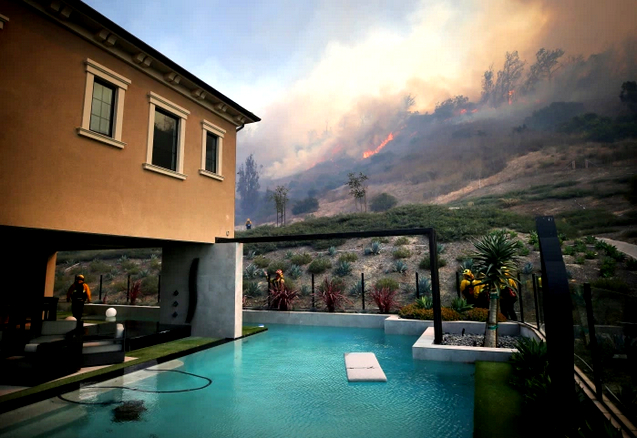
The Silverado Fire, which started in late October, burns toward a home in Irvine, California. Mario Tama/Getty Images

Author
James Temple is the senior editor for energy at MIT Technology Review.
His focus is on renewable energy and the use of technology to combat climate change.
There’s a case to be made that 2020, for all the sacrifices it demanded and tragedies it inflicted, could at least mark a turning point on climate change.

It's now possible that global oil demand and greenhouse-gas emissions may have already peaked in 2019, since the pandemic could slow economic growth for years, accelerate the demise of coal, and bring about long-lasting declines in energy demand through things like continued remote working.

On top of that, a growing number of major companies and nations, including China, have committed to zero out their emissions by around midcentury. The election of Joe Biden will put a president in the White House who has committed to take bold action on climate change.

Clean technologies like solar, wind, batteries, and electric vehicles are getting cheaper and gaining ground in the marketplace.

And in the final days of the year, the US Congress managed to authorize (though not yet appropriate) tens of billions of dollars for clean power projects within a sweeping coronavirus relief bill. The package also enacted tightening limits on hydrofluorocarbons—highly potent greenhouse gases used in refrigerators and air conditioners. (After criticizing the bill as a "disgrace," President Trump nonetheless signed it into law on Dec. 27.)

But finally reaching a turning point, decades after scientists began warning us of the dangers, matters less than how rapidly and consistently we cut emissions on the other side of it. And that’s where some of the darker signs in 2020 have me worried.

Far too slowly

Even if we have achieved peak emissions, that only means we’re no longer making the problem worse at an increasing rate year after year. But we’re still making it worse. Carbon dioxide lasts hundreds of years in the atmosphere, so every additional ton we emit further exacerbates climate change, promising more or worse heat waves, droughts, wildfires, famines, and flooding.

We don’t need to flatten emissions—we need to eliminate them as rapidly as possible. Even then, we’ll be left to deal with the effectively permanent damage we’ve caused.

Some argue that the radical changes in behavior and practices that went into effect as the coronavirus spread around the planet are a promising sign for our collective ability to address climate change. This is, frankly, nonsense.

Huge portions of the population stopped driving to work; going to bars, restaurants, and theaters; and flying around the globe. Economic growth plummeted. Hundreds of millions of people lost their jobs. Hundreds of thousands of businesses have closed for good. People are going hungry. And the world is becoming much poorer.

None of this is a viable or acceptable way of slowing climate change. Moreover, all this devastation only shaved about 6% off US greenhouse-gas emissions this year, according to BloombergNEF estimates. Global estimates are about the same.

The pollution reductions came at a massive economic cost, at somewhere between $3,200 to $5,400 per ton of carbon, according to earlier estimates by the Rhodium Group.

We would need sustained cuts on that level, year after year for decades, to prevent far more dangerous levels of warming than we’re already seeing. Instead, emissions are likely to bounce back close to 2019 levels as soon as the economy recovers.

It’s hard to point to a clearer example of how deeply embedded climate pollution is into an even basic level functioning of our society—and how drastically we need to overhaul every part of our economy to begin substantially and sustainably cutting emissions.

We need to transform the economy, not shut it down. And that transformation is happening far too slowly.

Polarized politics

It is fantastic news that clean technologies are getting cheaper and more competitive. The problem is they still represent a fraction of the market today: Electric vehicles account for about 3% of new car sales worldwide, while renewables generated a little more than 10% of global electricity last year.

Meanwhile, we’ve barely begun to transition industries that are far harder to clean up, like cement, steel, shipping, agriculture, and aviation. And the “net” part of national and corporate zero-emissions plans rely on huge levels of carbon removal and offsets efforts that we haven’t remotely shown we can do reliably, affordably, permanently, and at scale.

We can’t wait for free markets to nudge along nonpolluting products. And the lofty midcentury emissions targets that nations have set mean little on their own. We need aggressive government policies and trade pacts to push or pull clean technologies into the marketplace and support the development of the tools we don’t yet have or are far too expensive today.

Getting just the US on track to zero out emissions across its economy will require massive investments, and they need to start now, according to a study by Princeton researchers released last month. In the next decade alone, the US will need to invest $2.5 trillion, put 50 million electric vehicles on the road, quadruple solar and wind resources, and increase the capacity of high voltage transmission lines by 60%, among much else.

The analysis found the nation also needs to dedicate far more money to research and development right away if we hope to begin scaling up an array of emerging technologies beyond 2030, like carbon capture and removal, carbon-neutral fuels, and cleaner industrial processes.

Certainly, the election of Biden is good news for climate change, following the Trump administration's four-year blitz to unravel every climate and environmental regulation it could. Biden's White House can make some progress through executive orders, bipartisan infrastructure bills, and additional economic stimulus measures that free up funding for the areas above.

But it’s hard to imagine, given the mixed results of Congressional elections and our highly polarized political climate, how he’ll be able to push through the sorts of strict climate policies necessary to get things moving at anywhere close to the necessary speed, like a hefty price on carbon or rules that mandate swift emissions reductions.

The good news is that, unlike what happened in the downturn that began in 2008, people’s concerns about climate change have persisted into the pandemic and downturn, according to polling.

But coming out of a year of angst and loss and isolation, I have to wonder how readily voters around the world will embrace any measures that ask more of them in the next few years, whether it’s a tax on gas, higher airline fees, or being told to upgrade to cleaner electric appliances in their homes.

Remember, the world—and many of its citizens—will emerge from the pandemic far poorer.  

Sowing division

But here is what frightens me the most about what happened in 2020.

Researchers and advocates have long assumed, or hoped, that people would start taking climate change seriously as it began to inflict real harms. After all, how could they continue to deny it and refuse to take action once the dangers were upon them and their families?

But what we’ve seen in the pandemic doesn’t bear that out. Even after more than 300,000 Americans have died of covid-19, huge portions of the population continue to deny the threat and refuse to abide by basic public health measures, like wearing masks and canceling holiday travel. Despite waves of infections tied to Thanksgiving gatherings, millions packed the airports the weekend before Christmas.

That’s terrifying in itself, but it’s particularly ominous for climate change.

In an essay in August, when global covid-19 deaths stood at around 600,000, Bill Gates pointed out that climate change fatalities could reach that level by 2060—but as an annual occurrence. By the end of the century, the death toll could be five times that figure.

If the pandemic offers any clear lessons, it’s that even all that loss may not persuade many of the reality of climate change or the necessity to act—particularly since those deaths will tick up gradually. Politicians can still find ways to downplay the dangers and exploit the issue to sow division, rather than seeking common cause.

And we may simply learn to live with the elevated risks, particularly since they’ll disproportionately harm those in the poorest, hottest parts of the world who had the least to do with causing climate change.

I have every confidence that we have the technical and economic capacity to address most of the risks of climate change. I’m pretty sure we will begin to move faster than we have in the past. I think we’ll make a lot of progress on cutting emissions. I bet we’re going to rebuild big parts of our infrastructure to address some of the increased dangers. I’m certain that some areas, particularly in the global North, will continue to thrive, and some will even grow richer.

But I fear we still don’t fully recognize that we’re on the cusp of failing in very tragic ways. Given where our emissions are and where they need to be, it’s nearly impossible to see how we’re going to move fast enough at this point to prevent 2 ˚C of warming. And that will mean staggering levels of otherwise preventable death, suffering, and ecological destruction.


It should be a call to arms. But it’s hard to look at 2020 and come away feeling optimistic about our collective ability to grapple with complex problems in rational or humane ways—even, or perhaps especially, in the midst of multiple unfolding calamities.

Instead, overlapping climate disasters could poison our politics even further, making all of us more selfish, more focused on our own comfort and safety, and less willing to sacrifice for or invest in a better common future.

Links

(AU) Last Decade Hottest On Record For Australia With Temperature Almost 1c Above Average

The Guardian

Maximum and minimum temperatures were above average for all states and territories, Bureau of Meteorology says

Each decade since 1950 has been hotter than its predecessor and the 10-year period from 2011 to 2020 was the hottest on record in Australia. Photograph: Brook Mitchell/Getty Images

The last decade was the hottest on record for Australia with the temperature almost 1C above average and one third of a degree warmer than the previous decade, according to the Bureau of Meteorology.

On Friday the bureau released its annual climate statement, confirming preliminary data previously reported by the Guardian revealing 2020 was the fourth warmest year on record.

Bureau climatologists said 2020 was characterised by a shift in some of the key drivers of Australia’s weather away from conditions that delivered the hottest and driest year on record the year before.

Dr Lynette Bettio, senior climatologist at the bureau, said 2020 was part of a run of especially hot years and had begun in the middle of the extreme bushfires that began in late 2019.

“We know Australia is affected by climate change, so every year since 2013 has been in the top 10 warmest years on record,” said Bettio.

Maximum and minimum temperatures were above average for all states and territories, the 2020 statement shows.

In November, the bureau and CSIRO released the biennial State of the Climate report which found the country’s climate had entered a new era of sustained extreme climate events.

The 10-year period from 2011 to 2020 was the hottest on record, Bettio said, with the mean temperature 0.94C above average – 0.33C hotter than the previous decade.

Data provided to the Guardian showed each decade since 1950 had been hotter than the previous one.

The bureau’s temperature analysis comes from its ACORN-SAT dataset that takes readings from 112 weather stations across the country and goes back to 1910.

In 2020, rainfall across the country was close to average and although this had eased drought conditions, it was not enough in most areas to reverse several years of below average rainfall, the bureau said.

Sydney, Hobart and Darwin had especially hot daytime and night-time temperatures. Canberra and Brisbane also had hot nights.

For individual records, the Sydney Basin had its hottest temperature on record on 4 January 2020 when 48.9C was reached at Penrith Lakes. On the same day, the ACT had its hottest day on record with 44C at Canberra Airport.

Western Australia had another record warm year, with 2020 ranking second for heat, behind 2019.

Water storages went up in the Murray-Darling Basin. Rainfall in the early months of 2020 had been a bonus for cropping.

The spring of 2020 was the hottest since 1910, as was the month of November.

Dr Andrew Watkins, manager of climate operations at the bureau, said the contrast between the extreme heat of 2019 and the slightly less hot 2020 was down to the swings between the different phenomenon that can influence Australia.

A negative phase of the Indian Ocean Dipole from around August had given a boost to rainfall in the south of the country. In 2019, Australia’s driest year on record, the IOD had been positive.

In September 2020, the Southern Annular Mode that can affect the position of westerly winds to the south of the continent was in a positive phase, and this had also helped bring wetter and cooler than average conditions.

But he said climate change was keeping temperatures higher across the continent.

Notable events in 2020 included the record warm sea surface temperatures across the Great Barrier Reef in February and March, which drove the most widespread coral bleaching event on record.

Storms in mid-July had brought significant coastal erosion along the NSW coast. The north-east of the state and south-east Queensland was hit again by storms causing erosion in mid-December.

Links

(AU) 2020 Annual Climate Statement - Bureau of Meteorology

Bureau of Meteorology

Annual Climate Statement 2020: Australia's fourth-warmest year on record, with below average rainfall for parts of Queensland and Western Australia. The Annual Climate Statement is the Bureau's official summary of the previous year, providing information on temperature, rainfall and significant weather.

LARGE IMAGE

National Summary
  • Australia's fourth-warmest year on record, with the annual national mean temperature 1.15 °C above average
  • Both mean annual maximum and minimum temperatures above average for all States and the Northern Territory
  • Warmth was persistent throughout the year, with 6 of 12 months placing in the ten warmest on record for each of mean, maximum, and minimum temperatures for their respective months
  • Extreme heat and widespread bushfires in eastern Australia early in the year
  • Heatwaves also affected large parts of southeastern and eastern Australia in November
  • Nationally-averaged rainfall 4% above average for the year at 483.4 mm
  • Rainfall above average for much of New South Wales, the north and east of Western Australia, and much of the Northern Territory
  • Rainfall below average for some parts of Australia, including the west of Western Australia, southeastern Queensland, and western Tasmania
  • The year commenced with much of Australia affected by drought
  • While southern Murray–Darling Basin water storages saw significant increases during 2020, in the northern Basin water storage levels remained low
  • Flooding affected eastern Australia during February and March, particularly through Queensland
  • La Niña was declared in September, reaching moderate strength by the end of the year
The year 2020 was the fourth-warmest year on record for Australia, with the nation's area-averaged mean temperature for the year 1.15 °C above the 1961–1990 average. Mean annual maximum and minimum temperatures were above average for all states and the Northern Territory.

While rainfall for 2020 was close to average overall, easing drought conditions in many areas, some regions received below average rainfall, including the west of Western Australia, southeastern Queensland, and western Tasmania.

In the Murray–Darling Basin, southern water storages saw significant increases during 2020 – rising from 36.8% in March 2020 to 68.8% at the end of November. In the northern Basin water storage levels also increased from a record low of 5.4% to around 25% at the end of December.

Senior Climatologist Dr Lynette Bettio, said that: "The mean temperature for the 10 years from 2011 to 2020 was the highest on record, at 0.94 °C above average, and 0.33 °C warmer than the previous 10 years.
"Rainfall for Australia was close to average for the nation as a whole at 483.4 mm: 4% above the 1961–1990 average of 466.0 mm."

Annual rainfall was above average across large parts of New South Wales, parts of South Australia between the Flinders Ranges and Lake Eyre / Kati Thanda, much of northern and eastern Western Australia and much of the Northern Territory. Flooding impacted eastern Australia during February and March, particularly through Queensland and New South Wales.

Daytime temperatures were especially warm for Sydney, Hobart, and Darwin. The annual mean maximum temperature was above average for Perth, Canberra, and Brisbane; close to average at most sites across greater Adelaide; and close to average or slightly below average in Melbourne.

All of the capital cities, except Adelaide, observed warmer than average annual mean minimum temperatures. Nights were especially warm in Sydney, Darwin, Hobart, Canberra, and Brisbane.

Dr Bettio said: "Globally, every year from 2013 onwards has been among the ten warmest on record, with 2016 and 2019 being the hottest (0.85 ± 0.1 °C and 0.81 ± 0.1 °C above the 1961–1990 average respectively) and 2020 was among the top three, despite the onset of La Niña which has a suppressing effect on global temperatures."

Australia had its warmest spring on record in 2020.

Fast Facts

Climate summaries for each state and territory can be found at bom.gov.au/climate/current

►NSW
  • Rainfall was above average for most of the state.
  • A succession of complex lows in winter and spring brought heavy rain, flooding and coastal erosion from the South Coast to Mid-North Coast and Northern Rivers regions.
  • Temperatures were above average across most of NSW except for the southwest.
  • February to April saw three consecutive months of below average mean maximum temperatures, the first such period for any months since 2012.
  • It was very warm in spring, with the mean minimum temperature overall was the warmest since 1914.
  • Sydney's rainfall for 2020 as a whole was 28% above average. It was the wettest year for Observatory Hill since 1998.
  • Sydney's mean maximum and mean minimum temperatures were above average, but days were not as warm as 2019. Content
  • Penrith Lakes reached 48.9 °C on 4 January, the highest temperature ever recorded in the Sydney Basin.
►ACT
  • Canberra's rainfall for 2020 as a whole (790.0 mm) was 29% above average, the wettest year since 2010.
  • Both mean maximum and mean minimum temperatures were above average.
  • The Australian Capital Territory observed its highest temperature on record, reaching 44.0 °C at Canberra Airport on 4 January 2020.
►VICTORIA
  • Victoria's total rainfall for the year was close to average overall.
  • Rainfall was above average in some areas, mostly in central Victoria and the south, and close to average elsewhere.
  • Victoria had its third wettest April on record, but most months during the year were drier than average.
  • Victoria’s mean temperature was close to average in most months during the year, but November was the state’s second-warmest on record, while May was the coolest since 2006.
  • Melbourne's mean maximum and mean minimum temperatures were within 0.5 °C of the annual average at most sites across Greater Melbourne, while rainfall for the year was above average at all reporting sites across Greater Melbourne.
►QUEENSLAND
  • Rainfall was below average across much of southeastern and parts of east coast Queensland, and close to average elsewhere in 2020.
  • Mean maximum temperatures were above average across Queensland, with small areas of the northern tropics the warmest on record.
  • Mean minimum temperatures were above to very much above average across the state.
  • Many catchments experienced flooding in early March from the remnants of tropical cyclone Esther.
  • Brisbane's rainfall was close to average in 2020.
  • Brisbane's mean maximum and mean minimum temperatures were slightly warmer than average.
►SOUTH AUSTRALIA
  • South Australia's rainfall was close to average across large areas of the state in 2020, with several very dry months offset by a much wetter than average end to winter and start of spring.
  • Both mean maximum and mean minimum temperatures were warmer than average across the west of the state and parts of the north; close to or cooler than average for much of the south and east.
  • 2020 had several very warm months, including the state’s warmest November on record, but South Australia also had its coolest May since 2006.
  • Rainfall was close to or above average at all sites across Adelaide and the Hills.
  • Both daytime and night-time temperatures for 2020 were within 1 °C of average at most Adelaide sites.
►WESTERN AUSTRALIA
  • After a record-warm 2019, 2020 was the second-warmest year on record for Western Australia, with annual mean maximum temperatures very much above average across most of the state.
  • Rainfall was below average in the west, and above average in the north and eastern regions due to tropical systems at the start and the end of the year.
  • The South West Land Division had its seventh-driest April–October on record, and driest since 2012.
  • Metropolitan Perth’s annual rainfall was about 600 mm (almost 10%) below average, with a record-wet November offset by the fourth-driest winter and third-driest October on record.
  • Both mean maximum and minimum temperatures for 2020 were half a degree or more above average for Perth.
►TASMANIA
  • Tasmania's total rainfall for 2020 was slightly below average overall, including parts of the western half of the state.
  • Tasmania had its wettest autumn since 1975, with a very wet March in the northeast.
  • July was the second-driest on record for the state, and winter was very dry in the northwest.
  • Both mean maximum and mean minimum temperatures were warmer than usual in 2020, with minimums especially so in the northeast.
  • Hobart's annual rainfall was slightly above average (7%) but monthly rainfall was mixed.
►NORTHERN TERRITORY
  • 2020 was the fifth-warmest year on record for the Northern Territory.
  • Annual rainfall for the Territory was above average, though most of the Top End had close to average rainfall, and the far southeast was drier than average.
  • January, February, October, and December were the only months that saw above average rainfall.
  • Dum In Mirrie (northwest Top End) had the highest daily rainfall ever recorded in the Territory with 562.0 mm on 11 January.
  • Darwin Airport’s annual mean daily maximum temperature was 1.0 °C above average.
  • Alice Springs Airport’s annual mean daily maximum temperature was well above average

Links

09/01/2021

Three Major Threats To Life On Earth That We Must Address In 2021

CounterPunchNoam Chomsky | Vijay Prashad

Pulp Mills on a December night, Wauna, Oregon. Photo: Jeffrey St. Clair.

Authors
Large parts of the world—outside of China and a few other countries—face a runaway virus, which has not been stopped because of criminal incompetence by governments. 

That these governments in wealthy countries cynically set aside the basic scientific protocols released by the World Health Organization and by scientific organizations reveals their malicious practice. 

Anything less than focused attention to managing the virus by testing, contact tracing, and isolation—and if this does not suffice, then imposing a temporary lockdown—is foolhardy. 

It is equally distressing that these richer countries have pursued a policy of “vaccine nationalism” by stockpiling vaccine candidates rather than a policy for the creation of a “people’s vaccine.” 

For the sake of humanity, it would be prudent to suspend intellectual property rules and develop a procedure to create universal vaccines for all people.

Although the pandemic is the principal issue on all of our minds, other major issues threaten the longevity of our species and of our planet. These include:

Nuclear Annihilation

In January 2020, the Bulletin of the Atomic Scientists set the Doomsday Clock to 100 seconds to midnight, too close for comfort. The clock, created two years after the first atomic weapons were developed in 1945, is evaluated annually by the Bulletin’s Science and Security Board, who decide whether to move the minute hand or keep it in place. By the time they set the clock again, it may well be closer to annihilation. 

Already limited arms control treaties are being shredded as the major powers sit on close to 13,500 nuclear weapons (more than 90 percent of which are held by Russia and the United States alone). The yield of these weapons could easily make this planet even more uninhabitable.

The United States Navy has already deployed low-yield tactical W76-2 nuclear warheads. Immediate moves toward nuclear disarmament must be forced onto the world’s agenda. Hiroshima Day, commemorated each year on August 6, must become a more robust day of contemplation and protest.

Climate Catastrophe

A scientific paper published in 2018 came with a startling headline: “Most atolls will be uninhabitable by the mid-21st century because of sea-level rise exacerbating wave-driven flooding.”

The authors found that atolls from the Seychelles to the Marshall Islands are liable to vanish.

A 2019 United Nations (UN) report estimated that 1 million animal and plant species are threatened with extinction. 

Add to this the catastrophic wildfires and the severe bleaching of the coral reefs and it is clear that we no longer need to linger over clichés about one thing or another being a canary in the coal mine of climate catastrophe; the danger is not in the future, but in the present.

It is essential for major powers—who utterly fail to shift from fossil fuels—to commit to the “common but differentiated responsibilities” approach established at the 1992 UN Conference on Environment and Development in Rio de Janeiro. 

It is telling that countries such as Jamaica and Mongolia updated their climate plans to the UN before the end of 2020—as mandated by the Paris Agreement—even though these countries produce a tiny fraction of global carbon emissions.

The funds that were committed to developing countries for their participation in the process have virtually dried up while external debt has ballooned.

This shows a lack of basic seriousness from the “international community.”

Neoliberal Destruction of the Social Contract

Countries in North America and Europe have eviscerated their public function as the state has been turned over to the profiteers and civil society has been commodified by private foundations. This means that the avenues for social transformation in these parts of the world have been grotesquely hampered.

Terrible social inequality is the result of the relative political weakness of the working class. It is this weakness that enables the billionaires to set policies that cause hunger rates to rise. 

Countries should not be judged by the words written in their constitutions but by their annual budgets; the U.S., for example, spends almost $1 trillion (if you add the estimated intelligence budget) on its war machine, while it spends a fraction of this on the public good (such as on health care, something evident during the pandemic). 

The foreign policies of Western countries seem to be well lubricated by arms deals: the United Arab Emirates and Morocco agreed to recognize Israel on the condition that they could purchase $23 billion and $1 billion worth of U.S.-made weapons, respectively. The rights of the Palestinians, the Sahrawi, and the Yemeni people did not factor into these deals.

The use of illegal sanctions by the United States against 30 countries including Cuba, Iran, and Venezuela has become a normal part of life, even during the COVID-19 public health crisis. 

It is a failure of the political system when the populations in the capitalist bloc are unable to force their governments—which are in many ways democratic in name only—to take a global perspective regarding this emergency. Rising rates of hunger reveal that the struggle for survival is the horizon for billions of people on the planet (all this while China is able to eradicate absolute poverty and largely eliminate hunger).

Nuclear annihilation and extinction by climate catastrophe are twin threats to the planet. Meanwhile, for victims of the neoliberal assault that has plagued the past generation, the short-term problems of sustaining their mere existence displace fundamental questions about the fate of our children and grandchildren.

Global problems of this scale require global cooperation. Pressured by the Third World states in the 1960s, the major powers agreed to the Treaty on the Non-Proliferation of Nuclear Weapons of 1968, although they rejected the deeply important Declaration on the Establishment of a New International Economic Order of 1974

The balance of forces available to drive such a class agenda on the international stage is no longer there; political dynamics in the countries of the West, in particular, but also in the larger states of the developing world (such as Brazil, India, Indonesia, and South Africa) are necessary to change the character of the governments. 

A robust internationalism is necessary to pay adequate and immediate attention to the perils of extinction: extinction by nuclear war, by climate catastrophe, and by social collapse. 

The tasks ahead are daunting, and they cannot be deferred.

Links

Lethal Heating is a citizens' initiative