22/10/2021

(AU Canberra Times) Net Zero And The Big Questions At The Heart Of The Heated Climate Debate

Canberra Times - Dan Jervis-Bardy

What is net zero and how do we get there?

It is the buzzword in federal politics and beyond.

Net zero.

But what does it actually mean, and why is it important? What will it take to achieve it, and are we on track in Australia and globally? And what has Scotland's most populous city got to do with it?

Frank Jotzo, the director of Australian National University's Centre for Climate and Energy Policy, has helped The Canberra Times answer some of the simple but pressing questions at the heart of this heated debate.

What is net zero?

Net zero is shorthand for net zero emissions, which refers to the balance between the amount of greenhouse gas produced and the amount removed from the atmosphere.

If and when we reach net zero, it won't mean there are no greenhouse gases.

Prof Jotzo says that while it was possible to replace fossil fuels such as coal, gas and oil with clean alternatives, there were some sources of emissions which would be around for a "very long time, perhaps forever".
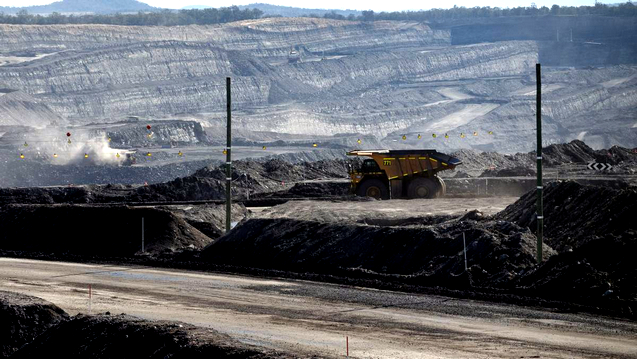
Coal can eventually be replaced as an energy resource. But other sources of greenhouse gas emissions might be around forever. Picture: Max Mason-Hubers

To compensate for those emissions - to reach net zero - carbon dioxide has to be actively removed from the atmosphere. That can be achieved in a number of ways, including planting new forests or literally capturing carbon dioxide through a mechanism known as direct air capture.

Australia, with its vast open spaces and rich energy resources, is "incredibly well placed" to be able remove large quantities of carbon from the atmosphere, Prof Jotzo says.

Why is it important?

The science could not be more definitive on the link between greenhouse gas emissions and global warming.

The recent UN Intergovernmental Panel on Climate Change report found that the crucial 1.5-degree temperature threshold was at risk of being breached in the early 2030s without rapid and urgent action.

The risk of extreme weather events - such as the fires which tore through the South Coast during Black Summer - will increase with global warming. Picture: Dion Georgopoulos

A 1.5-degree warmer planet brings with it an increasing risk of longer heatwaves, more frequent droughts and extreme weather events such as bushfires, as well as rising sea levels.

The IPCC report warned that the 2-degree threshold - which would see even more catastrophic consequences - could be reached within two decades.

"Fundamentally, if we are to arrest global warming then we need to stop the net addition of greenhouse gases into the atmosphere," Prof Jotzo says.

What does Glasgow have to do with it?

The global push for stronger and urgent climate action has never had such momentum.

World leaders (with some notable exemptions) will later this month converge on the Scottish city of Glasgow for the UN Climate Change Conference, or COP26.

The conference has four goals, starting with securing agreement on reaching carbon neutrality by mid-century.

US President Joe Biden and UK Prime Minister Boris Johnson have set ambitious 2030 emission reduction goals for their country, heaping pressure on Scott Morrison. Picture: Getty

Countries are being asked to bring forward "ambitious" 2030 emissions reduction targets which align with the net zero goal. That's seen as crucial to retaining hopes of limiting global warming to 1.5 degrees.

Australia is under pressure domestically and internationally to both make a 2050 net zero commitment and lift its 2030 aim, which at 26-28 per cent below 2005 levels is far lower than other countries.

The US plans to halve emissions by the end of the decade, while Boris Johnson's UK government wants to reduce emissions 68 per cent below 1990 levels by 2030.

Mr Johnson said in a speech last month that the Glasgow climate summit was a "turning point for humanity".

"Daily, weekly, we are doing such irreversible damage that long before a million years are up, we will have made this beautiful planet effectively uninhabitable - not just for us but for many other species," he said.

So, are we on track to meet the goals?

Minister for Energy and Emissions Reduction Angus Taylor says Australia is on track to meet and beat its 2030 targets. Picture: Elesa Kurtz

Let's start with Australia.

Energy and Emissions Reduction Minister Angus Taylor says Australia is on track to meet and beat its 2030 target, which was set under former Prime Minister Tony Abbott.

The latest figures suggest Mr Taylor is right to be optimistic.

Australia's emissions have fallen almost 21 per cent on 2005 levels, on the back of what Mr Taylor's describes as the nation's world-leading take up of wind and solar.

But while the headline number might suggest Australia is well on its way, Prof Jotzo says it doesn't tell the full story.

He says the government's own figures show that the entirety of emissions reductions since 2005 have come from the land use and forestry sector. Emissions from the other sectors combined have not gone down at all.

Prof Jotzo says the government can basically no longer rely on land use changes, meaning emissions will need to be cut in transport, industry, agriculture and electricity in order to reduce Australia's carbon footprint.

The federal government will release a long-term emissions reduction strategy ahead of the Glasgow summit, which will position technology as the key to reaching carbon neutrality. It could include a net zero by 2050 target - if the Nationals can be convinced.

The good news for the federal government is that the states and territories are already stepping up to the plate. The NSW Coalition government and Victorian Labor government have both committing to halving emissions by 2030.

And what about globally?

While more than a 100 countries have updated their Paris targets amid a concerted global climate action push, the planet's emissions remain on a worrying trajectory.

A recent UN report showed that the policies of all parties to the Paris Agreement would result in a 16 per cent increase in emissions by 2030, compared to 2010 levels.

UN Climate Change executive secretary Patricia Espinosa said the projection was a "huge cause for concern".

"It is in sharp contrast with the calls by science for rapid, sustained and large-scale emission reductions to prevent the most severe climate consequences and suffering, especially of the most vulnerable, throughout the world".

So, how do we get to net zero?

The "ultimate" net zero system is, according to Prof Jotzo, one in which renewable electricity provides the bulk of energy to the economy.

For applications which have traditionally relied on coal, oil or gas, electricity would be used instead. Think electric cars, for instance.

Electricity can also be used to make hydrogen, a resource Prof Jotzo says could eventually replace iron ore and coking coal for steel production - currently responsible for about eight per cent of global carbon emissions.

That percentage might seem small now, but Prof Jotzo notes that once the electricity and transport sectors are decarbonised it will make up a large chunk of what is left.

The use of renewable hydrogen for steel production has been proven, but has not yet been deployed at scale. But Prof Jotzo says many of the technologies which will drive the transition already exist, including wind, solar, batter storage and pumped hydro. 

Links

21/10/2021

(AU Climate Council) New Report: Australia Ranks Dead Last On Climate

Climate Council


Report Key Findings
  • Despite new climate pledges and significant international momentum, there remains a major shortfall between what’s being promised and the pace of action required. Alongside other countries, Australia must do its part to help close this gap at the next major UN climate talks in Glasgow.
  • Emissions in the sectors that matter most have increased in Australia. Electricity emissions have increased by around a third since 1990, while transport emissions have grown by more than half.
  • Climate change is now a strategic priority for the world’s major powers including the UK, EU and China, as they race to gain advantage in the global energy transition. 
  • A commitment and plan for rapidly cutting our emissions this decade will unlock investment and create new jobs in renewable energy and clean industries, particularly in regional areas. 
  • With world-class renewable energy resources and enviable mineral reserves needed to drive the global energy transition, Australia has the potential to grow new export industries that far exceed the value of our current fossil fuel exports.
Australia is the worst climate performer out of all developed countries, a new report from the Climate Council has today revealed.

From Paris to Glasgow: A world on the move, has assessed both Australia’s track record on climate and its commitments moving forward against its international peers and found that Australia is the worst performing when it comes to cutting greenhouse gas emissions and moving beyond fossil fuels. 

There are currently over 80 proposed coal projects in the pipeline for Australia and five new mammoth gas basins, as well dozens of smaller gas projects dotted across the country.

The Climate Council has calculated that Australia should reduce its emissions by 75% (below 2005 levels) by 2030 and achieve net zero by 2035.

As a first step, Australia should match the updated commitments of our key allies – including the US and the UK – and pledge before Glasgow to at least halve national emissions this decade.

“A commitment to net zero by 2050 would still leave Australia dead last, unless accompanied by a much stronger commitment to cutting emissions this decade,” said report lead author and Climate Council Head of Research Dr Simon Bradshaw, who is heading to Glasgow for the summit.

“This is a defining moment in the world’s response to climate change, and Australia remains the villain, and an outlier in the international community,” said Dr Bradshaw.

“It will be game over for Australia on ever being taken seriously on climate change again if these polluting fossil fuel projects are allowed to proceed.

“There has been a rapid and irreversible shift in the global politics surrounding climate change. Australia must get with the program – to reap the economic and geostrategic benefits of taking stronger action – or get left behind.”


Comment


Ban Ki-moon, Former UN Secretary General and Deputy Chair of The Elders

“Australia is falling behind its own states and territories, its trading partners and other comparable nations. The world is now looking to Australia to take its place amongst the international community and lift its national ambition on climate.”


Chief Climate Councillor, Professor Tim Flannery who is also headed to COP26 with the Climate Council
“We know what needs to happen in Glasgow, and we know what Australia must do to help achieve it. Net zero by 2050 is last year’s story. Almost all our traditional allies and major trading partners ticked that off long ago and have now set their sights on 2030. It is the scale and pace of action through the 2020s that matters, and which Glasgow’s success or failure will be measured by.”


Climate Councillor and report author, Professor Lesley Hughes
“The science is clear and for the first time Australia’s traditional allies and closest security partners, as well as our neighbours, are universally and explicitly calling for Australia to lift its 2030 emission reduction target.
"This isn’t just about saving face internationally, this is about protecting Australia’s economic future and ensuring our children and grandchildren can not only survive but thrive.
“Australia is one of the world’s largest exporters of fossil fuels as well as being heavily reliant on them at home.
"By strengthening our climate commitments and actions this decade, we can have a huge impact on the future of our planet."


Frank Bainimarama, Fiji Prime Minister and Chair of the Pacific Island Forum
“The upcoming COP26 UN climate conference in Glasgow must secure serious collective action to address the climate crisis.
"Failure could spell the loss of entire low-lying Pacific nations, and we can only fail if we shrink from our responsibilities. As this important new report from the Climate Council explains, we have reasons to be hopeful.”


Greg Mullins, Climate Councillor, former Commissioner of Fire & Rescue NSW and Australia’s longest-serving fire chief
“Adopting strong emissions reduction targets isn’t about window-dressing ahead of COP26 or pulling our nation out of the climate action gutter, it’s about protecting the lives of Australians.”
“Making major cuts to emissions this decade then getting to net zero as quickly as possible are what’s needed to tackle worsening extreme weather events like those that drove the catastrophic 19/20 bushfires, heatwaves, then floods.
“Those of us that hold hoses and are in the direct firing line of climate change impacts want to see our government spending more time protecting us and future generations, and less time approving new fossil fuel developments.”

Nicky Sparshott, CEO Unilever Australia and NZ
“Our business has a large and complex value chain and we’re already experiencing the challenges and the escalating costs that more extreme weather patterns and long-term climatic changes bring to our operations.
“Governments must commit to establishing policy frameworks that give businesses confidence to invest in a net zero future.
"Once Australia has clear targets, the whole system will rally behind achieving them, ultimately resulting in the transformational systems change we urgently need and ensuring Australia is not left behind.”


Links

(AU CSIRO) How will climate extremes change Australia?

CSIRO

Australia experiences many different climate types across its large area, including a range of climate extremes from freezing mountains to scorching deserts. As climate changes, Australia’s weather and climate extremes will also change.


A variable climate

Australia is a vast country, stretching 3,680 kilometres from 10° 41' 21" S at Cape York to the southern tip of Tasmania at 43° 38' 40" S. Across this large area are many different ecosystems, climatic conditions and climate extremes, including sub-zero temperatures in the mountains and temperatures up to 50 °C in the desert.

Extreme weather and climate events include cold snaps, heatwaves, floods, dry spells, heavy rainfall, storms and drought.

Under a changing climate, these extremes are expected to change.

© iStock-On-Air-148501327

Predicted changes

Australia has been known as a land of ‘droughts and flooding rains’, but scientists have found that in recent decades these extreme events are increasing due to climate change, and this will continue.

Australia is predicted to experience higher temperatures.

As the average temperature increases, extreme heat days will become hotter and periods of extreme cold will not be as cold.

How quickly, and by how much, these extremes change depends on how much we reduce greenhouse gas emissions. If we don’t reduce emissions, then by 2100 extreme heat days that happened on average once every 20 years could occur every one to two years.

As well as hot days occurring more often, they also could be up to 4.8°C hotter, depending on future greenhouse emissions.

In southern Australia, cool-season rainfall is expected to decrease, while rainfall may increase in northern parts.

Extreme events such as tropical cyclones are expected to decrease in frequency but when they do occur, they are expected to be more severe.

Areas of Australia prone to drought may spend more time in drought.


Links

20/10/2021

(AU The Guardian) Climate Change Is A National Security Issue, But Not In The Way Scott Morrison Imagines

The Guardian

Global heating and conflict are fundamentally linked. Without peace, there will be no climate action

Fighter jets, like Australia’s F-35 aircrafts, can burn thousands of litres of fuel an hour. ‘War – and the prospect of war – normalises environmentally destructive practices unthinkable in other contexts,’ Jeff Sparrow writes. Photograph: Darren Pateman/AAP

Scott Morrison describes climate change as a national security issue. He’s right – but not in the way he imagines.

If global heating exacerbates conflict, conflict also exacerbates heating, in a dialectic that fundamentally links decarbonisation to the struggle for peace.

Climate change works as a crisis multiplier. As the global thermometer climbs, you get more refugees, more inequality and more political instability, with high temperatures and natural disasters widening every social fissure.

Not surprisingly, multiple studies warn that, on a hothouse planet, extreme conditions intensify existing tensions, making more likely civil wars, military incursions and even genocides.

But that process goes both ways.

Last year, the International Committee of the Red Cross (ICRC) published a report that documented how war-torn nations suffer disproportionately from climate variability. As you may expect, conflict makes responding to global warming more difficult, as people and institutions grappling with war lack the capability to simultaneously address environmental disaster.

Symptomatically, the majority of those nations yet to ratify the Paris agreement are countries that are either embroiled in conflict or have recently emerged from one.

The ICRC report drew on experiences in southern Iraq, northern Mali and Central African Republic.

Wealthy countries should not, however, think themselves immune.

If, for instance, the tension over Taiwan escalated significantly, climate change would almost instantly vanish from the front pages. As they prepared for armed confrontation, neither Joe Biden nor Xi Jinping would be talking about global warming.

It’s not just a question of getting distracted. It’s also that preparations for war directly undermine climate action, with modern militaries reliant on enormous quantities of fossil fuel.

In their book The Shock of the Anthropocene, Christophe Bonneuil and Jean-Baptiste Fressoz note that a single B-52 bomber burns 12,000 litres of jet fuel an hour while an F-15 fighter goes through 7,000 litres, figures “comparable to the consumption of an average family car in a whole decade”.

Not surprisingly, one recent academic study described the US defence forces as “one of the largest polluters in history, consuming more liquid fuels and emitting more climate-changing gases than most medium-sized countries”.

In 2017 alone, the US military bought an astonishing 269,230 barrels of oil a day, producing more than 25,000 kilotonnes of carbon dioxide through their use.

In periods of geopolitical tension, such dizzying figures climb higher, as rival power blocs invest in more equipment and deploy it more often. Bonneuil and Fressoz estimate that between 10 and 15% of American emissions during the cold war could be attributed to the military.

That’s because war – and the prospect of war – normalises environmentally destructive practices unthinkable in other contexts.

Think of Vietnam and how the US forces deliberately sprayed some 70m litres of herbicide on forests, in an effort to destroy the cover that the North Vietnamese relied upon.

Think of the first Gulf War and the use of depleted uranium in about 340 tonnes of missiles launched into Iraq.

Today, China possesses up to 350 nuclear weapons. The US has perhaps 5,800. The deployment of any of them would take the global environmental crisis into new realms of horror.

As we approach Cop26, we should remember that most of the carbon ever generated by humanity was released after the Kyoto summit, a conference at which the world’s politicians solemnly pledged that emissions would be cut.
If Glasgow is to be different, the tensions between the US and China need to be addressed.

On Monday, at a Liberal party room meeting, Morrison reportedly linked his new enthusiasm for climate pledges to the Aukus military pact, almost as if an Australian commitment to net zero by 2050 were a quid pro quo for the nuclear submarine deal with the US.

In other words, it appears that carbon targets are seen as facilitating an increased militarisation.

It’s hard to overstate just how dangerous this is.

Whatever the politicians say, no one will decarbonise during a new cold war. An arms race in the Pacific therefore threatens any progress that might emerge from the Glasgow talks. The response to global warming requires international action – and that’s impossible should China and the US prepare for war.

Without peace, there’ll be no climate action – and without climate action, there’ll be no security for Australia or any other nation.

Links

(AU ABC) Barnaby Joyce's Nationals Take Aim At Scott Morrison's Liberals In Climate Change Showdown

ABC NewsBrett Worthington

Scott Morrison wants an agreement from Barnaby Joyce on Coalition emissions targets ahead of the Glasgow climate summit. (ABC News: Matt Roberts)

If the Glasgow climate change conference is the "last chance saloon" to save the planet, to get there, the Prime Minister's Liberals will have to survive a shoot-out with his deputy — the Nationals.

The Nats are shaking down their own government, wanting billions of dollars in return for adopting a net zero carbon emission commitment by 2050. 

This isn't a quick heist and is at risk of being dragged out for days, if not weeks.

Privately, some Liberals fear their Coalition partner is going to "make us bleed" in return for signing on to net zero.

"It's not a case of holding anyone to ransom, or anything like that," Deputy Prime Minister and Nationals leader Barnaby Joyce told his party room on Monday.

But the Prime Minister could be forgiven for thinking that's exactly what's happening, having just confirmed he would attend the United Nation's climate summit known as COP26 in Scotland.

A net zero commitment is the bare minimum a prime minister or president will be expected to make in Glasgow. For Scott Morrison to do that, as he wants to, he needs a majority of Nationals on board and that's going to cost him, and taxpayers, billions.

When Queensland's Labor Premier recently threatened to keep her state's border closed until more hospital funding flowed, Morrison dubbed it extortion of the Commonwealth.

As his party demands billions from the government, Joyce has been keen to frame it as "record investment" for regional communities.

There's been no shortage of Nationals politicians, including Cabinet minister David Littleproud, doing television interviews in recent weeks. (ABC News: Matt Roberts)

The clock has hit the 11th hour ahead of the Glasgow talks but the Nationals have made it clear they're in no rush to sign on

What they were rushing to on Monday were television and radio studios. Interview after interview, they made it clear what they didn't want. But exactly what they do want, besides coal, is less clear.

In fact, it's been synonymous with the Nats for much of 2021.

The political year began with Morrison inching towards a net zero commitment, telling the National Press Club: "Our goal is to reach net zero emissions as soon as possible, and preferably by 2050."

All roads have been leading to Glasgow since and yet it appears few, if any, Nationals have spent the months since Morrison's announcement formulating policies and shaping the debate they're unwilling to support.

Bridget McKenzie has been a vocal critic of her Liberal colleagues advocating for net-zero targets. (ABC News: Sean Davey)

Nationals Cabinet minister Bridget McKenzie likes to say that adopting net zero targets will cost people in the city nothing.

"It is easy for the member for Kooyong (Treasurer Josh Frydenberg) or the member for Wentworth to publicly embrace a net zero target before the government has a position, because there would be next to zero real impact on the way of life of their affluent constituents," she wrote in an opinion piece in the Australian Financial Review.

McKenzie, who owns two investment properties in Melbourne's coastal suburbs, might be critical of people who live in these areas but, as a senator for all of Victoria, she also is their representative in the nation's parliament.

Noticeably absent from her critique was an acknowledgement that people in the cities also pay taxes and will be helping to foot the bill for the billion-dollar bush boondoggles the Nationals want ahead of the looming election. 

But as the Coalition seeks to shore up Nationals seats that could be at risk in an election, it does so at the cost of historically safe Liberal seats in Melbourne and Sydney, now under threat from independents keen to campaign on climate action.

Crossbench MPs are using the debate to pressure the Coalition to adopt independent Zali Steggall's (right) climate bill. (ABC News: Matt Roberts)

The Coalition will hold a joint party room meeting this morning, where Nationals keen to talk down net zero commitments can expect their Liberal counterparts to fire back. 

It's friendly fire that can inflict pain on the government, all without the opposition needing to lift a finger.

Culture wars are nothing new to the climate debate — a debate that's ended the leadership of both Liberal and Labor prime ministers in the last decade.

Morrison himself is no stranger to these culture wars, having earlier this year used a speech to business leaders in Sydney to appear to mock inner-city voters, saying, "we will not achieve net zero in the cafes, dinner parties and wine bars of our inner cities".

His rhetoric now has moved to the debate about safety, on Monday turning climate change questions into national security answers.

Morrison is keen to paint an optimistic future as Australia emerges from the COVID-19 pandemic.

"Australians can see their future, as the days get warmer, their future is getting brighter," he told parliament on Monday.

Just don't tell that to the farmers whose livelihoods are under pressure from hotter, drier climates.

The National Party held its second party meeting in two days on Monday. (ABC News: Matt Roberts)

National Party politicians like to speak of their devotion to the royal family.

It was the heir to that throne, Prince Charles, who dubbed the climate summit the "last chance saloon" to save the planet. Just days later his mother, the Queen, appeared to bemoan politicians who talk, rather than "do".

At the same time, the man who will lead the Glasgow talks was urging "leaders to kick coal into the past, where it belongs".

This wasn't a Greens MP from Scandinavia, but rather a British MP from Boris Johnson's Conservative government. 

Scott Morrison wants an agreement with Barnaby Joyce ahead of the Glasgow climate summit. (ABC News: Matt Roberts)

That kind of rhetoric unsettles Nats keen to be seen to be fighting, especially for the future of coal mining.

But the ultimate test for them will come if their party does sign on to the commitment. 

Those on the frontbench unwilling to get on board face moving to the backbench.

Talking with Nationals, few expect their ministers — when faced with giving up the comfort of sitting in Cabinet and the luxuries it offers with extra pay and Commonwealth-funded drivers — will be willing to give up their seats. 

"They'll sell whatever they need to sell to stay in Cabinet," one said.

The Coalition can only hope this Liberal-National saloon showdown will end in a flesh wound and not a fatal injury for the government.

Links

(AU ABC) Federation 'Ill-Equipped' To Deal With 21st-Century Challenges As Australia's Vulnerabilities Rise

ABC Radio Adelaide - Malcolm Sutton

Rising tension in the South China Sea is one of the challenges Australia is facing. (Flickr: US Navy / Andre T Richard)

Key Points

  • A new report has criticised what it says is Australia's lack of leadership and resilience in a challenging era
  • Stakeholders have recommended the establishment of a National Resilience Institute to help bring about critical preparedness in the face of crises
  • Australia's emergency fuel stockholding will remain below a crucial 90-day threshold until 2026
Federal politics is too short-sighted and shallow to deal with 21st-century challenges, a leading group of academics and retired defence leaders have warned, saying that Australia is growing increasingly vulnerable.


Some 18 months in the making, Australia — A Complacent Nation, is critical of both sides of politics, claiming "self-interest and power plays" have stymied the country's preparedness for the modern age.

Retired air vice-marshal and co-author John Blackburn said Australia simply lacked the mechanisms at a federal level to move forward.

"A complicating factor is that our Federation structure may have been fit for purpose a century ago, but it cannot deal with the constellation of challenges we face today," he said.
"Political reactions are too often too little, too late, and too short-sighted."
Getting left behind

Mr Blackburn said the country's pressing need to transform its energy sector and reduce fossil-fuel emissions, for example, had been subsumed by party and personal interests.

The last vestiges of the 'national plan'
have been smashed

"We could see under [former prime ministers] Bob Hawke, Paul Keating and John Howard a willingness to take a longer-term view because what those three governments did economically was pretty brave and quite forward-thinking," he said.

"Since the time of Kevin Rudd, however, everyone's been stabbing each other in the back."

Mr Blackburn also questioned Australia's approach to health care, where each state is left to manage it in their own, sometimes very different way — made all the more evident during the COVID-19 pandemic.

The states earlier this month wrote to the federal government requesting more hospital funding to deal with an expected influx of patients when state borders reopened.

The Prime Minister said his government had already boosted funding and took aim at Queensland's Premier, who had previously been criticised for effectively saying their hospitals were for Queenslanders, saying he would not be "extorted" for more money over COVID-19.

"What struck me for the last two years we've been doing this, is that it is only the state and territory governments that actually deliver and do things," Mr Blackburn said.

"If you think about teamwork, when the Prime Minister goes on television and says the states are trying to extort him, you realise this isn't a leader, this is an issues manager."

But Mr Blackburn criticised some states too for a pandemic parochialism that sometimes treated Australians outside their own borders as subordinates, which — he said — showed the country had "kind of lost the plot".

18 months in the making

The 18-month NRP project has been led by the Institute for Economic Research and think tank Global Access Partners.

Retired air vice-marshal John Blackburn has been outspoken about Australia's resilience for several years. (Supplied: John Blackburn)
Its key recommendation is to launch an independent, apolitical National Resilience Institute that would work through the country's challenges and lobby for precautionary measures in the face of potential disasters.

It found a resilient society had three attributes:
  • shared awareness and shared goals
  • teamwork and collaboration
  • the ability to prepare and mobilise in the face of crisis
Mr Blackburn said the first priority for the states should be to collaborate on locally producing MRNA vaccines like Pfizer and Moderna, as a continued reliance on imports would prove costly as more COVID-19 variants emerged in coming years.

"I reckon if state and territory leaders get together a national cabinet that is not run by the Prime Minister, we might have some really interesting conversations," he said.

"The states have already got the lead on climate change, for example. The net zero stuff they're pushing is way over the federal government's head."

Question of leadership

Professor Helen Sullivan, Crawford School of Public Policy director at the Australian National University, said federal problems lay with poor political culture rather than with the Commonwealth itself.

The independent analyst said that while there was "no doubt our institutions of governance could be improved", national cabinet only worked for as "long as colleagues were prepared to trust the process and each other".

Former leaders like Paul Keating and John Howard operated in a longer-term political environment than today's, Professor Sullivan says. (Reuters)

She also questioned if public policy advisers were up to the task.
"The politicisation of senior appointments, the ongoing caps on public servant numbers, and the contracting out of much policy advice, has hampered this important capability," Professor Sullivan said.
She added that it was harder for Australia to make broad-scale changes than it was during Hawke, Keating and Howard's era because valuing bi-partisanship for complex issues had been overtaken by a focus on "short-term political gain and a need for a state of permanent conflict between major parties — supported by sections of the media".

"The second reason is that we don't have the political leaders of the quality of those above," Professor Sullivan said.

Neoliberalism and 'fuel security'

Mr Blackburn said another fundamental problem for Australia was neoliberal ideology and deregulation, which had "done some good", but had led it "into a very vulnerable position" due to a lack of common sense.


A particularly dangerous example was Australia's reliance on imported fuel following the successive closure of local fuel refineries, he said.

Mr Blackburn started lobbying on the issue in 2014 after Australia fell dangerously short of its International Energy Agency (IEA) obligations to put aside 90 days worth of domestic fuel in the event of market failure.

Instead, it was relying on a "just in time" ideology, because storing fuel cost money and reduced market profits.

Mr Blackburn warned that Australia's utilities, medical needs, mains water and food distribution all relied on refined fuel, and it could all come to a halt within three weeks of an offshore supply disruption.

Government responds

A spokesperson for Federal Energy Minister Angus Taylor said the government had since passed the Fuel Security Act 2021, with the support of Labor, and was committed to returning to full compliance with the IEA by 2026.

It offered to subsidise Australia's remaining four refineries to keep operating until 2027, but only two have agreed.

It has also introduced a minimum stockholding obligation that would require fuel importers and refiners to maintain a level of petrol, diesel and jet fuel, and increase onshore diesel stocks by 40 per cent

The government spokesperson said it was also spending $260 million to construct new storage facilities for 780 megalitres of diesel at strategic locations and had bought about 1.7 million barrels of oil from the United States, which remained stored offshore in the US Strategic Petroleum Reserve.

She added that Australia currently held 100 IEA days of stock, but only if it included stock on the water (in cargo ships).

South-East Asia shipping lanes to Australia (Gfycat)


"This is not useable fuel in people's cars or in a truck, it is an accounting figure," Mr Blackburn said.

"It's politics and noise."

Mr Blackburn pointed out that offshore fuel required cargo ships to bring it into Australia, but Australia did not "own any of its own ships anymore", and a regional crisis could negatively affect imports anyway.

A complacent nation

Mr Blackburn said making matters worse was a complacent population that — with the exception of the Aboriginal people — never had to fight for its survival and simply "woke up one day in the early 1900s" to the gift of independence.
Donald Horne used the title of his 1964 book, The Lucky Country, with irony. (Supplied: penguin.com.au)

"One of our problems is we've had it so good, and [author] Donald Horne's jibes are still as valid today as they were when he wrote The Lucky Country," Mr Blackburn said.

"The trouble is, the world's got more complicated, the challenges we're going to have to face are much more difficult, but we're still acting like we're back in the early part of Federation."

Horne's 1960s book controversially pointed out that Australia's rise was due mostly to its past as a British colony rather than any entrepreneurship, intellect or curiosity on the part of its leaders.
"Australia is a lucky country run mainly by second-rate people who share its luck," Horne famously wrote.
"It lives on other people's ideas, and, although its ordinary people are adaptable, most of its leaders [in all fields] so lack curiosity about the events that surround them that they are often taken by surprise."
Mr Blackburn said that while the NRP's assessment was grim, there was cause for optimism thanks largely to Australia's "considerable expertise and resources".

"We have seen courageous political and business leadership in the past; we need to find that again to deal with the future."

Another problem, however, were blockages in sharing that information.

"If you're in the government bureaucracy, you're not allowed to talk about anything because the government has you hamstrung," Mr Blackburn said.

"People are scared about putting their heads above the horizon and saying, 'There's a problem.'"

Links

19/10/2021

(AU The Conversation) Children Deserve Answers To Their Questions About Climate Change. Here’s How Universities Can Help

The Conversation | 

Brad HarrisAuthor provided (no reuse)

Authors
  •  is Research Fellow in Climate Change Communication, Climate Futures Program, University of Tasmania, and Lecturer in Communication - Journalism, Deakin University
  •  is Research Fellow, Geography, Planning and Spatial Sciences, University of Tasmania     
Our children are growing up in a volatile climate. It’s already damaging their health, wealth and well-being.

Universities can be leaders in helping young people gain the knowledge they need to navigate this uncertain future.

Curious Climate Schools, a project that connects young people directly with experts who can answer their climate questions, is a model for just this kind of leadership.

Universities across the globe come together this week to support climate action leadership in their communities as part of Global Climate Change Week.

In Tasmania, our Curious Climate Schools project has connected over 1,000 school students, aged 10-18, with 57 climate researchers from diverse disciplines to answer students’ questions.

Climate change will increasingly affect our children’s lives, even if we take the profound action needed this decade to avert the worst of it. Young people will need to be climate-literate for the world they are inheriting. Although learning about climate change is established as vital in enhancing understanding and action, climate literacy education is not mandated in the Australian Curriculum.

Our aim is to empower children to develop essential climate knowledge through student-led enquiry. Our experts’ answers to questions from schools across the state will be made public on the Curious Climate Schools website on November 1. This will coincide with the COP26 climate summit, connecting local and global climate leadership.

What do young people want to know?

Students have submitted questions to our project that range from the global to the local. Key themes in their questions included:
  • who is responsible?
  • how urgent is action?
  • how do we adapt and care for the planet and its future inhabitants?
  • why aren’t politicians listening?
The children had many queries about the science of climate change, but even more about our social and political responses. For example:
  • “I’m 13. What do you think climate change will alter about the world in my lifetime, and what can I do about it?”
  • “Does the climate crisis have the potential to unite humanity in response?”
  • “When it comes to future generations, how will they feel about what we have done?”
While children are interested in the physical science behind climate change, their questions show they are equally concerned with how we should act on climate as a society. This suggests that when climate change is taught in schools, it should be taught holistically.

While understanding the drivers of climate change is important, teaching must also address the social challenges we face and the decision-making processes this wicked problem demands.

A way to counter climate anxiety

The current silence on climate in schools’ teaching is bad for children’s mental health. Research has established that speaking about climate change is an important first step in easing legitimate climate anxiety. Education that enables students’ agency through climate literacy could reduce the mental health burden on young people.

We need climate-literate young people. Empowering them to talk about climate change could both improve their mental health and help to build the engaged citizenry and leadership we need to face the climate crisis.

Acknowledging that children have a stake in climate action and decision-making is vital. Without this, they feel disempowered and frustrated. We saw this in some of the questions submitted to Curious Climate Schools.
“Do you believe that we as the future leaders are being heard enough? For example, Scott Morrison or the other politicians, are they listening?”
Students wonder if Prime Minister Scott Morrison and other politicians are listening to their concerns. Lukas Coch/AAP

These students are our future leaders. They deserve to be heard.

A model for university climate leadership

Many universities are well equipped to address local climate challenges in partnership with their communities. Curious Climate Schools is an example of how universities can engage with the public to enhance climate knowledge and action.

Our project is harnessing the knowledge, care and enthusiasm of 57 experts. They work in a range of fields, including climate modelling, biodiversity conservation, pyrogeography, chemistry, law, social science, engineering, geology, oceanography, paleoclimatology, Indigenous knowledges and health.

The Curious Climate Schools website will equip students with holistic climate knowledge and help teachers to address a subject at the forefront of students’ minds – if not the Australian Curriculum.

With initiatives like Curious Climate Schools, universities can be leaders in climate action. In this decisive moment, it is crucial that we harness our collective talents in whatever ways we can to ensure a liveable world for our children.

Links

Lethal Heating is a citizens' initiative