28/10/2021

(NEWS.com.au) World Reacts To Australia As PM Defends Plan

NEWS.com.au - Matt Young

Australia has copped a barrage of criticism in global headlines as world leaders and the press react to Scott Morrison’s net zero plan.

Prime Minister Scott Morrison has rejected criticism from David Attenborough and a tech billionaire over Australia’s climate change policy.

Net Zero Plan at a glance
  • Australia projected to reduce emissions by 30 to 35 per cent on 2005 levels by 2030
  • Australians will be almost $2000 better off on average in 2050, compared to if there was no action on climate change
  • Gross national income will be 1.6 per cent higher
  • 62,000 new regional mining and heavy industry jobs
  • Household electricity bills will be lower than today
  • The real value of Australia's exports will more than triple by 2050
Australia has copped criticism across global headlines overnight as the world reacted to Prime Minister Scott Morrison’s new plan to tackle climate change.

Mr Morrison on Tuesday outlined his plan to reach net zero emissions by 2050 ahead of the major trip to the UN climate summit, using a late-night interview to reject concerns the government has broken a promise not to increase climate targets.

Under the plan, more than $20 billion will be invested in low emissions technologies including carbon capture and storage.

The Prime Minister also unveiled new projections, which if reached, could see Australia reduce emissions by 30 to 35 per cent by 2030.

But there are concerns. The modelling, which supports the plan, will not be released until a later, unspecified date.

Australian billionaire Mike Cannon-Brookes hit out at the government’s commitment, calling it “just more bulls**t”.
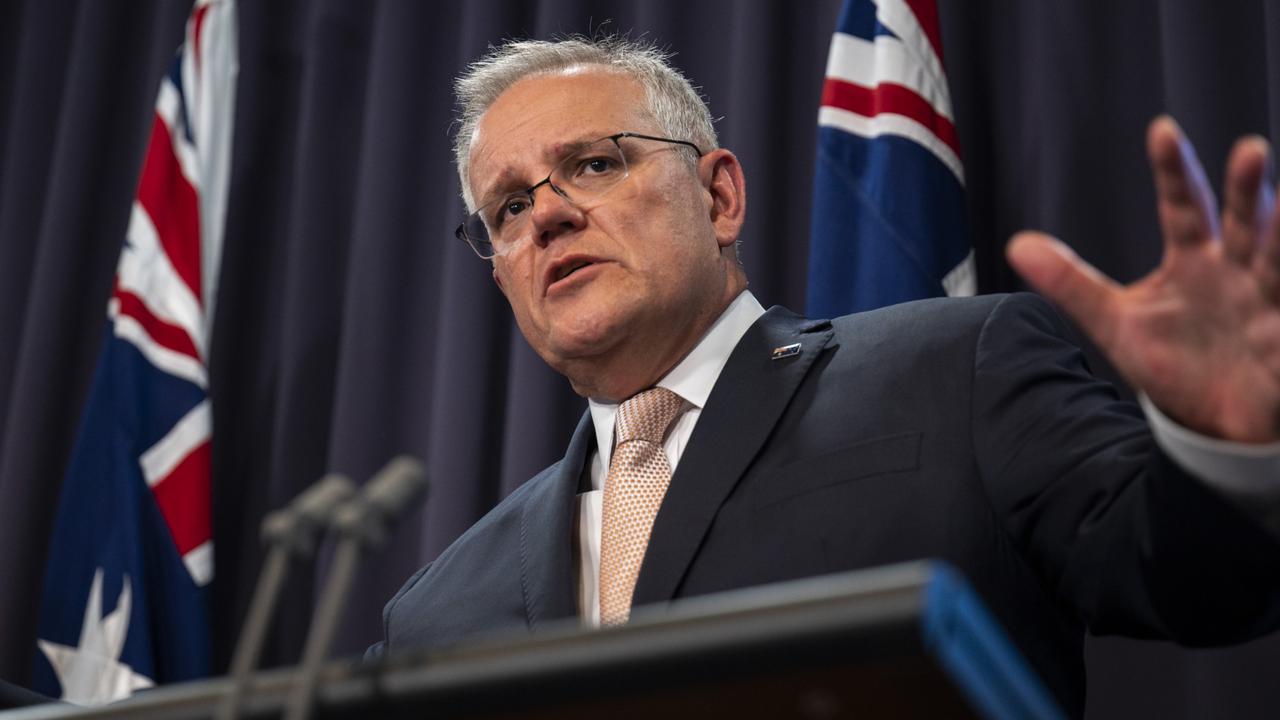
Prime Minister Scott Morrison. Picture: NCA NewsWire / Martin Ollman

Labor Leader Anthony Albanese also slammed Mr Morrison, posting: “The word plan doesn’t constitute a plan no matter how many times you say it”.

In the UK, Prime Minister Boris Johnson congratulated Australia for joining “a growing club” and said he was looking forward to “welcoming” Mr Morrison in days at the highly publicised global climate change summit, COP26, in Glasgow. Australia had “earlier refused” to join Johnson and others to pledge the targets.

The EU Commissioner’s Executive Vice-President Valdis Dombrovskis also called it a “positive signal”. But for the most part, the news wasn’t good. The Evening Standard focused largely on the fact Australia “won’t end coal production” and “will not legislate the goal and instead rely on consumers and companies to drive emission reductions”.

Australia was also criticised in numerous publications for being one of the world’s largest emitters of greenhouse gases “on a per capita basis”.

The Inquirer described the nation as “long under fire as one of world’s top producers of coal and gas” and the Financial Times said Australia remains “wedded to fossil fuels”.
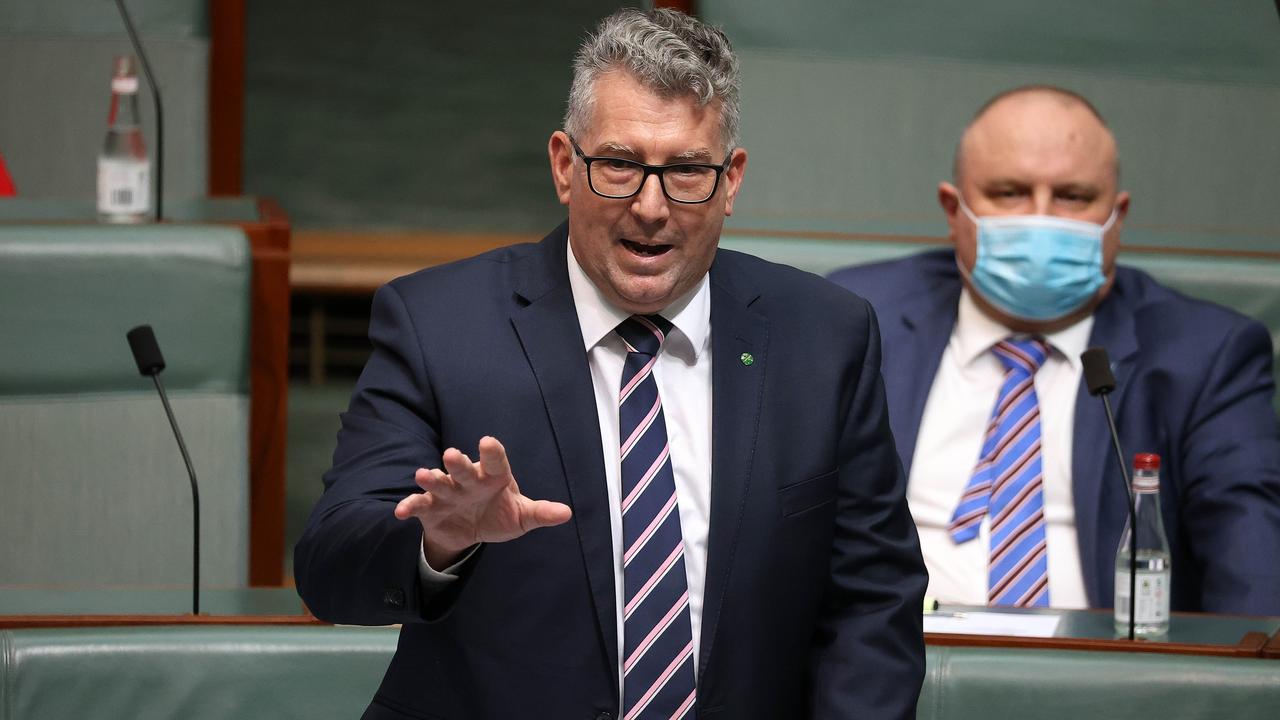
Keith Pitt was also called out. Picture: NCA NewsWire / Gary Ramage
Keith Pitt was also called out. Picture: NCA NewsWire / Gary Ramage


Across in the United States, the New York Times said Australia’s “last-minute commitment” was “built on hope for new technology, and little else”.

CNN said Mr Morrison was “begrudgingly rolling out the weakest climate pledge of the world’s richest countries” and called out MP Keith Pitt, who won a cabinet position under the prime minister’s climate deal with the Nationals after leader Barnaby Joyce demanded a spot.

The Washington Post joined the chorus, claiming Australia “bowed to growing domestic and international pressure”.

“The nation is on the front lines of global warming, with popular support for swifter action surging after devastating bush fires early last year,” reporter Michael E. Miller wrote.

The Indian Express also deemed the net zero announcement “relatively late”, comparing it to New Zealand’s commitment back in 2019.

Meanwhile the BBC reported overnight Australia had been “widely criticised” for its ambiguous targets.

“It’s immensely frustrating, I don’t expect we’ll be getting much kudos at all in Glasgow,” Doctor Simon Bradshaw, Head of Research at the Climate Council, told BBC Radio.

“It’s been very clear from the UK, the Biden administration, certainly from our neighbours in the Pacific that they expect a lot more Australia.”

Doctor Bradshaw also appeared on CNBC in the US, urging Australia to “accelerate action now”.
Meanwhile, Liberal MP and Assistant Minister for Industry Energy and Emissions Tim Wilson appeared in a searing interview with the BBC where he proclaimed “we are going to do this the Australian way”.

The BBC’s Razia Iqbal ”roasted” Mr Wilson, claiming Australia “is not a responsible player on the international stage” and that the country falls “far, far behind all other developed countries when it comes to … a commitment to ending the dependency on fossil fuels”.

Mr Wilson slammed the claims as false.
“It’s quite clear the government has not set any ambitious targets for 2030 which is a major objective for the global summit in Glasgow,” Iqbal questioned.

Mr Wilson said: “We’re going to do this the Australian way and make sure that we do things with the trust of the Australian people.

“It’s absolutely true, we’re not going to burn the village to save it. We know that coal doesn’t have a stronger future and so what we’re doing is laying the foundations and building new industries so Australia can be a renewable energy superpower.

“Other countries can talk big, the planet only cares about what you actually cut your emission.”

Over on the ABC, Energy Minister Angus Taylor appeared unable to name a single new emissions reduction policy contained in the Morrison government’s climate change “plan” during an interview on Tuesday night.
David Attenborough takes aim at Australia

Mr Morrison’s plan was unveiled hours after environmentalist David Attenborough took aim at Australia’s performance on climate change.

Attenborough was among the first to mention Australia directly in a warning ahead of the COP26 summit in Glasgow, which Scott Morrison will attend.

In his comments, which came before the PM’s plan was announced, Attenborough took aim at “people in Australia” who claimed dramatic climate change events, including fires, were a “one-off”.

British broadcaster David Attenborough had some harsh words for Australia. Picture: Yui Mok / AFP

Attenborough, speaking with the BBC’s David Shukman for his new series, The Green Planet, said people have a “moral responsibility” and outcomes could be “really catastrophic” if we don’t act fast.

“What climate scientists have been saying for 20 years, and that we have been reporting upon, you and I both, is the case – we were not causing false alarms,” he said.

“And every day that goes by in which we don’t do something about it is a day wasted. And things are being made worse.

“There are still people in North America, there are still people in Australia who say ‘no, no, no, no, of course it’s very unfortunate that there was that forest fire that absolutely demolished, incinerated that village, but it’s a one-off’.

“Particularly if it’s going to cost money in the short term, the temptation is to deny the problem and pretend it’s not there.

“But every month that passes, it becomes more and more incontrovertible, the changes to the planet that we are responsible for that are having these devastating effects.”

Links

(BBC) Climate Change: UN Emissions Gap Report A 'Thundering Wake-Up Call'

BBC - Matt McGrath

emissions
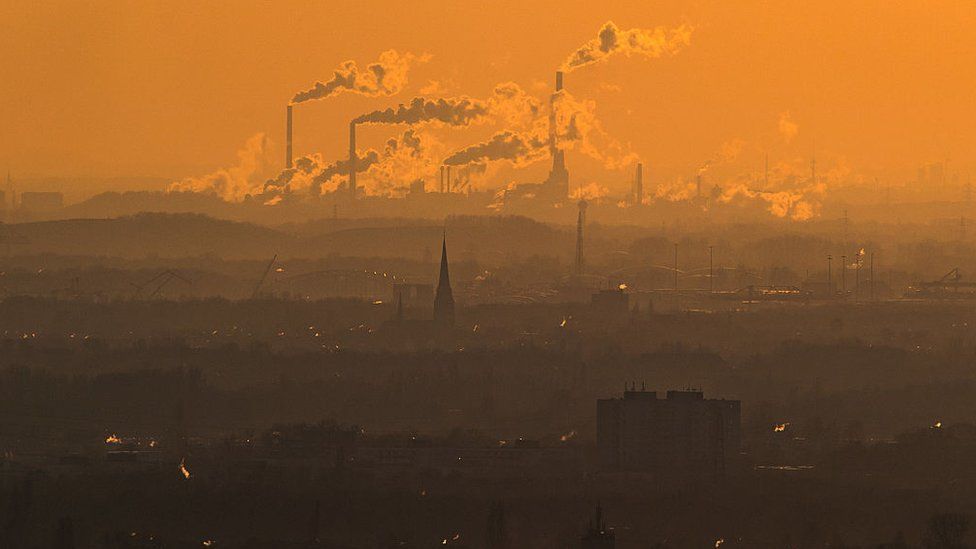
Current plans to cut carbon emissions don't work quickly enough, says the UN. Getty Images

National plans to cut carbon fall far short of what's needed to avert dangerous climate change, according to the UN Environment Programme.

Their Emissions Gap report says country pledges will fail to keep the global temperature under 1.5C this century.

The Unep analysis suggests the world is on course to warm around 2.7C with hugely destructive impacts.

But there is hope that, if long term net-zero goals are met, temperatures can be significantly reined in.

Just a few days before COP26 opens in Glasgow, another scientific report on climate change is "another thundering wake-up call", according to the UN Secretary General, Antonio Guterres.

Glasgow
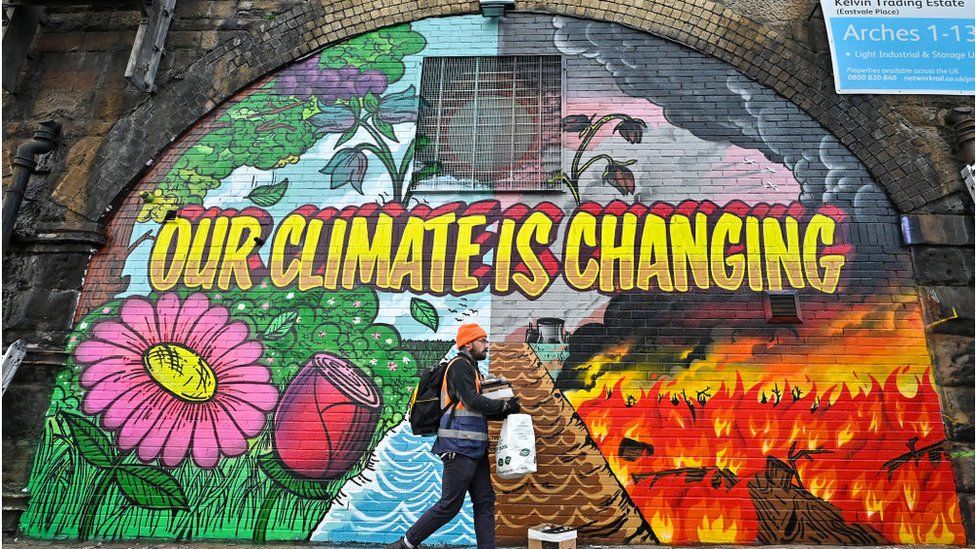
Street art in Glasgow where COP26 begins in a few days time. Grantham Climate Art Prize 2021

This week, we've already had a study from the WMO showing that warming gases were at a new high last year, despite the pandemic.

Now in its 12th year, this Emissions Gap report looks at the nationally-determined contributions (NDCs) or carbon-cutting plans that countries have submitted to the UN ahead of COP.

These pledges run up to 2030 and have been submitted by 120 countries. Unep has also taken account of other commitments to cut warming gases not yet formally submitted in an NDC.

The report finds that when added together, the plans cut greenhouse gas emissions in 2030 by around 7.5% compared to the previous pledges made five years ago.

This is nowhere near enough to keep the 1.5C temperature threshold within sight, say the scientists who compiled the study.

To keep 1.5C alive would require 55% cuts by the same 2030 date. That means the current plans would need to have seven times the level of ambition to remain under that limit. 

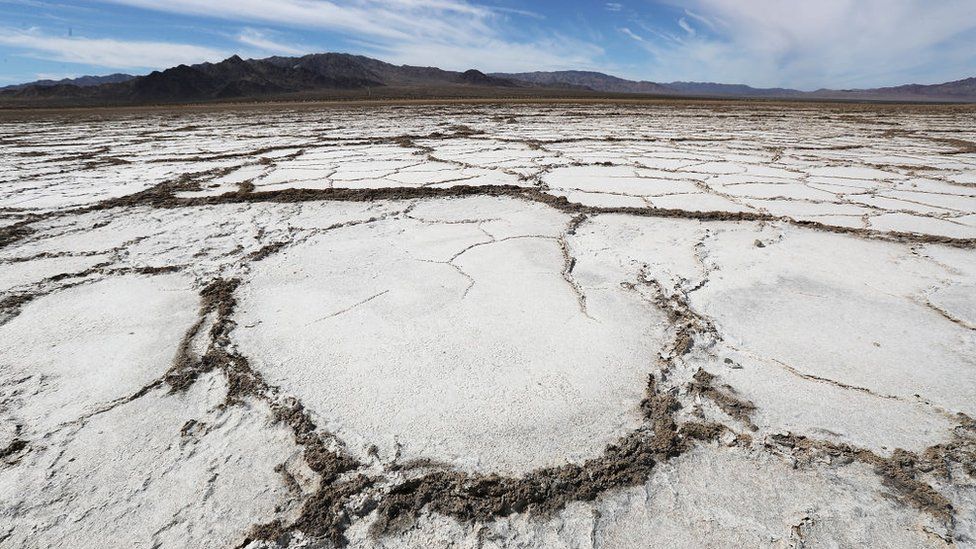
drought
Getty Images

"To stand a chance of limiting global warming to 1.5C, we have eight years to almost halve greenhouse gas emissions: eight years to make the plans, put in place the policies, implement them and ultimately deliver the cuts," said Inger Andersen, executive director of Unep.

"The clock is ticking loudly."

According to the authors, the current pledges would see the world warm by 2.7C this century, a scenario that Antonio Guterres calls a "climate catastrophe".

He believes the report highlights the failures of political leaders.

"The emissions gap is the result of a leadership gap," he said at the launch of the study.

"But leaders can still make this a turning point to a greener future instead of a tipping point to climate catastrophe."

 As Mr Guterres suggests, there are some hopeful signs in the report. 

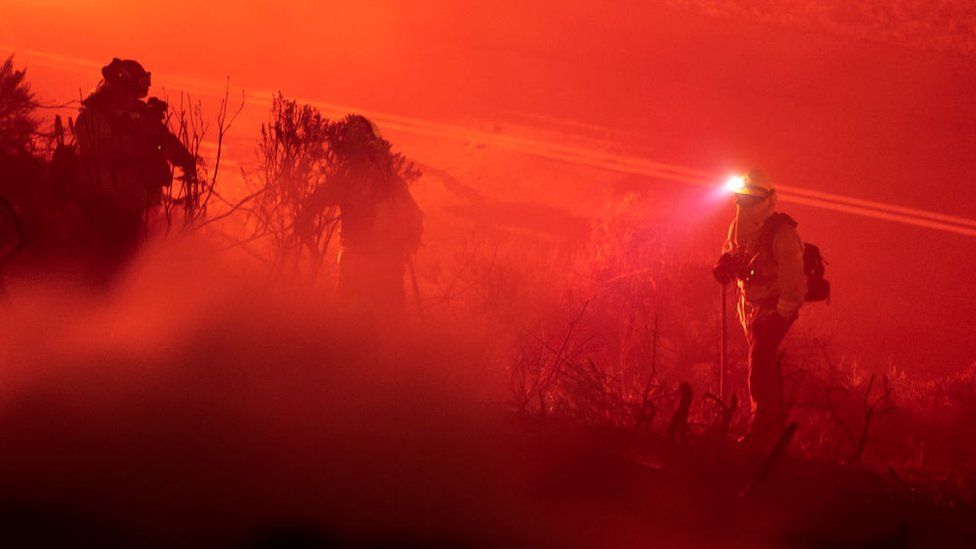
fire
Fires in California are continuing to burn, made worse by a changing climate. Getty Image

Around 50 countries plus the EU have pledged a net zero target for the middle of this century.

These strategies cover over half of greenhouse gas emissions.

The Unep analysis finds that if these plans were implemented fully, this could shave 0.5C off the temperature rise by 2100.

This would bring the global temperature level down to 2.2C, which would see dramatic and deadly impacts from warming but would be a step in the right direction from where the world is currently headed.

The problem, though, is that many of these net zero goals are ambiguous, say the authors - particularly among the world's 20 richest nations, where a dozen long-term plans are said to be quite vague.

Many delay significant cuts until after 2030, raising serious doubts about whether they can really deliver net zero just 20 years later.
Another hopeful sign relates to methane. The report also says there is great potential to make progress on these emissions, which are the second largest source of warming.

Up to 20% of these emissions from fossil fuels, from waste and from agriculture could be curbed at low or no cost. 

drought
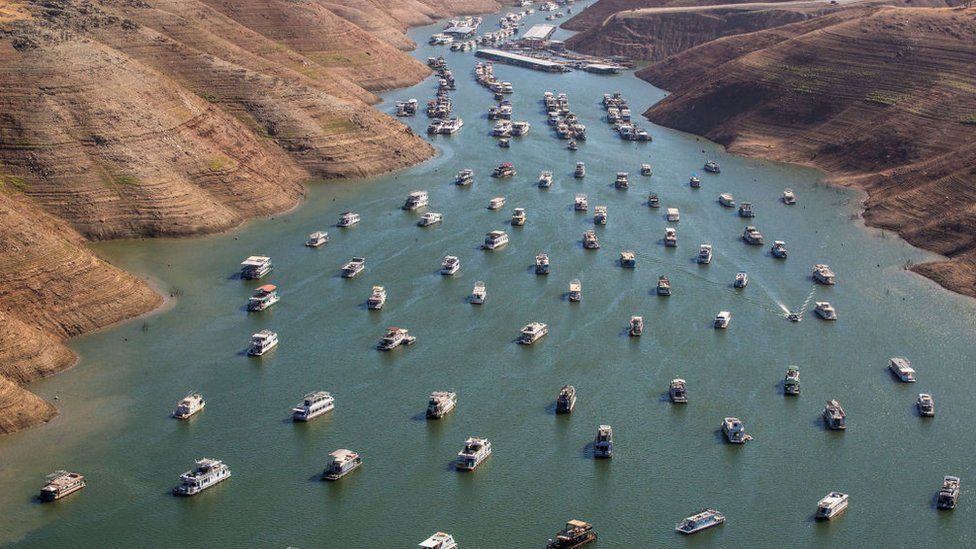
Boats on a lake where the water level has fallen significantly due to drought. George Rose

However, the opportunity to develop a far greener world as the world recovers from Covid is in danger of being lost, say the authors.

They find that around 20% of recovery investments will support renewables and the green economy.

"The huge sums spent to recover economies from Covid-19 are a once-in-a-generation opportunity to boost low-carbon technologies and industries. In most cases, this opportunity is not being taken," said Brian O'Callaghan, project manager of the Oxford University Economic Recovery Project, and an author on the Unep report.

"This is a particular slap in the face for vulnerable nations who are suffering the worst consequences of climate change…we remain without a commitment from the highest emitters to cover the loss and damage that they have brought on the world."

Links

(AU ABC) Pacific Island Climate Groups Demand World Leaders Halt Support For Fossil Fuel

ABC - Joshua Boscaini

Pacific climate action groups made the desperate plea ahead of COP26 in Glasgow. (ABC: Evan Wasuka)

Key Points
  • The group called on rich nations to pay developing countries billions of dollars to help with climate resilience
  • The former Kiribati president told a virtual gathering that Pacific Island nations' days were numbered
  • Britain's High Commissioner to Fiji said countries need to rapidly phase out domestic investment in coal power
Pacific Island climate action groups have demanded countries including Australia end support for the fossil fuel industry during the COP26 Climate Change Summit in Glasgow.

The Pacific Islands Climate Action Network (PICAN), which includes environmental activist group Greenpeace, issued a list of demands to world leaders on Friday, saying they must provide "a safe and habitable future for the Pacific Islands".

It called on wealthy countries to pump billions of dollars a year into developing nations to help them tackle the effects of climate change and cap global warming at 1.5 degrees Celsius.

PICAN demanded wealthy nations provide developing states $US100 billion ($133.25 billion) annually until 2025 and increase that sum to $750 billion a year beyond 2025 so they can invest in technologies to help live with a changing climate.

"We do need finance and we're talking about billions … we need the technology," former Tuvalu prime minister Bikenibeu Paeniu said.

Former Kiribati president Anote Tong told the virtual gathering of Pacific climate-action organisations the COP26 meeting would be the last chance to save Pacific Island nations from the worst effects of climate change.

Anote Tong said for most people in the Pacific, their days were numbered. (ABC News: Sarah Hancock)

"I think what I've always acknowledged — and I think we must also acknowledge — is for most of us in the Pacific, our days are already numbered because whatever happens, even if we cut emissions to zero tomorrow ... our future cannot be assured," he said.

Pacific Island nations have become increasingly anxious about inaction on climate change and its looming consequences for their countries if the world does not reduce emissions.

An Intergovernmental Panel on Climate Change (IPCC) report in August found the world had warmed by 1.1C on pre-industrial levels.

It found that on the current trajectory, the Earth was likely to hit 1.5C warming about 2030.

Documents leaked to Greenpeace and obtained by the ABC, showed Australia sought to change a major international draft report on climate change to promote a future for coal-fired power.

'Rapid' phase out of coal needed

British High Commissioner George Edgar, who also spoke at the meeting, called on countries that had not submitted ambitious climate targets to step up.
The IPCC report explained


"A growing number of countries have committed to ending overseas investment in coal, but we need to see an end to domestic investment as well and plans for the rapid phase out of existing coal-fired plants," he said.

Former secretary-general of the Pacific Islands Forum, Meg Taylor, said she understood reservations about the shift away from fossil fuels but insisted the change would benefit communities in the long term.

"I understand the sentiments about the transition of economies from fossil fuel to carbon neutral. My own country will face that challenge itself," she said.

"In the Paris Agreement, it's very clear that in terms of the transition … economic development is very much part of the climate transition and countries are going to have to make those tough decisions themselves."

Links

27/10/2021

(AU BBC) Climate Change: Australia Pledges Net Zero Emissions By 2050

BBC

PM Scott Morrison sets out "a uniquely Australian way" of meeting climate commitments

Leading global coal and gas supplier Australia has pledged to achieve net zero carbon emissions by 2050.

Prime Minister Scott Morrison however said the plan would not include ending Australia's fossil fuel sectors.

The nation will also not set ambitious targets for 2030 - an objective of next month's COP26 global climate summit.

His plan has drawn criticism, with Murdoch University fire ecology expert Joe Fontaine saying it had "all the strength of a wet paper bag".

Australia has long dragged its heels on climate action. It is one of the dirtiest countries per head of population and a massive global supplier of fossil fuels.

Strategic allies the US and UK have both pledged to cut emissions faster. The UK has pledged that all its electricity will come from renewable sources by 2035, while the US has announced plans to halve its emissions by 2030 compared to 2005 levels.

"We won't be lectured by others who do not understand Australia. The Australian Way is all about how you do it, and not if you do it. It's about getting it done," Mr Morrison wrote in a newspaper column on Tuesday.

To halt the worst effects of climate change, nations have pledged to limit rising temperatures to 1.5C by 2050.

This requires cutting emissions by 45% by 2030 and reaching net zero by 2050, scientists say. Over 100 nations have committed to carbon neutrality.

Net zero means not adding to the amount of greenhouse gases in the atmosphere. It is achieved by a combination of cutting emissions as much as possible - mainly by reducing gases like carbon dioxide (CO2), which are released in the use of fossil fuels - and so-called offsetting measures, such as planting trees and carbon-capture technology.

What has Australia promised?

Mr Morrison announced an investment of more than A$20bn (£11bn; $15bn) in "low-emissions technologies" over the next 20 years - such as efforts to capture carbon in soil, lower solar energy costs, and developing greener industries.

But Australia will also use more gas, at least in the short term. Most controversially, there is no plan to limit fossil fuels.

"We want our heavy industries, like mining, to stay open, remain competitive and adapt, so they remain viable for as long as global demand allows," Mr Morrison wrote.

Australia's 2030 commitment will remain a 26% cut on 2005 emissions. It is currently on track for a 30-35% reduction, the government said.

While the 2050 pledge has been widely welcomed, the government has been ferociously criticised for not offering more details.

Australia's Climate Council think tank said it was "a joke without strong emissions cuts this decade".

Many said the government has been too slow on climate action, despite seeing first-hand impacts such as bushfires, floods and drought.

"The word plan doesn't constitute a plan no matter how many times you say it," said Opposition Leader Anthony Albanese.


Analysis
Shaimaa Khalil, Australia Correspondent


Scott Morrison's announcement is worth noting not because it offers anything different to other countries, but because of how late to the party Australia is!

This announcement took months of political wrangling and was left down to the wire with days before the COP26 summit in Glasgow.

That the government had to make political concessions to its junior coalition partner - the National Party - shows you how complicated and politically divisive climate action is in Australia.

The Nationals represent electorates in regional areas where most high-emission industries like coal mining are based. After days of toing and froing, they backed the 'process'.

The prime minister assured Australians the target will not mean paying more for their energy bills. "Technology not taxes," he said.

He addressed regional Australians directly and said the plan won't involve shutting down coal and gas production or exports. He talked about billions of dollars invested in low-emission technologies. The government's plan would "strike a balance", Mr Morrison said.

But he failed to explain how this balance will be struck. How the government will square keeping its coal industry, for example, and reaching net zero by 2050 - and what role technology will play in all of that. Especially when Canberra won't budge on its much-criticised 2030 targets.

While this is a big moment for Australia, the details are still murky and potentially problematic on how net zero will be achieved.


Links

(AU ABC) Government Promises To Cut Emissions To Reach Net Zero By 2050 Under New Climate Change Plan

ABC News Georgia Hitch

Scott Morrison commits to reducing Australia's carbon emissions to net zero by 2050

Key Points
  • The plan relies on investment in a range of "low emissions" technologies and "ultra-low-cost" solar
  • Australia is on track to cut emissions by 30 to 35 per cent by 2030
  • The government estimates the plan will create 62,000 jobs in regional mining and heavy industry
Australia has joined the world in promising to make the nation carbon-neutral by 2050, ahead of a global climate change summit.


They include soil carbon sequestration — where carbon is removed from the atmosphere and stored in soil — carbon capture and storage (CCS), production of low-emissions steel, and other ways to reduce energy use.

The plan also includes using "clean hydrogen" to lower fuel emissions and a "new priority" for the government to deliver "ultra-low-cost solar" power below $15 per megawatt-hour.

Hydrogen is seen by the government as a potentially zero-emission fuel, but getting it in a pure and useable form involves processes that can produce a lot of emissions.

Only "green" hydrogen is produced entirely through renewable power and has zero emissions. The government's plan for "clean hydrogen" will see fuel made using both renewables and energy from gas.

As for CCS, while the government believes real progress is being made on the technologies involved, many climate scientists believe it is not a serious alternative to wind and solar power.

The Climate Council has said using it would be an attempt to prolong the use of fossil fuels.

A comparison of production process for the "blue" and "green" types of hydrogen.(Supplied: Woodside)

The combination of the government's selected technologies is expected to reduce emissions by 85 per cent, with the remaining 15 per cent to be achieved through future technologies.

"That 15 per cent will come from the evolution and momentum that is generated by those earlier technological developments," Mr Morrison said.

However, unlike the existing commitment to cut emissions by 2030, the net zero by 2050 target will not be enshrined in law.

Mr Morrison has previously said reducing emissions relied on technology and not "political commitments".

Opposition Leader Anthony Albanese criticised the plan, saying it contained no new policies.

"Scott Morrison left it to the last possible minute to outline a scam that leaves everything to the last possible minute," he said.

"The word plan doesn't constitute a plan, no matter how often [Mr Morrison] said it.

"As always, with this Prime Minister, it is all about marketing."

Shadow Energy Minister Chris Bowen said he had  "seen more detail in fortune cookies".

"It requires leadership and detailed plans but all we have today was the slides, slogans and not solutions," he said.

On track to beat 2030 target, PM says

The latest projections show Australia is on track to cut emissions by 30 to 35 per cent by 2030.

However, Mr Morrison said the formal target of a 26 to 28 per cent reduction would remain unchanged.

Energy Minister Angus Taylor said the jump in forecast emissions reductions was in large part because of the "rapid" uptake of solar energy.

"We are world leaders in solar," he said.

"One in four houses [have it]. No other country in the world is at that level."

"We have seen extraordinary investments, world-beating investments in renewables increasingly dominated by solar in the last couple of years, and that has played an important role."

Mr Taylor said improving energy efficiency and changes to land use in agricultural areas were the other major factors behind the 2030 improvement. 

Mr Morrison will attend the United Nations COP26 climate conference in Glasgow next week where he will confirm the government's net zero position.

The government's plan forecasts emissions reductions across multiple industries. (Supplied: Department of Industry, Science, Energy and Resources)

Government says jobs will be created in mining, heavy industry

The plan came after the Nationals confirmed they would give "in-principle" support to the target earlier this week, after lengthy negotiations. 


As part of the deal to secure the Nationals support, the Productivity Commission will review the new plan every five years to measure the impact reducing emissions has on regional communities.

"That will monitor the impact, the socio-economic impact, of our plans into the future," Mr Morrison said.

"So I can say to rural and regional Australians this is a good plan for you. It's a good plan for all Australians."

Mr Taylor said the plan reflected the fact that customer and investor demands were changing and the government needed to adapt to meet those needs.

He described the plan as an "actively achievable pathway".

Links

(AU Climate Council) Half Baked: Net Zero Announcement Missing Rapid Emission Cuts

Climate Council


A NATIONAL net zero target is long overdue, and must be accompanied by accelerated action to deeply cut emissions this decade so Australians can reap the economic benefits of a global transformation, says the Climate Council. 

The net zero by 2050 announcement, and an indication that Australia may exceed its weak 2030 emissions target by reaching ‘up to 35% below 2005 levels’, means Australia remains dead last among comparable nations on climate action.

Climate Council CEO, Amanda McKenzie: “The Federal government has now cemented the commitments from all state governments, putting Australia on a path to phase out coal, oil and gas pollution. 

“Net zero by 2050 is a joke without strong emissions cuts this decade. Australia desperately needs to dramatically scale up renewable energy, phase out coal and gas and electrify our transport systems. Otherwise we miss out on the economic opportunities of the global transition and expose ourselves to the fire, flood and heat risks of climate change,” said Amanda McKenzie who has attended three previous COPs. 

Ahead of major UN talks to be held in Glasgow from October 31, Australia is under massive international pressure to do more, with the threat of carbon border tariffs hanging over our economy. Australians are already being harmed by climate change, from massive fires to sea level rise, which will continue to worsen under accelerating climate change.

Climate Councillor and Emeritus Professor at Australian National University, Professor Will Steffen: “To achieve net zero and help avoid catastrophic climate change, the federal government must take rapid and concrete steps to cut emissions deeply this decade, starting with an end to all new coal or gas projects. 

“All gas and coal expansion must stop, and we need to move away from existing fossil fuel use as quickly as possible. Any climate commitment should be judged against this measure. Australia remains one of the only advanced economies that hasn’t offered up a new, higher target for 2030 emission cuts — despite clear requests for this from UN officials,” said Professor Steffen. 

The Climate Council recommends that Australia reduce its emissions by 75% (below 2005 levels) by 2030 and achieve net zero by 2035. This is based on rigorous scientific risk assessments.

“As a first step, Australia must at least match the updated commitments from our key allies, and pledge before Glasgow to at least halve our emissions (below 2005 levels) by 2030,” said Professor Steffen. 

Climate Councillor, and leading Australian economist, Nicki Hutley: “It’s in Australia’s clear economic interests to act swiftly and decisively on climate change; new industries will bring billions of dollars of economic opportunities. We can’t rely on unproven technologies like carbon capture and storage.”

“As one of the sunniest and windiest countries on earth, Australia has unrivalled potential for renewable energy, clean industries, and clean jobs,” she said. 

“The regions have the most to lose from worsening extreme weather events and the most to gain from harnessing new industries. A 2050 plan is too late, we need action now to avoid missing out on the opportunities for regional Australia of renewables,” said Ms Hutley. 

Links

26/10/2021

(Vox) The Fate Of The Planet Will Be Negotiated In Glasgow, Scotland

Vox

Here’s what you need to know about COP26, the high-stakes climate conference that starts on October 31.

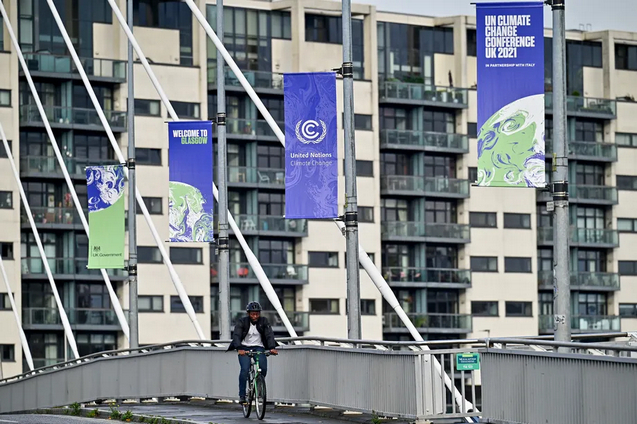
A bicyclist crosses the Clyde Arc road bridge by the Scottish Events Centre, which will host the COP26 UN Climate Summit in Glasgow, Scotland. COP26 will officially begin on October 31 with the procedural opening of negotiations, and end November 12. Jeff J Mitchell/Getty Images

Almost every country in the world signed the 2015 Paris climate agreement, a monumental accord that aimed to limit global warming. But it was forged on a contradiction: Every signatory agreed that everyone must do something to address the urgent threat of climate change, but no one at the time pledged to do enough.

In the years since the agreement, the emissions that trap heat in Earth’s atmosphere have continued to rise.

The Paris Agreement aimed to limit global warming this century to less than 2 degrees Celsius, compared to temperatures before the industrial revolution, with a more optimistic goal of staying below 1.5°C. Both of these goals would require rapid and radical shifts away from fossil fuels — and eventually, zeroing out emissions of greenhouse gases entirely.

Signatories did agree that they would set more ambitious targets for themselves over time and eventually get on track to meet global climate goals. Whether they will actually do so is about to be tested at COP26, the most important international climate conference in years.

“This is definitely the biggest [climate meeting] since Paris, and it has to be a turning point if we’re going to be successful,” said Helen Mountford, vice president for climate and economics at the World Resources Institute.

The meeting will take place in Glasgow, Scotland, between October 31 and November 12. More than 100 world leaders, including US President Joe Biden, are expected to attend a portion of the conference.

The world has already failed to meet many earlier targets, drawing the ire of climate activists. “Build back better. Blah, blah, blah. Green economy. Blah, blah, blah. Net zero by 2050. Blah, blah, blah,” Swedish climate activist Greta Thunberg said in September. “Words that sound great but so far have not led to action.”

Some thorny issues that derailed past meetings, such as payments for developing countries that are living through climate disasters, remain unresolved. Meanwhile, the Covid-19 pandemic, which delayed COP26 from its original dates in November 2020, is still claiming thousands of lives per day, leading to national lockdowns and disrupting trade. Even after a year of devastating hurricanes, heat waves, and wildfires, climate change may not be every country’s top priority.

But there’s no time to lose: The window for meeting the goals of the Paris Agreement is closing. The Intergovernmental Panel on Climate Change reported in 2018 that staying below 1.5°C of warming required the world to roughly halve emissions from current levels by 2030. This year, the IPCC reported that the world is poised to miss this target even in the most optimistic scenarios they studied.

“Scientists tell us that this is the decisive decade,” Biden said in April. “This is the decade we must make decisions that will avoid the worst consequences of the climate crisis.”

Some countries, seeing the brightening spotlight of COP26, have begun to announce more aggressive climate goals in the runup to the meeting. This week, the UK put out its road map for achieving net-zero greenhouse gas emissions by the middle of the century.

But the most scrutiny will fall on the world’s largest emitters — China, the US, and India — and whether they will take tangible steps to curb their pollution. Biden and the US delegation are now counting on Congress to pass a suite of climate policies to strengthen their hand at the negotiating table.

What’s on the agenda for COP26?

The Paris climate agreement aims to solve a global crisis, but its bureaucratic constraints have frustrated the process.

Joining the accord is voluntary, which means any signatory can leave if they want to, as the US did briefly last year. And even the countries that stay in have the freedom to set their own goals for cutting greenhouse gases. If they miss their targets, there is no penalty.

It may seem odd that an agreement to save the world from itself would have so few firm rules. However, the Paris Agreement was the culmination of two decades of stalled diplomacy, and many countries shot down stronger language around binding greenhouse emissions targets, oversight, and punishments.

The Paris Agreement is thus a delicate balancing act, accomplishing its goals mainly with nudges and incentives. It aims to steer everyone — developing countries, oil economies, regional rivals, island states threatened by sea level rise — toward a common objective, and that’s a very tall order.

Here are some of the key items on the agenda for COP26 (officially known as the 26th Conference of Parties to the United Nations Framework Convention on Climate Change).

Getting countries to do more

Under the Paris Agreement, every country is required to publish a climate change target and a route for getting there, or what’s called a Nationally Determined Contribution (NDC). The first round of NDCs put forward in 2015 were clearly inadequate, putting the world on course for roughly 2.7°C of warming by the end of the century.

Climate leaders hoped that in the runup to COP26, countries would roll out new commitments for the coming decade, as well as long-term strategies for eliminating emissions by the middle of the century. As of October 21, 114 countries and the European Union have submitted new NDCs.

Some major emitters like the US, United Kingdom, and China have proposed or submitted stronger targets. But others, like Russia, Brazil, and Australia, did not meaningfully ramp up their goals. Still others like India have yet to submit a new NDC.

The leaders at COP26 will try to create carrots and sticks to motivate the laggards and holdouts to take more aggressive action. Many countries are now adamant that the limit for warming this century should be 1.5°C, now that many countries have already suffered the tolls of disasters worsened by climate change — a sign that 2°C of warming would be far worse.

According to the IPCC, the difference between 1.5°C and 2°C includes 2 extra inches of sea level rise, putting an extra 10 million people at risk of coastal flooding and related problems. Two degrees of warming would double the number of people exposed to extreme heat at least once every five years. This extra warming would also lead to greater declines in fisheries, crop production, and habitats for vital species like insect pollinators.

“Because of that new science, I think certainly in the climate community, 1.5°C de facto is now what everyone is talking about,” Mountford said.

Artists paint a mural on a wall next to the Clydeside Expressway near the Scottish Events Centre, where COP26 will take place. Jeff J Mitchell/Getty Images

Technology for cutting carbon out of the economy, like renewable energy, has also improved since the Paris Agreement was signed. Some countries and many activists argue that a tougher target is essential to taking advantage of these improvements and that mitigation needs to begin right away.

This conference has to signal a “shift from making commitments to actually taking action,” said Marcene Mitchell, senior vice president of climate change at the World Wildlife Fund. Countries not only need to make bigger promises, Mitchell added, they need to match them with actual policies.

International carbon markets

One of the ways countries are aiming to meet their climate change goals is by pricing carbon dioxide emissions and creating accounting mechanisms for reducing them. That can take the form of credits or offsets that are traded with other countries.

Under Article 6 of the Paris Agreement, wealthier countries can compensate for their higher emissions by financing clean energy in developing countries or helping restore carbon-absorbing ecosystems like rainforests.

The trouble is that if these markets are not designed well, they may simply end up as a way for wealthier countries to buy their way out of reducing their own emissions. Without proper verification, the credits may not deliver the carbon reductions they promised.

In past climate meetings, countries like the US, Australia, and Brazil pushed for language in these rules that would grant them more flexibility. However, most other countries found these provisions unacceptable because they would weaken the program. This issue forced several previous meetings to go over their allotted times. It remains unresolved and may not be settled at COP26.

Loss and damage

The core injustice of climate change is that the people who contributed least to the problem stand to suffer the most. Though not strictly part of the Paris Agreement, a key part of the discussion at COP26 will be around how to compensate countries facing the impacts of climate change today, from rising sea levels eroding shores to more devastating extreme weather.

Securing this funding is a huge priority for many countries, particularly island countries and those with small economies. However, wealthier countries that have historically emitted the most greenhouse gases have resisted language that would force them to chip in and instead advocated softer language that would make these wealth transfers voluntary.

And so far, countries have not made much progress in closing the gap. “It’s a contentious issue, it’s a big issue, it’s a complicated issue,” said Mitchell. “This is my own personal view: I don’t think that will get resolved here at this COP.”

Climate finance

It’s expensive to build resilience to climate change and shift from fossil fuels toward clean energy, particularly for developing countries. The UNFCCC created the Green Climate Fund in 2010 to finance these projects around the world with grants and loans. It includes programs like developing sustainable agriculture in Thailand and building cooling facilities for residents in countries like Bangladesh facing extreme heat.

Governments meeting at COP26 set a target of deploying $100 billion a year in international climate financing through programs like the Green Climate Fund by 2020. But so far, countries haven’t contributed enough to meet the target, falling short by $20 billion in 2018, the most recent estimate available.

More international climate financing would help drive down greenhouse gas emissions from developing countries and motivate them to set more ambitious goals. However, some countries now say that even $100 billion isn’t enough. A negotiator representing African countries, for example, told Reuters that international climate financing should be scaled up to $1.3 trillion by 2030.

All eyes are on the United States

The US has the dubious distinction of being the only country to complete a 360-degree turn on the Paris Agreement. It helped convene the accord in 2015, yet former President Trump withdrew the US in 2020. President Biden signed an executive order in January to rejoin and the US was formally back in the Paris accord in February.

Since the US is the wealthiest country in the world and the largest historical emitter of greenhouse gases, it plays a prominent role in climate negotiations and has an even greater obligation to act on the crisis. At COP26, the US not only has to make up for lost time, it also has to rebuild trust with other countries and show that it’s willing to be more ambitious.

“There is this sense of exhaustion about how long is it going to take for one of the biggest emitters in the world to do its fair share,” Rachel Cleetus, the clean energy policy director at the Union of Concerned Scientists, told Vox’s Rebecca Leber earlier this month.

President Joe Biden delivers remarks at a virtual summit on climate at the White House in April. The president pledged to cut greenhouse gas emissions by half by 2030. Anna Moneymaker/Getty Images

In April, Biden announced that the US was adopting a new climate goal: cutting emissions within the decade by 50 to 52 percent, compared to the US emissions peak in 2005.

That’s a big step up from the previous target, which aimed for 26 to 28 percent reductions by 2025. US emissions have been declining since 2005, with a precipitous drop in 2020 due to the Covid-19 pandemic. However, greenhouse gases are already starting to rebound.

President Biden has already used some of his executive power to drive actions on climate change, like setting targets for electric vehicle production, limiting new oil and gas production on public lands, and pushing financial institutions to incorporate climate risk into their assessments.

But the fate of the largest parts of Biden’s climate agenda is in the hands of Congress, not the White House.

Democrats in Congress have been hurrying to put these plans into action with the bipartisan infrastructure bill and the Build Back Better Act. These bills, as originally written, could reduce US greenhouse gas emissions by 45 percent over the next decade. With midterm elections looming next year, Democrats may not get another chance for years to advance major climate change legislation.

“If that’s done before COP, I think that would actually give a number of countries quite a bit of reassurance that what the administration is committed to will be delivered,” said Mountford. “If it’s not quite done before COP, I think people will still be viewing them with some skepticism.”

But the US delegation may arrive in Glasgow with a weaker hand than they had hoped for because the legislation is already being whittled down as Democrats are forced to compromise in the Senate. “For [the US] to have credibility and leadership, we need to not just come with a statement and commitment, but actually the money to pay for it,” Mitchell said.

What happens now, first in Congress and then in Glasgow, will help shape the ambitions of countries around the world as they meet the challenge of climate change. It’s not a stretch to say that the future of our planet as we know it is at stake.

Links

Lethal Heating is a citizens' initiative