30/11/2021

(Newsweek) 20 Countries With The Least Ambitious Climate Policy

Newsweek -

Human activity is causing Earth's atmosphere to heat up much quicker than any changes which might happen naturally, leaving many ecosystems at breaking point.

While November's COP26 summit was the first time a global climate deal explicitly identified fossil fuel consumption as a major driver of climate change, climate experts have warned it has not gone far enough to limit global warming to "well below" 2C. centigrade compared to pre-industrial levels—a key level of the 2015 Paris Agreement.

So which countries are taking action, and which are not?

Scientific analysts Climate Action Tracker (CAT) have examined government policy of 40 countries that account for the vast majority of global greenhouse gas emissions.

Its analysis indicates less economically developed countries are struggling the most to combat the effects wrought by their richer neighbors.

At present, only a small group of developed markets are leading on research, innovation and public funding, according to Steve Varley, EY Global's vice chair of sustainability.

He told Newsweek that governments need to work more collaboratively and alongside businesses to drive change.

"A small group of developed markets are leading the way in terms of climate research, innovation and public funding, at a time when not enough 'green money' is flowing to emerging markets where the impacts of climate change are felt the most," he said.


The Very Worst

("Critically Insufficient" Countries)

CAT notes this indicates a country's climate policies and commitments reflecting minimal to no action and are not at all consistent with the Paris Agreement.


Iran

Iran is one of the few countries that has not yet ratified the Paris Agreement, ArefBarahuie/Getty Images

Iran is one of the few countries that has not ratified the Paris Agreement, and this effect has been compounded by an economic crisis resulting from

International sanctions in place since 2018, has meant a decrease in the export of fossil fuel oil, yet there has been a sluggishness in embracing eco-friendly policies.

Economic effects of sanctions and the COVID-19 pandemic has slowed climate policy developments further,according to CAT analysts.


Russia

Although Russia in November 2020 proposed reducing its emissions by a minimum of 30 percent below 1990 levels by 2030, CAT describes this target as not representing an increase in climate action lapandr/Getty Images

In November 2020, Russia proposed reducing its emissions by a minimum of 30 percent below 1990 levels by 2030.

But CAT analysts do not assess the target as an increase in climate action, "as it is simply the lower bound of the previous target's range (25-30%)."

U.S. President Joe Biden criticised Russia—the world's fifth-largest carbon dioxide (CO2) emitter—for not attending the COP26 climate summit.

CAT states: "Russia needs to set a more ambitious target for emissions reductions, adopt and implement additional policies, and provide additional finance."


Singapore

Singapore’s climate policies and commitments are deemed to reflect "minimal to no action", which are considered by the climate activist "not at all consistent with the Paris Agreement." danaibe12/Getty Images

Singapore's climate policies and commitments reflect "minimal to no action," according to CAT. Government policy here is "not at all consistent with the Paris Agreement," it said.

The island city-state in Southeast Asia is also believed to be overly reliant on natural gas, which CAT estimates provides 96 percent of the country's electricity.

CAT writes: "If all countries were to follow Singapore's approach, warming could reach over 3C and up to 4C"—twice the upper target of the Paris Agreement.


Thailand

Thailand's overall climate performance is described by CAT as "weak despite some good intentions." torwai/Getty Images

CAT analysts call Thailand's overall climate performance "weak despite some good intentions."

Thai leaders have pledged to shift away from a dependency on coal to natural gas over the next 20 years, but little change has been witnessed so far.

CAT writes: "Until the next wave of Thailand's climate strategies and its accompanying mitigation policies are implemented and strengthened, the CAT rates Thailand's climate targets and policies as "critically insufficient."


Turkey

Turkey is described as sitting "at a crossroads" regarding its energy future Huseyin Bostanci/Getty Images

Turkey is "at a crossroads" regarding its energy future, CAT analysts say. President Erdoğan's government intends to decrease dependency on gas imports through increased renewable energy capacity, but at the same time plans to continue to use domestic coal for the foreseeable future.

CAT writes: "Turkey's emissions will increase significantly under current policies. This first NDC [Nationally Determined Contributions] is so weak that it allows GHG [Green House Gas] emissions to essentially double compared to current levels.


Vietnam

Vietnam lacks policies for a transition to a low-carbon economy and has not focused efforts on emissions reductions Kittikorn/Getty Images

Vietnam lacks policies for a transition to a low-carbon economy and has not focused efforts on emissions reductions, according to the analysts.

While the country's renewable energy policy has witnessed "positive developments," CAT considers these outweighed by "plans for continuing the expansion of fossil fuels."

It writes: "Vietnam is further off track when compared with modelled domestic pathways and the extent of reductions that need to be taking place inside its borders with international support."


Extremely Poor Performing

"Highly Insufficient" Countries

Note CAT rates these countries policies and actions are considered to lead to "rising, rather than falling, emissions" tabulating to global temperatures rising "up to 4C by end of the century."


Argentina

Argentina’s policies and actions are considered "not at all consistent with the Paris Agreement’s 1.5C temperature limit." Christian Peters/Getty Images

Argentina's policies and actions are considered "not at all consistent with the Paris Agreement's 1.5C temperature limit," by CAT analysts.

Beset by economic trouble, the country failed to introduce a single green measure of note in its latest recovery stimulus plan, according to the researchers.

Former President Mauricio Macri's government declared a "climate emergency" in 2019, but little action has been taken since, analysts found.


Australia

Australia is one of several COP26 nations unsupportive of agreeing to the request for all countries to return next year with stronger commitments to slash greenhouse gas emissions by 2030 Tim Allen/Getty Images

Australia was one of several countries which proved unsupportive of COP26 plans to strengthen 2030 targets at next year's summit in Egypt.

CAT writes: "GHG emissions in Australia have dipped due to a range of factors, but effective climate policy is not one of them."


Brazil

Although Brazil's Bolsonaro missed the COP26 summit, South America's largest country pledged to reduce methane emissions and, most notably, end illegal deforestation by 2030 MaRabelo/Getty Images

Although Brazil's President Jair Bolsonaro missed the COP26 summit, South America's largest country pledged to reduce methane emissions and, most notably, end illegal deforestation by 2030.

However, CAT is still critical of Brazil, writing: "There are significant gaps in Brazilian policymaking for halting emissions growth, and Brazil's deforestation remains a serious cause for concern."


Canada

Canada has borne the brunt of climate impacts, from brutal heat waves to devastating forest fires Christopher Knox Photography/Getty Images

Canada has often borne the brunt of climate change, from brutal heat waves to devastating forest fires.

But while describing recent climate policy developments as "positive," CAT deems these to be "insufficient" to address the climate crisis.

The analysts add: "If fully implemented, Canada's current policies are not enough to achieve this target and are only in line with 4C warming. Canada is also not meeting its fair-share contributions to climate change and in addition to strengthening its targets and policies also needs to provide additional support to others."


China

City in the fog, China's Guangzhou superjoseph/Getty Images

An agreement between China and the U.S., the world's two biggest carbon polluters, to boost climate cooperation over the next 10 years, was one of the most striking headlines from the COP26 climate summit.

Ahead of the summit, China officially submitted its carbon neutrality "before 2060" target.

However, CAT notes there is still space to accelerate China's green revolution, writing: "To improve on its rating and become compatible with 2C ('Almost sufficient'), China would need to peak emissions as early as possible, and decrease coal and other fossil fuel consumption at a much faster rate than currently planned —and set clear phase-out timelines."


Colombia

Colombia has previously announced reducing emissions from deforestation is a vital part of its climate action Arturo Rosenow/Getty Images

The South American country with a population of almost 51 million people has previously said reducing emissions from deforestation is a vital part of its planned climate action.

However, while Colombia does have mitigation targets for energy and transport, CAT states that "further action is needed."


India

The banks of Yamuna River polluted with garbage and beautiful Taj Mahal in the background ModernNomads/Getty Images

Political pressure exerted by India and China reportedly resulted final COP26 deal promising only to "phase down" instead of "phase out" coal.

However, CAT notes the difficulties of still developing countries such as India to meet the commitments of its wealthier neighbors, writing: "India has been severely impacted by COVID 19 during the second wave in the first half of 2021, which has further reduced the resilience of climate change vulnerable populations already at risk of displacement by storms, floods, droughts and other climate disasters."


Indonesia

Following COP26, Indonesia introduced new rules on carbon trading to introduce a market mechanism to achieve the southeast Asian country's greenhouse gas reduction targets by 2030 Koldunov/Getty Images

Following COP26, Indonesia introduced new rules on carbon trading to introduce a market mechanism to achieve the southeast Asian country's greenhouse gas reduction targets by 2030.

However, the CAT analysis suggests emissions will still "continue to accelerate away from Paris compatible levels."


Kazakhstan
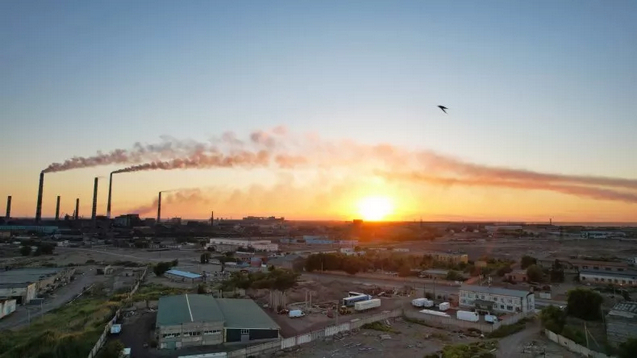
Kazakhstan has been rated "highly insufficient" by CAT as its "climate policies and commitments are not consistent with any interpretation of a fair-share contribution and lead to rising, rather than falling, emissions." Sergey Panikhin/Getty Images

The Central Asian, former Soviet state has been rated "highly insufficient" by CAT, which argues that its "climate policies and commitments are not consistent with any interpretation of a fair-share contribution and lead to rising, rather than falling, emissions."

This forecast is despite Kazakhstan's falling fossil fuel production due to the pandemic.


Mexico

A shot of the Mexico City landscape engulfed in smog, a continuing concern for Mexico’s citizens E_Rojas/Getty Images

CAT rates Mexico's climate targets and policies "highly insufficient," but with one exception.

Mexico's conditional Nationally Determined Contributions target, "roughly stabilises emissions at today's level," it states.

During the pandemic, the Mexican Ministry of Energy published a bill effectively halting private renewable energy investment in the country, prioritising the government's own ageing, fossil fuel-fired power plants.


New Zealand

Although New Zealand is in the minority of countries with a net-zero emissions 2050 target goal enshrined in law, with its Zero Carbon Act, its short-term policies are thought unable to keep track with this ambition darrensp/Getty Image

New Zealand has a net-zero emissions 2050 target goal enshrined in law, but its short-term policies are considered by CAT to be unable to keep track.

CAT writes: "New Zealand is increasingly relying on the mitigation potential of the land use and forestry sector to meet its target rather than focusing efforts on reducing emissions from high emitting sectors."


Saudi Arabia

Despite perceived improvements in Saudi Arabia’s commitment to climate action, CAT declares on its site these "commitments do not resolve concerns about its role as one of the world’s leading fossil fuel exporters." the.epic.man/Getty Images

Despite perceived improvements in Saudi Arabia's commitment to climate action, CAT declares on its site that these "commitments do not resolve concerns about its role as one of the world's leading fossil fuel exporters."

CAT writes of the Middle Eastern Country: "Its updated Paris Agreement pledge is explicitly based on a scenario with substantial fossil fuel exports and has a "get out clause" if international climate change policies negatively affect these exports.

"Shortly before the Saudi government released its updated emissions pledge, the national oil company Saudi Aramco announced it would aim to increase oil production capacity during this decade."


South Korea

Although there are positive signs of progress in the East Asian nation, CAT believes South Korea "lacks the necessary speed and stringency it needs to get onto a pathway compatible with the Paris Agreement’s 1.5C temperature limit." Olezzo/Getty Images

Although there are positive signs of progress in the East Asian nation, CAT believes South Korea "lacks the necessary speed and stringency it needs to get onto a pathway compatible with the Paris Agreement's 1.5C temperature limit."

This is despite the fact South Korea's 2020 share of coal-fired power generation decreased from 43 percent to 39 percent, as fossil fuels still account for a "very large" amount, thought to be more than two-thirds of the supply.


United Arab Emirates

An unidentified person walking on a deserted road covered by sand dunes with the Dubai Skyline in the background. Dubai, United Arab Emirates Travel Wild/Getty Images

The U.A.E's development of large renewable and nuclear energy projects shows signs of hope, but the Middle Eastern state's emissions are projected to continue growing because of the continued expansion of its fossil fuel-based sources of electricity.

CAT writes on its site: "In line with its energy strategy, which projects coal reaching a 12 percent share of total electricity generation in 2050, in May 2020 the UAE completed the first unit of its inaugural 2.4 GW coal-fired power plant.

"The construction of new coal-fired generation is inconsistent with the need to phase out coal from electricity production in the Middle East by 2034 in order to limit warming to 1.5C."


Ukraine

Environmental forecasts for Ukraine have painted a slight bleaker prognosis for Ukraine, as emissions were projected to be one percent higher than their pre-COVID-19 estimations Inside Creative House/Getty Images

Environmental forecasts for the country have painted a slight bleaker prognosis for Ukraine, with emissions projected to be 1 percent higher than pre-COVID-19 estimations.

This is despite the Ukrainian government approving its Economic Stimulus Program to help stabilise the economy in May 2020.

Links

(NBC) Australia’s Dismal Climate Record Comes Under COP26 Spotlight

NBC News - Mahalia Dobson | Petra Cahill

This picture taken on November 4, 2021 shows steam rising from cooling towers of the power generating plants in the town of Singleton, some 70km (43 miles) from Newcastle, the world’s largest coal exporting port. Saeed Khan | AFP | Getty Images

Days before arriving in Glasgow, Scotland, for what was billed as a pivotal gathering on global climate initiatives, Australian Prime Minister Scott Morrison announced his country was adopting a target of net zero carbon emissions by 2050.

But he added that he would not legislate the goal and instead would rely on consumers and companies to drive reductions in emissions.

It was the kind of half measure that climate activists worried would carry over to the COP26 summit, the recent United Nations climate talks in Glasgow. They said it did.

“Australia’s ambition for COP26 was to get away with it. To do as little as possible,” said Richie Merzian, who previously spent a decade as an Australian government COP negotiator and now works as the climate and energy program director at The Australia Institute, an independent public policy think tank.

Fondly known as the sunburned country due to its vast stretches of dry and barren terrain, Australia has long been under fire as one of the world’s top producers of coal and gas, and narrowly dodged being labeled the summit’s villain.

While the country remains a key U.S. ally amid tensions with China, it has done little in recent years to suggest it will be a leading partner in the fight against climate catastrophe, despite its pride in its abundant native wildlife and numerous environmental treasures. Its actions at the climate conference did little to assuage environmentalists’ concerns.

Critics say Australia’s net zero announcement was a hollow promise and that the country’s attendance at the global summit only showed that the current conservative government is more wedded to fossil fuel interests than tackling climate change in any substantive way.

“They wanted to neutralize the critique that they aren’t doing anything on climate” by showing up but did little beyond that, Merzian said in a phone interview from Glasgow during the closing days of the summit.

David Ritter, CEO of Greenpeace Australia Pacific, was also scathing in his criticism of how Australia fared at the climate summit.

“The position the Morrison government took to Glasgow was an embarrassment, deeply inadequate, and wildly insufficient as the climate crisis accelerates in front of our eyes,” he said in an email from Sydney after the summit.

NBC News reached out to Morrison’s office for comment and was referred to public comments by Angus Taylor, the minister for industry, energy and emissions reduction.

“Under our Plan to achieve net zero emissions by 2050, we will act in a practical, responsible way to reduce emissions and build on our track record of achievement — reducing emissions while growing our economy, maintaining affordable, reliable energy and ensuring our regions remain strong. That’s the Australian way,” Taylor said in a joint statement with Marise Payne, the minister for foreign affairs, after the climate summit.

Caught between the powerful fossil fuel industry and a cascade of natural disasters, climate change has found its way to the heart of Australian politics.

Mining has been a major driving force in Australia’s economy since it was a British colony in the early 1800s, but coal production truly expanded after World War II and the industry is still a major employer in many rural communities.

The country is one of the world’s largest emitters of greenhouse gases on a per capita basis and ranks as the world’s third largest fossil fuel exporter, behind only Russia and Saudi Arabia.

In Glasgow, Australia came under criticism for not signing onto agreements such as the so-called Global Coal to Clean Power Transition Statement promoted by the United Kingdom or the global methane Pledge led by the United States in an effort to curb methane emissions.

Australia needs ‘national leadership’ to drive climate action: Climate Council

Coal power then became a major point of contention in the closing hours of the conference, when delegates from China and India insisted on watering down the final language of the COP26 deal and replacing a commitment to “phase out” coal with the term “phase down.”

And despite British Prime Minister Boris Johnson’s assertion that Glasgow had effectively sounded “the death knell for coal power,” Morrison reiterated his country’s commitment in the wake of the summit, saying the coal industry will be working in Australia for “decades to come.”

Australia’s lack of action on the issue sets a bad example for other countries, Merzian said, “instead of driving ambition like the U.S. and the U.K.

“They are giving cover to other laggards like Russia and Turkey because they can look at Australia and say, ‘Look, if a wealthy industrialized country like Australia isn’t doing more in the short term, why should I?’” he said.

Morrison has long been caught in a political bind over climate change.

His government’s coalition partner, the National Party, is a strong supporter of the coal industry and made multiple attempts to block the net zero target, citing potential risks to the country’s economy.

Morrison is a well-known proponent of the industry himself. He famously brought a lump of coal into the Australian Parliament in 2017 and, with a showman’s flair, praised its value during a debate on renewable energy.

“Sadly, historically, Australia’s climate policy, to some extent, has been dictated by the position of incumbent interests in the oil, gas and coal industry” and that is why it has lagged behind it’s global peers, Christian Downie, an associate professor at the Australian National University who specializes in energy and climate politics, said ahead of the conference.

At the same time, the country has felt the impact of climate change and that has helped increase pressure from some voters for more decisive action.

Sixty percent of respondents said “global warming is a serious and pressing problem” that should be addressed now “even if it involves significant costs,” according to a May 2021 poll by the Lowy Institute, an independent think tank in Australia.

A young male koala named ‘Jan’ is seen in a outdoor koala pen at Port Macquarie Koala Hospital on September 14, 2020, in Port Macquarie, Australia. Lisa Maree Williams | Getty Images

Catastrophic wildfires in 2019-20 destroyed more than 44 million acres of land, killed 34 people and resulted in the loss of nearly 3,000 homes. Nearly 3 billion koalas, kangaroos and other native Australian wildlife were killed or displaced by the wildfires, according to the World Wide Fund For Nature Australia.

And the Great Barrier Reef, the world’s most extensive coral reef ecosystem, has suffered so much from warming sea temperatures that it lost half its corals in just 20 years.

Australia reacted angrily when the United Nations threatened to downgrade the reef’s World Heritage status unless the country did more to reduce its greenhouse gas emissions, narrowly avoiding the designation after heavy lobbying.

Yet, Australia ranked last out of 60 countries for its policy response to the climate crisis in one assessment released at the COP26 summit.

“The country’s lack of domestic ambition and action has made its way to the international stage,” the Climate Change Performance Index report said. “Australia has fallen behind its allies.”

A spokesperson for Taylor, the minister for energy and emissions reduction, said that the Australian government “rejects” the report’s “subjective” findings “because it clearly ignores key facts and statistics.”

Environmental activists have reacted angrily to the lack of action in Glasgow.

Two young climate protesters disrupted operations at the world’s largest coal port in Newcastle, Australia, on Nov. 17 by abseiling off the huge machinery and declaring in a video livestream: “This is us responding to the climate crisis.”

To Ritter, from Greenpeace Australia, it’s past time for the country to step up on the world stage.

“Australia’s reckless climate obstruction is as brazen as it is appalling,” he said. “A betrayal of our trust and a betrayal of our future.”

Links

29/11/2021

(The Conversation) How Singapore’s Water Management Has Become A Global Model For How To Tackle Climate Crisis

The Conversation - | Peter Joo Hee Ng

Swapnil Bapat/Unsplash

Authors
  • is Distinguished visiting professor, University of Glasgow.
  • Peter Joo Hee Ng is Chief Executive Officer, Public Utilities Board, Singapore's National Water Agency.
Singapore is at the forefront of nearly all countries that have formulated a long-term plan for managing climate change and is steadfastly implementing that plan.

The small island state of 6 million people was among the 40 nations invited by the US President Joe Biden to attend his leaders’ summit on tackling climate change last April.

Singapore is one of most densely populated countries in the world. It faces the twin challenges of ensuring sustainable water supply during droughts as well as effective drainage during intense rain seasons amid climate change.

Much of Singapore is also as flat as a pancake and stands no more than 5 metres above the mean sea level. This puts the country at risk from rising sea level due to climate change.

But thanks to its water system management, Singapore has been a success story as a resilient and adaptable city.

Water-resilient Singapore

The country has to be prepared for when rights to draw water from Malaysia end in 2061. Singapore draws up to 50% of its water supply from the neighbouring country.

For over two decades, Singapore’s National Water Agency, PUB, has successfully added large-scale nationwide rainwater harvesting, used water collection, treatment and reuse, and seawater desalination to its portfolio of conventional water sources, so the nation-state can achieve long-term water sustainability.

The agency has been collecting and treating all its sewage to transform it into clean and high-quality reclaimed water. As a result, the PUB has become a leading exponent of using recycled water, dubbed locally as NEWater, as a source of water.

In 2017, NEWater succesfully supplied up to 40% of the total water demand of 430 million gallons per day in Singapore. As the projected demand will double by 2060, the PUB plans to increase NEWater supply capacity up to 55% of demand.

Under the plan, desalinated water will supply 30% of total demand in 2060 – a 5% increase from its share in 2017.

The remaining share of the country’s water demand (15%) in 2060 will come from local catchments, which include 17 reservoirs, and imported water. The country does not have the land area to collect and store enough run-off despite abundant tropical rains.

To increase the economic viability of these plans, much of the PUB’s current research and development effort is aimed at halving energy requirements for desalination and used water treatment.

Other than that, reducing carbon emissions from water treatment and generating energy from the byproducts of used water treatment have become essential for Singapore.

Embracing ‘life and death’ matters

Based on this success story, the Singapore government applies the same approach of long-term planning and implementation to tackle threats of climate change, including rising sea level.

In 2019, Singapore’s Prime Minister, Lee Hsien Loong, described the country’s seriousness in treating climate change as “life and death matters”. The government estimates it will need to spend US$75 billion, around 20% of the country’s GDP, on coastal protection over the coming decades.

The government has tasked PUB to lead and co-ordinate whole-of-government efforts to protect these coastal areas. The agency is working hard to ensure Singapore does not become a modern-day Atlantis, Plato’s famous sunken city.

PUB’s first order of business is to develop an integrated coastal-inland flood model. This will allow it to simulate the worst-case effects of intense inland rainfall combined with extreme coastal events. PUB expects its flood model to become a critical risk-assessment tool for flood risk management, adaptation planning, engineering design and flood response.

The agency has also undertaken coastline protection studies of different segments. The first study began in May 2021 along City-East Coast, covering 57.8km of the coastline. This section had been identified as prone to flooding and has various critical assets such as airports and economic and industrial districts.

Other segments to be analysed are in Jurong Island, in southwestern Singapore, with the study to begin later this year, and the north-west coast, comprising Sungei Kadut and Lim Chu Kang, starting in 2022.

Rather than mere adaption to coming crisis, protection measures will be designed for multi-functional land use. Nature-based solutions will be incorporated whenever possible, to create welcoming spaces for living, work and play.

For sure, whatever Singapore does in climate mitigation will never move the global needle. But it is a very good example of what a country can do to successfully adapt to the dangers of climate change through good planning.

If its policies are duplicated in other countries, these combined efforts will most certainly cause the needle to move significantly.

After the United Nations High Level meeting on climate change, COP26, just completed this month in Glasgow, UK, Singapore can be considered to be a very good model of how countries can successfully adapt to the dangers of climate change in the coming decades.

Links

(AU The Guardian) Australia’s Spy Agency Predicted The Climate Crisis 40 Years Ago – And Fretted About Coal Exports

The Guardian -

In a taste of things to come, a secret Office of National Assessment report worried the ‘carbon dioxide problem’ would hurt the nation’s coal industry

A composite image showing former Australian PM Malcolm Fraser and pioneering scientist Graeme Pearman. Composite: Getty/Supplied

The report was stamped CONFIDENTIAL twice on each page, with the customary warning it should “not be released to any other government except Britain, Canada, NZ and US”.

About 40 years ago this week, the spooks at Australia’s intelligence agency, the Office of National Assessments (ONA), delivered the 17-page report to prime minister Malcolm Fraser.

The subject? “Fossil Fuels and the Greenhouse Effect”.

Michael Cook, the agency’s director general, wrote in an introduction how his team had looked at the implications of rising levels of carbon dioxide in the atmosphere “with special reference to Australia as a producer and exporter of coal”.

Cook wrote: “Scientists now agree that if such emissions continue it will some time in the next century lead to a discernible ‘greenhouse effect’ whereby the Earth’s atmosphere becomes measurably warmer with related climatic changes.”

Graeme Pearman, a former CSIRO scientist who was doing work to measure CO2 in the early 1970s. Photograph: Supplied
The agency had several warnings for the Fraser government, but central to the concerns was the potential for the country’s coal exports to be affected.

Those concerns from high levels of government show that from the beginning, the country was seeing the climate change issue through the prism of its fossil fuels.

There were “potentially adverse implications” for the “security of Australia’s export markets for coal beyond the end of the century”.


About 16 years after the ONA report, the Howard government signed the Kyoto protocol to limit greenhouse gas emissions.

John Howard, who was treasurer when the ONA report was released, later refused to ratify that Kyoto deal, saying it would damage the country’s industries, including coal.

ONA was predicting in 1981 that tensions were likely. Sooner or later the “carbon dioxide problem” would “arouse public concerns and so engage the attention of governments”.

If there wasn’t cost-effective technology “to reduce the carbon dioxide problem” by the end of that century, then concerns could “culminate in pressure for action to restrict fossil fuel usage”.

There was no “anti-fossil fuel lobby” yet that could be compared to “anti-nuclear groups” but some environmental organisations were starting to express concern.

Public attention was only going to increase as more scientific results were published “and are sensationalised by the press and others”.

But in a concluding sentence that could be commenting on the Morrison government’s current defence of fossil fuels from a distance of four decades, the report says: “Australia could well find its export market particularly vulnerable to international policies aimed at limiting the use of coal.”

Dr Robert Glasser, head of the climate and security policy centre at the Australian Strategic Policy Institute, said: “It’s the job of intelligence agencies to anticipate these long-term threats and then alert the government.

“In that respect, they were doing their job.”

Former Australian prime minister John Howard refused to ratify the Kyoto deal. Photograph: Mark Baker/REUTERS

The existence of the ONA report – sent to Fraser on 25 November 1981 – is still not widely known.

Scientists working on the issue at the time said they had never seen it until the Guardian sent them a copy. Australia’s longest-serving science minister, Barry Jones, who took up his ministerial role in 1983, also said he had no recall of it.

Glasser says those who have followed the science over decades might not be surprised that Australia’s intelligence was exercised by climate change 40 years ago.

“The science has been clear in terms of a general direction ever since the 1970s – a decade before this report. But we now know the impacts.”

But he says despite the country’s intelligence agency first engaging with the issue 40 years ago, Australia is still “way behind” on the security risks being posed by climate change.

“We are failing to assess the climate and security risks generally, not just in Australia where we can see these simultaneous record-setting compounding events, but even in the region it’s a major security issue.”

Download original document

One of the first people outside government to see the document was likely Prof Clive Hamilton, who says he was handed it by a “senior public servant” while he was researching his 2007 book Scorcher on the “dirty politics of climate change”.

“The document was amazingly prescient and remains accurate in its essentials,” said Hamilton

“It was one of those extraordinary things a researcher occasionally stumbles upon. Almost no one seemed aware of the report. It was just gathering dust on a shelf somewhere.”

As well as forecasting problems for the country’s coal industry, the ONA report included qualified forecasts of the potential impacts on the climate.

The area where cyclones could hit could extend as the tropics expand. Sea levels could rise, plants might grow quicker and the polar regions would warm much faster.

There would be global winners and losers, the report said. Canada’s wheat-growing belt could grow, gaining area from the USA as the climate shifted.

A loss of permafrost in the USSR and Canada could deliver more agricultural land (permafrost is now melting, with concerns about the release of large amounts of greenhouse gases that could further raise temperatures).

If CO2 levels doubled in the atmosphere, then the ONA thought this could cause between 2C and 3C of warming. That estimate – from 40 years ago – is within the range of the UN’s latest assessment.

Emerging science

But the science and the concerns among Australia’s top scientists had been building well before the ONA report dropped on Fraser’s desk.

Some of the data in the report was drawn from the work of Dr Graeme Pearman and colleagues at CSIRO. Pearman is a pioneering climate scientist who started working on the issue in the early 70s and remembers speaking to ONA staff at the time.

‘I knew they were aware of the issues’: Graeme Pearman in Melbourne last week. Photograph: Darrian Traynor

“I knew they were aware of the issues but I didn’t know how they would play that game,” says Pearman, who is now aged 80 but who saw the report for the first time this week.

“The report does reflect pretty well the state of our scientific understanding at that time. Where it perhaps falls down is that there seems to be no real attempt to evaluate the risks associated with what may unfold.”

The CSIRO had started measuring CO2 levels in the air using instruments in a wheat field in Rutherglen, Victoria, in 1971.

The following year, Pearman and colleagues had put air-sampling equipment on planes – some commercial and some government-owned. More than 3,500 samples were taken.

Pearman was curious about CO2 measurements that had been taken continually since 1958 in Hawaii by pioneering climate scientist Charles David Keeling, of the Scripps Institution of Oceanography in California.

To Pearman’s amazement, the amounts of CO2 in the air above the wheat field and from the aircraft instruments were almost identical to Keeling’s findings from Hawaii

In 1974, Pearman took the Australian air samples in six steel flasks across the world, visiting Keeling’s laboratory in California as well as other scientists doing CO2 measurements in Sweden, Canada, American Samoa and New Zealand.

In 1976, the Australian Academy of Science published a Report of a Committee on Climatic Change that mostly dealt with natural variations in the climate.

But that report included a chapter on “man’s impact on climate”. All past climate changes had been due to natural events “on an astronomic or global scale,” the report said.

But then came this sentence: “Human activities are now developing in ways that could have an appreciable effect on the climate within decades.”

Graeme Pearman with a book about climate change that he edited in 1988. Photograph: Darrian Traynor

Four years later, and one year before the ONA report, Pearman edited a book – Carbon Dioxide and Climate: Australian Research that summarised the work going on in Australia. How were the levels of CO2 changing? What could this mean for rainfall? How would plants respond?

“The potential significance of a CO2-induced climatic change is large,” wrote Pearman, but so too were the uncertainties. A lot more work needed to be done.

Pretty ordinary or prescient?

“It is fascinating and remarkable to read how this was being viewed [by the intelligence agency] only 10 years after we started our CO2 and climate work at CSIRO,” says Pearman.

Australia’s longest-serving science minister from 1983 to 1990, Barry Jones, could not recall ever seeing the ONA report, but he wasn’t particularly impressed.

“I think it’s pretty ordinary,” says Jones, whose latest book is called What Is to be Done: Political Engagement and Saving the Planet.

“They imposed on themselves a very narrow terms of reference,” he said, and was puzzled why the report mentions other greenhouse gases but ignored methane.

Prof Ian Lowe was lecturing students on the future of energy supply at Griffith University in the early 1980s. He also hadn’t seen the ONA report before.

A Queensland coal-fired power station during construction, circa 1980. Australia has been worried about climate change’s implications for fossil fuels for decades. Photograph: Peter Righteous/Alamy

“It’s stamped confidential top to bottom. I was surprised how accurate it was though,” he said.

“The spy agency thought it was important enough to draw it to the attention of our political leadership largely because of what they saw as the commerce implications for the Australian export markets for coal.

“But what’s politically interesting is there was absolutely no response to this warning, even though the expansion of fossil fuels was tragically compromised.”

Author and academic Dr Jeremy Walker, of UTS in Sydney, is researching the history of climate science and energy policy. He’s been reviewing the ONA report as part of a wider project.

“What’s interesting to me is that this was being considered at the highest levels of government, but the security issue is being interpreted in terms of the profitability of the fossil fuel industry. The fossil fuel industry is central to the government’s response – then and now.”

Links

(Al Jazeera) ‘Declaration Of War’: Pacific Islands Blast COP26 Pledges

Al JazeeraCatherine Wilson

Nations most vulnerable to climate change say rich world must step up, meet goal to limit temperature rise to 1.5C.

Pacific island dancers join a rally to call for climate action held in Sydney during COP26 [File: Dan Himbrechts/EPA]

The United Nations COP26 Climate Change Conference held in Glasgow this month was billed as the last chance to save the future of life on earth by ensuring global warming did not exceed 1.5 degrees Celsius (2.7 degrees Fahrenheit).

There were notable pledges by participating nations to roll back the use of coal and fossil fuels, stop deforestation and boost conversion to zero-emission forms of transportation.

But for many Pacific Islanders, the summit failed on the decisive action needed to guarantee the containment of global warming and denied justice to nations that are among the most vulnerable to climate-induced poverty.

“Glasgow missed the 1.5 degrees goal. It was the Pacific’s expectation that this would be firmly and irreversibly secured in Glasgow,” Satyendra Prasad, Ambassador and Permanent Representative of Fiji to the United Nations in New York told Al Jazeera.

“We are now dependent on large emitters to offer deeper emissions cuts. But the second part of the equation is more important. These countries have fewer and fewer years left in which to achieve the cuts before 1.5 degrees is lost permanently.”

The 1.5 degrees Celsius (2.7 degrees Fahrenheit) threshold can only be attained if global carbon emissions are reduced to net zero by 2050, UN climate scientists have said.

“To anyone in the world who is still listening to the Pacific, let me remind them that 1.5 is the last possible compromise that the Pacific can offer the world,” Prasad added.

“Beyond that, you are asking their leaders to sign away the right to exist as countries on our shared planet. To lose 1.5 is a declaration of war on Pacific Governments, it is a declaration of war on our communities and on our peoples. It is that simple – period.”

In July, three months before the summit opened, Pacific Island leaders attended a preliminary Pacific-UK High Level Climate Dialogue meeting with conference president, Alok Sharma.

They demanded that emission reduction targets by nations had to limit the global temperature increase to 1.5 degrees Celsius by 2025 – in their view, the mid-century deadline is too late – and for developed nations to make good on a 2009 promise to provide $100bn per year in funding for climate mitigation and adaptation in more vulnerable countries.

Setting a precedent, parties at the summit confronted the issue of fossil fuels with a group of 190 nations, regions, and organisations agreeing to accelerate the transition away from unabated coal power generation.

Pacific island nations are particularly vulnerable to the climate crisis with officials in the atoll chain of Kiribati warning that the country could become uninhabitable within 60 years [File: David Gray/Reuters]

Another pact spelt out the commitment by more than 100 nations to halt and reverse forest destruction and land degradation by 2030.

Governments and car manufacturers, including Ford, General Motors, Jaguar and Mercedes-Benz, also pledged to make zero-emission vehicles more accessible and affordable. Road transport accounts for 10 percent of all greenhouse gas emissions.

Countries, including Denmark, Japan, United Kingdom, United States and New Zealand, also vowed to reduce aviation emissions and invest in the development of low and zero-carbon aircraft.

“We need to thank the large emitters especially for undertaking significant commitments. The combined actions across sectors, from energy, transport, agriculture and shipping are significant. They will shape and drive industry and individuals to do more…. Climate action is good business. I think Glasgow demonstrated that forcefully,” Prasad said.

However, Ashwini Prabha-Leopold, Board Chair of the Pacific Islands Climate Action Network told Al Jazeera that the agreement on phasing down coal use does not go far enough.

“After 30 years, governments finally had the guts to talk openly about the problem of fossil fuel dependence at COP26, but failed to encode a bold solution in their final outcomes. Future COPS will have to build on the small steps taken in the Glasgow agreements and go beyond tepid language that ultimately serves fossil fuel interests,” Prabha-Leopold said.

Scientists estimate the collective pledges made in Glasgow would result in an estimated global temperature rise of 2.4 degrees Celsius (4.3 degrees Fahrenheit).

Islanders believe this would be devastating for countries, such as Papua New Guinea (PNG).

“We would continue to experience warmer than normal air temperatures as we are seeing at this time and the sea levels are increasing. Our economy, especially the fishing industry might be at risk. Coral bleaching will continue to rise and PNG will see an increase in flooding due to extreme weather,” Kisolel Posanau, Climate Research Officer at PNG’s National Weather Service in Port Moresby, told Al Jazeera.

Climate inequity

Much of the anger and frustration expressed by Pacific Islanders derives from the inequity of their predicament. While the Pacific Islands region has contributed only 0.03 percent to global greenhouse gas emissions, they face a daily reality of rising sea levels, increasing sea surges, king tides, and regular destruction wrought by cyclones.

More than half of the Pacific Islands population of about 12 million people live less than one kilometre (.6 miles) from the sea.

Extreme climate and weather are affecting people’s access to food and freshwater. And ocean acidification is likely to affect fisheries, a critical industry that islanders depend on for food, income, and national exports.

“PNG’s weather and climate have changed over the past ten, even five years,” Posanau said.

“I work with climate data every day and see this trend. Our wet season and dry season don’t fall on the normal transition months any more, and there have also been high cases of dengue fever, malaria, viral infections and even heat rash.”

The Pacific is also seeing wilder storms, including more cyclones [File: Fiji Ministry of Information via Reuters]

The latest report issued this year by the Intergovernmental Panel on Climate Change (IPCC) concludes that “it is unequivocal that human influence has warmed the atmosphere, ocean and land” and is affecting the weather extremes being experienced in every part of the world.

Many Pacific Island nations argue that the longstanding climate finance pledge of $100bn per annum is, therefore, crucial for them to build resilience.

“The basic fact is that the rich world failed to secure $100bn for 2020. We have welcomed the commitment to repackage the commitment over the next five years with $100bn to be delivered by 2023….

"Fiji has proposed with considerable support that the post-2025 package should have $750bn as a floor, and that small states on the front lines should have a dedicated financing window of 10 percent of that.

"Fiji has also said that the largest proportion of climate financing for small states on front lines should be in the form of grants, not loans,” Fiji’s Prasad said.

The provision of finance for climate-related loss and damage is also a demand from many in the region.

“Loss and damage are life and death in the Pacific region and the political will of the global leaders is required to support Pacific Island countries because they are already losing everything because of the devastating impacts of climate change. The failure of the global leaders to address this key area is very disappointing and unsatisfactory,” Tanya Afu, a climate activist in the Solomon Islands, told Al Jazeera.

Reflecting on the outcomes in Glasgow, Prasad said: “Did the world secure a pathway to the end of the age of fossil fuels? No. Did the world secure intense and concentrated climate actions within this decade on the scale that is needed? No…. There is hope, however, stretched that the world can secure 1.5 degrees by the time its leaders meet in Egypt.”

The next climate summit will take place in the Egyptian resort of Sharm al-Sheikh in a year’s time.

Links

28/11/2021

(AU SMH) CSIRO Study Proves Climate Change Driving Australia’s 800% Boom In Bushfires

Sydney Morning Herald - Mike Foley

The peer-reviewed research by the national science agency, CSIRO — published in the prestigious science journal, Nature — reveals evidence showing changes in weather due to global warming were the driving force behind the boom in Australia’s bushfires.

CSIRO climate scientist Pep Canadell says climate change is the “overwhelming factor” driving a massive increase in bushfires in Australia. Credit: Nick Moir

Lead author and CSIRO chief climate research scientist Pep Canadell said the study established the correlation between the Forest Fire Danger Index – which measures weather-related vegetation dryness, air temperature, wind speed and humidity – and the rise in area of forest burned since the 1930s.

“It’s so tight, it’s so strong that clearly when we have these big fire events, they’re run by the climate and the weather,” Dr Canadell said.

Prime Minister Scott Morrison went to the COP26 climate talks in Glasgow to commit Australia to reach net zero emissions by 2050, and to upgrade his expectations for Australia’s 2030 carbon cuts, but he defied a global push to commit to phasing out fossil-fuel use.

Instead, the Coalition government is backing a significant expansion of the gas industry, which it predicts will be 13 per cent larger in 2050 than it is now.

Under the federal government’s gas industry strategy, taxpayers will support the private sector to develop viable new gas fields and develop an extensive network of new pipelines and related infrastructure.

The bushfire royal commission identified climate change as a key risk to ongoing bushfire catastrophe but did not make recommendations about reducing greenhouse emissions to curb the threat.

The CSIRO report found other factors have an impact on the extent and intensity of bushfires such as the amount of vegetation or fuel load in a forest, the time elapsed since the last fire, and hazard reduction burning.

But Dr Canadell said the study showed the link between weather and climate conditions and the size of bushfires was so tight, it was clear these factors far outweighed all other fire drivers.

“Almost regardless of what we do the overall extent of the fire, really, is dictated by those climate conditions,” he said.

Number of years since the last bushfire
Source: CSIRO

Climate scientists have found climate change is exacerbating the key fire risk factors identified by CSIRO’s study, with south-eastern Australia becoming hotter, drier and, in a particularly worrying trend, more prone to high wind on extremely hot and dry summer days.

The weather system that drove a blast furnace’s worth of westerly wind across NSW and Victoria’s forests, sparking some of the worst fires of the Black Summer in 2019-20, will be up to four times more likely to occur under forecast levels of global warming.

Bushfires
Storms, tornadoes and explosions: How bushfires are getting stranger
“All the various climate trends, which are so important, are all on the rise and they’re all connected to various degrees with anthropogenic climate change,” Dr Canadell said.

The study shows fires are becoming bigger and more common even when the Black Summer is not factored in.

When the first half of the study period, from 1988 to 2001, is compared to the period between 2002 and 2018, the average annual forest burned area in Australia increased 350 per cent.

That figured ramps up to 800 per cent when the fires of 2019-20, which burnt more than 24 million hectares of land, are included.

Mega-fires, which burn more than 1 million hectares, have “markedly” increased with three of the four recorded from 1930 occurring since 2000, while the gap between big blazes has had a “rapid decrease”, the study says.

Last year, the bushfire royal commission reported fuel-load management through hazard reduction burning “may have no appreciable effect under extreme conditions” that typically cause loss of life and property.

Bushfire royal commission
'Diminishing effectiveness': Value of hazard reduction during extreme fires questioned
The CSIRO findings bolster that conclusion and call into question calls for native forest logging to be used as a bushfire management tool.

“This is happening regardless of anything that we might or might not do to try to stop the fires,” Dr Canadell said.

The increased frequency of bushfires is giving the bush less and less time to recover, which is changing ecosystems and threatening the survival of many plants and animals that are struggling to adapt to the pace of change and loss of habitat.

Links

Lethal Heating is a citizens' initiative