06/12/2021

(AU ABC) Promising Signs Of New Life On Australia's Largest Oceanic Reef, Despite Frequent Heat Stress

ABC News - Tyne Logan

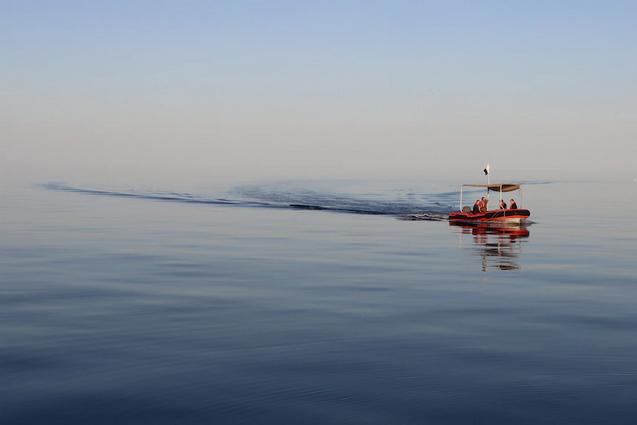
Researchers have observed promising signs of new life on Scott Reef, five years after the global mass bleaching event of 2016. (Supplied: AIMS Shannon Duffy)

Key Points
  • Scientists say Scott Reef is slowly recovering after the 2016 mass bleaching event
  • They have concerns about frequent heatwaves impeding the overall recovery of the reef
  • The findings reflect a pattern around the country
A research trip to Australia's largest oceanic reef system has shown promising signs of new life, following the 2016 mass bleaching event, which impacted coral reefs all over the globe.

But unlike mass bleaching events of the past, scientists are concerned Scott Reef is facing a barrier to its recovery.

Coral ecology research scientist James Gilmour, from the Australian Institute of Marine Science, said repeated, smaller marine heatwaves since the 2016 event were compounding bleaching impacts.
"Unfortunately since 2016 we've seen additional heat stress in 2017, 2019 and 2020," he said.
"We're getting this recurrent heating and stress to the reefs which obviously are going to impede its recovery.

"We see this overlying resilience, but the effects of ongoing heat stress impeding that."

Scott Reef is located in the Timor Sea and consists of three separate reef structures. (Supplied: AIMS Luke Thomas)

Located 200 kilometres to the north-west of Broome, the three reefs are incredibly isolated, a trait Dr Gilmour said made them a good case study in pinpointing the impacts of climate change on Australian reefs.

"Because of its isolation, it doesn't have these additional pressures, such as fishing pressure or the pollution pressure that you see on other reefs that can confound our inferences about what is happening from climate change and coral bleaching," he said.

Case study for climate change impacts

The observations at Scott Reef reflect a dire pattern emerging not only in Australia but around the world.

A major global analysis of coral reefs, released in October, found about 14 per cent of the world's coral, the equivalent of more than all living coral in Australia, had been lost in less than a decade.

It found the main cause of the decline was "recurring large scale coral bleaching events" that were "preventing coral from recovering".

But the analysis also found there was hope, with some corals showing strong, and at times surprising resistance to ongoing heat stress.

Dr James Gilmour said some corals were showing impressive signs of recovery, despite recurring heat stress. (Supplied: AIMS)

University of Western Australia and AIMS research associate Luke Thomas said this was observed on Scott Reef too.
"Considering this reef has gone through three serious bleaching events in the last 20 years, it's just been hammered and hammered over and over... the fact that there's any coral left is a remarkable story and a testament of the system," he said.
Making the most of heat-tolerant corals

Dr Thomas said researchers were trying to utilise this surprising resilience.

"One way is if we know this pocket of reef houses heat resistance corals, let's protect them, let's avoid anchor damage or overfishing," he said.

He said a second way was to breed tolerant coral populations for restoration.

"So if we want to restore a degraded section of reef, we don't want to just replace those corals with ones that will bleach and die the next heatwave," he said.

"We want to replace them with much more fit, tougher individuals.

"So we can target this pocket of heat resistance corals as a broodstock, or a supply for those reefs."

Scientists conducted heat tolerance research while at the Scott Reefs. (Supplied: AIMS Luke Thomas)

The science and restoration work on Scott Reef is similar to that happening on the Great Barrier Reef, with the government kicking in half a billion dollars in 2018 to help deal with the problems facing the Great Barrier Reef.

Glasgow climate talks 'discouraging'

The management and restoration work of corals is crucial to saving reef systems in the future, researchers say, but it comes second to the need to cut down carbon emissions.

James Cook University marine biologist Jodie Rummer said Australia left "a lot to be answered for" after the COP26 conference in Glasgow.

"There was a clear message over the past five years of what increased emissions and climate change have been doing to Australia, let alone the entire world, and we weren't able to stand up to do anything about it."

Marine Biologist Dr Jodie Rummer said the recent climate conference in Glasgow left a lot to be answered for in terms of cutting Australia's carbon emissions. (ABC: Travis Mead)

Dr Rummer said the federal government priorities were wrong.

"Clean economic recovery is win win for Australia," she said.

"This is what needs to be the priority for Australia but for some reason Australia is still prioritising coal, gas and oil exploration.

"This goes in complete conflict with Australia's national priority of protecting people, our ecosystems and natural spaces."

Links

05/12/2021

(AU AFR) Australia Tops Climate Litigation List

AFR - Michael Pelly


Australia has more climate change litigation per capita than any other nation and 2021 has been a breakout year for cases based on human rights concerns, according to an NSW Law Society study.

The society, the professional body for more than 30,000 solicitors, notes in a new briefing paper that Australia is second only to the United States for the number of climate change cases since 1993. At 121 cases, its total is five times that of Canada.

“Significant shift”: NSW Law Society president Juliana Warner
When the statistics – taken from the Climate Change Laws of the World database run by the UK-based Grantham Institute on October 30 – are adjusted for population, Australia is ahead of New Zealand and the US.

The society noted Australia has 121 climate cases (4.7 per million), Britain 77 (1.15 per million), European Union 56 (0.12), Canada 25 (0.65 per million) and New Zealand 25 (4.1). The latest figure for the US is 1343 cases (4.1 per million).

Climate change cases are defined as those that “raise material issues of law or fact relating to climate change mitigation, adaptation, or the science of climate change ... before a range of administrative, judicial, and other adjudicatory bodies”.

The paper cites comments by King & Wood Mallesons partner Daisy Mallett that Australia is a “particularly fertile testing ground for public interest litigation on climate change, given its sophisticated and independent legal institutions, a government policy supporting heavy industry, and the severe climate change impacts in the region”.

The first climate case was Greenpeace v Redbank Power in 1994, when the NSW Land and Environment Court ruled a new power station in the Hunter Valley could proceed, subject to several mitigation conditions.

Broader focus

The paper says cases “now often have a broader focus on holding companies and governments to account for their actions, or inactions, related to climate change”.

It predicts greenwashing claims – against those that trumpet eco-friendly credentials – “are likely to continue in coming years and focus on individual directors as well as corporate entities”.

New ground was broken in 2021, when 25 landholders and conservationists
known as The Bimblebox Alliance cited human rights law as they challenged an application by Clive Palmer’s Waratah Coal to develop a thermal coal mine in the Galilee Basin.

Waratah objected but the Land Court of Queensland said it did have jurisdiction because of the state’s Human Rights Act. There will be a hearing in February.

‘Rights turn’

The paper said the case was part of a “rights turn” in which litigants in Australia, Europe, the Philippines, South Africa, Pakistan and the Netherlands are arguing that climate change is a threat to human rights such as the right to life, health and a healthy environment.

The paper noted a crucial hurdle for litigants - “there is no freestanding right to a clean and healthy environment under core international human rights instruments, although over 100 national constitutions do now include such a right”.

Federal Court judge Mordy Bromberg also ruled in July that Minister for the Environment Sussan Ley had a duty to take reasonable care to protect children from the effects of climate change. An appeal has been heard.

NSW Law Society president Juliana Warner said climate change was “already having a significant impact on the economy, businesses, investor groups and the community”.

“Over the course of this year, there has been a really significant shift in the community about climate change and the urgent action which must be taken.”

Links

(AU Climate Council) Carbon Emissions Creep Down In Australia As Global Warming Accelerates

Climate Council


THE RACE IS ON to respond to accelerating climate change with rapid and deep cuts to greenhouse gas emissions this decade, but the latest federal government data shows Australia’s pollution is only creeping down.

Analysis by the Climate Council shows that Australia should be cutting its emissions 21 times faster than we are to play our part in avoiding catastrophic climate change, and that

  • Year on year, emissions were down (by 2.1 percent), with COVID-19 lockdowns and interstate travel restrictions a large reason for this.
  • States, territories and households solar installations are driving down emissions in the electricity sector (by 4.5 percent since the previous year) in spite of little or no support from the federal government.
  • Since this federal government came to power in 2013, emissions other than land clearing have fallen by a paltry 2.4 percent – or one third of a percent per year – with a sizable share of this due to the global pandemic.

Climate Council Senior Researcher Tim Baxter: “Today’s quarterly emissions data reveals that our sluggish and inadequate national response continues. We know from painful, recent experience throughout the COVID-19 pandemic, that delaying a response or being slow to act carries serious consequences. We can’t afford to go slow on this.”

“The time for leaning on the achievements of others is long since past. We need a federal government willing to step up on emissions reductions and take charge with real policy, not wish lists,” he said.

The current La Niña is driving storms, extreme rainfall and flooding in parts of the country – a stark contrast to the Black Summer bushfires that scorched Australia in 2019/2020 – but nonetheless amplified by accelerating climate change.

“There is no hiding the fact that the federal government will make this problem worse via its dangerous National Gas Infrastructure Plan. Expanding and opening up new massive fossil fuel basins will only see Australia’s emissions increase at a time when the rest of the world is shifting away from coal, oil and gas,” said Mr Baxter.

“Following the pathway that underpins the federal government’s new gas plan will put us on track for a world that is a catastrophic 3.5 degrees hotter. This is an unthinkable future,” he said.

The Climate Council recommends Australia aims for a 75 per cent cut in greenhouse gas emissions below 2005 levels by 2030. This would equate to emissions cuts occurring 21 times faster than what the federal government is doing.

“Addressing the climate crisis is a race. Communities across Australia recognise it’s a race because they’re dealing with worsening extreme weather, like the Black Summer bushfires. Businesses recognise it’s a race because there are economic consequences in acting slowly, but many opportunities to cash in on if we do step up. Countries all over the world are racing towards net zero, but Australia’s response remains woefully inadequate. That should be of huge concern to every Australian,” said Mr Baxter.

All countries that recently signed up to the Glasgow Climate Pact but are yet to increase the ambition of their 2030 targets – including Australia – are required to do so by November at the latest.

Links

(AU The Guardian) Labor’s Climate Plan Can’t Fix 12 Years Of Broken Politics – But It Could Be The Catalyst Australia Needs

The Guardian - Adam Morton, Climate and Environment Editor

With parts of the business community ready to move on emissions, the opposition’s modest goal could be easily met – or surpassed

Anthony Albanese says the Labor party’s climate policy will create jobs and cut power bills, while boosting renewable energy. Photograph: Dean Lewins/AAP

Labor’s new climate policy, released on Friday afternoon at the very end of the parliamentary year, is impossible to assess without holding it up against 12-plus years of broken Australian climate politics – but let’s give it a try.

Yes, Labor has lost a string of elections at which it promised to do more than the Coalition on climate and was rewarded with lies and misinformation. Attention will probably quickly turn to whether the opposition’s plan for 2022 is electorally viable. Fair enough.

But we should start at first principles: is the policy – called Powering Australia – up to the task of addressing the climate crisis? And could it set up Australia to thrive in a future that no longer relies on fossil fuels?

At first blush, the short answers are (1) no, not on this alone and (2) possibly.

Anthony Albanese’s plan is aimed at hitting a 2030 emissions target while expanding industries that could ultimately deliver net zero emissions by 2050. Unlike the Coalition, it does not pretend to map a path to hitting that goal mid-century.

The headline emissions goal – a 43% cut by 2030 compared with the 2005 levels – will be described by some as a stretch, and was quickly attacked by Scott Morrison as bad news for coal regions and manufacturing. But the plan tells a different story.

In reality, it’s a modest goal when measured against what would happen anyway, while still being more ambitious than the Coalition’s “technology will save us” approach. Which, of course, is the point.

It falls well short of what scientists have found Australia should be doing if the world is to limit global heating to 2C above pre-industrial levels, let alone the 1.5C goal backed by more than 190 countries in the recent Glasgow climate pact.

Several studies have suggested Australia should be making at least a 50% reduction this decade, and almost certainly substantially more, to play its part in tackling the crisis.

ClimateWorks Australia found rapid, deep cuts can be achieved using technology that is mature and available.

This is now widely accepted in significant parts of the business community. Bizarrely, given the long history of industry running scare campaigns against climate policies, the country’s major business groups now want governments to make deeper cuts in emissions than either major party proposes.

Albanese and his climate change spokesperson, Chris Bowen, emphasised their plan was built on official government projections that the country will make at least a 30% cut even without introducing any new policies. Separate assessments have found state government action – particularly in the biggest states, New South Wales and Victoria – are likely to lift that to somewhere in the mid-to-high 30s if delivered as promised.

It tells us that, even before we get into the details, Labor’s goal is more than achievable, and should be seen as a floor to what’s possible.

Albanese’s central claim is that the policy will create jobs – it estimates 64,000 direct and 540,000 indirect – and cut power bills while boosting renewable energy.

The central driver is a previously announced off-budget $20bn “re-wiring the nation corporation” charged with upgrading the electricity grid. Bringing forward planned new transmission links is meant to allow a faster influx of large-scale solar, wind and batteries in regional renewable energy zones. It is also committing $300m to developing community batteries and shared “solar banks” for households and businesses who can not put panels on their roofs.


Anthony Albanese announces Labor's 2030 emissions target. 1min 46sec

The energy and climate firm RepuTex, which modelled Labor’s policy, estimates it will lead to renewable energy providing 82% of electricity by 2030, up from 68% on the current trajectory. The rise in cheap clean energy is forecast to, on average, cut power bills by $275 by 2025.

Implausibly, Labor’s plan claims the accelerated rollout of renewable energy will not lead to the early closure of ageing coal-fired power plants, despite experts having already forecast that some could shut earlier than scheduled. The idea that coal power and its jobs will continue when its electricity is no longer needed is remarkably hard to shake in Canberra, if not elsewhere.

The biggest new element on Friday – or revamped old element, given it was part of Labor’s abandoned 2019 policy – is that Albanese and Bowen plan to use the Coalition’s safeguard mechanism to cut emissions at big industrial sites.

The safeguard mechanism was introduced under Tony Abbott with a promise it would put a limit on industrial emissions. In practice, it has failed – companies have consistently been allowed to increase their carbon pollution without penalty, and industrial emissions are up 17% since 2005 and 7% since the safeguard began in 2016. Both industry representatives and climate activists believe it has made the scheme a waste of time.

Greg Hunt, the scheme’s architect when environment minister, planned for emissions limits under the safeguard to eventually tighten, but the Coalition ultimately rejected forcing companies to take action. Labor is now promising to do what Hunt always intended by working with business to cut industrial greenhouse gases by 5m tonnes – about 1% of Australia’s total emissions – a year from 2023.

Combined with direct funding from business from a new $15bn national reconstruction fund, which would provide low-cost financing to industry to embrace clean solutions, the modelling suggests this will cut emissions by up to 48m tonnes a year by 2030.

Bowen said on Friday he expected about 50% of the cuts through the safeguard to come through use of improved technology, the rest from companies paying for carbon offsets.

Labor has some political cover here. It is not only using an existing Coalition policy, but has adopted a model released by the Business Council of Australia in October. The government was quick to attack it anyway, describing it as a “sneaky new carbon tax”.

Albanese is promising much less in the short-term to cut emissions from transport, which was a major area of growth in carbon pollution growth before the Covid-19 lockdowns.

He has dropped Labor’s 2019 commitment of a vehicle emissions standard requiring average tailpipe emissions to be cut over time.

 It is further evidence that Morrison’s false claim before the last election that the ALP planned to “end the weekend” by forcing people to drive EVs continues to have an impact.

Instead, Labor is focusing on tax breaks for low-emissions cars. Along with the rollout of charging infrastructure, the modelling suggests this will help lead to 89% of new car sales and 15% of all vehicles being EVs by 2030.

These policies add up to a promise of a smaller cut in emissions by 2030 than Labor was promising under Bill Shorten less than three years ago, when its target was a 45% reduction.

From one perspective, this is remarkable, given the global urgency for action has only increased in the past two years. From another, Labor has made a more ambitious emissions pledge than many expected, given the internal concern about another News Corp-backed scare campaign.

Asked on Friday for his response to those who say his policy falls short of what climate science demands, Albanese argued the new target was roughly the same as Canada’s – another fossil fuel economy – and suggested the ALP had acted responsibly by first designing its policies and then paying for independent modelling to calculate what they would deliver.

Few would argue it is how you would design a climate policy if starting from scratch.

What is routinely described as the most efficient way ahead – a well-designed carbon price – remains off-the-table since the Coalition repealed a functioning scheme in 2014. And there is no commitment to cut fossil fuel subsidies or curb the government-funded expansion of the gas industry.

Perhaps the major thing in Labor’s favour if it wins next year’s election is that significant parts of the business and investment community are now ready to move in a way they haven’t been before.

People may be surprised how quickly a 43% emissions reduction target could be met, or surpassed, under a government more inclined to back that push.

Links

04/12/2021

(AU The Guardian) Anthony Albanese Commits Labor To Emissions Reduction Target Of 43% By 2030

The Guardian

In opposition leader’s most significant policy announcement to date, Albanese also pledges to boost renewables share of grid to 82%


Anthony Albanese announces Labor's 2030 emissions target. 1min 46sec

Anthony Albanese will set an emissions reduction target of 43% by 2030 and boost the share of renewables in the national electricity market to 82% if Labor wins the coming federal election.

The ALP leader has unveiled Labor’s most electorally risky policy commitment since the 2019 election defeat, declaring a more ambitious target would spur $76bn in investment and reduce average annual household power bills by $275 in 2025 and $378 in 2030.

Guardian Australia revealed on Friday the shadow cabinet had signed off on a 43% target, which is lower than the 45% medium term target Labor promised at the 2019 election, but higher than the Morrison government’s Abbott-era commitment of a 26-28% cut on 2005 levels.

The primary mechanism Labor will use to reduce emissions faster than current projections will be the Coalition’s existing safeguard mechanism. Improvements to that scheme are expected to deliver emissions reductions of 213Mt by 2030.

Ahead of the Cop26 summit in Glasgow, the Business Council of Australia urged the Morrison government to overhaul the existing safeguard mechanism, including reducing baselines to drive an orderly transition to net zero by 2050.

The government rejected that proposal, but Labor has adopted it as a core component of its policy.

The safeguard mechanism currently applies to 215 of Australia’s heaviest polluters – businesses that emit more than 100,000 tonnes of carbon dioxide or equivalent greenhouse gasses.

The shadow climate change minister, Chris Bowen, said Labor would overhaul the scheme but not extend coverage to new entities – and businesses will also be permitted to use offsets to achieve their emissions reductions.

Bowen said Labor would not subject any Australian trade-exposed business to any more onerous climate regulation than their international competitors.

In electricity, Labor will significantly upgrade transmission infrastructure to hasten the transition to renewables, invest in solar banks and install 400 community batteries.

These measures are projected to see renewables make up 82% of power generation in Australia’s national electricity market by 2030, instead of 68% under current projections.

Albanese has dumped a 2019 pledge to introduce more efficient fuel standards to reduce transport emissions – a policy the Coalition falsely badged as a “war on the weekend”.

But Labor will remove import tariffs and the fringe benefits tax from electric cars below the luxury car tax threshold to drive consumer take-up of electric vehicles, and will develop a more comprehensive EV strategy if it wins in 2022.

The policy commitments were accompanied by modelling by market analysts Reputex. The analysis says Labor’s transition plan will generate 604,000 direct and indirect jobs compared to a business-as-usual scenario, include $24bn in new public investment, and drive 440Mt of emissions reductions between 2023 and 2030.

The Morrison government limbered up for another scare campaign on the higher 2030 target before the policy was unveiled.

Scott Morrison – who attempted unsuccessfully to boost his own 2030 target before being thwarted by the National party – declared on Friday that Labor’s 43% target was not a “safe” transition for workers in the Hunter Valley, or in the Queensland regional city of Gladstone, or for manufacturing jobs.

While the major parties now agree Australia should reach net zero emissions by 2050, and current emissions projections indicate Australia will cut emissions by 35% by 2030, the Coalition will continue to use Labor’s higher medium-term ambition as a political weapon in seats in Queensland and regional New South Wales.

Bowen told reporters in Canberra on Friday he expected the Coalition to lie about Labor’s policy.

“These guys are liars, and they will continue to lie,” he said.

“We are up for a good strong debate about Australia’s future”.

Albanese said the pre-emptive strike showed the prime minister will just “attack anything”. He said it suggested the government was “out of puff”.

“We see a government that doesn’t have a plan for today, let alone any concept of a vision for tomorrow,” the Labor leader said.

Labor’s policy was largely welcomed by stakeholders. The Business Council of Australia said it was “sensible and workable”. The Australian Chamber of Commerce and Industry said it was “encouraging to see updated 2030 targets that push the frame towards more ambitious action on climate change”.

The Climate Council welcomed the target but urged Labor to strengthen ambition.

“Right now, our country is the worst-performing of all developed countries when it comes to cutting greenhouse gas emissions and moving beyond fossil fuels like coal, oil and gas,” said Climate Council chief executive Amanda McKenzie.

“Labor’s plan is a major improvement, but it will need to be strengthened significantly to genuinely tackle climate change,” she said.

That sentiment was echoed by progressive think tank the Australia Institute. “An increased 2030 target is a good first step, however, the world has moved beyond first steps,” said Richie Merzian, climate and energy program director at the Australia Institute.

“Australia needs a long-term plan to end fossil fuels.”

A number of countries increased the ambition of their 2030 targets in the lead up to Cop26. Australia was the only developed country not to adjust its 2030 commitment ahead of the Glasgow conference.

Labor’s pre-election commitment compares with 40% in South Korea, 40-45% in Canada, 50-52% in the United States, and 46-50% in Japan.

Links

(Vox) Venus Could Have Been A Paradise But Turned Into A Hellscape. Earthlings, Pay Attention.

Vox

900 degrees Fahrenheit, crushing pressure, and acid clouds. Venus, what the hell happened?

Courtesy of NASA/JPL

“Hellscape” is the most appropriate word to describe the surface of Venus, the second planet from the sun. At 900 degrees Fahrenheit, it’s the hottest planet in the solar system, thanks to an atmosphere that’s almost entirely made up of carbon dioxide.

Clouds made of highly corrosive sulfuric acid are draped over a volcanic landscape of razor-sharp lava flows. Most crushingly, the pressure on the surface of Venus is about 92 times the pressure you’d feel at sea level on Earth.


 “It’s really almost entertainingly, comically horrible, like some sort of cosmic deity had a really, really grumpy day and just went ‘Nope, I’m gonna ruin this planet,’” Robin George Andrews, a science journalist and volcanologist, says.

Andrews compares it to being in a pressure cooker a mile underwater. “If you stood on the surface, you would be pancaked and you would melt,” he says. Your eyes would explode due to the pressure — “which would be gross,” he adds.

Yet as Andrews relays in his new book, Super Volcanoes: What They Reveal about Earth and the Worlds Beyond, some scientists suspect Venus was once much like Earth, with a liquid water ocean like the ones that support life on our planet.

For Andrews, the question of what happened to ruin Venus is captivating and even existential.

“Venus and Earth are planetary siblings,” he says. “They were made at the same time and made of the same stuff, yet Venus is apocalyptic and awful in every possible way. Earth is a paradise. So why do we have a paradise next to a paradise lost?”

Scientists know something on Venus triggered truly catastrophic levels of climate change, causing surface temperatures to shoot up hundreds of degrees. But they don’t know exactly what.

I spoke to Andrews for an episode of Unexplainable, Vox’s science podcast about unanswered questions, about what could have triggered Venus’s apocalypse and why we should care about it.

Our conversation has been edited for length and clarity.

The podcast episode also features a discussion with Sara Seager, an MIT planetary scientist and an expert on exoplanets, or planets outside our solar system, who raises the tantalizing question: What if, despite the cataclysm, something is still alive on Venus?

The origins of Venus could tell us a lot about our place in the universe

On the left, Venus as it is today. On the right, an artist’s interpretation of where oceans could have lain on the surface in the past. NASA/Jet Propulsion Laboratory-Caltech (left) and NASA (right)

Brian Resnick: You say the question of “what killed Venus” is existential. What makes it so?

Robin George Andrews:
It really is a question about why are we here. Answering it will help us answer the question: How lonely are we? Are there other Venuses or Earths out there?

If Earth is the odd one out, how lucky are we to exist? If Venus is the odd one out, then maybe we’re not so special after all.

Brian Resnick: So Earth and Venus started off as similar planets, and then went down different paths. You want to know what path is more common out there in the cosmos?

Robin George Andrews: When you hear in the news that scientists have discovered an Earth-like exoplanet, they might as well be saying, we found a Venus-like exoplanet. We don’t know if this is like a habitable world by our human, surface-dwelling standards, or if it’s gone through this sort of apocalyptic climate change like Venus.

A good way to work out what may be more common in the cosmos is to study Earth and Venus, because they are siblings.
We don’t know how often it is that volcanoes decide to trash the planets they’re on
Brian Resnick: How do scientists know, or suspect, Venus used to be more pleasant, habitable even?

Robin George Andrews:
So even though Venus today looks and is apocalyptic in every meaning of the word, probes have looked at its atmosphere and found there’s a lot of “heavy water” in the atmosphere. Heavy water is exactly what it sounds like.

The water we’re used to, this classic H2O, which is found commonly everywhere on Earth, is a more common type of water throughout the cosmos. Heavy water just kind of switches out that hydrogen for something called deuterium, which is like a heavier version of hydrogen.


Brian Resnick: What does finding heavy water mean?

Robin George Andrews: If you measure how much heavy water exists somewhere, you can make a reasonable guess as to how much classic water there is or was on that planet. It suggests that there once was a lot of classic water on Venus, at least an ocean’s worth of water on Venus.

If that water existed in liquid form, what are the odds that Venus was habitable at some point? It’s not unlikely, even though today it looks impossible.


Brian Resnick: How long ago must this have been, this habitable Venus?


Robin George Andrews: I think there is a possibility that water was always steam, and it might have never been liquid water. But if it was, then it could have been habitable for billions of years. Maybe right up until the last billion years.

Brian Resnick: So that’s what we’re talking about when we say Venus used to be “alive.” What do we mean by “killed”?

Robin George Andrews: Death, in this case, is runaway climate change. Absolutely irreversible, world-ending climate change. The average temperature of the planet shot up by something like several hundred degrees Fahrenheit. It really sort of cooked itself to death.

Suspect No. 1 for the death of Venus: The sun

Plasma spewing out of the surface of the sun. NASA/Solar Dynamics Observatory

Brian Resnick: So the question, I imagine, is how Venus cooked itself.

Robin George Andrews: There’s kind of two leading theories as to what killed Venus. Option No. 1 is the sun. From what we know of our sun and other stars, when they’re kind of in their teenage years, they get hyper-excitable, and they get hotter and brighter quite quickly.

If the sun actually gets brighter and hotter too quickly, even though you might have that water sitting on the surface, the sun can boil it off. And that is a fate that lots of exoplanets, or planets outside our galaxy, are presumed to have gone through.

Brian Resnick: And once Venus’s water gets vaporized...


Robin George Andrews: That steam is a greenhouse gas that would have kicked up the greenhouse gas effect. And then the carbon dioxide coming out of Venus’s embryonic volcanoes would have just sealed the deal. That could explain why we see Venus as it is today.

Brian Resnick: If this young, very excitable sun is what killed Venus, the Earth would have been fine, right?

Robin George Andrews: Yeah, the Earth would have been fine. It seems that Earth was spared the worst of it.

Suspect No. 2 for the death of Venus: Tectonic plate-breaking volcanoes

An artist’s depiction of a volcanically active Venus. NASA/JPL-Caltech/Peter Rubin

Brian Resnick: So that’s one suspect in our whodunit. What is the other suspect?

Robin George Andrews: The other suspect just happens to be my favorite thing: volcanoes.

Brian Resnick: How could your fave, volcanoes, kill a planet?

Robin George Andrews: Two hundred and fifty-two million years ago, Earth experienced its worst mass extinction, something called the Great Dying. At least 90 percent of all life was wiped out, and the primary suspects were these volcanic fissures that opened up in Siberia. It produced a continent-sized flood of lava that took about 2 million years to erupt.

So it causes giant explosions and also unleashed all these greenhouse gases into the atmosphere, and it created a global warming effect that raised the temperature by a dozen degrees [Celsius]. That caused 90 percent of all the life on Earth to die. Earth had to kind of reset itself. And the idea is, well, what if that happened on Venus, but worse?

Brian Resnick: That could kill the planet?

Robin George Andrews: If you just have one [Great Dying-scale] eruption, it might be okay, because Venus had plate tectonics. Plate tectonics is essentially a planet’s thermostat.

Brian Resnick: Plate tectonics — that’s how continents kind of float around and smoosh into each other. How do those act like a thermostat?

Robin George Andrews: Carbon dioxide can get soaked up in the ocean, and that filters down to these tectonic plates. If tectonic plates dive down beneath each other, then you’re burying carbon [and slowing the greenhouse effect].

Brian Resnick: Okay, but how do you break this carbon-burying system?

Robin George Andrews: You have two of these epic, Great Dying-like eruptions at the same time.

That will immediately trigger quite an intense period of global warming. And the oceans will just start to boil off.

Now, plate tectonics could bury carbon for a while. But if you boil off your oceans, that carbon dioxide has nothing to dissolve into. And if you get rid of that water, plate tectonics itself shuts down.

If you dehydrate [tectonic plates], you make them brittle — they can’t bury the carbon anymore. That’s essentially game over. If you break plate tectonics you’ve broken the world.

The scientific jury is still out

Venus’s clouds captured in infared. JAXA/ISAS/DARTS/Damia Bouic

Brian Resnick: So we have our two suspects here. We have the sun and we have massive eruptions on Venus that broke Venus. Which one should we sentence here?

Robin George Andrews: The volcanoes seem more likely because we can see how that’s happened on Earth — just to a slightly lesser extent. But if this was put into a court of law, they would both be presumed not guilty, just because there isn’t a telltale bit of evidence yet.

Brian Resnick: So how do we solve this mystery?

Robin George Andrews: There’s basically a fleet of missions that is going to unravel the geologic makeup of Venus today. If it looks bone-dry and it was always bone-dry, then maybe the sun did it, because it’s been dehydrated for a long time.

But if it looks like there’s still some dehydration going on, that means you still have water somewhere. If Venus was still kind of soggy on the inside, and it’s still kind of belching water out, the volcanoes probably killed Venus.

Brian Resnick: Could the Earth pull a Venus one day?

Robin George Andrews: [Laughs.] Yeah, it could. Let’s not panic — I mean, these sorts of eruptions are like millions of years in timescales. So it’s not like no one would see this coming and we’d instantly be doomed. But it could happen. And the question is: Is it normal for a planet to have just one of these really epic, game-changer eruptions at one time? Or is it just a fluke?

The fact that no one knows the answer to this is weirdly, perversely exciting to me. We don’t know how often it is that volcanoes decide to trash the planets they’re on.

Brian Resnick: People sometimes bring up Venus in the context of climate change. It’s an example of how bad a planet can become when greenhouse gases start to accumulate in an atmosphere. Could we humans potentially be the volcano?

Robin George Andrews: The pace at which we’re putting carbon dioxide into the sky is worse than what was happening during the Great Dying, in terms of the amount of carbon per year.

Brian Resnick: But we would need to keep this up for millions of years to match, right?

Robin George Andrews: Right.

Brian Resnick: This is weirdly reassuring that humans are unlikely to break the Earth completely.

Robin George Andrews: Yeah. I think it would be a terrible idea to pay homage to what happened to Venus.

Links

(The Conversation) The Average Person’s Daily Choices Can Still Make A Big Difference In Fighting Climate Change – And Getting Governments And Utilities To Tackle It, Too

The Conversation

Reducing household energy use can contribute to slowing climate change. Westend61 via Getty Images

Author
 is Assistant Professor of Geography and Environmental Studies, Texas State University     
The average American’s everyday interactions with energy sources are limited. They range from turning appliances on or off, to commuting, to paying utility bills.

The connections between those acts and rising global temperatures may seem distant.

However, individuals hold many keys to unlocking solutions to climate change – the biggest challenge our species currently faces – which is perhaps why the fossil fuel industry spent decades misleading and misinforming the public about it.

I’m an assistant professor of geography and environmental studies at Texas State University. My research explores how geography affects the complex relationships between societies, energy and contemporary environmental challenges. I’ve found that the human element is critical for developing creative, effective and sustainable solutions to climate challenges.

There’s a large and growing body of evidence showing that individuals can have a major impact on climate change in a number of ways. Citizen action can compel utilities to increase renewable energy and governments to enact strong climate action laws. When enough individuals make changes that lower daily household energy consumption, huge emissions reductions can result. Consumer demand can compel businesses to pursue climate and environmental sustainability.

These actions combined could bridge the “emissions gap”: the significant difference between the greenhouse gas emissions expected globally and how much they need to drop in the next few decades to avoid catastrophic climate change.

Climate change is outracing government action

People have worked for decades to slow climate change by altering national energy policies. Several states, for example, have renewable portfolio standards for utilities that require them to increase their use of renewable energy.

But 30 years of evidence from international climate talks suggests that even when nations commit on paper to reducing emissions, they seldom achieve those cuts. The United Nations climate summit in Glasgow is the latest example. Researchers have found that many countries’ pledges have been developed using flawed data.

People are also increasingly talking about geoengineering solutions for climate change. The idea is that over the coming decades, researchers will find ways to manipulate the environment to absorb more carbon pollution. However, some experts argue that geoengineering could be environmentally catastrophic. Also, there’s significant doubt that technological “draw down” interventions can be perfected and scaled up soon enough to make a difference.

So if government, technology or geoengineering aren’t good answers, what are?

Citizen action

Pledges, goals and targets for shifting from fossil fuels to cleaner energy sources are only as good as the efforts by utilities and governments to reach them. Citizen participation and action have proved effective at compelling decision-makers to act. For example, scholars studying the economic, political and social dynamics that led five U.S. municipalities to adopt 100% renewable energy found that grassroots citizen advocacy was one of the key factors that drove the change.

According to the Sierra Club, through citizen-driven action, over 180 cities, more than 10 counties and eight U.S. states have made commitments to transitioning to 100% renewable energy. Consequently, over 100 million U.S residents already live in a community with a 100% renewable energy target. Citizens have also been taking collective action at the ballot box. For example, in 2019, after New York City voters elected a more climate conscious City Council, the city enacted an ambitious emissions reduction law, and has since begun to enforce it.

Also in 2019, after voters similarly shook up the state legislature, New York state enacted the Climate Leadership and Community Protection Act. Among the nation’s strongest climate change laws, New York’s measure mandates that the state shift to 100% renewable energy by 2040 and that its emissions from all sources drop 40% by 2040 and 85% by 2050.

Consumer demand

How and where people spend their money can also influence corporate behavior. Companies and utilities are changing their products and production practices as consumers increasingly demand that they produce ecologically sustainable products and lower their carbon footprints.

Scholars have documented that consumer boycotts negatively affect the wealth of a corporation’s shareholders – which in turn can create pressure for a firm to change in response.

The Natural Resources Defense Council has reported that thanks to surging consumer awareness and demand, more than 565 companies have publicly pledged to slash their carbon emissions. Some of the world’s biggest brands have responded to this pressure with claims of already being powered by 100% renewable energy, including Google and Apple.

Google put its global economic might behind climate solutions when it announced in 2019 that it would support the growth of renewable energy resources by making solar and wind energy deals worth US$2 billion.

One drawback to consumer demand-driven action is that it’s often unclear how to hold these firms accountable for their promises. Recently, two impact investing experts suggested in Vox that since around 137 million Americans own stock in publicly traded companies, they could use their collective power as shareholders to make sure companies follow through.

Shifting household energy behavior

A substantial body of research shows that small changes to everyday behaviors can significantly reduce energy demand. This may be the biggest way individuals and families can contribute to lowering fossil fuel consumption and reducing carbon emissions.

These steps include weatherization and using energy-efficient appliances, as well as energy efficiency measures such as turning down thermostats, washing laundry with cold water and air-drying it rather than using a dryer.

So is shifting transportation behavior. Using public transportation, car pooling, riding a bicycle or walking can significantly reduce individual and cumulative emissions.

Choosing to ride a bicycle, walk or take public transit rather than drive can significantly lower a person’s greenhouse gas emissions. Sean Gallup/Getty Images

So since most governments aren’t acting quickly enough, and many technology and geoengineering solutions are still unproven or come with high risks, emission reduction goals won’t be achieved without incorporating additional strategies.

The evidence is clear that these strategies should include millions of average people factoring climate change into their everyday activities regarding their communities, purchases and personal energy use.

As the environmentalist Bill McKibben wrote in 2006 about dealing with climate change, “There are no silver bullets, only silver buckshot.”

Links

Lethal Heating is a citizens' initiative