18/12/2021

(AU APS) Public Understandings Of Climate Change

Australian Psychological Society

Psychological research on risk perception explores how people perceive, appraise and understand environmental problems and how concerned people are (or not), and how motivated they are (or not) to take action. This is what we refer to as the ‘public’s understanding of climate change’.


The more we know about how people are feeling, thinking and doing in relation to climate change, then the more we are able to help them respond in useful ways – in ways that both reduce the threats of climate change as well as prepare people to adapt to the changes that cannot be avoided.

Key Points
  • How people make sense of facts does not simply follow from rational interpretations of scientific evidence, and there are number of psychological ways we try to manage a sense of risk.

  • Humans are prone to exaggerate some risks and minimise others. We tend to exaggerate risks that are spectacular, beyond personal control, much discussed, highly visible, or that affect them personally, and are imposed by a clear enemy.

  • We tend to downplay risks that are common, familiar, invisible, long-term, gradual, natural, affect others not self, and lack any clear ‘bad guy’. Unfortunately, climate change is often described in these terms:

    • It is caused by commonplace, natural, invisible gases (although excessive amounts of these are emitted by human behaviour, which is the major problem).
    • It is seen as slow moving (although many would actually argue that it is taking place at breakneck speed).
    • It is often described in abstract, scientific terms, which makes it harder for people to engage with.

  • Climate change can often seem distant in space. Most people tend to see the worst environmental problems as being global or far away from them. However, people’s feelings of responsibility for the environment are greatest at the neighbourhood level.

  • People can also see climate change as distant in time. The worst impacts are far off in time so it still feels distant from everyday concerns.

  • Climate change can also feel socially distant and not a problem that individuals can solve. As a global problem that requires global solutions, it is easy to think that world leaders, governments, and multinationals should solve it, not us.

  • The ways people see the risks associated with climate change are significantly influenced by their values, beliefs, worldviews and cultural identity, which gives rise to the confirmation bias. We automatically look for information that confirms what we already think, want or feel, and filter away opposing information. People who are already concerned about climate change, for example, will read more news that confirms it. People who don’t believe in it, or who are heavily invested in a world governed by fossil fuels, might prefer news that questions climate science.

  • System justification is the tendency to be resistant to changes to the ‘system’ we are familiar with, defend the status quo and to see the way things are now as right and just. People engaging in system justification are likely to selectively attend to information about climate change that does not threaten their current way of life.

  • People often experience cognitive dissonance when what they know (e.g. that burning fossil fuels contributes to climate change) conflicts with what they do (driving, flying, etc). If it’s hard to change behaviour (because your lifestyle is car dependent), then it’s often easier to change your thinking, and tell yourself things like: ‘Well, compared to China, our emissions in Australia aren’t really that big. What I do won’t make much difference.’ This is faulty thinking, because our huge per capita contributions to global greenhouse gas emissions make an enormous impact on climate change.
Links

(New Yorker) 2021 In Review: The Year In Climate

The New Yorker

A summer that really scared scientists.

Illustration by Nicholas Konrad / The New Yorker

Author
Bill McKibben is a founder of the grassroots climate campaign 350.org and a contributing writer to The New Yorker.
He writes The Climate Crisis, The New Yorker’s newsletter on the environment.
This year, a lot of the things we’ve come to expect with the climate crisis happened: there were heavy rains (New York City beat its rainfall record twice in eleven days); there was a big global conference (this one in Glasgow) with modest results; the price of renewable energy fell some more; and a record amount of solar power and wind power was produced, but not at a pace fast enough to catch up with climate change.

Raging wildfires produced plumes of smoke that spread around the world; President Joe Biden tried to free up a lot of money for climate work and, so far, Senator Joe Manchin has prevented him from doing so.

But some unexpected things happened, too—such as December tornadoes and windstorms, which have devastated parts of the country, and which are increasingly linked to warming.

The most unexpected event by far, though—the thing that was truly off the charts—came in June. Toward the end of the month, torrential rains across China created a lot of atmospheric moisture, which the jet stream sucked out over the Pacific.

Meanwhile, the remnants of a heat wave in the American Southwest moved north. The two weather events met over the Pacific Northwest and western Canada, forming a giant dome of high pressure that diverted moisture to both the north and the south. Gradually, over a period of several days, the core of the high-pressure area freed itself of clouds, allowing the sun’s rays to blast down during the days immediately after the solstice.

The result was the most remarkable heat wave in recorded history. On Sunday, June 27th, Canada broke its all-time heat record, of a hundred and thirteen degrees Fahrenheit, when the temperature reached nearly a hundred and sixteen degrees in Lytton, a community of around two hundred and fifty residents on the Fraser River, in southern British Columbia.

The next day, that record was broken, again in Lytton, when the temperature hit a hundred and eighteen degrees. On Tuesday, it was smashed again, when the temperature in the town soared to a hundred and twenty-one degrees. On Wednesday, Lytton, now parched dry, burned to the ground in a wildfire; only a few buildings were left standing.

Breaking a long-standing record is hard (Canada’s old high-temperature record dated to 1937); surpassing it by eight degrees is, in theory, statistically impossible. It was hotter in Canada that day than on any day ever recorded in Florida, or in Europe, or in South America.

“There has never been a national heat record in a country with an extensive period of record and a multitude of observation sites that was beaten by 7°F to 8°F,” the weather historian Christopher C. Burt said.

Records of almost equally incredible magnitude came in from across the region. Quillayute, Washington, broke its all-time temperature high by eleven degrees, at a hundred and ten degrees Fahrenheit, even though the town is just three miles from the Pacific. It was over a hundred and three at Fort Smith, in the Northwest Territories, beating an eighty-year-old record.

According to Maximiliano Herrera, a weather historian who maintains a Web site devoted to unprecedented temperatures, “the number of all times records beaten by more than 5C in this heat wave is greater than all cases worldwide together” in the past eighty-five years.

Jeff Masters and Bob Henson, meteorologists who blog for a Yale climate Web site, wrote, “Never in the century-plus history of world weather observation have so many all-time heat records fallen by such a large margin.”

The reason, of course, is the climate crisis: within days, researchers had demonstrated—with the modelling techniques of the new attribution science—that global warming had made such a heat wave a hundred and fifty times more likely.

Essentially, this couldn’t have happened on the Earth we used to know. James Hansen, the planet’s most important climatologist, put it this way when I talked to him last month: “We’ve been expecting extreme events. But what happened in Canada was unusually extreme.”

The reason all this is so frightening is that it suggests fundamental parts of the way that the planet works have begun to shift, allowing for physical phenomena we’ve never seen before. It suggests, that is, that the predictions provided by global-climate models—which are frightening enough—may be too optimistic.

The impossible heat in that week seems to be connected with the increasingly unstable operation of the jet stream, which in turn seems to be connected with the rapid melt of the Arctic Ocean—as the temperature difference between the equator and the pole lessens, the jet stream seems to get stuck in odd positions.

Meanwhile, a flood of freshwater from that same melting Arctic seems also to be disrupting the Gulf Stream.

A new study, which was conducted by European scientists and released a few months before the heat dome appeared, strengthened the theory that the immense ocean current—which is a hundred times the flow of the Amazon, and which, like the jet stream, distributes heat poleward—had slowed by roughly fifteen per cent since 1950. We’re breaking really big things.

Scientists have done a good job of calculating how much the world will warm as we increase the amounts of carbon dioxide and methane in the atmosphere. They’re pretty confident that, having raised the temperature more than a degree Celsius already, we’re on our way to a planet that will be, on average, three degrees warmer.

That’s if we keep on our current track; the scientists are hopeful that, if we take actions more dramatic than those promised at Glasgow, we might hold that average increase below two degrees.

But researchers are not as confident—especially since the June heat wave—that we really understand how much damage those global averages represent. Scientists are inherently conservative in their predictions.

The world is clearly more fragile than the models have led us to believe. And that’s what was terrifying about 2021.

Links

17/12/2021

(The Conversation) How Climate Change And Extreme Weather May Lead To Food Shortages And Escalating Prices

The Conversation -

The world may soon see more food shortages because of climate change, says an expert. InkDrop/Shutterstock

Author
is Professor of Resources and Environmental Policy, UCL (University College London)
In a world with an increasing human population, climate change may have a serious impact on our ability to grow enough food.

Research from as far back as 2007 found that around 30% of year-to-year fluctuations in tonnes of crops grown per hectare were due to changes in the climate.

It is remarkable under these circumstances that the global agricultural system has managed to remain fairly robust, and that major food shortages have been rare.

On the other hand, food prices in recent decades have become increasingly volatile. While there are many influences on food prices – including crop yield, weather variations, international trade, speculation in food commodity markets, and land management practices – mostly open trading systems have allowed food shortages in some places to be offset by surpluses, and increased production, elsewhere.

Now that the world seems to be moving toward more trade barriers at a time when climate change is intensifying, these stabilising effects may start to fail. Prices could rise sharply, putting pressure on poor countries and on the budgets of poor people in rich countries.

While crop growth per hectare has increased considerably over the last 50 years, recently the rate of this growth has slowed compared to previous decades.

Recent research suggests that up to 30% of the expected increase in growth of European crops has been cancelled out by adverse weather.

But it is worrying that the most pronounced changes tend to be in countries, such as those in sub-Saharan Africa, including South Africa, that are at high risk of climate impacts on food availability and affordability.

Rising temperatures

This is particularly clear in the case of barley, maize, millet, pulses, rice and wheat. It seems that the countries most at risk of food shortages are also worst affected by rising temperature.

This seems to bear out the finding from the world’s premier climate science advisers, the Intergovernmental Panel on Climate Change (IPCC), that the higher average global temperatures and more extreme weather events associated with climate change will reduce the reliability of food production. The latest IPCC report also supports these conclusions.

Another change noted by the IPCC is how rising heat and rainfall associated with climate change is increasingly degrading land, making soil less productive. This is due to the loss of soil nutrients and organic matter and has negative effects on crop yields.

In addition, accelerating rises in sea levels will compound these negative impacts by increasing saltwater intrusions and permanently flooding crop land.

Cutting the maize crop in South Africa, where climate change poses a high risk to food production. Shutterstock

Recent modelling of soil loss in wheat and maize fields shows large variations between tropical climate regions and regions with a large proportion of flat and dry land, with losses ranging from less than 1 tonne per hectare in central Asia to 100 tonnes per hectare in south-east Asia.

The strong impact of climate and topography on simulated water erosion is clearly shown in the five largest wheat and maize producing countries: in Brazil, China and India, where a large proportion of cropland is in tropical areas, water erosion is relatively high, while in Russia and the United States annual median values are much lower.

However, historically poor management of lands in Europe and the US has been largely remedied through the increased use of chemical fertilisers and irrigation, which has been able to offset a massive amount of soil degradation.

For example, one study has shown that, without fertiliser, US yields of corn over the past 100 years would have fallen from around seven to a little over one tonne per hectare, due to soil quality decreasing. However, fertiliser has enabled yields to be broadly maintained, although at an annual cost to farmers of over half a billion dollars.

Fertiliser and food

These results have worrying implications for poorer parts of the world where soil quality is decreasing, but which do not have the resources to compensate for this with fertilisers. And the results become more worrying still if this is exacerbated by climate change.

Many aspects of land management for food production have changed in recent decades, including growing different crops, or the same crops in different places, in response to increased temperatures.

The overall result of these changes has been greatly increased food yields in many parts of the world, and land managers may be expected to adapt their strategies for changes in the climate.

But if climate change results in simultaneous failure of major crops such as wheat, maize and soybeans in two or more major breadbasket regions (the areas of the world that produce most food) then the risks of price rises making food too expensive in poorer parts of the world could become acute.

Links

Did Climate Change Make That Freak Weather Even Worse?

WIRED -

When a shocking storm or heat wave happens, attribution scientists are on the case, helping to show the public the real-life effects of global warming.

Photograph: Brook Mitchell/Getty Images

In June 2003, while he was still a graduate student, Noah Diffenbaugh attended a scientific conference with his adviser in Trieste, Italy.

That month, the average daily high temperature there was 88 degrees Fahrenheit; typically, highs in Trieste at that time of year are about 10 degrees cooler.

“People were saying, ‘This is really hot. This is really not what usually happens,’” he recalls.

Diffenbaugh, now a climate scientist at Stanford University, had caught the leading edge of the 2003 heat wave—the hottest European summer since the 16th century. (That record has since been broken multiple times, most recently this past summer.)

It was hard not to link the near-unprecedented temperatures, which are thought to have killed over 70,000 people across Europe, with the inexorable creep of climate change. But back in 2003, no scientist would stand up to make that connection. “‘It’s impossible to ever attribute any particular event to global warming’—that was the predominant public stance at the time,” Diffenbaugh says.

According to Daniel Swain, a climate scientist at UCLA, there were some good reasons for this reticence. Unseasonable weather sometimes happens by chance, and scientists worried that tying weather too closely to climate would allow climate deniers to use cold weather as ammunition.

In 2015, US senator James Inhofe (R-Oklahoma) did just that when he brought a snowball onto the Senate floor in an attempt to disprove climate change.

But, Swain says, the idea that weather and climate can be separated is illusory. “Climate is nothing but weather in aggregate,” he says. The global mean temperature—which, according to the IPCC’s Sixth Assessment Report, has already risen by over 1 degree Celsius—is a convenient scientific construct.

Averaging temperature measurements over the entire world helps scientists ignore the random vicissitudes of weather when determining the overall trajectory of climate change.

But it’s not global mean temperature that kills people. People die when floods overwhelm urban infrastructure, or when unheard-of temperatures and humidities persist in specific locations for days on end. “No human, no ecosystem on Earth, will ever experience the global mean temperature,” Swain says.

So in 2004, a group of scientists led by Peter Stott at the United Kingdom’s national weather service decided to quantify the extent to which climate change had contributed to the 2003 heat wave.

“It is an ill-posed question whether the 2003 heat wave was caused, in a simple deterministic sense, by a modification of the external influences on climate,” the group wrote in their subsequent paper, “because almost any such weather event might have occurred by chance in an unmodified climate.”

Instead, they asked a different question: How much more likely had greenhouse gas emissions made the deadly heat wave?

Using climate models, the team simulated what the world would look like with and without those emissions. Essentially, they simulated weather conditions on two alternative Earths—one in which humans had pumped enormous volumes of carbon dioxide and methane into the atmosphere, and one in which they hadn’t. And in the world with these emissions—the world we live in—a record-breaking European summer heat wave was, on average, about four times as likely.

The 2004 paper was the first major example of “extreme event attribution” or “attribution science,” which has since burgeoned into an entire subfield. These studies can’t always say why climate change might make extreme events more likely—many of the equations used in climate models are complex and nonlinear, so small changes can have major effects, and it is often difficult to link the two.

But by running models numerous times—seeing how often extreme events occur first when industrial emissions are included, and then when they are removed—scientists can make overall statements about how much more likely human-caused climate change has made a specific type of weather event, even without explaining precisely how that may have happened.

“We know very well how much greenhouse gas has been put into the atmosphere since the beginning of the Industrial Revolution,” says Friederike Otto, a climate scientist at Imperial College London and co-leader of World Weather Attribution (WWA), which she founded in 2014 with Geert Jan van Oldenborgh, a climate scientist who passed away earlier this year. “We can take it out of the atmospheres of climate models, and so simulate a world that might have been without climate change.”

Today, the results of attribution studies regularly make headlines, such as when scientists at WWA, who work to get their conclusions out in the immediate aftermath of an extreme event, reported that the 2021 Pacific Northwest heat wave would have been nearly impossible without the influence of climate change.

Their studies have also found that climate change made a whole host of extreme events more likely—like this summer’s flooding in Germany, the devastating 2019-2020 Australian bushfires, and two separate 2019 summer heatwaves in Europe. (Some events, however, remain outside of the scope of extreme event attributions—tornados, for example, remain a “black box,” according to Swain.)

To the people who experienced these events firsthand, such conclusions can provide powerful proof of the urgency—and the catastrophic consequences—of global warming. “It’s critically important to humanizing climate change,” says Swain, who divides his time between research, including attribution studies, and climate communication via his popular Twitter feed and blog.

This intimate connection with the needs and concerns of the general public makes extreme event attribution unusual among the sciences, where public communication often takes a backseat.

“Our motivation for why we do what we do is to provide the public with the information they need to make choices for their future,” says Deepti Singh, a climate scientist at Washington State University Vancouver who studies events like extreme rain in India to understand the on-the-ground effects of climate change.

Today, attribution studies use two main sources of data: climate models, which can predict what weather might look like today had climate change never happened, and historical data, which show what the weather was actually like before it kicked into gear.

Taken together, they can help researchers quantify how often, under each condition, things like daily temperatures would exceed a particular baseline, or monthly rainfall would be below some threshold. As long as an extreme event can be characterized in terms of those kinds of constraints, it can in theory be analyzed with the techniques of extreme event attribution.

But attaining that data can present a formidable challenge: Climate models take an enormous amount of computational power to run, and they have to be fine-grained enough to represent the event that scientists are interested in.

“You don’t only need climate models that have a high enough resolution, but you also need to be able to run them many times, so that you can actually get statistics of not only average climate, but also extreme events,” says Otto. “That used to be prohibitively expensive. But now, computational power is much cheaper.”

Recently, scientists have started using data repositories to share the results of their simulations publicly, which has also made the task easier—researchers aren’t waiting days or weeks for their computers to produce results that may already have been generated in someone else’s lab.

And to make their results as reliable as possible, Otto and others try to use the predictions of many different climate models in their studies—otherwise, their results might just reflect the particularities of a single one.

But the challenges aren’t just technical—sometimes, public communication and scientific culture can be uncomfortable bedfellows. When she cofounded WWA, Otto and her colleagues encountered criticism from the scientific community because they wanted to release their results on such a quick turnaround, without engaging in the peer review process.

The group typically shares their results two weeks after an extreme event; it’s not possible to complete peer review in that time. “When we started doing this, people were saying, ‘You can’t do this. This is not how science works. This is not the scientific method,’” she says.

So WWA did what they considered the next-best thing—they outlined their study protocol in excruciating detail, from how they choose which events to study to their communication strategy, and published it in a peer-reviewed journal to show that their procedures have passed muster with members of the climate science community.

Another tricky area is what’s called “scientific conservatism” (which is not to be confused with political conservatism). Scientists don’t like to depart from established precedent unless there is compelling evidence to do so.

Experimenters usually work from a “null hypothesis,” which often takes the form of a default assumption that there’s no relationship between the things being studied (in these cases, climate change and a particular weather event). They require a high burden of proof to reject that hypothesis. Often, then, scientists will start attribution studies with the assumption that climate change didn’t play a role and look for a reason to change their minds.

Conservatism helps to make academic science slower and more deliberate—if there isn’t enough evidence to make a claim today, perhaps there will be enough a few years from now. In essence, it makes false negative results more likely and false positives less likely.

But for Swain, there are real risks to these false negatives in attribution science. “There is still some reticence to make bold claims about these things, even when I think the evidence does justify it,” he says.

A single study with a negative result, if it reaches a broad audience, could make some people less inclined to take action against global warming.

Still, attribution scientists take numerous measures to avoid overstating how important climate change was to a given event. They look at many kinds of data from multiple sources, and often use mathematical tools that are more likely to underestimate than overestimate the role of climate change.

And that’s for good reason: In a field focused on communicating with the public, trust is an invaluable currency, says Leo Barasi, an expert on public opinion and climate change who works with researchers and campaigners.

Openly communicating negative results can also highlight just how important and striking the positive results really are. “It’s really important to quite publicly, openly, and proudly talk about” negative results, Barasi says.

And while it’s difficult to know for sure how much extreme event attribution has moved the needle of public sentiment on the climate crisis, Barasi thinks it plays an important role. In 2018, people throughout the Northern Hemisphere endured extreme summer heat, and numerous studies found that climate change had made those heat waves more likely.

In Japan, those temperatures would have been almost impossible without the influence of climate change, according to one study. Simultaneously, the public discourse underwent a noticeable shift—in both the US and the UK, polls showed that concern about climate change rose in late 2018.

While this time period also coincides with the emergence of Greta Thunberg on the international stage, Barasi believes that the extreme weather likely also contributed. “That sort of firsthand experience of an extreme weather event, combined with the very widely accepted credible science around it, I think was really important,” he says.

Much of the power of extreme event attribution comes from its ability to address the firsthand experience of people suffering through specific heat waves or floods—their hyperlocality. But this also has its downsides.

Most attribution studies look at events in the Global North, says Roop Singh, a climate risk adviser for the Red Cross Red Crescent Climate Center. “Scientists have, of course, their own interests, and they’re interested in what's happening in their own backyards,” she says.

But extreme weather can have the most dire effects in precisely the areas that receive the least attention. “There are communities around the world that are more dependent directly on natural resources, they’re more exposed to weather and climate conditions,” Deepti Singh says.

These disproportionate effects have inspired Singh to undertake research focused on her home country of India, where poor, rural populations are particularly vulnerable.

Slowing climate change is important in mitigating those effects—but addressing the other factors that contribute to them, like poverty and underdevelopment, is more likely to make the crucial difference in saving lives and livelihoods.

“The fact that heat waves are so deadly, for example, is because we don’t care, as a society, about the poor people in bad housing with underlying health problems,” Otto says. “It’s not because of climate change, per se.”

These effects depend on structural issues, not to mention a host of contingent factors—a heat wave will be more deadly in a retirement community than a college town, for example. So it can be difficult to link climate change to the concrete effects that most matter to people. But scientists have started to make progress.

Recently, for example, Diffenbaugh published a study linking climate change to financial costs from reduced crop yields. Another study out this year concluded that, across the world, 37 percent of heat-related deaths can be attributed to climate change.

“Impacts happen because of the context in which a disaster happens,” Roop Singh says. “Extreme event attribution starts the conversation. But in order for us to really answer those questions, we actually need to do a lot more science.”

Links

(AU BBC) The Teenagers And The Nun Trying To Stop An Australian Coal Mine

BBC News - Kayleen Devlin

When eight teenagers and an elderly nun in Australia teamed up for a climate case, they won, in a historic judgement. Their case has now been appealed by the country's government. If the final verdict swings in their favour, it will have ramifications not just for Australian law but for climate cases world-wide.

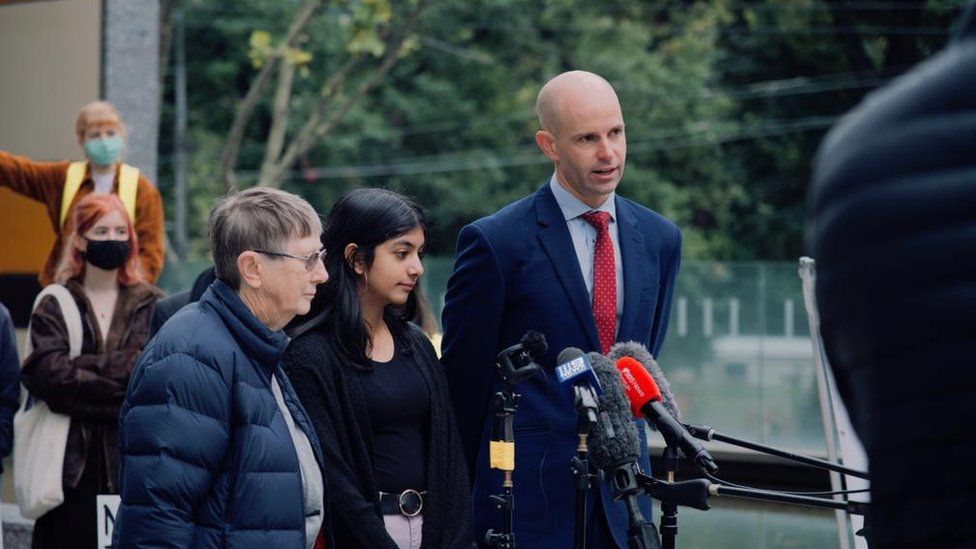
Sister Brigid Arthur and Anjali Sharma outside the federal court in Melbourne with their lawyer David Barnden
Sister Brigid Arthur and Anjali Sharma outside the federal court in Melbourne with their lawyer David Barnden. Image source, L McGregor


In May this year, Anjali Sharma was sitting in her economics class at school in Melbourne when the court in Sydney live-streamed the results of a climate case she had found herself at the centre of. It took a while to sink in.

"To me it all just sounded like jargon. It took a briefing from my legal team to understand the magnitude of what had happened," she says.

At that moment 17-year-old Ms Sharma and the seven other teenagers involved in her case had made history. Alongside 87-year-old Catholic nun Brigid Arthur, who acted as the young people's legal guardian, they'd taken Australia's environment minister, Sussan Ley, to court - and won.

"It felt really rewarding to be able to engage in something so historic for Australia, and needed too," says Ms Sharma.

Their case attempted to stop the expansion of the Vickery coal mine in New South Wales, which is estimated to add an extra 170 million tonnes of fossil fuel emissions to the atmosphere.

The judge in their case, Mordy Bromberg, ruled that the government had a duty to protect young people against future harm related to climate change. It's the first time in the world that a duty of care of this kind has been recognised.

Justice Bromberg did not, however, grant them an injunction to prevent the expansion of the mine. In his view, the court didn't have any evidence that Sussan Ley would actually approve the extension, and any injunction would be pre-emptive.

Yet in September Ms Ley approved the extension of the Vickery coal mine, as well as three others since then. The government is also appealing the decision in the Sharma case - the outcome of which is due soon.

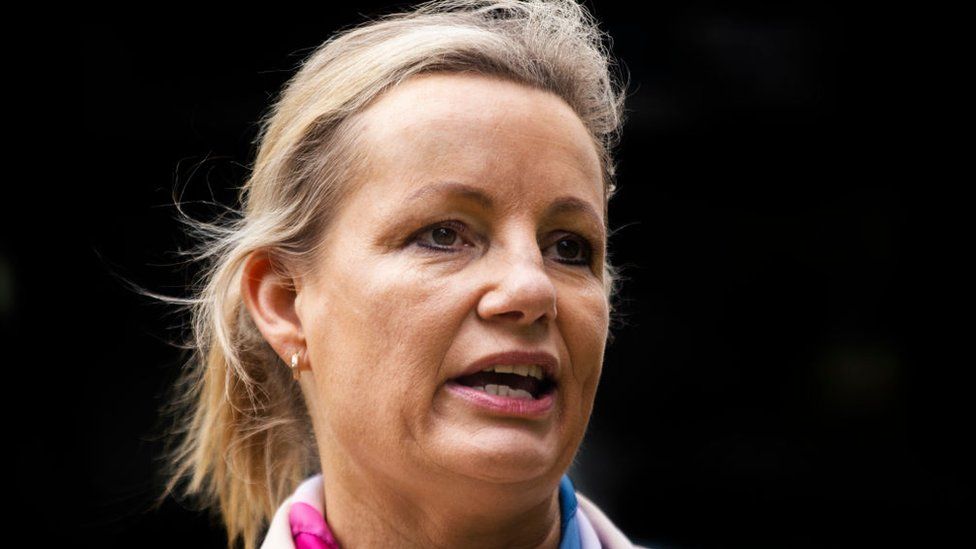
Environment minister Sussan Ley
Environment minister Sussan Ley. Image source, Getty Images

The government used a "substitution argument" as one reason to approve Vickery, says the lawyer representing the Sharma case, David Barnden.

"It's the argument that if this particular coal project didn't go ahead, it wouldn't make a difference to the total amount of emissions because effectively the market would fulfill that demand. That's otherwise known as the drug dealer's defence - it's the idea that 'If I don't deal drugs then somebody else will.'"

For Sister Brigid Arthur, the minister's decisions since the success of their case are "quite provocative".

Sister Arthur has spent a lifetime working with young people. For over two decades she has been acting as a litigation guardian - instructing lawyers on behalf of those who can't represent themselves - in cases mostly involving refugees. Before that she was a secondary school teacher. This is her first environmental case.

"It's engaged young people in a way that seems quite extraordinary. It's certainly for me something new," she says.

She was approached by lawyers just over a year ago who asked her to act as the teenagers' litigation guardian. She didn't take much convincing.

"I'm pretty passionate about climate change and while I don't work directly in this area, I'm very conscious of the fact that it's important for people to do what they can.

"Young people are the ones who will inherit whatever we're doing now, so they have every right to be calling people to account."

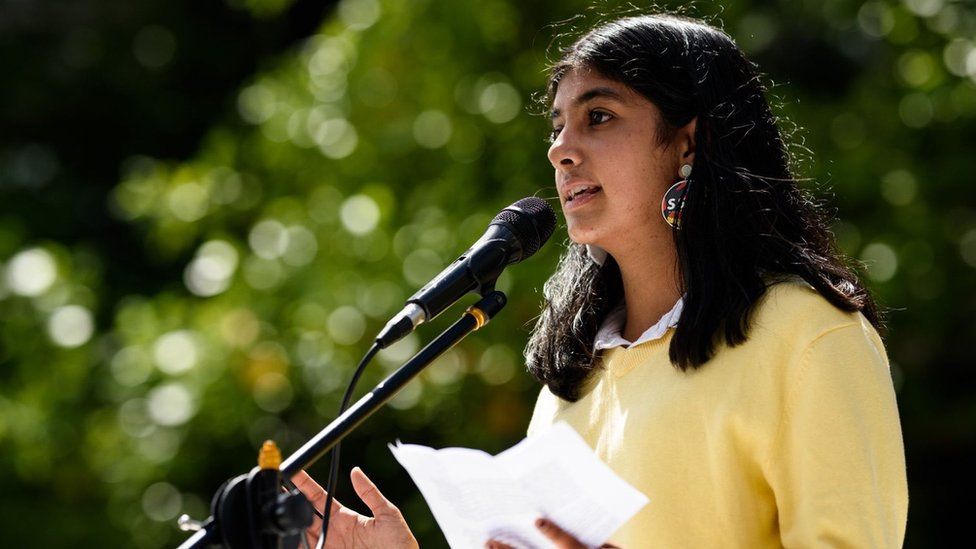
Anjali Sharma
Ms Sharma says Australia must take urgent climate action. Image source, Supplied

In speaking out, Ms Sharma has made herself a target for attacks.

"I've been messaged a lot of threats," she says.

"Some of the big news sources in Australia have, I guess, quite a right-wing following, so when news sources like that have covered my story I learned really quickly not to read the comments."

A 2019 report which investigated four publications owned by Australia's most powerful media company, News Corp Australia, argued that they promoted climate scepticism. Of over 8,000 articles analysed, 45% of all items either rejected or cast doubt upon consensus scientific findings.

In response, a News Corp Australia spokesman said the year-old report was "imbalanced" and coming from "a political activist group with a history of bias against our company's journalism".

News Corp Australia recently has been viewed as softening its hostility towards climate action by advocating for net zero emissions by 2050.

Despite this, shortly before and during COP26, videos from News Corp-owned Sky News Australia were recycled and found traction on social media amongst climate sceptics.

One Sky News Australia segment in which the host condemns youth climate activists as "selfish, badly educated, virtue-signalling little turds" was shared by the head of the advocacy group the CO2 coalition and received over 45,000 likes and 16,000 retweets.

As the science of climate change has become harder to argue with, a growing and common tactic is often to shoot the messenger instead - often accusing them of hypocrisy.

"Comments like 'Oh, she's wearing jeans and I bet she doesn't know how much water goes into producing a pair of jeans,'" says Ms Sharma. "And you know, they're right. I do own a pair of jeans. But me not owning that pair of jeans is not going to cut Australia's emissions in half by 2030."

Australian Islanders take climate fight to the UN

 When Sister Brigid first met the teenagers, who knew each other through attending climate protests, she was struck by their passion. She describes them as a group of young people "who really believe in this, who feel like they can't stop".

"There are very few greys with young people," she says. "Everything is so black and white."

But for now, all they can do is wait for the result of the appeal to be announced.

Despite widespread recognition of the need to move away from coal, there are different approaches when it comes to putting that knowledge into practice. At the COP26 summit in Glasgow, coal became a point of contention after delegates from China and India requested a last-minute change to the agreement, switching the phrase "phase out" coal with "phase down".

The results of the appeal and their case could be game-changing - not only for Australia but for other parts of the world too.

A success in their case could signal an erosion in support for fossil fuel burning and extraction with more lawsuits of this kind ahead. But if the minister's appeal is successful, it could see courts effectively vacate the climate field.

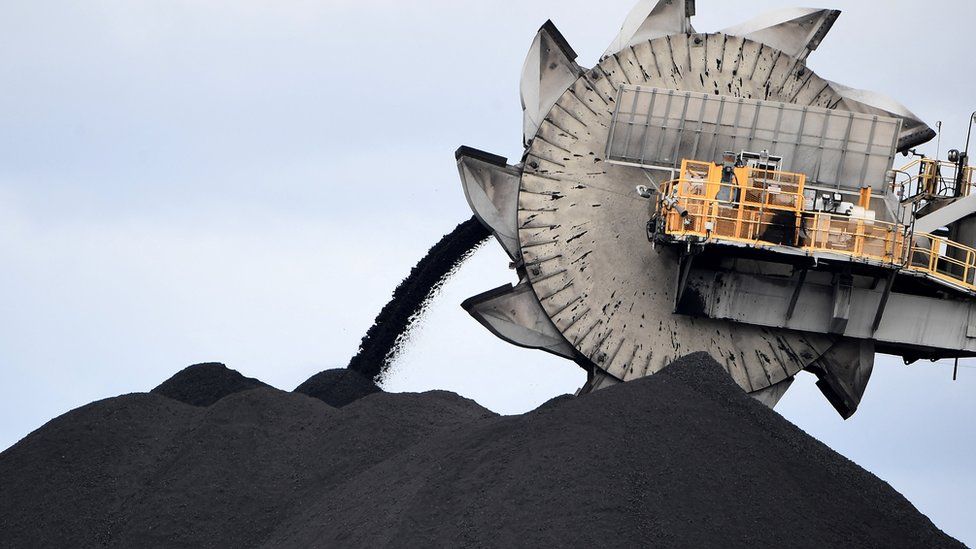
Australia is the world's second largest exporter of coal
Only Indonesia exports more coal than Australia. Image source, SAEED KHAN 

Australia is the world's second-largest exporter of coal. Following the Glasgow summit, Australian Prime Minister Scott Morrison said the coal industry will be operating in the country for "decades to come". He added that the plan to achieve net zero by 2050 will not come at the cost of rural and regional Australians.

"The world is grappling with this collective action problem of climate change. Every mine has its part to play and every decision counts," says Mr Barnden.

"What the court found was that the emissions from this particular extension project could be the emissions that tip us over the edge to these nonlinear tipping points which would further accelerate climate change."

He hopes that the duty of care ruling - if maintained through the appeal process - can influence other jurisdictions and give hope to young people to be able to participate in the legal process.

"It's a very foundational legal case to approach the problems caused by climate change, and the principles of negligence exist in a whole range of common law countries, from the UK, to New Zealand, Canada and the US as well."

It's too soon to tell whether this case will provide a turning point on climate inaction. But for Ms Sharma and the other teenagers involved in her case, the time for action is now.

"I really hope the federal court realises that Australia is now running behind the rest of the world, and that the duty of care that my case seeks to establish is really, really needed right now."

Links

16/12/2021

(AU The Guardian) Conservation Documents For Half Of All Critically Endangered Species Don’t Mention Climate Change

The Guardian

Australian Conservation Foundation report found that climate change was not mentioned for 178 out of 334 critically endangered species and habitats

The spectacled flying fox, like this pup orphaned by a heatwave, is one of a slew of species for which climate change is briefly mentioned or not at all in conservation documents. Photograph: Amanda Hickman/The Guardian

Conservation documents for more than half of Australia’s critically endangered species and habitats fail to mention climate change according to new analysis that argues there is a significant “climate gap” in the management of Australia’s threatened wildlife.

The report was commissioned by the Australian Conservation Foundation (ACF) and prepared by the Australian National University’s GreenLaw project, which is led by students in the ANU’s law faculty.

The analysis examined the extent to which conservation documents for Australia’s most imperilled wildlife discussed and addressed the threat of global heating.

It found that for 178 out of 334 critically endangered species and habitats the threat of climate change was not mentioned in the government’s conservation information at all.

When it was mentioned, the analysis found the information “tended to be brief and generalised” and the recommended actions to mitigate the threat were limited.

“Our results demonstrate there is a significant climate gap in the management of Australia’s threatened species,” said GreenLaw chief executive and lead researcher, Annika Reynolds.

The report argues that without such an analysis there was a risk that management of wildlife or decisions about developments affecting it would not factor in the impact of the climate crisis.

“It means that the recovery actions that are meant to be happening are not going to be informed by the latest and most up-to-date information about the threat of climate change to those critically endangered species and communities,” said Brendan Sydes, the ACF’s biodiversity policy adviser.

“Recovery plans are supposed to inform recovery efforts, so if they’re not actually capturing the threats and the actions that are required to address them, there is a risk those actions could be misdirected.”

When species and habitats are listed as threatened under Australia’s environmental laws, information is generally prepared that describes the level of decline, key threats and actions to help their recovery.

These conservation documents can take the form of either a recovery plan, which the environment minister is legally bound not to act inconsistently with; or, more commonly, a conservation advice – a similar document but which does not have the same legal force under national law.

GreenLaw examined these documents for all species and ecological communities listed as critically endangered under the Environment Protection and Biodiversity Conservation Act.

The group found in addition to some documents not mentioning global heating at all, there were others where the threat was mentioned but no actions that could be taken to address it were discussed because this was “outside the scope of the plan”.

They found climate was omitted from some documents where there was scientific uncertainty about its likely impact for that particular plant, animal or habitat.

But Reynolds said the information gap was also evident for some species that “were known to suffer from extreme heat and drought”, such as the short-nosed sea snake and the leafscaled sea snake. Documents for those species do not discuss climate change directly despite listing coral bleaching as a major threat.

There were also other species that fell outside the scope of the analysis because they have a lower threat status but whose documentation excludes up-to-date information on the climate crisis.

The conservation advice for the spectacled flying fox lists climate change as a “potential” and “future” threat despite the animal being uplisted to endangered in 2019 after almost a third of its population was wiped out by a heatwave.

The report found that conservation documents that had been written or updated in the past three years were more likely to include a detailed analysis of the climate threat.

The ACF said the government needed to increase funding for threatened species recovery, including funds to update its scientific information about the impacts of the climate crisis on individual plants, animals and habitats.

“There’s just a political commitment that’s lacking at the moment,” Sydes said.

Recovery planning for species has come under the spotlight in recent years.

Guardian Australia has previously reported that fewer than 40% of listed threatened species have a recovery plan. A further 10% of all those listed have been identified as requiring a recovery plan but those plans haven’t been developed or are unfinished. Even more plans are out of date.

In September, the government announced it would scrap recovery plans – in favour of a conservation advice – for almost 200 endangered species and habitats including the Tasmanian devil, the whale shark and the critically endangered Cumberland plain woodland.

A spokesperson for the environment minister, Sussan Ley, said the minister had reviewed and made several new recovery plans and conservation advices that included new research, bushfire impacts and other factors.

“A number of plans are currently with states and territories, and are in the process of being updated to include multiple factors including climate,” they said.

“Where relevant, information on climate change informs the development of conservation advice at the time a species is listed and in the development of any recovery plan.”

The spokesperson added that the government’s $200m for bushfire recovery had contributed to significant scientific research on species affected by extreme weather.

The new threatened species strategy for 2021 to 2026 had eight action areas, including one focused on climate change adaptation and resilience to “reduce the impact of established pressures on threatened species and assist them to adapt to a changing climate”.

Links

Lethal Heating is a citizens' initiative