Fairfax - Peter Hannam
The US space agency NASA has appealed to CSIRO to abandon plans
to cut a key monitoring program that it says will undermine Australia
and the world's ability to monitor and predict climate change.
The cost to our international reputation is immense
Kim Carr, ALP's shadow science minister
Brent Holben, the project scientist in charge of NASA's
Aerosol Robotic Network, urged CSIRO to reconsider any plans it had to cut or withdraw its contribution to the program, according
to a letter obtained by Fairfax Media.
 |
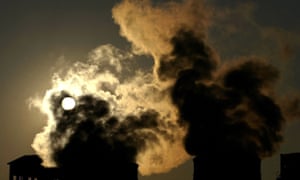
| In the dark: cutting key climate monitoring program could throw global models out of sync. Photo: NASA |
"I understand that CSIRO is undertaking a major restructuring
that may lead to the closure of AeroSpan [CSIRO's partner program]," Dr
Holben wrote in the letter addressed to Alex Wonhas, a senior CSIRO
executive, and dated May 1, 2016.
"The purpose of this letter is to express my dismay about this, on behalf of NASA and the global aerosol community," he said.
Fairfax Media understands
the AeroSpan program
– which includes eight automated monitoring sites across Australia – is
earmarked to be shut along with other micro-meteorology research done
by CSIRO's Yarralumla staff in Canberra. (See CSIRO map below of the
eight sites.)
 |
| The humble automated monitoring stations that CSIRO is looking to shut down. Photo: CSIRO |

Understanding aerosols - the distribution and character of
airborne particles and clouds - "represent the single greatest source
of uncertainty in climate simulations", Dr Holben said.
CSIRO's
contribution has largely been to help calibrate and validate satellite
readings that cannot easily distinguish between different types of
aerosols. These range from dust and industrial pollutants to sea salt.
 |
| Inland Australia as seen from the International Space Station. Photo: NASA |
In return, Australia has been promised "unfettered access" to
international data, such as from European Space Agency's Sentinel
satellites.
NASA's letter notes Geoscience Australia has estimated
Earth Observation services are worth $5.5 billion to the Australian
economy annually, a windfall that will rise to $8.8 billion by 2030.
The
cuts are part of 275 jobs to go from CSIRO, many of them in key climate
or water roles. The AeroSpan cost to CSIRO is understood to be less
than half a million dollars a year and involve just two researchers.
Chief executive Larry Marshall – whose
three-year contract extension has been endorsed by the Turnbull government
– has said that Australia's primary research agency must divert
resources away from climate monitoring and modelling towards adaptation
and mitigation.
The NASA letter said measurements of aerosols were
"a fundamental component of climate predictions on both regional and
global scales".
Climate monitoring has gained additional
prominence this week, with the Cape Grim site in north-west Tasmania
expected to report within days that baseline carbon-dioxide levels
have exceeded 400 parts per million for the first time, as reported by Fairfax Media. CSIRO is also cutting staff at this site.
International angst
Fairfax
Media understands that NASA's complaint has been echoed by the European
Space Agency, and individual national research organisations from
Japan, Italy and Germany.
Some agencies have been warning their own staff for months to take into account the possible impacts of CSIRO's cuts.
"CSIRO
has pledged to continue some of these critical measurements but the
question arises as to how will quality be assured and will they be
adaptable as scientific priorities evolve when the science teams that
nurture them are dispersed," a senior US climate scientist from another
US agency told Fairfax Media. "Field programs where there have been
joint contributions of resources are particularly threatened."
Cutting
the AeroSpan program would also harm the work to be done by the new
Climate Science Centre CSIRO has recently set up, NASA said.
Steven
Sherwood, one of the world's leading researchers into clouds and
climate change at the University of NSW, said the CSIRO program cut was
"idiotic".
"We don't even know if aerosols are increasing,
decreasing or staying the same during the past 20 years," Professor
Sherwood said. "If you stop observing now, you'll never know."
He
said the biggest single variable in climate model projections was how
they treated aerosols and their impact on the brightness of clouds – and
therefore how much of the sun's radiatin are being reflected back to
space. More and brighter clouds could mean global warming will be less
rapid.
'Blowing a hole'
Abandoning the
AeroSpan project would end aerosol assessment over an entire continent –
Australia – and remove "effective coverage of a much larger region of
the Southern Hemisphere", NASA's Dr Holben said.
Fairfax Media
sought comment from CSIRO. A spokesman for Science Minister Christopher
Pyne said the government "has not been contacted by any of the
organisations mentioned with concerns".
"This process has been as a
result of decisions taken by the CSIRO made by the experts who run it
in line with the organisations priorities and the Australian Government
strongly supports the independence of the CSIRO to make its own
decisions."
However, Kim Carr, Labor's shadow science minister,
said it was "scandalous that the government is trying to wash
their hands of their responsibilities". A Shorten government would
immediately intervene to halt the cuts to key climate programs by CSIRO,
he said.
"A future government will have to attend to the
destruction that [these cuts] have caused," he said. "The cost to our
international reputation is immense."
Adam Bandt, Greens Science spokesman, said: "Malcolm Turnbull is blowing a hole in humanity's knowledge of the world around us."
"Any
cuts must be postponed until after the election, when a new
power-sharing Parliament can restore funding to the CSIRO," Mr Bandt
said.
Geoscience Australia, one of CSIRO's partners, said it was
"aware that the CSIRO is considering changes to its Aerospan service".
"While
the cessation of Aerospan would not immediately impact on the ability
of Geoscience Australia to deliver our programs, it is an important part
of Australia's Earth observation infrastructure and one the
international community values," the spokesman said. "At this time there
is no proposal in place for Geoscience Australia to take over the
role."
Another partner, the Bureau of Meteorology, said "the full
details of changes at the CSIRO and potential impacts on Bureau
operations are not yet confirmed".
Links