09/08/2016

Climate change will claim 160,000 lives a year in India by 2050

India Climate Dialogue

Food production is expected to decline as our planet heats up. (Photo by Michael Foley)
As  many as 160,000 people will die every year in India by 2050 due to decreased food production because of climate change, an Oxford University study has predicted. India ranks second in the mortality forecast after China, where as many as 248,000 are expected to die for this reason. Surprisingly, the US ranks fifth, after Vietnam and Bangladesh.
Asked whether China wouldn't face fewer deaths than India, considering that India will have overtaken its population by around 2030, and China has a higher standard of living, Marco Springmann, lead author of the study by the Oxford Martin Future of Food programme in the university, told indiaclimatedialogue.net, "It also depends on mortality rates and the magnitude of climate and yield shocks. The US comes in fifth because of its high population and its vulnerability to climate shocks."
Worldwide, there would be 529,000 more deaths due to climate-related factors midway this century. The study, which was published in the UK health journal Lancet in March, used models to estimate the health impacts due to shortages of food crops caused by changes in climate. It assessed the risk to human health caused by reduced consumption of fruits and vegetables, red meat consumption and changes in body weight. This could lead to deaths due to heart disease, stroke, cancer and other ailments.
"In our study, we accounted for the feedbacks between grain as feedstock and grain for human consumption, and we took into account standard population projections," Springmann said. It calculated the change in the number of deaths attributed to climate-related factors to lowering of body weight and reduction in diet in different emissions scenarios – ranging from high to medium to low.

Lower food availability
By 2050, in the 155 countries analysed, climate change will lower people's availability of food by 3.2%, fruits and vegetables by 4% and red meat by 0.7%. "Twice as many climate-related deaths were associated with reductions in fruit and vegetable consumption than with climate-related increases in the prevalence of underweight, and most climate-related deaths were projected to occur in south and East Asia," the study says.
Diarmid Campbell-Lendrum, who leads a team on climate change and health at the World Health Organisation (WHO), told indiaclimatedialogue.net, "WHO has been saying for almost a decade that climate change is perhaps the greatest threat to public health of the current century, and we have been highlighting that one of the main risks of climate change is through impacts on food and nutrition security, for even longer."
"However, while it is clear that agricultural production is sensitive to weather and climate and therefore must be affected by climate change, there are few studies that quantify how this may eventually impact health – so the current work is an important addition to our knowledge."
Sowing paddy in Tamil Nadu. (Photo by Michael Foley)
The Oxford study confirms that the impact on food supply and food security "could be one of the most important consequences of climate change in view of the large number of individuals that might be affected". The changes could reduce the food harvested, leading to higher prices and reduced consumption, and to an increase in the number of malnourished people. Agricultural and regional food availability also affects the composition of diets.
In 2010, the WHO's Global Burden of Disease study reported that most deaths throughout the world were attributable to dietary risk factors associated with imbalanced diets. In developing countries these were diets low in fruits and vegetables, while in affluent countries, these were related to red and processed meat consumption.
As the Oxford study points out, "The increasing importance of dietary risk factors represents a general trend away from communicable diseases associated with undernutrition and poor sanitation to non-communicable diseases associated with high bodyweight and unbalanced diets."

Quantitative risk assessment
In 2014, the WHO published a quantitative risk assessment of the impact of climate change on selected causes of deaths in 2030 and 2050. It quantified climate-related mortality according to heat, coastal flooding, diarrhoeal disease, malaria, dengue and undernutrition. It estimated that due to climate change, an additional 38,000 elderly people would die due to exposure to heat, 48,000 people to diarrhoea, 60,000 to malaria and 95,000 children due to malnutrition in 2030.
By the middle of this century, it attributed the biggest toll to heat, which would claim an additional 95,000 deaths annually, while undernutrition would come a close second with 85,000 deaths. "By 2050," the study points out, "impacts of climate change on mortality are projected to be the greatest in south Asia."
Since India is by far the biggest country in this region, it will suffer the most on this account. The excess number of deaths annually due to heat in south Asia would be 21,648 in 2030 and 62,821 in 2050. However, with proper adaptation measures to cope with climate change, these numbers could fall sharply.
At the same time, the WHO notes that global predictions of deaths due to heat in the decades to come indicate "there is a significant burden on mortality. Hot weather is also known to affect mortality and morbidity in other age groups, and this may indicate that the results [of its study] are an underestimate of the total burden on health." The WHO estimates that by 2030, there would be 241,000 additional deaths due to climate change, going up marginally to 245,000 in 2050.
"Our overall estimate is higher than that of the WHO because we looked at different risk factors that were not covered by the WHO assessment, but that impact a broad spectrum of the population. The impacts of climate change on food affect everybody, because everybody eats. In contrast, some of the vector-borne diseases analysed by the WHO are constrained to certain regions," Springmann told indiaclimatedialogue.net.
"We have also pointed out that our own previous estimates are conservative (low), precisely because they do not cover the full range of ways in which we expect climate change to impact on health – as we have lacked quantitative studies of many of the likely mechanisms," said Campbell-Lendrum. "The current work (by Oxford University) is therefore also welcome in that it broadens the range of evidence beyond simply calories, to include the type and quality of the food that we will have available."
Climate change will lead to yield shocks. (Photo by Rajarshi Mitra)
"Although the numbers are not directly comparable, the scale of the difference between the new estimates and those which we published a couple of years ago are quite surprising. The largest differences appear to be because of the impacts on consumption of fruits and vegetables," Campbell-Lendrum said. "This is plausible as we know that low levels of consumption of these types of foods are now a major killer – but it is important to point out that there has been much less research on the effect of climate change on the production, and then the availability, of fruits and vegetables, than there has been on staple crops."

Wanted: stronger public health programmes
The Oxford study points to how adaptation to climate change can mitigate the impact on mortality. It points to the need for stronger public health programmes – in India, for instance, the employment of anganwadi workers who measure the weight of infants every month to monitor their progress. This can prevent and treat diet and weight-related ailments.
Vandana Prasad, a paediatrician who works with the Jan Swasthya Abhiyan and is part of the right to food campaign, told indiaclimatedialogue.net, "The study adds a welcome fresh angle to the growing body of evidence suggesting dangerous trends of food insecurity currently and in the near future."
"It is of course an issue that is likely to lead to both increases in undernutrition and overnutrition, and increased deaths from both infections as well as non-communicable diseases in the same countries, since they happen to be in transition with different socio economic groups affected differentially by the same pathways. The use of large global databases is also likely to hide even graver consequences for certain groups such as tribal communities and the poorest of the poor," Prasad said.
"However, without an analysis of the political economy of climate change and factors affecting food security and diversity, it is highly unlikely that this evidence will provoke any fundamental alterations in the policy environment that could avert or mitigate the current grave inequity in food security and diversity in India."
The Oxford study identifies areas where further research is required. One is the impact of climate change on crops that policymakers consider less important than staples like rice and wheat — like fruits and vegetables, which play a greater role in people's health. Impacts on crops like groundnuts, maize, potatoes, sorghum and soybeans are also well known while those on other crops have to be analysed after taking their biophysical similarities into account.

High uncertainty
Secondly, agricultural commodity markets are already highly volatile in economic terms and this is accentuated with climatic shocks, making them subject to high uncertainty. "It is also important to point out that the eventual impacts of climate change on agricultural practices, then on food trade, availability and price and then, dietary choices, are not set in stone. They will depend at least as much on our policy and individual choices, including what we do in response to climate change, as to the effects of climate change itself," Campbell-Lendrum told indiaclimatedialogue.net.
"In practical terms, the (Oxford) study reinforces the need for adaptation to climate change, and a greater focus on equity and sustainability in food and nutrition policy, in order to protect health. It also underlines the need to promote stronger mitigation policies, to limit the damage that climate change will do to environmental determinants of health such as food and nutrition security, but also water and sanitation, among others. We also know that there are large opportunities to promote agricultural practices and diets that will reduce emissions of greenhouse gases, and promote health."

Links

Why Malcolm Roberts' Demand For 'Empirical Evidence' On Climate Change Is Misleading

The Guardian

Scientist and Nobel prize-winner Peter Doherty says new One Nation senator 'has no understanding of how science works'
Pauline Hanson and Malcolm Roberts. His brand of climate denial is now in the national spotlight. Photograph: Dan Peled/AAP
Across Australia, climate science denialists are beside themselves with glee at the voting into office of one of their own.
Late last week, the Australian Electoral Commission confirmed that Pauline Hanson's One Nation party had snagged Queensland's final 12th Senate spot. Her candidate, Malcolm Roberts, is now a senator.
Roberts' election is yet another demonstration of the quirkiness of Australia's electoral system.
Only 77 people actually voted for Roberts as a first preference but, thanks to the popularity of Hanson, he's in for three years.
Roberts' own brand of climate denial – a heady mix of conspiracy theories and blind spots the size of the Antarctic ice sheet – is now in the national spotlight.
Roberts has had wall-to-wall coverage across Australia's media – from Sky News, to Lateline, to Insiders to flagship ABC radio. Even Triple J has joined in.
News Corp's Andrew Bolt, a strong promoter of the kind of material produced by Roberts, told the senator there were now "five or six out and proud voices of climate scepticism in the Senate".
So how did Roberts respond to his newfound fame? Well, he didn't disappoint, telling every mainstream audience there was "no empirical evidence to show that carbon dioxide affects the climate in any way".
I've written several stories over the years about Roberts and the Galileo Movement – the climate science denial group founded in 2011 with radio personality Alan "climate change is witchcraft" Jones as its patron.
Three years ago I pointed out how One Nation was taking its cues on climate science from Roberts. Last month I suggested that, if elected, Roberts would bring an extreme form of climate science denial to the Senate.
But for those paying close attention to climate science denial – such as the string of US senators who spent hours talking about it only last month – Roberts sounds like a broken record. In Roberts' case, the needle has been stuck for about six years.
What about his conspiracy theories (he says they're not conspiracies, just facts) that climate change is a scam pushed by global banks looking for cash and the UN on the hunt for global domination? Roberts didn't disappoint there either.
On ABC Melbourne, host Rafael Epstein asked Roberts: "Do you think the UN's trying to impose some sort of global government through climate change policy?"
"Definitely," replied Roberts. "Really?" checked Epstein. "Definitely," confirmed Roberts.
For years, Roberts has been writing to politicians, government agencies, universities and scientists making the same claim that there is "no empirical evidence" to show fossil fuel burning causes climate change.
You can go and read all that material on his website – I'll see you in six months once you've read it all.
So what does Roberts mean by "empirical evidence"? According to him, decisions should be based on "observations in the real world … it's measured, real world data" and nothing else counts.
There are two very obvious problems with Roberts' argument.
The "real world data" is sending a clear message that the Earth is gaining heat at a rapid rate and that this is a long-term trend. Whether you look at global air temperatures measured in the real world by thermometers or derived from satellites, or the temperature of the oceans at multiple depths, or the increasing frequency of extreme temperatures, or the rising sea levels, the melting ice sheets, the disappearing Arctic sea ice, the increasing risk of bushfires … we could go on and on with a parade of "empirical evidence".
Anyone can claim there is no evidence if they refuse to look at it. Professor Steven Sherwood, UNSW
At the same time, humans are adding CO2 to the atmosphere and oceans at a rate that groups like the Geological Society say are unprecedented "even in comparison with the massive injections of carbon to the atmosphere at the Palaeocene-Eocene boundary, which led to a major thermal event 55m years ago".
Roberts' argument that science is only about "empirical evidence" might sound all sciencey to his interviewees and the lay audience. But it's bunk.
If all you rely on is "empirical evidence", and reject modelling and analysis that uses that data, then you basically throw out large swathes of modern scientific endeavours.
Prof Steven Sherwood, director of the Climate Change Research Centre at the University of New South Wales, told me:
The argument is specious.
Anyone can claim there is no evidence if they refuse to look at it. In Galileo's time, some people refused to look into his telescope and then claimed there was no evidence to support what he was saying. Same thing today.
The problem is that evidence does not stand up by itself and announce the answer to any given question. Evidence must be interpreted by humans. Scientists have all interpreted the evidence, going back decades, and unanimously agree that it proves beyond a reasonable doubt that (a) humans are increasing CO2 and (b) this is causing warming. There is not a single respectable atmospheric scientist in the world whom I know of, who disagrees with either of these conclusions (there are a handful who challenge the magnitude of the effect but that's a different question).
It is impossible to make a prediction based on data alone. Only a model can make a prediction of anything that has not happened yet.
Denial suite
Roberts has built a whole suite of well-rehearsed arguments to enable him to reject any assertions put to him.
They go like this, and I'm paraphrasing here. Climate scientists only say it's warming because if they didn't their grants would dry up. The Bureau of Meteorology and CSIRO have corrupted climate science and are thus guilty of corruption. Government agencies are politicised, which means anything they produce cannot be trusted. You can't trust climate models, so anything that comes from them should be chucked out.
[Roberts] has no understanding of how science works. Professor Peter Doherty, Nobel winner
One of Australia's most famous and celebrated scientists is Prof Peter Doherty, who, in 1996, was jointly awarded a Nobel prize for his research into the immune system.
Doherty told me he had sent Roberts "plenty of reports and material" but Roberts had ignored it.
So Doherty has first-hand experience with Roberts and also knows a bit about the scientific method. He told me:
I've never used the term 'empirical evidence', or heard any other working scientist say it. [Roberts] has no understanding of how science works.
Discoveries in science stem from a mix of hypothesis, experiment, data generation, data analysis, insight and even a bit of guesswork. Telling the story of what's happening in something as complex as climate science further depends on integrating information from a diverse spectrum of fields, then designing to see if the conclusions are valid or false. There's a constant process of correction and further interpretation that then has to be supported by measurement.
You can tell a genuine sceptic from a denier (as I discuss in The Knowledge Wars) because the sceptic will want to look at new data and conclusions and, like any real scientist, will modify their conclusions accordingly. The denier remains 'locked in' to a sort of 'decerebrate rigidity'.
All good scientists are sceptical, not least about their own data and conclusions. Further data show that we're wrong, and we prefer not to be wrong, so people change their positions with new evidence. And, if you want to understand very complex, interactive systems, you have to use modelling approaches.
With climate science, data is coming in from a very broad spectrum of scientific disciplines that no one person can pull together ... thus the IPCC.
So how should journalists react when a newly-minted senator makes claims that run against science academies across the planet while suggesting institutions and governments the world over – from the US military to the UN – are either part of, or have been hoodwinked by, a conspiracy that only he can and a few other people on the internet are able to see?
Deference? Respect? Polite engagement?
According to Doherty "you have to respect the institutions of our democracy, including the Australian Senate, but that does not mean you have to respect the viewpoints held by individual senators".
So there is another approach journalists could take.
In 2013, Roberts sent one of his voluminous reports to Ben Cubby, then the environment editor at the Sydney Morning Herald. I'll leave you with Cubby's response.
In considering your request that I identify errors in the report you sent to me – CSIROh! Climate of Deception? Or First Step to Freedom? – I find myself confronting an unusual problem: how does one critically analyse a pile of horseshit?
Links

On the Frontline: Climate Change & Rural Communities

Climate CouncilLauren Rickards | Lesley Hughes | Will Steffen

Our new report reveals that climate change is likely to worsen the systemic disadvantages suffered by rural and regional communities, and further widen the gap between rural and urban areas.
The 'On the Frontline: Climate Change & Rural Communities' report finds the increase in extreme weather events is disproportionately affecting those in rural areas, with serious social, health and economic impacts.

KEY FINDINGS

1. Rural and regional communities are disproportionately affected by the impacts of climate change.
  • Climate change is worsening extreme weather events such as bushfires and drought and rural and regional communities will continue to be disproportionately affected.
  • Many agricultural businesses surveyed have used financial reserves and/or have taken on increased debt in response to extreme weather events.
  • Australia's agricultural sector is showing signs of decreasing capacity and faltering productivity gains and the resilience of some rural industries is under threat.
2. The systemic disadvantages experienced by rural and regional communities over those in urban areas are likely to worsen if climate change continues unabated.
  • Rural and regional communities have already seen a significant reduction in population that has prompted further losses in services and unemployment. Climate change will further exacerbate these stresses.
  • Strong climate action is required to protect rural and regional communities from the worsening impacts.
3. Rural and regional communities are already adapting to the impacts of climate change but there are limits and costs.
  • Adaptation to cope with a changing climate may be relatively incremental, such as changing sowing and harvesting dates, or switching to new breeds of livestock and new varieties of crops.
  • More substantial adaptation options may involve changing production systems (eg. from cropping to grazing), or relocating to more suitable areas.
  • The more transformational adaptive changes may be risky and expensive, especially for individual farmers.
  • As the climate continues to change, adaptation will become increasingly challenging.
4. While rural and regional communities are on the frontline of climate change impacts, tackling climate change also provides these communities with many opportunities.
  • In Australia, rural areas receive around 30 - 40% of the total investment in renewables, valued at $1-2 billion per year.
  • Renewable energy projects bring jobs and investment into rural and regional communities. Delivering half of our electricity from renewable sources by 2050 would create more than 28,000 jobs.
  • The transition to clean energy will also reduce the health burden of burning coal, which is almost entirely borne by rural and regional areas, e.g. the Hunter and Latrobe valleys.
  • Farmers can build the climate resilience of their farms by adding additional revenue streams, such as by hosting wind turbines and other renewable energy projects. Across Australia, approximately $20.6 million is paid annually in lease payments to farmers and landholders hosting wind turbines.
  • Community funds and additional rate revenue for rural and regional areas from renewable energy can be used to improve public services such as schools and local infrastructure.
  • Renewable energy can reduce electricity costs for rural and remote communities, who traditionally pay much higher prices than their urban counterparts. It also offers independence from the grid with several towns now racing to be the first to operate on 100% renewable energy.

DOWNLOAD THE REPORT

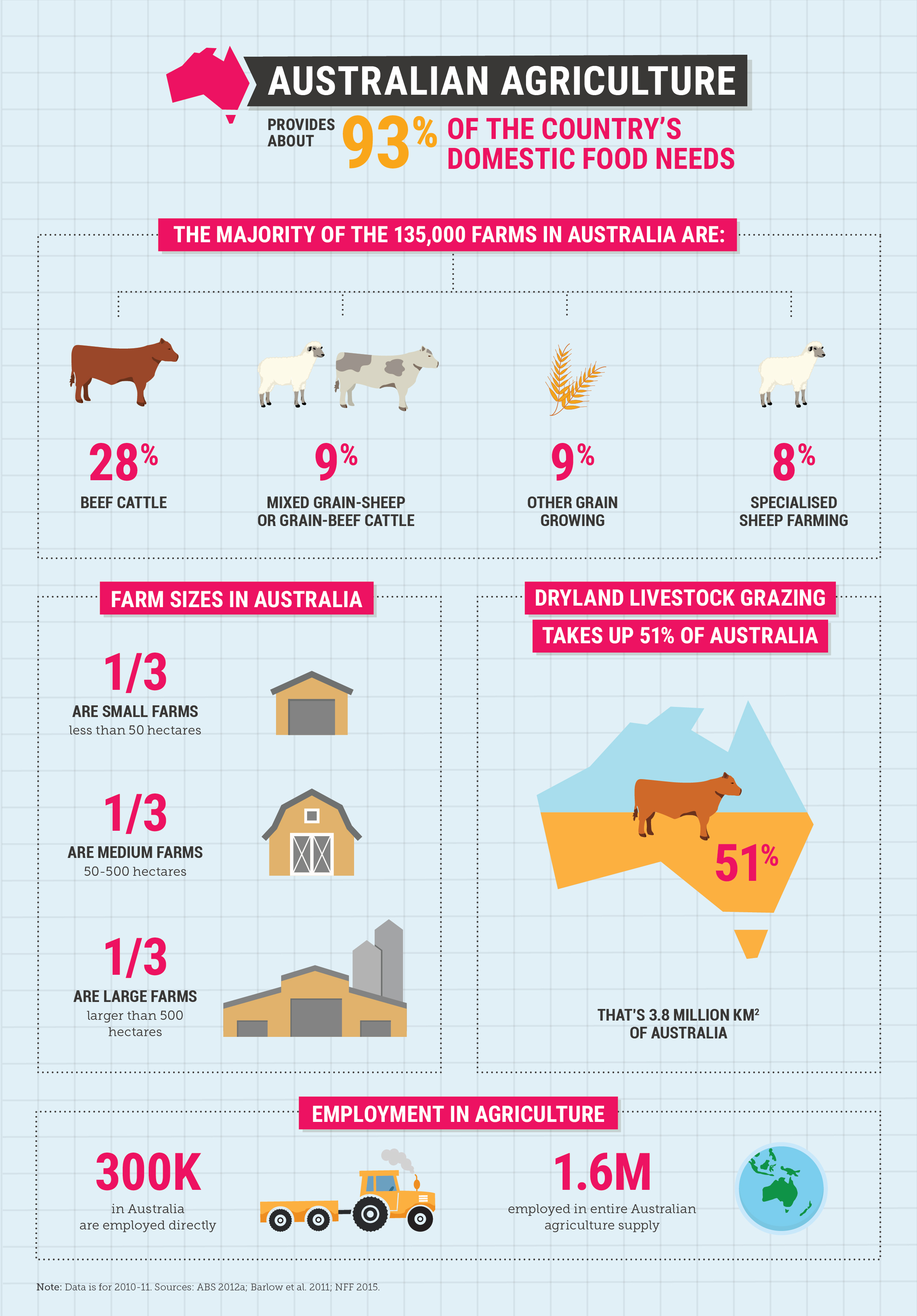
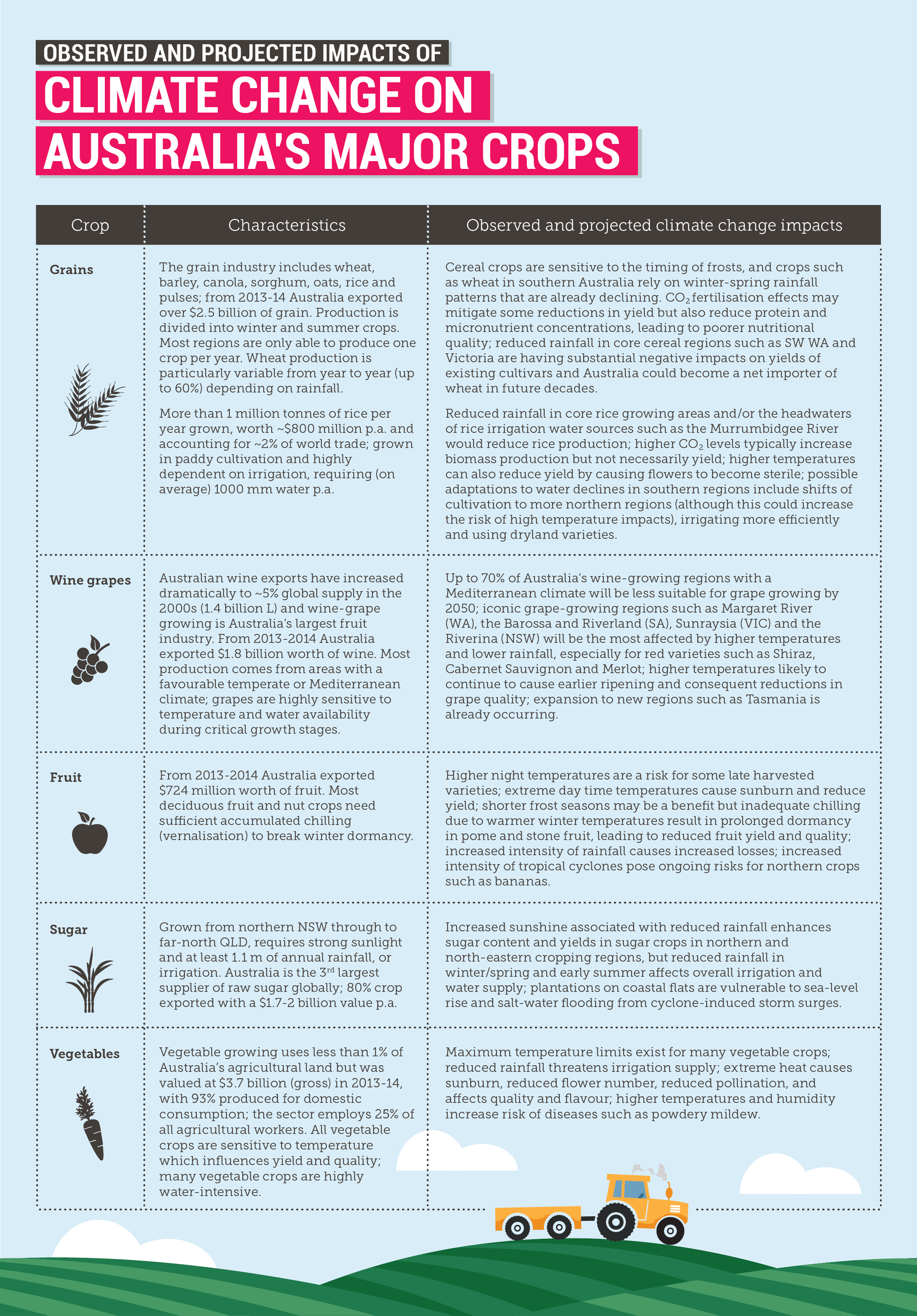
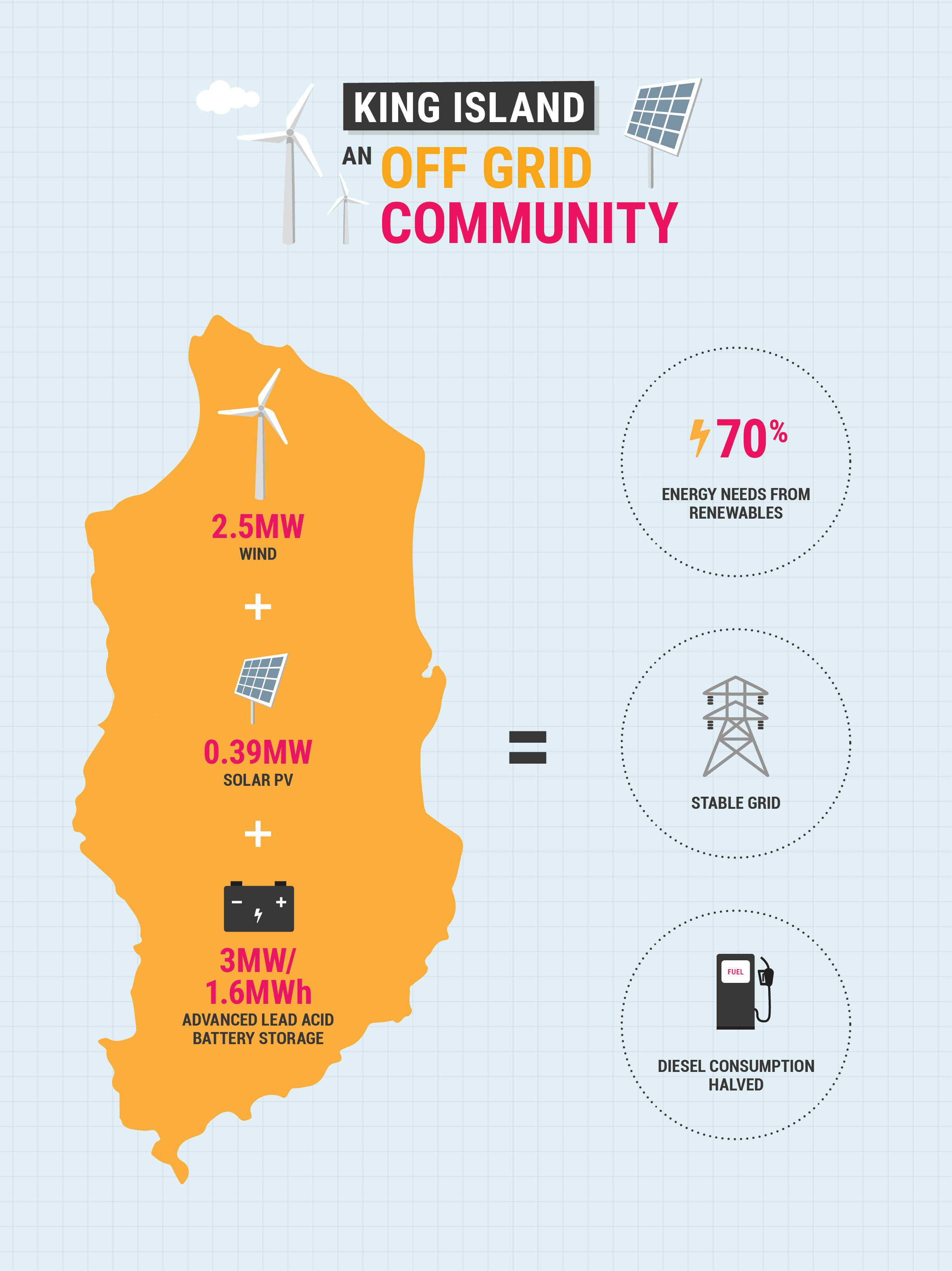
INFOGRAPHICS

Click image to enlarge


Click image to enlarge


Click image to enlarge

Links

08/08/2016

One Nation’s Malcolm Roberts Is In Denial About The Facts Of Climate Change

The Conversation - 

Malcolm Roberts was number 2 on the Pauline Hanson's One Nation ticket. AAP Image/Dan Peled
The notion that climate science denial is no longer a part of Australian politics was swept away yesterday by One Nation Senator-Elect Malcolm Roberts.
In his inaugural press conference, Roberts claimed that "[t]here's not one piece of empirical evidence anywhere, anywhere, showing that humans cause, through CO₂ production, climate change".
He also promoted conspiracy theories that the CSIRO and Bureau of Meteorology are corrupt accomplices in climate conspiracy driven by the United Nations.


His claims conflict with many independent lines of evidence for human-caused global warming. Coincidentally, the University of Queensland is releasing a free online course this month examining the psychology and techniques of climate science denial. The very first video lecture addresses Roberts' central claim, summarising the empirical evidence that humans are causing climate change.

Consensus of Evidence (from Denial101x course)

Scientists have observed various human fingerprints in recent climate change, documented in many peer-reviewed scientific papers.
Satellites measure less heat escaping to space at the exact wavelengths at which CO₂ absorbs energy. The upper atmosphere is cooling at the same time that the lower atmosphere is warming – a distinct pattern unique to greenhouse warming. Human activity is also changing the very structure of the atmosphere.
Human fingerprints in climate change Skeptical Science
Not only do these unique fingerprints confirm humanity's role in recent climate change, they also rule out other potential natural contributors. If the Sun caused global warming, we would expect to see days warming faster than nights, and summers warming faster than winters.
Instead we observe the opposite: nights are warming faster than days, and winters are warming faster than summers, which is a greenhouse pattern predicted by John Tyndall as long ago as 1859.
Similarly, if global warming were caused by internal variability, we would expect to see heat shuffling around the climate system with no net build-up. Instead, scientists observe our climate system accumulating heat at a rate of more than four atomic bombs per second.
Climate patterns confirm human causation and rule out natural causes Skeptical Science
Our scientific understanding grows stronger when many independent lines of evidence all point to a single, consistent conclusion. In the case of climate change, the "consensus of evidence" has led 97% of climate scientists to agree that humans are causing global warming.
The scientific consensus on climate change has also been endorsed by many scientific organisations all over the world, including the national science academies of 80 countries.
National Academies of Science endorsing human-caused global warming Skeptical Science
Is it a conspiracy?
How does one dismiss a global scientific consensus built on a robust body of empirical evidence?
There are five characteristics of science denial. These common traits are seen when people reject climate science, the benefits of vaccination, or the research linking smoking to cancer.
The techniques of denial are: fake experts; logical fallacies; impossible expectations; cherrypicking; and conspiracy theories. This is summarised in the acronym FLICC.

The five characteristics of science denial (from Denial101x course)

Climate science denial and conspiratorial thinking are often found together. A well-known example is that of Donald Trump, who has dismissed climate change by blaming it on a Chinese conspiracy.
Several studies have linked climate science denial and conspiratorial thinking. If a person disagrees with a global scientific consensus, they’ll typically believe that the scientists are all engaging in a conspiracy to deceive them.
Malcolm Roberts’ conspiracy theories have been well documented and were once again on offer in yesterday’s speech. He espouses a conspiracy that encompasses the CSIRO, Bureau of Meteorology, international banking families, the United Nations and Al Gore.
Unfortunately, I am not optimistic that the evidence for human-caused global warming will persuade Malcolm Roberts. The scientific evidence from psychology tells us that scientific evidence is largely ineffective on those who dismiss climate science with conspiracy theories.
My own research found that communicating the science of climate change to those who exhibit conspiratorial thinking can even be counterproductive, activating their distrust of scientists and strengthening their denial of the evidence.
Furthermore, conspiratorial thinking is self-sealing. When conspiracy theorists are presented evidence that there is no conspiracy, they often respond by broadening the conspiracy to include that evidence. In other words, they interpret evidence against a conspiracy as evidence for the conspiracy.
Our course on climate science denial will be much more useful to those who are open to scientific evidence and curious about the research into the causes and impacts of climate change and the psychology of climate science denial.

Links

Statement on Senator-elect Malcolm Roberts and Climate Science

Climate Institute

The Climate Institute makes progress in tackling climate change possible.
Senator-elect Malcolm Roberts has made a number of statements regarding climate science and empirical evidence.
There is abundant evidence that heat trapping greenhouse gases are in the atmosphere at record levels, this is causing the climate to change, and this is impacting on natural and human systems now.

Insiders host Barrie Cassidy referred to an email sent by TCI to Insiders ahead of the program.
Here are some of the facts highlighted in that email:
  1. On empirical evidence, 80 academies of science around the world have confirmed the mainstream science of climate change. The Australian Academy of Science published an extensive analysis – their chapter on human causes of climate change is here. It shows the evidential pathways for establishing the human contribution to climate change and that recent climate change can’t be understood without an impact from human activities. It dismisses suggestions that volcanic and solar impacts overwhelm human impacts in recent times.
  2. More detail from the thousands of scientists involved in the Intergovernmental Panel on Climate Change (IPCC) process (yes, a collaborative effort – but one across multiple disciplines of science) is here. This has been reviewed and accepted by over 190 governments.
  3. No one denies CO2 can be helpful for plant growth and our planet would be an ice ball without it (and has been at low levels) but any drinker on a Friday night can tell you - you can have too much of a good thing. Empirical measurements show that CO2 in the atmosphere is 40% higher than before the industrial revolution (see p11 here).
  4. Warming theories aside, empirical evidence is showing the ocean, which is absorbing large amounts of the extra CO2 in the atmosphere is having a straight chemical effect with noticeable increase in acidification, explained well by the Great Barrier Reef Marine Park Authority here.
  5. Science has established since 1859 the atmospheric heat trapping qualities of CO2 – John Tyndall – more of it will increase warming…
  6. His closing line with Rafael Epstein ABC 774 (6/8/16) on UN “definitely” trying to establish global government through climate change is demonstrably false at the very least in the current Paris Framework. The Paris model is nationally driven where targets countries adopt are formally called “nationally determined commitments”. Countries determine what they want to commit to. Some are OK, most are inadequate like Australia’s, and some are downright shabby like Saudi Arabia – no global control there…
  7. An important backgrounder on the Senator-elect from The Guardian’s Graham Readfearn is worth reading: here.
  8. If it’s not a coordinated conspiracy, a term he appears to rail against, it is a remarkable effort from those banking families he fears – everyone, including the Pentagon, are apparently toeing the line.
  9. A nice simple 5 min Youtube video on this from the scientists at Skeptical Science including reference to empirical evidence here. John Cook provides more detail in this piece on The Conversation 5 August 2016.
  10. It is worth asking the Senator-elect why he thinks 2015 was the warmest year on record, why 2014 was, and why this year is heading to break that record again. These facts, and more empirical evidence, were set out by the US National Oceanic and Atmospheric Administration three days ago, their State of the Climate Report here.  
The Climate Institute published a primer on Carbon in 2012 and can connect you with climate scientists should you require.

07/08/2016

Clexit: The New Heights Of Climate Science Denial

Independent Australia - DeSmog Blog

DeSmogBlog's Graham Readfearn reports on a new group, with powerful allies, espousing climate change denial and calling for, among other things, an end to the UN Paris Agreement.
(Image via Clexit Media Release, clexit.net)
IN THE WAKE of the political tsunami caused by the UK's decision to leave the EU, a group of climate science denialists has formed to jump enthusiastically onto the Brexit bandwagon.
Backed by a blitzkrieg of conspiracy theories and pseudo-science, a rapidly convened new group called "Clexit" has been formed.
The group claims to have '60 well-informed science, business and economic leaders from 16 countries' signing on to a founding statement that is chock-full of long-debunked climate change myths, together with attacks on renewable energy and the United Nations.
In a not unambitious founding statement, Clexit says:
'The world must abandon this suicidal global warming crusade. Man does not and cannot control the climate.'
Among the group's many demands are that nations refuse to ratify the United Nations Paris Agreement — a position shared by Republican U.S. Presidential candidate Donald Trump.
The right now wants a "Clexit," because Brexit went so well
As DeSmogUK and Climate Home reported, many of the UK's leading "Leave" campaigners were also climate science denialists.
The group has a committee of well-known climate action blockers and fossil fuel advocates, including British hereditary peer Lord Christopher Monckton and U.S.-based Marc Morano, of the fossil fuel funded think tank Committee for a Constructive Tomorrow (CFACT).
Many of the Clexit members are linked to the "web of denial" described by U.S. Democratic Senators in a series of Senate speeches delivered last month.

Founding statement
The Clexit founding statement – all 1200 words of it – is the epitome of modern climate science denial. Here are a few samples:
Brexit was Britain's answer to the growing over-reach of EU bureaucracies. Clexit is our answer to the push for global control through climate hysteria… 
If the Paris climate accord is ratified, or enforced locally by compliant governments, it will strangle the leading economies of the world with pointless carbon taxes and costly climate and energy policies, all with no sound basis in evidence or science…. 
This vicious and relentless war on carbon dioxide will be seen by future generations as the most misguided mass delusion that the world has ever seen… 
Carbon dioxide is NOT a dangerous pollutant – it is a natural, non-toxic and beneficial gas which feeds all life on earth. Its increasing concentration is improving the environment, not harming it… 
The Clexit Campaign aims to prevent ratification or local enforcement of the UN climate treaty. Nations should not tolerate UN and EU bureaucrats manipulating science in order to justify their dreams to redistribute wealth and revert to the central planning that enslaved and impoverished the old command economies…
Global warming has occurred naturally many times in the past and is not to be feared – it is not controlled by carbon dioxide or humans…
 This is the part where we point out that these kinds of positions, while forcefully and repeatedly claimed, run counter to every national science academy on the planet and the governments of every major economy in the world.
The Clexiteers have formed their group during the hottest streak of months on global warming records. According to the U.S. government's National Oceanic and Atmospheric Administration, June 2016 was the 14th consecutive record-breaking hot month.
Despite this, the positions in the Clexit statement mirror those pushed by the likes of U.S. Republican Presidential candidate Donald Trump, fringe right-wing Australian political party One Nation and some within the ranks of Australia's governing Coalition of the Liberal and National parties.

Hugh Morgan
The Clexit group's secretary is Viv Forbes — a director of Australian company Stanmore Coal who has long stood firm against the tsunami of evidence linking greenhouse gas emissions to risky climate change.
But one of the group's highest profile "founding members" appearing on the published list is Australian businessman and climate "sceptic" Hugh Morgan, a former board member of the Reserve Bank of Australia.
As recounted in Clive Hamilton's book Scorcher: The Dirty Politics of Climate Change, Morgan was a central industry figure in building opposition to climate action within the Liberal Party in the 90s and early 2000s.
Morgan was the president of the Lavoisier Group — an organisation set up to fight ratification of a previous UN climate agreement, the Kyoto Protocol.
Morgan, former CEO of Western Mining Corporation, continues to have close ties to Australia's governing Liberal Party.
Before Australia's July general election, The Australian newspaper reported that Liberal leader and Prime Minister Malcolm Turnbull had met with Morgan and other directors of the key Liberal Party funding group, the Cormack Foundation.
According to records held by the Australian Securities and Investments Commission, Morgan has been a Cormack director since it was founded in March 1988.
Australian Electoral Commission (AEC) records show Cormack was the biggest single donor to the Victorian branch of the Liberal party in the 2014-15 financial year, handing over some $4.46m.
AEC records show that in 2014-15, Cormack received $5.4m in income, declaring receipts from major banks as well as mining companies Rio Tinto ($210,000) and BHP Billiton ($293,000). The receipts are not donations but more likely income from investments in those firms.
According to the Australian Financial Review, Morgan is currently trying to raise $2 billion for a mining-focused private equity firm.
Other listed members of the Clexit group include the Heartland Institute's Jay Lehr, coal backed Canadian denialist Patrick Moore and Australian mining figure Ian Plimer.

Links

Scientists Warn World Will Miss Key Climate Target

The Guardian

Grim backdrop to vital global emissions talks as new analysis shows 1.5C limit on warming is close to being broken
A tropical coral reef off Fiji. Photograph: Alamy
Leading climate scientists have warned that the Earth is perilously close to breaking through a 1.5C upper limit for global warming, only eight months after the target was set.
The decision to try to limit warming to 1.5C, measured in relation to pre-industrial temperatures, was the headline outcome of the Paris climate negotiations last December. The talks were hailed as a major success by scientists and campaigners, who claimed that, by setting the target, desertification, heatwaves, widespread flooding and other global warming impacts could be avoided.
However, figures – based on Met Office data – prepared by meteorologist Ed Hawkins of Reading University show that average global temperatures were already more than 1C above pre-industrial levels for every month except one over the past year and peaked at +1.38C in February and March. Keeping within the 1.5C limit will be extremely difficult, say scientists, given these rises.
These alarming figures will form the backdrop to the Intergovernmental Panel on Climate Change talks in Geneva this month, when scientists will start to outline ways to implement the climate goals set in Paris. Dates for abandoning all coal-burning power stations and halting the use of combustion engines across the globe – possibly within 15 years – are likely to be set.
Atmospheric heating has been partly triggered by a major El Niño event in the Pacific, with 2016 expected to be the hottest year on record. Temperatures above 50C have afflicted Iraq; India is experiencing one of the most intense monsoons on record; and drought-stricken California has been ravaged by wildfires.
Stanford University's Professor Chris Field, co-chair of the IPCC working group on adaptation to climate change, told the Observer: "From the perspective of my research I would say the 1.5C goal now looks impossible or at the very least, a very, very difficult task. We should be under no illusions about the task we face."
The Paris summit first agreed to limit global warming to 2C above pre-industrial levels and then decided to try to keep it below 1.5C. This latter limit was set because it offered the planet a better chance of staving off catastrophes such as the melting of polar ice, which would no longer be able to deflect solar radiation and allow even greater global warming. Similarly, coral reef destruction and extreme sea level rises might be avoided if the 1.5C limit is achieved.
"If the world puts all its resources into finding ways to generate power without burning fossil fuels, and if there were international agreements that action must happen instantly, and if carbon emissions were brought down to zero before 2050, then a rise of no more than 1.5C might just be achieved," said Dr Ben Sanderson of the National Center for Atmospheric Research in Boulder, Colorado. "That is a tall order, however."
The problem was made particularly severe because moving too quickly to cut emissions could be also be harmful, added Field. "If we shut down fossil fuel plants tomorrow – before we have established renewable alternatives – we can limit emissions and global warming, but people would suffer. There would be insufficient power for the planet. There is an upper limit to the rate at which we can move to a carbon-free future."
The Paris agreement is vague about the exact rate at which the world's carbon emissions should be curtailed if we are to achieve its 1.5C target. It merely indicates they should reach zero by the second half of the 21st century, a goal that was accepted as being ambitious but possible – until global temperatures increased dramatically this year.
"It means that by 2025 we will have to have closed down all coal-fired power stations across the planet," said John Schellnhuber, director of the Potsdam Institute for Climate Impact Research. "And by 2030 you will have to get rid of the combustion engine entirely. That decarbonisation will not guarantee a rise of no more than 1.5C but it will give us a chance. But even that is a tremendous task."
Many scientists now believe the most realistic strategy is to overshoot the 1.5C target by as little as possible and then, once carbon emissions have been brought to zero, carbon dioxide could be extracted from the atmosphere to start to cool the planet back down to the 1.5C target. In other words, humanity will have to move from merely curtailing emissions to actively extracting carbon dioxide from the air, a process known as negative emissions.
"Some negative emission technology will inevitably have to be part of the picture if you are going to keep 1.5C as your limit," said Professor Jim Skea, a member of the UK government's committee on climate change. "There will always be some human activities that put carbon into the atmosphere and they will have to be compensated for by negative emission technology."
But what form that technology takes is unclear. Several techniques have been proposed. One includes spreading crushed silicate rocks, which absorb carbon dioxide, over vast tracts of land. Another involves seeding oceans with iron to increase their uptake of carbon dioxide. Most are considered unworkable at present – with the exception of bioenergy with carbon capture and storage. Under this scheme, vast plantations of trees and bushes would be created, their wood burned for energy while the carbon dioxide emitted was liquefied and stored underground.
"It could do the trick," said Cambridge University climate expert Professor Peter Wadhams. "The trouble is that you would need to cover so much land with plants for combustion you would not have enough space to grow food or provide homes for Earth's wildlife. In the end, I think we just have to hope that some kind of extraction technology, as yet unimagined by scientists, is developed in the next couple of decades. If not, we are in real trouble."

Links

Lethal Heating is a citizens' initiative