02/08/2017

Earth To Warm 2 Degrees Celsius By The End Of This Century, Studies Say

CNN - Ashley Strickland


Undeniable climate change facts

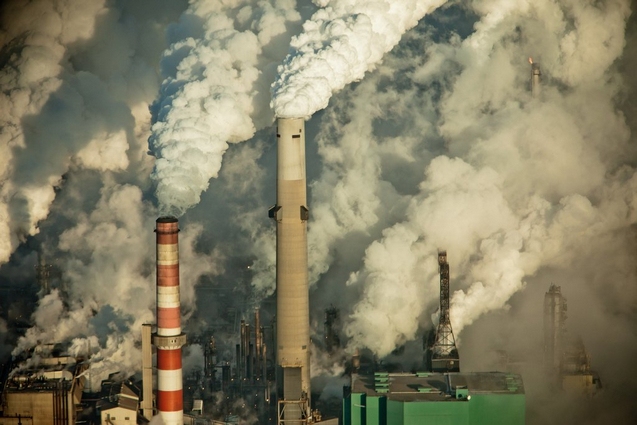
By the end of the century, the global temperature is likely to rise more than 2 degrees Celsius, or 3.6 degrees Fahrenheit.
This rise in temperature is the ominous conclusion reached by two different studies using entirely different methods published in the journal Nature Climate Change on Monday.
One study used statistical analysis to show that there is a 95% chance that Earth will warm more than 2 degrees at century's end, and a 1% chance that it's below 1.5 C.
"The likely range of global temperature increase is 2.0-4.9 [degrees Celsius] and our median forecast is 3.2 C," said Adrian Raftery, author of the first study. "Our model is based on data which already show the effect of existing emission mitigation policies. Achieving the goal of less than 1.5 C warming will require carbon intensity to decline much faster than in the recent past."
The second study analyzed past emissions of greenhouse gases and the burning of fossil fuels to show that even if humans suddenly stopped burning fossil fuels now, Earth will continue to heat up about two more degrees by 2100. It also concluded that if emissions continue for 15 more years, which is more likely than a sudden stop, Earth's global temperature could rise as much as 3 degrees.
"Even if we would stop burning fossil fuels today, then the Earth would continue to warm slowly," said Thorsten Mauritsen, author of the second study. "It is this committed warming that we estimate."
Taken together, the similar results present a grim reality. "These studies are part of the emerging scientific understanding that we're in even hotter water than we'd thought," said Bill McKibben, an environmentalist not affiliated with either study. "We're a long ways down the path to disastrous global warming, and the policy response -- especially in the United States -- has been pathetically underwhelming."
Because both studies were completed before the United States left the Paris Agreement under President Trump earlier this year, that has not been accounted for in either study.
"Clearly the US leaving the Paris Agreement would make the 2 C or 1.5 C targets even harder to achieve than they currently are," said Raftery.

Why two degrees?
The 2 degree mark -- that's a rise of 3.6 degrees Fahrenheit in global temperature -- was set by the 2016 Paris Agreement. It was first proposed as a threshold by Yale economist William Nordhaus in 1977. The climate has been warming since the burning of fossil fuels began in the late 1800s during the Industrial Revolution, researchers say.
If we surpass that mark, it has been estimated by scientists that life on our planet will change as we know it. Rising seas, mass extinctions, super droughts, increased wildfires, intense hurricanes, decreased crops and fresh water and the melting of the Arctic are expected.
The impact on human health would be profound. Rising temperatures and shifts in weather would lead to reduced air quality, food and water contamination, more infections carried by mosquitoes and ticks and stress on mental health, according to a recent report from the Medical Society Consortium on Climate and Health.
Currently, the World Health Organization estimates that 12.6 million people die globally due to pollution, extreme weather and climate-related disease. Climate change between 2030 and 2050 is expected to cause 250,000 additional global deaths, according to the WHO.


Iceland's melting glaciers

Our potential future
The first study used population, carbon emission and gross domestic product data from 152 countries (accounting for 98.7% of the world's population as of 2015) over the past 50 years to develop a new statistical model, said Raftery, a professor of statistics and sociology at the University of Washington.
Many studies come from the Intergovernmental Panel on Climate change and use climate model scenarios -- not forecasts -- to use as examples of what might happen, based on specific assumptions about economics, population and carbon emissions in the future.
"This leaves open the question of how likely they are, or whether they cover the range of possibilities," Raftery said. "In contrast, our results are statistically based and probabilistic, in that they aim to cover the range of likely outcomes."
What Raftery and his colleagues discovered is that population is not a factor.
"This is due to the fact that much of the expected future population growth will be in Africa, in countries whose carbon emissions are currently very low," Raftery said.
The study confirms conclusions of many other studies, said Bill Hare, director and senior scientists of nonprofit Climate Analytics. Hare was not affiliated with either study.
"This interesting paper confirms the conclusion about where the world is headed unless there is a major increase in the ambition of climate and energy policies," Hare said.
The other finding of the study suggests that achieving a goal of less than 1.5 Celsius warming would require carbon intensity to decline faster than it has in the past. "The whole purpose of climate and energy policy is to accelerate decarbonisation and this will necessarily be faster than what we have seen globally," Hare said.
Mauritsen, author of the second study and climate researcher at Max Planck Institute for Meteorology, also shared thoughts on Raftery's findings.
"It seems interesting in that it uses an economic statistical model that accounts for an increasing energy efficiency as societies develop," Mauritsen said. "It shows that the 1.5 to 2 degrees targets will not be met without additional mitigation, and suggests that a focus on energy efficiency is the best way forward."

The impact of our past
By combining observations of past global warming and how much heat and carbon is being captured and taken in by the ocean, Mauritsen and his co-author, Robert Pincus, found that even though CO2 has an incredibly long lifetime in the atmosphere, the ocean's absorption capacity may reduce estimates of global warming by 0.2 degrees Celsius.
They arrived at the "committed" warming of 1.3 Celsius by 2100, and the estimate including the ocean factor is 1.1 degrees Celsius. But that is still nearly 2 degrees Fahrenheit: 1.8, to be precise.
"What the study is not concerned with is how future emissions might develop," Mauritsen said.
"This is a societal problem where we as physical scientists have fairly little to add. These future emissions will, however, add warming on top of the already committed warming and so our study can act as a baseline for estimating how far we are from reaching various temperature targets."
Hare also found this study to be consistent with previous papers on global temperatures on the rise.
"It shows, in effect, that unless we start reducing emissions quickly -- soon there is a risk that we will overshoot temperature limits like 1.5 or 2 degrees C," Hare said. "It is just another confirmation of how dangerous the present situation is unless CO2 emissions, which have flatlined in the last few years, really start dropping.
"This addresses a somewhat different question, namely how much warming should we expect if fossil fuel emissions were to suddenly cease," Raftery said. "In contrast, our study tries to assess how much warming we should expect given realistic future trajectories of emissions. Thus the other study provides a lower bound on expected emissions and warming, and this is indeed lower than the likely range we find, as we would expect."

What can be done?
Researchers know that if there is any hope of preventing the outcomes they include in their findings, changing public policy is key.
"The next few years are going to be key in the fight against global warming," said Dargan Frierson, co-author of the first study. "Are we going to get to work installing clean energy, or stick to old polluting sources? If we don't act quickly, we better get to work preparing for many severe consequences of a much hotter world."
"There are only two realistic paths toward avoiding long-run disaster: increased financial incentives to avoid greenhouse gas emissions and greatly increased funding for research that will lead to at least partial technological fixes," said Dick Startz, economist and co-author of the second study. "Neither is free. Both are better than the catastrophe at the end of the current path."
Silver linings and hope are hard to find in climate change studies, but they also don't account for every factor.
"The only bright point is that, as the study authors say, they haven't factored in the plummeting cost of solar power," McKibben said. "That's the one way out we still might take -- but only if our governments take full advantage of the breakthroughs our engineers have produced."

Links

Climate Change Will Almost Certainly Heat The World So Much It Can Never Recover, Major Study Finds

The Independent - Andrew Griffin

There's only a 10 per cent chance we'll avoid widespread drought, extreme weather and dangerous increases in sea level
A woman displays a placard during a demonstration in New York on June 1, 2017 AFP/Getty
The world will almost certainly reach a tipping point and bring about unstoppable, destructive climate change, according to a new study.
There is a 90 per cent chance that the world's temperature will rise 2C, to 4.9C above pre-industrial levels by the end of the century, despite measures to reduce greenhouse gas emissions.
It's at that point that scientists think the world will fall into disastrous effects like widespread drought, extreme weather and dangerous increases in sea level. Experts have suggested that 2C of warming is the "tipping point" at which that change becomes unstoppable.
A river once flowed along the depression in the dry earth of this part of Bangladesh, but it has disappeared amid rising temperatures. Abrar Hossain
The world will almost certainly fail to keep warming to the 1.5C target that was set as part of the Paris climate agreement, according to the same research. There's a 99 per cent chance that climate change will break through that limit.
Dr Dargan Frierson, from the University of Washington, said: "Countries argued for the 1.5C target because of the severe impacts on their livelihoods that would result from exceeding that threshold. Indeed, damages from heat extremes, drought, extreme weather and sea level rise will be much more severe if 2C or higher temperature rise is allowed.
"Our results show that an abrupt change of course is needed to achieve these goals."
The scientists looked at 50 years of data on world population and economic activity to come up with their forecast. One factor taken into account was "carbon intensity", the amount of carbon emitted for each dollar of economic activity.
The approach is different from that taken by the Intergovernmental Panel on Climate Change (IPCC), whose most recent report included future warming rates based on four carbon emission scenarios.
Professor Adrian Raftery, who led the University of Washington team, said: "The big problem with scenarios is that you don't know how likely they are, and whether they span the full range of possibilities or are just a few examples. Scientifically, this type of storytelling approach was not fully satisfying.
"Our analysis is compatible with previous estimates, but it finds that the most optimistic projections are unlikely to happen. We're closer to the margin than we think.
"Overall, the goals expressed in the Paris Agreement are ambitious but realistic. The bad news is they are unlikely to be enough to achieve the target of keeping warming at or below 1.5 degrees."
The findings are published in the journal Nature Climate Change.
A separate study in the same journal found that even if all fossil fuel emissions were halted this year, global temperatures were very likely to be 1.3C higher than pre-industrial levels by the end of the century.
There was a 13% chance that the Earth was already committed to 1.5C warming by 2100, said the authors led by Dr Thorsten Mauritsen, from the Max Planck Institute for Meteorology in Germany.

Links

11 Terrifying Climate Change Facts In 2017

Wired - 

This is what's going on right now and it isn't good news
Credit WIRED
Climate change has pushed Earth into "uncharted territory". That was the stark warning published in a World Meteorological Organisation report earlier this year. Rising sea levels, melting arctic ice and record high temperatures are just some of the telltale signs.
The Paris Agreement was implemented as a collaborative global response to climate change, with a goal of reducing emissions. It aims to keep the global temperature rise to just 1.5°C, which would significantly reduce the risks and the impacts associated with climate change. President Donald Trump later decided to pull the U.S. out of the agreement, describing the move as "a reassertion of America’s sovereignty".
While a dwindling band of refuseniks still insist that is doesn't exist, climate change is already here, and it's only going to get worse, with some of the severe effects having already started to take hold.

1. Temperatures are breaking records around the world


The 21st century has seen the most temperature records broken in recorded history. Last year was the hottest year on record since 1880, according to NASA and the National Oceanic and Atmospheric Administration (NOAA), with average temperatures measuring 1.78 degrees Fahrenheit (0.99 degrees Celsius) warmer than the mid-20th century mean. This makes 2016 the third year in a row to set a new record for global average surface temperatures. Since the 1950s, every continent has warmed substantially, with hot days becoming far more common than cold ones. Nasa's latest visualisations, above, make that reality stark.

2. There is no scientific debate about the reality of climate change
Multiple studies show that a massive 97 per cent of researchers believe global warming is happening and that they agree that trends observed over the last past century are probably due to human activity. However, climate change is considered only the third most serious issue facing the world by the world's population, behind international terrorism and poverty, hunger and the lack of drinking water, according to YouGov research.
3. Arctic sea ice and glaciers are melting

Arctic sea ice coverage has shrunk every decade since 1979 by 3.5 to 4.1 percent. Glaciers have also been in retreat almost everywhere in the world, including major mountain ranges like the Alps, Himalayas and Rockies. In 2017, arctic sea ice reached a record low for the third straight running, according to scientists from the National Snow and Ice Data Center (NSIDC) and NASA.

4. Sea levels are rising at their fastest rate in 2,000 years
Credit Jonas Gratzer/Getty
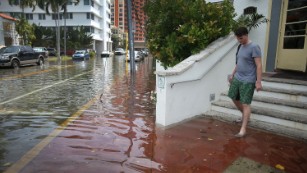
Rising sea levels is caused primarily by the added water from melting ice sheets and glaciers, as well as the expansion of sea water as it warms. Levels are currently rising at their fastest rate for more than 2,000 years and the current rate of change is 3.4mm a year. In July, a massive crack in the Larson C ice shelf finally gave way sending a 5,800 square km section of ice into the ocean. The newly formed iceberg is nearly four times the size of London.

5. Climate change will lead to a refugee crisis
Credit Getty / Scott Nelson / Staff
Displacement of people as a direct result is not a hypothetical, it's already happening. An average of 21.5 million people have been forcibly displaced since 2008 due to climate changed-related weather hazards, according to the United Nations High Commissioner For Refugees. The organisation says that climate change also acts as a 'threat multiplier' in areas of ongoing conflict. "Climate change sows seeds for conflict, but it also makes displacement much worse when it happens," it says.

6. We will consume all of Earth's 2017 resources by August
Credit Global Footprint Network
Earth Overshoot Day is an annual event when humanity's consumption outstrips Earth's production of resources. This annual event is getting earlier and earlier in the year. In 2000 it landed in October. In 2015, it was August 13. This year, it lands on August 2.
The world's superpowers – including China, the US, the UK, Germany and Japan – already use more than double the amount of resources they produce.

7. Two-thirds of the Great Barrier Reef has been damaged as a result of climate change
Credit mevans / iStock
In April 2017, it was revealed that two-thirds of Australia's Great Barrier Reef has been severely damaged by coral bleaching. This occurs when algae living within the coral tissue are expelled, usually as a result of water temperatures being too high. As a result, the coral loses its vibrant appearance, turns white and becomes weaker. Scientists say it will be hard for the damaged coral to recover.

8. The ocean is 26 percent more acidic than before the Industrial Revolution
The pH of ocean surface water has decreased by 0.1, which makes them 26 percent more acidic now than at the beginning of the Industrial Revolution. The waters are more acidic now that at any other point in the last 300,000 years.

9. Global flooding could triple by 2030
Credit Getty / Matt Cardy / Stringer
The number of people exposed to flooding each year is at risk of tripling from 21 million to 54 million by 2030, according to a study from the World Resources Institute. This would result in the economic costs of flooding increasing from £65 billion to around £340 billion.

10. More greenhouse gases are in our atmosphere than any time in human history

The concentration of carbon dioxide in the atmosphere reached the milestone of 400 parts per million for the first time in 2015 and surged again to new records in 2016, according to the World Meteorological Organization's annual Greenhouse Gas Bulletin.

11. Earth could warm by 6 degrees this century
The Earth's temperature will continue to rise so long as we continue to produce greenhouse gases. The estimates for how much temperatures will increase by 2100 range from 2 degrees Celsius to as much as 6 degrees Celsius.

Links

01/08/2017

As The UK Plans To Phase Out Petrol Cars, Is Australia Being Left Behind?

The Guardian - 

Britain has joined France and India in trying to ban the sale of diesel and petrol cars, but some say Australia's size makes the transition too difficult
The Australian Energy Market Operator suggest up to 45% of new cars will be electric by 2036, but other estimates vary from 15% to 100%. Photograph: Peter Byrne/PA
It is only a matter of time until every Australian car is all-electric. But while other countries are speeding up the transition, with plans to ban petrol cars within a couple of decades, Australia is stuck debating even modest cuts to vehicle emissions, let alone policies to encourage zero-emissions cars.
But as the UK, France, India and other countries move quickly towards getting all-petrol cars off the roads, could Australia's fleet be caught up in the winds of change?
According to Michael Bradley, chief executive of the Australian Automobile Association, Australia should be cautious in embracing all-electric cars.
"All the signs point to electric vehicles making up a significant proportion of the global fleet but in Australia we have some unique challenges," he tells the Guardian. He says the distances Australians travel and the reliance of our electricity grid on coal means electric cars are neither convenient for consumers, nor a solution to climate change.

The rise of electric cars
Recently, Stanford University economist Tony Seba made headlines with modelling suggesting no petrol or diesel cars would be sold anywhere in the world by 2025. He argued that once the shift starts – which it already has – "internal combustion engine vehicles will enter a vicious cycle of increasing costs". He argued the combination of automation and electrification would turn the industry upside down, increasing safety, lowering maintenance and insurance costs, and leading to a world where few people owned cars, with most relying on robot electric cars hailed with apps such as Uber.
But other more conservative projections also see the transition happening quickly, if not so suddenly.
Projections by the Australian Energy Market Operator suggest as many as 45% of new cars will be electric by 2036. Other projections from the CSIRO, Australian National Uuniversity, the Department of Environment and Energy and others put the number at between 15% and 100%.
According to Behyad Jafari, chief executive of the Electric Vehicle Association, the one thing that's clear is even the more optimistic projections need to be ramped up year after year.
"We saw this with the uptake of rooftop solar panels too," says Jafari. "The people who came closest with their projections but still fell short were Greenpeace – they were laughed at for their projections."
But Jafari says the moves in the UK, France, India and elsewhere will drive changes in the automotive industry that will affect Australia regardless of policy settings here.
Jafari said moves in the UK, which is one of the few other right-hand-drive markets in the world, will have a strong impact.
"As a major right-hand-drive market, auto manufacturers, particularly those based in Europe and the US do their product planning based on the needs of the UK market first, and then off the back of that they look at which models they will bring to Australia," says Jafari.
"With the UK moving away [from internal combustion engines] by 2040, that sends a signal starting today that the investments and the advancements in technology are required."
But so far, Australia is trailing the world with its takeup. In 2016 there were 1,369 electric vehicles sold – just 0.1% of the sales – a drop from the 2015 figure of 1,771. Fewer than half of those cars were all-electric, with the rest being plug-in hybrids.

Driver anxiety
Globally, one of the biggest concerns consumers have about electric cars is the distance they can travel between charges – and the availability of public charging stations. The concern has been labelled "range anxiety".
Bradley says it's a real problem in Australia. "It's an issue for Australia given our vehicle use and how it's different to what it is in other countries," he says.
Since Australia is a vast continent, with large distances between cities, and with a lot of people commuting to work, electric cars might not be able to go the distance Bradley says.
But Jafari says while range is something that is of great concern to consumers, it's mostly a misplaced worry. "People are tricked by thinking that because we have a large country that we drive long distances. In fact we fly long distances and drive relatively short ones," he says.
Data from the Australian Bureau of Statistics seems to support Jafari's argument. In 2016, the majority of drivers drove less than 30km per day. And 99% of drivers drove less than 160km a day – a distance some electric cars could do on half a charge and one all would easily achieve on one charge.
Bradley says those figures don't account for what people do on weekends – when they might drive out of town. For those drives, he said, people would need to charge along the way. And again, given Australia's vast size, charging infrastructure is expensive to deploy.
Technology available today would seem to satisfy most consumer needs, however. A Tesla Model S can drive 426km on one charge, meaning it could easily drive between Sydney and Canberra on a single charge.
And with just two quick charges of less than 30 minutes along the way, it could drive from Sydney to Melbourne.
Installing fast-charging stations along highways will alleviate range anxiety, and that's what has started to happen.
This week the Queensland government launched its planned "electric super highway", which will be a 1,600km stretch dotted with super-fast charging stations along the way. When completed in just six months' time, electric vehicle owners will be able to drive from far-north Queensland to the border of NSW without being more than 100km from a charging station.


Jafari says he's not concerned about public charging infrastructure since he thinks businesses will jump in and build that as soon as there's confidence in the electric car market growing in Australia.
He says the key thing that will shift the takeup of electric cars in Australia will be the availability of models under $60,000 and closer to the $25,000 range. That will be more likely as more such models are made for the UK market, but how fast it happens will depend on Australian policies such as the controversial emissions standards.

Environmental motives
Many consumers who are considering electric cars have environmental concerns at the front of their minds.
When it comes to air quality concerns, there's no question electric cars are the best option. "Obviously electric vehicles are a clear winner on that front," says Bradley.
But Bradley says in the Australian context, when it comes to climate change and emissions of CO2, electric cars are not a solution. "Driving an electric car on Australia's grid at the moment is dirtier than driving a comparable petrol car."
Australia's electricity grid relies heavily on coal, making it highly emissions intensive.
According to the Australian government's Green Vehicle Guide, a Tesla Model S, for example, might put out zero emissions, but it produces about 185g of CO2 per kilometre when the lifecycle of its fuel (in this case electricity) is considered.
But Jafari argues that's not a fair comparison, since a Tesla Model S is a performance car – with acceleration similar to some of the fastest sports cars on the market.
In addition, Jafari says there are a multitude of ways of charging electric vehicles with electricity from renewable sources.
Queensland's electric highway will be powered with renewable energy, for example, and most public charging stations purchase green energy. AGL has also launched a $1 a day car charging plan for home charging, which is sourced from emissions-free sources.
"The energy industry is decarbonising and, without a shift towards electrification of vehicles, leaves the benefits of that on the table – we'll produce more green energy but leave our cars powered by fossil fuels," Jafari says.

Links

What’s Missing from “An Inconvenient Sequel,” Al Gore’s New Climate-Change Documentary

New Yorker - 

The news, the former Vice-President says, has become “like a nature hike through the Book of Revelation.” But is fear enough to spur us to action? Photograph Courtesy Paramount Pictures
In one of the most memorable moments of Al Gore’s new climate-change documentary, “An Inconvenient Sequel,” Gore refers to a sequence from the film’s 2006 predecessor, the Oscar-winning “An Inconvenient Truth.” The most criticized scene in that movie, he tells an audience of climate-change activists, was an animation showing how a combination of sea-level rise and storm surges could flood the National September 11 Memorial & Museum, then under construction in lower Manhattan. “People said, ‘That’s ridiculous. What a terrible exaggeration,’ ” Gore recalls.
A moment later, on the screen behind him, the animated flood is replaced by news footage of Hurricane Sandy, which in late 2012 flooded the main floor of the unfinished museum with seven feet of black, debris-filled water. Several days after the storm, in a briefing on recovery efforts, New York Governor Andrew Cuomo said, “There is a wakeup call here, and that is climate change and our vulnerability to it. It was true ten years ago, it was true five years ago. It is undeniable today.”
Eleven years ago, when “An Inconvenient Truth” was released, the effects of climate change were still, for most of us, the stuff of animations and projections. The connection between global warming and extreme weather, though well established in computer models, was difficult to demonstrate in the real world; as scientists routinely reminded the public, no single event—not even one as devastating as Hurricane Katrina—could be confidently attributed to humanity’s impact on the planet.
Scientists’ characteristic caution, combined with the George W. Bush Administration’s deep hostility toward climate science and emissions reductions, insured that in the United States, at least, the ramifications of climate change were almost always presented to the public as theoretical and highly uncertain. The souped-up PowerPoint presentation that was “An Inconvenient Truth” effectively separated facts from muddle, and Gore’s earnest, insistent monotone, for so long a political handicap, found its most successful application.
Today, both the causes and the effects of climate change are clearer, and while some people have been harder hit than others, few of us are totally untouched; the news, as Gore puts it in a practiced bit of dark humor, has become “like a nature hike through the Book of Revelation.” The former Vice-President is still giving, and constantly updating, his presentation, and it is now filled with footage from climate-related disasters, ranging from the 2012 inundation of the 9/11 memorial to the painful, ongoing recovery from Typhoon Haiyan, the intense 2013 storm that killed more than six thousand people in the Philippines and affected some eleven million others throughout Southeast Asia. After a 2015 heat wave killed more than twelve hundred Pakistanis, Gore reports, cemeteries in the city of Karachi prepared for the following summer by digging anticipatory mass graves.
“An Inconvenient Sequel,” which opened in select cities on Friday and will open nationwide next week, arrives on the heels of a widely shared New York magazine article by David Wallace-Wells. The piece describes, in dramatic terms, the worst-case repercussions of climate change. “Absent a significant adjustment to how billions of humans conduct their lives, parts of the Earth will likely become uninhabitable, and other parts horrifically inhospitable, as soon as the end of this century,” Wallace-Wells writes.
Some climatologists objected to the article’s characterizations of their work, but the real controversy centered on its approach. Michael Mann, the director of the Earth System Science Center, at Pennsylvania State University, declared that he was “not a fan of this sort of doomist framing,” and the sociologist Daniel Aldana Cohen described it as “climate disaster porn.” Wallace-Wells, for his part, acknowledged that his piece was “alarmist,” and proudly so. “We should be alarmed,” he wrote after its publication. (Earlier this month, the biologist Paul Ehrlich used a similar defense after co-authoring a study that warned of a coming “annihilation” of vertebrates. “I am an alarmist,” Ehrlich told the Washington Post. “My colleagues are alarmists. We’re alarmed, and we’re frightened. And there’s no other way to put it.”)
Psychologists have studied the dynamics of what advertisers call “fear appeals,” and they have found that while fear is very good at getting our attention, it’s not very good at keeping it. For that, the scary stuff must be followed by solutions that are small enough to be practical but large enough to be meaningful. Wallace-Wells’s article, “The Uninhabitable Earth,” successfully got attention, quickly becoming the most-viewed article in New York’s history. But it offers little in the way of fixes, nodding briefly to the allure—if not the wisdom—of geoengineering and suggesting that civilization will eventually cobble together a substantive response to climate change, if only because the alternative is so appalling.
“An Inconvenient Sequel,” which is a work of advocacy rather than journalism, pivots efficiently away from its disaster reel and toward solutions, cheering the rise of cheaper renewables and the promise of the Paris climate accord, even in the wake of the U.S.’s withdrawal. But its tight focus on Gore means that grassroots climate activists—many of whom were galvanized by Gore’s first film, and by the hundreds of trainings he has held in the years since—get short shrift. For the most part, they are shown sitting in auditoriums, listening raptly to Gore’s presentation. A long segment of the film is devoted to Gore’s behind-the-scenes negotiations with the Indian delegation at the Paris conference—which, while procedurally interesting, is hardly the sort of thing that most viewers can try at home.
Intentionally or unintentionally, “The Uninhabitable Earth” leaves room for something “An Inconvenient Sequel” does not: grief. The present and possible future ravages of climate change, on our own species and others, are enormously, often overwhelmingly sad, and most of us would rather not contemplate them. Wallace-Wells, as a journalist, isn’t professionally obligated to pivot away from the worst-case scenarios, and he makes the unusual decision to leave us staring at them. The vantage isn’t pleasant, but its provision feels, oddly, like a gesture of respect: for once, we’re given a chance to absorb and reflect, and, in time, find our own way to a response.
I saw “An Inconvenient Sequel” on a hot July night in Portland, Oregon, at a screening hosted by the environmental group Renew Oregon and attended by Governor Kate Brown. Brown has committed her state to meeting the emissions-reduction goals set by the Paris accord, but most paths to those goals require a price on carbon, and Oregon legislators have so far failed to approve a bill that would do so. At the screening, she announced, to enthusiastic applause, that she would work to pass a state “cap and invest” bill in 2018. “I think the rest of the world needs to see Americans, and Oregonians, standing up,” she told me later. “We must participate, and we must be part of the solution.”
After the credits rolled, Shilpa Joshi, a Renew Oregon staffer, stood to speak to the audience, and acknowledged the weight of the suffering we had just witnessed. “My family is from India, and it resonates with me on a deep level,” she said. She then described how audience members could help build support for a clean-energy economy in Oregon, detailing the kind of right-sized solutions that the movie had only touched upon. “Change at the local level is the best way to create real change in our state, and in our country, and in our world,” she reminded her listeners. No matter how climate change is framed—no matter how sunny or doleful the vision—it’s what happens off the screen, and off the page, that will decide whether the planet remains habitable.

Links

When Life on Earth Was Nearly Extinguished

New York Times - Peter Brannen*

Armando Veve
It has been called the "Great Dying."
The planet's most profound catastrophe struck 252 million years ago, at the end of the Permian period, killing 90 percent of life in the ocean and 75 percent on land. The fossil record nearly goes silent and remains startlingly impoverished for millions of years: trees disappear, bacteria replace coral reefs, insects hush. What looks like fungus spikes in the fossil record, perhaps the sepulchral rot of a dying world.
It was as close as earth has ever come to being sterilized altogether, and would take 10 million years for the planet to fully recover, setting the stage for the eventual rise of the dinosaurs.
"The End-Permian mass extinction is unique in earth history," said Seth Burgess, a geologist with the United States Geological Survey. "Nothing else is as severe, and it's not even close."
A growing body of evidence suggests that this ancient apocalypse was brought on, in large part, by gigantic emissions of carbon dioxide from volcanoes that erupted across a vast swath of Siberia. Today the consequence of quickly injecting huge pulses of carbon dioxide into the air is discussed as if the threat exists only in the speculative output of computer models. But, as scientists have discovered, this has happened many times before, and sometimes the results were catastrophic.
This month the journal Palaeogeography, Palaeoclimatology, Palaeoecology published a special issue that explores a growing body of evidence that past volcanic releases of carbon dioxide may have helped drive many of the most extreme die-offs in earth history.
While cautioning that there may have been other killers involved in these Armageddons, as well, the paleontologist David Bond and the geologist Stephen Grasby write in the journal that most mass extinctions were marked by "global warming, anoxia and ocean acidification, driven by changes in atmospheric CO2." After synthesizing a vast body of literature and reviewing almost 20 global mass extinctions over the past half billion years — including the most extreme ones, the so-called Big Five — the authors concluded that "large scale volcanism is the main driver of mass extinctions" and that "most extinctions are associated with global warming and proximal killers such as marine anoxia."
The journal's special issue reflects a research community that, failing to find asteroid impacts at the crime scenes of many of the planet's worst prehistoric calamities, has turned its attention away from the sky and toward homegrown killers.
Today, in the lonely reaches of Siberia, piles of ancient basalt stack up, in places, miles thick. During the height of the End-Permian mass extinction 252 million years ago, this lava would have covered millions of square miles of what was then the supercontinent Pangaea. But it wasn't simply the lava that nearly exterminated life on earth.
As the work of Dr. Burgess documents, when this magma started spreading into the shallow crust of Siberia, it intruded into one of the world's largest coal basins, cooking huge deposits of carbon-rich rocks. The superheated fossil fuels then ruptured at the earth's surface in spectacular gas explosions, as documented by a team led by the Norwegian geologist Henrik Svensen.
Though volcanoes in Siberia had already been erupting for around 300,000 years, Dr. Burgess's work indicates that it wasn't until the magma started burning through fossil fuels on a colossal scale that the mass extinction began. The carbon dioxide was delivered to the atmosphere just as effectively as by any coal-fired power plant or minivan muffler today.
In the resulting chaos, as temperatures rose and life died in the acidifying, oxygen-starved oceans, the planet nearly lost its pulse. I asked Dr. Burgess what a time traveler visiting the End-Permian earth would have experienced. "It would be hot and it would be terrible," he said, laughing.
Though the asteroid that would wipe out the dinosaurs 186 million years later might get more attention, the Great Dying dwarfs that catastrophe in destruction. It brought about the end to a less well-known but similarly fascinating, and much older world — a supercontinental wilderness stocked with an odd collection of uncanny pre-mammal forbears and, in the seas, an archaic hallucination of shells and tentacles that had prevailed since the dawn of animal life.
Today humanity plays the role of that primeval Siberian supervolcano, burning through the world's ancient stores of carbon, long buried underground in the form of oil, coal and natural gas. Though there were likely other killers afoot in the Great Dying — like ozone-destroying halocarbons, acid rain and a heavy dose of toxic heavy metals raining from the volcanic smog — it was the chemistry-warping pulse of carbon dioxide that has attracted the most suspicion for its role in nearly ending the world. And we have only to look at the modern ocean to see why.
Excess carbon dioxide reacts with seawater to make it inhospitable to the animals that use carbonate to build their skeletons. Our modern oceans have already become 30 percent more acidic since the start of the Industrial Revolution, and the shells of fluttering planktonic snails — which form a foundational part of the food web in the Antarctic and the Pacific Northwest — have been found pitted with holes in our newly souring seas.
By 2050 the Southern Ocean will no longer be able to host those creatures, which also form a critical part of the diet of salmon. Acidification will also doom, perhaps by midcentury, the already ailing coral reefs that host 25 percent of the ocean's biodiversity. And the world's shallow oceans are losing oxygen as the planet warms and nutrient pollution pours in from agricultural heartlands and urban watersheds. Paleontologists have seen all these changes before.
It's still an open question what will result from our continuing chemistry experiment with the planet, but the history of mass extinctions counsels extreme caution.
Luckily, we're still a long way away from an End-Permian level mass extinction, though some paleontologists warn that a few more centuries of environmental excess may well get us there. But you don't have to get all the way to the apocalypse before life begins to get markedly less comfortable.
Even before the United States' harebrained exit from the Paris climate agreement, the planet was well off course from its 3.6-degree Fahrenheit (2-degree Celsius) target for 2100. We're currently on pace for about 7.2 degrees Fahrenheit (4 degrees Celsius) of warming by the end of the century, a temperature that at times in the past has meant no ice at either pole. But the calendar doesn't stop at the end of the century, and continued warming beyond that will begin to make parts of the planet uninhabitable for mammals like ourselves, because of the dangers of heat stress. And, as the bleaching of the Great Barrier Reef shows, the oceans are already struggling to adapt to a warmer, more acidic world.
Though the Great Dying was truly extreme, and likely included some stresses beyond the scope of humanity's armamentarium, we have emerged as a formidable geological force in our own right as we continue to tweak and warp the complex earth systems that sustain life.
"The rate at which we're injecting CO2 into the atmosphere today, according to our best estimates, is 10 times faster than it was during the End-Permian," the paleoclimatologist Lee Kump, dean of the College of Earth and Mineral Sciences at Penn State, told me. "And rates matter. So today we're creating a very difficult environment for life to adapt, and we're imposing that change maybe 10 times faster than the worst events in earth's history."

*Peter Brannen writes about science and is the author of "The Ends of the World: Volcanic Apocalypses, Lethal Oceans, and Our Quest to Understand Earth's Past Mass Extinctions."

Links

31/07/2017

These 'Missing Charts' May Change The Way You Think About Fossil Fuel Addiction

National Observer - Barry Saxifrage

We're still burning more and more fossil fuel every year, says climate reporter Barry Saxifrage. File photo by Kris Krug
To address the twin threats of climate change and ocean acidification, nearly every nation has promised to reduce fossil fuel burning.
But so far, humanity keeps burning ever more. Last year we did it again, burning an all-time record amount.
That's according to data compiled from the latest "BP Statistical Review of World Energy." This annual report is one of the most widely used and referenced around the world. It's big and comprehensive with fifty pages, thirty-three spreadsheets and forty charts. The report highlights most of the important trends in global energy. Most. But one critical trend was nowhere to be found....
Conspicuously absent was the basic statistic on fossil fuels that I, as a climate reporter, was looking for: how much fuel is the world burning each year? Such a simple question, and the answer tells one of the most important stories in the world: are we finally turning the corner on our fossil fuel dependency?
To find that missing story, I needed to download and combine multiple BP data sheets, do the math, and then build my own charts to reveal the trends. Here (drumroll, please) are the "missing charts" and what they have to say to us…

The missing charts: how much carbon-polluting fuel is humanity burning?
I built three charts using the compiled BP fossil fuel data. This first chart shows the total energy consumed from burning fossil fuels each year.
As you can see, the amount we burn continues to rise. Last year humanity set another fossil fuel energy record of 11.4 billion tonnes of oil equivalent (Gtoe). A decade ago we were at 10 Gtoe of energy. In 2000, we were at 8 Gtoe.
There is certainly no sign in this chart of a turning point in our relationship to fossil fuels.
My next chart uses the same BP data, but this time shows the annual increase from year to year:
In 25 of the last 26 years, we burned more fossil fuels than the year before.
The only year in the last quarter century with a decrease was 2009. That was caused by a sharp global recession. And within a year, that rare respite was wiped out by a massive surge that followed.
Sadly, there is no sign of a turning point in this chart either.
Take last year for example. The increase wasn't particularly large, but it wasn't particularly small either. In fact, it was right in line with the 1990s average. And the nineties certainly weren't anyone's idea of a retreat from burning fossil fuels. Nor were they a turning point in our fight against climate change or ocean acidification. The 1990s were business-as-usual.
Finally, here's a third view of the same BP data. This one illustrates fossil fuels' share of all global energy. Turning point?
What this chart says to me is that fossil fuels continue to absolutely dominate global energy consumption. Even a quarter century of global efforts to transition to safer energy sources was unable to make any meaningful dent in the dominance of fossil fuels.
Together, these three "missing" charts of BP's fossil fuel data — ever rising amounts; increasing every year; and maintaining uncontested dominance — paint a sobering picture of humanity's lackluster response to the growing threat.
As California Governor Jerry Brown lamented in a recent New York Times interview: "No nation or state is doing what they should be doing. This is damn serious, and most people are taking it far too lightly than the reality of the threat. You can't do too much to sound the alarm because so far the response is not adequate to the challenge."
Those three missing charts illustrate our inadequate response quite clearly. Perhaps that is why BP (an oil & gas company after all) left them out of their report.

Oil, gas and coal: the last five years
I started digging into the BP data because I've read a fair number of articles proclaiming that a fundamental shift in fossil fuel use is underway, and I wanted to see it for myself. Unable to find any sign of it in the aggregated fossil fuel data shown above, I decided to drill down into oil, gas and coal separately.
If we really are at a turning point in our use of fossil fuels then we should be able to find some sign of it in BP's oil, gas and coal data for last five years. So, let's take a look at each of those.
I'll start with the biggest of all: oil.

Fossil oil dependency rockets upwards
This chart shows the increase in global energy use over the last five years. Renewables are tin green and oil is in black.
Notice any turning point?
To make matters worse from a climate perspective, an analysis by ARC Energy Institute shows that the oil-efficiency of the global economy has also been getting significantly worse in recent years. In other words, humanity has reversed course and is now burning more oil per dollar of GDP with each passing year.
They conclude: "Headlines around electric cars and carbon policy suggest our oil dependency is on a slippery downward slope. Recent data from 2016 suggests the opposite: our worldwide addiction is getting stronger."
With no sign yet of a turning point in oil burning, let's look at fossil gas.

Surging fossil gas is locking in climate failure
I added natural gas to my chart and...ouch. It seems that the recent increase in natural gas burning has nearly matched oil's blistering pace.
Indeed, we have increased use of fossil gas far more than we have for the climate hope twins — wind and solar — combined.
As Bloomberg New Energy Finance sums it up, the "outlook on natural gas is brighter than ever." BP, Exxon Mobil, Shell and the International Energy Agency (IEA) have all published reports that agree. Each one projects fossil gas consumption will keep growing far into our future.
That's certainly bad news for our destabilized climate and oceans. The title of a new report from Climate Action Tracker highlights the risk: "Foot off the gas: increased reliance on natural gas in the power sector risks an emissions lock-in."
Their analysis shows that surging investment in fossil gas infrastructure and production is enough to ensure failure for the Paris Agreement on climate change.
With oil and gas use sprinting rapidly towards climate failure, let's turn to our attention to the remaining fossil fuel: coal.

At least coal is falling. Or is it?
Adding BP's coal data to the chart finally gives us a glimmer of climate hope in the bad news. It looks like coal burning has declined in the last few years.
Or has it? Could those coal numbers be wrong?
Sadly, the more I drilled into them, the more likely it seems that the numbers are under-reporting what's really being burned.
Here are four maddeningly compelling reasons to be skeptical of a coal downturn:
  1. Data: Our atmosphere shows no sign of it.
  2. History: China has huge under-reporting problems.
  3. Human nature: Growing pressure to under-report and no way to catch it.
  4. Money: New coal plant construction is booming worldwide.
Let's look at each in turn.

Reason #1: Our atmosphere shows no sign of it
BP says that the reported decline in coal burning means that global CO2 emissions have stopped rising. If so, then someone forgot to tell our atmosphere about it.
Instead, CO2 levels in the air have been surging upwards at record-breaking rates.
Here's a chart showing the CO2 increase each year since 1960. Those two tallest orange bars on the right show that CO2 rose by all-time record amounts in each of the last two years.
(See related article: Atmospheric CO2 levels accelerate upwards, smashing records)
Not only is there is no sign of a turning point in our atmosphere, but CO2 levels are actually accelerating upwards. My next chart shows this clearly:
Scientists are able to measure the levels of CO2 in our atmosphere very accurately. Atmospheric CO2 data doesn't rely on unverifiable, self-interested, reports from industries and nations — like BP's coal statistics do.
Now, it could be that the huge mismatch between our atmosphere and the claims of coal burners is the result of nature behaving in some new way we don't understand.
On the other hand, it could be the result of humans acting in familiar ways that we do understand: by under-reporting.

Reason #2: China's problem with under-reporting emissions
China burns half the world's coal. And China also struggles to accurately measure and report its emissions.
How inaccurate are China's numbers?
The New York Times recently reported that China's "pollution and energy data can be unreliable or outright fake."
Widespread accounting problems have become a major issue threatening the roll out of China's new national carbon market. In other words, they don't trust their energy accounting enough to rely on it themselves.
An eye-watering example of one of China's past accounting errors happened just a few years ago. The government revised its 2013 coal estimates upwards by 600 million tonnes per year. Yeah, that's a lot.
To put that into perspective, I've added this amount to my chart as a red arrow. As you can see, it's double the entire reported global coal decline from the last three years.
Oh, and before that 2013 revision, China had another gigantic one.
A decade earlier, another big error in China's coal reporting "created an erroneous impression that China had succeeded in generating economic growth without increasing emissions." Instead, their coal data was under-reported.
So, are China's more recent coal estimates also too low? Unfortunately it will be a few more years before we find out because China only reports revisions every five years.
If their numbers are off by a sizable amount again, it could instantly erase the supposed global "downturn" in coal. That would bring reported global fossil fuel emissions more in line with what scientists are measuring in our atmosphere.
China is certainly not the only nation with inaccurate coal numbers. India and others struggle with this too. Partly it is caused by developing nations' lack of resources. Partly it is caused by the growing pressure to under-report the numbers, as we will see next.…

Reason #3: Growing pressure to under-report and no way to catch it
As the impacts of climate change and air pollution continue to grow worse, pressure is growing on foot-dragging governments and industries to fudge their numbers so they appear to be acting more vigorously than they really are.
This is true around the world, not just in China. For example, the metastasizing Volkswagen emissions cheating scandal revealed a widespread, intentional effort to under-report emissions on a global scale. And that cheating occurred in a highly-regulated industry with required verification tests.
Caixin reports on another recent example from China: "Recent Environmental Ministry inspections found that one-third of manufacturers in northern China had tampered with emissions data to avoid heavy penalties." There is now a "cottage industry" to help fake the numbers. That cheating also took place in a regulated industry that required verification tests.
Now consider coal burning. Pressure is growing to cut back because of toxic air pollution, the Paris Agreement promises, worsening climate change and the emerging ocean acidification crisis. Also consider that, unlike those other examples of cheating, there is no way to verify coal burning claims.
Scientific American warns that the "world needs a way to verify that nations have made their promised carbon cuts … The current inability to verify that a nation has made its promised carbon cuts remains a long-standing loophole that experts say must be closed to make the global pact (Paris Agreement) effective."
The New York Times reported on verification in China: "Like some other nations, China, the world's biggest polluter, has refused to accept international monitoring of its emissions and says it will provide data to outside observers. In the past, conflicting data about the country's energy use has raised questions about accuracy...Furthermore, there are persistent differences between coal consumption statistics reported on the provincial and national levels."
Widespread emissions cheating is occurring even in highly regulated areas with mandatory verification testing. It is even more tempting to under-report coal burning numbers because they are mostly self-reported and there is no way for others to disprove the claims.

Reason #4: The global boom in new coal plants
A final reason to be skeptical of a coal downturn is the boom in coal plant construction worldwide.
If humanity is really at a turning point for coal then why are investors pouring hundreds of billions of dollars into increasing global coal power capacity by 43 per cent?
That depressing statistic comes from the coal-tracking database compiled by the German group, urgewald. A recent article in The New York Times makes for sobering reading and leaves little doubt about the scale and breadth of the ongoing coal expansion. This global coal boom is being led by Chinese companies, but they aren't limiting their efforts to China. Nations with no history of coal burning are about to join the club for the first time.
This mismatch between climate promises to reduce fossil fuels and the financing being injected into fossil fuels is happening all around the world.
A new joint report led by Oil Change International, "Talk is Cheap: How G20 Governments Are Financing Climate Disaster," adds it all up. "Of all public finance for energy provided by G20 institutions and the multilateral development banks between 2013 and 2015...58 percent supported fossil fuel production."
I created this chart from that report's data. It shows the top four nations in public financing of fossil fuels between 2013 and 2015.
Every one of them poured far more money into fossil fuels than into all other energy sources combined.
And just look at China. A whopping 90 per cent of government energy spending went to fossil fuels. The "Talk is Cheap" report says China spent more on coal than on all non-fossil energy sources combined. Downturn?
Even under former U.S. president Barack Obama, a major proponent of climate action, the United States spent more public money on fossil fuels than on all alternatives combined.

Fossil fuels vs climate hope
It's hard for me to see any sign of good news for our future climate or oceans in BP's latest energy data. There is no sign of a turning point in our dependence on fossil fuels. Here again is the first of the "missing charts" that shows so clearly our ever-upward demand for fossil fuels.
Even at the relative level, the burning of fossil fuels continues to overwhelmingly dominate global energy consumption. Decades of efforts to shift to safer sources have barely dented fossil fuels' share, which continues to float north of 85 per cent.
When we drill down to recent trends in oil and gas it's even more discouraging. The burning of both those fossil carbon fuels continues to surge dizzyingly upwards, out-running the safer alternatives. Reports show that these twin surges threaten to "lock in" global climate failure.
The one possible point of hope for our climate and oceans is in the data on recent coal burning. But this data is the most likely to be under-reported. Coal burning has been spectacularly under-reported in the past. Repeatedly. And now, as pressure grows, more and more nations and industries stand to benefit by under-reporting. They face little chance of being caught if they do. That's because the world lacks any way to verify much of the global coal reporting.
Meanwhile, construction of coal plants continues to boom around the globe and CO2 levels in our atmosphere continue to accelerate upwards.
If we want hospitable climate and oceans, the fossil fuel data suggests that our efforts so far are far too little. In the words of California Governor Jerry Brown, "You can't do too much to sound the alarm because so far the response is not adequate to the challenge."

Links

Lethal Heating is a citizens' initiative