Many houses were flattened after Tropical Cyclone Evan,
leading to the partial relocation of the Fijian viillage Denimanu.
Rowena Harbridge/AusAID, CC BY-SA
The original Fijian village of Vunidogoloa is abandoned. Houses, now
dilapidated, remain overgrown with vegetation. Remnants of an old
seawall built to protect the village is a stark reminder of what climate
change can do to a community’s home.
Vunidogoloa is one of four Fijian communities that have been forced
to relocate from the effects of climate change. And more than 80
communities have been earmarked by the Fiji government for potential future relocation.
Low lying coastal communities like these are especially vulnerable to
threats of sea-level rise, inundation of tides, increased intensity of
storm surges and coastal erosion. Extreme, sudden weather events such as
cyclones can also force communities to move, particularly in the
tropics.
But relocating communities involves much more than simply rebuilding houses in a safer location.
It involves providing the right conditions for people to rebuild the
lives they knew, such as equitable access to resources and services,
social capital and community infrastructure. Our research documents the experiences and outcomes of relocation for two of these Fijian communities – Vunidogoloa and Denimanu.
The relocated villages
My colleagues and I visited Vunidogoloa and Denimanu, villages in
Fiji’s Northern Islands, at the end of 2017 and spoke to village leaders
and community members to learn how they felt about the relocation
process.
All 153 residents of Vunidogoloa and roughly half of the 170 people in Denimanu moved away from their climate ravaged homes.
Map of Fiji showing the two case study sites.Author provided
Flooding in Vunidogoloa
Vunidogoloa is a classic example of the slow creep of climate change.
For a number of decades the residents have fought coastal flooding,
salt-water intrusion and shoreline erosion. The village leaders
approached the Fijian government, asking to be relocated to safer
ground.
The relocation was originally set for 2012 but, after delays, the
entire village moved roughly 1.5 kilometres inland two years later. This
is often recognised as the first ever village in Fiji to relocate from climate change.
The new village relocation site of Vunidogoloa.
Cyclone in Denimanu
In contrast to Vunidogoloa, Denimanu experienced sudden onset effects of climate change.
While the village had been experiencing encroaching shorelines for years, it was Tropical Cyclone Evan, which hit in 2012 destroying 19 houses closest to the shoreline, that prompted relocation.
These homes were rebuilt roughly 500 metres from the original site on
a hill slope. With the remaining houses still standing on the original
site, the village was only partially moved.
The new village relocation site of Denimanu.Author provided
Was relocation a success?
The relocation was a success in Vunidogoloa, and residents said they
now feel much safer from climate change hazards. One villager told us:
We were so fearful because of the tides living at the old site. We were happy to move away from that fear.
But in Denimanu, where the relocated villagers live on a slope, fears
of coastal threats have now been replaced by a fear of potential
landslides. This is especially concerning as the village’s primary
school was recently destroyed by a nearby landslide.
A relocated Denimanu local said:
We were delighted with the move to the new houses, but we were still
worried about the landslide because the houses were on the hill and we
know this place.
The landslide that destroyed the primary school in Denimanu village.
Ultimately, residents in both villages were happy with many aspects of the relocation process.
For example, they were provided solar power, rainwater tanks, and
household facilities that weren’t available in the original villages.
Vunidogoloa also received pineapple plants, cattle, and fish ponds,
which have helped reestablish their livelihoods.
But it’s not all good news. While new housing was built for the
community, they were built to a poor standard, with leaking through the
doors and walls, especially in periods of high rainfall. Fiji is located
in the tropics, so these infrastructure problems are likely to get
worse.
And moving the Vunidogoloa villagers away from the ocean might damage
their livelihoods, as fishing is one of their dominant sources of food.
The ocean also provides an important spiritual connection for local
people.
The impacts of climate change are set to rise, especially if global
action to halt greenhouse gas emissions stagnates. More vulnerable
communities will need to move away from their current homes.
While relocating communities to safer, less exposed areas is one
option to help people manage climate hazards, it’s not a viable solution
for all those affected.
Our research shows relocation must be done in a manner that accounts
for the rebuilding of local livelihoods, with sustainable adaptation
solutions that put local priorities at the centre of this process.
And we need them before more coastal villages are impacted by both
slow and sudden onset climate impacts, putting more people in danger.
Animals in Australia’s globally renowned wet tropics are on the brink
of extinction after the hottest summer on record, according to official
advice that equates the scale of the crisis to coral bleaching on the
Great Barrier Reef.
The extraordinary warning relates to the lush
green coastal fringe spanning Townsville, Cairns and Cooktown in
Queensland’s north – the Earth’s oldest rainforest and a World
Heritage-listed tourist drawcard.
A statement from the board of
the Wet Tropics Management Authority on Tuesday said more than half of
animal species endemic to the area may be extinct within decades. It
called for strong global action to reduce greenhouse gas emissions and
protect the ancient area for future generations.
A government body warns that climate change threatens to force animals in the Wet Tropics to extinction.
The climate
change policies of the major parties are under the microscope during the
federal election campaign, as Labor and the Coalition pledge starkly
different action to address the crisis.
The
Queensland government authority says "concerning new evidence has shown
an accelerating decline" in the wet tropics' unique rainforest animals.
The authority says the lemuroid ringtail possum is one of the worst affected species. Credit: Wet Tropics Management Authority.
"Following
the hottest summer ever recorded, some of the key species for which the
Wet Tropics World Heritage Area was listed are at imminent risk of
extinction,” the statement said.
The Wet Tropics bring $5.2
billion worth of economic benefits each year. It runs parallel to the
Great Barrier Reef, and includes the Daintree and Barron Gorge national
parks and 13 river systems.
A 2016 report found that region’s
biodiversity was already declining, largely due to warming global
temperatures. Species such as the lemuroid ringtail possum, green
ringtail possum and tooth-billed bowerbird were progressively moving to
cooler, higher ground "leaving alarming population declines" in lower
areas.
Modelling
has previously predicted that more than half of the area’s endemic
species may be extinct by the end of this century. However the latest
findings by James Cook University biodiversity professor Steve Williams
suggested “these extinctions are happening even sooner”, the statement
said.
Some mountain-adapted species, such as the lemuroid ringtail
possum, could not survive even a day of temperatures above 29 degrees.
However Mount Bartle Frere, the highest mountain in the Wet Tropics,
recorded "an unprecedented 39 degrees" on six days this past summer, the
board said.
"If the trends continue, populations at sites that
previously had the highest density of lemuroid ringtail possums in the
region could become locally extinct as early as 2022. This species is
currently not even classified as endangered," it said.
The wet tropics were inscribed on the World Heritage register in 1988, and are a tourist drawcard.
The statement said extreme heat events
were as devastating to the wet tropics as coral bleaching was to the
Great Barrier Reef. But unlike the Reef, funding to address the effects
of climate change in land-based World Heritage Areas "has not been
commensurate with the urgency" of mitigation.
The
board said "strong intervention is required immediately" to secure the
future of the area, including urgent action on reducing global
emissions. Other measures to increase the area’s resilience were also
required, such as land restoration, monitoring and pest management.
The
authority says the International Union on the Conservation of Nature
has ranked the Wet Tropics as the second most irreplaceable World
Heritage Area on Earth, largely because many of its animal species are
found nowhere else.
Australian Conservation Foundation chief
executive Kelly O’Shanassy said the authority's call showed that climate
change is hurting Australia and a responsible government would act
accordingly.
"Our political leaders must explain how they will
protect places like the Wet Tropics of Queensland by urgently cutting
our climate pollution and showing global leadership to encourage other
countries to do likewise," she said.
"Ultimately
we are witnessing the destruction by climate change of one of the most
ecologically important and beautiful places in the world that we as
Australians have promised to look after on behalf of all humankind."
Voter
concern over climate change is at record highs during the election
campaign. The Morrison government has pledged to cut Australia's
emissions by 26 per cent by 2030, based on 2005 levels. This is in line
with the Paris target but experts say it is not consistent with keeping
global warming below the critical 1.5 degree threshold.
Labor
would reduce emissions by 45 per cent over the same period. Scientists
and environmentalists have welcomed the policy, but say more must be
done to avert the worst climate change impacts.
Young activists and others rally in Eugene,
Ore., to support a high-profile climate change lawsuit brought by 21
young people against the federal government. (Andy Nelson/Associated
Press)
FOROS DE VALE FIGUEIRA, Portugal —
Alfredo Sendim was just 8 years old when his family was forced off its
1,100-acre farm in central Portugal amid a wave of nationalizations in
the 1970s.
The hard-left policies introduced
during Portugal’s tumultuous path to democracy were later reversed, and
the Sendim family has since returned to its land an hour’s drive from
Lisbon. But in recent years, the now 52-year-old Sendim has grown increasingly worried he might have to leave again, perhaps for good.
This time, it is not a government’s action he fears, but inaction — over climate change.
Last May, Sendim and other plaintiffs from eight countries filed suit
against European Union institutions, arguing that the bloc’s emissions
cuts were inadequate and had exposed them to the ill effects of climate
change. Evidence cited in the case includes devastating fires, record
droughts and recurrent flooding.
It is still
unclear how far the lawsuit will proceed, but the likelihood of success
has never been higher, according to experts and activists. “Legal
obstacles once considered insurmountable by many are now coming down one
after the other,” said Christoph Bals, policy director with
Germanwatch, one of several nongovernmental organizations supporting
Sendim’s lawsuit.
Until recently, action on
climate change was widely seen as a political issue. But according to
Mark Clarke, a partner with the international law firm White & Case,
Sendim’s case is part of “a global trend” — a development that adds a
legal dimension.
More than 1,300 lawsuits
related to climate change, many targeting governments or corporations,
have been filed around the world since the 1980s, with a surge in recent
years, according to research
by Columbia University’s law school and the Arnold & Porter law
firm. While judicial systems differ, the various rulings suggest the
potential for climate-change litigation to expand and evolve across
borders.
If the trend continues, Clarke said, “the volume of such cases alone may drive governments and corporations to take action.”
Alfredo Sendim, 52, who operates Herdade do
Freixo do Meio, a farm in central Portugal, and plaintiffs from eight
other countries filed suit against the European Union over climate
change. (Rick Noack/The Washington Post)
Most cases citing climate change have been brought
in the United States. But courts elsewhere have shown more willingness
in recent years to take on the kind of broad lawsuits that would force
defendants to adjust emissions targets rather than merely pay
compensation.
In
2013, the U.S. Supreme Court indicated its opposition to such
challenges when it declined to hear a lawsuit brought by Alaskans
against several major U.S. energy firms over climate change attributable
to emissions. The justices said it was a political rather than a legal
matter.
While courts in Europe have similarly
rejected such claims in the past, that changed in 2015 when a Dutch
court ruled that the government had breached the European Convention on
Human Rights by reducing its emissions requirements more slowly than
scientists have deemed necessary. An appeals court upheld the decision
last year.
The ripple effects quickly reached as far as the United States.
One suit filed in 2015, Juliana v. United States, is still on track,
albeit bumpily, after a judge in Oregon ordered the case to trial in a
potentially landmark ruling a year later. The 21 young plaintiffs argue
that they have a constitutional right to a clean environment.
The
Supreme Court might yet doom their case, but that would not necessarily
end large-scale climate-change litigation in the United States.
Activists have also turned to state courts, particularly in California,
with its tough public-nuisance law. So far, judges have differed on
whether state courts are appropriate venues for lawsuits with global
implications.
Some
recent U.S. lawsuits have also focused on planned projects rather than
past liability, paralleling similar efforts in Australia, where in
February a judge blocked
a proposed midsize coal mine in the state of New South Wales on the
grounds that it would contribute to global warming — a legal first in
the world’s largest coal exporter.
The young plaintiffs in the Juliana v. United States suit. (Andy Nelson/AP)
In a ruling that was front-page news in Australia,
the chief judge of the state’s planning court, Brian Preston, agreed
with the residents of Gloucester, a town about 150 miles north of
Sydney, that the Rocky Hill mine’s potential harm to the climate and the
environment outweighed its likely economic benefit.
“What
is now urgently needed, in order to meet generally agreed climate
targets, is a rapid and deep decrease in greenhouse gas emissions,”
Preston wrote.
Legal experts predicted that the ruling would produce copycat cases across the country.
“I
think this does send a signal that the legal system is an appropriate
place to challenge the ongoing development of fossil fuels,” Will
Steffen, a climate scientist who provided pivotal evidence in the case,
said in an interview.
While foreign rulings are
generally not accepted as precedent by U.S. courts, the parallel
rulings in Australia and other countries could still set standards for
how to measure a country’s contribution to global warming — a consensus
that may then also be followed by U.S. judges.
In
2011, at a legal conference in Hong Kong, Preston became one of the
first jurists to advocate using lawsuits to generate political pressure
on governments to curtail industries contributing to global warming.
The
following year, former Irish president Mary Robinson urged an
international meeting of lawyers in Dublin to lead a global effort that
would become known as the climate-change justice movement.
Preston was among 19 experts who responded. Their 2014 report,
“Achieving Justice and Human Rights in an Era of Climate Disruption,”
was a detailed plan for using legal systems to combat global warming.
One
key suggestion was to extend well-established human rights laws to
cover the harm to individuals from the effects of a hotter climate,
including damage to crops, spreading deserts and rising sea levels.
Acknowledging
the difficulty of connecting harm done to any individual to a
greenhouse gas emitter, the report proposed a wave of new laws around
the world giving people the right to sue governments and companies
simply for contributing to climate change. It also recommended the creation of a global judicial body, the International Court on the Environment, to enforce climate treaties.
So far, those bold proposals have not become reality.
Standing
on a Portuguese hilltop overlooking his tree-covered farmland, which he
runs as a cooperative with the help of local families, Alfredo Sendim
agreed that global action — along with cross-border legal proceedings —
is needed. “We have only one nation. It’s our planet,” he said.
Sendim hopes his suit will force the European Union to abide by its emissions targets. (Rick Noack/The Washington Post)
Every year, Sendim said, wildfires have become more
frequent in his part of Portugal. In one week last summer, thousands of
his grapevines suffered irreversible heat damage amid temperatures
never before measured at Herdade do Freixo do Meio, his farm.
He
says he has done everything he could to prepare for a drier, hotter
future, training his workers to fight fires and adopting water-saving
farming methods.
Meanwhile, E.U. member states
continue to fall short of their own emissions targets. It is time, he
said, for them to do “what they told us they were going to do.”
Electric vehicles have been one of the talking points
of the 2019 federal election campaign, and both major parties have made
commitments to boost sales.
While the number of electric vehicles on Australian roads is extremely low, consumer sentiment is changing.
The Opposition has set a target of making up to half of new cars sold in Australia electric by 2030. The Coalition has argued that is unrealistic, although Government agency estimates put new electric car sales in 2030 as sitting between 25 and 50 per cent of the market.
At
the moment, you can expect to pay about $45,000 for the cheapest car on
the market, with prices well over $100,000 for premium models.
Hundreds of voters have asked questions about electric cars via the ABC's You Ask, We Answer project.
Here are some answers.
What is the expected life of an electric car battery?
The "official answer" is at least eight years, according to the Electric Vehicle Council's Tim Washington.
"Most manufacturers warranty their battery packs for eight years unlimited warranty," Mr Washington said.
After that point, the batteries should be able to hold about 70 per cent of their original charge levels, he said.
Mr Washington expects battery swap schemes to be created in future.
"We just haven't hit a stage where that's readily a market that needs serving," he said.
Mr Washington said the range is between 250 kilometres and 650km for top-end models.
"It's pretty comfortable for your average weekly commute," he said.
"You could almost do that with just a charge a week."
There are several ways to charge a car.
Mr Washington said plugging the car into a regular power socket overnight would provide enough charge for a 100km journey.
A
dedicated power station — a more popular option that costs about $2,000
to install at home — is capable of delivering 350- to 400kms'-worth of
charge overnight.
That range is more than doubled with a three-phase charging station.
The cost of charging varies because of peak and off-peak power rates and the vehicles themselves.
Mr Washington believes it would cost between $360 and $750 to power a vehicle driven 15,000km per year.
Very cold conditions, such as those on snow-topped mountains during winter, can affect the amount of charge batteries can hold.
Who pays at public charging stations?
In many cases, drivers do not need to pay to recharge their cars.
"It is the site host who pays for the electricity because they gain a benefit from you being there," Mr Washington said.
"So if you go to a shopping centre, for example, you stay there, you charge your car, it costs them almost nothing.
"But it means that you stay a bit longer."
In February, Infrastructure Australia proposed a national rollout of fast-charging sites as one of its most pressing investment priorities over the next 15 years.
Under
the proposal, fast-charging sites would be established along the
national highway network for use by truck companies and private drivers.
What about taxes?
A
shift towards electric vehicles is going to impact fuel excise
collected by the Federal Government, which rakes in about $18 billion a
year.
About 41 cents from every litre of fuel goes to government coffers, and that money is used to build and maintain roads.
Some groups, including think-tank Infrastructure Partnerships Australia, believe a tax based on distance travelled is the way forward.
"Over
the last decade or so, fuel excise has been in decline, but with new,
more fuel-efficient vehicles — and particularly hybrid and electric
vehicles — it's now in terminal decline," Infrastructure Partnerships
Australia chief Adrian Dwyer said last year.
Mr Washington believes a road use tax is inevitable.
"I have faith that the government will find new ways to tax us," he said.
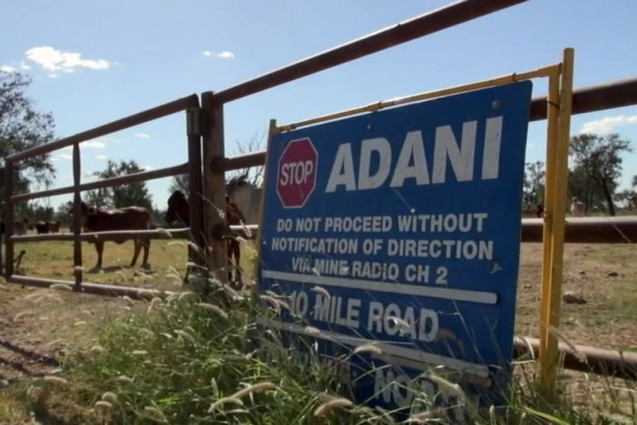
That takes Adani another step closer to a golden-shovel moment which is already four years overdue.
It's
also put the spotlight on federal Opposition Leader Bill Shorten and
whether Labor would overturn the decision if it wins power.
Here's what we know — and still don't know — about the project.
Why is the Adani mine still controversial?
It highlights the political divide on climate change in Australia.
Adani shelled out half-a-billion-dollars for the Carmichael Coal tenement in 2010.
It wants to export coal for electricity to Asia, including in the company's home market, India, where it's a power player.
It originally planned to have the mine up and running four years ago.
The project has become a touchstone for an environmental movement trying to stop new thermal coal mines.
This
argument says there are enough carbon emissions from existing fossil
fuel projects to blow the world's "carbon budget" to keep average
temperature rises above 2 degrees Celsius.
The Carmichael mine, they say, is the thin edge of the wedge.
Adani
would blaze a trail for five other mining hopefuls in Queensland's
Galilee Basin, which contains enough coal to outstrip Australia's annual
carbon emissions if it was all burned.
Project supporters say local benefits — jobs and property booms from mining income — would otherwise go overseas.
Asia
will get its coal from somewhere else, they say, so the argument is
better it be regional Queensland where, in an economy still reeling from
the end of the mining boom, Adani has become a symbol of hope.
And
Adani has stared down numerous legal challenges in court, while
striving for nine years to get the most-scrutinised coal project in
modern Australian history over the line.
Traditional owners of the mine site are bitterly split on the project.
Other
concerns include that the mine could potentially drain the nationally
important Doongmabulla Springs dry, and deprive the black-throated finch
out of habitat critical to its survival.
Not half as big as Adani first hoped — but still one of the biggest coal mines in Australia.
Adani
has walked back its vision of a 60-million-tonne-a-year mega-mine to a
10-to-15MT-a-year proposition, with the option of ramping up to 27 MT.
That
puts it on par with the country's largest existing thermal coal
operations, BHP Billiton's Mount Arthur Mine — 15MT — in NSW and BMA's
Blackwater mine in Queensland — 13MT — but which also includes coal for
steelmaking.
Adani has also swapped its plan for a 388km rail
line linking the mine to its Abbot Point coal port, to a 200km one
piggy-backing Aurizon's network.
It put the original project cost at $16.5 billion over its lifetime. It now says the mine component will cost $2 billion.
How many jobs?
Adani
used to run advertisements promising the project would generate 10,000
jobs — direct and indirect, at its peak from 2024, according to one form
of modelling — and $22 billion in taxes and royalties.
Its
economics expert in court in 2015 instead said it would create an extra
1,464 jobs in Australia — 1,206 of them in Queensland — and generate
$16.8 billion in taxes and royalties.
While the revised mine plan
could be less than a quarter of its original scale, Adani has not
publicly put forward a new projection for jobs or tax and royalty
streams.
It is yet to reach a final deal with the State
Government on how its royalty payments might be deferred in the mine's
first five years.
Who is funding it?
Adani.
It says
it can "self-fund" the smaller project, after previously seeking
finance from Asian banks without success, amid lobbying by anti-mining
activists.
Queensland Premier Annastacia Palaszczuk killed off its chances of a $1 billion taxpayer-funded loan for its railway in 2017.
Ms Enoch
said according to her department, the advice to Ms Price from federal
agencies the CSIRO and GeoScience Australia was that Adani had not.
Adani Mining Australia boss Lucas Dow reportedly said last year the approvals were a formality.
The company is now campaigning against what it calls the State Government "changing the goalposts" and dragging its feet on approvals.
The decisions on both plans will be in the hands of the state Environment Department.
What else?
Adani
also needs the Queensland Government to extinguish the native title
claims of the Wangan and Jagalingou (W&J) people to the mine site.
It can then take up a freehold lease and start digging.
But the Palaszczuk Government has indicated it won't be rushing to make that happen.
It will wait at least until Adani opponents within the W&J exhaust their legal avenue of appeal in the Federal Court.
A
hearing is set down for next month, and a decision on whether a crucial
land-use agreement with the miner should stand is likely months away.
Adani supporters in the W&J maintain they have the numbers.
The
anti-Adani contingent in the W&J, who describe themselves as the
last line of resistance to the mine, have flagged taking their fight to
the High Court.
It's not clear if the state would wait for that
outcome. But most of the critical levers on the Adani project remain in
the Palaszczuk Government's hands.
The Australian Conservation
Foundation is also challenging Ms Price in the federal Court over her
decision not to apply "water trigger" assessment over a water-pipeline
project proposed by Adani.
It's one of at least a dozen legal challenges to Adani over the past eight years.
Would a Shorten government overturn approval of the project?
Maybe.
Federal Labor leader Bill Shorten has refused to rule out reviewing the groundwater approval but has "no plans".
He says Labor would, "adhere to the science, the law, we won't create sovereign risk".
Ms
Enoch has claimed the approval "reeks of political interference" from
Adani's supporters in the Coalition, which "may have compromised the
integrity of the decision-making process".
Ms Price has noted the project must meet further conditions of approval from the Commonwealth before a golden-shovel moment.
The Climate Council says the federal government has slashed climate
research funding, censored reports showing the extent of the damage and
released emissions data around Christmas when the public is distracted.
Climate Council CEO Amanda McKenzie says the federal government has been dishonest with the public about climate change. AAP
The Australian Government has been accused of going to "extraordinary
lengths" to hide the full extent of climate change from the public,
according to a new report.
The Climate Council's Climate Cuts, Cover-Ups and Censorship report
found the government had slashed climate science funding, rejected
advice from climate bodies, and weakened the nation's climate science
capability by cutting jobs at the CSIRO.
Australia Street: How important is climate change policy to you?
Climate Council Report Key Findings
The
Government’s tenure has been characterised by slashing climate science
funding, cutting effective climate change programs, rejecting advice
from expert domestic and international bodies, misleading claims from
Federal Ministers, a lack of any effective climate programs, and
consistently covering up poor performance.
Deep
funding cuts and job losses at the CSIRO have weakened Australia’s
climate science capability. As a result, Australia is unprepared to cope
with the impacts of climate change.
The
government’s lack of climate change action is the defining leadership
failure of the past decade. We have not tackled climate change, the
consequences are with us, and we must work very quickly to prevent
catastrophic consequences.
Australia’s next government must adopt credible climate policy and a transparent
and accurate approach to reporting and tracking Australia’s climate
performance to ensure the public can appropriately evaluate its
performance.
Climate Council CEO Amanda McKenzie said the report's findings were shocking.
"I think most Australians would be outraged if they knew the full story," Ms McKenzie said.
"The
Coalition Government has slashed climate science funding, censored
important information and repeatedly made false claims."
The report was released the day after the first leader's debate between Scott Morrison and Bill Shorten ahead of the 18 May federal election.
Environmental policy has been a defining issue of the campaign to date, with coal-mining protests and debates over water buy-backs occupying much of the discussion.
The
Climate Council's head of research Dr Martin Rice said the government
had also been known to deliberately release climate information at the
busiest times of the year and block other information from being
released altogether.
“The Federal Government has repeatedly tried
to avoid scrutiny by releasing greenhouse gas emissions data just
before Christmas or on the eve of football grand finals when fewer
people are paying attention,” Dr Rice said.
"The Federal Government censored a UNESCO report on climate change and World Heritage sites, convincing the UN agency to delete all references to Australia and the Great Barrier Reef."
While the debate around climate policy continues, the Climate Council's Professor Will Steffen said the test of good climate policy was simple.
"It must be aligned with the science, it must be clear and effective, and it must deliver greenhouse gas emission reductions consistent with the Paris targets," Professor Steffen said.
"Our current policy fails on all three counts."
United Nations International Children's Emergency Fund (UNICEF): Australian youth and climate change.
Australia recently experienced what the Climate Council called its 'Angriest Summer' in history.
Ms McKenzie said the effects of climate change were clear in the nation's increasingly extreme weather conditions.
“Heatwaves
have become hotter and last longer, while droughts, intense rainfall
and bushfire conditions have become more severe,” Ms McKenzie said.
“As
Australians experience escalating consequences into the future, they
are likely to view this period of missed opportunities and failed
leadership with deep dismay."
Bill Shorten and Scott Morrison will have a leaders' debate in Perth on Monday night. AAP
President Trump’s pick for leading a climate change panel is notorious for denying the science behind human-caused global warming. We dive into the counter-arguments on climate change. USA TODAY
President Trump’s pick for leading a climate change panel is notorious
for denying the science behind human-caused global warming. We dive into
the counter-arguments on climate change.
What will life be like after we've solved climate change? Better than today or worse? Mud huts and gruel, or flying cars and the Jetsons?
Comfy
homes, good food, whip-smart appliances and robots hopping around
on farms all seem pretty likely, experts queried by USA TODAY said. All
in all, our living standard will be the same, only a lot greener and
more efficient.
That view is in stark contrast to a
common complaint by critics who object to making global warming-based
changes to the economy, suggesting such changes would destroy America’s
standard of living and force everyone to “live in yurts and eat tofu,”
as one commenter put it.
The group of monuments at Hampi in India consist of ruins of several beautiful Dravidian temples and palaces - the last remnants of the Vijayanagar kingdom.
“Every
single proposed solution will simultaneously improve life and decrease
carbon emissions,” said Noah Diffenbaugh, a professor of climate science
at Stanford University in Palo Alto, California, who has provided
testimony and scientific expertise on climate change to the White House,
the governor of California and U.S. congressional offices.
These
predictions presume the shift to carbon-neutral energy, industrial and
transportation systems happens in time to slow and eventually reverse
the effects of global warming the planet is already beginning to
experience: rising oceans, more flooding, worse storms and increase heat
waves and droughts.
That
means that whatever happens next, experts say, depends entirely on how
quickly we act. Many of these technological and policy changes are
already underway, but need to be sped up. Today, humans pour 37 gigatons
of carbon dioxide and other greenhouse gases into the atmosphere
annually. People must shift away from those carbon emissions within the
next 20 years to avoid "rapid, far-reaching and unprecedented changes in
all aspects of society," according to the United Nations'
Intergovernmental Panel on Climate Change.
For Earth Day, let’s presume we've successfully made that shift to a carbon-neutral world and you, your children or your grandchildren are waking up on a crisp fall morning sometime between 2050 and 2100. What’s the day like?
An image of "The Jetsons," the futuristic classic cartoon. (Photo: Courtesy of Warner Bros. Television Distribution)
When do you need those dishes?
Houses
won’t look all that different, though homes will almost certainly have
solar power included if it's appropriate for the area. This will be
especially important in hot and sunny parts of the country, to decrease
the pressure on power production for cooling during the day. California
already has a law requiring that all new homes built after 2020 include solar panels.
Homes
will still have heat and cooling, electric lights, lots of electronics
and big windows. But the systems and appliances will be much more
efficient and much smarter.
This shift is already
happening — today's refrigerators are about 20% larger but use
one-quarter the electricity compared to those sold 20 years ago. The LED
lightbulbs you buy at the grocery store use 20% of the energy the
incandescent bulbs of a decade ago did, said Jay Apt, a physicist and
professor who directs the Electricity Industry Center at Carnegie Mellon
University in Pittsburgh.
When occupants get out
of bed, the house will likely be a comfortable temperature.
Properties will probably still have a furnace or an electric heat pump.
But they won’t be used as much because homes will be much better
insulated, with windows that keep heat and cold in and out.
The
systems used to heat buildings will likely look different than the ones
we know today. One example already being used in some U.S. buildings
involves pre-heating or chilling water when power is cheap, and then
using it during the day when power is more expensive.
A vision of what the German city of Berlin might look like as carbon neutral.(Photo: Courtesy: The Carbon Neutral Cities Alliance.)
“It’s
like radiators. In the ceiling of each floor you have a cold-water air
heat exchanger, the cold water sits in a series of pipes, the air blows
across it and becomes quite cold and it blows in to cool the room,” said
Apt.
After getting out of bed, the next step might
be to check the dishwasher to get out a cup for coffee. The dishwasher,
along with most appliances, will likely be tied to a smart system in
your house that knows the power cost at different times of the day. If
the local power company gets significant power from wind turbines, the
cheapest power may be at night. If it’s from solar, it might be cheapest
during the day.
“Your dishwasher may very well
communicate with the electric power grid and say ‘OK, Mr. Smith has
decided that he only wants to run his dishwasher only when the price of
power is less than 12 cents per kilowatt-hour, so your dishwasher may
decide to run at 2:00 in the morning,” says Apt.
Or
you might set an override to tell the appliance that whatever the
price, the dishes have to be done by 6 p.m., in time for dinner.
Another infrastructure change will likely be the more common use of geothermal heat pumps.
These take advantage of the fact that the ground beneath our feet tends
to stay about 50 degrees Fahrenheit in summer or winter.
That
means if you run pipes down 6 to 8 feet below a house or apartment
building, you can cool or heat a liquid in those pipes to around 50
degrees. That liquid can then be piped up to the building and used to
bring the temperature inside to 50 degrees.
If it's
a cold winter day and it's 20 degrees outside, the house is already up
to 50 degrees and you only need to heat it another 15 degrees to be
comfortable. If it's a hot summer day of 90 degrees, you cool the
temperature down with no energy needed, said Apt.
Here a turbine, there a turbine
Coal,
oil and many natural gas-fired power plants will have long ago closed.
Instead, the nation will likely be powered by a mix of nuclear, wind,
solar, hydroelectric and some natural gas.
The
power grid will have been rebuilt to accommodate more periodic power
inputs, with the positive effect of also allowing it to be protected
against physical and cyber attacks.
Driving across
America, the sight of large solar arrays or wind turbines will be
common, much as seeing oil rigs is an everyday sight in much of the
United States now. You might also run across tall arrays that pull
carbon dioxide out of the air and turn it into fuel and the raw material
for industrial uses.
Charging of the electric car. Businessman's hand holding the electric cable to the car. Car features have been changed. (Photo: Getty Images)
Fun cars, fast charging
The
car of the future will be electric. That’s because electricity is easy
to generate from carbon-neutral sources such as wind, solar and nuclear.
It’s a shift that’s already underway. In Norway, 58% of all cars sold
in March were electric, according to Norway’s Road Traffic Information
Council.
That’s a far cry from the fewer than 1% of
cars in the United States that are electric today, but most experts
presume the shift will happen relatively quickly. It also won’t be
wrenching, said Chris Field, director of Stanford University’s Woods
Institute for the Environment.
“The electric car I
have right now is the best car I’ve ever had. It’s a Chevy Bolt. It’s
very practical, well thought out and fun to drive. It’s a really great
car,” he said.
Those future cars will have a range
between charges that will likely be much more than today’s 225 miles.
Many estimates put it at 400 miles by 2028. There will likely be fast
charging outlets nationwide, just as there are gas stations today.
Already, new homes in Atlanta must be built to accommodate electric
vehicles.
Cities of the future will likely have mostly apartment buildings and townhouses that are walkable and with bike paths built in. (Photo: Tourism Calgary)
Walk to the gym
More
and more people will live in cities, which produce dramatically fewer
greenhouse gasses per person than suburbs. But the cities will be
designed with the kind of human-friendly density that already is being
incorporated into city planning across the globe.
They’ll
have mostly apartment buildings and townhouses that are walkable and
with bike paths built in. Excellent mass transit will be available on
electric buses and vans. Businesses and office buildings will be
interspersed rather than plunked down miles out of town in office parks
and malls.
That shift away from far-flung suburbs is already apparent in today’s generation. “Young people want to be able to walk to the grocery store and the office and the gym,” said Fields.
Others
will choose space to spread out or cheaper land and housing,
preferences made more sustainable due to the increasing ability to work
from home or commute by electric vehicles.
People walk by the co-working space WeWork in the Williamsburg
neighborhood in Brooklyn on March 26, 2019 in New York City. WeWork,
which lets freelancers and other non-traditional workers to become
members in a shared or flexible office space, has expanded globally over
the last year. (Photo: Spencer Platt, Getty Images)
Telecommuting for fun and profit
Work
will be more integrated with living areas. But wherever it is, the
office will have been built to very high standards to reduce waste, save
water and conserve energy. Already more than 33,000 buildings in the
United States have gotten LEED certification, marking them as highly
efficient.
Not that everyone will still go to an
office every day. Telecommuting all or part of the time will become more
common as the tools for doing so — fast Internet and good video
connections — become cheaper, better and easier to use. More people will
also work from communal workspaces near where they live.
Big
U.S. companies are already beginning to do this. Amazon, Apple and
Google have dozens of offices across the nation where people can work,
so they don’t all need to move to Silicon Valley in California or to
Seattle. Many young people are already used to working from shared
office spaces such as WeWork and ImpactHub.
High-speed train model at the Capitol in Sacramento, California, in 2015. (Photo: Rich Pedroncelli/AP)
NYC to Chicago in 5 hours
For travel within the United States, a network of high-speed electric trains
will likely crisscross the country, making rapid travel easily
accessible. San Francisco and Los Angeles are three hours apart by rail,
Chicago to New York five hours.
We’ll still fly places, but it will likely be more expensive
than some of today’s rock-bottom prices. Jet fuel has to be very energy
dense, so electric planes are out of the question. Instead, they’ll use
fuel produced from carbon dioxide pulled out of the air or industrial
waste gases, or from aviation biofuel made from organic waste from trash
or leftover biomatter from agricultural fields.
Both are already being used. In 2018, Virgin Atlantic flew a Boeing 747 from Orlando to London using fuel made in part from captured greenhouse gas emissions.
A Virgin Atlantic VS16 flight preparing for take off at Orlando International Airport in Florida on October 2, 2018. (Photo: Doug Peters, PA Wire)
Is that a robot in that field?
What’s
old will be new again in many ways when it comes to food and farming,
experts say. The nation's food supply is likely to be fresher and more
wholesome as growers and sellers become better at managing logistics to
minimize travel time and loss.
We’ll eat more
seasonably than we do now because we’ll be paying more for energy and
farmers will be thinking harder about water and energy usage.
“We’ve
gotten into this mode that we expect to see blueberries and
oranges every week of the year. As energy costs go higher and water
becomes even in more short supply in the future, not every type of food
will be available at every moment,” said Robert Myers, a professor of
agriculture at the University of Missouri in Columbia, Missouri, and an
expert on climate change and sustainable agriculture.
Not that kiwis won’t be available from New Zealand, or tomatoes in December, but they’ll be more expensive.
Amanda
Little, author of the forthcoming book “The Fate of Food: What We’ll
Eat in a Bigger, Hotter, Smarter World,” said mankind will likely be
eating the same kinds of food we eat today, but it will be produced
differently and much more efficiently.
That's
especially true of meat, which she predicts will be either plant-based
faux meat or tissue grown in vats that is identical to meat on a
cellular level.
“It’s very inefficient to raise an entire animal just to eat the edible parts of it,” she said.
Meat
from animals will still be available, what we’ll call “craft” or
“specialty” meat, but a far bigger portion of the meat industry will
come from either plant- or cell-based meats.
Little says cell-based meat is closer than we realize. She had some vat-grown duck just last week.
“It was chewy and greasy but it tasted very meaty. For a very early stage lab meat product, it was very convincing.
Robert Blair bought this multirotor hexacopter, an unmanned aircraft, to monitor his farm in Kendrick, Idaho. (Photo: Robert Blair via AP)
Farms
will likely look the same driving by, but a closer look will show
differences. Older practices, like planting clover and other cover crops
during the winter, will be more common to improve soil health,
making it more able to withstand floods or drought and decrease the
amount of fertilizer needed. Complex crop rotations, aided by computers,
will make farming more efficient and cheaper because they will require
less fertilizer and pesticides.
Those fields will
likely also incorporate wind turbines or solar panels to give growers
additional income. That’s already happening today. Many farms in the
Midwest are getting rents of $3,000 to $5,000 per year to put turbines
on their land, Apt says.
Fields also might have drones buzzing over them or small robots
running down the rows, stopping to test the soil for moisture,
nutrients and image the crops for weed or insect infestations. That
information will be automatically fed to the farmer, who can use it to
precisely water and care for each small land unit as required, rather
than needlessly wasting expensive water and chemicals.
Ranchers
and dairy farmers can use similar technology to move their cows and
cattle from one paddock to another on an almost daily basis, mimicking
what a buffalo herd would have done. Called intensive management
grazing, it results in healthier land and better forage for the animals,
ultimately bringing costs down.
Energy for everyone
The
world’s air and water will be cleaner as we stop using polluting energy
sources. The planet's resources will also become more equitable, as
carbon-neutral energy sources become cheaper and more efficient, making
them available to people in parts of the world where energy is currently
expensive and difficult to obtain.
And it’s all
doable, no breakthroughs required, said Stanford's Diffenbaugh. “The
knowledge necessary for getting on that path is available,” he said.